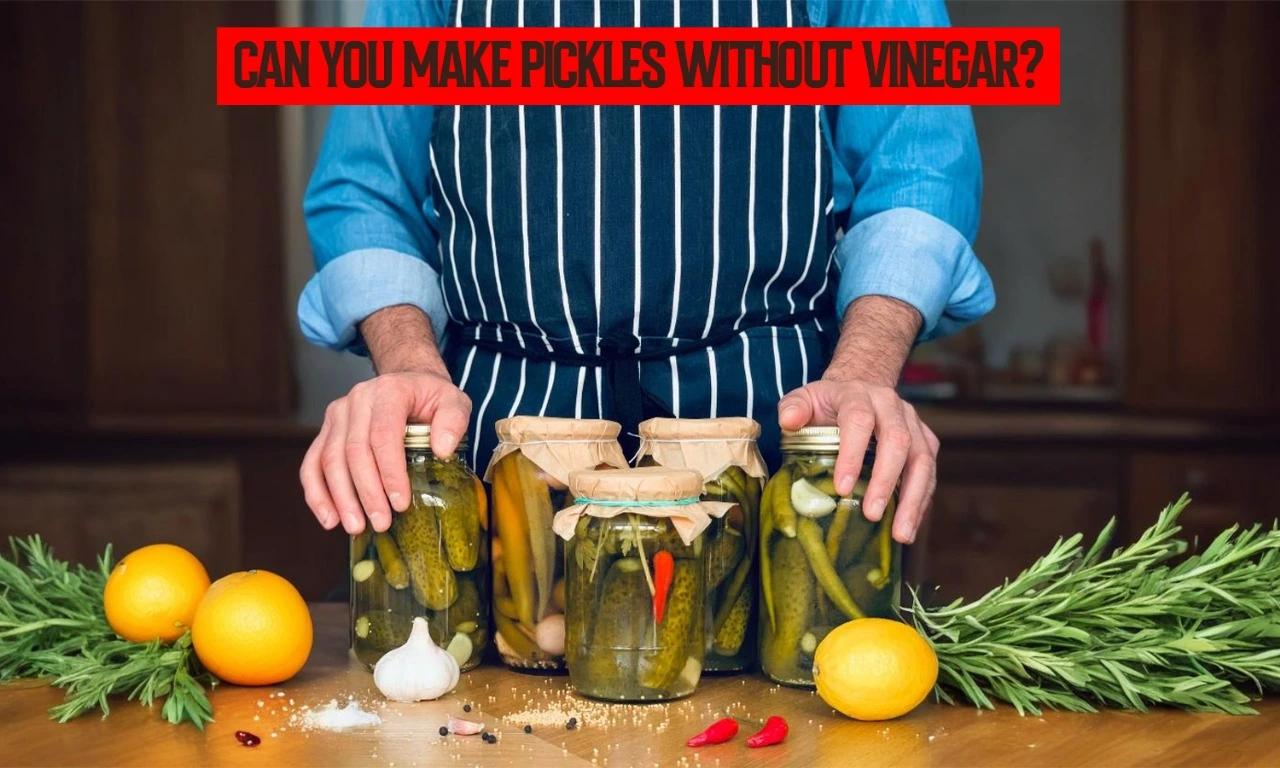
Vinegar-based pickles are widely popular, but did you know that you can also make pickles without vinegar? Traditionally, Indian pickles and many global varieties rely on natural fermentation instead of vinegar. This method enhances flavor, preserves nutrients, and introduces beneficial probiotics. Let’s explore how to make no vinegar pickles using natural fermentation.
Why Make Pickles Without Vinegar?
While vinegar-based pickles are quick and easy, naturally fermented pickles offer several benefits:
- Rich in Probiotics: Fermentation produces beneficial bacteria that aid digestion.
- Deeper Flavor: The taste evolves over time, giving a complex, tangy flavor.
- No Artificial Preservatives: Fermented pickles are free from synthetic additives.
- Traditional Method: Many classic Indian pickles, like achar without vinegar, follow this process.
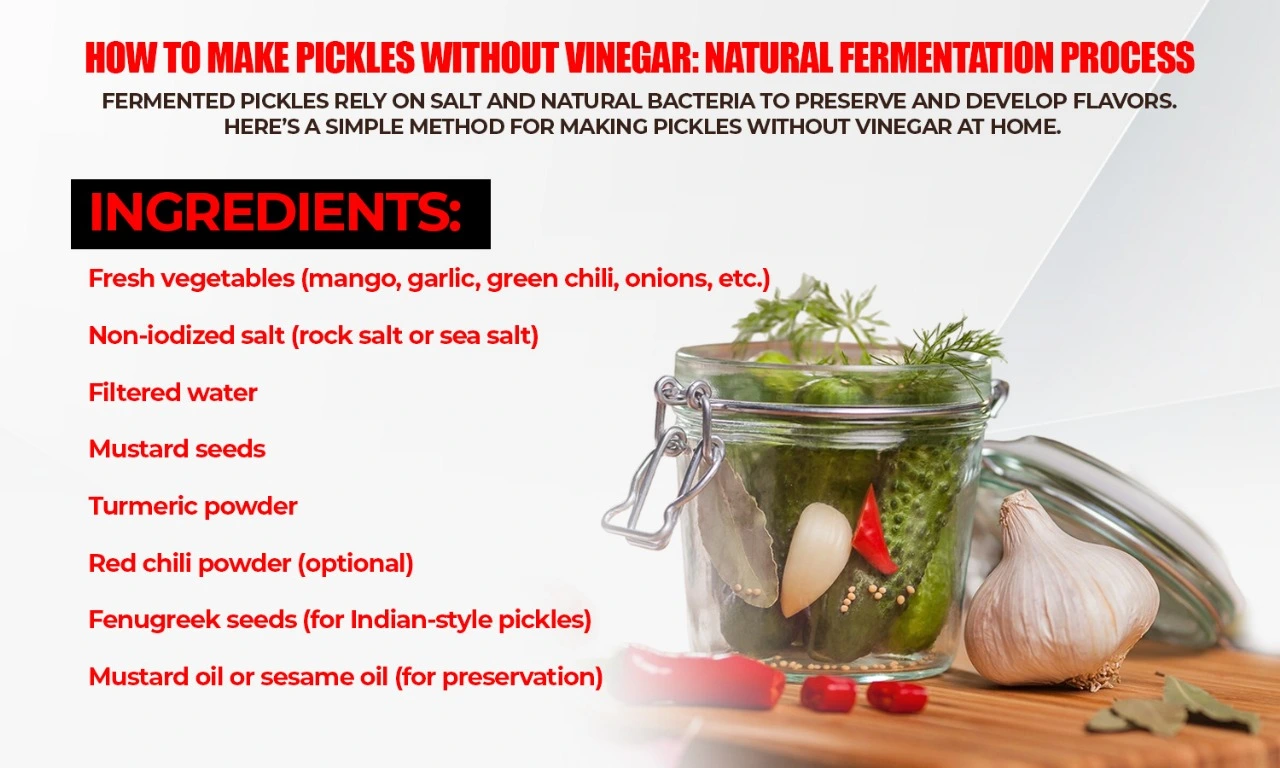
How to Make Pickles Without Vinegar: Natural Fermentation Process
Fermented pickles rely on salt and natural bacteria to preserve and develop flavors. Here’s a simple method for making pickles without vinegar at home.
Ingredients:
- Fresh vegetables (mango, garlic, green chili, onions, etc.)
- Non-iodized salt (rock salt or sea salt)
- Filtered water
- Mustard seeds
- Turmeric powder
- Red chili powder (optional)
- Fenugreek seeds (for Indian-style pickles)
- Mustard oil or sesame oil (for preservation)
Instructions:
- Prepare the Vegetables – Wash and dry the vegetables thoroughly to prevent mold formation.
- Salt Brine Solution – Dissolve salt in water (typically 2-3 tablespoons per liter of water).
- Pack the Ingredients – Place chopped vegetables in a sterilized glass jar and add mustard seeds, fenugreek, and spices.
- Add the Brine – Pour the saltwater over the vegetables, ensuring they are completely submerged.
- Fermentation Process – Cover the jar loosely and store at room temperature in a cool, dark place for 5-10 days.
- Monitor & Stir – Check daily, stir if needed, and remove any foam or floating particles.
- Taste & Store – Once the desired tangy flavor develops, store the pickle in the refrigerator for extended freshness.
This method works well for various pickles, including mango pickle without vinegar, garlic pickle without vinegar, and green chili pickle without vinegar.
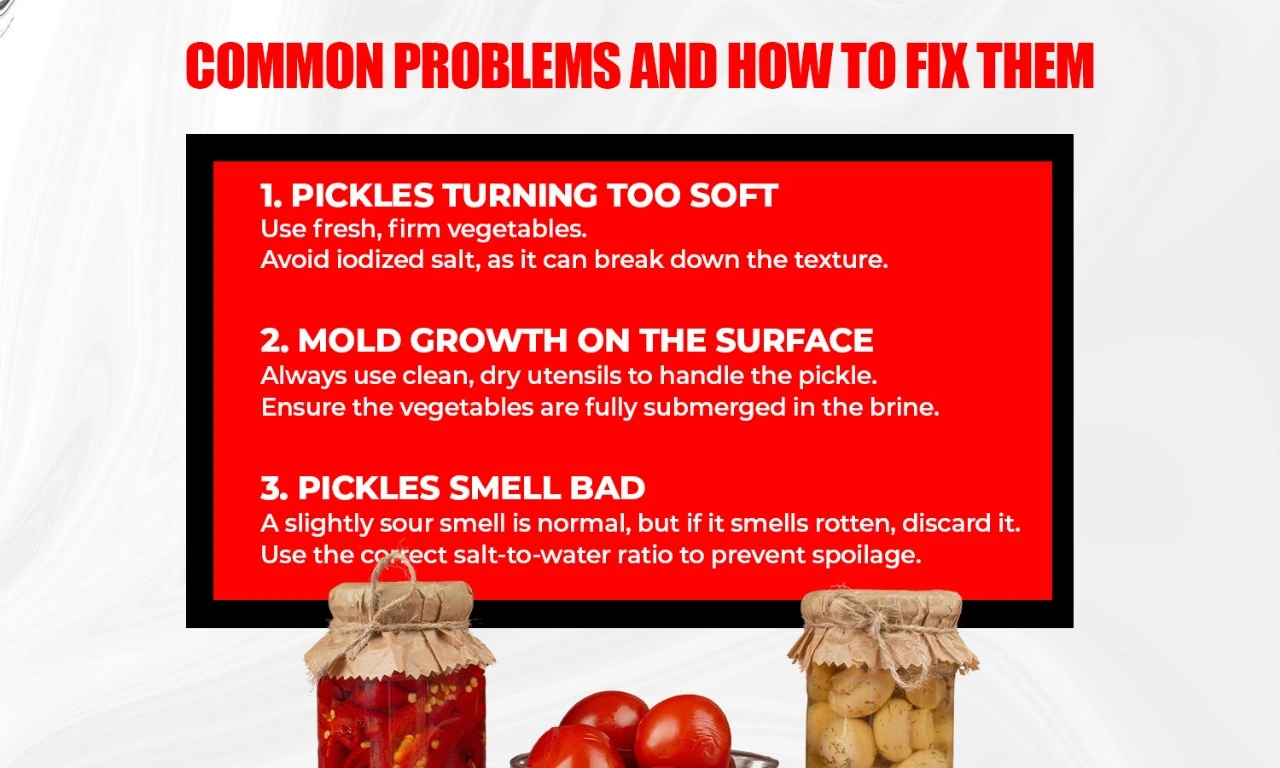
Common Problems and How to Fix Them
1. Pickles Turning Too Soft
- Use fresh, firm vegetables.
- Avoid iodized salt, as it can break down the texture.
2. Mold Growth on the Surface
- Always use clean, dry utensils to handle the pickle.
- Ensure the vegetables are fully submerged in the brine.
3. Pickles Smell Bad
- A slightly sour smell is normal, but if it smells rotten, discard it.
- Use the correct salt-to-water ratio to prevent spoilage.
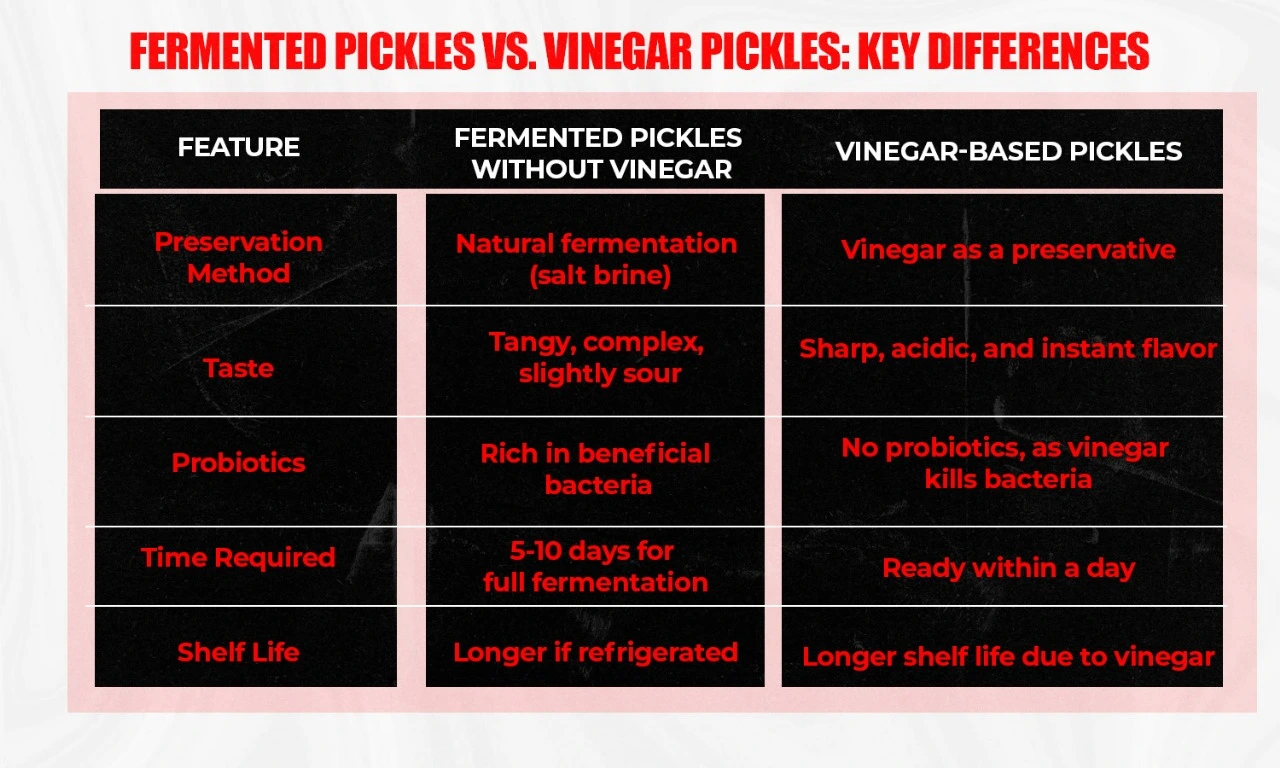
Fermented Pickles vs. Vinegar Pickles: Key Differences
| Feature | Fermented Pickles Without Vinegar | Vinegar-Based Pickles |
|---|---|---|
| Preservation Method | Natural fermentation (salt brine) | Vinegar as a preservative |
| Taste | Tangy, complex, slightly sour | Sharp, acidic, and instant flavor |
| Probiotics | Rich in beneficial bacteria | No probiotics, as vinegar kills bacteria |
| Time Required | 5-10 days for full fermentation | Ready within a day |
| Shelf Life | Longer if refrigerated | Longer shelf life due to vinegar |
If you’re looking to buy pickles without vinegar, check for fermented varieties available in specialty stores or online platforms.
Conclusion
Making pickles without vinegar is an age-old tradition that not only enhances flavor but also boosts gut health. Whether you prefer no vinegar pickle recipes like pickled onions without vinegar or Indian-style achar without vinegar, natural fermentation is a healthy and delicious alternative to store-bought pickles. Experiment with different vegetables and spices to create your own unique fermented pickles at home!
Key Takeaways
- Fermented pickles use salt and natural bacteria instead of vinegar.
- They offer probiotic benefits and a complex, tangy flavor.
- Proper fermentation techniques prevent spoilage and ensure safe pickling.
- Mango, garlic, and green chili pickles can be made without vinegar.
- Fermented pickles take longer but provide a richer taste compared to vinegar pickles.
FAQs
How Long Do Fermented Pickles Last?Fermented pickles can last several months if stored properly in an airtight container in the refrigerator.
Can I Make Fermented Pickles without Salt?No, salt is essential for the fermentation process. It prevents harmful bacteria growth and aids in preserving the pickles.
What if My Pickles Are Too Salty?If pickles turn out too salty, rinse them lightly with water before serving, or dilute the brine with more water next time.
Are Pickles without Vinegar Safe to Eat?Yes, as long as they are fermented correctly, stored properly, and free from mold or off-putting smells.
Do Fermented Pickles Taste Like Vinegar Pickles?No, fermented pickles have a milder, complex tangy flavor, while vinegar pickles have a sharp, acidic taste.