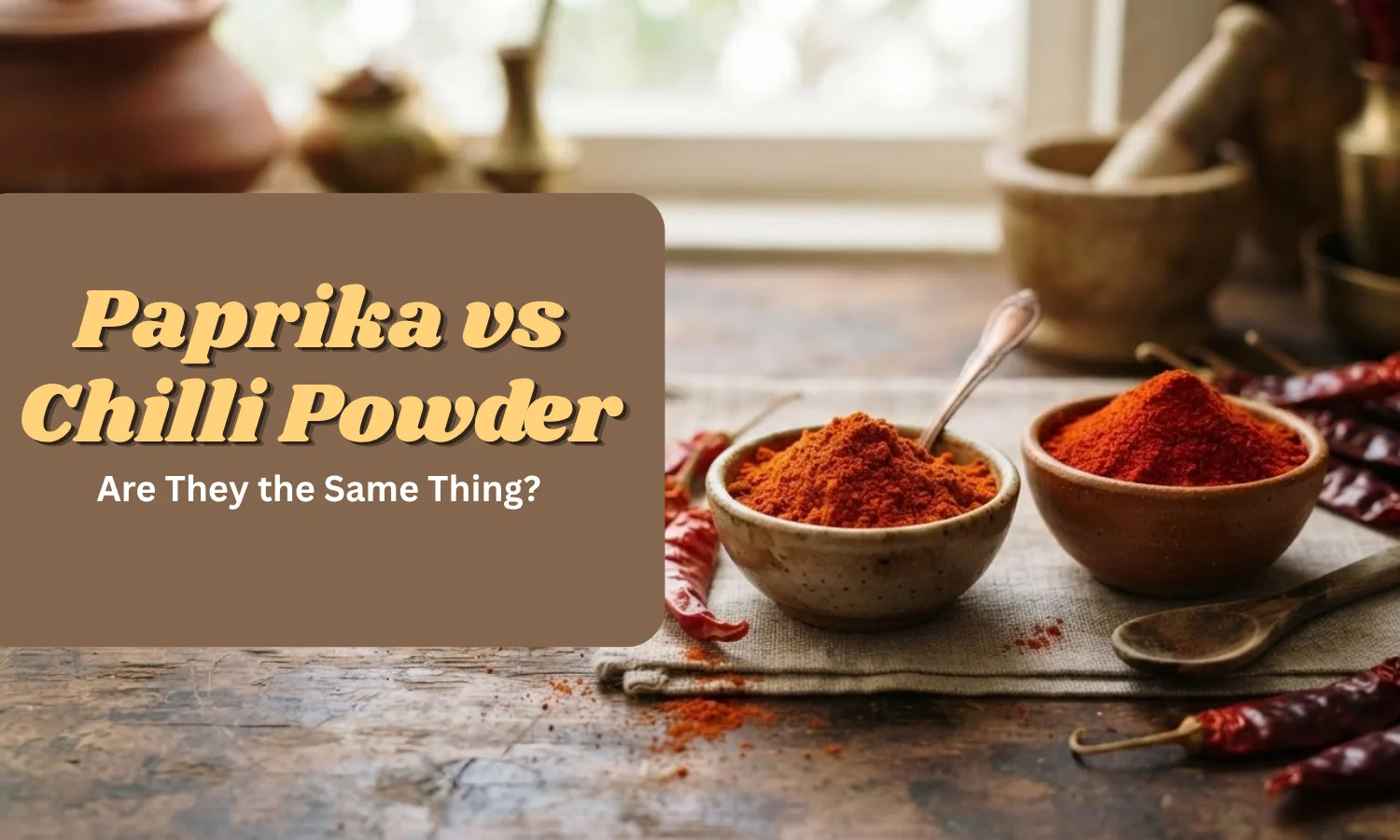
Paprika vs Chilli Powder: Are They the Same Thing?

Overview

Paprika vs chilli powder is a common point of confusion, especially for cooks following international recipes. Paprika is made from sweet or mildly hot peppers and offers a gentle, slightly sweet flavour with strong colour, while Indian chilli powder made from varieties like Kashmiri or Guntur delivers noticeably more heat. The two can sometimes substitute for each other, but not always without adjusting the recipe.

What Is Paprika and How Does It Differ From Chilli Powder?

“Are paprika and chilli powder the same?” This is one of the most searched questions among home cooks trying to follow a recipe that calls for an ingredient not commonly stocked in an Indian kitchen. Paprika is a ground spice made primarily from sweet or mildly hot pepper varieties, most commonly associated with Hungarian and Spanish cuisine, and its flavour profile leans towards a gentle sweetness rather than sharp heat.The difference between paprika and chilli powder starts with the source pepper itself. Chilli powder in Indian cooking is typically made from hotter varieties such as Kashmiri, Byadgi, or Guntur chilli, each carrying a distinct heat level, while paprika is generally made from a milder pepper cultivated specifically for colour and subtle flavour rather than pungency.

Paprika vs Chilli Powder: How Do Their Heat Levels Compare?

The heat level of paprika depends on the type used. Sweet paprika is generally very mild, while hot paprika can provide noticeably more heat. Smoked paprika may also be mild or moderately hot depending on the pepper used. Chilli powder has an even wider range because it can be made from different chilli varieties.In Indian cooking, Kashmiri chilli powder is generally valued for its bright red colour and relatively mild heat, while other chilli varieties can provide a stronger level of pungency. This means that paprika vs chilli powder cannot be compared using one fixed heat level.
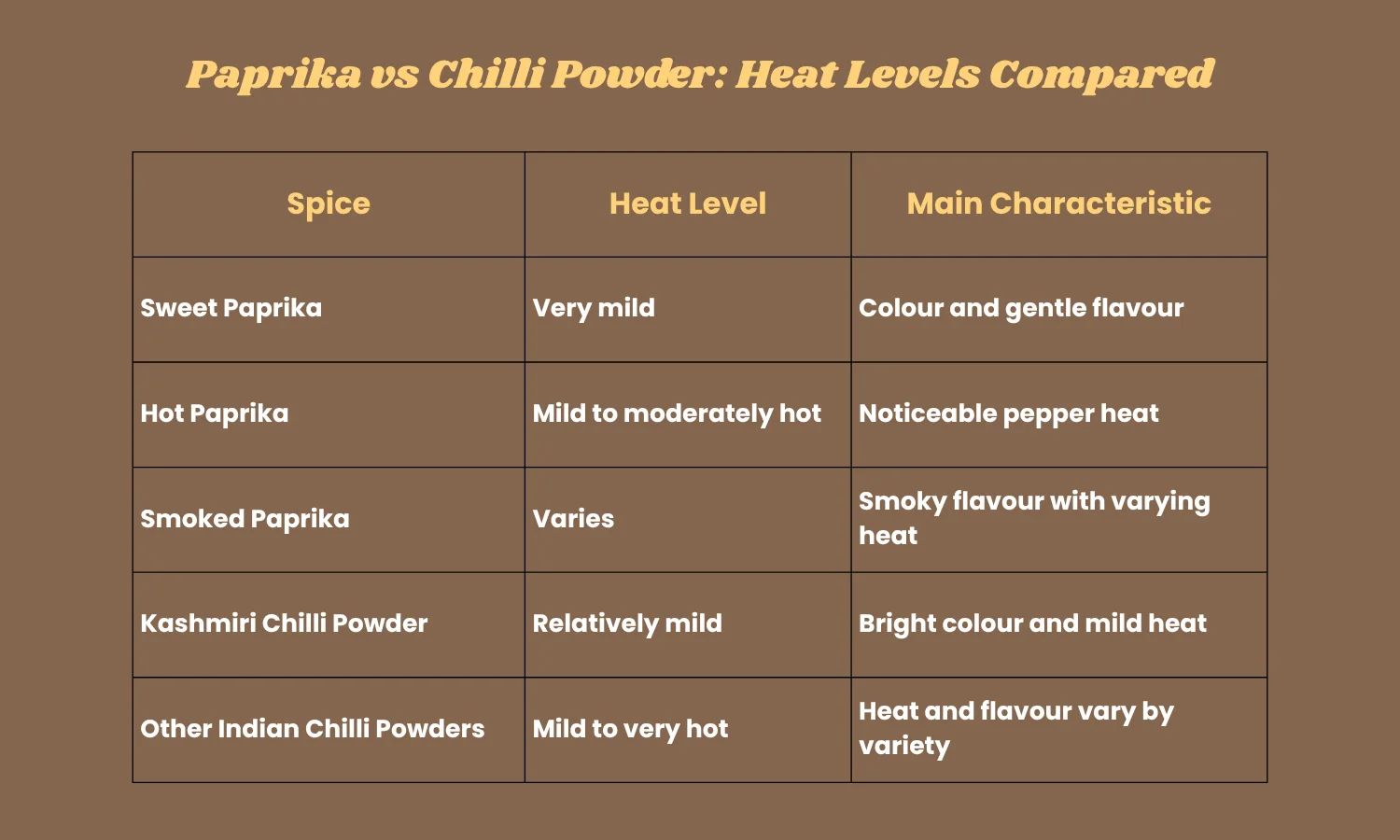
paprika vs chilli powder When substituting paprika with chilli powder, consider both heat and flavour. A mild chilli powder may work when the recipe mainly needs colour, while a hotter chilli powder can significantly increase the spiciness. Similarly, regular chilli powder will not reproduce the smoky flavour of smoked paprika.
Therefore, the best substitute depends on the specific type of paprika used and the role it plays in the recipe.

Difference Between Paprika and Red Chilli Powder

The difference between paprika and red chilli powder mainly comes down to the type of pepper used, heat level, flavour, and colour. Paprika can range from sweet and mild to hot or smoky, while red chilli powder varies depending on the chilli variety. Both can add a red colour to dishes, but their flavour and heat may differ.

Feature Paprika Red Chilli Powder
Pepper used Mild or sweet pepper varieties Different dried red chilli varieties
Heat level Usually mild, but varies by type Mild to very hot, depending on variety
Flavour Sweet, earthy, fruity, or smoky Chilli-forward with varying pungency
Colour Red to deep red Red to deep red
Common use Colour, mild flavour, seasoning Colour, flavour, and heat
Best substitute Depends on the recipe Kashmiri chilli can work when mild heat and colour are needed

When comparing paprika vs red chilli powder, consider whether the recipe needs colour, heat, or a specific flavour. They can sometimes be substituted, but the final taste and spiciness may change.

Paprika vs Kashmiri Chilli Powder: The Closest Comparison

Paprika vs Kashmiri chilli powder is arguably the closest comparison among all the variations, since both are known primarily for mild heat and strong red colour rather than pungency.

“Are paprika and Kashmiri chilli powder the same?”

The answer is technically no, since they come from different pepper cultivars grown in different regions, but their culinary behaviour in a dish can be similar enough that many recipes treat them as near equivalents.

Paprika and Kashmiri chilli powder substitution generally works well in marinades, rubs, and dishes where a rich red colour with limited heat is the goal, though the flavour will carry subtle differences that an experienced palate may notice, particularly in the case of smoked paprika.

Paprika Powder vs Chili Powder and Cayenne Pepper

Paprika powder vs chili powder substitution questions often expand to include a third ingredient, cayenne pepper, which is significantly hotter than both standard paprika and most Indian chilli powder mixes. Paprika vs cayenne pepper highlights just how wide the heat range within the broader pepper family actually is, since cayenne sits far above paprika and even above Guntur chilli in terms of raw pungency.“Is paprika powder and chilli powder the same?” ultimately depends on which type of paprika and which type of chilli powder are being compared, since sweet paprika and Kashmiri chilli sit relatively close together, while hot paprika and Guntur chilli occupy a middle ground, and cayenne pepper stands apart as the clear outlier in terms of heat.

Can I Use Red Chilli Powder Instead of Paprika?

This is a practical question for Indian kitchens following an international recipe that specifically calls for paprika. In most cases, a mild Kashmiri chilli powder makes a reasonable substitute for sweet paprika, particularly in dishes where colour matters more than an exact flavour match, though the subtle sweetness of true paprika will be missing.
For recipes that call for smoked paprika specifically, a direct substitution with regular Indian chilli powder will not replicate the smoky flavour, so it is best reserved for dishes like some traditional Indian foods where that particular note is not essential to the final result.

Choose the Right Chilli Powder for Your Recipe

Paprika vs chilli powder ultimately comes down to source pepper, heat level, and flavour complexity rather than the two being fully interchangeable ingredients. For most colour-focused Indian recipes, a mild Kashmiri chilli powder can stand in for paprika reasonably well, while dishes that depend on paprika’s specific sweetness or smokiness may need a more careful substitution or a small adjustment in expectations.
Explore the entire range of 777 products and shop for the 777 Premium Red Chilli Powder for your next recipe.

Key Takeaways

  • Paprika vs chilli powder differ mainly in the source pepper, with paprika made from milder cultivars and Indian chilli powder made from hotter varieties like Kashmiri, Byadgi, or Guntur.
  • In terms of heat, paprika and chilli powder are not the same, since even mild Indian chilli powder can carry more pungency than standard sweet paprika.
  • Paprika vs Kashmiri chilli powder is the closest comparison among the variations, since both are known for mild heat and strong red colour.
  • Paprika vs cayenne pepper shows the widest heat gap, with cayenne sitting well above both paprika and most Indian chilli powder mixes.
  • “Can I use red chilli powder instead of paprika?” It works reasonably well for colour, especially with a Kashmiri variety, though the subtle sweetness or smokiness of true paprika will not be replicated.

FAQs

Are paprika and chili powder the same in every recipe?It depends on the specific recipe and how central the heat level is to the final dish. For colour-focused preparations, they can often be swapped, but for recipes where the exact heat matters, the substitution may change the outcome noticeably.
Can smoked paprika be replaced with Kashmiri red chilli powder?Smoked paprika vs Kashmiri chilli powder differ mainly in the smoky flavour that smoked paprika carries from its specific drying process. Kashmiri chilli powder can replicate the colour reasonably well, but it will not deliver the same smokiness without an additional smoked ingredient added separately.
Which is spicier, paprika or chilli powder?In most cases, Indian chilli powder is spicier than paprika, particularly when made from Byadgi or Guntur chilli. Sweet paprika sits at the mild end of the spectrum, closer to Kashmiri chilli, while hot paprika falls somewhere in between depending on the specific product.
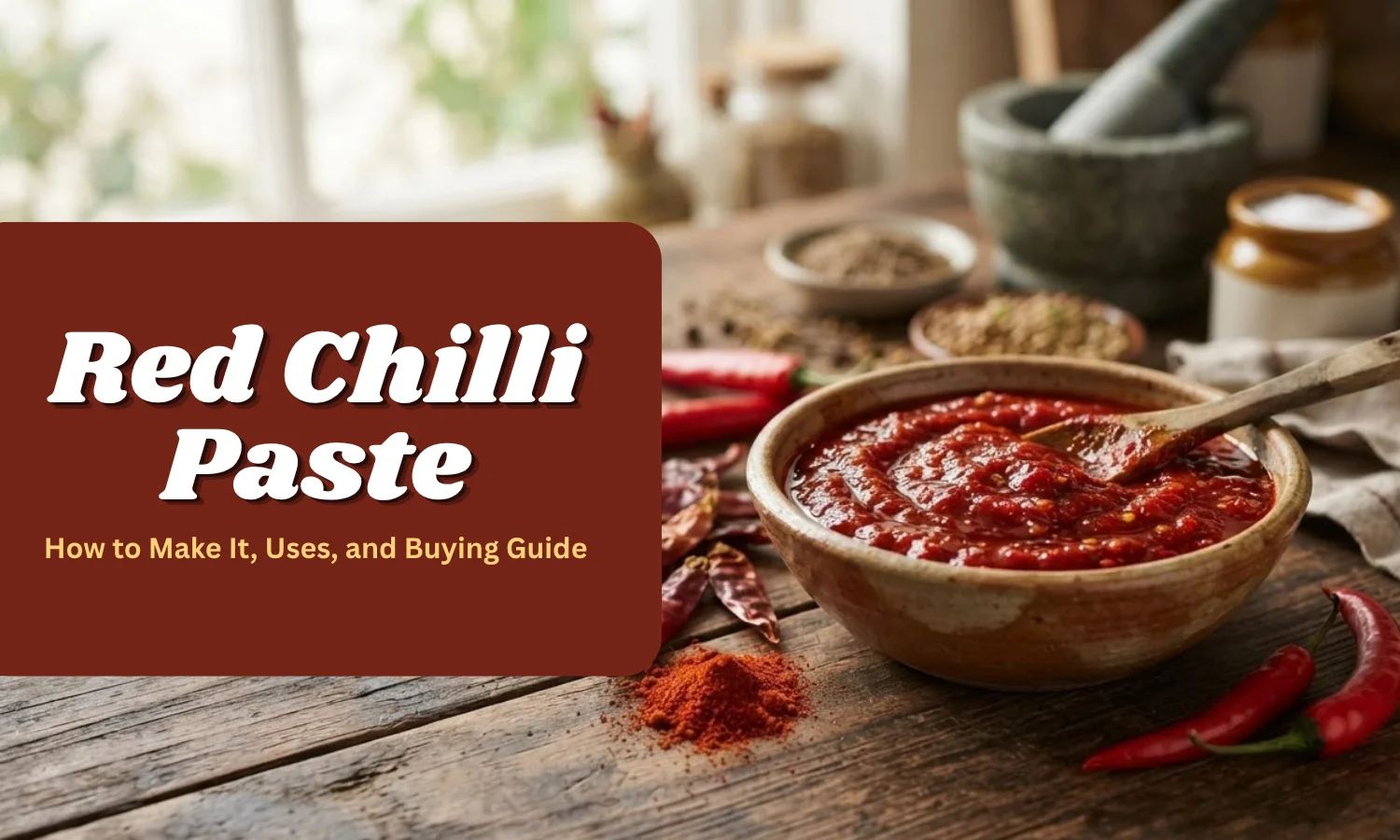
Red Chilli Paste: How to Make It, Uses, and Buying Guide

Overview

Red chilli paste is a smooth preparation made by soaking, grinding, and sometimes cooking dried or fresh red chillies into a spreadable form. It is used as a base for marinades, curries, and dips, making it essential to mastering the art of instant meals by offering a quicker alternative to grinding whole chillies each time. It can be made at home or bought ready-made, including Kashmiri red chilli paste for a milder, colour-forward option.

What Is Red Chilli Paste, and How Is It Different From Powder?

Chilli paste differs from chilli powder mainly in texture and moisture content, since paste retains water or oil that carries the flavour more directly into a dish without needing extra liquid during cooking. Red chili paste, sometimes also written as red chilli sauce, sits somewhere between a pickle and a powder in terms of how it is used in the kitchen.Unlike chilli garlic paste, which combines chilli with garlic and often ginger for a more rounded flavour, used in Indo-Chinese cooking, plain red chilli masala paste focuses purely on the heat and colour of the chilli itself, making it more versatile as a base ingredient across different cuisines.

How to Make Red Chilli Paste Easily at Home?

Many people ask, “How to make red chilli paste?”
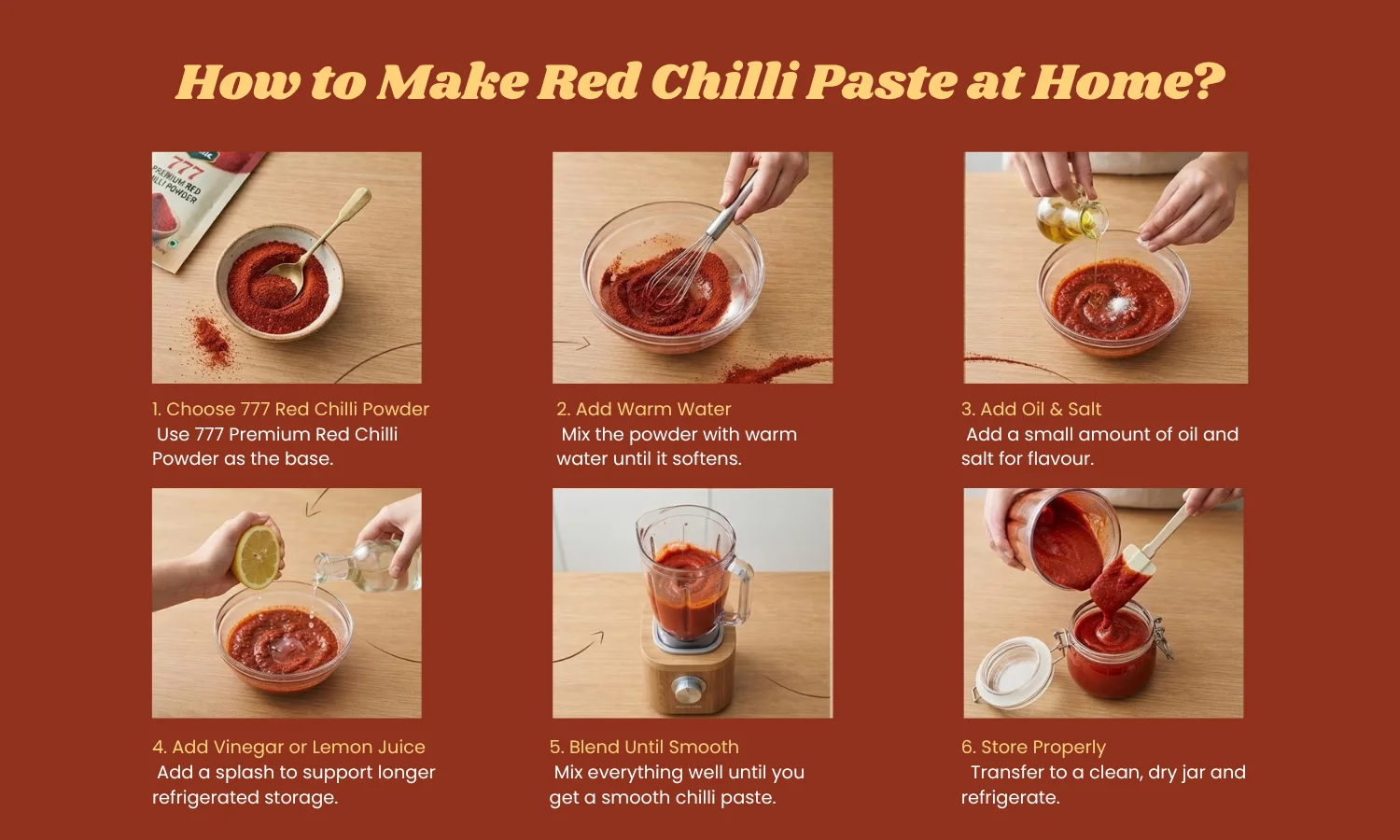
red chilli paste Here is the step-by-step procedure:
  • Start the process by selecting the right chilli, typically a mix of Kashmiri for colour, and Byadgi or Guntur for heat, depending on how spicy the final paste should be. Try using the 777 Premium Red Chilli Powder to make your red chilli paste at home.
  • Soak the dried pods in warm water for around twenty to thirty minutes to soften them, which makes grinding significantly easier and produces a smoother final texture.
  • Drain the soaked chillies and mix them with a small amount of oil, salt, and a splash of vinegar or lemon juice, which helps preserve the paste for longer once refrigerated.
  • Mix the items until smooth, and then transfer it to a clean, dry jar rather than leaving it in the blender, since prolonged contact with certain metal blades can occasionally affect colour over time.

“How to make a red chili paste recipe Indian-style?”You can follow the same process for making the paste Indian-style, though some regional variations add a touch of tamarind, garlic, or roasted spices during the grinding stage to build additional depth of flavour beyond plain chilli.

Red Chilli Paste Recipe for Everyday Cooking

A simple red chilli paste recipe for daily use involves soaking around ten to twelve dried red chillies, mixing them with a teaspoon of oil, a pinch of salt, and just enough water to form a thick, spreadable consistency. This basic version works well as a starting point for curries, marinades, or a quick chutney base, and it can be adjusted by adding garlic, ginger, or vinegar depending on the intended dish.

For those specifically following a red chilli paste recipe Indian households have used for generations, adding a small amount of roasted cumin or coriander seeds during grinding is a common way to round out the flavour without overpowering the natural chilli taste.

Kashmiri Red Chilli Paste for Colour-Forward Dishes

Kashmiri red chilli paste is a milder version made specifically from Kashmiri chillies, valued for the deep red colour it lends to marinades, tandoori preparations, and certain curries without adding excessive heat. This version is particularly popular in restaurant-style cooking, where visual presentation matters as much as flavour, since a small amount of Kashmiri chilli paste can transform the colour of a dish without making it too spicy for a broader range of diners.

Buying Red Chilli Paste: Price and Convenience

For households or small food businesses that prefer convenience over homemade preparation, red chilli paste price varies depending on the brand, if it uses a pure Kashmiri base or a spicier mix, and the jar size purchased. Buying red chilli paste online has become increasingly common, particularly for smaller households that do not cook in large enough volumes to justify making a fresh batch regularly.
When comparing red chilli paste online options, checking the ingredient list for preservatives, added colour, and salt content is worth the extra minute, since homemade versions typically contain fewer additives compared to some commercially packaged alternatives designed for a longer shelf life.

How to Store Homemade Red Chilli Paste Safely

If homemade or store-bought, red chilli paste should be stored in a clean, airtight glass jar and kept refrigerated to slow down spoilage. A thin layer of oil on top of the paste can help extend its shelf life by limiting air exposure, a traditional trick used across many Indian households for pickles and pastes alike. Properly stored homemade red chilli paste typically stays fresh for two to three weeks in the refrigerator, though this can vary depending on the exact ingredients and preparation method used.

Make Red Chilli Paste With 777 Premium Red Chilli Powder

Making red chilli paste at home can be simple when you have a convenient chilli ingredient ready to use. 777 Premium Red Chilli Powder can be combined with the appropriate ingredients and liquid to prepare a chilli paste for curries, marinades, chutneys, and other recipes.The official 777 Foods website currently lists Premium Red Chilli Powder in multiple options, with prices ranging from ₹20 to ₹175. Check the product page for the available variants and current pricing.

Conclusion

Red chilli paste bridges the gap between whole dried chillies and fine powder, offering convenience without sacrificing the depth of flavour that fresh grinding provides. If made at home with a simple recipe or purchased ready-made, choosing the right chilli variety, particularly Kashmiri for colour or Byadgi and Guntur for heat, makes a noticeable difference to the final result in any dish it is used in.

Key Takeaways

  • Red chilli paste offers a quicker alternative to grinding whole chillies each time, working as a base for marinades, curries, and dips.
  • Making red chilli paste at home involves soaking dried chillies, then grinding them with oil, salt, and a splash of acid like vinegar or lemon juice for preservation.
  • Kashmiri red chilli paste is the milder, colour-forward version favoured for tandoori marinades and presentation-focused dishes.
  • Chilli garlic paste differs from plain chilli paste by adding garlic and often ginger for a more rounded flavour used in Indo-Chinese-style cooking.
  • Store red chilli paste in an airtight jar with a thin layer of oil on top, refrigerated, for the best shelf life of around two to three weeks.

FAQs

How long does homemade red chilli paste last in the fridge?Homemade red chilli paste typically stays fresh for two to three weeks when stored in an airtight glass jar in the refrigerator. Adding a thin layer of oil on top and using a clean, dry spoon each time helps extend its shelf life further.
Can I use red chilli paste instead of red chilli powder in a recipe?Yes, in most recipes red chilli paste can replace red chilli powder, though it is best to reduce any additional liquid in the recipe slightly since the paste already carries moisture. The flavour tends to be a little more rounded compared to using dry powder directly.
What is the difference between chilli garlic paste and plain red chilli paste?Chilli garlic paste includes garlic and often ginger mixed together with chilli, giving it a more rounded, savoury flavour commonly used in Indo-Chinese cooking. Plain red chilli paste focuses purely on the chilli itself, making it more adaptable across different cuisines and recipes.

Is Red Chilli Powder Good for Health? Benefits and Side Effects Explained

Overview

“Is red chilli powder good for health?” depends mainly on the amount consumed and individual tolerance. Red chilli contains capsaicin and other naturally occurring compounds, while chilli peppers also provide nutrients such as vitamin C and carotenoids. However, chilli is normally consumed in small amounts, so it should be viewed as a flavouring ingredient rather than a major source of nutrition. For some people, especially those sensitive to spicy foods, larger amounts may worsen digestive or reflux symptoms.

Understanding the Nutritional Profile of Red Chilli & How It Affects Your Health?

The benefits of chilli, which comes under the Spices and Condiments category, begin with its nutritional composition, which includes capsaicin, vitamin C, vitamin A, iron, and small amounts of potassium. Capsaicin is the compound responsible for the characteristic heat in chilli, and it has been the subject of considerable nutrition research over the years for its effects on metabolism and pain perception.
Red chilli powder nutrition varies slightly depending on the variety and processing method, though the core compounds remain consistent across Kashmiri, Byadgi, and Guntur-based powders. Since chilli powder is typically consumed in small quantitie10s as one of the pure spices rather than a primary food source, its nutritional contribution to a meal is meaningful but should be viewed as a complement to a broader balanced diet rather than a standalone source of nutrients.
The nutritional value of chilli powder also includes trace antioxidants known as carotenoids, which contribute to the deep red colour of the spice and are associated with general cellular health benefits when consumed as part of varied whole food-based eating patterns.

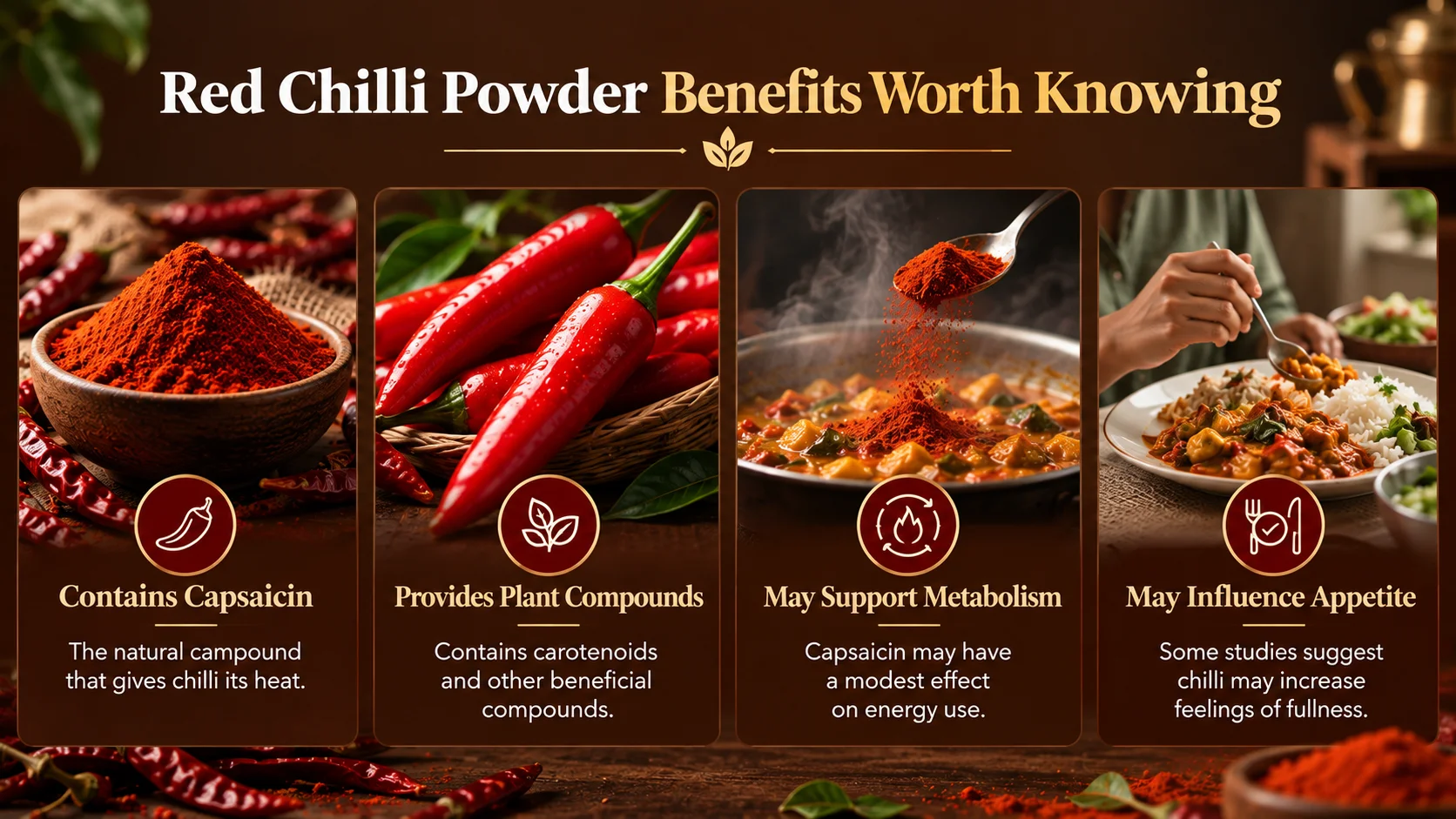
Red Chilli Powder Benefits Worth Knowing

Red chilli powder benefits are mainly associated with naturally occurring compounds such as capsaicin and carotenoids, along with nutrients found in chilli peppers. Capsaicin is responsible for the characteristic heat of chilli and has been studied for its potential effects on energy expenditure and appetite. However, human studies suggest that these effects are relatively modest and should not be interpreted as a weight-loss treatment.

Chilli peppers can also provide vitamin C and other nutrients, although the amount consumed as chilli powder is usually small. Therefore, the health benefits of red chilli powder are best considered as part of an overall balanced diet rather than as a primary source of nutrition.
The benefits of eating red chilli in moderate quantities as part of regular meals have also been linked in some studies to reduced appetite over time, since capsaicin can create a mild feeling of fullness, though results vary between individuals and should not be treated as a guaranteed outcome.

Is Red Chilli Powder Bad for Health in Large Quantities?

“Is red chilli powder bad for health?” becomes a more relevant question at higher consumption levels rather than typical cooking quantities. Excessive intake can irritate the stomach lining, worsen symptoms for people with acid reflux or ulcers, and in some cases contribute to a burning sensation during digestion.

Red chilli powder side effects at high doses may include stomach discomfort, increased heart rate in sensitive individuals, and skin or eye irritation if the powder comes into direct contact during handling. Disadvantages of red chilli powder are generally tied to overconsumption or individual sensitivity rather than the spice itself being harmful when used in typical Indian cooking quantities.

Which Red Chilli Powder Is Good for Your Health?

It often depends on individual tolerance rather than one variety being universally healthier. A milder Kashmiri-based powder may suit people with sensitive digestion who still want the colour and flavour benefits of chilli, while those without digestive concerns can typically handle a Byadgi or Guntur-based option without issue.
“Is Kashmiri red chilli powder good for health?” is a common follow-up question. Kashmiri red chilli powder contains naturally occurring compounds found in chilli peppers and is generally known for its bright colour and relatively mild heat. Whether it suits you depends on your individual tolerance and how much you consume.

Is Eating Red Chilli Powder Good for Health Every Day?

On a daily basis, it comes down to quantity and individual response. Most people who include chilli powder in daily cooking at typical culinary amounts, meaning a small measured spoon per dish rather than a concentrated dose, are unlikely to experience negative effects and may benefit from its antioxidant and digestive properties.
“Is chilli powder good for health for someone with a pre-existing digestive condition?”
Now, that’s a different question entirely, and such individuals should consult a doctor or nutritionist before making significant changes to their spice intake, particularly if they already experience acidity or discomfort after spicy meals.

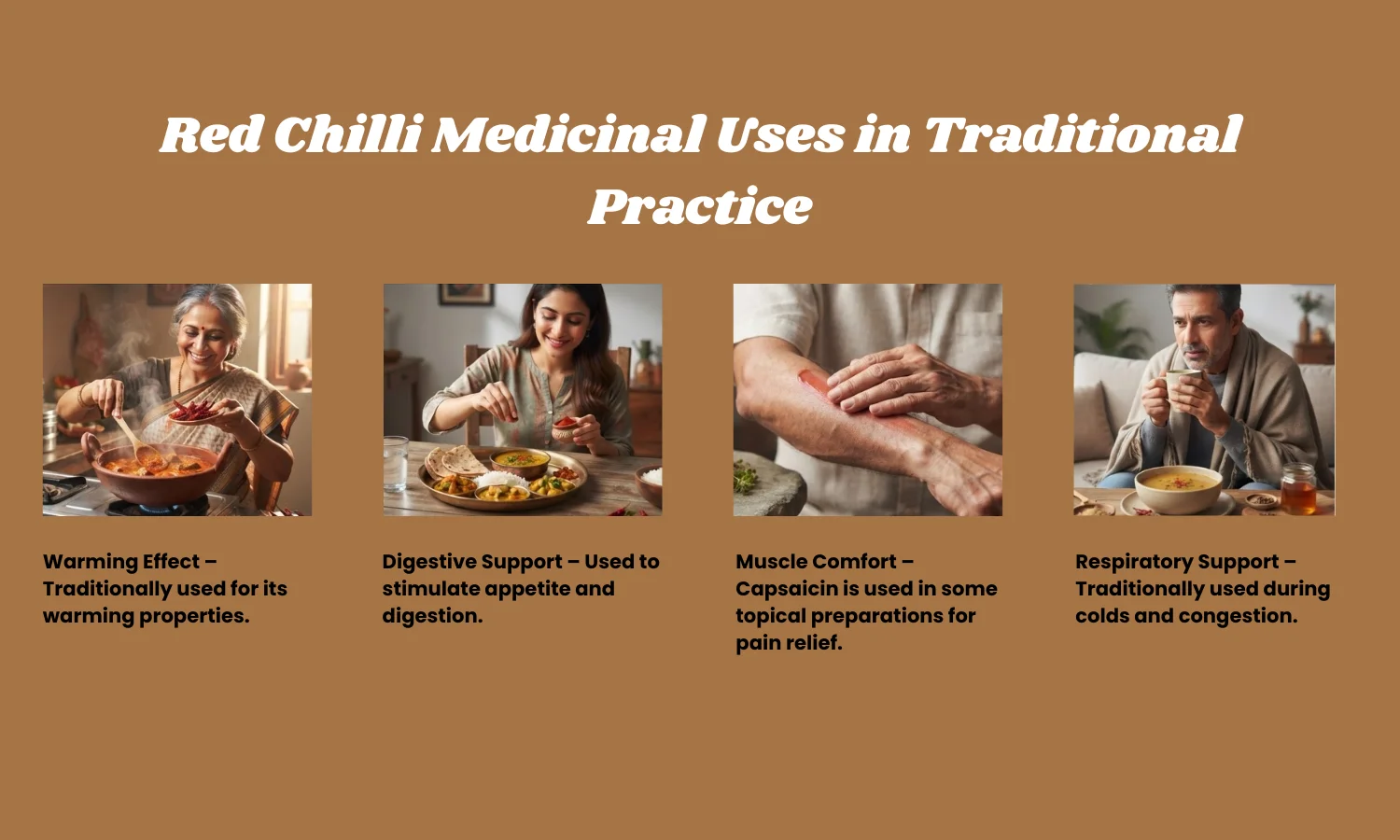
Red Chilli Medicinal Uses in Traditional Practice

Red chilli medicinal uses in traditional Indian medicine include the following:

is red chilli powder good for health

  • Warming the body: Generates internal heat and helps stimulate metabolic energy.
  • Supporting circulation: Promotes healthy blood flow throughout the body.
  • Relieving muscle discomfort: Used occasionally in diluted form as a topical remedy to ease sore muscles and joint pain.
  • Stimulating digestion: Enhances digestive fire (Agni in Ayurveda) to improve appetite and aid sluggish digestion.
  • Clearing respiratory congestion: Helps thin mucus and clear blocked nasal passages during colds or sinus issues.
  • Preparing Gluten-Free Snacks: Red chilli powder is widely used to colour and flavour popular gluten-free Indian snacks like dhokla, chivda (made with puffed rice or flattened rice), aloo bhujia (made with chickpea flour), and pakoras (made with besan/gram flour).

These uses rest on long-standing cultural practice rather than extensive clinical research, so they work best as supplementary knowledge rather than a substitute for medical advice.

Cook With Red Chilli Powder You Can Trust

“Is red chilli powder good for health?” does not have a single yes or no answer, since the outcome depends heavily on quantity, individual tolerance, and any existing digestive conditions. Used sensibly as part of everyday Indian cooking, red chilli powder offers real nutritional value through capsaicin, vitamin C, and antioxidants, while excessive use can tip the balance towards discomfort rather than benefit.777 Foods produces Premium Red Chilli Powder using controlled drying and milling processes from its Tamil Nadu facility, helping preserve natural nutrients and colour without unnecessary additives.Shop on the official 777 Foods website for high-quality chilli powder and other products in the 777 range.

Key Takeaways

  • The question, “Is red chilli powder good for health?” largely depends on quantity, since moderate use offers digestive and antioxidant benefits while excess intake can cause irritation.
  • Red chilli powder benefits include capsaicin, vitamin C, and carotenoid antioxidants, best understood as part of a broader balanced diet rather than a standalone remedy.
  • Red chilli powder side effects at high doses can include stomach discomfort and worsened acidity, particularly for people with existing digestive sensitivity.
  • Anyone with a pre-existing digestive condition should consult a doctor before making major changes to their red chilli powder intake.

FAQs

Is red chilli powder good for health if I have acidity issues?For people with acidity or acid reflux, red chilli powder usually comes with a caution, since spicy food, including chilli powder, can worsen symptoms. A milder Kashmiri variety in smaller quantities may be better tolerated, but it is best to discuss persistent acidity with a doctor.
What are the main red chilli powder side effects to watch for?Red chilli powder side effects at higher intake levels can include stomach discomfort, a burning sensation during digestion, and occasional skin or eye irritation during handling. These effects are generally linked to overconsumption rather than typical cooking amounts.
Are the health benefits of red chilli powder backed by science?Several health benefits of red chilli powder, particularly those linked to capsaicin’s effect on metabolism and digestion, have been studied in nutrition research. However, the benefits observed in studies often use concentrated capsaicin doses rather than typical cooking quantities, so results should be viewed with reasonable expectations.

Chilli Powder Price in India: What Affects the Cost Per Kg

Overview

Chilli powder price in India depends on chilli variety, packaging size, brand quality testing, and seasonal supply from growing regions such as Guntur and Byadagi. Prices for Kashmiri, Byadagi, and Guntur-based powders differ, and larger packs generally offer a lower per-kilogram cost than smaller sachets, though branded and tested products carry a premium over loose market chilli.

Why Does Chilli Powder Price Vary So Much?

Chilli powder price is rarely a fixed number, since it moves with variety, season, packaging, and brand. A shopper comparing two packets side by side may notice a significant gap in price even when the weight is identical, and this usually comes down to differences in the chilli variety used, the level of processing and quality testing involved, and if the brand invests in traceable sourcing.
Understanding Kashmiri chilli powder price separately from a general mix, as well as keeping track of how condiment costs compare, like the standard chilli sauce price, is important, since Kashmiri chilli is often grown in smaller volumes compared to Guntur or Byadgi chilli, which can push its per-kilogram cost higher despite its milder heat profile.

Red Chilli Powder Price by Pack Size in India

Pack size has a direct effect on red chilli powder price because smaller packaging involves proportionally higher material and handling costs relative to the product inside. Shoppers researching red chilli powder 1kg price compared to red chilli powder 500 g price or red chilli powder 100 gm price will typically find that the larger pack offers a better per-gram rate, assuming the household will use the full quantity before it loses freshness.
For a clearer sense of scale, the table below outlines how pricing structure typically changes across common pack sizes, based on general market patterns rather than a specific date.

Pack Size Typical Price Positioning Best Suited For
100 gm Higher cost per gram Trial purchase, small households
250 gm Moderate cost per gram Regular monthly use
500 gm Lower cost per gram Larger families, frequent cooking
1 kg Often lower cost per gram Bulk buyers, small food businesses

Buyers checking chilli powder 100 g price, chilli powder 500 g price, or chilli powder 250 g price across multiple brands should always divide the total price by weight to get a true comparison, since promotional pricing can sometimes make a smaller pack appear more attractive at first glance than it actually is.

Chilli Powder Price Per Kg: Comparing the Different Varieties

Looking at chilli powder price per kg across varieties reveals meaningful differences. Guntur chilli powder price tends to sit in a mid-range bracket due to relatively high production volume in Andhra Pradesh, while Byadgi chilli powder price often runs slightly higher due to a more limited cultivation area and the extra care needed to preserve its distinctive colour during processing.The red chilli powder price per kg for a general blended spice mix usually falls between the pure Kashmiri and pure Guntur price points, since mixed products combine both varieties in proportions chosen by the manufacturer. For businesses buying in volume, comparing the 1 kg chilli powder price across at least three suppliers is a reasonable practice before committing to a bulk order.

Kashmiri Chilli Powder Price and Kashmiri Red Chilli Powder Price

Kashmiri red chilli powder price typically sits above standard mixed chilli powder due to the variety’s specific colour retention requirements and comparatively limited cultivation. Byadgi chilli powder 1 kg price and Kashmiri chilli powder 1 kg price can be close to each other in some markets, though this varies by season and by how much of the supply chain the seller controls directly.For households or businesses that specifically need the Kashmiri variety for colour-forward dishes, it is worth budgeting slightly more compared to a general-purpose chilli powder, since substituting a cheaper mix can compromise the intended visual result of the dish.

What Factors Affect Chilli Powder Price in India?

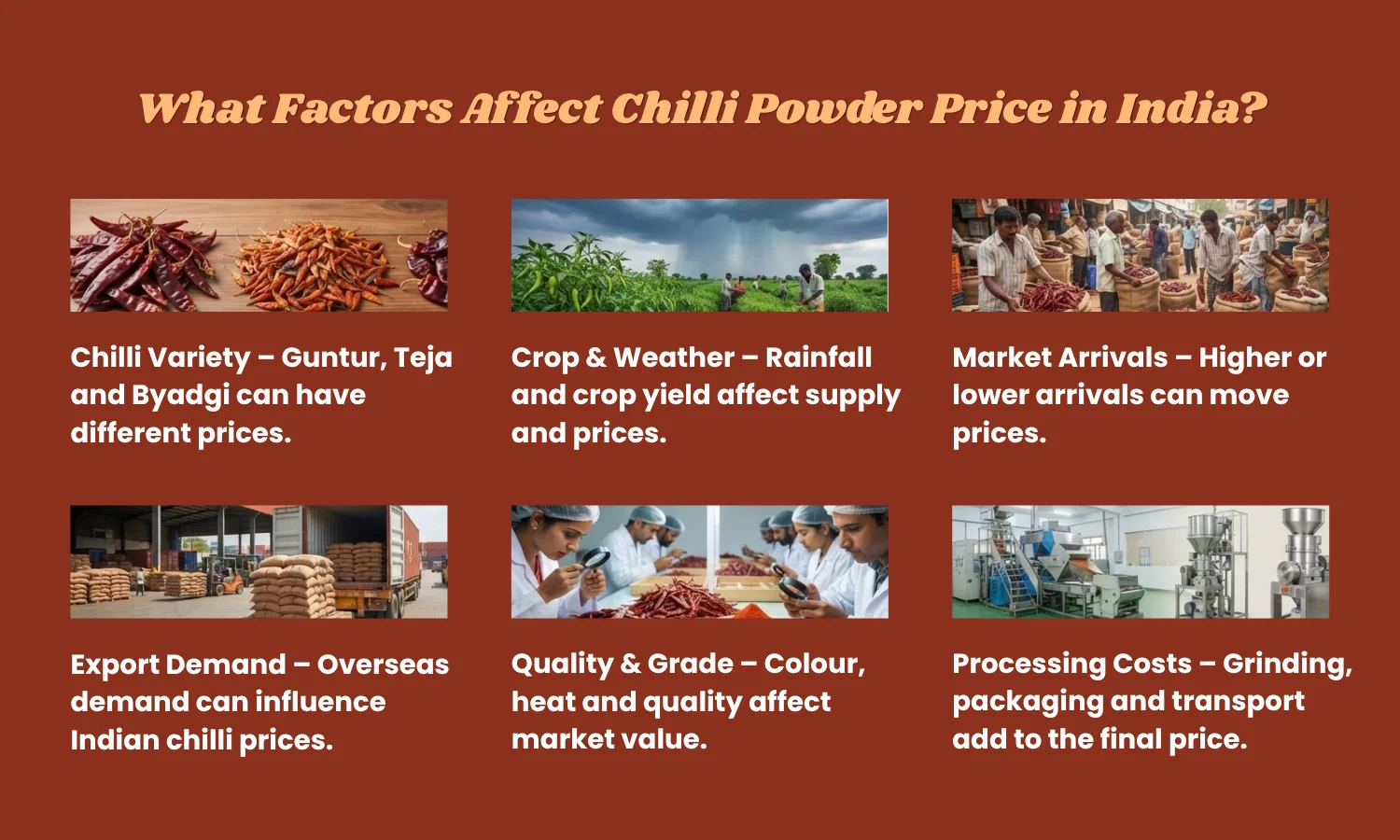
Red chilli price in India and chilli powder price in India at a broader level respond to monsoon conditions in growing states, since erratic rainfall in regions like Guntur, Byadagi, and parts of Madhya Pradesh can reduce yield and tighten supply.
Transport costs, storage infrastructure, and export demand also play a role, since a portion of India’s chilli production moves into international markets each year, which can affect domestic availability and pricing.
Rather than relying on outdated figures found in older articles, buyers who need current numbers should check listings directly through an established manufacturer’s official store, since spice prices can shift meaningfully within a single season.

Compare Prices With Confidence

777 Foods lists clear, current pricing across its range of red chilli powders in multiple pack sizes, from small household packs to bulk options suited for small food businesses. Check the official 777 Foods store for the latest chilli powder price before placing your next order.Chilli powder price in India is shaped by variety, pack size, seasonal supply, and brand quality standards rather than a single fixed market rate. Comparing per-kilogram cost across pack sizes and checking current listings with a trusted manufacturer remains the most reliable way to buy well, for a household kitchen or a small food business.

Key Takeaways

  • Chilli powder price depends on chilli variety, pack size, seasonal supply, and the level of quality testing a brand performs before packaging.
  • Larger pack sizes generally offer a lower chilli powder price per kg compared to smaller sachets, though freshness should still guide the purchase decision.
  • Kashmiri chilli powder price and Kashmiri red chilli powder price tend to sit higher than general mixes due to limited cultivation and colour retention needs.
  • Byadgi chilli powder price and Guntur chilli powder price differ based on cultivation volume and processing requirements for each variety.
  • Checking current listings directly on a trusted brand’s official store gives a more accurate red chilli powder price than relying on older published figures.

FAQs

Why does Kashmiri chilli powder price tend to be higher than regular chilli powder?Kashmiri chilli powder price runs higher mainly because of limited cultivation volume compared to Guntur or Byadgi chilli, along with the extra care needed during drying and milling to preserve its distinctive bright colour without increasing pungency.
Is it cheaper to buy chilli powder in bulk?Generally yes, since chilli powder price per kg tends to drop as pack size increases due to lower proportional packaging and handling costs. This makes bulk buying more economical for larger households or small food businesses that will use the full quantity before it loses freshness.
How much does red chilli powder price change with the seasons?Red chilli price in India can shift noticeably around harvest and monsoon periods, since a weak or delayed monsoon in growing regions can reduce yield and push prices upward. Buyers planning a bulk purchase should check current pricing rather than relying on figures from a previous season.
How do you calculate chilli powder price per kg? The chilli powder price per kg is calculated by dividing the pack price by its weight and multiplying by 1,000. For 777 Premium Red Chilli Powder, prices currently range from ₹20 to ₹175 across available pack sizes, so comparing the per-kg rate helps identify the better value

Best Chilli Powder in India: How to Choose the Right One

Overview

The best chilli powder depends on the cooking purpose, since a mild Kashmiri variety suits colour-forward curries while a Guntur-based mix suits spicier South Indian dishes. Quality markers include natural colour, low moisture, strong aroma, and transparent sourcing. Brand reputation, testing standards, and pack freshness matter more than price alone when comparing options.

Chilli Powder or Chilly Powder: Getting the Basics Right

Before comparing brands, it helps to clear up a small but common confusion. If spelled “chilly” or “chilli,” both refer to the same ground spice made from dried red chillies, with “chilli” being the more widely accepted spelling internationally and “chilly” appearing more often in Indian packaging and casual usage. This guide uses “chilli” throughout, but shoppers searching for either spelling online will find the same product category.
Chilli powder itself is not a single standardised product. It varies by the chilli variety used, the drying method, the fineness of the grind, and whether the manufacturer mixes multiple varieties for a specific colour and heat profile.

What Makes the Best Chilli Powder in India?

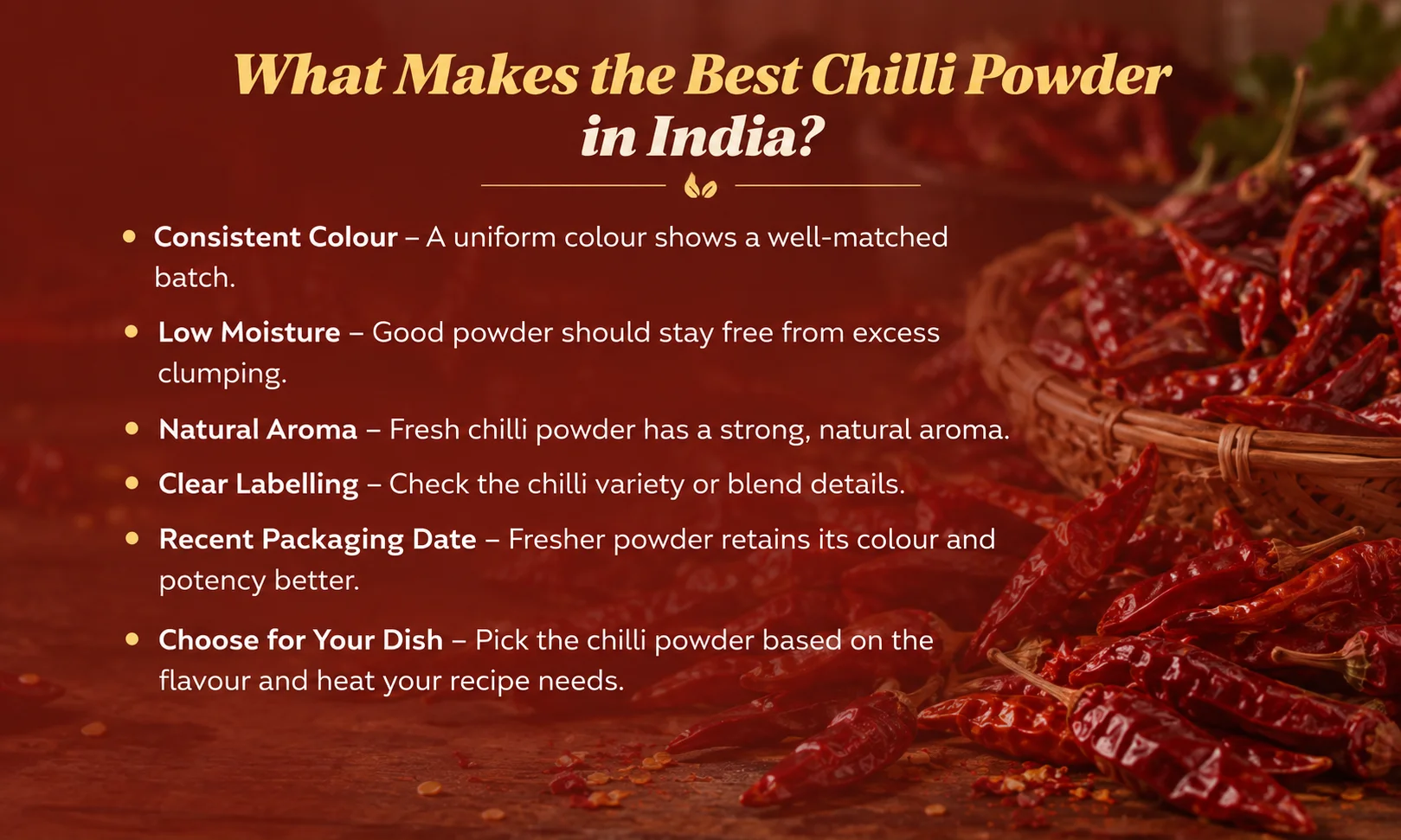
Identifying the best chilli powder in India starts with matching the product to its intended use rather than chasing a single universal winner. This holds true for rich vegetarian curries, delicate gravies, or everyday vegetarian snacks. A mix that works well for a spicy Andhra-style curry may be entirely unsuitable for a delicate colour-forward gravy, and vice versa. best chilli powder The best red chilli powder in India generally shares a few common traits regardless of variety, including the following:

  • Consistent colour across the batch
  • Minimal clumping from excess moisture
  • A strong natural aroma
  • Clear labelling that discloses the chilli variety or mix ratio used

Buyers should also check for a recent packaging date, since chilli powder gradually loses potency and vibrancy over time even when stored correctly.

Best Kashmiri Chilli Powder and Red Chilli Powder: How to Choose

For those specifically seeking the best Kashmiri chilli powder, the priority should be colour intensity paired with genuinely mild heat, since some mixes marketed as Kashmiri actually mix in a hotter variety to cut costs. The best Kashmiri red chilli powder brands are transparent about whether their product is a pure single-origin Kashmiri chilli or a mix, which matters for cooks who specifically want the milder heat profile.

Determining which Kashmiri chilli powder is best or which brand Kashmiri chilli powder is best for a specific household often comes down to personal taste testing across two or three trusted brands, since colour intensity and heat can vary slightly even within genuine Kashmiri-sourced products depending on the harvest season.

The Best Mirchi Powder for Everyday Indian Cooking

The best mirchi powder for daily use is typically a balanced mix rather than a single-origin extreme, since most households need a chilli powder that works across dal, subji, curries, evening snacks recipes, and marinades. Many established Indian spice brands offer exactly this kind of all-purpose mix, combining a Kashmiri base for colour with a small proportion of a hotter variety for depth.When comparing which chilli powder is best for general kitchen use, check if the packaging specifies the chilli variety used, since an undisclosed mix makes it harder to predict how it will behave in a recipe.

Best Chilli Powder for Pickle and Mango Pickle

Pickling calls for a slightly different quality profile compared to everyday cooking, since the chilli powder needs to hold its colour and heat over months of storage in oil and salt. The best chilli powder for pickle typically uses a Byadgi or Guntur base, since these varieties carry enough natural heat and colour stability to remain effective throughout the pickle’s shelf life.For the best chilli powder for mango pickle specifically, many traditional recipes across South India favour a coarser grind with slightly higher oil absorption capacity, which helps the chilli distribute evenly through the pickle rather than settling at the bottom of the jar. The best spicy red chilli powder in India recommendation for pickling would typically lean towards a pure Guntur-based product rather than a milder mix.

Best Chilli Powder Brand: What Separates Good From Average

The best chilli powder brand is defined less by marketing and more by consistency across batches, transparent sourcing, and adherence to food safety testing for contaminants such as unauthorised colourants. “Which brand chilli powder is best?” often comes down to a brand’s willingness to disclose its sourcing region, processing method, and quality testing protocol rather than relying on vague claims of purity.
The “chilli powder of the best brand” for a specific household may not be the most expensive one on the shelf, since price alone does not guarantee better quality.
A mid-range, well-tested product from an established manufacturer with decades of experience, such as 777 Foods operating out of Tamil Nadu, often delivers more reliable results than an unfamiliar premium label with limited traceability.

The Best Organic Chilli Powder as an Alternative

For buyers who prioritise farming practices alongside taste and colour, the best organic chilli powder available in India offers a certified alternative to conventional options, though typically at a higher price point due to the more labour-intensive organic farming process involved.

Try a Chilli Powder Built on Decades of Experience

777 Foods has manufactured red chilli powder and other packaged spices from Tamil Nadu for decades, with consistent quality checks across every batch. If you are trying to identify the best chilli powder for your household or food business, browse the current range on the official 777 Foods store and compare it against your specific cooking needs.
Also, check out the 777 Premium Red Chilli Powder, which makes your meals more delicious and flavourful.

Choosing the Right Chilli Powder for Your Cooking Needs

There is no single chilli powder that suits every kitchen. The right choice depends on the dish, desired heat level, and whether colour or pungency matters more. Comparing sourcing information, freshness, ingredients, and product consistency can help you choose a powder for everyday cooking, pickling, or specific recipes.

Key Takeaways

  • The best chilli powder depends on the cooking purpose, so a colour-forward Kashmiri mix and a heat-forward Guntur mix serve different needs.
  • The best Kashmiri chilli powder brands disclose if the product is pure single-origin Kashmiri or a mixed product to avoid misleading buyers.
  • The best chilli powder for pickle, especially the best chilli powder for mango pickle, typically uses a Byadgi or Guntur base for colour and heat stability over time.
  • A best chilli powder brand is defined by batch consistency, transparent sourcing, and food safety testing rather than price alone.
  • Checking packaging date, moisture level, and aroma remains the simplest way to judge quality regardless of which brand or variety is chosen.

FAQs

Which chilli powder is best for everyday Indian cooking?For most households, a balanced mix combining Kashmiri chilli for colour and a small proportion of Byadgi or Guntur chilli for heat works well across curries, dals, and subjis. This is generally considered the best mirchi powder for daily use rather than a single-origin extreme variety.
Is the most expensive chilli powder always the best chilli powder?Not necessarily. Price often reflects packaging, branding, and marketing as much as actual quality. Checking for transparent sourcing, testing standards, and freshness gives a more reliable picture of the best chilli powder in India than price alone.
Which chilli powder is best for pickle making at home?A Byadgi or Guntur-based chilli powder is generally the best chilli powder for pickle, since these varieties hold their colour and heat well through months of storage in oil and salt, which is essential for a pickle’s shelf life.

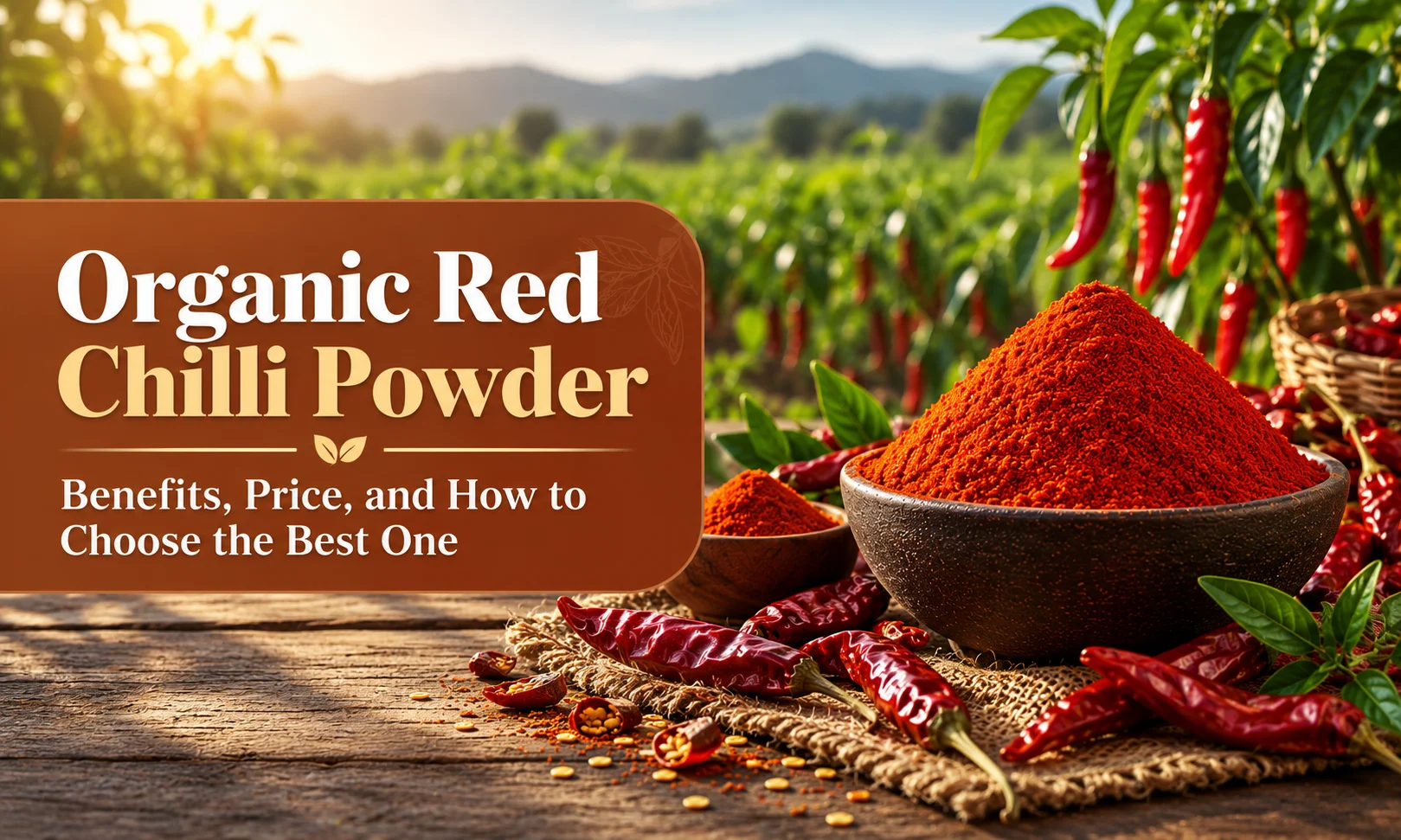
Organic Red Chilli Powder: Benefits, Price, and How to Choose the Best One

Overview

Organic red chilli powder is made from chillies grown without synthetic pesticides or chemical fertilisers, then dried and milled using controlled processes. It typically costs more than regular chilli powder due to certification and farming practices, but many health-conscious buyers prefer it for reduced chemical residue and often stronger natural colour and aroma.

What Does Organic Red Chilli Powder Actually Mean?

Organic red chilli powder refers to chilli powder made from pods grown under certified organic farming practices, which means no synthetic pesticides, chemical fertilisers, or genetically modified seeds are used during cultivation. The distinction is not just marketing language, since certified organic farms are typically inspected and must meet specific soil and input standards before their produce can carry the organic label.
This is different from a standard organic chilli powder claim without certification, where the term may be used loosely without third-party verification.
Shoppers who care about this distinction should look for a recognised certification mark on the packaging rather than relying on the word “organic” printed alone.

Organic Kashmiri Red Chilli Powder and Other Popular Variants

Organic Kashmiri red chilli powder combines the mild heat and strong colour associated with the Kashmiri variety with organic farming practices, making it a popular choice among households that want both a specific flavour profile and reduced chemical exposure. This variant is frequently used in colour-forward dishes such as tandoori marinades, where the absence of synthetic residue is seen as an added benefit alongside taste. It is also an ideal pantry staple when prepping flavour-packed meals in minutes for busy weeknights, delivering rich colour without overwhelming spice.Beyond Kashmiri, organic lal mirch powder made from other chilli varieties is also available, though selection tends to be narrower compared to conventionally grown chilli powder simply because organic cultivation requires more careful management and generally yields less per acre.

Is Organic Chilli Powder Actually Healthier? – A Must-Have Discussion

Comparisons on the benefits of organic red chilli powder vs. regular chilli powder often focus on the absence of pesticide residue rather than a dramatic difference in core nutrition, since the vitamin C, capsaicin, and antioxidant content in the chilli itself do not change significantly based on farming method alone. The primary health argument for organic chilli powder rests on reduced exposure to chemical inputs used during cultivation.
Because mild organic chilli powders provide vibrant colour without a harsh burn, parents often prefer them when making homemade savoury treats or healthy snacks for kids, such as roasted chickpeas, makhana, or sweet potato wedges, ensuring taste without chemical additives.Some buyers also report that natural red chilli powder grown organically tends to have a more pronounced, less muted flavour, potentially because organic farming practices often align with traditional sun drying and minimal processing rather than heavy industrial handling. This is not a guaranteed rule across every brand, but it is a commonly cited observation among households that have switched.

Best Organic Chilli Powder: What to Check Before Buying

organic red chilli powder

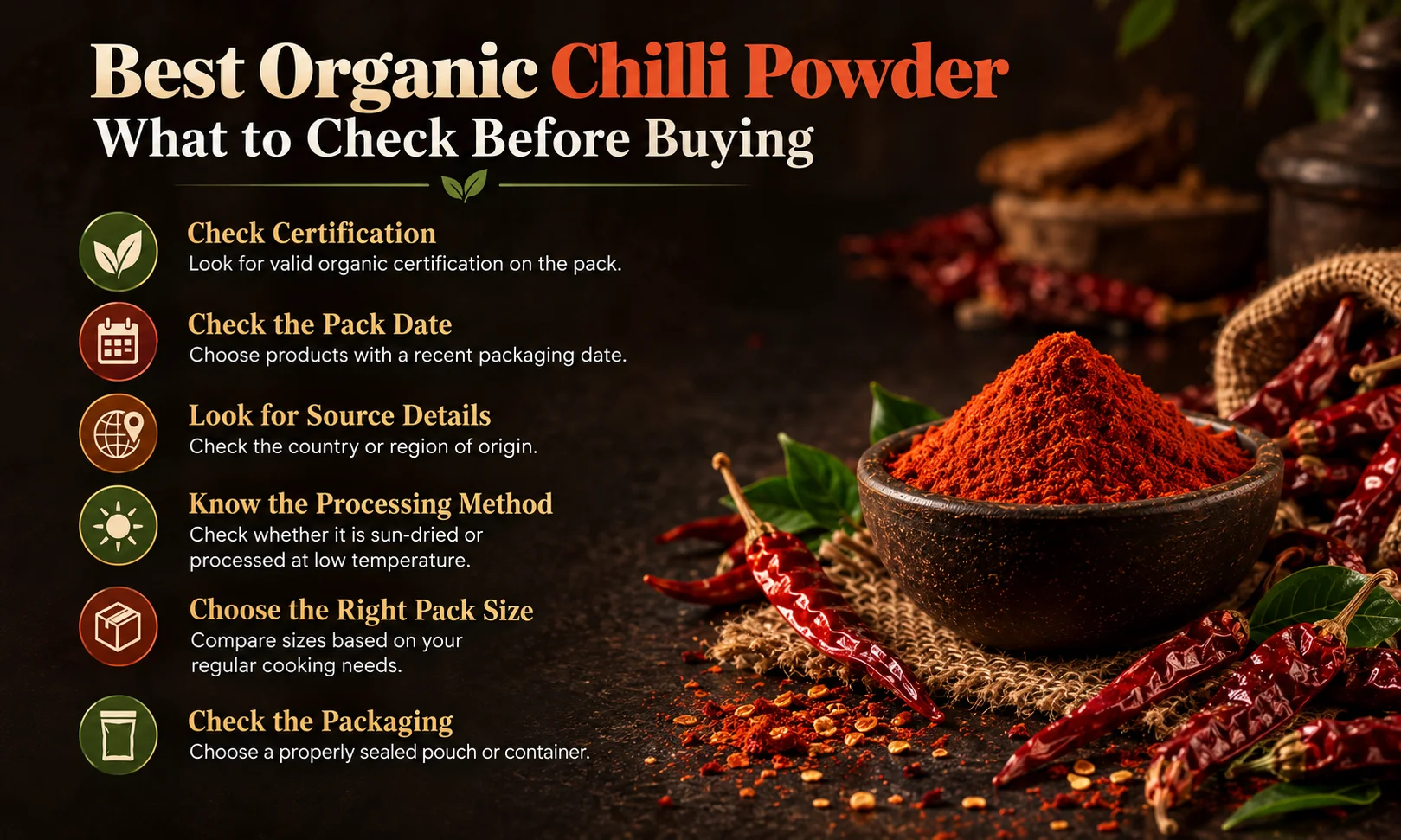
  • Identifying the best organic chilli powder starts with verifying certification, since an uncertified product using the word “organic” on its label offers no independent guarantee of the farming practices behind it.
  • Beyond certification, checking for a recent packaging date, a sealed pouch or container, and a clear country or region of origin all help confirm quality.
  • The best organic red chilli powder brands typically disclose their sourcing region and processing method, whether that is traditional sun drying or a controlled low-temperature mechanical process that preserves colour and nutrients better than high-heat drying.
  • Buyers looking to buy organic red chilli powder for regular household use should also compare pack sizes carefully, since organic products are often sold in smaller quantities compared to conventional chilli powder. This high-potency spice works exceptionally well when crafting home condiment staples or quick pickle recipes, where a clean, potent chilli flavour acts as the centerpiece.

Organic Red Chilli Powder Price and Why It Costs More

Organic red chilli powder price typically runs higher than conventional red chilli powder, and this difference comes down to several factors rather than marketing alone. Organic farming generally involves lower yield per acre, higher labour input for pest management without synthetic chemicals, and mandatory certification costs that get passed on through the supply chain.For households or small food businesses weighing if the price difference is worth it, the decision usually comes down to priorities. If reduced chemical exposure and support for sustainable farming practices matter more than upfront cost, organic chilli powder is a reasonable choice.
If budget is the primary concern and the household already trusts a quality-tested conventional brand, a well-sourced regular red chilli powder organic in name only, without full certification, may not justify the extra spend.

Choose the Right Chilli Powder for Your Kitchen

Organic red chilli powder offers a meaningful alternative for households that prioritise reduced chemical exposure and sustainable farming practices, though it comes at a higher price point than conventional chilli powder. Whether it is the right choice depends on individual priorities around budget, taste preference, and how much weight a buyer places on certification. Checking sourcing details and certification marks remains the most reliable way to separate a genuinely organic product from one using the label loosely.
777 Foods offers a carefully processed range of red chilli powders from its Tamil Nadu facility, with clear labelling and consistent quality checks across every batch. If you are deciding between organic and conventional options, browse the current range on the official 777 Foods store to compare sourcing details and pack sizes before you buy.

Key Takeaways

  • Organic red chilli powder is grown without synthetic pesticides or chemical fertilisers and should carry a recognised certification mark rather than just the word “organic” on the label.
  • Organic Kashmiri red chilli powder combines mild heat and strong colour with organic farming practices, popular for tandoori and colour-forward dishes.
  • Core nutrition does not change dramatically with organic farming, but “benefits of organic red chilli powder vs. regular red chilli powder” comparisons usually centre on reduced chemical residue.
  • The best organic chilli powder brands disclose sourcing region, processing method, and certification details rather than relying on vague labelling.
  • Organic red chilli powder price is generally higher due to lower yield, more labour-intensive farming, and certification costs across the supply chain.

FAQs

Is organic red chilli powder spicier than regular chilli powder?Spice level in organic red chilli powder depends on the chilli variety used, not the farming method, so an organic Guntur-based powder will still be spicier than an organic Kashmiri-based one. Organic certification affects how the chilli is grown, not how hot the variety itself naturally is.
How can I tell if organic Kashmiri red chilli powder is genuine?Check for a recognised organic certification logo on the packaging along with a batch number and manufacturing date. Genuine organic Kashmiri red chilli powder brands are usually transparent about their sourcing region and are willing to share certification details if asked directly.
Does organic chilli powder have a shorter shelf life?Not necessarily, since shelf life depends more on drying method, moisture content, and packaging quality than on if the chilli was grown organically. A well-processed and properly sealed pack of organic red chilli powder can last just as long as a conventional one.

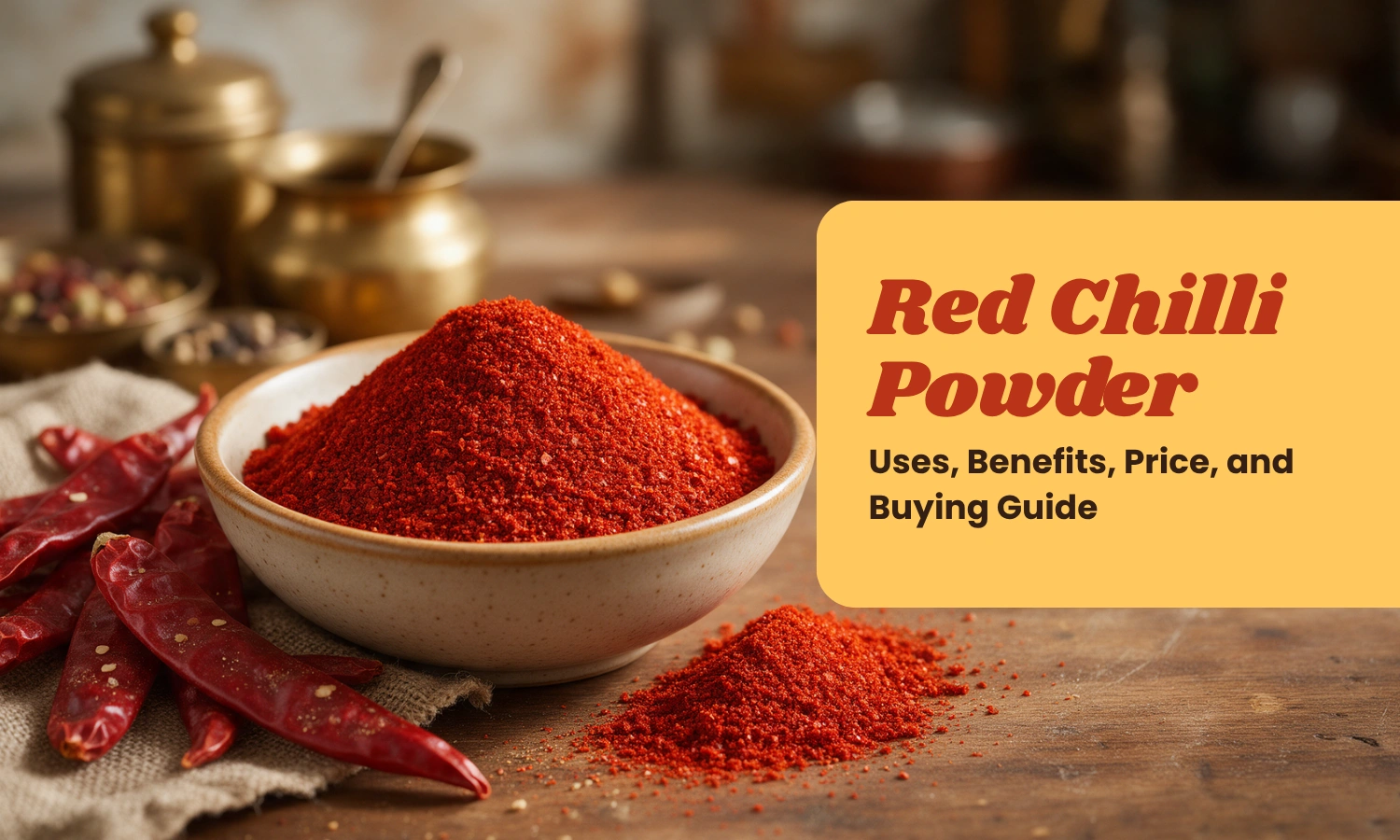
Red Chilli Powder: Uses, Benefits, Price, and Buying Guide

Overview

Red chilli powder is a ground spice made from dried red chillies, used across Indian cooking for colour, flavour, and heat. It comes in varying grades based on the chilli variety used, with Kashmiri offering mild heat and Guntur offering a sharper bite. Price, purity, and freshness are the main factors to check before buying a packet.

What Makes Good Red Chilli Powder? Quality, Purity, and Freshness

Red chilli powder is produced by drying red chillies, either under the sun or through controlled drying, before grinding them into a fine or coarse powder. The quality of the final product depends on factors such as the chilli variety, drying process, grinding, moisture control, and packaging.
A good Kashmiri red chilli powder should have a consistent colour and a fresh chilli aroma, without signs of moisture, mould, or a musty smell. Pure red chilli powder generally refers to powder made from ground dried chillies without added fillers or colourants. Checking the ingredient list on a red chilli powder packet can help you understand what the product contains.
777 Foods also uses red chilli powder in products such as Kaara Kuzhambu Paste, where chilli contributes to the colour and flavour of the preparation.

Factors Affecting Red Chilli Powder Price: What to Expect

The red chilli powder price varies depending on the chilli variety, the brand, the pack size, and current market conditions in growing regions. Shoppers comparing the red chilli powder price of 1 kg against smaller pack sizes will usually notice that larger packs cost less per gram, though the total upfront spend is naturally higher.

Those researching the red chilli powder 500 g price or red chilli powder 100 gm price should note that a spicy red chilli powder mix using Guntur chilli often costs differently from a milder Kashmiri pack. Rather than relying on outdated figures, check the current listing directly on the manufacturer’s store for the most accurate red chilli powder price.

red chilli powder

Must-Know Benefits of Red Chilli Powder

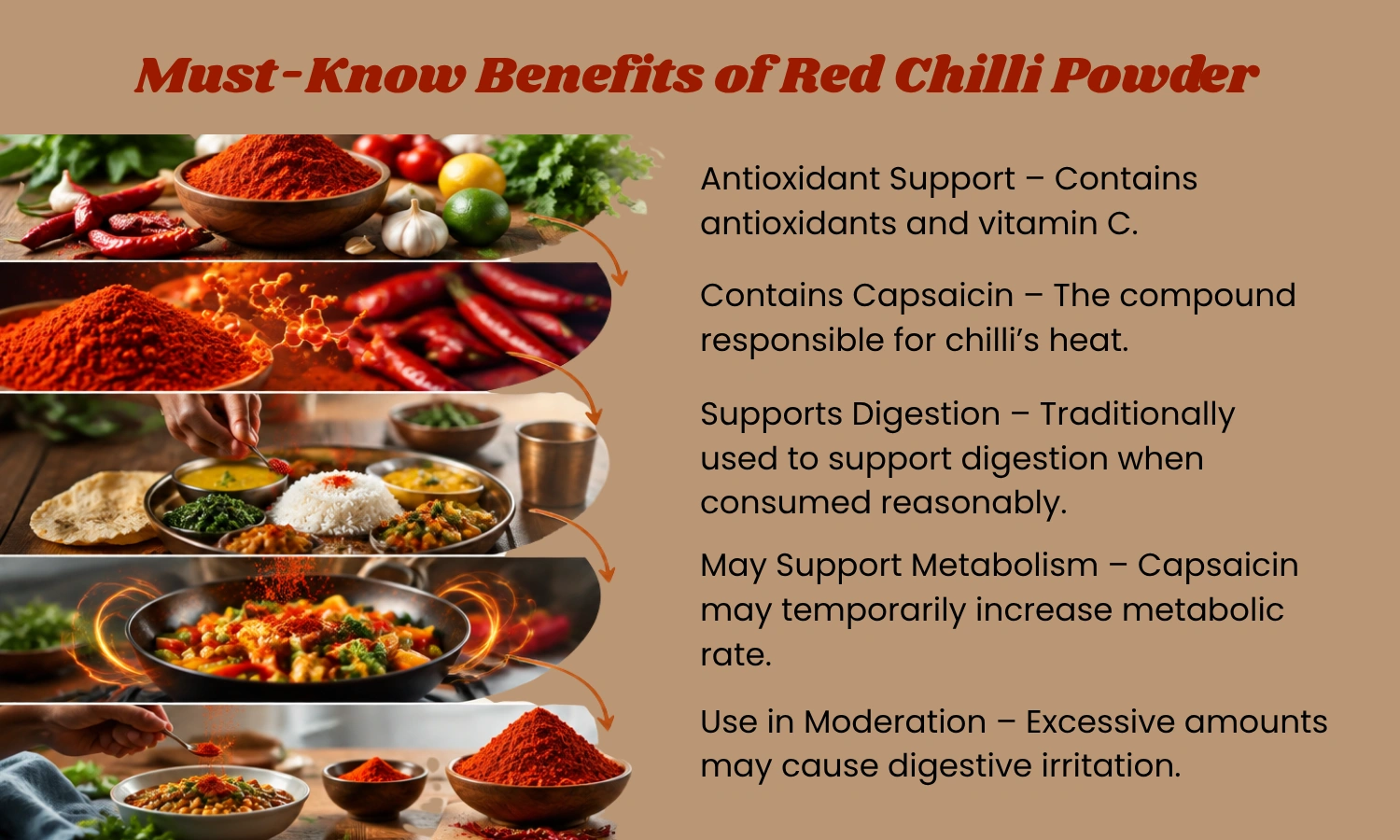
Red chilli powder benefits come primarily from capsaicin, the compound that gives chilli its heat. Here are some of the benefits:

  • The antioxidants and vitamin C found in red chilli powder neutralize free radicals in the body. These radicals are unstable molecules that can cause cellular damage and premature aging.
  • Benefits of red chilli powder in traditional Indian cooking are often described in terms of improved digestion and appetite stimulation when consumed in reasonable quantities as part of a balanced meal, though it should not be treated as a standalone health remedy.
  • Moderate use of red chilli powder has also been associated with a temporary boost in metabolic rate due to capsaicin, a finding supported by several nutrition studies over the years.

That said, anyone with acidity, ulcers, or other digestive sensitivity should use it carefully, since excessive quantities can cause irritation rather than benefit.

Can We Eat Red Chilli Powder in Navratri Fast?

“Can we eat red chilli powder in Navratri fast?” is a frequently asked question, especially among households observing traditional fasting rules during the festival. In most fasting traditions followed across North and West India, regular red chilli powder is avoided because standard spice mixes and regular salt are typically restricted during Navratri.
However, the answer to “Can we eat red chilli powder in fast?” can vary by family and regional custom. Some households allow black pepper or green chilli as a substitute for heat during fasting days, while red chilli powder made specifically without any grain-based fillers is occasionally permitted in certain traditions.
It is best to follow the specific fasting rules observed within a family rather than assuming a single universal answer applies across India.

The Best Red Chilli Powder: What to Look For

Identifying the best red chilli powder for a household depends on matching the variety to cooking habits. For families that prefer mild, colour-rich gravies, a Kashmiri-based pack works well, while those cooking spicier Andhra or South Indian-style food often prefer a Guntur-based mix.

The best red chilli powder in India is generally one that combines transparent sourcing, consistent moisture control, and third-party quality testing for adulterants such as unauthorised colourants. Buying red chilli powder online from an established manufacturer with visible batch information and clear labelling is usually safer than opting for unbranded, loose powder sold without any traceability. 777 Foods’ Premium Red Chilli Powder delivers this exact standard of reliability, ensuring pure, unadulterated spice, natural colour, and balanced heat in every batch.

red chilli powder

Common Uses of Red Chilli Powder in Indian Cooking

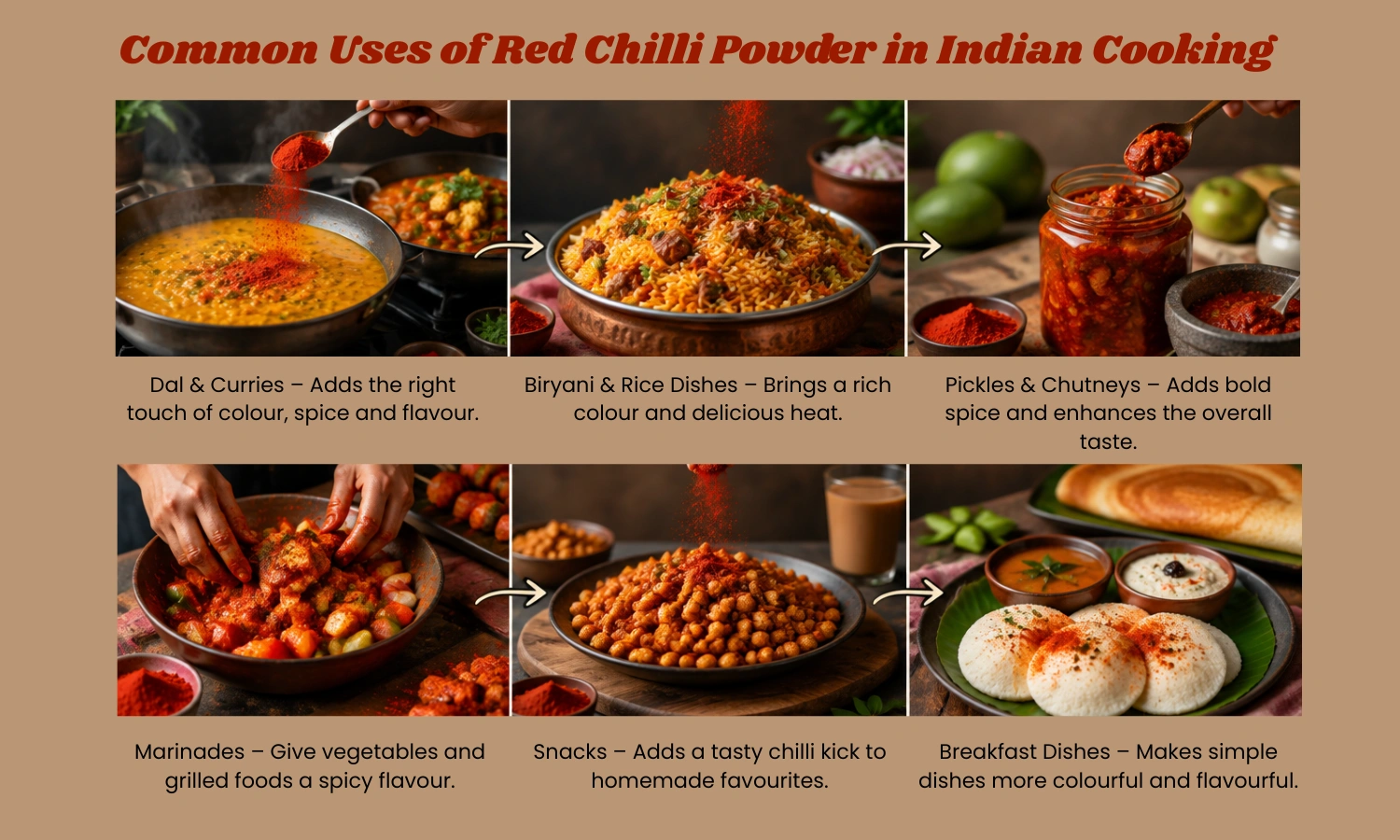
Red chilli powder uses span nearly every category of Indian cooking. Some of those uses are given below:

  • It is used in everyday dal and Indian subji, festive biryanis, marinades, and pickles.
  • It is typically added early in the cooking process when used in oil-based tempering, since this helps release its colour and aroma, while a smaller pinch is sometimes added later in a dish for an extra layer of visible heat on serving.
  • Beyond vegetable curries, red chilli powder also finds its way into snack seasoning, chutney bases, and even some baked or grilled preparations where a South Indian or fusion flavour profile is desired.
  • Because a low-calorie breakfast (like oats or steamed lentils) can sometimes taste plain, red chilli powder adds rich flavour, vibrant colour, and warmth to these dishes without too much effort.

Its versatility is one of the main reasons it remains a permanent fixture in nearly every Indian pantry if the household cooks daily meals or runs a small food business.

Stock Up on Quality Red Chilli Powder Today!

Red chilli powder is an essential spice in Indian cooking, adding colour, flavour, and heat to everyday curries, gravies, marinades, pickles, and spice blends. Choosing the right product depends on the chilli variety, desired heat level, ingredient quality, pack size, and storage.
777 Foods Premium Red Chilli Powder is a convenient choice for everyday cooking at home or for food businesses looking for a ready-to-use chilli powder.
Check the latest pack sizes and pricing on the official 777 Foods website and choose the red chilli powder that suits your cooking needs.
Explore 777 Premium Red Chilli Powder

Key Takeaways

  • Good red chilli powder should show even colour, a fresh aroma, and no visible fillers or artificial colourants on the ingredient list.
  • The red chili powder price depends on chilli variety, pack size, and market conditions, so comparing per-kilogram cost gives a clearer picture than the sticker price alone.
  • Red chilli powder benefits include capsaicin, vitamin C, and antioxidant content, though moderation matters for people with digestive sensitivity.
  • “Can we eat red chilli powder in Navratri fast?” depends on family and regional custom, and it is best to follow specific household fasting rules.
  • The best red chilli powder in India combines the right variety for the recipe with transparent sourcing and consistent quality testing.

FAQs

What is the difference between pure red chilli powder and regular chilli powder?Pure red chilli powder contains only ground dried chillies with no added starch, colour, or filler, while some regular or unbranded chilli powders may include additives to bulk up weight or enhance colour. Checking the ingredient list is the simplest way to confirm which type is being purchased.
How long does a red chilli powder packet stay fresh after opening?A sealed red chilli powder packet typically stays fresh for several months when stored in a cool, dry place away from direct sunlight. Once opened, it is best used within three to four months for the strongest colour and aroma, since prolonged exposure to air gradually fades both.
Is spicy red chilli powder always made from Guntur chilli?Not always, though Guntur chilli is one of the most common bases for a spicy red chilli powder mix due to its naturally high heat level. Some brands also mix Guntur with other varieties to fine-tune the exact spice level offered in their packaged product.

Byadgi Chilli vs Kashmiri Chilli: Which One Should You Choose?

Overview

Byadgi chilli vs Kashmiri chilli is a common comparison for cooks choosing a chilli powder for colour and mild heat. Byadgi chilli, grown in Karnataka, delivers a wrinkled skin and deep red colour with medium pungency. Kashmiri chilli offers a similar colour with milder heat, making the choice depend on how much spice a dish actually needs.

What Is Byadgi Chilli? – Origin and Other Names

“What is byadgi chilli?” is one of the first questions home cooks ask once they notice it listed as an alternative to Kashmiri chilli on a spice packet. Byadgi chilli, also spelled byadagi chilli, takes its name from the town of Byadagi in Karnataka, a region long associated with chilli trade and processing in South India. The pods are known for their wrinkled skin, moderate length, and a colour that leans towards a deep, almost brick red once dried.
Locally, this variety is also referred to as bedgi mirchi, and powder made from it is sold as bedgi mirchi powder in several South Indian markets. Valued among high-quality pure spices, Byadgi mirchi is prized less for raw heat and more for the colour it releases into oil and gravies, which is why it appears frequently in sambar, rasam, and various Karnataka-style curries where a rich red tone matters as much as taste.

What Is Kashmiri Chilli? – Origin and Other Names

Kashmiri chilli, also known as “Kashmiri Lal Mirch,” comes from the northern state of Jammu and Kashmir, though a meaningful share of the variety sold commercially today is also cultivated in parts of Karnataka under similar growing conditions. It is known for a long, smooth pod and a colour output that many chefs consider the benchmark for vivid red gravies, tandoori marinades, and butter-based curries.
Compared to most other Indian chillies, Kashmiri chilli sits on the milder end of the heat scale, which is exactly why it became popular for recipes where a large quantity of chilli powder is needed for colour without turning the dish overly spicy.

Byadgi Chilli vs Kashmiri Chilli: Colour and Heat Compared

The difference between Byadgi chilli and Kashmiri chilli becomes clearest when colour and heat are examined side by side. Both varieties are valued for a strong red pigment, but they are not identical in intensity or in how they behave once cooked.

Attribute Byadgi Chilli Kashmiri Chilli
Skin Texture Wrinkled, slightly thick Smooth, thinner
Colour Output Deep red, slightly darker Bright red, vivid
Heat Level Medium Mild
Common Regional Use North Indian and colour-forward gravies North Indian and colour-forward gravies
Typical Form Sold Whole pod, Byadgi chilli powder Whole pod, Kashmiri chilli powder

When comparing Byadgi chilli powder vs Kashmiri chilli, the Byadgi version carries a slightly sharper aftertaste, while Kashmiri chilli powder feels smoother even in larger quantities.

Is Byadgi Chilli Spicy? Is Guntur Chilli Spicier?

“Is Byadgi chilli spicy?” is a fair question for anyone used to milder cooking. On its own, Byadgi chilli carries a moderate heat that most palates accustomed to regular, traditional Indian foods would find manageable, though it is noticeably warmer than Kashmiri chilli in the same quantity.For context, it helps to place a third variety alongside this comparison. “Is Guntur chilli spicy?” almost always gets answered with a firm yes, since Guntur chilli from Andhra Pradesh sits well above both Byadgi and Kashmiri chilli on the heat scale.
Looking at guntur chilli vs byadgi chilli vs kashmiri chilli together, the order from mildest to hottest generally runs Kashmiri, then Byadgi, then Guntur, which makes it easier for a shopper to decide based on how much heat a household actually wants in daily cooking.

Kashmiri Chilli vs Byadgi Chilli: Which Suits Your Recipe?

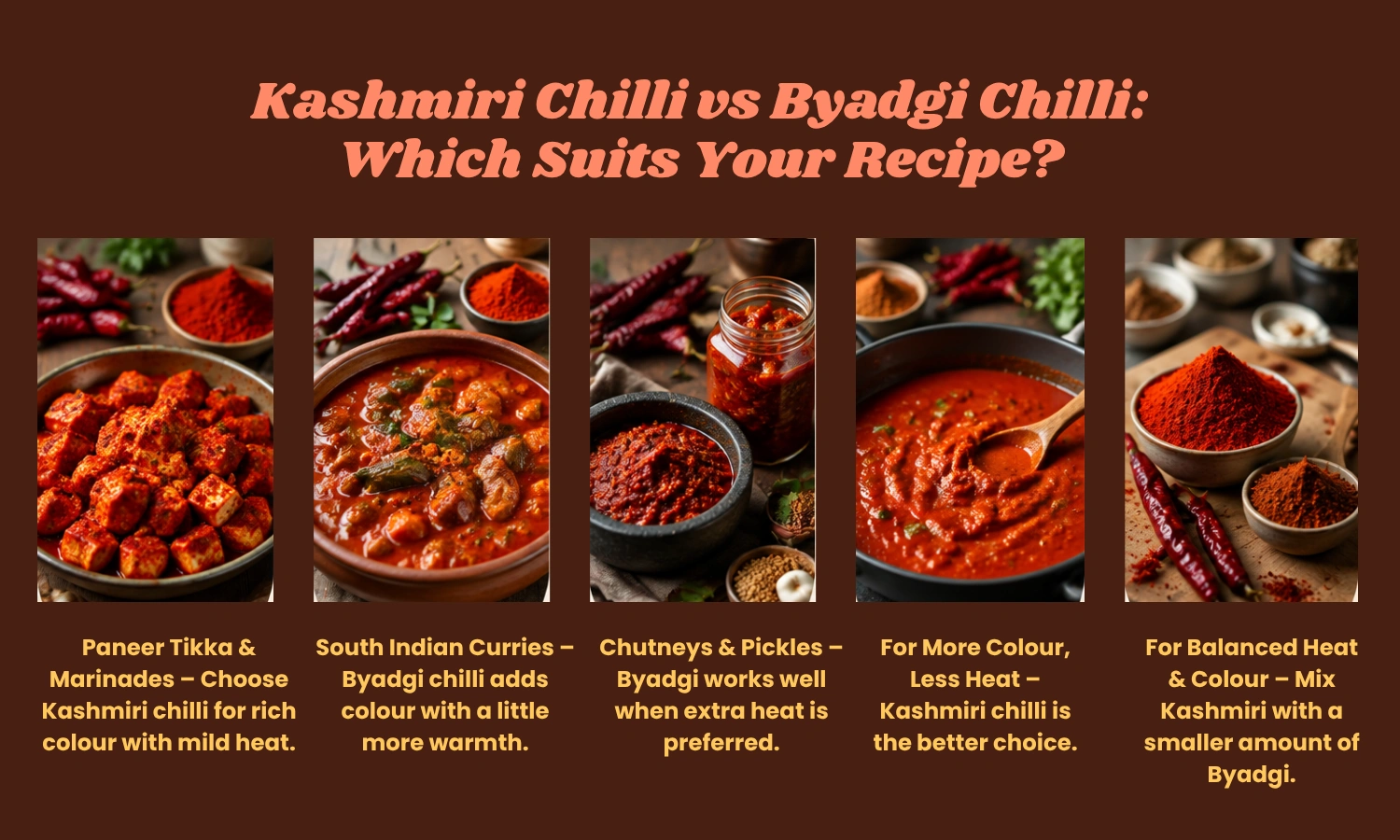
Choosing between Kashmiri chilli vs Byadgi chilli, or the reverse comparison of Byadgi vs Kashmiri chilli, usually comes down to the dish being prepared rather than a fixed rule. For paneer tikka marinades, or any recipe where a rich red colour is the main goal, Kashmiri chilli remains the safer choice because it will not push the heat level too high even when used generously.

byadgi chilli vs kashmiri chilli For South Indian vegetable curries, chutneys, and pickles, where a bit more warmth is expected alongside the colour, byadgi chilli or a mix leaning towards it tends to perform better. Some cooks resolve the Kashmiri vs Byadgi chilli debate entirely by mixing the two in a single recipe, using Kashmiri chilli for the base colour and adding a smaller portion of Byadgi for the extra depth of heat.
Byadgi Chilli and Kashmiri Chilli Difference in Everyday Cooking

The practical Byadgi chilli and Kashmiri chilli difference shows up most clearly when a home cook accidentally swaps one for the other without adjusting the quantity. Using Byadgi chilli powder in a recipe designed for Kashmiri chilli can leave a dish noticeably spicier than intended, while the reverse substitution often results in a gravy that looks pale or lacks the expected depth of colour.
For food businesses, understanding this difference between Byadgi and Kashmiri chilli matters even more, since recipe consistency depends on the correct variety and ratio every time a dish is prepared. Chilli powder from an established Tamil Nadu manufacturer, such as 777 Foods’ Premium Red Chilli Powder, is quality-tested so that much of this guesswork is removed and your dishes stay appetizing and full of rich, authentic flavour.

Pick the Right Chilli Powder According to Your Dishes

The choice between Byadgi chilli vs Kashmiri chilli is less about one variety being better and more about matching colour and heat to the dish being cooked. Kashmiri chilli remains the go-to for vivid, mild curries, while Byadgi chilli suits recipes that call for a touch more warmth alongside strong colour. Once the difference between Byadgi and Kashmiri chilli is clear, choosing the right pack becomes a far simpler decision at the grocery shelf or while ordering online.
Browse the current range on the official 777 Foods store to find the variety that matches your recipe before your next cooking session.

Key Takeaways

  • Byadgi chilli, also called byadagi chilli or bedgi mirchi, offers a deep red colour with medium heat and is widely used in South Indian cooking.
  • Kashmiri chilli offers a similar bright red colour with milder heat, making it the safer choice for colour-forward dishes that should not turn too spicy.
  • “Is Byadgi chilli spicy?” gets a moderate yes, while “Is Guntur chilli spicy?” gets a firm yes, placing Guntur well above both in heat.
  • The difference between Byadgi chilli and Kashmiri chilli mainly affects heat level, so recipes should not swap one for the other without adjusting quantity.
  • Many kitchens resolve the Byadgi vs Kashmiri chilli question by mixing both, using Kashmiri for colour and Byadgi for added depth of heat.

FAQs

Can Byadgi chilli and Kashmiri chilli be used interchangeably in recipes?They can be swapped in a pinch, but the Byadgi chilli and Kashmiri chilli difference in heat means the final dish will taste noticeably different. It is usually better to reduce the quantity slightly when substituting Byadgi for Kashmiri chilli to avoid an overly spicy result.
Which is better for pickles? Byadgi chilli or Kashmiri chilli?For most pickles, Byadgi chilli is preferred because its slightly stronger heat holds up well against the salt, oil, and tang used in Indian pickle recipes. Kashmiri chilli can be used for a milder pickle, but the flavour often needs additional spices to compensate.
Is Byadgi chilli powder the same as Bedgi mirchi powder?Yes, Bedgi mirchi powder is simply a regional or transliterated name for Byadgi chilli powder, referring to the same variety grown in the Byadagi region of Karnataka. The naming difference comes down to language and local usage rather than the product itself.

Kashmiri Chilli Powder: How to Use Kashmiri Mirch in Indian Dishes

Overview

Kashmiri chilli powder is prized across Indian kitchens for its deep red colour and comparatively mild heat, making it ideal for dishes where visual appeal matters as much as flavour. Ground from dried Kashmiri mirch grown primarily in Jammu and Kashmir, it is a key component in many a blended spice mix and widely used in curries, tandoori marinades, and garnishing rather than as a primary source of spice.

What Makes Kashmiri Mirch Different?

Unlike hotter varieties such as Guntur or Naga chilli, Kashmiri mirch contains comparatively lower capsaicin levels, which explains why it delivers rich colour without overwhelming heat. This makes it a favourite among cooks who want the visual richness of red chilli in a dish without pushing the spice level too high for family meals.
The Kashmiri Lal Mirch variety specifically refers to the whole dried pods before they are ground into powder, often used directly in tempering when a milder, more aromatic flavour is preferred over intense heat.

Usage of Kashmiri Chilli Powder in Everyday Cooking

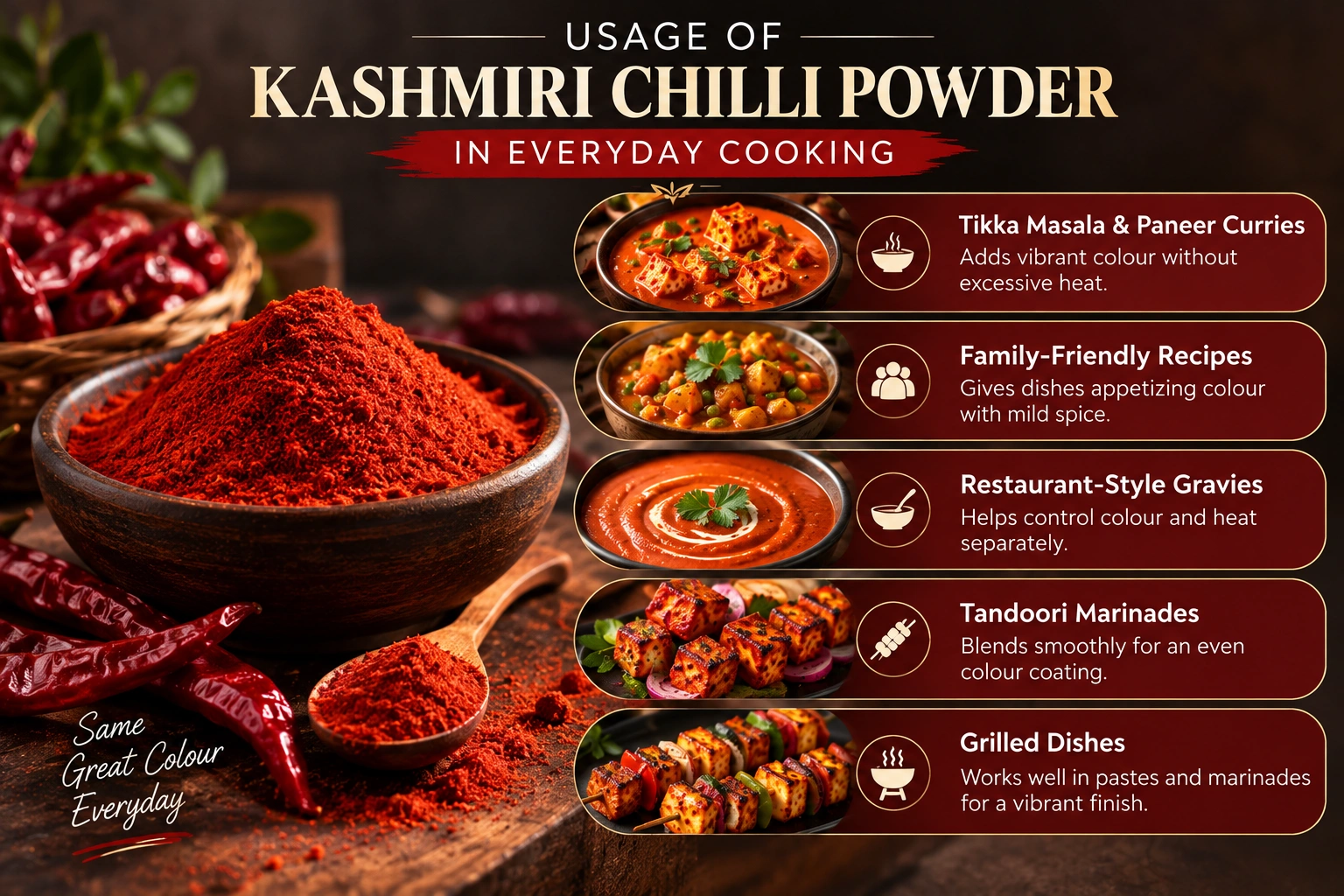
Kashmiri chilli powder is a staple in North Indian cooking, especially in dishes like tikka masala and paneer curries, where its colour enhances visual appeal without making the dish overly spicy. Because of its vibrant shade and low heat, it is also a popular choice when preparing savoury, family-friendly recipes or healthy snacks for kids that require appetizing colour without triggering a sharp burn. Many restaurant-style gravies rely on this variety specifically because it allows chefs to control colour and heat independently by combining it with a smaller amount of a hotter chilli. Kashmiri chilli The Kashmiri Lal Mirch powder version, ground finely from dried pods, blends smoothly into marinades and pastes, making it especially popular for tandoori and grilled preparations where an even coating of colour matters.
Kashmiri Mirch Powder vs. Regular Chilli Powder

A common question among home cooks concerns how Kashmiri mirch powder differs from standard red chilli powder available in the market. The primary difference lies in heat and colour balance. Standard chilli powder, often made from hotter varieties like Guntur, delivers stronger spice with less vivid colour, while Kashmiri chilli powder offers the reverse, prioritising colour with a gentler heat profile.
Understanding the Kashmiri chilli vs. red chilli distinction helps when following recipes that specifically call for one or the other, since substituting incorrectly can significantly change both the appearance and spice level of the final dish.

Summarising the Differences between Kashmiri Chilli and Red Chilli

Here’s a table that summarises the important differences between Kashmiri mirch powder and standard red chilli powder:

Table Header Table Header Table Header
Color Impact Vibrant, deep crimson red Dull to medium orange-red
Spice / Heat Level Very mild High
Flavour Profile Subtle, fruity, and slightly sweet Sharp, pungent, and intensely fiery
Primary Culinary Role Adds rich colour and mild warmth Adds strong spice and heat
Best Used In Tandoori marinades, gravies, etc. Spicy curries, pickles, etc.
Quantity Needed Used generously without burning the palate Used sparingly to avoid over-spicing

Whole Kashmiri Chilli for Traditional Use

Beyond powder form, Kashmiri chilli whole pods remain popular for traditional tempering and slow-cooked dishes where whole chillies are fried briefly in oil before other ingredients are added. They are also frequently rehydrated and blended into smooth culinary pastes that form the rich, colourful base for gravies and curries. This approach releases colour and aroma gradually, which then carries through the entire dish.

Buyers seeking whole Kashmiri chilli or Kashmiri red chilli whole for home use should look for firm, unbroken pods with consistent colour, since broken or discoloured pods often indicate lower quality or improper storage. Similarly, dry Kashmiri red chilli intended for grinding at home should be stored in airtight conditions to preserve both colour and aroma until use.

Kashmiri Dry Red Chilli: Regional Sourcing and Authenticity

Products labelled “eastern Kashmiri chilli powder’ or similar regional descriptors typically refer to sourcing claims tied to specific growing belts within Jammu and Kashmir. When looking for original Kashmiri chilli or original Kashmiri chilli powder, checking for clear sourcing information on packaging helps ensure authenticity, since the name is sometimes used loosely on blends that only partially contain true Kashmiri stock.
Identifying the best Kashmiri chilli powder often comes down to colour vibrancy, aroma strength, and absence of excessive filler content, all of which reflect how carefully the chilli was grown, dried, and processed.

Kashmiri Lal Mirch: Organic and Specialty Options

Health-conscious buyers increasingly look for organic Kashmiri red chilli powder, which is grown without synthetic pesticides or fertilisers. While organic certification can add to cost, many buyers prioritise it for daily cooking use, particularly in households with young children or specific dietary preferences.
For those interested in home cultivation, Kashmiri chilli seeds are available through agricultural suppliers, though successful growth depends heavily on replicating the cooler climate conditions of the Kashmir valley, which can be difficult to achieve in warmer regions of the country.

Is Kashmiri Chilli Actually Spicy?

A frequent question among first-time buyers will be, “Is Kashmiri red chilli spicy?”
The general answer is that it is considerably milder than most other Indian chilli varieties, making it suitable for dishes intended for a broader range of spice tolerance, including children and those who prefer milder food.

What to Check While Buying Kashmiri Red Chilli Powder?

When shopping for Kashmiri red chilli powder, checking the ingredient list and colour consistency helps identify quality. Genuine Kashmiri chilli should have a bright, deep red hue without excessive oiliness or artificial colour additives. Kashmiri chilli powder price can vary depending on brand, packaging size, and whether the product is sourced from genuine Kashmiri-growing regions or blended with other varieties.

Add Rich Colour to Every Dish

Kashmiri chilli powder brings restaurant-quality colour to home cooking without overwhelming heat. 777 Foods offers Kashmiri chilli powder sourced and processed to preserve its natural colour and mild character.
Shop the 777 Premium Red Chilli Powder and the entire chilli range from 777 Foods and elevate the appearance of your everyday curries and marinades.

Key Takeaways

  • Kashmiri chilli powder is valued primarily for its deep red colour and mild heat level.
  • It differs from regular chilli powder mainly in its lower capsaicin content and stronger colour payoff.
  • Genuine Kashmiri chilli should show bright colour, minimal oiliness, and clear sourcing information.
  • Organic options are increasingly available for buyers prioritising pesticide-free cooking ingredients.
  • Whole Kashmiri pods work well for traditional tempering where gradual colour release matters.

FAQs

Is Kashmiri chilli powder spicy?No, Kashmiri chilli powder is considerably milder than most other Indian chilli varieties. It is used primarily for its deep red colour rather than for intense heat, making it suitable for a wide range of spice preferences.
How is Kashmiri chilli powder different from regular red chilli powder?Kashmiri chilli powder offers a stronger colour with gentler heat, while regular red chilli powder, often made from hotter varieties like Guntur, delivers stronger spice with comparatively less vivid colour in the final dish.
How can I identify original Kashmiri chilli powder?Look for a bright, deep red colour without excessive oiliness, along with clear sourcing information on the packaging. Genuine Kashmiri chilli should have a distinct aroma and consistent colour rather than a dull or overly processed appearance.
Can Kashmiri chilli be used instead of regular red chilli in recipes?It can be used as a substitute mainly when colour is the priority, though the dish will have significantly less heat. For recipes that specifically require spice, combining Kashmiri chilli with a smaller amount of a hotter variety works better than a direct substitution.

How to Use Spicy Chilli in Curries, Pickles, and Masalas

Overview

Using spicy chilli well is less about adding more heat and more about matching the right variety and quantity to each dish. Curries, pickles, and masalas each call for different chilli forms and intensities; paying close attention to your chilli powder ingredients and understanding these differences helps home cooks build flavour without overwhelming a dish’s balance.

Understanding Heat from Spicy Chilli Before You Cook

Before adding spicy chilli to any dish, it helps to understand what makes certain varieties hotter than others. Heat comes from capsaicin, a compound concentrated mainly in the seeds and inner membrane of the chilli rather than the flesh itself. This is why removing seeds before cooking is a common technique for reducing heat without losing overall chilli flavour.
Many home cooks wonder why chilli is spicy in the first place. Capsaicin triggers heat receptors in the mouth, creating a burning sensation even though no actual physical heat is present, which is why the intensity varies so much depending on how much capsaicin a variety contains.

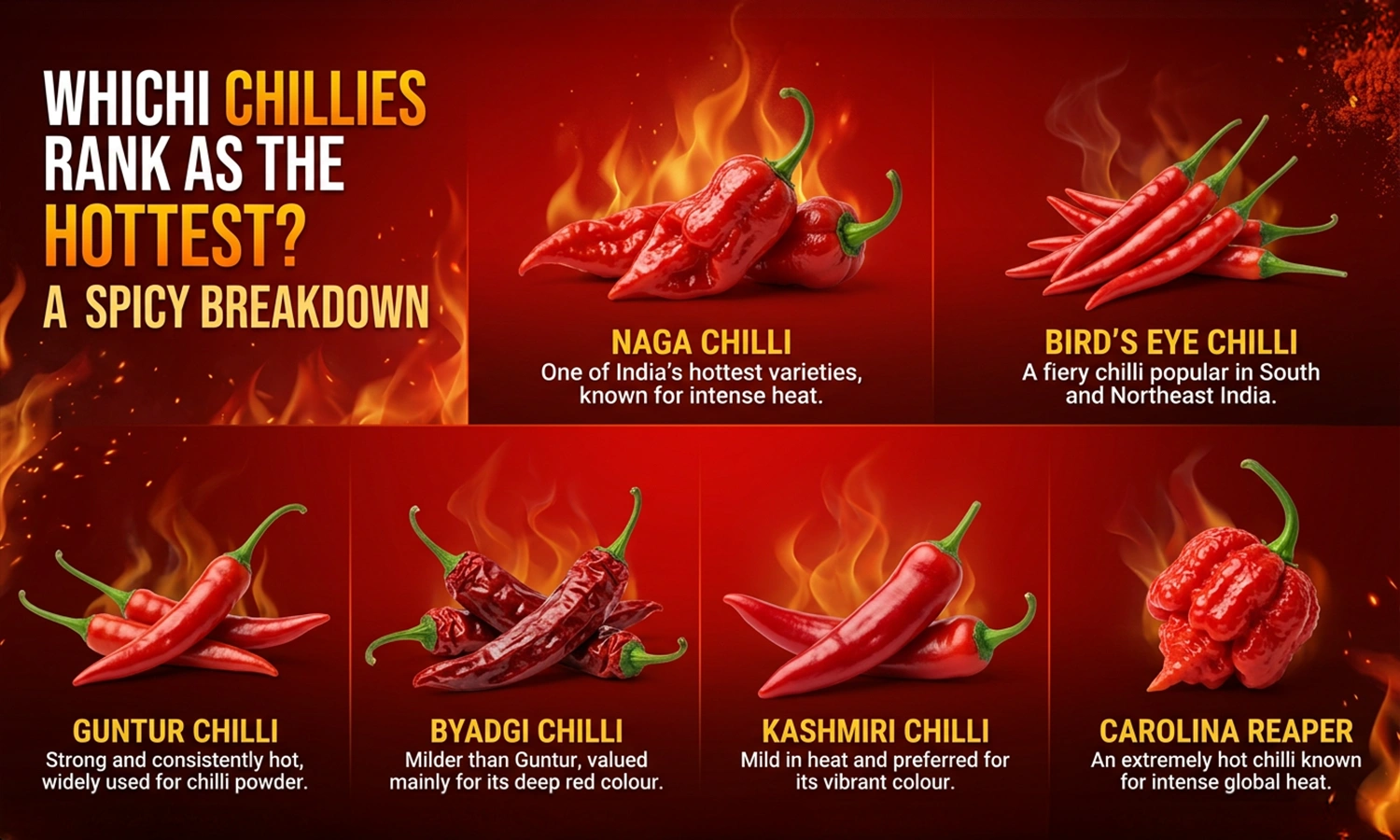
Which Chillies Rank as the Hottest? A Spicy Breakdown

Chilli heat varies dramatically depending on where the crop is grown and how it is cultivated, ranging from subtle warmth to eye-watering intensity.
Spicy Chilli

  • For those curious about the hottest chilli in India, Naga chilli, or Bhut Jolokia, from the northeastern states, ranks among the most intense, alongside Bird’s Eye chilli used in parts of the south and northeast.
  • On a global scale, chillies bred specifically for extreme heat, such as the Carolina Reaper, are considered the world’s spiciest chilli, far exceeding most Indian varieties in raw intensity.
  • When comparing regional varieties, people often ask if Guntur chilli is spicy, and the answer is generally yes, since Guntur chilli from Andhra Pradesh is known for strong, consistent heat and is widely used in powder production precisely for this reason.
  • Similarly, questions like “Is Byadgi chilli spicy?” come up often, though Byadgi is actually milder than Guntur and is chosen more for its deep red colour than for intense heat.
  • For Kashmiri varieties, the common question, “Is Kashmiri chilli powder spicy?” usually surprises people, since Kashmiri chilli is one of the mildest options available, prized almost entirely for its colour rather than its heat level.

Quick Guide: Popular Indian Chilli Varieties at a Glance

Because capsaicin boosts metabolism, spicy chillies are frequently included in recipes alongside weight loss foods to enhance flavour without adding extra calories.

Chilli Variety Heat Level Primary Feature Best Used For
Kashmiri Very Mild Vibrant deep red colour Rich colour in curries and marinades
Byadgi Mild to Medium Wrinkled skin and rich aroma Sambar, spice blends, and chutneys
Guntur High Pungent, sharp heat Spicy curries, stir-fries, and chilli powder
Bird’s Eye Very High Small size, intense heat Pickles, fresh chutneys, and soups
Bhut Jolokia (Naga) Extreme Ghost pepper intensity Specialty hot sauces and fiery pickles

Mastering the Heat: Using Spicy Chilli in Curries for Optimal Flavour

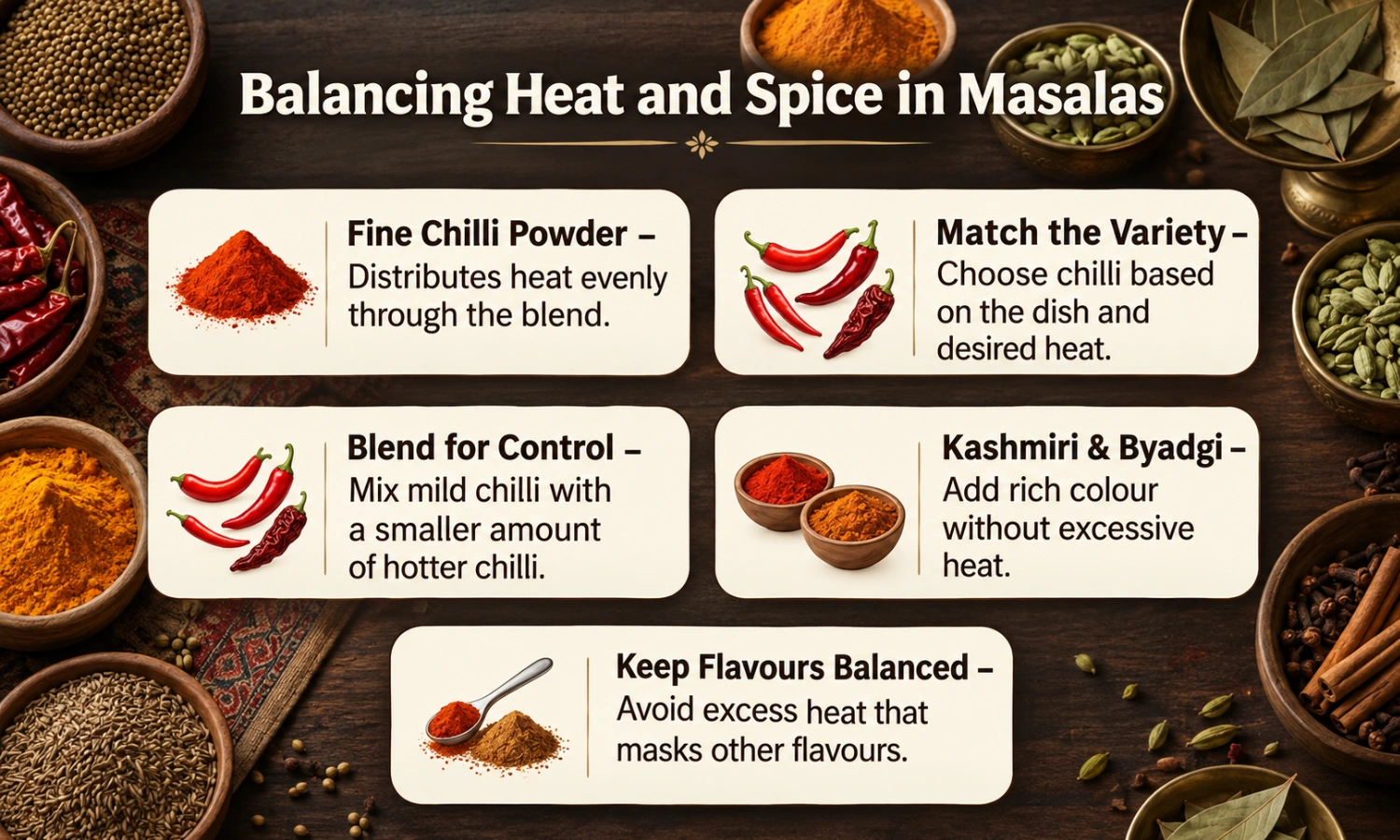
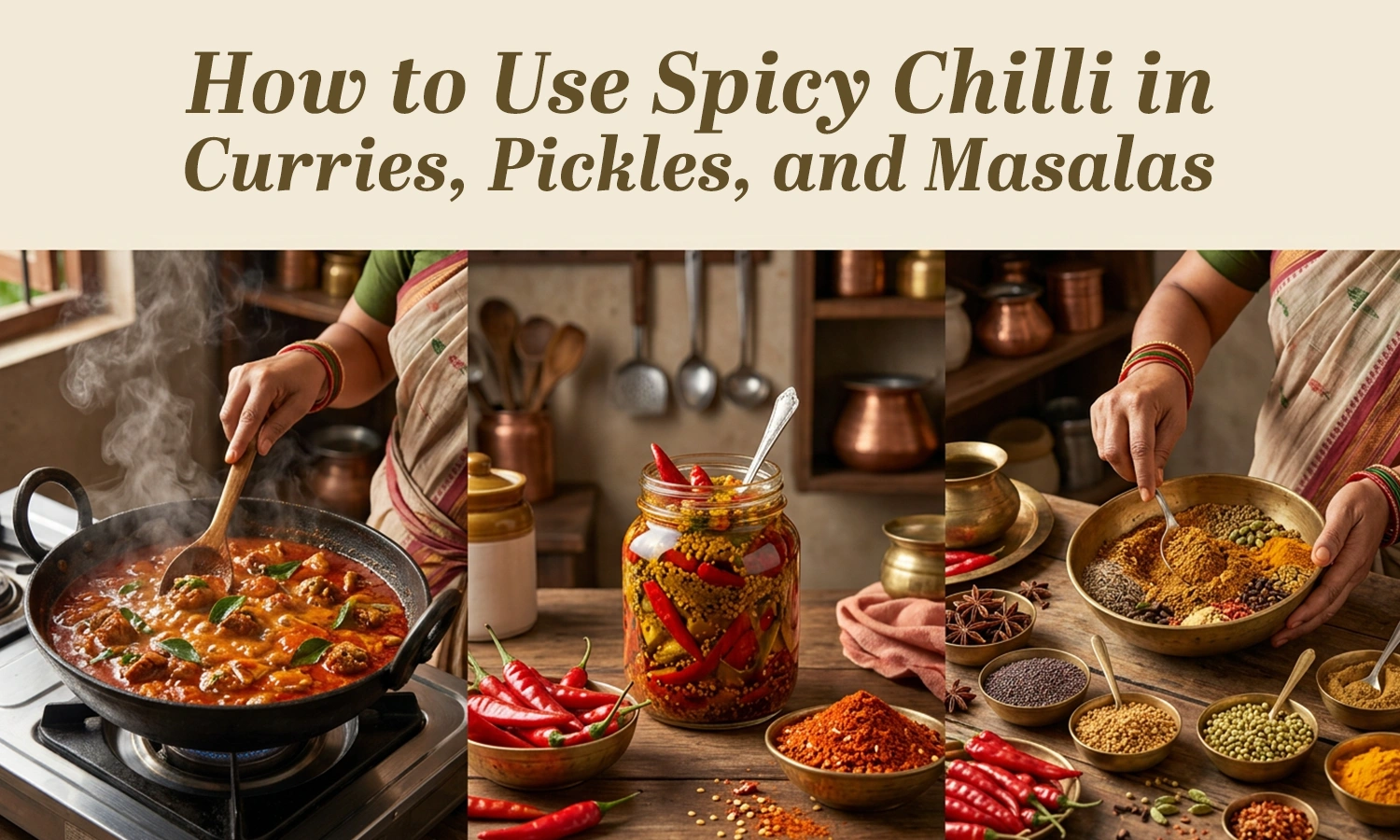
In curries, hot chilli works best when added early during the tempering stage, allowing its flavour to infuse into the base oil before other ingredients go in. This technique distributes heat evenly throughout the dish rather than leaving concentrated hot spots. For milder curries, using spicy red chilli powder with lower heat, like Kashmiri, alongside a small amount of a hotter variety for background warmth, gives better control over final spice levels.

Bold and Preserved: How to Use Spicy Chilli in Pickles?

Pickling calls for a different approach, since chilli here is often the star ingredient rather than a background flavour. Whole dried or fresh chillies work well in pickles, combined with mustard oil, fenugreek, and salt to create long-lasting preserved condiments. Most spicy chilli varieties used for pickling, as in 777 Foods’ mixed pickle, tend to be firmer-skinned types that hold their texture well during the curing process.

Balancing Heat and Spice: Using Spicy Chilli in Masalas and Spice Blends

Masala blends typically rely on ground chilli powder rather than whole chillies, since a fine, even grind ensures the heat distributes uniformly across the blend. Many people ask, “Which red chilli is spicy enough?”
For a particular masala, it depends on the dish, with stronger blends like garam masala often using hotter varieties, while milder rubs favour Kashmiri or Byadgi for colour without excessive heat.
Spicy Chilli The goal when cooking with spicy chilli should never be heat alone. Overusing intensely hot varieties can mask the other flavours in a dish, from tanginess in a pickle to the aromatic depth of a slow-cooked curry. Skilled cooks often blend a milder, colour-rich chilli with a smaller amount of a hotter variety to achieve both visual appeal and controlled spice.

Which Chilli Is Spicier for Your Needs?

The answer depends on the chilli variety, its form, and the amount used. High-heat varieties such as Naga and Bird’s Eye deliver much stronger heat than milder varieties such as Kashmiri. Choosing the right chilli allows you to control the spice level without overpowering the other flavours in a dish.

Cook With Confidence and Control

Getting the right level of heat starts with choosing the right chilli powder for your recipe. 777 Foods Premium Red Chilli Powder can be used in everyday curries, gravies, masalas, marinades, and other Indian dishes where chilli adds colour and flavour.

Choose the right amount for your recipe and enjoy balanced chilli flavour in everyday cooking.

Key Takeaways

  • Capsaicin, concentrated mainly in seeds and membranes, determines a chilli’s true heat level.
  • Guntur and Naga chillies rank among the spiciest Indian varieties, while Kashmiri and Byadgi are milder.
  • Adding chilli early in tempering distributes heat more evenly through curries.
  • Pickling favours firmer-skinned varieties that hold texture during curing.
  • Balancing hot and mild chilli varieties gives better control over both colour and spice in cooking.

FAQs

What makes spicy chilli hot?The heat comes from capsaicin, a compound concentrated mostly in the seeds and inner membrane of the chilli. Different varieties contain varying levels of capsaicin, which explains why some chillies taste far hotter than others despite looking similar.
Which Indian chilli is considered the spiciest?Naga chilli, also known as Bhut Jolokia, from the northeastern states, is widely considered one of the hottest Indian varieties, with Bird’s Eye chilli following closely in overall heat intensity.
Is Guntur chilli hotter than Kashmiri chilli?Yes, Guntur chilli is significantly hotter than Kashmiri chilli. Kashmiri chilli is chosen mainly for its deep red colour and mild heat, while Guntur chilli is valued specifically for its strong, consistent spice level.
How can I reduce the heat of spicy chilli in a dish?Removing the seeds and inner membrane before cooking significantly reduces heat, since these parts contain the highest concentration of capsaicin. Balancing hot varieties with milder ones also helps control overall spice level in a dish.