Pepper Rasam Recipe: Spicy Cure for Cold and Cough

Summary

The warming, peppery bowl many families reach for in cold weather. Built on freshly crushed black pepper, cumin, and garlic, this recipe explains why it soothes, how to make it gently without bitterness, and variations like pepper jeera and garlic rasam. It closes with serving tips and the best moments to make it.

Introduction :

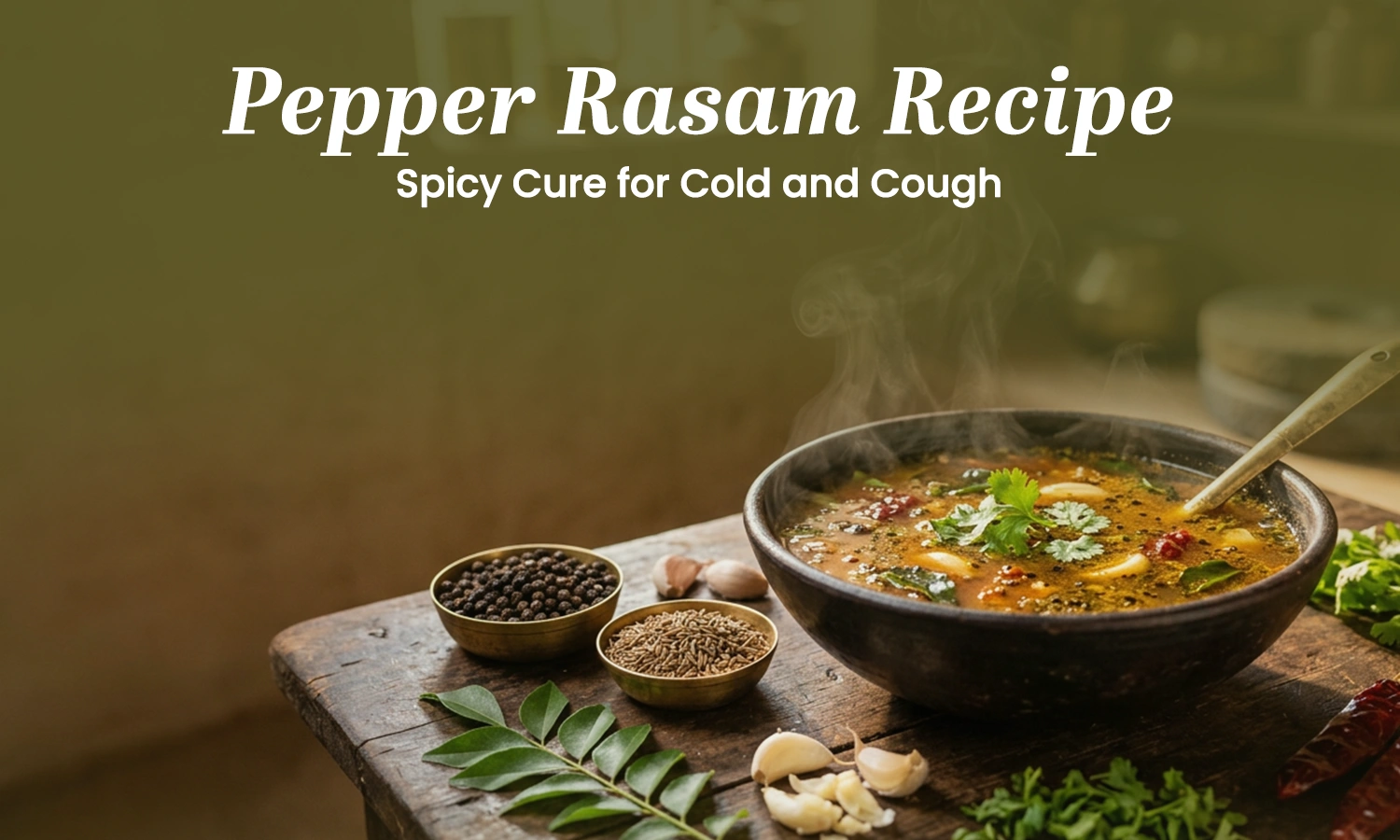
This pepper rasam recipe makes a warm, spicy soup that many families turn to during the cold season. A classic pepper rasam recipe uses freshly crushed black pepper and cumin, which give heat and aroma. If you want an easy pepper rasam that soothes and comforts, this method is for you.People often make pepper rasam for cold and cough because the pepper and garlic feel warming. Here you will learn how to make pepper rasam step by step, plus simple variations like pepper jeera rasam and pepper garlic rasam.

Why This Pepper Rasam Recipe Helps in Cold Weather

This pepper rasam recipe is built around black pepper and cumin, two spices known for their warming nature. When you sip pepper rasam, the heat and steam can feel soothing on a blocked nose or a sore throat.Many homes prepare pepper rasam for cold and cough as a gentle home comfort. It is not a medicine, but a warm bowl of pepper rasam often feels good when you are tired or under the weather.

Ingredients for Pepper Rasam

For this pepper rasam recipe, you need black pepper, cumin seeds, garlic, tamarind, tomato, salt, and curry leaves. The pepper and cumin are lightly crushed together, which is the base of any good pepper cumin rasam.

Garlic adds depth and makes a fragrant pepper garlic rasam. For tempering, you need ghee, mustard seeds, dried red chilli, and curry leaves. These simple items are all you need for an easy pepper rasam.
Pepper Rasam Recipe

How to Make Pepper Rasam Step by Step

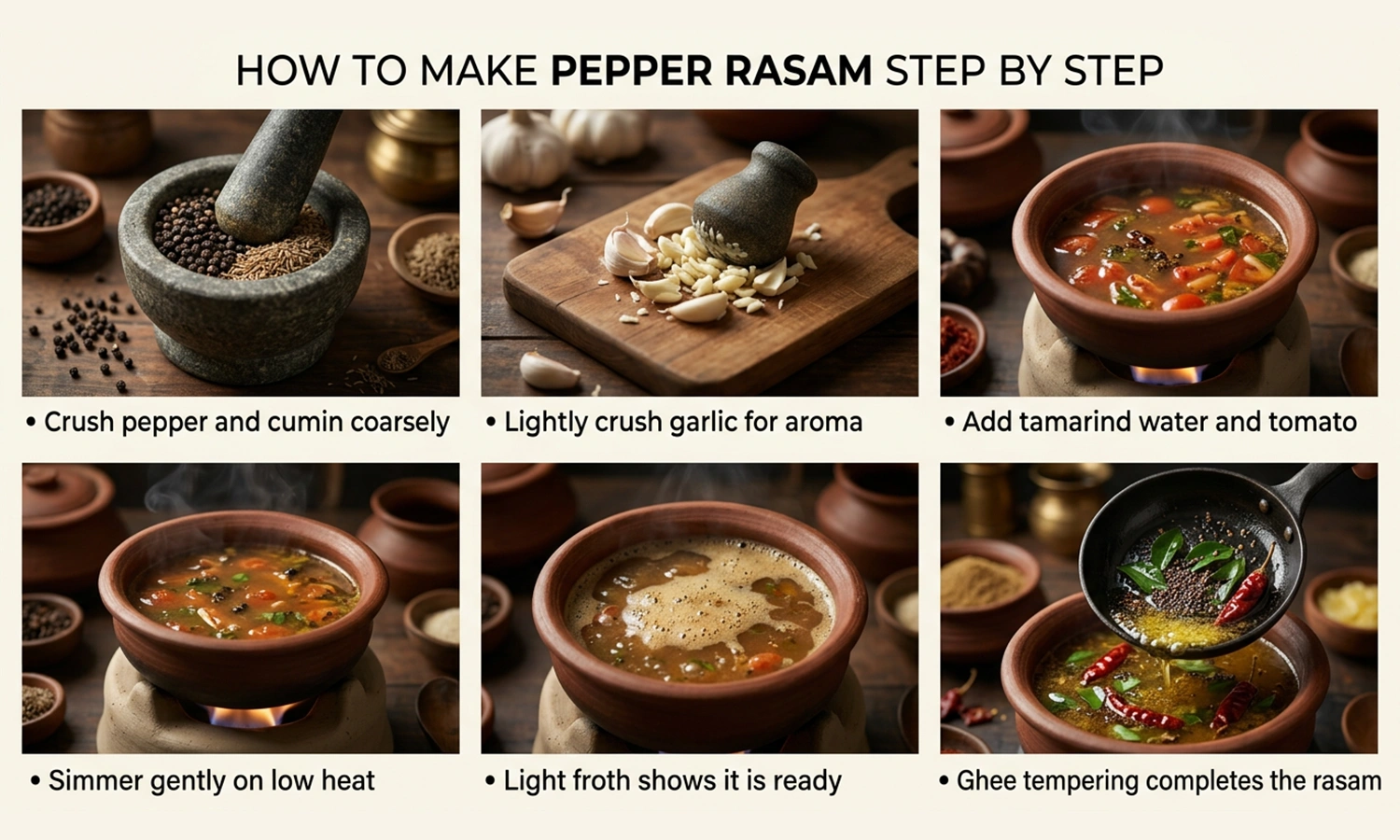
Here is how to make pepper rasam clearly. Crush black pepper and cumin into a coarse powder. Lightly crush the garlic as well, which gives this pepper rasam recipe its strong aroma.Add tamarind water, crushed tomato, salt, and turmeric to a pot. Stir in the crushed pepper and cumin, then simmer on low heat. Keep the flame gentle so the pepper rasam does not turn bitter.When a light froth rises, switch off the heat. Heat ghee, add mustard seeds, red chilli, and curry leaves, and pour over the soup. Your warming pepper rasam is ready.

Pepper, Jeera and Garlic Variations

For a pepper jeera rasam, use equal parts pepper and jeera, which is cumin, for a balanced heat. This pepper cumin rasam is light and easy to sip when you feel unwell.To make a pepper jeera garlic rasam, add more crushed garlic to the pepper and jeera base. The garlic deepens the flavour and is a favourite version of pepper rasam for cold and cough.

Tomato Pepper Rasam Option

If you prefer a milder, tangier bowl, make a tomato pepper rasam by adding extra tomato to this pepper rasam recipe. The tomato softens the heat while keeping the warming quality of the pepper.This easy pepper rasam variation suits those who find plain pepper rasam too sharp. It still works well as a comforting soup on a cold day.

Tips and Serving

Always crush the pepper fresh for the best aroma in this pepper rasam recipe. Keep the heat low and serve the rasam hot. Fresh curry leaves and garlic make the soup more fragrant.Serve pepper rasam hot with rice, or sip it from a cup on its own. A warm bowl of pepper rasam for cold and cough is a simple comfort that has been trusted in South Indian homes for generations. Pepper Rasam Recipe
History and Tradition of Pepper Rasam

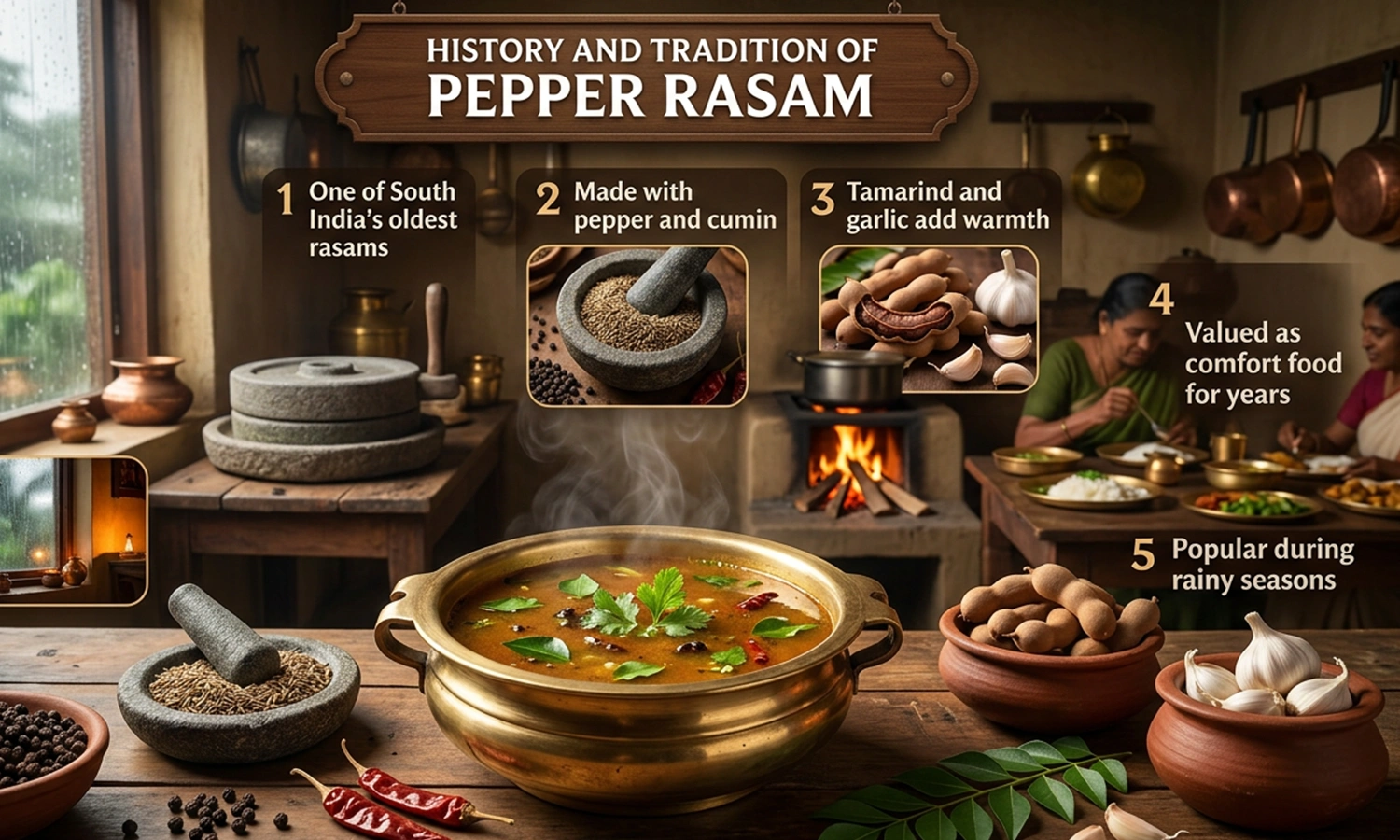
Long before tomatoes arrived, the pepper rasam recipe was the original style of rasam in South India. Made with pepper, cumin, tamarind, and garlic, this pepper rasam recipe is one of the oldest in the region. It was valued as both food and comfort.Families still make this pepper rasam recipe during the rainy and winter months. A milder tomato pepper rasam is a newer twist, but the classic pepper rasam recipe remains a trusted favourite for a warming bowl.

Common Mistakes With Pepper Rasam

Using pre-ground pepper is a common mistake, since fresh crushed pepper gives this pepper rasam recipe its punch. Boiling the soup hard is another error that turns it bitter. Keep the heat low at all times.Adding too much garlic can overpower the dish, so balance it. A good pepper jeera garlic rasam uses just enough garlic to deepen the flavour without hiding the pepper. This is the secret to an easy pepper rasam that tastes clean.

Final Tips for the Best Pepper Rasam

A few habits make every pepper rasam recipe better. Crush the pepper and cumin fresh, simmer on low heat, and add the garlic in good measure. These small steps give the soup its warm, peppery aroma.Serve the soup hot, since it loses its charm as it cools. A bowl of this pepper rasam recipe goes well with plain rice, or you can sip it on its own for comfort on a cold day.Keep your spices fresh and your method simple, and this pepper rasam recipe will become a reliable favourite. With practice, you can make a warming bowl in just a few minutes whenever you need one.

When to Serve This Comforting Bowl

There is never a wrong time for a warm, peppery bowl, but a few moments suit it best. On a chilly evening or during the first signs of the rainy season, the gentle heat of black pepper and cumin feels especially welcome. It is also a kind choice when someone at home feels tired, blocked up, or simply low on appetite, since the thin, fragrant broth is easy to sip and easy to digest.Serve it piping hot, either over a small portion of steamed rice or in a cup on its own. A little ghee stirred in at the end rounds off the sharpness and adds a soft, nutty finish. Keep the portions modest and the broth thin, as this dish is meant to comfort rather than fill. Made with fresh tempering and a careful, low simmer, it brings warmth to the table in just a few simple steps.

FAQs

What is pepper rasam good for?Many people sip it for comfort during a cold or cough, though it is a home food and not a cure.
How do you make pepper rasam?Simmer tamarind water with freshly crushed pepper, cumin, garlic, and rasam masala, then temper it with hot ghee.
Should pepper be ground fresh for rasam?Yes, freshly crushed pepper gives the rasam its warmth and punch.
How do you serve pepper rasam?Serve it hot over steamed rice with a little ghee, or sip it warm on its own.
Can I store pepper rasam?Keep leftovers in the fridge for a day and reheat gently, though it tastes best fresh.
Tomato Rasam Recipe: Easy Authentic South Indian Style

Summary

A bright, fruity take on the classic, built on ripe tomatoes and tamarind. This guide shows how to make it step by step, with versions that use dal or skip it, plus spicy and milder options. It adds tips for an authentic finish, a little history, common mistakes, and storage notes for leftovers.

Introduction :

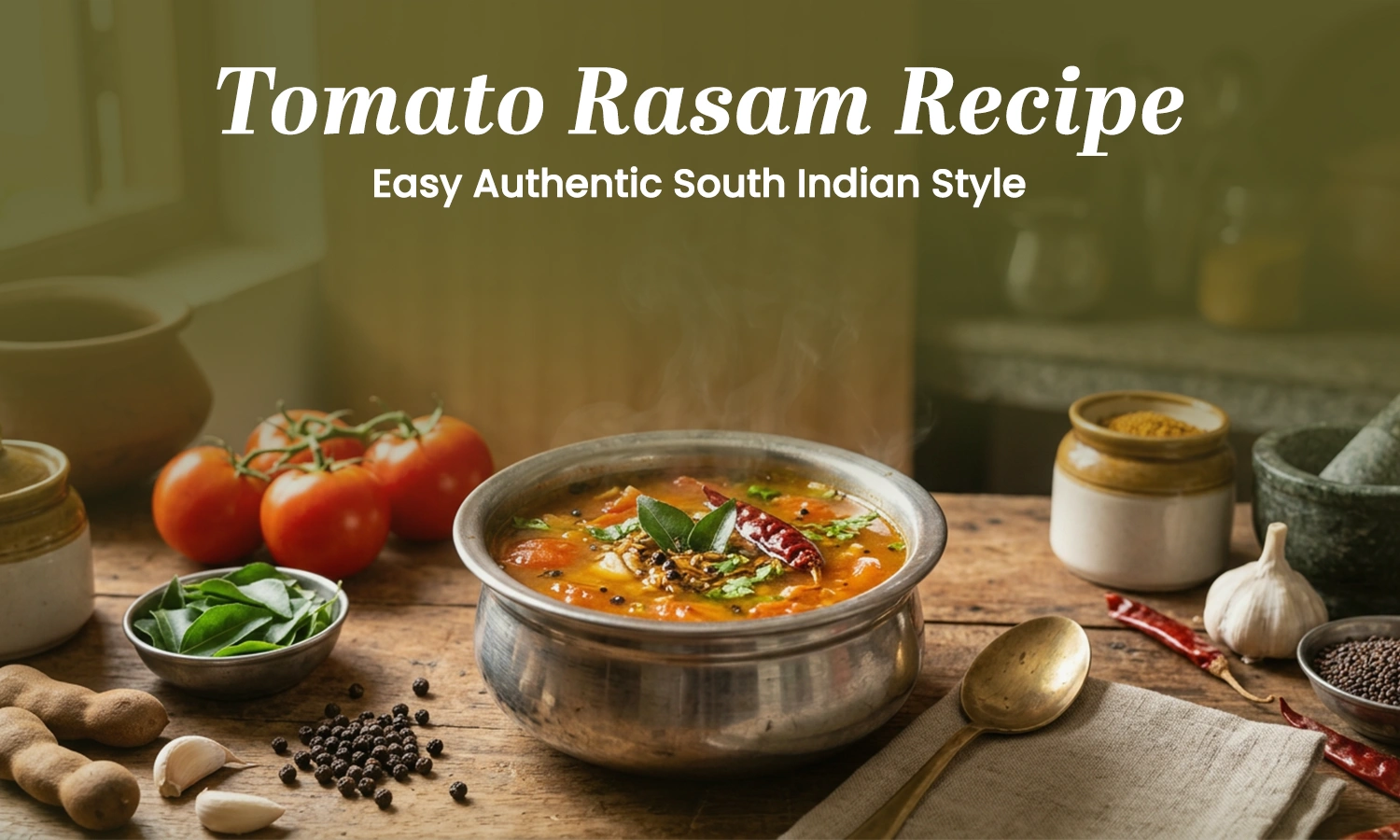
This tomato rasam recipe gives you a bright, tangy soup that is loved across South India. A good tomato rasam needs only ripe tomatoes, tamarind, and a few spices, yet the result is full of flavour. If you want an easy tomato rasam recipe that works every time, you are in the right place.Below you will learn how to make tomato rasam from scratch, with a version using dal and a tomato rasam recipe without dal. This authentic tomato rasam recipe is simple enough for beginners and tasty enough for guests.

What Makes This Tomato Rasam Recipe Special

What sets this tomato rasam apart is the balance of fresh tomato and tamarind. The tomatoes bring a fruity sweetness, while the tamarind keeps the soup tangy. Together they create the classic taste of tomato rasam that pairs so well with rice.This simple tomato rasam also uses a gentle simmer instead of a hard boil. That single habit keeps the soup smooth and stops it from turning bitter, which is the mark of an authentic tomato rasam recipe.

Ingredients for Tomato Rasam

For this tomato rasam you need four ripe tomatoes, a small ball of tamarind, salt, turmeric, and rasam powder. For the tempering, you need ghee, mustard seeds, cumin, dried red chilli, curry leaves, and asafoetida.If you want a richer bowl, keep cooked toor dal ready. To make a tomato rasam recipe without dal, simply skip the dal and add a little extra water. Both versions of tomato rasam taste great. Tomato Rasam Recipe

How to Make Tomato Rasam Step by Step

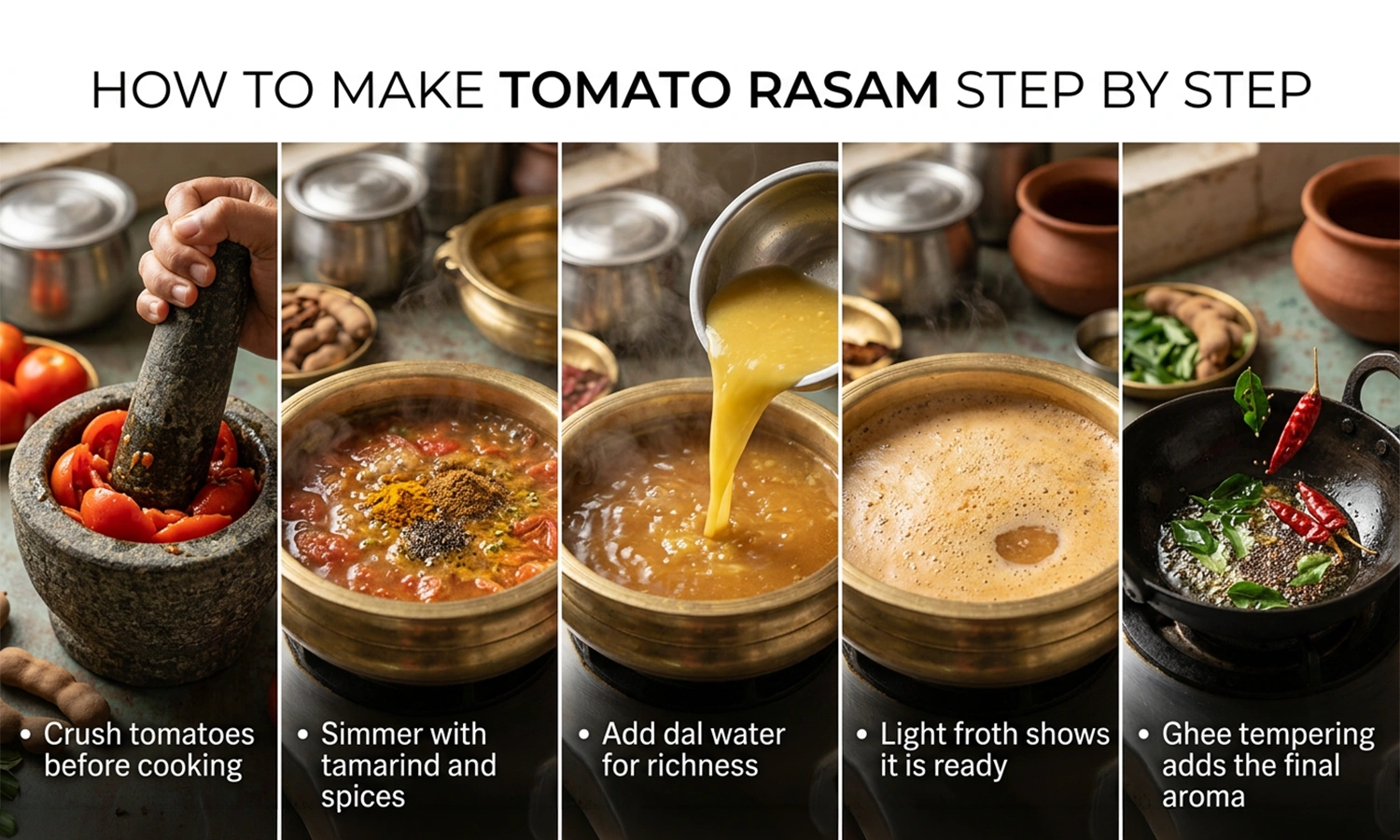
Here is how to make tomato rasam in clear steps. Crush the tomatoes by hand or with a spoon. Add them to tamarind water along with salt, turmeric, and rasam powder, then simmer on low heat.When the raw smell fades and the tomatoes soften, add dal water for a richer soup or extra water for a tomato rasam recipe without dal. Let a light froth rise, then switch off the heat.Heat ghee, add mustard seeds, cumin, red chilli, and curry leaves, and pour this over the soup. This tempering is the final touch of every easy tomato rasam recipe.

Spicy and Dal Variations

For a spicy tomato rasam recipe, add a little extra black pepper or an additional red chilli to the rasam powder. The heat suits cold weather and adds a comforting kick to the tomato rasam.If you prefer a fuller dish, make a rasam recipe with dal and tomato by adding more cooked toor dal. This gives a thicker, softer texture while keeping the bright taste of the tomato rasam recipe. Tomato Rasam Recipe

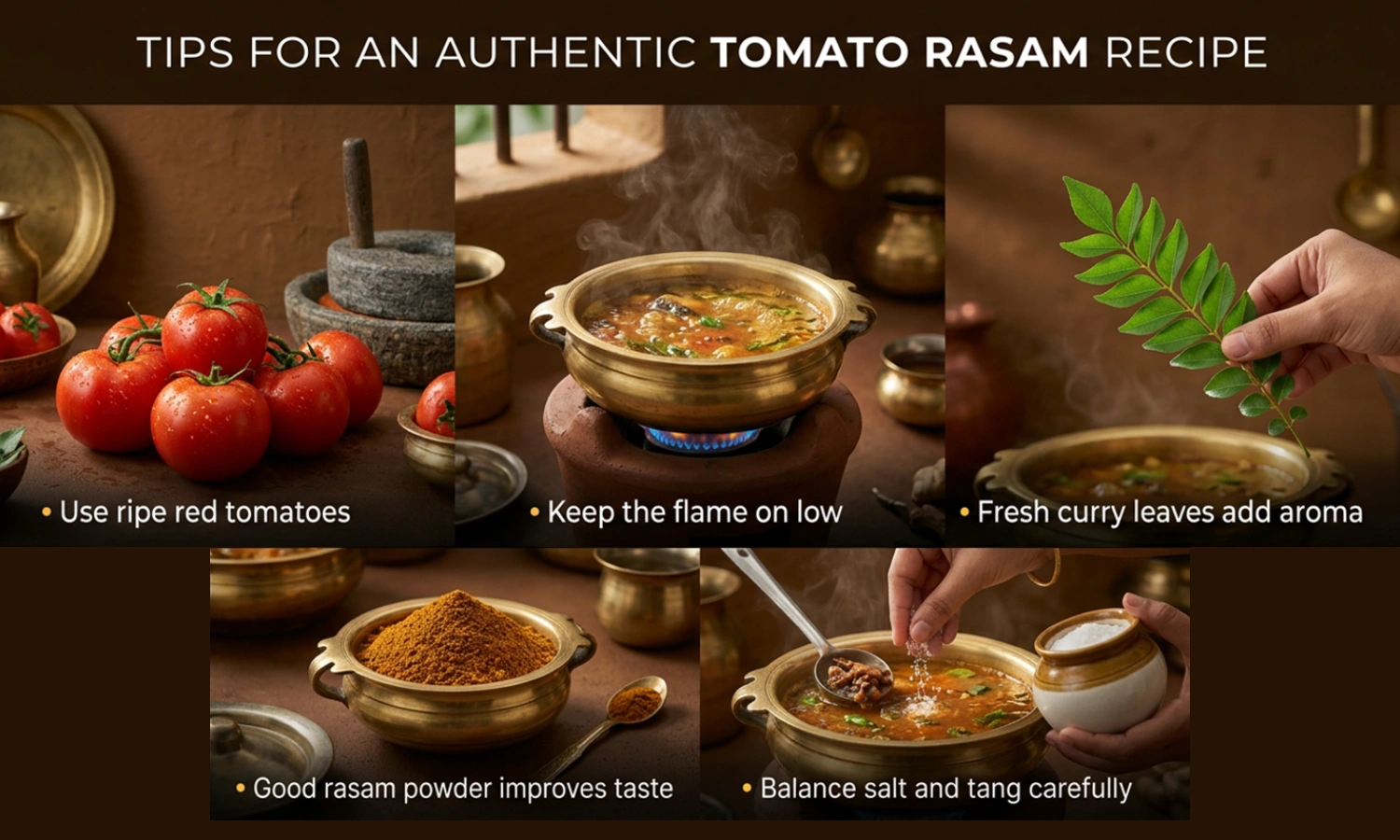
Tips for an Authentic Tomato Rasam Recipe

Use ripe, red tomatoes for the best colour and taste. Keep the flame low and never boil the soup hard. Fresh curry leaves and good rasam powder make this authentic tomato rasam recipe truly fragrant.Taste at the end and adjust salt and tang. A well made tomato rasam should be sour, mildly spicy, and aromatic, with the tomato flavour clearly present.

Serving Tomato Rasam

Serve this tomato rasam hot over steamed rice with a spoon of ghee, or sip it warm as a starter. A papad or a light vegetable side completes the meal.With this easy tomato rasam recipe, you can enjoy a fresh bowl of tomato rasam any day. Make it once and you will return to this simple tomato rasam recipe again and again.

History of Tomato Rasam

The tomato arrived in South Indian cooking only a few centuries ago, yet the dish quickly became a household favourite. The fruit added colour and a soft tang that suited the existing style of rasam. Today the dish is cooked in homes across the region.Many families have their own authentic tomato rasam recipe, adjusted over years. Some keep it mild for children, while others make a spicy tomato rasam recipe with extra pepper. The bright taste of tomato rasam fits every table.

Common Mistakes to Avoid

The main mistake is boiling the soup hard, which makes the rasam bitter. Keep the flame low and stop once a froth rises. Using unripe tomatoes is another error, since they make the dish dull and too sour.Skipping the tempering also weakens the result. The ghee, mustard, and curry leaves added at the end give the soup its lovely aroma. Avoid these slips and your bowl will taste balanced and fresh.

What to Serve With Tomato Rasam

This soup pairs best with hot steamed rice and a spoon of ghee. The soft rice soaks up the bright, tangy liquid and turns it into a comforting meal. A crisp papad on the side adds a pleasant crunch.Light vegetable dishes also suit the dish well. A simple potato fry or a spoon of curd balances the tang and gives the plate variety. These pairings make the meal feel complete without much extra work.You can also enjoy the dish on its own. Served warm in a cup before dinner, it opens the appetite and feels soothing. Either way, this easy tomato rasam recipe fits neatly into a daily South Indian meal.

Serving and Storage Suggestions

This bright, tangy bowl is best enjoyed fresh and warm, poured over a mound of steamed rice with a little ghee on top. It also works as a light, soothing drink in a small cup before a meal, especially on a cold or rainy day. For a fuller plate, pair it with a simple poriyal, a crisp papad, or a spoon of curd that cools the gentle heat.If you have leftovers, let the bowl cool fully, then store it in a covered container in the refrigerator for up to two days. Reheat it gently on a low flame and avoid letting it come to a hard boil, as slow warming keeps the aroma and flavour intact. Add a splash of water if it has thickened, taste once for salt and tang, and finish with a little fresh coriander. Made ahead this way, it makes a quick, comforting addition to any weekday lunch or dinner.

FAQs

How do you make tomato rasam?Simmer crushed tomatoes in tamarind water with salt, turmeric, and rasam powder, then finish with a ghee tempering of mustard seeds, cumin, and curry leaves.
Can I make tomato rasam without dal?Yes, simply skip the dal and add a little water for a lighter bowl.
Why is my tomato rasam bitter?Boiling it hard or using unripe tomatoes causes bitterness, so simmer gently with ripe, red tomatoes.
How long does tomato rasam last?Store it in the fridge for about a day and reheat it gently before serving.
How do you make tomato rasam spicy?Add a little extra black pepper or an additional red chilli to the rasam powder.

Rasam Ingredients: Full List for Authentic Rasam

Summary

A tidy reference for stocking your rasam pantry. It groups the core souring agents, the rasam masala and powder spices, and the tempering items, then explains how to choose fresh produce and grind your own blend. You also get a quick rasam paste idea, storage advice, and the mistakes that throw off the balance.

Introduction :

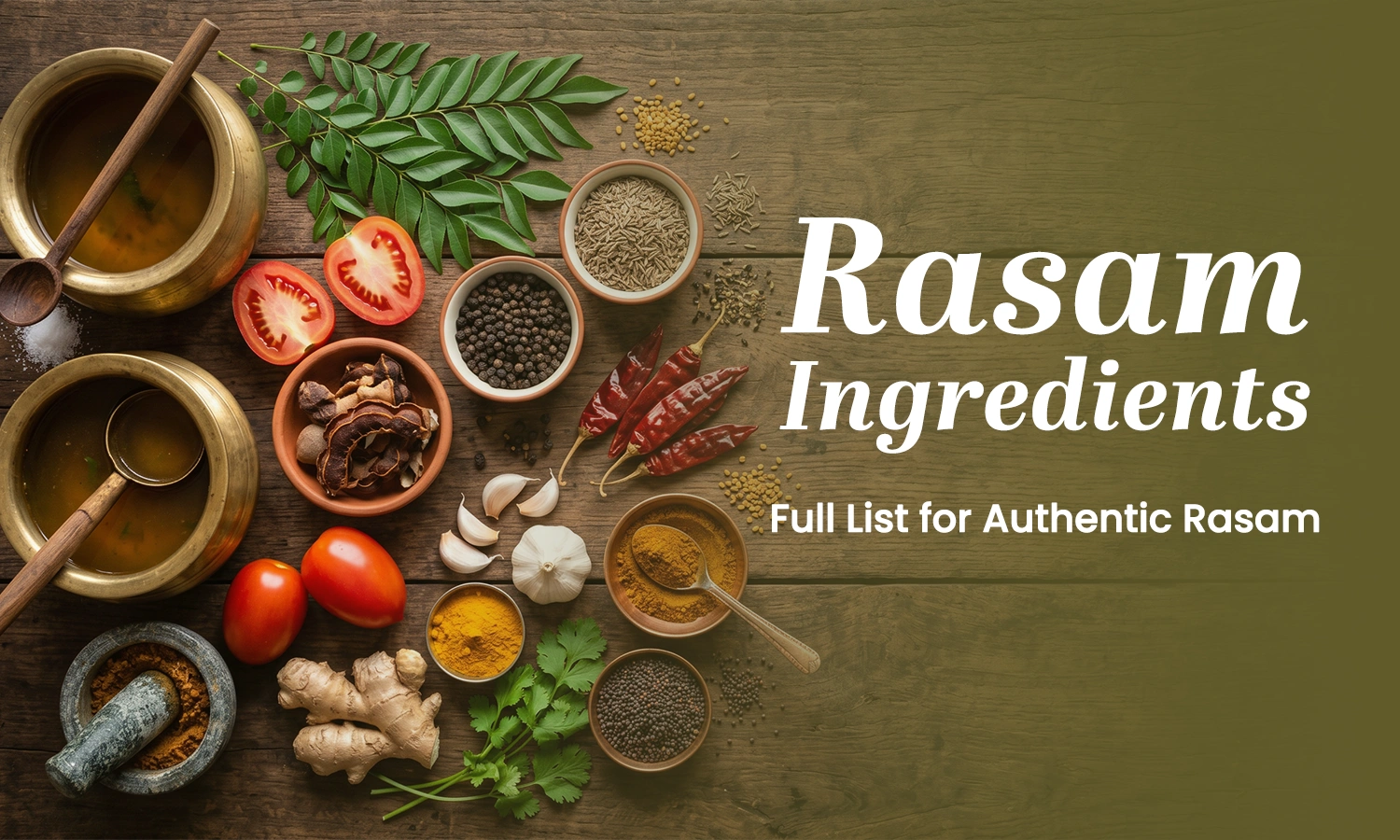
Knowing the right rasam ingredients is the key to a great bowl of rasam. When the rasam ingredients are fresh and well balanced, even a simple rasam recipe tastes wonderful. This guide gives you a complete rasam ingredients list, from the souring agents to the rasam masala and the tempering.Whether you cook daily or only on weekends, having the correct rasam ingredients ready makes the work fast. Below you will find the core items, the rasam powder ingredients, and a few notes on the best rasam powder to use.

The Core Rasam Ingredients

The core rasam ingredients are tamarind, tomato, salt, turmeric, and rasam masala. Tamarind gives the sour base, while tomato adds body and a mild sweetness. These few rasam ingredients form the heart of almost every rasam recipe.
Cooked toor dal water is another common item on the rasam ingredients list. It makes the rasam softer and fuller. With these basics, you already have most of what a daily rasam needs.

Rasam Masala and Rasam Powder Ingredients

Rasam masala is the spice blend that defines the flavour. The usual rasam powder ingredients are coriander seeds, cumin, black pepper, dried red chilli, and a little toor dal. Some cooks add fenugreek and curry leaves for depth.You can grind these rasam powder ingredients fresh or keep a jar ready. Choosing the best rasam powder, whether store bought or homemade, saves time and keeps your rasam ingredients list short. A good rasam masala should smell warm and slightly peppery.

Tempering Items on the Rasam Ingredients List

The tempering is small but important. For this part of the rasam ingredients list you need ghee or oil, mustard seeds, cumin, dried red chilli, curry leaves, and asafoetida. These items are added hot at the end of the rasam recipe.Fresh coriander leaves go in last. They are simple rasam ingredients, but they add a bright, fresh aroma that ties the dish together.

Making a Quick Rasam Paste

If you want speed, you can turn your rasam ingredients into a rasam paste. Blend tamarind, tomato, garlic, and rasam masala into a smooth mix. This rasam paste can be stored in the fridge for several days.A ready rasam paste means you only have to add water and temper it. It is a smart way to keep your rasam recipe ingredients organised for busy days. Rasam Ingredients

Benefits of Rasam Powder and Good Ingredients

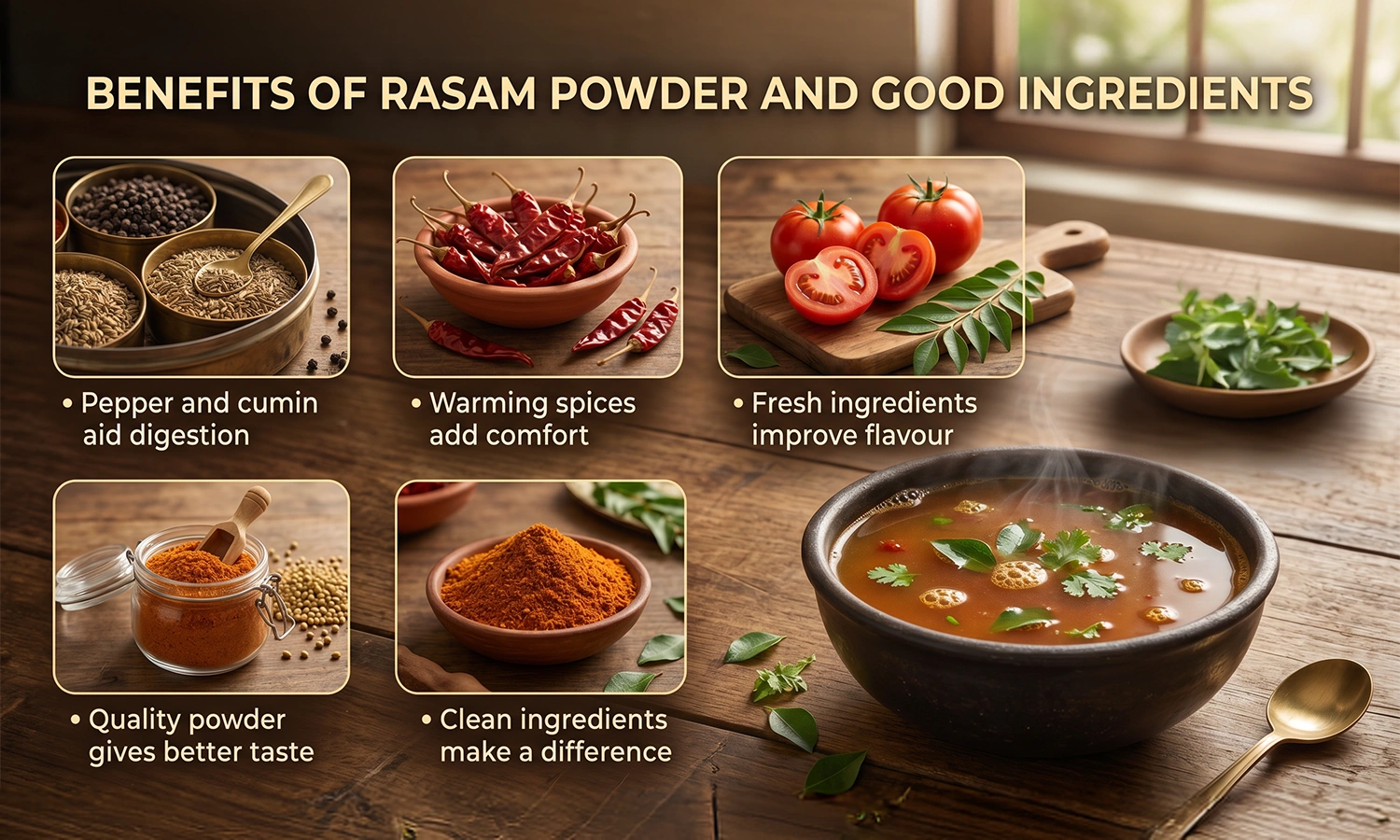
There are real benefits of rasam powder beyond taste. The spices used in rasam, such as pepper and cumin, are warming and may help digestion. This is one of the reasons rasam is served when someone feels heavy or unwell.Choosing fresh rasam ingredients and the best rasam powder gives you both flavour and these gentle benefits. Quality matters more than quantity when it comes to a clean rasam ingredients list.

Storing Your Rasam Ingredients

Store dry rasam ingredients like rasam masala and rasam powder in airtight jars away from heat. Keep tamarind in a cool, dry place and use ripe tomatoes within a few days.With a tidy rasam ingredients list and a jar of good rasam masala, you can cook a fresh rasam recipe whenever you like. Organised rasam ingredients make daily cooking far easier.

How to Choose Fresh Rasam Ingredients

Choosing fresh rasam ingredients makes a clear difference in taste. Pick firm, ripe tomatoes and soft, dark tamarind. Buy whole spices for your rasam masala and grind them at home when you can, since fresh grinding keeps the aroma strong.When you shop for rasam ingredients, check that your spices smell fragrant and not dusty. A short, well chosen rasam ingredients list always beats a long list of stale items. Quality is the real secret behind great rasam ingredients.

Common Mistakes With Rasam Ingredients

A common mistake is using too much tamarind, which makes the rasam sharp. Measure your souring agents against the other rasam ingredients for balance. Skipping curry leaves is another error, since they carry much of the aroma.Forgetting asafoetida is also common. Though tiny, it rounds out the flavour of the dish. Keeping a tidy set of rasam recipe ingredients ready helps you avoid these slips and cook with confidence.

Building a Simple Rasam Pantry

Keeping the right rasam ingredients in your pantry saves time and effort. Stock tamarind, a jar of rasam masala, mustard seeds, cumin, dried red chillies, and curry leaves. With these rasam ingredients on hand, you can cook a fresh bowl on short notice.Buy spices in small amounts so they stay fresh. A short, well managed rasam ingredients list is far more useful than a crowded shelf of old packets. Replace your rasam masala every few weeks for the best aroma.Fresh produce matters too. Ripe tomatoes, good tamarind, and fresh coriander complete the core rasam ingredients. With a simple, well stocked pantry, you are always ready to make a comforting bowl of rasam.

Storing Your Ingredients the Right Way

Good storage keeps your pantry ready and your flavours bright. Keep whole spices like black pepper, cumin, and coriander seeds in clean, dry, airtight jars away from heat and sunlight. Whole spices hold their aroma far longer than ground ones, so grind only what you need for a week or two. Label each jar with the date so you can use the oldest stock first.Tamarind keeps well for months when wrapped tightly and kept in a cool, dark place. Fresh curry leaves and coriander leaves last longer in the refrigerator when wrapped in a dry cloth or paper towel inside a box. Tomatoes are best stored at room temperature until they ripen, then moved to the fridge for a few extra days. With a tidy, well stocked shelf, you can put together a warm, comforting bowl on any busy evening without a single trip to the market.

FAQs

What are the main ingredients in rasam?The core rasam ingredients are tamarind, tomato, salt, turmeric, rasam masala, and toor dal water, plus a tempering of ghee, mustard seeds, cumin, and curry leaves.
What goes into rasam powder?Rasam powder usually has coriander seeds, cumin, black pepper, dried red chilli, and a little toor dal, with optional fenugreek and curry leaves.
Can I make rasam without rasam powder?Yes, a quick blend of roasted coriander, cumin, pepper, and red chilli works well in its place.
How do I store rasam ingredients?Keep dry spices in airtight jars away from heat, store tamarind in a cool dry place, and use ripe tomatoes within a few days.
Is asafoetida necessary in rasam?It is used in a tiny amount but it rounds out the flavour, so it is best not to skip it.

Rasam Recipe: The Best South Indian Comfort Soup

Summary

A reliable everyday recipe families return to again and again. It explains why the balance of sour, spicy, and savoury works, lists simple ingredients, and gives a step by step method finished with fresh tempering. Popular variations like tomato rasam and dal rasam are covered, along with a little history and pairing suggestions for a complete plate.

Introduction :

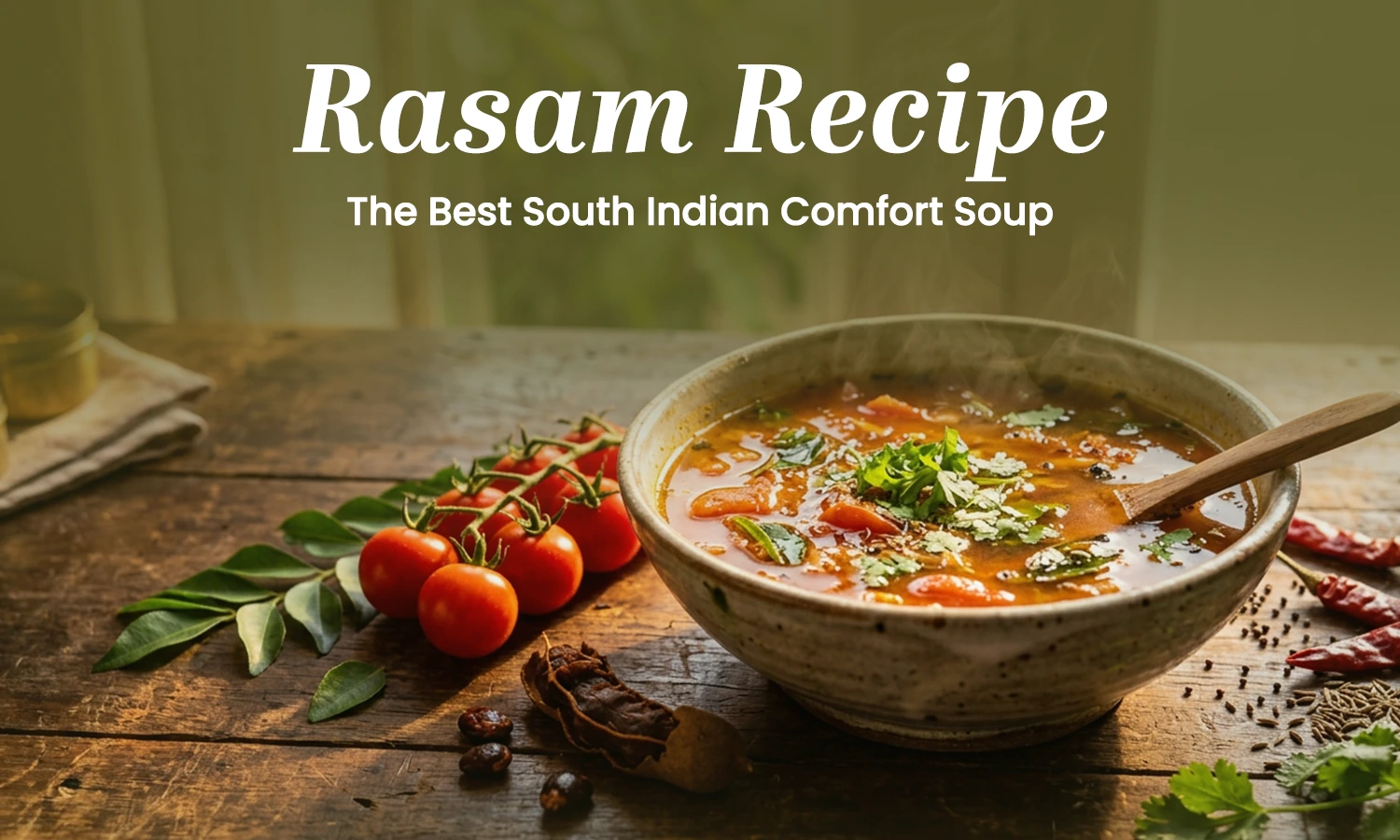
A good rasam recipe is one of the most loved dishes in any South Indian home. This rasam recipe gives you a tangy, spiced soup that is light, warm, and easy to make. With the right rasam ingredients and a fragrant rasam masala, you can prepare a comforting bowl in under thirty minutes.Below you will find an easy rasam recipe that works for beginners and a few variations, such as a tomato rasam recipe and dal rasam. This is the kind of South Indian rasam that families return to again and again.

Why This Rasam Recipe Works

This rasam recipe works because it keeps the balance between sour, spicy, and savoury. Tamarind brings the tang, rasam masala brings the spice, and a gentle simmer ties them together. Hard boiling is avoided, which is the most common mistake in any rasam recipe.A traditional rasam recipe also depends on tempering. The hot ghee, mustard, and curry leaves added at the end lift the aroma. That final step turns a plain broth into a true South Indian rasam. Rasam Recipe

Rasam Ingredients for This Recipe

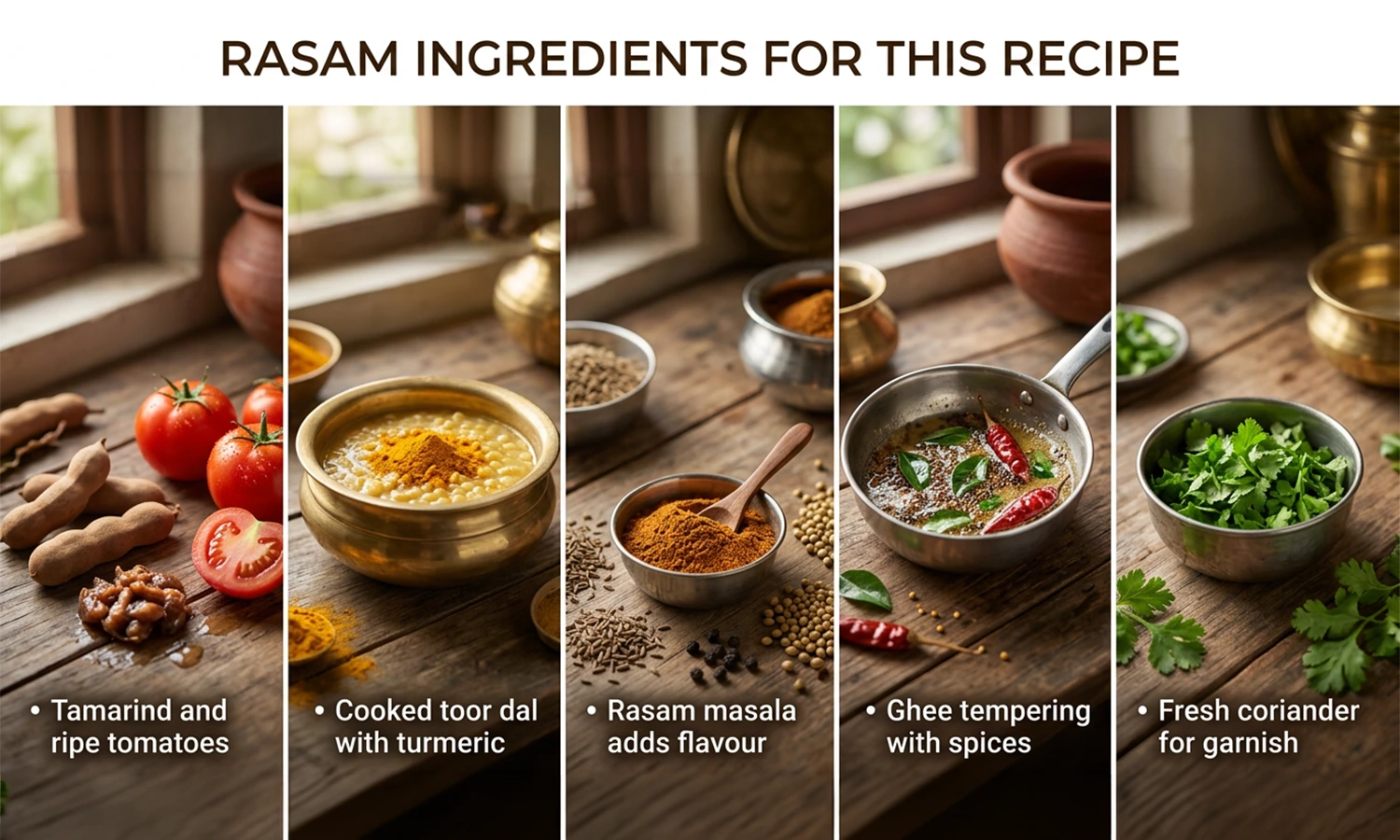
The rasam ingredients are simple and easy to find. You need tamarind, ripe tomatoes, cooked toor dal, turmeric, salt, and rasam masala. For tempering you need ghee, mustard seeds, cumin, dried red chilli, curry leaves, and asafoetida.If you do not have a ready blend, a quick rasam powder recipe of roasted coriander seeds, cumin, pepper, and red chilli will do the job. Fresh coriander leaves are the finishing touch in this easy rasam recipe.

Step-by-Step Rasam Recipe

Start by extracting tamarind juice from a small ball of tamarind. Add crushed tomatoes, turmeric, salt, and rasam masala to the tamarind water. Let it simmer on low heat until the raw smell fades.Add cooked and mashed toor dal with a little water to make a softer dal rasam. Keep the flame low so the rasam recipe does not turn bitter. When a light froth forms on top, switch off the heat.Heat ghee in a small pan, add mustard seeds, cumin, red chilli, and curry leaves. Pour this over the rasam and cover for one minute. Your South Indian rasam is now ready. Rasam Recipe

Popular Variations of This Rasam Recipe

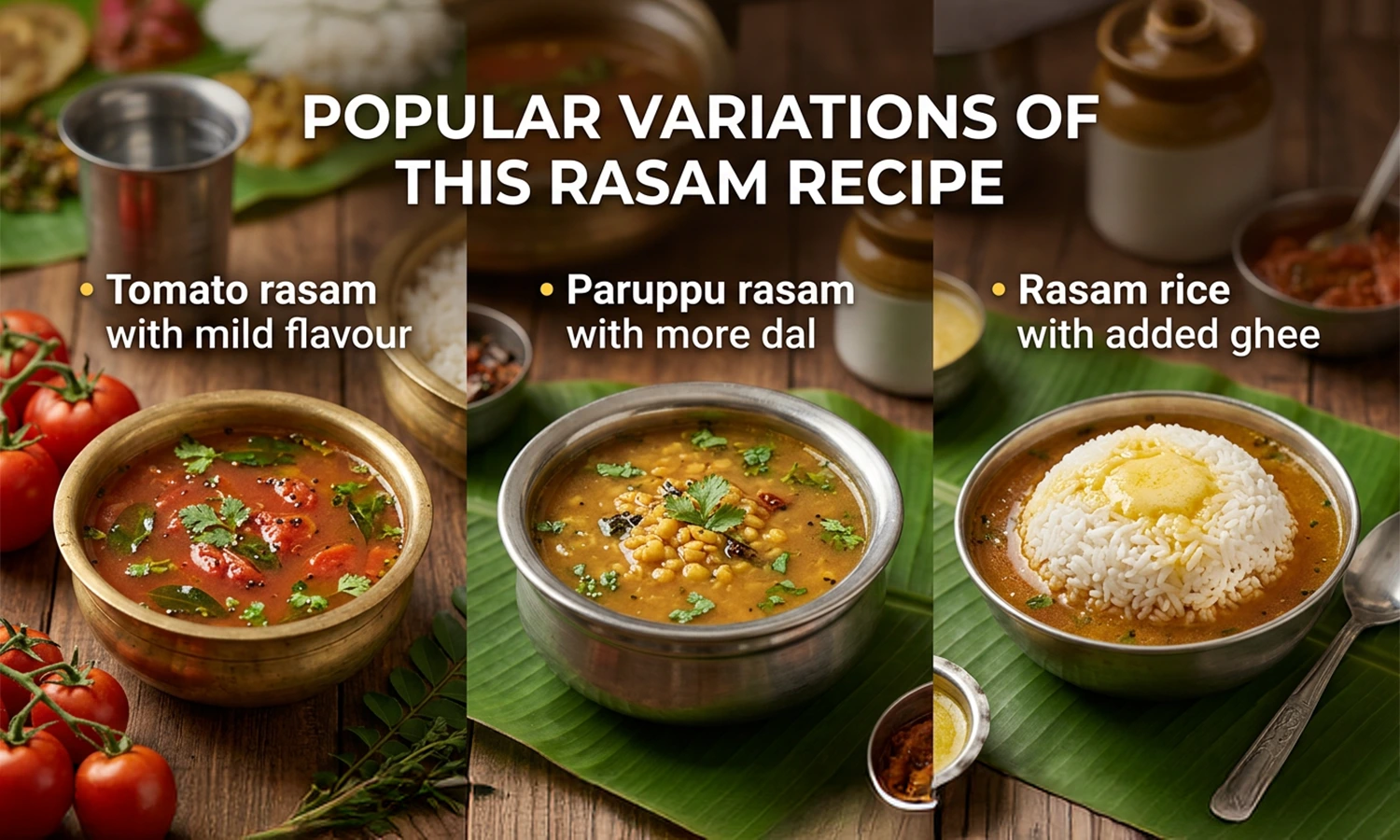
This base rasam recipe can change in many ways. For a tomato rasam recipe, increase the tomatoes and reduce the tamarind for a milder, fruity taste. For a paruppu rasam recipe, add more toor dal so the soup is thicker and softer.You can also make a rasam rice recipe by pouring this rasam over mashed rice with ghee. Each version starts from the same easy rasam recipe, which makes it simple to learn once and repeat often.

Tips for the Perfect South Indian Rasam

Keep the heat low and never let the rasam boil hard. Use fresh curry leaves and good quality rasam masala for the best aroma. Store your spice blend in an airtight jar so it stays fresh for the next rasam recipe.Taste before serving. Adjust salt, tang, and spice to your liking. A balanced traditional rasam recipe should be sour, mildly spicy, and very aromatic.

Serving Your Rasam

Serve this rasam recipe hot with steamed rice and ghee, or sip it from a small cup as a warm starter. A crisp papad on the side makes the meal complete.With this easy rasam recipe in hand, you can make a fresh bowl of South Indian rasam any day of the week. Practice it a few times and it will become second nature.

History of the Rasam Recipe

The rasam recipe has deep roots in South Indian cooking and is several centuries old. Every region and family keeps its own rasam recipe, passed down by memory rather than measurement. Some prefer a thin, peppery style, while others enjoy a thicker dal rasam.This variety is part of the charm. A traditional rasam recipe from Tamil Nadu may differ from one in Karnataka, yet the core idea stays the same. Tamarind, spice, and a careful simmer define almost every rasam recipe.

Easy Rasam Recipe Variations to Try

Once you master the base, the rasam recipe opens up to many options. Try a tomato rasam recipe for a fruity bowl, or a paruppu rasam recipe with extra dal for softness. A rasam rice recipe turns the same soup into a full meal.For a homemade touch, pair the rasam recipe with a fresh rasam powder recipe ground at home. Each version builds on the same easy rasam recipe, so you learn the method once and repeat it in new ways. The rasam ingredients barely change between them.

Common Mistakes:

The biggest mistake in any rasam recipe is hard boiling, which turns the soup bitter. Keep the heat low. Skipping the tempering is another error, since much of the aroma in a good rasam recipe comes from that final step.

What to Serve With Your Rasam

A bowl of rasam rarely stands alone. The classic pairing is steamed rice and a spoon of ghee, which soaks up the tangy soup. A crisp papad or appalam on the side adds a satisfying crunch to the meal.Light vegetable side dishes also work well. A simple potato fry, beans poriyal, or a spoon of curd balances the sharp, spiced soup. These pairings turn a single rasam recipe into a full, comforting South Indian plate.
For a lighter option, you can sip the soup warm from a cup before dinner. Served this way, it opens the appetite and warms the body. However you serve it, a well made bowl always rounds off the meal.

Tips for the Best Results Every Time

A few small habits make a big difference in the final bowl. Always keep the heat low once the cooked dal and tamarind water go into the pot. A gentle simmer keeps the flavour clean and the aroma fresh, while a hard boil can turn the broth flat and dull. Watch for the light froth that rises to the top, and switch off the flame as soon as you see it.Fresh tempering is the heart of a good bowl. Heat the ghee or oil until it shimmers, then add the mustard seeds and let them pop fully before the curry leaves and dried chillies go in. Pour this hot tempering over the pot at the very end and cover it for a minute so the aroma settles in. Garnish with chopped coriander leaves just before serving. Taste once for salt and tang, adjust if needed, and serve it warm with steamed rice or as a light, soothing drink on its own.

FAQs

How do you make rasam at home?Simmer tamarind water with tomato, turmeric, salt, and rasam masala, add cooked dal, then finish with a hot ghee tempering.
Can rasam be made ahead?Yes, but add the tempering fresh for the best aroma.
Why does rasam turn bitter?Hard boiling is the usual cause, so a gentle simmer keeps it smooth.
What is the difference between rasam and sambar?Rasam is a thin, tangy soup, while sambar is thicker and made with more dal and vegetables.
How long can I store rasam?Keep it in the fridge for about a day and reheat it gently without boiling.

How to Make Rasam: Easy South Indian Recipe at Home

Summary

A clear introduction to the thin, tangy soup that comforts any plate. It lists the everyday rasam ingredients, explains the gentle simmer that keeps the dish from turning bitter, and walks through tempering. You also get a tomato variation, serving ideas with rice, common mistakes to avoid, and a note on rasam’s gentle benefits.

Introduction :

Learning how to make rasam at home is easier than most people think. Rasam is a thin, tangy South Indian soup that brings warmth and comfort to any plate. In this guide on how to make rasam, you will find the exact rasam ingredients, the correct rasam masala, and a clear method that works every time.
Once you know how to make rasam, you have a quick and healthy dish for busy weekdays. You can sip it on its own or pour it over hot rice. This simple rasam recipe uses common pantry items, so you can prepare it without any special shopping.

What Is Rasam and Why Learn How to Make It

Rasam is a watery South Indian dish made from tamarind, tomato, and spices. People love it because it is light, warm, and easy to digest. When you learn how to make rasam, you also learn a dish that is gentle on the stomach and rich in flavour.Many homes serve rasam and rice together as a daily meal. Others drink a small cup before dinner to open their appetite. This is why understanding how to make rasam at home is such a useful skill for any cook.

Rasam Ingredients You Will Need

Gathering the right rasam ingredients is the first step. For a basic rasam recipe, you need tamarind, two ripe tomatoes, cooked toor dal water, and salt. You also need rasam masala, which is the spice blend that gives the dish its taste.For the tempering, you need ghee or oil, mustard seeds, cumin, dried red chilli, curry leaves, and a pinch of asafoetida. Fresh coriander leaves finish the dish. If you keep homemade rasam powder ready, your rasam masala work is already done.Good rasam ingredients make a big difference. Use soft, sour tamarind and ripe tomatoes for the best balance of tang and sweetness. How to Make Rasam

How to Prepare Rasam Step by Step

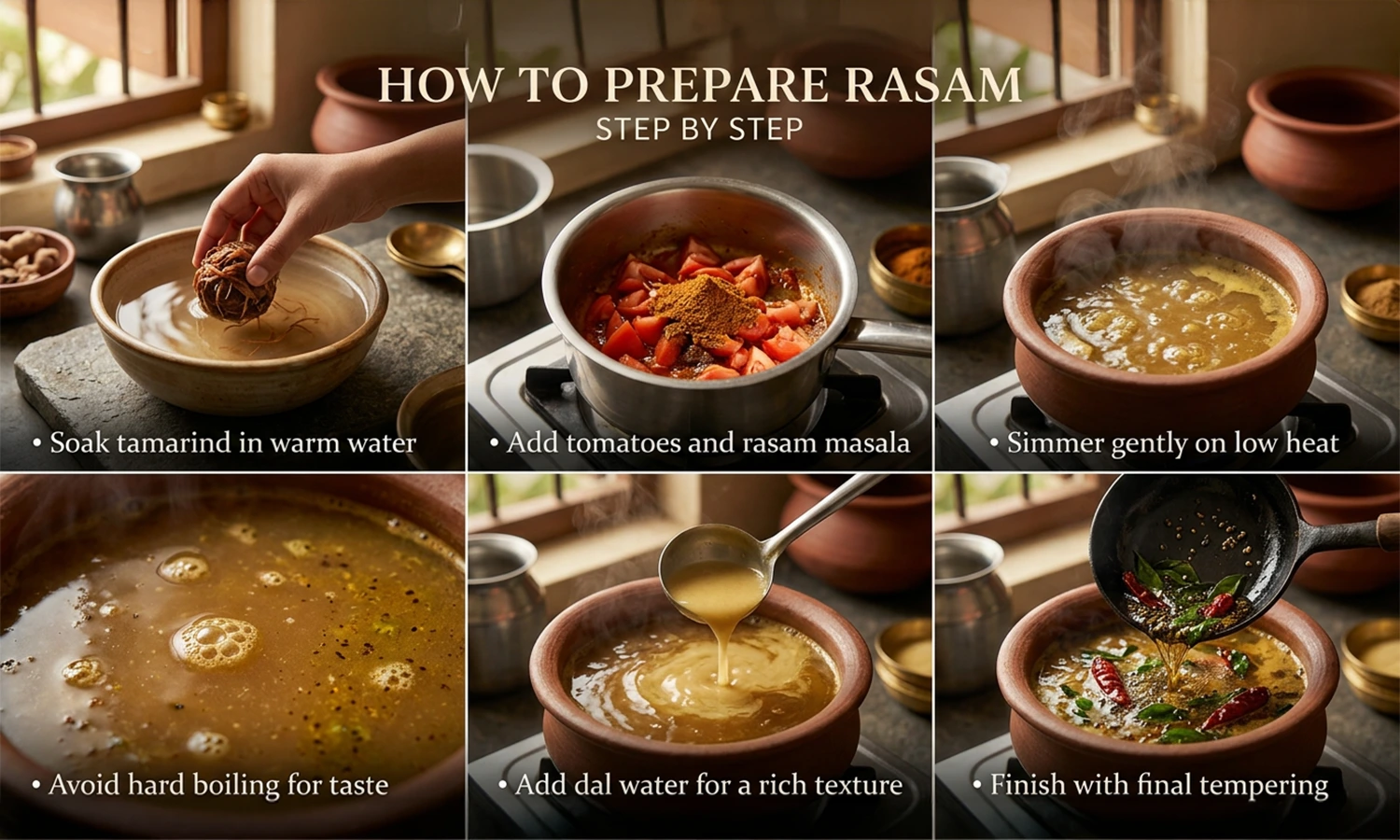
Here is how to prepare rasam in simple steps. First, soak a small lemon-sized ball of tamarind in warm water and squeeze out the juice. Crush the tomatoes lightly and add them to the tamarind water along with salt, turmeric, and your rasam masala.Let this mixture simmer on low heat. Do not let it reach a rolling boil, because hard boiling makes the rasam bitter. This gentle simmer is the secret in any good rasam recipe.When the raw smell goes away and a light froth rises, add the dal water to make the rasam softer and fuller. Switch off the heat. The last part of how to make rasam is the tempering.

How to Make Tomato Rasam as a Variation

If you want to learn how to make tomato rasam, simply use more tomatoes and less tamarind. The extra tomato gives a fruity, mild tang that children enjoy. The rest of the method stays the same as the main rasam recipe.For the tempering, heat ghee, add mustard seeds, cumin, red chilli, and curry leaves. Pour this over the rasam and cover the pot for a minute so the aroma settles in. Finish with coriander leaves.

Tips to Make Rasam at Home Taste Better

A few small habits improve every batch. Always simmer and never boil hard. Use fresh curry leaves, since they carry most of the aroma. Keep homemade rasam powder in an airtight jar so your rasam masala stays fragrant.Taste and adjust at the end. If it is too sour, add a little water and salt. If it is flat, add a pinch more rasam masala. These small checks are what make learning how to make rasam at home so rewarding. How to Make Rasam

How to Serve Rasam and Rice

The classic way to enjoy this dish with rasam and rice. Mash hot rice with a spoon of ghee, then pour warm rasam over it. A side of papad or a simple vegetable stir fry completes the plate.

Now that you know how to cook rasam, you can repeat it any day with confidence. With practice, your rasam recipe will taste just like the one from a traditional South Indian kitchen.

Common Mistakes to Avoid When You Make Rasam

The most common mistake when learning to cook rasam is boiling it too hard. A rolling boil makes the rasam bitter and dull. Always keep the heat low and switch off as soon as a light froth rises. This single habit improves how to make rasam more than any other tip.
Another mistake is using stale spices. Old rasam masala loses its aroma, so the rasam tastes flat. Adding too much tamarind is also common, which makes the dish sharp. Balance the tamarind, salt, and rasam masala carefully each time you make rasam.

Health Benefits of Rasam

Beyond its taste, rasam offers gentle benefits. The pepper, cumin, and garlic used in many recipes are warming spices that some people find help with digestion. This is why a warm bowl is often served when someone feels heavy after a large meal.Tamarind and tomato add a fresh tang and some vitamin C. Because rasam is light and mostly liquid, it is easy to eat. Learning how to make rasam at home means you can enjoy these qualities any day with simple rasam ingredients.

Quick Tips to Remember When Making Rasam

Keep a few simple points in mind and how to make rasam will feel effortless. Always simmer gently, taste before serving, and adjust the salt and tang at the end. Fresh curry leaves and a good rasam masala carry most of the aroma, so never skip them.
Prepare your rasam ingredients before you start cooking. Squeeze the tamarind, crush the tomatoes, and keep the tempering items ready. This small habit makes how to make rasam a smooth, five-minute task on most days.
If you cook often, keep homemade rasam powder in a jar. With the spice blend ready, how to make rasam at home turns into a quick routine you can manage even on a busy evening. A warm bowl of rasam and rice is then never far away.

FAQs

What is rasam made of? Rasam is made of tamarind, tomato, toor dal water, salt, turmeric, and rasam masala, finished with a ghee tempering of mustard seeds, cumin, and curry leaves.
Can I make rasam without dal? Yes. Use only tamarind and tomato for a lighter soup, or add dal for a fuller bowl.
Why should rasam not be boiled hard?Hard boiling makes rasam bitter, so keep the heat low and switch it off as soon as a light froth rises.
How long does rasam stay fresh?It keeps for about a day in the fridge and should be reheated gently without boiling.
Is rasam good for health?Rasam is light and easy to digest, and its warming spices like pepper and cumin are often enjoyed for comfort.

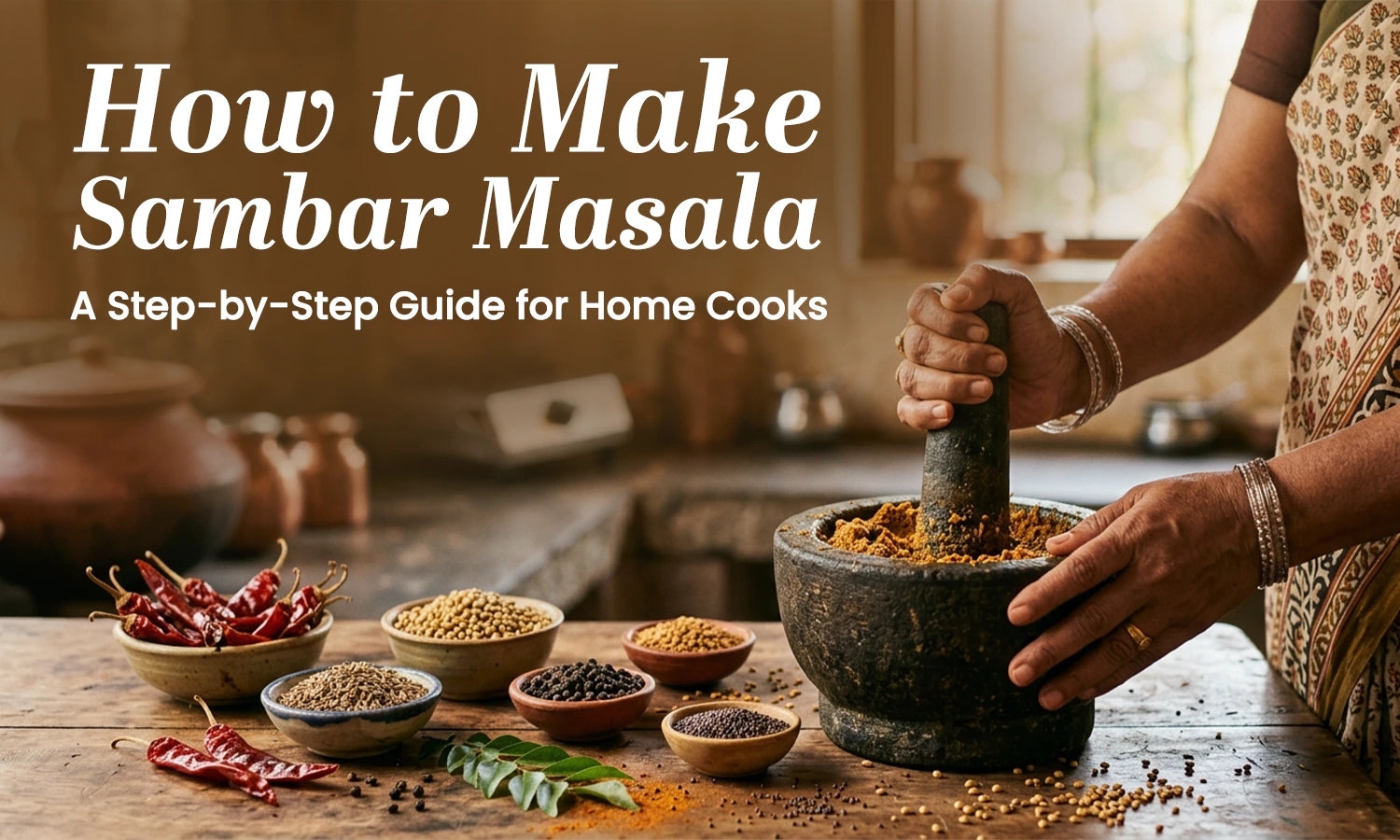
How to Make Sambar Masala: A Step-by-Step Guide for Home Cooks

Summary

This guide explains how to make sambar masala at home in three simple steps. First, roast the dals and red chillies on low heat, then roast the spices, and finally cool and grind everything into a fine powder. It also shares common mistakes to avoid, storage tips, easy ways to use the blend, and a convenient ready-made option.

Introduction :

Making your own spice blend sounds harder than it is. Once you know how to make sambar masala, you can fill your kitchen with fresh aroma and control exactly how your sambar tastes. This step-by-step guide covers the ingredients, the method, common mistakes, and storage, so you can get it right the first time.

What You Need Before You Start

Learning how to make sambar masala begins with gathering the right items. The core
ingredients for sambar masala
are simple and easy to find:

  • Coriander seeds as the main flavour.
  • Toor dal, chana dal, and urad dal for the body.
  • Dried red chillies for heat and colour.
  • Fenugreek seeds, cumin, and black pepper for aroma.
  • Curry leaves, turmeric, and a pinch of asafoetida to finish.

With these ready, the rest of the sambar masala recipe is quick and straightforward.

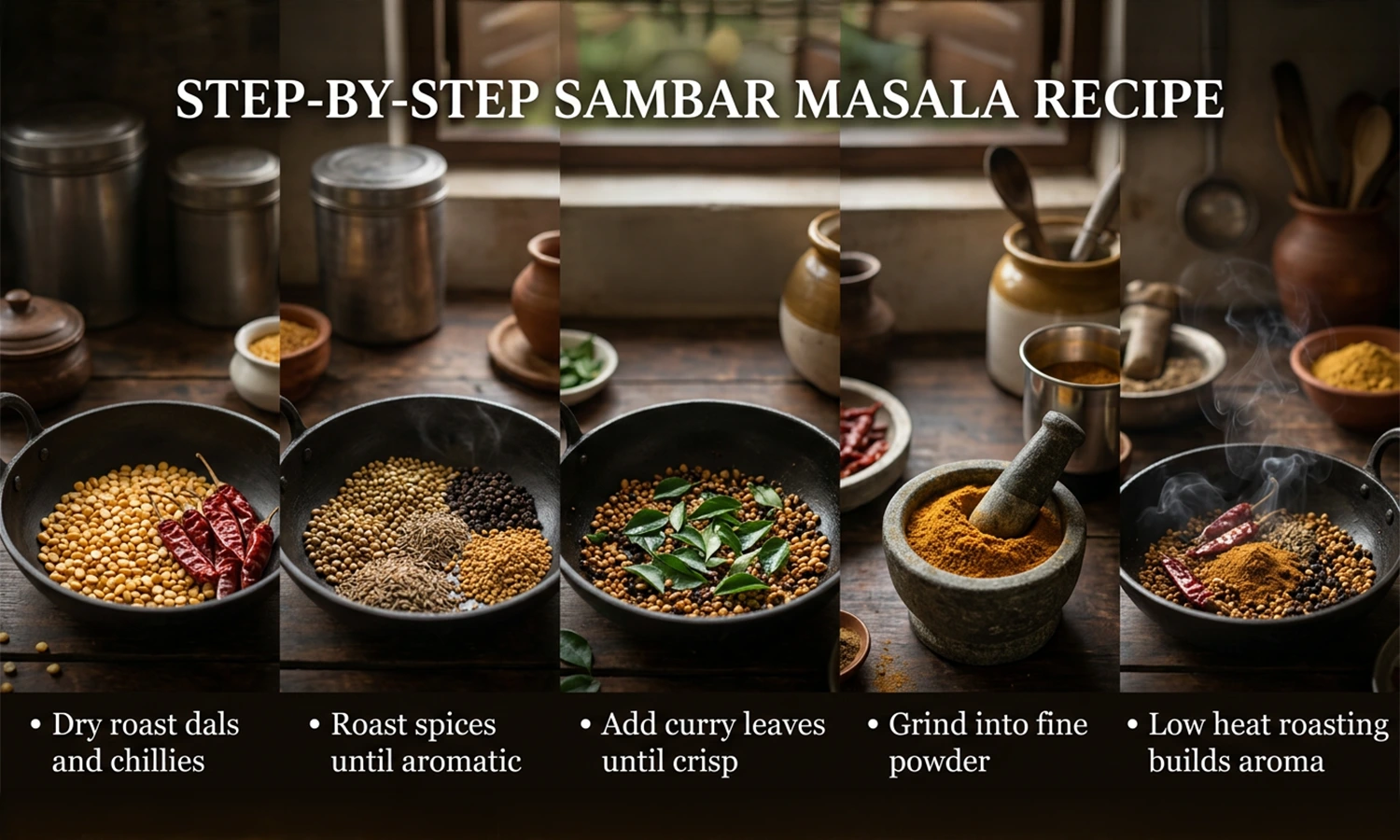
Step 1: Roast the Lentils and Chillies

Heat a dry pan on low. Add the dals and dried red chillies, and roast slowly until they turn golden and release a nutty aroma. Low heat is essential when you learn how to make sambar masala at home, because high heat burns the lentils and turns the blend bitter.

Step 2: Roast the Spices

Add coriander seeds, fenugreek, cumin, and black pepper to the same pan. Roast until fragrant and lightly coloured. Watch the fenugreek closely, since it turns bitter quickly. Toss in the curry leaves at the end so they crisp up.This careful roasting is the heart of any method for how to make home made sambar powder that tastes balanced and aromatic.

Step 3: Cool and Grind

Spread the roasted ingredients on a plate and let them cool completely. Cooling prevents moisture from forming during grinding, which keeps the powder fresh for longer.
Grind everything with turmeric and asafoetida into a fine sambar masala powder. Pause now and then so the grinder does not heat the spices and dull their aroma.

Common Mistakes to Avoid

A few simple errors can spoil a batch. Keep these in mind when figuring out how to make sambar masala:

  • Roasting on high heat, which burns the lentils and fenugreek.
  • Grinding while the spices are still warm, which adds moisture.
  • Skipping curry leaves and asafoetida, which add real depth.
  • Making too large a batch, so the aroma fades before you use it.

Avoiding these keeps your homemade sambar powder fresh and flavourful.

Storage and Shelf Life

Store the finished blend in an airtight container away from heat, light, and moisture. Always use a dry spoon. A well-made batch holds its aroma for several months when stored properly.
Make the sambar masala recipe in small to medium batches so you always cook with a fresh-tasting powder.

Prefer a Ready Blend? Here Is an Easy Option

Knowing how to make sambar masala at home is a great skill, but some days call for convenience. A trusted ready blend gives you the same core flavour with no roasting or grinding.
SGR 777 Foods, a Chennai brand making spices since 1954, offers Madras Sambar Powder built on roasted lentils and handpicked spices. Choose the 100g plus 20g pack to start, the 200g pack for regular cooking, or the 500g pack for a large family.
how to make sambar masala

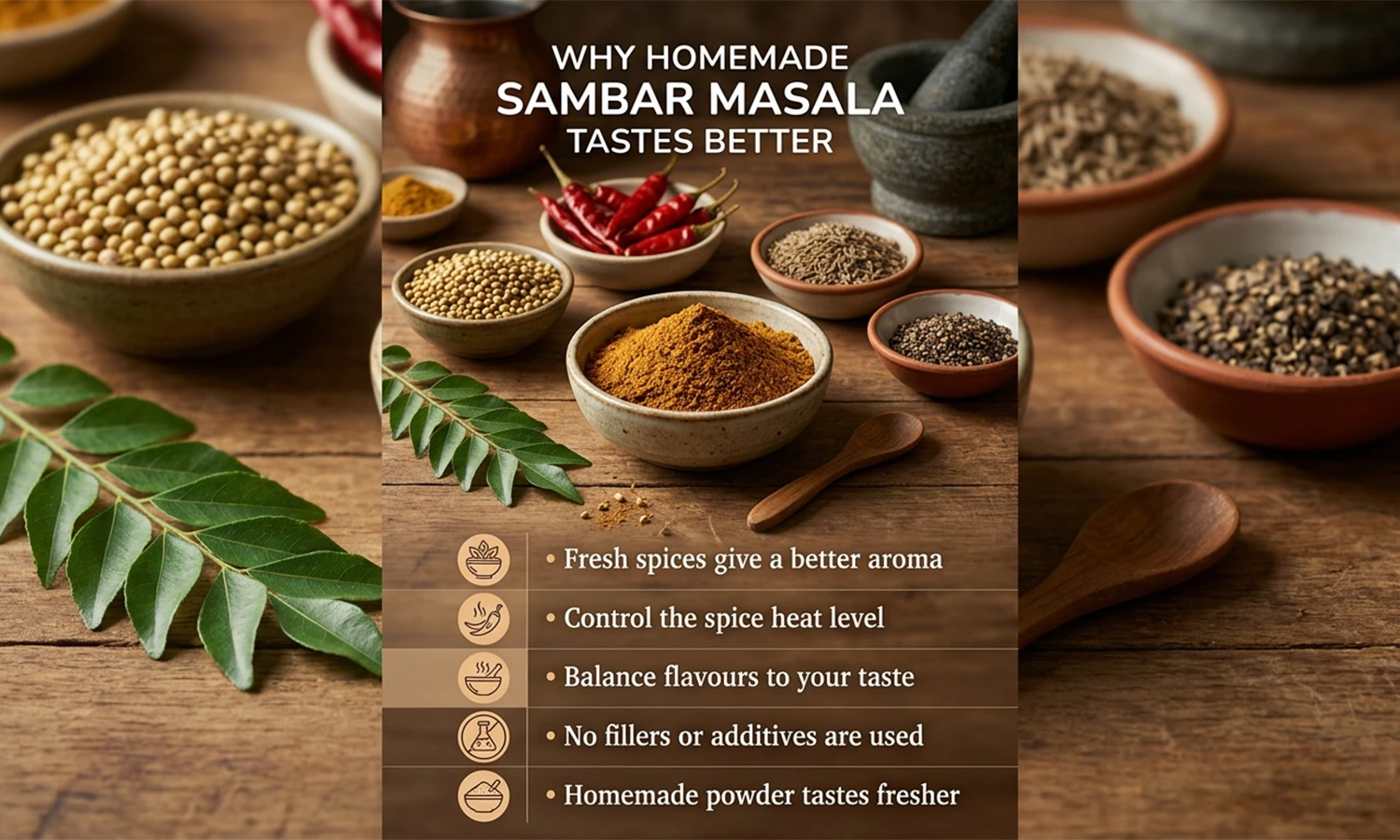
Why Homemade Sambar Masala Tastes Better

There is a clear reason cooks love making their own blend. When you learn how to make sambar masala, you control everything that goes into the jar. Freshly roasted spices release far more aroma than a blend that has sat on a shelf for months.
You also decide the heat level, balance the lentils and spices to your taste, and skip any fillers or anti-caking agents. The result is a homemade sambar powder that smells brighter and tastes cleaner, giving your sambar a depth that is hard to beat.

How to Use Your Sambar Masala

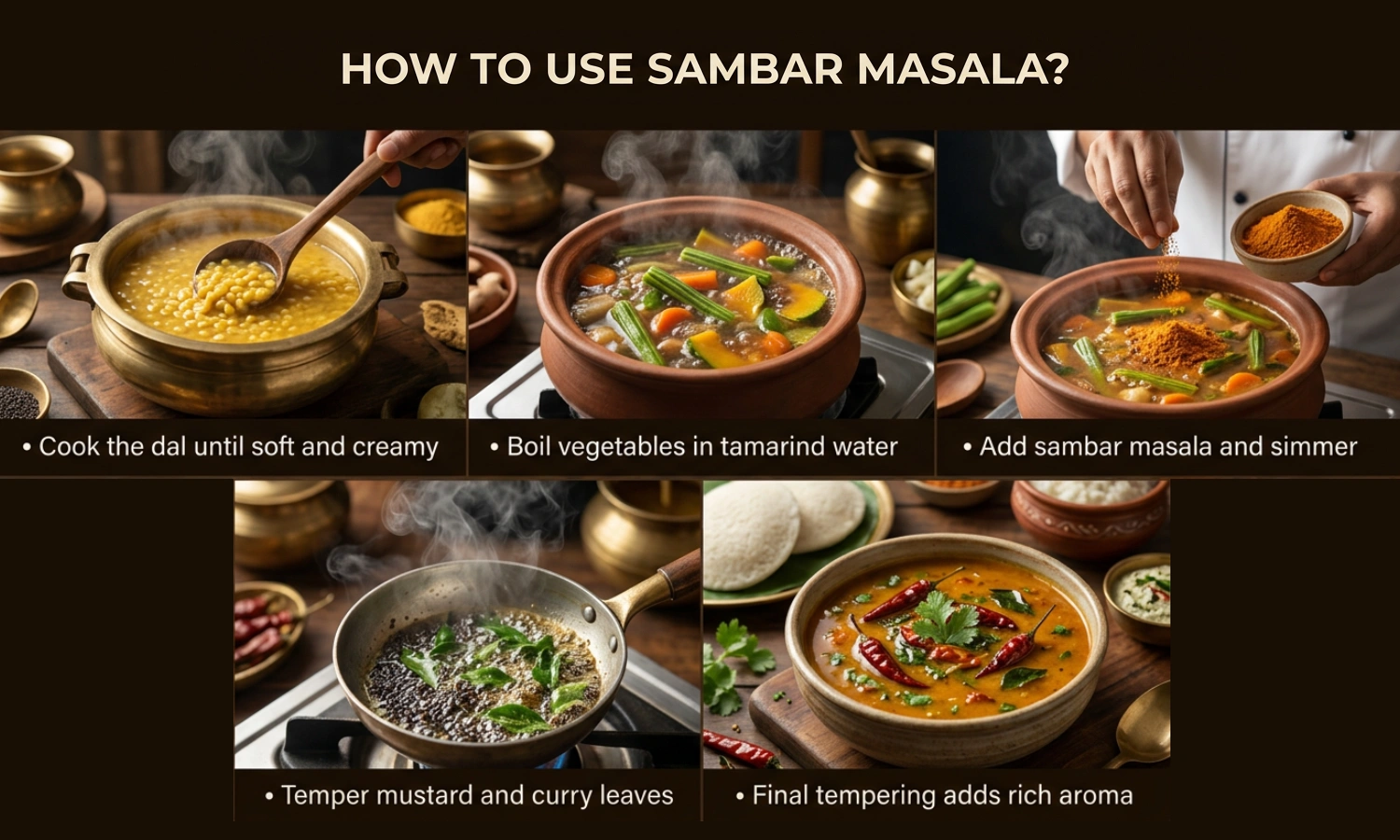
Once your blend is ready, cooking sambar is straightforward. Here is a simple way to put your sambar masala powder to work:

  • Pressure cook toor dal until soft and mash it lightly.
  • Boil your chosen vegetables in tamarind water until tender.
  • Stir in one to two tablespoons of the blend and let it simmer.
  • Add the cooked dal, adjust salt, and bring it to a gentle boil.
  • Finish with a tempering of mustard seeds, dried red chilli, and curry leaves.

Serve hot with rice, idli, or dosa. Knowing how to make sambar masala at home means this comforting meal is always within reach.

Make It Your Own

Once you are comfortable with how to make sambar masala, you can adjust the blend to suit your family. Add a few more red chillies for a spicier Andhra style, or lean on coriander and lentils for a smoother, hotel style body. Keep a written note of your proportions so each sambar masala recipe comes out the same.Small batches are best, since a fresh sambar masala powder always tastes brighter than one that has sat for months. With a little practice, your homemade sambar powder becomes a signature your household will recognise in every bowl.

FAQs

Is it hard to make sambar masala at home? No. With the right ingredients and low-heat roasting, it is simple and quick.
Why roast on low heat?Low heat builds aroma evenly and stops the lentils and fenugreek from burning.
Can I buy sambar powder instead of making it? Yes. A quality ready blend offers the same flavour with full convenience.

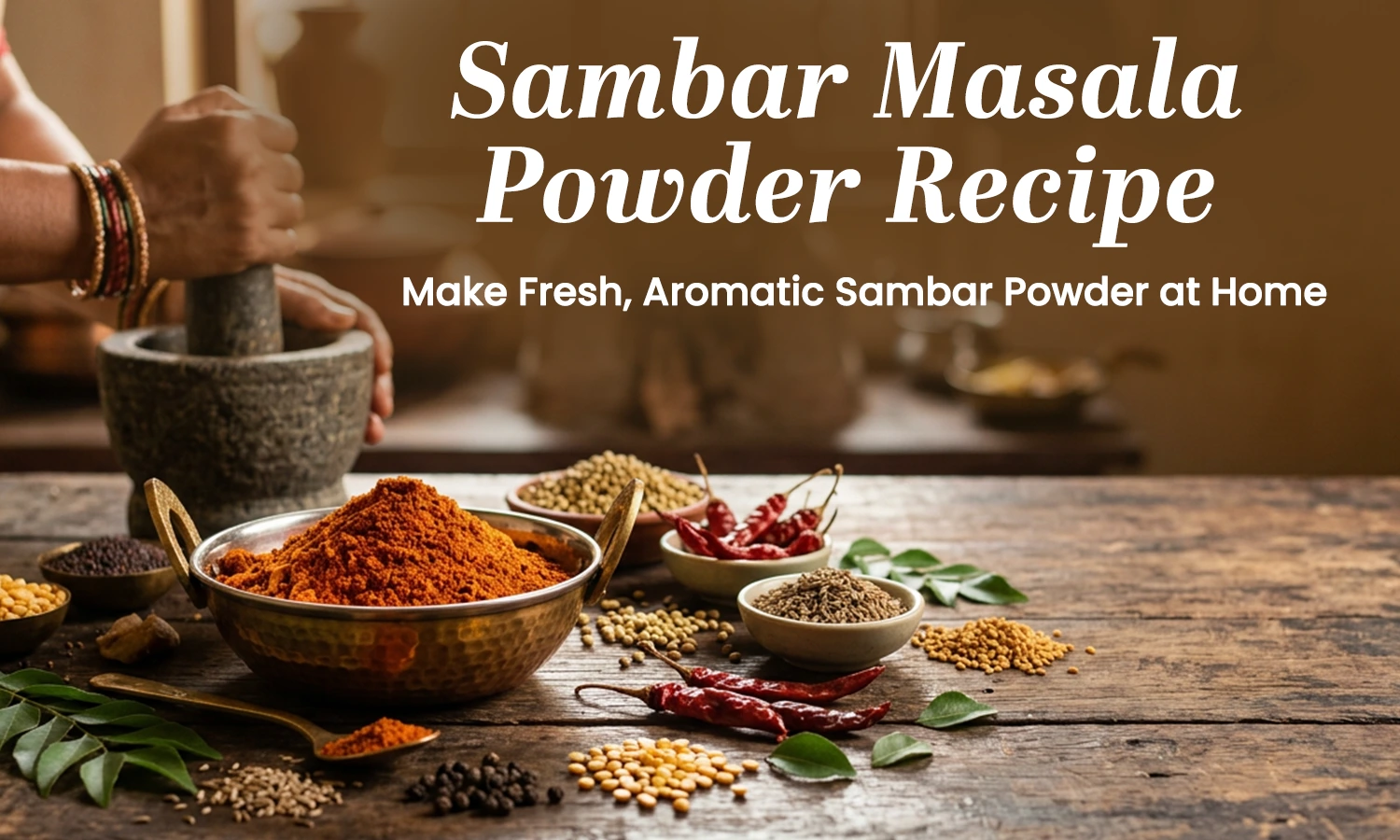
Sambar Masala Powder Recipe: Make Fresh, Aromatic Sambar Powder at Home

Summary

This guide shares a homemade sambar masala Powder recipe using roasted dals, coriander, red chillies, fenugreek, and aromatic spices ground into a fine powder. It covers Andhra, hotel-style, and authentic variations, a quick instant option, storage tips, common mistakes to avoid, and serving ideas, helping you create a fresh, flavourful sambar powder tailored perfectly to your family’s taste.

Introduction :

Nothing beats the aroma of freshly roasted sambar powder filling the kitchen. A homemade sambar masala Powder recipe lets you control the heat, the colour, and the freshness in a way no store shelf can match. This guide walks you through an authentic method, a few regional twists, and a faster option for busy days

Why Make Sambar Masala at Home?

Freshness and control are the big reasons. A homemade sambar masala powder recipe uses spices and lentils you roast yourself, so the flavour is brighter, and you decide how spicy it gets. You also avoid fillers and keep the blend pure.
Once you make your own sambar masala powder recipe a few times, you will understand the balance well enough to adjust it to your family’s taste.

Ingredients for the Recipe

Gather these before you begin. This is a classic sambar podi recipe base:

  • Half a cup of coriander seeds.
  • Two tablespoons each of toor dal and chana dal, and one tablespoon of urad dal.
  • Ten to twelve dried red chillies, adjusted for heat.
  • One teaspoon of fenugreek seeds and one teaspoon of cumin.
  • One teaspoon black pepper, a sprig of curry leaves, and half a teaspoon turmeric.
  • A pinch of asafoetida.

Step-by-Step Sambar Masala Recipe

sambar masala powder recipe

Follow this simple recipe for sambar powder:

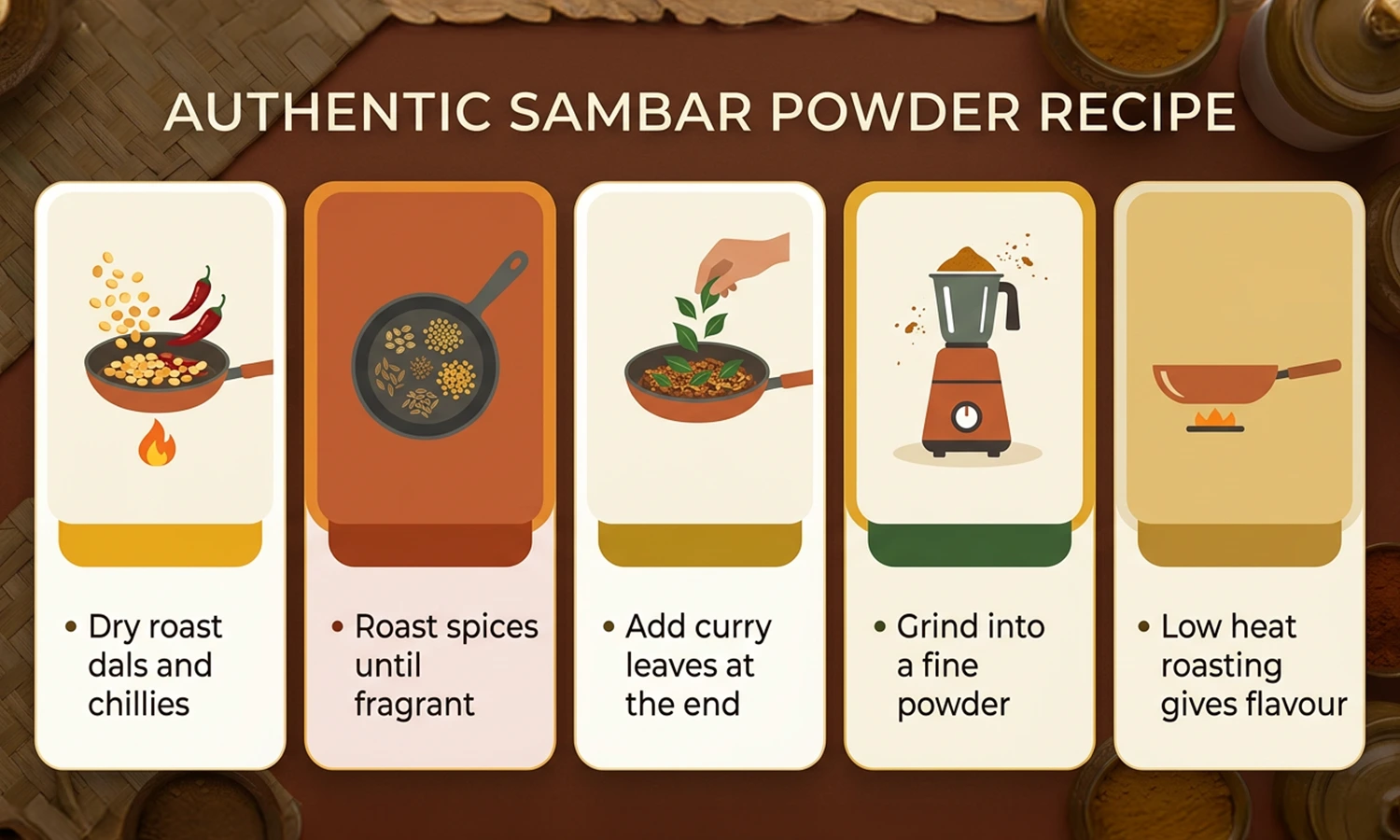
  • Dry roast the dals and red chillies on low heat until golden and aromatic.
  • Add coriander seeds, fenugreek, cumin, and pepper, and roast until fragrant.
  • Add curry leaves at the end so they turn crisp.
  • Cool everything fully, then grind with turmeric and asafoetida into a fine powder.

That is the whole sambar masala powder recipe. Roasting on low heat is the single most important step in any best sambar masala recipe, since it builds aroma without burning the fenugreek.

Andhra, Hotel, and Authentic Variations

Sambar powder changes from region to region. An Andhra sambar powder recipe tends to be spicier, with more red chillies for heat and colour. A hotel sambar powder recipe often uses a higher share of coriander and lentils for that smooth, restaurant-style body.
For an authentic sambar masala powder recipe, keep the proportions balanced and roast each ingredient just right. These small choices are what make a homemade sambar masala recipe truly yours.

Quick Instant Sambar Powder Option

Short on time? An instant sambar powder recipe skips the long roasting. Lightly toast a small batch of coriander, dal, chillies, and fenugreek, then grind. It is not as deep as a full batch, but it works for a single meal.
For everyday convenience, many cooks keep a trusted ready blend on hand and reserve the homemade sambar masala powder recipe for weekends and special occasions.

Storage Tips

Store your sambar powder in an airtight container away from heat and moisture. Use a dry spoon. A well-roasted, well-stored blend keeps its aroma for several months.

Make it in small to medium batches so the sambar masala powder recipe stays fresh through regular use.

Tips for the Best Sambar Powder

A few small habits separate an average blend from a great one. Keep these in mind every time you follow your
sambar masala
recipe:

  • Roast on low heat and stir often, so the spices turn aromatic without burning.
  • Wait until the lentils turn golden, not dark, for a sweet and nutty base.
  • Watch the fenugreek closely, since even a little extra roasting can turn it bitter.
  • Choose Byadgi or Kashmiri chillies for deep colour and gentle heat, or long red chillies for more spice.
  • Let everything cool fully before grinding, which keeps the powder dry and free-flowing.

Follow these steps, and your homemade sambar masala recipe will taste fresh, balanced, and full of aroma every single time. sambar masala powder recipe

Serving Ideas for Your Sambar

Once your blend is ready, the sambar you cook with it pairs beautifully with many South Indian favourites. Try your fresh sambar masala powder recipe with these:

  • Steamed rice with a spoon of ghee for a simple, comforting meal.
  • Soft idli or crisp dosa for a classic breakfast.
  • Hot medu vada dipped straight into the sambar.
  • Pongal or upma for a hearty, warming plate.

With one good batch of powder, you can turn everyday ingredients into a meal the whole family looks forward to.

Common Mistakes to Avoid

Even a careful sambar masala powder recipe can go wrong with a few small slips. Knowing them in advance saves a batch:

  • Roasting on high heat, which burns the lentils and leaves a bitter edge.
  • Over-roasting the fenugreek, since it turns sharp and bitter very quickly.
  • Grinding the spices while still warm, which adds moisture and shortens shelf life.
  • Skipping the curry leaves or asafoetida, which flattens the aroma.

Avoid these and your homemade sambar masala recipe will come out fragrant and balanced. If you prefer guaranteed consistency, a trusted instant sambar powder recipe or a ready blend gives the same core flavour with none of the guesswork, which is handy when you are short on time.

FAQs

How long does homemade sambar masala last? Stored airtight in a cool, dry place, it keeps its aroma for several months.
What makes Andhra sambar powder different?It is usually spicier, with more red chillies for extra heat and a deeper colour.
Can I buy ready sambar powder instead?Yes. A quality ready blend gives you the same core flavour with no roasting required.
How much powder should I use per pot?One to two tablespoons is enough for a medium pot of sambar serving four, then adjust to taste.

Sambar Masala: A Complete Guide to South India’s Essential Spice Blend

Summary

The full overview of the blend that defines South Indian home cooking. It explains what sambar masala is, how to cook with it, how to choose the best one, and which pack sizes suit your kitchen. You also get pairing ideas for idli and dosa, plus a note on why sambar is genuinely good for you.

Introduction :

If there is one spice blend that defines South Indian home cooking, it is sambar masala. It turns simple lentils and vegetables into a comforting, aromatic stew that pairs with rice, idli, dosa, and vada. This guide covers what the blend is, how to use it, how to choose the best sambar masala, and which pack size and price suit your kitchen.

What Is Sambar Masala?

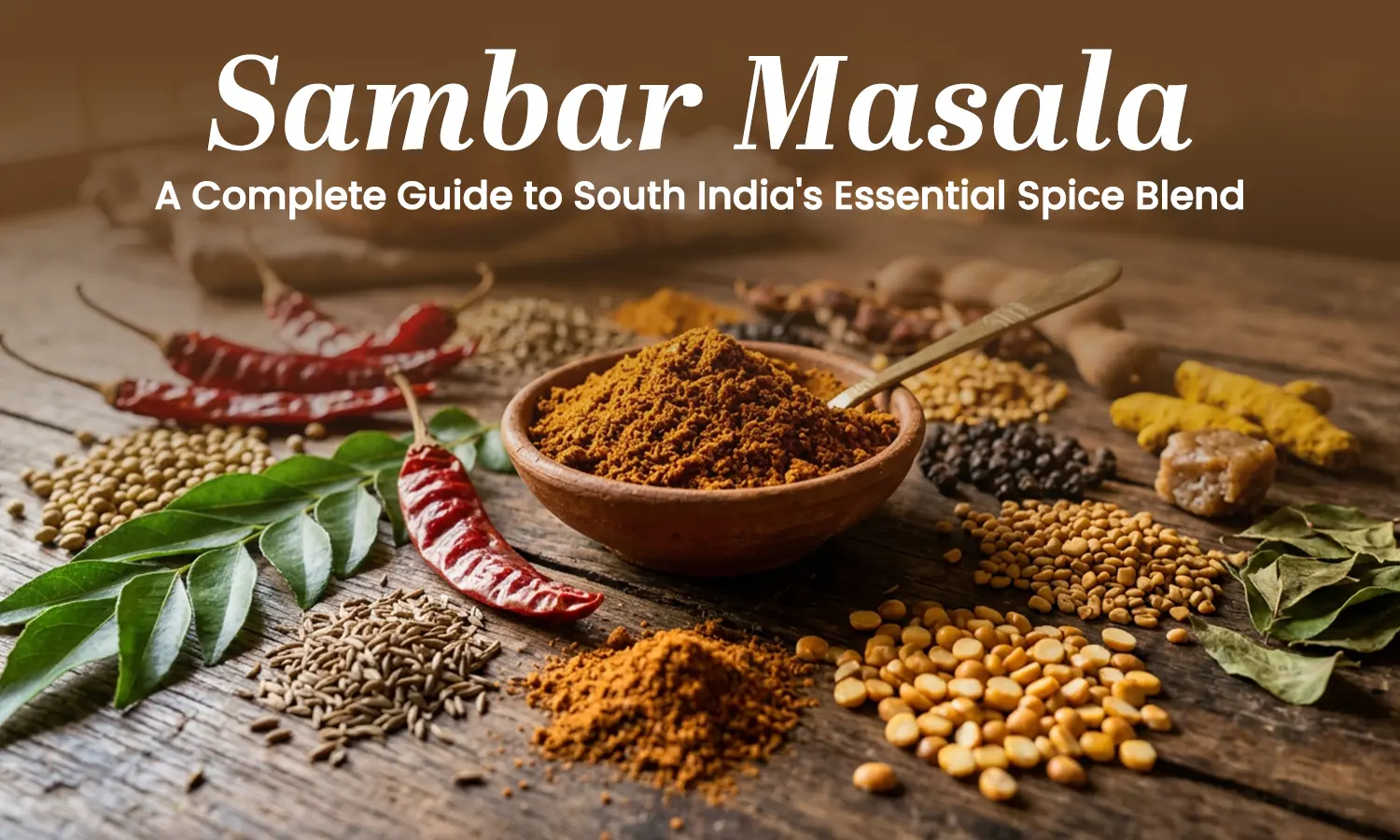
Sambar masala, also called sambar powder or sambar podi, is a roasted blend of spices and lentils used to make sambar. Coriander seeds, dals, dried red chillies, fenugreek, and turmeric form the base. The roasted lentils are what set this blend apart from other Indian spice mixes.
Because it carries so much flavour, a good sambar masala powder does most of the work in a pot of sambar, which is why every South Indian kitchen keeps it stocked.
sambar masala

How to Use Sambar Masala

Cooking with sambar masala is straightforward. Pressure cook toor dal until soft. Boil your vegetables in tamarind water, then stir in one to two tablespoons of the powder and let it simmer.Finish with a tempering of mustard seeds, dried red chillies, and curry leaves in hot oil. That tempering, poured over the simmering pot, is what gives sambar its final aroma. The same sambar powder works for a quick weekday meal or a big family lunch.

Idli Sambar and Other Pairings

Sambar is endlessly flexible. A slightly thinner, aromatic idli sambar masala style suits soft idlis and crisp dosas. A thicker version works better with rice.
You can also vary the vegetables: drumstick, shallots, okra, carrot, and pumpkin all work well. With the right sambar masala, every version tastes balanced and homely.

How to Choose the Best Sambar Masala

To find the best sambar masala, check the aroma, colour, and ingredient list. A fresh blend smells warm and roasted, and a natural reddish-brown colour signals good quality chillies. Look for these points:

  • Clean, vegetarian ingredients for sambar masala with no unnecessary additives.
  • A sealed pack that protects freshness.
  • A trusted brand with clear labelling.
  • A pack size that matches how often you cook.

A reliable best sambar masala powder should taste balanced, with body from the lentils and warmth from the spices.

Homemade, Instant, and Ready Options

A homemade sambar powder gives full control but needs time and the right lentils. An instant sambar powder is the fastest route, ready to use straight from the pack. Most home cooks settle on a trusted ready blend for everyday meals and reserve homemade batches for special occasions.
A sealed sambar masala packet keeps the blend fresh and makes cooking quick on busy days.

Pack Sizes and Sambar Masala Price

SGR 777 Foods, a Chennai brand making spices since 1954, offers Madras Sambar Powder in several sizes so you can match your usage. The sambar masala price varies by pack, giving you flexibility:

  • A 100g plus 20g pack for trying it out or smaller kitchens.
  • A 200g pack for regular household cooking.
  • A 500g pack for large families and frequent use.

Why Sambar Is Good for You

Sambar is more than a comforting dish. It brings together lentils, vegetables, and spices in one bowl, which makes it a balanced part of any meal. The toor dal gives plant protein, the mixed vegetables add fibre and vitamins, and the spices in a good sambar masala support digestion.
Turmeric, cumin, and asafoetida are known to be gentle on the stomach, which is one reason sambar pairs so well with rice, idli, and dosa. A well-made sambar masala powder lets you enjoy this everyday goodness without any guesswork.

Storage Tips for Sambar Masala

To keep your best sambar masala tasting fresh, store it the right way. A few simple habits go a long way:

  • Keep the blend in an airtight jar away from heat and direct light.
  • Always use a clean, dry spoon so no moisture gets in.
  • Decant a small amount from a large pack for daily use and keep the rest sealed.

Stored well, a quality blend stays aromatic for several months, so you get the same bold taste from the first spoon to the last.

Everyday Meals Made Easy

One of the best things about keeping sambar masala on hand is how quickly it turns into a full meal. On a busy weekday, a simple pot of sambar with rice comes together in under half an hour. On weekends, you can slow down and add more vegetables for a richer pot.
A reliable sambar masala powder also stretches across dishes beyond classic sambar, from a quick lentil stew to a tangy vegetable curry. For days when even chopping feels like too much, an instant sambar powder lets you cook a warm, satisfying bowl with almost no prep. With one good blend in the cupboard, comforting South Indian food is always within reach.

FAQs

What is the difference between sambar masala and sambar powder? They are the same blend, with sambar masala being the more common name for the spice and lentil mix.
Is sambar masala healthy?Sambar made with it includes protein from lentils, fibre from vegetables, and digestive spices like turmeric and cumin.
Which pack size should I buy?Choose a smaller pack to try it and a larger pack if you cook sambar often.
Does sambar masala work for idli and dosa? Yes. A slightly thinner, aromatic sambar made with the blend pairs perfectly with idli, dosa, and vada.

Sambar Masala Ingredients: The Spices Behind Authentic South Indian Sambar

Summary

Sambar powder is unusual because it blends roasted lentils with spices, and this guide lists every component and its job. It covers coriander, three dals, dried chillies, fenugreek, cumin, turmeric, and asafoetida, shares an authentic roasting method, notes regional styles like Madras and Kerala, and flags the common mistakes that turn a good batch bitter.

Introduction :

A good bowl of sambar starts long before the pot goes on the stove. It starts with the powder, and the powder is only as good as what goes into it. Knowing the sambar masala ingredients helps you understand the flavour, judge quality, and even make your own blend. This guide lists the spices and lentils, explains their roles, and shares an authentic method.

What Are the Core Sambar Masala Ingredients?

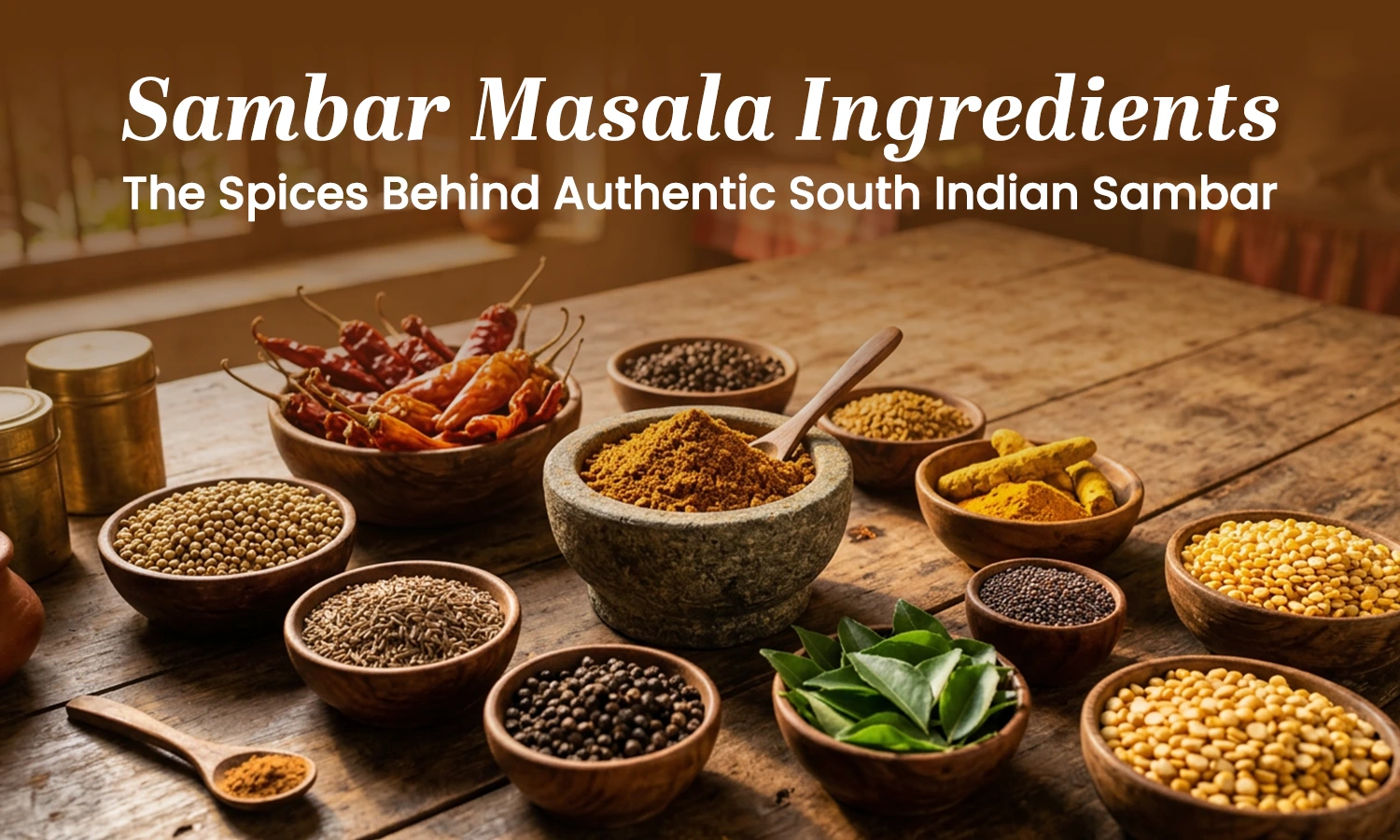
Sambar powder is unusual among spice blends because it includes roasted lentils alongside spices. The classic sambar masala ingredients are:

  • Coriander seeds, the main flavour and the largest share of the blend.
  • Toor dal, chana dal, and urad dal, which add body and a nutty taste.
  • Dried red chillies, often Byadgi or Kashmiri, for colour and gentle heat.
  • Fenugreek seeds for a slightly bitter, aromatic note.
  • Cumin and black pepper for warmth.
  • Curry leaves, turmeric, and a little asafoetida for aroma and finish.

These ingredients in sambar masala combine to create the deep, layered taste that defines a proper sambar.

What Each Ingredient Does

Each item has a job, and the balance is what matters. Among the standard ingredients for sambar powder:

  • Coriander seeds give the sharp, signature base flavour.
  • The lentils provide body and a roasted, nutty depth.
  • Red chillies set the colour and heat level.
  • Fenugreek adds aroma but turns bitter if over-roasted, so it is used carefully.
  • Turmeric and asafoetida round out the blend and aid digestion.

Getting these sambar masala ingredients in proportion is the difference between a flat powder and a fragrant one. sambar masala ingredients

Authentic Sambar Powder Recipe

Here is an authentic sambar powder recipe you can make at home:

  • Dry roast the dals and red chillies on low heat until golden.
  • Add coriander seeds, fenugreek, cumin, and pepper, and roast until fragrant.
  • Toss in curry leaves at the end so they crisp up.
  • Cool everything, then grind with turmeric and a little asafoetida into a fine powder.

This recipe for sambar powder keeps well and gives you control over the heat and aroma. Roasting on low heat is the key step in any best sambar powder recipe.

Madras Style and Other Regional Blends

South Indian sambar is not one recipe. Madras or Tamil style is bolder and spicier, while Kerala blends often add coconut for a milder taste. The sambar powder recipe you grew up with likely reflects your region.
Understanding the base ingredients in sambar masala lets you recognise and recreate any style, from a fiery Madras sambar to a gentler version.

Homemade or Ready Made?

A home-cooked sambar powder made fresh is rewarding, but it needs the right lentils, careful roasting, and time. A ready blend offers the same core ingredients with consistency and no effort.
If you search for a reliable sambar powder near me, SGR 777 Foods is a trusted Chennai brand. Its Madras Sambar Powder is built on roasted lentils and handpicked spices, giving you authentic flavour in a convenient pack. You can start with the handy 100g plus 20g pack before moving to a larger size.

Tips for the Best Flavour

When you shop, choose a trusted brand with clear labelling and a fully vegetarian blend. SGR 777 Foods offers a balanced Garam Masala made from carefully selected, slow-roasted spices, prepared in compliance with FSSAI standards. It is a dependable choice whether you want a small pack for daily cooking or a steady supply of the best garam masala powder for a busy kitchen.

Balance is key. Too much fenugreek turns the blend bitter, while too little flattens the aroma. Getting the proportions of the ingredients for sambar powder right is what separates an average powder from an excellent one.

Common Mistakes to Avoid

A few errors can spoil a batch. Roasting on high heat burns the lentils and fenugreek, leaving a bitter taste. Grinding warm spices adds moisture and shortens shelf life, so cool everything first.
Skipping curry leaves or asafoetida is another miss, since these add real depth to the ingredients in sambar masala. Making too large a batch also means the aroma fades before you use it, so grind in small to medium amounts for the freshest result.

Storing and Cooking With Your Blend

Once your sambar masala ingredients are roasted and ground, storage decides how long the flavour lasts. Cool the powder completely, then keep it in an airtight jar away from heat, light, and moisture. Always use a clean, dry spoon. Stored this way, a fresh recipe for sambar powder holds its aroma for several months.Cooking with it is simple. Pressure cook toor dal, boil your vegetables in tamarind water, then stir in one to two tablespoons of the blend and simmer. Finish with a tempering of mustard seeds, dried red chillies, and curry leaves. This basic sambar powder sambar recipe works for everyday meals and special lunches alike.If you ever want to refine your mix, taste as you cook and adjust the heat. A good sambar masala powder recipe is flexible, so you can lean spicier or milder. With practice, your best sambar powder recipe becomes a reliable family favourite.

FAQs

What are the main sambar masala ingredients?

Coriander seeds, three types of dal, dried red chillies, fenugreek, cumin, pepper, turmeric, and asafoetida.

Why does sambar powder contain lentils?The roasted dals add body and a nutty depth that spices alone cannot provide.
Is homemade sambar powder better?

Homemade gives control over heat and aroma, but a quality ready blend offers the same ingredients with convenience.

Which chillies give the best colour?

Byadgi or Kashmiri chillies give a deep reddish colour with gentle heat, which is ideal for a balanced sambar.

Garam Masala Powder: Uses, Quality, and How to Buy the Best

Summary

A practical buyer’s guide to the ready ground blend. It explains how to use it as a finishing spice, how to judge quality by aroma and colour, how to pick between 100-gram and 1-kg packs, and how garam masala differs from curry powder. Includes its useful role in biryani and rice dishes.

Introduction :

A jar of garam masala powder is one of the most useful things in an Indian kitchen. One spoon adds warmth, aroma, and depth to curries, dals, and rice without any extra effort. This guide explains how to use the blend, how to judge its quality, and how to choose the right pack size and the best garam masala powder for your needs.

What Is Garam Masala Powder?

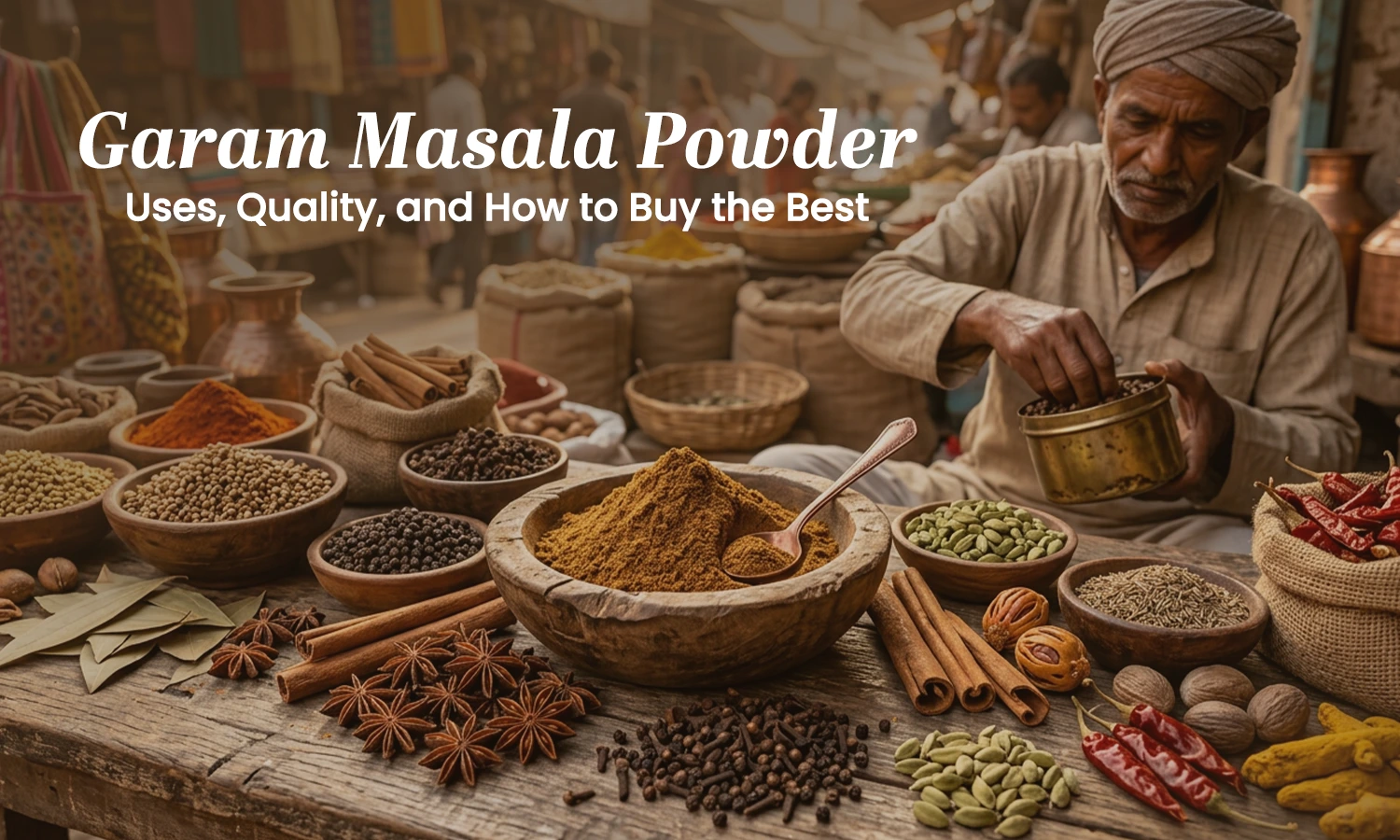
Garam masala powder is a ground blend of warm spices such as coriander, cumin, cardamom, cinnamon, cloves, and pepper. The word garam means warm, and the blend is made to add fragrance and depth rather than sharp heat. As a finishing masala powder, it carries a lot of flavour in a small quantity.Because it is so versatile, a good garam masala powder works across many dishes, from rich gravies to simple vegetable stir-fries. That is what makes it a year-round staple. garam masala powder

How to Use Garam Masala Powder

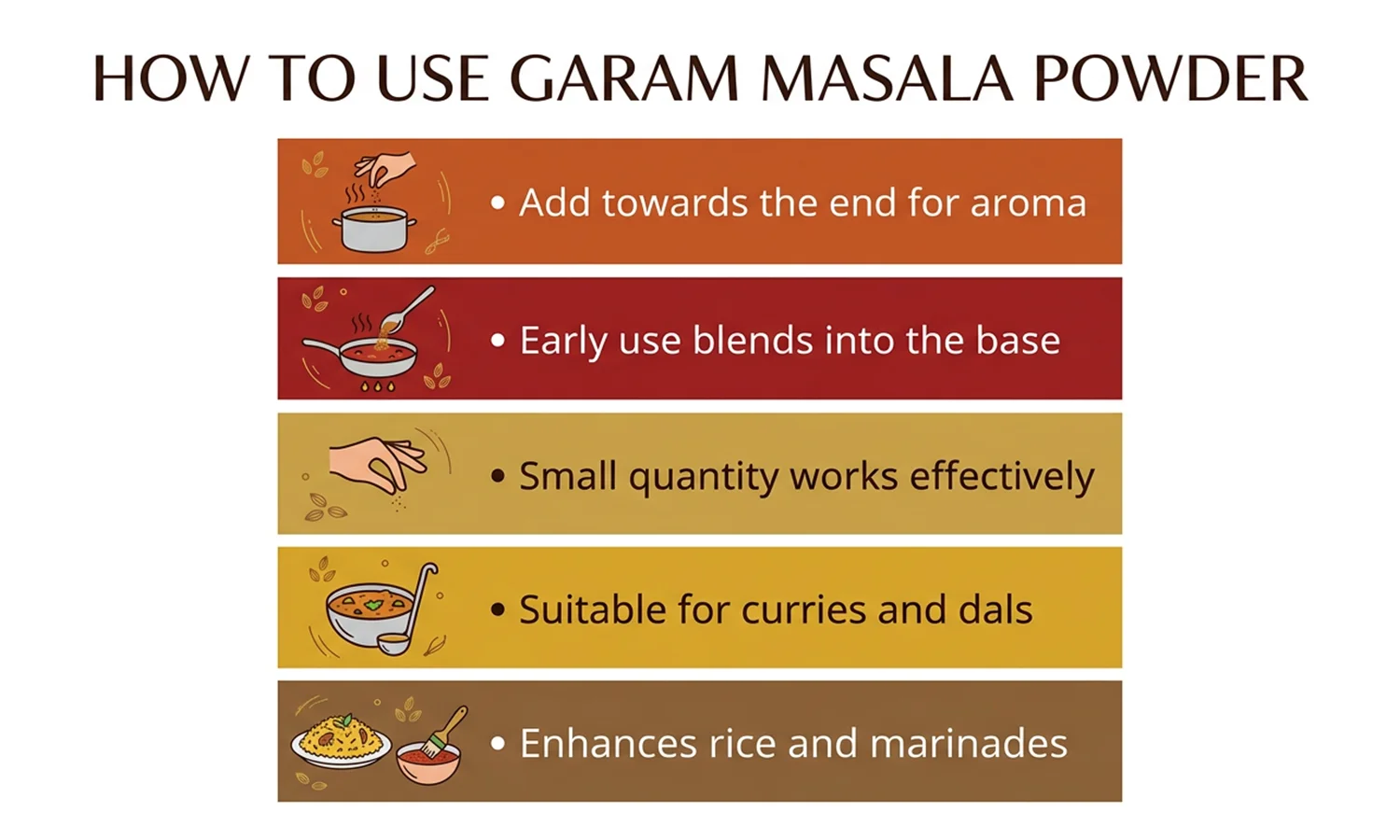
Add garam masala powder towards the end of cooking for the strongest aroma, or earlier if you want it to blend into the base. A quarter to half a teaspoon is usually enough for a dish that serves four.It suits curries, dals, pulao, and even marinades. A pinch of this masala powder stirred in just before serving lifts the whole dish. For rice dishes, a small amount of garam masala alongside a biryani blend deepens the flavour, which is why some cooks keep a biryani garam masala powder approach for festive meals.

How to Judge Quality

Not all blends are equal. To spot the
best garam masala powder
, check these points:

  • Aroma: a fresh pack smells warm and fragrant the moment it is opened.
  • Colour: a natural brown tone, not dull or overly dark.
  • Ingredients: a clean, vegetarian blend with no unnecessary additives.
  • Packaging: a sealed pack protects the aroma and keeps the powder fresh.

A quality garam masala powder should taste balanced, with no single spice overpowering the rest.

Choosing the Right Pack Size

Pack size matters more than people expect, because spices lose aroma over time. For a small household, a 50g or 100 gram garam masala pack is ideal, since you finish it while it is still fragrant.
For large families, caterers, or frequent cooks, a 1 kg garam masala pack offers better value and fewer reorders. The trick is to store a large pack carefully and decant smaller amounts for daily use, so the bulk stays sealed and fresh.

Storage for Lasting Freshness

Keep your garam masala powder in an airtight container away from heat, light, and moisture. Always use a dry spoon. Stored well, a quality blend holds its aroma for around nine to twelve months.
If you buy a larger pack, transfer a week or two of masala powder into a small jar and keep the rest tightly sealed. This simple habit protects flavour over time.

Buy Garam Masala Powder With Confidence

When you shop, choose a trusted brand with clear labelling and a fully vegetarian blend. SGR 777 Foods offers a balanced Garam Masala made from carefully selected, slow-roasted spices, prepared in compliance with FSSAI standards. It is a dependable choice whether you want a small pack for daily cooking or a steady supply of the best garam masala powder for a busy kitchen. garam masala powder

Garam Masala Powder vs Other Spice Blends

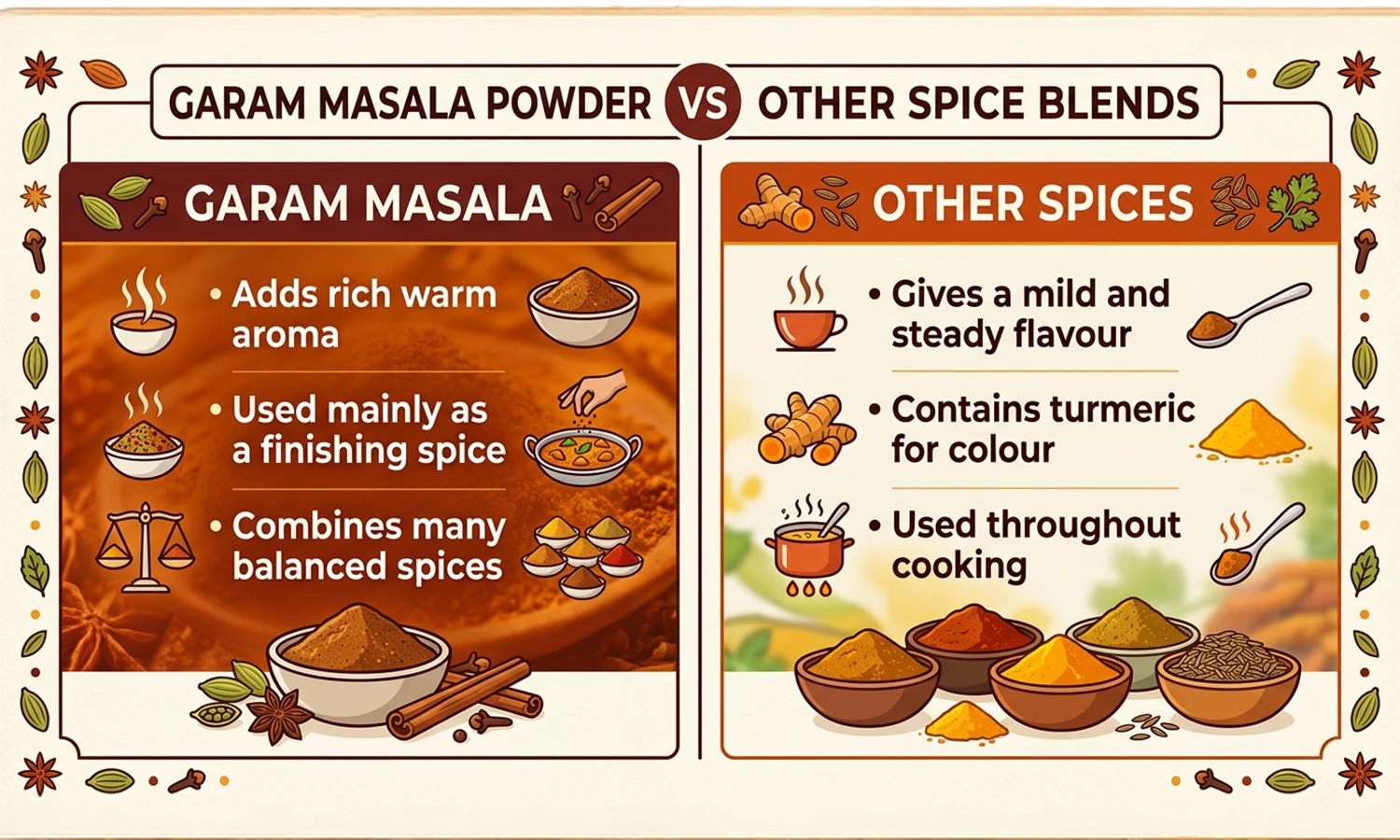
People often confuse garam masala powder with curry powder, but they are different. Curry powder usually contains turmeric and is built for colour and a steady, mild flavour throughout cooking. Garam masala is a warm, aromatic finishing blend, added in small amounts and often near the end.

It also differs from a single masala powder like coriander or cumin powder, which carries one flavour. Garam masala combines many spices into one balanced profile, which is why it is so versatile across dishes.

Everyday Dishes That Use Garam Masala Powder

A jar of garam masala powder earns its place by working across the menu. A small amount lifts vegetable curries, dals, and gravies. A pinch finishes a pulao or a simple stir-fry, and it adds warmth to marinades.For festive rice dishes, a little garam masala alongside a rice blend deepens the aroma, which is the idea behind a biryani garam masala powder approach. Used carefully, the same jar serves you all year, which is why choosing the best garam masala powder is worth the effort.

FAQs

How much garam masala powder should I use? A quarter to half a teaspoon per dish serving four is a good starting point, then adjust to taste.
Which pack size should I buy? A 100-gram garam masala pack suits small households, while a 1 kg garam masala pack is better for frequent or bulk cooking.
Can I use garam masala powder in biryani?Yes. A small amount of biryani garam masala powder added to a rice blend deepens the aroma.