Garam Masala Recipe: How to Make Authentic Garam Masala at Home

Summary

For cooks who want the real aroma of a freshly made batch. This guide gives the full whole spice list, a step-by-step roasting and grinding method, tips for getting it right the first time, and advice on when to add it while cooking. It also covers the dishes that garam masala lifts best.

Introduction :

Store shelves are full of spice blends, but nothing matches the aroma of a freshly made batch. A homemade garam masala recipe uses whole spices that you roast and grind yourself, so the flavour is fresher and stronger than most ready mixes. This guide gives you the full method, the spice list, and tips for getting it right the first time.

Why Make Garam Masala at Home?

Freshness is the main reason. When you follow a garam masala recipe with whole spices, you control the quality and the balance. The aroma is brighter, and you can adjust the blend to your taste.Homemade also means no fillers. You decide exactly what goes in, which is why many cooks who want the best garam masala prefer to make their own at least once to understand the flavour. garam masala recipe
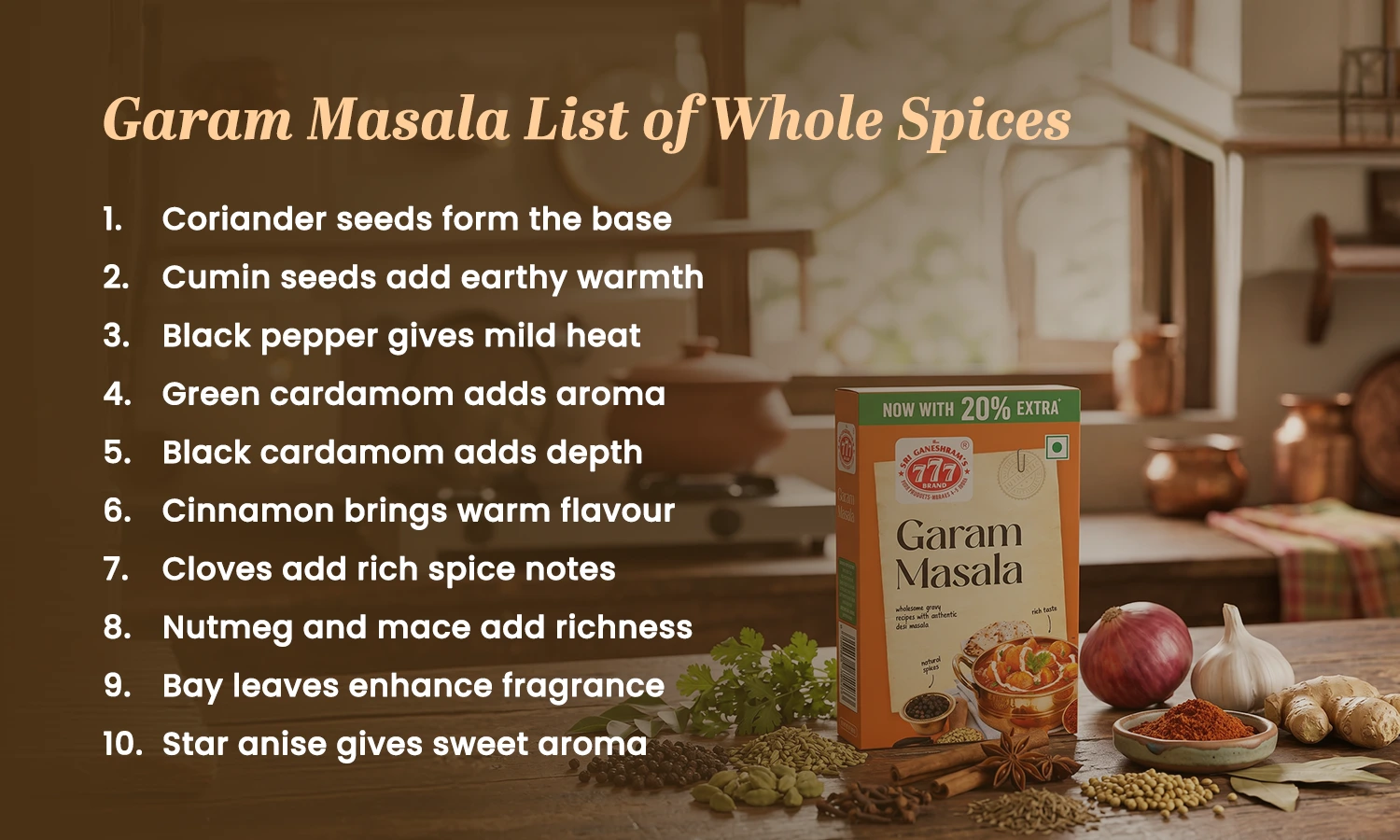
Garam Masala List of Whole Spices

Before you start, gather your spices. This garam masala list covers a classic, well-rounded blend:

  • Three tablespoons coriander seeds.
  • Two tablespoons of cumin seeds.
  • One tablespoon of black peppercorns.
  • Eight to ten green cardamom pods and two black cardamom pods.
  • Three inches of cinnamon or cassia bark.
  • One teaspoon of cloves, one nutmeg, and a blade of mace.
  • Two bay leaves and two star anise.

These garam masala whole spices are the foundation. You can add fennel or dried chilli if you like a particular style.

Step-by-Step Garam Masala Recipe

Here is the full method for an authentic garam masala recipe:

  • Heat a dry pan on low. Add the garam masala whole spices, keeping nutmeg and mace aside.
  • Roast gently, stirring often, until the spices are fragrant and the cumin turns a shade darker. Do not let them burn.
  • Cool the spices completely so no moisture remains.
  • Grind everything, including the nutmeg and mace, into a fine powder.
  • Store the blend in an airtight jar.

That is the whole process. This garam masala spice mix keeps its aroma best when made in small batches.

Tips for the Best Garam Masala

A few habits make a real difference. Roast on low heat so the spices toast evenly. Use fresh whole spices, since old ones lose their punch. Grind only what you will use over a few months.If you want the best garam masala with no effort, a quality ready blend is a fair alternative. The key is freshness, whether you make it or buy it.

How to Use Your Garam Masala

Add garam masala spice mix towards the end of cooking for the strongest aroma, or early if you want it to mellow into the dish. It works in curries, gravies, dals, and rice. Use it in moderation, since a small amount carries a lot of flavour.A pinch stirred in just before serving lifts almost any savoury dish, which is why this blend is a kitchen staple.

Buy Garam Masala or Make It Fresh

Not everyone has time to roast and grind. If you would rather buy garam masala that is ready to use, choose a sealed, vegetarian blend made from quality spices. SGR 777 Foods offers a balanced Garam Masala that captures the same warm, aromatic profile as a careful homemade batch, so you get authentic flavour without the work.

Common Mistakes to Avoid

A homemade batch can go wrong in small ways. Roasting on high heat scorches the spices, so keep the flame low and stir often. Grinding while the spices are warm adds moisture and shortens shelf life, so always cool them first.Making too large a batch is another mistake, since the aroma fades over time. Small batches keep your garam masala recipe fresh. Using tired, old whole spices also weakens the blend, so buy your garam masala whole spices fresh whenever you plan to grind. garam masala recipe
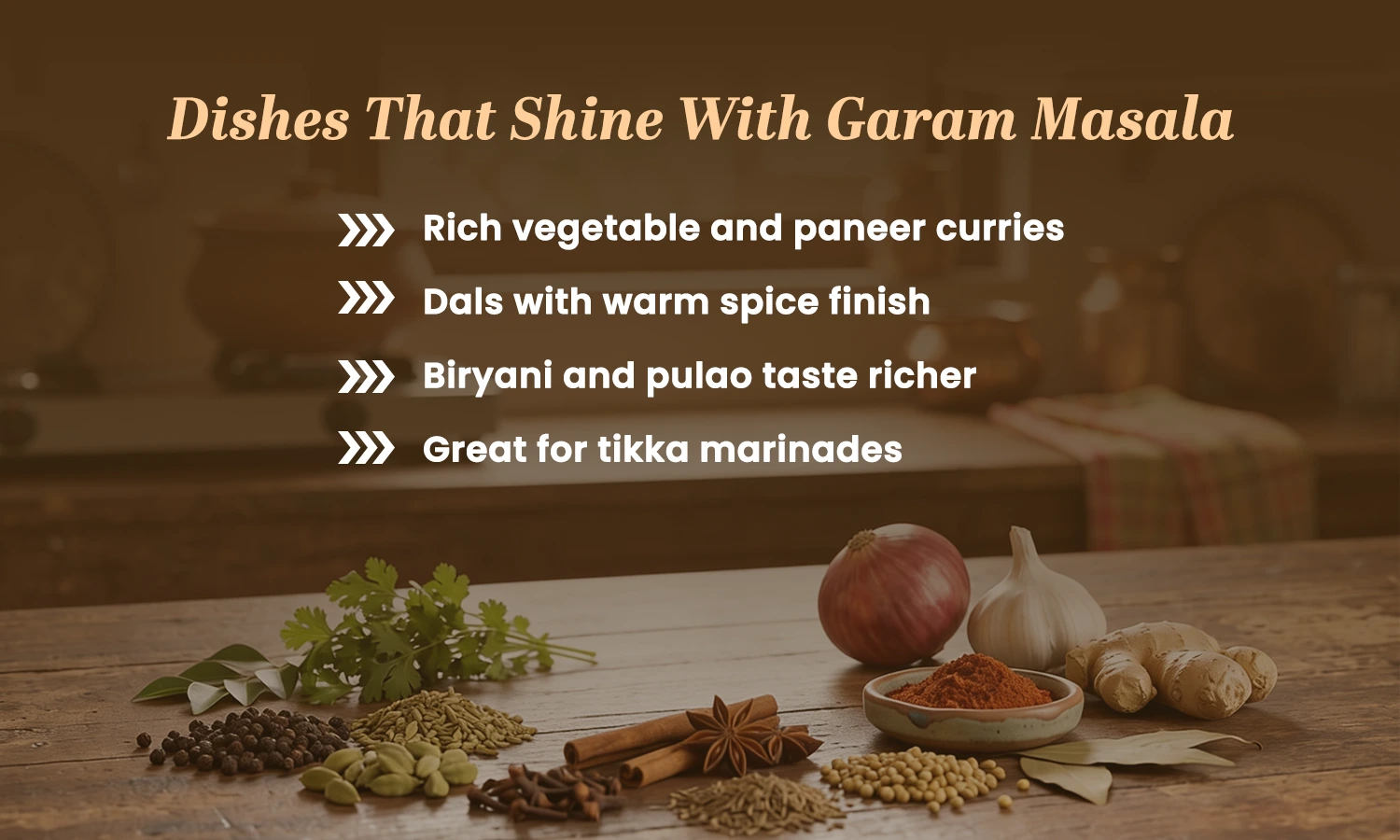
Dishes That Shine With Garam Masala

Once your blend is ready, it lifts a huge range of dishes. A pinch transforms everyday cooking:

  • Rich vegetable and paneer curries.
  • Dals and lentil dishes that need a warm finish.
  • Biryani, pulao, and other rice dishes.
  • Marinades for tikka and grilled vegetables.

Used in moderation, a fresh garam masala spice mix adds depth without overpowering, which is why it earns a place in every kitchen.

Make It or Buy It: What to Choose

A fresh garam masala recipe made at home is hard to beat for aroma, since you toast and grind the spices yourself. Using whole garam masala spices and grinding them fresh gives the deepest flavour, which is why many cooks keep a small jar of their own blend.That said, there are days when convenience wins. If you would rather buy garam masala than roast and grind, look for a best garam masala blend from a trusted brand with a clear garam masala list on the label. A quality garam masala spice mix uses the same garam masala whole spices you would pick yourself, just expertly balanced and ready to use. Whether you make it or buy it, freshness and balance are what matter most for a great finish.

FAQs

How long does homemade garam masala last? Stored airtight in a cool, dark place, it keeps its aroma for several months. Smaller batches stay fresher.
Should I use whole or ground spices? Whole garam masala spices roasted and ground at home give the freshest flavour, but a good ready blend is convenient.
When should I add garam masala while cooking?Add it near the end for a strong aroma, or earlier if you want a milder, blended taste.
Garam Masala Mix Ingredients: What Goes Into the Classic Indian Blend

Summary

A close look inside India’s most central spice blend. It breaks down the classic core of coriander, cumin, pepper, cardamom, cinnamon, cloves, nutmeg, and mace, explains what each one contributes, and shows how regional variations stay recognisable. Read this to understand quality, fix flat flavour, and build a blend that tastes like your own kitchen.

Introduction :

Few spice blends are as central to Indian cooking as garam masala, yet many cooks never look closely at what is inside it. Knowing the garam masala mix ingredients helps you judge quality, fix flavour, and even build your own blend. This guide breaks down the spices, explains what each one does, and shows how the contents come together into one warm, fragrant mix.

What Are the Contents of Garam Masala?

The contents of garam masala vary by region and household, but a classic blend shares a common core. The word garam means warm, and the spices are chosen to add warmth and depth rather than raw heat. A typical set of garam masala mix ingredients includes:

  • Coriander seeds for a mild, citrusy base.
  • Cumin seeds for an earthy, grounding flavour.
  • Black pepper for gentle heat.
  • Green and black cardamom for fragrance.
  • Cinnamon or cassia, cloves, nutmeg, and mace for sweet warmth.
  • Bay leaf and star anise for complexity.

This is the heart of any good garam masala spice blend, and it is why no two homemade versions taste exactly alike.

What Each Spice Brings to the Blend

Each ingredient plays a role, and understanding them helps you balance the mix. In the standard mix masala ingredients for garam masala:

  • Coriander and cumin form the bulk and the base notes.
  • Cloves and cinnamon add the sweet, warming aroma people recognise instantly.
  • Cardamom lifts the blend with a floral fragrance.
  • Black pepper and dried chilli, if used, bring a mild kick.
  • Nutmeg and mace add a rich, rounded finish.

Adjusting these garam masala mix ingredients is how cooks make a blend their own, leaning sweeter, warmer, or spicier. garam masala mix ingredients

How the Spices Are Combined

A proper garam masala spice mix recipe starts with whole spices. They are dry roasted on low heat until fragrant, cooled, and then ground fine. Roasting wakes up the oils and deepens the aroma, which is why freshly made blends smell so strong.Some cooks keep coriander separate and add it during cooking, while others include it in the grind. Both approaches are valid, and the choice shapes the final garam masala spice recipe you end up with.

Regional Variations You Should Know

Garam masala is not one fixed recipe. North Indian blends often lean on cinnamon, cloves, and cardamom for a sweet warmth. Some families add fennel, dried rose petals, or star anise for a signature touch.
This is the beauty of the garam masala spice blend: the core stays the same, but the accents change from kitchen to kitchen. When you understand the base garam masala mix ingredients, you can recognise and recreate any style.

Make Your Own or Buy a Ready Blend

Building your own blend from scratch is rewarding, but it needs fresh whole spices and careful roasting. A ready blend gives you the same balanced mix masala ingredients with consistency and no effort.SGR 777 Foods prepares its Garam Masala from carefully selected spices, including coriander seeds, cumin seeds, cloves, cinnamon, and cardamom, roasted and ground for a dependable result. It is a simple way to get a quality garam masala blend without sourcing a dozen spices yourself.

How to Store a Garam Masala Blend

Once you have your blend, storage decides how long the aroma lasts. Keep the garam masala spice blend in an airtight container away from heat, light, and moisture. A dry glass jar with a tight lid works best.Always use a dry spoon, since even a little moisture can cause clumping and dull the flavour. A well-stored blend keeps its aroma for several months, so make or buy it in amounts you will use within that window.

Common Mistakes When Blending Garam Masala

Building your own blend is rewarding, but a few mistakes are easy to make. Roasting on high heat burns the spices and turns the blend bitter, so always toast on low. Grinding warm spices traps moisture, so cool them fully first.Using stale whole spices is another problem, since old spices have little aroma left. Getting the proportions wrong, such as too much clove or cinnamon, can overpower the mix. Balance is everything in a good set of garam masala mix ingredients, so measure carefully and taste as you refine your blend.

How the Ingredients Work Together

Each spice in the garam masala mix ingredients has a job to do. Coriander brings a mild, citrus warmth and forms the base. Cumin adds earthiness, while black pepper and cloves provide sharp heat. Cardamom and cinnamon lend sweetness and depth, and nutmeg and mace round out the garam masala spice blend with a gentle, warm finish.Understanding this balance helps you tweak any garam masala spice mix recipe to your taste. If you want more warmth, add a little extra cinnamon and clove. For a brighter blend, lean on coriander and cardamom. These are the same mix masala ingredients found in most Indian kitchens, and once you know how they behave, building your own garam masala spice recipe becomes second nature. That insight into the contents of garam masala is what turns a simple garam masala blend into a signature one.

FAQs

What are the basic garam masala mix ingredients?Coriander, cumin, black pepper, cardamom, cinnamon, cloves, nutmeg, and mace form the usual core.
Does garam masala contain chilli?Some blends add a little dried chilli, but classic garam masala focuses on warm, aromatic spices rather than heat.
Can I adjust the contents of garam masala? Yes. Home blends are flexible, so you can lean sweeter, warmer, or spicier to suit your cooking.

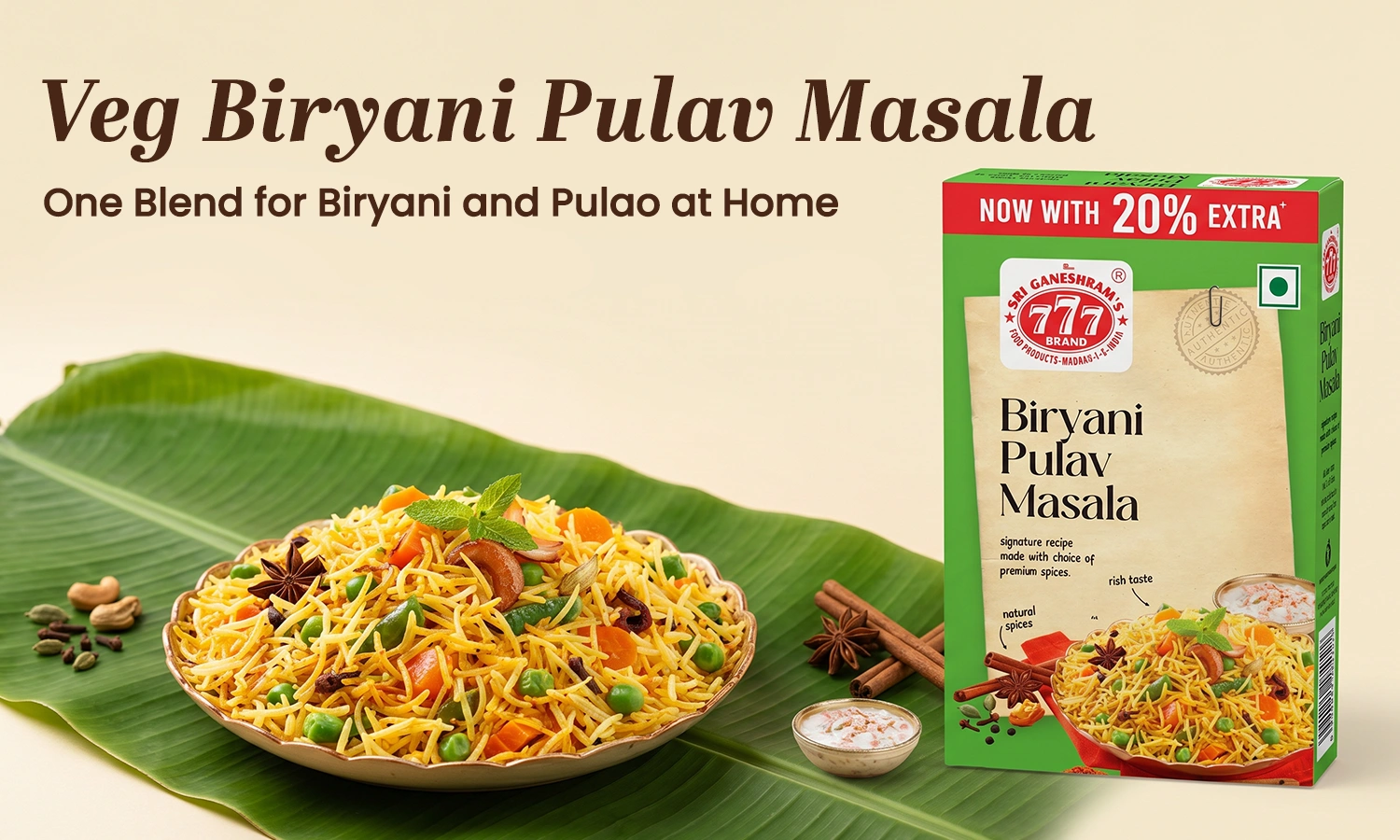
Veg Biryani Pulav Masala: One Blend for Biryani and Pulao at Home

Summary

Why keep two jars when one will do? This piece explains how a single balanced blend handles both a rich biryani and a light pulao simply by adjusting quantity. It walks through the shared spice family, a quick weeknight recipe, buying advice, and habits like blooming the masala and resting the pot for consistent results.

Introduction :

Keeping a separate masala for every rice dish is a hassle most kitchens do not need. A well-made veg biryani pulav masala solves that by working for both a rich biryani and a light pulao. One jar, two dishes, and a consistent flavour every time. This guide explains how the blend works, how to use it, and how to spot the best one.

What Is Veg Biryani Pulav Masala?

Veg Biryani pulav masala is a single spice blend designed to flavour both biryani and pulao. It carries the aroma of a biryani mix with the balance of a pulao mix, so you can cook either dish without switching products. That is why a good biryani veg pulav masala is such a practical buy.The idea is simple. Instead of two blends, you use one pulav biryani masala and adjust the quantity. A little for a light pulao, a bit more for a full biryani.

Why One Blend Works for Both Dishes

Biryani and pulao share a spice family: coriander, cumin, cloves, cinnamon, and cardamom. The difference is mostly in richness and method. A thoughtfully built biryani pulav masala sits at the right balance point, so cooking pulav with biryani masala gives a fragrant result without tasting too heavy.

This flexibility is ideal for everyday cooking. A veg biryani pulav masala keeps your spice rack simple while still delivering depth when you want it.

veg biryani pulav masala

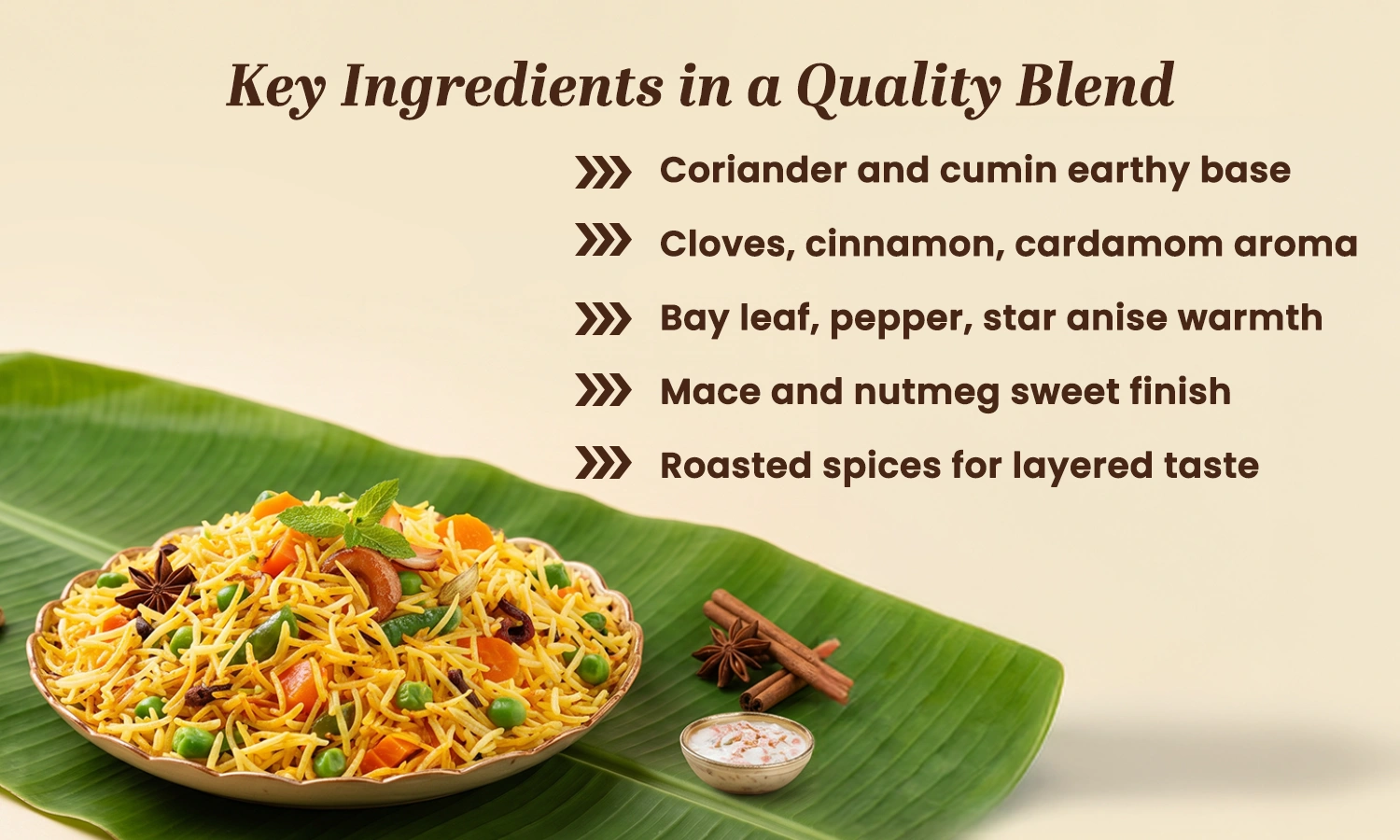
Key Ingredients in a Quality Blend

A dependable biryani masala powder is built on roasted whole spices, ground fine for even flavour. Look for these in the mix:

  • Coriander and cumin for the earthy base.
  • Cloves, cinnamon, and cardamom for aroma.
  • Bay leaf, black pepper, and star anise for warmth.
  • Mace or nutmeg in small amounts for a sweet finish.

SGR 777 Foods uses this foundation of whole and ground spices with dried herbs, which is what gives the best biryani masala its reliable, layered taste.

How to Use Veg Biryani Pulav Masala

For pulao, heat ghee or oil, saute onions and vegetables, then stir in one to two teaspoons of veg biryani pulav masala per cup of rice. Add rice and water, and cook until fluffy.For biryani, increase the masala slightly, layer the spiced vegetables with par-cooked rice, and finish on low heat so the aroma settles in. Cooking pulav with biryani masala this way gives you restaurant-style results at home.

A Quick Biryani Masala Recipe to Try

Here is a simple biryani masala recipe for a weeknight veg biryani:

  • Saute one sliced onion, then add ginger-garlic paste and mixed vegetables.
  • Stir in two teaspoons of pulav biryani masala and a little salt.
  • Add one cup of soaked basmati rice and one and a half cups of water.
  • Cook covered on low heat until the rice is done, then rest for five minutes before serving.

This recipe shows how a single
veg biryani pulav masala
handles a full meal with very little effort.

How to Choose the Best Biryani Masala

To find the best biryani masala, check the aroma, the ingredient list, and the pack size. A fresh, sealed pack with a clean, vegetarian blend is the safe choice. A 50g pack is easy to finish while the masala is still fragrant. A combined biryani veg pulav masala also gives you better value because it covers two dishes.

Tips for Perfect Biryani and Pulao Every Time

A few habits make a big difference with any veg biryani pulav masala. Always bloom the masala in warm ghee or oil so the spices release their aroma before the rice goes in. Use aged basmati rice for long, separate grains, and soak it for twenty to thirty minutes.Get the water ratio right, usually about one and a half cups of water per cup of rice, and adjust for your stove. Cook on low heat once the rice is added, and rest the pot covered for five to ten minutes before serving so the flavour settles evenly.

Pulav With Biryani Masala: A Smart Shortcut

Using pulav with biryani masala is a practical way to cook two dishes from one jar. For a light pulao, use less of the blend so the rice stays delicate. For a fuller biryani, increase the quantity and layer the rice with spiced vegetables.This approach keeps your kitchen simple while still giving you depth when you want it. A single veg biryani pulav masala means fewer products, less waste, and a consistent taste your family will recognise. It is the easiest way to enjoy both dishes without extra effort.

Tips for the Best Results

Getting great results from a biryani pulav masala comes down to a few simple habits. Bloom the blend in hot oil or ghee for a few seconds before adding rice, which wakes up the aroma. Use the right amount of water so each grain stays separate.For a veg biryani pulav masala dish, layer the spiced vegetables and rice gently and let it rest before serving. If you are following a biryani masala recipe for a crowd, taste as you go and adjust salt and heat. A quality biryani masala powder does most of the work, so you mainly need to balance the basics. This is why a single best biryani masala blend is so handy for both pulav with biryani masala and full biryani.

FAQs

Are biryani and pulao masala the same?They are similar but not identical. A combined blend is made to work for both, which is why it is so convenient.
How much biryani masala powder should I use?Use one to two teaspoons per cup of rice for pulao and a little more for biryani.
Is this blend vegetarian? Yes, the SGR 777 blend is 100 percent vegetarian and works for both veg and non-veg recipes.

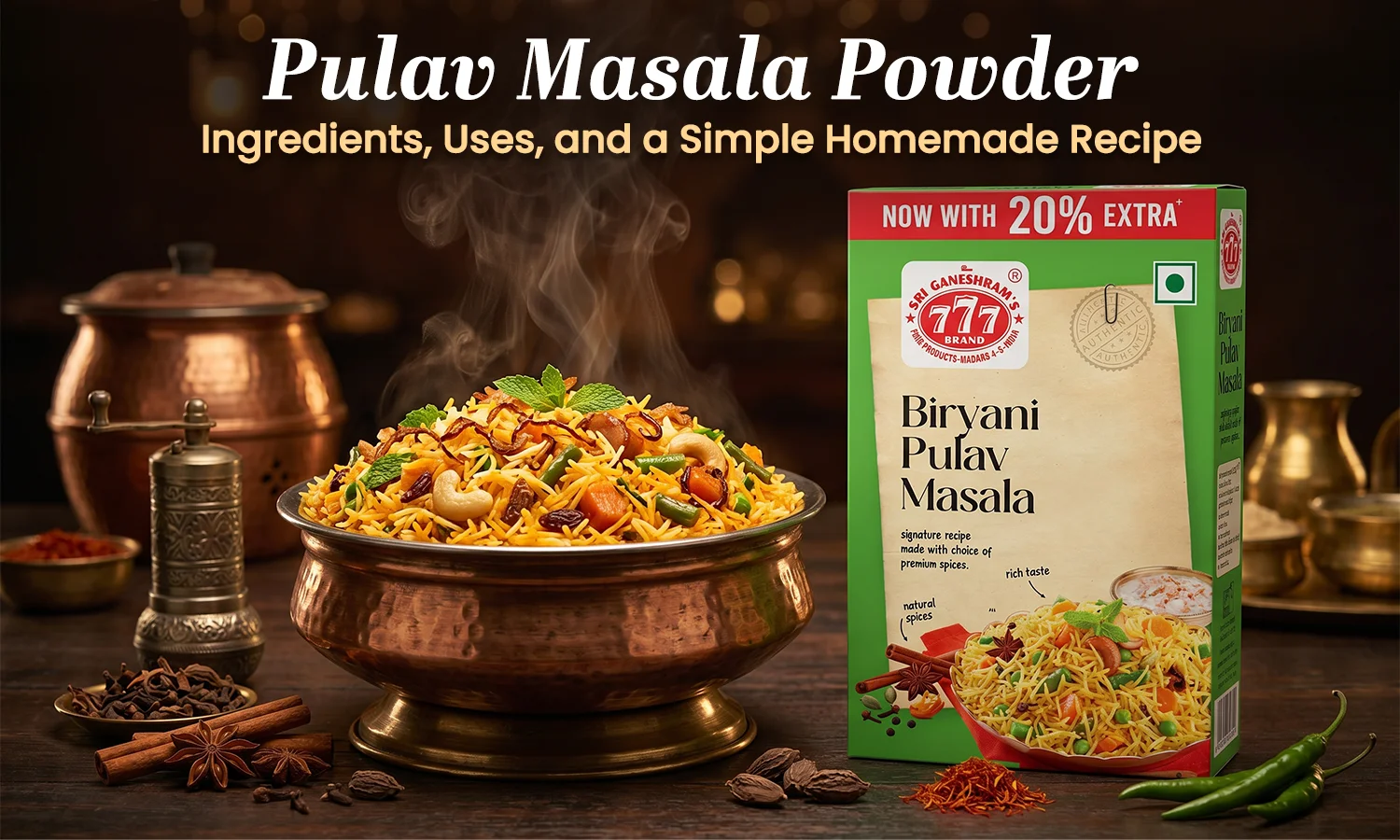
Pulav Masala Powder: Ingredients, Uses, and a Simple Homemade Recipe

Summary

Pulao is biryani’s lighter, quicker cousin, and this guide shows how one good blend keeps your rice fragrant. You get the core ingredients and what each does, an easy homemade recipe you can roast and grind yourself, clear cooking steps, storage tips, and a rundown of pulao varieties you can build from a single versatile mix.

Introduction :

Pulao is the everyday cousin of biryani: lighter, quicker, and just as comforting when the spices are right. The secret to a fragrant plate is a good pulav masala powder. It blends roasted spices into one mix, so your rice turns out aromatic and balanced without hours of preparation. This guide covers the ingredients, a simple homemade recipe, and how to use the blend well.

What Is Pulav Masala Powder?

Pulav masala powder is a ground spice blend made for rice dishes. Unlike heavier biryani blends, it keeps the flavour clean and warm so the rice and vegetables stay in focus. A good veg pulav masala powder suits everyday meals as much as festive spreads.
Most blends are versatile. The same pulav masala powder can flavour vegetable pulao, peas pulao, or a simple jeera-style rice, which is why it earns a permanent place in the spice rack.
pulav masala powder

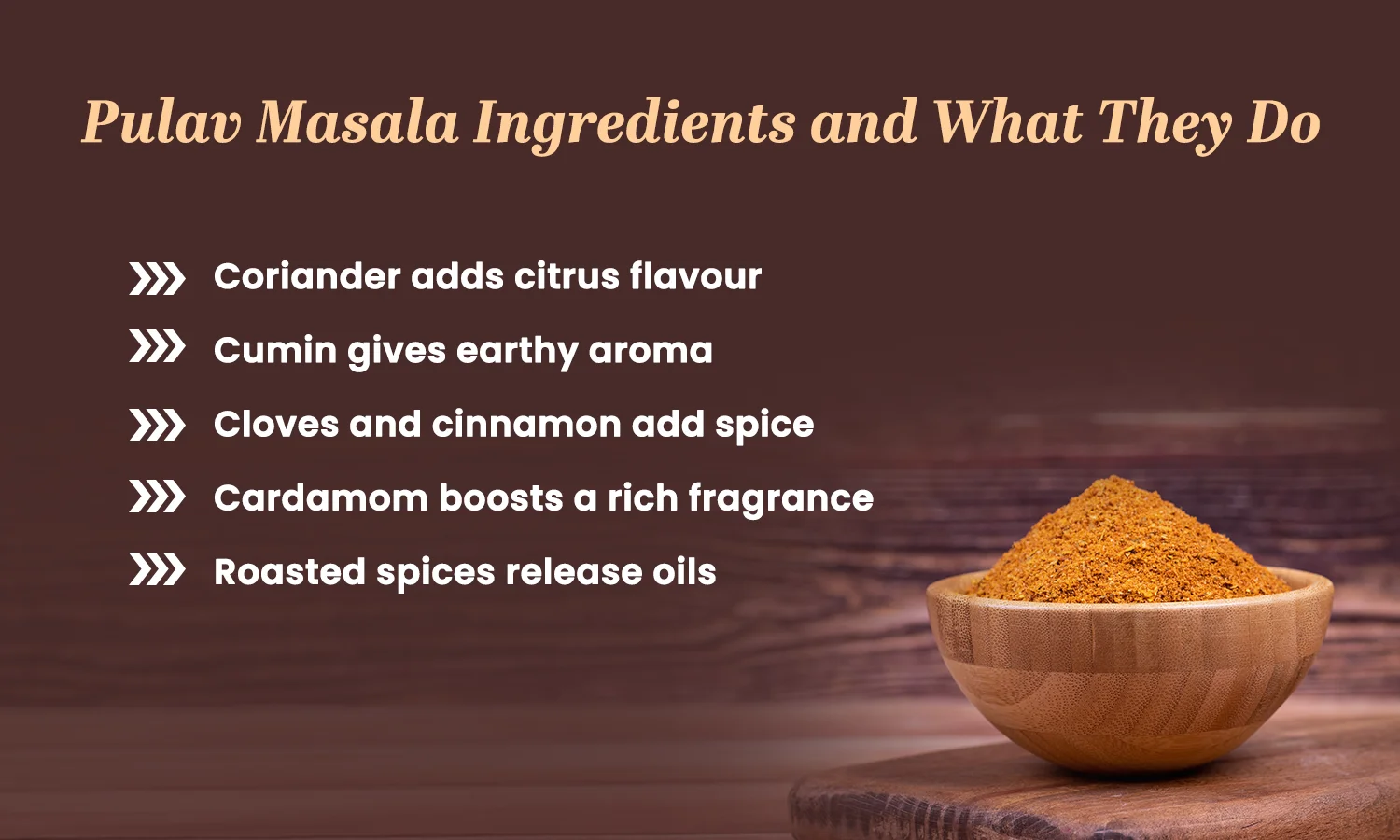
Pulav Masala Ingredients and What They Do

Understanding the pulav masala ingredients helps you judge quality and adjust the flavour to your taste. A classic blend usually includes:

  • Coriander seeds for a mild, citrusy base.
  • Cumin and shahi jeera for warmth and an earthy aroma.
  • Cloves, cinnamon, and green cardamom for the signature fragrance.
  • Bay leaf, black pepper, and a little mace or nutmeg for depth.

These pulav masala ingredients are roasted to release their oils, then ground fine. The balance is what separates a flat mix from a fragrant one.

Homemade Pulao Masala Powder Recipe

Making a homemade pulao masala powder is easy and lets you control the flavour. Here is a simple method:

  • Dry roast two tablespoons of coriander seeds, one tablespoon cumin, six cloves, two inches of cinnamon, four green cardamom pods, two bay leaves, and one teaspoon black pepper on low heat until fragrant.
  • Cool the spices fully so no moisture remains.
  • Grind to a fine powder along with a small piece of mace.
  • Store the homemade pulao masala powder in an airtight jar.

This pulav masala powder recipe makes enough for several meals. If you would rather skip the roasting and grinding, a ready blend gives you the same balance with no effort.

How to Use Pulav Masala Powder

Heat ghee or oil, add whole spices if you like, then saute onions and vegetables. Stir in one to two teaspoons of pulav masala powder per cup of rice so it coats everything evenly. Add soaked rice and water, then cook until fluffy.Because a quality veg pulav masala powder is concentrated, taste as you go and add more only if needed. The aroma should be warm and inviting, not overpowering.

Ready Pulav Masala Packet vs Homemade

A pulav masala packet is the practical choice for most kitchens. It is consistent, sealed for freshness, and ready when you are. Homemade blends are rewarding but need fresh whole spices and time.
If you cook rice often, keeping a pulav masala packet on hand saves effort on busy days while still giving you that fresh-ground taste. SGR 777 Foods offers a balanced biryani and pulao blend that works for both dishes.

Storage Tips for Lasting Aroma

Store your pulav masala powder in an airtight container away from heat and light. Use a dry spoon every time. A well-stored blend keeps its aroma for roughly nine to twelve months, which is plenty for regular cooking.
pulav masala powder

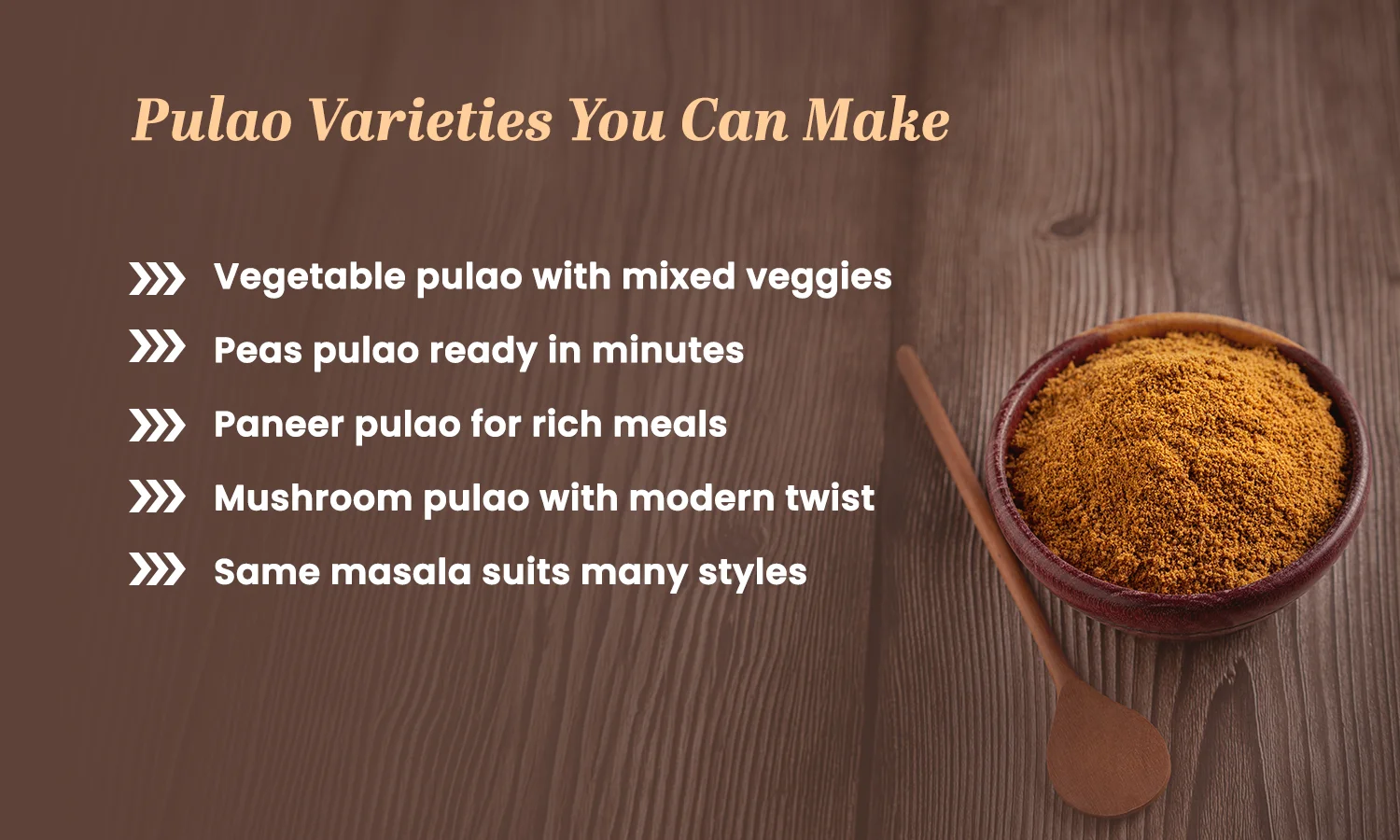
Pulao Varieties You Can Make

One of the best things about a good pulav masala powder is its range. The same blend can carry many styles of pulao, so you never get bored. A few favourites include:

  • Vegetable pulao with carrots, beans, peas, and potato.
  • Peas pulao, simple and fragrant, ready in minutes.
  • Paneer pulao for a richer, protein-rich meal.
  • Mushroom or corn pulao for a modern twist.

Each of these uses the same veg pulav masala powder, with only the vegetables changing. That flexibility is what makes the blend such good value for everyday cooking.

Common Mistakes to Avoid

A few simple errors can spoil a pulao. Adding too much water makes the rice mushy, so stick to the right ratio for your rice. Skipping the soaking step gives uneven grains, so soak basmati for twenty to thirty minutes first.
Adding the pulav masala powder to a cold pan is another miss, since the spices need warm oil to release their aroma. Stirring too often breaks the grains, so cook gently and fluff only at the end. Avoid these and your homemade pulao masala powder or ready blend will shine.

Buying and Storing Pulav Masala

If you would rather skip the grinding, a sealed pulav masala packet is a smart choice for busy kitchens. A good ready blend uses the same core pulav masala ingredients you would use at home, so you get a consistent taste every time you cook.
Look for a veg pulav masala powder that lists clean ingredients and comes from a trusted brand. Once opened, keep it in an airtight jar away from heat and moisture, and always use a dry spoon. Stored this way, the blend holds its aroma for months, whether you made it from a homemade pulao masala powder batch or bought a fresh pack.

FAQs

Can I use pulav masala powder for biryani? Yes. A combined biryani and pulao blend works for both, though biryani usually needs a slightly larger quantity for a richer taste.
What is the main difference between pulao and biryani masala? Pulao blends are lighter and let the rice shine, while biryani blends are richer and more aromatic.
Is a homemade pulao masala powder better than a packet? Homemade gives control, but a good packet offers consistency and convenience with the same core ingredients.

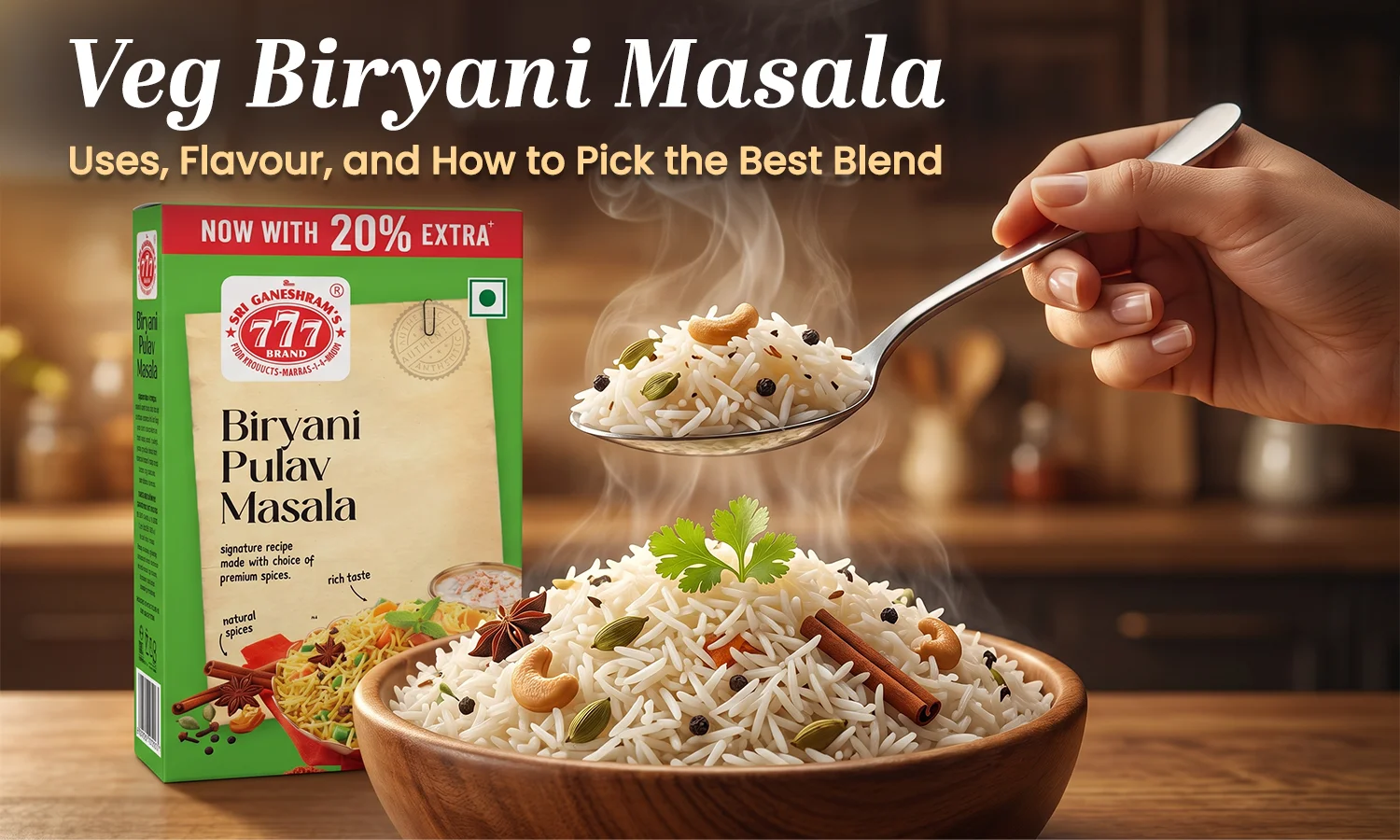
Veg Biryani Masala: Uses, Flavour, and How to Pick the Best Blend

Summary

A complete primer on the spice mix that decides whether your biryani sings or falls flat. It covers what goes into a quality blend, how to use it without overpowering the rice, the difference between instant mixes and cooking from scratch, and the practical checks for aroma, pack size, and value when you buy.

Introduction :

A pot of biryani lives or dies by its spice blend. Get the masala right and even simple rice and vegetables turn into a meal people remember. A good veg biryani masala is the shortcut to that result, packing roasted, ground spices into one balanced mix so you do not have to measure a dozen jars every time you cook. This guide explains what goes into the blend, how to use it, and how to choose the best veg biryani masala for your kitchen.

Why a Good Veg Biryani Masala Matters

Biryani is built in layers. The rice carries aroma, the vegetables carry texture, and the spices tie everything together. When the biryani masala veg blend is fresh and well-balanced, the whole dish tastes deeper without any single spice taking over.
Most home cooks struggle here because grinding spices fresh for every meal is not practical. A ready blend solves that. The right veg biryani masala powder gives you the same warm, layered flavour every time, which is exactly what consistency in cooking needs.
veg biryani masala

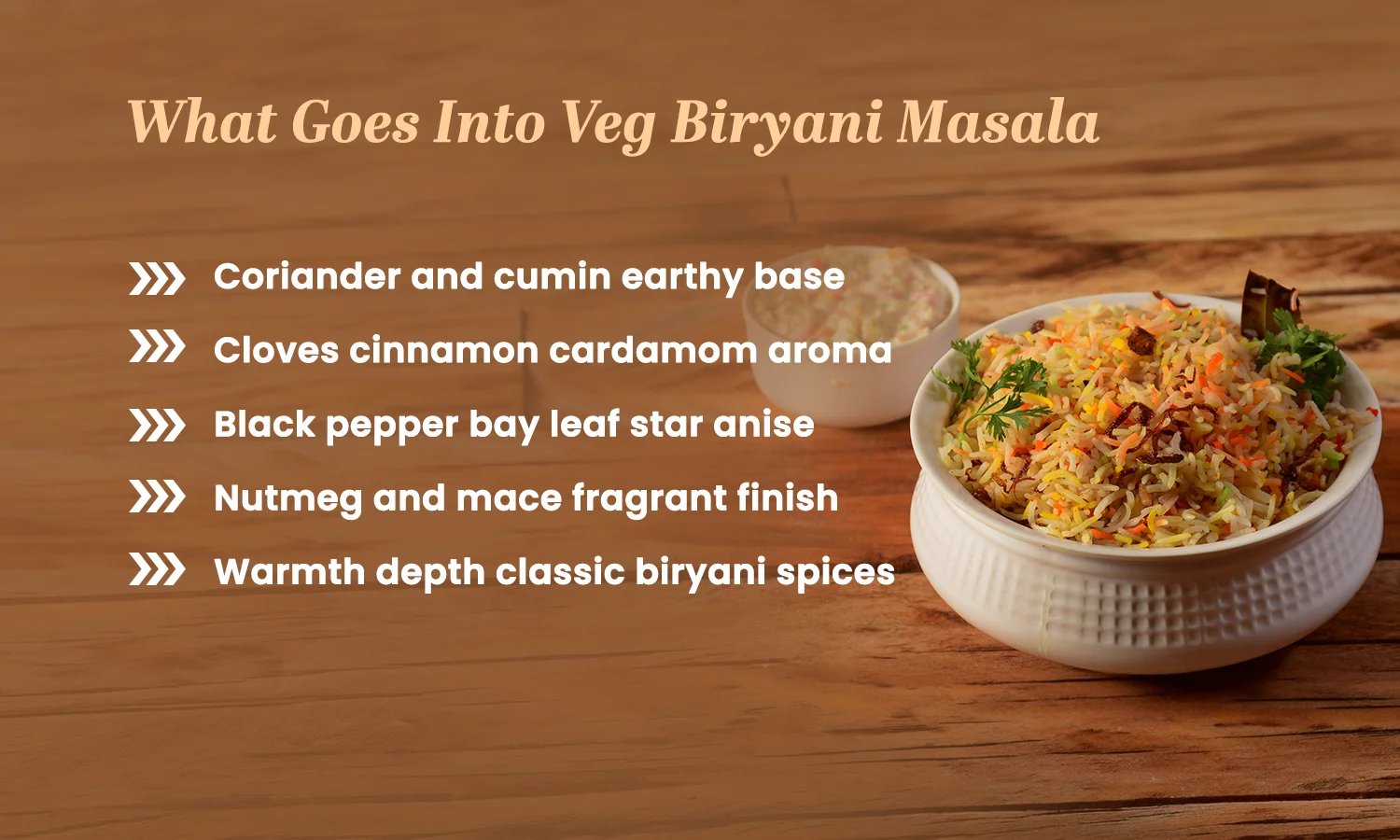
What Goes Into Veg Biryani Masala

Authentic blends start with whole spices that are roasted gently and then ground. The base of a quality veg biryani masala usually includes:

  • Coriander and cumin, which give body and a mild, earthy base.
  • Cloves, cinnamon, and cardamom, the spices behind that classic biryani aroma.
  • Black pepper, bay leaf, and star anise for warmth and depth.
  • Nutmeg and mace in small amounts for a sweet, fragrant finish.

SGR 777 Foods builds its blend on this foundation of whole and ground spices, with coriander, cumin, cloves, cinnamon, cardamom, and dried herbs. The result is a versatile mix that suits both biryani and pulao without tasting flat or harsh.

How to Use Veg Biryani Masala

Using a veg biryani masala is simple. Sauté your onions, ginger, and garlic, add chopped vegetables, then stir in the masala so it coats everything and releases its oils. Add soaked rice, water or stock, and cook until the grains are fluffy and separate.Start with one to two teaspoons per cup of rice and adjust to taste. Because this is a concentrated biryani masala veg blend, a little goes a long way. If you prefer a quick weekday version, an instant veg biryani mix approach works too: layer par-cooked rice with the masala and vegetables, then finish on low heat.

Instant Veg Biryani Mix vs Cooking From Scratch

An instant veg biryani mix is designed for speed. You add rice, vegetables, and water, and the blend does the rest. It is ideal for busy days, hostel kitchens, and first-time cooks who want a reliable result.
Cooking with a standalone masala gives you more control. You decide the heat level, the vegetables, and the richness. Either way, the quality of the veg biryani masala powder is what decides the final taste, so the blend is worth choosing carefully.
veg biryani masala

How to Choose the Best Veg Biryani Masala

When you compare options, look past the label and check a few practical points so you end up with the best veg biryani masala for regular use:

  • Aroma and freshness: a sealed veg biryani masala packet should smell warm and fragrant the moment you open it.
  • Clean ingredients: a fully vegetarian blend with no unnecessary additives is a safer everyday choice.
  • Pack size: a 50g pack is right for regular home use and easy to finish before it loses aroma.
  • Value: a fair veg biryani masala price matters, but freshness and flavour should come first.

Buying veg biryani masala online also makes it easy to compare packs, read details, and reorder when you run low. SGR 777 Foods offers its Biryani Pulav Masala in a convenient 50g veg biryani masala packet that is FSSAI compliant, 100 percent vegetarian, and made to deliver consistent flavour.

Storage and Shelf Life

Keep your veg biryani masala in an airtight container in a cool, dry place away from sunlight. Stored well, a quality blend stays fresh for around nine to twelve months. Always use a dry spoon so moisture does not get in and dull the aroma.

Common Mistakes to Avoid With Veg Biryani Masala

Even a great blend can be let down by a few habits. The most common mistake is adding too much masala, which buries the rice instead of lifting it. Start small and build up. Another is adding the veg biryani masala to a cold pan, where it cannot release its oils. Always bloom it in warm oil or ghee first.Skipping the resting step is another miss. After the rice is cooked, let the pot sit covered for five to ten minutes so the aroma settles evenly. Using old, stale masala also flattens the dish, so finish a veg biryani masala packet within its shelf life and keep it sealed between uses.

What to Serve With Your Biryani

A fragrant biryani deserves the right sides. A cooling raita made with curd, onion, and cucumber balances the warm spices. A simple salad of sliced onion and lemon adds freshness, while a bowl of plain curd works for milder palates.
For a fuller spread, pair your rice with a vegetable korma or a tangy gravy. These pairings show how a single veg biryani masala powder can anchor an entire meal, from a quick lunch to a festive table.

FAQs

Is veg biryani masala the same as pulao masala? They are close, but biryani blends are usually richer and more aromatic, while pulao blends are lighter. A combined biryani pulav blend works well for both.
How much veg biryani masala powder should I use? Begin with one to two teaspoons per cup of rice, then adjust to your taste and the number of servings.
Where can I buy veg biryani masala online? You can order it directly from the SGR 777 Foods website, with the pack delivered to your door.

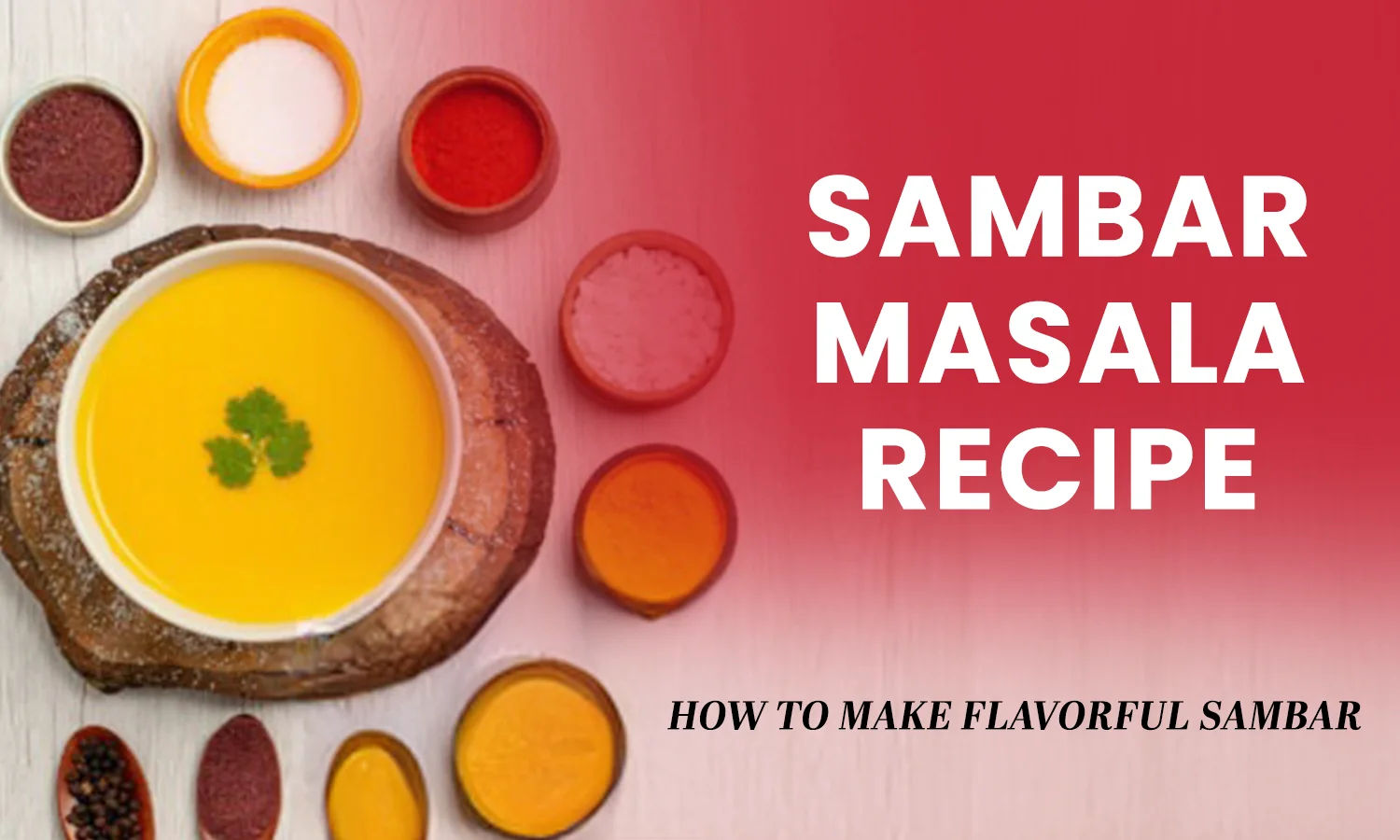
Sambar Masala Recipe: How to Make Flavorful Sambar

Sambar is a staple in South Indian households, known for its tangy and aromatic flavors. At the heart of this delicious dish is the Sambar Masala Recipe, which combines roasted spices and lentils for a rich taste. Whether you are using 777 sambar powder or preparing a homemade sambar masala, mastering this blend is key to creating the perfect bowl of sambar.

What is Sambar Masala?

Sambar Masala is a flavorful spice mix made from roasted spices and lentils. It’s the foundation of an authentic South Indian sambar, offering the perfect balance of tanginess, spiciness, and aroma.

This blend contains essential sambar masala ingredients like coriander seeds, red chilies, and fenugreek, making it indispensable for every Indian kitchen. Whether you follow a traditional Sambar Masala Recipe, buy the best sambar masala powder, or prepare it at home, the quality of ingredients determines the outcome.

Sambar powder: Adds depth to the dish.Madras sambar powder: Known for its authentic Chennai-style flavor.

1 kg sambar powder : A practical choice for families who cook sambar regularly.

Sambar Masala Recipe

Sambar Masala Recipe

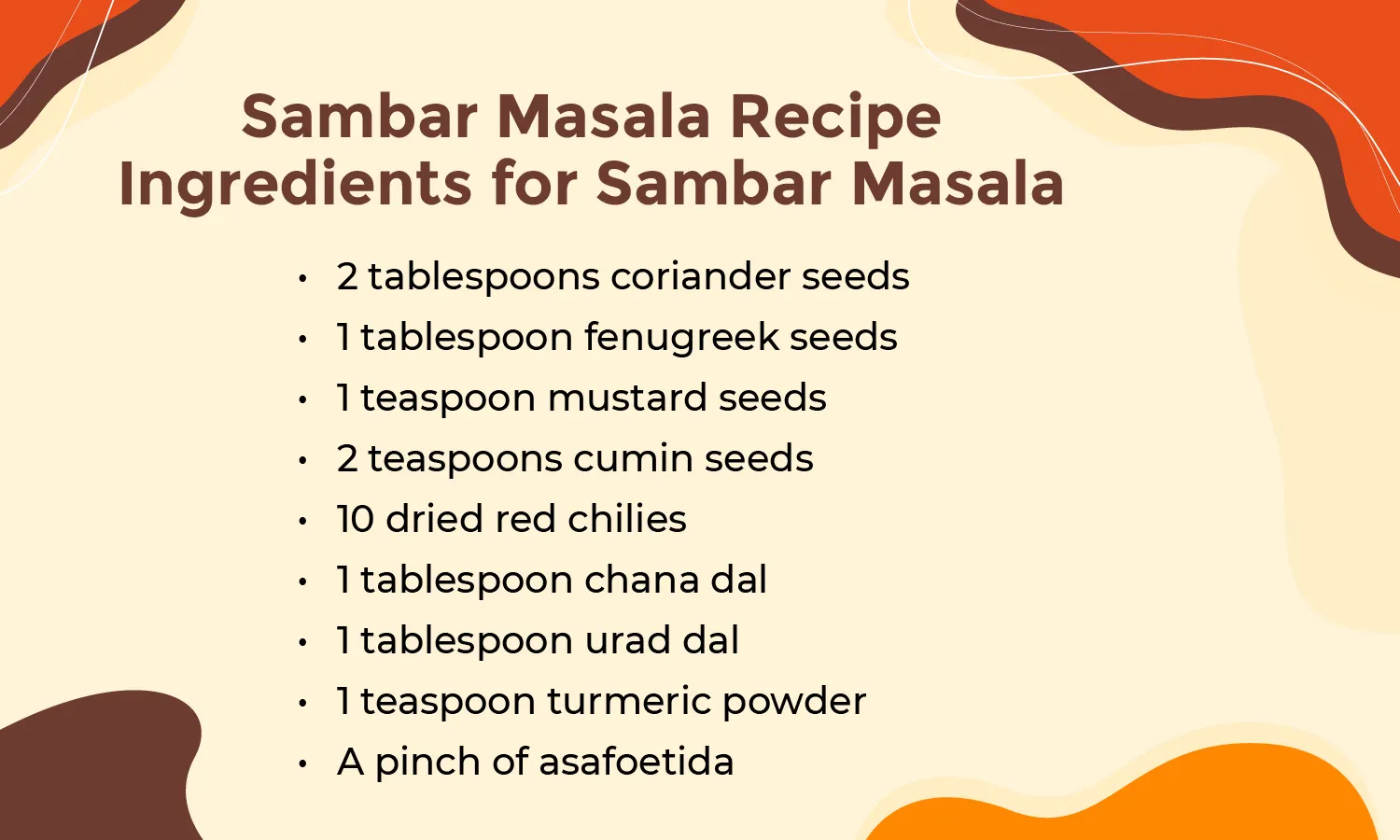
Ingredients for Sambar Masala:

  • 2 tablespoons coriander seeds
  • 1 tablespoon fenugreek seeds
  • 1 teaspoon mustard seeds
  • 2 teaspoons cumin seeds
  • 10 dried red chilies
  • 1 tablespoon chana dal
  • 1 tablespoon urad dal
  • 1 teaspoon turmeric powder
  • A pinch of asafoetida

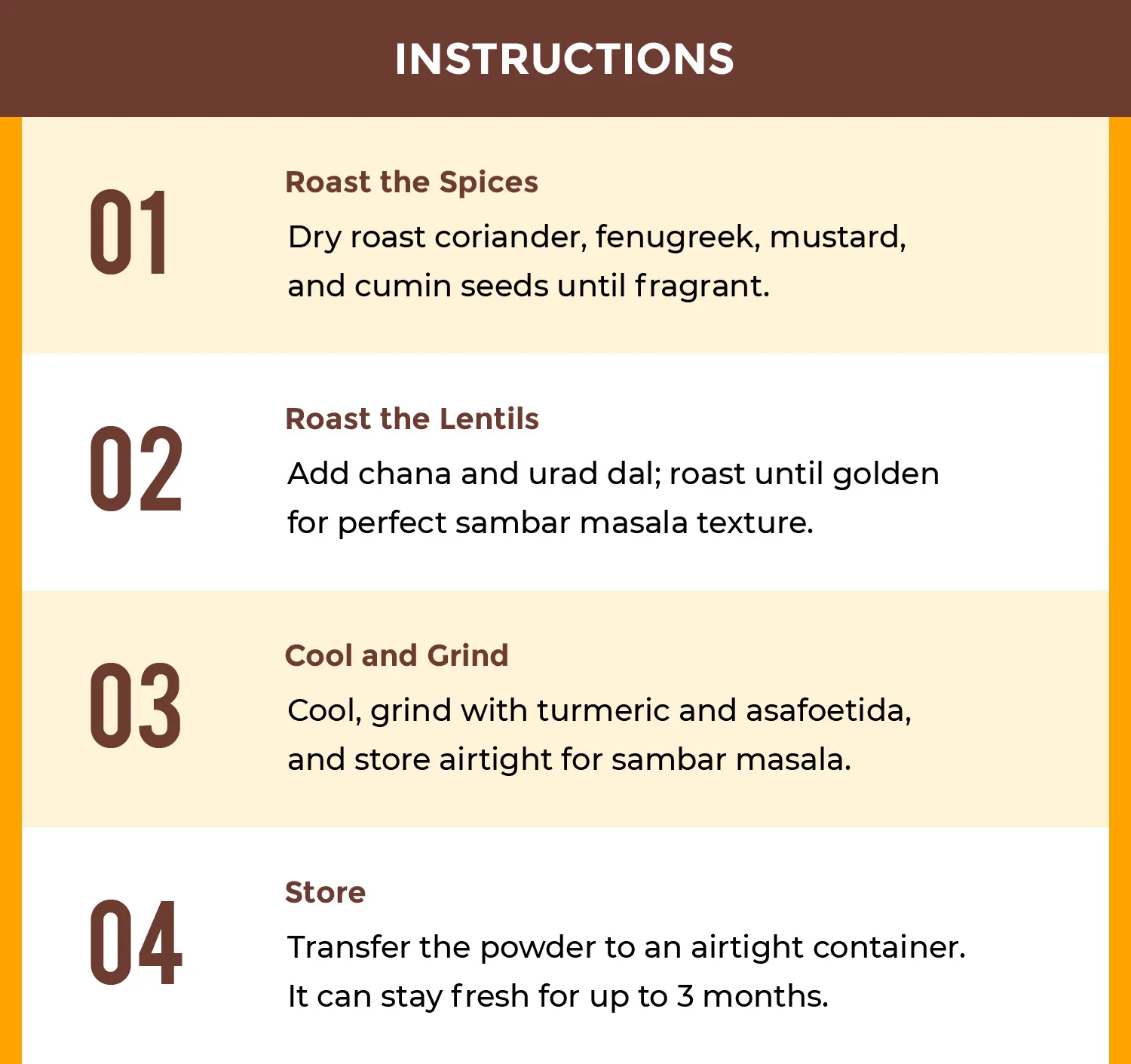
Instructions:

Roast the Spices:

Heat a pan and dry roast coriander seeds, fenugreek seeds, mustard seeds, and cumin seeds for 2–3 minutes until aromatic. These are essential sambar powder ingredients.

Roast the Lentils:

Add chana dal and urad dal to the pan. Roast them until golden brown. This step ensures the best texture for your homemade sambar masala.

Cool and Grind:

Allow the roasted ingredients to cool. Grind them into a fine powder along with turmeric powder and asafoetida. This is your authentic sambar masala powder.

Store:

Transfer the powder to an airtight container. It can stay fresh for up to 3 months.

How to Make Sambar with Sambar Masala

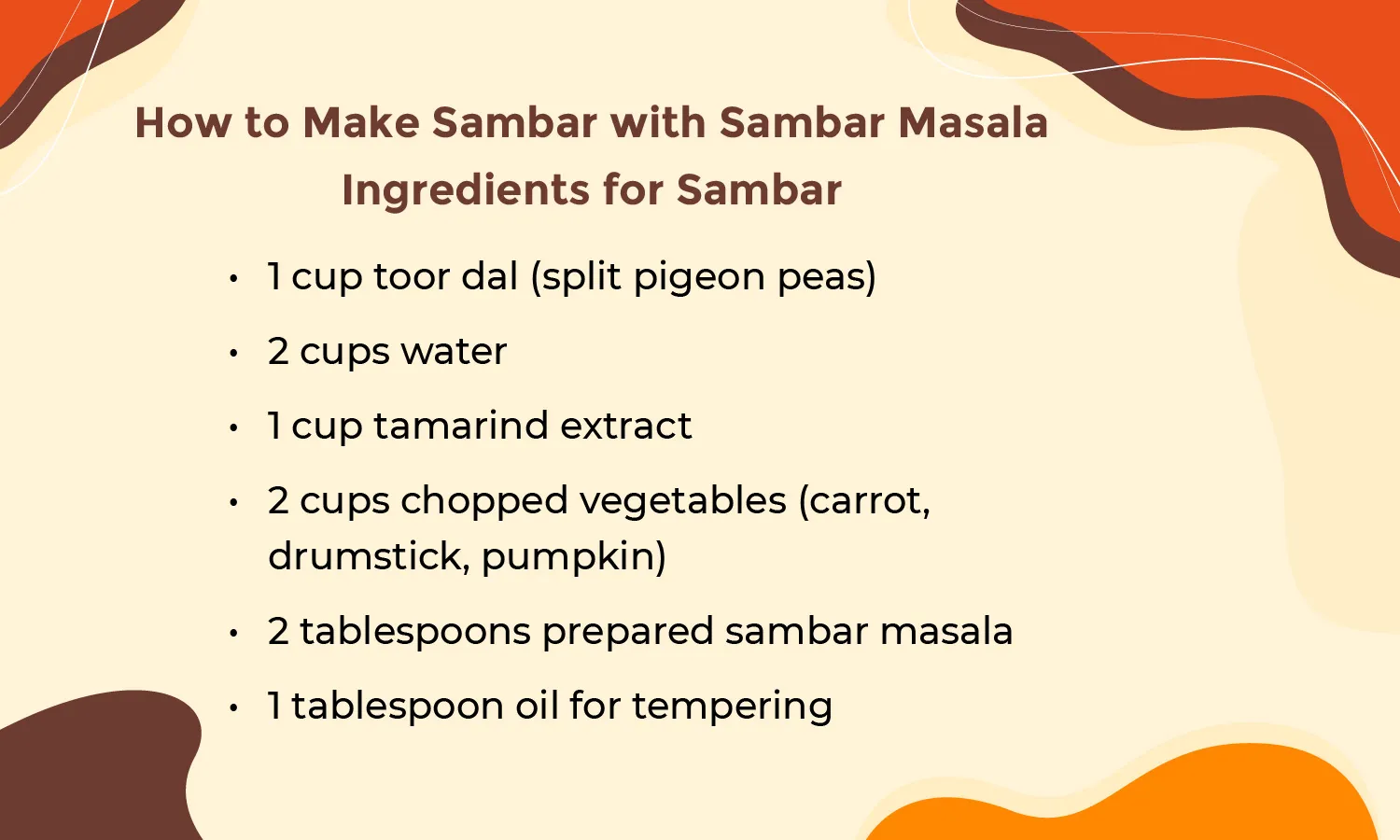
Ingredients for Sambar:

  • 1 cup toor dal (split pigeon peas)
  • 2 cups water
  • 1 cup tamarind extract
  • 2 cups chopped vegetables (carrot, drumstick, pumpkin)
  • 2 tablespoons prepared sambar masala
  • 1 tablespoon oil for tempering

Instructions:

Cook the Dal:

Wash toor dal thoroughly. Pressure cook it with water until soft. Mash it well to create a creamy base.

Prepare Tamarind Extract:

Soak tamarind in warm water for 15 minutes. Strain the pulp to get 1 cup of tamarind extract.

Cook the Vegetables:

Add chopped vegetables to a pot with water and cook until tender.

Add the Sambar Masala:

Mix the cooked dal, tamarind extract, and vegetables. Add 2 tablespoons of Madras sambar powder for an authentic flavor.

Temper:

Heat oil in a pan. Add mustard seeds, curry leaves, and a pinch of asafoetida. Pour this tempering over the sambar

Serve:

Serve hot with rice or idlis. This dish, enhanced with the best sambar podi, is a crowd-pleaser.

Conclusion

SGR 777 Foods is synonymous with authentic flavors. Their premium sambar masala powder, crafted with care and tradition, is ideal for creating perfect sambar at home. With SGR 777, you don’t just cook; you create a soulful culinary experience.

Key Points :

  • Sambar Masala Recipe is the heart of flavorful sambar.
  • Use the best-quality 777 sambar powder for authentic taste.
  • Fresh ingredients ensure the best results, whether for madras sambar powder or homemade sambar masala.
  • Follow the step-by-step instructions for perfect sambar every time.
  • SGR 777 Foods offers the best sambar powder brand for authentic South Indian dishes

FAQs

What can be used instead of Sambar Masala?

You can use a combination of coriander powder, turmeric, and chili powder, but for authentic taste, the best sambar masala powder is recommended.

How can I make sambar taste better?

Use fresh sambar masala ingredients, balanced tamarind, and vegetables. Tempering with curry leaves and asafoetida enhances the flavor.

What is the difference between garam masala and sambar masala?

While garam masala is used in North Indian curries, sambar masala is specific to South Indian dishes with tamarind-based flavors.

Why is my sambar not tasty?

Check the balance of tamarind, salt, and spices. Using a quality 777 sambar powder ensures the best results.

How do you reduce bitterness in sambar?

Add a pinch of jaggery or adjust tamarind levels to balance the taste.

Indian Subji: A Flavorful and Versatile Vegetable Curry

When you think of comfort food, nothing comes close to a warm plate of Indian Subji, served with soft rotis or some hot rice. It is that dish that feels simple, yet it fills the heart. Every home has its own style of making it, but the idea is the same: turn everyday vegetables into something rich and tasty. As a staple of subji indian food, it never feels out of place on the table.

For many of us making a vegetable sabji daily can feel repetitive, we open the fridge and just pick whatever is there, and still somehow it turns into a dish that makes the meal complete. A good Indian veg sabji list has so many options, from potatoes and beans to spinach and cauliflower, so you never really run out of choices.

And when you keep 777 Garlic Chutney or a flavorful Garlic Pickle by the side, the taste just hits another level — that spicy and tangy kick makes the whole plate come alive

How to Make the Perfect Indian Subji at Home

A good Indian Subji is all about balance, you want the spices to be bold but not so much that they hide the natural flavor of the vegetables. Here is what you will need,

  • Mixed vegetables like carrot beans peas cauliflower or even bottle gourd
  • 2 tbsp oil or ghee
  • 1 tsp mustard seeds
  • Curry leaves
  • 2 medium tomatoes chopped
  • 2 green chilies
  • 1 tsp turmeric powder
  • 1 tsp red chili powder
  • 1 tbsp coriander powder
  • Salt to taste
  • 1 tsp garam masala
  • 1 tsp garam masalaaFresh coriander for garnish

If you want to save time you can also use 777 Sabzi Masala, it already has the perfect blend of spices ready for you. This simple sabzi recipe comes together with whatever vegetables you have on hand.
Indian Subji

Essential Ingredients for a Flavorful Indian Subji

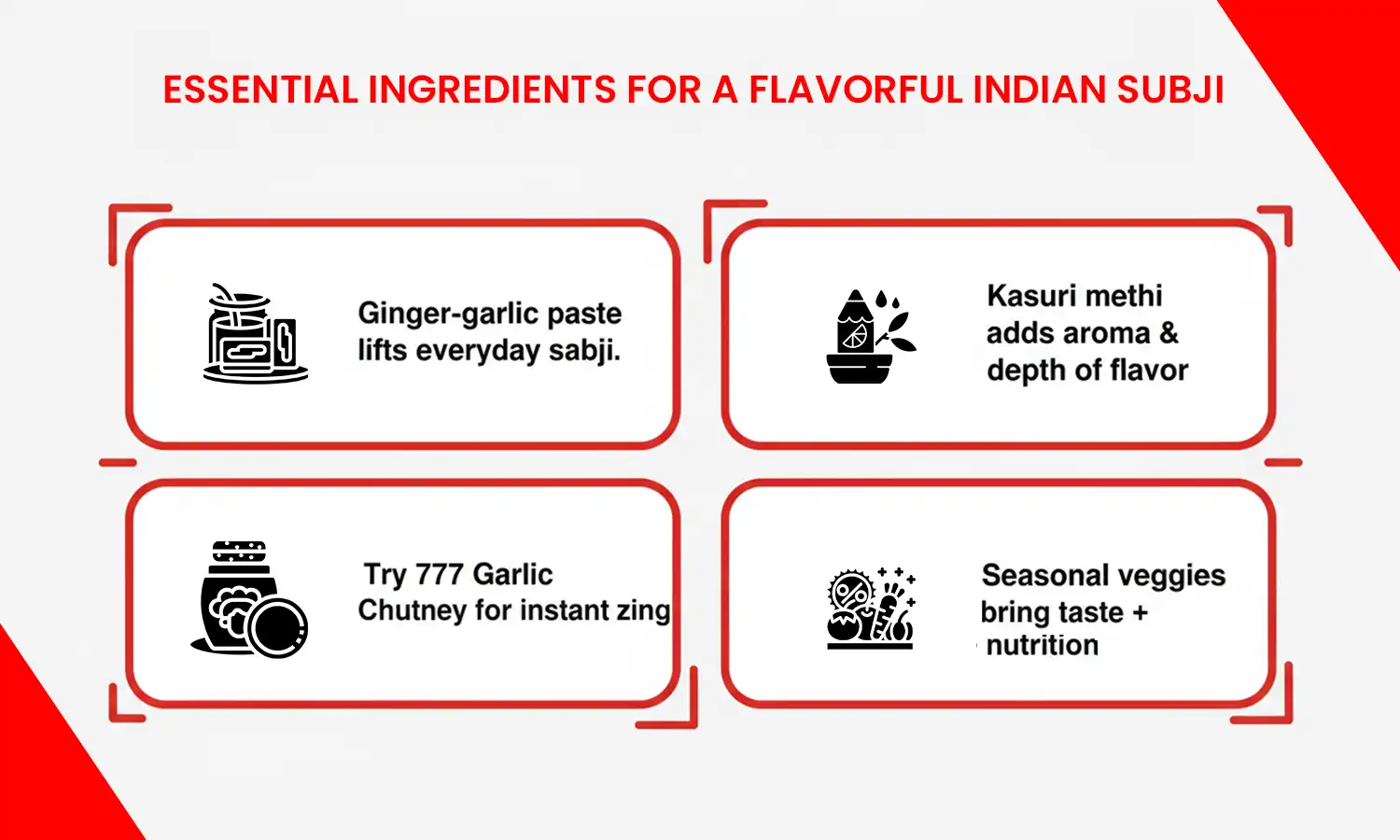
Most people worry that sabji will taste the same every day, but little touches make a big difference. Adding ginger garlic paste, or a sprinkle of kasuri methi, or even serving with 777 Garlic Chutney can make a simple vegetable sabji taste amazing.

Seasonal vegetables also bring a natural sweetness and freshness, like pumpkin in winter or okra in summer, so you not only get taste but also nutrition. A seasonal vegetable curry like this celebrates whatever is fresh, and a well-made Indian vegetable curry never tastes repetitive.

Indian Subji Recipe: A Simple Yet Delicious Vegetable Curry

1. Heat oil in a pan, add mustard seeds and curry leaves.

2. Sauté chopped onions if you like them, skip if you prefer no onion garlic.

3. Add tomatoes, cook till soft, then mix in turmeric chili and coriander powder.
4. Toss in the mixed vegetables, add a little water, cover, and let them cook.

5. Finish with garam masala and fresh coriander.

Serve with roti or rice, and for the best experience keep 777 Garlic Chutney on the side, it makes even a weekday meal feel special. This easy Indian subji recipe works for both everyday meals and special occasions.

Learn How to Cook a Spicy Indian Subji

If you like heat, just add more chili, green chilies, or a pinch of masala powder. A spicy veg sabji goes so well with plain dal and rice. You can also try a gravy sabzi recipe by adding coconut milk or cashew paste, this is common in the Indian gravy sabzi list, and it makes the dish creamy. You can also keep it as a dry indian veg subji if you prefer a thicker, less saucy dish.
Indian Subji

Healthy and Tasty Variations of Indian Subji

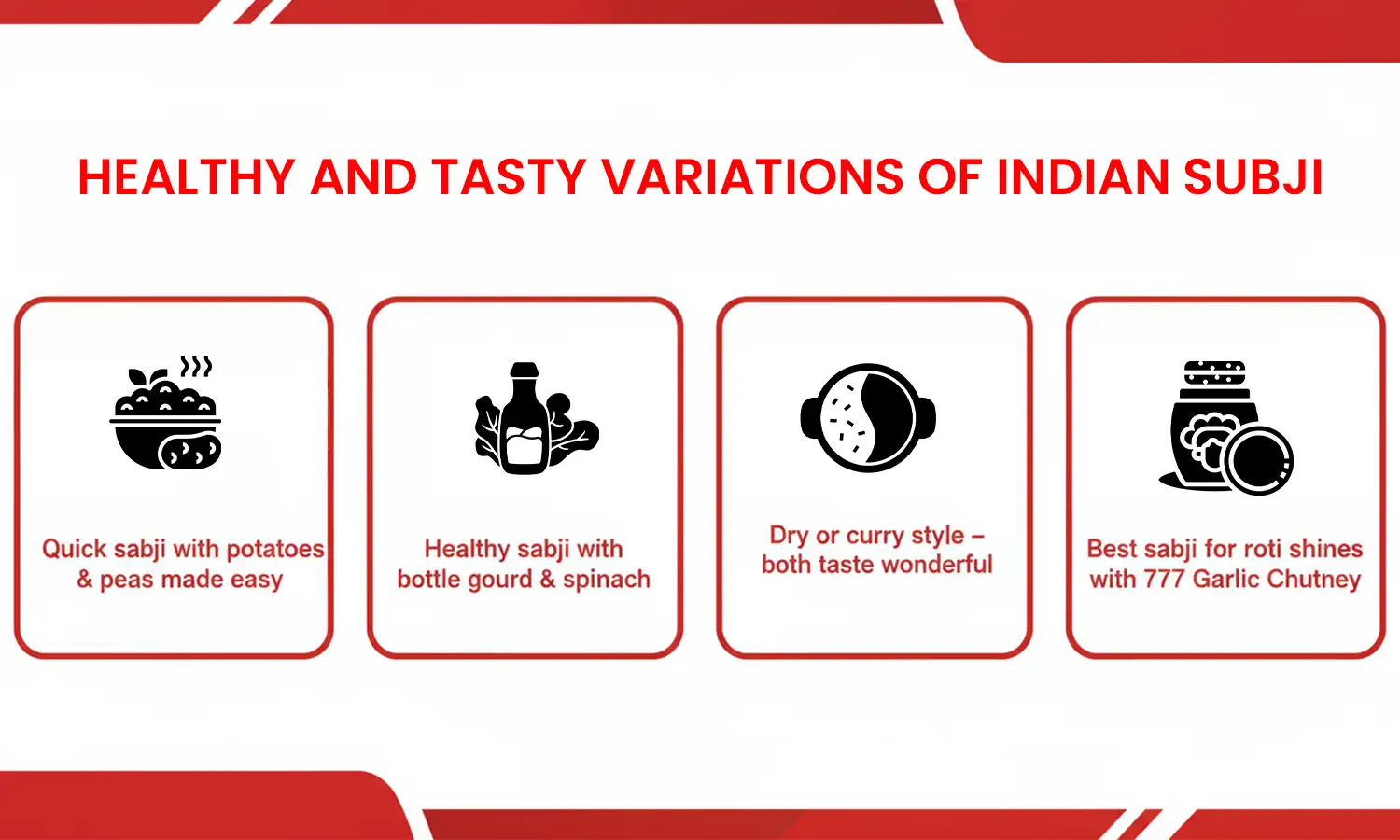
Cooking sabji does not have to be hard, a quick veg sabji can be made with just potatoes and peas, or you can go for a healthy vegetable sabji with bottle gourd and spinach. Some like it dry, some like it with curry, both are fine. And yes, the mixed vegetable sabji for roti always feels better when served with 777 Garlic Chutney. A hearty mixed vegetable subji is a great all-rounder, and this kind of vegetarian curry recipe suits almost any meal.

Conclusion :

Cooking Indian Subji is not only about food, an easy veg sabji recipe is about making home feel warm. With the right spices, fresh vegetables, and a spoon of 777 Garlic Chutney, every meal feels like comfort on a plate. A warm homemade vegetable curry like this is the easiest way to bring everyone to the table.

FAQs

What Vegetables Can Be Used in Indian Subji?

Anything you have, potatoes beans okra spinach cauliflower or even mushrooms, that is the beauty of Indian sabzi recipes.

How Do You Make Indian Subji Flavorful?

Fresh spices, seasonal vegetables, and serving with 777 Garlic Chutney always help.

Can Indian Subji Be Made Without Onions and Garlic?

Yes, just skip them, a quick veg sabji with tomatoes and chilies can be just as good.

How Long Should Indian Subji Be Cooked for the Best Flavor?

About 15 to 20 minutes, the vegetables should be soft but not overcooked for Indian Vegetable Curry.

Can Indian Subji Be Stored for Later Use?Yes, keep it in an airtight box in the fridge for a day or two, reheat with a splash of water.

What Is Turmeric Powder Made Of? Ingredients, Composition & Health Benefits explained

Introduction: A Pinch of Tradition in Every Dish

In every Indian kitchen, there’s one ingredient that adds more than just color and flavor—it adds heritage. Yes, we’re talking about turmeric. But have you ever paused to wonder what turmeric powder is made of?
More than just a golden spice, turmeric powder is the soul of many traditional recipes and home remedies. And when we ask what is turmeric powder made of, we’re really asking about a story that begins deep in the soil and ends in our everyday meals. In this blog, let’s explore the journey, composition, and goodness packed into that bright yellow pinch.
Turmeric Powder Made Of

What Is Turmeric Powder Made Of?

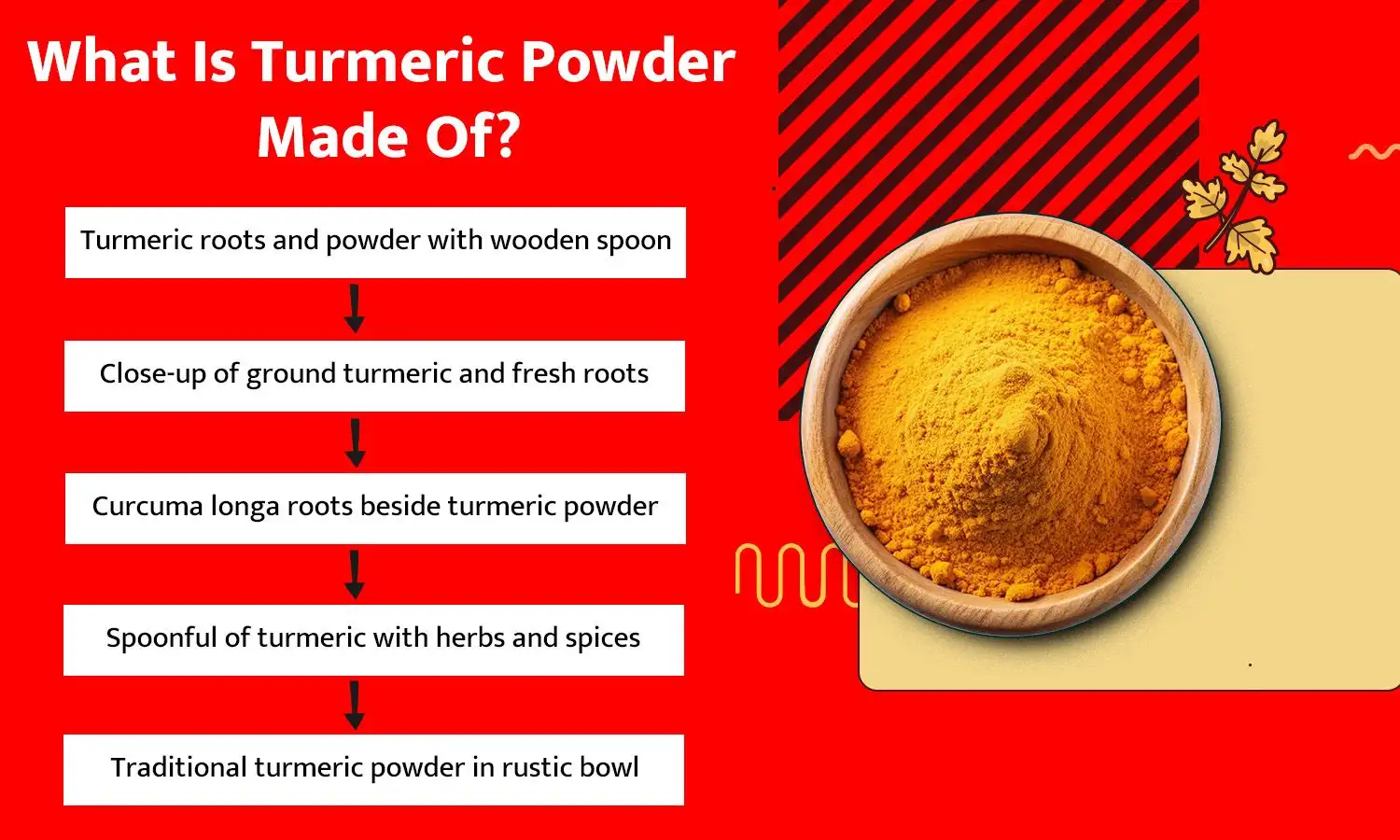
At its core, turmeric powder is made of dried and finely ground turmeric root—scientifically known as Curcuma longa. It’s not just about color; the strength of turmeric lies in its complex blend of compounds. The most well-known is curcumin, a natural antioxidant and anti-inflammatory agent. But there’s more.

Turmeric contains natural oils (like turmerone), resins, and polysaccharides—each playing a role in its health and culinary benefits. When you’re holding that spoonful of spice, you’re holding generations of wellness and wisdom.

So next time someone asks, “What is turmeric powder made of?” —you’ll know it’s not just turmeric root; it’s tradition, science, and purity blended into one.

What Is Curcumin and Why Is It Important?

Curcumin is the golden powerhouse hidden within turmeric. It gives turmeric its bright color and carries most of its health benefits. Although it only makes up 2–5% of what turmeric powder is made of, it’s the star when it comes to medicinal properties.

This compound supports joint health, fights inflammation, and even aids in digestion and immunity. But here’s something important—curcumin is not easily absorbed by our body. That’s why pairing turmeric with black pepper (which contains piperine) enhances its effectiveness.Understanding curcumin helps you appreciate why turmeric powder made of genuine roots (and not fillers) truly matters for your well-being.
Turmeric Powder Made Of

How Is Turmeric Powder Made? (From Root to Powder)

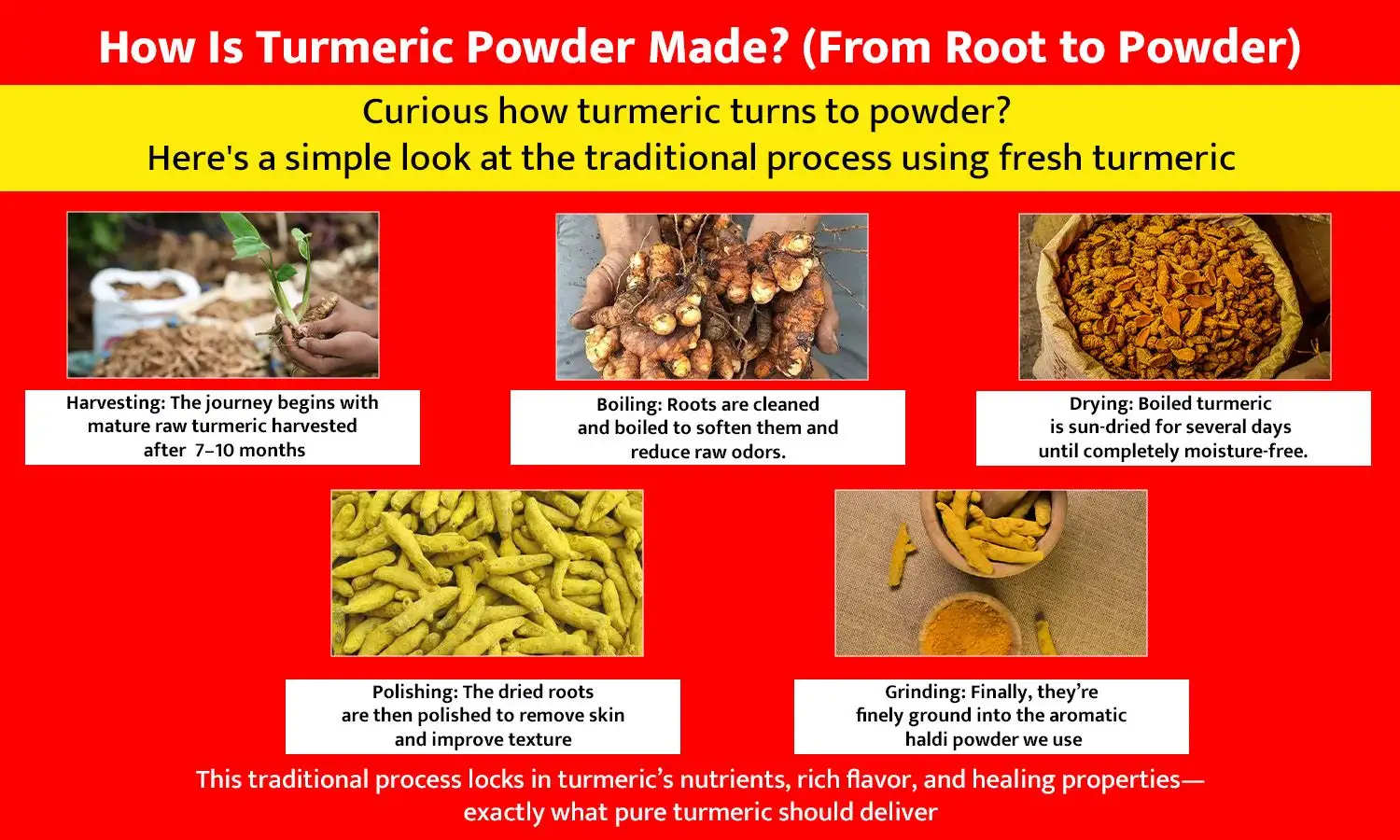
Wondering how turmeric is processed? Let’s break down how turmeric powder is made of fresh turmeric through a simple, traditional method:

  • Harvesting: The journey begins with mature raw turmeric harvested after 7–10 months.
  • Boiling: Roots are cleaned and boiled to soften them and reduce raw odors.
  • Drying: Boiled turmeric is sun-dried for several days until completely moisture-free.
  • Polishing: The dried roots are then polished to remove skin and improve texture.
  • Grinding: Finally, they’re finely ground into the aromatic haldi powder we use.

This age-old process protects the nutritional value of natural turmeric and retains its flavor and medicinal qualities—exactly what you expect when you choose pure products.

Natural vs Adulterated Turmeric Powder

Sadly, not every packet labeled “turmeric” is pure. Some are laced with artificial colorants or chalk powder. This is where knowing what turmeric powder is made of becomes essential.
Pure organic turmeric powder smells earthy, tastes slightly bitter, and settles at the bottom when mixed in water. In contrast, adulterated ones may dissolve too easily or leave suspicious streaks.To avoid risks, always go for trusted names. Brands like 777 Foods follow traditional processing methods and use only fresh turmeric to create authentic, preservative-free turmeric powder.
Turmeric Powder Made Of

Health Benefits of Pure Turmeric Powder

Let’s explore the health benefits of turmeric powder, especially when it’s truly turmeric powder made of clean, unadulterated turmeric root:

  • Fights Inflammation: Curcumin helps reduce joint pain and swelling.
  • Improves Digestion: Stimulates bile for better fat breakdown and less bloating.
  • Boosts Antioxidants: Slows aging and reduces oxidative stress.
  • Heals Wounds: Applying turmeric paste promotes faster skin repair.
  • Clears Skin: Regular use helps fade turmeric for scars and blemishes.
  • Supports Immunity: Acts as a natural guard against infections.
  • Promotes Brain Health: May help prevent memory loss with regular use.
  • Protects the Liver: Aids in detoxification and improved liver function.

When the turmeric powder is made of real turmeric root extract, you don’t just get color—you get centuries of Ayurvedic healing in every pinch.

Conclusion: A Legacy in Every Spoonful

So, what is turmeric powder made of? It’s made of sun-dried, hand-selected turmeric root, rich in curcumin, oils, and ancient wisdom. Choosing natural, pure haldi powder isn’t just a cooking decision—it’s a health choice.With 777 Foods, you get turmeric powder made of traditional methods and quality ingredients—nothing less. From your grandmother’s spice box to your everyday cooking, this golden powder continues to bring healing, flavor, and heritage to your plate.

Key Takeaways

  • Turmeric powder made of dried turmeric root contains curcumin, oils, and resins.
  • Curcumin is a powerful compound offering anti-inflammatory and antioxidant benefits.
  • The traditional process of how turmeric is processed maintains its potency.
  • Adulterated turmeric may harm your health—always choose trusted, pure sources.
  • From digestion to skin clarity, the turmeric powder benefits are truly holistic.

FAQs

1. Does ground turmeric expire?

Yes, it does. While turmeric doesn’t rot, its strength fades. Fresh turmeric powder made of real root retains flavor for about 2–3 years if stored in a cool, dry place.

2. How to check if turmeric powder is pure?Add a teaspoon to warm water. If it settles at the bottom and doesn’t leave artificial streaks, it’s likely pure. Remember, genuine turmeric powder made of turmeric root has a bitter taste and earthy smell.
3. What is turmeric powder extracted from?It’s extracted from the turmeric root (Curcuma longa). After boiling, drying, and polishing, the root is ground to form the vibrant spice we know today. This is what turmeric powder is made of.
4. What is the lifespan of turmeric powder?

Turmeric comes from the root (rhizome) of the Curcuma longa plant. After boiling, drying, and milling, it becomes the bright yellow spice—so the root is the real source behind turmeric powder health benefits.

Can Turmeric Powder Go Bad? Here’s What You Need to Know

Summary

Yes, turmeric powder expires, it loses curcumin potency, aroma, and colour. Shelf life is 3–4 years in airtight, dark storage but under one year if exposed to air or moisture. Signs of spoilage include faded colour, weak smell, clumping, mould, or pests. Includes storage tips (glass containers, dry spoons) and notes on still-usable but weakened expired turmeric.Every Indian kitchen holds a tiny jar of golden yellow turmeric powder. It sits quietly beside the salt and chilli, waiting to add warmth and colour to our curries, dals, and teas. But here’s a thought that crosses many minds: can turmeric powder go bad? Is it possible for this magical spice, known for its healing and flavour, to lose its charm?
Let’s understand how time, air, and moisture affect turmeric and how you can keep your spice cabinet fresh and fragrant.

Does Turmeric Powder Expire?

Yes, turmeric powder does expire. Like all natural food items, it has a shelf life. While it doesn’t spoil the way milk or fresh produce does, turmeric can lose its potency, aroma, and colour over time.

Does turmeric powder expire?

It certainly does, meaning it won’t stay at peak quality forever.

The shelf life of turmeric powder depends on how it’s processed and stored. Typically, if kept in an airtight container away from moisture and direct sunlight, it can last up to 3-4 years. However, poor storage can reduce this significantly.

Many people ask, “Does turmeric expire or go bad?”

In reality, both can happen. Turmeric powder can degrade rather than rot. It may not become harmful, but its healing properties and flavour start fading. And that matters, especially when we use it not just for taste, but for wellness too.

Can Turmeric Powder Go Bad

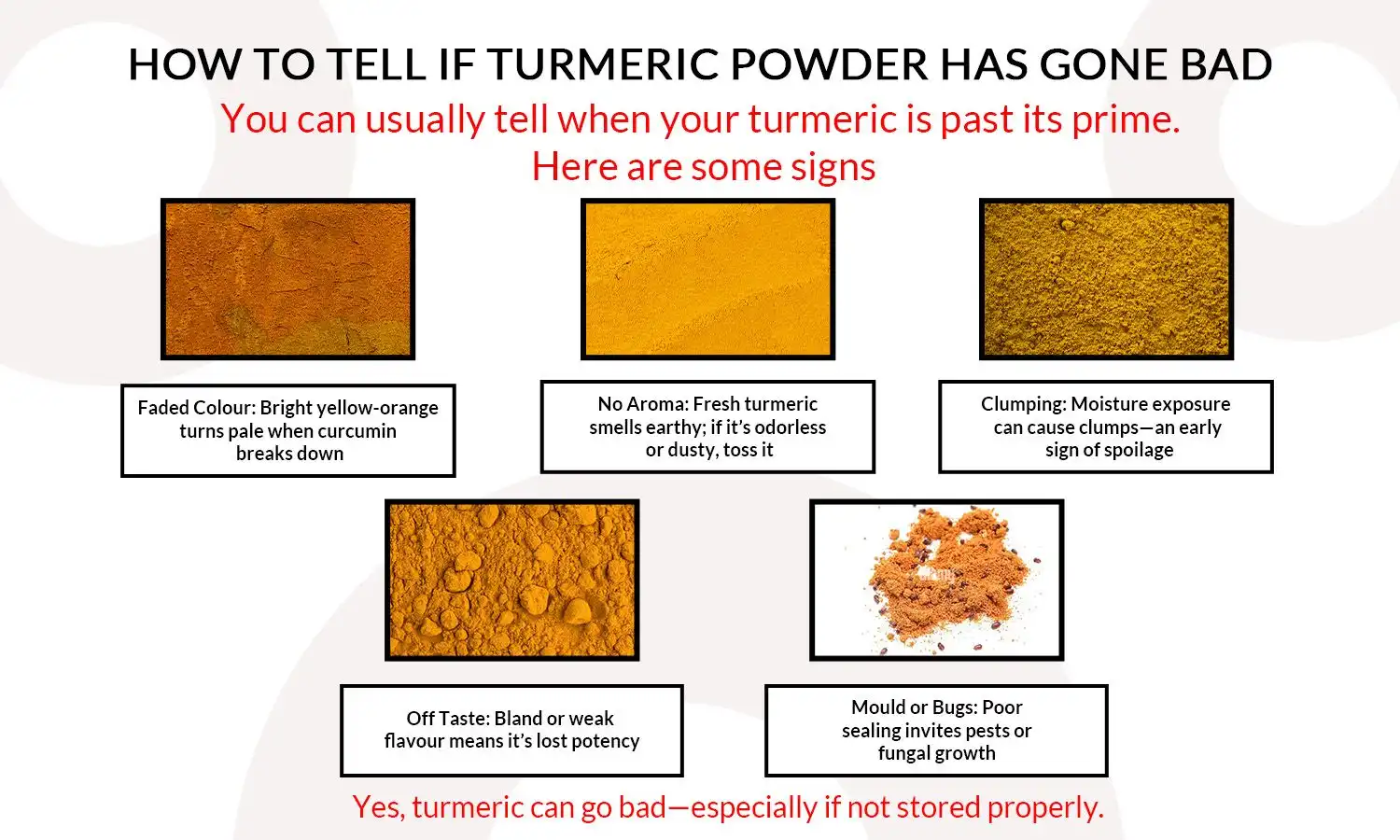
How to Tell If Turmeric Powder Has Gone Bad

How long is turmeric good for? You can usually tell when your turmeric is past its prime. Here are some signs:1. Faded Colour: Fresh turmeric powder has a vibrant yellow-orange hue. If it turns pale, it’s a sign that the active compound curcumin has degraded.

2. Lack of Aroma: Authentic turmeric smells earthy and slightly bitter. If it smells like dust or has no smell at all, it’s time to toss it.

3. Clumping: Exposure to moisture can cause the powder to clump. This may also signal the start of spoilage.
4. Clumping: Exposure to moisture can cause the powder to clump. This may also signal the start of spoilage.
5. Presence of Mould or Bugs: If the container wasn’t sealed properly, it could attract pests or fungal growth.
So, can turmeric powder go bad? Absolutely—especially if stored improperly.

How Long Does Turmeric Powder Last?

On average, turmeric powder remains potent for about 3 years. However, factors like humidity, heat, and packaging can alter this timeline.

If you are evaluating your entire spice collection, you might wonder how long turmeric is good for before it loses its nutritional value.The answer varies based on your setup:

Storage Method Shelf Life
Original packaging in cool place 2 to 3 years
Airtight container in dark area 3 to 4 years
Exposed to air or moisture Less than 1 year

In short, the turmeric powder expiry date mentioned on the packet is a good indicator—but always check the smell and colour before use.
And yes, can turmeric powder go bad even before its expiry date? If exposed to air or moisture, it surely can. Can Turmeric Powder Go Bad

How to Store Turmeric Powder Properly

Can turmeric powder go bad? Yes!
So, how can you prevent it? By extending its shelf life.

  • Use an airtight glass or stainless-steel container.
  • Keep it in a cool, dark, and dry place—away from the stove and sink.
  • Avoid plastic containers as they may affect the quality.
  • Never dip wet spoons into the container.

Many overlook this, but learning how to store turmeric powder is the key to preserving its colour, aroma, and benefits.

Can You Still Use Expired Turmeric Powder?

Now here comes the tricky part. Can I use expired turmeric powder?

If the powder still has colour and aroma, and no mould or bugs are present, you can still use it for cooking. However, it may not offer the same benefits. The antioxidants and curcumin reduce over time.

If you decide it is too weak for your curries, figuring out what to do with expired turmeric powder can save it from the trash. You can repurpose it into tie-dye projects, natural soaps, or garden pest deterrents.

Using expired turmeric powder won’t necessarily make you sick, but it won’t give the healing or flavour punch that fresh turmeric does. For medicinal uses or skincare, always use fresh powder.

This raises the question once more: can turmeric powder go bad? Yes, especially when its effectiveness and flavour have clearly diminished.

Where to Buy Fresh, Pure Turmeric Powder?

Choosing the right source is everything. Turmeric is not just a spice; it’s a symbol of purity and health in every Indian home. That’s why 777 Foods ensures:

  • Handpicked, high-curcumin turmeric roots
  • Traditional grinding techniques that preserve natural oils
  • No additives or synthetic colouring
  • Clean, hygienic packaging with clear turmeric expiration date

So, if you’ve ever wondered can turmeric go bad, the answer is yes. But with 777 Foods, you can always expect turmeric that stands the test of time, flavour, and purity.
Can Turmeric Powder Go Bad

The Benefits and Side Effects of Turmeric

Beyond its shelf life, turmeric is known for several health advantages. Let’s talk about both the good and the cautious side.

Turmeric Benefits:

  • Boosts immunity and digestion
  • Natural anti-inflammatory and antioxidant
  • Helps with skin glow and acne
  • May support joint health and brain function

Even turmeric tablets benefits are widely recognised today for people who prefer supplements over spices.

Turmeric Side Effects:

  • May cause stomach upset in large doses
  • Can interact with blood thinners or diabetes medications

Also, be cautious with curcumin side effects, especially if taken in capsule form without medical guidance.
If you’re asking do turmeric capsules expire, the answer is yes—always check the packaging and avoid using past the printed turmeric expiration date.

Key Takeaways

  • Can turmeric powder go bad? Yes, especially if not stored properly.
  • The typical shelf life of turmeric powder is around 2-4 years.
  • Watch for faded colour, weak aroma, and clumping.
  • Store in airtight containers away from moisture and light.
  • Always choose trusted brands like 777 Foods for purity and freshness.
  • If unsure, always ask: can turmeric powder go bad? Trust your senses—they rarely lie.

Conclusion

Turmeric isn’t just another spice—it’s tradition in a teaspoon, health in a pinch, and a memory of every home-cooked meal. And just like any precious ingredient, it deserves care.
So, next time you reach for that golden jar, ask yourself—can turmeric powder go bad? If it has, maybe it’s time to let go of the old and make space for something purer, something real.With 777 Foods, you’re not just buying turmeric. You’re choosing trust, tradition, and the taste of home.

FAQs :

What is the lifespan of turmeric powder?

The average lifespan is 3 years if stored correctly. After that, the potency decreases. So yes, can turmeric powder go bad over time? Definitely.

Does powdered turmeric lose its potency?

Yes, over time. Especially if exposed to heat or air. Always check aroma and colour.

Does fresh turmeric expire?Yes, it does. Fresh turmeric roots spoil faster than powder. If you want to maximize its freshness, knowing how long turmeric lasts in the fridge is helpful. It usually stays good for up to 2 to 3 weeks when wrapped properly in a paper towel inside a sealed bag.
What is turmeric hack?

A popular trick is mixing turmeric with black pepper to increase curcumin absorption. This enhances the turmeric benefits for health.

Who should not take turmeric?

People with gallbladder issues, or those on blood thinners, should consult a doctor before using turmeric regularly due to possible turmeric side effects.

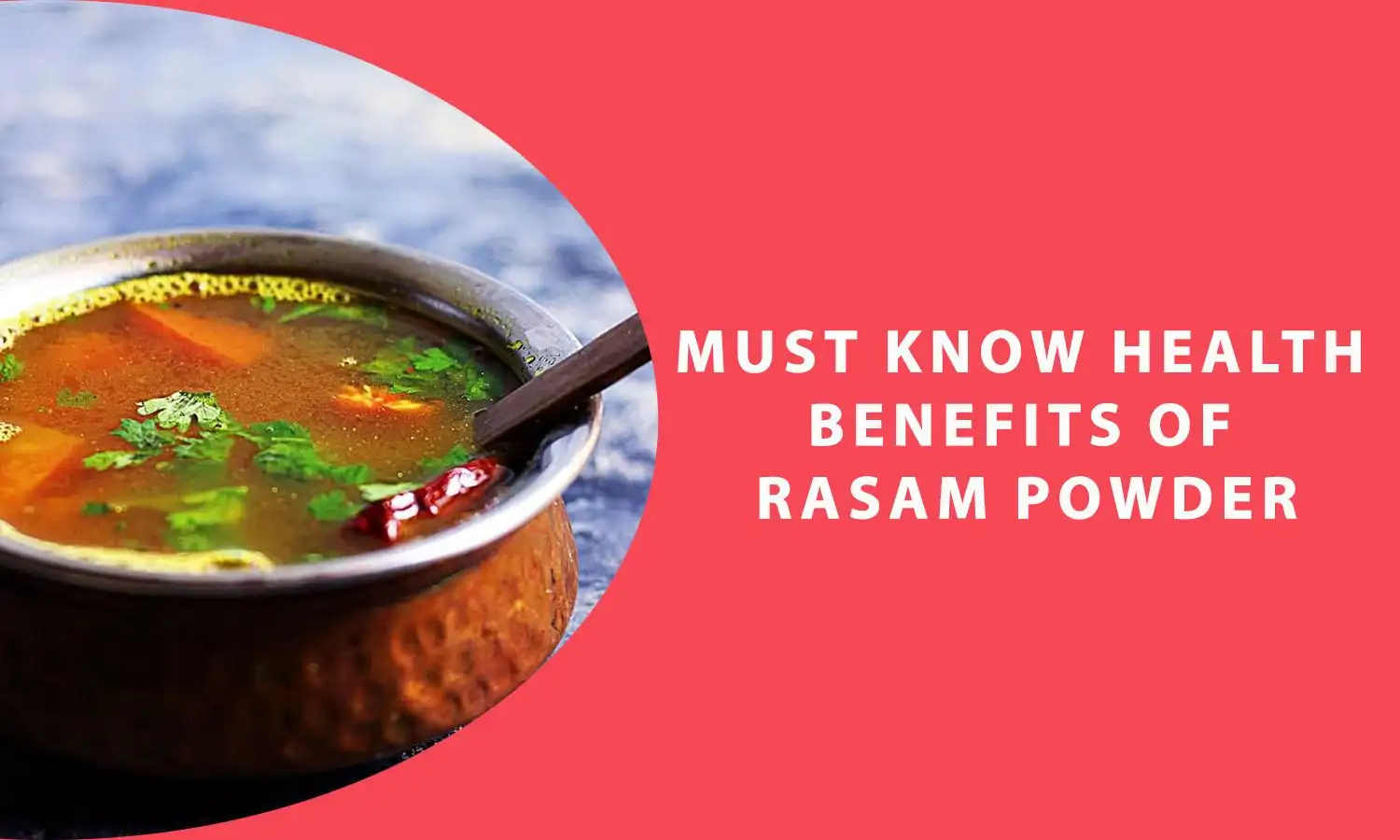
Must Know Health Benefits of Rasam Powder

Rasam is not just food. It is comfort. It is tradition. It is a bowl of warmth that heals you inside and out. Behind every good bowl of rasam is the good benefits of rasam powder.

But did you know rasam powder brings more than just good taste It brings health too. This simple spice mix turns every meal into something you will crave again and again.

When you use 777 rasam powder you get more than flavour. You get wellness from old family kitchens passed down for generations.
Here is why rasam should be part of your daily meals.
Benefits of Rasam Powder

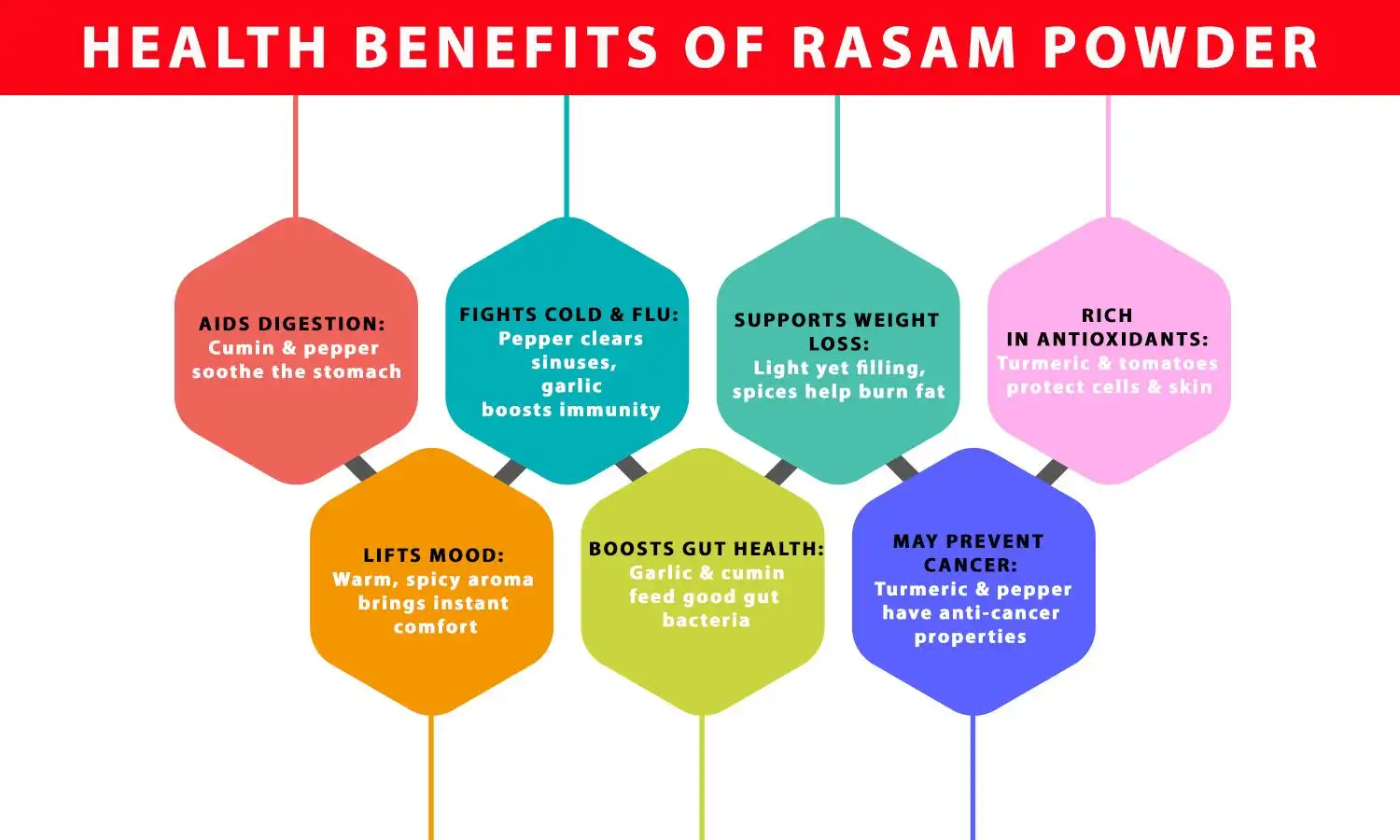
Health Benefits of Rasam Powder:

Digestive Aid

One of the best benefits of Rasam Powder is that it helps with digestion. The cumin and black pepper in 777 rasam powder help your stomach work better. Tamarind adds a soft tang that helps the liver do its job. With rasam you don’t just eat. You feel good after your meal too.

Cold and flu comfort

Feeling sick Try a hot bowl of instant rasam. It works like nature’s home remedy. The pepper in pepper rasam powder clears blocked noses. Garlic helps kill germs. That’s why many homes trust masala rasam when seasons change.

Weight management

Rasam fills you up but is still light. It is a good choice if you are watching your weight. Spices in brahmin rasam powder like turmeric and pepper can help burn fat. Eat it with dal water or have it as instant rasam. Either way best rasam powder is healthy and full of taste fueling the benefits of Rasam Powder to your body.

Loaded with antioxidants.

Turmeric is one of the main ingredients of rasam powder. It has curcumin which fights harmful things in your body. Add tomatoes from tomato rasam powder and now you have a meal good for your skin bones and strength.

Mood uplifter

There is something special about sipping hot rasam and it is the best benefits of Rasam Powder. The spice. The smell. It makes you feel happy after a long day. With 777 rasam powder you get all the rich taste that brings comfort every time.

Boosts Gut Health

Good digestion means a healthy gut. The ingredients for rasam powder like cumin and garlic help the good bacteria in your stomach. Rasam is a simple way to keep your gut strong.

Might prevent cancer

Some studies say that turmeric and black pepper in instant rasam mix may help keep cancer away. It won’t cure but adding rasam with rasam powder to your food is a small step for long term health.

How to make South Indian Rasam with Rasam Powder?

Making rasam at home is easy. Here is how you can do it with rasam powder, adding to the benefits of Rasam Powder.

Ingredients

  • Tamarind small lemon size
  • Two ripe tomatoes
  • Two spoons 777 rasam powder
  • Quarter spoon turmeric
  • Half spoon mustard seeds
  • A pinch of asafoetida
  • Few curry leaves
  • Fresh coriander leaves
  • Salt as needed
  • One spoon ghee or oil
  • Two cups water
  • Dal water if you want it rich

Benefits of Rasam Powder

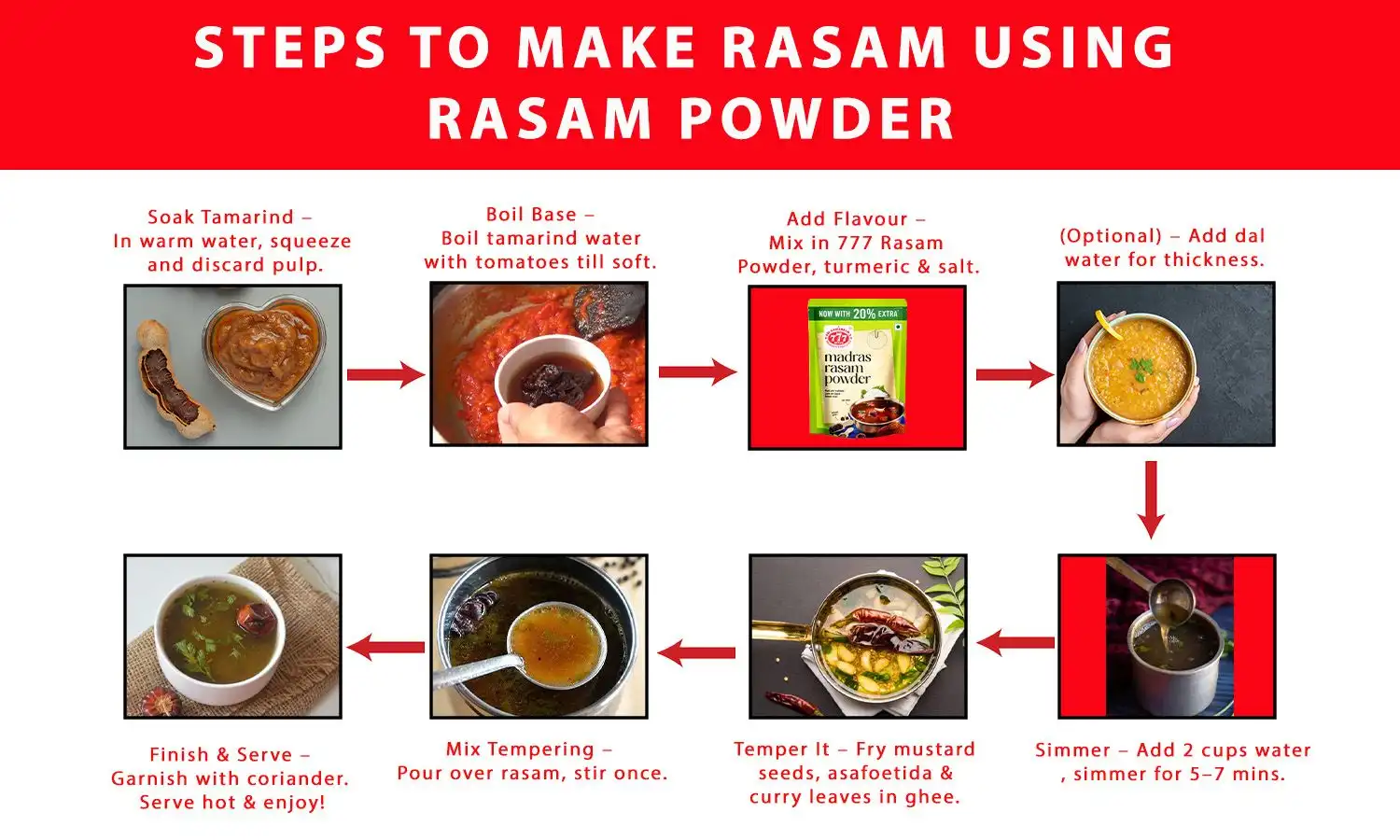
Steps to Make Rasam Using Rasam Powder:

To make out the benefits of Rasam Powder, here are some steps you can use:

Soak Tamarind:

Soak tamarind in warm water for ten minutes. Squeeze it well with your fingers. Throw away the leftover pulp.

Boil Tamarind & Tomato:

Add the tamarind water and chopped tomatoes to a cooking pot. Let it boil until the tomatoes turn soft.

Add Rasam Powder:

Add 777 rasam powder to the pot. Sprinkle turmeric and salt. Mix everything well.

(Optional) Add Dal Water:

If you want the rasam to be thicker add cooked dal water now. Mix gently.

Add Water & Simmer:

 Pour two cups of water into the pot. Let it simmer for five to seven minutes on low heat.

Prepare Tempering:

Heat ghee or oil in a small pan. Add mustard seeds. Once they pop add a pinch of asafoetida and curry leaves. Fry for a few seconds.

Add Tempering to Rasam:

Pour this hot tempering over the simmering rasam. Stir once.

Garnish & Serve:

Top with fresh coriander leaves. Serve the rasam hot.

Conclusion

When you use 777 rasam powder you do not just cook food. You make meals full of care. You help your body feel good. You bring health to your home.
From good digestion to beating colds the benefits of rasam powder are many. Use instant rasam powder for quick cooking. Use tomato rasam powder when you want a tangy twist. Either way rasam is not just a meal. It is a bowl of comfort.
Try our instant rasam mix. Make your everyday meals taste like home again.

FAQs

What Is Rasam Powder Made Of ?Rasam powder is made from coriander cumin black pepper red chillies garlic and asafoetida.
What Is Another Name for Rasam Powder ?Some people call it rasam mix. In some places it is called chaaru podi.
What Is the History of Rasam Powder?Rasam started in Tamil Nadu kitchens. Over time it changed into many local types with different spice blends.
Which State Is Famous for Rasam??Tamil Nadu is famous for rasam with rasam powder. You will find many types like pepper rasam powder and instant rasam there, adding to many benefits of Rasam Powder.