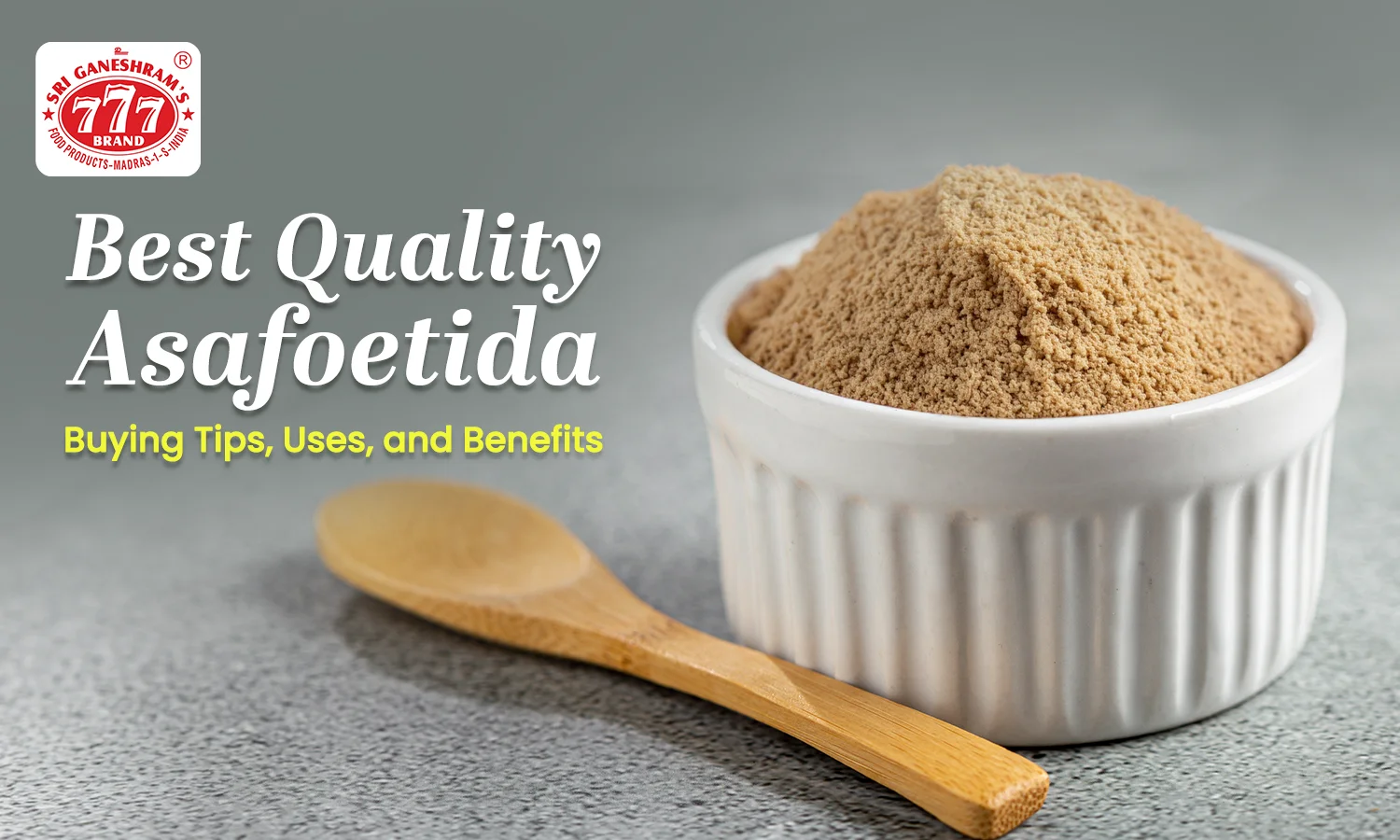
Best Quality Asafoetida: Buying Tips, Uses, and Benefits

Introduction – Why Choosing the Best Quality Asafoetida Matters

Choosing the best quality asafoetida is essential because it directly affects both flavour and health benefits. Pure hing has a strong, sharp, sulfurous aroma and a yellowish-brown or golden-amber appearance. Low-grade varieties, on the other hand, often contain excessive fillers that dilute flavour and reduce potency.
High-quality asafoetida hing transforms beautifully when heated in oil, developing a mellow, savoury depth similar to onion and garlic. Poor-quality versions may remain harsh or turn bitter even after tempering.
Since hing is used in very small quantities, buying the best quality asafoetida ensures you get maximum impact from just a tiny pinch. Picking a good quality hing also means you waste less and enjoy more consistent results. How to Identify the Best Quality Asafoetida
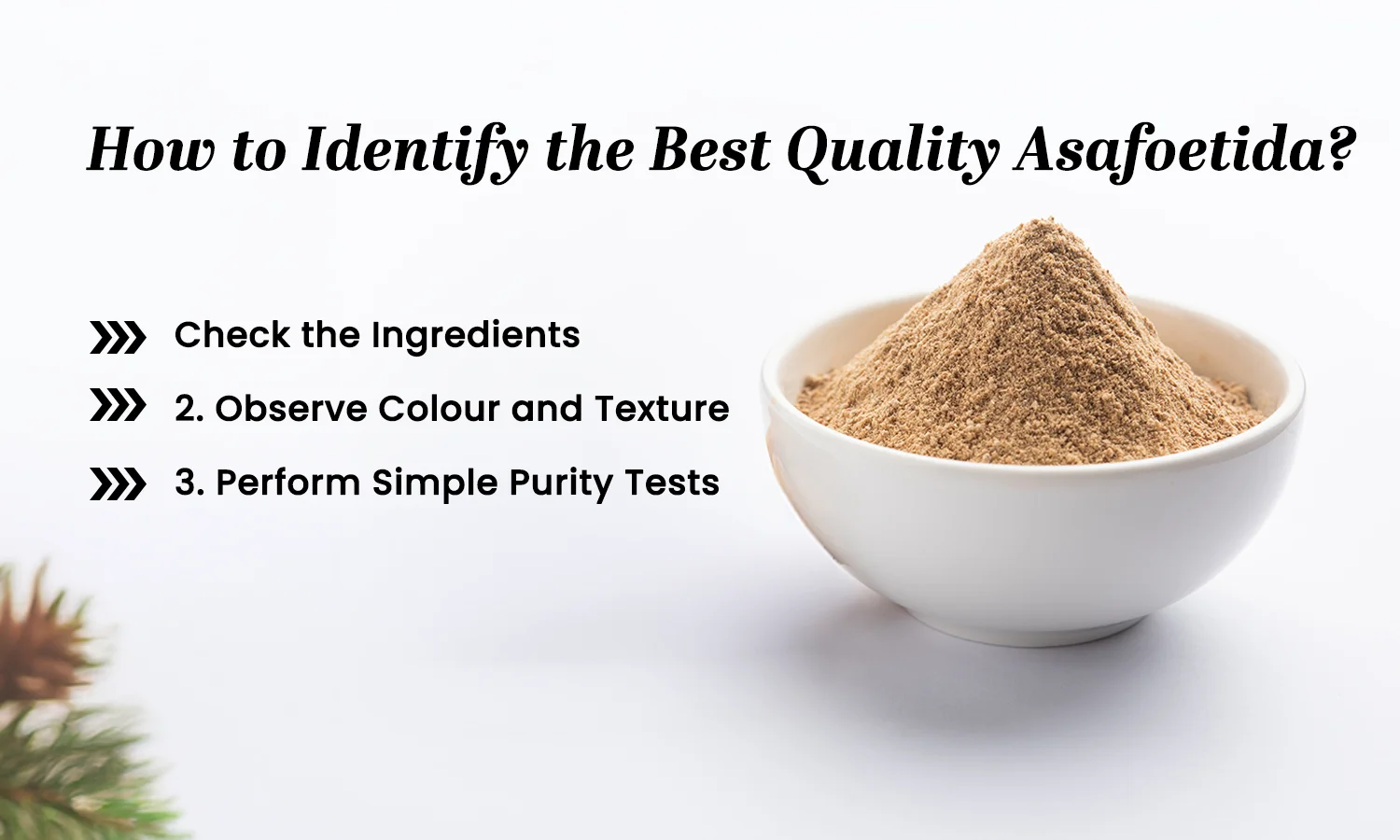
How to Identify the Best Quality Asafoetida?

Identifying the best quality asafoetida requires looking beyond branding and focusing on purity. Knowing what sets the best asafoetida powder apart makes shopping far easier.

1. Check the Ingredients

Always read the label. Pure resin should be listed clearly. Many powdered varieties are blended with flour and edible gum. If buying hing powder, make sure the resin content is specified.

2. Observe Colour and Texture

  • High-quality resin appears yellowish-brown or amber.
  • Avoid chalky white or overly bright products.
  • Powder should be fine and free-flowing.

If you are searching for the best hing powder, texture and aroma are reliable indicators.

3. Perform Simple Purity Tests

  • Water Test: Pure resin dissolves in warm water, forming a cloudy solution without grit.
  • Burn Test: Authentic resin burns with a bright flame, similar to camphor.

When buying Asafoetida online, check detailed ingredient lists and customer reviews to avoid adulterated products. A genuine Pure asafoetida powder will always pass these simple checks. What Are the Uses of Asafoetida Powder
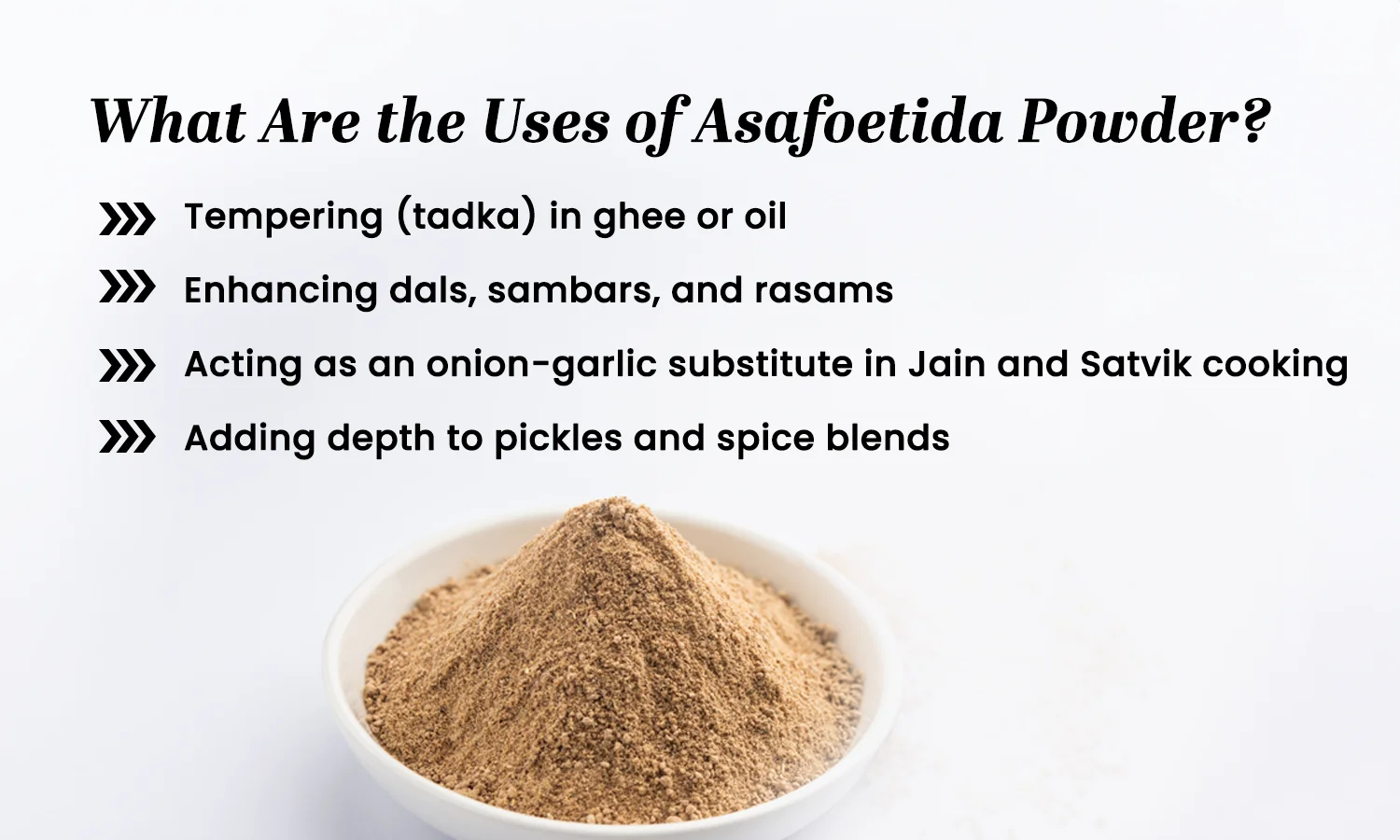
What Are the Uses of Asafoetida Powder?

The uses of asafoetida are both culinary and traditional.

Culinary Uses

In Indian cooking, asafoetida powder uses include:

  • Tempering (tadka) in ghee or oil
  • Enhancing dals, sambars, and rasams
  • Acting as an onion-garlic substitute in Jain and Satvik cooking
  • Adding depth to pickles and spice blends

A small pinch of hing asafoetida powder added at the beginning of cooking unlocks its true aroma.

Digestive and Traditional Uses

Among common asafetida uses, digestive relief stands out. It is widely used to reduce bloating and discomfort when cooking legumes. Traditionally, a pinch mixed with warm water is used for gas relief.
Because it is potent, asafoetida powder used for cooking should always be measured carefully.

What Are the Benefits of Best Quality Asafoetida?

The best quality asafoetida contains higher concentrations of active compounds, making its effects more noticeable.

1. Digestive Support

One of the major asafoetida benefits is its ability to stimulate digestive enzymes. It acts as a natural carminative, helping reduce gas and bloating.

2. Respiratory Relief

Traditional practices use it to ease asthma, cough, and bronchitis due to its expectorant properties.

3. Anti-inflammatory and Antioxidant Effects

Pure resin contains bioactive compounds such as ferulic acid. These contribute to recognised asafetida benefits, including antioxidant support and reduced inflammation.
Using the best quality asafoetida ensures these properties are not diluted by excessive fillers.

What Should You Know Before Buying Asafoetida?

Before purchasing the best quality asafoetida, consider the following:

Types Available

  • Pure Resin: Most potent and expensive form.
  • Compounded Powder: Mixed with flour or gum for easier use.
  • Granules (Dana): Balanced option between resin and powder.

If gluten sensitivity is a concern, check whether the asafoetida powder contains wheat flour. Gluten-free versions typically use rice flour or edible gum.

Price Awareness

Authentic resin is expensive due to limited sourcing regions such as Afghanistan and Tajikistan. Extremely cheap products often indicate heavy adulteration.

Packaging

Choose airtight containers. Poor packaging causes aroma loss and moisture clumping, reducing effectiveness.
Investing in the best hing available ensures better flavour, improved digestion, and consistent cooking results. A reliable Best Quality Hing Powder stays fresh and aromatic when stored this way.

Conclusion

Selecting the best quality asafoetida is about more than just brand preference, purity, aroma, ingredient transparency, and packaging all matter. Whether you choose resin or powder, high-quality hing delivers stronger flavour, better digestive comfort, and reliable results in everyday cooking.
With proper selection and careful usage, this powerful spice continues to be an essential ingredient in Indian kitchens. Choosing a Premium Quality Asafoetida rewards you with richer aroma and dependable everyday cooking.

FAQs

How Many Types of Asafoetida Are There?There are three main types: pure resin, compounded powder, and granules.
Which Hing Is Strong?Pure resin is the strongest form. Compounded powder is milder and easier for daily use.
What Is the Price of Real Hing?Pure resin can cost ₹30,000 or more per kilogram, while compounded powders range between ₹1,500–₹6,000 per kilogram, depending on quality.
How to Check the Purity of Hing?You can perform water and burn tests at home to check authenticity.
How to Identify Original Asafoetida?Original asafoetida has a sharp sulfurous aroma, amber colour, and dissolves without leaving chalky residue.
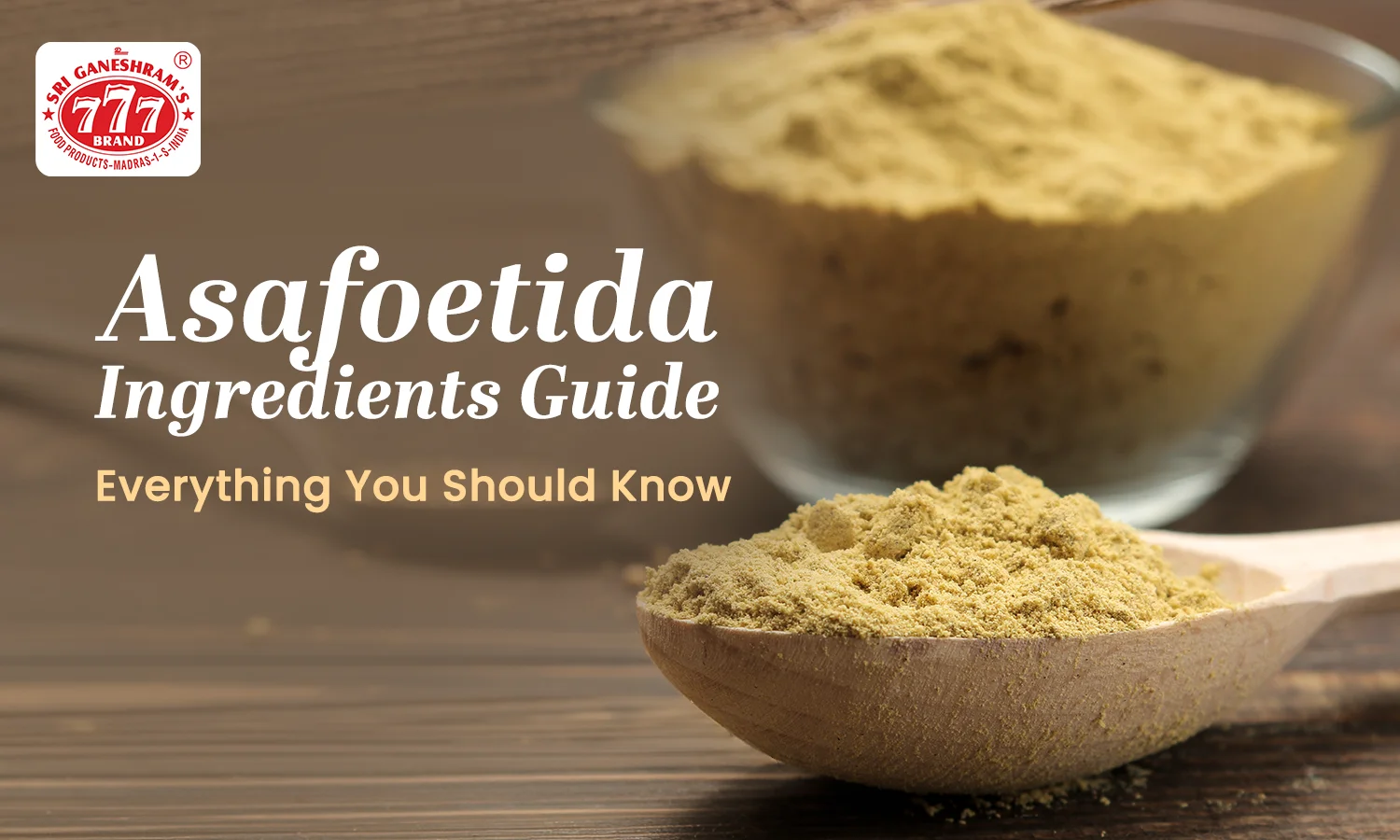
Asafoetida Ingredients Guide: Everything You Should Know

Introduction of Asafoetida Powder

Asafoetida ingredients are often misunderstood because what we buy in stores is not always pure resin. Asafoetida, commonly known as hing, is derived from the dried gum-resin of the Ferula plant. In its raw form, it is extremely strong and sticky, which is why most commercial varieties are processed into Asafoetida powder for everyday use.

This powerful Indian spice has a sharp, sulfurous smell when raw. However, once heated in oil, its asafoetida taste transforms into a mellow, savoury flavour similar to cooked onion and garlic. In fact, many people simply say asafoetida is hing, as the two terms are used interchangeably in Indian kitchens.

Understanding the actual ingredients in Asafoetida helps you make better choices, especially when selecting quality products for home cooking.

Common Ingredients in Asafoetida Powder

When discussing Asafoetida ingredients, it is important to differentiate between pure resin and compounded powder.

1. Core Natural Components

Raw asafoetida is an oleo-gum-resin made up of three primary parts:

  • Resin (40–64%) – Contains ferulic acid and related compounds that contribute to many therapeutic properties.
  • Gum (25%) – A water-soluble portion made of sugars and polysaccharides.
  • Volatile Oil (10–17%) – Rich in sulfur compounds responsible for its strong aroma.

These are essentially the original Ingredients for making Asafoetida in its natural state.

2. Ingredients in Asafoetida Powder (Compounded Form)

Because pure resin is too concentrated, manufacturers create an Asafoetida powder mix by blending the resin with carriers and binders.
Common Ingredients of Asafoetida powder include:

  • Wheat flour (maida) or wheat starch – Used as a carrier in traditional varieties.
  • Rice flour – A gluten-free alternative.
  • Edible gum (gum arabic)– Acts as a binder and prevents clumping.
  • Edible oil – Helps preserve aroma and blend the mixture smoothly.
  • Turmeric (optional) – Added for colour in some brands.

When reading labels, always check the full list of ingredients in Asafoetida powder, especially if you have gluten sensitivities.

In Indian households, compounded powder is preferred because it is easier to measure in pinches and blends seamlessly with other Indian cooking spices.

Asafoetida ingredients

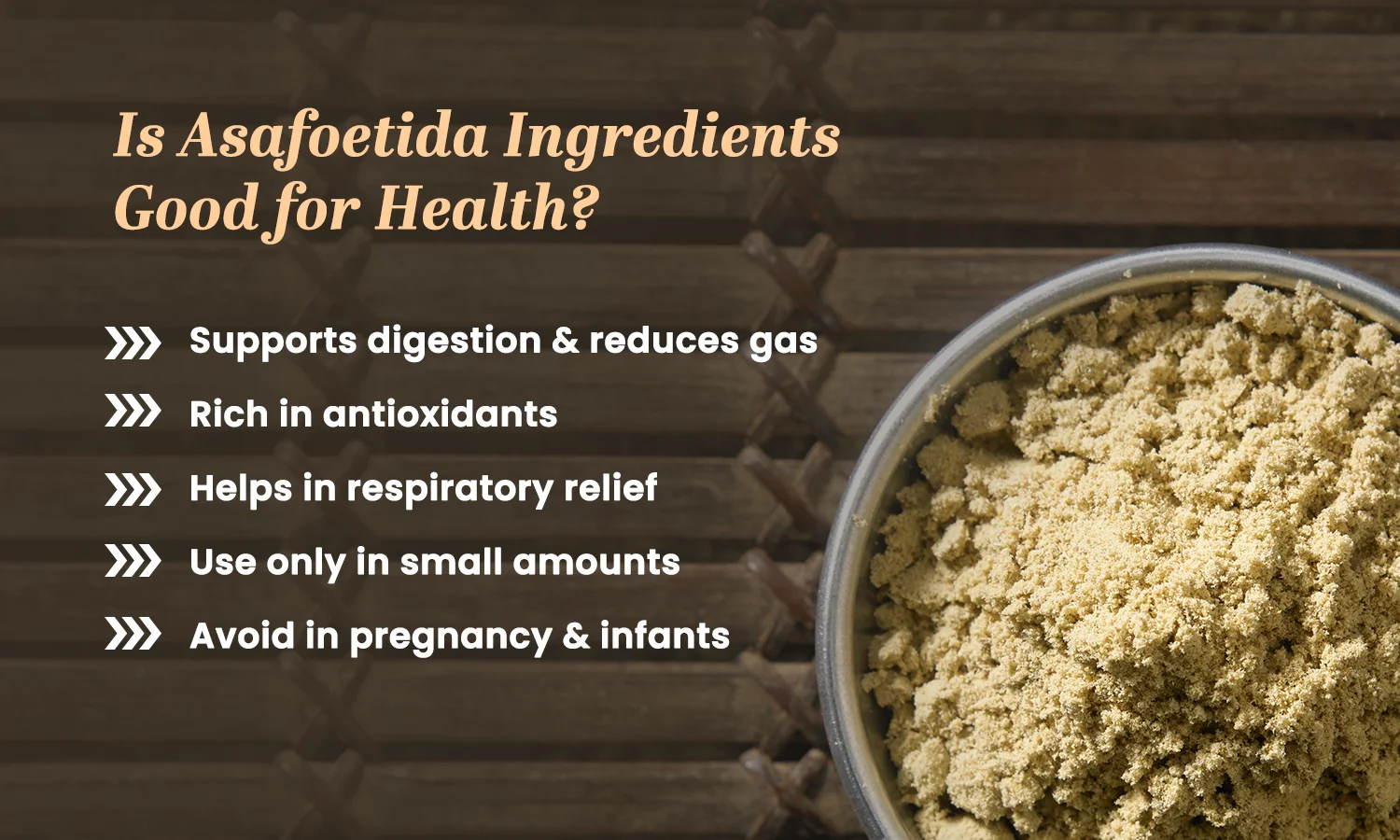
Is Asafoetida Ingredients Good for Health?

The natural Asafoetida ingredients contain compounds like ferulic acid and sulfur-rich oils that are traditionally valued for digestive support. Among the recognised benefits of asafoetida are relief from bloating and improved enzyme activity.

Some reported asafoetida health benefits include:

  • Supporting digestion and reducing gas
  • Acting as an expectorant in respiratory discomfort
  • Providing antioxidant properties

These asafoetida hing properties are why it is commonly added to lentils and beans. However, it should always be used in small quantities.

Safety considerations are equally important:

  • It is not recommended during pregnancy.
  • It should be avoided for infants.
  • Individuals on blood-thinning medication should consult a doctor.

When used responsibly, the overall health impact of Asafoetida ingredients can be beneficial in culinary amounts.
Asafoetida ingredients

Tips for Choosing and Storing Asafoetida Powder

Since the quality of Asafoetida ingredients can vary, selecting the right product matters.

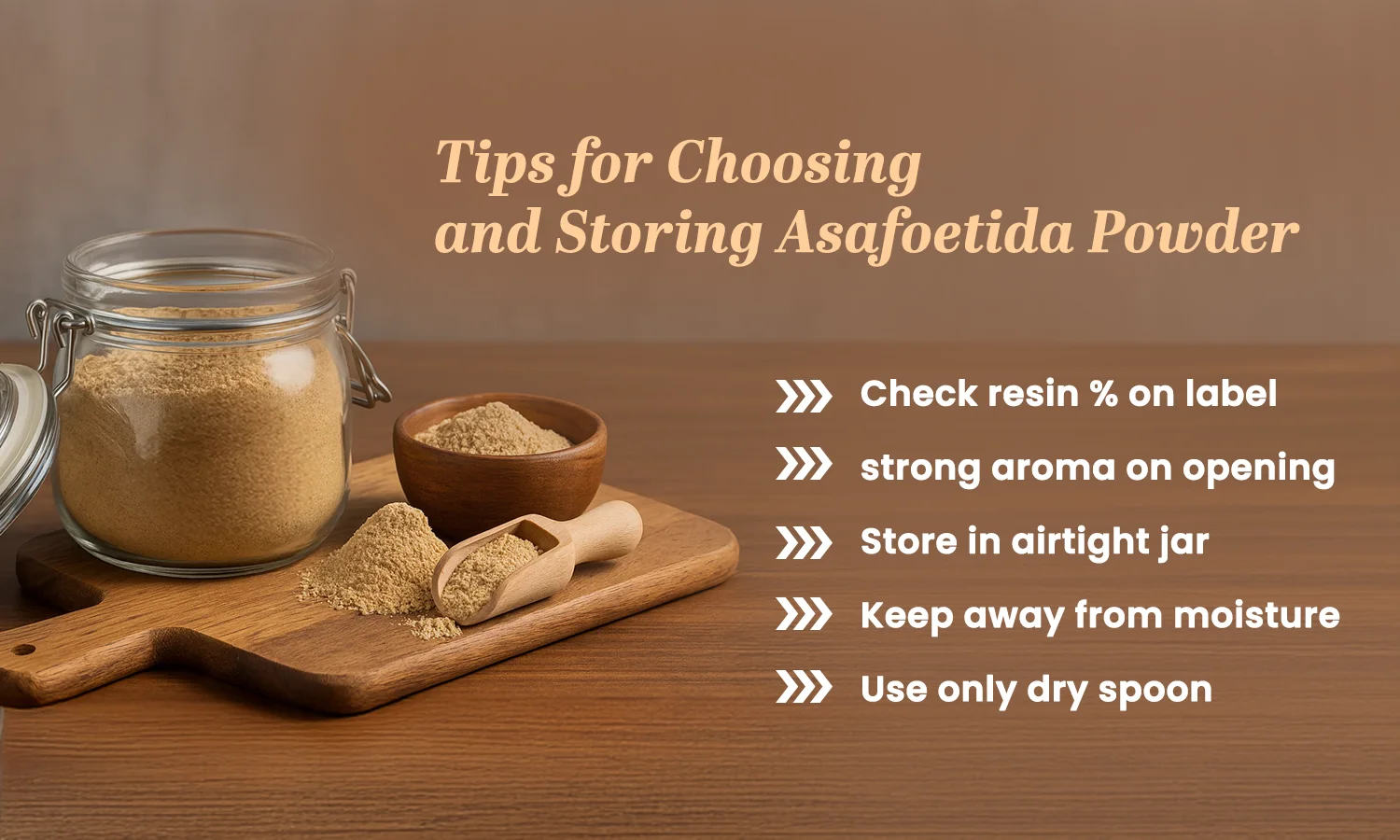
Choosing Quality

  • Read the label carefully to understand the ingredients in Asafoetida.
  • Look for a clear mention of resin percentage.
  • Avoid products with vague “flavouring” descriptions.
  • A good-quality powder should release a sharp aroma immediately when opened.

Many households consider purity and consistency when selecting from the Best indian spices available in the market.

Storage Guidelines

Proper storage preserves potency:

  • Store in an airtight glass jar.
  • Keep away from heat and moisture.
  • In humid regions, double-seal the packet.
  • Always use a dry spoon.

Good storage ensures that the flavour and active Asafoetida ingredients remain effective for up to two years.

Conclusion

Understanding Asafoetida ingredients helps you appreciate this remarkable spice beyond its strong aroma. From its natural resin composition to the compounded forms available in stores, each element plays a role in making it suitable for daily use.
Whether you use it for flavour enhancement, digestive comfort, or as part of your regular spice routine, knowing what goes into your hing ensures better cooking and informed choices. When selected and stored properly, this traditional ingredient continues to hold its place among the most valued spices in Indian kitchens.

FAQs

How to Make Asafoetida at Home?Pure resin can be crushed and blended with rice flour to create a basic homemade powder. However, it is extremely potent and must be used sparingly.
Is Ajwain the Same as Asafoetida?No. Ajwain is a seed spice, while asafoetida is a gum-resin extracted from plant roots.
Is Ajwain the Same as Asafoetida?A small combination of garlic and onion powder can mimic its flavour in recipes.
Why Is Asafoetida So Expensive?It is extracted manually from mature plants and produced in limited regions, making it labour-intensive and rare.
Is Asafoetida a Tree or Plant?It comes from the roots of perennial Ferula plants, not from a tree.

Asafoetida in Cooking: Uses, Benefits, and Indian Spice Secrets

Introduction – Why Asafoetida Is Essential in Cooking

Asafoetida in cooking holds a special place in Indian kitchens. Known for its strong raw aroma and remarkable transformation when heated, this powerful resin has been trusted for centuries. Though its scent may seem overwhelming at first, it develops into a savoury, umami-rich flavour when added to hot oil.

This unique quality makes asafoetida more than just a spice. It becomes the base note that gives depth to simple vegetarian dishes. As an asafoetida indian spice, it performs functions that very few ingredients can match, enhancing flavour, aiding digestion, and serving as a substitute for onion and garlic.

These everyday asafoetida uses make it an important part of simple home cooking. What Are the Common Asafetida Uses in Indian Food?

What Are the Common Asafetida Uses in Indian Food?

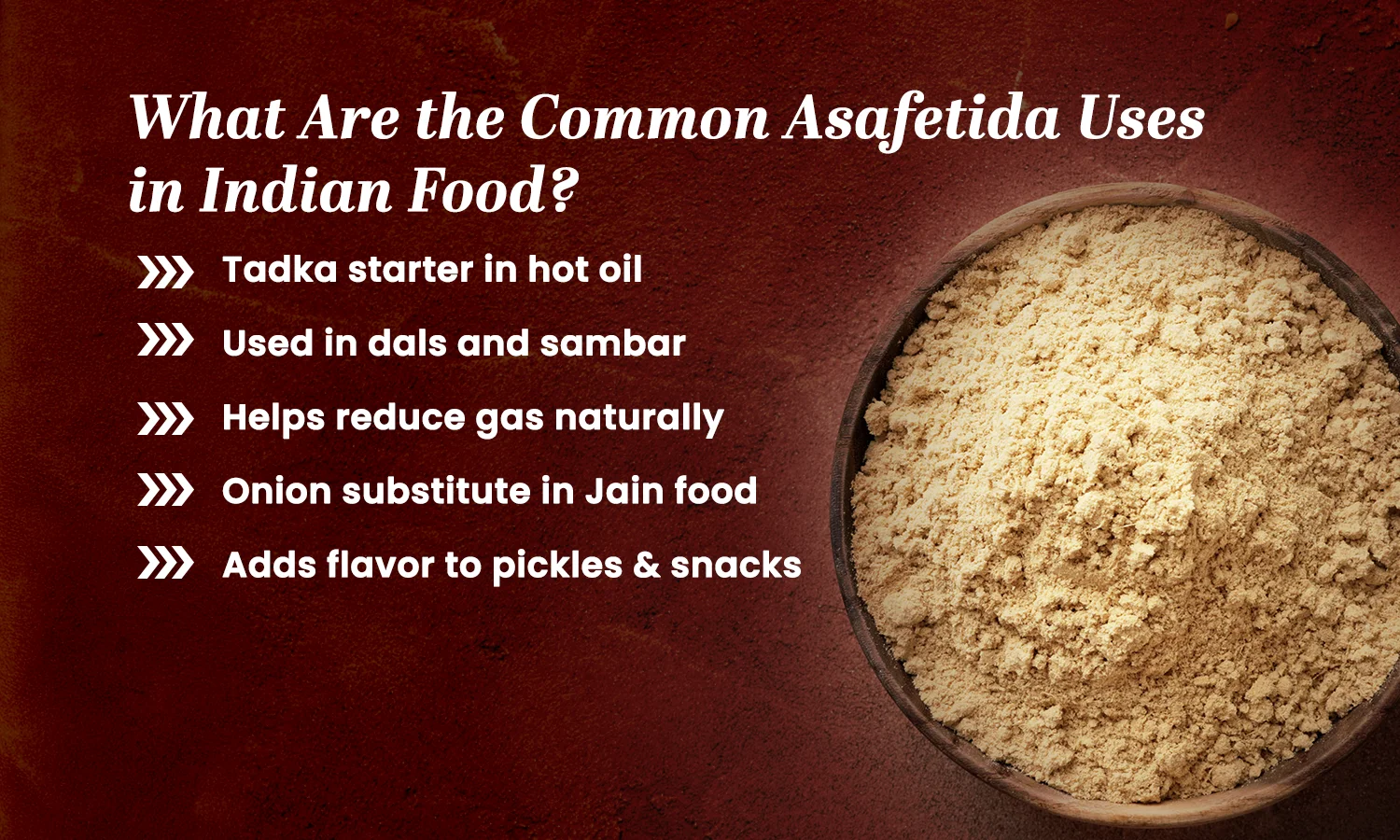
The most familiar asafetida use in Indian households begins with tempering, or tadka. A tiny pinch is added to hot oil or ghee at the start of cooking. This process releases the aroma and removes bitterness.In traditional asafoetida cooking, it is almost always paired with lentils and beans. Dals, sambars, and rasams frequently include it because it helps make these protein-rich foods easier to digest. This is why many associate asafoetida for gas relief with everyday meals.It also plays an important role as an onion and garlic substitute in Jain and Sattvic diets. Both asafetida indian spice traditions rely on it to build savoury depth without using root vegetables.Beyond curries and dals, asafetida use extends to pickles, spice blends, bhujia, sev, and snack batters. Whether in powdered or resin form, asafoetida powder is the most convenient option for daily cooking.In most kitchens, asafetida powder is preferred because it is easy to store and use in small quantities.

What Are the Benefits of Asafoetida in Cooking?

The true value of asafoetida in cooking lies not only in flavour but also in function.

Digestive Support

One of the most recognised benefits of asafoetida is digestive comfort. It acts as a natural carminative, helping reduce bloating and supporting enzyme activity. Many families add it to lentil-based dishes specifically to improve digestion.

These are some of the well-known asafoetida medicinal uses followed in traditional cooking.

Flavour Enhancement

Though raw spice asafoetida smells sharp, once bloomed in oil, it produces a mellow, onion-like aroma. This transformation makes it a reliable base note in vegetarian food. It harmonises other spices and strengthens the overall taste.

Broader Wellness Support

While used in small culinary amounts, its compounds contribute to various asafoetida health benefits, including anti-inflammatory and respiratory support properties described in traditional medicine.

Even the smallest pinch can transform asafoetida in food, adding depth without heaviness.These effects clearly show the asafoetida benefits, especially for digestion and overall comfort. Why Is Asafoetida an Essential Indian Spice Secret?

Why Is Asafoetida an Essential Indian Spice Secret?

The reason asafoetida in cooking is often called a “secret” lies in how subtly it works.

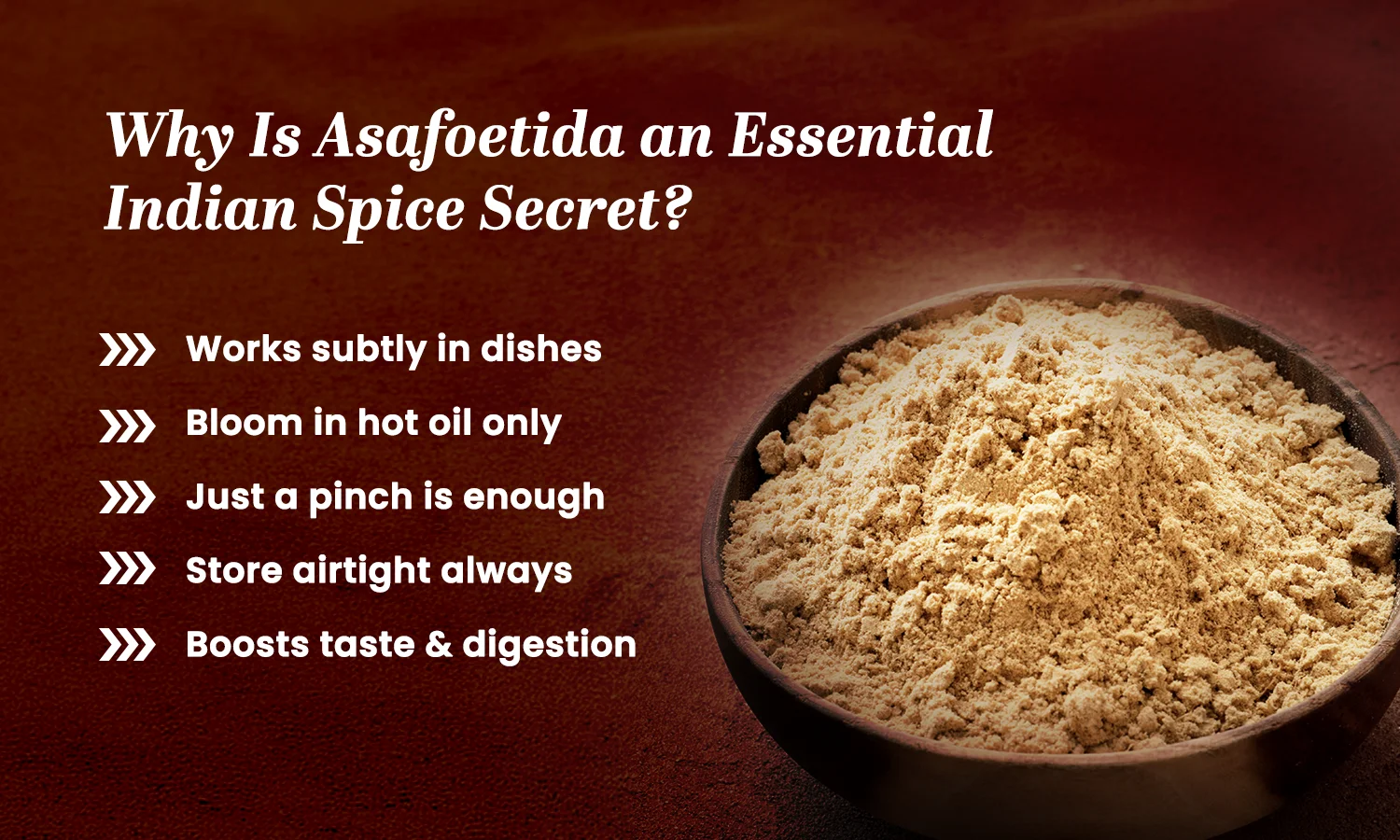
It does not dominate a dish. Instead, it strengthens everything around it. When heated properly, hing asafoetida becomes a quiet but powerful flavour builder.

Indian kitchens also follow certain unwritten rules:

  • Never use raw; always bloom in hot fat.
  • Follow the “pinch rule” – about 1/8 teaspoon is enough for a family-sized dish.
  • Store it airtight to protect its aroma.

This careful handling is what allows asafetida spice to deliver both taste and digestive balance. For generations, this knowledge has been passed down quietly, making it one of the most respected ingredients in Indian cuisine.

Knowing the right asafoetida uses in cooking helps bring out the best flavour in everyday dishes.

Conclusion

From tempering dals to enhancing pickles, asafoetida in cooking remains an indispensable part of Indian culinary tradition. It offers depth without bulk, aroma without heaviness, and flavour without overpowering the dish.

When used correctly, this humble spice becomes the silent backbone of many meals. Understanding how to use it properly allows you to get its full potential in your kitchen.Understanding the basic asafoetida ingredients also helps you choose better quality spice for daily use. Also, there are many practical uses of asafoetida powder, especially in simple meals like dals and vegetable dishes, that you’ve gotten familiar with by now.

FAQs

What is the difference between hing and asafoetida?There is no difference. Hing is simply the Indian name for asafoetida.
Does asafoetida taste bitter?Raw asafoetida tastes sharp and bitter. When cooked in oil, it becomes mellow and savoury.
What flavor does asafoetida add?It adds a warm, onion-and-garlic-like flavour with subtle umami depth.
What recipes use asafoetida?It is commonly used in dals, sambars, rasams, vegetable stir-fries, pickles, and snack batters.
Who brought asafoetida to India?Asafoetida originated in regions like Iran and Afghanistan and was introduced to India through historical trade routes.

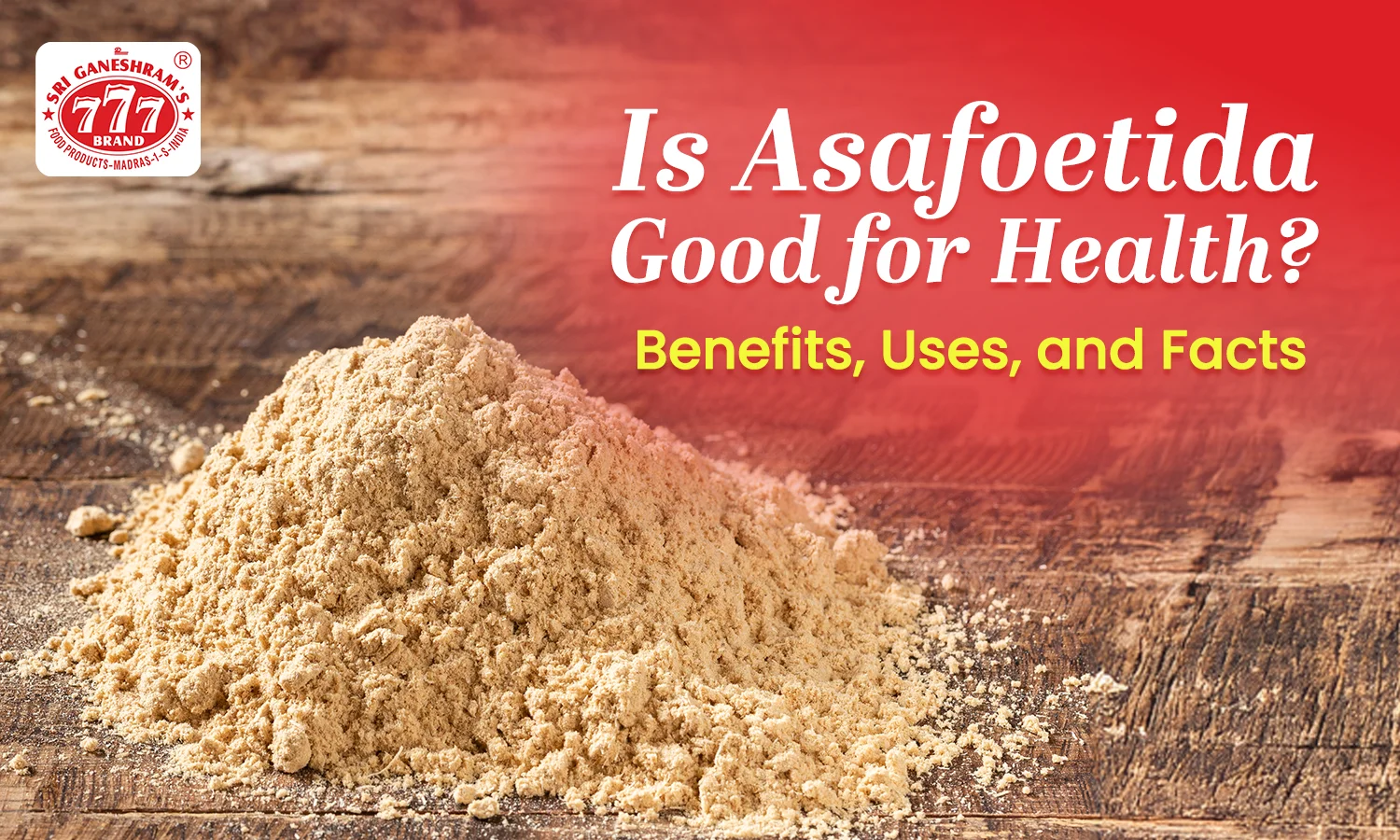
Is Asafoetida Good for Health? Benefits, Uses, and Facts

Introduction :

Is asafoetida good for health? This is a common question, especially among those who use hing regularly in cooking. For generations, asafoetida has been valued in traditional medicine and Indian kitchens alike. While modern research is still evolving, many of its properties are supported by both historical use and preliminary scientific studies.
Consumed in small quantities, hing can offer digestive support and other therapeutic benefits. However, like all potent ingredients, it must be used with care.

What Is Asafoetida and Why Is Asafoetida Good for Health?

Asafoetida is a dried gum resin extracted from the roots of Ferula plants, primarily grown in Iran and Afghanistan. It is commonly sold as asafoetida powder, which is easier to use in cooking.
The reason many people believe asafoetida benefits for health are significant lies in its bioactive compounds such as ferulic acid, coumarins, and volatile oils. These compounds are associated with digestive support, antioxidant activity, and anti-inflammatory effects.Traditionally, asafoetida medicinal benefits include reducing bloating, improving digestion, and easing respiratory discomfort. Though more human studies are needed, its long-standing use in Ayurveda continues to support its reputation. What Are the Main Benefits of Asafoetida?

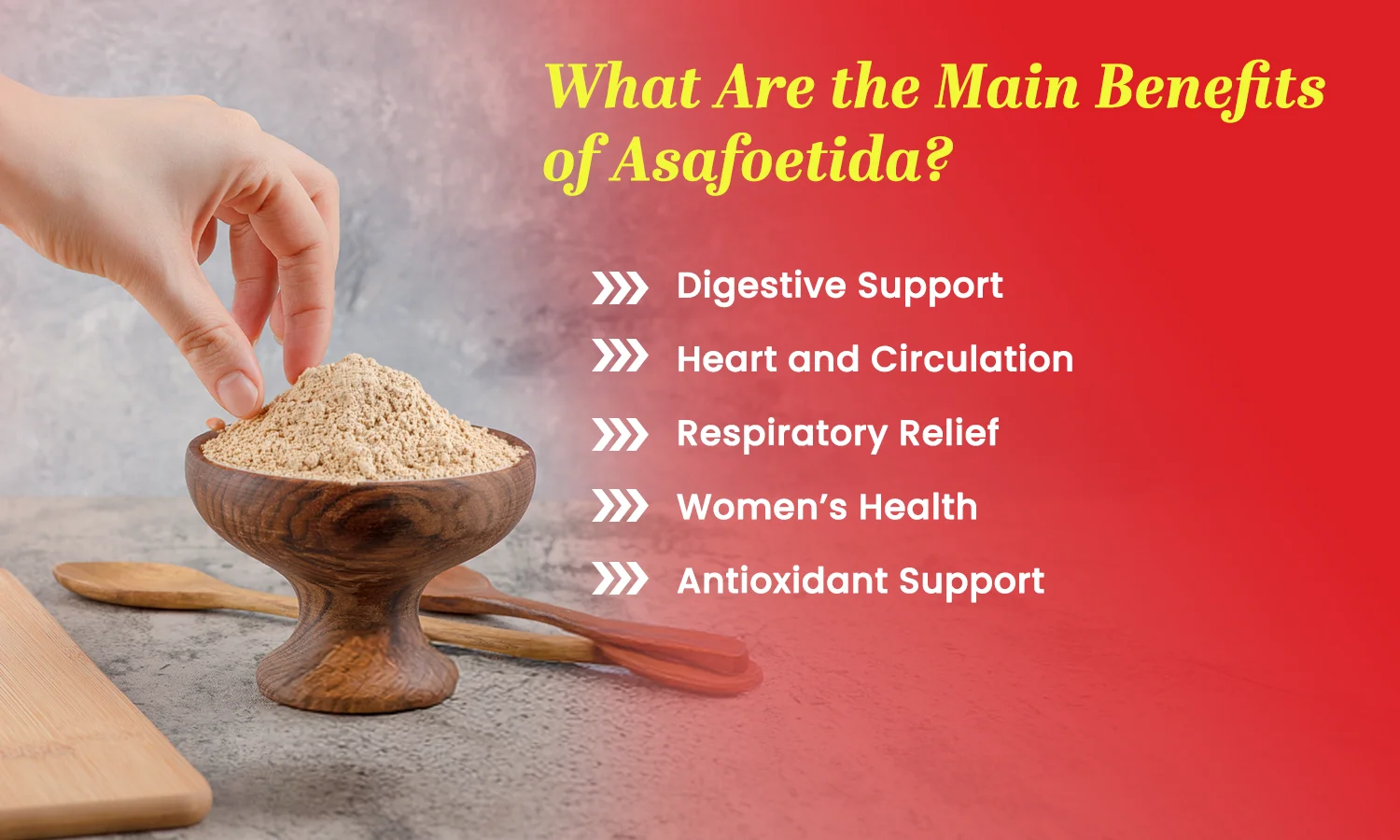
What Are the Main Benefits of Asafoetida?

When discussing the benefits of asafoetida, digestive support stands out as the most well-known advantage.

Digestive Support

One of the key asafoetida health benefits is its ability to reduce gas and bloating. It acts as a carminative, helping prevent gas formation and supporting its release. It may also stimulate digestive enzymes and bile production, aiding fat digestion. Some early research suggests it may help manage symptoms of IBS by calming intestinal spasms.

Heart and Circulation

Among the lesser-known Advantages of asafoetida is its potential role in improving circulation. Compounds like coumarins may act as mild blood thinners and support healthy blood pressure levels.

Respiratory Relief

In traditional medicine, Asafetida health benefits include helping relieve cough, asthma, and bronchitis. It is considered an expectorant that may help loosen mucus.

Women’s Health

Hing asafoetida benefits also extend to menstrual relief. Its antispasmodic properties may help relax uterine muscles and reduce cramps.

Antioxidant Support

Many asafoetida powder benefits are linked to antioxidants such as tannins and flavonoids, which help protect cells from oxidative stress. These contribute to overall asafoetida benefits for health when consumed responsibly.

Common Uses of Asafoetida in Daily Life

In daily life, asafetida uses go beyond cooking.

Culinary Uses

A small pinch added during tempering enhances flavour while supporting digestion. Many households rely on the asafoetida powder health benefits, especially when cooking lentils and beans, which can cause gas.

Home Remedies

Traditionally, a pinch mixed with warm water or buttermilk is used after heavy meals. Some households apply a mild paste externally for stomach discomfort.
When choosing products, many consumers look for the best asafoetida powder in India, ensuring quality and purity for regular use.

Preservation and Natural Pesticide Qualities

While the asafoetida benefits are often discussed in a wellness context, this potent resin is also a secret weapon for food preservation. Due to its antimicrobial and antifungal properties, one of the most practical uses of hing powder is in the pickling process, where it prevents spoilage and extends the shelf life of seasonal preserves. Gardeners have found that asafoetida medicinal uses extend to plant life; when diluted in water, it acts as a highly effective natural pesticide and repellent for aphids and whiteflies. Understanding how asafoetida is made, right from the concentrated sap of the Ferula plant, explains its intense aroma, which serves as a natural deterrent for pests while ensuring your organic garden stays healthy and thriving.

Aroma Science and Culinary Artistry

The unique benefits of asafoetida powder in the culinary world go beyond simple seasoning; it is a master of flavor chemistry. In many specialized diets that avoid onions and garlic, the primary asafoetida powder uses center on its ability to mimic those savory, “umami” notes when bloomed in hot oil. 

This chemical transformation is why hing for digestion is often a secondary thought to its role as a flavor fixative that harmonizes complex spice blends. Even when used as hing for stomach pain remedies, the heavy, sulfurous scent is the hallmark of its purity. Whether you are exploring its role in traditional perfumery or using it to balance a delicate sauce, the diverse uses of hing powder make it a fascinating study in how one ingredient can define the olfactory profile of an entire cuisine.

Is asafoetida good for health

Important Facts to Know About Asafoetida

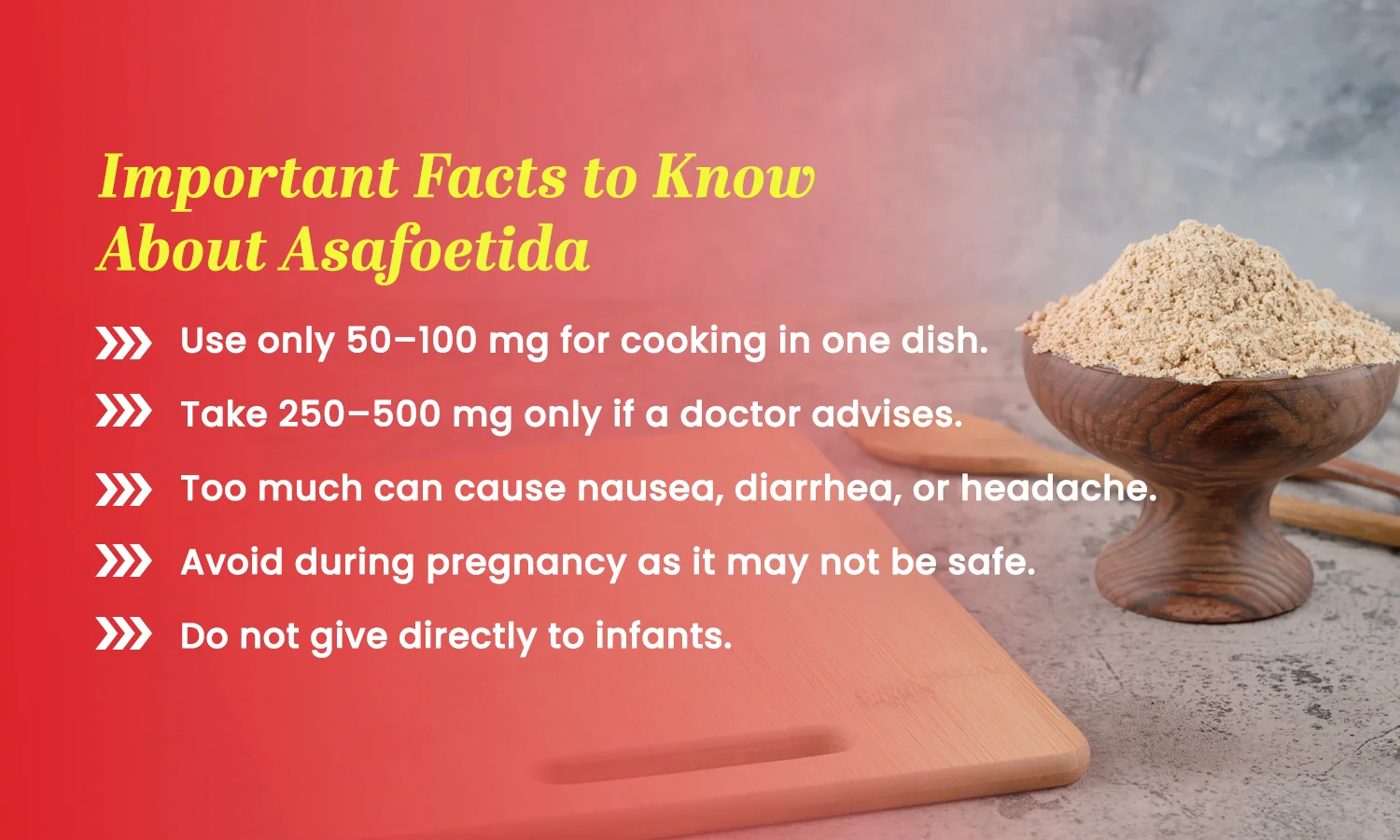
While answering “Is asafoetida good for health?”, it is equally important to understand safety aspects.

  • Recommended culinary use is around 50–100 mg per dish.
  • Medicinal doses (250–500 mg) should only be taken under guidance.
  • Excessive use may cause nausea, diarrhea, or headaches.
  • Asafoetida during pregnancy is considered unsafe, as it may stimulate uterine contractions.
  • It should not be given directly to infants due to potential health risks.
  • It should not be given directly to infants due to potential health risks.
  • Individuals taking blood thinners or blood pressure medication should consult a doctor before regular use.

Used correctly, the overall asafoetida benefits outweigh the risks for most healthy adults.

Conclusion

So, is asafoetida good for health? When consumed in small amounts and used properly, it can support digestion, provide antioxidant protection, and offer other wellness benefits. Its long history in traditional medicine highlights its value, but moderation remains essential.
Understanding both its advantages and precautions ensures that you can include hing safely in your daily routine.

FAQs

Who should avoid asafoetida?

Pregnant women, infants, and individuals on blood-thinning or blood pressure medications should avoid or consult a doctor before using it regularly.

Can we eat hing directly?

It is not recommended to consume it raw. It is best used in small amounts during cooking.

How much hing should be consumed per day?

For cooking, 50–100 mg per dish is sufficient. Higher medicinal doses should be taken only under professional guidance.

Which part of asafoetida do we eat?

The dried resin extracted from the plant root is processed into powder for culinary use.

How to consume asafoetida?

It is typically added to hot oil during tempering or mixed in small quantities into food for digestive support.

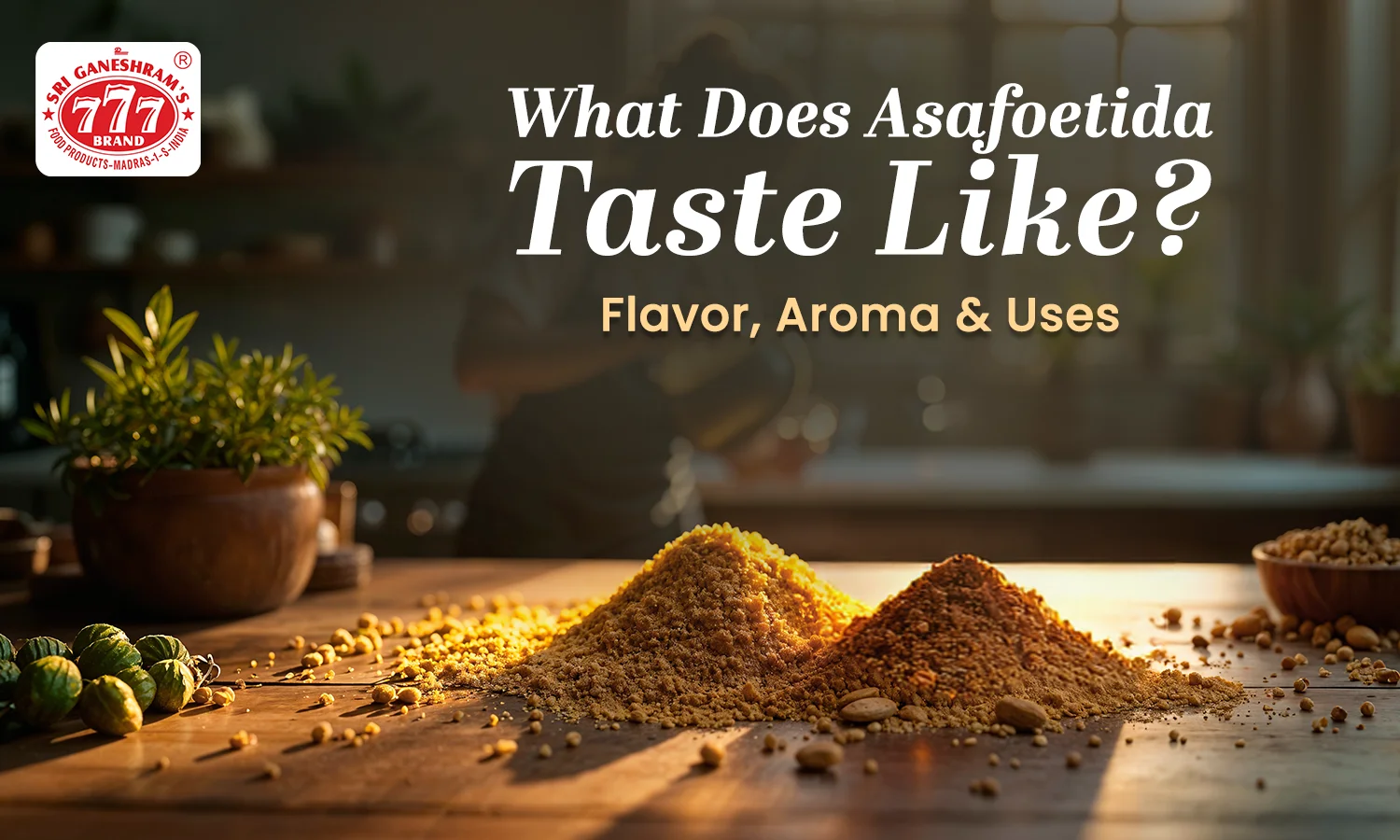
What Does Asafoetida Taste Like? Flavor, Aroma & Uses

Introduction :

The first time you open a jar of hing, the smell can be surprising. It is sharp, strong, and impossible to ignore. But the real story of Asafoetida taste begins only after it touches hot oil.
In Indian cooking, this humble ingredient has been trusted for generations. Though small in quantity, it plays a powerful role in shaping the flavour of many traditional dishes. Once you learn the real taste of asafoetida, it becomes easier to use this spice with confidence. What Does Asafoetida Taste Like?

What Does Asafoetida Taste Like?

To understand Asafoetida taste, you need to experience both its raw and cooked forms.
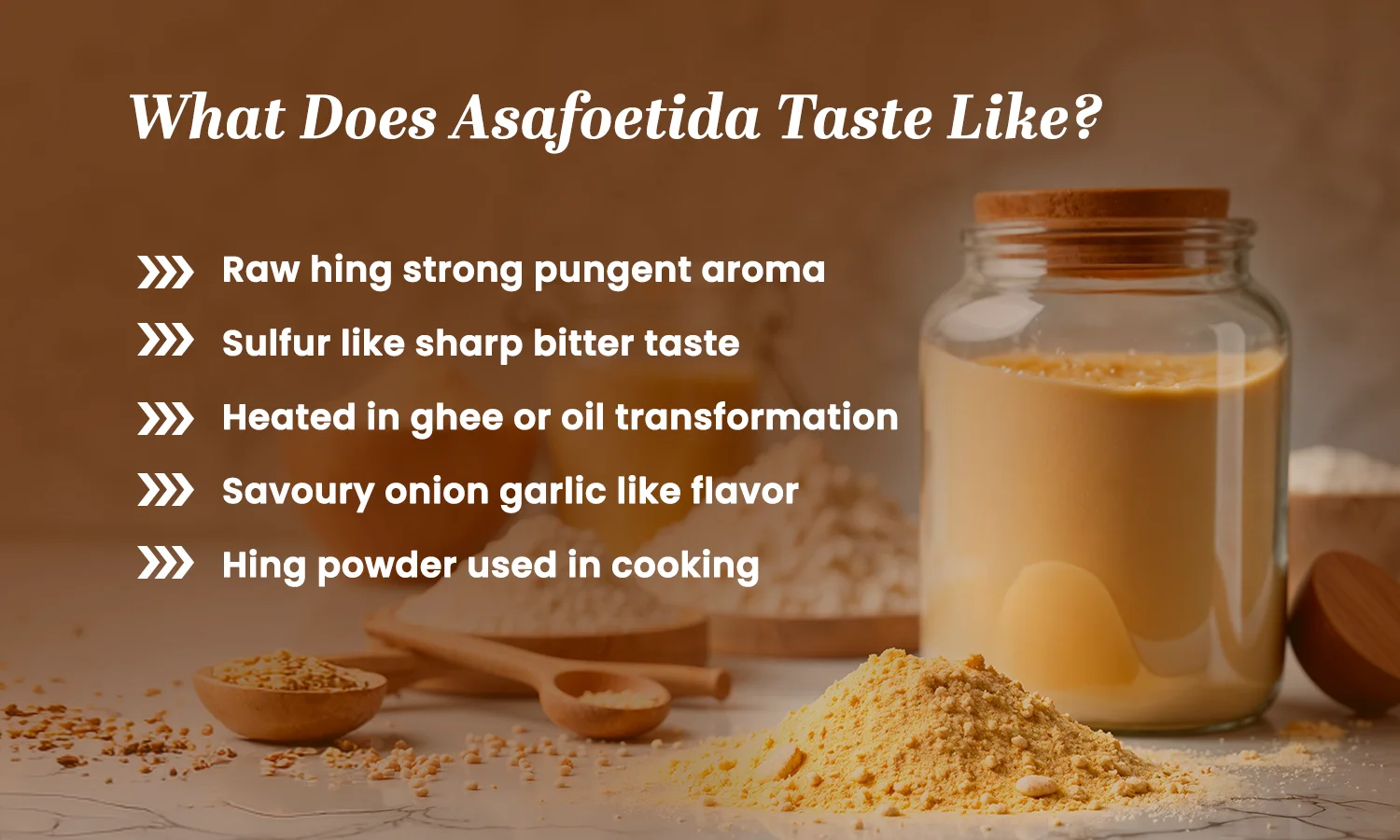
In its raw state, hing is extremely pungent. Many describe it as sulfur-like, almost unpleasant. Some wonder if it is asafoetida bitter or spicy. Raw, it leans toward bitter and sharp rather than spicy.
However, once heated in ghee or oil, the transformation is remarkable. The bitterness disappears, and it develops a deep, savoury flavour similar to sautéed onions or garlic. This distinctive asafoetida spice flavor is what makes it valuable in everyday cooking.Most households use asafoetida hing powder, as it is easy to measure and blends smoothly into dishes. The cooked Asafoetida Flavor is mellow and savoury, and the Pure Asafoetida Taste shines through when it is heated correctly.

How Does Asafoetida Enhance the Flavor of Food?

The beauty of Asafoetida taste lies in how it supports other ingredients rather than dominating them.
When added during tempering, it releases a warm base note that ties spices together. Cumin, mustard seeds, and turmeric become more rounded when hing is added at the right moment.
You may not directly identify asafoetida in food, but you will notice its absence if it is missing. That subtle depth comes from proper asafoetida usage.
Because of this, its asafoetida uses extend beyond flavour. It is also known to help balance heavy lentil and bean dishes.

Why Does Asafoetida Have Such a Strong Aroma?

The strong asafoetida aroma comes from natural sulfur compounds found in the dried resin.
Before processing, the resin from the plant is intense in smell. In powdered form, the asafoetida ingredients usually include the pure resin blended with flour to make it easier to handle.
This is why proper hing usage always involves cooking it in hot fat first. Heat breaks down the harsh compounds and releases a pleasant fragrance instead.
Whether in solid form or as asafoetida powder, storage matters. It should always be kept airtight so the aroma does not spread to other spices. Knowing the asafoetida ingredients helps you understand both its Asafoetida Smell and Taste. How Much Asafoetida Should You Use?

How Much Asafoetida Should You Use?

With Asafoetida taste, less is always more.

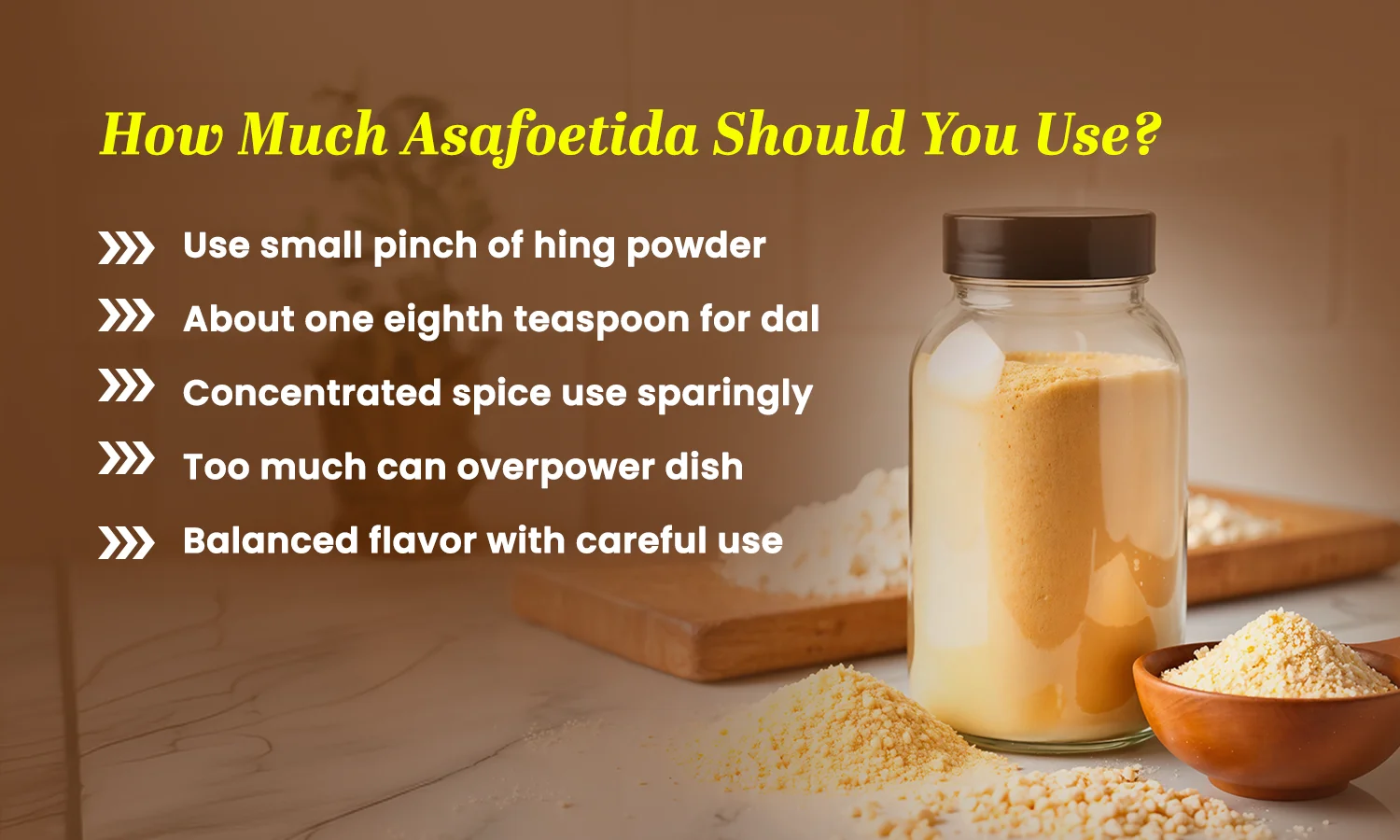
For a pot of dal serving four people, about 1/8 teaspoon of Hingpowder is sufficient. Adding more can overpower the dish.

When using asafoetida hing powder, remember that it is concentrated. A small pinch is enough to bring depth without bitterness.This careful asafetida use ensures that the flavour remains balanced.

Why Is Asafoetida Used in Indian Kitchens?

In Indian households, Asafoetida taste is closely connected to tradition.
First, asafoetida is hing, and it serves as a substitute for onion and garlic in many communities. This makes it important in vegetarian and sattvic cooking.
Second, it is widely believed that asafoetida is good for health, especially for digestion. Many families add it to lentils not just for flavour, but for comfort after meals.
Because of its dual role in flavour and wellness, the presence of this asafoetida indian spice in kitchens continues even today.

Conclusion

At first encounter, Asafoetida taste may seem overwhelming. But when handled correctly, it becomes warm, savoury, and essential.
From its sharp aroma to its mellow cooked flavour, this spice proves that a small pinch can transform an entire dish. Understanding its flavour, aroma, and proper usage allows you to use it confidently in your own cooking.

Key Takeaways

  • Asafoetida taste is bitter when raw but savoury when cooked.
  • Always heat it in oil to release the proper flavour.
  • Use only a small pinch to avoid overpowering dishes.
  • Commonly added to dals, curries, and vegetable dishes.
  • Valued for both flavour depth and digestive support.

FAQs

Does hing have any taste?Yes. Asafoetida taste is sharp and bitter in raw form. Once cooked, it becomes mellow and similar to onion or garlic.
Is hing a blood thinner?Hing contains natural compounds that may influence blood flow. People on blood-thinning medication should consult a doctor before regular use.
How to identify pure hing?Pure hing often comes in solid resin form with a strong aroma. Most household versions are blended powder for easier cooking.
How long does asafoetida last?When stored in an airtight container, asafoetida can retain its flavour for 12–18 months.
How many types of asafoetida are there?It is generally available as pure resin lumps and compounded powder, which is more common for daily use.

How Is Asafoetida Made? From Plant Resin to Hing Powder

Have you ever wondered how asafoetida is made before it reaches your kitchen? This strong-smelling ingredient does not begin as powder. It starts as a sticky sap taken from the root of a desert plant. Understanding how asafoetida is made helps you appreciate why just a pinch is enough in cooking.
Let’s look at the full journey of this traditional asafoetida spice, from plant resin to hing powder.
What Is Asafoetida and Where Does It Come From?

What Is Asafoetida and Where Does It Come From?

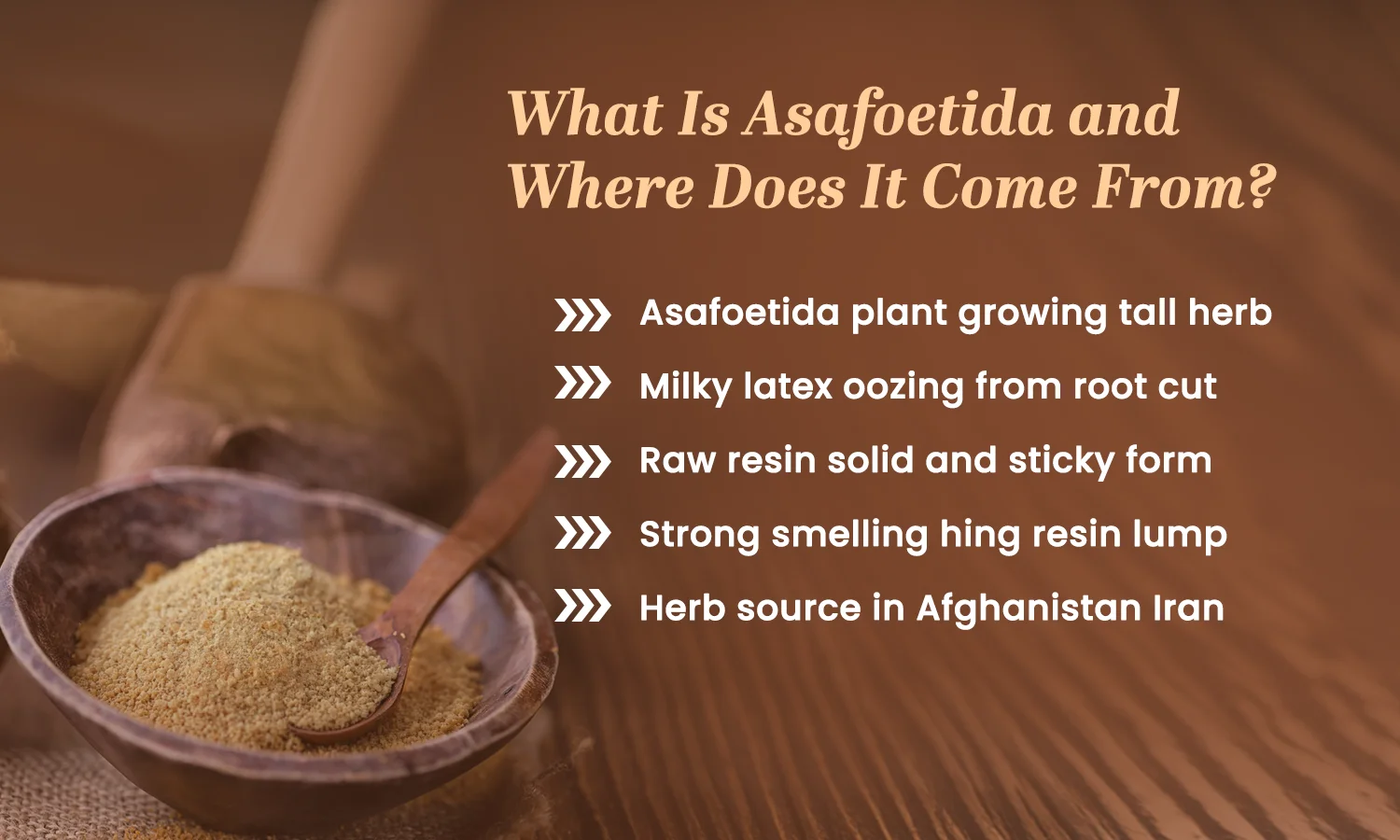
To understand how asafoetida is made, we must first know its source. Asafoetida is a dried gum resin collected from the asafoetida plant, a tall herb that grows mainly in Afghanistan and Iran.
Many people say asafoetida is hing, which is correct. Hing is simply the Indian name. The resin is asafoetida made from the milky latex that oozes out when the plant root is cut.This raw resin has a sharp asafoetida taste and a very strong smell. In this early form, it is solid and sticky, not powder.

How Is Asafoetida Made from Plant Resin?

The plant must grow for about 4–5 years before harvesting. Farmers cut the stem close to the root in early spring. A milky sap slowly comes out. This sap thickens and dries over a few days.
The hardened resin forms small lumps called tears. This step explains how asafoetida is made naturally through tapping and drying. The collection process continues for several weeks until the plant stops producing sap.
At this stage, the resin already contains compounds responsible for the strong aroma and many traditional asafoetida uses in cooking.
How Is Asafoetida Processed into Hing Powder?

How Is Asafoetida Processed into Hing Powder?

After harvesting, the next stage in how asafoetida is made involves processing.
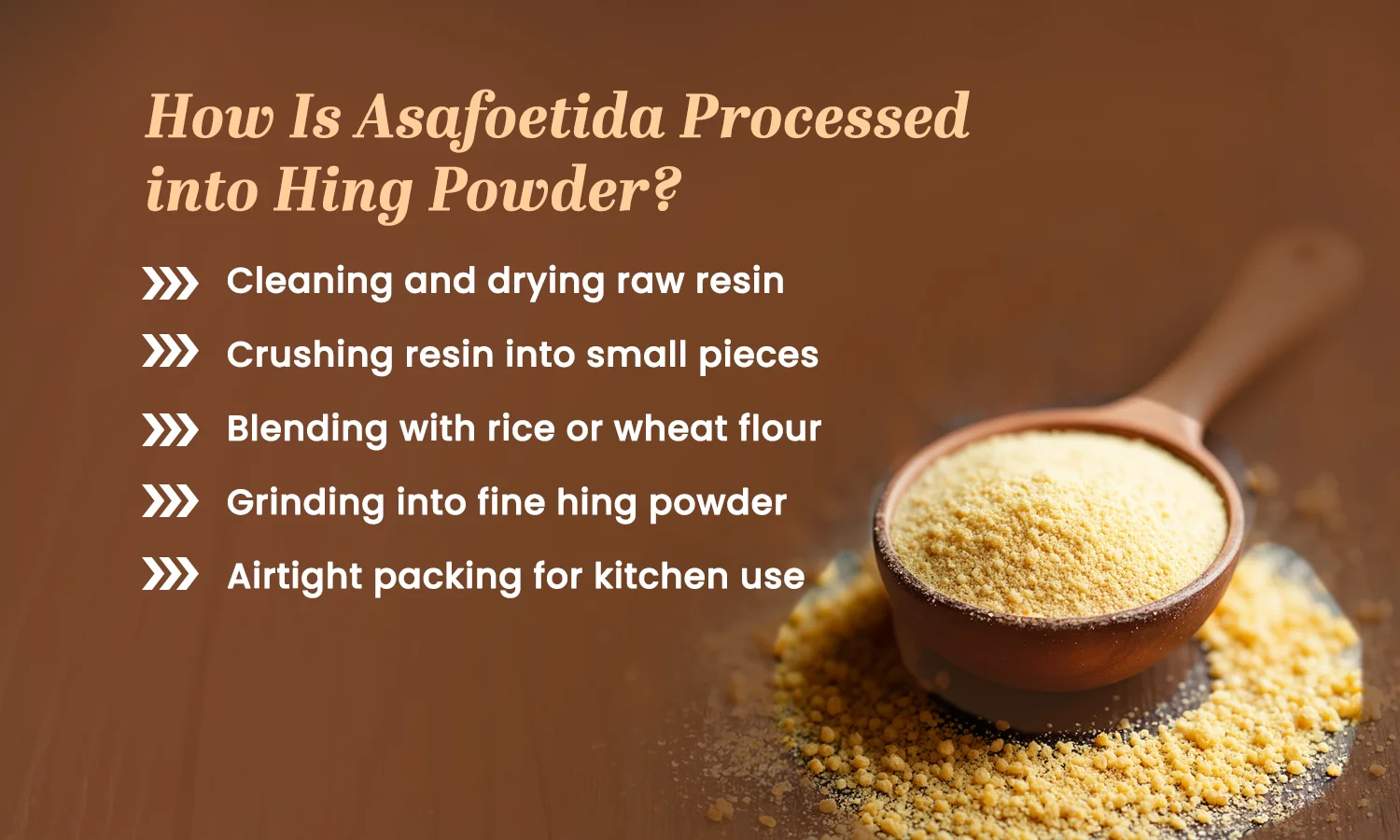
The raw resin is cleaned and dried properly. It is then crushed into smaller pieces. Pure resin is too strong to use directly, so manufacturers create asafoetida powder by blending the resin with edible starch such as rice flour or wheat flour.
This blended form becomes powder asafoetida, which is easier to measure. Most commercial hing contains only a portion of pure resin. The rest helps control intensity and texture.
The final mixture is ground finely and packed airtight. This is how hing asafoetida becomes suitable for everyday kitchens. This is also why asafoetida powder used for tempering must be stored carefully to preserve aroma.

Why Does Asafoetida Have Such a Strong Taste?

When learning how asafoetida is made, it is important to understand its flavour.
The resin contains natural sulfur compounds. These compounds create a sharp smell in raw form. However, when heated in oil, the flavour changes completely.
The bitterness reduces, and the aroma becomes savoury. This is one of the key benefits of asafoetida in cooking — it enhances flavour without overpowering dishes.
Because of these properties, there are also well-known asafoetida benefits related to digestion. Traditional kitchens value both flavour and health support.

Why Does Asafoetida Have Such a Strong Taste?

When learning how asafoetida is made, it is important to understand its flavour.
The resin contains natural sulfur compounds. These compounds create a sharp smell in raw form. However, when heated in oil, the flavour changes completely.

The bitterness reduces, and the aroma becomes savoury. This is one of the key benefits of asafoetida in cooking — it enhances flavour without overpowering dishes.

Because of these properties, there are also well-known asafoetida benefits related to digestion. Traditional kitchens value both flavour and health support.

Conclusion

Asafoetida begins as sap from the root of the asafoetida plant, dries into resin, and is then processed into powder for cooking.
From harvesting to blending, every step explains why this spice is so strong and effective. Knowing how asafoetida is made helps you choose quality products and use them correctly in your meals.

Key Takeaways

  • How is asafoetida made? It starts as sap from the asafoetida plant.
  • The resin dries into tears or lumps before processing.
  • It is blended with flour to form asafoetida powder.
  • Heating removes bitterness and improves flavour.
  • Traditional uses of asafoetida include flavour enhancement and digestive support.

FAQs

What Is the Difference Between Asafoetida and Hing?There is no difference. Asafoetida is the English name, while hing is the Indian name for the same resin spice.
Who Should Not Eat Asafoetida?Pregnant women, breastfeeding mothers, and people on blood-thinning medication should consult a doctor before using large amounts.
Is Asafoetida Called Ajinomoto?No. Ajinomoto is monosodium glutamate (MSG). Asafoetida is a natural plant resin and is completely different.
Why Is Asafoetida Called Devil’s Dung?It earned this nickname because of its strong raw smell. Once cooked, the flavour becomes mild and pleasant.
Why Is Maida Added to Asafoetida?Maida is added to dilute the strong resin and make it easier to grind and measure in cooking.

Indian Asafoetida – Benefits, Uses, and Best Brands in India

If you cook Indian food, you have likely used indian asafoetida at some point. Known as hing, this spice is used in tiny amounts but has a powerful impact on flavour and digestion. In many kitchens, indian asafoetida is considered essential for everyday dishes like dal, sambar, and vegetable curries.

From improving digestion to enhancing aroma, indian asafoetida has remained a trusted spice in Indian cooking for generations.

What Is Hing (Asafoetida)?

Many people ask, what is asafoetida, and why does it smell so strong. Asafoetida is a dried resin extracted from the roots of the Ferula plant. This asafoetida hing is known for its sharp smell in raw form.

However, once cooked, the indian asafoetida develops a mild, savoury aroma similar to onion and garlic. This unique asafoetida taste is the reason it is widely used in vegetarian cooking.

Today, most households use asafoetida hing powder, which is easier to measure and store than raw resin.

How Asafoetida Is Made

How Asafoetida Is Made

Understanding how asafoetida is made helps explain its value. The process takes several years and involves careful harvesting.

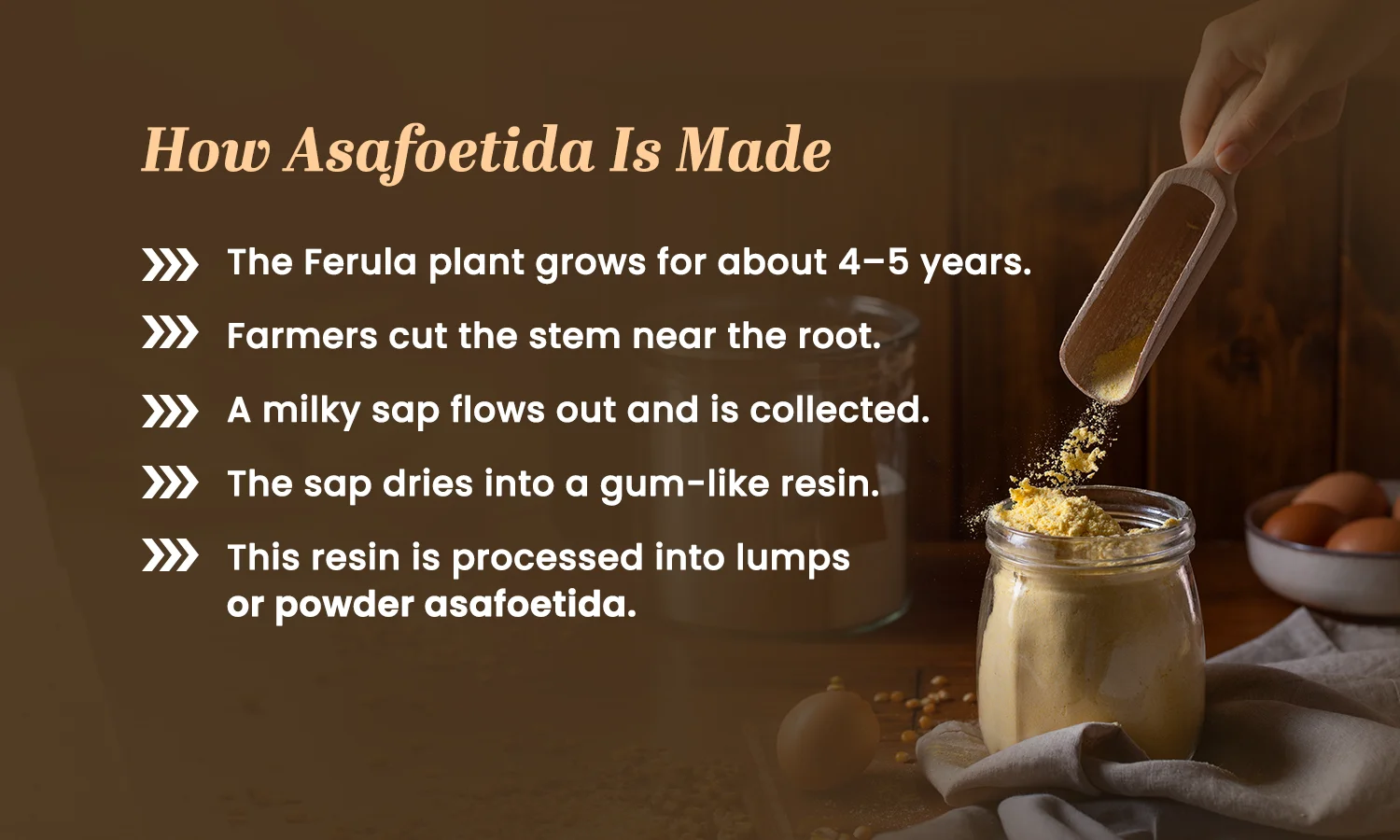
  • The Ferula plant grows for about 4–5 years.
  • Farmers cut the stem near the root.
  • A milky sap flows out and is collected.
  • The sap dries into a gum-like resin.
  • This resin is processed into lumps or powder asafoetida.

Most commercial products are blended with edible starch to create asafoetida powder that is easier to use in daily cooking.

Why Is Asafoetida So Important in Indian Cooking?

In many kitchens, indian asafoetida is used at the start of cooking to build flavour.It is valued because:

  • It acts as a substitute for onion and garlic.
  • It improves digestion in heavy dishes.
  • It enhances the overall aroma of food.

A pinch of hing asafoetida in hot oil releases its flavour, making it an essential ingredient in asafoetida in curry and lentil dishes.

Health Benefits of Asafoetida

The asafoetida benefits are widely recognised in traditional cooking and Ayurveda.

Some common benefits of asafoetida include:

  • Reducing gas and bloating
  • Supporting digestion
  • Helping with respiratory discomfort
  • Providing anti-inflammatory effects

These uses of asafoetida show why it is more than just a flavouring spice. Asafoetida Uses in Everyday Cooking

Asafoetida Uses in Everyday Cooking

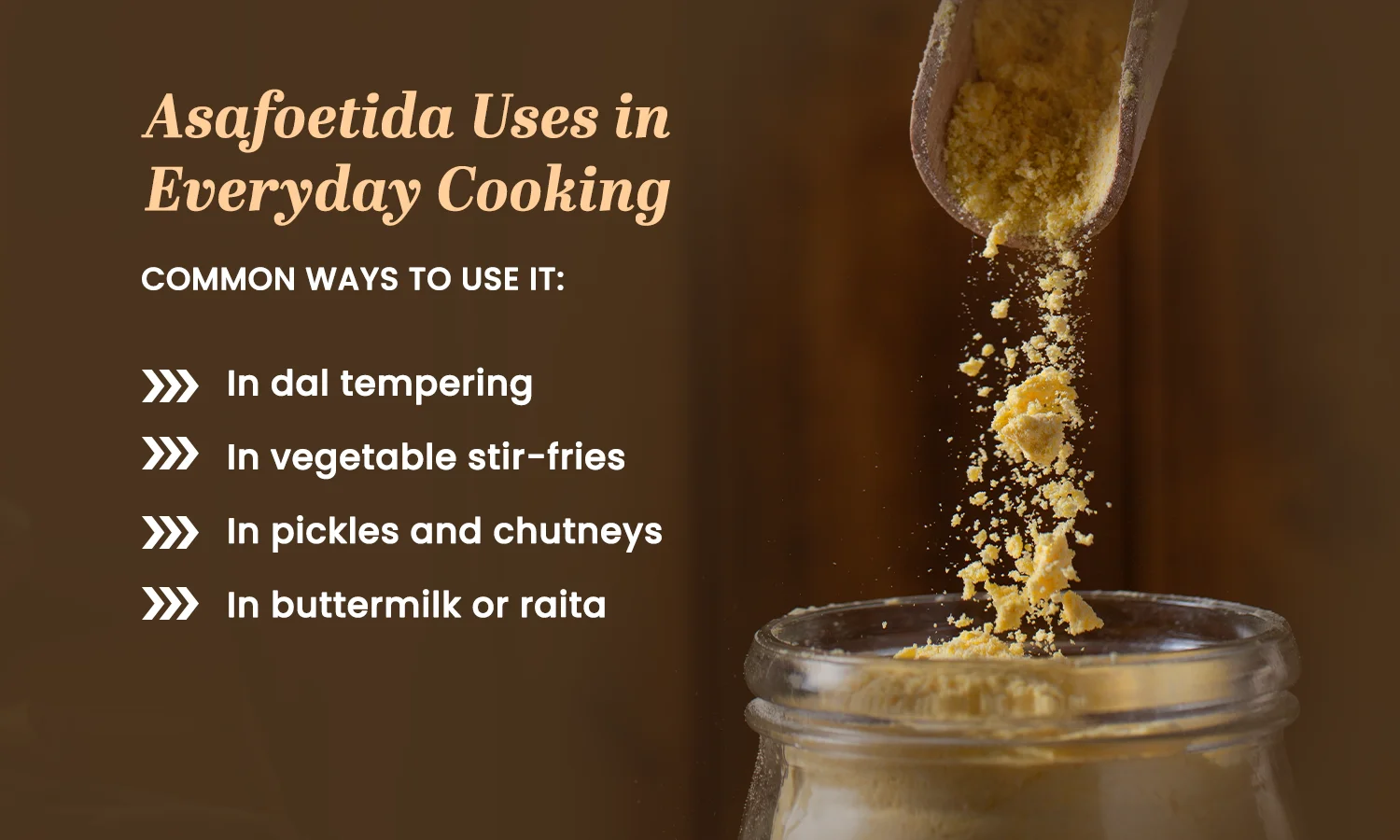
There are many asafoetida uses in daily meals. Even a tiny amount of indian asafoetida can transform the taste of a dish.Common ways to use it:

  • In dal tempering
  • In vegetable stir-fries
  • In pickles and chutneys
  • In buttermilk or raita

You will often find asafoetida in food where lentils or beans are used, because it helps make them easier to digest.

Asafoetida Price in India

The price of indian asafoetida depends on its form and purity.Typical price ranges:

Form Price Range
Compounded powder (25–50g) ₹60 – ₹150
Compounded powder (100g) ₹160 – ₹300
Pure resin (per kg) ₹6,500 – ₹30,000

Powdered versions are more affordable because they are blended with carriers, while pure resin is more concentrated and expensive.

Why Choose SGR 777 Foods Asafoetida?

When selecting indian asafoetida, quality matters. SGR 777 Foods focuses on purity and consistent flavour.

Reasons many cooks choose it:

  • Carefully processed for consistent strength
  • Lab-tested for quality
  • Traditional flavour suited for Indian dishes
  • Suitable for dals, curries, and pickles

A good-quality indian asafoetida ensures better aroma and taste in everyday cooking.

Beyond the standard kitchen requirements, understanding the asafoetida ingredients is crucial for health-conscious consumers. 777 Foods offers a high-quality compounded asafoetida that balances the intense raw resin with edible flours, thus making it easier to measure and use as a daily hing spice. This careful formulation makes sure that even a small pinch delivers the functional asafoetida health benefits that aid digestion and reduce bloating problems in traditional heavy meals.

For people searching for an authentic Indian hing spice, the market can be confusing, but the original hing price in India reflects the purity of the source resin. When you choose a trusted brand like 777 Foods, you are getting pure hing powder that’s free from synthetic fillers or artificial colours. You might prefer a standard variety or look for organic asafoetida options; whatever it is, using a reliable brand ensures that the pungent, savory notes of high-grade hing remain the backbone of your culinary creations.

Conclusion

Indian asafoetida remains one of the most important spices in Indian kitchens. Its strong raw smell turns into a rich, savoury flavour when cooked. From improving digestion to enhancing everyday meals, indian asafoetida continues to be a trusted ingredient. Choosing a reliable brand ensures consistent flavour and quality in every dish.

Key Takeaways :

  • Indian asafoetida is a resin-based spice used in small amounts.
  • It adds flavour and supports digestion.
  • Commonly used in dals, curries, and vegetable dishes.
  • Available as powder or pure resin.
  • Prices vary based on purity and form.

FAQs

What Is Asafoetida Made From?Indian asafoetida is made from the dried resin of the Ferula plant. The sap from the root is collected, dried, and processed into lumps or powder for cooking.
Is Asafoetida Good for Digestion?Yes, indian asafoetida is commonly used to reduce gas and improve digestion. A small pinch of lentil or bean dishes helps make them easier on the stomach.
Which Is the Best Asafoetida Brand in India?Many brands offer indian asafoetida, but choosing one known for purity and consistent flavour is important. Brands like SGR 777 Foods focus on quality and traditional taste.
How Should I Store Asafoetida?To keep indian asafoetida fresh, store it in an airtight container in a cool, dry place. Proper storage helps maintain its aroma and effectiveness.

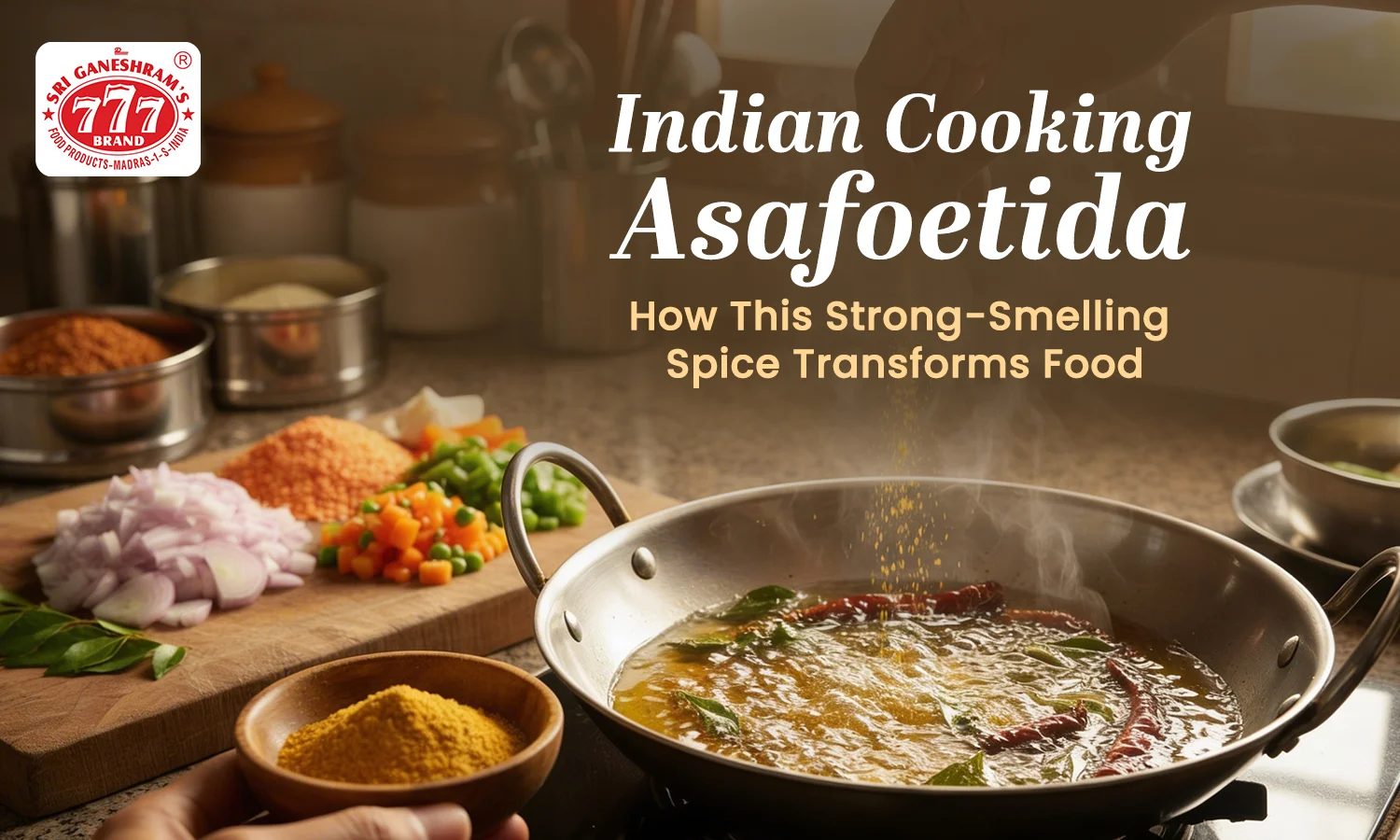
Indian Cooking Asafoetida: How This Strong-Smelling Spice Transforms Food

If you have ever wondered why some Indian dishes feel complete even with simple ingredients, the secret is often Indian cooking asafoetida. Known as hing, this spice has a strong smell when raw but turns into a savoury, mouth-watering flavor once cooked. A tiny pinch of this Indian spice hing can completely change the taste of dals, curries, and vegetables.
Today, Indian asafoetida is valued not just for flavor but also for its digestive support and its ability to balance other spices in food.

What Exactly Is Asafoetida (Hing)?

Many people ask what asafoetida actually is. It is a dried gum resin taken from the roots of the Ferula plant. This resin is meticulously processed into a convenient powder form, making it much easier to use in modern kitchens.
While some markets offer lower-grade blends, sourcing a pure asafoetida powder ensures you get the most authentic aroma. In its form as a raw hing powder, it smells sharp and sulfur-like, but the moment it hits hot oil, it develops a mild onion-garlic flavor that makes it irreplaceable in traditional meals.

Why Is Asafoetida Used in Indian Cooking?

The main reason for using Indian cooking asafoetida is flavor balance. It enhances other spices and gives a distinct savory depth to vegetarian dishes.
In traditional households, understanding the uses of hing in cooking goes beyond taste; it is regularly added to lentils and heavy brassica vegetables because it helps reduce gas and bloating. It also works as an excellent substitute for onion and garlic in certain communities. These practical uses of asafoetida in cooking make it a daily kitchen ingredient.

How to Cook With Asafoetida

The best method for using this spice is tempering, locally known as tadka.
Simple method:

  • Heat oil or ghee in a pan.
  • Add mustard or cumin seeds.
  • Lower the flame.
  • Add a small pinch of hing powder.
  • Let it sizzle for 5–10 seconds.
  • Mix the hot tempering directly into your dish.

This step is incredibly important because the spice must always be bloomed in fat; you should never add it completely raw to a finished plate. If you are wondering how much to use, start with just an eighth of a teaspoon for a dish serving four people.

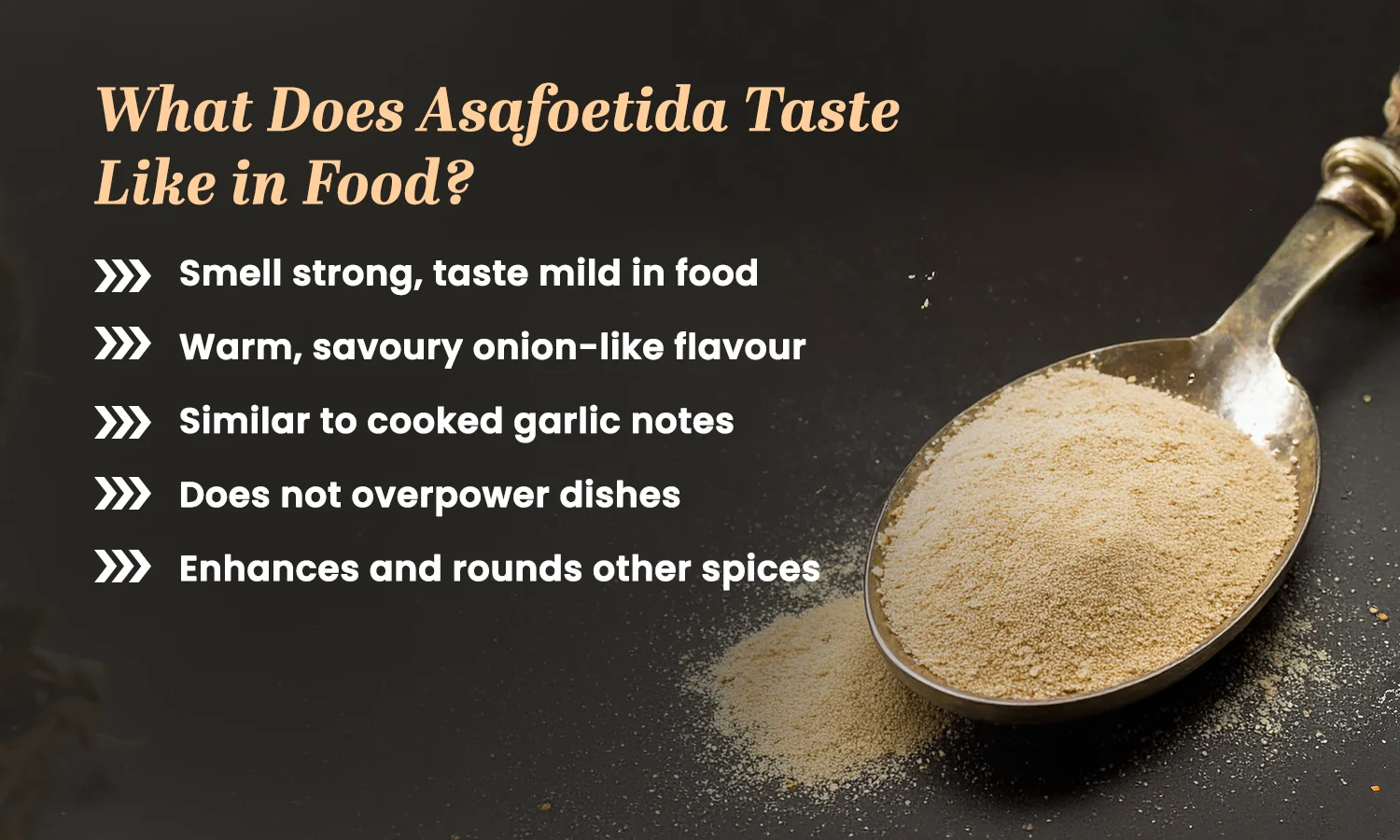
What Does Asafoetida Taste Like in Food?

Many first-time users worry about the smell. But in food, Indian cooking asafoetida tastes very different. It adds a warm, savoury flavour similar to cooked onions or garlic.

The asafoetida taste does not overpower dishes. Instead, it quietly enhances other spices and gives a rounded flavour that makes food feel complete.

Easy Ways to Use Asafoetida in Everyday Cooking

Here are some simple asafoetida uses in cooking you can try:

  • Add a pinch to dal tempering
  • Use in potato or vegetable stir-fries
  • Mix into buttermilk after heavy meals
  • Add to batter for pakoras

These recipes using asafoetida are common in Indian homes because they are easy and practical. You will also find many recipes with asafoetida in South Indian dishes like rasam and sambar.
indian cooking asafoetida

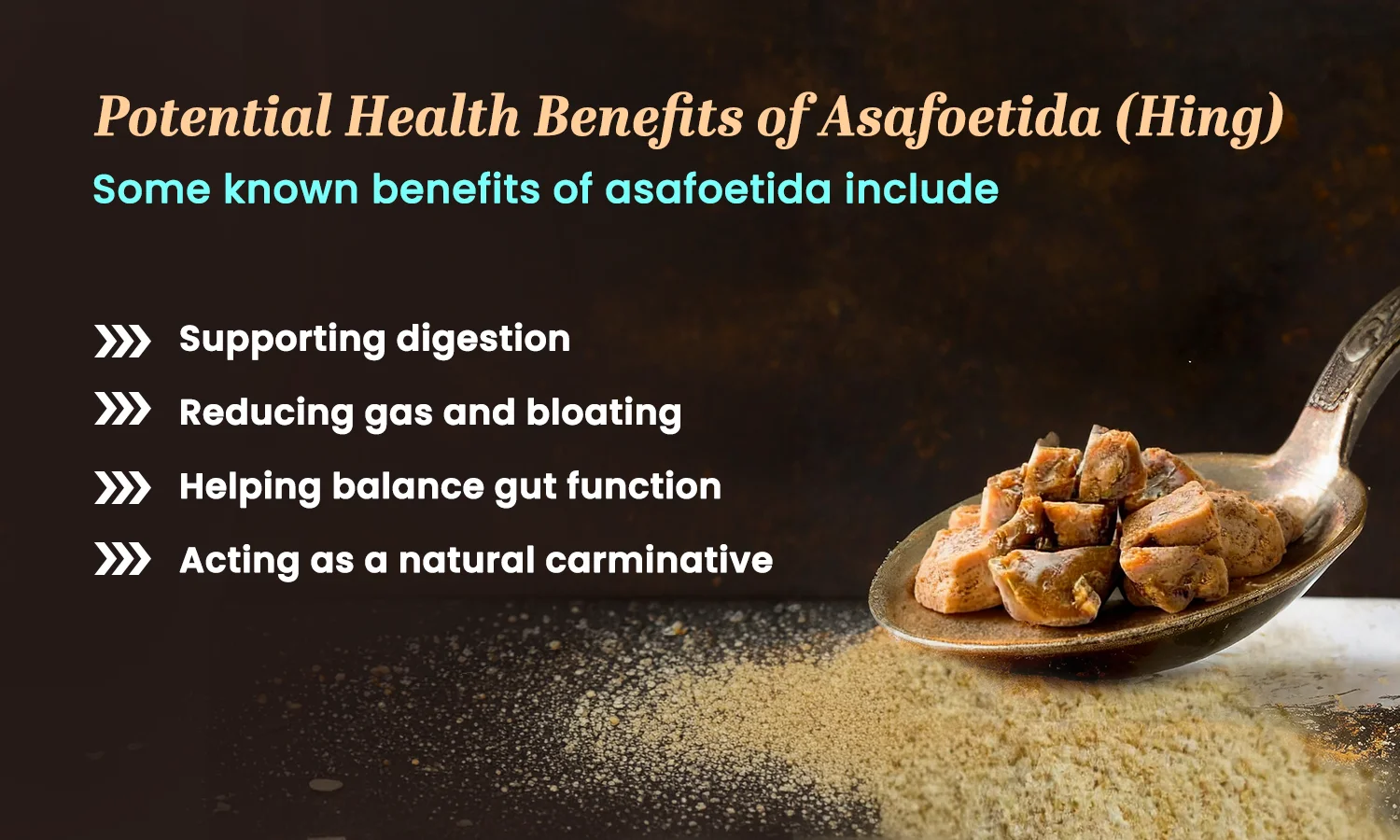
Potential Health Benefits of Asafoetida (Hing)

Apart from flavour, asafoetida benefits are widely discussed in traditional cooking.

Some known benefits of asafoetida include:

  • Supporting digestion
  • Reducing gas and bloating
  • Helping balance gut function
  • Acting as a natural carminative

Because of these asafoetida uses, it is often added to lentil dishes that are heavy to digest.

A Few Tips for Cooking With Asafoetida

  • Use only a pinch — more can make food bitter.
  • Always cook it in oil or ghee first.
  • Store in an airtight jar to control aroma.
  • Choose fresh hing powder uses in cooking for the best results.

These small tips help you get the best from indian cooking asafoetida without overpowering your dish.

Key Takeaways

  • Indian cooking asafoetida adds depth and balance to dishes.
  • Always cook hing in hot oil or ghee.
  • A small pinch is enough for most recipes.
  • Common in dals, curries, and vegetable dishes.
  • Supports digestion and reduces heaviness after meals.

Conclusion

Indian cooking asafoetida shows how a tiny ingredient can completely change food. From improving flavour to supporting digestion, it plays an important role in daily Indian meals. Once you learn how to use it correctly, hing becomes a simple but powerful addition to your kitchen.

FAQs

Is Asafoetida the Same as Hing?Yes, hing is the common Indian name for asafoetida. In indian cooking asafoetida, both terms refer to the same spice used for flavour and digestion.
Can You Eat It Raw?No. Asafoetida should not be eaten raw because the smell and taste are too strong. It must be cooked properly for a safe and pleasant flavour.
What Does It Replace in Cooking?In many recipes, indian cooking asafoetida replaces onion and garlic while still giving a savoury base flavour.
Where Can I Buy It?You can find asafoetida in supermarkets, spice stores, and online grocery platforms in powder or resin form.
What Is Its Shelf Life?When stored in an airtight container, asafoetida usually stays fresh for about 12–18 months.

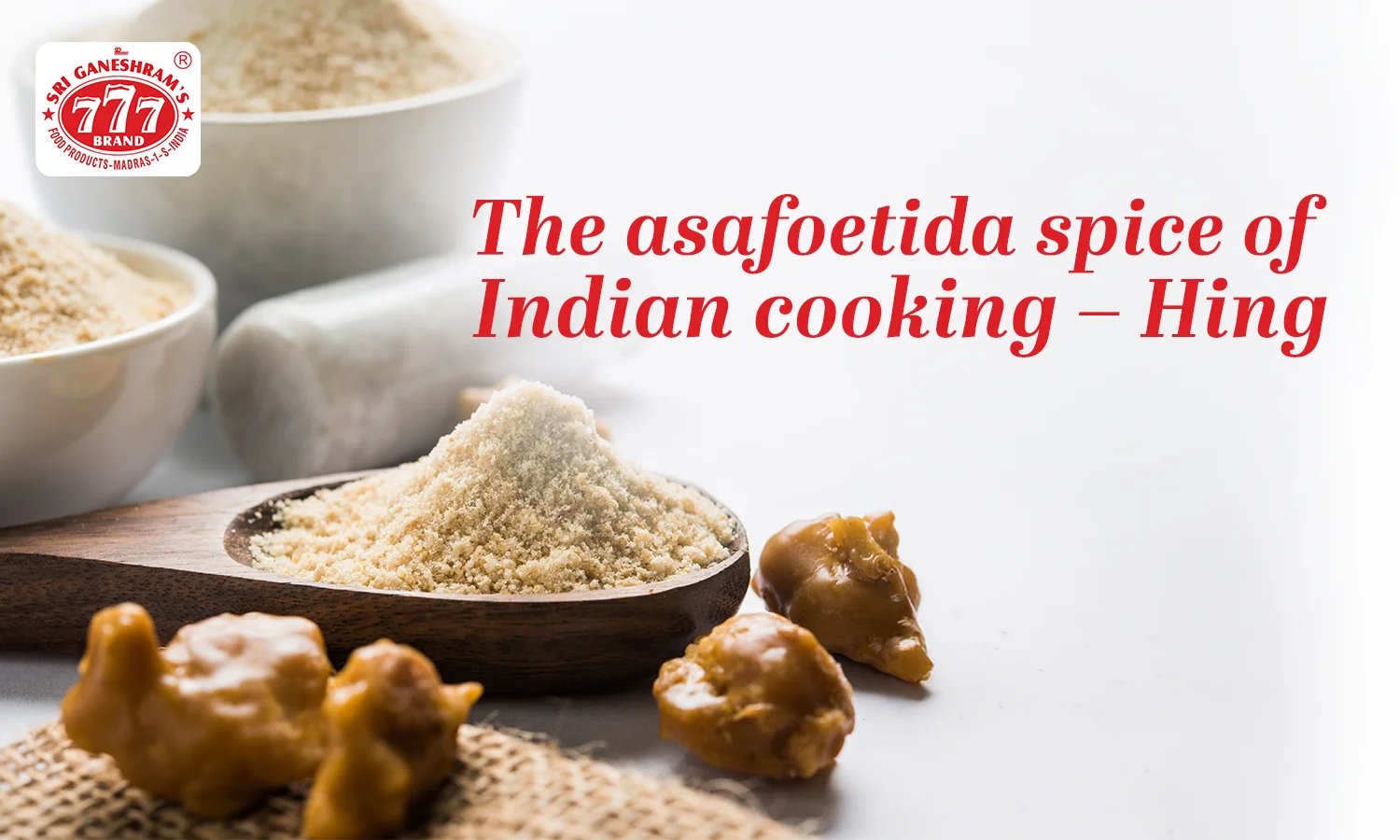
The asafoetida spice of Indian cooking – Hing

If you’ve ever cooked a simple dal or vegetable dish, you’ve probably seen a recipe that calls for a tiny pinch of hing. This strong-smelling ingredient is known as the asafoetida spice, and it plays an important role in Indian kitchens.
Though it is used in very small amounts, the asafoetida spice can completely change the flavour of a dish. It adds depth, improves digestion, and often replaces onion and garlic in certain cuisines. Let’s understand what makes this spice so unique.
asafoetida spice

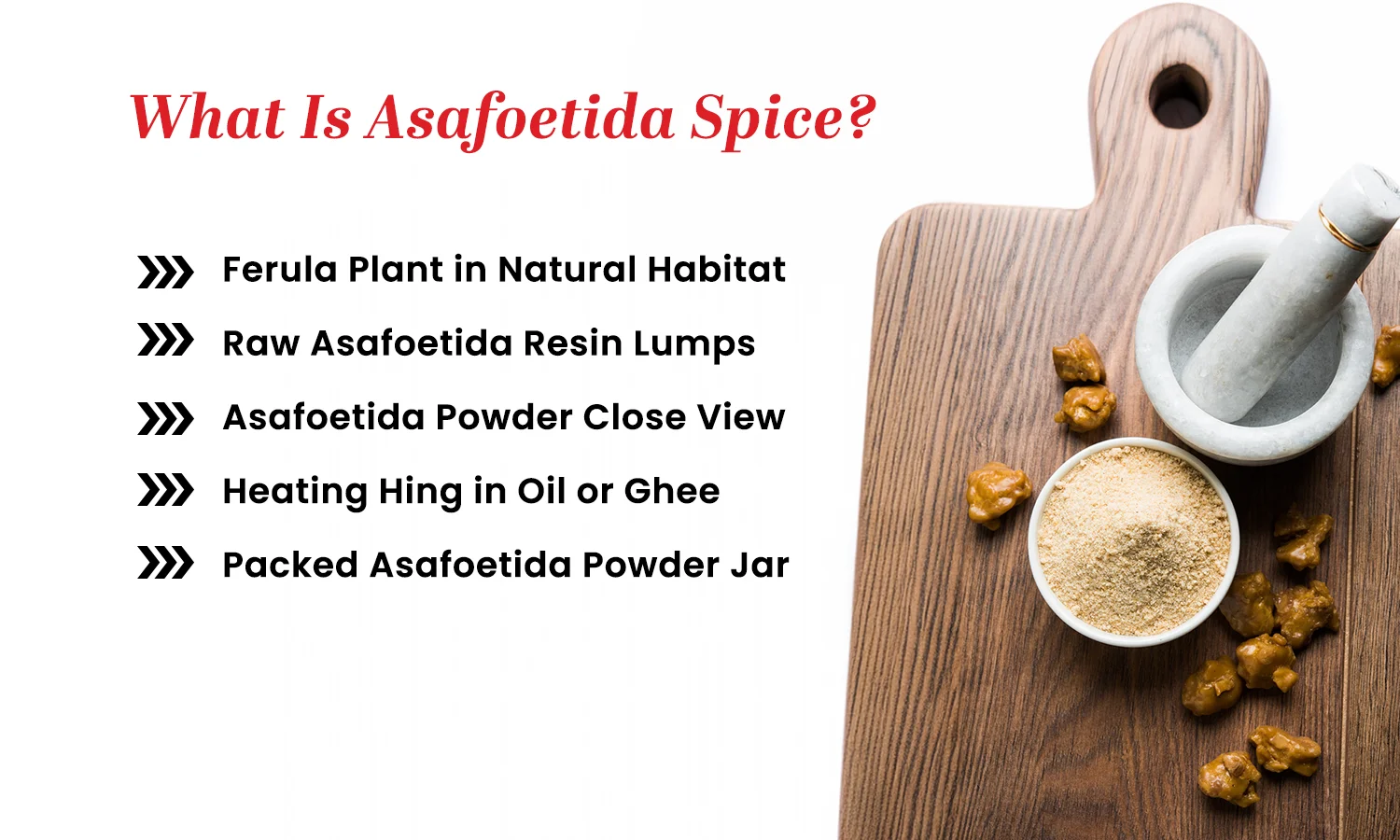
What Is Asafoetida Spice?

The asafoetida spice comes from the dried resin of the Ferula plant. This plant grows mainly in regions of Iran, Afghanistan, and parts of Central Asia. The resin is collected, dried, and processed into either lumps or powder.
Many people ask, is asafoetida a spice or a herb? In the kitchen, it is treated as a spice because it is used in very small amounts to enhance flavour. This asafoetida hing spice is known for its strong aroma in raw form.
In fact, the raw spice asafoetida has a sharp, sulfur-like smell. But once it is heated in oil or ghee, the smell changes into a savoury, onion-like aroma. That is why hing asafoetida is often used as a substitute for onion and garlic in certain traditional diets. Understanding how asafoetida is made helps explain why it has such a strong aroma and why it is used in very small quantities.
Today, it is commonly sold as asafoetida powder, which is easier to measure and store than the pure resin.

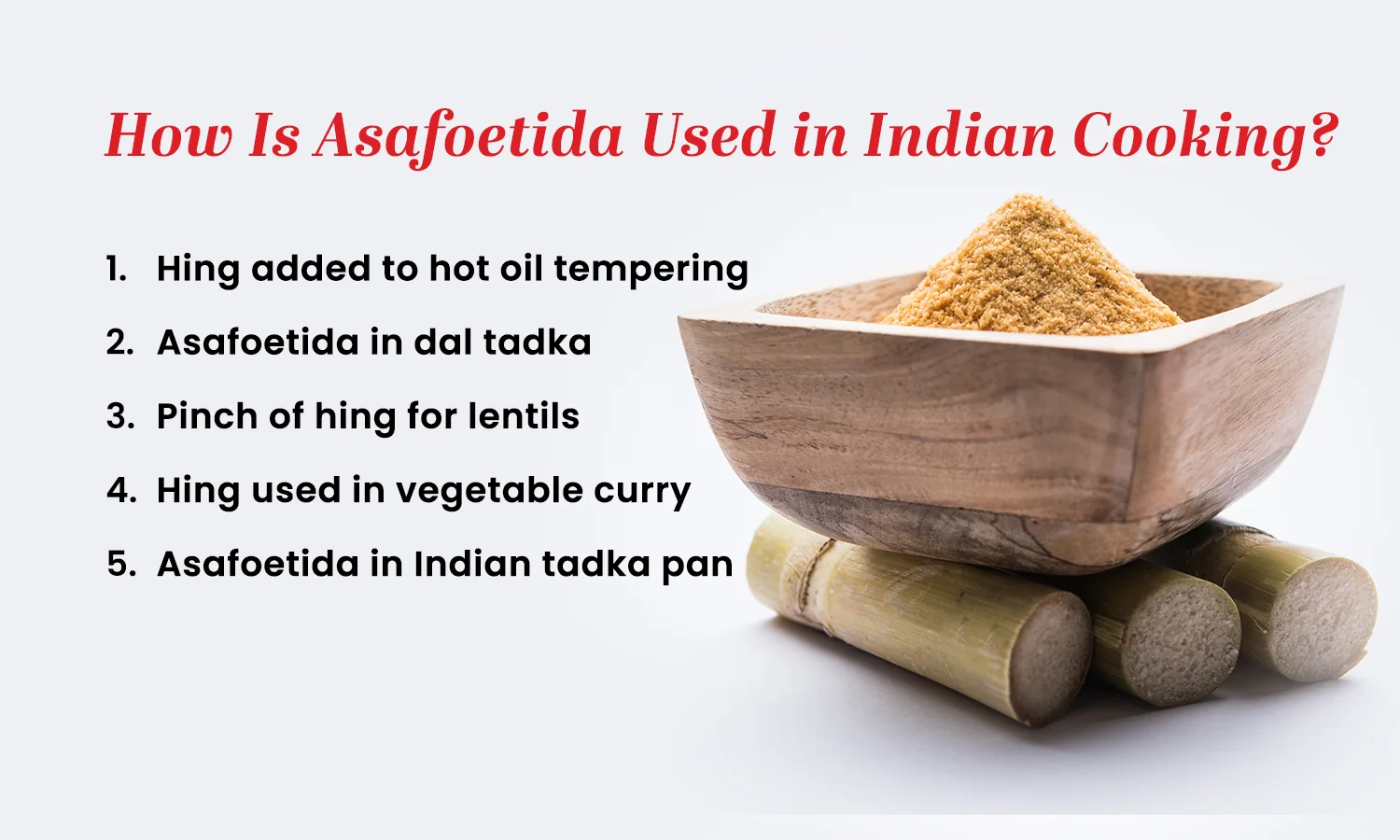
How Is Asafoetida Used in Indian Cooking?

The asafoetida spice is a staple in many vegetarian dishes. It is especially common in lentils, vegetable curries, pickles, and spice blends.
This asafetida indian spice, is valued for two main reasons:

  • It adds a savoury depth similar to onion and garlic.
  • It helps reduce gas and bloating, which is why many people use asafoetida for gas in lentil-based dishes.

In traditional asafoetida indian cooking, it is added during tempering, also called tadka. The spice is heated in oil or ghee for a few seconds before other ingredients are added. This process releases its flavour and removes the harsh raw smell.

Because of its strong taste, asafetida use always follows the “pinch rule.” Even a tiny amount is enough for an entire pot of food.

The benefits of hing make it a common addition in everyday meals, especially in simple vegetarian cooking. asafoetida spice

How You Can Easily Use Asafoetida in Cooking

If you are new to the asafoetida spice, using it is simple once you know the basics.
The Basic Tadka Method

  • Heat a spoonful of oil or ghee in a pan.
  • Add mustard or cumin seeds.
  • Lower the heat and add a tiny pinch of hing.
  • Let it sizzle for a few seconds.
  • Add vegetables, lentils, or pour the mixture over cooked food.

This is the most common method used in everyday asafoetida cooking.

These methods also highlight hing powder uses, showing how easily it can be added to daily recipes.

Other Easy Ways to Use It

  • Dissolve a pinch in warm water before adding to soups.
  • Mix a small amount into buttermilk for digestion.
  • Add it to the gram flour batter for fritters.

These methods show asafoetida how to use it in simple, practical ways.

Regular use also shows hing benefits for stomach, especially when added to lentils and heavy foods.

Because of its strong aroma, always store it in an airtight container. If you plan to buy it, you can easily find asafoetida online from trusted brands.

Key Takeaways

  • The asafoetida spice is a dried resin used in Indian cooking.
  • It has a strong smell when raw but a savoury taste when cooked.
  • Commonly used in dals, vegetables, and pickles.
  • Helps improve digestion and reduce gas.
  • Only a small pinch is needed for most dishes.

In most stores, you will also find compounded asafoetida powder, which is blended with other ingredients for easier use.

Conclusion

The asafoetida spice may look simple, but it carries deep flavour and tradition. Used in tiny amounts, it transforms everyday dishes and supports digestion. From dals to pickles, this asafoetida in food shows how a small ingredient can have a big impact.

Whether you’re cooking a classic dal or trying new recipes, adding a pinch of this asafoetida indian spice can bring authentic taste to your meals.

When choosing the right type, many people prefer pure asafoetida for its strong flavour and better quality.

FAQs

What Does Asafoetida Taste Like?

Raw asafoetida spice has a very strong and sharp smell. But once it is cooked in oil or ghee, it develops a mild, savoury flavour similar to onion and garlic.

What Is the Spice Asafoetida Used For?

The asafoetida spice is mainly used to add flavour and improve digestion. It is commonly added to lentils, vegetable dishes, and pickles.

When to Use Asafoetida in Cooking?

The asafoetida spice is usually added during the tempering stage. It is heated in oil or ghee for a few seconds before other ingredients are added.

Can We Use Asafoetida Daily?Yes, the asafoetida spice can be used daily in small amounts as part of regular cooking. Since it is very strong, a tiny pinch is enough for most meals. While widely used, it is also important to understand hing benefits and side effects, especially when consumed in larger amounts.

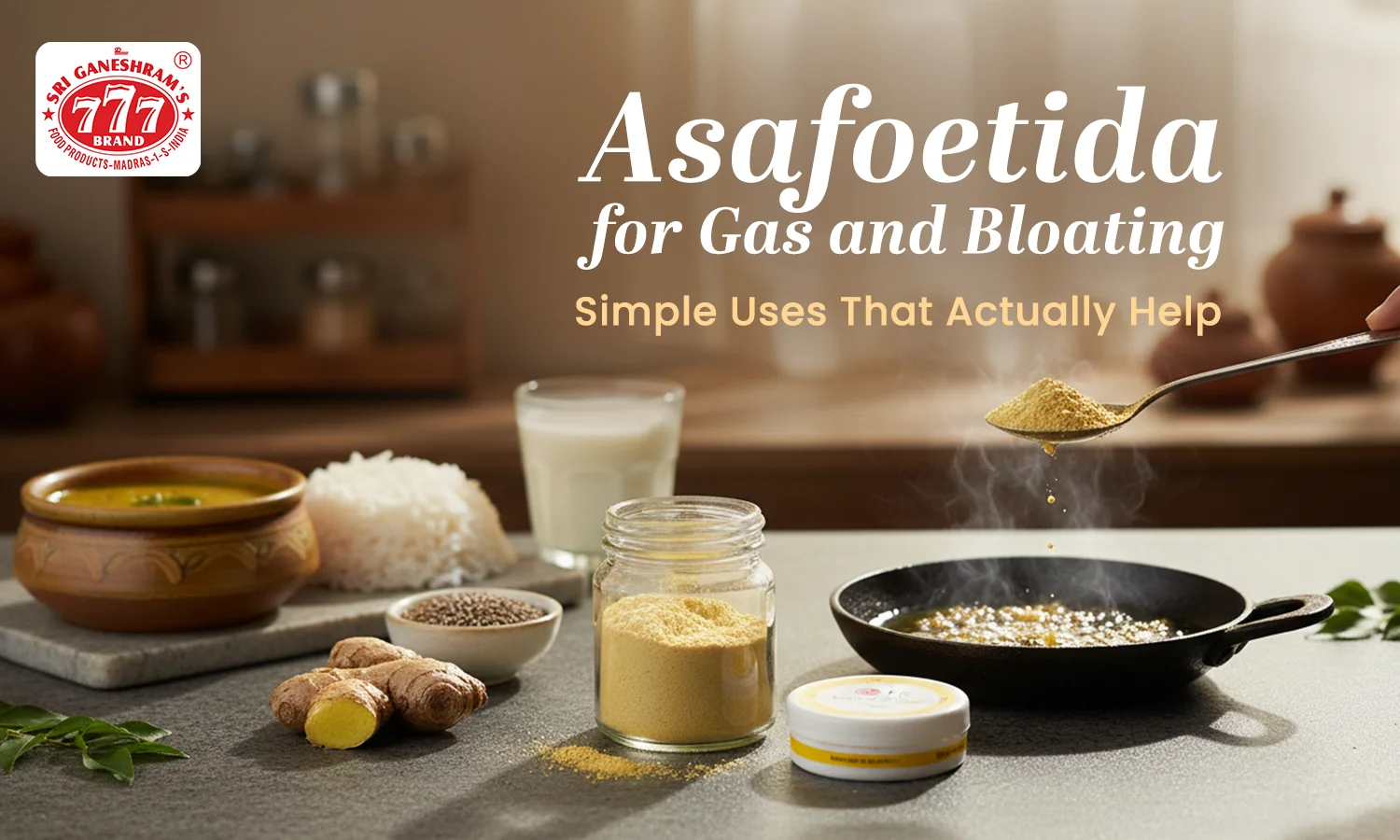
Asafoetida for Gas and Bloating: Simple Uses That Actually Help

If you’ve ever felt heavy or uncomfortable after a meal, you’re not alone. Gas and bloating are common, especially after dishes made with lentils, beans, or fried foods. This is why many households rely on asafoetida for gas as a simple, natural remedy.
Used for generations, hing is known for its digestive support. A tiny pinch in the right place can make meals easier to digest and reduce discomfort. Let’s look at how asafoetida for gas actually works and how you can use it in daily cooking.

Why People Reach for Asafoetida for Gas and Bloating

The main reason people use asafoetida for gas is its carminative property. This means it helps prevent gas formation and supports the release of trapped air from the digestive tract.
Some well-known asafoetida benefits for gas include:

  • Stimulating digestive enzymes
  • Relaxing intestinal muscles
  • Supporting healthy gut bacteria
  • Reducing fermentation after heavy meals

Many households rely on hing for gas after eating lentils or fried foods because it helps the stomach feel lighter.

What Makes Hing Helpful After Legume-Rich Meals

Beans and lentils contain complex sugars that are hard to digest. When these reach the intestines, they ferment and produce gas.

Using asafoetida for gas during cooking helps:

  • Improve enzyme activity
  • Reduce fermentation in the gut
  • Ease cramps and discomfort

This is why hing for gas problem is commonly added to dals, chickpeas, and beans.

Exactly How to Temper Hing for Digestion-Friendly Meals

The best way to use asafoetida for gas is through tempering, also called tadka.

Simple tempering method:

  • Heat a spoonful of oil or ghee.
  • Add cumin or mustard seeds.
  • Lower the flame.
  • Add a small pinch of hing.
  • Let it sizzle for a few seconds.
  • Mix it into your dal or vegetables.

This method creates hing gas relief by activating its digestive compounds.

Picking the Right Form and Jar Size

For daily use of asafoetida for gas, compounded powder is the most practical option.

  • Powder form: Easy to measure and mix into dishes.
  • Resin form: More potent but harder to use.

Choose a small jar of asafoetida powder so it stays fresh. Large packs may lose aroma before you finish them.
Asafoetida for Gas

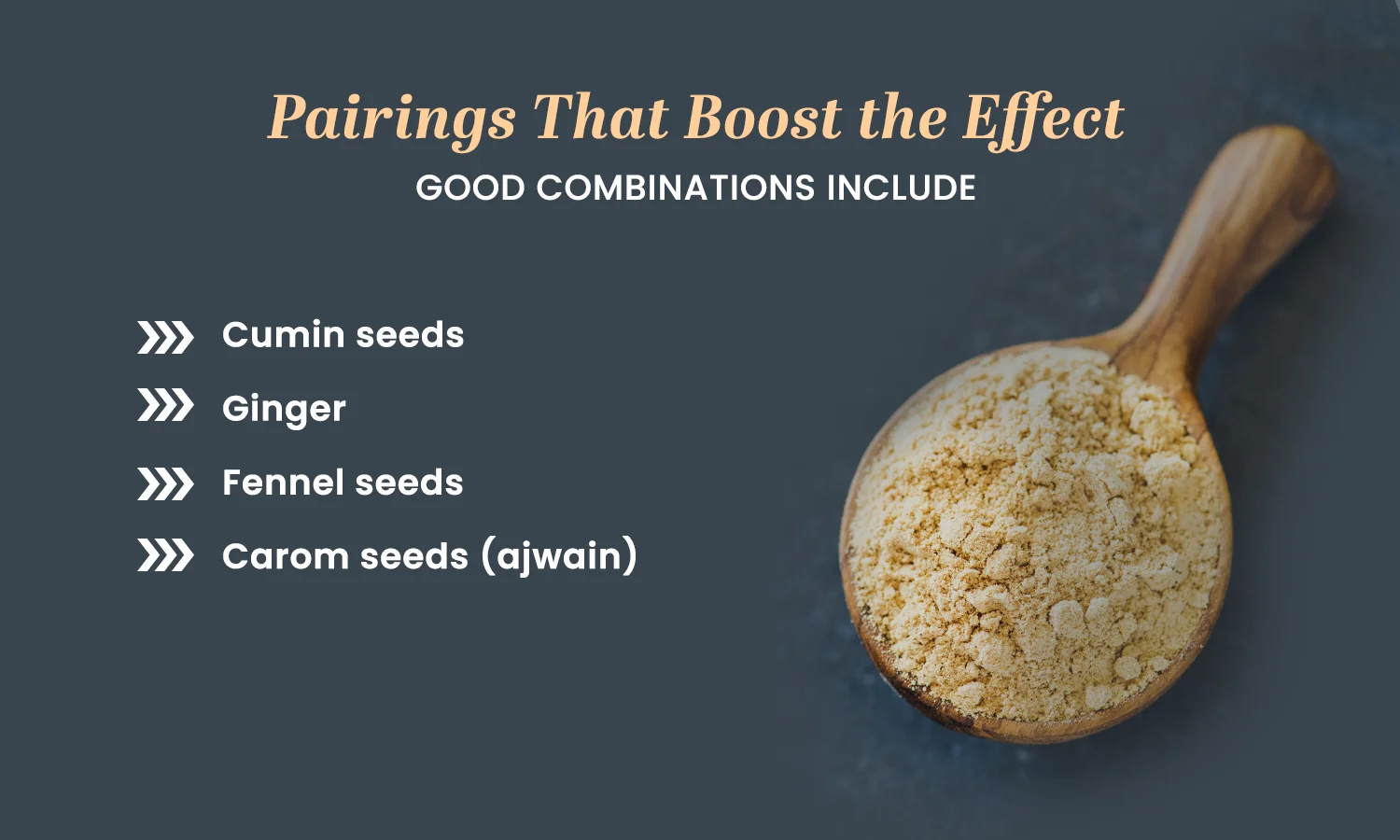
Pairings That Boost the Effect

Certain spices work well with asafoetida for gas and enhance its digestive effect.

Good combinations include:

  • Cumin seeds
  • Ginger
  • Fennel seeds
  • Carom seeds (ajwain)

These pairings increase the overall benefits of asafoetida in heavy or protein-rich meals.

How Much Is “a Pinch”?

When using asafoetida for gas, a pinch usually means:

  • Around 1/16 to 1/8 teaspoon
  • Roughly 50–100 mg of powder

This small amount is enough for a dish serving 3–4 people. For adults seeking hing for gas relief in adults, sticking to this quantity is usually sufficient.

Storage That Preserves Bloom (and Reduces Smell)

Proper storage helps maintain the effectiveness of asafoetida for gas.

  • Store it in a small airtight glass jar.
  • Keep the original pouch inside the jar.
  • Place it in a cool, dry cupboard.
  • Always use a dry spoon.

Good storage keeps the aroma strong and supports the digestive asafoetida benefits.
Asafoetida for Gas

Who Should Be More Cautious

While asafoetida for gas is safe for most adults in cooking amounts, some people should be careful.

  • Pregnant women
  • Breastfeeding mothers
  • Infants and young children
  • People on blood-thinning medication
  • Those with stomach ulcers or severe acidity

In such cases, consult a doctor before regular asafoetida uses.

One-Week “Lighter Meals” Plan Using Asafoetida for Gas and Bloating

A simple meal plan can help you test how asafoetida for gas works in daily food.

Day Lunch Dinner
Day 1 Moong dal with hing Steamed rice and bottle gourd
Day 2 Jeera rice with hing Cabbage stir-fry
Day 3 Thin moong soup Vegetable dalia
Day 4 Moong khichdi Warm chickpea chaat
Day 5 Raw mango rasam Quinoa upma
Day 6 Fermented rice dish Spinach khichdi
Day 7 Amla rasam Hing mashed potatoes

You can also try hing water for gas after dinner by mixing a tiny pinch in warm water.

Key Takeaways

  • Asafoetida for gas works by reducing fermentation in the gut.
  • A small pinch during cooking is usually enough.
  • It is especially helpful with lentils and beans.
  • Pairing it with cumin or ginger improves digestion.
  • Proper storage keeps it effective and aromatic.

Conclusion

Using asafoetida for gas is one of the simplest ways to make heavy meals easier to digest. A tiny pinch in your tempering can reduce bloating and keep your stomach comfortable. With the right amount, proper storage, and simple meal choices, hing can become a reliable part of your everyday kitchen routine.

FAQs

What Is Asafoetida Good For?Asafoetida for gas is one of its most common uses. It helps reduce bloating, improves digestion, and supports gut health when used in small cooking amounts.
Who Should Not Eat Asafoetida?People who are pregnant, breastfeeding, or taking blood-thinning medication should be cautious with asafoetida for gas. It’s best to consult a doctor before regular use in such cases.
Can I Eat Asafoetida Daily?Yes, asafoetida for gas can be used daily in very small amounts during cooking. A tiny pinch in dal or vegetables is usually safe for most adults.
What Is the Fastest Way to Remove Gas?One quick remedy using asafoetida for gas is mixing a small pinch in warm water or buttermilk after a heavy meal. This traditional method may help ease bloating and discomfort.