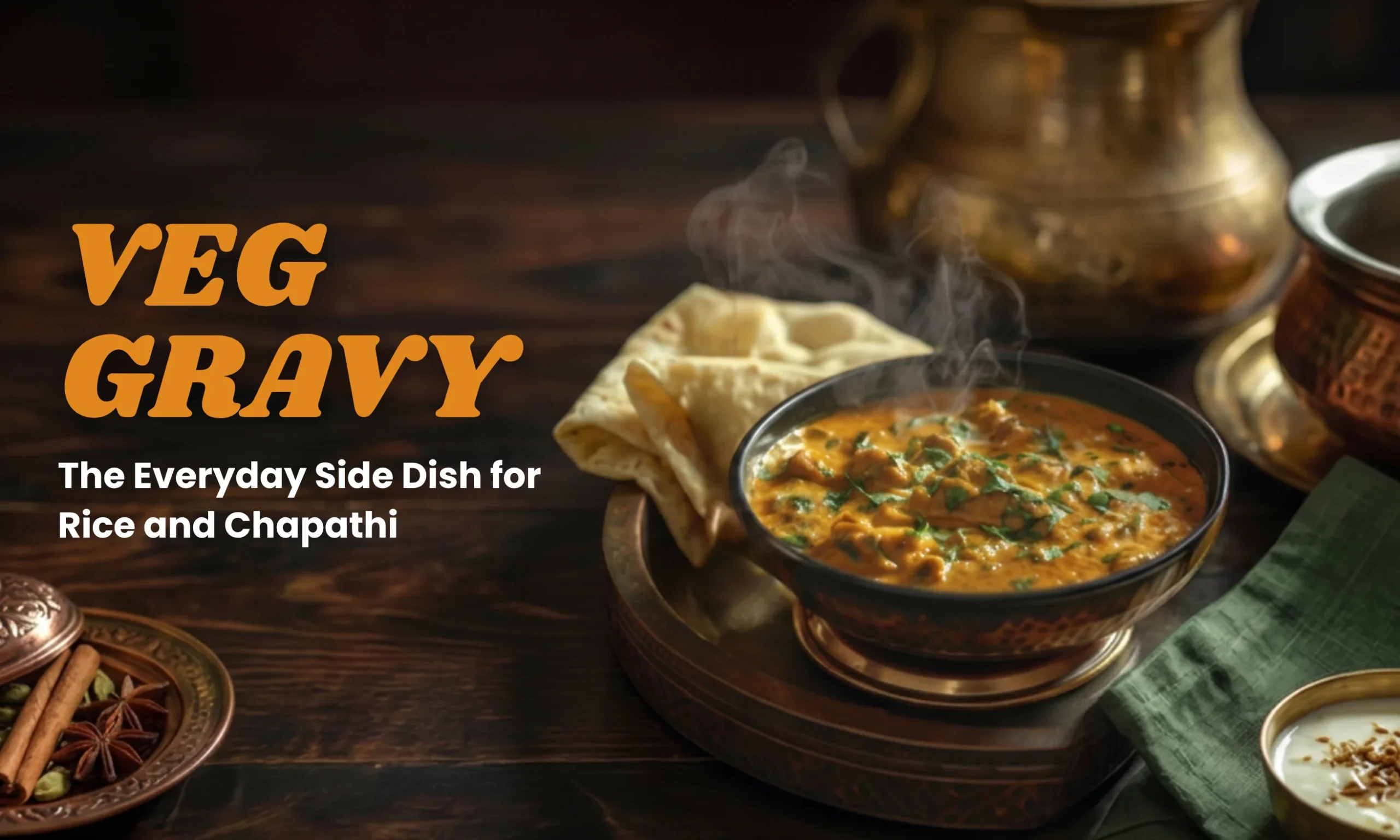
Veg Gravy: The Everyday Side Dish for Rice and Chapathi

Summary

Looking for a dependable veg gravy to pair with rice or chapathi tonight? This guide lists everyday South Indian gravy options, their base ingredients, and quick preparation tips for a well-rounded family meal.

Introduction:

A veg gravy carries more weight on the Indian dinner table than its simplicity suggests. It turns plain rice or chapathi into a complete meal, and its flexibility, built around whatever vegetables are available, is exactly why it remains one of the most cooked dishes in Indian households. Understanding a small veg gravy list of dependable options removes much of the daily guesswork around what to cook.

What Is Veg Gravy?

Veg gravy is a simple vegetable-based curry made with onions, tomatoes, spices, and fresh vegetables. It is one of the most common dishes in Indian homes because it pairs well with both rice and chapathi. Depending on the recipe, the gravy can be light and thin for rice or thick and creamy for chapathi.
There are many types of veg gravy, each with its own flavour and texture. Some use a tomato and onion base, while others include coconut, curd, or spice blends for a richer taste. You can also prepare it with seasonal vegetables like carrots, beans, peas, potatoes, cauliflower, and capsicum.
The best part about veg gravy is its flexibility. You can easily adjust the vegetables, spices, and consistency to suit your family’s taste, making it a practical choice for everyday meals.

Basic Veg Gravy Recipe for Everyday Cooking

Most versions of a veg gravy recipe start the same way: a base of sautéed onions and tomatoes, seasoned with turmeric, chilli powder, and coriander powder, into which mixed vegetables are added and simmered until tender. The specific vegetables used, and the thickness of the final gravy, are what create variation across the many veg gravy dishes found in regional Indian cooking. The advantages of the ingredients in a veg gravy are also many; for example, the coriander powder benefits in terms of flavour and health are numerous.

Types of Veg Gravy for Rice and Chapathi
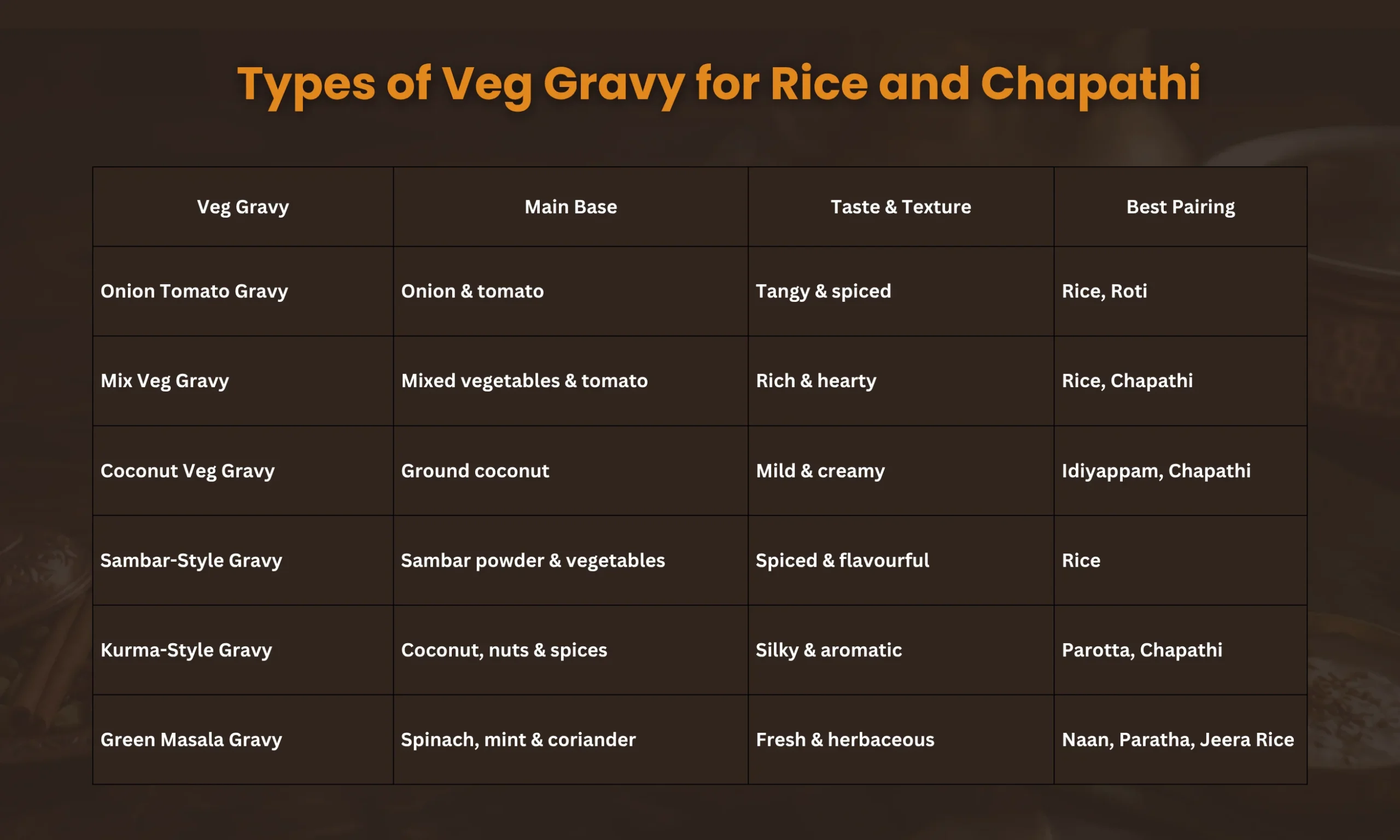
Veg Gravy There are many types of veg gravy that you can prepare using simple ingredients found in most kitchens. Each gravy has its own flavour, texture, and best pairing. Some are light and perfect for rice, while others are thick enough for chapathi or parotta. Choosing the right type helps bring variety to everyday meals without making cooking complicated.

Onion Tomato Veg Gravy

It is a quintessential Indian dish made by simmering mixed vegetables in a tangy, spiced gravy of caramelized onions, ripe tomatoes, and essential spices. It serves as a versatile, easy-to-make foundation for daily meals, pairing effortlessly with both flatbreads like roti and cooked rice.

Mix Veg Gravy

A mix veg gravy that combines several vegetables in one pot is often the most practical choice for a family dinner, since it delivers more variety and nutrition in a single dish compared to a single-vegetable curry. A dependable mix veg gravy recipe typically par-boils harder vegetables slightly before adding them to the tomato base, ensuring everything finishes cooking evenly.

Coconut Veg Gravy

For a milder alternative to the standard tomato base, several veg curry recipes rely on ground coconut instead, producing a creamier, slightly sweeter gravy that pairs particularly well with idiyappam or chapathi. This style tends to suit family meals where a gentler, less tangy flavour is preferred over a sharper tomato-forward gravy.

Sambar-Style Veg Gravy

Using the 777 Madras sambar powder as the base for a vegetable gravy, rather than plain chilli powder, adds a noticeably deeper, more layered flavour. Vegetables like drumstick, brinjal, and okra work particularly well in this style, creating a gravy substantial enough to serve as the main component of a meal rather than just a side.

Kurma-Style Veg Gravy

Kurma-style veg gravy is a rich, aromatic gravy where mixed vegetables are simmered in a velvety paste of ground nuts (like cashews), poppy seeds, coconut, and warm whole spices. It is known for its mild-to-medium heat, silky texture, and deeply fragrant spice profile, making it a classic pairing for parottas, chapatis, and biryanis.

Green Masala Veg Gravy

Green Masala Veg Gravy (or Veg Hariyali) is a vibrant, herb-forward dish where mixed vegetables are simmered in a freshly blended puree of spinach, cilantro, mint, green chillies, and aromatic spices. It delivers a fresh, herbaceous flavour with a spicy kick, making it a wholesome and delicious pairing for naan, parathas, or jeera rice.

Best Vegetables to Use in Veg Gravy

The right gravy vegetables matter as much as the spice base. Carrots, beans, and potatoes hold their shape well and add substance, while softer vegetables like peas and capsicum cook quickly and add colour. Combining two or three vegetable types, rather than relying on just one, generally produces a more balanced final dish.

Veg Gravy for Rice vs Veg Gravy for Chapathi

Not every gravy suits both rice and roti equally well. A thinner, more liquid veg gravy for rice allows the gravy to mix easily into each spoonful, while a thicker, more concentrated veg gravy for chapathi clings better to bread without running off the plate. Adjusting the water content toward the end of cooking is usually enough to shift a single base recipe between these two styles.

Serving Veg Gravy as a Complete Veg Side Dish

Beyond the main gravy itself, a well-chosen veg side dish, such as a simple poriyal or a spoon of 777 citron pickle, rounds out the plate without requiring significant extra cooking. Many households treat the gravy as the centrepiece and build the rest of the meal, rice, roti, and a small side, around it.

Tips to Make Flavourful Veg Gravy
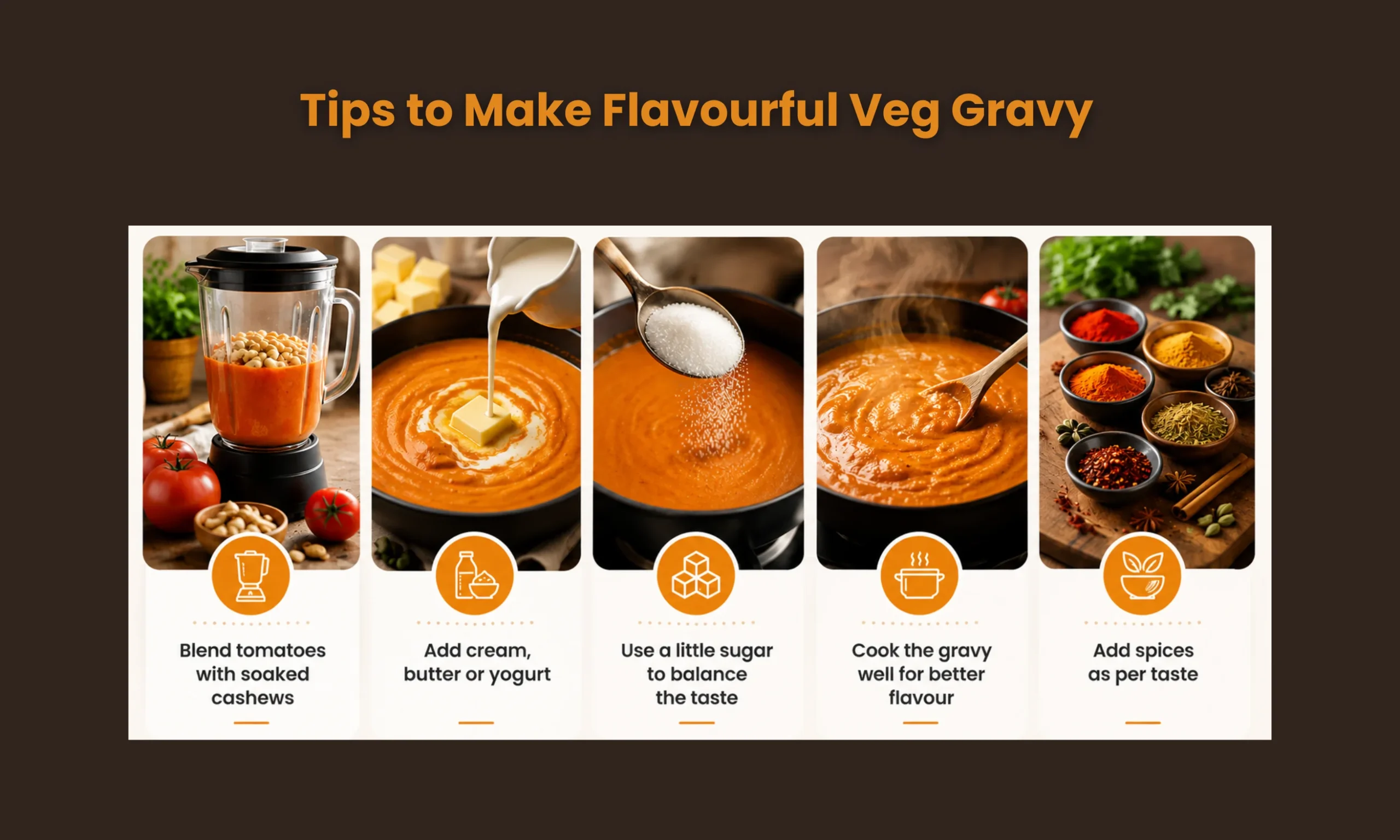
Veg Gravy Here are some simple tips to make your veg gravy recipes better and more flavourful.

  • Puree tomatoes with soaked cashews for a naturally thick, restaurant-grade texture.
  • Whisk in a spoon of butter, fresh cream, or yogurt at the very end to round out heat and add a smooth finish.
  • Include a pinch of sugar or honey to balance out the sharpness of fresh tomatoes and pungent spices.

Round Out Tonight’s Meal

A good base powder like the 777 Madras sambar powder can turn a simple vegetable gravy into something with real depth. Try 777 Foods’ products/ingredients for a complete, home-style meal. Shop the full collection at 777 Foods.

Key Takeaways

  • A basic onion-tomato base, adjusted in spice and thickness, forms the foundation of most everyday vegetable gravies.
  • Combining two or three vegetable types produces a more balanced texture than relying on a single vegetable.
  • Adjusting water content shifts the same gravy recipe between a rice-friendly and chapathi-friendly consistency.
  • Coconut-based gravies offer a milder alternative to tomato-forward options for family meals.
  • A rotation of three or four dependable gravy recipes removes daily decision fatigue around dinner.

FAQs

What is the easiest veg gravy recipe for a weeknight dinner?A basic onion-tomato gravy with mixed vegetables like carrots, beans, and potatoes is the simplest and fastest option, ready in under thirty minutes.
How do I adjust a veg gravy for rice into one suitable for chapathi?Reducing the water content toward the end of cooking thickens the gravy, making it cling better to chapathi rather than running off the plate.
Which gravy vegetables work best for a mix veg gravy?Carrots, beans, potatoes, peas, and capsicum are the most common combination, offering a mix of textures and quick cooking times.
Can veg gravy recipes be made without tomatoes?Yes, coconut-based or sambar-powder-based gravies both offer flavourful alternatives to a tomato-forward base for those who prefer a milder or deeper taste.
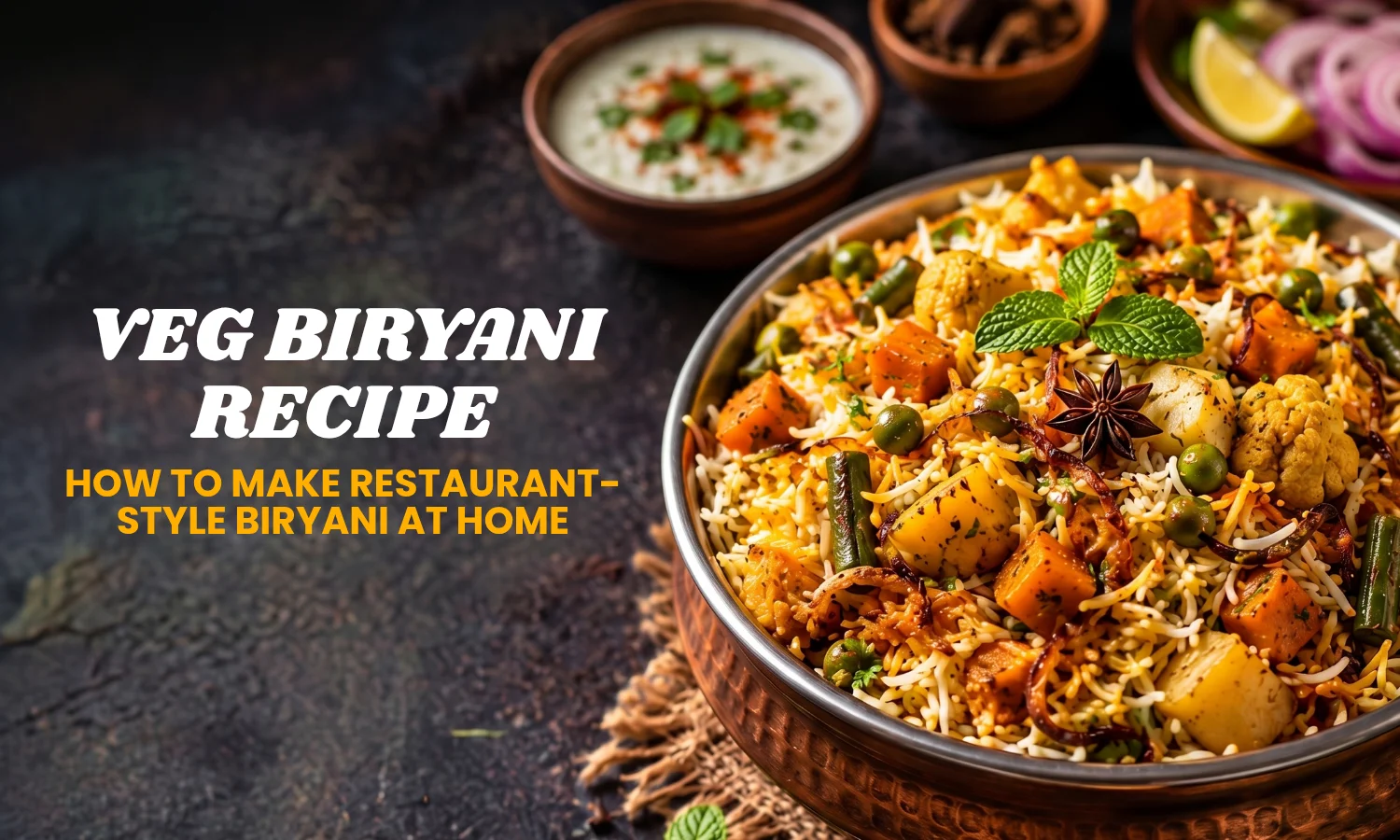
Veg Biryani Recipe: How to Make Restaurant-Style Biryani at Home

Summary

Want to learn a proper veg biryani recipe with authentic layering and aroma? This guide covers rice selection, spice balance, and the dum technique behind a restaurant-style vegetable biryani for weekend cooking.

Introduction:

Veg biryani recipe lovers know there is nothing quite like opening a freshly cooked pot to that rich, fragrant aroma. Recreating those distinct restaurant-style layers at home comes down to a few fundamental steps rather than complicated culinary secrets. Once you master the simple art of spice balancing and steam cooking, you can easily serve a memorable dish every single time.

What Sets Biryani Apart From Vegetable Pulao

Biryani and pulao are often confused, though the two dishes differ meaningfully in technique. A vegetable pulao cooks rice and vegetables together in one pot from the start, while a proper vegetable biryani recipe involves layering partially cooked rice over a separately prepared vegetable gravy, then finishing everything together under a sealed lid on low heat, a process known as dum cooking. Whether it’s a pulao or biryani, a side dish of the 777 citron pickle can enhance the taste of your meal.

Choosing the Right Rice for Veg Biryani

Long-grain basmati rice is essential for a good veg dum biryani recipe, since its structure holds up well through the layering and steaming process without turning mushy. Rice should be soaked for at least twenty minutes before cooking and only partially boiled, roughly seventy percent of the way, before layering, since it continues cooking further during the dum stage.

Veg Biryani Ingredients That Build the Flavour Base

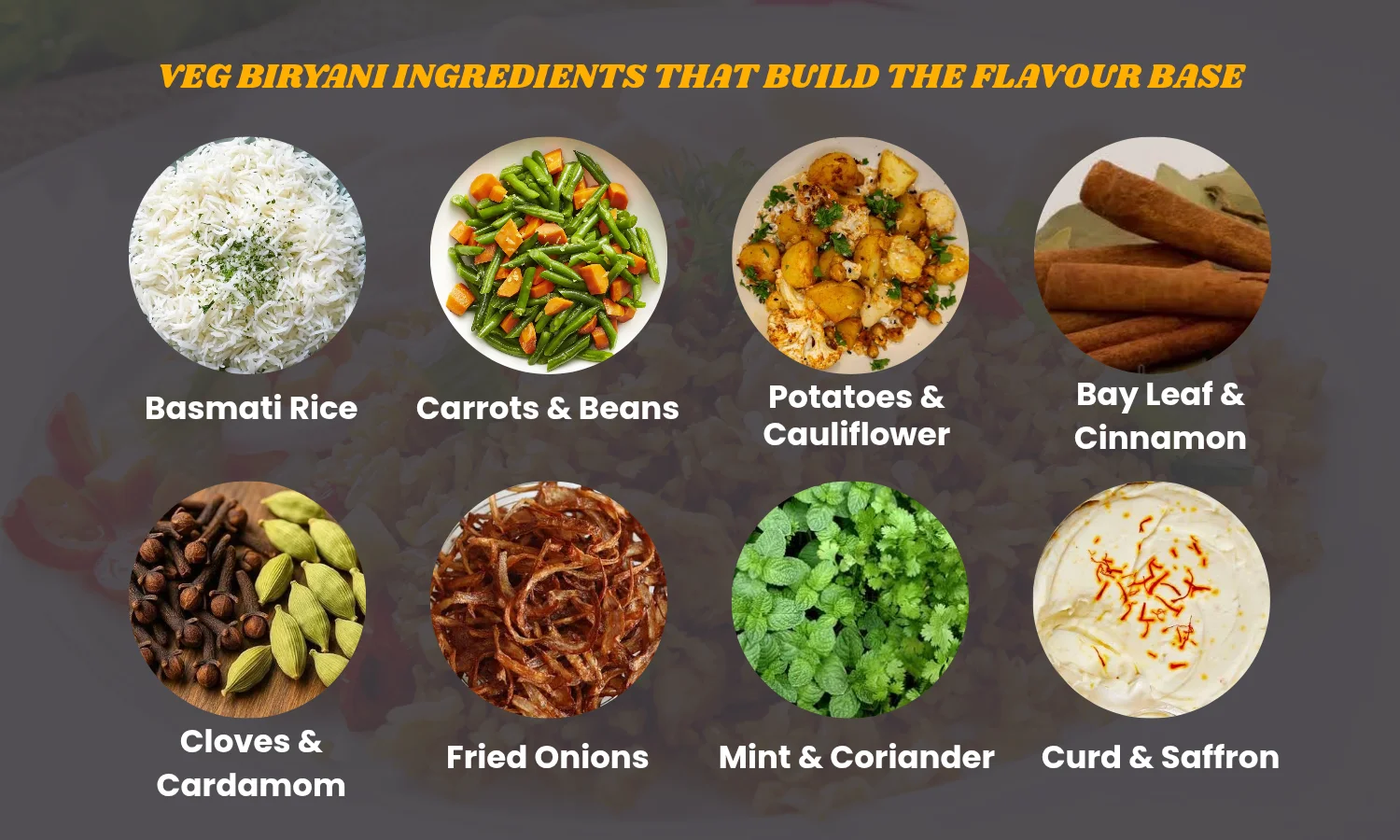
veg biryani recipe A dependable list of veg biryani ingredients includes basmati rice, mixed vegetables such as carrots, beans, potatoes, and cauliflower, whole spices like bay leaf, cinnamon, cloves, and cardamom, along with fried onions, mint, coriander, and a small amount of curd for the gravy base. Saffron soaked in warm milk is optional but adds both colour and aroma to the finished dish.
How to Make Veg Biryani Step by Step

Understanding how to make veg biryani starts with preparing the vegetable gravy separately.

  • Cook the mixed vegetables in a base of fried onions, ginger-garlic paste, tomatoes, and curd, seasoned with a biryani-specific spice mix, until the vegetables are just tender and the gravy has thickened slightly.
  • Meanwhile, boil the soaked basmati rice with whole spices and salt until roughly seventy percent cooked, then drain immediately to stop further cooking.
  • In a heavy-bottomed pot, spread half the vegetable gravy at the base, layer the partially cooked rice over it, and sprinkle with fried onions, mint, and coriander; then repeat with the remaining gravy and rice.
  • Seal the pot with a tight-fitting lid or a layer of dough around the rim for a more traditional seal, and cook on the lowest possible heat for twenty to twenty-five minutes. This final steaming stage is what develops the distinct aroma and texture associated with proper biryani.

Serve the veg biryani with a side of the 777 mint leaf chutney, onion raita, or 777 mixed pickle.

Exploring Different Veg Biryani Types

Vegetable biryani has evolved into a diverse culinary staple across India, with each region adapting local rice varieties, cooking techniques, and spice profiles to create unique versions. From dum-cooked aromatic rice layered with spiced vegetables to tangy, broth-infused preparations, these regional variations reflect the rich cultural heritage and distinct flavour preferences of their origins.
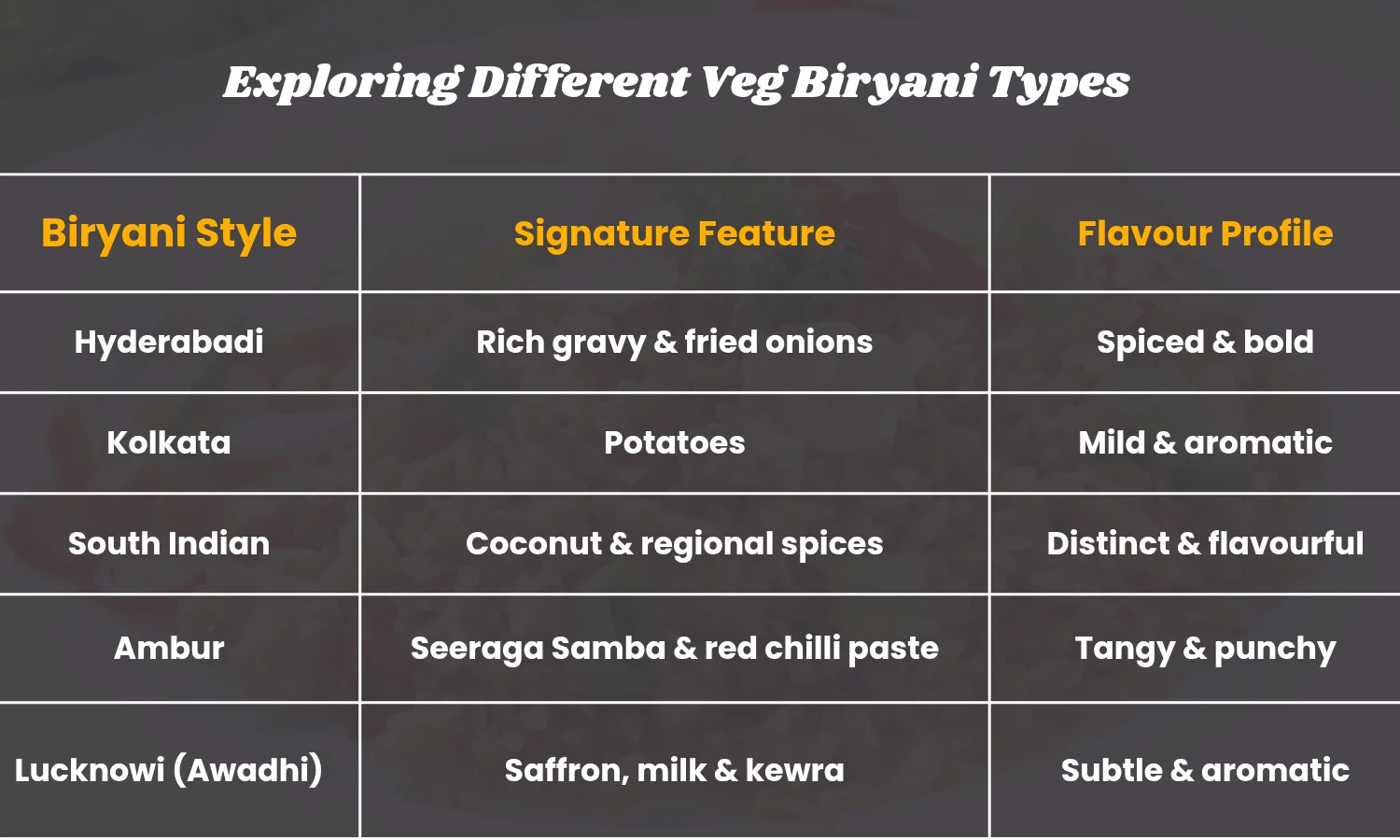
Here are the veg biryani types across India that have developed regional identities.

  • Hyderabadi-style biryani leans on a rich, spiced gravy and a generous use of fried onions.
  • Kolkata-style versions often include potatoes as a signature ingredient.
  • South Indian veg biryani versions tend to use a slightly different spice mix, often incorporating coconut or a distinct blend of whole spices unique to the region.
  • Ambur-style veg biryani uses short-grain Seeraga Samba rice cooked with a tangy dried red chili paste, curd, and mint, giving it a distinctive reddish colour and punchy flavour.
  • Lucknowi (Awadhi)-style veg biryani focuses on subtlety and aroma over heat, relying on a delicate pakki-style cooking process with milk, saffron, kewra water, and gentle whole spices.

Tips to Make Restaurant-Style Veg Biryani at Home

The gap between a home-cooked biryani and a restaurant-style veg biryani often comes down to two factors: the quality of fried onions and the patience of the dum stage. Follow these tips to prepare a restaurant-style veg biryani right at home.

  • Fry onions slowly until deeply golden and slightly crisp, adding a sweetness that is difficult to rush.
  • Avoid opening the pot early during the dum stage. This helps preserve the steam and aroma that define a proper biryani.
  • Drizzle warm ghee along the edges and top layer of the biryani, along with saffron milk or rose/kewra water, before sealing the pot.

Choosing a Veg Biryani Side Dish

A good veg biryani side dish balances the richness of the main dish rather than competing with it. A simple onion raita, a cooling cucumber salad, a light gravy like a mirchi ka salan, or a 777 coriander leaf chutney are common accompaniments across most Indian households serving biryani for a special weekend meal.

Simple Veg Biryani Recipe for First-Time Cooks

For those attempting homemade biryani for the first time, a simple veg biryani recipe that skips the dum sealing step, opting instead for a covered pot on low heat, still delivers a satisfying result while being more forgiving of small errors in timing or rice-to-water ratio.
And don’t forget to finish your meal with a delicious dessert like a big gulab jamun, which can be easily prepared using the 777 gulab jamun mix.

Key Takeaways

  • Biryani differs from pulao mainly through its layering technique and separate dum cooking stage.
  • Long-grain basmati rice, partially cooked before layering, is essential for the right texture.
  • Slow-fried onions contribute significantly to the sweetness associated with restaurant-style biryani.
  • A well-sealed pot during the dum stage preserves the steam and aroma central to the dish.
  • Raita or a light salan makes an ideal side dish that balances biryani’s richness.

Complete Your Biryani Weekend

A good pickle on the side rounds out any biryani meal perfectly. Try 777 Foods’ Vadu Mango Pickle or Andhra Avakaya Pickle alongside your next batch of homemade biryani for that extra tang. Shop the full range at 777 Foods.

FAQs

What is the main difference between a veg biryani recipe and a vegetable pulao?Biryani involves layering separately cooked rice and gravy followed by a sealed dum cooking stage, while pulao cooks rice and vegetables together in one pot from the start.
What rice works best for a veg dum biryani recipe?Long-grain basmati rice, soaked and partially cooked before layering, holds its shape and texture best through the dum process.
How do I make a simple veg biryani recipe without the traditional dum-sealing method?Cooking everything in a tightly covered pot on the lowest possible heat, without opening it during cooking, still delivers a good result for beginners.
What is the best veg biryani side dish to serve alongside it?A cooling onion raita or a light salan gravy both balance the richness of biryani well without overwhelming the meal.

Vegetable Fried Rice Recipe: Street Style at Home in 20 Minutes

Summary

Want a vegetable fried rice recipe that tastes like the one from your favourite restaurant? This guide covers the right rice texture, ingredient order, and quick cooking technique for a smoky, well-balanced fried rice at home.

Introduction:

Vegetable fried rice recipe craving usually comes down to recreating that smoky, street-stall flavour and light texture at home. While it seems simple, achieving that distinct Indo-Chinese taste relies on high-heat tossing and using properly cooled rice. Once you master those quick tricks, you can whip up a satisfying, takeout-quality meal faster than waiting for delivery.

What Is Vegetable Fried Rice?

Vegetable fried rice is a dish made with cooked rice, fresh vegetables, sauces, and simple seasonings. It is cooked over high heat to create a smoky flavour and is often served as a quick lunch or dinner. With the right rice and cooking technique, you can easily make restaurant-style vegetable fried rice at home.

Why Vegetable Fried Rice Became an Indian Favourite

Few dishes reflect India’s love for adapting global cuisine as clearly as vegetable fried rice. Originally an Indo-Chinese creation, it has become a household staple across the country, popular among students cooking for themselves, families looking for a change from traditional rice varieties, and street food stalls serving it by the plate every evening. Part of its appeal lies in how quickly it comes together and how easily it uses up leftover rice and vegetables.

The Secret to Restaurant-Style Texture

The single biggest factor separating a good veg fried rice recipe from an average one is the rice itself. Freshly cooked, warm rice tends to turn clumpy and soft when stir-fried, while rice that has been cooked and refrigerated for several hours, or even overnight, holds its shape far better in a hot pan. This is why most homemade fried rice recipes recommend using day-old rice rather than a freshly cooked batch.

Fried Rice Recipe Ingredients You Actually Need

A basic list of fried rice recipe ingredients includes the following:

  • 4 cups cooked rice (chilled)
  • 2 tbsp oil
  • 1 tbsp finely minced garlic
  • Half cup finely diced carrots
  • Half cup finely chopped beans
  • Half cup finely shredded cabbage
  • Half cup chopped spring onions
  • Soy sauce
  • Vinegar
  • Ground black pepper
  • Salt (to taste)

Some versions also include a small amount of green chilli sauce for extra heat. None of these ingredients are difficult to source, which is part of why this dish has become such an easy fried rice recipe for home cooks of all skill levels. Many of these ingredients are also rich in nutrients; for example, black pepper is good for health in several ways.

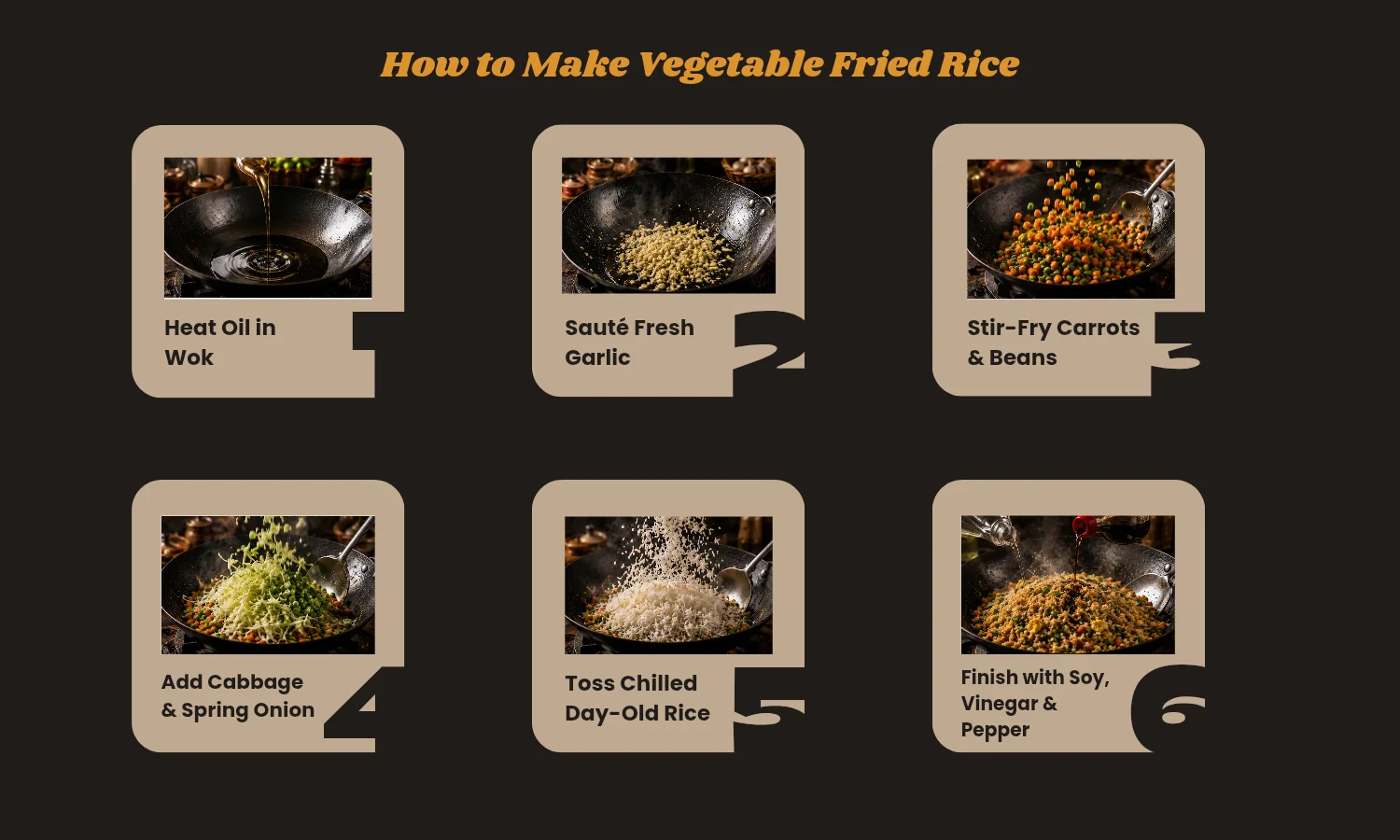
How to Make Vegetable Fried Rice Step-by-Step

Vegetable Fried Rice Recipe

  • Heat oil in a wide pan or wok until it is very hot.
  • Add finely chopped garlic.
  • Add the harder vegetables like carrots and beans.
  • Stir-fry for a minute or two.
  • Add the softer vegetables like cabbage and spring onion greens.
  • Push the vegetables to one side of the pan, and add the day-old rice.
  • Toss everything together quickly over high heat.
  • Stir in soy sauce, a touch of vinegar, and pepper. Use authentic black pepper in any form, like the 777 pepper powder
  • Mix continuously so the seasoning coats the rice evenly rather than pooling in one spot.

The entire cooking process, once the vegetables are prepped, should take no more than eight to ten minutes.

Getting the Street Style Smoky Flavour

Street vendors achieve their signature street-style veg fried rice flavour largely through the intense heat of their cooking flames, something difficult to fully replicate on a home stove. Using a wide, flat pan instead of a narrow pot, working in smaller batches rather than overcrowding the pan, and keeping the heat as high as your stove safely allows are the closest home substitutes for that smoky, charred aroma.

Making Vegetable Fried Rice Indian-Style

While the base recipe stays fairly consistent, vegetable fried rice of the Indian style often includes a touch of authentic sauce, such as 777’s green chilli sauce, or a pinch of garam masala for extra warmth. This adjusts the flavour profile to suit Indian palates that generally prefer a bit more spice than the original Chinese-inspired version.

Is Fried Rice Healthy? A Practical Look

A common question among health-conscious readers is, “Is fried rice healthy?” The honest answer depends largely on preparation. A version made with generous vegetables, a moderate amount of oil, and controlled sodium from soy sauce can fit comfortably into a balanced diet. Problems typically arise from restaurant versions that use excess oil and salt, rather than from the core concept of the dish itself. A homemade version gives far more control over these factors.

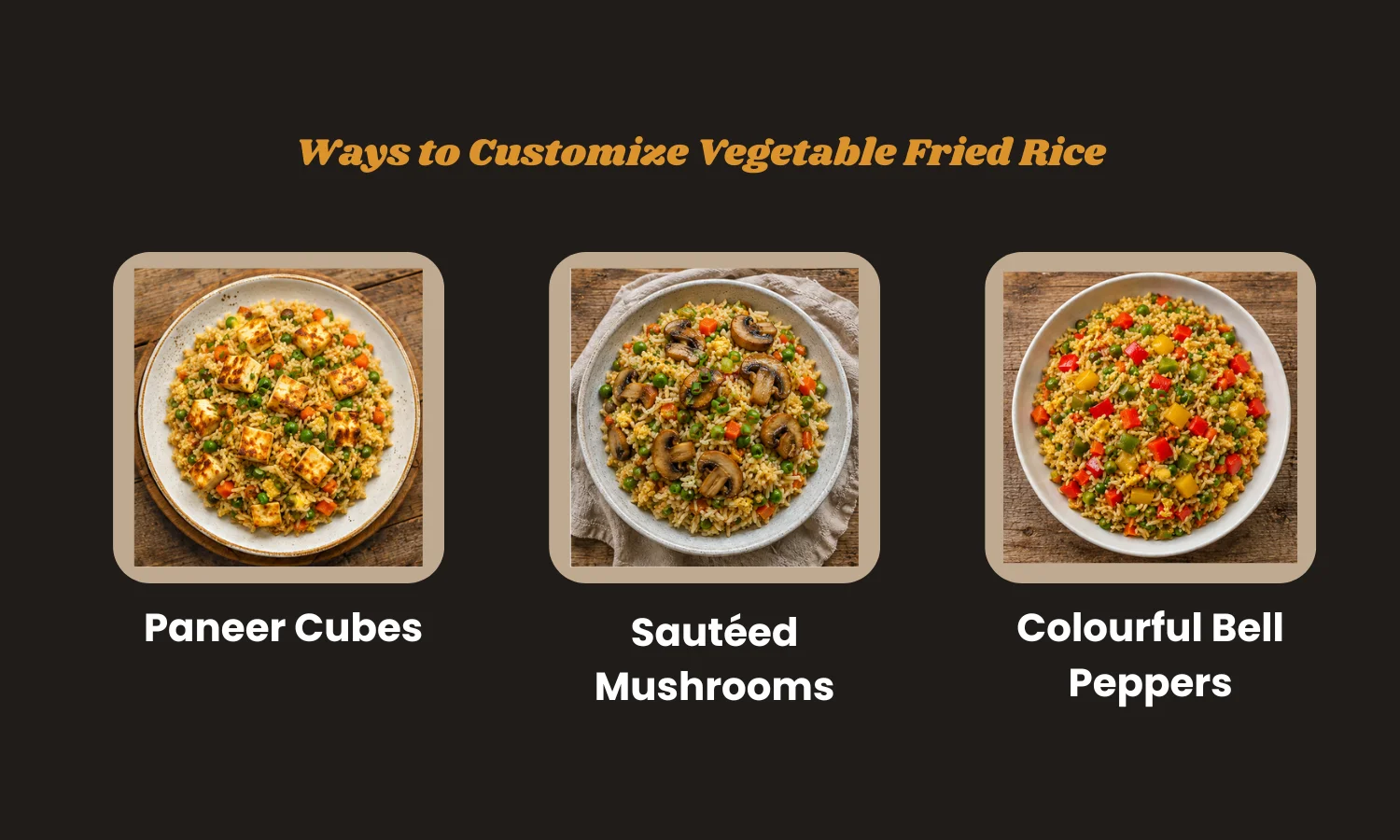
Ways to Customize Vegetable Fried Rice

  • Add Paneer: Toss in pan-seared or fresh paneer cubes for extra protein.
  • Include Mushrooms: Sauté sliced mushrooms alongside the garlic for a savoury, umami flavour.
  • Mix Bell Peppers: Fold in red, yellow, or green bell peppers for a boost of colour, crunch, and nutrition.

Try It With a South Indian Twist

For an unexpected pantry pairing, add a small spoon of 777 Foods’ Garlic Pickle to your fried rice for an extra layer of tang. Shop the full collection at 777 Foods and experiment with your next batch of vegetable fried rice.

Key Takeaways

  • Day-old, refrigerated rice holds its texture far better than freshly cooked rice in a stir-fry.
  • High heat throughout cooking is essential for developing the smoky, street-style flavour associated with this dish.
  • A basic ingredient list of rice, vegetables, garlic, 777’s dark soy sauce, and pepper is enough for a satisfying version.
  • Homemade fried rice offers better control over oil and sodium compared to most restaurant versions.
  • The dish adapts easily to additions like paneer or mushrooms without changing the core technique.

FAQs

What is the best rice to use in a vegetable fried rice recipe?Day-old, refrigerated rice works best since it holds its shape and does not turn mushy during high-heat stir-frying.
Is fried rice healthy when made at home?Yes, when prepared with a generous amount of vegetables, moderate oil, and controlled soy sauce, homemade fried rice can fit comfortably into a balanced diet.
What ingredients are essential for an easy fried rice recipe?Cooked rice, mixed vegetables, garlic, soy sauce, a touch of vinegar, and black pepper form the essential base for most versions.
How do I get that street-style veg fried rice smoky flavour at home?Using a wide pan, cooking in smaller batches, and keeping the heat as high as possible throughout the process gets you closest to that smoky, charred flavour.

Vegetarian Meals: A Practical Weekly Structure for Busy Families

Summary

Trying to plan complete vegetarian meals for a busy household? This guide offers a practical weekly structure covering breakfast, lunch, and dinner, along with one-pot and protein-packed options for families short on time.

Introduction:

Vegetarian meals can sometimes feel overwhelming to plan week after week, especially when balancing work, household chores, and varying tastes at home. The secret to keeping meals smooth and stress-free lies in building a flexible routine rather than following rigid daily menus. With a clear structure in place, you can turn humble kitchen staples into delicious, balanced spreads that nourish your whole family without spending your entire evening in the kitchen.

What Are Vegetarian Meals?

Vegetarian meals include dishes made without meat, poultry, or seafood while using vegetables, grains, lentils, dairy products, and legumes as the main ingredients. A balanced vegetarian meal combines carbohydrates, protein, vegetables, and healthy fats to provide both nutrition and flavour. With a little planning, vegetarian meals can be simple, satisfying, and easy to prepare throughout the week.

Why Planning Vegetarian Meals as a System Works Better

Most households do not struggle with individual recipes; they struggle with deciding what to cook, meal after meal, day after day. Treating vegetarian meal recipes as a connected weekly system, rather than a fresh decision every morning, removes much of this daily friction. A simple structure, repeated with small variations each week, works far better in practice than trying to cook something entirely new every single day.

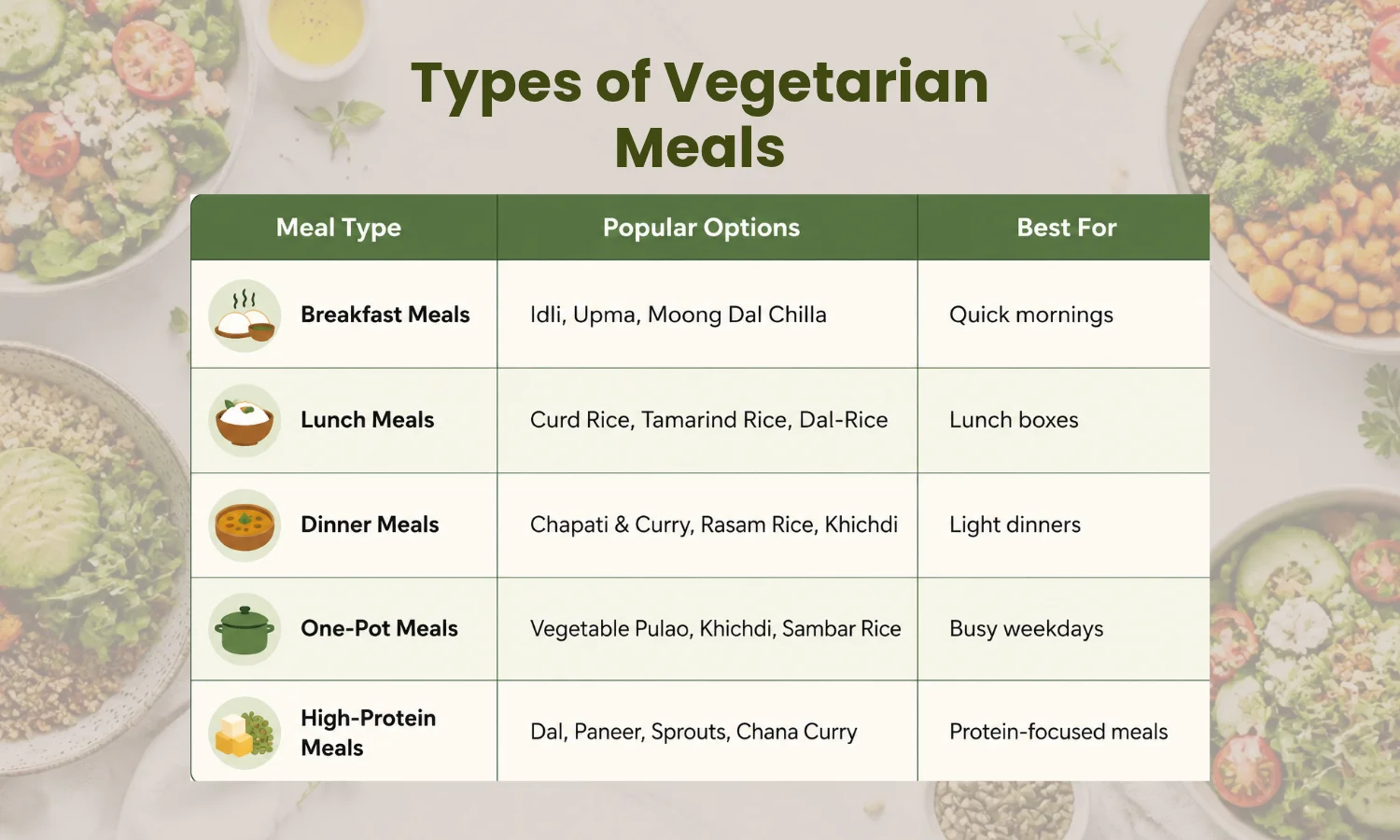
Types of Vegetarian Meals

vegetarian meals Here is a quick breakdown of the different categories of vegetarian meals
Vegetarian Breakfast Meals

A workable breakfast structure might rotate between three or four dependable options: idli or dosa on two days, upma or poha on two others, and a protein-forward choice like moong dal chilla once a week. This keeps mornings varied without requiring new grocery planning, since most of these dishes draw from the same base pantry of rice, lentils, and semolina.

Vegetarian Lunch Meals

For vegetarian lunch meals, especially for those packing lunch boxes for school or office, dishes that hold their flavour for several hours matter more than dishes that need to be eaten immediately. Curd rice, tamarind rice, and a simple dal-rice combination all fit this requirement well, and rotating between them across the week avoids the monotony of eating the same lunch daily. Tamarind rice can be prepared easily within a few minutes using the 777 Tamarind Paste.

Vegetarian Dinner Meals

Vegetarian dinner meals generally work best when kept lighter than lunch. A rotation between chapati with a vegetable curry, rasam rice, and khichdi covers three distinct textures and flavour profiles across the week without repeating the same dish too often.

By keeping 777 Foods’ Ragi Vermicelli on hand, you can make delicious and nutritious vermicelli pulao and turn any simple meal into a complete, home-style meal without extra planning.

One-Pot Vegetarian Meals

One-pot meals in vegetarian cooking have a particular advantage for busy weeknights: fewer dishes to wash and a shorter list of steps to follow. Vegetable pulao, khichdi, and a simple sambar rice all qualify as one-pot options that deliver a complete meal, covering carbohydrates, protein, and vegetables in a single pan. Here, knowing how to make a mango pickle will be helpful since it can serve as a side dish to your pulao, sambar rice, or khichdi.

High-Protein Vegetarian Meals

Building high-protein vegetarian meals into a weekly structure does not require a separate plan altogether. Ensuring that at least one meal each day includes dal, curd, paneer, or sprouts is usually enough to meet daily protein needs comfortably. For families specifically focused on high protein meals vegetarian cooking should prioritise, dinner is often the easiest meal to adjust, since a dal-based dish naturally fits alongside roti or rice.
Rather than treating protein as an additional ingredient to bolt onto existing dishes, vegetarian protein-packed meals are often simplest when built around a dish that is naturally protein-forward to begin with, such as a chana curry, or a paneer-based sabzi, rather than trying to add protein powder or supplements to traditional recipes.

How to Cook Vegetarian Meals Without Daily Decision Fatigue

Understanding how to cook vegetarian meals consistently comes down to preparation rather than talent in the kitchen. Keeping a stocked pantry of rice, dal, a few 777 masala powders, and basic vegetables means that on any given day, a reasonable meal is always within reach, even without advance planning for that specific day.

Tips to cook reasonable meals without advance planning

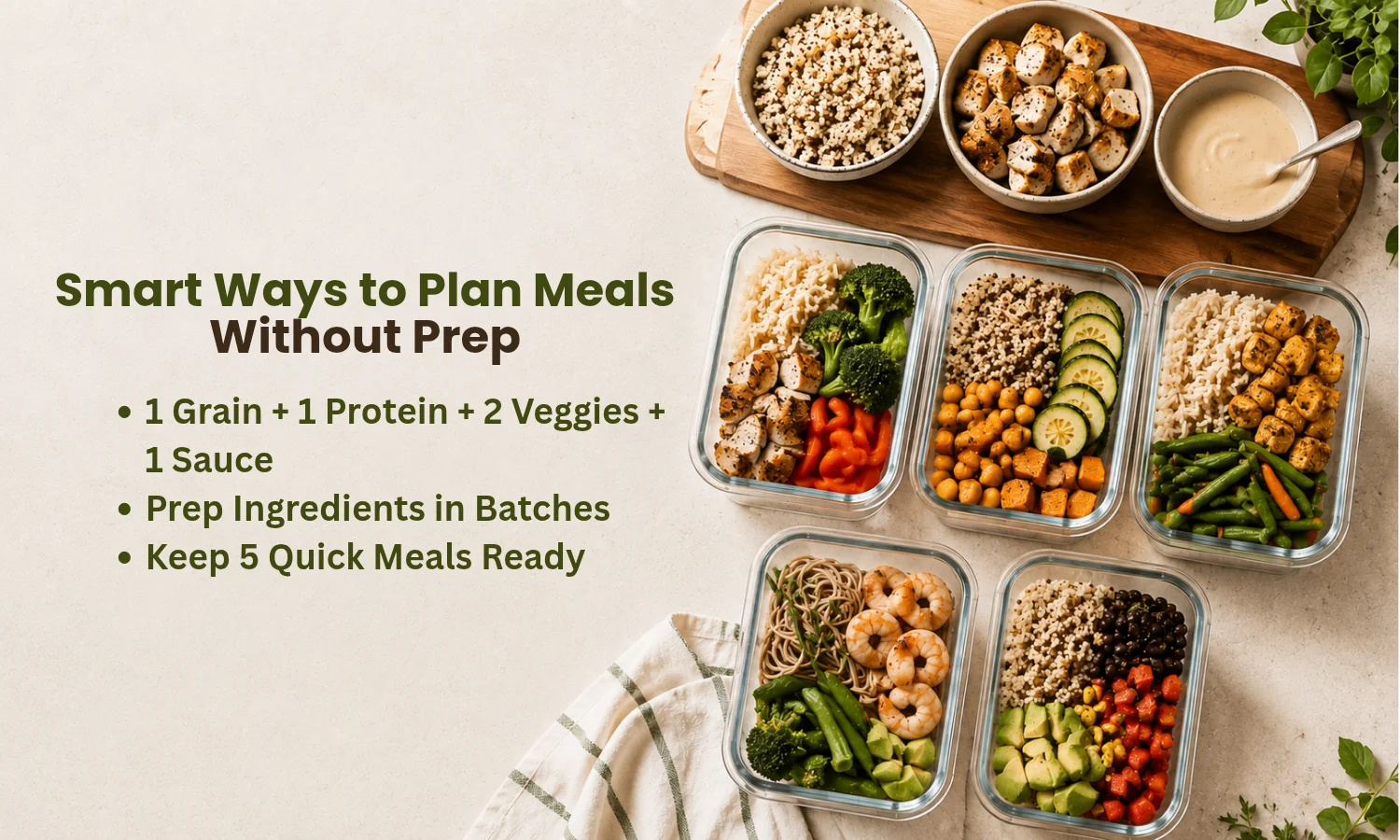
  • Master a 4-part formula: Build meals using 1 Grain + 1 Protein + 2 Veggies + 1 Sauce instead of following rigid recipes.
  • Prep component ingredients: Batch-cook grains, roast a tray of veggies, and mix 2 sauces once a week for fast assembly.
  • Rely on a “Default 5” list: Keep a written list of 5 fast, 15-minute fallback meals for high-stress days.

A Sample Weekly Structure

A practical week might look like this: breakfast rotating between idli, upma, and poha, lunch alternating between curd rice, tamarind rice, and a dal-rice combination, and dinner moving between chapati with curry, khichdi, and rasam rice. This structure covers variety, nutrition, and convenience without requiring a new recipe every single day.

Key Takeaways

  • Treating vegetarian meals as a repeatable weekly system reduces daily decision fatigue significantly.
  • Lunch box dishes should prioritise flavour retention over several hours rather than immediate freshness.
  • One-pot meals like khichdi and pulao simplify both cooking and cleanup on busy weeknights.
  • Including one protein-forward dish, such as dal or paneer, in each day’s meals is usually enough to meet daily needs.
  • A stocked pantry matters more than daily meal planning for consistent, low-effort home cooking.

Simplify Your Weekly Meal Plan

A well-stocked pantry is the real foundation of consistent vegetarian meals. By storing simple vegetarian ingredients in your kitchen, you can quickly prepare wholesome vegetarian meals for your family any time of the week.
Explore our products and shop the full range at 777 Foods.

FAQs

How do I plan a week of vegetarian meals without repeating dishes too often?Rotating three or four options for each meal type, breakfast, lunch, and dinner, across the week naturally avoids repetition while keeping the grocery list manageable.
What are the easiest one-pot meals vegetarian households can rely on?Vegetable pulao, khichdi, and sambar rice are among the simplest, each combining rice, vegetables, and protein in a single pan.
How can I include high-protein vegetarian meals without cooking separately for protein?Choosing naturally protein-forward dishes, such as dal, chana curry, or paneer sabzi, as part of your regular rotation covers protein needs without extra cooking steps.
What is the best way to learn how to cook vegetarian meals consistently?Building a small, repeatable rotation of dishes and keeping a well-stocked pantry matters more than learning new recipes constantly.

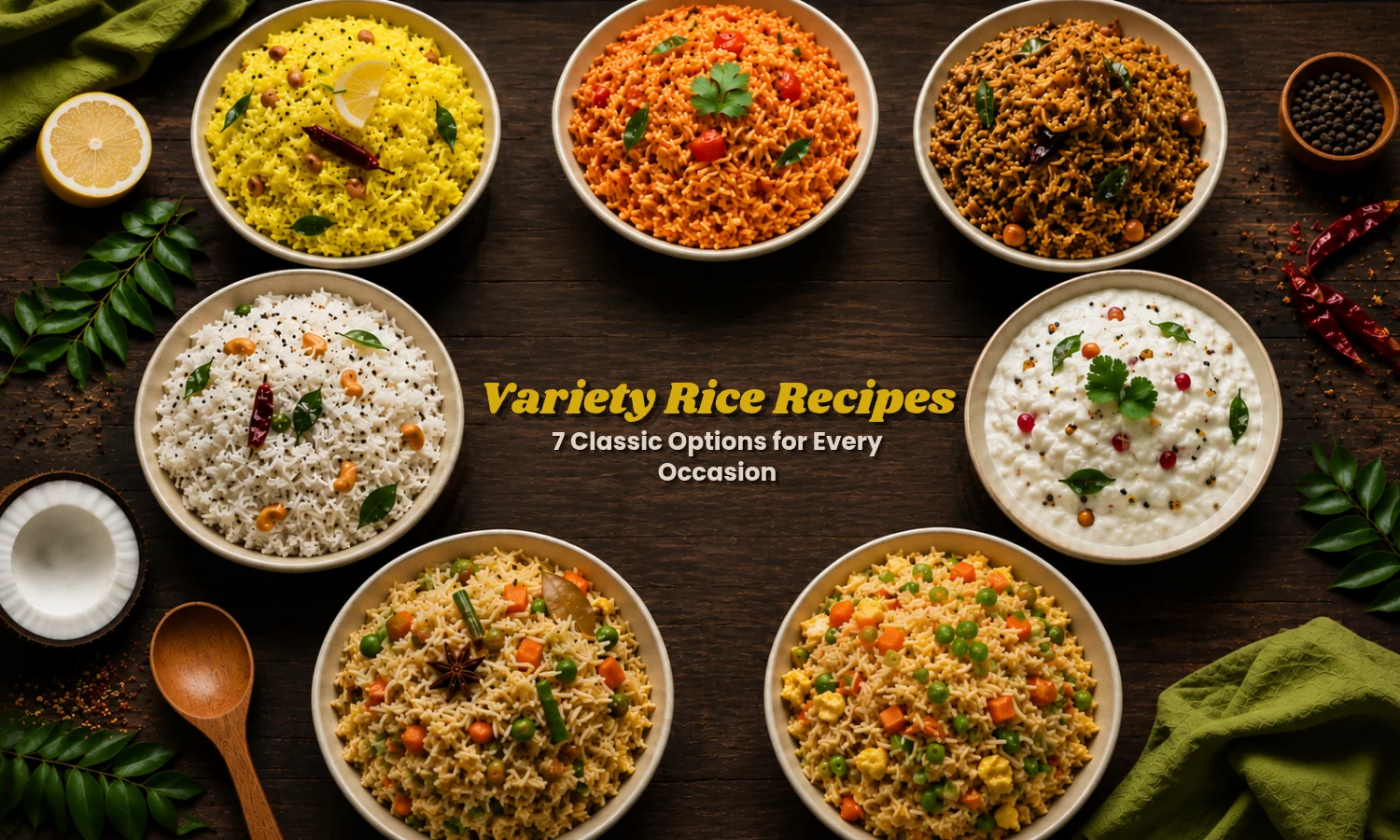
Variety Rice Recipes: 7 Classic Options for Every Occasion

Summary

Looking for variety rice recipes to break the monotony of plain steamed rice? This guide covers seven classic South Indian rice dishes, their unique flavour bases, and quick ways to prepare each one at home.

Introduction:

Variety rice recipes are the ultimate answer when you want a flavourful, satisfying meal without spending hours in the kitchen. Whether you are packing a busy weekday lunch box, planning a festival menu, or simply trying to transform leftover rice into something special, these dishes deliver quick convenience without missing a beat on flavour. Their effortless versatility makes them a beloved mainstay in homes where good food and easy prep need to go hand in hand.

What Is Variety Rice?

Variety rice refers to rice dishes prepared by mixing cooked rice with different seasonings, spices, vegetables, or flavourful pastes. Popular in South Indian cuisine, these recipes are easy to prepare, travel well in lunch boxes, and are commonly served during festivals, family gatherings, and everyday meals.

Why Variety Rice Holds Such a Special Place

Rice forms the base of most South Indian meals, but eating the same plain version day after day can quickly feel repetitive. This is exactly why variety rice recipes have become such an important part of festival menus, lunch boxes, and everyday cooking. Each version uses a different flavour base, whether tangy, spiced, or tempered with coconut, transforming the same bowl of rice into a completely different dish.

Understanding How Many Varieties of Rice Exist in India

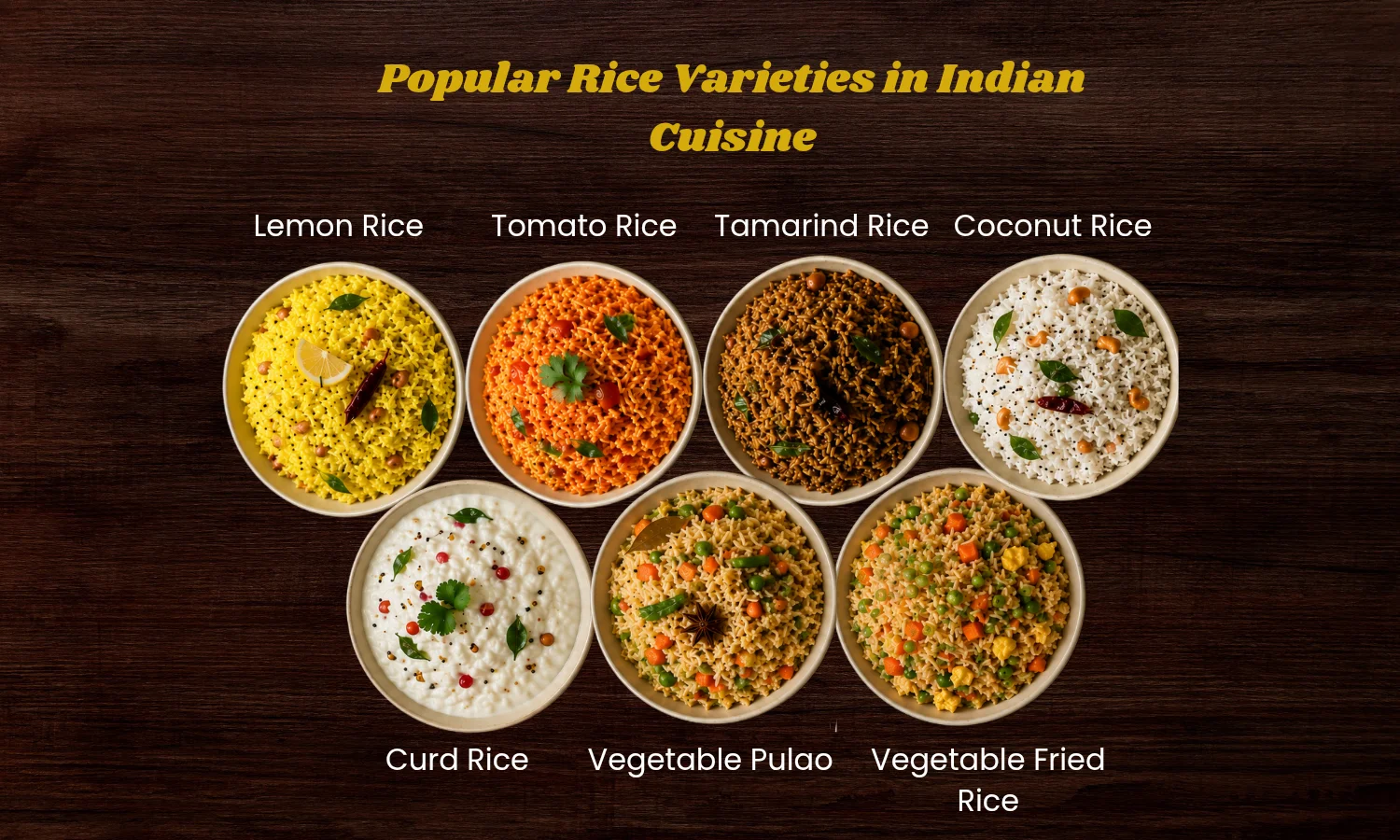
Indian cuisine features an enormous range of rice preparations, varying by region, festival, and household tradition. While the exact count is impossible to pin down, most South Indian households recognize a core group known as the 7 variety rice set, typically served together during festivals or temple functions. This includes lemon rice, tamarind rice, coconut rice, curd rice, tomato rice, sesame rice, and a spiced vegetable rice, though the exact combination can vary slightly by region.
1. Lemon Rice

Bright, tangy, and simple, lemon rice is tempered with mustard seeds, curry leaves, peanuts, and turmeric, then mixed with fresh lemon juice. It remains one of the easy lunch recipes available, since it requires no additional gravy or side dish. A ready base like the 777 lemon rice paste can turn a bowl of plain rice into lemon rice within minutes.

2. Tomato Rice

Slightly spicier than lemon rice, tomato rice uses a cooked tomato and onion masala mixed directly into rice. It works well warm or at room temperature, making it a dependable choice for lunch boxes. The 777 Instant Tomato Rice Paste offers a consistent, ready base for this dish without needing to cook a fresh masala each time.

3. Tamarind Rice (Puliyodharai)

Known for its deep, tangy flavour, tamarind rice combines tamarind pulp, jaggery, and a specific blend of roasted spices into a rich, dark rice dish. Traditionally prepared for festivals like Varalakshmi Vratam or Aadi Perukku, it has become a popular everyday lunch box option because it tastes just as good, if not better, several hours after preparation. Add some 777 appalams to your tamarind rice to make your meal complete!

4. Coconut Rice

Mild and slightly sweet, coconut rice is tempered with mustard seeds, curry leaves, cashews, and freshly grated coconut. It pairs well with a simple vegetable curry or can be eaten on its own as a lighter meal, making it a gentle option among the various mixed rice recipes in South Indian cuisine.

5. Curd Rice

A cooling, comforting classic, curd rice is often the final dish served in a traditional South Indian meal, believed to aid digestion after a heavier lunch. Mixed with a light tempering and sometimes grated carrot or pomegranate, it is one of the most universally loved rice recipes across generations.

6. Vegetable Pulao

Unlike the other tempered rice varieties, vegetable pulao is cooked directly with mixed vegetables and whole spices in one pot, making it one of the more filling one-pot rice recipes for a standalone meal. It requires slightly more preparation than tempered rice varieties but delivers a more substantial, restaurant-style dish.

7. Vegetable Fried Rice

Rounding out this list, vegetable fried rice brings an Indo-Chinese influence into the variety rice category, using leftover rice, chopped vegetables, and soy sauce for a quick, flavourful change of pace. It has become especially popular among students and young professionals as one of the more accessible quick rice recipes to cook independently.

Making Variety Rice a Weekly Habit

Rather than treating variety rice as a festival-only preparation, many households now rotate through two or three of these dishes weekly, using ready pastes to cut down on preparation time. This approach keeps the broader category of Indian rice varieties in regular rotation without requiring extra grocery planning each week.

A Note on the 7-Variety Rice Vegetarian Tradition

The 7-variety rice vegetarian tradition, often served together on a single banana leaf during festivals, reflects a deliberate balance of flavours: tangy, spiced, sweet, and cooling, served side by side. While not every household prepares all seven at once, understanding this combination offers useful inspiration for planning a varied weekly rice rotation at home.

Turn Simple, Cooked Rice into a Wholesome Meal

Convert any bowl of cooked rice into a complete meal with 777 Foods’ quick and easy instant food mixes. Shop the full collection at 777 Foods and bring festival-style variety to your everyday lunch table.

Key Takeaways

  • Variety rice recipes transform the same bowl of plain rice into distinct dishes through different tempering and flavour bases.
  • Lemon rice and tomato rice are among the fastest options, especially when made using ready pastes.
  • Tamarind rice and curd rice both travel and store well, making them ideal for lunch boxes.
  • Vegetable pulao and fried rice offer more filling, one-pot alternatives to tempered rice varieties.
  • Rotating two or three variety rice dishes weekly keeps meals interesting without extra planning effort.

FAQs

What are the most popular variety rice recipes in South India?Lemon rice, tamarind rice, coconut rice, and curd rice are among the most commonly prepared, especially for festivals and lunch boxes.
How many varieties of rice in India are considered part of the traditional 7-variety rice set?The set typically includes lemon rice, tamarind rice, coconut rice, curd rice, tomato rice, sesame rice, and a spiced vegetable rice, though the exact combination can vary by region.
Can variety rice recipes be made quickly on a weekday?Yes, especially lemon rice and tomato rice, which can be prepared in minutes using a ready rice paste instead of cooking a fresh masala base each time.
Which variety rice recipes work best for lunch boxes?Tamarind rice, tomato rice, and curd rice all hold their flavour well over several hours, making them reliable choices for packed lunches.

Protein-Rich Vegetarian Food: A Practical Everyday Guide

Summary

Wondering if a vegetarian diet provides enough protein? This guide on protein-rich vegetarian food lists everyday Indian ingredients like lentils, dairy, and sprouts, along with practical ways to include them across breakfast, lunch, and dinner.

Introduction:

Protein-rich vegetarian food is often viewed through the lens of strict diet planning, but meeting your nutrition goals is far simpler than that. Traditional Indian kitchens have long relied on staples like pulses and paneer to build energizing meals. By making a few mindful choices throughout the day, you can easily fuel your body using familiar ingredients you already use every week.

What Is Protein-Rich Vegetarian Food?

Protein-rich vegetarian food includes plant-based and dairy foods that provide protein to support muscle growth, tissue repair, and overall health. Common Indian protein sources include lentils, pulses, paneer, curd, milk, sprouts, beans, and whole grains. Including a variety of these foods in daily meals helps maintain a balanced vegetarian diet.

Can Vegetarians Get Enough Protein?

One of the most frequent questions among people following a vegetarian diet is whether they are getting enough protein without meat, fish, or eggs in their meals. The concern is understandable, since protein is often associated in popular conversation with animal-based food. In reality, Indian vegetarian cooking already includes several dependable vegetarian protein sources that, when combined thoughtfully across the day, comfortably meet daily requirements for most adults.

How Much Protein Do You Need Every Day?

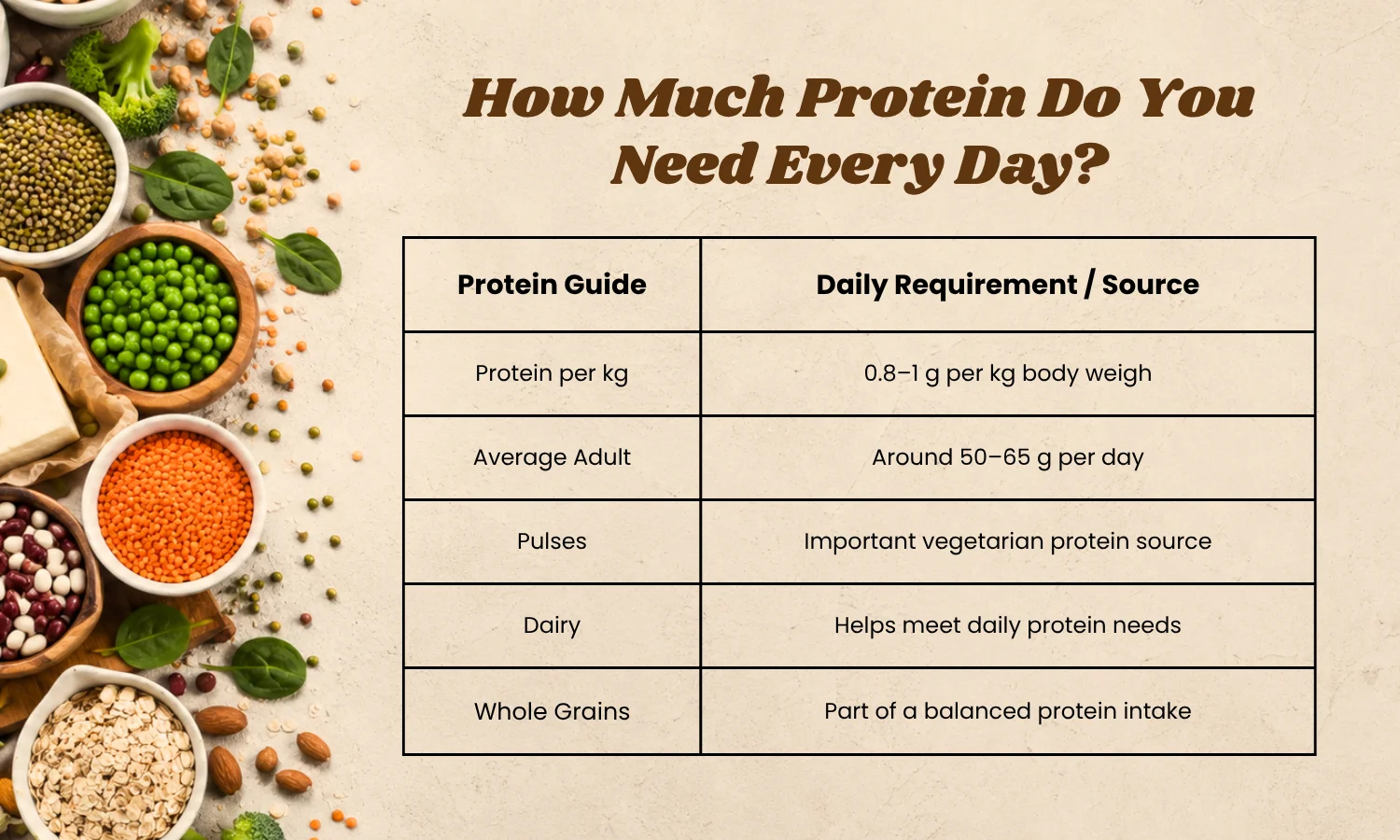
protein-rich vegetarian food According to guidelines from the National Institute of Nutrition in India, a moderately active adult typically needs around 0.8 to 1 gram of protein per kilogram of body weight each day. For an average adult, this translates to roughly 50 to 65 grams of protein daily, an amount that a well-planned vegetarian food routine can meet without difficulty, provided meals include a mix of pulses, dairy, and whole grains.
Everyday Lentils and Pulses as Protein Sources

Lentils and pulses form the backbone of protein-rich foods for vegetarians in Indian households. Toor dal, moong dal, chana, and rajma each provide a meaningful amount of protein per serving, and combining them with rice or roti creates a more complete amino acid profile than either food provides on its own. A simple bowl of dal and rice, eaten regularly, already contributes significantly toward daily protein needs.

Dairy as a Reliable Protein Source

Curd, milk, and paneer remain some of the most accessible veg protein foods in Indian kitchens. A bowl of curd rice, a glass of milk with breakfast, or a paneer-based sabzi at dinner each adds a steady stream of protein throughout the day without requiring any specialised ingredients or supplements.

Sprouts and Legumes for a Protein Boost

Sprouted moong, chana, and other legumes are among the more concentrated high-protein foods available in a typical Indian pantry. A simple sprouts salad, tossed with lemon, onion, and a pinch of chaat masala, works well as a snack or light side dish and adds meaningful protein without extra cooking effort.

Protein-Rich Vegetarian Breakfast Ideas

Breakfast is often the easiest meal to overlook when planning protein-rich vegetarian breakfast choices. Moong dal chilla, a bowl of curd with fruit, or idli paired with a protein-rich sambar, prepared using 777 Sambar Powder, all contribute more protein than a plain plate of toast or cereal while still fitting comfortably into a South Indian breakfast routine.

Building High-Protein Veg Meals for Lunch and Dinner

For lunch and dinner, high-protein veg meals typically combine a lentil-based dish with rice or roti and a side of curd or paneer. A simple dal, rice, and curd combination or a chana-based curry with roti both provide a well-rounded protein intake without requiring any specialised recipes beyond what most households already cook regularly. Whether it is rice or roti, a spoon of 777 garlic pickle will enhance the flavour and taste of your meal.

Common Myths About Vegetarian Protein

A persistent myth suggests that plant-based proteins are inherently incomplete compared to animal protein. While it is true that individual plant sources may lack certain amino acids, combining different food groups, such as rice with dal or roti with chana, provides a complete amino acid profile over the course of a day. This is why traditional Indian vegetarian protein food combinations, developed over generations, remain nutritionally sound without needing modern supplementation for most healthy adults.

Practical Tips to Increase Protein in Your Daily Meals

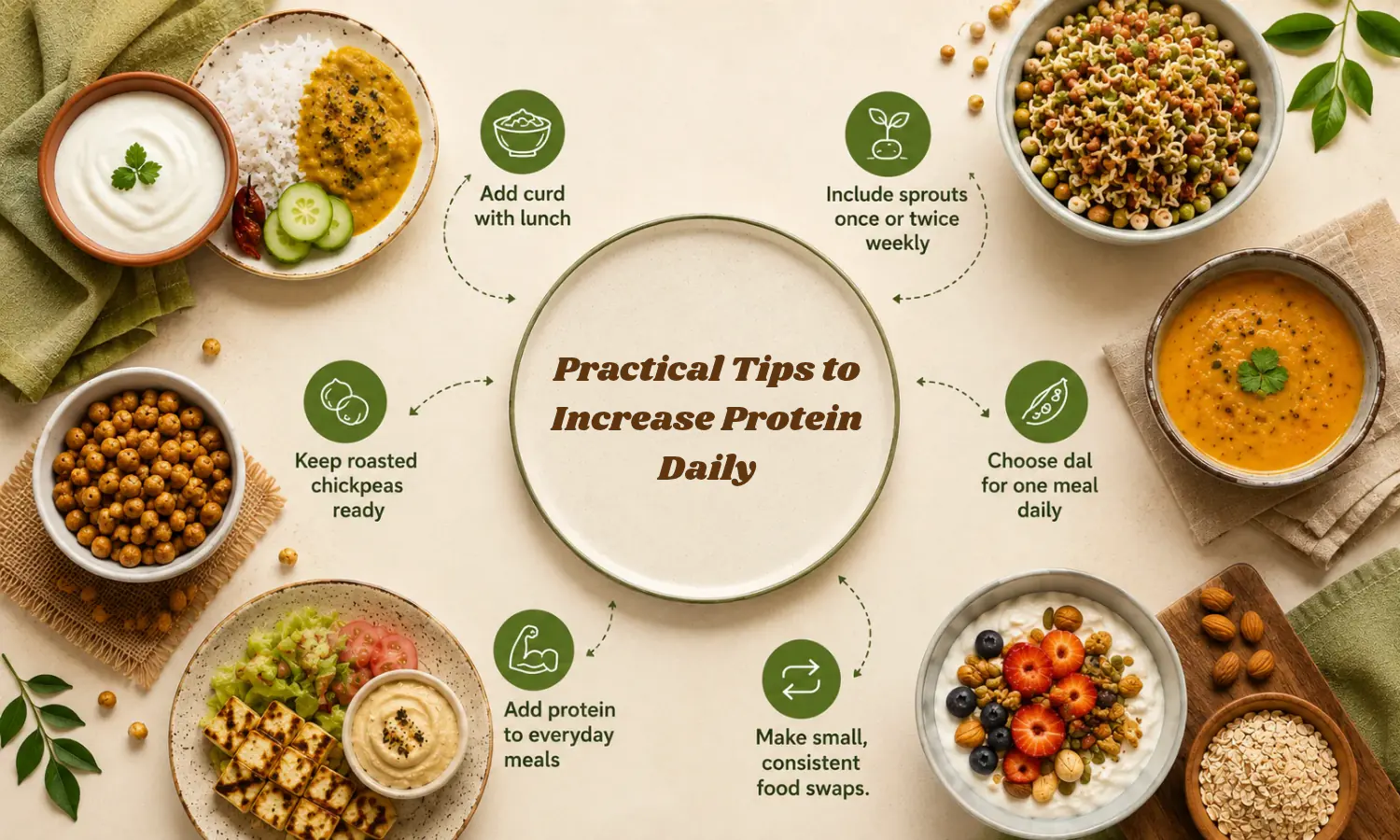
protein-rich vegetarian food Rather than adopting an entirely new set of high-protein vegetarian recipes, most households can increase protein intake through small, consistent adjustments.
  • Adding a side of curd to your lunch.
  • Choose dal over a purely vegetable-based curry for at least one meal a day.
  • Keep a handful of roasted chickpeas ready at home for snacking.

The above are some practical steps that fit easily into existing routines. Try 777 Foods’ pure Gingelly Oil and Pure Spices range to make your daily meals both tastier and more consistent.

Build a Better Protein Routine

By making tiny changes to your daily meals, you can effectively build a better protein routine. Add dairy products and pulses to your diet alternately so that you enjoy a variety of protein-rich foods every day.

To enhance and make your meals more protein-rich, shop the range of products at 777 Foods today.

Key Takeaways

  • Most adults need roughly 50 to 65 grams of protein daily, achievable through a well-planned vegetarian diet.
  • Include sprouts in your diet once or twice a week.
  • Lentils and pulses, combined with rice or roti, provide a more complete amino acid profile than either food alone.
  • Curd, milk, and paneer are reliable, easily accessible protein sources in most Indian households.
  • Sprouted legumes offer a concentrated protein boost with minimal cooking effort.
  • Small daily adjustments, like adding curd or sprouts to existing meals, are more sustainable than a complete diet overhaul.

FAQs

Can a vegetarian diet really provide enough protein without supplements?Yes, for most healthy adults, combining lentils, dairy, and whole grains across meals meets daily protein requirements without needing any supplements.
What are the best protein-rich vegetarian food options for breakfast?Moong dal chilla, curd with fruit, and idli with a protein-rich sambar are all practical, protein-forward breakfast choices.
Do I need to eat rice and dal together to get complete protein?Combining rice or roti with dal does provide a more complete amino acid profile, though eating them at separate meals across the day also contributes to overall protein intake.
Which vegetarian protein sources are easiest to include daily?Curd, dal and sprouts are among the easiest to incorporate daily since they require minimal preparation and fit into most existing Indian meals.

Idli Sambar Recipe: How to Get That Hotel-Style Taste at Home

Summary

Want an idli sambar recipe that tastes like your favourite tiffin centre? This guide covers the sambar base, vegetable choices, and tempering steps behind a properly balanced hotel-style sambar for soft, homemade idli.

Introduction:

Idli sambar recipe enthusiasts know that recreating that rich, hotel-style flavor comes down to getting the spice balance and tempering just right. While a basic homemade version hits the spot, mastering those small regional touches turns a simple morning meal into a genuine comfort-food experience right at your own table.

Why Idli Sambar Is a South Indian Favourite?

Few pairings in Indian cuisine feel as complete as idli with sambar. The soft, neutral idli acts almost like a canvas for the tangy, mildly spiced sambar, and together they form one of the most recognized South Indian sambar combinations across the country. Getting both elements right, soft idli and a well-balanced sambar, is what separates an average breakfast from one that genuinely feels like a treat.

The Sambar Powder Ratio That Makes the Difference

Most home versions of sambar fall short of the tiffin centre standard because of an imbalance in spice ratio, not a lack of effort. A good sambar recipe relies on a well-blended sambar powder that carries coriander, red chilli, fenugreek, curry leaves, and a touch of asafoetida in the right proportion. Using a ready mix like the 777 Madras Sambar Powder removes the guesswork, since the ratio is already tested and consistent from batch to batch, something that is difficult to replicate when grinding spices fresh each time. Idli Sambar Recipe

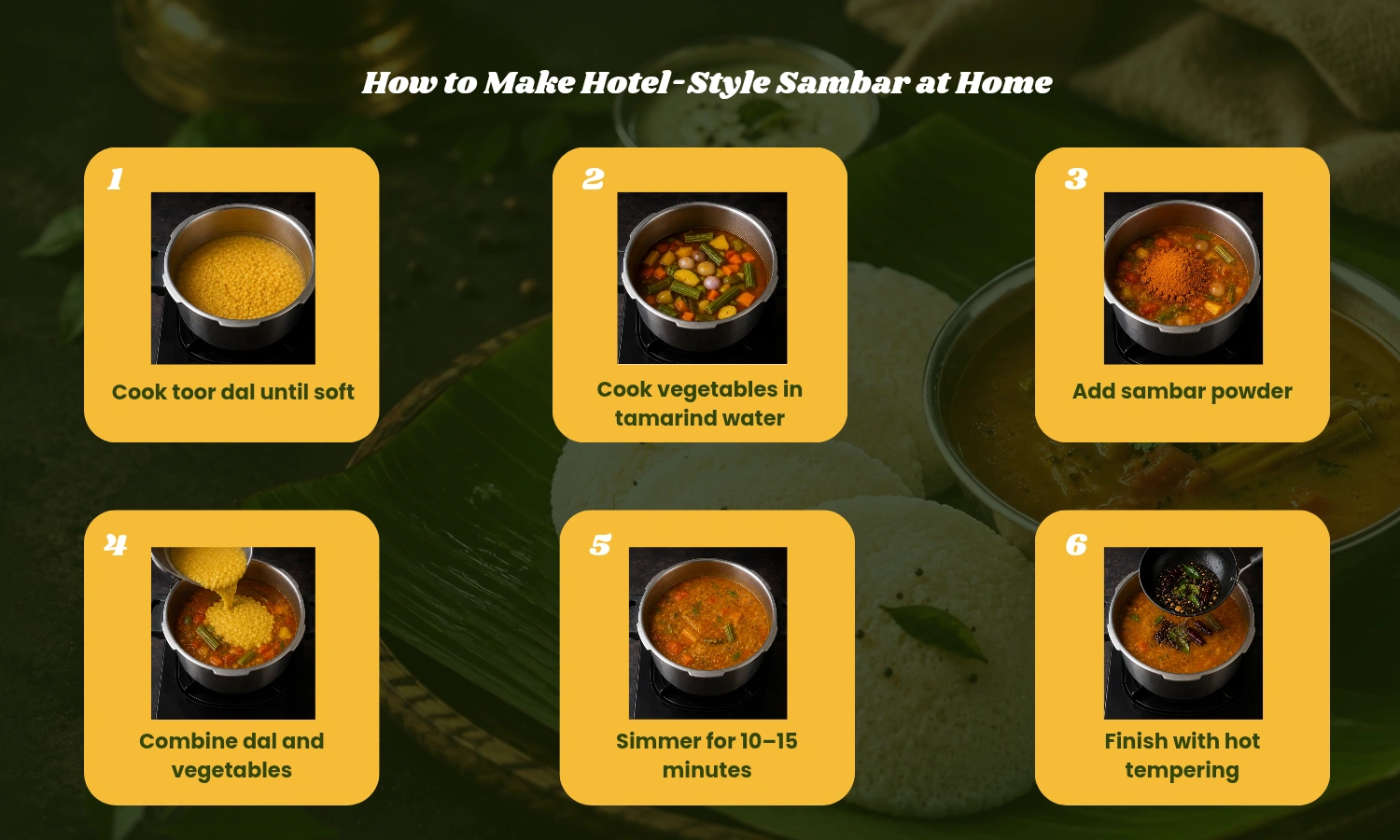
How to Make Hotel-Style Sambar at Home?

Ingredients Needed:

  • Toor dal
  • Tamarind water
  • Sambar powder
  • Oil

Vegetables:

  • Drumstick
  • Pearl onions
  • Brinjal
  • Tomato

Tempering ingredients:

  • Mustard seeds
  • Dried red chillies
  • Curry leaves

Idli Sambar Recipe (Step by Step):

To recreate a proper hotel-style sambar, follow these steps:

  • Start by cooking toor dal until soft, then mash it lightly rather than blending it completely smooth, since a slightly textured dal base is closer to the tiffin centre style than a perfectly pureed one.
  • In a separate pot, cook chopped vegetables like drumstick, pearl onions, brinjal, and tomato in tamarind water until tender.
  • Combine this vegetable mixture with the cooked dal, stir in the sambar powder, and simmer everything together for ten to fifteen minutes so the flavours settle properly.
  • Finish with a generous tempering of mustard seeds, dried red chillies, and curry leaves in hot oil, poured directly over the sambar just before serving.

This final tempering step is often what people are truly recognizing when they say a sambar tastes like it came from a hotel. Add some of the famous 777 pickles or chutneys to your idlies and sambar to make your tiffin more delicious.

Choosing the Best Vegetables for a Vegetable Sambar Recipe

A proper vegetable sambar recipe typically includes drumstick and pearl onions as non-negotiable ingredients, since both contribute significantly to the aroma and depth of the final dish. Brinjal, okra, and pumpkin are common additions depending on regional preference, creating what is often called a mixed vegetable sambar (often called Kadamba Sambar) when several vegetables are combined in one pot.
During traditional festive occasions (like Diwali, Pongal, Navratri, or Varalakshmi Vratam), mixed-vegetable sambar and yellow/red pumpkin sambar (Poosanikai Sambar) are the absolute go-to choices.

The Role of Tamarind in Balancing Sambar

Tamarind water provides the tang that balances the earthiness of the dal and the spice from the sambar powder. Too little tamarind leaves the sambar tasting flat, while too much can overpower the other flavours. A moderate amount, extracted from a small ball of tamarind soaked in warm water, generally works best for a properly balanced tiffin sambar recipe. If you don’t have raw tamarind at home, you can use the 777 tamarind paste to prepare your sambar.

Making Soft Idli to Match Your Sambar

A well-made sambar deserves an equally soft idli. Traditional idli recipe methods rely on a fermented batter of rice and urad dal, requiring soaking, grinding, and an overnight fermentation period. For households short on time, a ready mix delivers a comparably soft texture in a fraction of the time, making a proper homemade idli sambar breakfast achievable even on a weekday morning.

Storing and Reheating Sambar Without Losing Flavour

Sambar often tastes even better the next day, once the flavours have had time to settle further. Storing it in the refrigerator and reheating gently on the stove, rather than in short microwave bursts, helps preserve the texture of the vegetables and the balance of the tempering.

Recreate Tiffin Centre Sambar at Home

The right sambar powder makes all the difference between an average sambar and a properly balanced, hotel-style one. Try 777 Foods’ Madras Sambar Powder alongside your idlies for a complete breakfast that tastes like it came straight from your favourite tiffin centre. Shop the full range at 777 Foods.

Key Takeaways

  • A well-balanced sambar powder is the single biggest factor separating home-cooked sambar from hotel-style sambar.
  • Drumstick and pearl onions are near-essential for an authentic vegetable sambar recipe.
  • The final tempering of mustard seeds, red chillies and curry leaves poured over the sambar adds the aroma most people associate with tiffin centre food.
  • Tamarind should be used in moderation to keep the sambar balanced rather than overly tangy.
  • A ready idli mix can deliver soft idli in a fraction of the time compared to a traditional fermented batter.

FAQs

What makes an idli sambar recipe taste like it does at a hotel?A well-balanced sambar powder, proper tempering with mustard seeds and curry leaves, and the right amount of tamarind together recreate that familiar tiffin centre taste at home.
Which vegetables are essential for sambar for idli?Drumstick and pearl onions are the most important, contributing significantly to both aroma and taste, while brinjal and okra are common additional choices.
Can I make idli sambar recipe dishes without fermenting the batter overnight?Yes, ready instant mixes for idli allow you to skip the fermentation step entirely while still achieving a soft, fluffy texture.
How long does homemade idli sambar last in the refrigerator?Sambar generally stays fresh for two to three days when refrigerated properly and reheated gently on the stove rather than repeatedly in a microwave.

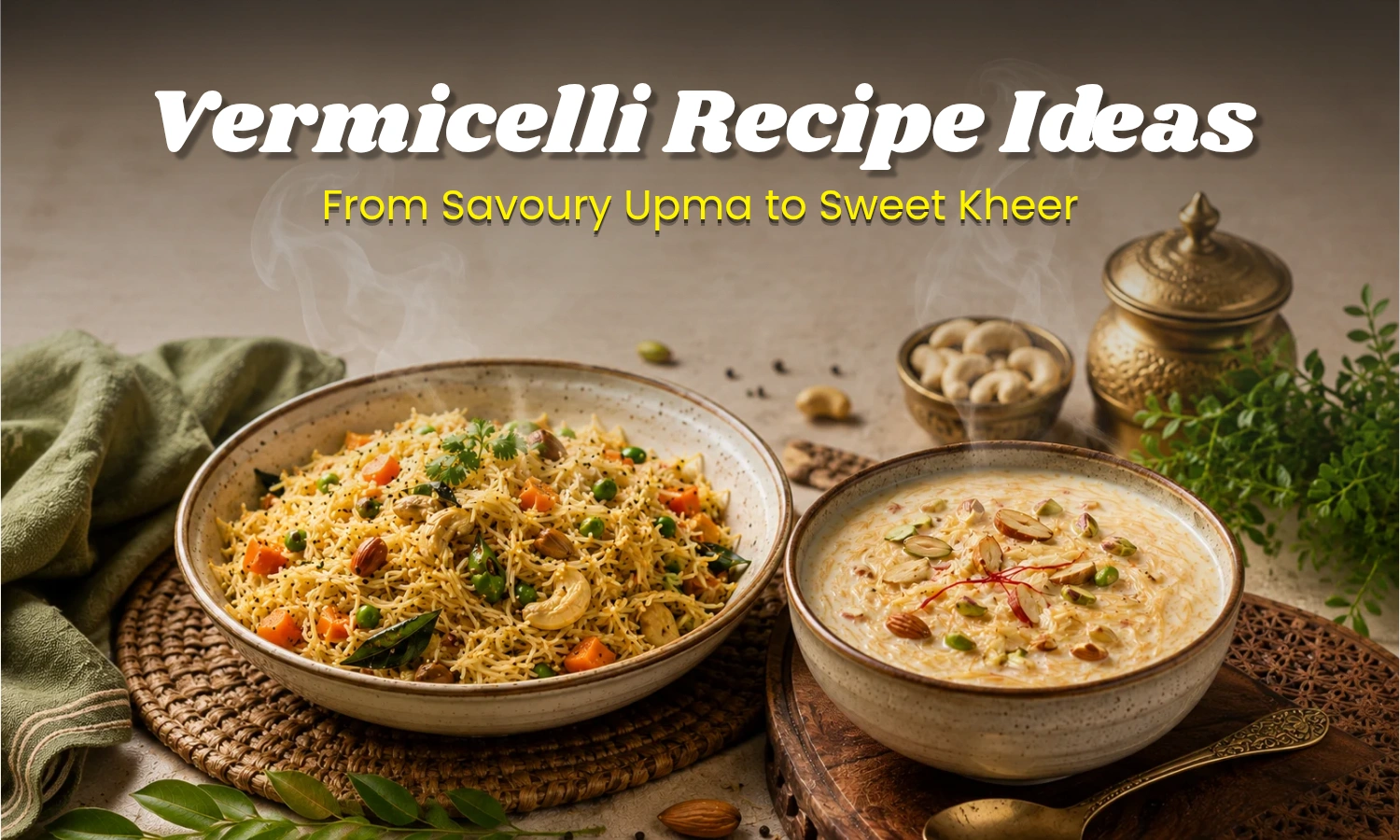
Vermicelli Recipe Ideas: From Savoury Upma to Sweet Kheer

Summary

Searching for a versatile vermicelli recipe for breakfast or dessert? This guide covers savoury upma, sweet kheer, millet, and ragi variations, along with roasting tips that keep vermicelli from turning mushy.

Introduction:

Vermicelli recipe ideas are a lifesaver when you need a quick, reliable meal that works equally well for a busy weekday breakfast or a warm evening dessert. This humble pantry staple cooks in a matter of minutes and absorbs spices, roasted nuts, and sweet broths with ease. Whether you are aiming for a savoury, vegetable-loaded upma or a rich, comforting kheer, it offers endless versatility for home cooks looking to keep prep simple without compromising on flavour.

What Is Vermicelli?

Vermicelli is a thin pasta-like ingredient commonly used in Indian cooking to prepare both savoury and sweet dishes. Depending on the variety, it can be made from wheat, rice, ragi, or millet. It cooks quickly, making it a convenient choice for breakfast, lunch, dinner, and festive desserts.

Why Vermicelli Deserves a Permanent Spot in Your Pantry?

Few ingredients move as easily between meal types as vermicelli. A single pack can turn into a savoury breakfast, a light dinner, or a festive dessert, all within twenty minutes. Its popularity across Indian households, particularly in South India, comes down to how forgiving it is to cook and how well it absorbs flavour, whether that is a tempering of mustard seeds or a simmer of sweetened milk.

How to Roast Vermicelli for the Best Results?

Before diving into any specific dish, one step matters more than most home cooks realize: roasting. 777’s roasted vermicelli develops a nutty aroma and holds its shape far better during cooking than vermicelli added directly to liquid. A light roast in a dry pan or a small amount of ghee until the strands turn a pale golden colour, is the single most important step behind a good vermicelli recipe, whether you are making it sweet or savoury.

Popular Vermicelli Recipe Ideas

A versatile kitchen staple, vermicelli can be crafted into savoury breakfast upmas, tangy lemon noodles, spicy Indo-Chinese stir-fries, or rich, sweet payasam desserts in under 20 minutes.

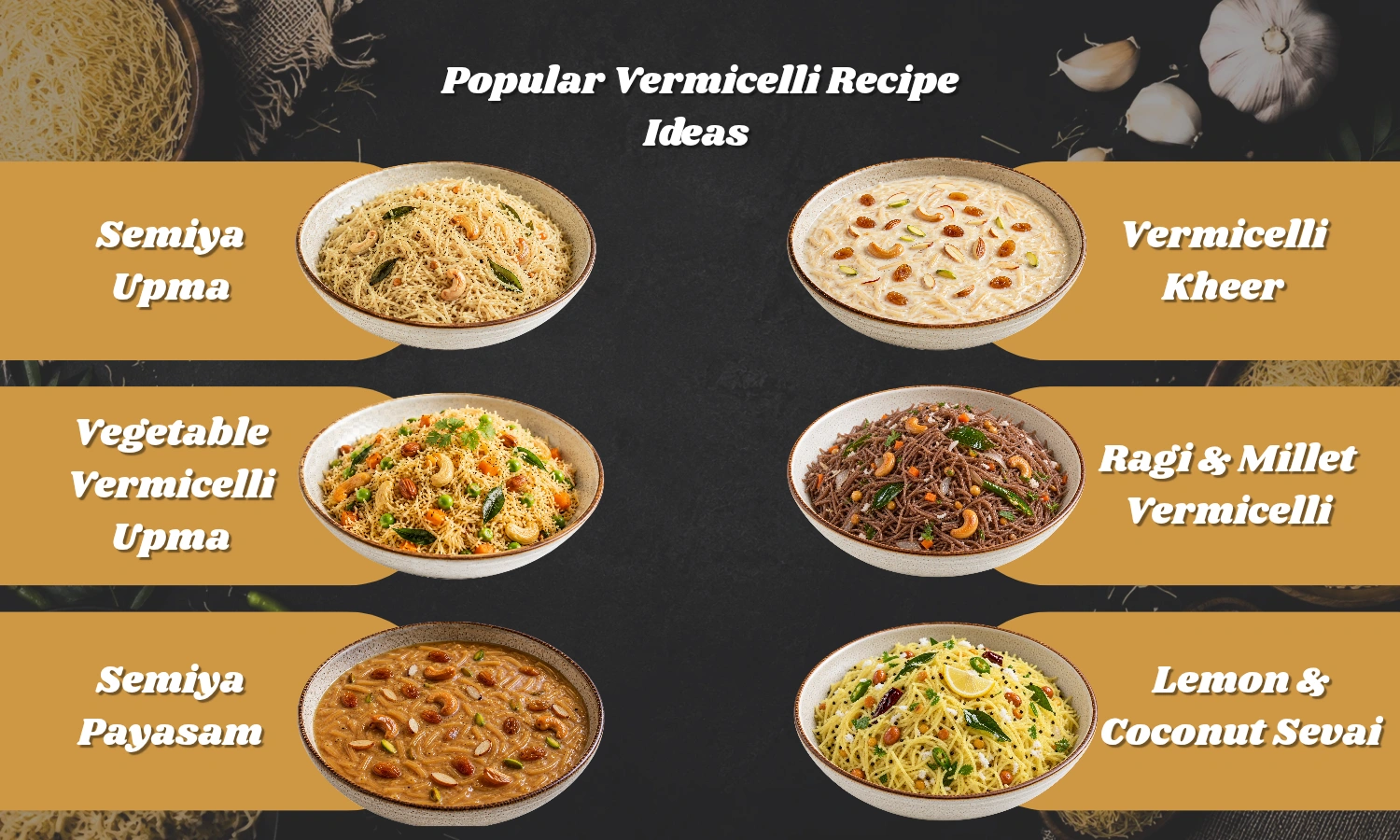
1. Semiya Upma

Semiya upma, made by tempering roasted vermicelli with mustard seeds, curry leaves, onions, and vegetables, is one of the most common vermicelli upma dishes across South Indian breakfast tables. Cooking the vermicelli in just enough water to soften it, rather than drowning it, is the key to avoiding a mushy final texture. This vermicelli upma recipe or semiya upma recipe works equally well as a quick dinner option.

2. Vegetable Vermicelli Upma

A slightly more filling version, vegetable vermicelli upma adds chopped carrots, beans, and peas to the base recipe, turning a light breakfast into a more complete meal suited for lunch boxes as well. This variation is particularly popular among parents packing food for children who prefer something familiar but slightly more nutritious.

3. Semiya Payasam

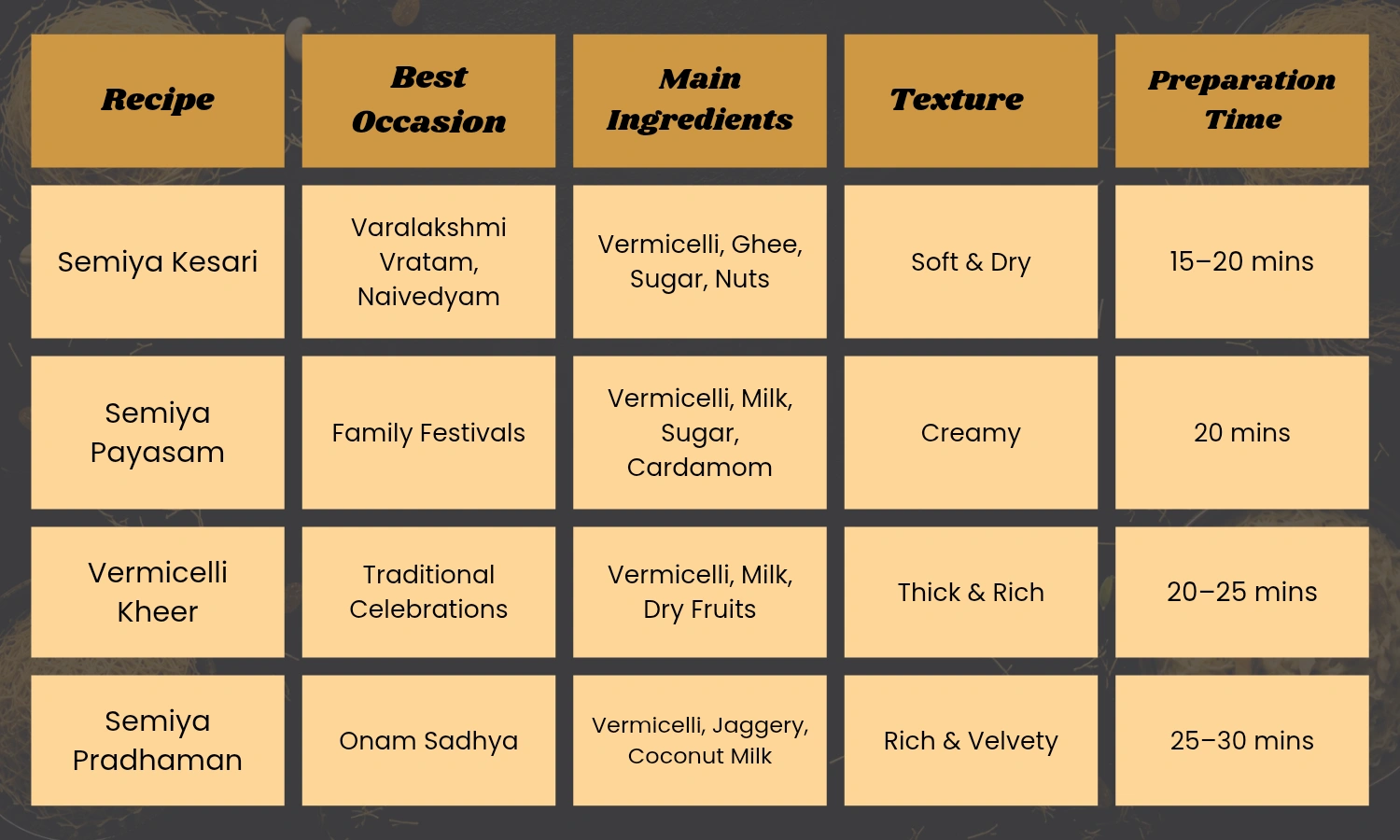
For festive occasions or a simple weekend dessert, semiya payasam remains one of the most loved sweet dishes in South Indian homes. Roasted vermicelli simmered in milk with sugar, cardamom, and a handful of roasted cashews and raisins creates a comforting dessert that takes under twenty minutes from start to finish.

4. Vermicelli Kheer

Similar to payasam but slightly thicker in consistency, vermicelli kheer is a favourite across North Indian households too, often served during festivals. A good vermicelli kheer recipe relies on slow simmering, allowing the milk to reduce and thicken naturally rather than rushing the process with added thickeners.

5. Ragi and Millet Vermicelli

For households focused on nutrition, ragi vermicelli and millet vermicelli offer a wholesome alternative to the standard wheat-based version, carrying more fibre and a slightly nuttier taste. These varieties work well in both the upma and kheer preparations, making them a flexible substitute for anyone managing blood sugar or simply looking for more fibre in daily meals.

6. Rice Vermicelli Recipe (Sevai)

A rice vermicelli recipe, often called sevai, uses a slightly different base made from rice flour rather than wheat. Lemon sevai and coconut sevai are two popular variations, tempered similarly to lemon rice or coconut rice but using strands of rice vermicelli instead of grains. A dependable sevai recipe typically starts with soaking or lightly steaming the vermicelli before tempering it, ensuring the strands stay separate rather than clumping together.

Sweet Vermicelli Recipes for Festivals

Beyond payasam and kheer, a simpler sweet vermicelli preparation, tossed with ghee, sugar, and roasted nuts without any milk, is common during festivals and as a quick treat for children. Also known as “semiya kesari,” this dry version keeps well for a day or two, making it convenient for gifting or small celebrations at home.
Either vermicelli kesari or vermicelli kheer is usually prepared during festive occasions at home, like “Varalakshmi Vratam,” and is regarded as a quick naivedyam sweet for the deities.An iconic vermicelli dessert specifically designed for the grand Onam Sadhya is Semiya Pradhaman (Jaggery & Coconut Milk Vermicelli Payasam).
Unlike standard milk-and-sugar payasams, a traditional Pradhaman relies on dark melted jaggery (vellam) and fresh coconut milk (thengapal), flavoured with aromatic cardamom and dry ginger powder (chukku). It is an essential sweet served on the banana leaf feast during Onam.

Choosing the Right Vermicelli for Different Recipes

Not all vermicelli is suited to every dish equally. Thinner strands work better for kheer and payasam, where a soft, melt-in-the-mouth texture is desired, while slightly thicker strands hold their shape better in upma and sevai preparations. Using a good quality, well-roasted vermicelli, such as the 777 Vermicelli range, makes this distinction easier since the product is designed to hold together through both quick tempering and slow simmering. And by using the roasted semiya recipe, you can prepare a variety of vermicelli dishes that serve as meals at any time of the day.

Stock Up on Quality Vermicelli

A good vermicelli recipe starts with a good pack of vermicelli. Try 777 Foods’ Vermicelli range for your next batch of semiya upma or payasam, and notice how evenly it roasts and holds its shape.
Shop the full collection at 777 Foods and keep this versatile staple within easy reach.

Key Takeaways

  • Roasting vermicelli properly before cooking is the single biggest factor in avoiding a mushy final dish.
  • Semiya upma and vegetable vermicelli upma both work well for breakfast, lunch boxes or a light dinner.
  • Payasam and kheer differ mainly in consistency, with kheer typically thicker and slower cooked.
  • Ragi and millet vermicelli offer a fibre-rich alternative for health-conscious households.
  • Rice vermicelli, or sevai, uses a different base and pairs well with lemon or coconut tempering styles.

FAQs

What is the best vermicelli recipe for a quick breakfast?

Semiya upma remains the fastest and most reliable option, ready in under fifteen minutes once the vermicelli is properly roasted.

How do I stop my vermicelli upma from turning mushy?

Roasting the vermicelli beforehand and using just enough water to soften it, rather than boiling it in excess liquid, keeps the texture separate and light.

What is the difference between semiya payasam and vermicelli kheer?

Both use roasted vermicelli simmered in sweetened milk, but kheer is generally cooked longer and has a thicker, richer consistency compared to payasam.

Can ragi vermicelli be used in place of regular vermicelli in any recipe?

Yes, ragi and millet vermicelli can substitute regular vermicelli in both upma and kheer preparations, though they may need slightly more water and a few extra minutes of cooking.

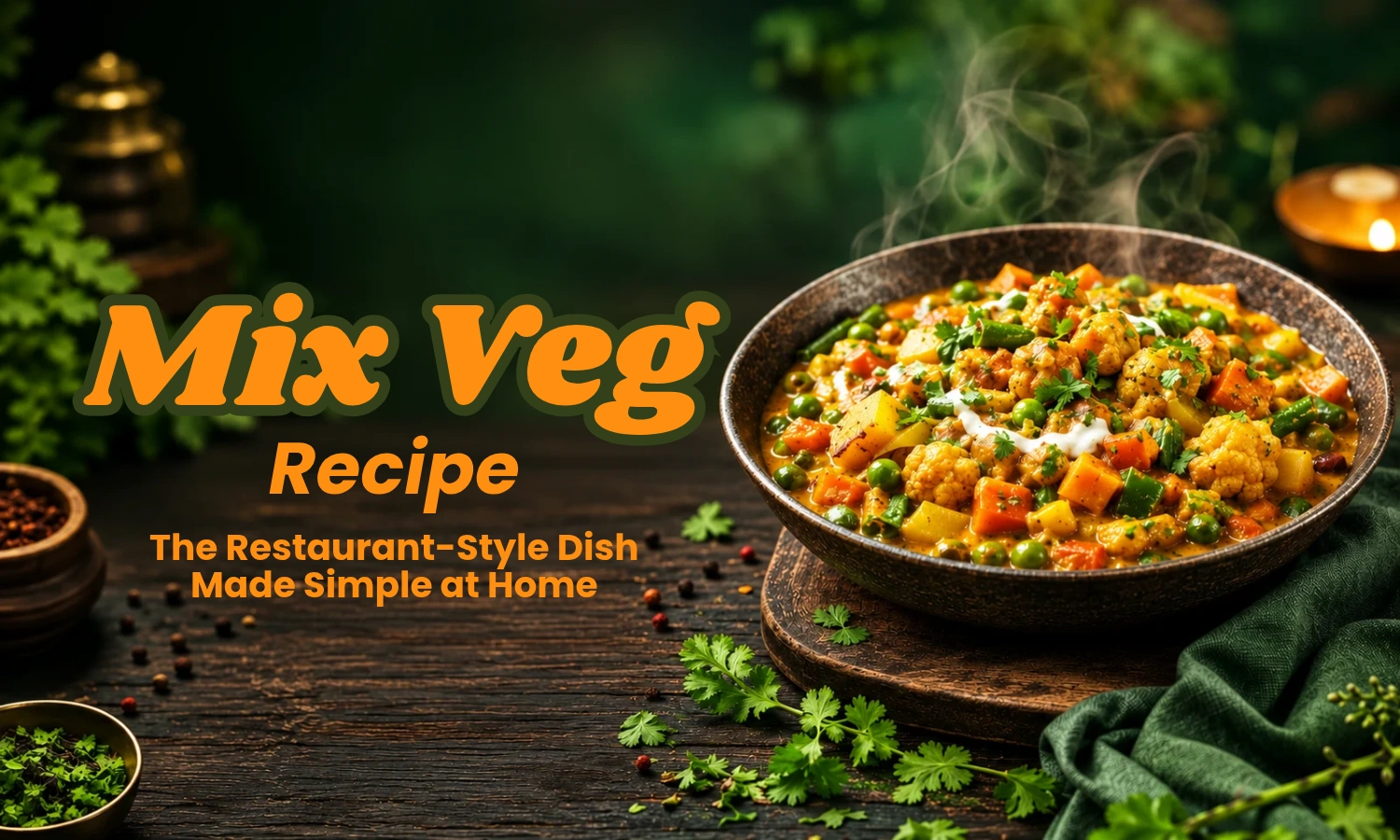
Mix Veg Recipe: The Restaurant-Style Dish Made Simple at Home

Summary

Want a mix veg recipe that tastes like the one from your favourite restaurant? This guide breaks down the masala base, vegetable selection, and cooking order that give this dish its signature texture and depth.

Introduction:

Mix veg recipe guides often make restaurant-quality cooking seem like a multi-step challenge, but bringing this dish together at home is far simpler than it seems. The secret lies not in complicated techniques, but in how you layer basic spices and manage the texture of each vegetable. With a few simple steps, you can recreate all the depth and comfort of your favourite diner-style curry using fresh, everyday ingredients already sitting in your kitchen.

What Is Mix Veg?

Mix veg is a popular Indian curry made by cooking a variety of vegetables in a flavourful onion and tomato gravy. It is commonly served with chapati, naan, paratha, or rice and can be prepared as a rich restaurant-style dish or a lighter everyday meal.

Why Mix Veg Remains a Restaurant Favourite

Few dishes appear on Indian restaurant menus as consistently as mix veg. Part of its appeal lies in how well it uses whatever vegetables are available, turning simple ingredients into a rich, satisfying gravy. At home, though, a mix vegetable recipe often falls short of the restaurant version, usually because of a rushed masala base or an uneven mix of vegetable textures.

The Masala Base Behind a Good Mixed Vegetable Curry

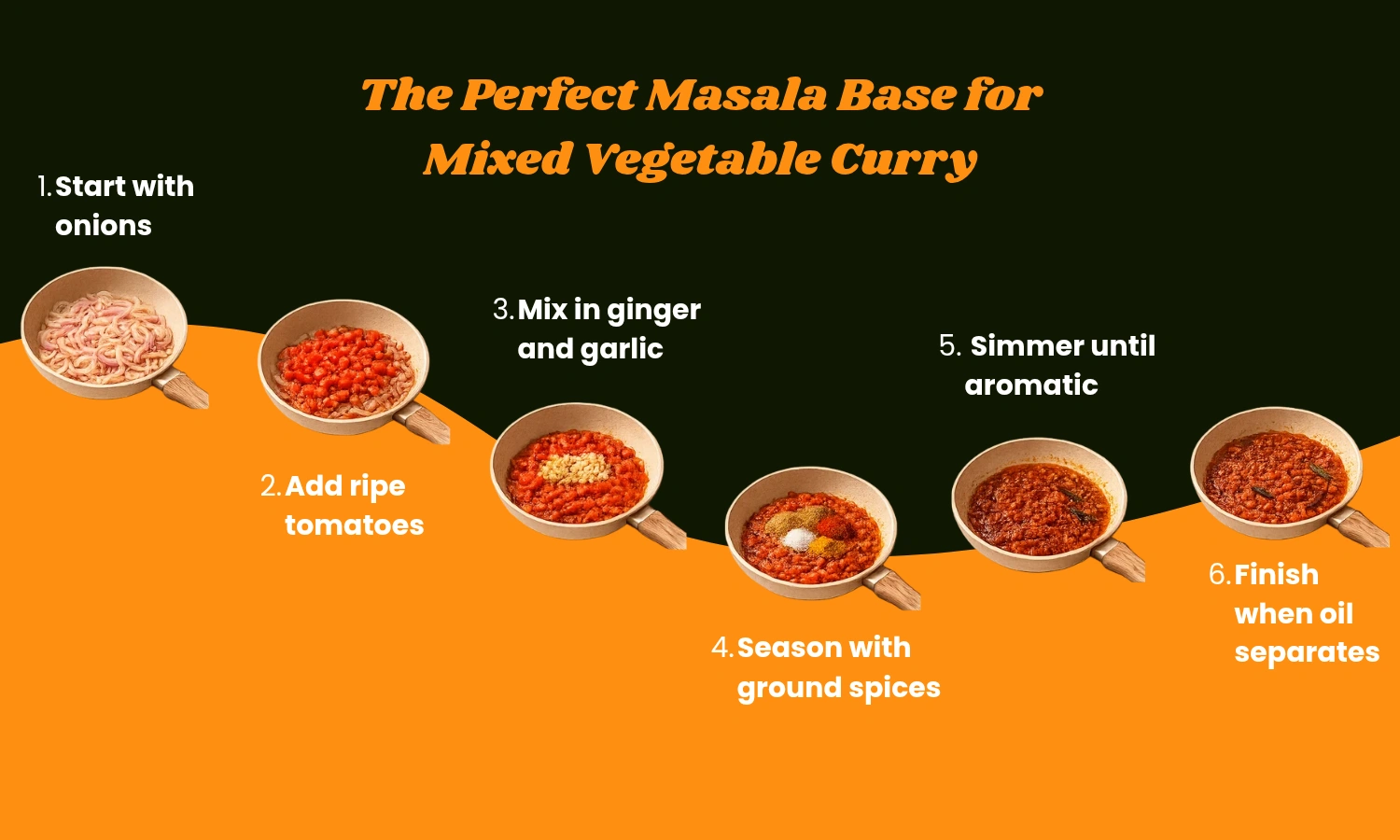
Mix Veg Recipe The foundation of any solid mixed vegetable curry recipe is a well-cooked onion and tomato masala, simmered with ginger, garlic, and a mix of ground spices like 777 Foods’ turmeric powder, coriander powder, and red chilli powder. Restaurants typically cook this base longer than most home cooks do, allowing the raw smell of the tomatoes to disappear completely and the oil to separate slightly at the edges. This single step accounts for much of the difference in taste between a home-cooked and restaurant-style dish.
Choosing the Right Vegetables for Texture

A common mistake in home versions of mixed veg recipes is treating all vegetables the same way. Harder vegetables like carrots, beans, and potatoes need more cooking time, while softer ones like peas, cauliflower, and capsicum cook much faster. Adding vegetables in stages, starting with the firmer ones, ensures every piece finishes cooking at roughly the same time rather than some turning mushy while others remain undercooked.
Mix Veg Recipe

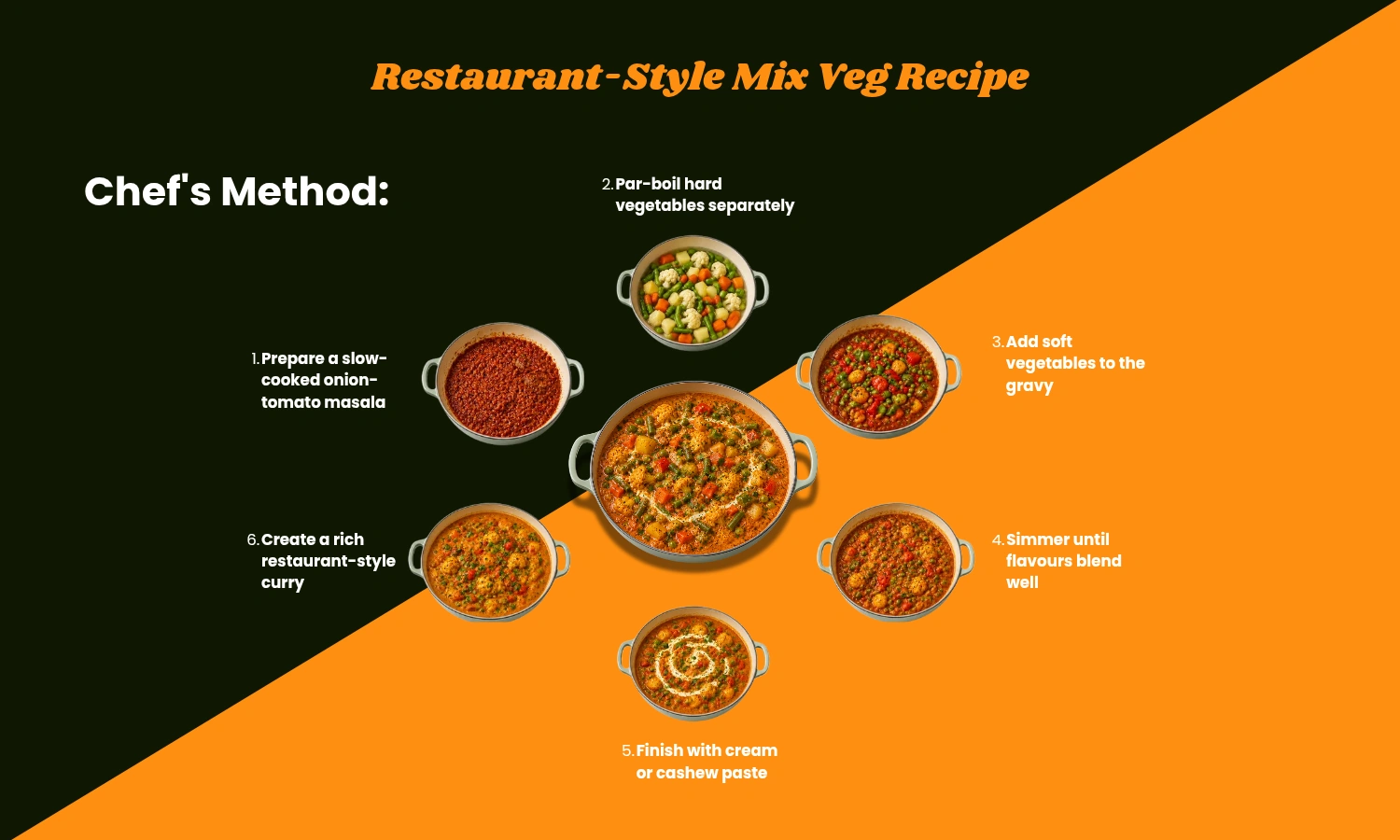
How to Make a Restaurant-Style Mix Veg Recipe?

Ingredients Needed:

  • Onion-tomato masala base
  • Selected vegetables – both hard and soft
  • Fresh cream or cashew paste – 2 to 3 tablespoons
  • Turmeric powder – ½ teaspoon
  • Chilli powder – ¼ teaspoon (may vary depending on taste preference)
  • Coriander powder – Required amounts

Mix Veg Recipe:

To get closer to a mix veg recipe restaurant style, follow these steps.

  • Start by par-boiling the harder vegetables separately so that they hold their shape once added to the gravy.
  • Prepare the onion-tomato masala base first, cooking it low and slow until it thickens and darkens slightly.
  • Add the par-boiled vegetables directly into this base along with the softer vegetables.
  • Simmer everything together for another eight to ten minutes so that the flavours combine properly.
  • A small amount of cream or cashew paste toward the end lifts the gravy into a richer, more restaurant-like texture, though this step is entirely optional for a lighter, everyday version of the dish.

Easy Mix Veg Gravy for Everyday Meals

Not every meal calls for a rich, restaurant-style gravy. For a simpler, everyday mix veg gravy recipe, skip the cream and cashew paste entirely and let the tomato base carry the dish instead. This version pairs just as well with rice or roti and is considerably lighter for a weeknight dinner. You can finish the meal with a side of lime pickle or garlic pickle from the 777 Foods range for that extra layer of flavour.

Where Mix Veg Fits on an Indian Vegetarian Table

Mix veg is versatile enough to sit alongside roti, paratha, steamed rice, or even jeera rice, making it a common choice for both family lunches and casual dinners. Because it uses a flexible list of vegetables, this mixed veg recipe rarely needs an exact shopping list, drawing instead on whatever is already in the refrigerator that week.

Tips to Make the Perfect Mix Veg Dish

  • Avoid rushing the onion-tomato base. It is the single biggest reason a home version of this vegetable recipe falls short of expectations.
  • Do not add all the vegetables at once because every vegetable has its own cooking time.
  • Pay attention to the final simmering stage, where the vegetables absorb the masala fully. If you don’t, it will leave the dish tasting like separate components rather than one cohesive gravy.
  • Add a pinch of honey or sugar to the dish to balance all the flavours.

Recreate the Restaurant Taste Tonight

The secret to a good mix veg recipe often comes down to the oil used for the base masala. Try cooking your next batch with 777 Foods’ pure Gingelly Oil for a richer aroma. Explore the entire collection of products at 777 Foods.

Key Takeaways

  • A slow-cooked onion-tomato base is the most important factor separating a home version from a restaurant-style mix veg.
  • Adding vegetables in stages, based on their cooking time, keeps the texture even throughout the dish.
  • Cream or cashew paste adds richness for a restaurant-style finish but can be skipped for a lighter, everyday version.
  • Mix veg pairs equally well with rice, roti, or paratha, making it a flexible addition to any weekly menu.
  • Simmering the vegetables fully in the masala base is what brings the whole dish together.

FAQs

How do I make a mix veg recipe taste like it does at a restaurant?Cooking the onion-tomato masala base longer, par-boiling harder vegetables separately, and adding a small amount of cream or cashew paste toward the end all help recreate that richer, restaurant-style texture at home.
What vegetables work best in a mixed vegetable curry recipe?Carrots, beans, potatoes, peas, cauliflower, and capsicum are the most common choices, with harder vegetables added earlier in the cooking process to ensure even texture.
Can I make a mix veg gravy recipe without cream?Yes, a lighter version relies purely on a well-cooked tomato base for richness, making it suitable for everyday meals without the extra calories from cream.
Why does my mixed veg curry taste watery instead of rich?This usually happens when the tomato masala base is undercooked or when too much water is added at once. Allowing the base to thicken before adding the vegetables solves this in most cases.

Healthy Vegetarian Recipes That Do Not Sacrifice Flavour

Summary

Interested in healthy vegetarian recipes that fit an Indian kitchen without feeling restrictive? This guide covers low-oil cooking methods, fibre-rich ingredients, and practical meal ideas for breakfast, dinner, and lunch boxes.

Introduction:

Healthy vegetarian recipes often get an unfair reputation for being plain or uninspiring, but eating well should never feel like a punishment. The beauty of Indian home cooking is that it relies heavily on natural spices, fresh herbs, and wholesome ingredients that carry incredible depth on their own. By making a few thoughtful tweaks to your daily routine, you can easily prepare nourishing, balanced meals that keep your health on track while delivering all the rich, comforting flavours you love.

Healthy Indian Cooking Without Compromising on Taste

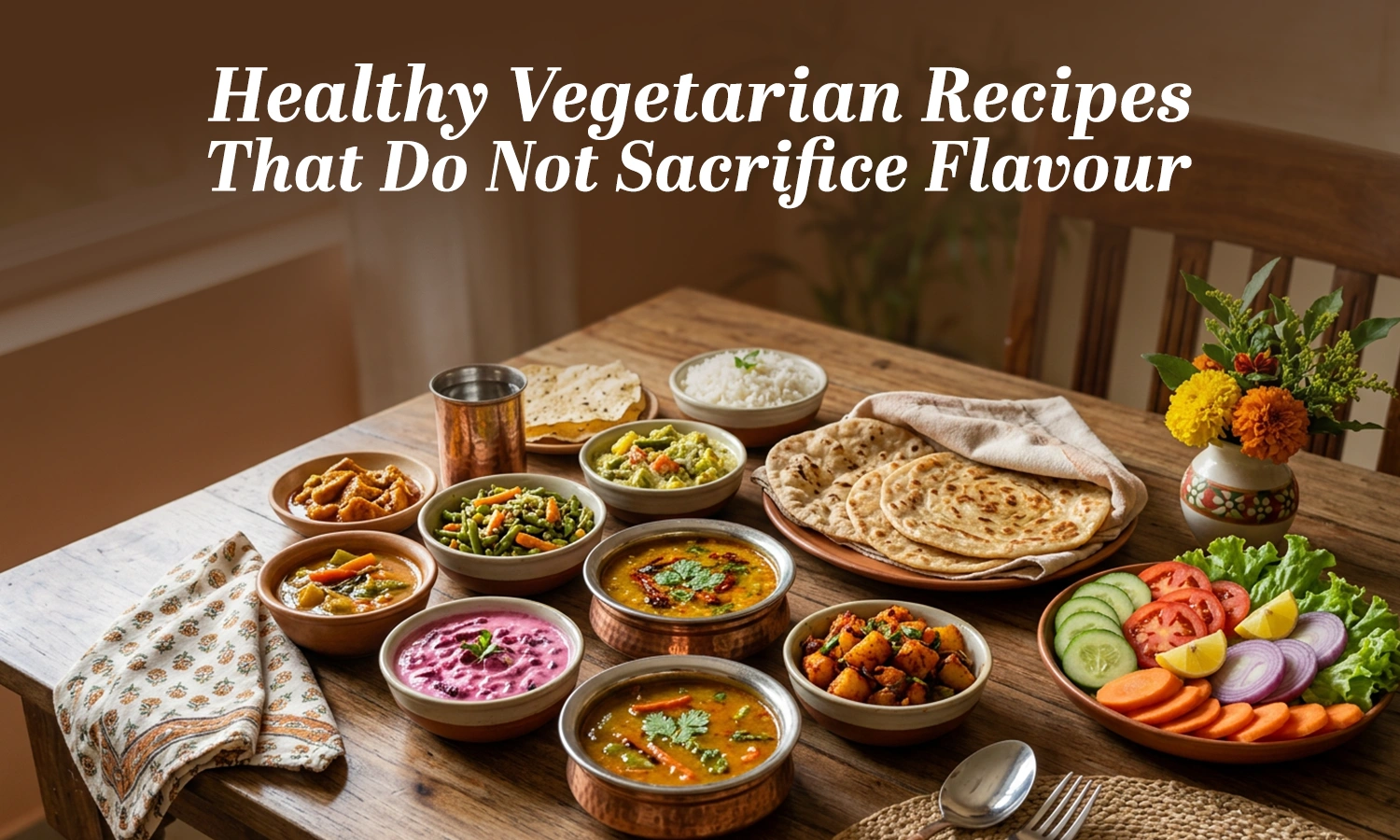
Many people assume healthy vegetarian food has to mean boiled vegetables and bland dals, but Indian cooking already has the tools for nutritious, satisfying meals built into its traditions. Steaming, light sautéing, and the use of legumes, whole grains, and fresh vegetables have been part of home cooking long before nutrition labels entered the conversation. The goal with healthy recipes is not to abandon flavour but to adjust proportions of oil, refined grains, and sugar while keeping the spice profile intact.

Understanding Fibre-Rich Foods in an Indian Diet

According to dietary guidelines published by the National Institute of Nutrition in India, adults are generally advised to consume around 30 to 40 grams of fibre daily, though average urban diets often fall well short of this target. Fibre-rich foods commonly used in Indian cooking include whole moong dal, chana, vegetables with their skins intact, and whole grains like brown rice, millets, and whole wheat. Including at least one fibre-dense ingredient in each meal, such as a bowl of sprouts or a vegetable-heavy sabzi, helps close this gap gradually.
Healthy Vegetarian Recipes

Healthy Vegetarian Recipe Ideas

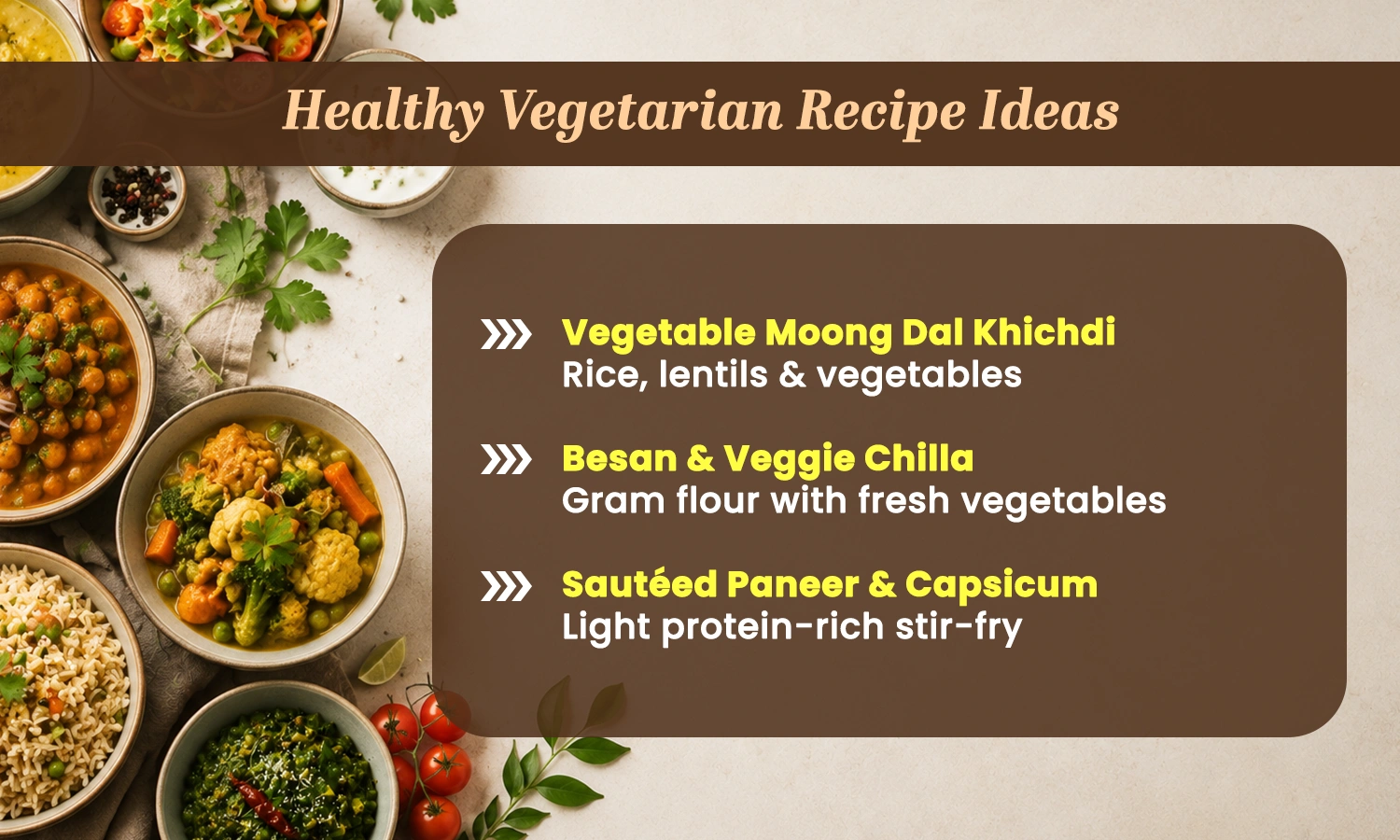
Follow these recipe ideas for a fulfilling vegetarian meal.

  • Vegetable Moong Dal Khichdi: A light, easily digestible one-pot meal made with yellow lentils, rice, and fresh vegetables.
  • Besan & Veggie Chilla A quick, high-protein savory pancake made from gram flour, onions, tomatoes, and basic herbs.
  • Sautéed Paneer & Capsicum: Cottage cheese cubes tossed with bell peppers, carrots, and light spices in minimal oil.

Low-Calorie Meals Without Losing Satisfaction

Building low-calorie meals does not require cutting portions drastically. Instead, replacing deep-fried preparations with steamed, roasted, or lightly sautéed versions of the same dish often reduces calorie density significantly while keeping the meal filling. A steamed idli, for instance, carries a fraction of the oil found in a fried snack, while still delivering the same rice and lentil base.

Healthy Lunch Ideas for Busy Weekdays

For office-goers and students, healthy lunch ideas that travel well and do not need reheating are especially useful. A bowl of curd rice with cucumber, a moong dal salad with lemon, or a simple vegetable pulao made with brown rice all work well as healthy lunch box recipes, offering a balance of carbohydrates, protein, and fibre without excess oil.

Protein-Rich Meals for Vegetarian Diets

One of the more common concerns around vegetarian meals is whether they provide enough protein. Combining rice or roti with dal, curd, paneer, or sprouts throughout the day easily meets daily protein requirements for most adults. A simple sprouts salad or a bowl of curd with chana forms the base of several high-protein vegetarian recipes that fit naturally into an Indian household’s existing routine.

Healthy Vegetarian Dinner Recipes for Lighter Evenings

Dinner is often the easiest meal to lighten without much adjustment. A bowl of vegetable khichdi made with brown rice and moong dal, or a simple rasam, made using 777 Foods’ Rasam Powder, along with rice and steamed vegetables, both qualify as healthy vegetarian dinner recipes that are gentle on digestion and easy to prepare after a long day.

Simple Ways to Make Everyday Meals Healthier

Small, consistent changes often matter more than a complete overhaul of cooking style.

  • Swap refined white rice for a mix of rice and millets.
  • Use less oil during tempering.
  • Add a vegetable side to every meal.
  • Add spices, including the 777 pepper powder, to your diet to enhance nutrition and flavour.

These small adjustments are often the backbone of healthy vegetarian recipes for weight loss, since consistency tends to matter more than short-term restriction.

Balancing Traditional Flavour With Nutritional Goals

A good masala powder, like 777 Foods’ Dhall Rice Powder, plays an underrated role in healthy cooking since it allows a dish to carry strong flavour even with less oil. A well-balanced sambar powder or rasam powder means a cook does not need to compensate for reduced oil with extra frying or richer bases, keeping both the taste and the nutrition profile intact.

Start Cooking Healthier Today

Healthy meals begin with quality ingredients. From 777 Rasam Powder and Dhall Rice Powder to authentic spice blends and pantry essentials, 777 Foods helps you prepare flavourful healthy vegetarian recipes that fit your everyday lifestyle.

Key Takeaways

  • Indian cooking already includes several naturally healthy techniques, including steaming, light sautéing and legume-based dishes.
  • Including one fibre-rich ingredient in every meal helps close the typical gap in daily fibre intake.
  • Combining rice or roti with dal, curd or sprouts easily meets daily protein needs for most vegetarian diets.
  • Small swaps, like using millets alongside rice or reducing oil in tempering, matter more than drastic dietary changes.
  • A good quality masala powder allows dishes to stay flavourful even with reduced oil.

FAQs

Are healthy vegetarian recipes enough to meet daily protein needs?Yes, when meals combine rice or roti with dal, curd, paneer, or sprouts, most adults can meet their daily protein requirements without any meat.
What are some easy healthy lunch ideas for the office?Curd rice with vegetables, a moong dal salad, or a brown rice pulao all travel well and do not require reheating, making them practical, healthy lunchbox recipes.
Can healthy vegetarian recipes still taste like traditional Indian food?Yes, using a good masala powder and traditional tempering techniques keeps the flavour authentic even when oil and refined grains are reduced.
Do healthy vegetarian recipes for weight loss require cutting out rice completely?No, moderate portions of rice combined with fibre-rich vegetables and protein sources like dal or curd generally work better long-term than eliminating rice entirely.