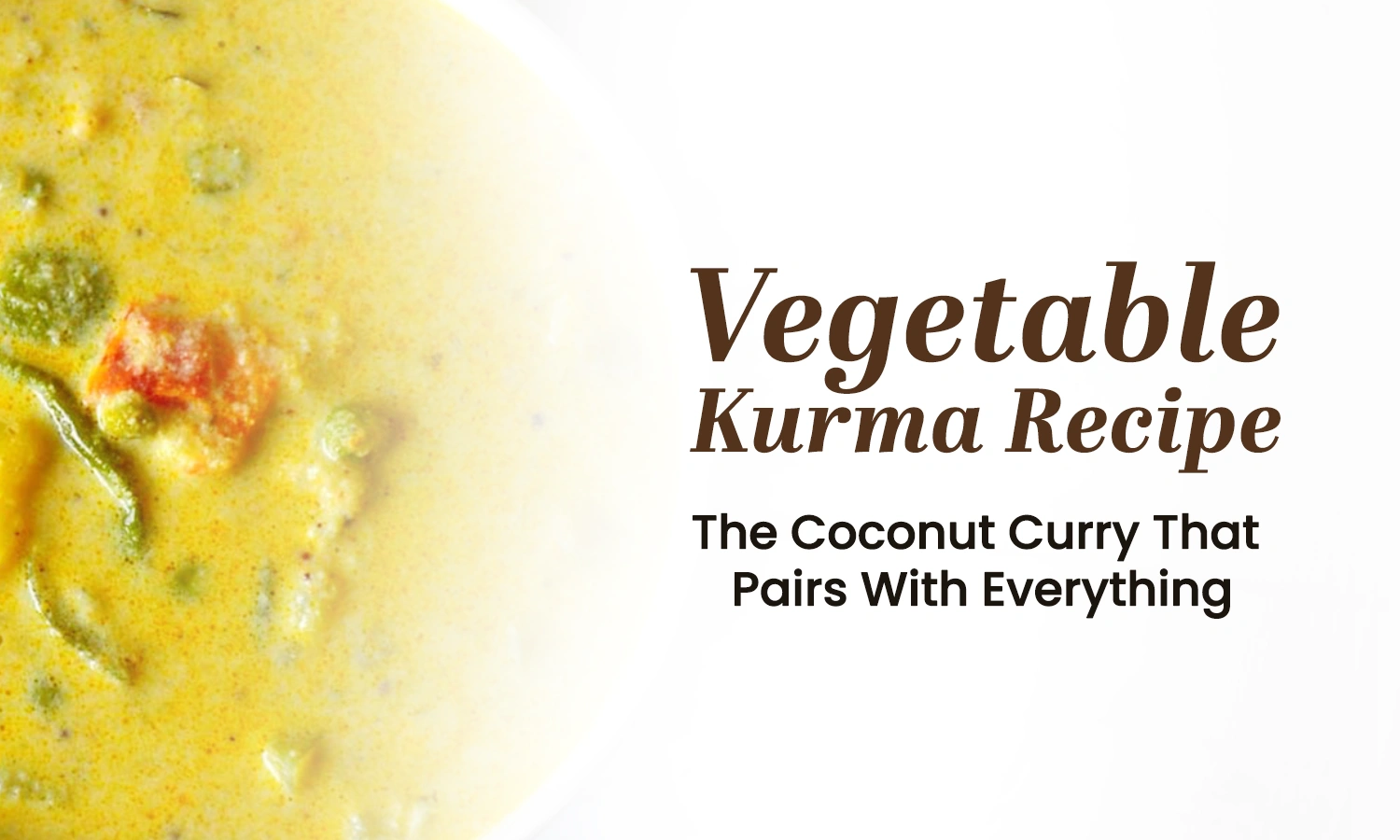
Vegetable Kurma Recipe: The Coconut Curry That Pairs With Everything

Summary

Want to learn a proper vegetable kurma recipe at home? This guide explains the coconut and spice base behind a good kurma, step-by-step cooking tips, and the pairings that make this South Indian classic a weekend favourite.

Introduction:

Do you know the exact ingredients that are needed for a vegetable kurma recipe? Few dishes hold a permanent spot on both weekday dinner tables and weekend festive spreads quite like a well-made vegetable kurma. Its rich, aromatic gravy has a comforting way of bringing even the simplest staple foods to life, making it a go-to choice when you want something deeply satisfying. Whether you are cooking for a family gathering or just looking to elevate your usual routine, mastering this classic recipe gives you a versatile, restaurant-quality dish that everyone eagerly looks forward to eating.

What Is Vegetable Kurma?

Vegetable kurma is a creamy South Indian curry made with mixed vegetables, coconut, whole spices, and aromatic herbs. Unlike regular vegetable curry, kurma uses a coconut-based gravy that pairs perfectly with idiyappam, chapati, poori, parotta, and rice.

What Makes Vegetable Kurma Different From a Regular Curry?

A vegetable curry and a kurma might look similar at first glance, but the base ingredients set them apart entirely. Where most curries rely on an onion and tomato foundation, a kurma builds its body from ground coconut, along with cashews or poppy seeds in some regional variations. This gives the dish its signature mild, creamy texture, distinct from the tangier, spicier profile of a standard veg curry.

The Origins of South Indian Vegetable Kurma
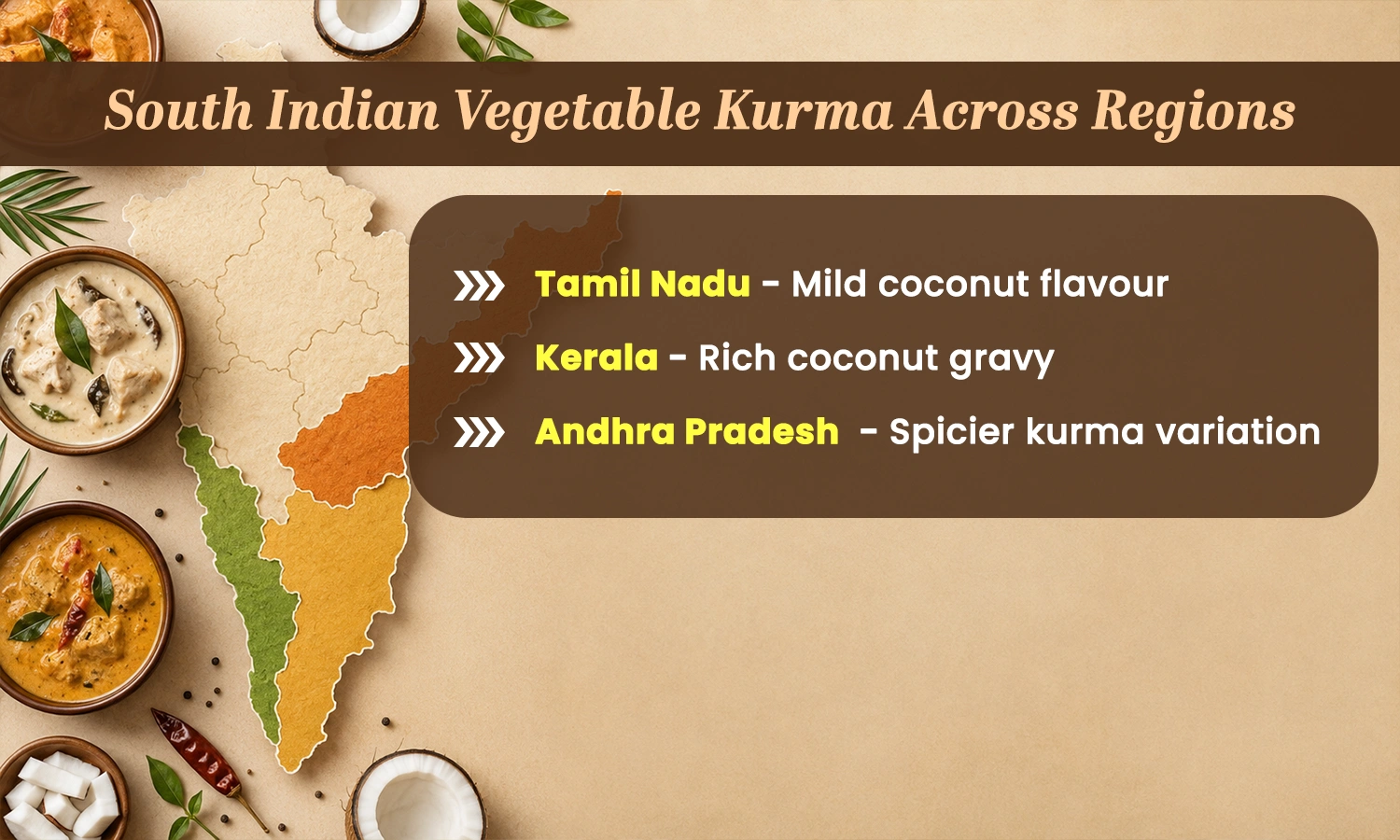
Vegetable Kurma Recipe Vegetable kurma has roots that stretch across South Indian households, with slightly different versions found in Tamil Nadu, Kerala, and parts of Andhra Pradesh. The dish likely evolved from Mughlai korma traditions, adapted over generations to suit local vegetables and coconut availability. Today, vegetable kurma of the South Indian style is typically lighter on cream and heavier on coconut compared to its North Indian counterpart, the vegetable korma.

Ingredients That Build a Proper Kurma Recipe

A dependable kurma recipe typically includes mixed vegetables such as carrots, beans, potatoes, and green peas, along with grated coconut, green chillies, ginger, garlic, and a handful of whole spices like cinnamon, cloves, and cardamom. Fennel seeds are often ground along with the coconut paste, giving the gravy a subtly sweet, aromatic base that separates it from a tomato-forward curry. Keeping 777 Foods’ spices and condiments handy can make your kurma preparation easier and simpler.

How to Make Vegetable Kurma?

Ingredients Needed:

  • Fresh or desiccated coconut – ½ cup
  • Green chillies – 2
  • Ginger – 1-inch piece
  • Garlic – 4 to 5 cloves
  • Fennel seeds – 4 or 5
  • Chopped onions – 2
  • 777’s pure gingelly oil – 2 to 3 tablespoons
  • Turmeric powder – ½ teaspoon
  • Mixed vegetables (carrot, beans, potato, peas) – 3 cups
  • Chopped coriander leaves – A few
  • Cinnamon, cardamom & cloves – A few of each
  • Water – 1 or 2 cups
  • Salt – Depending on the individual’s taste
Vegetable Kurma Recipe

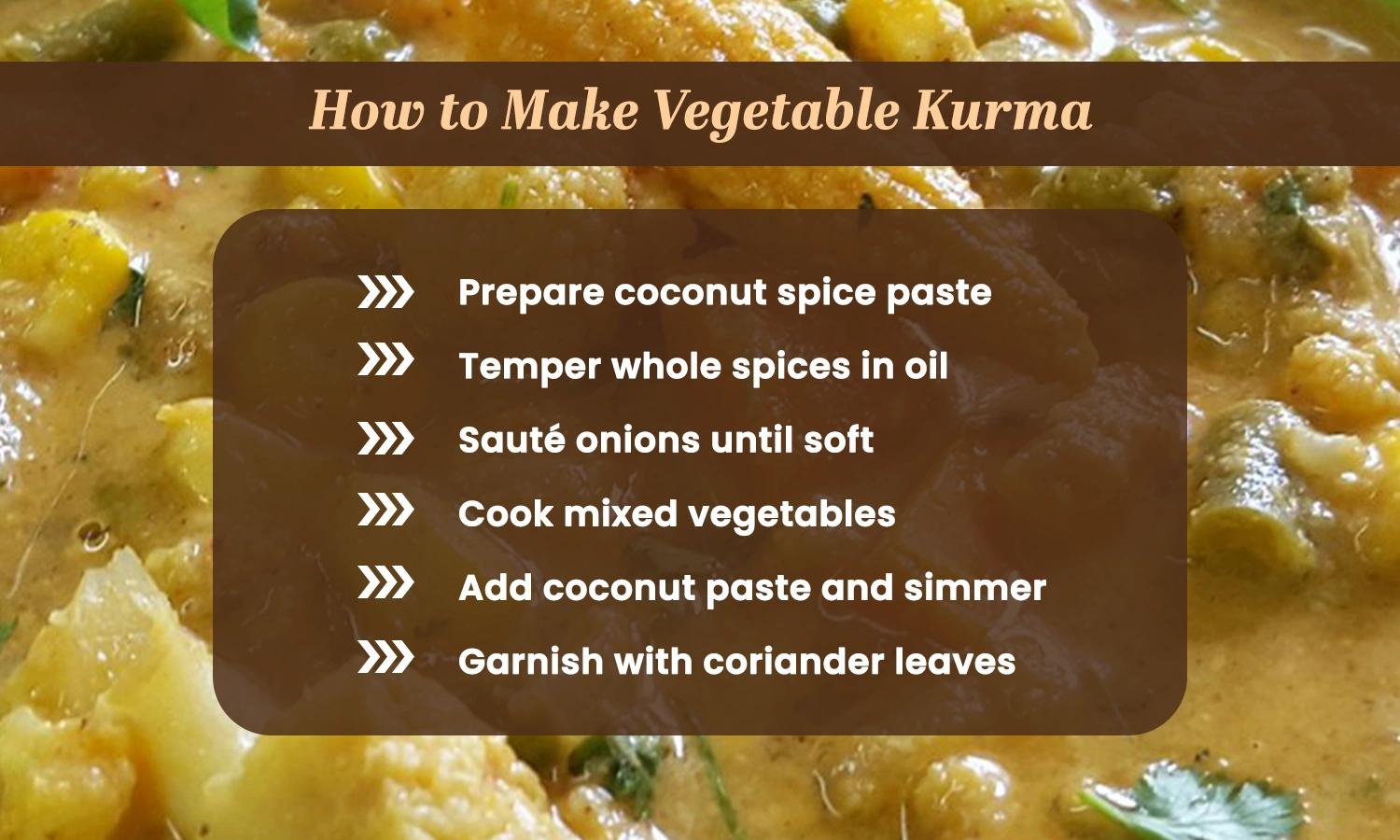
Vegetable Kurma Recipe (step-by-step):

  • Grind fresh or desiccated coconut with green chillies, a small piece of ginger, garlic, and fennel seeds into a smooth paste using a little water. Set this aside while you prepare the base.
  • In a pan, temper 777’s pure gingelly oil with a small stick of cinnamon, a clove or two, and a cardamom pod.
  • Add finely chopped onions and cook until they turn soft and translucent.
  • Stir in the mixed vegetables along with turmeric powder and a little salt, then add enough water to cook the vegetables until just tender.
  • Once the vegetables have softened, stir in the ground coconut paste and simmer gently for another five to seven minutes, allowing the raw coconut smell to cook off completely. The gravy should thicken slightly and turn a pale, creamy colour.
  • Finish with a few chopped coriander leaves before serving.

Common Mistakes That Change the Final Texture

The most common error in a home-cooked veg kurma recipe is adding the coconut paste too early, which can leave the gravy tasting raw and slightly grainy. Allowing the paste to simmer properly at the end, rather than rushing this step, makes the biggest difference to the final dish. Overcooking the vegetables before adding the paste is another frequent issue, since it leaves the curry mushy rather than lightly textured.

What to Pair With Vegetable Kurma?

Kurma is versatile enough to sit alongside almost any Indian bread or rice dish. Idiyappam, a steamed rice noodle dish, is one of the most traditional pairings in South Indian homes, particularly for breakfast or a light dinner. Chapati and poori also complement the mild, creamy gravy well, while a simple bowl of steamed rice works when time is short and bread is not an option.

Adapting the Recipe for Everyday Cooking

While a traditional kurma recipe can involve several steps, many home cooks adapt it slightly for weeknight cooking by reducing the whole spices to a simpler tempering of just cinnamon and cardamom, and using pre-ground coconut powder instead of fresh coconut when time is tight. The result is a slightly simplified but still recognisable version of the dish, closer to a quick mixed veg curry than a full festive preparation.

Bring Restaurant-Style Kurma Home

Prepare delicious vegetable kurma with quality pantry essentials from 777 Foods, including Pure Gingelly Oil, Ginger Garlic Paste, and authentic spices.Explore the full range and recreate restaurant-style flavour at home.

Key Takeaways

  • Vegetable kurma differs from a regular curry mainly through its coconut and fennel-based paste rather than a tomato base.
  • Grinding the coconut paste with green chillies, ginger, and fennel gives the dish its signature mild sweetness.
  • Simmering the coconut paste fully at the end prevents a raw, grainy texture in the final gravy.
  • Idiyappam, chapati, and poori are the most traditional pairings for a South Indian-style kurma.
  • A simplified weeknight version can use pre-ground coconut powder to save time without losing the core flavour.

FAQs

How is a vegetable kurma recipe different from a vegetable korma?Vegetable kurma generally refers to the South Indian coconut-based version, while vegetable korma often describes the richer, cream or cashew-heavy North Indian style, though the names are sometimes used interchangeably.
Can I make vegetable kurma without coconut?Traditional versions rely heavily on coconut for both texture and flavour, so skipping it changes the dish significantly. A cashew paste can be used as a partial substitute, though the taste will lean closer to a korma than a true kurma.
What vegetables work best in a kurma recipe?Carrots, beans, potatoes, and green peas are the most common choices, though some households also add cauliflower or drumstick depending on regional preference.
Why does my vegetable kurma taste raw even after cooking?This usually happens when the ground coconut paste is added too late and not simmered long enough. Allowing it to cook for at least five to seven minutes after adding removes the raw taste completely.
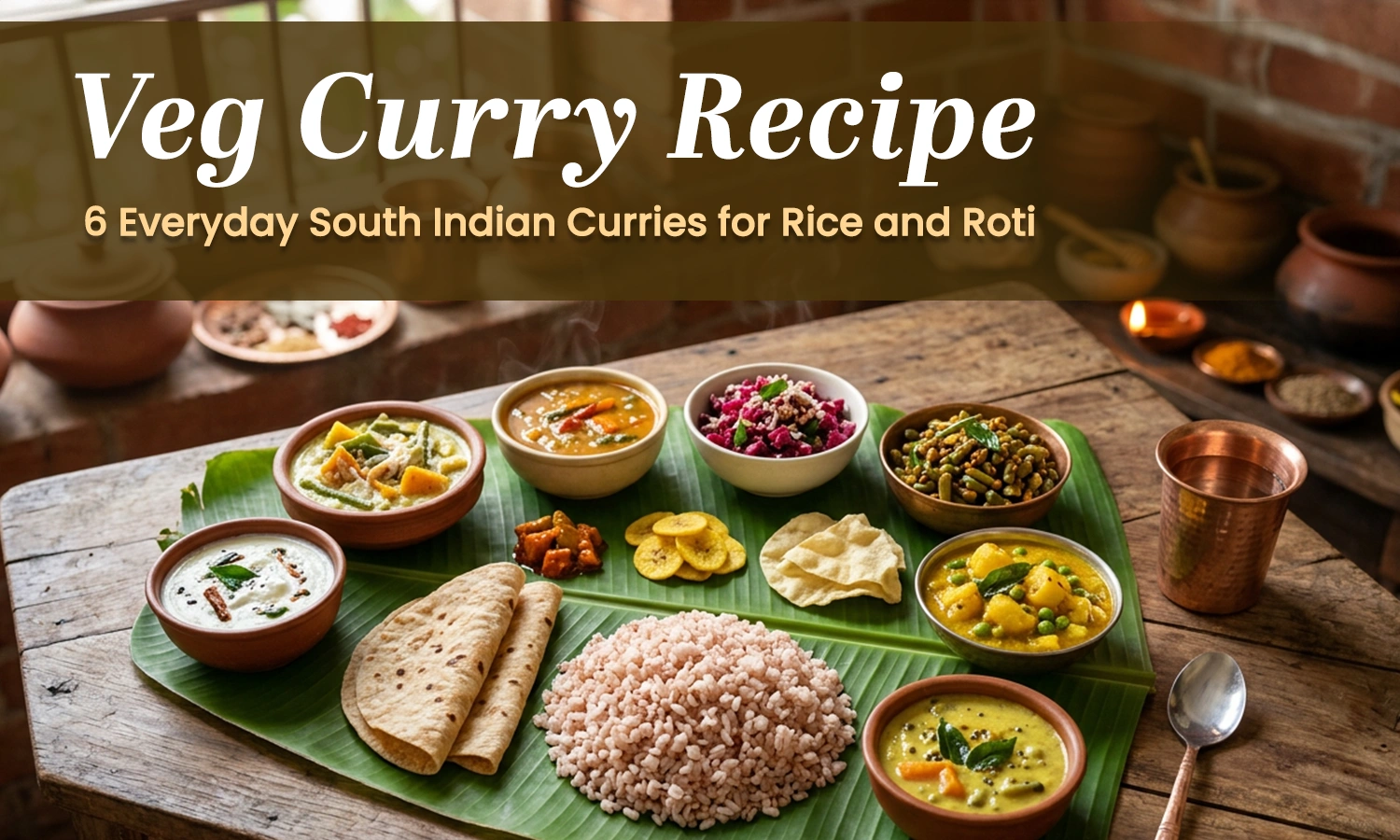
Veg Curry Recipe: 6 Everyday South Indian Curries for Rice and Roti

Summary

Searching for a dependable veg curry recipe that suits both rice and roti? This guide breaks down six everyday South Indian curries, their base ingredients, and quick preparation tips for a well-rounded vegetarian dinner table.

What Is Veg Curry?

Veg curry is a vegetable-based dish prepared with fresh vegetables, spices, herbs, and a flavourful gravy or dry masala. South Indian veg curries can be made with onion and tomato, coconut, lentils, or sambar-based gravies and are commonly served with rice, roti, chapati, or parotta.

The Everyday Role of Curry in Indian Cooking

A good curry does more work on an Indian dinner plate than almost any other dish. It carries flavour across rice, roti, and even curd rice, turning simple starch into a full meal. Every household has its own version of a dependable veg curry recipe, usually built around onions, tomatoes, and a trusted masala powder, adjusted slightly depending on the vegetables available that day.

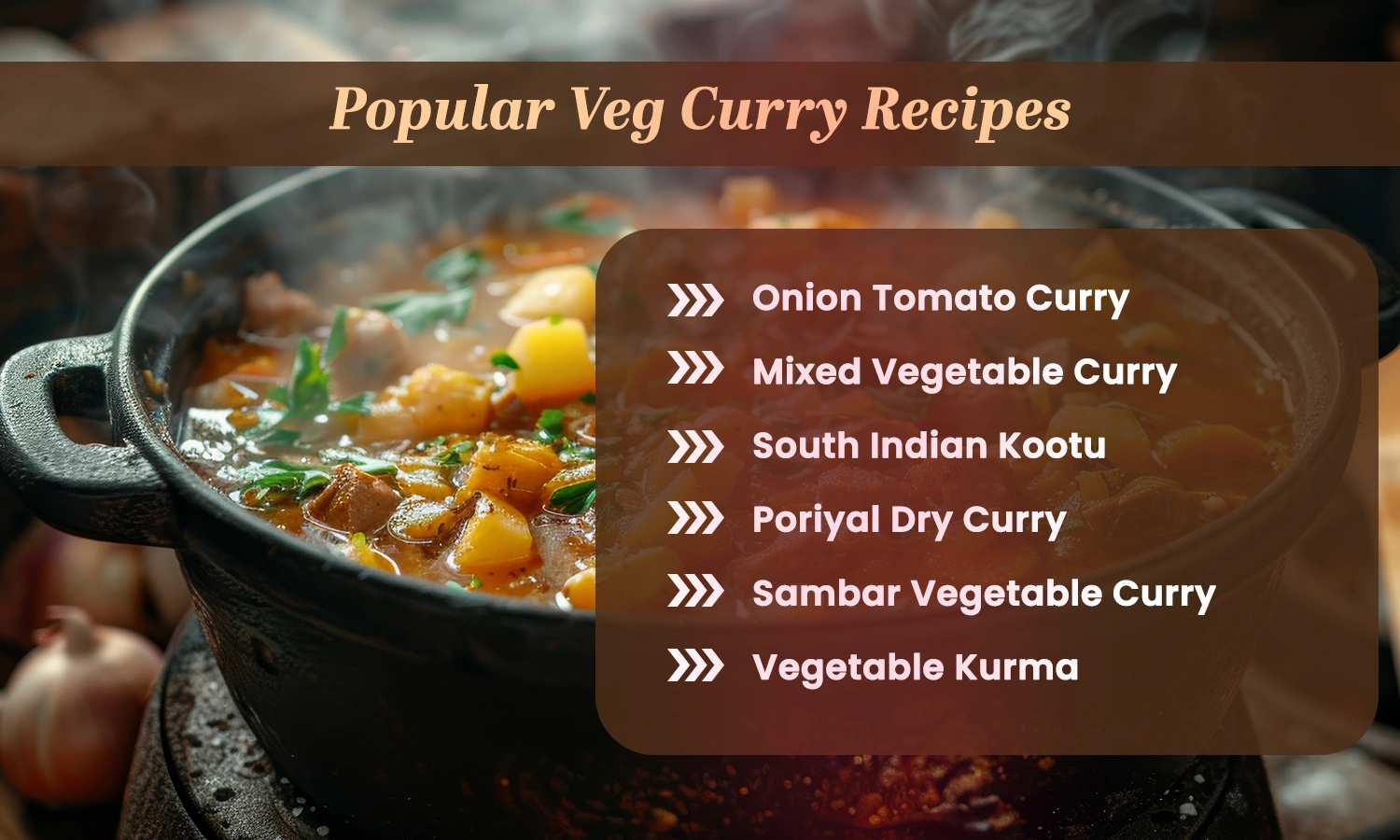
Popular Veg Curry Recipes

From simple everyday gravies to traditional South Indian favourites, these popular veg curry recipes pair perfectly with rice and roti. Here are six easy curries to try at home.
veg curry recipe

1. Onion Tomato Vegetable Curry

The most common vegetable curry recipe in Indian homes starts with a base of sautéed onions and tomatoes, seasoned with the 777 turmeric powder, chilli powder, and coriander powder. Mixed vegetables like carrots, beans, and potatoes are added and simmered until soft. This forms the backbone of countless weeknight dinners because it is forgiving of substitutions and quick to prepare.

2. Mixed Vegetable Curry with Coconut

A slightly richer version of the everyday mixed vegetable curry, this style adds a spoon of ground or grated coconut toward the end of cooking, giving the gravy body and a mild sweetness. This version of Indian vegetable curry works especially well alongside chapati or steamed rice.

3. South Indian Style Vegetable Kootu

Kootu, a lightly spiced lentil and vegetable curry, sits between a dal and a curry in texture. It uses moong dal or toor dal cooked with vegetables like pumpkin, snake gourd, or beans, finished with a light tempering. This dish appears frequently on any list of South Indian veg curries because of how well it balances nutrition and comfort.

4. Poriyal Style Dry Curry

Not every curry needs gravy. A poriyal, or dry sautéed vegetable, made with grated coconut, mustard seeds, and curry leaves, is a staple side dish across South Indian meals. This poriyal is usually served alongside sambar rice, rasam rice, or any instant ready meal rather than as a standalone dish.

5. Sambar-Based Vegetable Curry

For those who want a curry with real depth, using a proper sambar powder, such as 777 Foods’ Madras Sambar Powder, as the base rather than plain chilli powder, transforms an ordinary curry recipe into something closer to a restaurant-style dish. Mixed vegetables like drumstick, brinjal, and okra work particularly well in this style, and this version doubles easily as a veg curry for rice.

6. Egg-Free Kurma Style Gravy

A lighter, milder cousin of the standard curry, a kurma-style gravy uses coconut and cashew paste instead of tomato as the base, resulting in a creamy, mellow vegetable gravy suited to idiyappam, chapati, or poori.

Making Dinner Decisions Easier Through the Week

  • Turmeric powder – ½ teaspoon
  • Chilli powder – 1 teaspoon
  • Coriander powder – 1 to 2 teaspoons
  • Mustard seeds
  • Curry leaves
  • Tomato base
  • Coconut (if required)
  • Cashew paste (based on the individual’s taste)

Choosing Vegetables for Your Curry

veg curry recipe

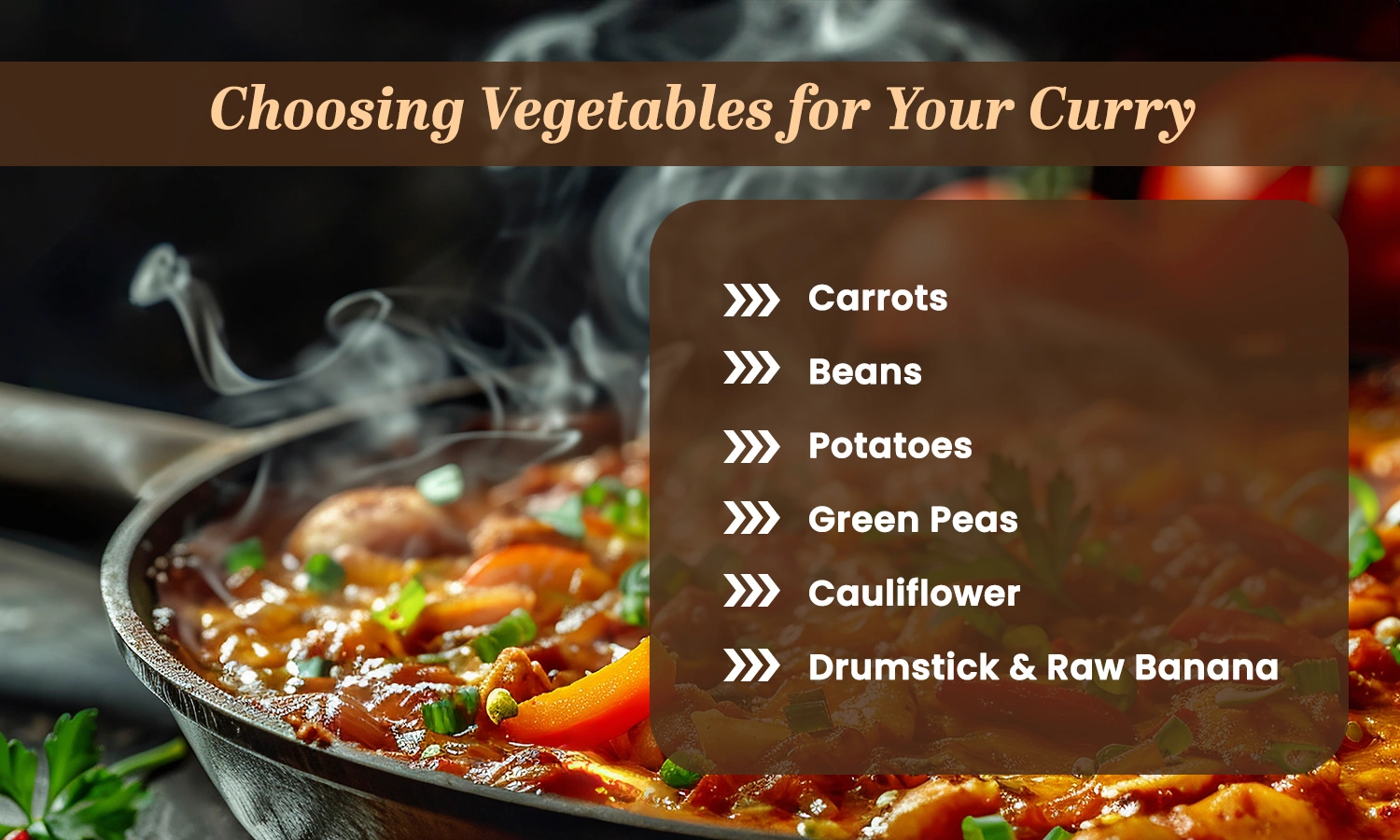
Most vegetable recipes in Indian cooking are flexible by design. Carrots, beans, potatoes, peas, and cauliflower form a common base, while regional additions like drumstick, ash gourd, or raw banana bring variety. Rotating vegetables across the same basic gravy recipe is one of the easiest ways to avoid repetition without needing an entirely new dish every night.

Getting the Basics Right for Any Indian Vegetable Curry Recipe

Regardless of which of these six dishes you choose, a few fundamentals separate an average curry from a memorable one. Tempering oil properly with mustard seeds and curry leaves before adding onions builds the aromatic base that most Indian curries depend on. Cooking onions until they turn a light golden colour, rather than rushing the process, prevents the final gravy from tasting raw. And using a good quality masala powder, rather than an inconsistent mix of loose spices, keeps the flavour steady every time you repeat the recipe.
Pure gingelly oil, like the one from 777 Foods, used either for tempering or as a finishing drizzle, adds an aroma that is difficult to replicate with refined oils and remains a preferred choice in traditional South Indian kitchens for exactly this reason.

Cook a Better Curry Tonight

A dependable masala powder makes every curry easier to get right. Try 777 products the next time you make a vegetable curry, and notice the difference a good base ingredient makes.
Shop the full range at 777 Foods and keep your curry game consistent all week.

Key Takeaways

  • A proper tempering of mustard seeds and curry leaves forms the aromatic foundation of most South Indian curries.
  • Coconut-based gravies like kurma and kootu tend to be milder and pair well with rice or roti.
  • A quality sambar powder can elevate a simple vegetable curry into a more layered, restaurant-style dish.
  • Rotating vegetables within the same base gravy recipe keeps weekly meals varied without extra effort.
  • Pure oil, like 777 gingelly oil, adds an aroma that refined oils cannot easily replicate.

FAQs

What is the easiest veg curry recipe for a beginner cook?An onion-tomato vegetable curry is the simplest starting point, requiring only basic spices, mixed vegetables, and a short simmering time.
Which mixed vegetable curry recipe works best for both rice and roti?A sambar-based vegetable curry or a coconut kurma both pair equally well with rice and roti, making them versatile choices for a full family meal.
How can I make an Indian vegetable curry recipe taste less watery?Cooking the onion and tomato base a little longer before adding vegetables, and allowing the curry to simmer uncovered toward the end, helps thicken the gravy naturally.
What makes a good veg curry for rice specifically?A curry with more gravy and a slightly stronger spice base, such as a sambar-style vegetable curry, tends to work best when mixed directly with hot rice.

Simple Indian Vegetarian Recipes for Dinner Your Family Will Actually Finish

Summary

Looking for simple Indian vegetarian recipes for dinner that do not need hours in the kitchen? This guide covers light rice dishes, roti pairings, and one-pot options suited to South Indian and North Indian households winding down after a long day.

Introduction :

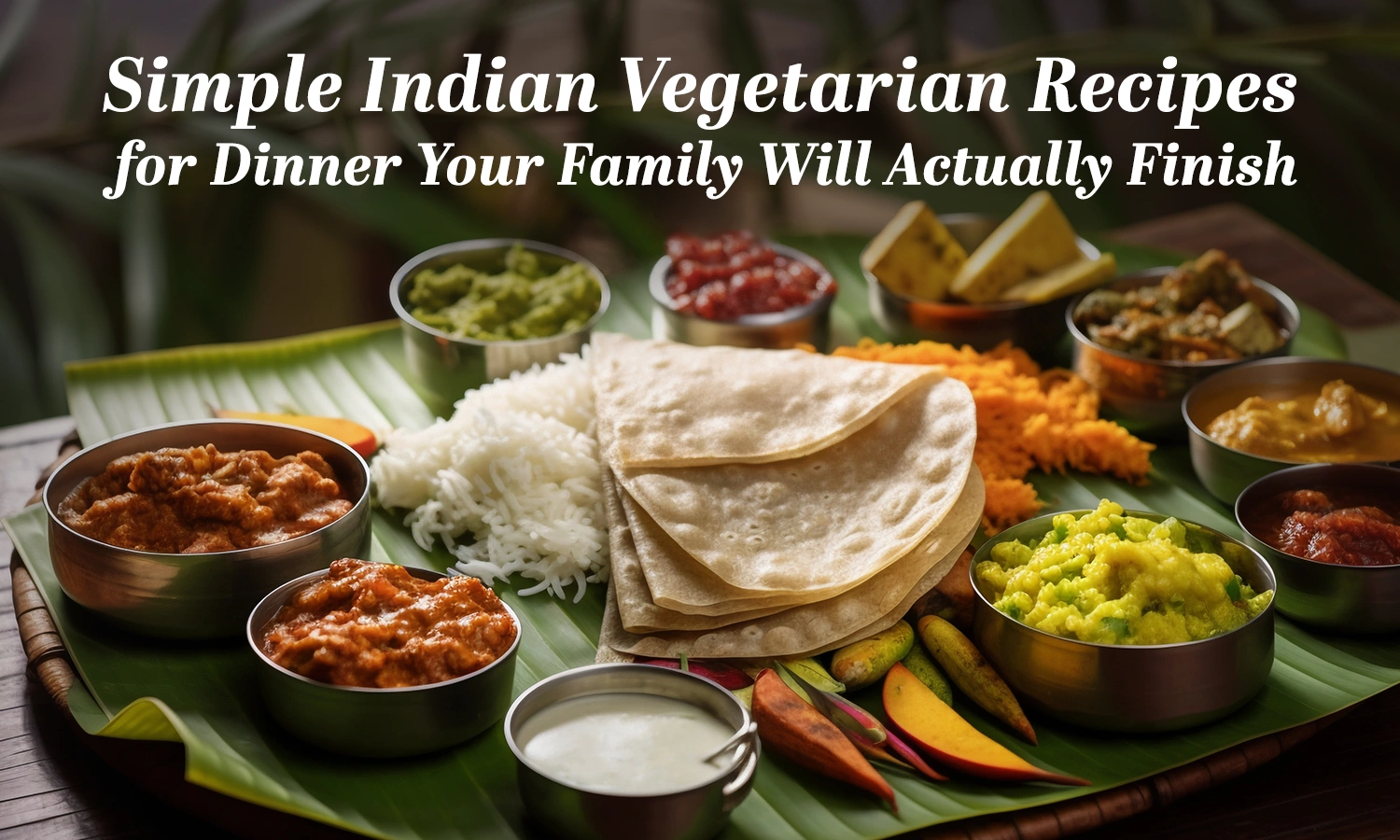
Simple Indian vegetarian recipes for dinner should strike a practical balance between flavour, comfort, and minimal kitchen effort. After a long day, no one wants to spend hours standing over a stove or cleaning up multiple pots. The goal at night is serving a warm, wholesome meal that satisfies the entire family without feeling like a chore to prepare.

Why Dinner Needs a Different Approach Than Lunch?

Dinner in most Indian homes calls for something lighter than lunch, since a heavy meal late in the evening can affect sleep and digestion. At the same time, families still expect a proper plate rather than a snack. This is where simple Indian vegetarian recipes for dinner earn their place, offering enough substance to satisfy without weighing the stomach down before bedtime. A spoonful of 777 mixed pickle, taken along with the main dish, helps you enjoy a delicious yet light meal at night.

Types of Simple Indian Vegetarian Dinner Recipes

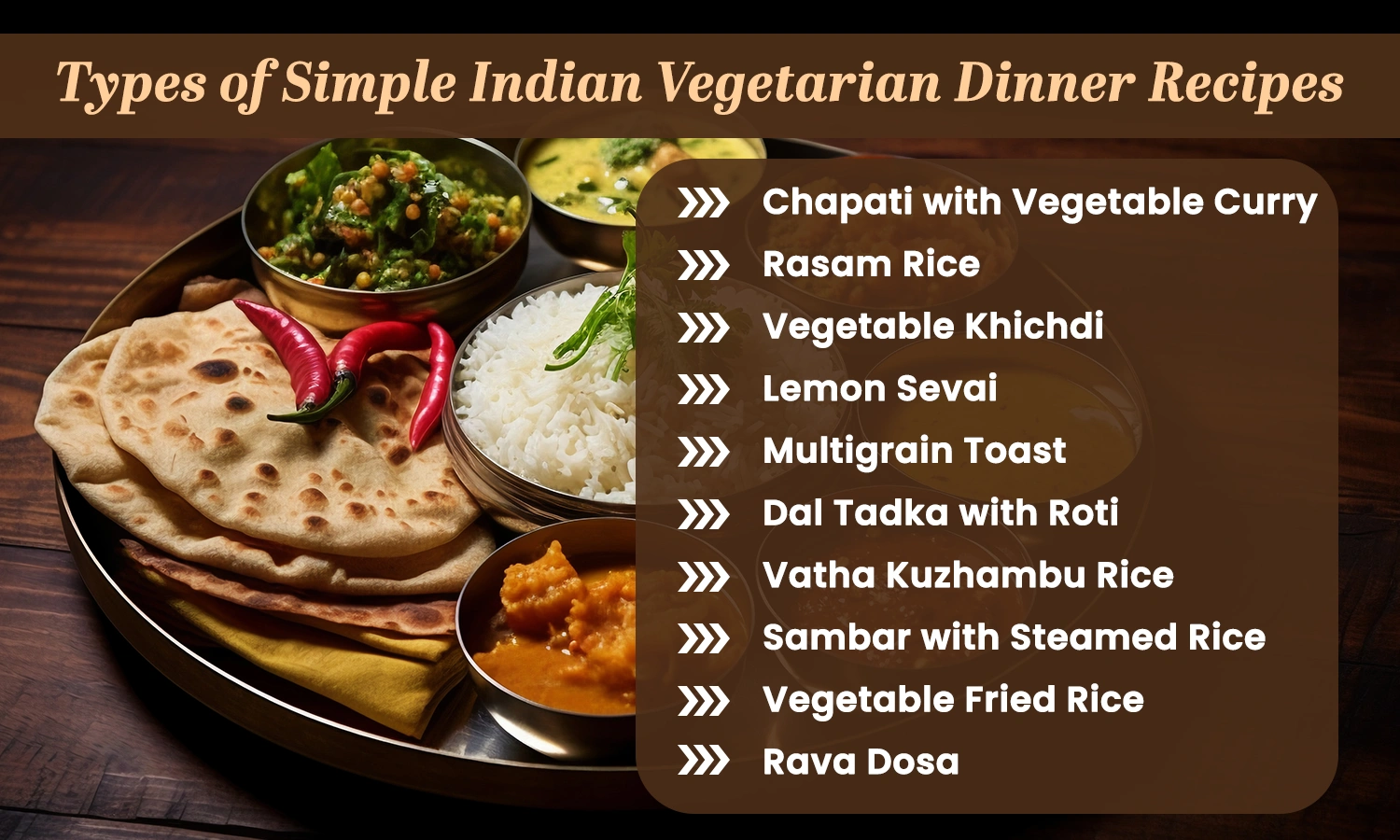
There are many types of simple Indian vegetarian dinner recipes, from light rice dishes and one-pot meals to comforting roti pairings. Here are some easy dinner ideas for your family.
simple indian vegetarian recipes for dinner

1. Chapati or Idiyappam with Vegetable Curry

A soft chapati paired with a quick vegetable curry is one of the most common Indian dinner recipes across both North and South Indian households. Using seasonal vegetables like beans, carrots, or potatoes with a light gravy keeps this dish balanced and filling.
A mild coconut-based kurma paired with soft chapati or idiyappam works well when the family wants something a little more indulgent without straying too far from a light dinner.

2. Rasam Rice

A bowl of hot rasam poured over rice, finished with a light poriyal on the side, is a classic South Indian dinner recipe choice, particularly during monsoon or winter months when something warm and tangy feels comforting. Rasam also aids digestion after a heavy day of eating. You can conveniently make rasam for dinner using 777 Foods’ tomato rasam paste.

3. Vegetable Khichdi

Khichdi, made from rice and moong dal cooked together with turmeric and light spices, is one of the gentlest veg dinner recipes available. It is easy on the stomach and a common choice for both children and elderly family members.

4. Lemon Sevai

It is a simple South Indian classic that’s light, tasty, and fragrant. It makes the process of dinner preparation effortless. You can make this veg dinner using 777 Foods’ roasted vermicelli too. Many refer to this dish as vermicelli upma. It’s also light on the stomach and suitable for vegetarians who need a change from the usual rice varieties.

5. Multi-Grain Toast

Though multi-grain bread is usually taken as a breakfast item, it can also serve as a quick dinner recipe when it is toasted. It’s a simple, light, and protein-packed dinner that’s tasty and nutritious. You can add crumbled paneer to your multi-grain toast to make it a complete meal. This dish also serves as one of the most easily prepared meals in minutes.

6. Dal Tadka with Roti

A simple yellow dal tempered with cumin, garlic, and dried red chillies, served alongside roti, is one of the most reliable North Indian dinner recipes found in vegetarian households across the country. It is quick, protein-rich, and pairs with almost any vegetable side.

7. Vatha Kuzhambu Rice

Vatha kuzhambu comes with spicy and tangy flavours, which are perfect for a cozy dinner. You can prepare this veg dinner using 777 Foods’ dried sundakai vathal. The slightly bitter, savoury crunch of dried sundakai vathal balances the heat of red chillies and sourness of tamarind in the kuzhambu. Adding a dollop of ghee to rice and then mixing it with the kuzhambu makes this vegetarian dinner tastier and more flavourful.

8. Sambar with Steamed Rice

Sambar made with a dependable source and paired with plain steamed rice remains one of the most comforting vegetarian dinner recipes for a weeknight, especially when finished with a drizzle of pure gingelly oil for extra aroma.

9. Vegetable Fried Rice for a Change of Pace

For evenings when the family wants something different from the usual rice and curry combination, a quick vegetable fried rice offers variety without extra shopping, using whatever vegetables are already in the refrigerator.

10. Rava Dosa

The rava dosa recipe can help you skip the overnight fermentation and make restaurant-style crispy dosas within a few minutes. This simple Indian vegetarian recipe yields thin dosas that you can eat with a coconut or tomato-garlic chutney. Rava dosas can be eaten as dinner, but they also serve as one of the healthy snacks for the evening.

Making Dinner Decisions Easier Through the Week

Much like lunch, dinner planning becomes easier once a household settles on a short rotation of five or six vegetarian dinner ideas. Keeping rice, dal, a few vegetables, and dependable masala powders on hand means dinner rarely depends on a last-minute grocery run. Many families also keep a jar or pouch of pure gingelly oil from 777 Foods specifically for dinner-time tempering, since its aroma is closely associated with traditional South Indian cooking.
Here’s a weekly plan that can make your dinner decisions much easier:

Day Dinner for Rotation
Monday Chapati with Vegetable Curry
Tuesday Veg Kichdi
Wednesday Vatha Kuzhambu Rice
Thursday Rava Dosa
Friday Multi-grain Toast
Saturday Lemon Sevai
Sunday Rasam Rice

Stock Up Your Pantry with 777 Products

A well-stocked pantry makes the biggest difference on a tiring weeknight. With 777 products within reach, you can convert simple ingredients into dinner in minutes.
Explore the full range at 777 Foods and take one more decision off your evening to-do list.

Key Takeaways

  • Dinner should generally be lighter than lunch, favouring khichdi, rasam, or dal-based dishes over heavier gravies.
  • Chapati and roti pairings work well for North Indian-style vegetarian dinners, while rice-based dishes suit South Indian households.
  • A rotation of five or six dependable recipes reduces daily dinner-time decision fatigue.
  • Sambar, rasam, and dal all benefit from a good quality masala powder for consistent flavour.
  • Light dishes like moong dal chilla and vegetable upma suit evenings when the appetite is smaller.

FAQs

What are some quick dinner recipes for vegetarian families on weekdays?Vegetable khichdi, dal tadka with roti, and sambar rice are among the quickest options, all achievable in under thirty minutes with basic pantry staples.
Are simple Indian vegetarian recipes for dinner suitable for children and elderly family members?Yes, dishes like khichdi, curd rice, and rasam rice are gentle on digestion and commonly served to both children and older family members.
How do South Indian dinner recipes differ from North Indian dinner recipes?South Indian dinners tend to lean on rice-based dishes like rasam rice, sambar rice, and curd rice, while North Indian dinners more often pair roti or chapati with dal and vegetable curries.
What is the easiest way to keep vegetarian dinner light but filling?Choosing dishes built around dal, curd, or light vegetable gravies, rather than deep-fried items or heavy cream-based curries, keeps dinner satisfying without feeling heavy before bed.

Quick Indian Vegetarian Lunch Recipes for Busy Weekdays

Summary

Searching for quick lunch recipes Indian vegetarian households can rely on daily? This guide lists ten dependable dishes, from variety rice to dal and sabzi combinations, built for working professionals, students, and parents packing lunch boxes on tight schedules.

Introduction :

When we consider quick Indian vegetarian lunch recipes, finding the right balance between speed and home-cooked comfort is often the hardest part. When time is tight, it is easy to default to takeout or repetitive meals that leave you feeling uninspired. Fortunately, Indian cuisine offers an endless variety of quick, nutritious vegetarian options for lunch that do not demand hours over a hot stove. With a few smart prep tricks and basic pantry staples, you can easily pull together a satisfying, flavourful meal that fits neatly into a hectic schedule.

The Midday Meal Problem Every Household Faces

Lunch tends to be the most rushed meal of the day. Office hours, school pickups, and afternoon deadlines leave little room for elaborate cooking, yet most Indian homes still expect a proper plate of rice, curry, and a side. This is exactly where quick Indian vegetarian lunch recipes earn their reputation. Many traditional South Indian dishes were built for practicality long before convenience became a marketing word, using rice, lentils, and pantry spices to create a full meal in under thirty minutes.

Simple Vegetarian Lunch Recipes

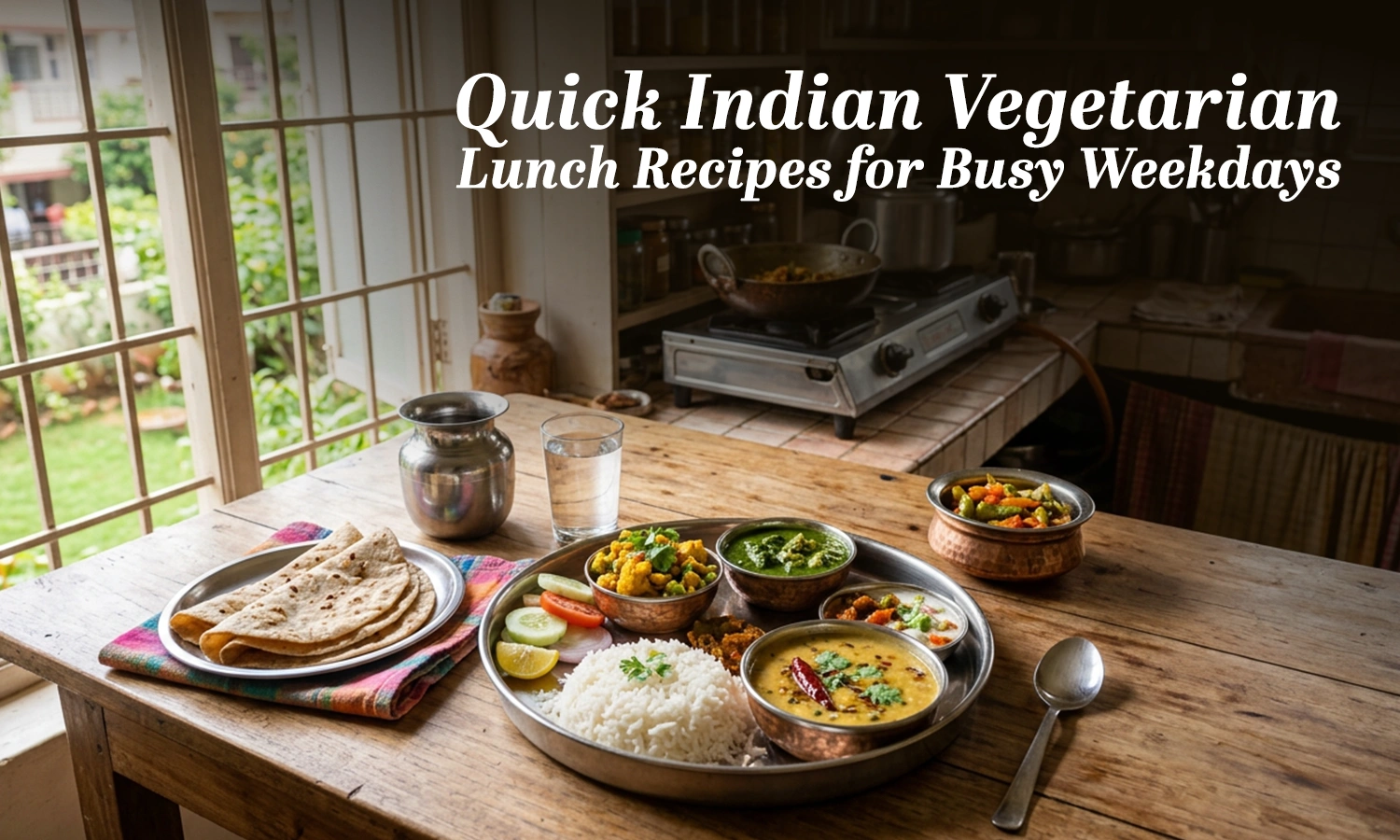
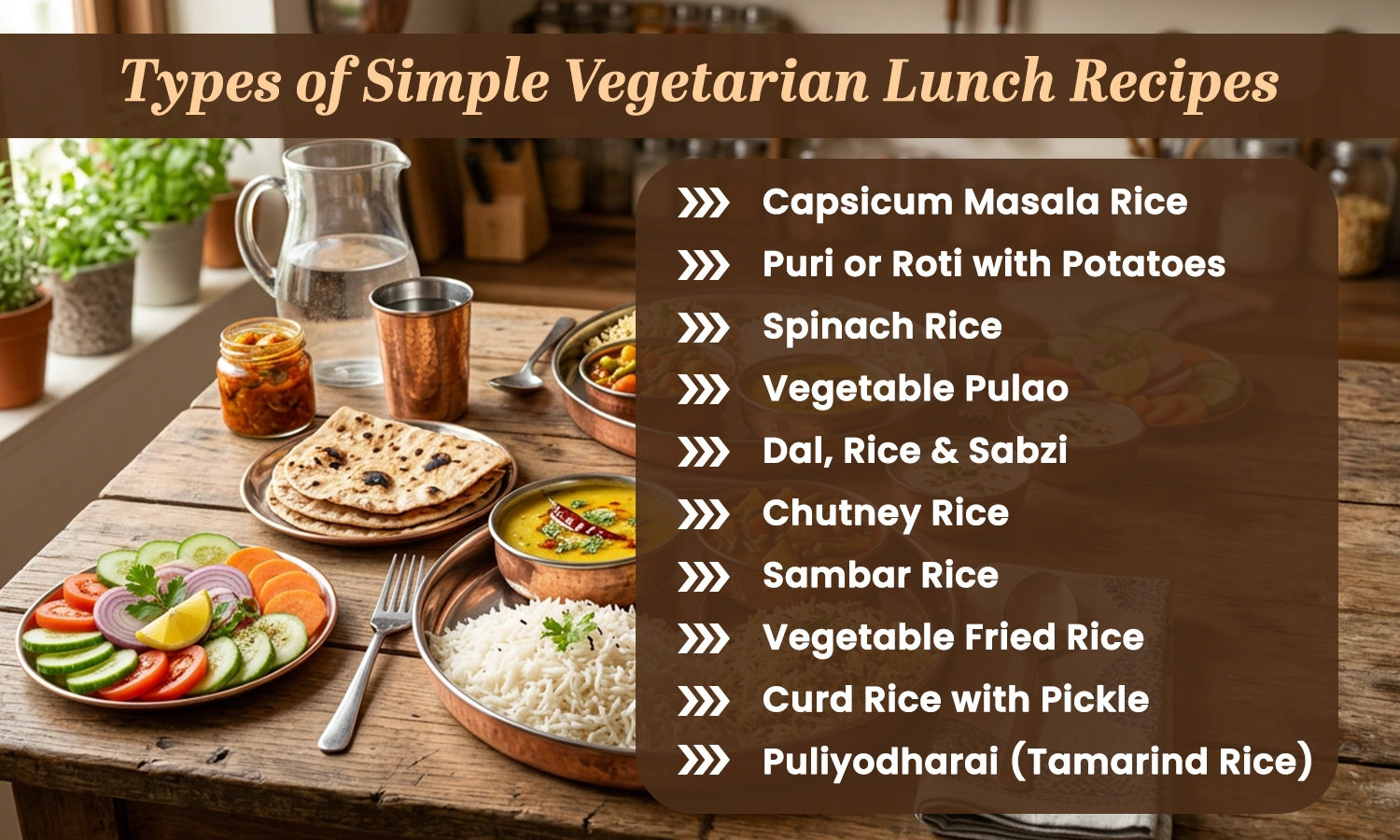
Quick Indian Vegetarian Lunch Recipes These simple Indian vegetarian lunch recipes are quick to prepare, filling, and perfect for busy weekdays. Here are some easy lunch ideas to add to your weekly menu.

1. Capsicum Masala Rice

Capsicum masala rice sits near the top of most veg lunch recipes. It also travels well in a lunch box without losing flavour by the time it is eaten. The main ingredients for this recipe include cooked rice, bell pepper, onion, cumin seeds, garam masala, 777 premium red chilli powder, and fresh coriander for garnishing. This is one of the fastest quick lunch ideas Indian kitchens can turn to.

2. Puri/Roti With Potatoes

A classic, soul-satisfying pairing that delivers the ultimate balance of soft, comforting carbs and warm, spiced potatoes. It is an effortlessly fast Indian lunch staple that keeps you full and energized throughout the workday. This dish pairs naturally with a spoonful of pickle, like the 777 Garlic Pickle, and works well for anyone who prefers a flavourful midday meal.

3. Spinach Rice

This dish is one of the more popular easy lunch recipes for those who want more flavour than lemon rice but still expect a fast turnaround. Once the rice is cooked, you will need less than 10 minutes to prepare this dish. It’s full of flavour as well as nutrients. To make it spicier, you can add organic black pepper to your spinach rice.

4. Vegetable Pulao

A one-pot rice dish loaded with mixed vegetables, vegetable pulao is filling enough to stand alone as a full simple Indian lunch recipe option, needing only a side of raita or curd to round it out.

5. Dal and Rice with a Quick Sabzi

For households that prefer a traditional plate, a simple moong or toor dal paired with rice and a quick stir-fried vegetable sabzi remains one of the most balanced vegetarian lunch ideas available. This combination also happens to be naturally protein-rich and easy to scale for a family.

6. Curry Leaf or Coriander Chutney with Rice

A generous spoon of chutney thokku mixed into hot rice, with a drizzle of gingelly oil, creates a quick, flavourful lunch when time is genuinely short. This is a common fallback in many South Indian homes on days when nothing else is prepped.

7. Sambar Rice

Sambar poured over plain rice, finished with a small side of vegetable poriyal, is one of the most complete easy recipes for lunch Indian households turn to. A good sambar powder, like the 777 Madras Sambar Powder, makes the difference between a thin, watery sambar and one that tastes properly balanced.

8. Vegetable Fried Rice

For a change from the usual South Indian rice varieties, a quick vegetable fried rice made with leftover rice and chopped vegetables is a favourite among students and young professionals cooking for themselves.

9. Curd Rice with Pickle for Lunch Boxes

For lunch box recipes for kids, curd rice paired with a mild pickle or a small portion of vadu mango pickle tends to be well received, since it stays fresh and does not require reheating.

10. Puliyodharai (Tamarind Rice)

Tangy, spiced tamarind rice, or puliyodharai, is a festival favourite that also works brilliantly as an everyday lunch box option because it tastes just as good, or better, after a few hours. A ready paste removes the need to prepare the tamarind and spice mix from scratch.

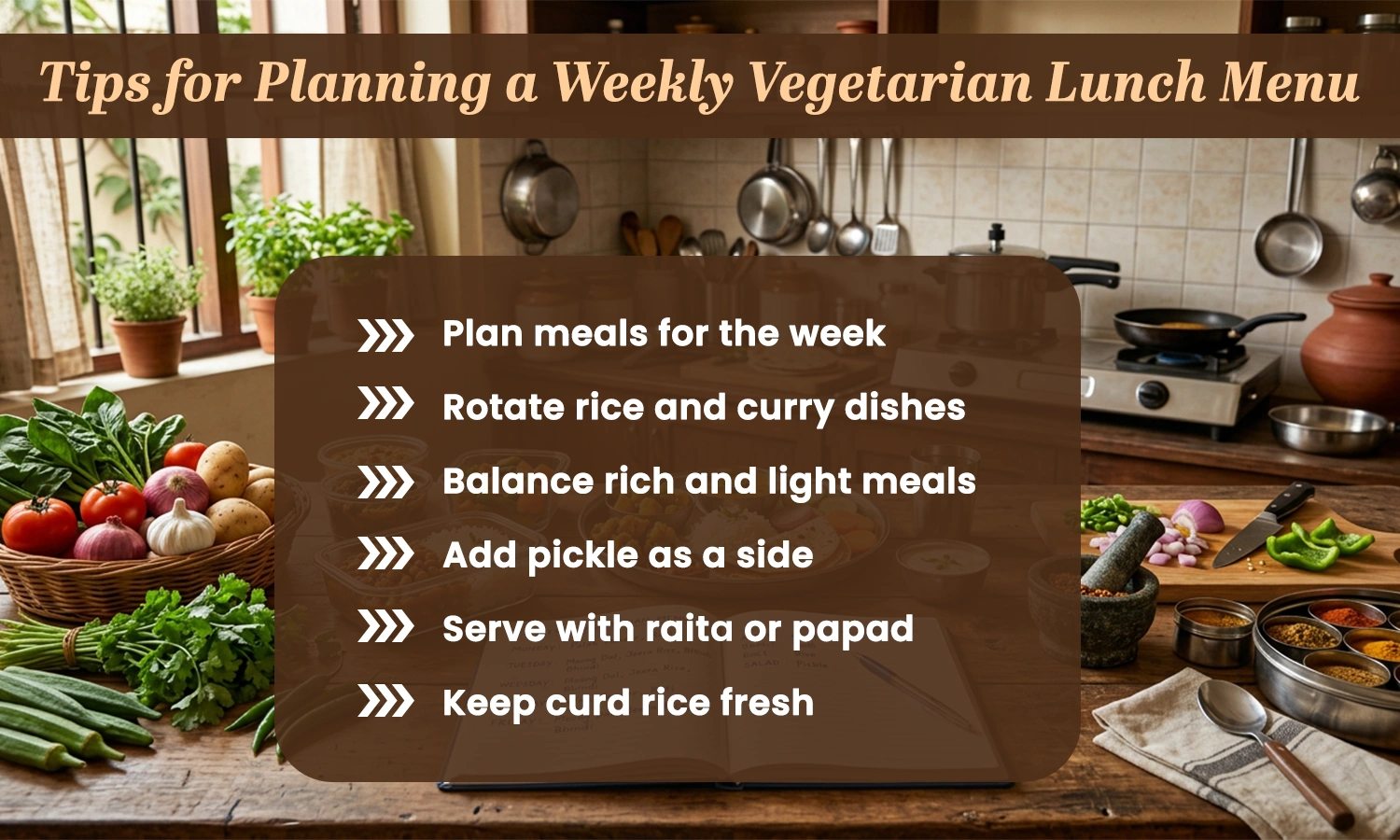
Tips for Planning a Weekly Vegetarian Lunch Menu

Rather than deciding what to cook each morning, many households now plan a short Indian vegetarian lunch menu list covering four or five rice varieties and two curry options, rotating through the week. Here are more tips to make your weekly lunch menu extra special.
Quick Indian Vegetarian Lunch Recipes

  • If you plan a rich meal like hot puris with potato masala on a Wednesday, follow it up with a soothing bowl of tempered curd rice on Thursday to keep digestion light.
  • To make your meals spicier and tastier, add some 777 Andhra-style Mango Thokku Pickle as a side dish. You can also add some papads, a quick cucumber raita, etc.
  • While preparing curd rice, mixing in a splash of cold milk along with the curd ensures it achieves the perfect texture by lunchtime without turning overly sour.

Key Takeaways

  • Rice-based dishes like lemon rice, tomato rice, and curd rice remain the fastest options for Indian vegetarian lunches.
  • Ready pastes reduce cooking time significantly without changing the traditional taste of the dish.
  • A rotation of four to five dishes across the week keeps lunch varied without extra daily planning.
  • Dal and sabzi combinations offer more balanced nutrition for family lunches.
  • Lunch box dishes should ideally taste good even after a few hours without reheating.

Simplify Your Lunch Routine Today

Skip the daily scramble for lunch ideas. Stock your pantry with 777 Foods’ products and turn any bowl of cooked rice into a complete meal in minutes. Shop the full collection at 777 Foods and make weekday lunch one less thing to worry about.

FAQs

What are the fastest quick lunch recipes Indian vegetarian options for a work-from-home schedule?Lemon rice, tomato rice, and curd rice are among the fastest, especially when made using a ready rice paste that removes the tempering step.
Which veg lunch recipes work best for kids’ lunch boxes?Curd rice, mild vegetable pulao, and lemon rice tend to travel well and are usually well received by children since they are not overly spiced.
How do I plan a full week of easy lunch recipes without repeating dishes?Choose three or four rice varieties, one dal-based dish, and one vegetable curry, then rotate them across the week using the same core pantry staples.
Are quick lunch recipes of Indian vegetarian dishes nutritionally balanced?Yes, especially when a rice dish is paired with dal, curd, or a vegetable side, which together provide carbohydrates, protein, and fibre in one meal.

9 Veg Breakfast Recipes That Bring Back Home-Style Mornings

Summary

Looking for reliable veg breakfast recipes for busy mornings? This list covers idli, upma, poha, pongal, and vermicelli, all rooted in South Indian breakfast recipes, with quick methods for working professionals, students, and families who want a warm meal without the long prep.

Introduction:

Mornings are almost always a rush, and there might not be time to prepare elaborate veg breakfast recipes. A nice, balanced breakfast can keep you feeling energetic all through the busy morning routines until lunch. And nothing beats the comfort of a simple dish that reminds you of home. These nine vegetarian breakfast recipes come together quickly without sacrificing authentic regional flavours, making them ideal for everyday busy schedules.

Why Breakfast Is the Most Important Meal of the Day

For most Indian households, breakfast sets the tone for the entire day. A warm plate of idli or a bowl of upma does more than fill the stomach; it carries the comfort of a familiar kitchen into a busy morning. Yet many working professionals skip this meal entirely, citing time as the main obstacle. The good news is that most breakfast recipes veg from South Indian kitchens were designed centuries ago for exactly this problem: quick preparation using simple, wholesome ingredients. Keeping a sauce for cooking handy helps you be better prepared on a very busy morning.This article covers nine dependable options, ranging from traditional South Indian breakfast dishes to lighter, protein-forward choices for those tracking their nutrition.

Types of Veg Breakfast Recipes

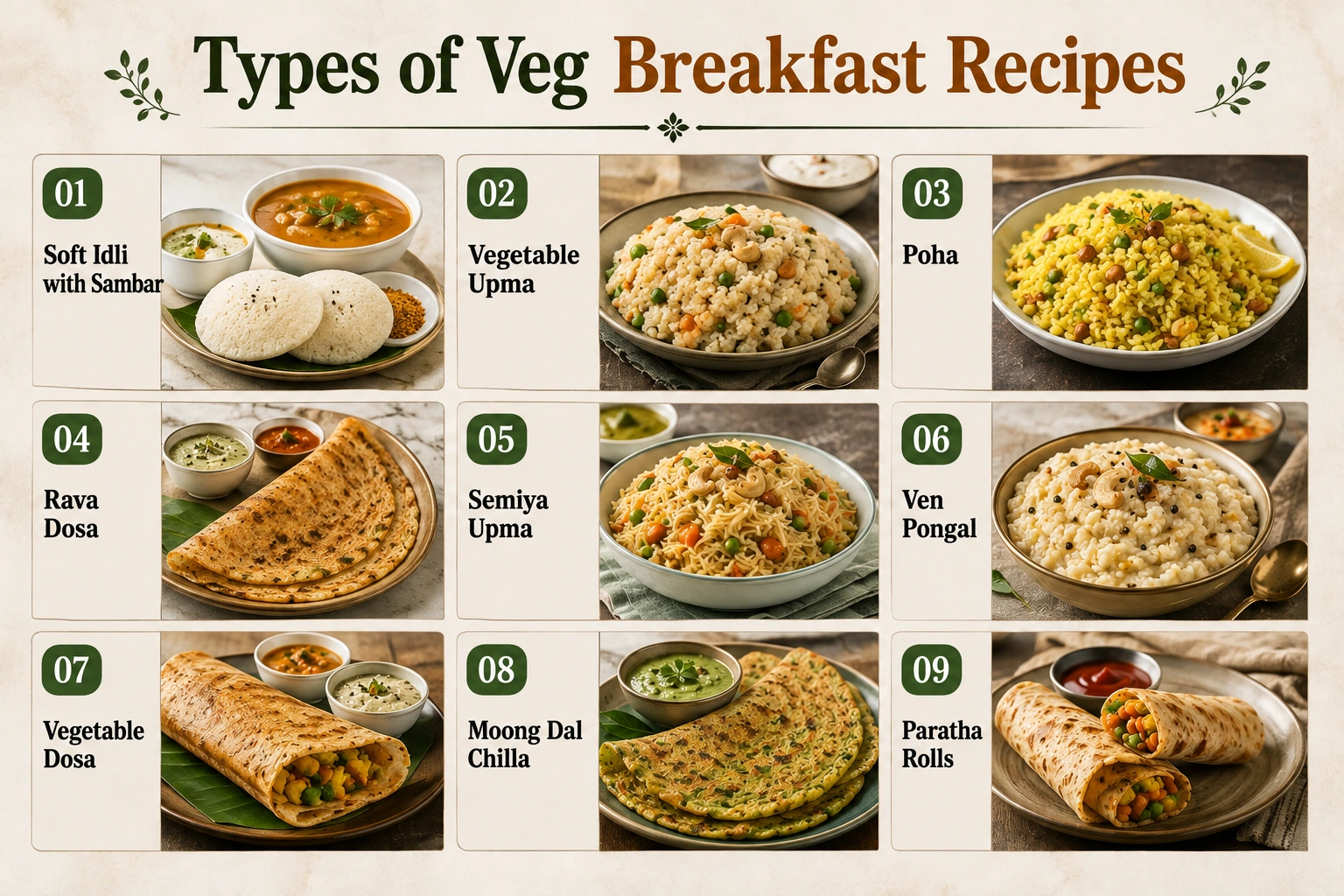
There are many types of veg breakfast recipes, from steamed dishes and one-pot meals to protein-rich options. Here are some popular choices for a quick and satisfying start to the day. veg breakfast recipes

1. Soft Idli with Sambar

Idli remains the most searched of all South Indian breakfast recipes, and its popularity comes down to simplicity. Steamed rice and lentil batter turn into soft, pillowy cakes that pair with sambar, coconut chutney, or a spoon of pickle. For homes that ferment their own batter, soaking time is the main commitment. For faster mornings, a ready mix cuts the process down to minutes while still delivering the soft texture people expect.

2. Vegetable Upma

Upma is one of the fastest veg breakfast recipes in the South Indian repertoire. Roasted semolina cooked with mustard seeds, curry leaves, onions, and vegetables comes together in under fifteen minutes. It is filling, light on oil, and easy to customize with whatever vegetables are on hand. It is a dependable shortcut on mornings when even fifteen minutes feels tight. You can also serve your vegetable upma with the 777 gongura pickle or the tangy 777 tomato pickle.

3. Poha

Poha, or flattened rice, is a favourite across Western and Central India but has found its place on South Indian breakfast tables too. Lightly tempered with mustard seeds, turmeric, peanuts, and a squeeze of lemon, poha is one of the quick breakfast recipes Indian households rely on, often ready in under ten minutes.

4. Rava Dosa

Crisp on the edges and soft in the centre, rava dosa is a favourite among those who want variety beyond the standard idli and dosa rotation. Made from a semolina and rice flour batter, it does not require fermentation, which makes it one of the more convenient veg breakfast ideas for a weekday morning.

5. Semiya Upma

Vermicelli upma, or semiya upma, is a lighter alternative to rava upma and cooks even faster since vermicelli does not need long roasting. Paired with a few vegetables and a light tempering, it makes a wholesome, easy option for mornings when appetite is smaller.

6. Pongal

Ven pongal, made from rice and moong dal cooked together with pepper and cumin, is a warm, mildly spiced dish popular in Tamil Nadu households, especially during colder months or festival mornings. It sits comfortably among healthy veg breakfast choices because of its balance of carbohydrates and protein from the dal.

7. Vegetable Dosa

A plain dosa topped with a light vegetable stuffing, similar to a simplified masala dosa, works well when you want something more substantial than idli but lighter than a full South Indian thali. It also travels well for those packing breakfast to eat at their desk.

8. Sprouts and Moong Dal Chilla

For readers focused on nutrition, a moong dal or sprouts chilla is one of the better high-protein vegetarian breakfast options available in Indian cooking. Ground moong dal batter, cooked like a thin pancake with onions and green chillies, delivers a good dose of plant protein without any dairy or meat.

9. Paratha Rolls

You can easily make whole wheat parathas or rotis and roll them with the 777 mint leaf chutney. You can also roll up your parathas with scrambled paneer or boiled potatoes to serve a more delicious breakfast for your family. A paratha roll is one of the easy vegetarian breakfast recipes for mornings.

Building a Breakfast Routine That Actually Works

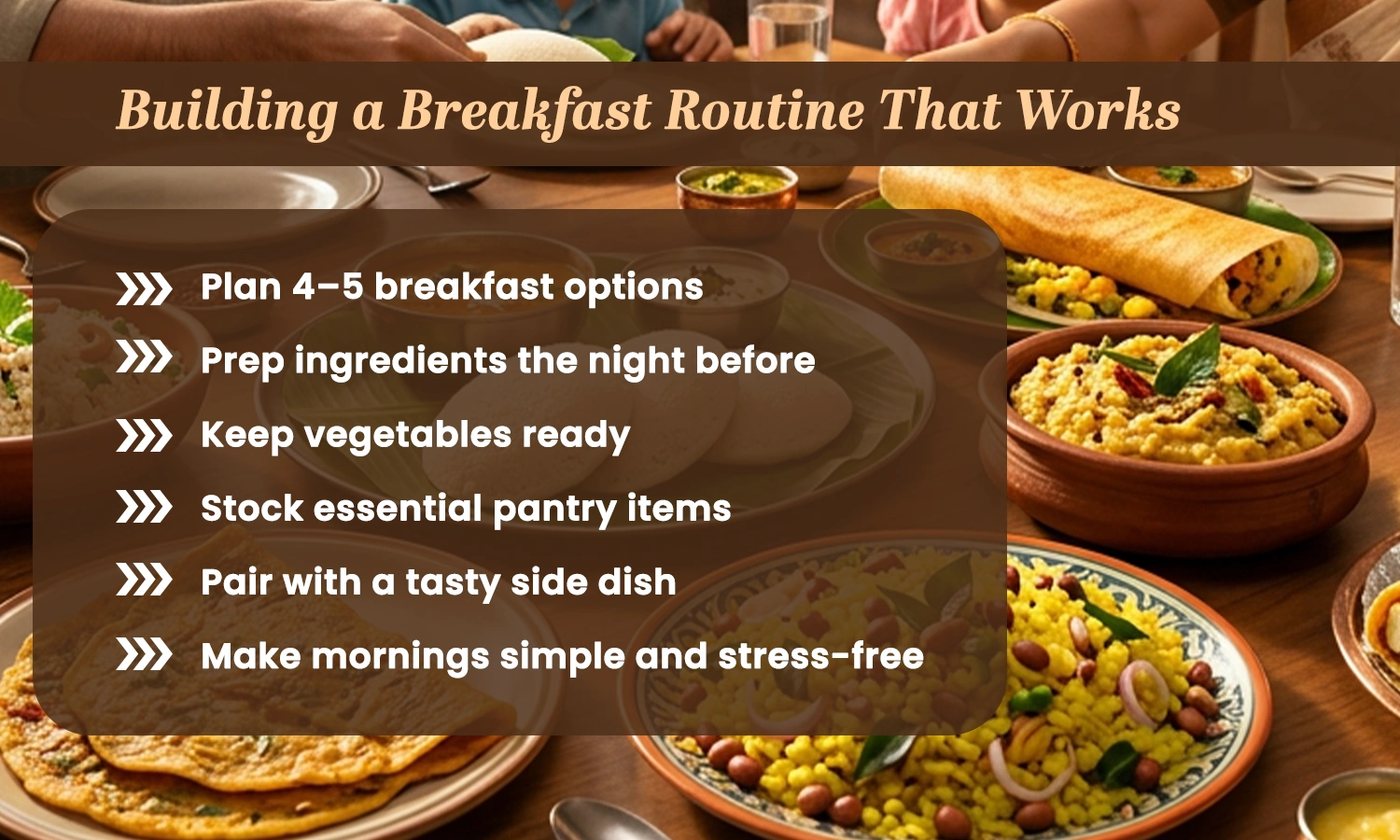
The trick to consistent home cooking on weekday mornings is not finding one perfect recipe but building a rotation of four or five vegetarian breakfast options that require minimal decision-making.
veg breakfast recipes

Here are some tips to build an effective breakfast routine:

  • Prep the night before by chopping vegetables, setting out cookware, or assembling overnight oats so you start the morning with minimal friction.
  • Keeping a stocked pantry with vegetables, vermicelli, and basic spices removes the guesswork on rushed mornings.
  • Having a side dish that can complement your breakfast, like the 777 Avakaya Pickle , helps make your breakfast wholesome on busy mornings.

Key Takeaways

  • Idli, upma, and poha remain the fastest and most reliable South Indian breakfast options for busy mornings.
  • Protein-focused choices like moong dal chilla and pongal help balance a mostly carbohydrate-heavy breakfast table.
  • Ready instant mixes reduce prep time without compromising the taste of traditional recipes.
  • Rotating between four or five dependable dishes removes daily decision fatigue.
  • A well-stocked pantry is the real foundation of a consistent breakfast routine.

Bring Breakfast Back to Your Table

If your mornings have been running on tea and toast, it might be time to bring back a warm plate of home-style food. You can quickly fit a proper South Indian breakfast into even the busiest schedule. Shop the full range at 777 Foods and start your day the way your family always has.

FAQs

What are the quickest veg breakfast recipes for someone who has only ten minutes?Poha, semolina upma, and instant idli are among the fastest options, all ready in under fifteen minutes with minimal preparation.
Are there high-protein vegetarian breakfast options in South Indian cooking?Yes, pongal made with moong dal, sprouts chilla, and idli paired with sambar all offer a reasonable amount of plant protein alongside carbohydrates.
Can veg breakfast recipes be made without fermented batter?Yes, dishes like upma, poha, rava dosa, and pongal do not require any fermentation, making them suitable for last-minute mornings.
How can I make South Indian breakfast recipes faster on weekdays?Keeping idly or dosa batter ready, along with pre-chopped vegetables, is the easiest way to shorten preparation time without changing the final taste.