Top 5 Benefits of Gingelly Oil for Body Massage

Introduction

Body massage has always been a part of traditional self-care in Indian households. Long before modern spa treatments, families relied on simple oils and regular massage to care for the body. Among them, Gingelly oil for body massage stands out because of its warmth, comfort, and long history of use. Whether used weekly or occasionally, this oil supports the body in ways that go beyond surface relaxation. Understanding its benefits helps you use it more meaningfully as part of your routine. Gingelly oil for body massage

Gingelly Oil for Body Massage: 5 Key Benefits

Ease Muscle Tension & Relax

One of the most common reasons people choose Gingelly oil for body massage is relief from stiffness and tired muscles. Regular massage helps loosen tight areas after long hours of work or physical strain. Many people use Gingelly oil for massage because it spreads easily and allows steady pressure without friction. Over time, this practice is known for Gingelly oil massage benefits related to comfort and flexibility, especially when dealing with everyday aches.

Nourish and Hydrate Skin

Massage is not only about muscles. Using oil also supports skin care. Gingelly oil for body massage helps maintain moisture and softness, particularly in dry weather. When applied consistently, it supports skin nourishment without leaving a heavy residue.Choosing Pure gingelly oil for massage matters here, as purity ensures the oil absorbs well and feels comfortable during and after the massage.

Boost Circulation & Detox

A proper massage encourages movement under the skin, which can help improve blood circulation naturally. Many people notice warmth spreading across the body during massage, which is often linked to increased blood flow. This gentle stimulation is also known to boost circulation, helping the body feel lighter and more active. These effects become more noticeable when massage is done regularly rather than occasionally.

Support Traditional Wellness

Massage with gingelly oil has long been part of traditional care practices. Using warm gingelly oil massage before bathing is a routine followed in many households, especially for elders and children. These habits are often associated with Sesame oil massage benefits, where warmth and consistency play a key role.Such practices focus on long-term comfort rather than quick results, making them easy to maintain.

Calm the Mind & Reduce Stress

Physical relaxation often leads to mental calm. Gingelly oil for body massage supports this connection by helping the body slow down. Gentle massage is commonly linked with improved mental wellness, especially when done in a quiet setting. Taking time for self-care helps release daily stress and brings a sense of balance without effort.

Conclusion

The value of Gingelly oil for body massage lies in its simplicity and consistency. It supports muscle comfort, circulation, skin care, and mental calm when used regularly. These benefits come not from one-time use, but from making massage a part of everyday or weekly care. Brands like SGR 777 continue to follow traditional preparation methods, helping families maintain trusted self-care practices with confidence and ease.

Key Takeaways

  • Gingelly oil for body massage supports muscle relaxation and comfort
  • Regular massage helps maintain skin hydration and softness
  • Improved circulation comes from consistent, gentle massage
  • Traditional oil massage focuses on long-term body care
  • Mental calm is a natural outcome of relaxed physical routines

FAQs

Can Gingelly Oil Be Used for Massage? Yes. Gingelly oil for body massage is widely used due to its warmth and easy absorption.
Which Oil Is Better for a Full-Body Massage?Many people prefer gingelly oil because it suits regular massage and traditional routines.
Which Oil Is the Queen of All Oils? Traditionally, sesame-based oils are often referred to this way due to their wide usage.
Is Sesame Oil Good for Joints? Yes. Massage using sesame-based oils is commonly followed for joint comfort.
Is Gingelly Oil the Same as Nallennai?Yes. Nallennai is a regional name for gingelly oil.
Gingelly Oil vs Sesame Oil: Key Differences You Must Know

Introduction

Many people feel unsure when choosing between oils because names, labels, and usage often overlap. One of the most common doubts in Indian kitchens is Gingelly Oil vs Sesame Oil.
Some believe they are the same, while others feel they serve very different purposes. The truth lies somewhere in between. Understanding how these oils are prepared, used, and perceived helps you make a confident choice that suits your daily cooking habits rather than relying on assumptions.

How Is Sesame Oil Different from Gingelly Oil?

At the source level, both oils come from sesame seeds, which is why the terms are often used interchangeably. However, gingelly oil and sesame oil differ mainly in processing style, aroma, and regional meaning.
In India, gingelly oil usually refers to a darker, stronger oil used for cooking, while sesame oil in global markets is often lighter and refined. This basic Gingelly sesame oil difference explains why the same seed produces oils that behave differently in the kitchen. Gingelly Oil vs Sesame Oil

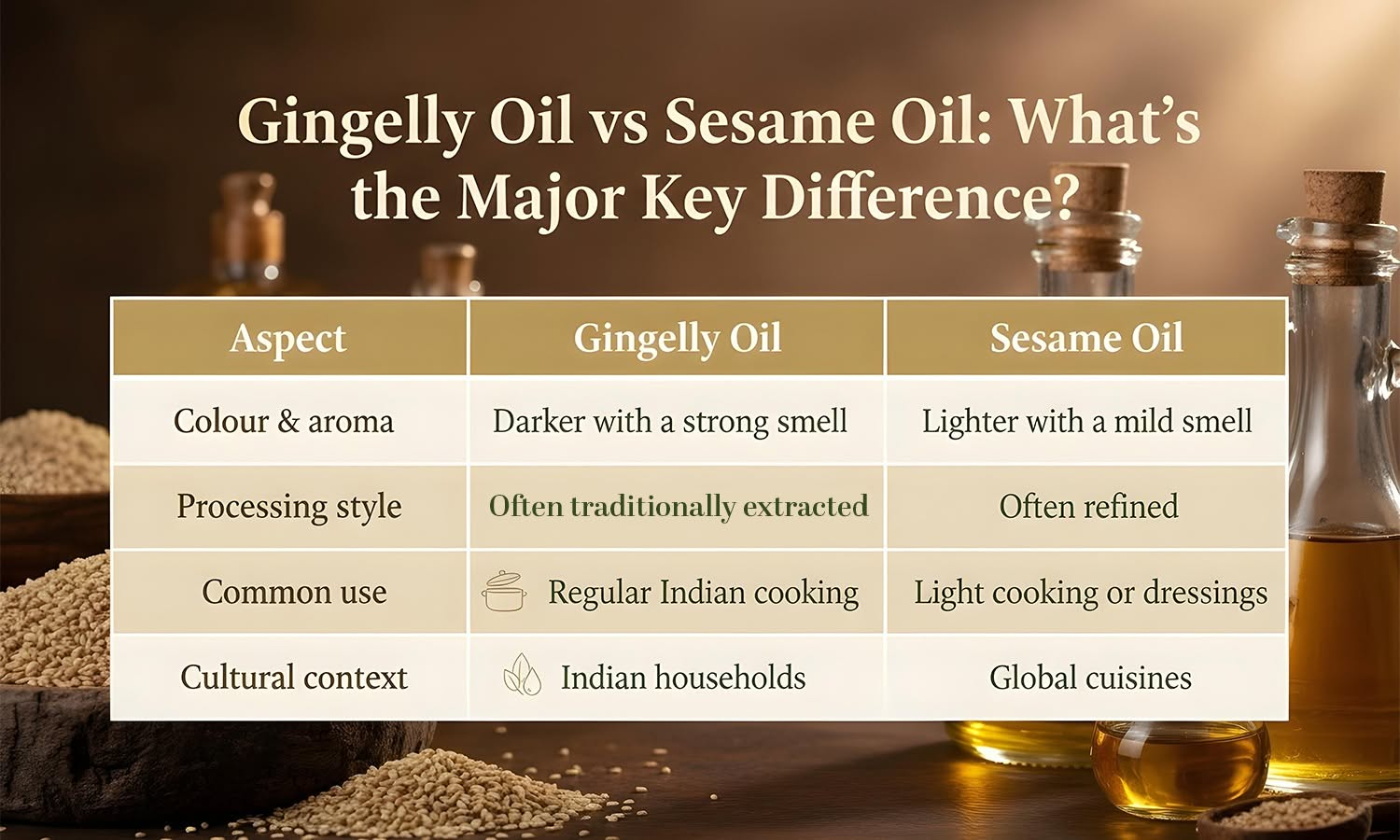
Gingelly Oil vs Sesame Oil: What’s the Major Key Difference?

Aspect Gingelly Oil Sesame Oil
Colour & aroma Darker with a strong smell Lighter with a mild smell
Processing style Often traditionally extracted Often refined
Common use Regular Indian cooking Light cooking or dressings
Cultural context Indian households Global cuisines

This sesame oil vs gingelly oil comparison shows that the difference is not about quality but about how the oil is made and used. Gingelly oil is deeply rooted in Indian food habits, while sesame oil abroad may be used differently depending on the cuisine.

How Do I Decide Between Gingelly Oil and Sesame Oil?

The decision in Gingelly Oil vs Sesame Oil depends largely on how and what you cook. If your meals involve tempering, frying, or slow cooking, gingelly oil fits naturally into those methods. It has been trusted for generations as a traditional Indian oil, especially in South Indian households.
On the other hand, lighter sesame oil may be chosen for quick cooking or recipes where a mild flavour is preferred. Your choice should match your cooking rhythm, not just the label on the bottle.
Gingelly Oil vs Sesame Oil

Should You Use Gingelly Oil or Sesame Oil?

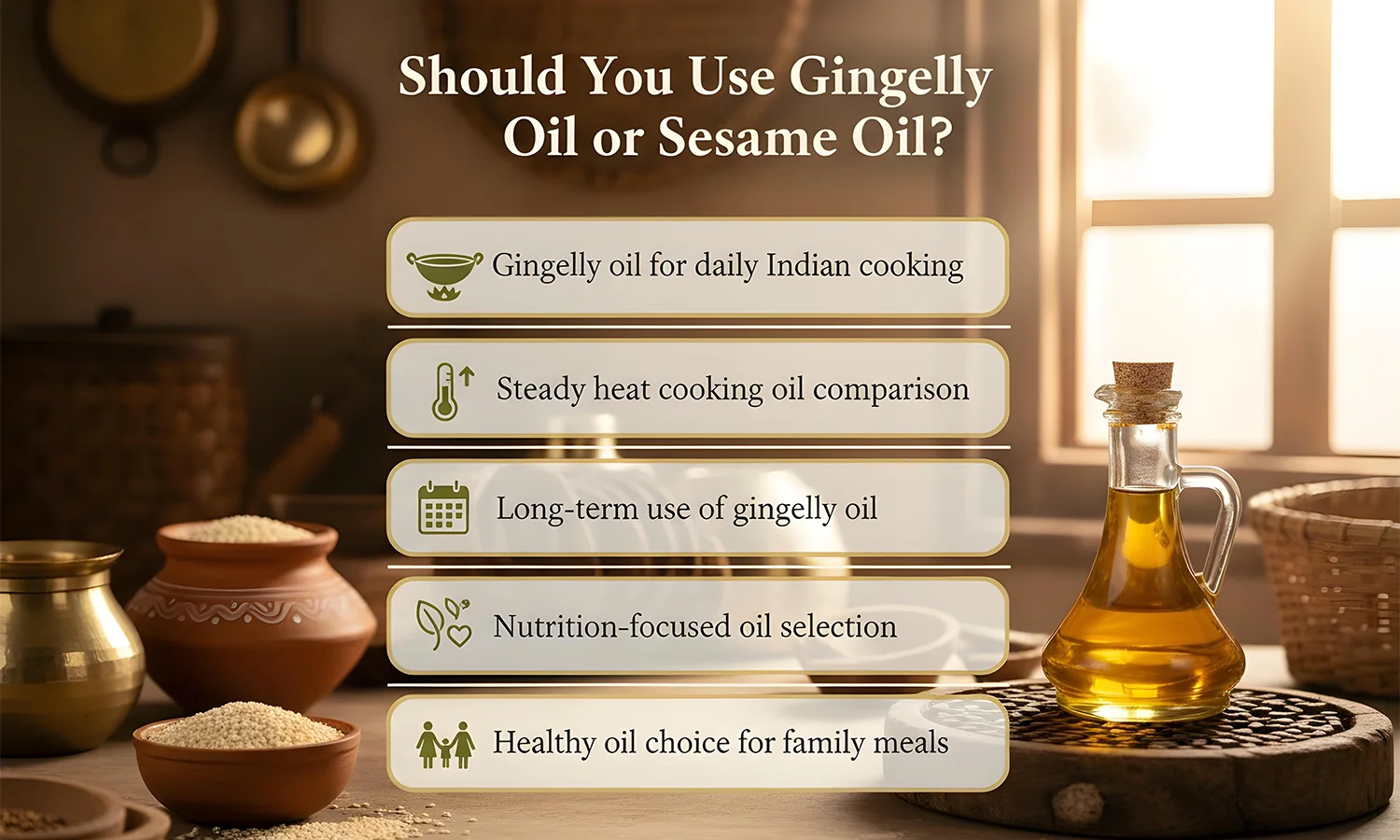
When comparing Gingelly Oil vs Sesame Oil, it helps to look at long-term use rather than occasional meals. Many families see gingelly oil as a healthy cooking oil because it performs well under steady heat and suits daily meals.
People also consider both sesame oil benefits and Gingelly oil benefits when deciding, especially when the oil becomes part of everyday food. Understanding Gingelly oil nutrition helps reinforce why it continues to be used consistently rather than switched frequently.

Conclusion

When comparing Gingelly Oil vs Sesame Oil, it helps to look at long-term use rather than occasional meals. Many families see gingelly oil as a healthy cooking oil because it performs well under steady heat and suits daily meals.
People also consider both sesame oil benefits and Gingelly oil benefits when deciding, especially when the oil becomes part of everyday food. Understanding Gingelly oil nutrition helps reinforce why it continues to be used consistently rather than switched frequently.

FAQs

Is sesame oil highly inflammatory?

No. Sesame-based oils are generally not inflammatory when used in moderation as part of a balanced diet.

What is another name for gingelly oil?

Gingelly oil is another name for sesame oil. In South India, it is commonly called nalla ennai.

Is gingelly oil good or bad for you?

Gingelly oil is good for regular use when consumed in controlled quantities and balanced meals.

Is nalla ennai oil the same as sesame oil?

Yes. Nalla ennai is a regional name for sesame oil made from sesame seeds.

Can I use gingelly oil instead of sesame oil?

Yes. Gingelly oil can be used in place of sesame oil in most Indian cooking.

Why pure sesame oil is perfect for everyday cooking

Introduction :

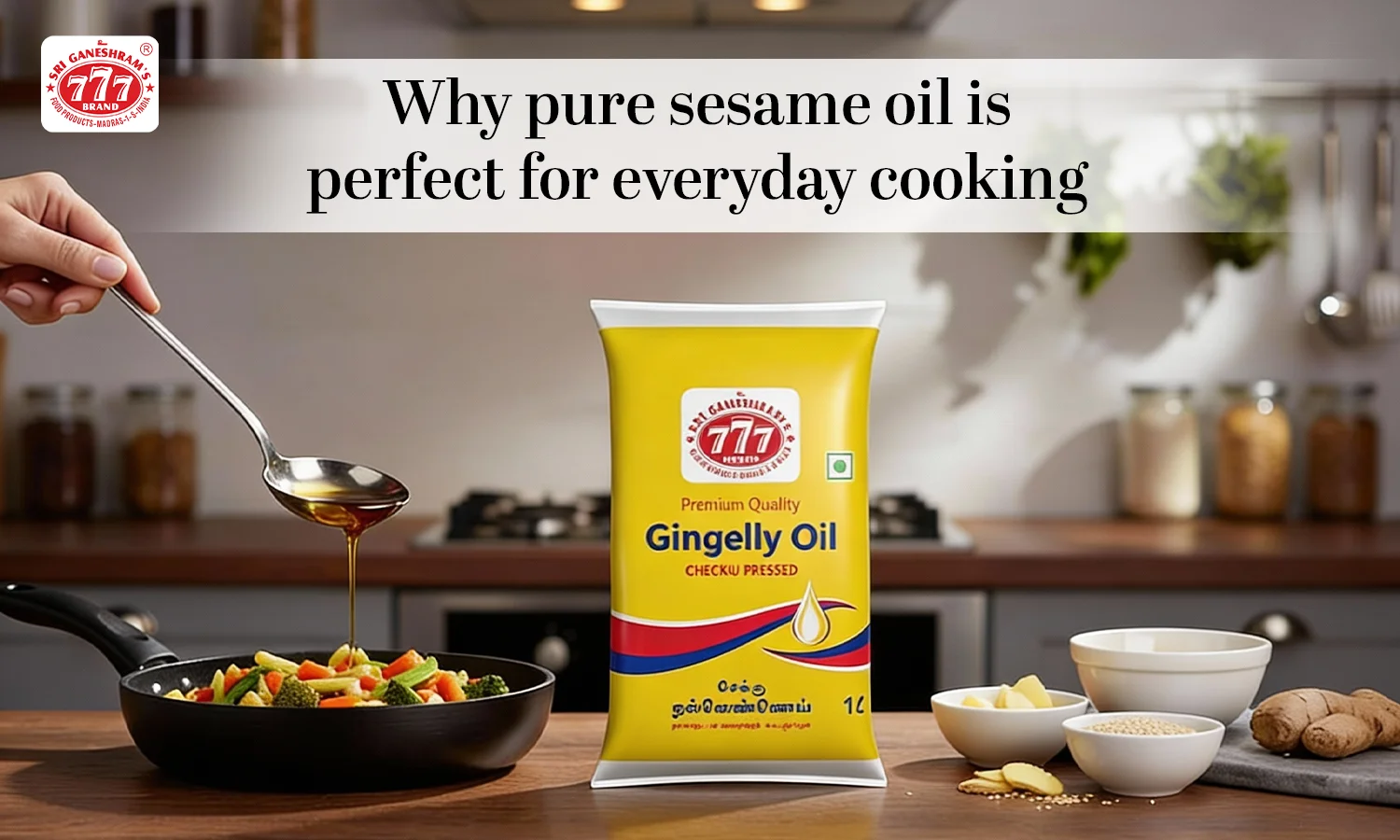
Choosing the right cooking oil reflects not just taste, but also how food feels after a meal. In many Indian homes, pure sesame oil has remained a steady choice for generations. It is not selected because of trends or advertising, but because families have seen how it performs in everyday cooking.
From simple vegetable dishes to traditional gravies, this oil fits naturally into daily meals. Understanding why it works so well can help you make better choices for your kitchen.
pure sesame oil

What Is Pure Sesame Oil and Why Is It Called Pure Gingelly Oil?

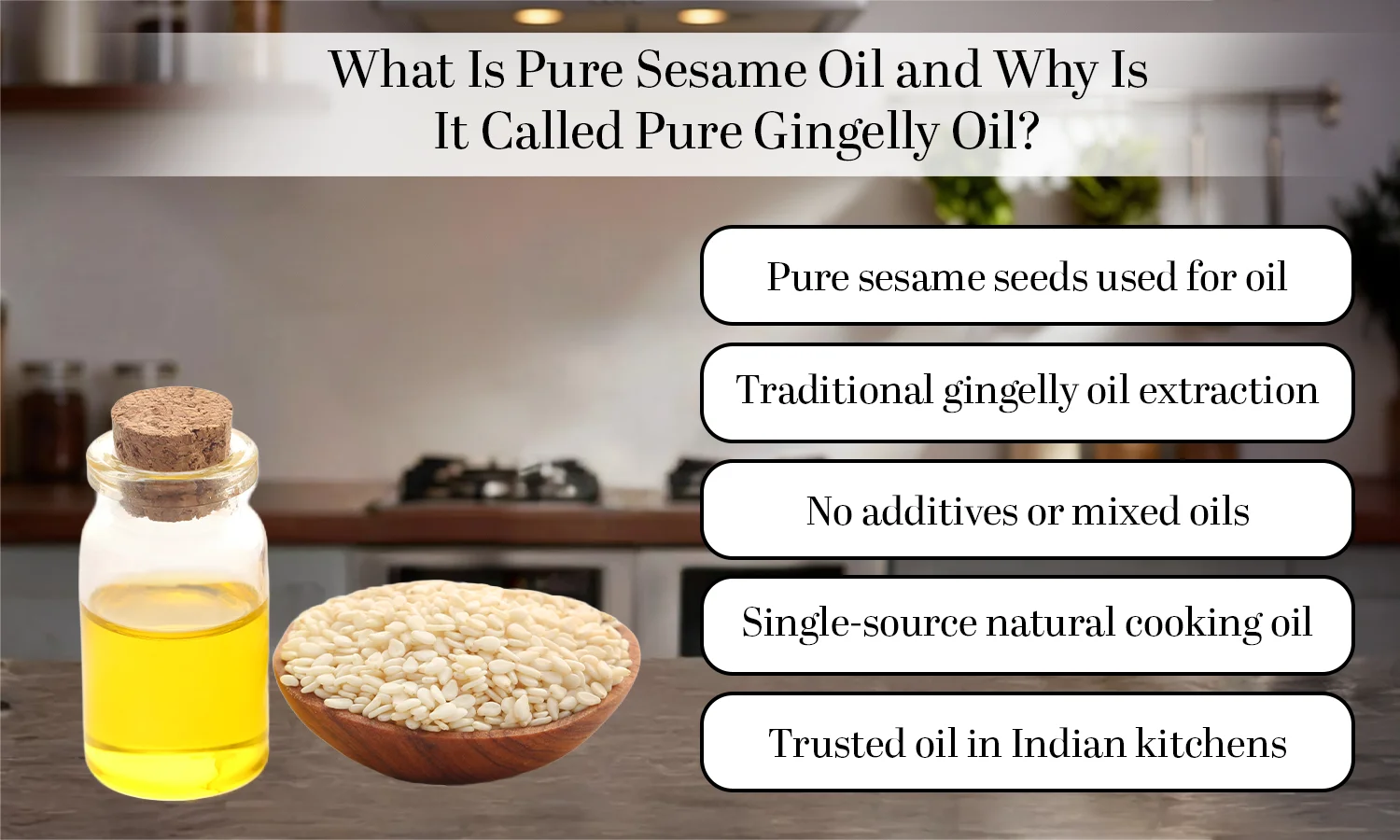
Pure sesame oil is extracted directly from sesame seeds without mixing or heavy processing. In many regions, it is also known as pure gingelly oil, referring to the same oil prepared using traditional methods.The word “pure” matters because it indicates that the oil comes from a single source and does not contain added oils or chemicals. This simplicity is why it has remained part of Indian kitchens for so long.

Is Pure Sesame Oil Good for Daily Cooking?

For regular meals, pure sesame oil works well because it handles steady heat without breaking down quickly. Many households prefer it as a healthy Indian oil since it suits common cooking styles like sautéing, frying, and slow cooking. Its familiarity makes it easy to use daily without constantly switching oils. Over time, this consistency supports balanced eating habits rather than occasional use. Pure Sesame Oil in Indian Cooking

Common Uses of Pure Sesame Oil in Indian Cooking

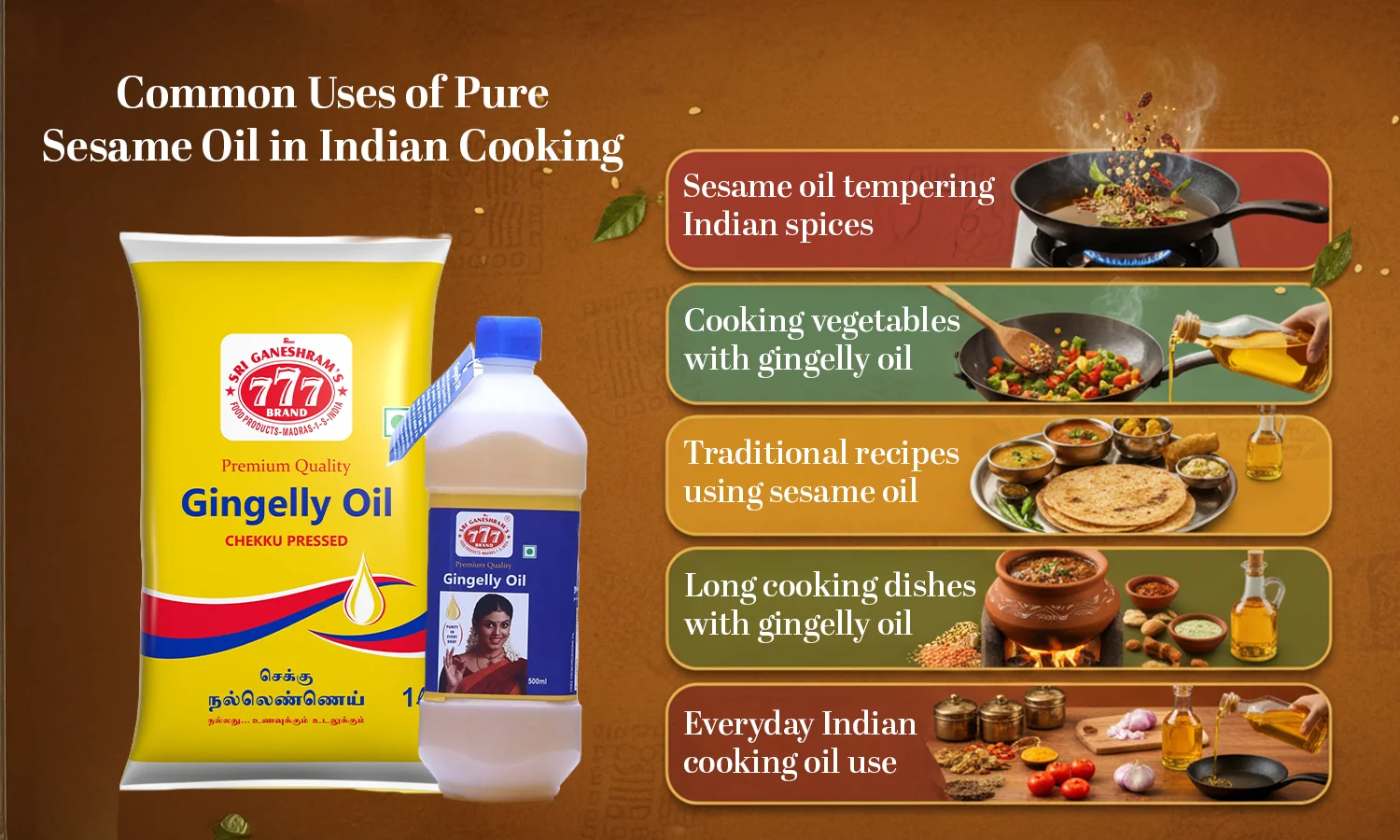
The strength of pure sesame oil lies in how versatile it is. It blends naturally into many dishes without overpowering flavours. Some common Gingelly oil uses include tempering spices, cooking vegetables, and preparing traditional recipes that require longer cooking time. Because of this flexibility, it continues to be a trusted Indian cooking oil across different regions.

How to Choose the Best Pure Gingelly Oil

Not every bottle labelled sesame oil offers the same quality. When buying pure sesame oil, check how clearly the product explains its sourcing and extraction.
The best gingelly oil usually comes from brands that focus on traditional preparation rather than speed. Look for consistency in colour, a natural aroma, and transparent labeling. Many families rely on experience to identify a pure oil rather than marketing claims.

Conclusion

The continued use of pure sesame oil in Indian kitchens comes from years of everyday experience. Its ability to handle regular cooking, support familiar flavours, and fit into traditional meals makes it a reliable choice. Brands like SGR 777 follow these long-standing practices by focusing on quality and consistency, helping households continue cooking the way they always have—with confidence.

Key Takeaways

  • Pure sesame oil is valued for its simplicity and single-source extraction
  • It suits daily Indian cooking styles and regular meals
  • Versatility makes it useful across many traditional dishes
  • Quality depends on preparation and clarity of ingredients
  • Consistent use matters more than occasional switching

FAQs

How to check pure gingelly oil? Pure oil usually has a natural aroma and consistent texture. When checking pure sesame oil, labels and sourcing details help confirm authenticity.
Which sesame oil is pure?Oils made from only sesame seeds without additives are considered pure. Many households rely on trusted local or traditional brands.
Why is gingelly oil so expensive?The price reflects seed quality and slower extraction methods. These steps help retain natural Gingelly oil benefits.
How to tell if sesame oil is good?Good oil should not smell artificial or feel overly thin. Observing colour and aroma helps judge quality.
Can everyone consume gingelly oil daily?Many people include Gingelly oil for daily use as part of balanced meals. As with any oil, moderation is important.

Why Gingelly Oil Seeds Are Essential for Pure Chekku Oil

Introduction

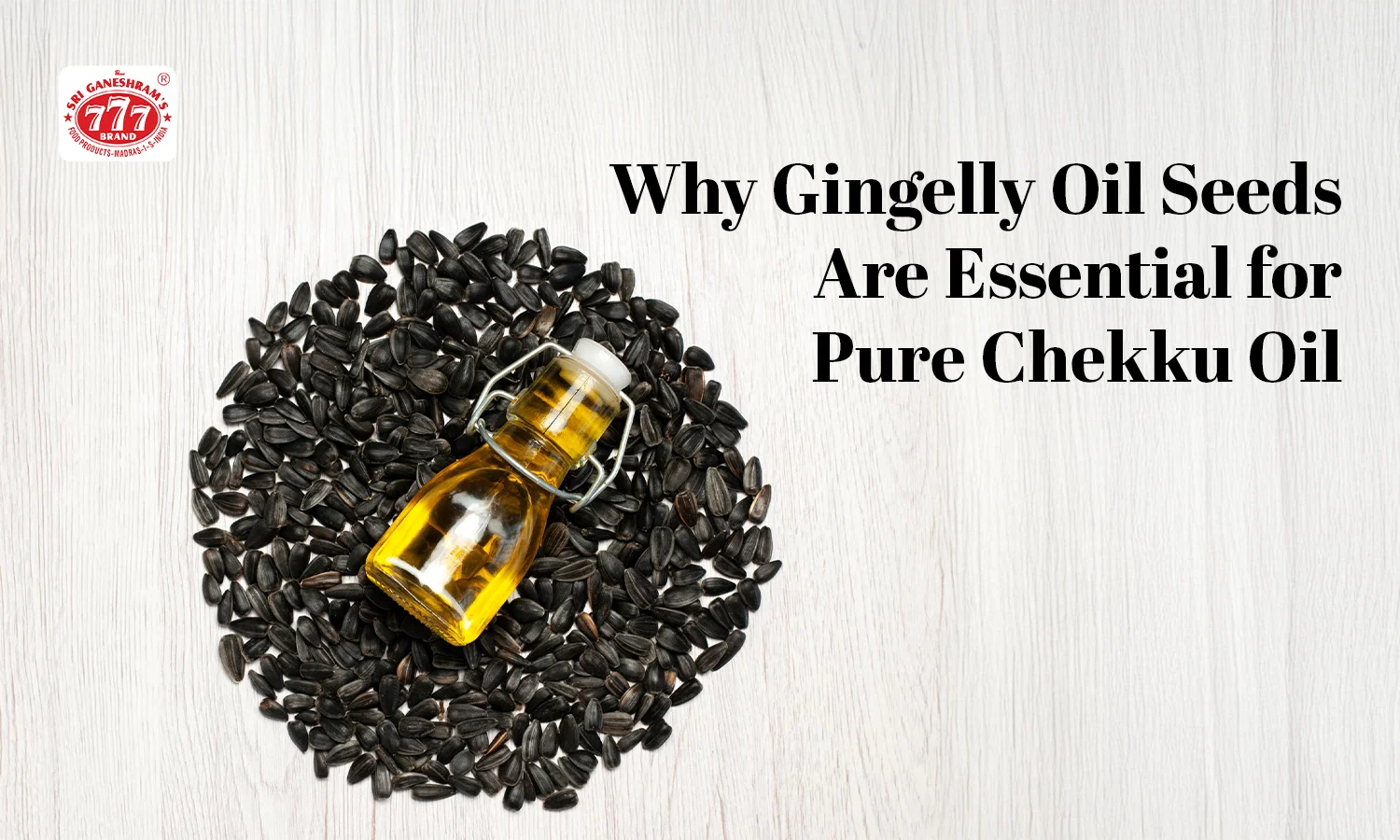
When people talk about Chekku oil, most attention goes to the wooden press or the slow extraction method. But the true quality of Chekku oil begins much earlier—with the Gingelly Oil Seed. The seed decides how the oil smells, tastes, and performs during cooking.Even the best traditional process cannot compensate for poor-quality seeds. Knowing why seed selection matters helps you understand what separates genuine Chekku oil from ordinary seed-based oils sold in the market. Gingelly Oil Seeds and Their Importance

What Are Gingelly Oil Seeds and Their Importance?

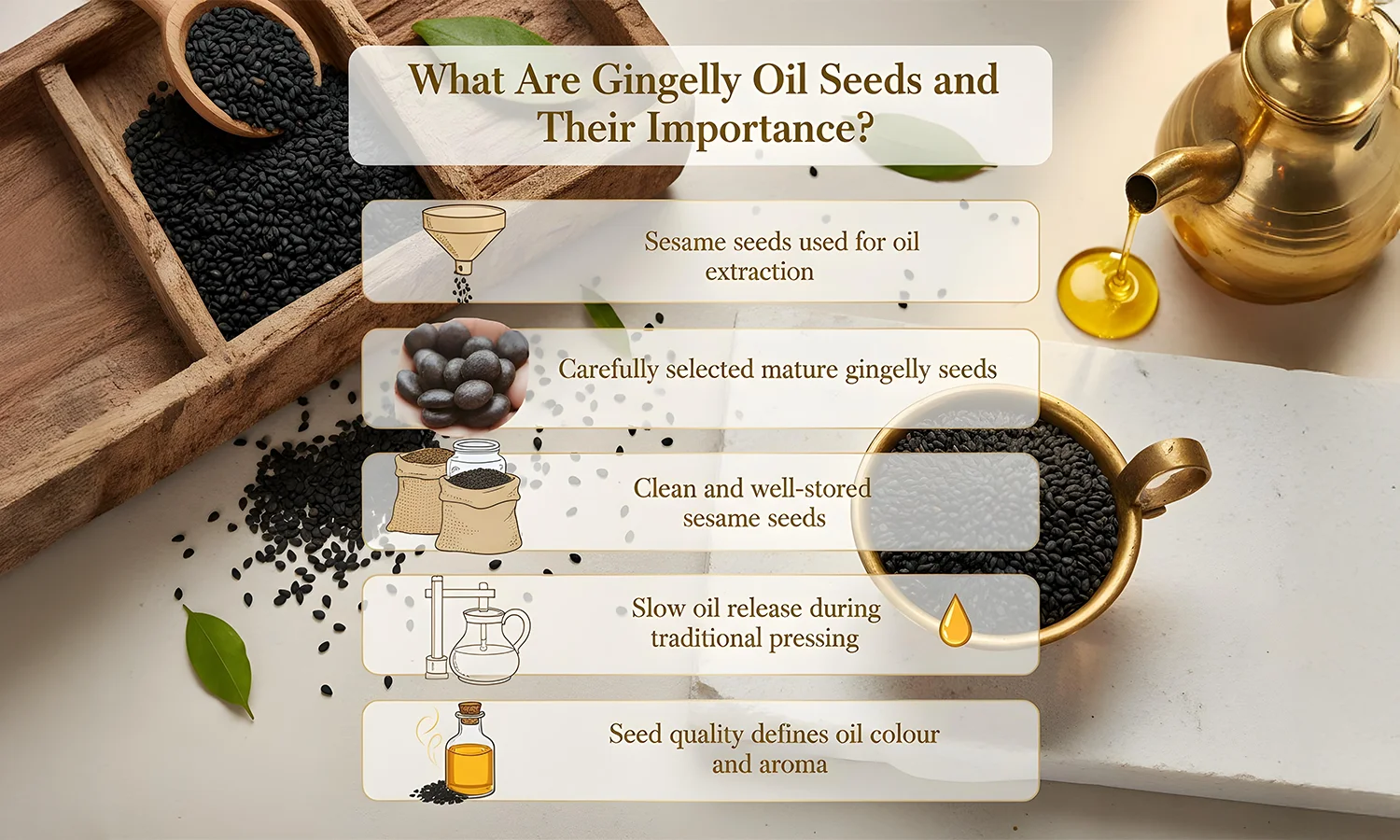
The Gingelly Oil Seed comes from the sesame plant and has been used in Indian households for centuries. Commonly known as a sesame seed, it is valued for its natural oil content and ability to release oil slowly when pressed. Traditional oil makers pay close attention to seed maturity, cleanliness, and storage conditions. This careful handling ensures that the oil extracted is consistent in colour, aroma, and texture. Seed quality is treated as the foundation of oil making, not just a raw input.

How Gingelly Oil Seed Extraction Produces Pure Chekku Oil

Pure Chekku oil is made by pressing the Gingelly Oil Seed in a wooden mill that rotates at a slow and steady pace. This method prevents excess heat and allows the oil to flow naturally.Such slow extraction reflects the values of traditional seed oil preparation, where patience and care are prioritised over speed. Compared to fast mechanical methods, this process helps maintain the oil’s natural thickness and aroma, avoiding the neutral feel often associated with mass-produced seed oil.

Health Benefits of Gingelly Seeds You Should Know

The nutritional value of Chekku oil starts at the seed level. Many people are familiar with gingelly seed benefits, which include naturally occurring fats and plant compounds. These properties are passed into the oil, contributing to recognised Gingelly oil benefits when used in daily cooking.This direct link between seed quality and oil value explains why traditional diets have continued to rely on sesame-based oils for generations rather than frequently changing cooking fats.The efficacy of the oil is deeply rooted in how gingelly oil is made, specifically through the pressing of high-quality sesame oil seeds. By using a traditional stone or wooden press, the seeds are crushed at room temperature to prevent the loss of heat-sensitive vitamins. This is important while extracting black sesame seeds oil, as the dark husks are loaded with calcium and magnesium that refined methods often discard.
Choosing a Chekku Gingelly oil ensures that these micronutrients remain bioavailable for your body, rather than being destroyed by chemical solvents.Beyond the kitchen, the versatility of these seeds makes them a staple for holistic grooming. For instance, black sesame seed oil for hair is a wonderful remedy for maintaining scalp health and promoting natural shine due to its high penetration ability. When looking for the best sesame oil for cooking or topical use, focusing on the extraction method is key; a minimally processed oil acts as both a nutrient-dense food and a powerful natural antioxidant. Gingelly Oil Seeds Matter in Pure Chekku Oil

Why Gingelly Oil Seeds Matter in Pure Chekku Oil

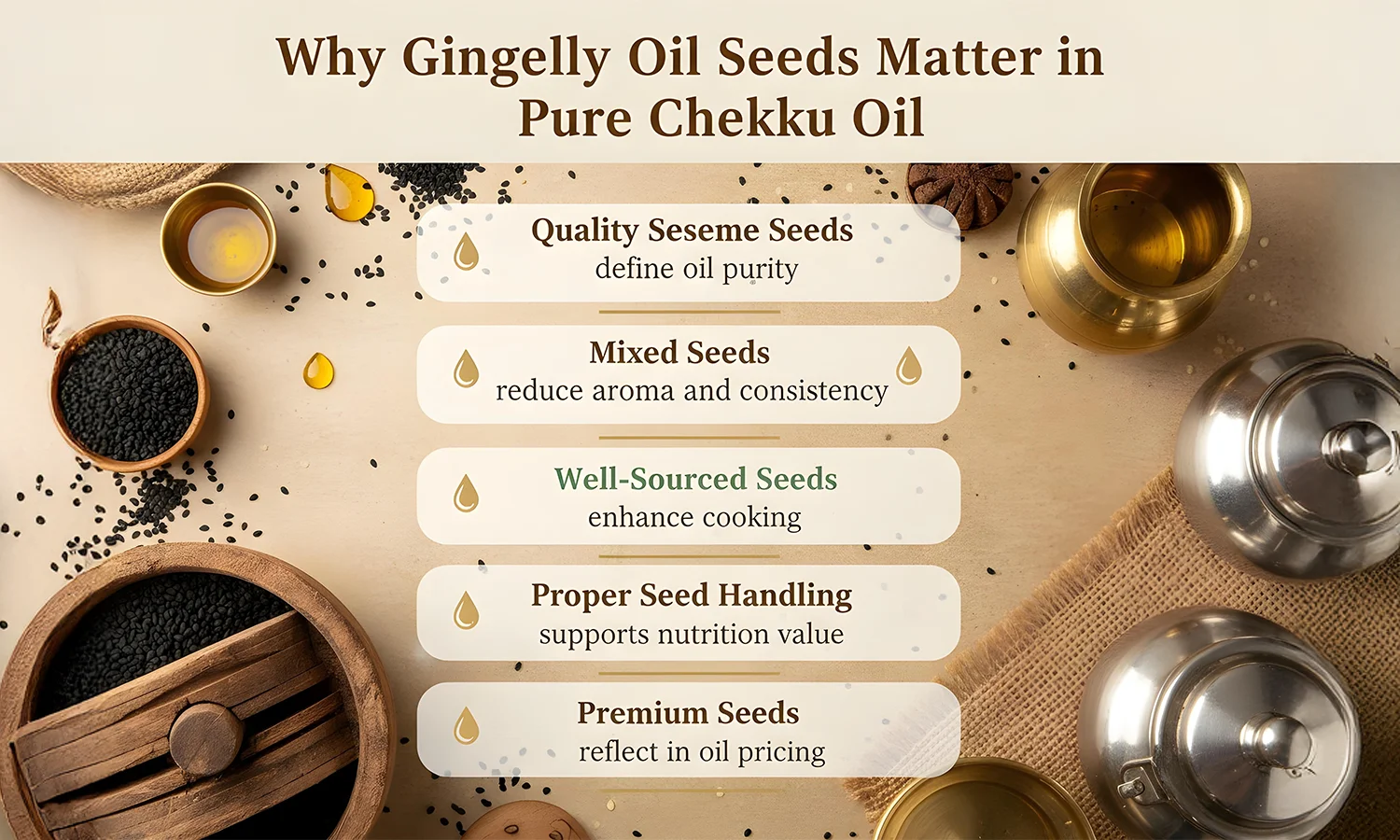
Not every oil labelled Chekku delivers the same experience, and the difference often lies in the Gingelly Oil Seed used. Oils produced from mixed or low-grade seeds tend to lack consistency in aroma and performance.

In contrast, carefully sourced seeds produce stable gingelly sesame oil that works well for everyday cooking. The overall Gingelly oil nutrition depends heavily on seed handling, from sourcing to storage.

Factors like sesame oil price also reflect this effort, as better seeds and slower extraction naturally increase production costs. Over time, consistent use highlights real seed benefits rather than short-term impressions.

Conclusion

Pure Chekku oil is not just about the wooden press; it begins with respect for the Gingelly Oil Seed. From selecting mature seeds to pressing them slowly, every step depends on seed quality.This is why traditional producers and trusted brands like SGR 777 place strong emphasis on sourcing and handling seeds carefully. When the seed is right, the oil naturally delivers consistency, nutrition, and trust in everyday cooking.

Key Takeaways

  • Gingelly Oil Seed quality is the foundation of pure Chekku oil
  • Slow extraction protects the natural character of the oil
  • Health value begins with careful seed selection
  • Consistent aroma and texture depend on seed handling
  • Traditional oil making focuses on patience and reliability

FAQs

Is sesame oil better than olive oil?Both oils suit different cuisines. Oil made from Gingelly Oil Seed is better aligned with Indian cooking styles and regular heating.
Can we fry in gingelly oil?Yes. Gingelly oil is commonly used for frying at steady temperatures in traditional cooking.
Who should not have sesame oil?People with sesame allergies should avoid it. Others usually consume it in moderation.
What are the side effects of sesame seeds?Excess intake may cause digestive discomfort for some individuals.
When to avoid sesame seeds?Avoid them if you have allergies or if advised by a healthcare professional.

Gingelly Oil for Pooja: Traditional Uses, Benefits & Tips

Introduction :

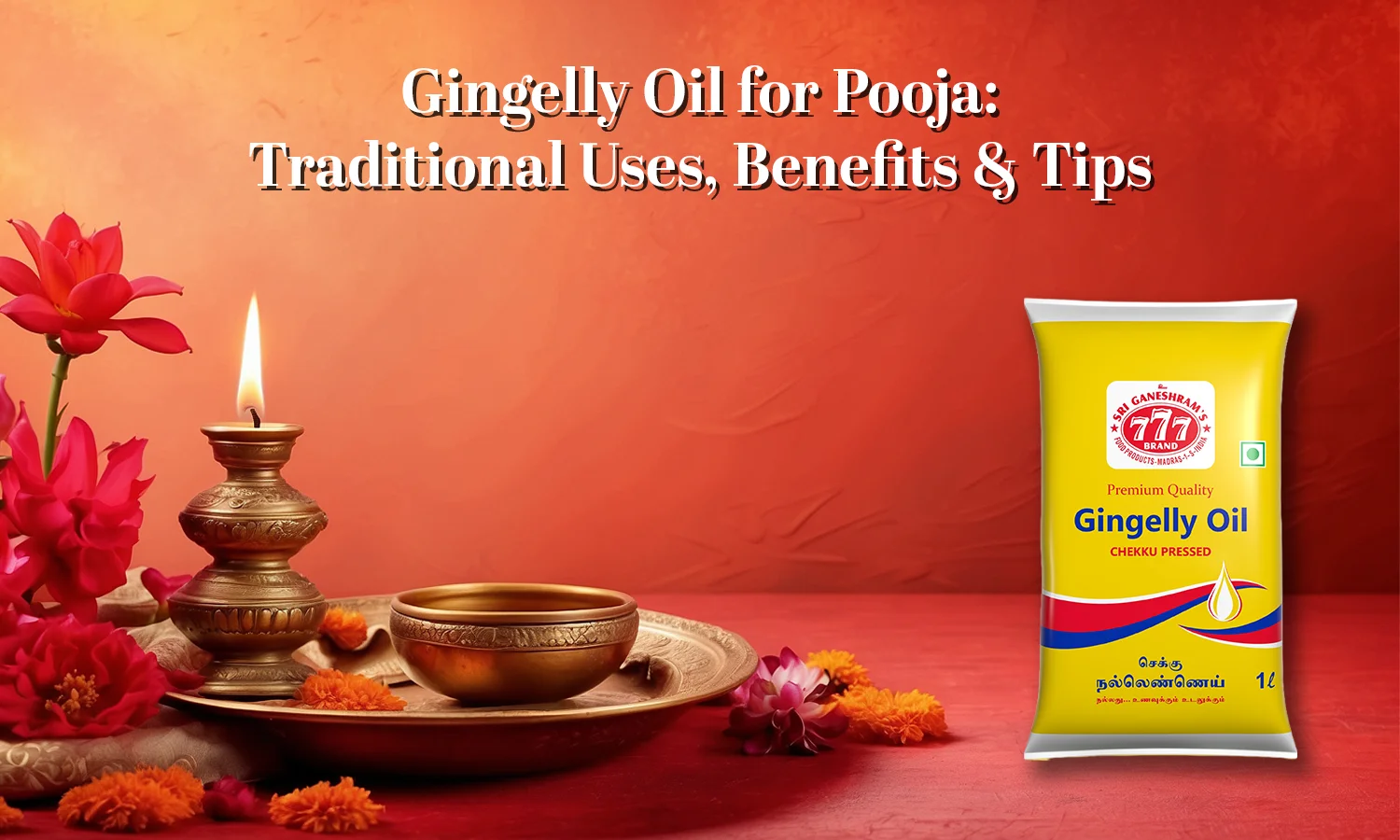
In many Indian homes, pooja is not just a practice—it is a quiet moment of connection, discipline, and gratitude. Among the items used daily, Gingelly oil for pooja holds a special place. It has been part of rituals for generations, not chosen randomly but through long-standing belief and experience.

From lighting lamps to sacred offerings, gingelly oil continues to be trusted for its purity and purpose. This guide explains why it is used, how it supports rituals, and what to look for when buying it.

Why Is Gingelly Oil Traditionally Used in Pooja?

The use of Gingelly oil for pooja comes from tradition rather than trend. Ancient households relied on natural resources that were easily available and stable for lamp lighting.
Over time, the Uses of Gingelly Oil became deeply connected with religious customs. Elders preferred it because it burned evenly and symbolised cleanliness. Even today, Gingelly oil is chosen for puja because it aligns with long-followed ritual practices.

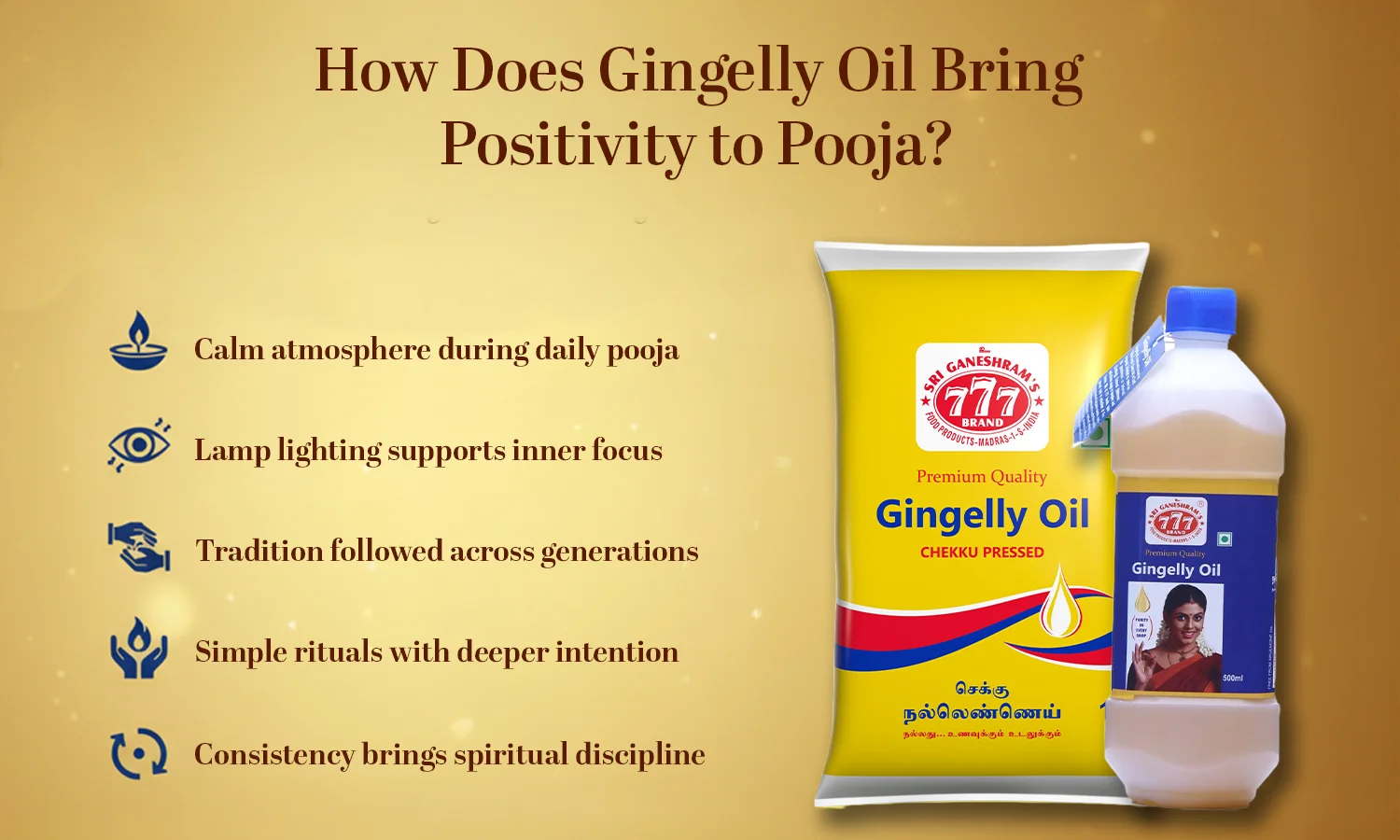
How Does Gingelly Oil Bring Positivity to Pooja?

Lighting a lamp with Gingelly oil for pooja is believed to create a calm and focused environment. Many families associate this act with inner discipline and consistency.

Using traditional gingelly oil during prayers helps maintain continuity in rituals passed down through generations. These practices are often linked to spiritual benefits, where routine and intention matter more than elaborate arrangements.

Health Benefits of Gingelly Oil in Daily Rituals

Daily rituals often influence everyday habits. When Gingelly oil for pooja is used regularly, it also becomes part of the home environment through lamps and offerings.
Over time, people have noticed Traditional benefits associated with its mild aroma and clean-burning nature. Using it as part of a Daily Ritual reflects mindful living rather than quick results or claims. Gingelly Oil Is Used in Certain Poojas

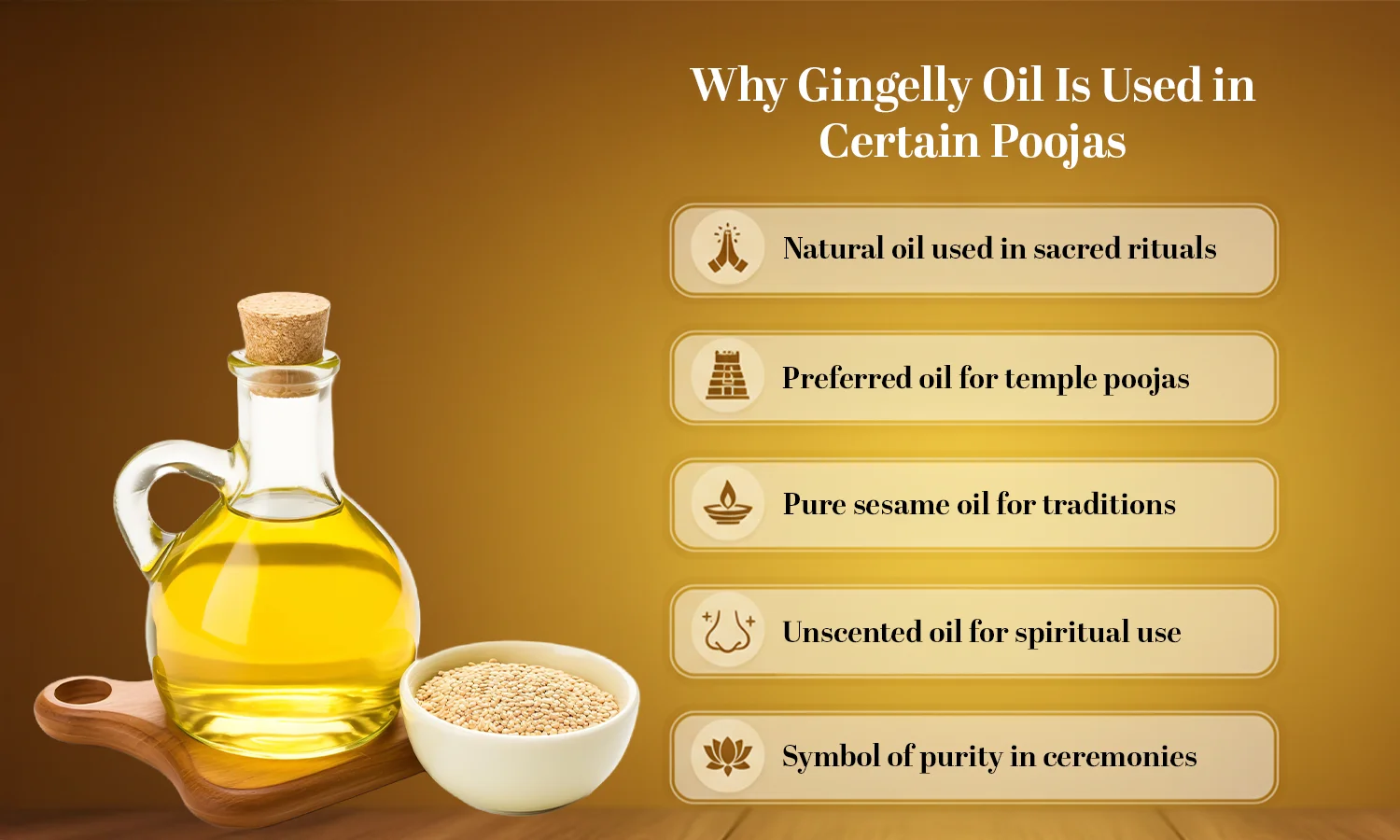
Why Gingelly Oil Is Used in Certain Poojas

Not all oils are considered suitable for rituals. Gingelly oil for pooja is often preferred during specific ceremonies because of its natural origin and stable nature. Many temples and households continue using Sesame oil for pooja instead of mixed or scented oils.This choice comes from the belief that rituals should involve simple and pure materials, making Pure Gingelly Oil a common preference.

Tips to Choose the Purest Gingelly Oil for Pooja

Selecting the right Gingelly oil for pooja requires attention to quality rather than branding. Keep these points in mind:

This choice comes from the belief that rituals should involve simple and pure materials, making Pure Gingelly Oil a common preference.

  • Look for oil made from pure sesame oil with no added fragrance
  • Check labels for clarity on sourcing and extraction
  • Avoid oils that look overly light or watery
  • Choose products known for consistent gingelly oil uses beyond rituals

Many families trust what they know as the best gingelly oil based on experience rather than advertising. Always focus on clarity, aroma, and authenticity before buying.

Conclusion

The continued use of Gingelly oil for pooja reflects trust built over time, not quick trends. Its role in rituals, daily discipline, and traditional living keeps it relevant even today.

Brands like SGR 777 follow these time-tested practices by offering oil prepared with care and consistency, supporting households that value simplicity and tradition in their daily worship.

Key Takeaways

  • Gingelly oil for pooja has been traditionally used for lamp lighting and rituals due to its purity and stable burning nature
  • Its role in pooja is based on long-standing household practices rather than modern trends
  • Using pure, traditionally made gingelly oil supports calm and consistent daily worship
  • Not all oils are suitable for rituals; simplicity and natural sourcing matter most
  • Choosing authentic gingelly oil helps maintain the meaning and discipline of everyday pooja

FAQs

Which oil is best for pooja at home?Most households prefer Gingelly oil for pooja because it aligns with traditional practices and burns steadily during prayers.
Why is gingelly oil preferred for rituals?The preference comes from long-standing usage and belief. Gingelly oil for pooja is associated with purity and consistency in rituals.
Which oil is used for God?Many families use sesame-based oils during worship. The Use of gingelly oil has been common in homes and temples for generations.
Is gingelly oil good for the stomach?When used in cooking, it is often included in traditional diets. However, ritual use of Gingelly oil for pooja is separate from dietary intake.
Which is better, sesame oil or gingelly oil?Both refer to the same base oil. In ritual contexts, Gingelly oil for pooja is the commonly used term in Indian households.

Oil Pulling with Gingelly Oil: Benefits, How to Use & Daily Tips

Introduction

Many traditional wellness practices focus on simple actions done every morning. One such practice is oil pulling with gingelly oil, which has been followed in Indian households for years. It does not need special tools or complicated steps.When done correctly, it becomes part of Daily habits that support oral care and overall cleanliness. This guide explains what oil pulling is, why gingelly oil is used, and how you can follow it safely every day.

What Is Oil Pulling and Why Use Gingelly Oil?

Oil pulling is a practice where oil is swished around the mouth for a fixed time and then spit out. The idea behind oil pulling with gingelly oil is to support oral hygiene using a natural ingredient. Gingelly oil is commonly chosen because it suits the Indian weather and food patterns. Many people include it as part of a healthy daily routine since it is easy to follow and does not interrupt morning schedules.

What Are the Benefits of Oil Pulling?

People who follow oil pulling with gingelly oil often do so for consistency rather than quick results. One commonly mentioned advantage of oil pulling is that it encourages mindful oral care before eating or drinking anything.Over time, this practice has been associated with a cleaner mouthfeel and better breath. These commonly discussed oil pulling benefits are linked to regular use rather than one-time practice. Gingelly Oil Boost Oral and Overall Health

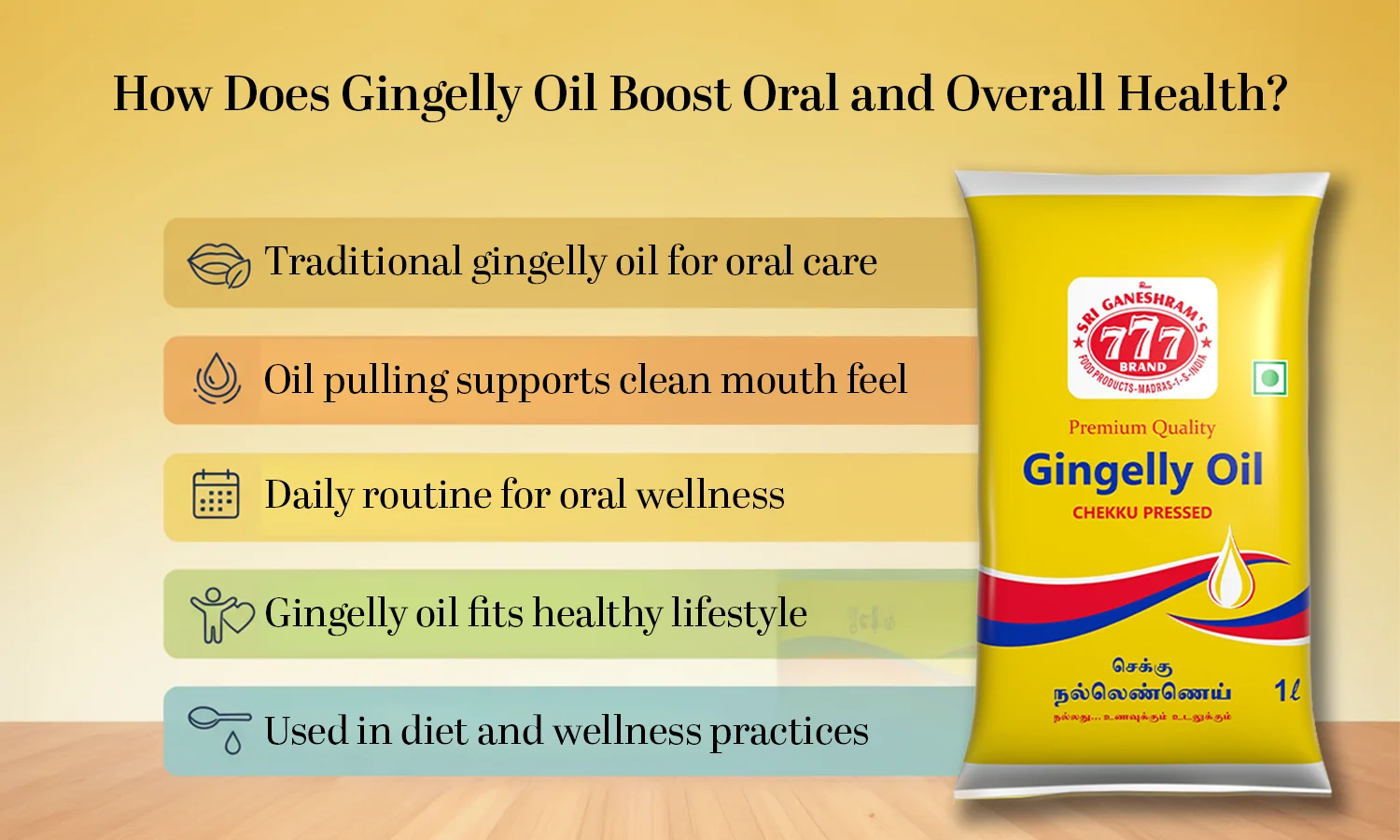
How Does Gingelly Oil Boost Oral and Overall Health?

Understanding oil pulling with gingelly oil also means knowing why gingelly oil is preferred. It has long been part of traditional diets, and many are familiar with the general Gingelly oil benefits in cooking and wellness routines.When used in oil pulling, it supports a clean oral environment and fits well into a daily routine for healthy life when paired with balanced food habits and hygiene. Oil Pulling the Right Way

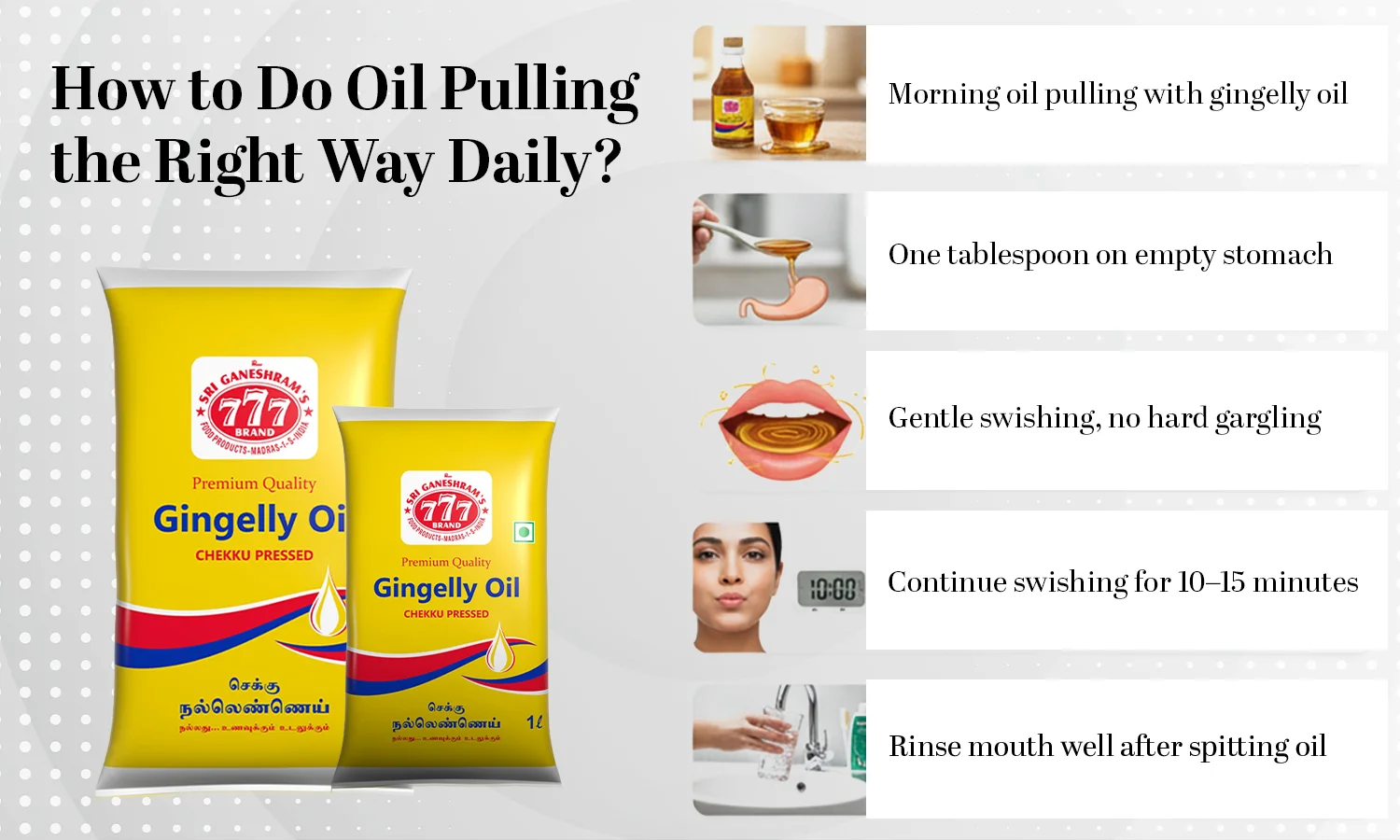
How to Do Oil Pulling the Right Way Daily?

Following oil pulling with gingelly oil correctly is important for comfort and consistency. The oil pulling method is simple and should not be rushed:

  • Take one tablespoon of gingelly oil in the morning on an empty stomach
  • Gently swish the oil around your mouth without gargling
  • Continue for 10–15 minutes, then spit it out and rinse well

This routine is often compared with oil pulling sesame oil, as both refer to the same base ingredient. Many people consider gingelly oil the best oil for oil pulling because it feels light and manageable during the process.

Are There Any Precautions or Side Effects?

While oil pulling with gingelly oil is generally followed as a traditional practice, it should be done gently. Avoid swallowing the oil, and do not force the swishing if your jaw feels tired. Like all wellness practices, it works best when treated as one of many Healthy daily habits, not as a replacement for brushing or dental care.

Conclusion

Including oil pulling with gingelly oil in your mornings is about staying consistent with simple care practices. It does not promise instant changes, but it supports mindful oral hygiene when followed daily.Brands like SGR 777 continue to offer traditionally prepared gingelly oil that fits well into such routines, helping households follow time-tested practices with confidence.

Key Takeaways

  • Oil pulling with gingelly oil is a simple morning practice
  • Consistency matters more than duration
  • It supports oral cleanliness when done correctly
  • Works best as part of a balanced routine
  • Traditional practices rely on moderation and regularity

FAQs

Which oil is good for oil pulling?Many people prefer gingelly oil because it suits traditional practices. Oil pulling with gingelly oil is commonly followed due to its familiarity and comfort.
What happens if we do oil pulling every day?When practiced daily, oil pulling with gingelly oil becomes part of a steady routine. Results depend on consistency and overall oral care habits.
Do I brush my teeth after oil pulling?Yes. After oil pulling with gingelly oil, it is important to brush your teeth to complete your oral hygiene routine.
Does oil pulling tighten teeth?Oil pulling primarily focuses on maintaining cleanliness. Oil pulling with gingelly oil should not be viewed as a corrective dental treatment.
Is 10 minutes of oil pulling enough?Yes, many people find 10 minutes sufficient. Oil pulling with gingelly oil should feel comfortable and not forced.

Why Is Chekku Gingelly Oil Trusted for Everyday Cooking?

Introduction :

In many Indian homes, cooking oil is not chosen randomly. It is picked based on experience, tradition, and how the body responds to it over time. This is where Chekku gingelly oil stands out. Passed down through generations, it is trusted not because of labels or trends, but because families have seen how it works in daily meals.From simple stir-fries to slow-cooked gravies, this oil continues to remain a steady part of everyday cooking. Let us understand why it holds this level of trust even today.

What Is Chekku Gingelly Oil and How Is It Made?

Chekku gingelly oil is made by pressing sesame seeds in a wooden press called a chekku. This slow method allows the oil to come out naturally without excess heat. Unlike fast machines, the wooden press protects the oil’s original character.This process is often referred to as Chekku oil extraction and is known for keeping the oil stable and consistent. The result is oil that feels close to how it was made decades ago, without shortcuts. Chekku gingelly oil

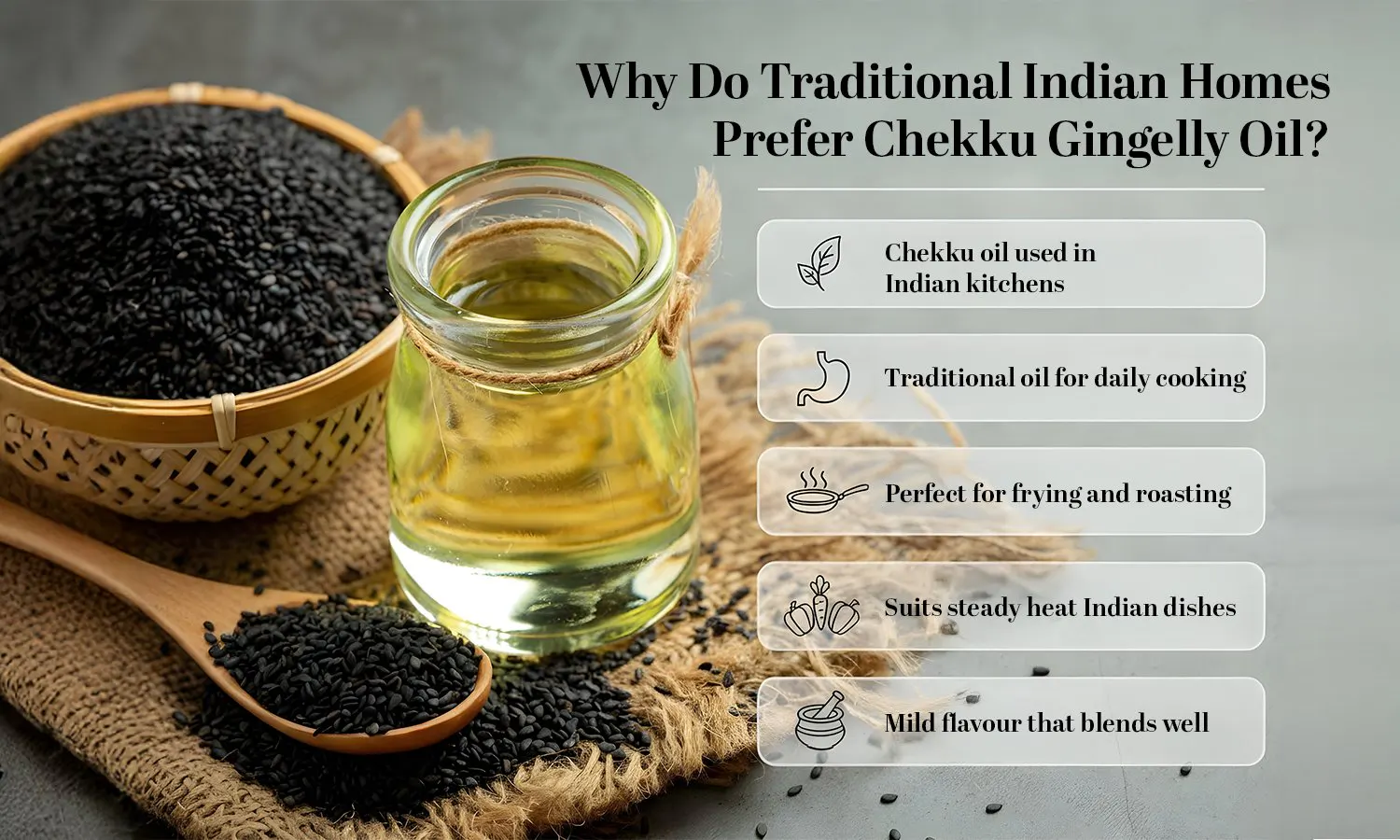
Why Do Traditional Indian Homes Prefer Chekku Gingelly Oil?

Traditional kitchens rely on oils that suit local food habits. Chekku gingelly oil fits well into Indian cooking styles that involve roasting, frying, and steady heating. Many families consider it the best choice because it works well across dishes without overpowering flavours.
It has remained a dependable Indian cooking oil because it aligns with everyday eating patterns rather than occasional use.

Is Chekku Gingelly Oil Really Healthy for Daily Cooking?

When used in moderation, Chekku gingelly oil is often seen as a healthy cooking oil. The slow extraction method helps retain natural elements found in sesame seeds. This is one reason people view it as a Healthy choice for regular meals.The secret to its quality lies in how gingelly oil is made, specifically through traditional methods. Pure chekku gingelly oil is produced using a wooden or stone mortar that rotates at a very low speed. This procedure ensures that no heat is generated during the process. It also retains the vital nutrients and natural antioxidants that define chekku gingelly oil benefits. Whether you call it mara chekku gingelly oil or use the traditional term parambariya chekku gingelly oil, this method ensures the oil remains unadulterated and full of its original, earthy flavor.When gingelly oil for cooking is concerned, people often ask about the difference between gingelly oil vs sesame oil. While both come from the same seed, gingelly oil refers to the variant where the seeds are treated with palm jaggery during the pressing process to balance the bitterness, making it the best chekku gingelly oil for traditional South Indian recipes. This kind of preparation enhances the stability of the oil, making it perfect for tempering, sautéing, or even deep-frying without losing its nutritional integrity.Since the oil is not heavily processed, it feels lighter on the stomach when compared to many refined oils used today. Chekku Gingelly Oil Improve Taste and Digestion

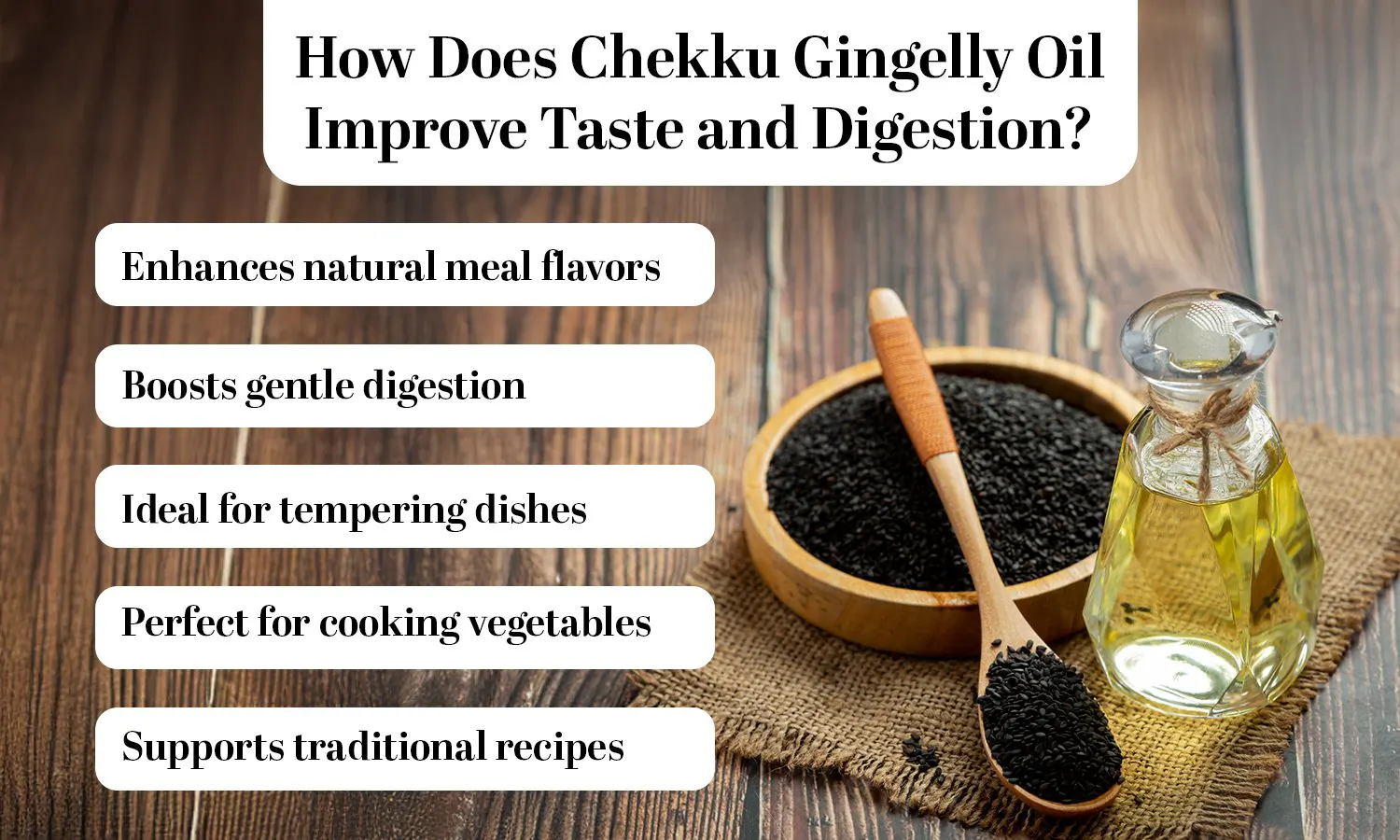
How Does Chekku Gingelly Oil Improve Taste and Digestion?

Taste matters in daily meals, and Chekku gingelly oil supports that naturally. It enhances flavours without masking ingredients. Over time, people also notice better digestion, especially when oil-heavy dishes are reduced, and balanced cooking is followed. Many common Gingelly oil uses include tempering, cooking vegetables, and making traditional recipes where oil plays a supporting role rather than the centre.

How to Identify Pure Chekku Gingelly Oil Before Buying?

Before buying Chekku gingelly oil, look for clarity in how the product is described. Pure oil usually lists only one source: sesame seeds. Labels mentioning Chekku sesame oil indicate traditional extraction.
Price can also be a signal; genuine oil reflects the effort involved, which explains the Chekku oil price being higher than refined options. People often search for Chekku oil near me to buy from trusted local sellers rather than mass-produced sources.

Conclusion :

The trust placed in Chekku gingelly oil comes from years of daily use, not marketing promises. Its method of preparation, compatibility with Indian food, and steady performance in home cooking explain why families continue to rely on it. Brands like SGR 777 follow these traditional practices with care, helping households maintain familiar cooking habits with confidence and consistency.

Key Takeaways :

  • Chekku gingelly oil is made using slow wooden press extraction
  • It suits everyday Indian cooking methods
  • Traditional use supports digestion and taste
  • Ingredient simplicity indicates purity
  • Long-term use matters more than short-term trends

FAQs

Is chekku oil good for heart?When used carefully, Chekku gingelly oil fits well into balanced meals. Its natural fats make it suitable for regular cooking when portion control is followed.
Which cooking oil is best for Indians?There is no single answer, but oils that match traditional food habits are often preferred. Chekku gingelly oil remains a common household choice across regions.
Can I eat sesame oil every day?Yes, many people do. Sesame oil is widely used in daily cooking when meals are planned thoughtfully and not overly oily.
Why is jaggery added to gingelly oil?In traditional preparation, a small amount of jaggery helps improve extraction and balances the oil naturally without changing its core quality.
Can we drink gingelly oil on an empty stomach?Some traditional practices include this, but it is always better to follow personal dietary advice and moderation rather than habits alone.

What Is Gingelly Oil Made Of? An Easy Guide for Everyone

Introduction

If you have ever looked at a bottle and wondered what is gingelly oil made of, you are not alone. Many people use it daily but know very little about what actually goes into it. Understanding the source, process, and natural composition of this oil helps you choose better and cook smarter. This guide explains everything in simple terms, just the way it has been followed in Indian homes for generations. Choosing a natural gingelly oil makes these traditional habits even more rewarding.

What Exactly Is Gingelly Oil Made Of?

At its core, what gingelly oil is made of is quite simple. It comes from sesame seeds, which are carefully cleaned, dried, and pressed to extract oil. When no additives or shortcuts are involved, the oil retains its natural colour, aroma, and nutrients. This clarity is what separates traditional oils from mass-produced alternatives. Many families also reach for it as a gingelly oil for skin care and as a gingelly oil for hair routine.
what is gingelly oil made of

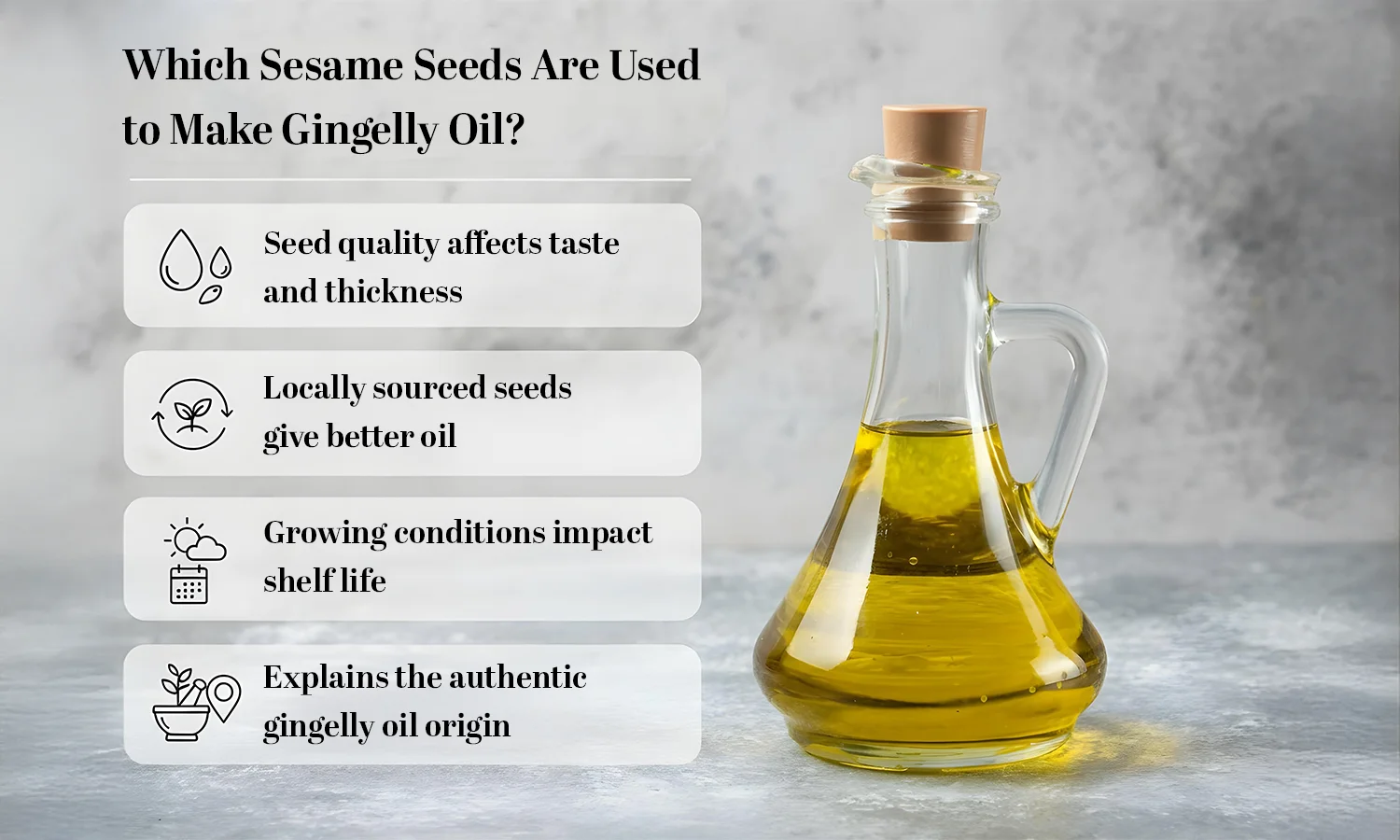
Which Sesame Seeds Are Used to Make Gingelly Oil?

To understand what gingelly oil is made of, it helps to know that not all seeds are the same. High-quality oil usually comes from locally sourced seeds grown under controlled conditions. These seeds influence taste, thickness, and shelf life. This basic explanation answers the common question of What is Gingelly oil is in its most authentic form. Seeds grown without chemicals are what give you a true organic gingelly oil.
How Is Gingelly Oil Traditionally Extracted?

Traditional extraction plays a big role in defining what gingelly oil is made of. Methods like Pure Chekku Oil extraction use wooden presses that rotate slowly.

This gentle process avoids overheating and keeps the oil stable. Oils made using Chekku pressed gingelly oil are valued because they stay closer to their natural state without losing nutrients.

Understanding How Gingelly oil is made from sesame seeds explains why a cold pressed gingelly oil or a wood pressed gingelly oil keeps so much of its goodness.

What Nutritional Value Does Gingelly Oil Contain?

When people ask what gingelly oil is made of, they are often thinking about health, too. The sesame oil composition includes natural fats, antioxidants, and essential compounds that support daily nutrition.

These elements contribute to the commonly known Gingelly oil benefits, especially when the oil is used in moderation as part of home-cooked meals. These steady Gingelly oil benefits are why it remains a kitchen favourite.

Why Do Gingelly Oil Ingredients Matter for Health?

Knowing what gingelly oil is made of helps you understand why ingredient clarity matters. The ingredients of gingelly oil should be limited to one thing only—pressed sesame seeds. Oils that contain additives or mixed oils may lose their original value. Simplicity in ingredients often reflects purity and consistency. Clear gingelly oil ingredients are the simplest sign that you are getting real quality.
Pure Gingelly Oil Better Than Refined Oils

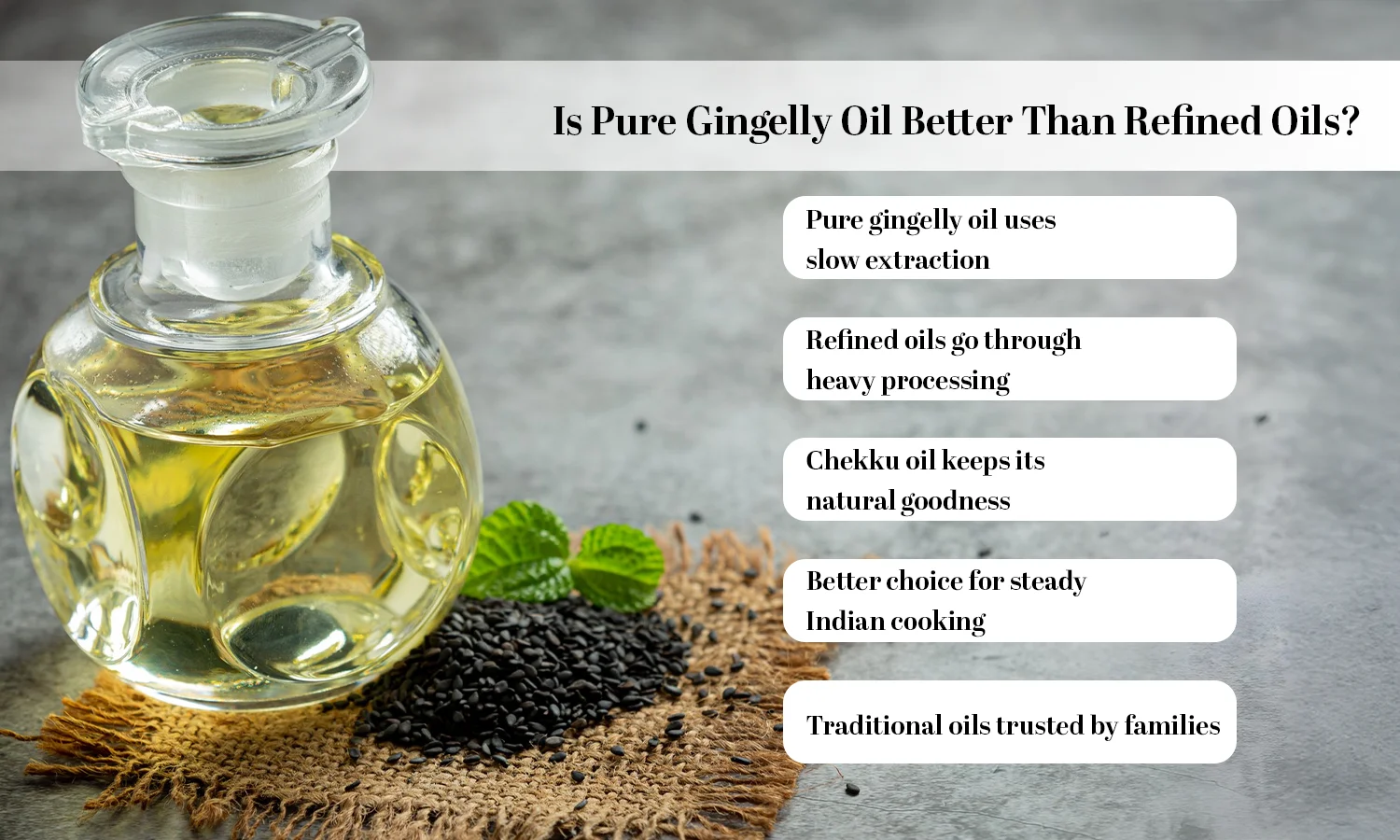
Is Pure Gingelly Oil Better Than Refined Oils?

Comparing refined oils with traditional options often brings us back to what gingelly oil is made of. Refined oils go through heavy processing, while traditional oils like Chekku pressed sesame oil rely on slow extraction. This difference explains why many families prefer Gingelly oil for cooking, especially for dishes that involve steady heating. A good traditional sesame oil holds up well exactly because of this gentle process.

Conclusion

Now that you clearly know what is gingelly oil made of, choosing the right bottle becomes easier. From seed quality to extraction method, every step matters. Brands like SGR 777 follow traditional practices that respect these basics, helping households continue time-tested cooking habits with confidence.

Key Takeaways :

  • What is gingelly oil made of starts with quality sesame seeds
  • Traditional extraction keeps the oil closer to its natural form
  • Ingredient clarity is a sign of purity
  • Nutritional value depends on processing methods
  • Trusted brands focus on simplicity and consistency

FAQs :

Is gingelly oil good or bad? Understanding what gingelly oil is made of helps answer this. When pure and traditionally extracted, it is generally considered suitable for regular use in balanced diets.
Why is gingelly oil so expensive?The cost reflects seed quality, slow extraction, and careful handling. Knowing what is gingelly oil made of explains why traditional oils cost more than refined ones.
Is gingelly oil good for cooking?Yes, many households prefer it for everyday meals. Once you know what is gingelly oil made of, you can see why it handles heat better than heavily processed oils.
Which oil do cardiologists recommend?Doctors often suggest oils that are natural and stable. Understanding what is gingelly oil made of helps you see why it is commonly included in traditional diets.
Which oil is healthiest for Indian cooking?There is no single answer, but oils with minimal processing are often preferred. Knowing what gingelly oil is made of supports informed choices.

Best Gingelly Oil in India: Simple Things to Check Before You Buy

Introduction

Choosing the best gingelly oil for your kitchen is not as simple as picking the first bottle you see on the shelf. With many options available today, knowing what truly makes a good oil can help you avoid poor-quality products. From how it is made to how it smells and tastes, small details matter. This guide walks you through simple and practical things to check before buying gingelly oil, so you feel confident about what goes into your daily cooking. best gingelly oil

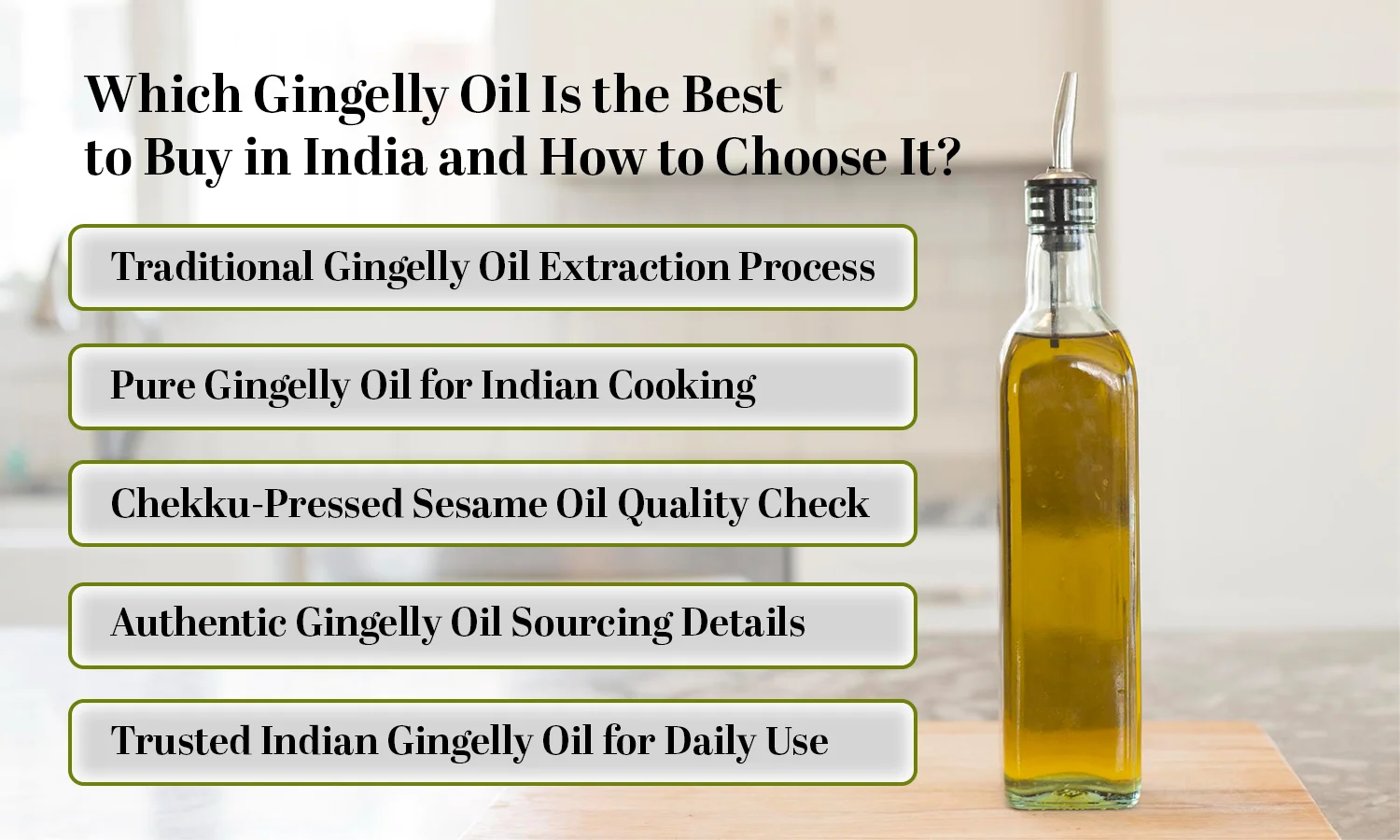
Which Gingelly Oil Is the Best to Buy in India and How to Choose It?

The best gingelly oil is one that stays close to its traditional roots. Look for oil made using time-tested extraction methods rather than fast industrial processes. Many households still trust it as the best oil for regular use because of its stability in Indian cooking. Pay attention to the label, sourcing details, and how transparent the brand is about its process.

What is Gingelly Oil and Why Is It Considered the Best Oil?

The best gingelly oil comes from sesame seeds and has been used in Indian kitchens for generations. It is valued not just for taste, but also for its role in traditional diets. Known for its warm aroma and natural richness, this oil is often preferred as best for daily cooking in South Indian homes, especially for dishes that require slow heating and deep flavours.

What Are the Key Health Benefits of Using Gingelly Oil?

Using the best gingelly oil regularly can support overall wellness when consumed in moderation. Many people are aware of common gingelly oil benefits, which include supporting digestion and providing natural fats needed by the body. Its naturally occurring antioxidants add to its reputation as a dependable cooking oil for long-term use.

How Can You Identify the Best Gingelly Oil Online?

Buying the best gingelly oil through online stores is convenient, but you must be careful. Check the product description closely. Details about gingelly oil ingredients, extraction method, and packaging date are important. Reliable brands clearly mention gingelly oil quality, avoiding vague claims. Dark glass bottles and proper sealing are also signs of careful packaging. best gingelly oil

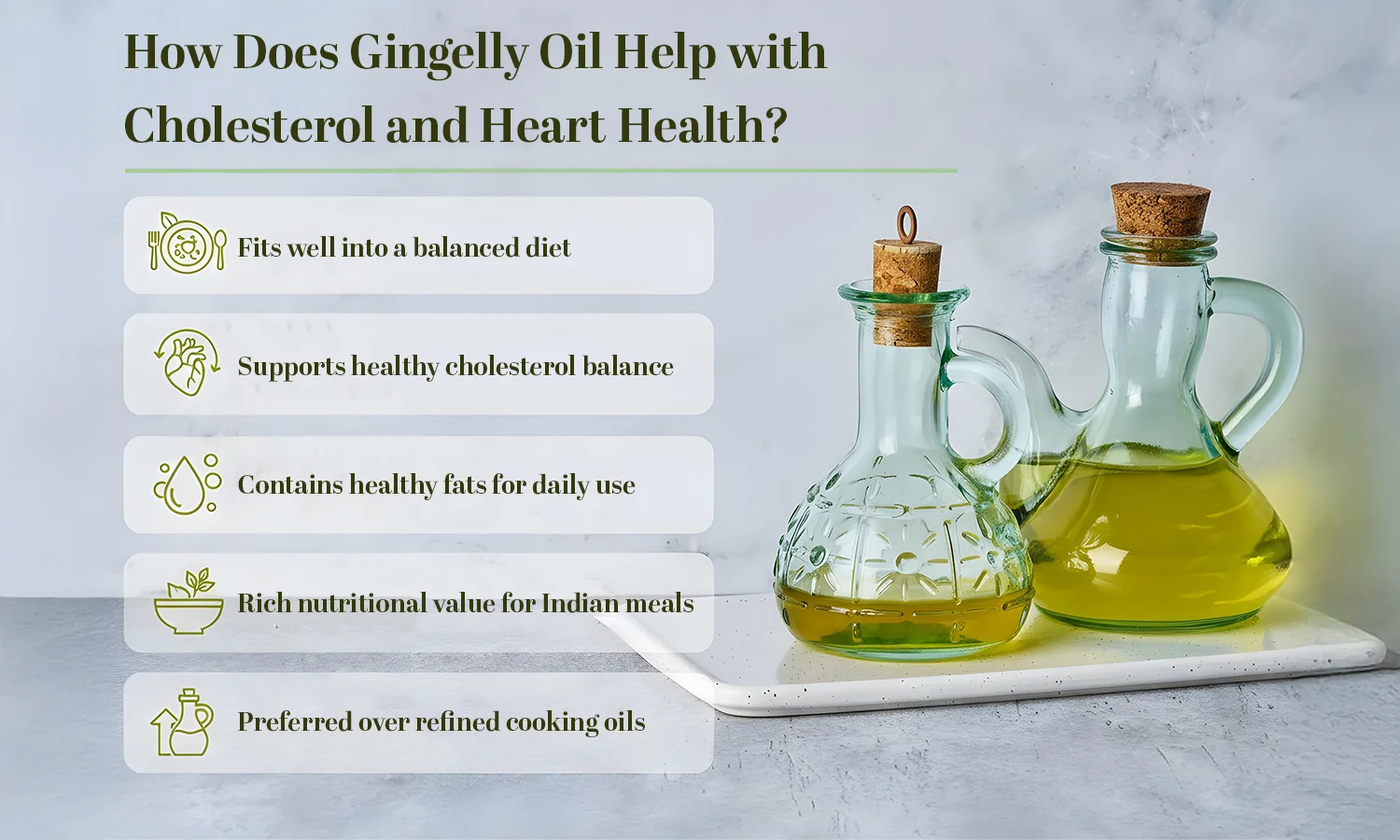
How Does Gingelly Oil Help with Cholesterol and Heart Health?

The best gingelly oil fits well into a balanced diet. Many nutrition experts talk about gingelly oil cholesterol support because it contains healthy fats that help maintain good lipid balance when used correctly. Understanding the gingelly oil nutritional value helps you see why it is often recommended as part of traditional Indian meals rather than as a refined alternative.

Conclusion

Choosing the best gingelly oil comes down to awareness, not marketing promises. By checking quality indicators, ingredient clarity, and nutritional value, you can make a smart choice for your kitchen. Brands like SGR 777 continue to earn trust by staying true to traditional methods while meeting modern quality standards. When you know what to look for, every purchase becomes easier and more reliable.

Key Takeaways

  • The best gingelly oil is traditionally made and clearly labelled
  • Aroma, colour, and sourcing say a lot about oil purity
  • Online buying is safe when product details are transparent
  • Nutritional value matters as much as taste
  • Trusted brands like SGR 777 focus on quality without exaggeration

FAQs

How to identify good gingelly oil?Good gingelly oil has a natural aroma, deep colour, and clear ingredient information. The best gingelly oil will not smell artificial or overly sharp. Always check the extraction and packaging details before buying.
Which is the best quality oil in India?There is no single answer, but the best gingelly oil usually comes from brands that avoid shortcuts in processing. Oils that are Chemical-free and traditionally extracted are often preferred by families.
Which brand of oil is good for health?A healthy oil brand focuses on purity, sourcing, and consistency. The best gingelly oil brands avoid unnecessary additives and provide clear information rather than bold claims.
How to identify fake gingelly oil?Fake products often lack clear labels or smell neutral. The best gingelly oil has a distinct sesame aroma and does not feel overly thin or greasy.
Which oil do doctors recommend?Doctors usually suggest oils that are stable, natural, and used in moderation. The best gingelly oil is often advised for traditional cooking due to its balanced fat profile.

Gingelly Oil for Cooking: Nutrition, Health Benefits & Smart Tips

If you cook Indian food often, you know oil is not just for frying. The right oil changes the smell, the taste, and how comforting a dish feels. Gingelly Oil for Cooking does this. It brings a sesame aroma and works well with our spices.

Introduction to Gingelly Oil for Cooking

Gingelly oil is the same as sesame oil. It is made by pressing sesame seeds, sometimes after lightly roasting them for a deeper aroma. In many homes, it is kept as a flavour oil, while a neutral cooking oil is used for regular frying. When you choose pure gingelly oil, the nutty smell feels fresh the moment you open the bottle. Finding the best gingelly oil for cooking comes down to choosing authentic, traditional options that keep this natural scent intact.

Health Benefits of Using Gingelly Oil

People reach for this oil for taste first, but the body also feels good with it in the right amount. Traditional diets talk about the gingelly oil for cooking benefits, as gentle support for digestion, and comfort foods. Modern nutrition also sees sesame oil as a healthy oil option because it has natural fats and antioxidants. Exploring the benefits of gingelly oil shows why many families use it in rasam, pepper gravies, and podi rice. Use it for flavour, not heavy frying.

Nutritional Value of Gingelly Oil You Should Know

Sesame seeds carry plant compounds that stay in the oil after pressing. That is why people mention gingelly oil nutritional value of gingelly oil as more than just calories. Looking closely at gingelly oil nutrition facts, it provides healthy unsaturated fats alongside essential nutrients. Still, it is oil, so one or two spoons in a dish is enough to enjoy both taste and nourishment.
Gingelly Oil for Cooking

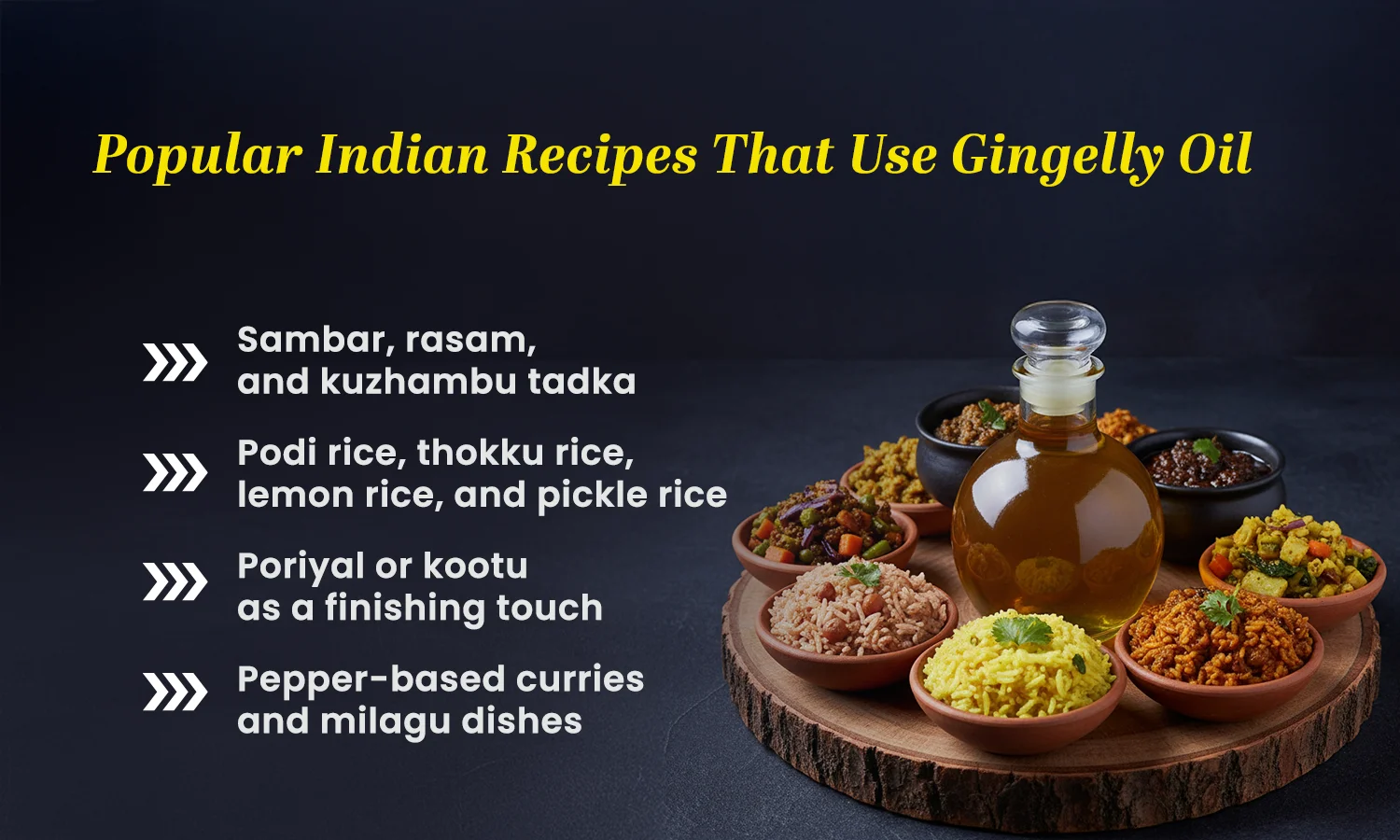
Popular Indian Recipes That Use Gingelly Oil

For gingelly oil for Indian cooking, it fits best in dishes where aroma matters:

  • Sambar, rasam, and kuzhambu tadka
  • Podi rice, thokku rice, lemon rice, and pickle rice
  • Poriyal or kootu as a finishing touch
  • Pepper-based curries and milagu dishes

Even a small pour makes the spices open up, and the meal feels complete.

Simple Ways to Use Gingelly Oil in Cooking

Here are easy options for the use of Gingelly oil:

  • Add it only for tempering in gravies and rasam.
  • Mix a spoon with hot rice and podi or thokku.
  • Drizzle a little right before serving for extra aroma.

These quick cooking tips help you enjoy the flavour without making food oily.
Gingelly Oil for Cooking

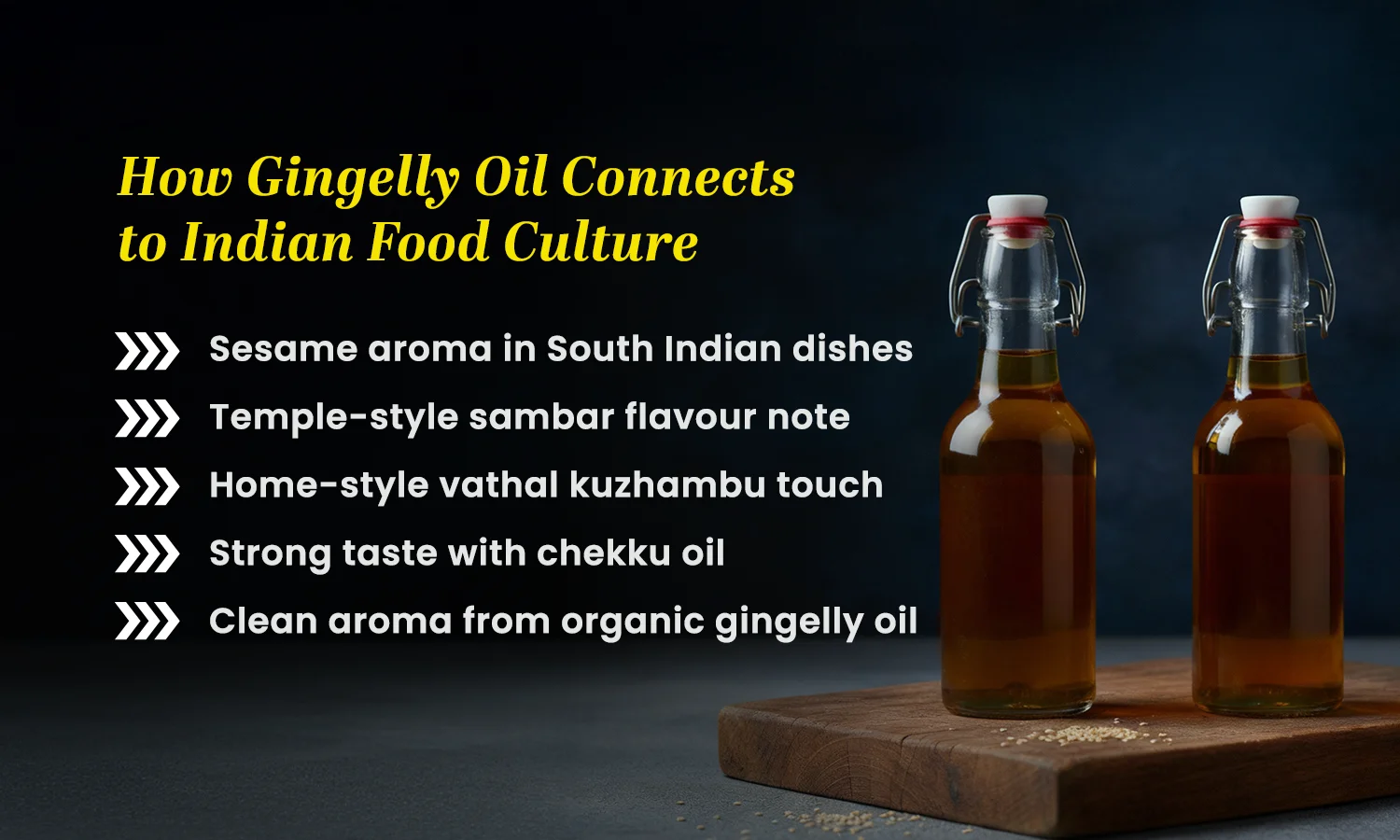
How Gingelly Oil Connects to Indian Food Culture

This oil is tied to South Indian food habits. From temple-style sambar to home-style vathal kuzhambu, sesame aroma is part of the taste memory. Many people prefer chekku gingelly oil because wood pressing keeps the flavour strong. If you like organic farming, you may also try pure organic gingelly oil for dishes where you want the cleanest aroma.

Buying and Price Tips

While shopping, look for the best gingelly oil by checking a fresh packing date, a strong nutty smell, and clear labelling. Ordering gingelly oil online is easy today, but it still smells once it arrives.
People ask about gingelly oil 1 litre price because it costs more than refined oils. Sesame seeds are expensive and give less oil per batch, so the final bottle is priced higher. Since you use smaller amounts, one litre lasts longer than you expect.

Conclusion

Gingelly Oil for Cooking is all about aroma, comfort, and tradition. Use it in tadka, rice mixes, and pepper-style gravies, and you will see why it is a favourite in Indian homes. Pick fresh oil, store it well, and use it in the right quantity.

Key Takeaways

  • Gingelly Oil for Cooking adds a sesame aroma to everyday meals.
  • It works best in South Indian gravies and rice mixes.
  • Small quantities give the best flavour.
  • Check freshness and aroma when buying.
  • Store airtight to keep the smell strong.

FAQs

Are sesame oil and gingelly oil the same?Yes. Gingelly oil is simply sesame oil. The names change by region, but both come from sesame seeds.
Which is the healthiest oil for cooking?Different oils suit different dishes. Many homes use a mix. Sesame oil is a good choice when you want flavour with light use.
What is gingelly oil made of?It is made by pressing sesame seeds. Roasted seeds give a darker, more aromatic oil.
Who should not consume sesame oil?Anyone with a sesame allergy should avoid it. If your stomach is sensitive, use smaller amounts.
Which oil do cardiologists recommend?Doctors usually suggest moderation and less deep frying. Traditional oils like sesame oil can fit into a balanced diet.