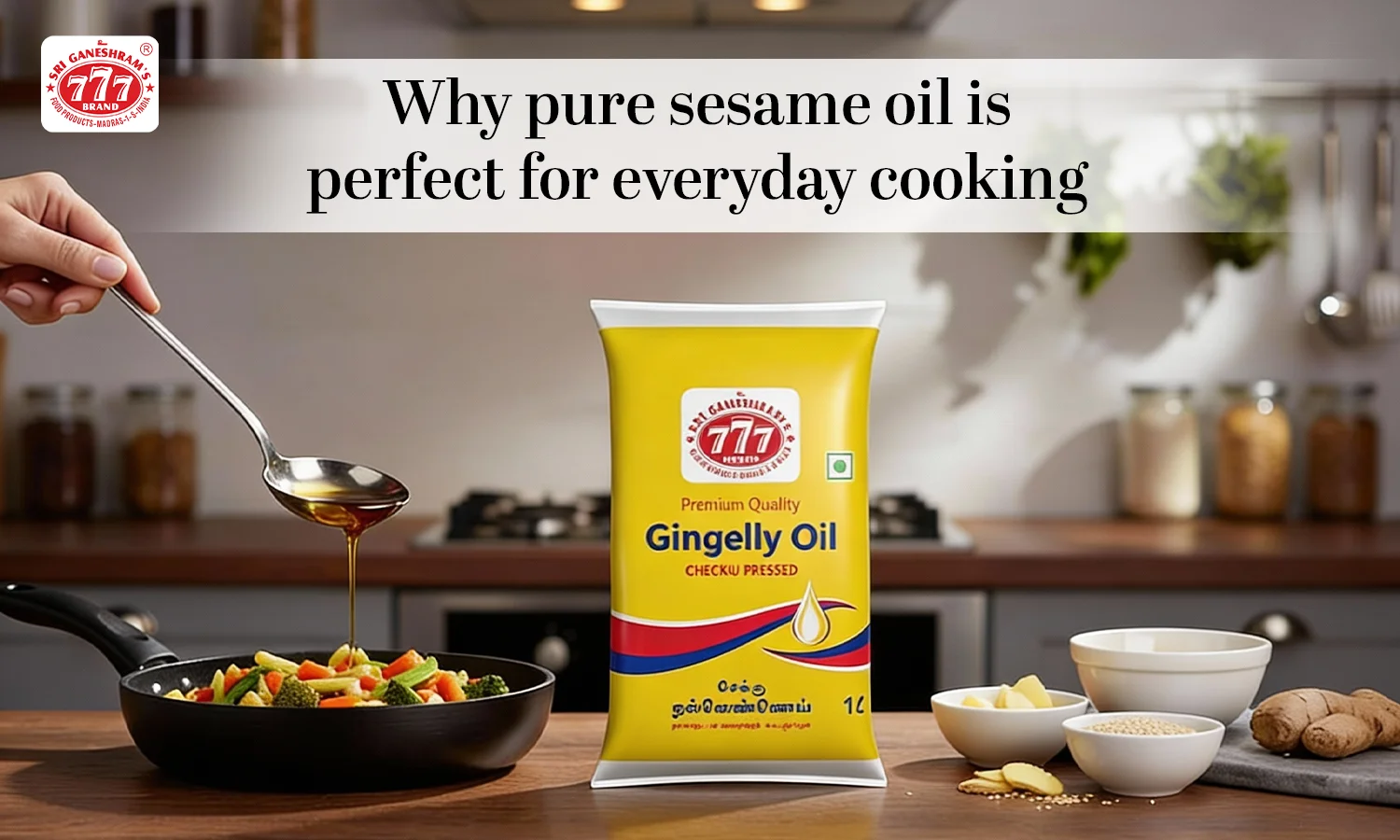
Why pure sesame oil is perfect for everyday cooking

Introduction :

Choosing the right cooking oil reflects not just taste, but also how food feels after a meal. In many Indian homes, pure sesame oil has remained a steady choice for generations. It is not selected because of trends or advertising, but because families have seen how it performs in everyday cooking.
From simple vegetable dishes to traditional gravies, this oil fits naturally into daily meals. Understanding why it works so well can help you make better choices for your kitchen.
pure sesame oil

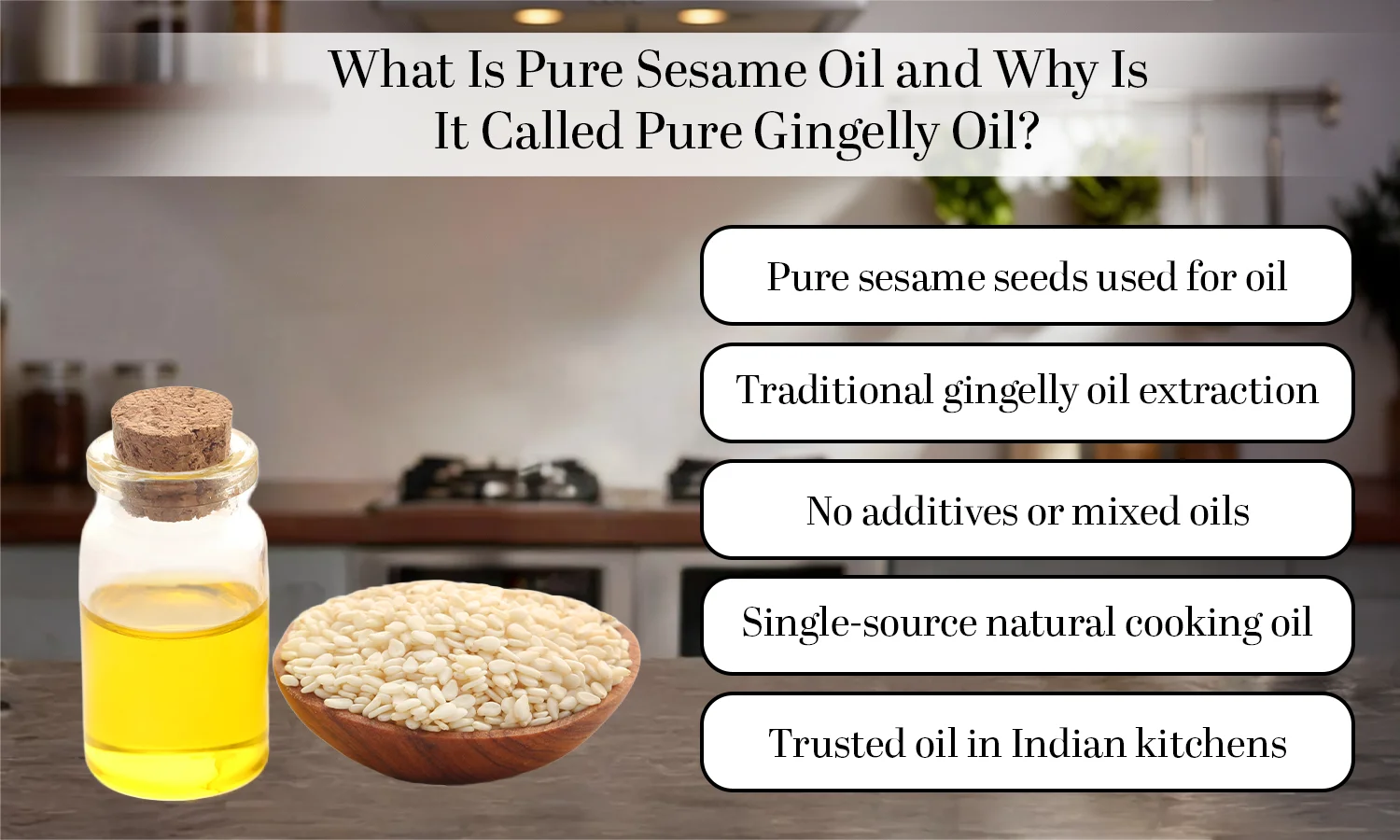
What Is Pure Sesame Oil and Why Is It Called Pure Gingelly Oil?

Pure sesame oil is extracted directly from sesame seeds without mixing or heavy processing. In many regions, it is also known as pure gingelly oil, referring to the same oil prepared using traditional methods.The word “pure” matters because it indicates that the oil comes from a single source and does not contain added oils or chemicals. This simplicity is why it has remained part of Indian kitchens for so long.

Is Pure Sesame Oil Good for Daily Cooking?

For regular meals, pure sesame oil works well because it handles steady heat without breaking down quickly. Many households prefer it as a healthy Indian oil since it suits common cooking styles like sautéing, frying, and slow cooking. Its familiarity makes it easy to use daily without constantly switching oils. Over time, this consistency supports balanced eating habits rather than occasional use. Pure Sesame Oil in Indian Cooking
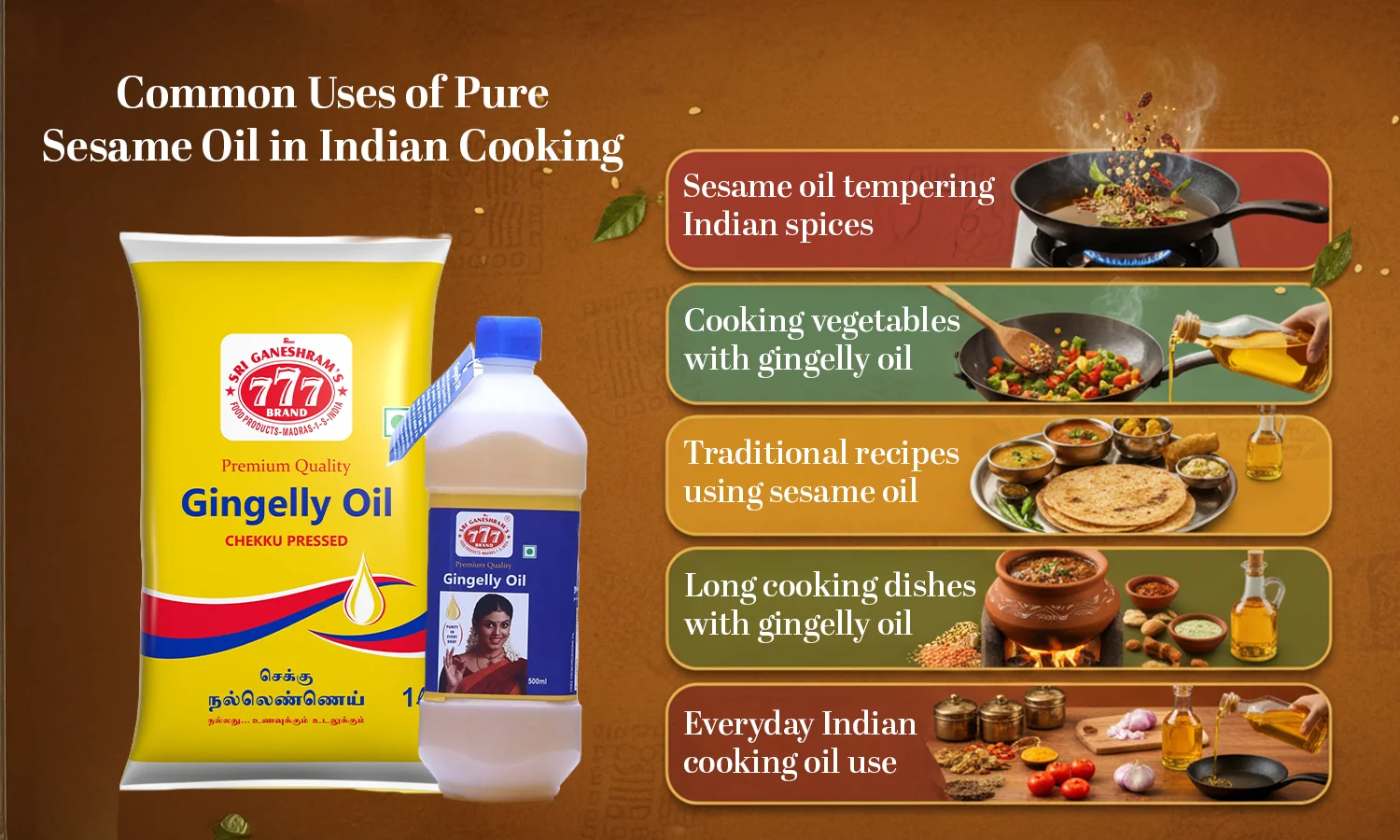
Common Uses of Pure Sesame Oil in Indian Cooking

The strength of pure sesame oil lies in how versatile it is. It blends naturally into many dishes without overpowering flavours. Some common Gingelly oil uses include tempering spices, cooking vegetables, and preparing traditional recipes that require longer cooking time. Because of this flexibility, it continues to be a trusted Indian cooking oil across different regions.

How to Choose the Best Pure Gingelly Oil

Not every bottle labelled sesame oil offers the same quality. When buying pure sesame oil, check how clearly the product explains its sourcing and extraction.
The best gingelly oil usually comes from brands that focus on traditional preparation rather than speed. Look for consistency in colour, a natural aroma, and transparent labeling. Many families rely on experience to identify a pure oil rather than marketing claims.

Conclusion

The continued use of pure sesame oil in Indian kitchens comes from years of everyday experience. Its ability to handle regular cooking, support familiar flavours, and fit into traditional meals makes it a reliable choice. Brands like SGR 777 follow these long-standing practices by focusing on quality and consistency, helping households continue cooking the way they always have—with confidence.

Key Takeaways

  • Pure sesame oil is valued for its simplicity and single-source extraction
  • It suits daily Indian cooking styles and regular meals
  • Versatility makes it useful across many traditional dishes
  • Quality depends on preparation and clarity of ingredients
  • Consistent use matters more than occasional switching

FAQs

How to check pure gingelly oil? Pure oil usually has a natural aroma and consistent texture. When checking pure sesame oil, labels and sourcing details help confirm authenticity.
Which sesame oil is pure?Oils made from only sesame seeds without additives are considered pure. Many households rely on trusted local or traditional brands.
Why is gingelly oil so expensive?The price reflects seed quality and slower extraction methods. These steps help retain natural Gingelly oil benefits.
How to tell if sesame oil is good?Good oil should not smell artificial or feel overly thin. Observing colour and aroma helps judge quality.
Can everyone consume gingelly oil daily?Many people include Gingelly oil for daily use as part of balanced meals. As with any oil, moderation is important.
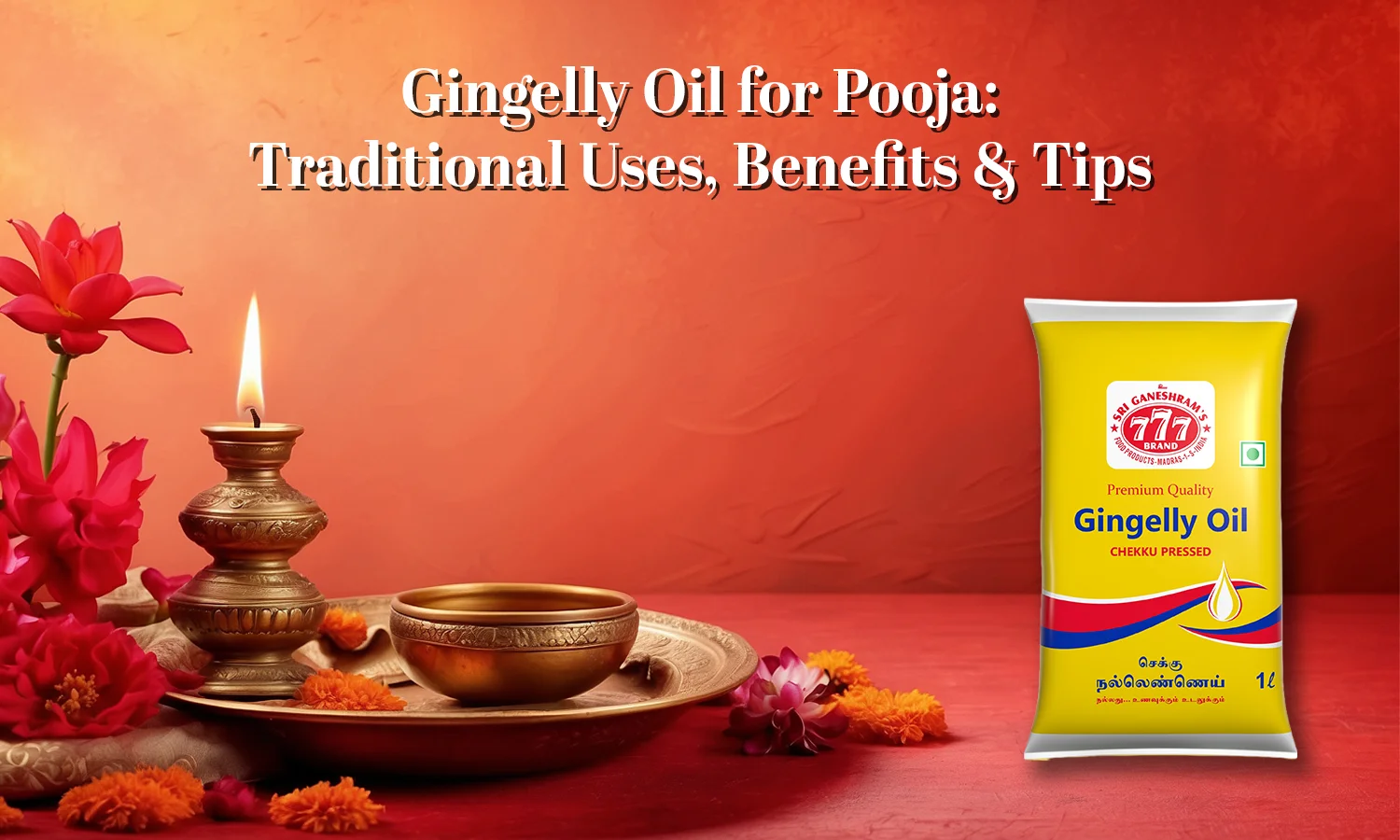
Gingelly Oil for Pooja: Traditional Uses, Benefits & Tips

Introduction :

In many Indian homes, pooja is not just a practice—it is a quiet moment of connection, discipline, and gratitude. Among the items used daily, Gingelly oil for pooja holds a special place. It has been part of rituals for generations, not chosen randomly but through long-standing belief and experience.

From lighting lamps to sacred offerings, gingelly oil continues to be trusted for its purity and purpose. This guide explains why it is used, how it supports rituals, and what to look for when buying it.

Why Is Gingelly Oil Traditionally Used in Pooja?

The use of Gingelly oil for pooja comes from tradition rather than trend. Ancient households relied on natural resources that were easily available and stable for lamp lighting.
Over time, the Uses of Gingelly Oil became deeply connected with religious customs. Elders preferred it because it burned evenly and symbolised cleanliness. Even today, Gingelly oil is chosen for puja because it aligns with long-followed ritual practices.

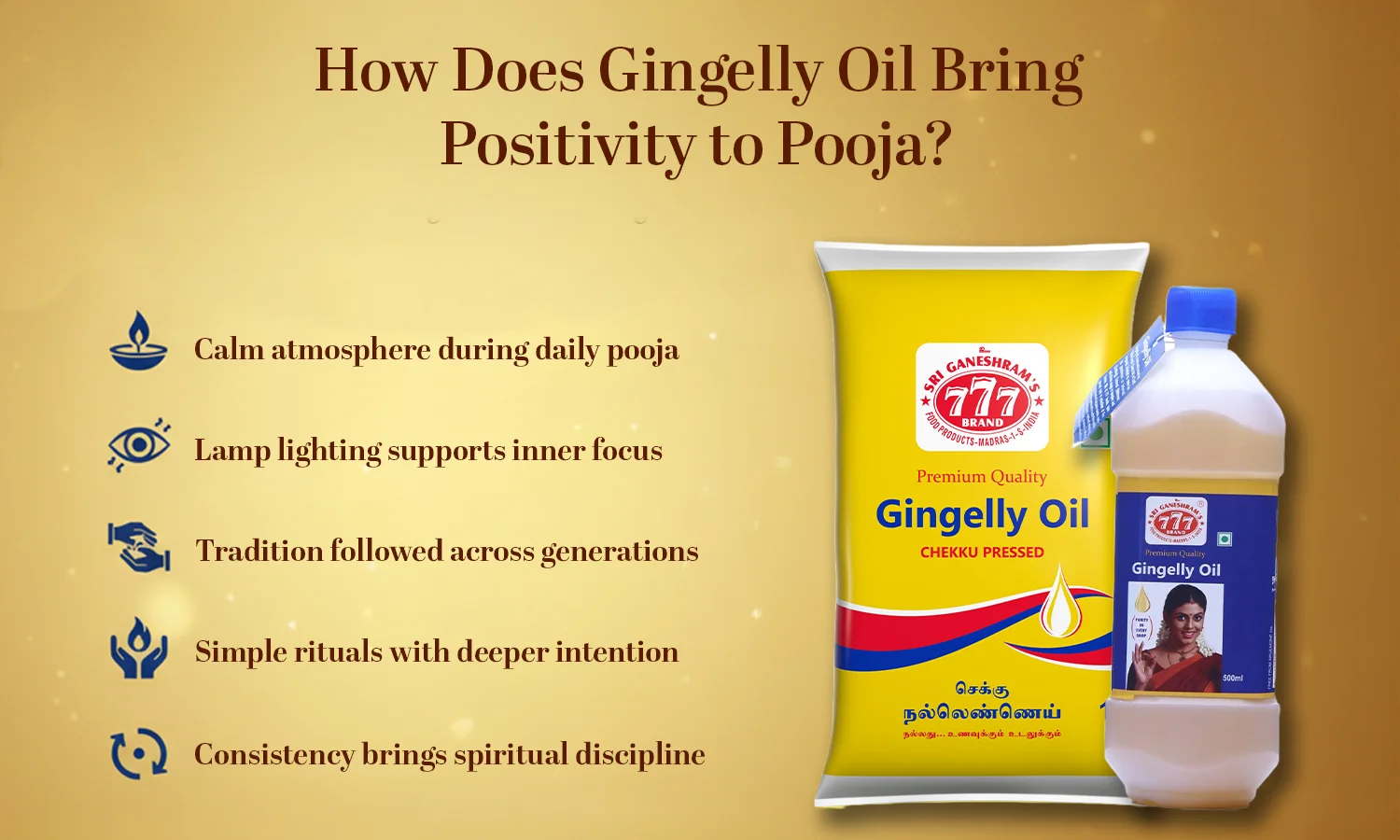
How Does Gingelly Oil Bring Positivity to Pooja?

Lighting a lamp with Gingelly oil for pooja is believed to create a calm and focused environment. Many families associate this act with inner discipline and consistency.

Using traditional gingelly oil during prayers helps maintain continuity in rituals passed down through generations. These practices are often linked to spiritual benefits, where routine and intention matter more than elaborate arrangements.

Health Benefits of Gingelly Oil in Daily Rituals

Daily rituals often influence everyday habits. When Gingelly oil for pooja is used regularly, it also becomes part of the home environment through lamps and offerings.
Over time, people have noticed Traditional benefits associated with its mild aroma and clean-burning nature. Using it as part of a Daily Ritual reflects mindful living rather than quick results or claims. Gingelly Oil Is Used in Certain Poojas

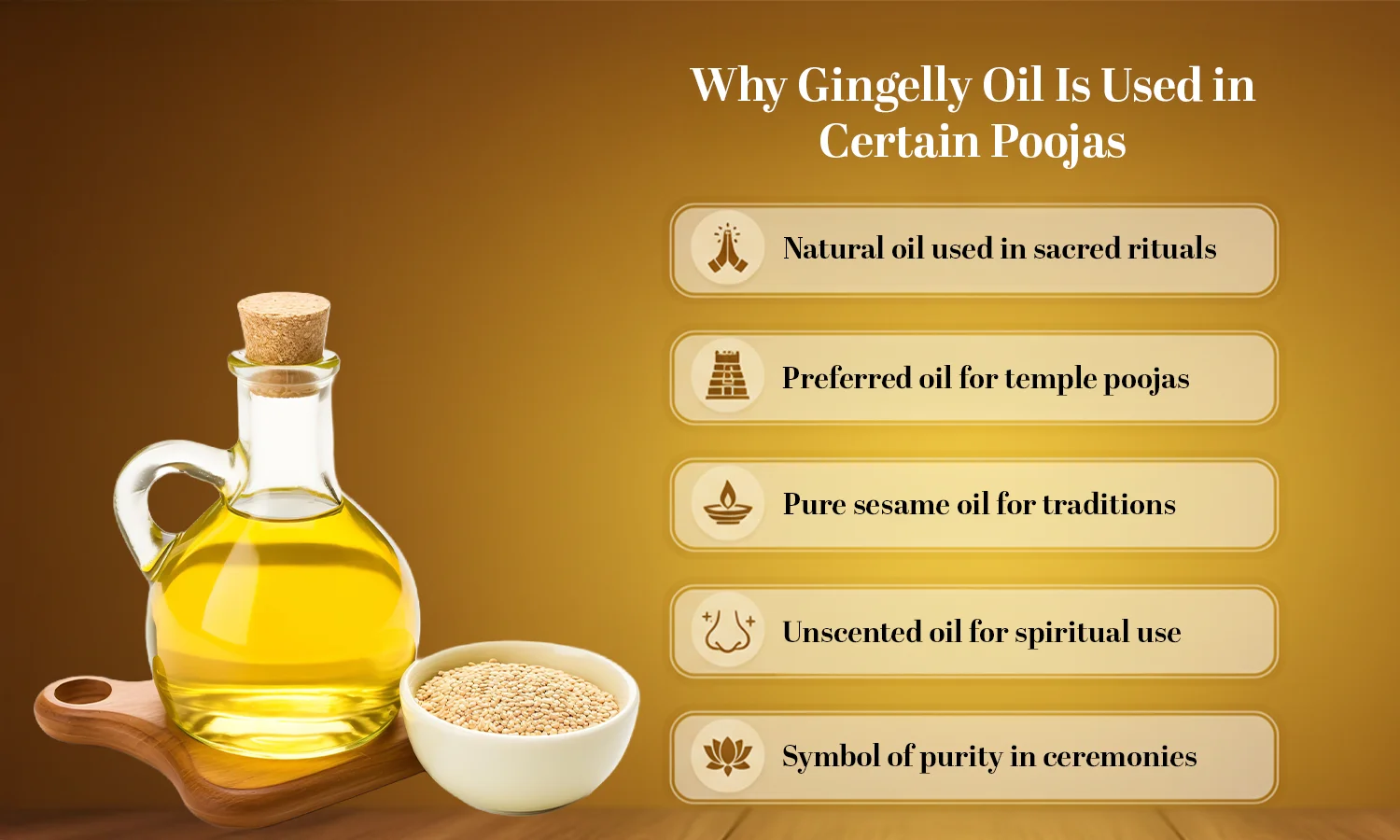
Why Gingelly Oil Is Used in Certain Poojas

Not all oils are considered suitable for rituals. Gingelly oil for pooja is often preferred during specific ceremonies because of its natural origin and stable nature. Many temples and households continue using Sesame oil for pooja instead of mixed or scented oils.This choice comes from the belief that rituals should involve simple and pure materials, making Pure Gingelly Oil a common preference.

Tips to Choose the Purest Gingelly Oil for Pooja

Selecting the right Gingelly oil for pooja requires attention to quality rather than branding. Keep these points in mind:

This choice comes from the belief that rituals should involve simple and pure materials, making Pure Gingelly Oil a common preference.

  • Look for oil made from pure sesame oil with no added fragrance
  • Check labels for clarity on sourcing and extraction
  • Avoid oils that look overly light or watery
  • Choose products known for consistent gingelly oil uses beyond rituals

Many families trust what they know as the best gingelly oil based on experience rather than advertising. Always focus on clarity, aroma, and authenticity before buying.

Conclusion

The continued use of Gingelly oil for pooja reflects trust built over time, not quick trends. Its role in rituals, daily discipline, and traditional living keeps it relevant even today.

Brands like SGR 777 follow these time-tested practices by offering oil prepared with care and consistency, supporting households that value simplicity and tradition in their daily worship.

Key Takeaways

  • Gingelly oil for pooja has been traditionally used for lamp lighting and rituals due to its purity and stable burning nature
  • Its role in pooja is based on long-standing household practices rather than modern trends
  • Using pure, traditionally made gingelly oil supports calm and consistent daily worship
  • Not all oils are suitable for rituals; simplicity and natural sourcing matter most
  • Choosing authentic gingelly oil helps maintain the meaning and discipline of everyday pooja

FAQs

Which oil is best for pooja at home?Most households prefer Gingelly oil for pooja because it aligns with traditional practices and burns steadily during prayers.
Why is gingelly oil preferred for rituals?The preference comes from long-standing usage and belief. Gingelly oil for pooja is associated with purity and consistency in rituals.
Which oil is used for God?Many families use sesame-based oils during worship. The Use of gingelly oil has been common in homes and temples for generations.
Is gingelly oil good for the stomach?When used in cooking, it is often included in traditional diets. However, ritual use of Gingelly oil for pooja is separate from dietary intake.
Which is better, sesame oil or gingelly oil?Both refer to the same base oil. In ritual contexts, Gingelly oil for pooja is the commonly used term in Indian households.