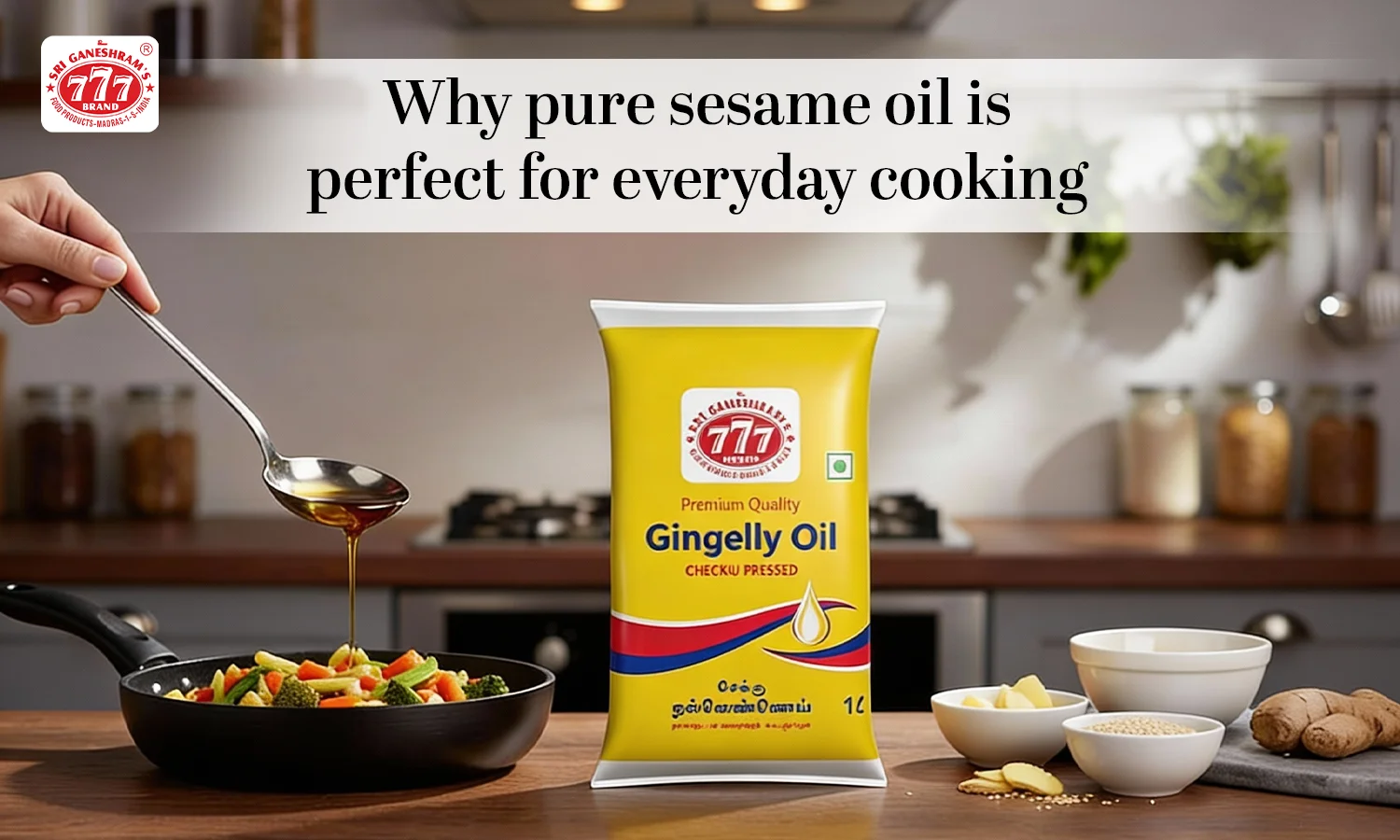
Why pure sesame oil is perfect for everyday cooking

Introduction :

Choosing the right cooking oil reflects not just taste, but also how food feels after a meal. In many Indian homes, pure sesame oil has remained a steady choice for generations. It is not selected because of trends or advertising, but because families have seen how it performs in everyday cooking.
From simple vegetable dishes to traditional gravies, this oil fits naturally into daily meals. Understanding why it works so well can help you make better choices for your kitchen.
pure sesame oil

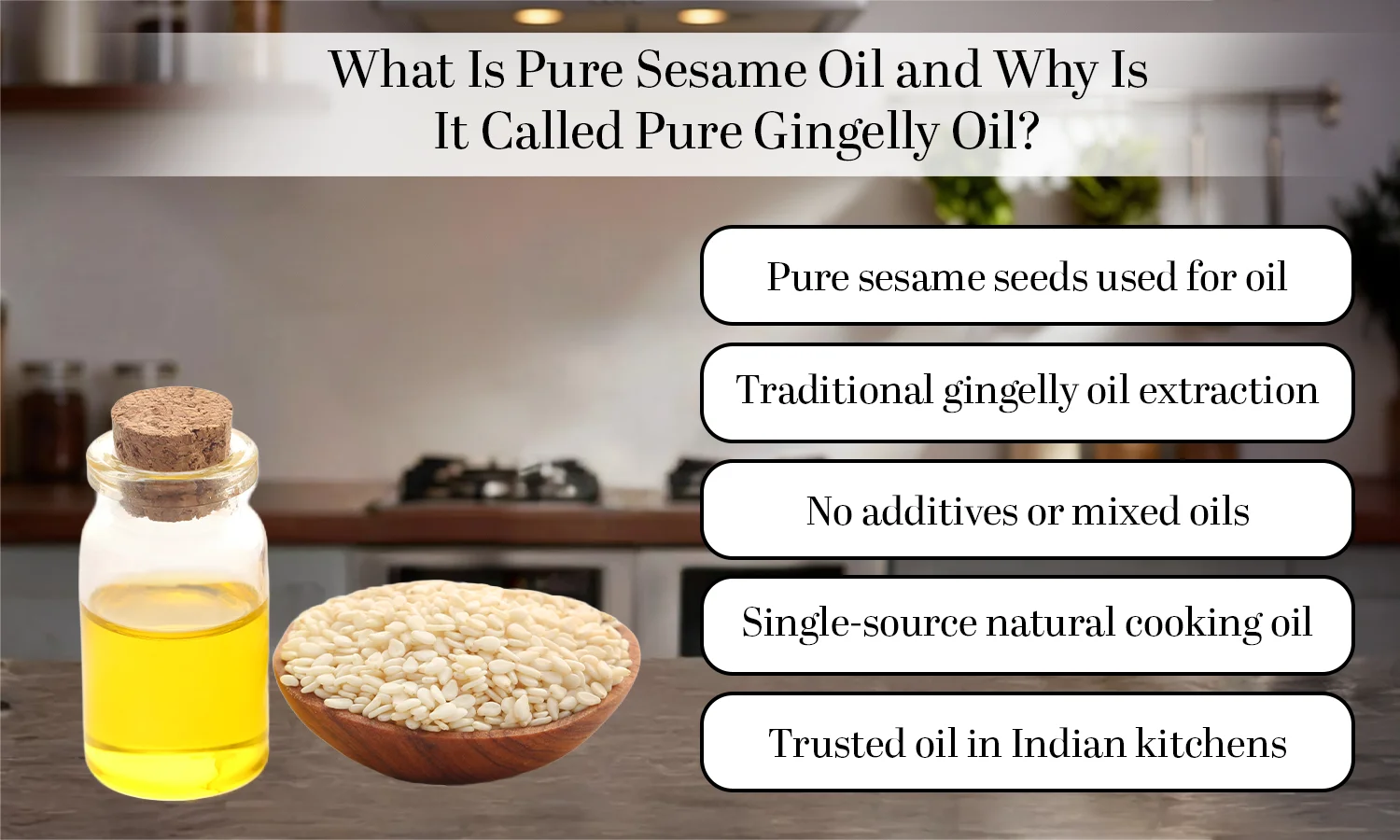
What Is Pure Sesame Oil and Why Is It Called Pure Gingelly Oil?

Pure sesame oil is extracted directly from sesame seeds without mixing or heavy processing. In many regions, it is also known as pure gingelly oil, referring to the same oil prepared using traditional methods.The word “pure” matters because it indicates that the oil comes from a single source and does not contain added oils or chemicals. This simplicity is why it has remained part of Indian kitchens for so long.

Is Pure Sesame Oil Good for Daily Cooking?

For regular meals, pure sesame oil works well because it handles steady heat without breaking down quickly. Many households prefer it as a healthy Indian oil since it suits common cooking styles like sautéing, frying, and slow cooking. Its familiarity makes it easy to use daily without constantly switching oils. Over time, this consistency supports balanced eating habits rather than occasional use. Pure Sesame Oil in Indian Cooking
Common Uses of Pure Sesame Oil in Indian Cooking

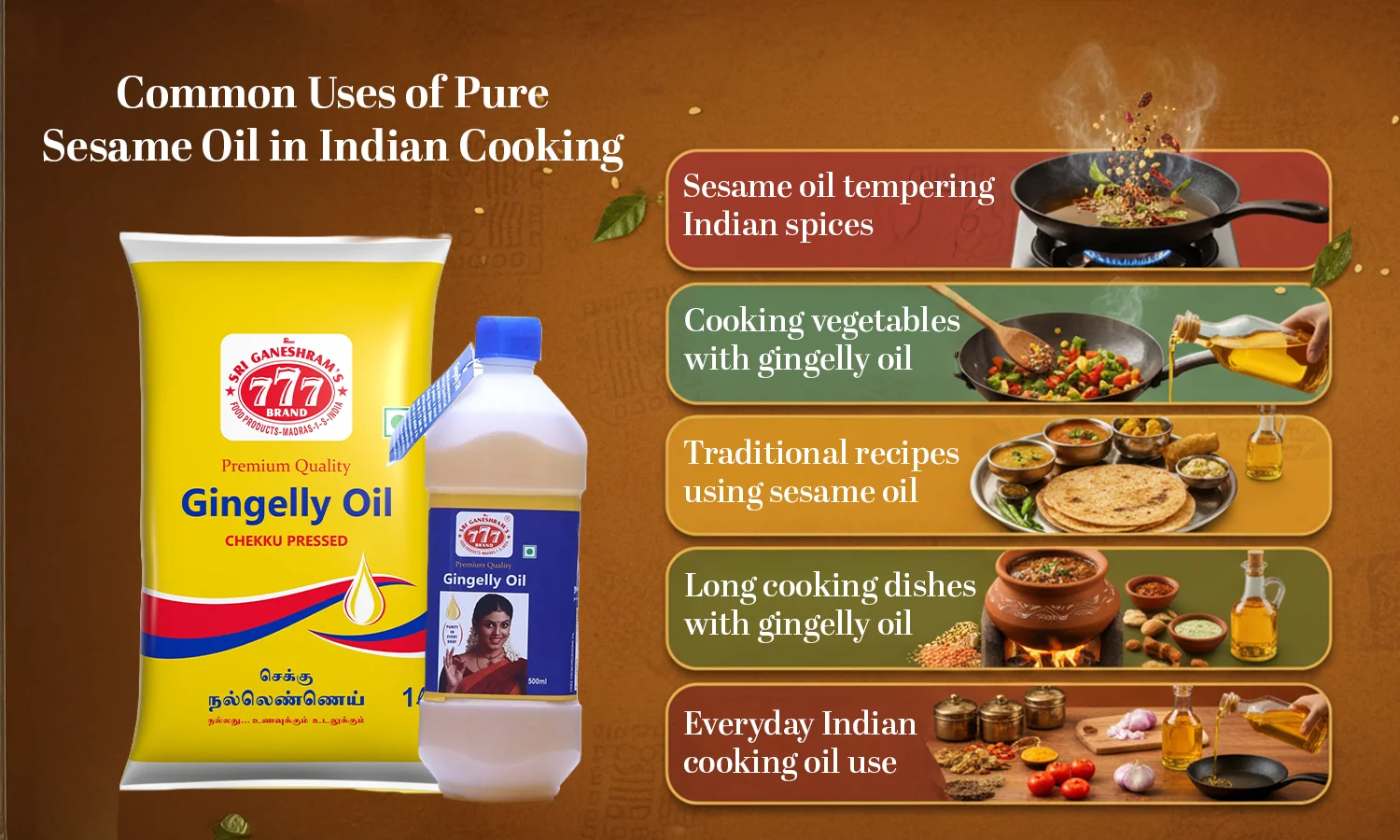
The strength of pure sesame oil lies in how versatile it is. It blends naturally into many dishes without overpowering flavours. Some common Gingelly oil uses include tempering spices, cooking vegetables, and preparing traditional recipes that require longer cooking time. Because of this flexibility, it continues to be a trusted Indian cooking oil across different regions.

How to Choose the Best Pure Gingelly Oil

Not every bottle labelled sesame oil offers the same quality. When buying pure sesame oil, check how clearly the product explains its sourcing and extraction.
The best gingelly oil usually comes from brands that focus on traditional preparation rather than speed. Look for consistency in colour, a natural aroma, and transparent labeling. Many families rely on experience to identify a pure oil rather than marketing claims.

Conclusion

The continued use of pure sesame oil in Indian kitchens comes from years of everyday experience. Its ability to handle regular cooking, support familiar flavours, and fit into traditional meals makes it a reliable choice. Brands like SGR 777 follow these long-standing practices by focusing on quality and consistency, helping households continue cooking the way they always have—with confidence.

Key Takeaways

  • Pure sesame oil is valued for its simplicity and single-source extraction
  • It suits daily Indian cooking styles and regular meals
  • Versatility makes it useful across many traditional dishes
  • Quality depends on preparation and clarity of ingredients
  • Consistent use matters more than occasional switching

FAQs

How to check pure gingelly oil? Pure oil usually has a natural aroma and consistent texture. When checking pure sesame oil, labels and sourcing details help confirm authenticity.
Which sesame oil is pure?Oils made from only sesame seeds without additives are considered pure. Many households rely on trusted local or traditional brands.
Why is gingelly oil so expensive?The price reflects seed quality and slower extraction methods. These steps help retain natural Gingelly oil benefits.
How to tell if sesame oil is good?Good oil should not smell artificial or feel overly thin. Observing colour and aroma helps judge quality.
Can everyone consume gingelly oil daily?Many people include Gingelly oil for daily use as part of balanced meals. As with any oil, moderation is important.
Why Gingelly Oil Seeds Are Essential for Pure Chekku Oil

Introduction

When people talk about Chekku oil, most attention goes to the wooden press or the slow extraction method. But the true quality of Chekku oil begins much earlier—with the Gingelly Oil Seed. The seed decides how the oil smells, tastes, and performs during cooking.Even the best traditional process cannot compensate for poor-quality seeds. Knowing why seed selection matters helps you understand what separates genuine Chekku oil from ordinary seed-based oils sold in the market. Gingelly Oil Seeds and Their Importance

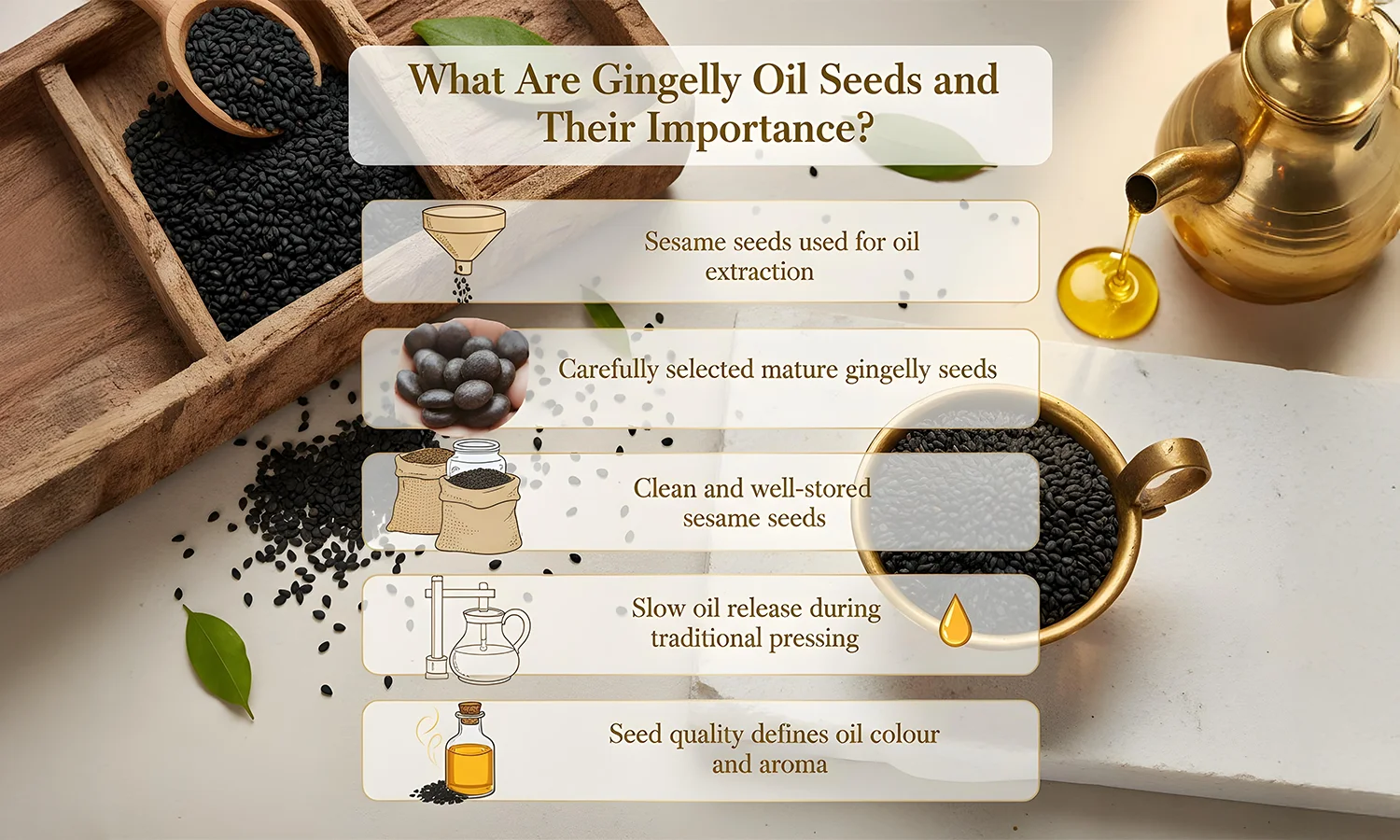
What Are Gingelly Oil Seeds and Their Importance?

The Gingelly Oil Seed comes from the sesame plant and has been used in Indian households for centuries. Commonly known as a sesame seed, it is valued for its natural oil content and ability to release oil slowly when pressed. Traditional oil makers pay close attention to seed maturity, cleanliness, and storage conditions. This careful handling ensures that the oil extracted is consistent in colour, aroma, and texture. Seed quality is treated as the foundation of oil making, not just a raw input.

How Gingelly Oil Seed Extraction Produces Pure Chekku Oil

Pure Chekku oil is made by pressing the Gingelly Oil Seed in a wooden mill that rotates at a slow and steady pace. This method prevents excess heat and allows the oil to flow naturally.Such slow extraction reflects the values of traditional seed oil preparation, where patience and care are prioritised over speed. Compared to fast mechanical methods, this process helps maintain the oil’s natural thickness and aroma, avoiding the neutral feel often associated with mass-produced seed oil.

Health Benefits of Gingelly Seeds You Should Know

The nutritional value of Chekku oil starts at the seed level. Many people are familiar with gingelly seed benefits, which include naturally occurring fats and plant compounds. These properties are passed into the oil, contributing to recognised Gingelly oil benefits when used in daily cooking.This direct link between seed quality and oil value explains why traditional diets have continued to rely on sesame-based oils for generations rather than frequently changing cooking fats.The efficacy of the oil is deeply rooted in how gingelly oil is made, specifically through the pressing of high-quality sesame oil seeds. By using a traditional stone or wooden press, the seeds are crushed at room temperature to prevent the loss of heat-sensitive vitamins. This is important while extracting black sesame seeds oil, as the dark husks are loaded with calcium and magnesium that refined methods often discard.
Choosing a Chekku Gingelly oil ensures that these micronutrients remain bioavailable for your body, rather than being destroyed by chemical solvents.Beyond the kitchen, the versatility of these seeds makes them a staple for holistic grooming. For instance, black sesame seed oil for hair is a wonderful remedy for maintaining scalp health and promoting natural shine due to its high penetration ability. When looking for the best sesame oil for cooking or topical use, focusing on the extraction method is key; a minimally processed oil acts as both a nutrient-dense food and a powerful natural antioxidant. Gingelly Oil Seeds Matter in Pure Chekku Oil

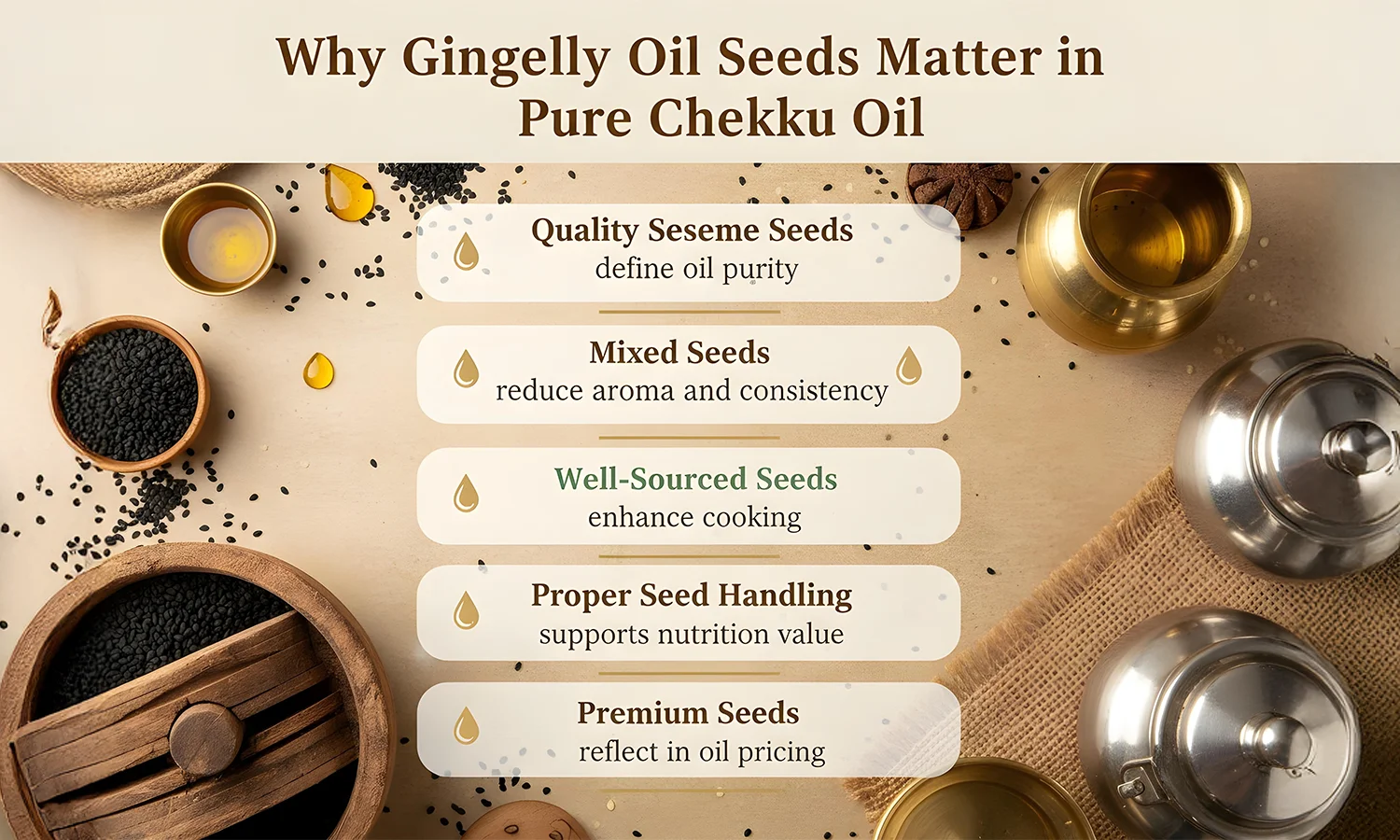
Why Gingelly Oil Seeds Matter in Pure Chekku Oil

Not every oil labelled Chekku delivers the same experience, and the difference often lies in the Gingelly Oil Seed used. Oils produced from mixed or low-grade seeds tend to lack consistency in aroma and performance.

In contrast, carefully sourced seeds produce stable gingelly sesame oil that works well for everyday cooking. The overall Gingelly oil nutrition depends heavily on seed handling, from sourcing to storage.

Factors like sesame oil price also reflect this effort, as better seeds and slower extraction naturally increase production costs. Over time, consistent use highlights real seed benefits rather than short-term impressions.

Conclusion

Pure Chekku oil is not just about the wooden press; it begins with respect for the Gingelly Oil Seed. From selecting mature seeds to pressing them slowly, every step depends on seed quality.This is why traditional producers and trusted brands like SGR 777 place strong emphasis on sourcing and handling seeds carefully. When the seed is right, the oil naturally delivers consistency, nutrition, and trust in everyday cooking.

Key Takeaways

  • Gingelly Oil Seed quality is the foundation of pure Chekku oil
  • Slow extraction protects the natural character of the oil
  • Health value begins with careful seed selection
  • Consistent aroma and texture depend on seed handling
  • Traditional oil making focuses on patience and reliability

FAQs

Is sesame oil better than olive oil?Both oils suit different cuisines. Oil made from Gingelly Oil Seed is better aligned with Indian cooking styles and regular heating.
Can we fry in gingelly oil?Yes. Gingelly oil is commonly used for frying at steady temperatures in traditional cooking.
Who should not have sesame oil?People with sesame allergies should avoid it. Others usually consume it in moderation.
What are the side effects of sesame seeds?Excess intake may cause digestive discomfort for some individuals.
When to avoid sesame seeds?Avoid them if you have allergies or if advised by a healthcare professional.

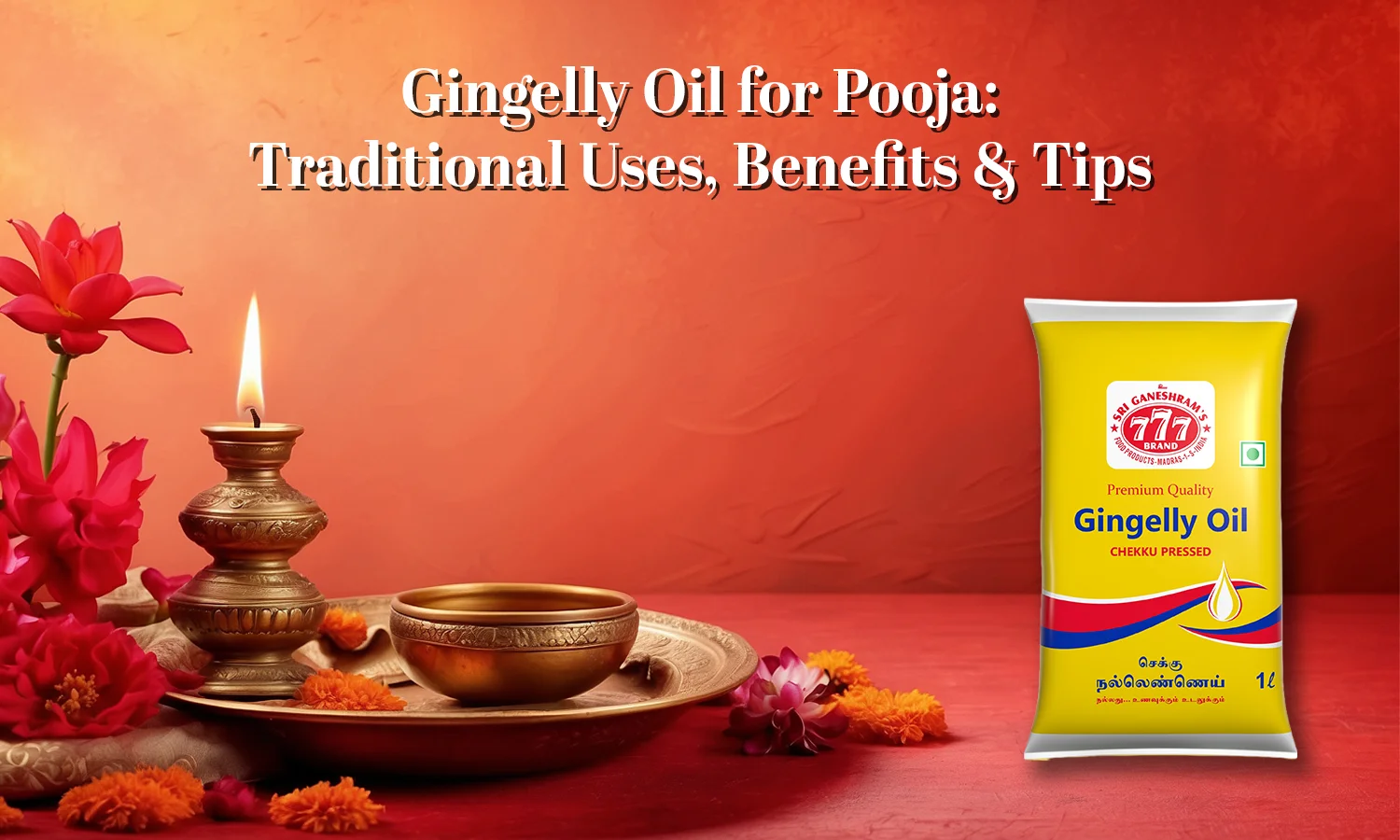
Gingelly Oil for Pooja: Traditional Uses, Benefits & Tips

Introduction :

In many Indian homes, pooja is not just a practice—it is a quiet moment of connection, discipline, and gratitude. Among the items used daily, Gingelly oil for pooja holds a special place. It has been part of rituals for generations, not chosen randomly but through long-standing belief and experience.

From lighting lamps to sacred offerings, gingelly oil continues to be trusted for its purity and purpose. This guide explains why it is used, how it supports rituals, and what to look for when buying it.

Why Is Gingelly Oil Traditionally Used in Pooja?

The use of Gingelly oil for pooja comes from tradition rather than trend. Ancient households relied on natural resources that were easily available and stable for lamp lighting.
Over time, the Uses of Gingelly Oil became deeply connected with religious customs. Elders preferred it because it burned evenly and symbolised cleanliness. Even today, Gingelly oil is chosen for puja because it aligns with long-followed ritual practices.

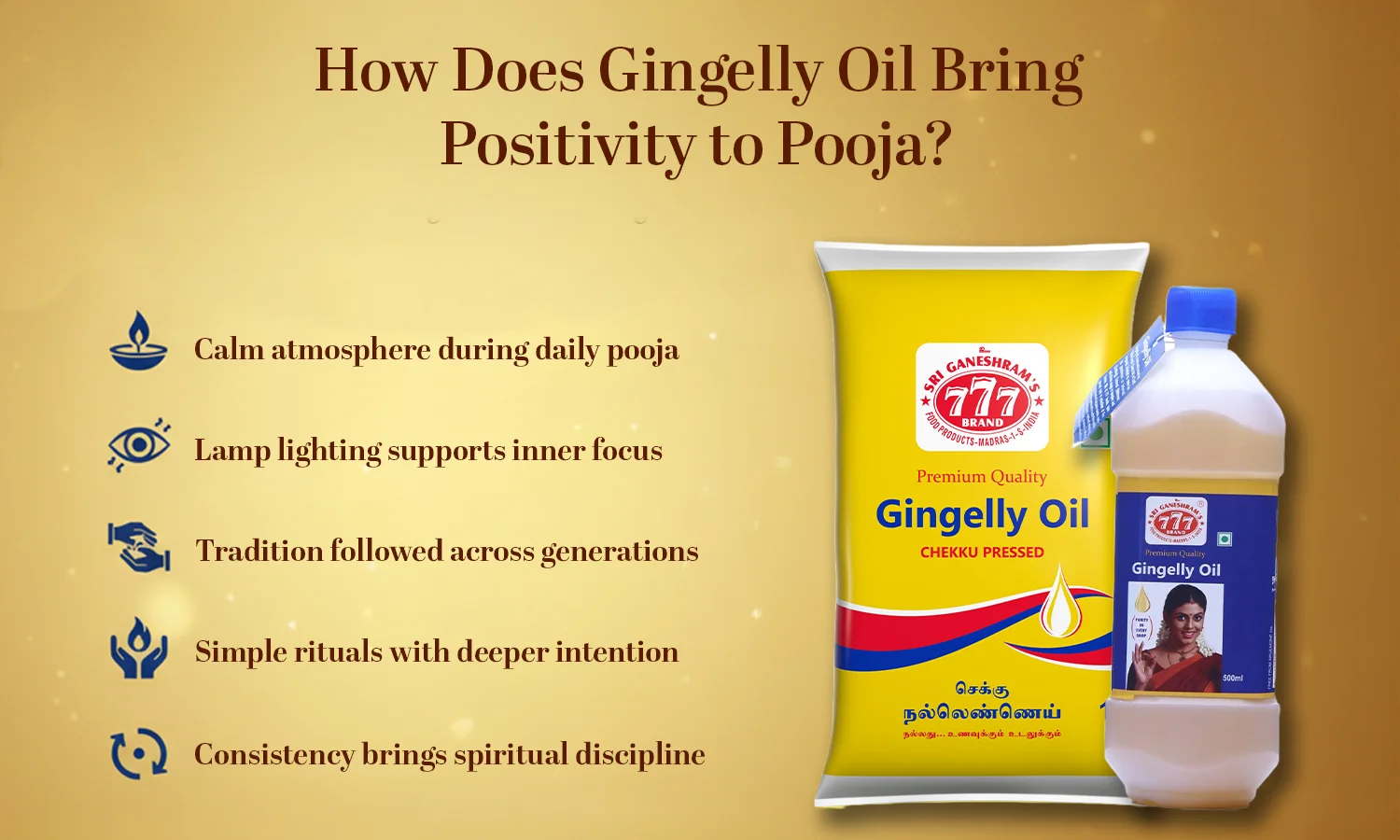
How Does Gingelly Oil Bring Positivity to Pooja?

Lighting a lamp with Gingelly oil for pooja is believed to create a calm and focused environment. Many families associate this act with inner discipline and consistency.

Using traditional gingelly oil during prayers helps maintain continuity in rituals passed down through generations. These practices are often linked to spiritual benefits, where routine and intention matter more than elaborate arrangements.

Health Benefits of Gingelly Oil in Daily Rituals

Daily rituals often influence everyday habits. When Gingelly oil for pooja is used regularly, it also becomes part of the home environment through lamps and offerings.
Over time, people have noticed Traditional benefits associated with its mild aroma and clean-burning nature. Using it as part of a Daily Ritual reflects mindful living rather than quick results or claims. Gingelly Oil Is Used in Certain Poojas

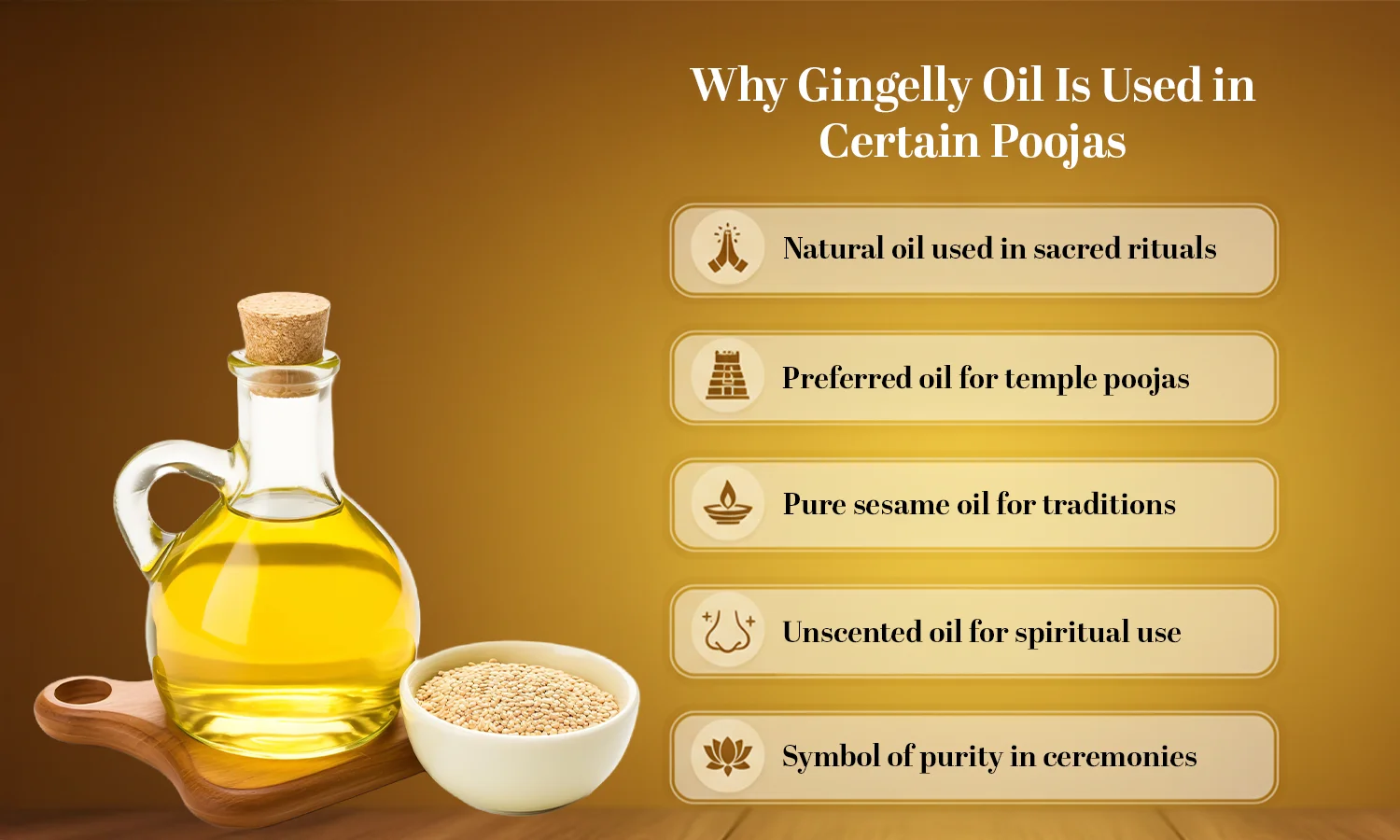
Why Gingelly Oil Is Used in Certain Poojas

Not all oils are considered suitable for rituals. Gingelly oil for pooja is often preferred during specific ceremonies because of its natural origin and stable nature. Many temples and households continue using Sesame oil for pooja instead of mixed or scented oils.This choice comes from the belief that rituals should involve simple and pure materials, making Pure Gingelly Oil a common preference.

Tips to Choose the Purest Gingelly Oil for Pooja

Selecting the right Gingelly oil for pooja requires attention to quality rather than branding. Keep these points in mind:

This choice comes from the belief that rituals should involve simple and pure materials, making Pure Gingelly Oil a common preference.

  • Look for oil made from pure sesame oil with no added fragrance
  • Check labels for clarity on sourcing and extraction
  • Avoid oils that look overly light or watery
  • Choose products known for consistent gingelly oil uses beyond rituals

Many families trust what they know as the best gingelly oil based on experience rather than advertising. Always focus on clarity, aroma, and authenticity before buying.

Conclusion

The continued use of Gingelly oil for pooja reflects trust built over time, not quick trends. Its role in rituals, daily discipline, and traditional living keeps it relevant even today.

Brands like SGR 777 follow these time-tested practices by offering oil prepared with care and consistency, supporting households that value simplicity and tradition in their daily worship.

Key Takeaways

  • Gingelly oil for pooja has been traditionally used for lamp lighting and rituals due to its purity and stable burning nature
  • Its role in pooja is based on long-standing household practices rather than modern trends
  • Using pure, traditionally made gingelly oil supports calm and consistent daily worship
  • Not all oils are suitable for rituals; simplicity and natural sourcing matter most
  • Choosing authentic gingelly oil helps maintain the meaning and discipline of everyday pooja

FAQs

Which oil is best for pooja at home?Most households prefer Gingelly oil for pooja because it aligns with traditional practices and burns steadily during prayers.
Why is gingelly oil preferred for rituals?The preference comes from long-standing usage and belief. Gingelly oil for pooja is associated with purity and consistency in rituals.
Which oil is used for God?Many families use sesame-based oils during worship. The Use of gingelly oil has been common in homes and temples for generations.
Is gingelly oil good for the stomach?When used in cooking, it is often included in traditional diets. However, ritual use of Gingelly oil for pooja is separate from dietary intake.
Which is better, sesame oil or gingelly oil?Both refer to the same base oil. In ritual contexts, Gingelly oil for pooja is the commonly used term in Indian households.

What Is Gingelly Oil Made Of? An Easy Guide for Everyone

Introduction

If you have ever looked at a bottle and wondered what is gingelly oil made of, you are not alone. Many people use it daily but know very little about what actually goes into it. Understanding the source, process, and natural composition of this oil helps you choose better and cook smarter. This guide explains everything in simple terms, just the way it has been followed in Indian homes for generations. Choosing a natural gingelly oil makes these traditional habits even more rewarding.

What Exactly Is Gingelly Oil Made Of?

At its core, what gingelly oil is made of is quite simple. It comes from sesame seeds, which are carefully cleaned, dried, and pressed to extract oil. When no additives or shortcuts are involved, the oil retains its natural colour, aroma, and nutrients. This clarity is what separates traditional oils from mass-produced alternatives. Many families also reach for it as a gingelly oil for skin care and as a gingelly oil for hair routine.
what is gingelly oil made of

Which Sesame Seeds Are Used to Make Gingelly Oil?

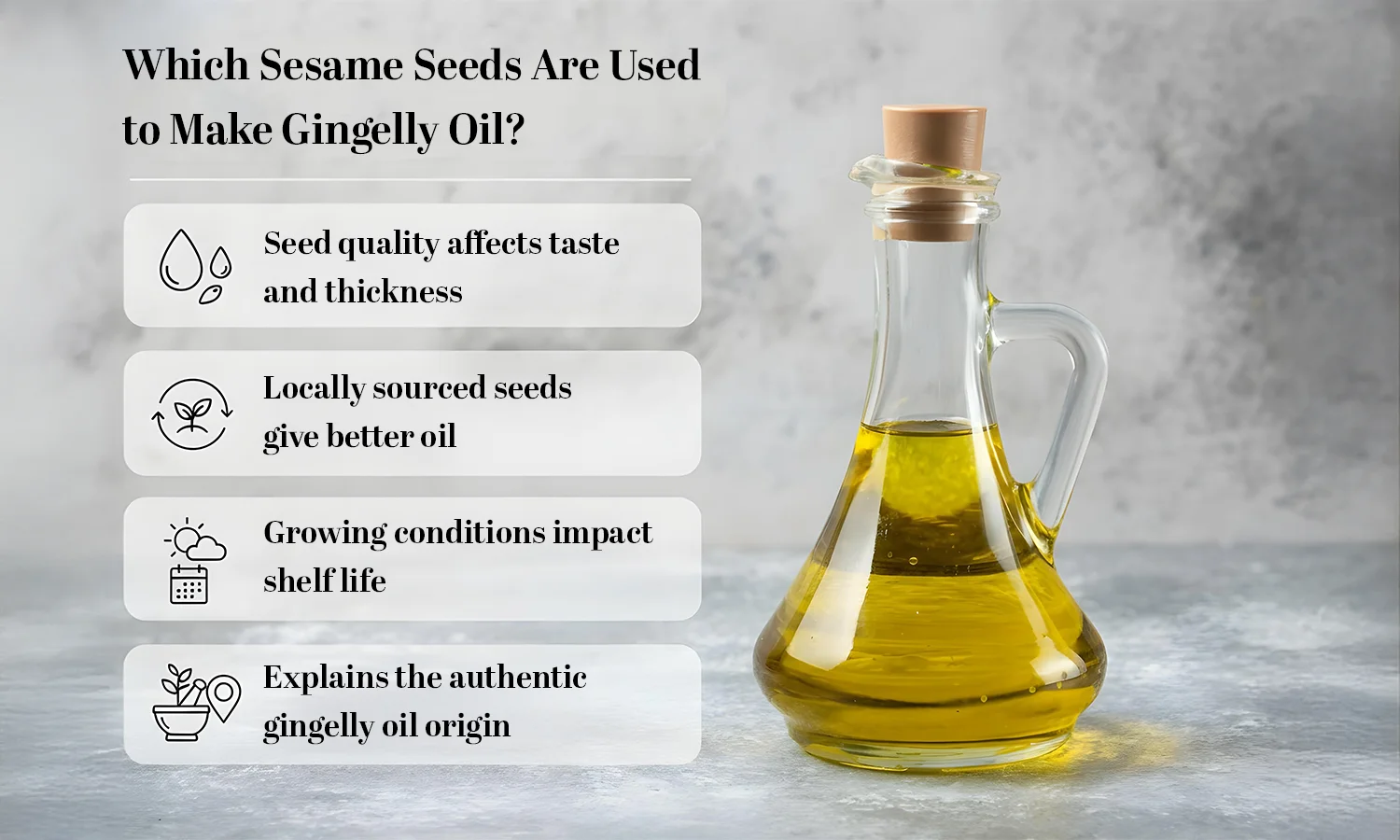
To understand what gingelly oil is made of, it helps to know that not all seeds are the same. High-quality oil usually comes from locally sourced seeds grown under controlled conditions. These seeds influence taste, thickness, and shelf life. This basic explanation answers the common question of What is Gingelly oil is in its most authentic form. Seeds grown without chemicals are what give you a true organic gingelly oil.

How Is Gingelly Oil Traditionally Extracted?

Traditional extraction plays a big role in defining what gingelly oil is made of. Methods like Pure Chekku Oil extraction use wooden presses that rotate slowly.

This gentle process avoids overheating and keeps the oil stable. Oils made using Chekku pressed gingelly oil are valued because they stay closer to their natural state without losing nutrients.

Understanding How Gingelly oil is made from sesame seeds explains why a cold pressed gingelly oil or a wood pressed gingelly oil keeps so much of its goodness.

What Nutritional Value Does Gingelly Oil Contain?

When people ask what gingelly oil is made of, they are often thinking about health, too. The sesame oil composition includes natural fats, antioxidants, and essential compounds that support daily nutrition.

These elements contribute to the commonly known Gingelly oil benefits, especially when the oil is used in moderation as part of home-cooked meals. These steady Gingelly oil benefits are why it remains a kitchen favourite.

Why Do Gingelly Oil Ingredients Matter for Health?

Knowing what gingelly oil is made of helps you understand why ingredient clarity matters. The ingredients of gingelly oil should be limited to one thing only—pressed sesame seeds. Oils that contain additives or mixed oils may lose their original value. Simplicity in ingredients often reflects purity and consistency. Clear gingelly oil ingredients are the simplest sign that you are getting real quality.
Pure Gingelly Oil Better Than Refined Oils

Is Pure Gingelly Oil Better Than Refined Oils?

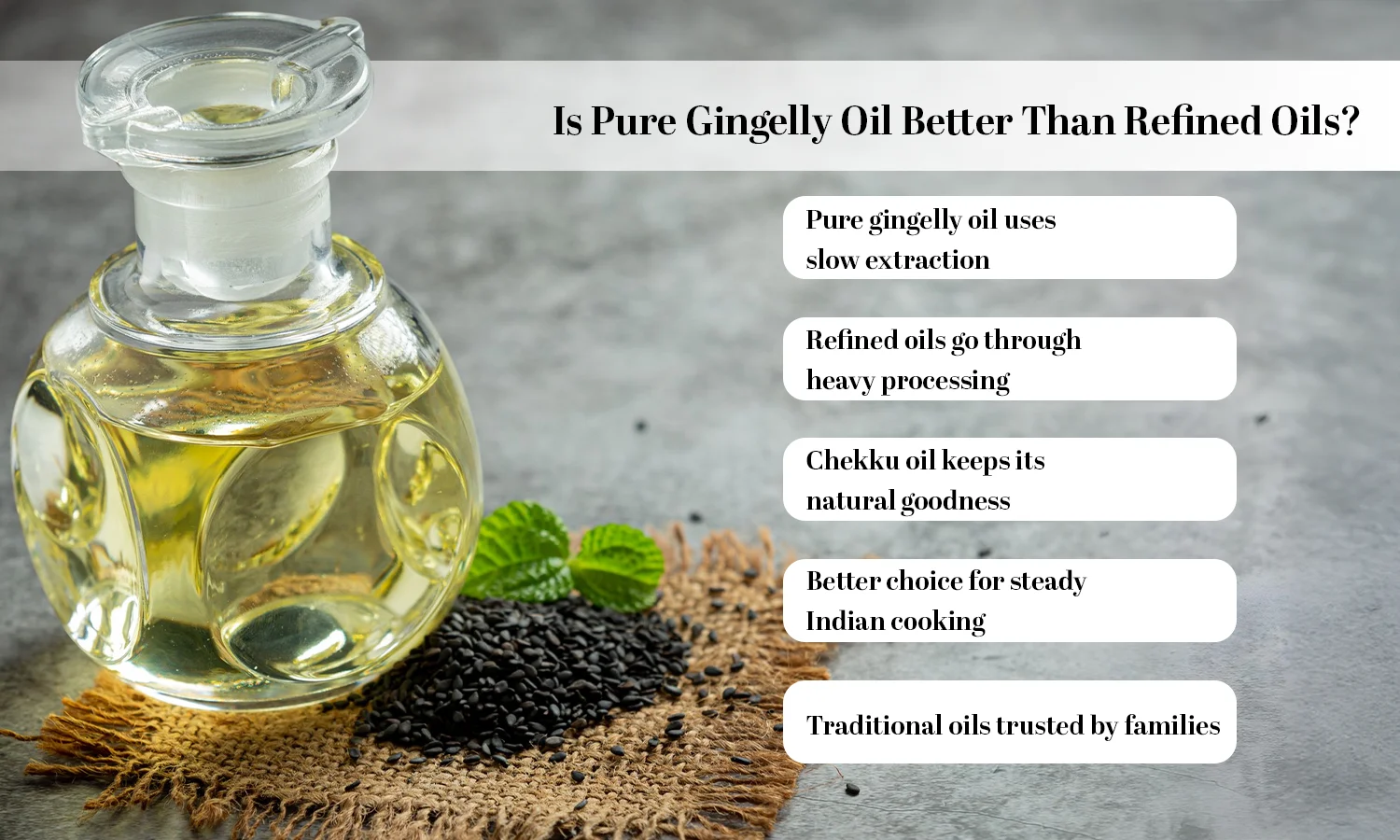
Comparing refined oils with traditional options often brings us back to what gingelly oil is made of. Refined oils go through heavy processing, while traditional oils like Chekku pressed sesame oil rely on slow extraction. This difference explains why many families prefer Gingelly oil for cooking, especially for dishes that involve steady heating. A good traditional sesame oil holds up well exactly because of this gentle process.

Conclusion

Now that you clearly know what is gingelly oil made of, choosing the right bottle becomes easier. From seed quality to extraction method, every step matters. Brands like SGR 777 follow traditional practices that respect these basics, helping households continue time-tested cooking habits with confidence.

Key Takeaways :

  • What is gingelly oil made of starts with quality sesame seeds
  • Traditional extraction keeps the oil closer to its natural form
  • Ingredient clarity is a sign of purity
  • Nutritional value depends on processing methods
  • Trusted brands focus on simplicity and consistency

FAQs :

Is gingelly oil good or bad? Understanding what gingelly oil is made of helps answer this. When pure and traditionally extracted, it is generally considered suitable for regular use in balanced diets.
Why is gingelly oil so expensive?The cost reflects seed quality, slow extraction, and careful handling. Knowing what is gingelly oil made of explains why traditional oils cost more than refined ones.
Is gingelly oil good for cooking?Yes, many households prefer it for everyday meals. Once you know what is gingelly oil made of, you can see why it handles heat better than heavily processed oils.
Which oil do cardiologists recommend?Doctors often suggest oils that are natural and stable. Understanding what is gingelly oil made of helps you see why it is commonly included in traditional diets.
Which oil is healthiest for Indian cooking?There is no single answer, but oils with minimal processing are often preferred. Knowing what gingelly oil is made of supports informed choices.

Gingelly Oil for Cooking: Nutrition, Health Benefits & Smart Tips

If you cook Indian food often, you know oil is not just for frying. The right oil changes the smell, the taste, and how comforting a dish feels. Gingelly Oil for Cooking does this. It brings a sesame aroma and works well with our spices.

Introduction to Gingelly Oil for Cooking

Gingelly oil is the same as sesame oil. It is made by pressing sesame seeds, sometimes after lightly roasting them for a deeper aroma. In many homes, it is kept as a flavour oil, while a neutral cooking oil is used for regular frying. When you choose pure gingelly oil, the nutty smell feels fresh the moment you open the bottle. Finding the best gingelly oil for cooking comes down to choosing authentic, traditional options that keep this natural scent intact.

Health Benefits of Using Gingelly Oil

People reach for this oil for taste first, but the body also feels good with it in the right amount. Traditional diets talk about the gingelly oil for cooking benefits, as gentle support for digestion, and comfort foods. Modern nutrition also sees sesame oil as a healthy oil option because it has natural fats and antioxidants. Exploring the benefits of gingelly oil shows why many families use it in rasam, pepper gravies, and podi rice. Use it for flavour, not heavy frying.

Nutritional Value of Gingelly Oil You Should Know

Sesame seeds carry plant compounds that stay in the oil after pressing. That is why people mention gingelly oil nutritional value of gingelly oil as more than just calories. Looking closely at gingelly oil nutrition facts, it provides healthy unsaturated fats alongside essential nutrients. Still, it is oil, so one or two spoons in a dish is enough to enjoy both taste and nourishment.
Gingelly Oil for Cooking

Popular Indian Recipes That Use Gingelly Oil

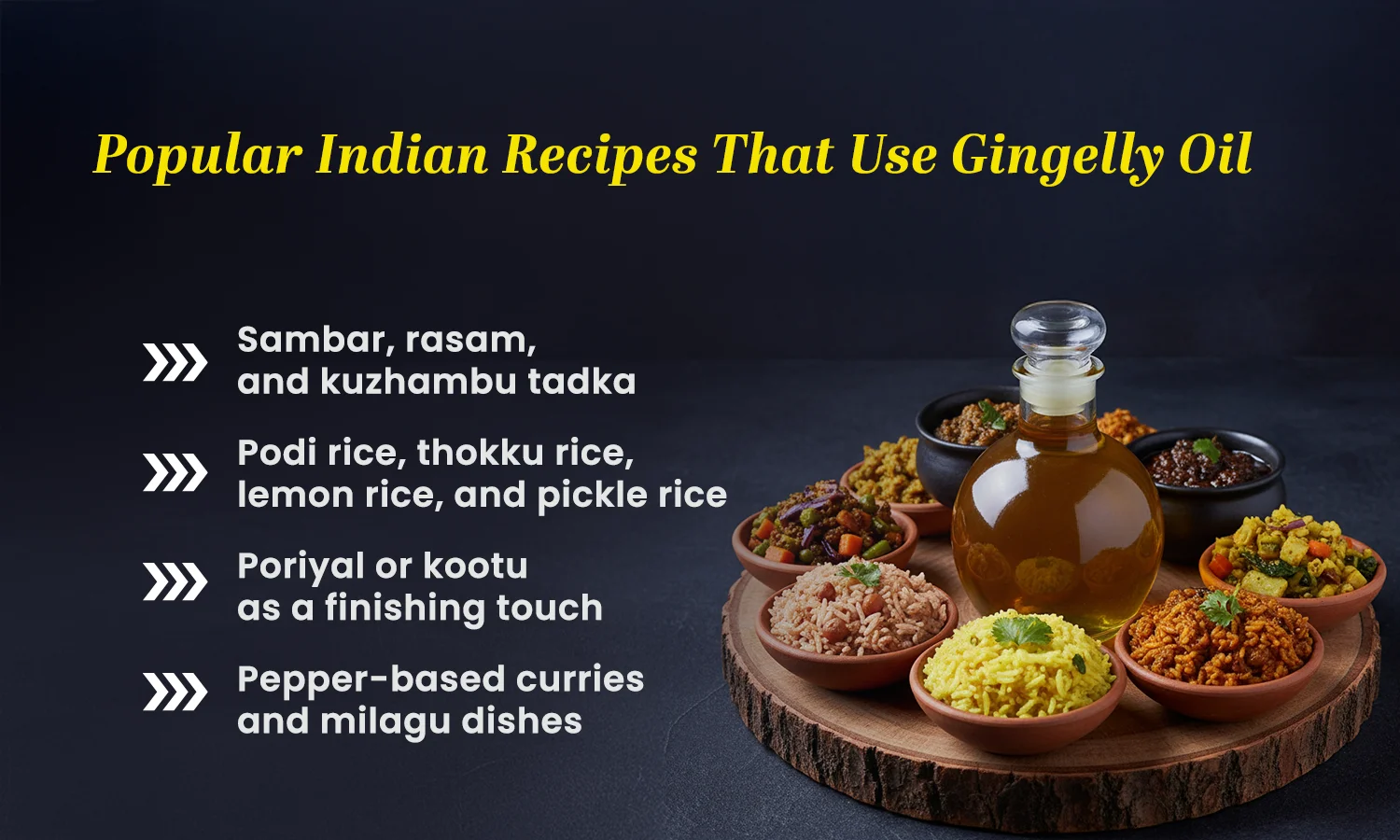
For gingelly oil for Indian cooking, it fits best in dishes where aroma matters:

  • Sambar, rasam, and kuzhambu tadka
  • Podi rice, thokku rice, lemon rice, and pickle rice
  • Poriyal or kootu as a finishing touch
  • Pepper-based curries and milagu dishes

Even a small pour makes the spices open up, and the meal feels complete.

Simple Ways to Use Gingelly Oil in Cooking

Here are easy options for the use of Gingelly oil:

  • Add it only for tempering in gravies and rasam.
  • Mix a spoon with hot rice and podi or thokku.
  • Drizzle a little right before serving for extra aroma.

These quick cooking tips help you enjoy the flavour without making food oily.
Gingelly Oil for Cooking

How Gingelly Oil Connects to Indian Food Culture

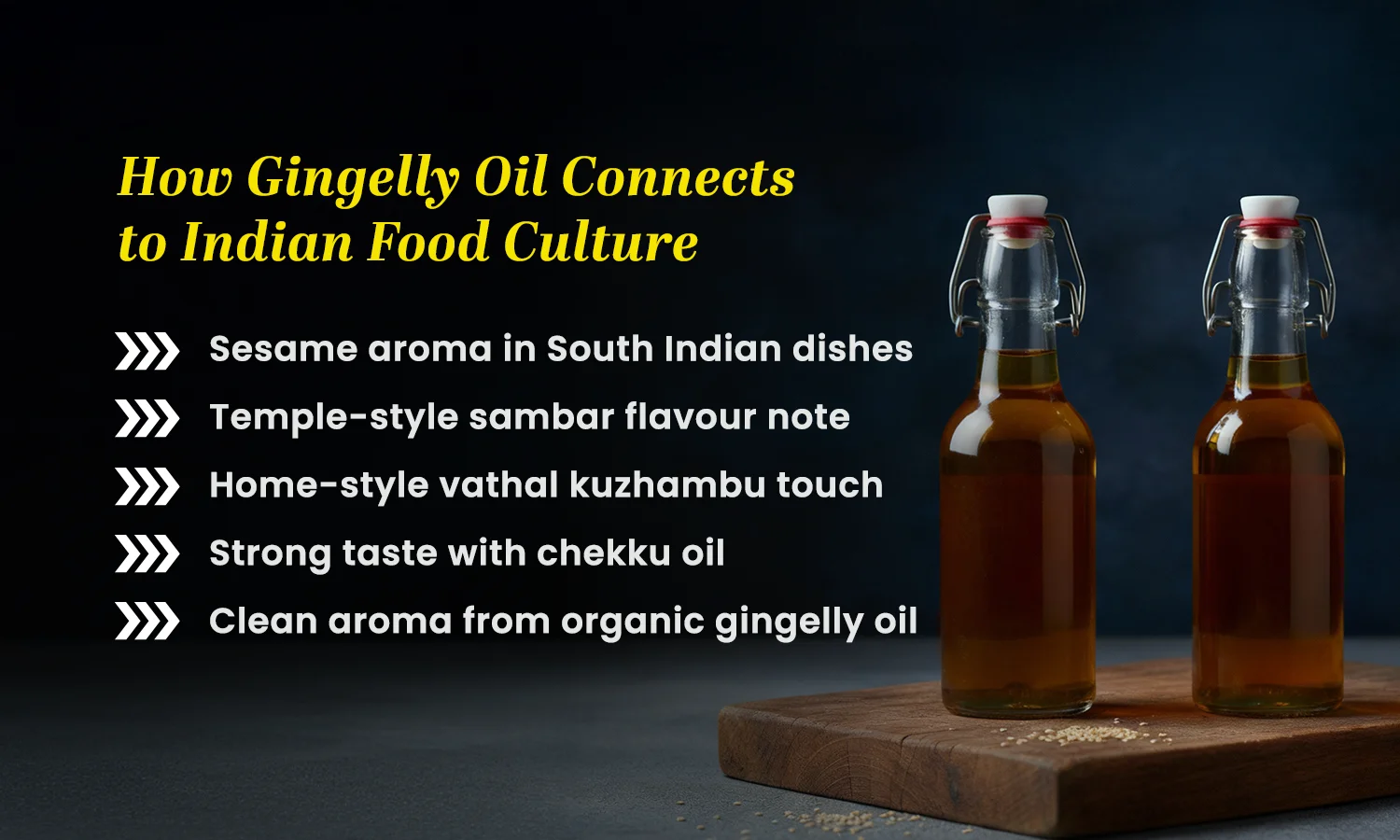
This oil is tied to South Indian food habits. From temple-style sambar to home-style vathal kuzhambu, sesame aroma is part of the taste memory. Many people prefer chekku gingelly oil because wood pressing keeps the flavour strong. If you like organic farming, you may also try pure organic gingelly oil for dishes where you want the cleanest aroma.

Buying and Price Tips

While shopping, look for the best gingelly oil by checking a fresh packing date, a strong nutty smell, and clear labelling. Ordering gingelly oil online is easy today, but it still smells once it arrives.
People ask about gingelly oil 1 litre price because it costs more than refined oils. Sesame seeds are expensive and give less oil per batch, so the final bottle is priced higher. Since you use smaller amounts, one litre lasts longer than you expect.

Conclusion

Gingelly Oil for Cooking is all about aroma, comfort, and tradition. Use it in tadka, rice mixes, and pepper-style gravies, and you will see why it is a favourite in Indian homes. Pick fresh oil, store it well, and use it in the right quantity.

Key Takeaways

  • Gingelly Oil for Cooking adds a sesame aroma to everyday meals.
  • It works best in South Indian gravies and rice mixes.
  • Small quantities give the best flavour.
  • Check freshness and aroma when buying.
  • Store airtight to keep the smell strong.

FAQs

Are sesame oil and gingelly oil the same?Yes. Gingelly oil is simply sesame oil. The names change by region, but both come from sesame seeds.
Which is the healthiest oil for cooking?Different oils suit different dishes. Many homes use a mix. Sesame oil is a good choice when you want flavour with light use.
What is gingelly oil made of?It is made by pressing sesame seeds. Roasted seeds give a darker, more aromatic oil.
Who should not consume sesame oil?Anyone with a sesame allergy should avoid it. If your stomach is sensitive, use smaller amounts.
Which oil do cardiologists recommend?Doctors usually suggest moderation and less deep frying. Traditional oils like sesame oil can fit into a balanced diet.

What Is Gingelly Oil? Benefits and How to Use It

If you have grown up in an Indian home, you have probably seen a bottle of gingelly oil in the kitchen. Some families use it every day, some keep it only for certain dishes, but almost everyone knows its smell. Still, many people ask what gingelly oil is exactly, and why it is treated differently from other oils. This blog will break it down in a simple way, so you know what it is, how it is made, and how to use it well.

Introduction: What Is Gingelly Oil

So, what is gingelly oil? It is oil made from sesame seeds. In many places, people call it sesame oil, and yes, both mean the same thing. The word “gingelly” is just another name for sesame in Indian kitchens. The oil has a nutty aroma and a warm taste that feels very homely, especially in South Indian food.
If you are wondering what gingelly oil is made of, the answer is simple. Clean sesame seeds are pressed to release oil. When the seeds are roasted lightly before pressing, the oil becomes darker and more aromatic. When they are pressed raw, the oil is lighter in colour and taste.
Indian Recipes That Use Gingelly Oil for cooking

What Makes Gingelly Oil Special

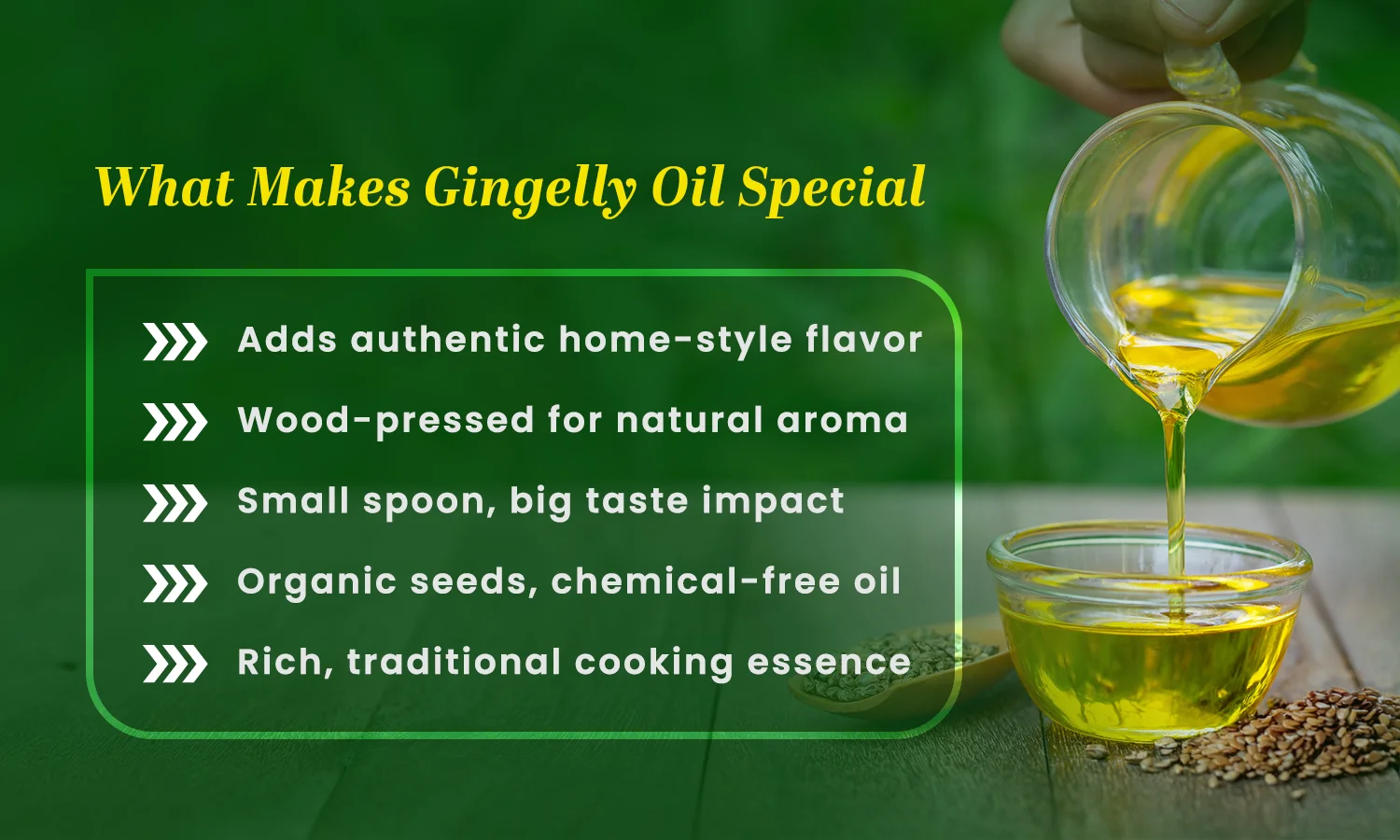
Gingelly oil is not used like a regular frying oil in most homes. It is more of a flavour oil. Even a small spoon can change the smell and taste of a dish. That is why people say gingelly oil brings “that proper home taste.”
Another reason it feels special is the traditional way it is made. Many brands still sell chekku oil, which means wood-pressed oil. This method presses sesame seeds slowly at low heat, so the flavour stays natural. People who like a stronger aroma often choose this style.
Some also look for pure organic gingelly oil, where sesame seeds are grown without chemical farming. It is not a must for everyone, but if you prefer organic food habits, it is a good option.

Key Benefits of Gingelly Oil

The biggest reason people keep gingelly oil at home is that it supports both taste and wellness. Here are a few everyday gingelly oil benefits that people notice with regular use:

  • It feels light on the stomach when used in the right amount.
  • It supports digestion in traditional diets, especially when used in rasam or pepper-heavy dishes.
  • It gives food a rich aroma without needing extra spices.
  • It is also used outside cooking in some homes, like for body massage or hair oiling.

These benefits come from steady use in food, not from taking large amounts at once.

How to Use Gingelly Oil in Daily Cooking

Now, let us talk about real gingelly oil uses in Indian kitchens. The best way to use it is in dishes where aroma matters more than volume. A few simple examples:

  • Add it to the tadka for sambar, rasam, or kuzhambu.
  • Mix it with podi and hot rice for a quick comfort meal.
  • Use it while making thokku rice, puliyogare rice, or pickle rice so the masala spreads evenly.
  • Drizzle a little at the end of poriyal or kootu to lift the smell.

This is why gingelly oil for cooking is so loved in South Indian styles. You do not need much. A small pour does the job.
If you want one easy rule, use gingelly oil when you want the taste to feel traditional and full, not when you need heavy frying.
What is Gingelly Oil

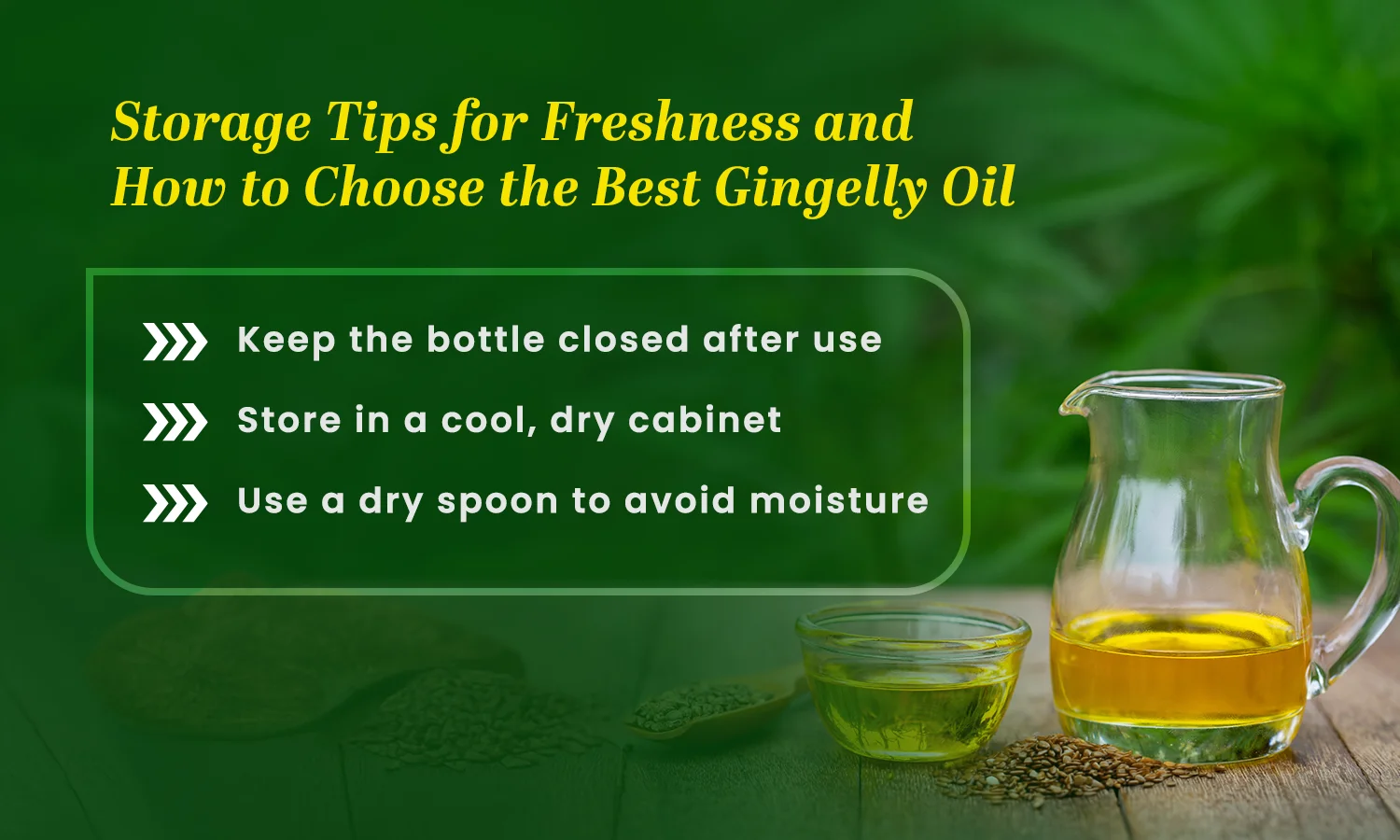
Storage Tips for Freshness and How to Choose the Best Gingelly Oil

Gingelly oil keeps well if stored properly. Use these simple habits:

  • Keep the bottle tightly closed after every use.
  • Store it in a cool, dry cabinet away from direct sunlight.
  • Always use a dry spoon so moisture does not enter the bottle.

When buying, go for the best gingelly oil that smells fresh and nutty when opened. If the oil smells sharp, stale, or too flat, it is likely old stock.Many people also search for what is gingelly oil price, and the reason it’s higher than refined oils is simple: sesame seeds are costly, and the oil yield is naturally lower. But better quality makes it worth the price.

Conclusion

By now, you have a clear idea of what gingelly oil is, how it is made, why it smells so special, and how to use it in daily cooking. It is a simple traditional oil that brings deep flavour to food and supports light everyday wellness when used in the right amount.By now, you have a clear idea of what gingelly oil is, how it is made, why it smells so special, and how to use it in daily cooking. It is a simple traditional oil that brings deep flavour to food and supports light everyday wellness when used in the right amount.

Key Points :

  • What is gingelly oil? It is sesame seed oil with a rich nutty aroma.
  • It is the same as sesame oil and is widely used in Indian homes.
  • Traditional chekku oil styles keep flavour strong and natural.
  • Use gingelly oil in tadka podi rice and thokku rice for the best taste.
  • Store it airtight and dry to keep the aroma fresh for longer.

FAQs

Why is gingelly oil so expensiveGingelly oil comes from sesame seeds, and sesame is a costly crop. The oil yield is lower compared to many other seeds, so more seeds are needed to make one litre. Wood-pressed and organic versions also add to the cost.
Is gingelly oil good for healthYes, in normal food amounts, gingelly oil supports digestion and gives steady nourishment. It is also used traditionally for body comfort and warming foods. The key is to use small amounts regularly, not heavy quantities.
What is another name for gingelly oil? Another common name is sesame oil. In other Indian languages, it is also called nalla ennai or til ka tel. All refer to the same oil from sesame seeds.
Which is the healthiest oil for Indian cookingThere is no single perfect oil for everyone. Many homes use a mix based on dishes. Gingelly oil is great for South Indian gravies and rice mixes, while other oils may be used for frying or neutral cooking.
What is the best oil for cholesterol?Choosing oil alone does not fix cholesterol. Overall, diet and lifestyle matter more. Still, traditional oils like gingelly oil used in moderation can be part of a balanced Indian diet.

Gingelly Oil for Hair: Benefits, Growth Secrets & Natural Care Guide

Introduction

Many people rely on gingelly oil for hair because of its long history in Indian wellness routines. From strengthening roots to improving shine, this oil offers natural support for healthy hair. It’s packed with nutrients, gentle on the scalp, and easy to use in simple routines. In this guide, we’ll break down its benefits, explain how it promotes growth, and show you how to use it effectively for long-term results.

Gingelly Oil Benefits for Hair: Strength, Shine, and Root Health

The strong reputation of gingelly oil benefits for hair comes from how well it nourishes the scalp. Its natural warmth helps support blood flow, which can make the roots healthier over time. People who want smoother strands also find this oil helpful because it reduces dryness and frizz.
Regular use brings visible differences—hair feels softer, breakage reduces, and overall texture improves. Some even pair the oil with other mild ingredients for a richer routine. The steady benefits of gingelly oil have been seen in households for years; this shows how reliable this oil is for everyday hair care.

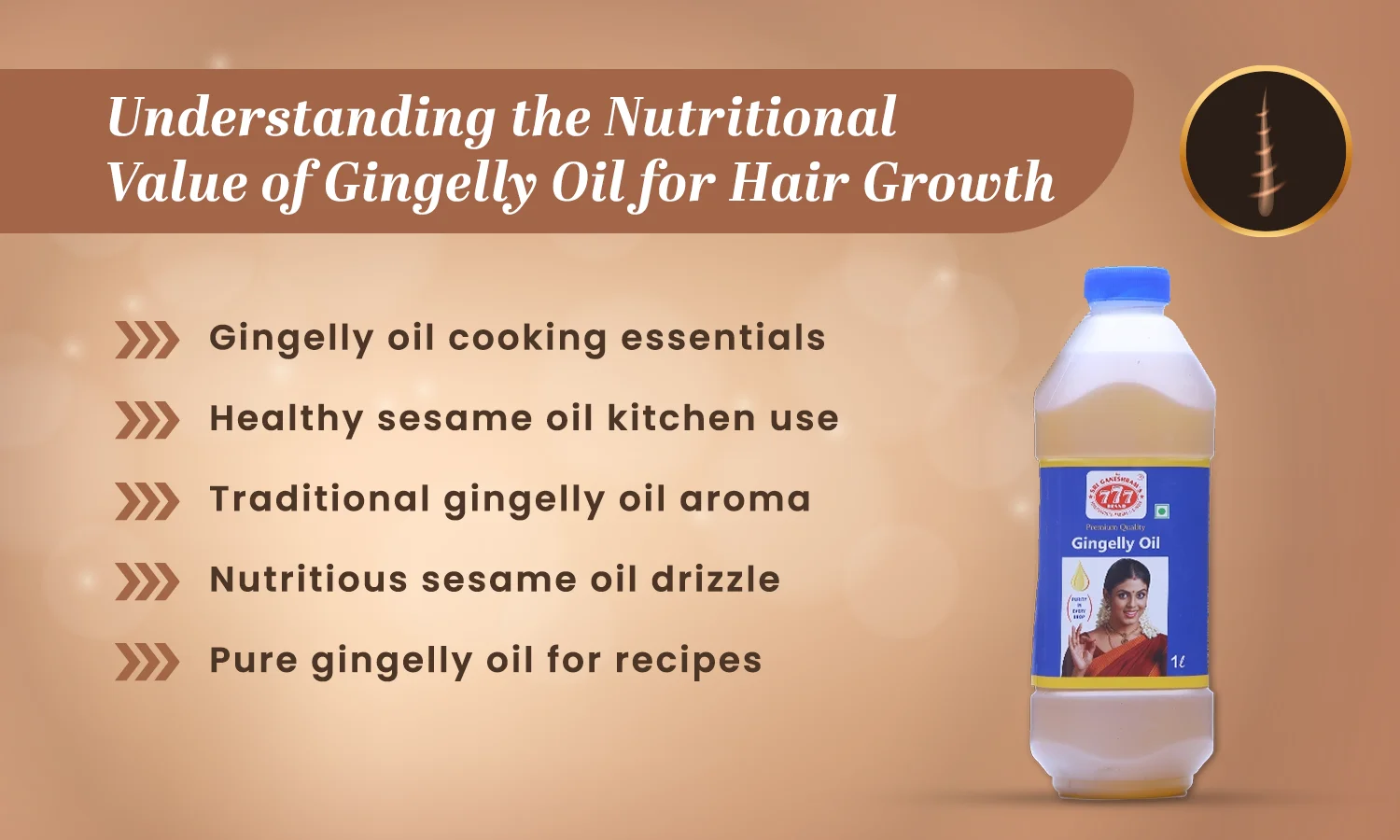
Understanding the Nutritional Value of Gingelly Oil for Hair Growth

Gingelly oil naturally contains healthy fats, including monounsaturated and polyunsaturated fatty acids, which help condition the scalp. It also holds vitamin E, B-complex vitamins, minerals like zinc and magnesium, and natural antioxidants such as sesamol and sesamin.These nutrients support stronger roots by helping the scalp stay nourished and moisturized. The presence of healthy fats also reduces dryness, which is one of the common reasons for weak or brittle hair.
These natural elements connect directly to the broader gingelly oil health benefits, which explain why many families continue to use this oil regularly. While it also provides advantages for the skin—such as the benefits of gingelly oil for skin and long-lasting gingelly oil skin benefits—its support for hair remains one of the main reasons people trust it so much.

Traditional Benefits of Gingelly Oil for Hair Care

The long-standing gingelly oil traditional benefits show how deeply rooted this oil is in hair care routines. In many homes, it is applied before a warm bath, often after a gentle massage to relax the scalp. This method has been followed for generations because of its simplicity and effectiveness.
Traditional hair practices also highlight the importance of consistent application. Using it weekly helps maintain shine, reduce dryness, and support stronger roots. Seniors in the family often recommend this oil because of its grounding nature and calming aroma, making it a trusted part of wellness routines for decades.

Organic and chekku-pressed Gingelly Oil: Which Is Best for Hair?

When choosing the right variant, many people look at organic gingelly oil or chekku-pressed options. Both are valued because they avoid harsh processing, which helps the oil maintain more nutrients.
If you’re choosing based on purity, many prefer chekku-pressed or organic versions because they tend to feel fresher and maintain the natural aroma of oil gingelly. Checking labels also helps identify the best gingelly oil for your routine. The cost may vary depending on extraction and purity, which explains why the gingelly oil price differs across brands.
Overall, choosing a clean and chemical-free version gives better results, especially for those with sensitive scalps.
Gingelly Oil For Hair

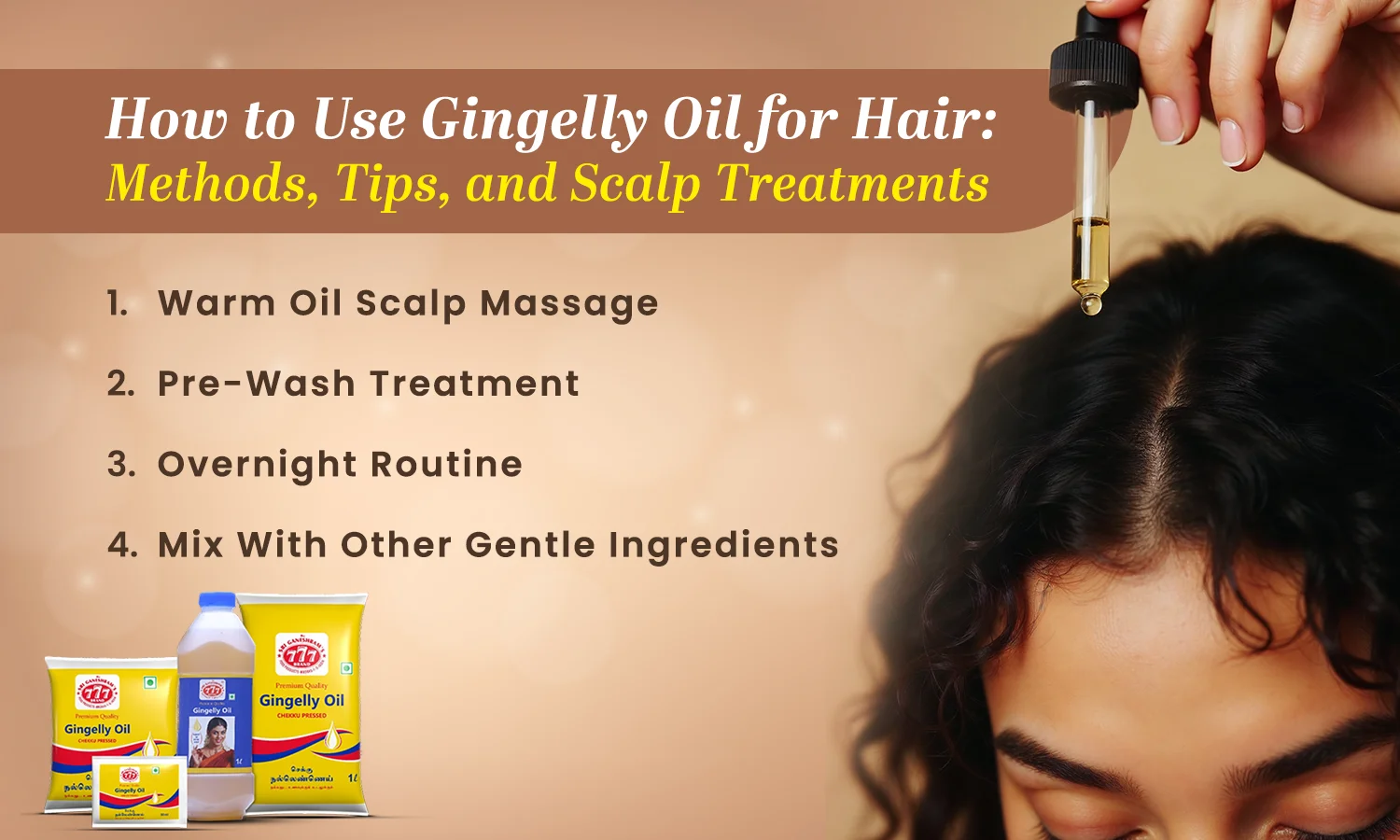
How to Use Gingelly Oil for Hair: Methods, Tips, and Scalp Treatments

The gingelly oil uses make it a flexible choice for different hair needs. Here are simple methods:

1. Warm Oil Scalp Massage

Warm a small amount and apply it directly to the roots. This helps relax the scalp and supports healthier hair.

2. Pre-Wash Treatment

Applying it 30–40 minutes before washing helps protect hair from dryness caused by shampoo.

3. Overnight Routine

For deeper nourishment, apply and leave it overnight once a week.

4. Mix With Other Gentle Ingredients

It pairs well with mild herbal powders or other natural oils for enhanced absorption.
People who prefer gentle self-care also use the oil on the face or body, such as the benefits of gingelly oil for the face, but its hair advantages remain one of its strongest uses.

Conclusion

Using gingelly oil for hair is a simple, reliable way to support growth, strength, and daily scalp health. Whether you follow traditional routines or prefer quick weekly care, this oil fits well into every lifestyle. With its nutrients and long-standing history, it continues to be one of the most trusted choices for natural hair wellness. SGR 777 provides pure options that help families carry these comforting routines forward.
Shop SGR 777 Gingelly Oil and experience the benefits of this time-tested care routine.

Key Takeaways

  • Gingelly oil for hair supports stronger roots, smoother strands, and healthy shine.
  • Its nutrients help reduce dryness and support natural growth.
  • Traditional and organic variants offer better purity and long-term results.
  • Regular massages, pre-wash routines, and warm oil treatments give the best outcomes.
  • SGR 777 offers quality oil options that support these simple hair care habits.

Faqs

1. Does gingelly oil really help with hair growth?Yes. Using gingelly oil for hair helps support growth by nourishing the scalp and strengthening the roots when applied consistently.
2. Is gingelly oil good for overall scalp health?Yes, the oil helps maintain moisture, reduce dryness, and improve circulation, making it useful for overall scalp health.
3. Which is better for hair—organic or chekku-pressed gingelly oil?Both work well, but many people prefer organic gingelly oil or chekku-pressed versions because they retain more natural nutrients.
4. Does the nutritional value of gingelly oil strengthen hair roots?Yes, the gingelly oil nutritional value helps support strong roots, reduce breakage, and maintain healthier hair over time.
5. Are traditional gingelly oil methods effective for hair care today?Yes, the gingelly oil traditional benefits still apply today, especially when combined with consistent weekly routines.

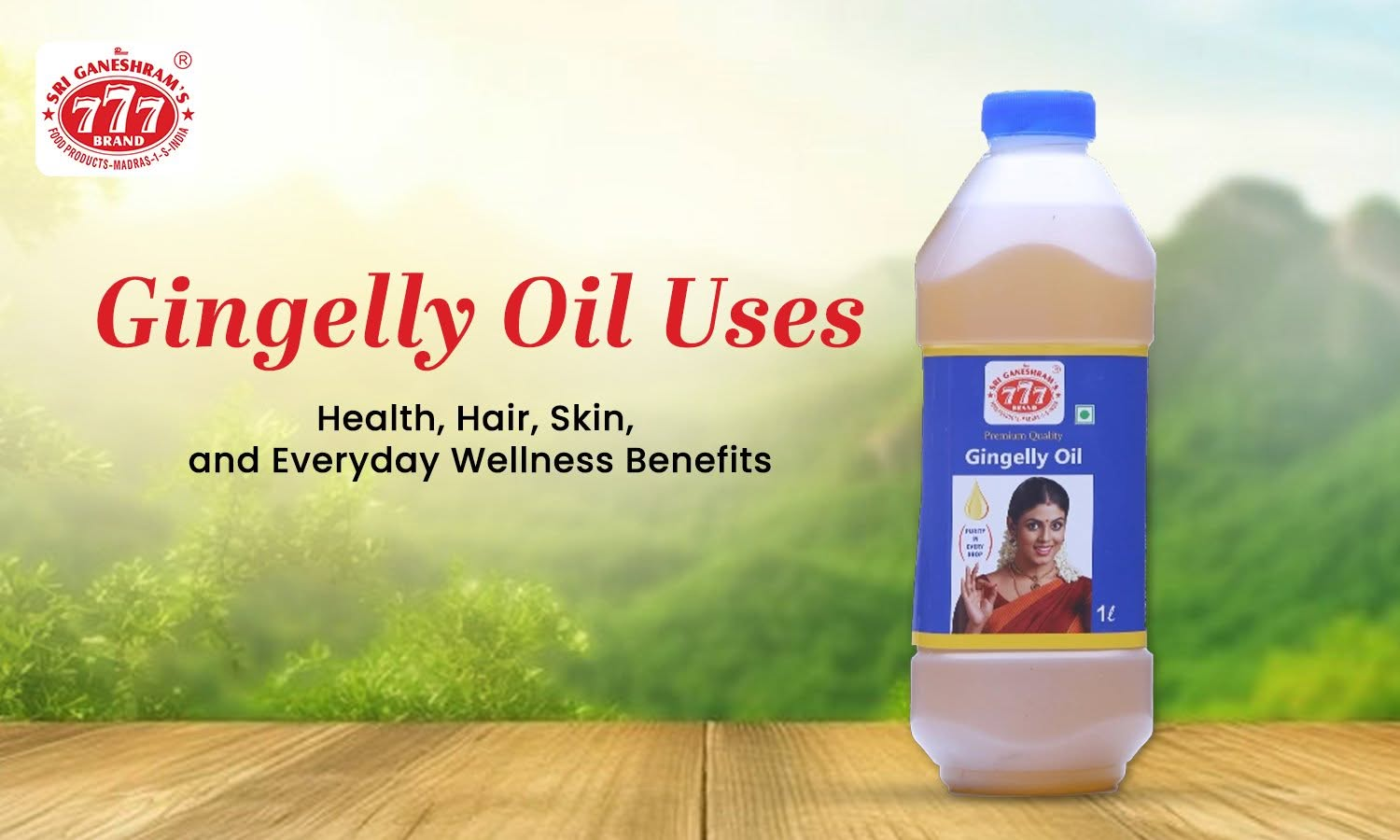
Gingelly Oil Uses: Health, Hair, Skin, and Everyday Wellness Benefits

Introduction

Understanding the gingelly oil uses helps you get more value from this traditional ingredient. Whether it’s for skincare, hair routines, cooking, or simple wellness practices, this oil has played an important role in households for generations. Thanks to its nutrients, aroma, and natural warmth, it fits easily into modern lifestyles while still preserving the essence of age-old habits. This guide explains how you can use gingelly oil every day in simple and effective ways. Once you know the full uses of gingelly oil, it becomes easy to enjoy its everyday gingelly oil benefits.

Gingelly Oil Uses for Skin: Moisturizing, Glow, and Anti-Aging

When it comes to skincare, the uses of gingelly oil for skin are straightforward and effective. Its natural moisturizing ability helps calm dryness, making it useful for people who struggle with rough patches. Many also use it before a bath to keep the skin nourished throughout the day.

For facial routines, the oil works well because it is gentle and smooth. Applying gingelly oil for face in small amounts helps maintain softness and supports natural brightness. Those with gingelly oil for dry skin concerns often find that regular application helps balance skin texture over time.

The oil is also known for mild antioxidant properties, which help support youthful-looking skin and keep it protected from daily stress.

Gingelly Oil Uses for Hair: Growth, Strength, and Shine

Hair care routines often include this oil because the uses of gingelly oil for hair are both simple and effective. When massaged onto the scalp, the oil supports natural warmth and improves circulation. This helps strengthen the roots and reduce breakage.The rich nutrients in the oil also support gingelly oil for hair growth, especially when used consistently. Many people mix a small amount with other oils or apply it warm for deeper scalp nourishment. Over time, the hair feels smoother and more manageable.
Families that follow traditional routines use it before washing the hair because the oil helps maintain softness and adds natural shine.
Gingelly Oil Uses in Cooking

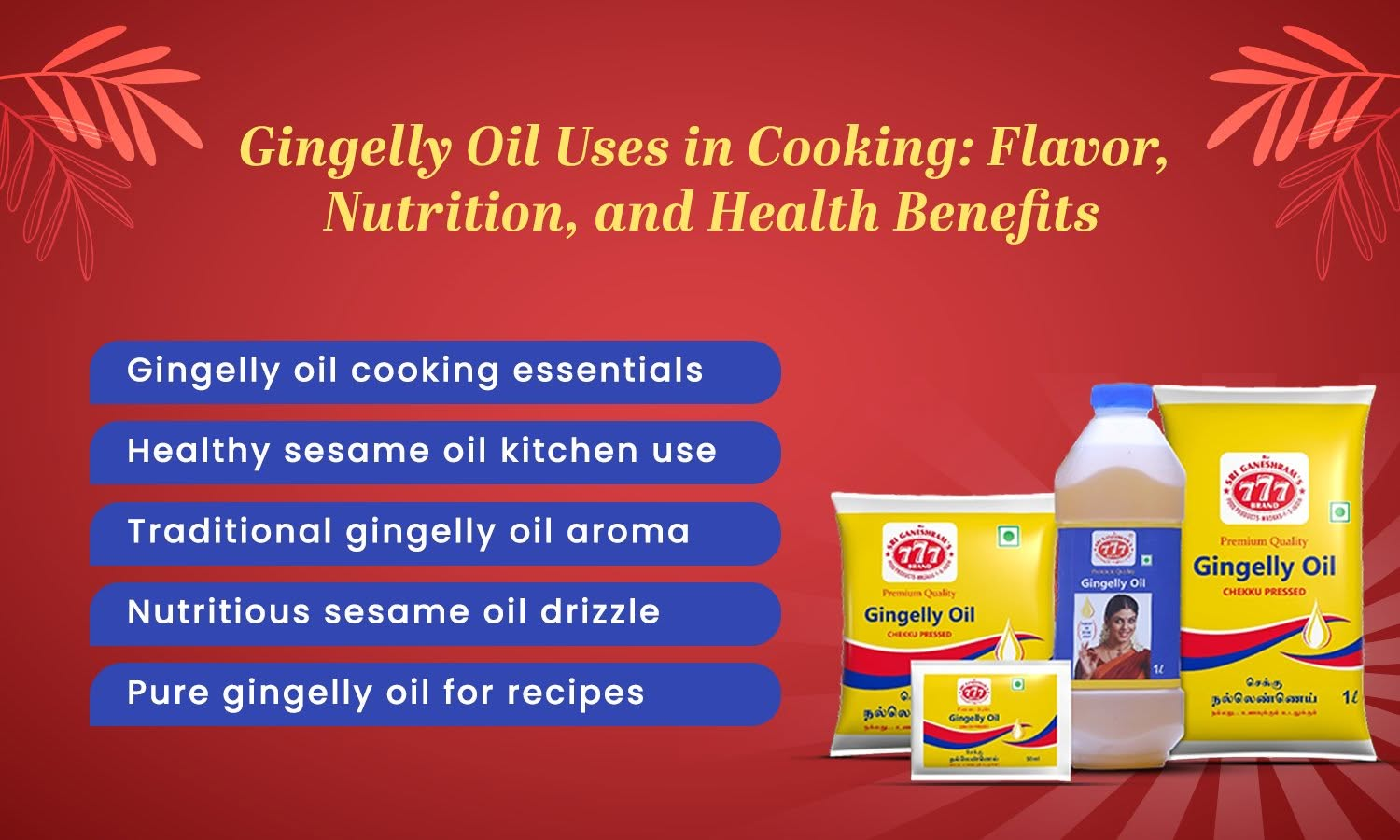
Gingelly Oil Uses in Cooking: Flavor, Nutrition, and Health Benefits

Many households rely on gingelly oil for cooking because of its mild taste and long-standing culinary role. It blends easily with Indian dishes and adds a comforting aroma. The oil is also valued for its nutrients, which contribute to the overall gingelly oil nutritional value of meals.
The health benefits of gingelly oil include supporting heart wellness and adding healthy fats to the diet. Some people add a small amount to salads or warm dishes, while others use it in traditional recipes that require a grounding flavor.This simple ingredient adds both taste and nourishment without overpowering the food. These cooking habits are an easy way to enjoy the Gingelly Oil Health Benefits at every meal. Daily Gingelly Oil Uses for Health

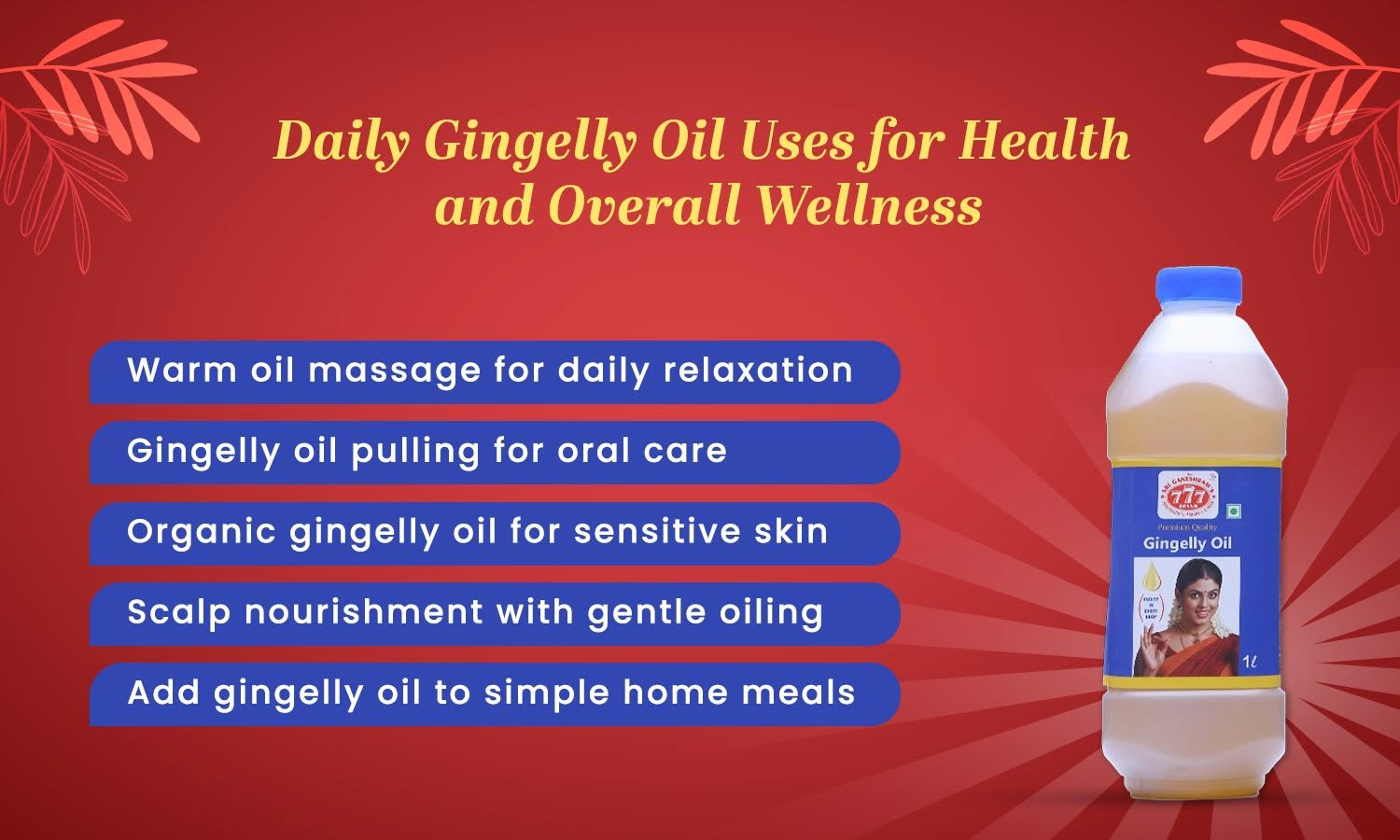
Daily Gingelly Oil Uses for Health and Overall Wellness

The number of gingelly oil daily uses of gingelly oil shows how versatile this ingredient truly is. Many people use it for oil pulling, a morning practice believed to support oral cleanliness. Others apply gingelly oil for massage to relax the body and reduce stiffness.There are also organic gingelly oils, where chemical-free oils are preferred for personal care. These variants are often chosen for children, elderly family members, or people with sensitive skin.
Daily routines such as warming the oil for body application, adding it to simple meals, or using it for scalp care help make this ingredient a dependable part of everyday life.

Traditional and Ayurvedic Gingelly Oil Uses

The gingelly oil’s traditional uses go far beyond cooking and skincare. In many households, it is applied during seasonal changes to maintain body warmth. It is also used in lamps for rituals and ceremonies, symbolizing purity and energy.

Ayurveda suggests some of the best ways to use gingelly oil include gentle massages, pre-bath routines, and simple internal use in small, balanced quantities. These practices help support calmness, strength, and daily balance. Families that follow ancestral habits still rely on this oil for its grounding and comforting qualities.

Conclusion

Learning about the gingelly oil uses helps you incorporate this traditional ingredient into your daily life with more intention. Whether it’s for your skin, hair, meals, or overall wellness routines, this oil provides steady support in simple yet meaningful ways. SGR 777 continues to offer pure options that help families maintain these trusted practices every day. Exploring the many gingelly oil uses and benefits helps you make this oil a lasting part of your routine.

Key Takeaways

  • Gingelly oil uses cover skincare, hair care, cooking, and wellness routines.
  • It helps moisturize skin, strengthen roots, and support natural hair growth.
  • Cooking with this oil adds nutrition and flavor to everyday meals.
  • Daily routines like oil pulling, massages, and pre-bath care make it versatile.
  • SGR 777 provides quality options suitable for these daily wellness habits.

Faqs

1. What are the main gingelly oil uses for skin and face?The main gingelly oil uses for skin and face include moisturizing, reducing dryness, and supporting a natural glow. It is also gentle enough for regular facial use.
2. How can gingelly oil improve hair growth and strength?The oil nourishes the scalp, supports warmth, and strengthens roots, making the gingelly oil uses ideal for improving hair growth and reducing breakage.
3. Can gingelly oil uses in cooking benefit overall health?Yes. Using gingelly oil for cooking adds healthy fats and nutrients that support digestion and overall wellness.
4. What are the daily gingelly oil uses for wellness?Common gingelly oil daily uses include massages, oil pulling, scalp care, and adding the oil to simple meals.
5. Are there traditional or Ayurvedic gingelly oil uses I should know?Yes. The gingelly oil’s traditional uses include massages, pre-bath routines, and rituals. Ayurveda also recommends the oil for balance and warmth.

Gingelly Oil Price Guide: Factors, Quality Types, and Smart Buying Tips

Introduction

The gingelly oil price has seen steady changes over the years, and many buyers often wonder what truly affects the cost. Many households rely on this traditional oil for cooking, skincare, and wellness, so understanding how pricing works can help you choose wisely.Several factors, like purity, extraction method, and brand standards, affect cost, and knowing these can help you avoid confusion while making the best choice for your home.
Gingelly Oil Price

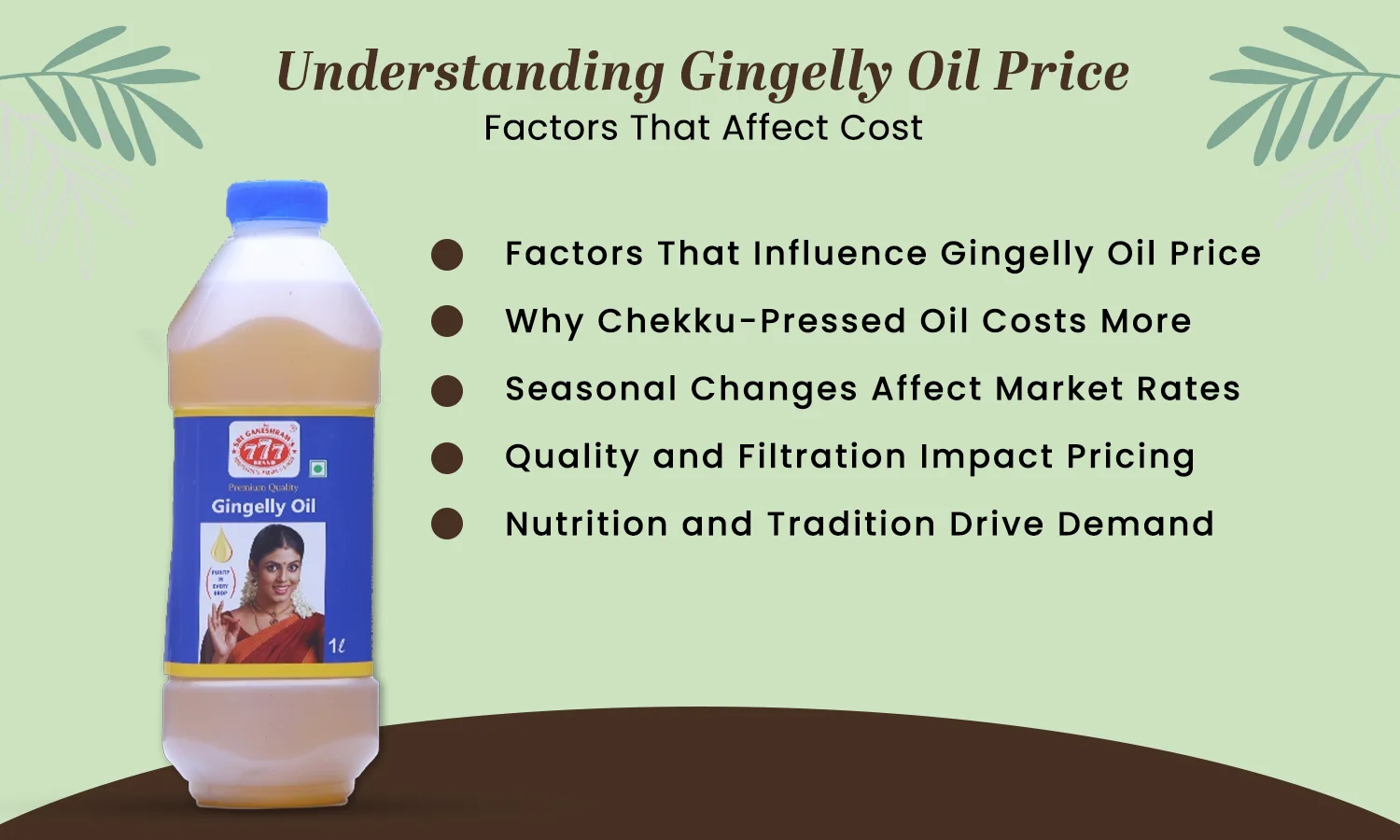
Understanding Gingelly Oil Price: Factors That Affect Cost

The cost of this oil is influenced by how it is sourced and processed. For example, chekku-pressed variants generally cost more because they retain higher nutrients. Since sesame seeds themselves fluctuate in market rates, the gingelly oil price per litre also changes during different seasons.Production quality also matters. Some oils go through multiple levels of filtration, while others aim for a more traditional approach. Many people pay attention to gingelly oil nutritional value before buying because nutrient-rich oils provide better results in cooking and wellness routines. Traditional households still value gingelly oil traditional benefits, which also contributes to demand and affects pricing.

Comparing Gingelly Oil Price Across Other Brands

When comparing costs, you’ll notice that the retail gingelly oil price varies widely across stores. Meanwhile, the wholesale gingelly oil price is generally lower because it is sold in bulk quantities. This difference is important for families and businesses that use oil frequently.
Another factor is whether you are buying a branded or non-branded variant. The branded gingelly oil price tends to be slightly higher because brands invest in quality checks, testing, and better packaging. Consumers who want consistent quality often prefer branded options for peace of mind.
Price checks across markets also highlight regional differences. A simple gingelly oil price comparison helps you understand which brands offer better quality at a fair cost.

Best Gingelly Oil Options: How Price Reflects Quality

When choosing the best gingelly oil, it helps to look beyond the label. Chekku-pressed, unrefined oils are usually priced higher because they keep more nutrients and maintain their natural aroma. Some buyers also prefer oils with a strong aroma because of the traditional connection they hold.The oil gingelly that has been extracted using age-old wooden press methods generally costs more because the process requires more time and effort. On the other hand, refined oils might be cheaper but may lose some natural properties along the way.
If you’re choosing based on purity, check the pure gingelly oil price range. Pure variants depend heavily on seed quality, extraction method, and freshness. Many consumers also look at what the organic gingelly oil segment offers, especially because organic products involve careful farming practices without chemicals, which increases the cost.
Gingelly Oil Price

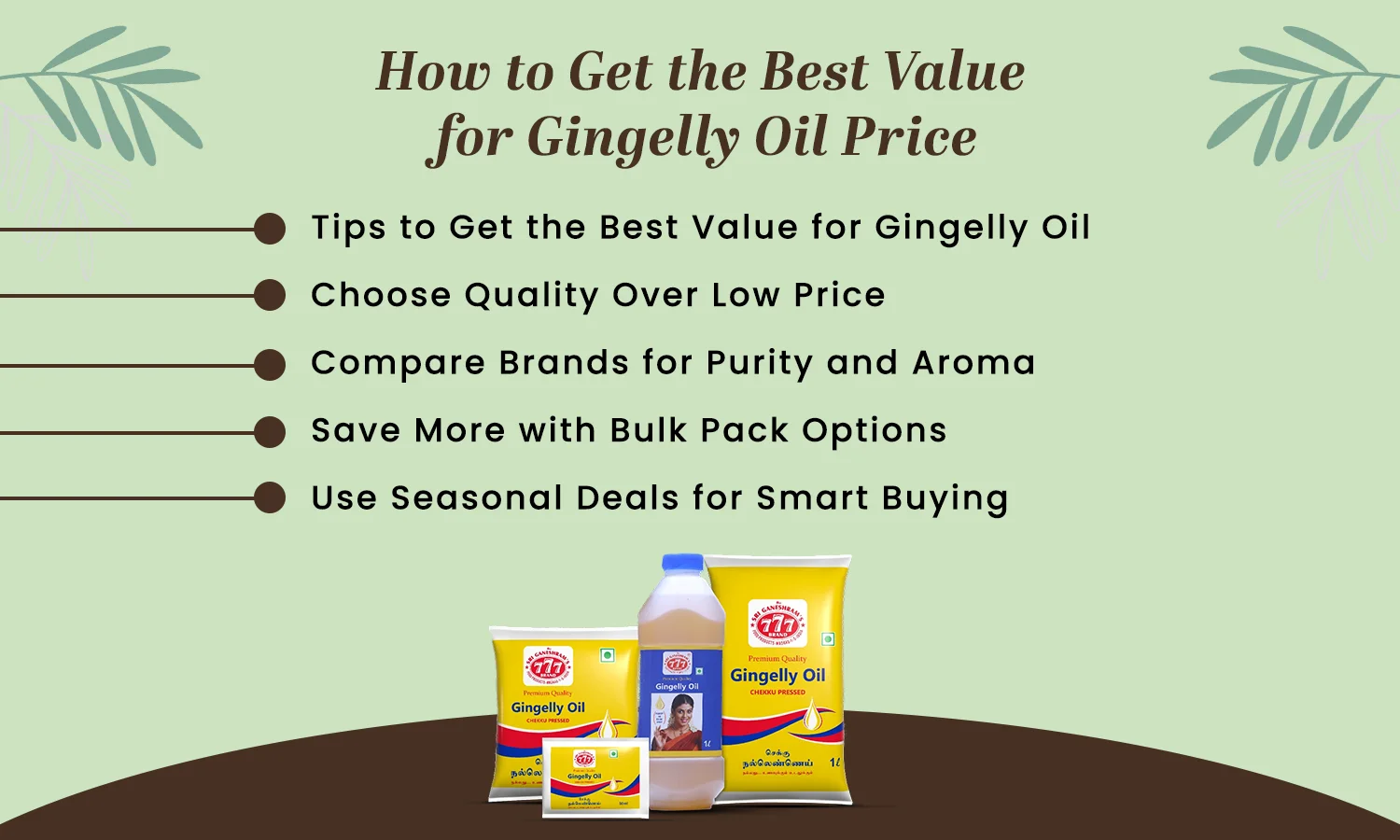
How to Get the Best Value for Gingelly Oil Price

Getting the best value doesn’t mean choosing the lowest-priced bottle. Instead, it means finding the balance between quality and cost. Here are simple pointers to guide you:

  • Check the extraction method. Chekku-pressed oils may cost slightly more but usually offer better gingelly oil benefits
  • Compare multiple brands based on purity, aroma, and filtration levels.
  • Study labels to understand shelf life and freshness.
  • Consider buying larger packs if your family uses the oil regularly. Bulk options often offer better value compared to small packs.
  • Look into seasonal discounts and online offers to make smart purchases.

SGR 777 focuses on providing clean and quality oil options that help you feel confident about what you bring home every day.

Common Uses of Gingelly Oil and How Price Influences Choice

The wide range of gingelly oil uses is one reason why many families consider it worth the investment. It is used in cooking, pre-bath routines, hair oiling, and even in certain seasonal home remedies. Households that use the oil for multiple purposes often choose mid-range or premium options based on aroma and purity.
In the case of frequent users, the gingelly oil wholesale price becomes a significant factor because bulk buying offers better value compared to smaller retail units. In 2026, the gingelly oil rate can fluctuate, depending on the quality of the sesame seeds and the extraction method used. Many consumers find that checking the pure gingelly oil price against unrefined standards helps them determine if they are buying an authentic, chemical-free product that justifies the cost for both culinary and wellness needs.
If you are a person who frequently shops at local retail outlets, you might notice a difference in the gingelly oil packet price versus the cost of a sturdy gingelly oil jar. Packets might be a more budget-friendly entry point for trial or small-scale use. On the other hand, a larger jar is often the preferred choice for kitchens where the oil is a daily staple for tempering and deep-frying. This variety in oil packaging lets families choose a quantity that fits their storage space and monthly budget without having to compromise on the quality of the oil they bring home.
For some, the scent and texture of the oil matter more than cost, especially in traditional homes. Others prefer lighter variants for everyday cooking. Over time, understanding the balance between purpose and price makes it easier to choose the right bottle for your family.

Conclusion

Understanding the gingelly oil price helps you make smarter choices based on purity, brand quality, and your family’s daily needs. Whether you use it for cooking or traditional self-care routines, choosing the right type ensures you enjoy its natural value fully. SGR 777 continues to offer clean, well-prepared options that support your home’s daily wellness habits.

Key Takeaways

  • Gingelly oil price varies based on seed quality, extraction, purity, and brand standards.
  • Wholesale and retail pricing differ widely depending on quantity and packaging.
  • Quality-focused oils may cost more but offer better long-term value.
  • Checking labels, extraction methods, and aroma helps identify good options.
  • SGR 777 provides pure choices that help families make confident, everyday decisions.

Faqs

1. Why does the gingelly oil price vary between brands and types?The gingelly oil price changes based on purity, extraction method, seed quality, packaging, and brand quality checks. Each factor contributes to different pricing levels.
2. Is organic gingelly oil price higher than regular oils?Yes, the price of organic variants is usually higher because producing organic gingelly oil requires careful farming practices and chemical-free methods.
3. How can I compare the gingelly oil price before buying?You can do a simple gingelly oil price comparison by checking multiple brands, reading labels, and comparing aroma, filtration level, and extraction method.
4. Does a higher gingelly oil price mean better quality?Not always, but in many cases, higher-priced oils indicate better purity or richer nutrients. You can also check the pure gingelly oil price range to understand quality levels.
5. Where can I find the best gingelly oil price in India?Many stores and online platforms offer competitive options. Comparing the gingelly oil price per litre across reliable brands helps you find better deals.

Gingelly Oil Benefits: A Powerful Natural Elixir for Everyday Wellness

Introduction

When it comes to natural ingredients that support everyday wellness, very few stand as strong as the traditional gingelly oil we’ve grown up hearing about. From skin to hair to simple home remedies, this oil has stayed relevant for generations because of its gentle strength and nutrient-rich nature.Whether you’re someone who enjoys natural skincare or prefers simple, effective solutions for overall health, gingelly oil fits easily into daily life. This blog walks you through its most useful advantages and shows why it continues to be a trusted choice for families today. Gingelly Oil Benefits

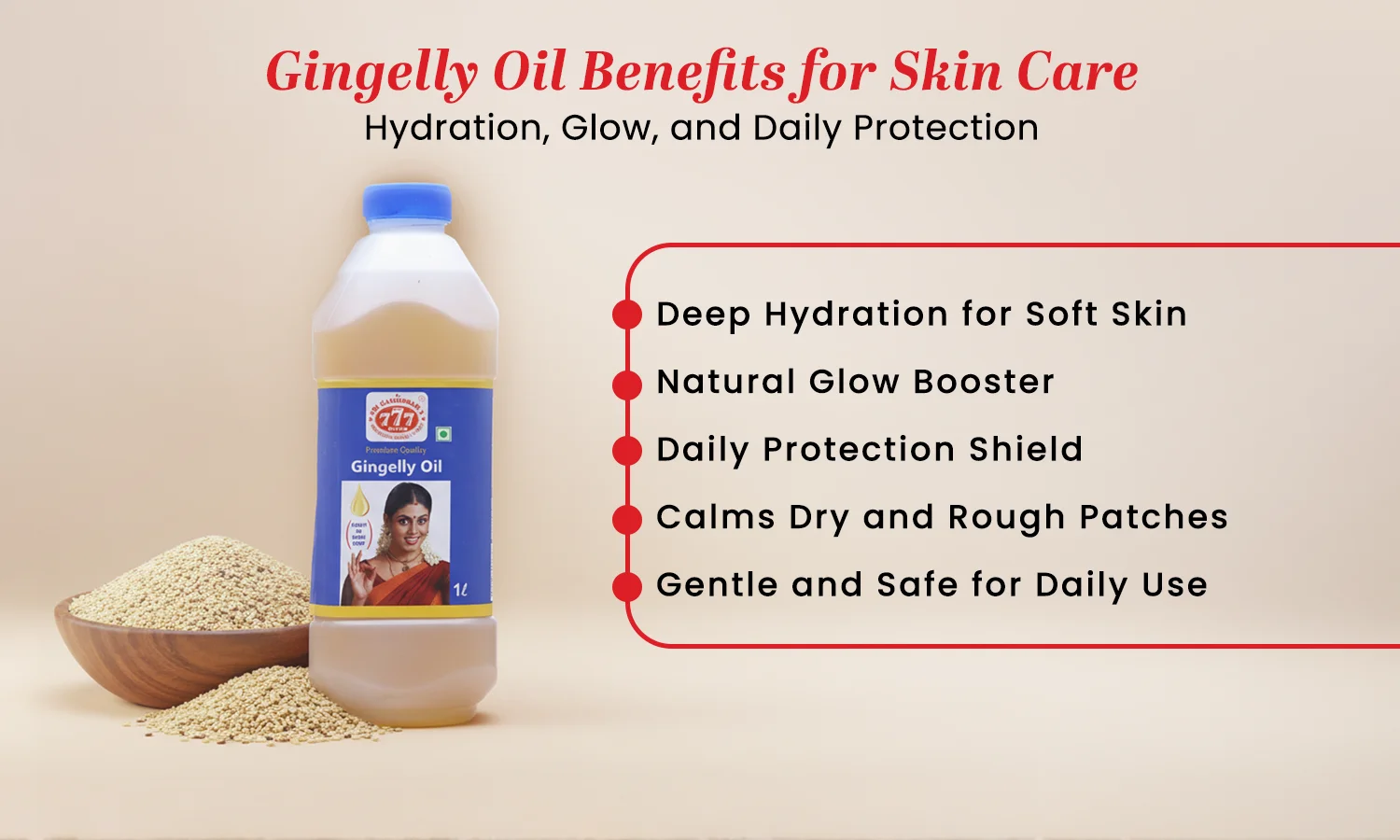
Gingelly Oil Benefits for Skin Care: Hydration, Glow, and Daily Protection

Many people turn to this oil because the benefits of gingelly oil are simple yet effective. Its natural moisturizing ability helps the skin stay soft and nourished throughout the day. Since the oil holds antioxidants, it forms a protective layer over the skin, helping it stay fresh despite sun exposure and pollution.The benefits of gingelly oil for skin also include calming dry patches and supporting healthy skin texture. Those who follow traditional living often apply it before a bath to maintain skin balance. Even today, people appreciate the classic benefits of gingelly, especially when they want something safe and gentle for daily skincare. Gingelly Oil Benefits

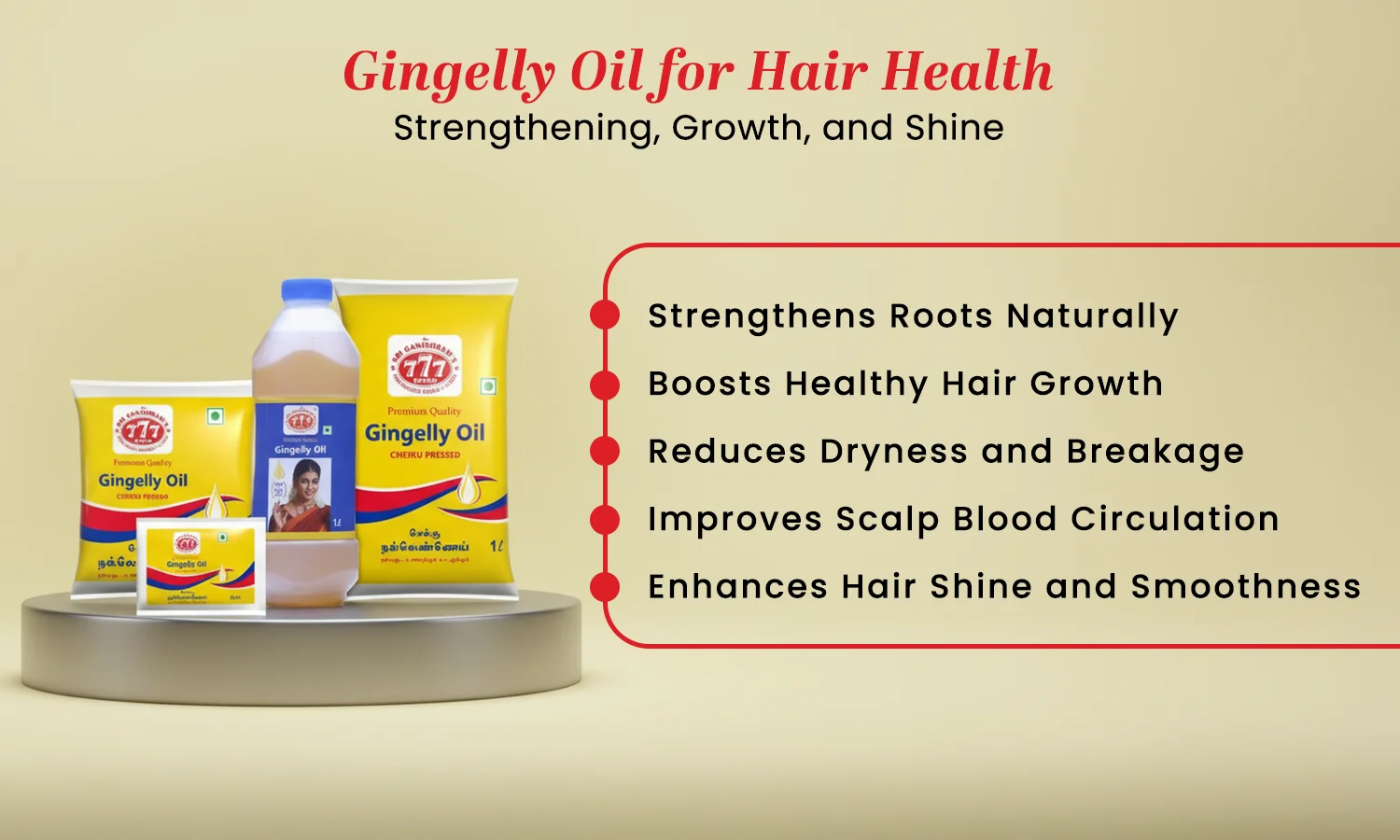
Gingelly Oil for Hair Health: Strengthening, Growth, and Shine

Hair care becomes easier when you understand gingelly oil for hair. This oil reaches deep into the scalp and supports strong roots. Its nutrients help reduce dryness, which is one of the main causes of weak hair strands.
The various uses of gingelly oil in personal care are rooted in its unique ability to penetrate the skin and hair shaft quickly. If you have ever wondered, “Is gingelly oil good for hair?”, the answer lies in its high concentration of essential fatty acids and vitamins.
These gingelly oil benefits for hair include creating a protective barrier against environmental pollutants and UV rays, which prevents the hair from becoming brittle and dull after sun exposure.
Beyond the scalp, many people find that gingelly oil is good for skin health as well, particularly for its ability to hydrate without clogging pores. If you are wondering if gingelly oil is good for health in a holistic sense, its antibacterial and antifungal properties make it an excellent choice for maintaining a clean, infection-free environment on the skin. By addressing both external hydration and internal nourishment, it serves as a dual-purpose remedy for those seeking a natural approach to grooming.
Regular scalp massages with gingelly oil can help improve blood flow, making the hair look healthier over time. The gingelly oil health benefits extend to hair too, as the oil helps maintain natural scalp warmth, which many believe supports hair strength. For people who prefer simple routines, this oil is an easy addition that shows visible results over time.

Gingelly Oil for Face: Natural Nourishment and Anti-Aging Effects

When applied gently, the face can benefit from the softening power of this oil. The benefits of gingelly oil for the face come from its ability to lock in moisture without feeling heavy. Many people use it at night to help the skin stay calm and bright the next morning.
It also helps ease fine lines because of its nutrient content. Some even mix it with other gentle oils to create a natural nighttime routine. The oil gingelly traditions that date back to ancestral homes still influence how this ingredient is used for facial care today.

Choosing the Best Gingelly Oil: Organic and Pure Options

Choosing the best gingelly oil is important if you want to enjoy all these benefits. Many people prefer organic gingelly oil, especially when they want something free from chemical processing. Pure oil retains natural aroma, color, and nutrients, making it suitable for skin and hair.
While making your choice, it helps to know that the gingelly oil price can vary depending on extraction methods. Cold-pressed oil usually costs slightly more because it keeps the original nutrients intact. Some consumers also check the gingelly oil nutritional value to understand how healthy it is for cooking and wellness routines.Traditional users always value gingelly oil traditional benefits, especially for seasonal massages, rituals, and cooking during festivals. These long-standing practices show the importance of using good-quality oil.

Practical Uses and Daily Applications of Gingelly Oil

The number of daily applications of gingelly oil is surprisingly high. You can apply it on the skin before a warm bath, use it for body massages, add it to hair oil routines, or include it in simple cooking. When eaten in small amounts, many people feel it supports digestion and warmth. These habits often continue across generations because the oil is mild and easy to pair with many daily rituals.

Conclusion

Understanding gingelly oil benefits helps you make better choices for your skin, hair, and everyday wellness. Whether you apply it before a bath, use it as a part of hair care, or include it in your cooking routine, this oil offers steady support for a healthier lifestyle. SGR 777 focuses on bringing authentic gingelly oil to homes, helping you continue these long-standing practices with confidence and purity.

Key Takeaways

  • Gingelly oil benefits skin, hair, and overall daily wellness in a simple, natural way.
  • It helps maintain soft skin, stronger roots, and better texture with regular use.
  • Choosing pure or organic oil gives better results for everyday routines.
  • It can be used for massages, cooking, and facial care to experience its full advantages.
  • SGR 777 offers pure gingelly oil options, helping families continue traditional wellness practices confidently.

Faqs

1. What are the main gingelly oil benefits for skin?The main gingelly oil benefits for skin include better hydration, improved softness, and natural protection from dryness. Since it contains antioxidants, many people use it to maintain smooth and healthy skin.
2. How do gingelly oil benefits help in improving hair growth and strength?The oil supports the scalp by nourishing roots and reducing dryness. When massaged regularly, the gingelly oil benefits help hair stay strong and reduce breakage over time.
3. Can I use gingelly oil on my face daily to get better gingelly oil benefits?Yes, you can. Gentle application helps keep the skin calm and moisturized. Many people use it at night to experience stronger gingelly oil benefits the next morning.
4. Do organic oils offer enhanced gingelly oil benefits?Organic oils retain more natural nutrients, so the gingelly oil benefits may feel better when the oil is pure and chemical-free.
5. What are the daily uses through which I can experience gingelly oil benefits?You can apply it on the skin, use it for body massages, include it in hair care routines, or add it to simple cooking. All these help you experience regular gingelly oil benefits.