Top Benefits of Using Filtered Groundnut Oil in Indian Cooking

Introduction

In Indian cooking, the choice of oil plays a major role in both flavour and health. Among the many options available, filtered groundnut oil stands out as a traditional and reliable choice.

Used across generations, this oil offers a balance of taste, nutrition, and affordability. Whether it’s deep frying, sautéing, or preparing everyday meals, it continues to be a staple in Indian kitchens. Understanding why groundnut oil is good for health helps you make better cooking choices for your family.

What is Filtered Groundnut Oil?

Filtered groundnut oil means oil that is extracted from peanuts and then mechanically filtered to remove impurities without using chemicals. Unlike refined oils, it does not undergo bleaching or deodorising.
This type of groundnut filtered oil retains its natural aroma, colour, and nutrients. It is often compared with chekku groundnut oil, though the extraction methods may differ slightly. Because it is minimally processed, many people prefer groundnut oil filtered variants for everyday cooking.
Filtered groundnut oil

Filtered Groundnut Oil Nutrition Facts

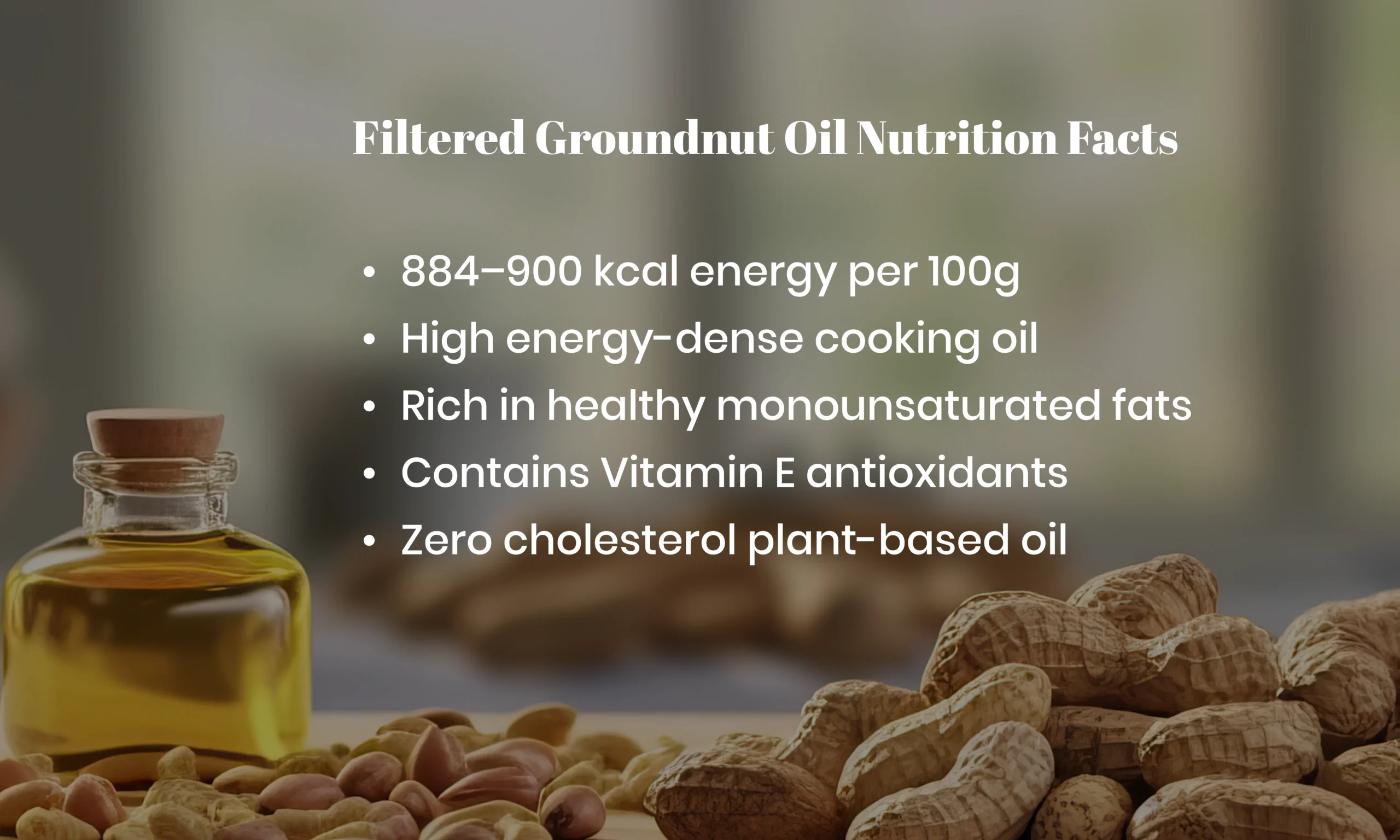
Filtered groundnut oil is energy-dense and rich in healthy fats. It contains approximately 884–900 calories per 100g, making groundnut oil calories relatively high. However, the quality of fat matters more than the quantity.
This oil is rich in monounsaturated fats and contains antioxidants like Vitamin E. These nutrients support overall health when consumed in moderation. Since it is plant-based, it contains zero cholesterol and is often considered a healthy cooking oil option.

To understand why this choice is so popular, one must first ask: what is filtered groundnut oil? Unlike its refined counterparts, filtered groundnut oil is usually produced by pressure-filtering the crushed seeds through a cloth or sieve so that the impurities are removed without the use of harsh chemicals or excessive heat. This procedure makes sure that filtered groundnut oil is good for health because it retains the original nutrients, distinct nutty aroma and heart-healthy fatty acids that nature intended.

When comparing refined vs filtered groundnut oil, the primary difference lies in the level of processing and the resulting nutritional integrity. While refined oils undergo bleaching and deodorizing at high temperatures, the minimal processing of the filtered version helps preserve its antioxidant profile. These filtered groundnut oil benefits make it a superior choice for those looking to maintain the natural goodness of their ingredients while enjoying a stable oil that stands up well to everyday cooking needs. Filtered groundnut oil
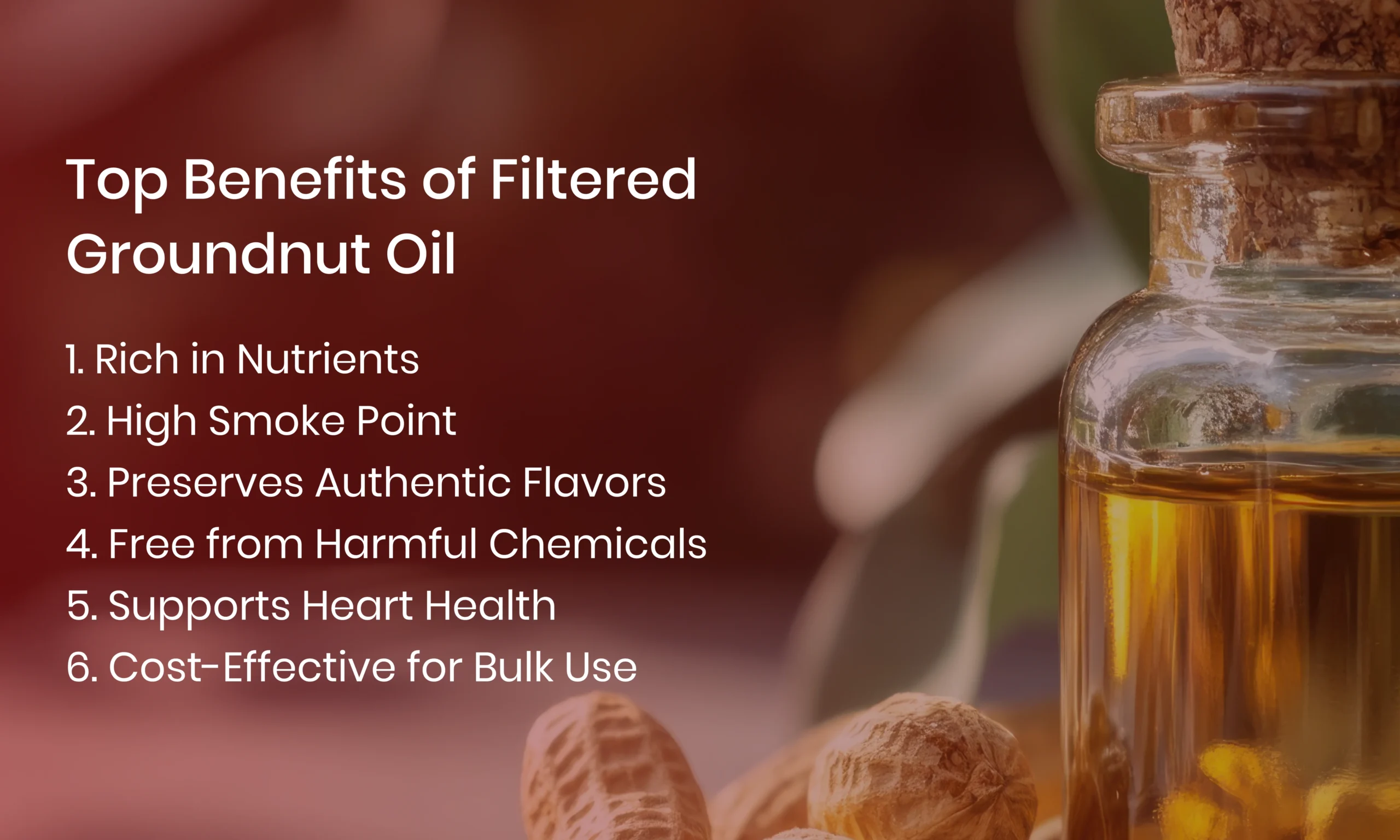
Top Benefits of Filtered Groundnut Oil

1. Rich in Nutrients

One of the major groundnut oil benefits is its nutrient retention. Because it is not chemically processed, it retains Vitamin E and natural antioxidants.

2. High Smoke Point

Filtered groundnut oil performs well at high temperatures, making it ideal for frying and Indian cooking methods like tadka. This makes it a reliable groundnut cooking oil for daily use.

3. Preserves Authentic Flavors

Unlike refined oils, groundnut oil filtered versions have a natural nutty aroma. This enhances the taste of traditional dishes without overpowering them.

4. Free from Harmful Chemicals

Since filtered groundnut oil means minimal processing, it does not contain harmful chemical residues often found in refined oils. This makes it safer for long-term use.

5. Supports Heart Health

The healthy fats in filtered groundnut oil help manage cholesterol levels. This is why many consider filtered groundnut oil good for heart health—the answer is yes, when used in moderation.

6. Cost-Effective for Bulk Use

Compared to chekku-pressed oils, groundnut oil price for filtered variants is more affordable. This makes it practical for families and bulk cooking needs.

How to Choose the Best Filtered Groundnut Oil in India

Selecting the best filtered groundnut oil in India requires attention to quality and purity. Look for oils that clearly mention mechanical extraction instead of chemical processing. The ingredient list should only include 100% groundnut oil.Check the colour and aroma—good quality oil usually has a golden-yellow shade and a natural peanut smell. If you are comparing brands, focus on quality rather than just groundnut oil price. This ensures you get the best groundnut oil for your kitchen.

Where to Buy Groundnut Oil Online

You can easily purchase filtered groundnut oil through online grocery platforms and supermarkets.

Popular platforms offer multiple brands, making it easier to compare options based on quality and price. Many people also search for the best groundnut oil in India online to find trusted options.Buying online also helps compare groundnut oil benefits across brands before making a decision.

Why Choose SGR 777 Filtered Groundnut Oil

SGR 777 is a well-known name in South India for its traditional and high-quality products.Their filtered groundnut oil is prepared using minimal processing methods, ensuring that the natural nutrients and flavour are retained.It offers a balance of purity, taste, and affordability, making it suitable for everyday cooking. For those looking for the best filtered groundnut oil, this is a dependable option.

Conclusion

Filtered groundnut oil continues to be a trusted choice in Indian kitchens for good reason. It combines health benefits, cooking performance, and affordability in one product. From enhancing flavour to supporting heart health, it fits well into everyday cooking habits. Choosing the right oil is not just about trends—it’s about finding what works best for your lifestyle and diet.

FAQs

Is filtered groundnut oil good for you?

Yes, filtered groundnut oil is considered good for health when used in moderation due to its healthy fat content and minimal processing.

What is the difference between refined and filtered groundnut oil?

Refined oil undergoes chemical processing, while filtered groundnut oil is mechanically filtered and retains more nutrients and flavour

Can we eat groundnut oil daily?

Yes, it can be used daily in moderate quantities as part of a balanced diet.

How to check if filtered groundnut oil is pure?Check for natural aroma, golden colour, and labels mentioning no chemicals. Pure oil should not have a strong artificial smell.
Why Groundnut Is Good for Cholesterol and Heart Health

Introduction

Choosing the right cooking oil plays a big role in maintaining heart health. Many people today are asking whether groundnut is good for cholesterol and if they can be used safely for everyday cooking. The answer is encouraging.
Groundnuts and their oil have long been part of traditional diets, especially in India. When used in the right way, they can support better cholesterol balance and overall Heart Health. Understanding how they work can help you make smarter, healthier choices in your kitchen.
groundnut is good for cholesterol

Does Groundnut Contain Cholesterol?

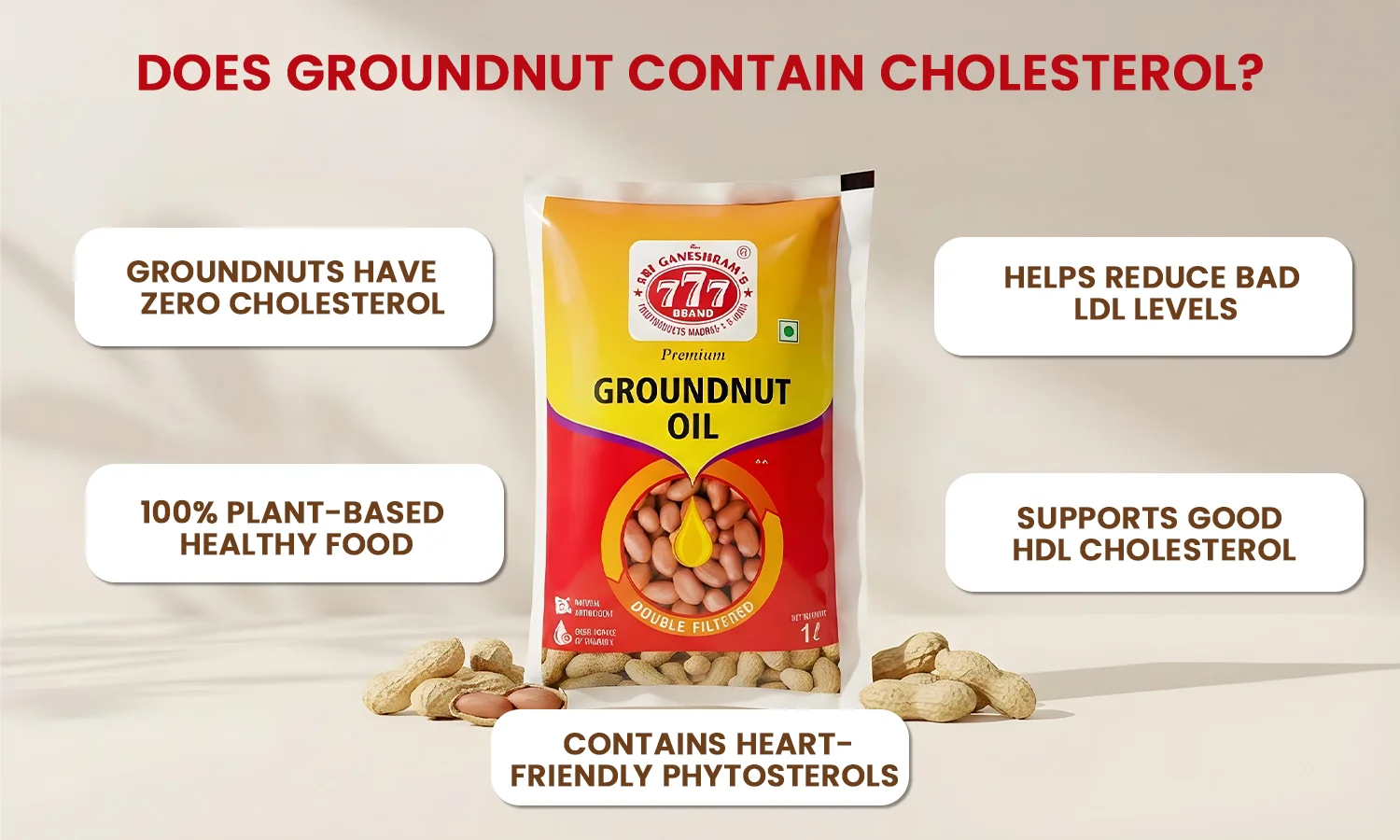
A common myth is that groundnuts may increase cholesterol levels. However, groundnuts are plant-based, and cholesterol is only found in animal products.This means there is no cholesterol in groundnut oil or in whole groundnuts. Instead of adding cholesterol, they help manage the levels already present in your body.
Groundnuts are rich in healthy fats that help reduce LDL (bad cholesterol) and maintain HDL (good cholesterol). They also contain plant compounds like phytosterols that limit cholesterol absorption.
So, rather than harming your health, they actually support better cholesterol control when consumed in moderation.

How Groundnut Oil Nutrition Supports Heart Health

The strength of groundnut oil lies in its composition. Groundnut oil nutrition includes a balanced mix of monounsaturated and polyunsaturated fats, both known to support cardiovascular health.
These fats help improve cholesterol levels by lowering LDL while maintaining HDL. This balance is essential for long-term Heart Health.
Therefore, if you are wondering, “Is groundnut oil good for heart health?” it is important to look at its plant-based origins. Since it is derived entirely from legumes, is groundnut oil cholesterol free? The answer is a definitive yes, as it contains zero dietary cholesterol. Because of this, groundnut is good for heart patients who need to manage their lipid profiles through careful dietary choices without sacrificing flavor in their meals.
A common concern for many is: does groundnut oil increase cholesterol levels? On the contrary, when used as a replacement for saturated fats, it can actually help lower them. However, users should remain mindful of groundnut oil calories, as like all oils, it is energy-dense. Balancing these benefits of groundnut oil with portion control ensures you receive the protective nutrients without exceeding your daily energy needs.
Groundnut oil also contains Vitamin E, which protects cells from oxidative stress and supports blood vessel function. Its stability during cooking makes it a reliable option for daily use without breaking down into harmful compounds.
This combination of nutrients makes it a practical and heart-friendly cooking choice.

Peanut Oil Benefits for Cholesterol

When looking at Peanut oil benefits, cholesterol management stands out as a major advantage. Since there is no cholesterol in peanut oil, it does not contribute to cholesterol buildup.
Instead, it helps improve your lipid profile. The healthy fats present in the oil reduce LDL levels while supporting HDL. This makes it easier to maintain a healthy balance over time.
Another key benefit is the presence of phytosterols, which block cholesterol absorption in the digestive system. This reduces the amount of cholesterol entering your bloodstream.
This is one of the reasons why experts often say Peanut oil is healthy when used as a replacement for saturated fats.

Is Peanut Oil a Healthy Cooking Oil?

Many people wonder if peanut oil is good for health when used daily. The answer depends on how it is used. In moderate amounts, it is considered a healthy cooking option.
It performs well at high temperatures, making it suitable for frying and sautéing. Unlike some oils, it remains stable and does not easily break down.
At the same time, it is important to consider the calories in groundnut oil. Since it is calorie-dense, portion control is essential.
Choosing traditional options like Chekku groundnut oil can be beneficial, as they retain more natural nutrients and antioxidants compared to heavily refined oils.
groundnut is good for cholesterol

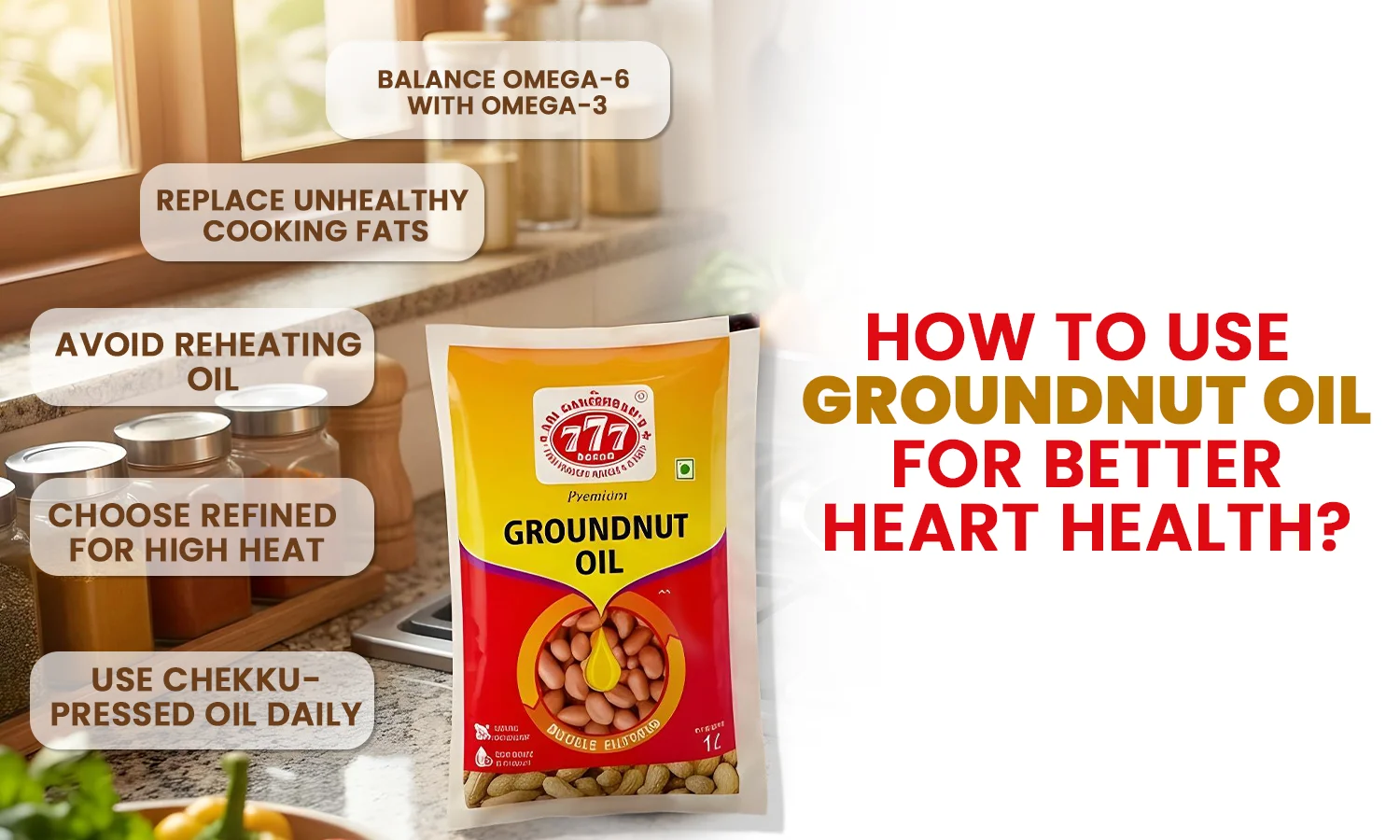
How to Use Groundnut Oil for Better Heart Health?

If you want to make the most of its benefits, how you use groundnut oil matters. Simply adding it to your diet is not enough—you should replace less healthy fats with it.
Use chekku-pressed oil for daily cooking to retain nutrients, and use refined oil when cooking at very high temperatures. This balance helps you get both nutrition and performance.
It is also important to maintain dietary balance. Since groundnut oil contains omega-6 fats, pairing it with omega-3-rich foods helps support overall health.
Avoid reheating oil multiple times, as this reduces its quality and may affect its health benefits. Small habits like these make a big difference in maintaining groundnut oil health benefits.

Conclusion

So, is groundnut good for cholesterol? Yes—when used correctly, it can support better cholesterol levels and overall heart health.
Groundnuts and groundnut oil do not add cholesterol to your body. Instead, they help improve the balance between good and bad cholesterol.
By choosing the right type of oil, using it in moderation, and maintaining a balanced diet, you can make groundnut oil a healthy part of your everyday cooking routine.

FAQs

Is Chekku groundnut oil better for heart health?Yes, Chekku groundnut oil is minimally processed and retains more natural nutrients, making it a better choice for supporting heart health.
Can we fry in groundnut oil?Yes, groundnut oil has a high smoke point, making it suitable for frying without breaking down easily.
What is the original color of groundnut oil?Pure groundnut oil usually has a golden-yellow color, which may vary depending on processing methods.
How to choose groundnut oil?Look for 100% pure oil, check certifications, and prefer chekku-pressed varieties for better nutrition and authenticity.

Is Natural Groundnut Oil Good for Your Heart? Here’s What You Need to Know

Introduction

Cooking oils play a major role in everyday health, especially when it comes to heart care. Among the many options available today, natural groundnut oil is gaining attention for its balance of taste, nutrition, and cooking performance.

Unlike heavily processed oils, this traditional option retains its natural nutrients, making it a preferred choice in many Indian kitchens. But is it truly good for your heart? Let’s explore what makes it stand out.

What is Natural Groundnut Oil?

Natural groundnut oil is a vegetable oil extracted from peanuts using traditional methods like chekku-pressing. This means the oil is produced without high heat or chemical processing, helping preserve its natural goodness.
It is often referred to as natural peanut oil and is known for its rich aroma, golden colour, and nutrient retention. Compared to refined oils, it maintains essential compounds like Vitamin E and plant-based antioxidants.Variants like chekku groundnut oil are especially valued for their traditional extraction methods and authentic flavour, making them a popular choice for everyday cooking.

Nutritional Value of Natural Groundnut Oil

The strength of natural groundnut oil lies in its nutritional profile. It is rich in healthy fats that support overall wellness when used in moderation.

Transitioning to a natural oil for cooking is a simple yet impactful step toward a cleaner diet. Because it is extracted with minimal processing, pure groundnut oil retains the bioactive compounds that are often stripped away in refined alternatives. This makes it a preferred healthy oil for cooking, providing a stable medium for various culinary techniques while ensuring your family isn’t consuming unnecessary chemical additives or trans fats.

In the context of regional cuisines, it stands out as a uniquely healthy oil for Indian cooking due to its high smoke point and distinct, nutty aroma. It handles the high heat required for tempering spices and deep-frying without breaking down into harmful compounds. Consequently, nutritionists often recommend it as the best oil for heart patients who want to enjoy traditional flavors without compromising their cardiovascular goals.It contains a high amount of monounsaturated fats, which are known to support heart function. Along with that, it also provides polyunsaturated fats and essential nutrients like Vitamin E.Another important factor is that it is cholesterol-free, making it suitable for those looking to maintain a balanced diet. Compared to heavily processed oils, the nutritional value of groundnut oil remains better preserved in its natural form. natural groundnut oil

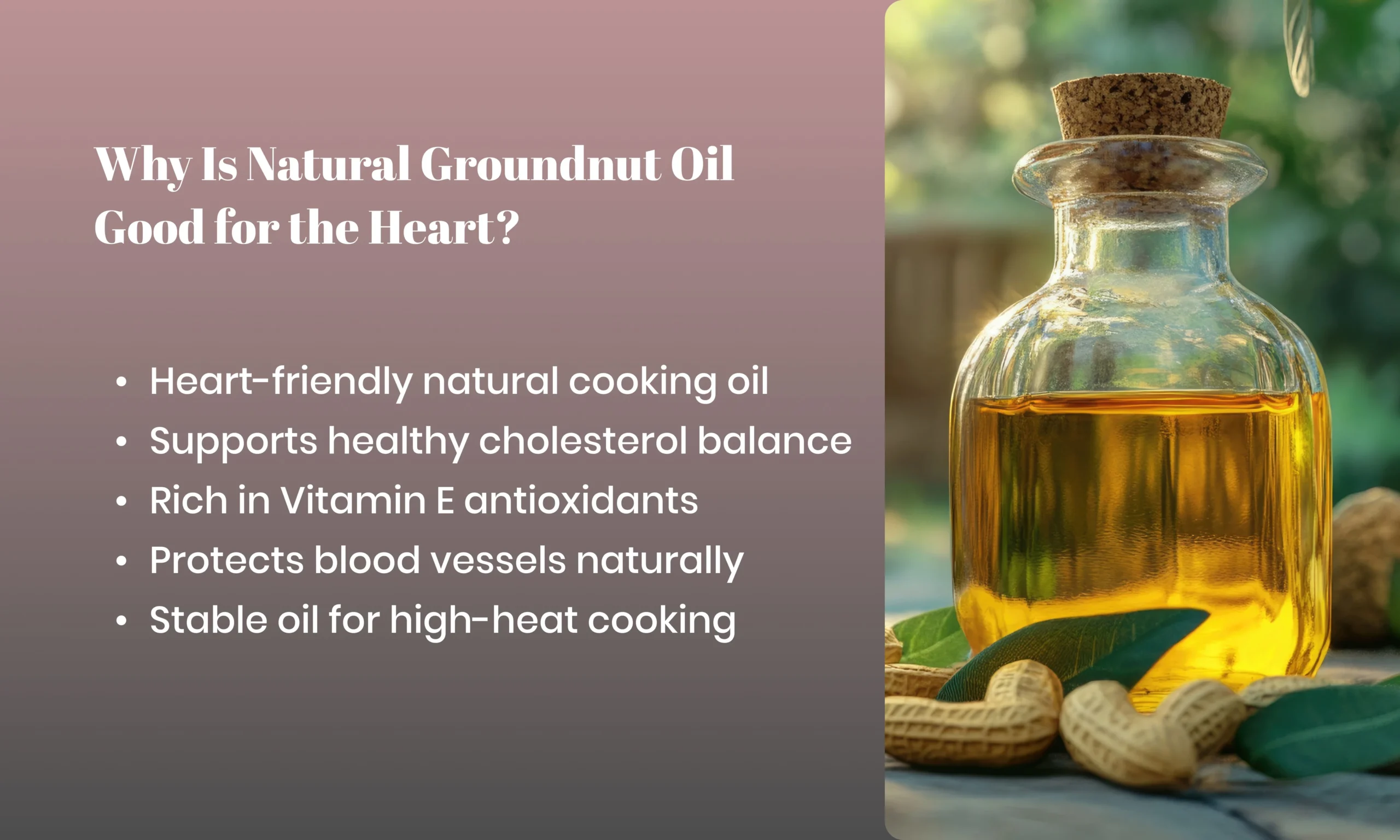
Why Is Natural Groundnut Oil Good for the Heart?

The biggest reason people choose natural groundnut oil is its heart-friendly properties.
First, it helps maintain a healthy cholesterol balance. The good fats present in the oil can help reduce bad cholesterol levels while supporting good cholesterol.
Second, it contains antioxidants like Vitamin E, which protect blood vessels from damage. These compounds play a role in reducing oxidative stress, a key factor in heart health.
Another advantage is its cooking stability. Unlike many oils that break down at high temperatures, peanut cooking oil remains stable, making it safer for regular use. This is why many consider it among the best groundnut oil for cooking.

How to Incorporate Natural Groundnut Oil into Diet

Using natural groundnut oil in your daily meals is simple and practical.
It works well for frying, sautéing, and tempering, making it suitable for Indian cooking styles. Whether you are preparing snacks or regular meals, it performs consistently.
Many people prefer peanut oil for frying because it maintains flavour without becoming too heavy. It can also be used in baking or even as a light dressing for added taste.
The key is moderation. Even though it is healthy, it is still calorie-dense, so balanced usage is important. natural groundnut oil

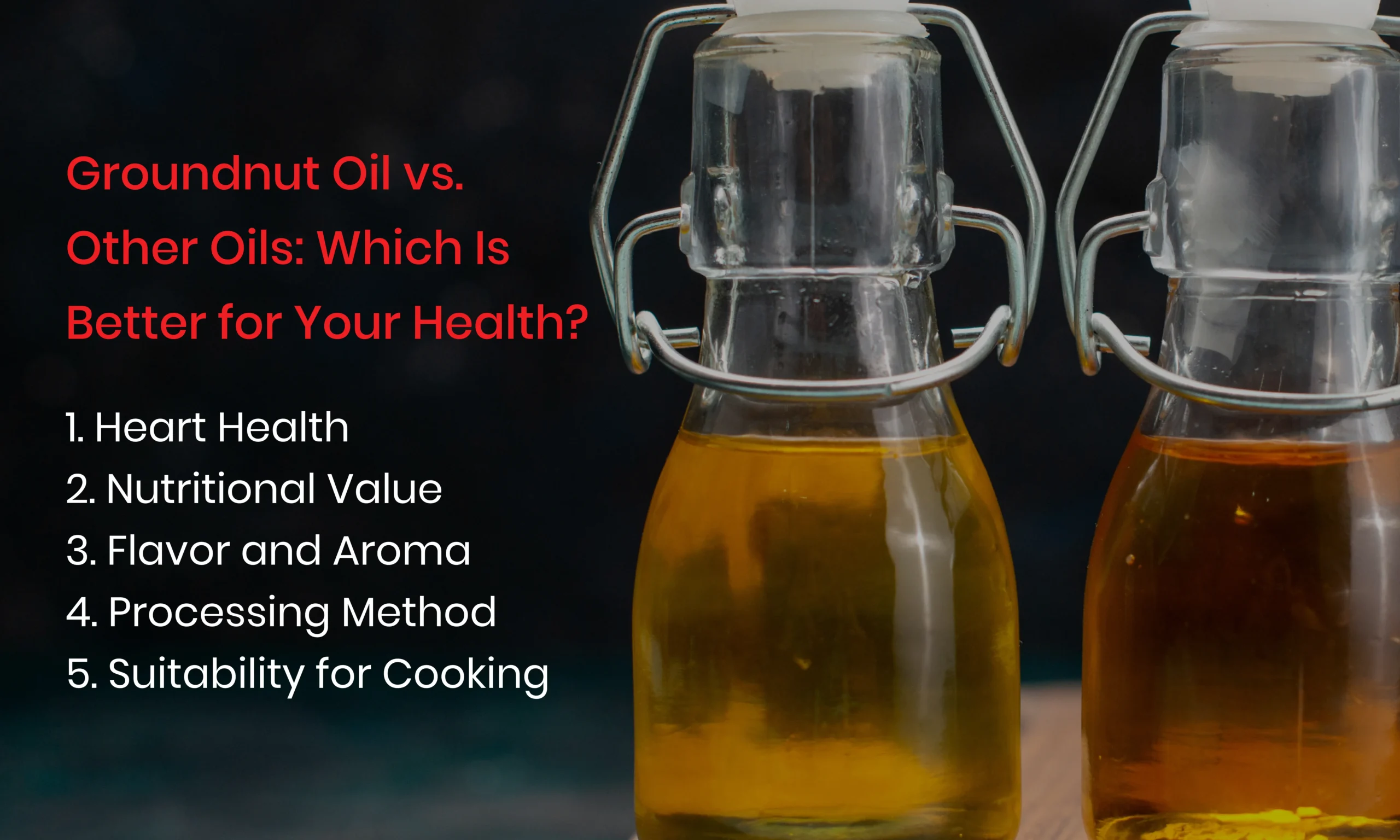
Groundnut Oil vs. Other Oils: Which Is Better for Your Health?

1. Heart Health

Compared to many refined oils, natural groundnut oil offers a better balance of healthy fats that support cardiovascular health.

2. Nutritional Value

Unlike processed oils, it retains nutrients, making it a stronger option than many alternatives marketed as refined or light oils.

3. Flavor and Aroma

It has a mild, nutty taste that enhances dishes without overpowering them. This makes it more versatile than strongly flavoured oils.

4. Processing Method

The difference lies in how the oil is made. Natural oils like chekku groundnut oil are minimally processed, while refined oils lose nutrients during chemical treatment.

5. Suitability for Cooking

Thanks to its high smoke point, it is suitable for deep frying, sautéing, and everyday cooking, making it one of the best peanut oil options available.

How to Choose the Best Groundnut Oil for Cooking

Choosing the best groundnut oil requires attention to a few simple details.
Start by checking the label. Look for oils that are chekku-pressed rather than refined. These retain more nutrients and flavour.
Next, observe the colour and aroma. A good quality oil usually has a golden shade and a natural nutty smell.
Packaging also matters. A good groundnut oil bottle should be properly sealed and stored away from light to maintain freshness.If you are comparing options, factors like peanut oil cost or gulab oil price may vary depending on processing and quality. Always prioritise purity over price.

Why Consider Natural Groundnut Oil from SGR 777 Foods?

When choosing a trusted option, quality and consistency matter. SGR 777 Foods is known for maintaining traditional methods while ensuring modern standards of purity.
Their oils are minimally processed, helping retain natural nutrients and flavour. This makes them suitable for daily cooking, whether you are frying, sautéing, or preparing traditional dishes.
For those looking for reliable quality, their natural groundnut oil options offer a balance of authenticity and convenience.

Conclusion

So, is natural groundnut oil good for your heart? The answer is yes—when used in moderation.
Its combination of healthy fats, antioxidants, and cooking stability makes it a strong choice for everyday use. More importantly, it fits perfectly into Indian cooking habits without compromising on taste or nutrition.
Choosing the right oil is not just about health—it’s about consistency, quality, and how well it works in your kitchen.

FAQs

How to identify pure groundnut oil? Check for a natural aroma, golden colour, and labels that mention chekku-pressed extraction.
Is groundnut oil bad for fatty liver? When used in moderation, it is generally considered safe. However, overall diet and lifestyle also play a key role.
What is groundnut oil used for? It is commonly used for frying, sautéing, tempering, and everyday cooking.
How is groundnut oil produced? It is extracted from peanuts, either through traditional pressing methods or modern refining processes.

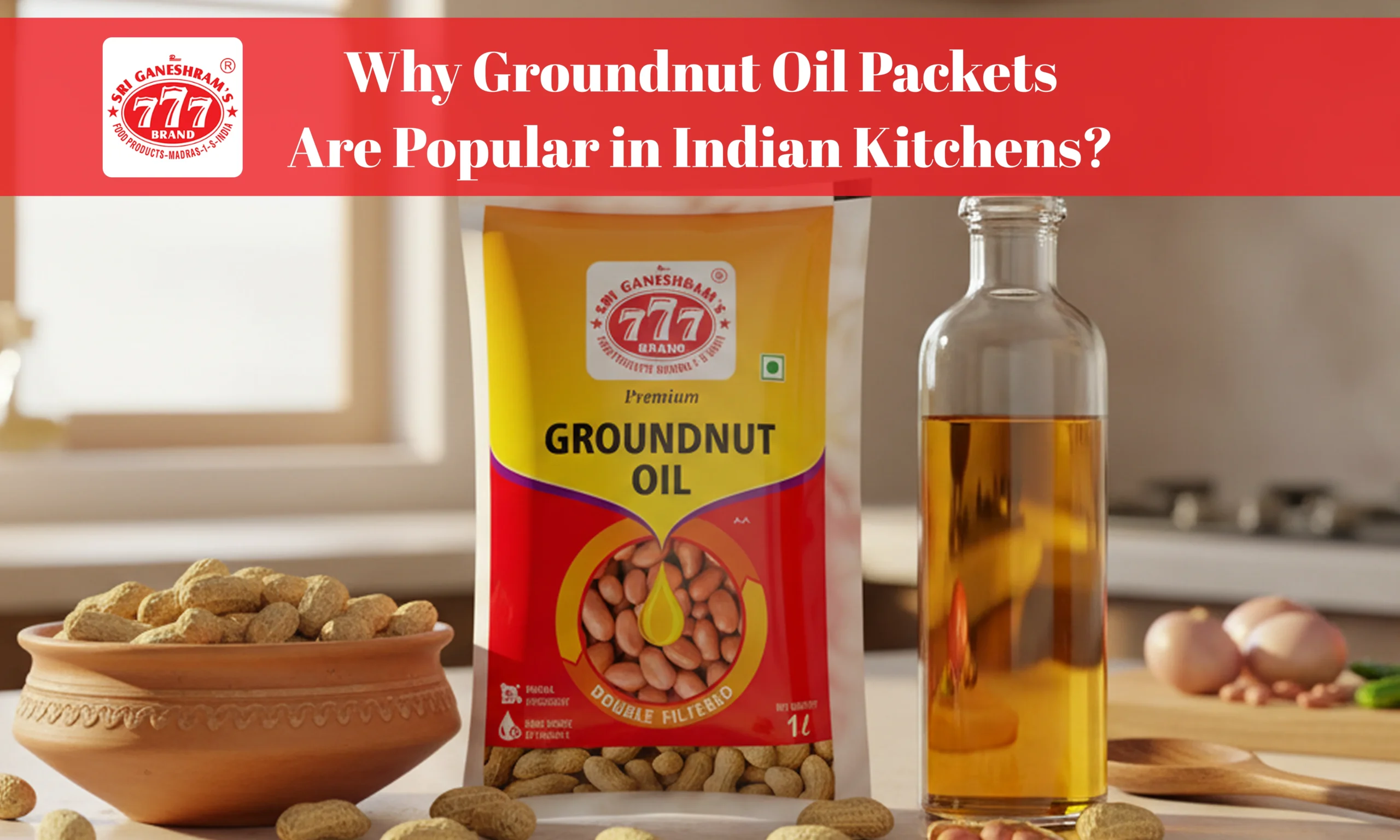
Why Groundnut Oil Packets Are Popular in Indian Kitchens?

Introduction

In most Indian households, cooking oil is something you buy regularly, not in bulk once a year. That’s one of the main reasons why the groundnut oil packet has become such a common sight in kitchens today. It’s practical, affordable, and fits perfectly into everyday cooking habits.At the same time, people are becoming more conscious about what they cook with. This is where groundnut cooking oil stands out—it offers a balance of taste, health, and convenience, especially when bought in smaller, easy-to-use packets.

What Is Groundnut Oil?

Before understanding why the groundnut oil packet is popular, it helps to know what is groundnut oil. It is a vegetable oil extracted from peanuts and is widely used across Indian kitchens for daily cooking.

What makes it special is its ability to handle high heat without breaking down. Whether you’re frying snacks or preparing curries, this oil stays stable and doesn’t overpower the dish.

There are different types available today. Traditional chekku groundnut oil is known for its rich aroma and minimal processing, while refined versions are lighter and more neutral in taste.

Why Are Groundnut Oil Packets Popular in Indian Kitchens?

The growing demand for the groundnut oil packet is not accidental—it’s driven by everyday practicality.
First, affordability plays a big role. When you compare the groundnut oil price of packets with larger containers, packets are easier on the pocket for daily use. This makes them ideal for households that prefer buying fresh oil frequently.
Second, convenience matters. A groundnut oil packet is easy to store, pour, and replace. In smaller kitchens, especially in cities, compact packaging makes a real difference.
Another reason is freshness. Buying oil in smaller quantities ensures it doesn’t sit unused for too long. This helps maintain both taste and quality, which is especially important for cooking.

Health Benefits of Groundnut Oil

Many people choose this oil not just for convenience but also for its health value. The groundnut oil benefits come from its balanced fat profile and natural nutrients.
It contains healthy fats that support heart health when used in moderation. The benefits of groundnut oil also include the presence of Vitamin E, which acts as an antioxidant and supports overall wellness.
Because it is naturally cholesterol-free, it is often considered a better alternative to heavily processed oils. This is one reason why many believe peanut oil for frying is a smarter option compared to other refined oils.

Groundnut Oil Uses in Cooking

One of the biggest advantages of this oil is its versatility. The various groundnut oil uses make it suitable for almost every Indian dish.
It works well for deep frying snacks like samosas and pakoras because of its high smoke point. At the same time, it is equally effective for everyday cooking—whether it’s sautéing vegetables or preparing gravies.
Many households also use it for tempering spices, where the oil carries flavors without overpowering them. This is why it is often considered among the best groundnut oil for cooking in Indian kitchens.

Groundnut Oil Packet Price and Buying Guide

The groundnut oil packet price usually varies depending on the type and brand. On average, a 1-litre packet ranges from budget-friendly filtered options to slightly higher-priced chekku-pressed variants.If you’re comparing options, you’ll also notice differences in peanut oil price depending on processing methods. chekku-pressed oils tend to cost more but retain more nutrients, while refined oils are more economical.When planning to buy peanut oil, always check the label. Make sure it mentions 100% pure oil and avoids unnecessary additives. This simple step ensures better quality for daily cooking.

How to Choose the Best Groundnut Oil for Cooking?

Choosing the best groundnut oil depends on how you cook.
If your cooking involves regular frying, a refined oil might suit your needs better due to its higher stability. On the other hand, for daily meals and traditional dishes, chekku-pressed oils offer better flavour and nutrition.Always check the colour and aroma. Good quality oil usually has a natural golden shade and a mild nutty smell. If it feels too thin or smells artificial, it may not be the right choice.
Beyond the physical appearance, the manufacturing process plays a huge role in the quality of natural groundnut oil. When you are browsing the aisles, take a moment to look at the peanut oil packet for labels. These labels indicate that the peanut oil benefits are preserved, and not lost in high-heat refining. While the pure groundnut oil price might be slightly higher for these premium variants, the investment pays off in both flavor and the peace of mind that you are using a truly healthy cooking oil.
It is also helpful to consider the various uses of groundnut oil in your daily kitchen routine. Whether you are deep-frying, sautéing, or even using it in dressings, a high-quality oil should remain stable and enhance the taste of your ingredients rather than overpowering them. By choosing a product that prioritizes purity, you ensure that every meal benefits from the rich nutritional profile inherent in the legume.Understanding which groundnut oil is best ultimately comes down to your cooking style and preference. groundnut oil packet

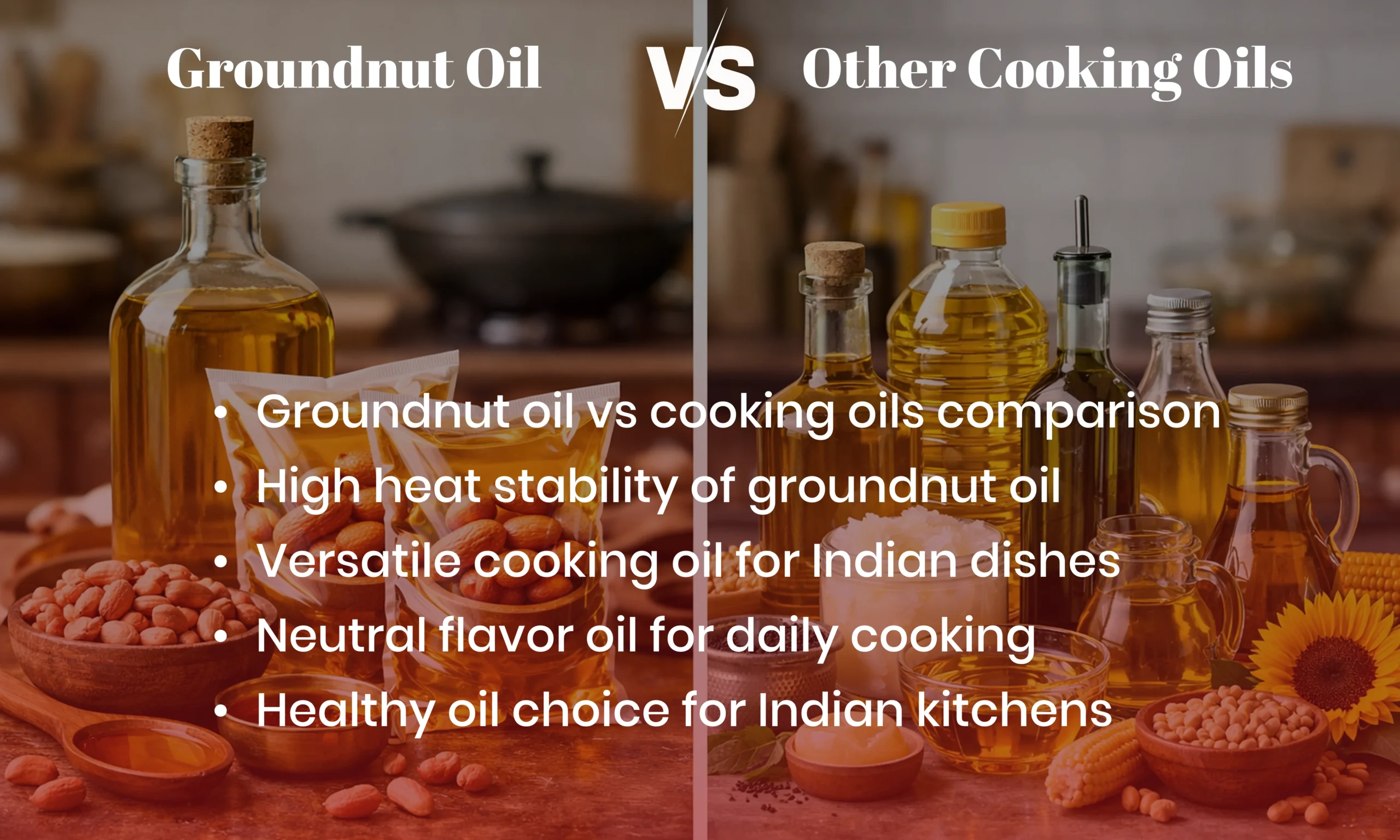
Groundnut Oil vs Other Cooking Oils

When compared to other oils, groundnut oil strikes a balance between performance and nutrition. While some oils are marketed as lighter, they may not always perform well under high heat.
Groundnut oil, on the other hand, remains stable and versatile. It doesn’t dominate the flavour of food, which makes it suitable for a wide range of dishes.
For many Indian households, this combination of reliability and taste is what makes it one of the best groundnut oil choices for daily use. groundnut oil packet

Where to Buy Quality Groundnut Oil Packets?

Today, it’s easy to find options both online and offline. Supermarkets, local stores, and e-commerce platforms all offer a wide range of choices.

If you’re looking for convenience, many platforms allow you to compare groundnut oil packet price and explore options available for peanut oil for sale. This helps you choose based on both budget and quality.

Why Choose Quality Groundnut Oil from SGR 777 Foods?

When it comes to consistency and trust, brands matter. SGR 777 Foods has built a reputation for delivering quality oil that suits everyday cooking needs.
Their oils are processed in a way that retains natural flavour while ensuring purity. Whether you are using it for frying or regular cooking, the quality remains consistent.
For households that prefer convenience without compromising on quality, their groundnut oil packet options are designed to fit perfectly into daily life.

Conclusion

The popularity of the groundnut oil packet comes down to simple, practical reasons. It’s easy to use, easy to store, and fits the way Indian kitchens function every day.
At the same time, it offers reliable performance and health benefits, making it a preferred choice for cooking. Whether you’re buying for convenience or quality, it continues to be a staple in modern households.

FAQs

What is the color of groundnut oil? Good quality oil usually has a golden-yellow or light amber colour.
Can you fry with groundnut oil? Yes, it is ideal for frying due to its high heat stability.
What kind of oil is groundnut oil? It is a plant-based vegetable oil extracted from peanuts.
Is groundnut oil good for daily cooking? Yes, when used in moderation, it is suitable for everyday cooking.

Groundnut Oil Nutrition Facts and Why It’s Good for Your Diet

Introduction

When choosing a healthy cooking oil, nutrition plays a key role in long-term health. Many households prefer groundnut oil because of its balance of taste, stability, and nutritional value. Understanding Groundnut Oil Nutrition helps you make better decisions about what you cook with every day.
Groundnut oil, also known as peanut oil, is widely used in Indian kitchens due to its versatility and high smoke point. Beyond cooking performance, it offers several health benefits that support overall wellness when used in moderation.

Groundnut Oil Nutrition Facts

To understand why this oil is popular, it’s important to look at Groundnut Oil Nutrition in detail. Groundnut oil is almost entirely made up of fats, but these are primarily healthy fats that support heart function and energy levels.
Per 100 grams, the nutritional value of groundnut oil includes around 884 calories and 100 grams of fat, with zero cholesterol, carbohydrates, or protein.
The fat composition is what makes this oil stand out. It contains a high percentage of monounsaturated fats, followed by polyunsaturated fats and a smaller portion of saturated fats. This balanced groundnut oil percentage of fats contributes to its health benefits.
Another important factor is the oil content in groundnut, which is naturally high. This makes it an efficient and nutrient-dense cooking oil suitable for everyday use.As mentioned earlier, groundnut oil nutrition facts reveal that it is a calorie-dense energy source. Because the oil percentage in groundnut kernels usually ranges between 45% and 55%, the resulting oil is a highly concentrated form of the legume’s best properties, offering a robust groundnut oil nutritional value that includes a high smoke point suitable for various cooking methods.Added to the healthy fats, the specific groundnut oil vitamins play a crucial role in cellular protection. It is particularly known for being one of the best dietary sources of Vitamin E, an antioxidant that helps neutralize free radicals in the body. When comparing different fats, peanut oil nutrition stands out because it also contains phytosterols, which naturally compete with cholesterol absorption in the digestive tract. By integrating this oil into your meals, you are not just adding flavor but also a complex suite of nutrients that support skin health and immune function.

Health Benefits of Groundnut Oil

The groundnut oil benefits go beyond just cooking. Its nutrient profile supports multiple aspects of health when used as part of a balanced diet.
One of the key benefits of groundnut oil is its role in heart health. The presence of monounsaturated fats helps reduce bad cholesterol levels while maintaining good cholesterol. This makes it a better alternative to saturated fats like butter.
Groundnut oil is also rich in antioxidants, especially Vitamin E, which helps protect the body from free radical damage. These properties contribute to better immunity and overall wellness.
Another advantage is its potential role in blood sugar control. The fat composition helps improve insulin sensitivity, making it a suitable option for people managing blood sugar levels.
These combined peanut oil health benefits make it a reliable addition to a healthy diet.
Groundnut Oil Nutrition

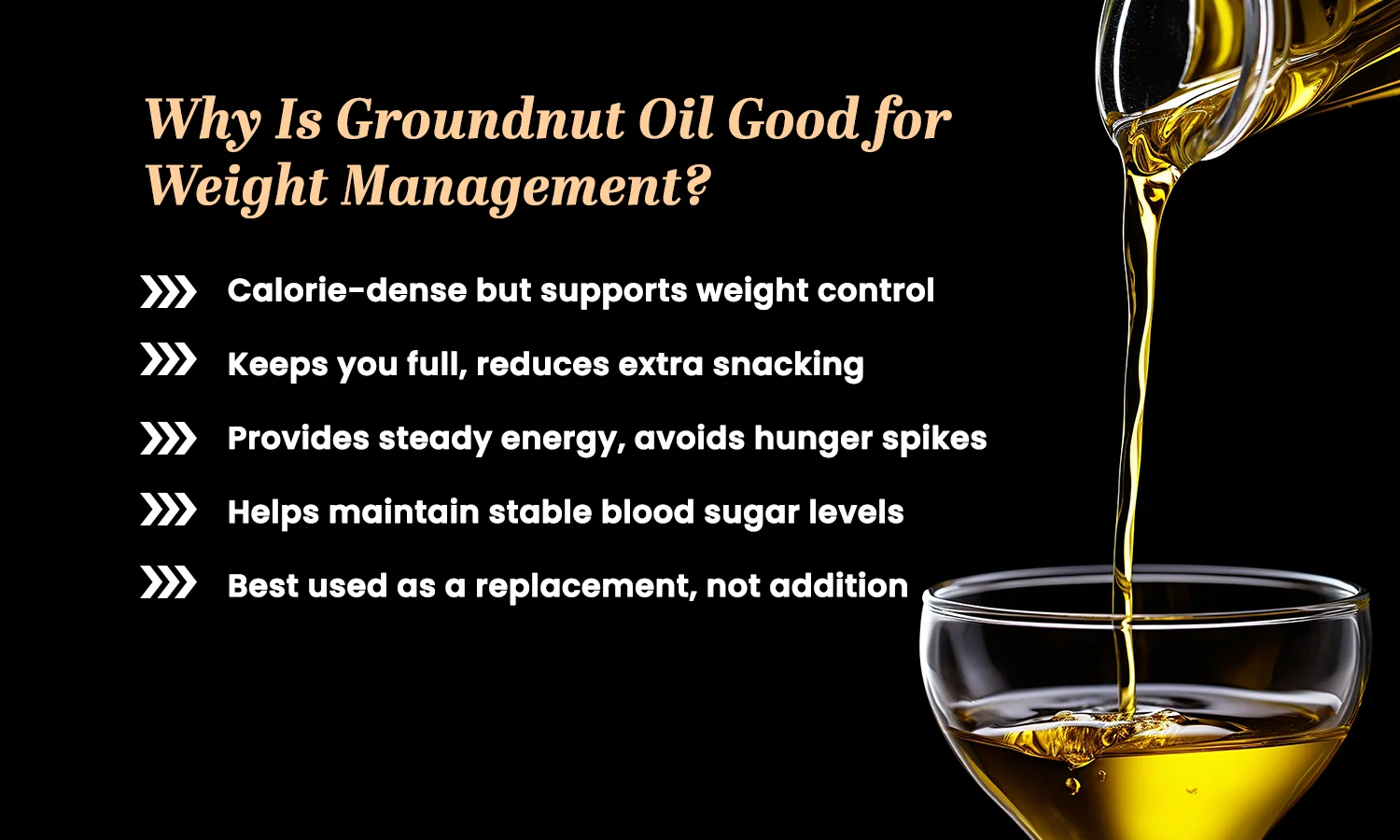
Why Is Groundnut Oil Good for Weight Management?

Despite being calorie-dense, groundnut oil can support weight management when used correctly. The fats in the oil promote satiety, helping you feel full for longer and reducing unnecessary snacking.
Unlike refined oils that may lead to quick hunger spikes, groundnut oil provides steady energy. This helps maintain stable blood sugar levels and supports better metabolism.
Using groundnut oil as a replacement for unhealthy fats rather than an addition is key. When used in moderation, it fits well into a balanced diet focused on long-term weight control.
This is one reason why many consider it a practical, healthy cooking oil for daily meals.

Which Groundnut Oil Is Best for Everyday Cooking?

Choosing the right type of oil matters just as much as understanding its nutrition. If you’re wondering which groundnut oil is best, cold-pressed or wood-pressed options are often preferred.
These oils are extracted without high heat or chemicals, helping retain natural nutrients and antioxidants. They also preserve the authentic aroma and flavour of groundnuts.Refined oil, on the other hand, offers a more neutral taste and is suitable for high-heat cooking like deep frying. However, it may lose some of its natural nutrients during processing.
When selecting the best groundnut oil in India, it’s important to look for purity, minimal processing, and proper certifications to ensure quality.
Groundnut Oil Nutrition

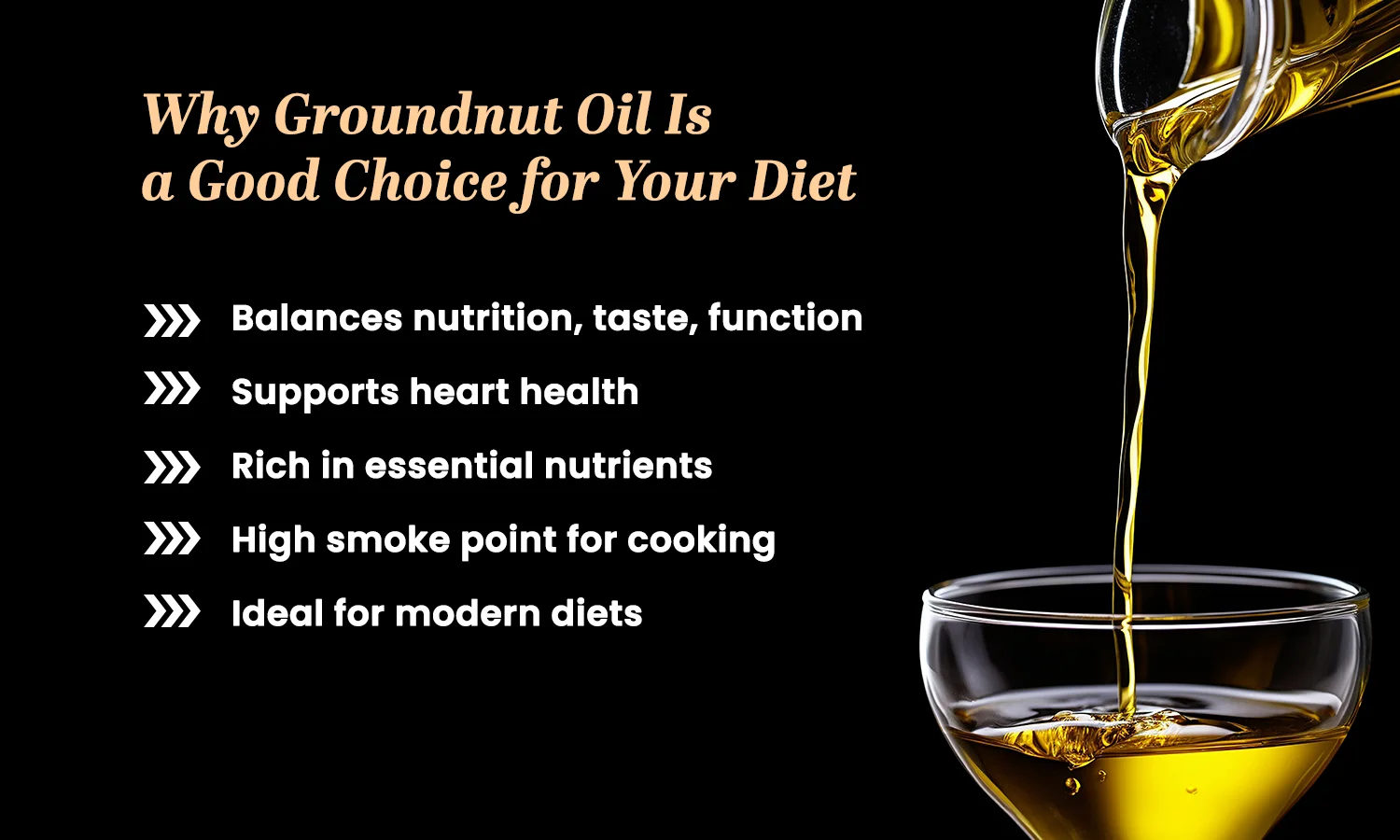
Why Groundnut Oil Is a Good Choice for Your Diet

Groundnut oil stands out because it balances nutrition, taste, and functionality. It supports heart health, provides essential nutrients, and performs well in various cooking methods.
Its high smoke point makes it suitable for frying, sautéing, and everyday cooking without breaking down easily. At the same time, its nutritional profile supports overall health when used in moderation.For those looking for a versatile groundnut cooking oil, it offers both health benefits and convenience. This makes it a reliable choice for modern diets that focus on both taste and nutrition.

Conclusion

Understanding Groundnut Oil Nutrition helps you see why this oil remains a staple in many kitchens. It is rich in healthy fats, contains essential antioxidants, and supports heart health when used wisely.
From everyday cooking to long-term wellness, groundnut oil offers a balanced approach to nutrition. By choosing the right type and using it in moderation, you can make it a valuable part of your daily diet.

FAQs

Is peanut oil a healthy fat?Yes, peanut oil contains mostly unsaturated fats, which are considered healthy for the heart when consumed in moderation.
Can peanut oil reduce inflammation?It contains antioxidants like Vitamin E, which help reduce oxidative stress, but it should be balanced with omega-3 foods for the best results.
What are the positives of peanut oil?It supports heart health, provides antioxidants, and works well for high-heat cooking due to its stability.
Is peanut oil good for diabetics?In moderate amounts, it may help improve insulin sensitivity and support better blood sugar control.
Who should use groundnut oil?Anyone looking for a versatile and healthy cooking oil can use groundnut oil, especially those focusing on heart health and balanced nutrition.

Peanut Oil Is Healthy: Why It’s a Great Choice for Daily Cooking

Introduction

When it comes to choosing the right cooking oil, many people today are asking the same question: Peanut oil is healthy, but is it the best option for daily cooking?. Peanut oil, also known as groundnut oil, has been a staple in Indian kitchens for years. Whether it’s used for frying snacks or preparing everyday meals, it continues to be popular because of its balance between taste, stability, and nutrition.If you’ve ever wondered if peanut oil is good for health or whether it suits a modern lifestyle, understanding its properties can help you make a better choice.

Why Do People Say Peanut Oil Is Healthy for Cooking?

A common question is: Is peanut oil healthy for frying? Due to its high smoke point, it remains stable at high temperatures, making it suitable for deep frying without breaking down quickly. 

There’s a strong reason why many believe peanut oil is healthy for regular use. One of the key factors is its fat composition. It contains a high amount of monounsaturated fats, which are known to support heart health when used in moderation.

Another reason is its cooking performance. Peanut cooking oil has a high smoke point, which allows it to handle high temperatures without breaking down quickly. This makes it suitable for frying, sautéing, and everyday Indian cooking.
From a practical perspective, it also performs well in the kitchen. Refined versions do not transfer flavours between foods, while chekku-pressed oils enhance dishes with a natural nutty aroma. So when people ask if peanut cooking oil is healthy, the answer is yes—especially when used in the right way and quantity. peanut oil is healthy

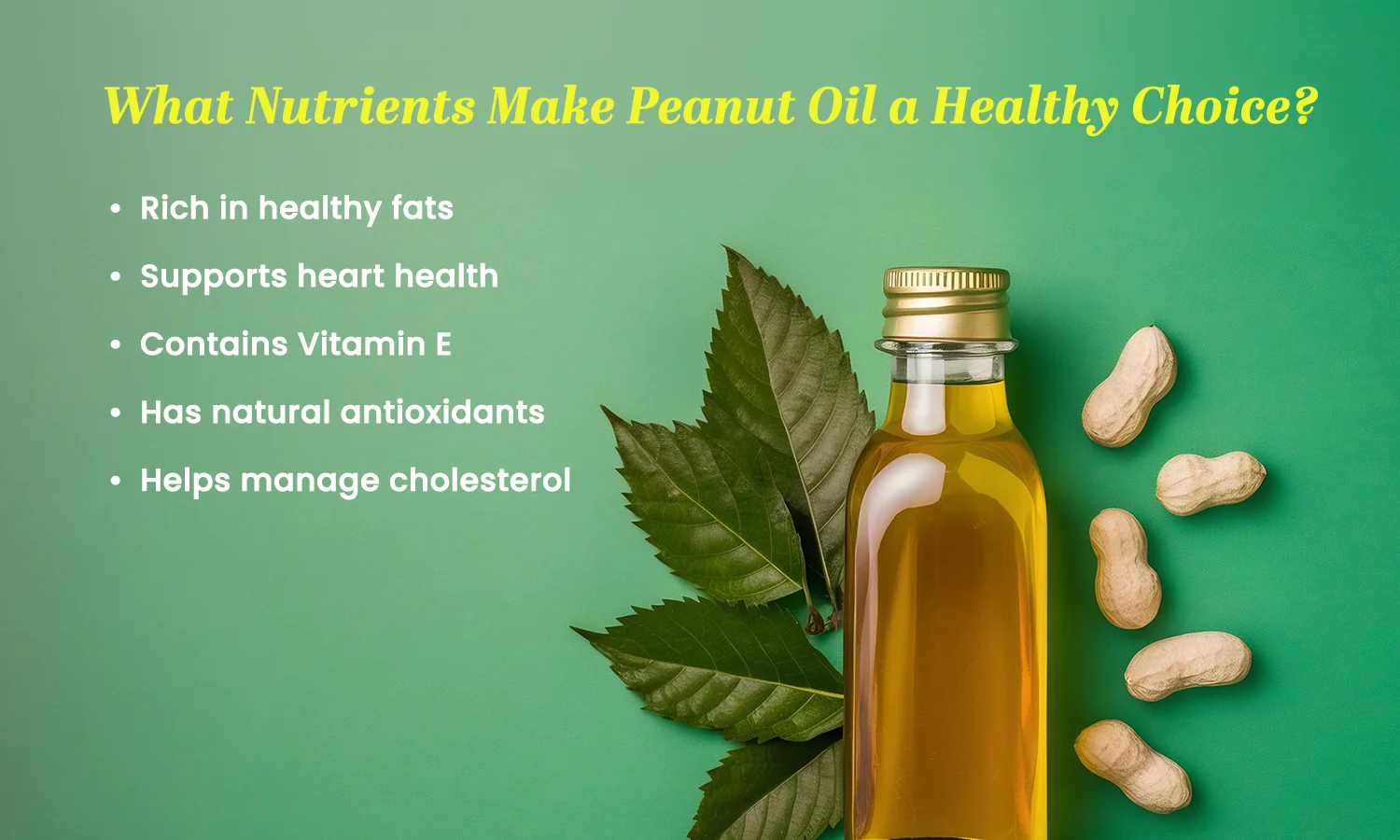
What Nutrients Make Peanut Oil a Healthy Choice?

When looking at peanut oil nutrition facts, it mainly includes healthy fats, Vitamin E, and plant compounds that support overall wellness when consumed in moderation. 

The reason peanut oil is healthy goes beyond cooking—it’s also about what it contains.

Groundnut oil nutrition mainly consists of healthy fats, including monounsaturated and polyunsaturated fats. These help maintain balanced cholesterol levels and support overall heart function. It is also a good source of Vitamin E, an antioxidant that protects cells and supports immunity. Even small amounts used in daily cooking contribute to this benefit.
In addition, it contains plant compounds like phytosterols, which may help reduce cholesterol absorption. Some natural varieties also retain antioxidants like resveratrol. These nutrients together explain the growing awareness around the health benefits of peanut oil.

Peanut Oil Benefits for Health

There are several reasons why peanut oil benefits are often discussed in everyday diets.

The benefits of peanut oil include supporting heart health, providing antioxidants, and offering a stable cooking medium for everyday use. 

First, it supports heart health due to its balanced fat composition. Using it instead of heavily saturated fats can help maintain better cholesterol levels. It also works well for daily cooking because of its stability. Unlike some oils, it doesn’t break down easily under heat, making it a reliable option.
Another advantage is its antioxidant content. Vitamin E helps protect the body from oxidative stress and supports overall wellness. While all oils should be used in moderation, the advantages of peanut oil make it a practical choice for regular meals.

What Are the Main Advantages and Uses of Peanut Oil?

One of the biggest advantages of peanut oil is its versatility in cooking.

There are multiple peanut oil uses, from deep frying snacks to everyday cooking, making it a versatile option in Indian kitchens. 

In Indian kitchens, groundnut oil for cooking is commonly used for frying, sautéing, and tempering. It performs especially well for deep frying because of its high heat stability. It can also be used in baking as a substitute for butter in certain recipes. chekku-pressed oils are often preferred for traditional dishes because of their natural flavour.
Beyond cooking, it is sometimes used for skin and hair care due to its nourishing properties, though its primary use remains culinary. These multiple peanut oil uses make it a convenient option for everyday cooking.

How Does Peanut Oil Compare with Other Cooking Oils?

When compared with other oils, groundnut oil stands out as a balanced option. Compared to olive oil, it performs better for high-heat cooking. Olive oil is usually preferred for low-heat cooking or dressings, while peanut oil is better suited for frying.

Many people also ask is refined peanut oil healthy. Refined versions are more stable for high-heat cooking, while traditional oils retain more natural flavour and nutrients.

When compared with sunflower oil, both are commonly used, but peanut oil offers a slightly better balance of fats. Mustard oil, on the other hand, has a strong flavour, whereas peanut oil remains neutral and versatile. For those looking for a practical option, best groundnut oil for cooking is often one that balances both performance and nutrition.
peanut oil is healthy

Tips for Choosing the Best Peanut Oil

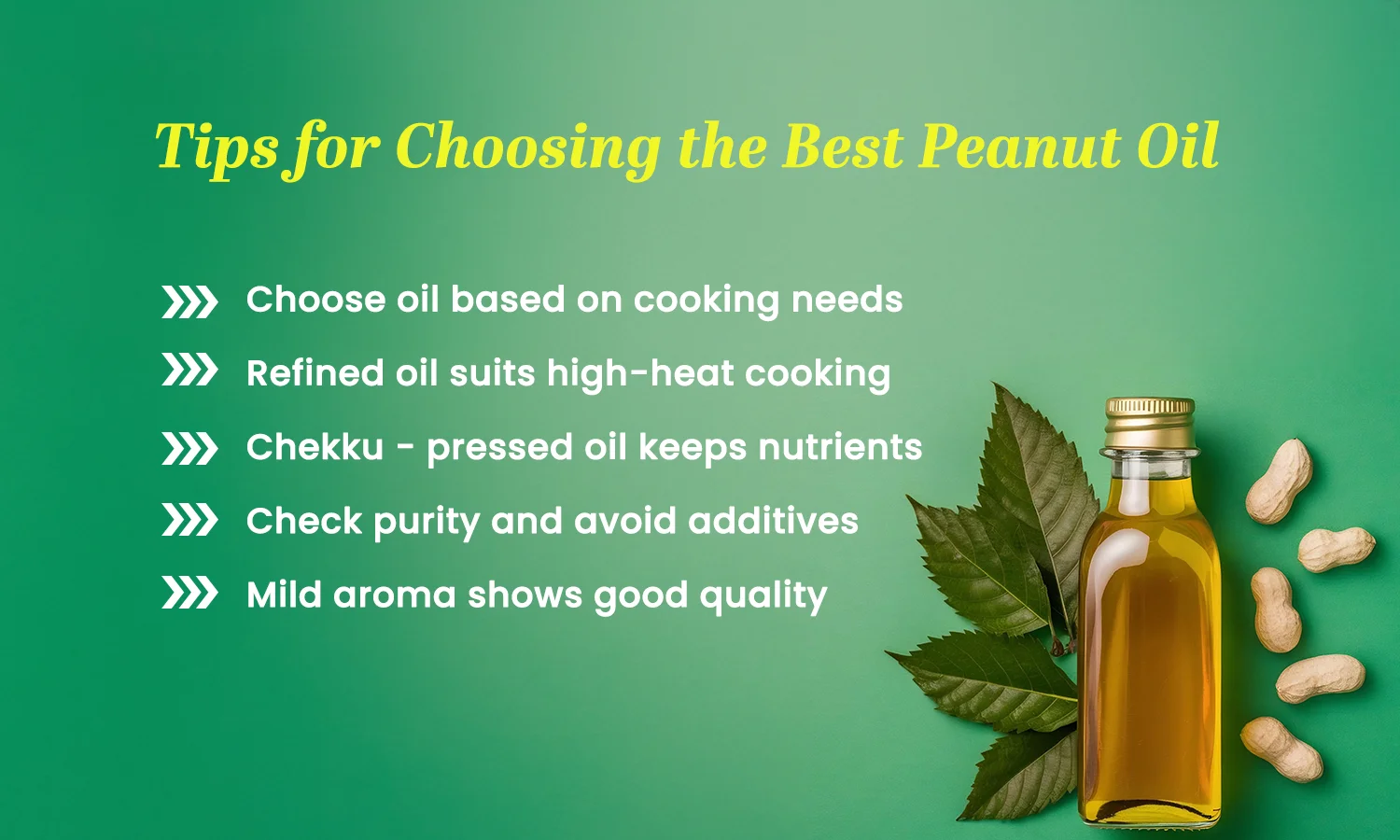
Choosing the right oil depends on your cooking needs.
For high-heat cooking, refined oil is usually the better choice because of its stability. If you prefer a more natural option, chekku groundnut oil or chekku-pressed oil retains more nutrients and flavour. Always check the label and look for oils that clearly mention purity. Avoid products with unnecessary additives.
Simple checks at home can also help. Pure oil will have a mild nutty aroma, while low-quality oil may smell stale or overly processed. Selecting the best groundnut oil for cooking ensures better taste and overall quality in your meals.

Conclusion

So, peanut oil is healthy, but like any ingredient, it depends on how you use it. When used in moderation, it can be a reliable and practical choice for daily cooking.
From its high smoke point to its nutritional value, it fits well into both traditional and modern kitchens. Whether you are frying or preparing everyday meals, it offers a good balance of performance and health. If you’ve been wondering is peanut oil good for health, the answer is simple—it can be, when chosen carefully and used wisely.

FAQs

What is groundnut oil best for? Groundnut oil is best for frying, sautéing, and everyday cooking because it remains stable at high temperatures
When to use peanut oil? It is ideal for deep frying, stir-frying, and regular cooking where high heat is required.
How much groundnut oil per day? Moderation is important. Around 2–3 teaspoons per person per day from all oil sources is generally recommended.
How to check if groundnut oil is pure? You can check purity through smell, texture, and refrigeration tests. Pure oil usually has a natural nutty aroma and consistent texture.

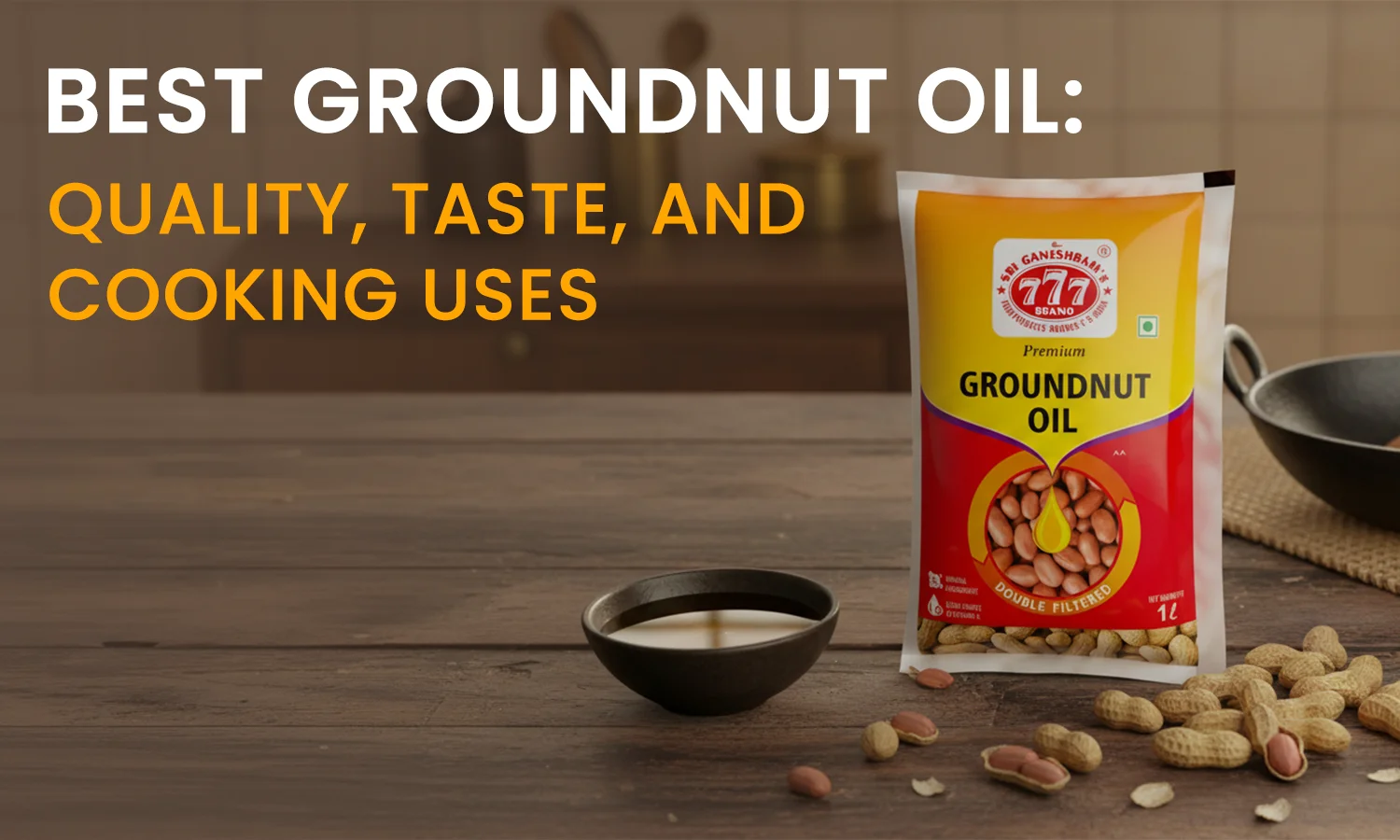
Best Groundnut Oil: Quality, Taste, and Cooking Uses

Best Groundnut Oil: Quality, Taste, and Cooking Uses

Finding the best groundnut oil for a kitchen involves more than just picking a bottle off the shelf; it requires an understanding of how extraction methods impact health and flavor. High-quality oil serves as a foundation for nutritious meals, offering a balance of high heat stability and a rich nutrient profile.

Choosing the best groundnut oil in India depends on quality, processing method, and freshness. best groundnut oil

What Makes Quality Groundnut Oil Different from Others

The primary distinction between premium and mass-produced oils lies in the extraction process. Traditional Chekku groundnut oil is obtained through mechanical pressure at low temperatures. This method ensures that the oil retains its natural molecular structure, unlike refined versions that often use high heat and chemical solvents like hexane.

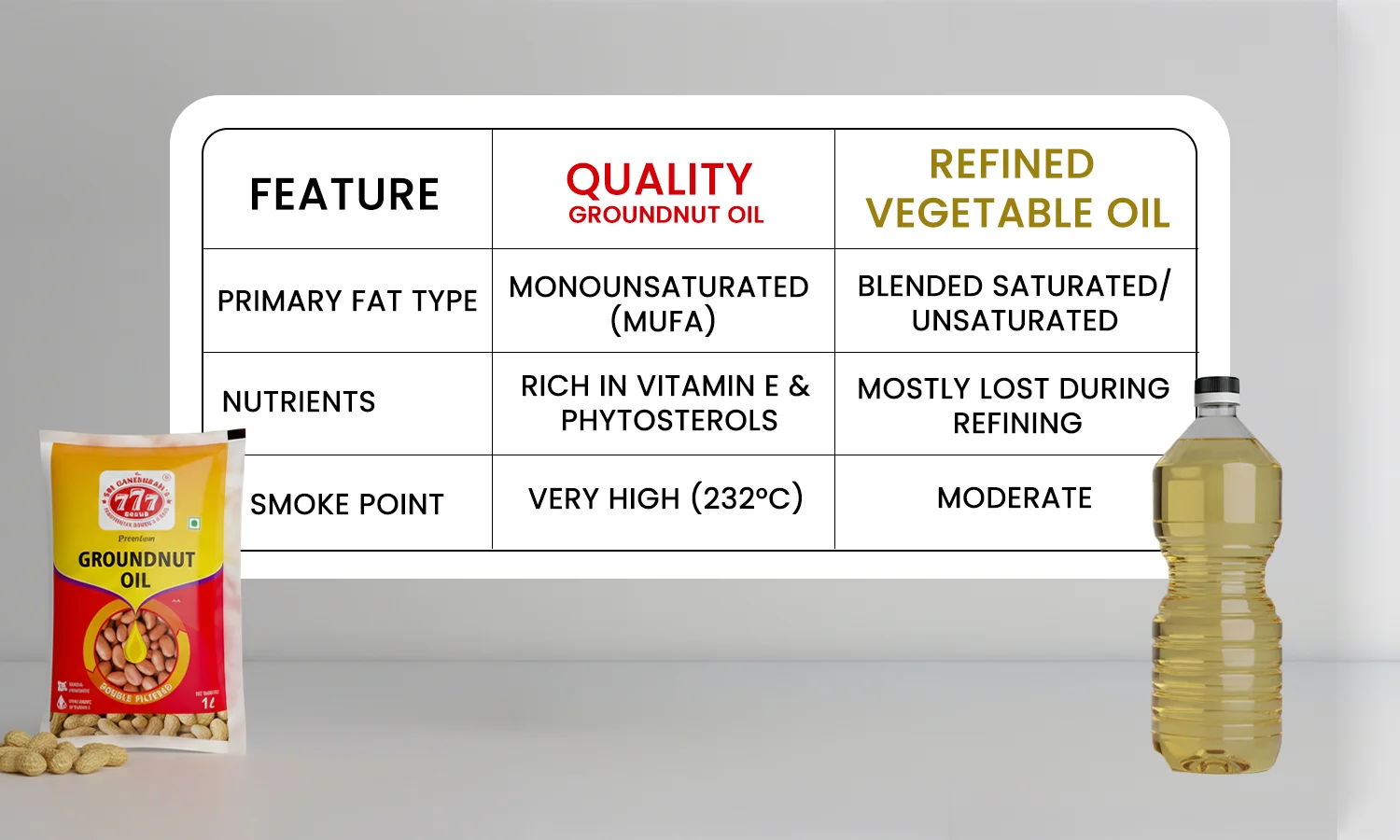
While refined oils are often neutral and flat, quality groundnut oil possesses a distinct, nutty aroma. It is naturally rich in Vitamin E and antioxidants. Furthermore, a high smoke point of approximately 232°C makes it far more stable for intense heat than many other vegetable blends, preventing the formation of harmful compounds during deep frying.

This is what defines true groundnut oil quality, especially when compared to heavily refined oils.

Feature Quality Groundnut Oil Refined Vegetable Oil
Primary Fat Type Monounsaturated (MUFA) Blended Saturated/Unsaturated
Nutrients Rich in Vitamin E & Phytosterols Mostly lost during refining
Smoke Point Very High (232°C) Moderate

Groundnut Oil Nutrition and Health Benefits

From a biological standpoint, groundnut oil nutrition is impressive. It is a calorie-dense fat source that provides nearly 100% of the daily required value of Vitamin E per 100g. Because it contains zero cholesterol, it is a preferred choice for those monitoring cardiovascular wellness.
Many experts agree that groundnut oil is good for health due to its high concentration of monounsaturated fatty acids (MUFA), specifically oleic acid. These fats help manage LDL (bad) cholesterol levels.

Additionally, the presence of resveratrol—a powerful antioxidant—provides cognitive support and helps protect cells from oxidative stress. Regular consumption of groundnut cooking oil as a replacement for saturated fats has also been linked to improved insulin sensitivity.

These properties show that groundnut oil is mainly groundnut oil saturated or unsaturated, with a higher proportion of healthy unsaturated fats.

Groundnut Oil Uses in Cooking

The versatility of groundnut oil for cooking is a result of its unique ability to resist flavor transfer. This means one can fry savory snacks and sweet treats in the same batch without the flavors mixing.

  • Deep Frying: Its stability at high temperatures makes it the “gold standard” for achieving golden, non-greasy textures in snacks like pakoras or vadas.
  • Tempering (Tadka): It effectively carries the essence of spices like mustard seeds and curry leaves deep into dals.
  • Baking: As a plant-based substitute for butter, it adds moisture and a subtle sweetness to muffins and breads.
  • Preservation: Due to its natural stability, it is frequently used in pickling to ensure the longevity of condiments.

Because of its stability, many consider it the best peanut oil for cooking across different recipes.

What Does Groundnut Oil Taste Like?

The flavor profile depends largely on the processing. Refined groundnut cooking oil is almost odorless and neutral, acting as a blank canvas. In contrast, chekku-pressed varieties offer a rich, authentic earthiness that resembles raw peanuts. For those seeking even deeper notes, gourmet roasted versions provide a smoky finish often used for drizzling or dressings.

The groundnut oil taste can vary from mild to rich depending on how it is processed. The natural taste of groundnut oil is slightly nutty and enhances the flavour of everyday dishes.

How to Choose the Best Groundnut Oil for Cooking?

Selecting the right product requires a quick check of the label and the oil’s physical characteristics.

  • Extraction Method: Prioritize chekku-Pressed labels to ensure the highest peanut oil benefits are preserved.
  • Color and Clarity: Look for a rich golden-yellow hue. Slight cloudiness is a positive sign of minimal processing.
  • Aroma: Fresh oil must have a pleasant, distinct peanut scent. A sharp or chemical smell usually indicates rancidity.
  • Packaging: Since light can degrade quality, oils stored in dark or opaque containers generally stay fresh longer.

Always look for pure groundnut oil that is minimally processed and free from additives. best groundnut oil

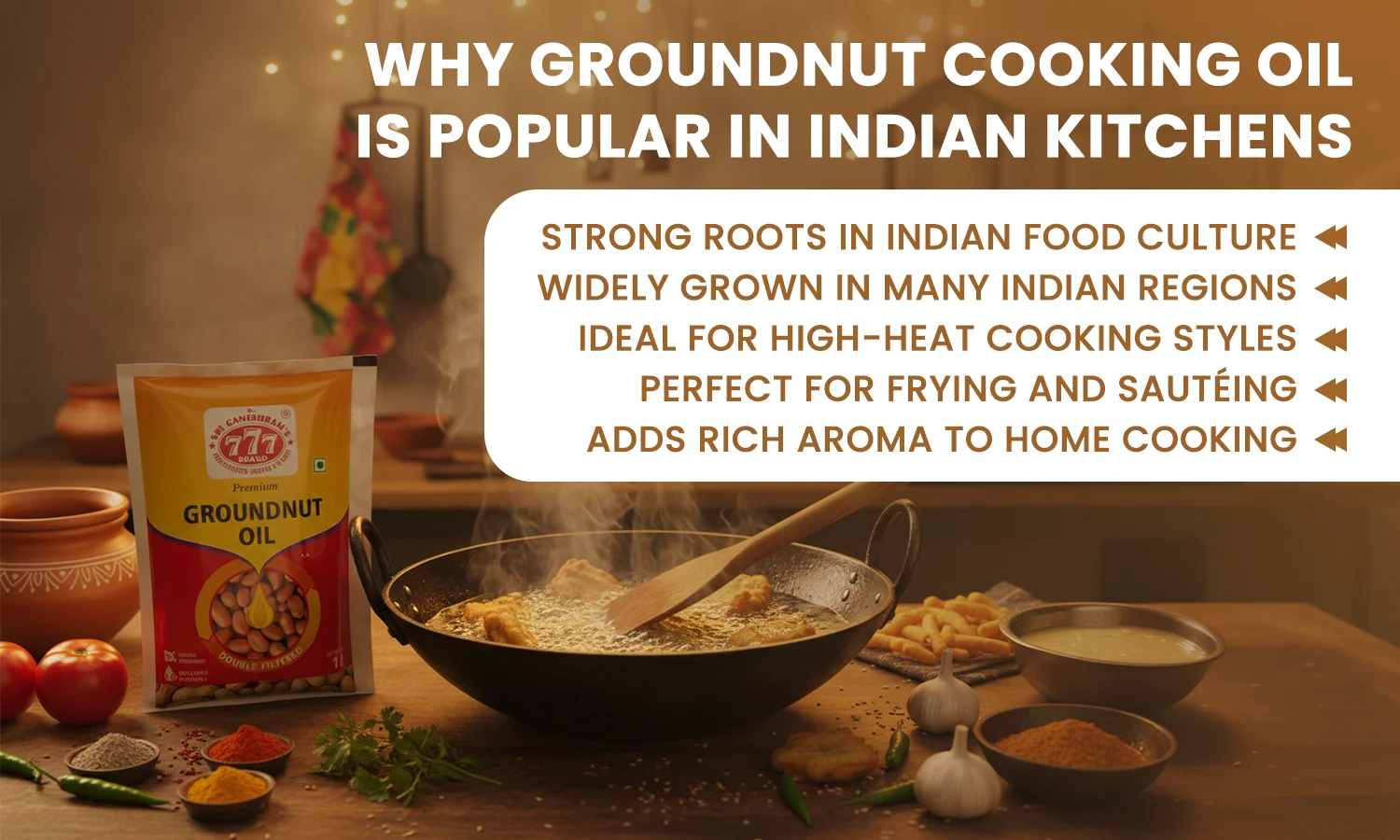
Why Groundnut Cooking Oil Is Popular in Indian Kitchens

The deep-rooted popularity of this oil in India stems from its geographic and cultural history. In regions like Gujarat, Maharashtra, and South India, groundnuts are a local staple.

Beyond accessibility, the oil’s superior heat stability matches traditional Indian techniques like high-heat sautéing and deep frying. The unmistakable scent of groundnuts hitting a hot pan is often associated with home-cooked meals, making it a central part of the country’s culinary identity.

This popularity is also due to the availability of natural groundnut oil in many regional markets.

Conclusion

Integrating quality best peanut oil into a daily routine offers a simple way to enhance both the flavor and nutritional value of meals. Whether used for a simple tadka or heavy frying, its stability and heart-healthy profile make it a reliable kitchen essential. For those looking to return to traditional, nutrient-dense cooking, choosing a chekku-pressed variety ensures that every meal is as wholesome as it is delicious.

Key Takeaways

  • The best groundnut oil is usually chekku-pressed to retain Vitamin E and heart-healthy fats.
  • A high smoke point of 232°C makes it ideal for deep frying without breaking down.
  • It does not absorb flavors, allowing for versatile use in varied recipes.
  • It offers significant groundnut oil benefits, including cholesterol management and antioxidant protection.

These points clearly highlight the overall Groundnut oil cooking benefits for daily use.

FAQs

Does groundnut oil help in weight loss?While it is calorie-dense, the healthy fats in this oil can promote satiety, helping readers feel full for longer. Replacing saturated fats with the unsaturated fats found here may support metabolic health, though portion control remains vital.
Can groundnut oil help with inflammation?Yes, the presence of Vitamin E and resveratrol provides antioxidant properties that may help reduce oxidative stress in the body. However, because it contains Omega-6 fatty acids, it should be balanced with Omega-3 sources like flaxseeds for the best results.
Can you reuse groundnut oil after frying?Yes, due to its high smoke point and stability, it can be reused more effectively than many other oils. It is important to strain out food particles and store it in a cool, dark place, but it should be discarded if it becomes dark or develops an off-odor.
Is groundnut oil good for the liver?The unsaturated fats and Vitamin E found in high-quality oil can support overall metabolic functions. Since it helps manage cholesterol and lipid profiles, it is generally considered a heart- and liver-friendly option when consumed in moderation.
Does groundnut oil have low cholesterol?Actually, pure plant-based oils like groundnut oil contain zero cholesterol. They are naturally cholesterol-free and contain phytosterols, which may actually help lower the absorption of cholesterol in the body.

Pure Groundnut Oil: 10 Tips to Choose and Store It the Right Way

What Is Pure Groundnut Oil?

If you’ve ever cracked open a fresh bottle of oil and been hit by the unmistakable scent of roasted peanuts, you’ve found the “pure” stuff. But what is groundnut oil in its most authentic form? It is the fat squeezed out of peanut seeds using nothing but mechanical pressure. No harsh chemicals. No high-heat industrial processing.

When we talk about pure groundnut oil, we are usually talking about chekku-Pressed or Chekku groundnut oil. These traditional methods keep the temperature low (below 45°C). That’s the big secret. Keeping it cool preserves the Vitamin E and the heart-healthy fats that usually vanish in a factory.

The strong smell of groundnut oil is often the first sign that you are using a natural and unprocessed product. 

Why Pure Groundnut Oil Is a Healthy Choice

Is pure groundnut oil good for health? Honestly, it is one of the easiest upgrades you can make for your family. It is naturally 100% cholesterol-free. It’s also packed with Monounsaturated Fatty Acids (MUFA)—the same “good fats” people pay a premium for in olive oil.

The groundnut oil benefits carry a natural hit of resveratrol (the same antioxidant in red wine) and enough Vitamin E to keep your skin from looking dull. Plus, with a high smoke point of about 232°C, it won’t break down into nasty toxins when you’re deep-frying snacks for the kids.

This is mainly because of its high groundnut oil smoke point, which keeps the oil stable during cooking.

pure groundnut oil

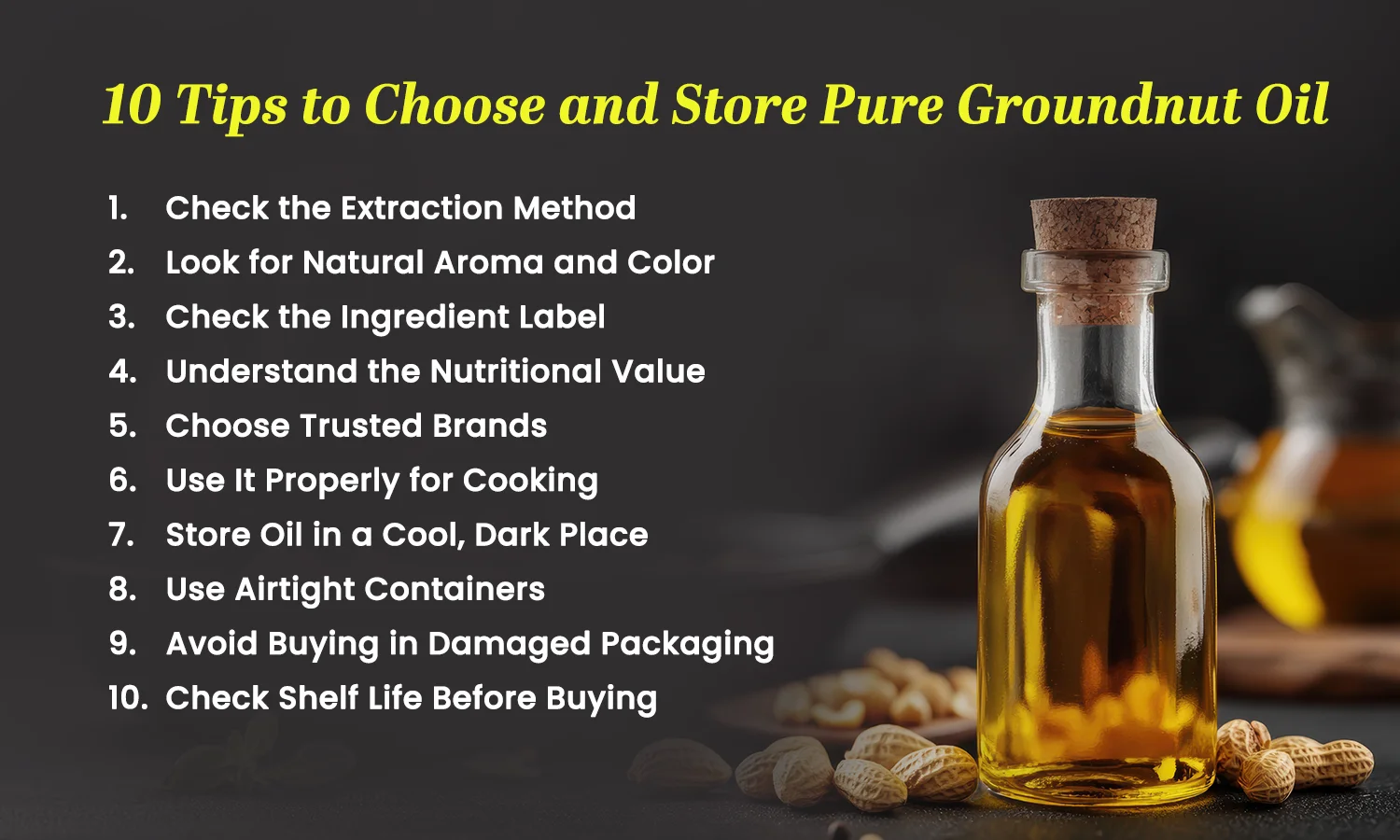
10 Tips to Choose and Store Pure Groundnut Oil

Buying the right oil is only half the battle. Keeping it fresh is where most people slip up. Here is how to do both the right way.

1. Check the Extraction Method

Don’t just look at the pure groundnut oil price. Look for the words “chekku-Pressed,” “Wood-Pressed,” or “Kachi Ghani.” If the label says “Solvent Extracted,” put it back. That version uses chemicals like hexane to get every last drop out of the seeds.

Such oils are often sold as refined groundnut oil, which may lack natural nutrients. 

2. Look for Natural Aroma and Color

Pure oil isn’t shy. It should smell like peanuts. Period. If it is odorless and pale, it’s been bleached and refined. Look for a deep amber-gold color. The natural color of groundnut oil is a good indicator of how minimally it has been processed. 

3. Check the Ingredient Label

The list should have exactly one item: 100% Pure Groundnut Oil. If you see “anti-foaming agents” or “preservatives” like TBHQ or BHA, it isn’t as pure as the bottle claims. A truly original groundnut oil will always have a clean and simple ingredient list. 

4. Understand the Nutritional Value

A high groundnut oil percentage of MUFA is what matters. Check the back of the pack for at least 45-50% monounsaturated fats. That’s the heart-healthy gold.

5. Choose Trusted Brands

Stick with names that have a legacy. In India, brands like SGR 777 have been doing this for over 70 years. They focus on small-batch purity rather than mass-market refining. These brands often focus on delivering premium groundnut oil with better taste and quality. 

6. Use It Properly for Cooking

Groundnut oil uses range from deep-frying to the daily tadka. Because it doesn’t transfer flavors, you can fry different items in the same batch without them tasting like each other.

7. Store Oil in a Cool, Dark Place

Light and heat are the enemies of oil. They cause “oxidation,” which makes the oil go rancid. Keep your bottle in a dark cupboard, tucked away from the heat of the stove. Proper storage helps maintain the purity of groundnut oil for a longer time.

8. Use Airtight Containers

Oxygen turns good oil bad. Fast. Once you open the seal, make sure the cap is on tight every single time. If you buy in bulk, transfer a small amount to a glass bottle for daily use so the main jar stays sealed.

9. Avoid Buying in Damaged Packaging

A dented tin or a leaky bottle isn’t just a mess. It means the oil has already been exposed to air and might be starting to spoil before you even pay for it.

10. Check Shelf Life Before Buying

Since pure oil doesn’t have chemical preservatives, it usually lasts 6 to 12 months. Always check the “date of pressing.” Freshness is everything.

Why Choose SGR 777 Pure Groundnut Oil

At SGR 777, we don’t believe in over-processing. Our Chekku groundnut oil is double-filtered to remove impurities but left unrefined to keep that authentic nutty flavor. We’ve been a household name since 1933 because we stick to the basics: no hexane, no additives, just pure, heart-healthy oil that makes your food taste like home.

Conclusion

Switching to pure groundnut oil is about more than just a nutty flavor; it’s about choosing a fat that actually supports your body. By following these storage and selection tips, you ensure that every meal you cook is as nutritious as it is delicious.

FAQs

How to Check the Quality of Groundnut Oil? Put a small cup in the fridge for a few hours. Pure oil will solidify or become very cloudy. Adulterated oils often stay perfectly liquid.
How to Identify Pure Groundnut Oil? Trust your nose. Pure oil has a strong, pleasant peanut scent. It also has a thick, viscous texture—not the watery feel of refined oils.
What Is the Color of Groundnut Oil? Expect a golden-yellow to deep amber. If it looks as clear as water, it has been heavily processed and stripped of its goodness.
When to Use Groundnut Oil? It is perfect for high-heat cooking like deep-frying pakoras. But its nutty flavor also makes it great for salad dressings or tempering dals.
Does groundnut oil increase cholesterol? Actually, no. It is 100% cholesterol-free. In fact, its MUFA content can actually help lower your “bad” LDL cholesterol levels.

Peanut Cooking Oil: Benefits, Uses & Why It’s Great for Cooking

What Is Peanut Cooking Oil?

Ever stood near a hot stove waiting for the oil to shimmer? If you’re in an Indian kitchen, that golden liquid is likely peanut cooking oil. You might know it as groundnut or Arachis oil, but whatever the name, it’s a global powerhouse. From the high-heat woks of China to the deep-fryers of the US, this stuff is prized for one big reason: it’s tough. It doesn’t give up when the stove gets hot.
There are two main players here. You’ve got the refined version—the clear, neutral workhorse that restaurants love for big batches. Then there’s the best peanut oil, the chekku-pressed kind. This unrefined version is the real deal. It keeps the soul of the peanut that rich, nutty aroma and deep amber color, making it the go-to for traditional home cooking.
peanut cooking oil

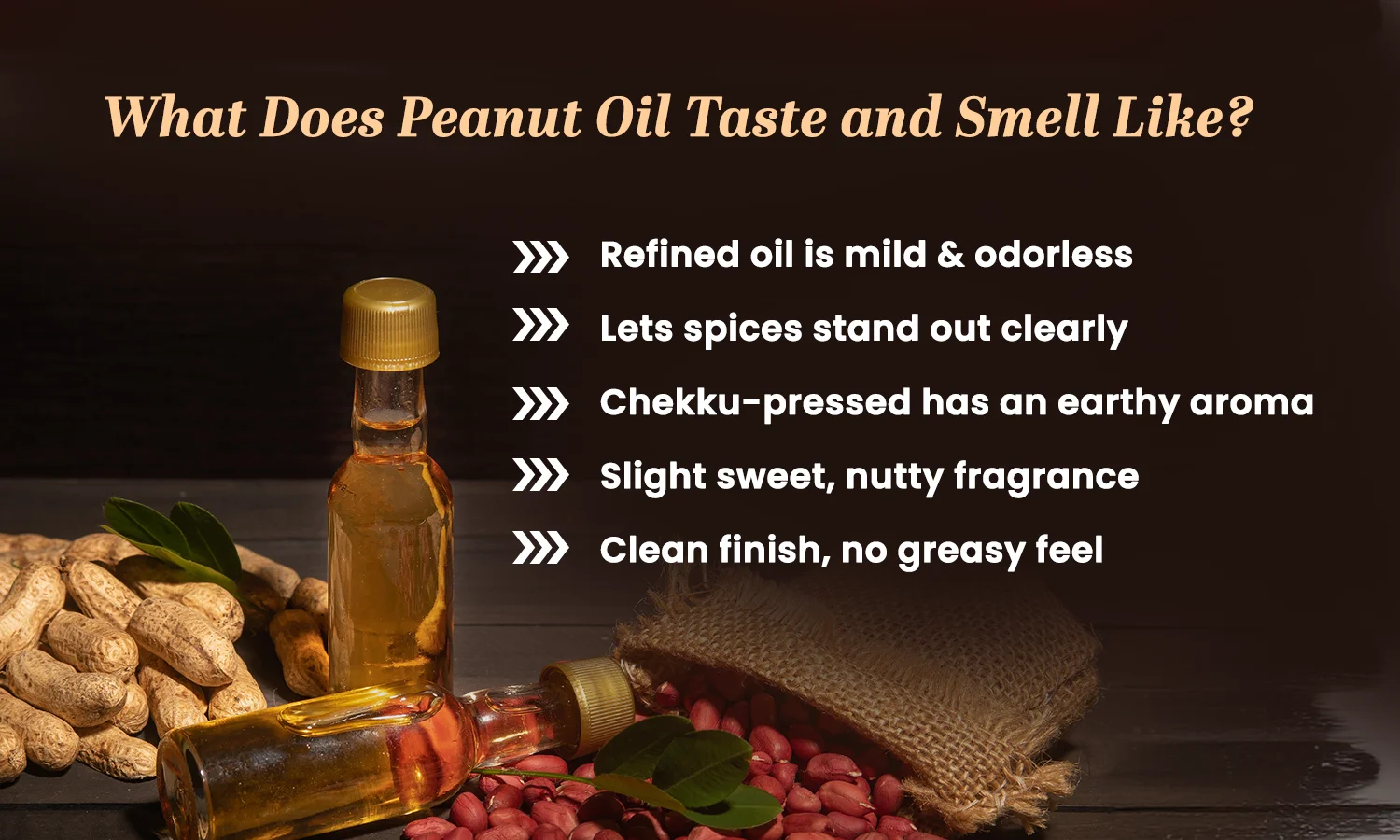
What Does Peanut Oil Taste and Smell Like?

It depends on the bottle. Refined oil is basically a silent partner. It’s nearly odorless and does not taste much. This lets your spices do the talking.
But if you’re using the best peanut oil for Indian cooking, like a traditional wood-pressed variety, you get an earthy, almost sweet scent. When it hits a hot pan, the whole house starts smelling like a festive kitchen. It’s a clean finish, too. No waxy or greasy aftertaste like you get with some of those heavier fats.

Cooking With Peanut Oil

Chefs call this the gold standard for a reason. Peanut oil for cooking has a smoke point of about 232°C. That’s high. You can get the oil screaming hot for pakoras or samosas without it smoking out the room or breaking down into nasty free radicals.

Why it’s the Smart Frying Choice:

  • No Flavor Transfer: This is a weird but brilliant trait. Refined peanut oil doesn’t “carry” smells. You can fry fish and then a batch of vada in the same oil. The vada won’t taste like the sea.
  • The Crunch Factor: High heat creates an instant steam barrier. The food doesn’t get oil-logged. You get a lighter, crispier bite.
  • The Perfect Tadka: For dals, the nutty undertones of unrefined oil elevate mustard seeds and curry leaves in a way that plain sunflower oil just can’t touch.

Nutritional Value of Peanut Oil (Per Teaspoon)

So, is peanut oil good for health? Look at the fats.
Per Teaspoon (about 4.5g):

  • Peanut oil calories: Roughly 40 kcal.
  • Total Fat: 4.5g (all >fat, zero carbs).
  • Monounsaturated Fat (MUFA): ~2.3g. This is the “liquid gold” your heart loves.
  • Vitamin E: You get a solid hit of antioxidants in every drop.

It’s a cholesterol-free energy source. Since 80% of it is unsaturated fat, it’s exactly what your body needs for healthy cell membranes.

Health Benefits of Peanut Oil

The peanut cooking oil benefits aren’t just about calories. It’s loaded with phytosterols. These actually block bad LDL cholesterol from getting absorbed in your gut.

Is peanut oil good for health in other ways? Absolutely. It’s a massive source of Vitamin E, which protects your cells from oxidative stress. Some researchers even point to the resveratrol in the oil as a win for insulin sensitivity and brain health. It’s heart-healthy, plain and simple.

Beyond these internal advantages, the uses of peanut oil in the kitchen play a vital role in maintaining the integrity of your meals. Since this oil has a high smoke point, it doesn’t break down into harmful compounds at high temperatures. This, in turn, makes peanut oil for cooking one of the safest choices for frying and sautéing. This kind of stability makes sure that the peanut oil benefits are directly delivered to your plate, thereby offering a reliable source of energy without the risks associated with oils that oxidize easily.

Considering the peanut oil nutrition facts, the concentration of micronutrients is highly impressive. The high levels of Vitamin E in peanuts serve as a natural preservative for the oil itself and as an excellent antioxidant for the body, supporting both immune functions and skin health. By incorporating this oil into your daily routine, you are choosing a nutrient-dense fat that balances flavor with functionality, proving that traditional kitchen staples often hold the most significant wellness secrets.

Potential Health Risks

It’s not for everyone. First, peanut oil uses are a big no for anyone with a peanut allergy—especially if the oil is chekku-pressed. Those versions still have the proteins that trigger reactions.

Also, watch the “Omega Balance.” It’s high in Omega-6 but has almost zero Omega-3. Since modern diets are already full of Omega-6, you’ve got to balance things out with walnuts or flaxseeds to keep inflammation down.

peanut cooking oil

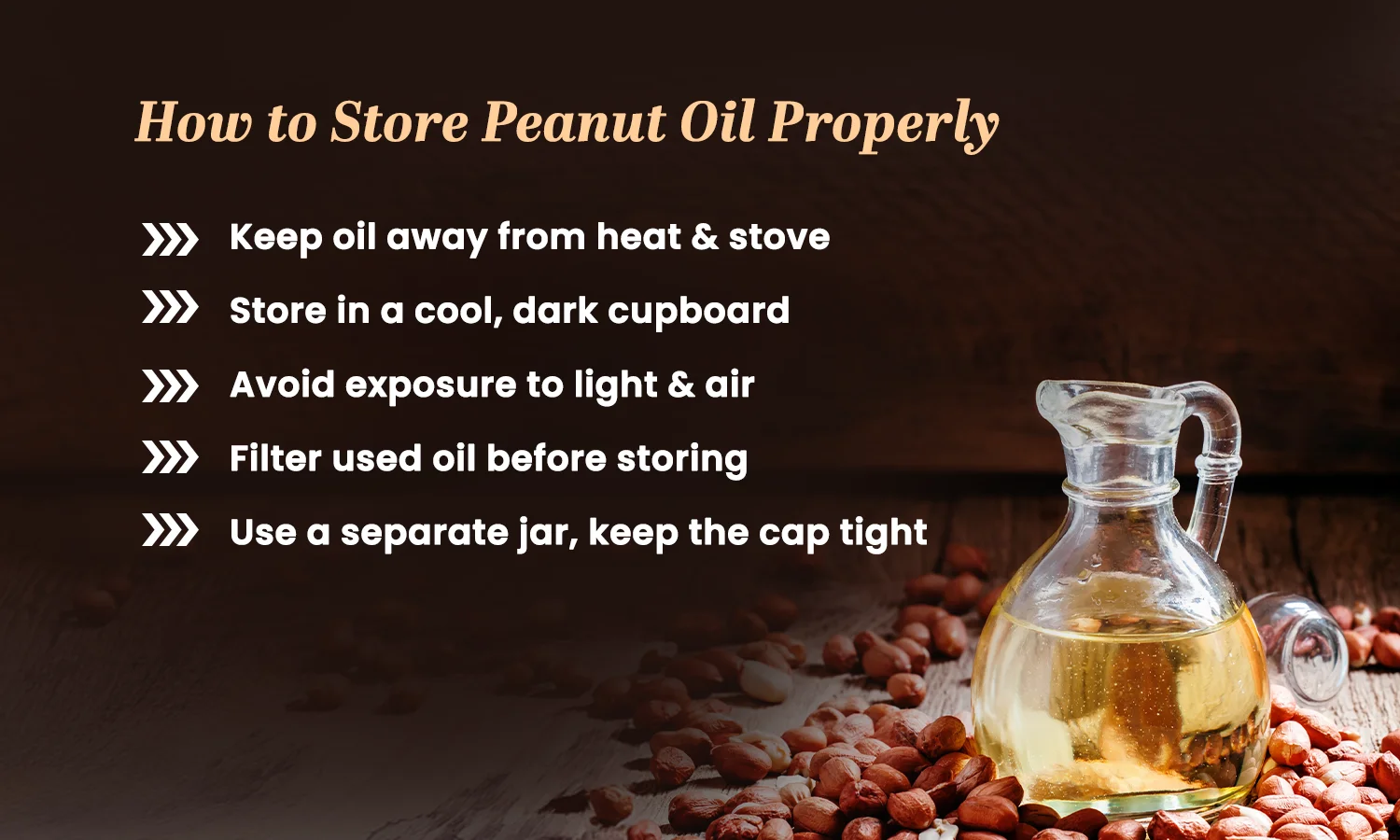
How to Store Peanut Oil Properly

Oil has three enemies: heat, light, and air. To protect your peanut oil price investment, keep it in a cool, dark cupboard. Not right next to the stove.
If you’ve used it for deep frying, don’t just dump it back in the bottle. Cool it, filter the crumbs out with a cloth, and store it in a separate jar in the fridge. It’ll stay fresh for 6 to 12 months if the cap is tight.

Conclusion

From that perfect crunch to the heart-healthy fats, peanut cooking oil is more than a staple – it’s an upgrade. Picking a high-quality, chekku-pressed brand like SGR 777 means you’re getting tradition and nutrition in every meal.

FAQs

Is Peanut Oil Good for Frying? The best. High smoke point and no flavor transfer. It’s built for the deep-fryer
Does Peanut Oil Taste Like Peanuts? Refined is neutral. Chekku-pressed is nutty and earthy. Choose based on your dish.
Can People With Peanut Allergies Use Peanut Oil? Refined is usually okay, but chekku-pressed is dangerous. Always talk to a doctor first.
Is Peanut Oil Healthy? In moderation, yes. It’s great for the heart, but needs to be balanced with Omega-3 foods.
How Should I Store Peanut Oil? Cool, dark, and sealed. The fridge is fine, but it will get cloudy (that’s normal).

Groundnut Oil Uses and Benefits for Health, Skin & Hair

What Is Groundnut Oil?

If you’ve ever smelled a rich, nutty aroma in a South Indian kitchen, you’ve met groundnut oil. Often called peanut oil or arachis oil, this vegetable fat is pulled from the seeds of the peanut plant. It’s a massive favorite in Indian, Chinese, and Southeast Asian homes. Why? Mostly because it doesn’t give up under pressure. With a smoke point hitting roughly 232°C (450°F), it’s the undisputed king of high-heat cooking. Understanding basic groundnut oil usage helps you pick the right type for each dish.
But not all bottles are the same. You’ll mostly see three types:

  • Refined Oil: Processed to be neutral and clear. It’s the workhorse for big-batch frying.
  • Chekku-Pressed (Kacchi Ghani): This is the real deal. It’s extracted at low temperatures without nasty chemicals, keeping that deep gold color and earthy scent intact.
  • Roasted Oil: Think of this more like a seasoning—intense and perfect for drizzling.

Groundnut Oil Uses and Health Benefits

The groundnut oil health benefits start with the heart. It’s loaded with monounsaturated fats (MUFA) and polyunsaturated fats. These are the good fats that help sweep away bad LDL cholesterol while keeping the good HDL levels steady.
Along with fats, it is a natural source of vitamin E. One tablespoon provides about 14% of your daily dose. It also contains resveratrol, an antioxidant that helps regulate blood pressure and prevent artery strain, and is present in red wine. In addition to heating food, using peanut cooking oil adds a layer of cellular protection. All of this is why ground nut oil is good for health when used in everyday meals.

Groundnut Oil Uses for Skin

The science behind using groundnut oil for body and face care is sound, despite the fact that it may seem outdated. Because it is high in fatty acids and vitamin E, it functions as a deep moisturiser for dry or scaly skin. The skin-beneficial qualities of groundnut oil are largely attributed to the barrier. It holds onto moisture.
The antioxidants in the oil help combat the free radicals that cause ageing if you have fine lines. Many people use it as a base for a body scrub (mix it with coffee grounds!) or as a straightforward pigment-reducing lip treatment. Its anti-inflammatory qualities can reduce redness in people with sensitive skin. Just keep this far away from your skin if you are allergic to peanuts. These Pure groundnut oil benefits make it a gentle choice for regular skincare. groundnut oil uses

Groundnut Oil Uses for Hair Care

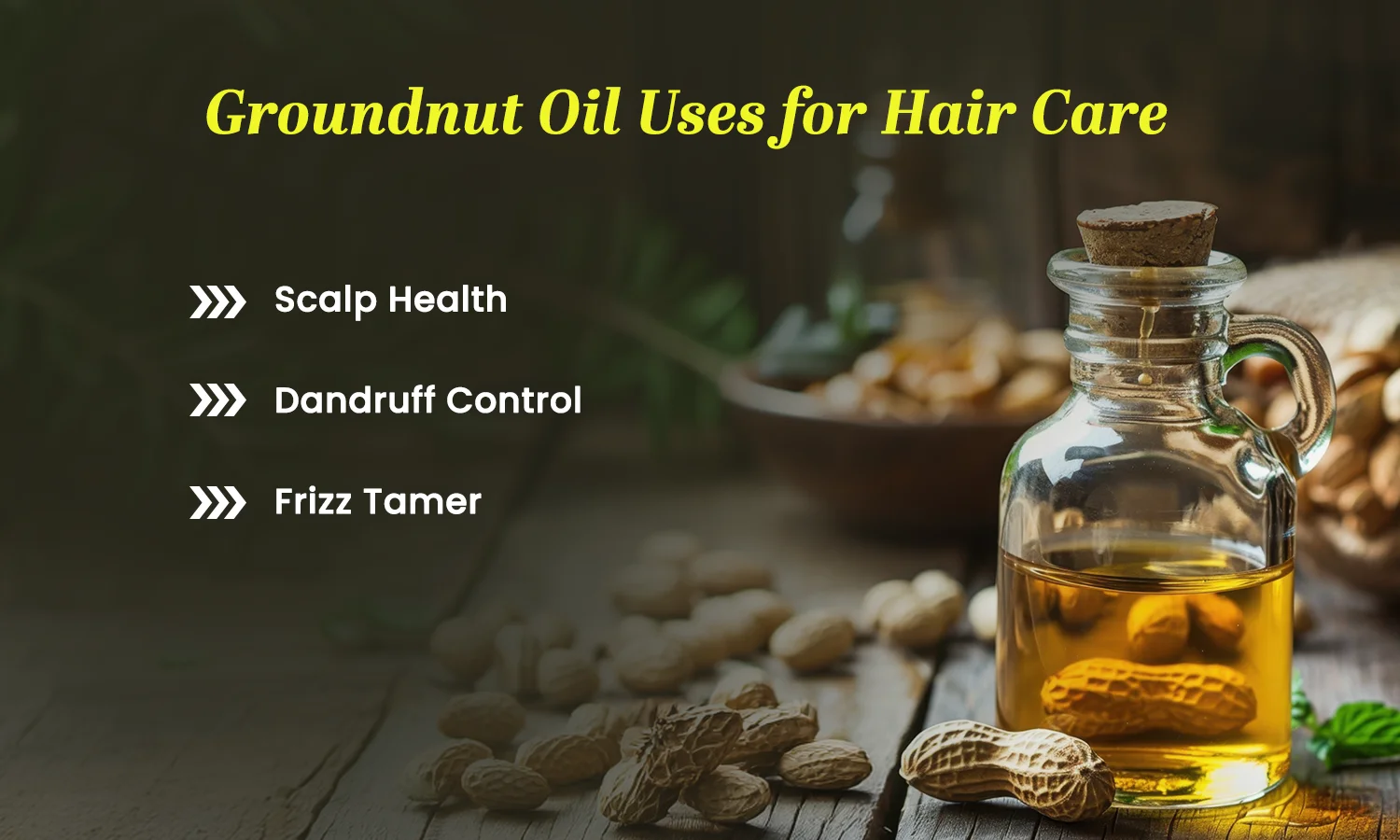
If your hair feels like straw, peanut oil for hair might be the fix. It’s rich in Omega-6 fatty acids and proteins that repair the hair shaft from the inside out. Used regularly, the Groundnut benefits for hair become easy to notice.The benefits of groundnut oil for hair include:

  • Scalp Health: Massaging warm oil into the scalp boosts circulation, which is the secret sauce for peanut oil hair growth.
  • Dandruff Control: Its natural properties help calm an itchy, flaky scalp.
  • Frizz Tamer: A few drops on damp ends act as a natural sealant, mending split ends and adding a glossy shine without the “greasy” look of heavier oils.

Groundnut Oil Uses in Cooking

This is where the oil truly earns its keep. Groundnut oil uses cooking techniques that range from the aggressive to the delicate. The Benefits of groundnut oil for cooking show up in both deep frying and gentle tempering.

  • Deep Frying: Peanut oil for deep frying is legendary. It has a “flavor integrity” trait, meaning it won’t carry smells between foods. You can fry pakoras and then sweets in the same batch without them tasting like each other.
  • Tempering (Tadka): In India, we use it to sizzle mustard seeds and curry leaves. It carries those spice aromas beautifully into the dal.
  • Baking: Believe it or not, it’s a great butter substitute. It makes cakes moister and adds a very faint, pleasant nuttiness to banana bread or muffins.

groundnut oil uses

How to Choose the Best Groundnut Oil

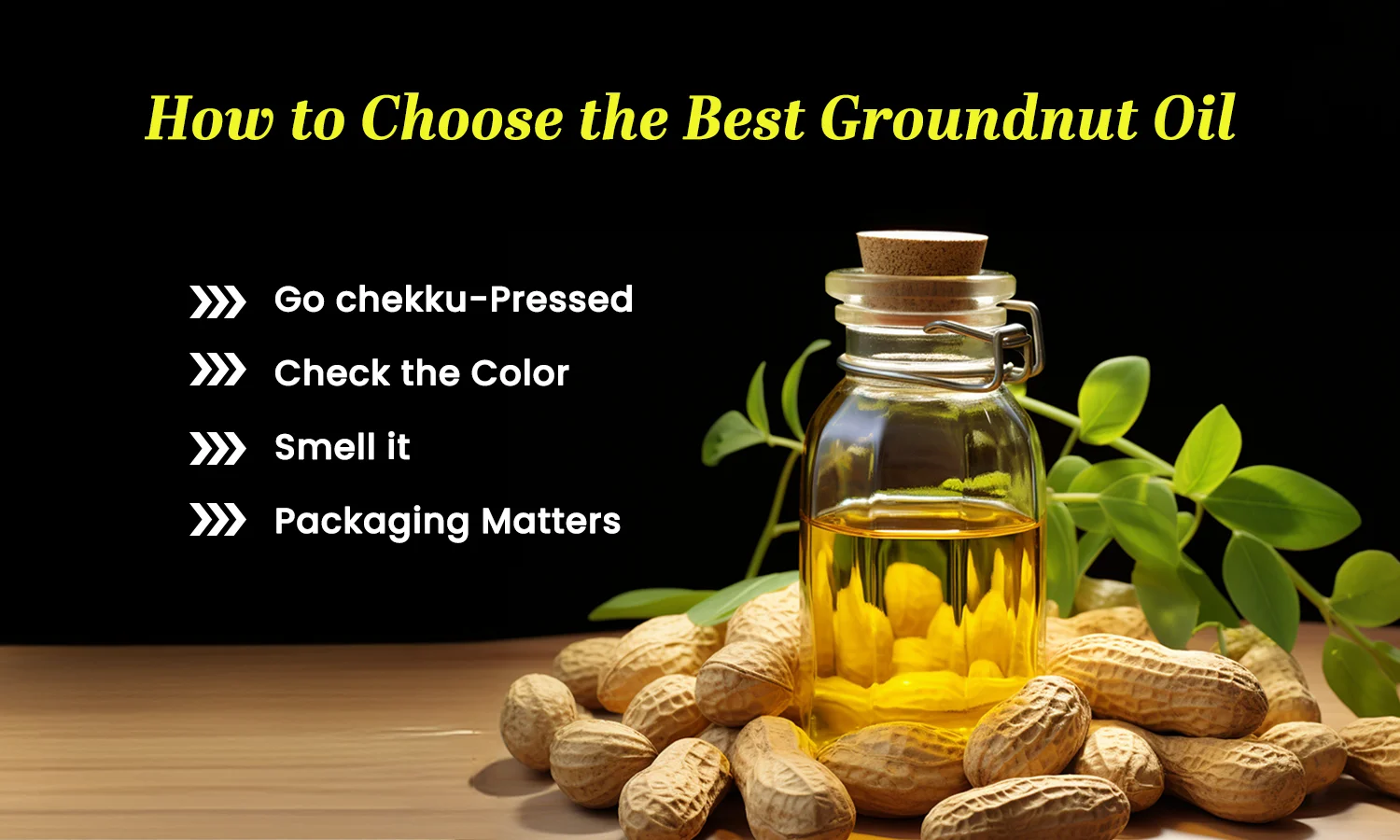
Don’t just grab the cheapest bottle. To get the advantages of peanut oil, you have to look at how it was made. Looking for organic groundnut oil benefits is a good way to judge real quality.

  • Go Chekku-Pressed: Often called Mara Chekku, this method uses a wooden churner. It generates almost zero heat, meaning the nutrients don’t get “cooked” before they reach you.
  • Check the Color: The best groundnut oil for cooking should be a clear, golden amber. If it’s too pale, it’s likely over-refined.
  • Smell it: If it doesn’t smell like fresh peanuts, put it back. Pure oil has a distinct, toasted aroma.
  • Packaging: Look for dark glass or tin. Light is the enemy of chekku-pressed oil; it makes it go rancid faster.

Conclusion

Whether you’re searing a stir-fry, deep-frying festive snacks, or looking for a natural glow for your skin, the uses of groundnut oil are nearly endless. By choosing a high-quality, chekku-pressed option like SGR 777, you’re ensuring that the benefits of peanut oil extend from heart health to hair shine. It’s a legacy of purity that has served Indian homes for decades.

FAQs

What Are the Main Groundnut Oil Uses? Mainly deep-frying, stir-frying, and tempering. It’s also used topically for skin hydration and scalp massages.
Is Groundnut Oil Good for Skin and Hair? Yes, thanks to Vitamin E and Omega-6 fats. It moisturizes the skin and strengthens hair follicles.
Can We Use Groundnut Oil for Daily Cooking? Absolutely. Its high smoke point and balanced fat profile make it safer for daily use than many other vegetable oils.
What Vitamins Are Present in Groundnut Oil? It is primarily rich in Vitamin E, alongside heart-healthy antioxidants like resveratrol.
How Do I Choose the Best Groundnut Oil? Look for “chekku-Pressed” or “Wood-Pressed” on the label. Ensure it has a strong nutty aroma and is stored in light-protected packaging.