Introduction of Asafoetida Powder
Asafoetida ingredients are often misunderstood because what we buy in stores is not always pure resin. Asafoetida, commonly known as hing, is derived from the dried gum-resin of the Ferula plant. In its raw form, it is extremely strong and sticky, which is why most commercial varieties are processed into Asafoetida powder for everyday use.
This powerful Indian spice has a sharp, sulfurous smell when raw. However, once heated in oil, its asafoetida taste transforms into a mellow, savoury flavour similar to cooked onion and garlic. In fact, many people simply say asafoetida is hing, as the two terms are used interchangeably in Indian kitchens.
Understanding the actual ingredients in Asafoetida helps you make better choices, especially when selecting quality products for home cooking.
Common Ingredients in Asafoetida Powder
When discussing Asafoetida ingredients, it is important to differentiate between pure resin and compounded powder.
1. Core Natural Components
Raw asafoetida is an oleo-gum-resin made up of three primary parts:
- Resin (40–64%) – Contains ferulic acid and related compounds that contribute to many therapeutic properties.
- Gum (25%) – A water-soluble portion made of sugars and polysaccharides.
- Volatile Oil (10–17%) – Rich in sulfur compounds responsible for its strong aroma.
These are essentially the original Ingredients for making Asafoetida in its natural state.
2. Ingredients in Asafoetida Powder (Compounded Form)
Because pure resin is too concentrated, manufacturers create an Asafoetida powder mix by blending the resin with carriers and binders.
Common Ingredients of Asafoetida powder include:
- Wheat flour (maida) or wheat starch – Used as a carrier in traditional varieties.
- Rice flour – A gluten-free alternative.
- Edible gum (gum arabic)– Acts as a binder and prevents clumping.
- Edible oil – Helps preserve aroma and blend the mixture smoothly.
- Turmeric (optional) – Added for colour in some brands.
When reading labels, always check the full list of ingredients in Asafoetida powder, especially if you have gluten sensitivities.
In Indian households, compounded powder is preferred because it is easier to measure in pinches and blends seamlessly with other Indian cooking spices.
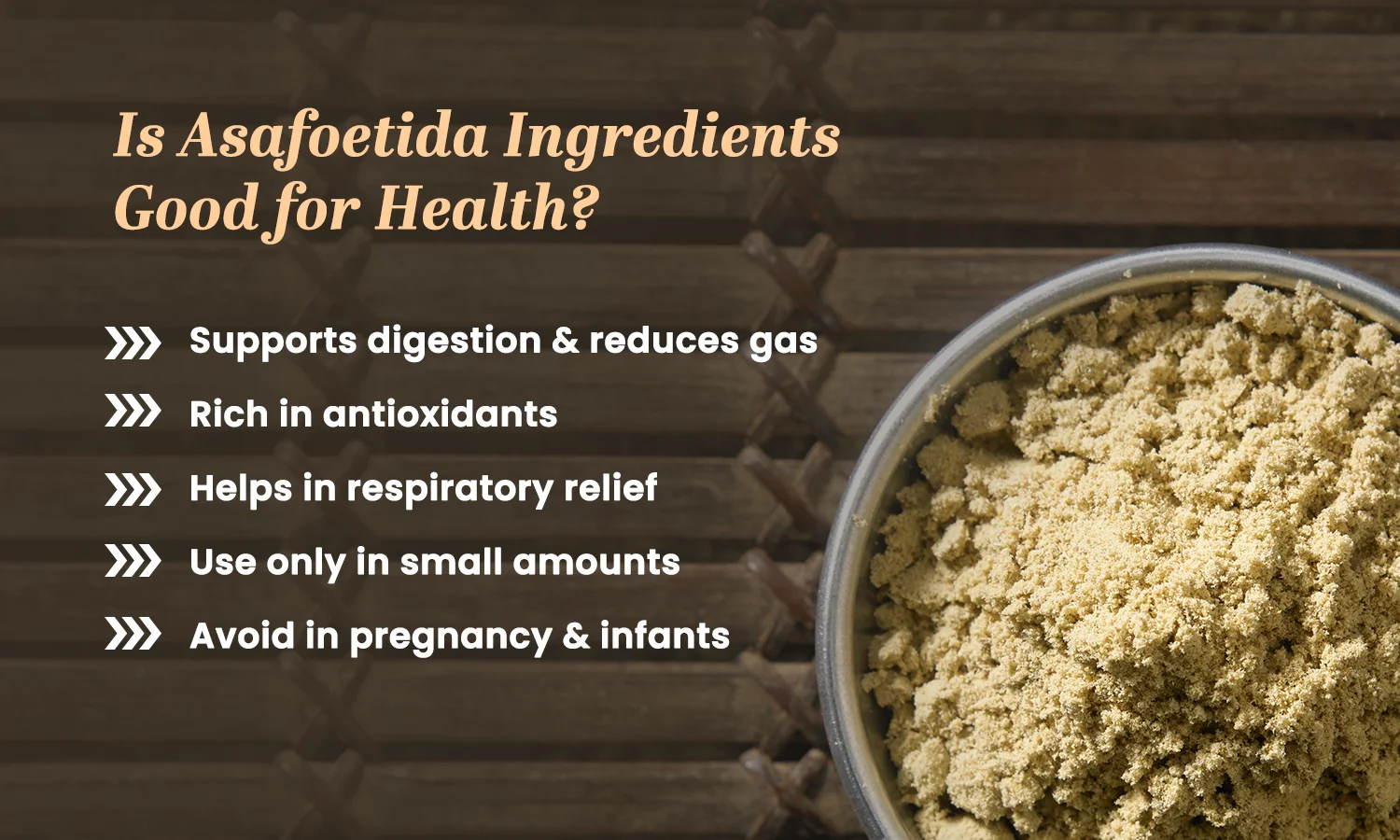
Is Asafoetida Ingredients Good for Health?
The natural Asafoetida ingredients contain compounds like ferulic acid and sulfur-rich oils that are traditionally valued for digestive support. Among the recognised benefits of asafoetida are relief from bloating and improved enzyme activity.
Some reported asafoetida health benefits include:
- Supporting digestion and reducing gas
- Acting as an expectorant in respiratory discomfort
- Providing antioxidant properties
These asafoetida hing properties are why it is commonly added to lentils and beans. However, it should always be used in small quantities.
Safety considerations are equally important:
- It is not recommended during pregnancy.
- It should be avoided for infants.
- Individuals on blood-thinning medication should consult a doctor.
When used responsibly, the overall health impact of Asafoetida ingredients can be beneficial in culinary amounts.
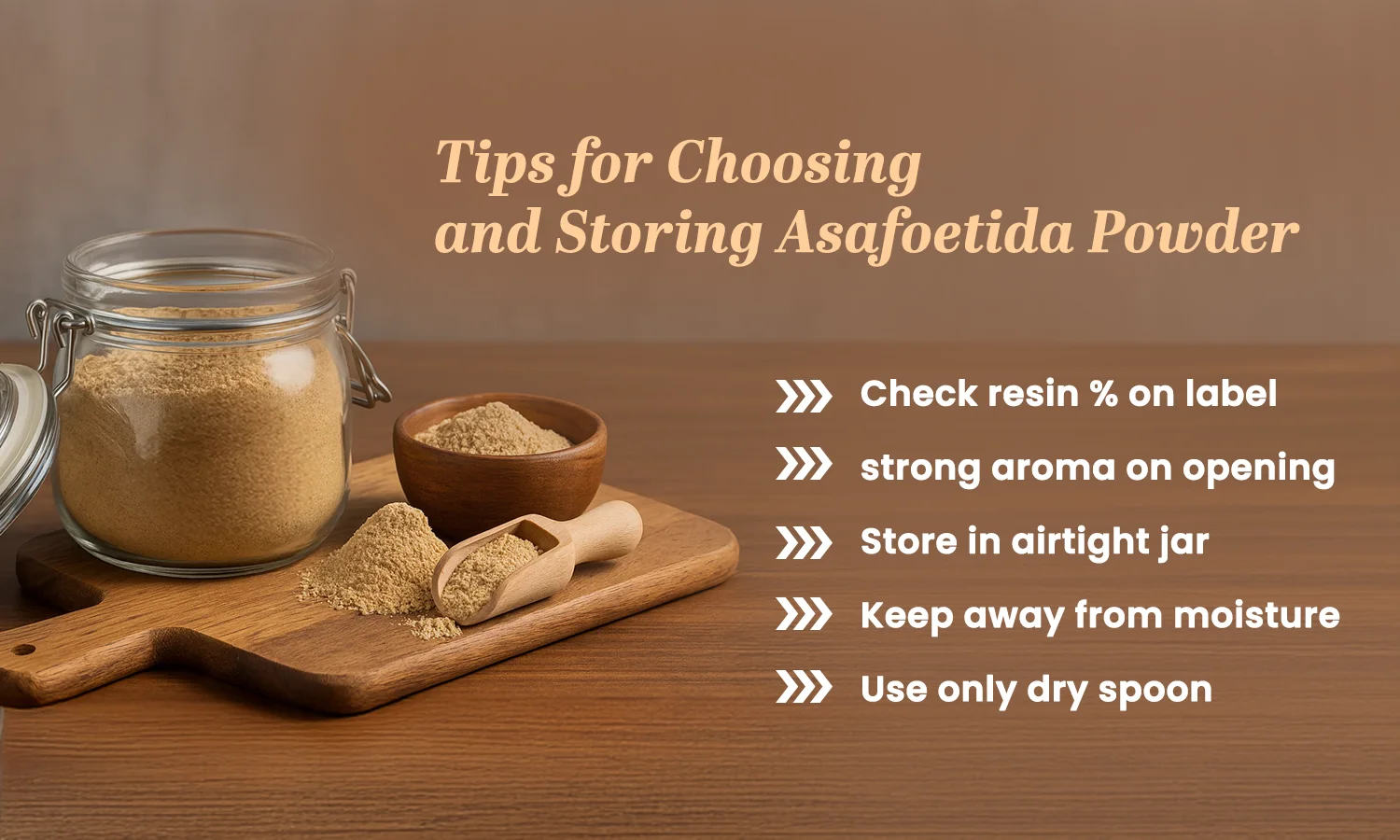
Tips for Choosing and Storing Asafoetida Powder
Since the quality of Asafoetida ingredients can vary, selecting the right product matters.
Choosing Quality
- Read the label carefully to understand the ingredients in Asafoetida.
- Look for a clear mention of resin percentage.
- Avoid products with vague “flavouring” descriptions.
- A good-quality powder should release a sharp aroma immediately when opened.
Many households consider purity and consistency when selecting from the Best indian spices available in the market.
Storage Guidelines
Proper storage preserves potency:
- Store in an airtight glass jar.
- Keep away from heat and moisture.
- In humid regions, double-seal the packet.
- Always use a dry spoon.
Good storage ensures that the flavour and active Asafoetida ingredients remain effective for up to two years.
Conclusion
Understanding Asafoetida ingredients helps you appreciate this remarkable spice beyond its strong aroma. From its natural resin composition to the compounded forms available in stores, each element plays a role in making it suitable for daily use.
Whether you use it for flavour enhancement, digestive comfort, or as part of your regular spice routine, knowing what goes into your hing ensures better cooking and informed choices. When selected and stored properly, this traditional ingredient continues to hold its place among the most valued spices in Indian kitchens.
FAQs
How to Make Asafoetida at Home?Pure resin can be crushed and blended with rice flour to create a basic homemade powder. However, it is extremely potent and must be used sparingly.
Is Ajwain the Same as Asafoetida?No. Ajwain is a seed spice, while asafoetida is a gum-resin extracted from plant roots.
Is Ajwain the Same as Asafoetida?A small combination of garlic and onion powder can mimic its flavour in recipes.
Why Is Asafoetida So Expensive?It is extracted manually from mature plants and produced in limited regions, making it labour-intensive and rare.
Is Asafoetida a Tree or Plant?It comes from the roots of perennial Ferula plants, not from a tree.