Why Dry Chilli Is the Key Ingredient in Chilli Powder

Overview

Dry chilli forms the base of nearly every chilli powder on the market, and its quality directly determines the final product’s colour, aroma, heat, and shelf stability. In fact, it serves as an essential spice foundation for many traditional Indian foods, where authentic flavour relies heavily on precise heat and rich colour. Poorly dried or badly stored chilli produces dull, inconsistent powder, which is why understanding how dry chilli is selected and processed matters for anyone serious about cooking.

What Makes Dry Chilli Different From Fresh?

Fresh chilli contains high moisture content, which makes it perishable within days. Dry red chilli, by contrast, has most of its water content removed through sun drying or controlled dehydration, allowing it to be stored for months without spoiling. This transformation is what makes large-scale chilli powder production possible in the first place.

The drying process also concentrates flavour compounds, which is why properly dried chilli often tastes more intense than its fresh counterpart, even before it reaches the grinding stage.

Here are some more differences between dry and fresh chillies:

Feature Fresh Chilli Dry Red Chilli
Texture & Appearance Plump, firm, and glossy with high moisture Wrinkled, tough, and brittle with water removed
Flavour Profile Bright, sharp, grassy, and crisp Deep, concentrated, earthy, or smoky
Heat Delivery Delivers an immediate, sharp bite Provides a slower, lingering warmth
Vitamin C Content High (dehydration destroys heat-sensitive vitamin C) Lower
Preparation Requires washing, chopping, and seed removal Used whole, crushed, or rehydrated in hot water

How Is Dry Chilli Quality Judged?

The quality of dry chilli depends on several factors, including colour, moisture, cleanliness, pod condition, and variety. Before dried red chilli is processed into chilli powder, buyers and processors typically check the following:
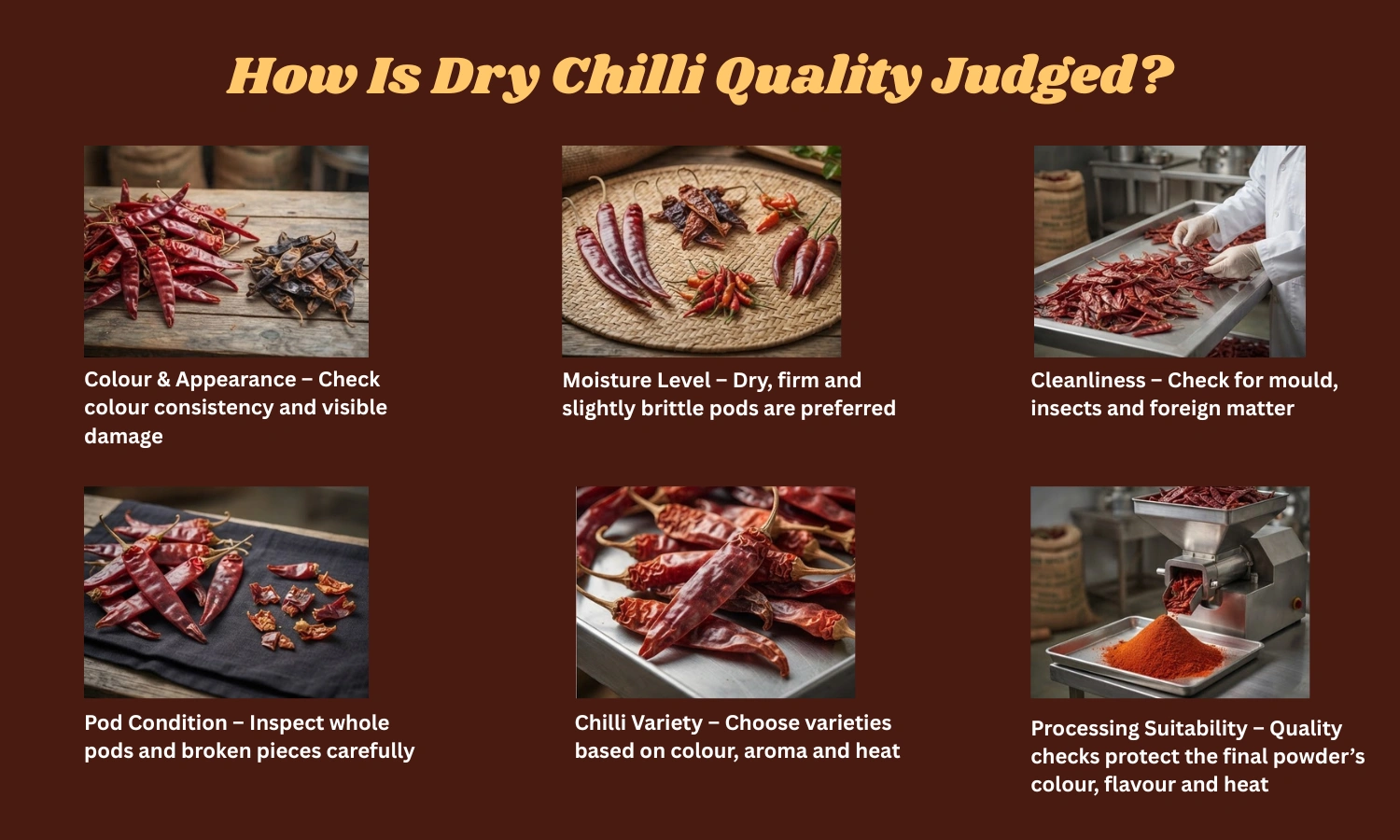
Dry Chilli

  • Colour and Appearance: Good-quality dry chilli should have a reasonably consistent colour and appearance suited to its variety. Dull colour, excessive dark spots, or visible damage can indicate poor handling or storage.
  • Moisture Level: Properly dried red chilli should be dry, firm, and slightly brittle, without excess moisture. High moisture can affect storage quality and increase the risk of mould.
  • Whole Pods vs. Broken Pieces: Whole, intact pods make sorting and quality inspection easier. Broken or damaged chilli pieces should be checked carefully before grinding.
  • Variety: Different types of dry chilli naturally vary in colour, aroma, and heat. Round dry chilli varieties may be used for tempering and whole-spice applications, while other varieties may be selected for making chilli powder based on the desired colour and heat.

These checks help determine whether the dry chilli is suitable for processing into chilli powder while maintaining the desired colour, aroma, flavour, and heat.

Dry Chilli in India: Regional Sources and Market Dynamics

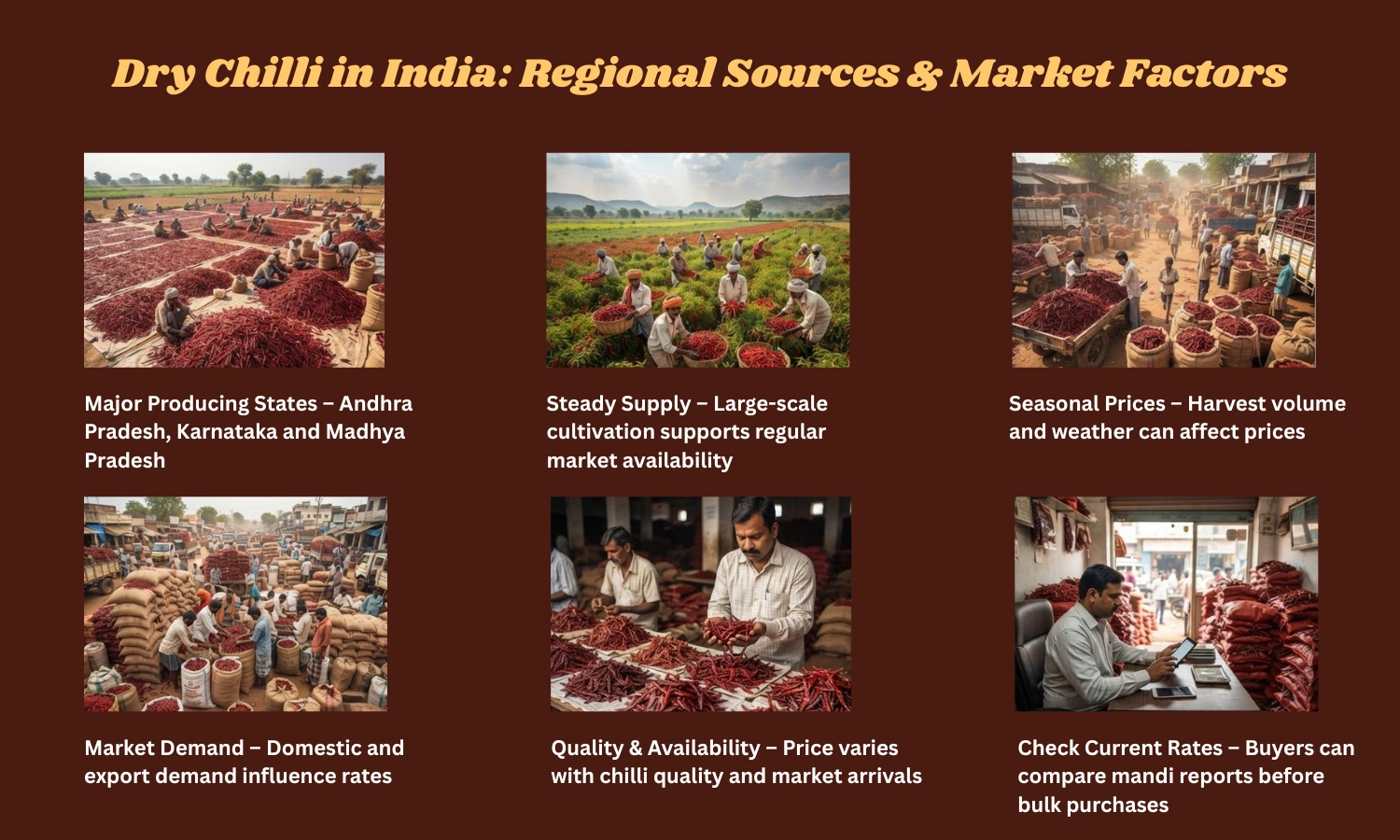
India’s dry chilli market activity is concentrated in states like Andhra Pradesh, Karnataka, and Madhya Pradesh, where large-scale cultivation and drying infrastructure support consistent supply. This steady availability is crucial, as dry chilli is a staple ingredient used daily to add flavour and heat to everyday dishes like Indian subji. Prices for dry chilli fluctuate based on seasonal harvest volume, weather conditions during the growing season, and overall demand from both domestic and export buyers. Dry Chilli Many buyers check the dry chilli rate today or dry chilli market price today through local mandi reports and market sources before making bulk purchases. Prices can vary depending on harvest volumes, chilli quality, weather conditions, market arrivals, and domestic or export demand. For household and bulk buyers, comparing the current dry chilli price with quality and availability can help in making a more informed purchase decision.
Types of Dry Chilli Used in Indian Kitchens

There is significant variety among dry red chilli types available in Indian markets. Some are chosen specifically for their deep colour, like Kashmiri and Byadgi, while others like Guntur and Sannam are valued primarily for their heat. Understanding the different types of dry chillies in India helps cooks choose the right variety depending on whether they want colour, heat, or a balance of both in their final dish.
Exploring the types of dry red chillies in India further shows that some varieties are better suited to whole use, such as tempering in oil, while others are milled almost exclusively into powder because of their thinner skin and higher heat concentration.

Using Dry Red Chilli Types in Everyday Cooking

Whole dry mirchi is a staple in South Indian tempering, added to hot oil along with mustard seeds and curry leaves to release aroma before it is mixed into the main dish. This technique remains one of the most common uses of dry chillies across Indian kitchens, distinct from their use as ground powder.
Dry chillies are also central to spice blends, pickles, marinades, and many vegetarian snacks, where their concentrated flavour adds depth that fresh chilli alone cannot replicate. This versatility is part of why dry chillies remain a pantry essential rather than an occasional ingredient.

Dry Mirchi: Wholesale Buying and Storage Considerations

For businesses and larger households, understanding dry red chilli wholesale price trends helps with planning bulk purchases more efficiently. Buying in bulk during peak harvest season, when supply is highest, often results in better value compared to purchasing smaller quantities throughout the year.
Proper storage remains critical regardless of purchase volume. Dry chilli should be kept in airtight containers away from direct sunlight and moisture, since exposure to humidity can cause mould growth even in fully dried batches, undermining the dry red chilli benefits that careful drying originally provided.

Dry Chilli Benefits: Health and Nutritional Angle

Dry red chilli benefits mainly come from compounds such as capsaicin, along with the nutrients naturally present in chillies. Capsaicin is responsible for the characteristic heat of chilli and has been studied for various potential health effects.
However, drying can reduce some heat-sensitive nutrients, including vitamin C. Since dried chilli is usually consumed in small amounts as a spice, it is best viewed as a flavouring ingredient rather than a major source of nutrients. People who are sensitive to spicy foods should also consume it in moderation.

Choose the Right Dry Chilli for Powder

Quality dry chilli is the starting point for making good chilli powder. Properly dried chillies are cleaned, sorted, and ground to create powder with the right colour, aroma, flavour, and heat.
777 Foods Premium Red Chilli Powder brings this chilli flavour to your kitchen in a convenient, ready-to-use form. It can be used in curries, gravies, marinades, chutneys, and other everyday Indian dishes.

Key Takeaways

  • Dry chilli quality depends on colour consistency, moisture level, mould absence, and pod uniformity.
  • Regional sourcing from states like Andhra Pradesh and Karnataka supports much of India’s dry chilli supply.
  • Different dry chilli varieties suit different purposes, from tempering to powder production.
  • Buying during peak harvest season generally offers better value for bulk purchases.
  • Proper airtight storage protects dry chilli from moisture and mould long after drying is complete.

FAQs

Why does dry chilli matter more than fresh chilli for making powder?Dry chilli has reduced moisture content, which concentrates flavour and allows for stable storage and grinding. Fresh chilli spoils quickly and cannot be reliably milled into shelf-stable powder without proper drying first.
How can I tell if dry chilli is good quality?Look for consistent colour, whole unbroken pods, absence of mould or dark spots, and a dry, slightly brittle texture without excess moisture, which are all signs of properly dried, well-stored chilli.
Does the price of dry chilli change throughout the year?Yes, prices generally shift with harvest cycles, tending to be more favourable shortly after peak harvest season and rising during periods of lower supply or higher demand from bulk buyers.
What is the best way to store dry chilli at home?Store dry chilli in airtight containers away from direct sunlight and humidity, since moisture exposure can lead to mould growth even in chillies that were properly dried initially.
From Fresh Red Chilli to Chilli Powder: Step-by-Step Process

Overview

Turning fresh red chilli into shelf-stable powder involves harvesting, cleaning, drying, sorting, and grinding, each step affecting the final colour, aroma, and heat of the product. Understanding this process helps home cooks appreciate why proper sourcing and drying methods matter far more than most people realise when choosing a chilli powder brand

How Fresh Red Chilli Becomes Chilli Powder?

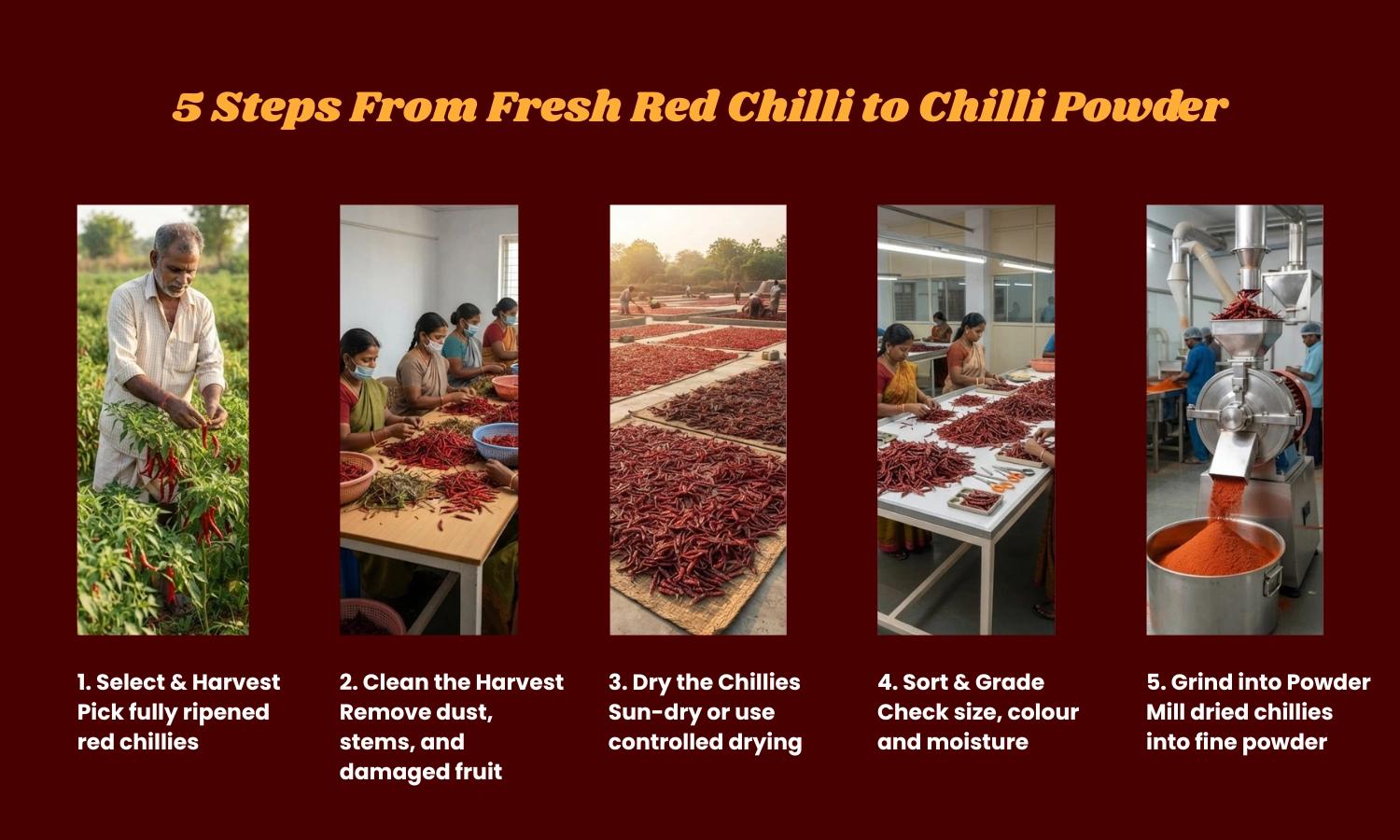
The journey from fresh red chilli to chilli powder involves several carefully managed steps. The chillies are first selected and harvested at the right stage, then cleaned, dried, sorted, and graded before being ground into powder. Each step plays an important role in maintaining the chilli’s colour, aroma, flavour, and heat.
Fresh Red Chilli

Step 1: Selecting and Harvesting

The process begins with choosing fully ripened chillies at the right stage of colour development. Farmers avoid harvesting red chilli fruit too early, since underripe chillies produce weaker colour and inconsistent heat once dried. Handpicking remains common practice for premium batches, since it allows selection of only the best fruit from each plant.

Step 2: Cleaning the Harvest

Once picked, fresh red chillies go through a cleaning stage to remove dust, stems, and any damaged fruit. This step is essential before drying, since debris left in the batch can affect both flavour and shelf life later on. Quality-focused processors sort manually at this stage rather than relying solely on machines.

Step 3: Sun Drying or Controlled Drying

Drying is the most transformative step in the entire process. Traditional sun drying spreads red chilli fresh from the farm across open yards for several days, allowing natural moisture to evaporate gradually while preserving the fruit’s essential oils. Some modern facilities use controlled drying chambers to speed up the process while still protecting colour and aroma.
This stage converts red fresh chilli into a stable, low-moisture product that can be stored and processed without spoiling, forming the foundation for both whole dried chilli and powdered products.

Step 4: Sorting and Grading

After drying, batches are sorted by size, colour, and moisture content. This grading step determines which chillies move forward into premium powder production versus lower-grade blends. Consistent grading is part of why some chilli powders deliver more even colour and heat than others on the market.

Step 5: Grinding Into Powder

The final step involves grinding dried chillies into fine powder using calibrated milling equipment. Controlling grind size and temperature during this stage protects the natural pigments and capsaicin content, ensuring the finished chilli powder retains both its colour and its heat once packaged.

Using Fresh Red Chilli Before It Reaches Powder Form

Not all fresh red chilli ends up as powder. Many households use it directly in cooking while it is still fresh, particularly for chutneys, pickles, and sauces that benefit from its brighter, sharper flavour compared to the dried version.
A popular fresh red chilli chutney recipe combines fresh chillies with garlic, tamarind, and a light tempering of mustard seeds and curry leaves, creating a tangy, spicy accompaniment for idli, dosa, and rice dishes. For those looking for a fresh red chilli chutney recipe in Indian style, regional variations often add roasted gram or grated coconut to balance the heat.

Pickling With Fresh Red Chilli

Fresh red chilli for pickle preparations remains a household favourite across South India. A basic fresh red chilli pickle recipe typically involves the following steps:

  • Slitting the chillies
  • Mixing them with mustard oil, fenugreek, turmeric, and salt
  • Allowing the mixture to mature over several days for deeper flavour

During this process, monitoring the salt content in pickles is essential, as it acts as both a primary preservative and a balancing agent against the chilli’s heat.Andhra-style preparations, often searched for as fresh red chilli chutney Andhra style, tend to use more oil and a stronger tempering of mustard and urad dal, giving the final dish a distinctly bold character compared to milder regional versions.

Sauces and Pastes From Fresh Red Chilli

Beyond chutneys and pickles, fresh red chilli can also be used to prepare sauces and pastes. A simple fresh red chilli sauce combines fresh chillies with garlic, vinegar, and salt, then cooks them briefly before blending into a smooth sauce. It pairs well with snacks, fried foods, and street food-style dishes while adding a bright, spicy flavour.
Fresh red chilli paste can also be prepared by grinding the chillies with a small amount of oil and salt. It can be refrigerated and used in curries, marinades, stir-fries, and other dishes whenever you need a quick chilli base.

Choosing Fresh Chilli Varieties

Different varieties suit different preparations. Fresh Kashmiri red chilli works well when colour matters more than intense heat, making it suitable for milder chutneys and garnishing, while spicier local varieties suit pickles and sauces where heat is the priority.

What to Know Before You Buy?

When looking to buy fresh red chilli online or from local markets, checking firmness, colour consistency, and absence of blemishes helps ensure better quality. Fresh red chilli price can vary by season and region, generally rising during off-season months when local supply is limited, so Fresh red chilli prices can vary with season, region, supply, and demand for regular use.

Fresh Red Chilli: Nutrition and Health Considerations

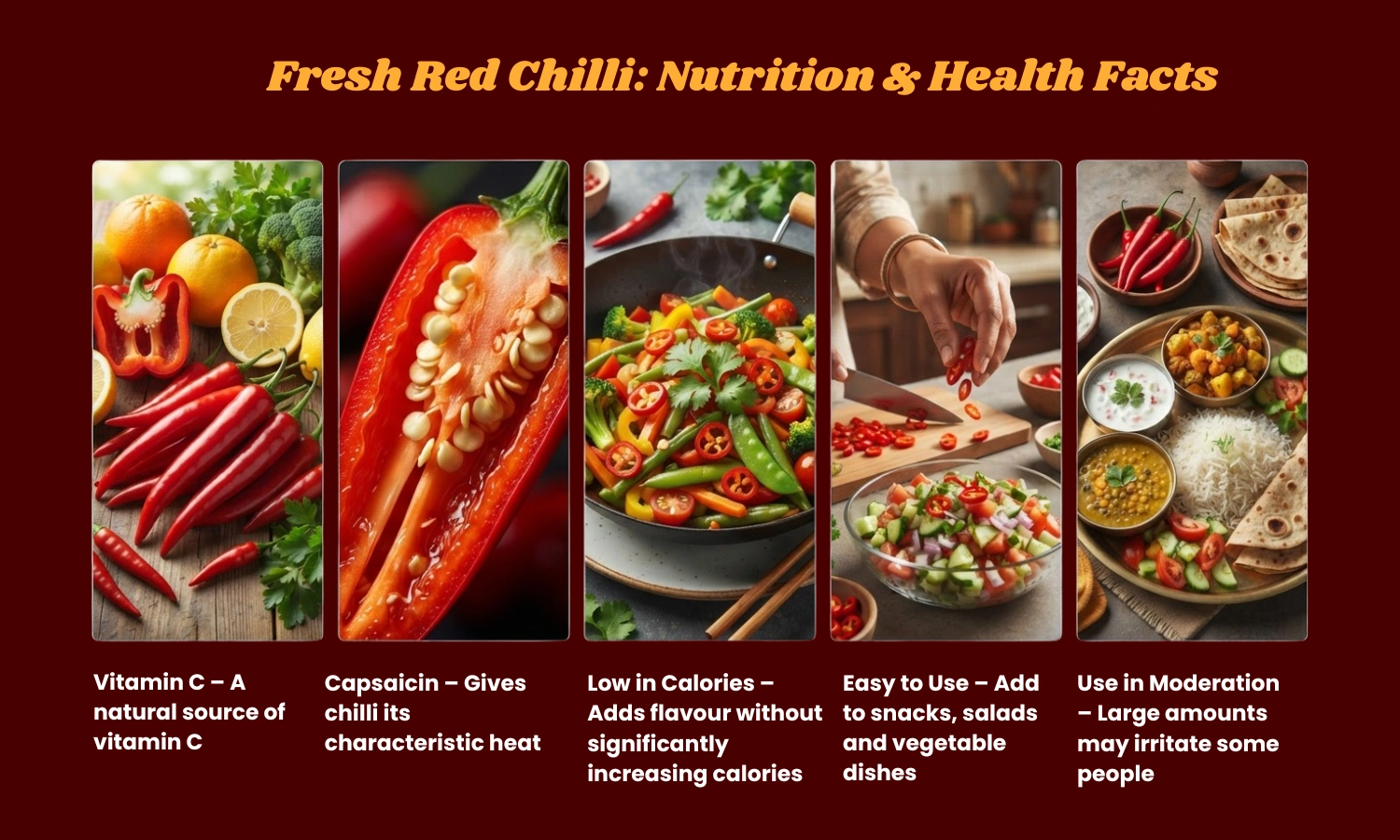
Fresh red chilli benefits include providing vitamin C and containing capsaicin, the natural compound responsible for its characteristic heat. Capsaicin has also been studied for its potential role in metabolism and other health-related effects.
Fresh Red Chilli Fresh chillies can add plenty of flavour and heat without significantly increasing the calorie content of a dish. They can also be used to add flavour to healthy snacks for evening, such as homemade snacks, salads, or vegetable-based dishes. However, chilli can be irritating for some people, especially when consumed in large amounts, so it is best enjoyed in moderation as part of a balanced diet.
Bring Fresh Quality Into Every Dish

Whether you are making a quick chutney or stocking up for pickling season, quality starts with how the chilli is grown, dried, and processed. 777 Foods offers carefully sourced chilli products built for everyday Indian kitchens. Try using the 777 Premium Red Chilli Powder in your kitchen for enhanced flavour in your daily meals.Explore the entire range of products from 777 Foods and cook with confidence!

Key Takeaways

  • Fresh red chilli becomes powder through harvesting, cleaning, drying, sorting, and grinding.
  • Sun drying preserves natural oils and aroma better than rushed industrial methods.
  • Fresh chilli is widely used in chutneys, pickles, sauces and pastes before ever reaching powder form.
  • Andhra-style preparations typically use stronger tempering and more oil than milder regional versions.
  • Checking colour, firmness, and freshness helps ensure quality when buying fresh red chilli.

FAQs

How is fresh red chilli turned into chilli powder?It goes through harvesting at peak ripeness, cleaning to remove debris, drying to reduce moisture, sorting by quality, and finally grinding into fine powder using calibrated milling equipment to preserve colour and heat.
Can fresh red chilli be used without drying it first?Yes, fresh red chilli is commonly used directly in chutneys, pickles, pastes, and sauces, offering a brighter and sharper flavour compared to the dried and powdered version used in everyday cooking.
What is the best way to store fresh red chilli at home?Keeping fresh chillies in a cool, dry place or refrigerating them in a breathable container helps extend freshness for a few days, while pickling or making paste allows for longer-term storage.
Are there health benefits to using fresh red chilli?Fresh red chilli offers vitamin C and capsaicin, which contributes to its heat and has been associated with modest metabolism support, though it should be used in moderation alongside a varied diet.

The Journey of Red Chilli Pepper From Farm to Kitchen

Overview

The red chilli pepper you use at home passes through several stages before reaching your kitchen shelf, including cultivation, harvesting, sun-drying, sorting, and grinding. Understanding this journey helps explain why quality varies so much between brands and why sourcing from established growing regions matters for flavour, colour, and heat consistency.

Where the Journey of Red Chilli Pepper Begins

Every batch of chili pepper starts on farmland, typically in states like Andhra Pradesh, Karnataka, and Tamil Nadu, where climate and soil conditions favour capsicum cultivation. Farmers plant seedlings at the start of the season and nurture them through several months of growth before the fruit reaches full colour and firmness.The plants require consistent watering during early growth but need drier conditions as the fruit matures and turns red. This balance is part of what makes chilli pepper farming a skill passed down through generations rather than a simple mechanical process.

Harvesting Hot Pepper the Right Way

Timing matters enormously in this stage. Harvesting a hot pepper too early results in weaker colour and underdeveloped heat, while harvesting too late can cause the fruit to soften and spoil faster during drying. Experienced farmers handpick chillies at peak ripeness, which is one reason quality red chilli pepper often costs more than mass-harvested alternatives.

From Sun-Ripened Fresh Fruit to Shelf-Stable Dried Spice

Once harvested, the fresh fruit needs to be dried before it can be processed further. Traditional sun drying remains common across South India, where chillies are spread across open yards for several days. This method helps retain the natural oils responsible for aroma, unlike faster industrial drying that can dull flavour.During this stage, the fruit transforms from a spicy pepper with high moisture content into a shelf-stable ingredient ready for grinding or storage as whole dried chilli.

The Critical Steps of Sorting, Grading, and Processing

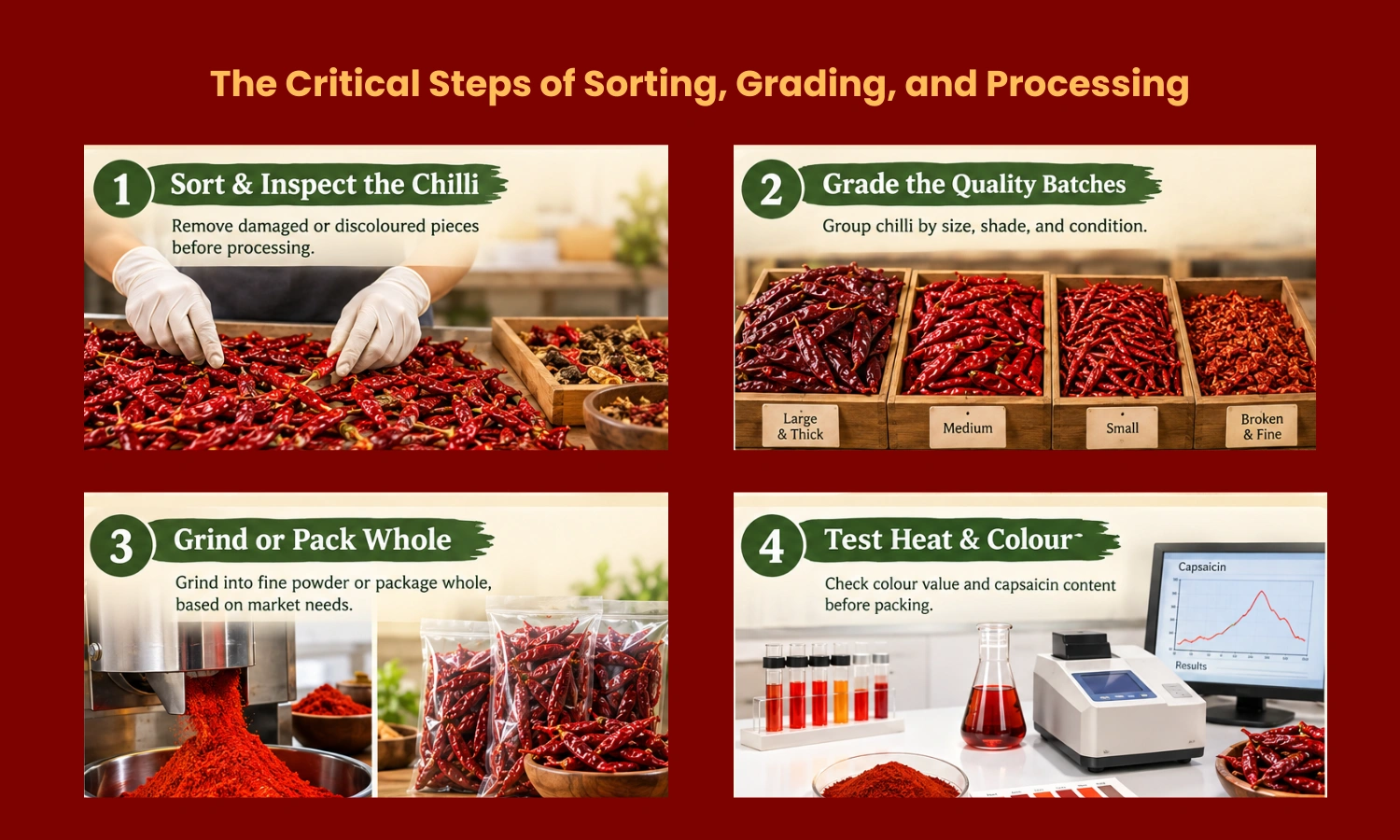
The steps of sorting, grading, and processing red chilli are explained here: red chilli pepper

1. Sorting and Inspecting Raw Material:

Separate damaged or discoloured pieces from premium stock so that mixing lower-grade fruit with prime pepper chilli does not cause inconsistent colour and heat once ground.

2. Grading Quality Batches:

Categorise the sorted harvest by size, shade, and condition to ensure uniform standards before moving to commercial processing equipment.

3. Grinding or Packaging Whole Units:

Process the graded batches by either grinding them into fine culinary powder or packaging them whole based on target market requirements.

4. Quality Testing for Heat and Colour:

Analyze final samples for colour value and capsaicin content to guarantee every consumer packet of red chilli pepper maintains reliable standards batch after batch.

Versatility of Red Chilli Pepper in Indian Cooking

Once it reaches the kitchen, the Indian pepper becomes central to countless dishes, from tempering in South Indian sambar to marinades for tandoori preparations. Its versatility across fresh, dried, and powdered forms is part of why it remains a kitchen staple across nearly every Indian household.

What Is the Difference Between Chilli and Black Pepper?

Many people ask about the difference between chilli and pepper, since the terms are often used interchangeably in everyday conversation. Botanically, chilli belongs to the Capsicum genus, while black pepper comes from an entirely different plant, Piper nigrum. The overlap in naming comes from early European traders who mistook chilli for a variant of pepper due to its sharp taste.Some cooks also search for the red hot chilli pepper experience they want in a dish, referring loosely to any variety with strong heat rather than a specific type, which adds to general naming confusion in casual conversation.

Red Chilli Pepper vs. Cayenne Pepper

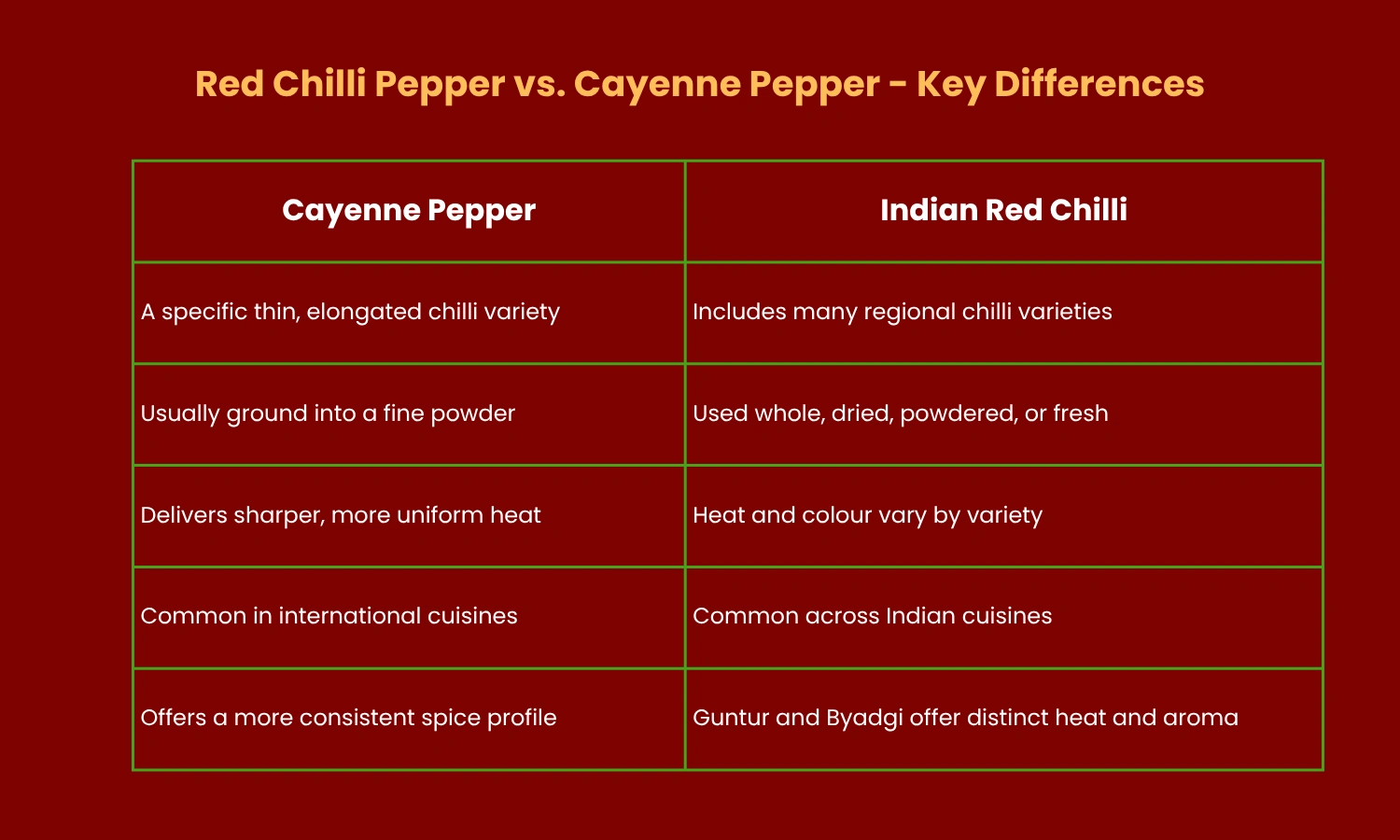
A common point of confusion is the difference between cayenne pepper and red chilli. Cayenne pepper is a specific thin, elongated chilli variety, typically ground into a fine, uniformly hot powder used in international cuisines. Indian red chilli, by contrast, includes multiple regional varieties with differing heat and colour profiles. red chilli pepper When exploring the difference between cayenne pepper vs. red chilli more closely, the key distinction lies in flavour complexity. Cayenne is a specific chilli type commonly sold as a ground spice, while “Indian red chilli” can refer to many varieties, including Guntur and Byadgi, each with different colour, aroma, and heat characteristics. Whether the same heat level applies to cayenne pepper and red chilli depends entirely on the specific variety being compared, since heat levels vary widely even within Indian chilli types.
What Are the Benefits and Uses of Red Chilli Pepper?

  • Beyond flavour, many households value red chilli pepper benefits, including its role as a source of vitamin C and antioxidants when consumed as part of a balanced diet.
  • It also adds depth to dishes without requiring excessive oil or salt, making it a practical everyday spice.
  • For those exploring red chilli pepper recipes, the ingredient works well in chutneys, pickles, marinades, and dry powder blends.
  • A single type of chilli pepper can serve multiple culinary purposes depending on whether it is used fresh, dried whole, or ground fine.

Taste the Difference Quality Sourcing Makes

The journey from farm to kitchen determines the final quality of every spoonful of chilli powder you use. 777 Foods works with trusted growing regions across South India to bring consistently sourced, carefully processed red chilli to your kitchen.Explore 777’s Premium Red Chilli Powder and the entire chilli range, and experience the difference proper sourcing makes.

Key Takeaways

  • Red chilli pepper passes through cultivation, harvesting, drying, sorting, and grinding before reaching consumers.
  • Sun drying helps preserve natural aroma better than faster industrial drying methods.
  • Chilli and black pepper are botanically unrelated despite naming overlap.
  • Indian red chilli varieties differ from cayenne pepper in flavour complexity and heat profile.
  • Sourcing from established growing regions ensures more consistent colour, heat, and quality.

FAQs

How is red chilli pepper processed before it reaches consumers?It typically goes through harvesting at peak ripeness, sun drying to reduce moisture, sorting to remove damaged fruit, and finally grinding or packaging as whole dried chilli, depending on the intended product.
Is red chilli pepper the same as cayenne pepper?Not exactly. Cayenne pepper is a specific thin variety commonly used in Western cooking, while Indian red chilli includes several regional varieties with different heat levels and flavour profiles suited to Indian dishes.
What is the difference between chilli and pepper?Chilli belongs to the Capsicum genus, while black pepper comes from the Piper nigrum plant. They are unrelated botanically, though the naming overlap traces back to early European trade history.
Does red chilli pepper offer any health benefits?Yes, in moderate amounts it can contribute vitamin C and antioxidants to the diet, along with adding flavour depth that can reduce reliance on excess oil or salt in cooking.

10 Types of Chillies in India: Varieties, Heat Levels & Uses

Overview

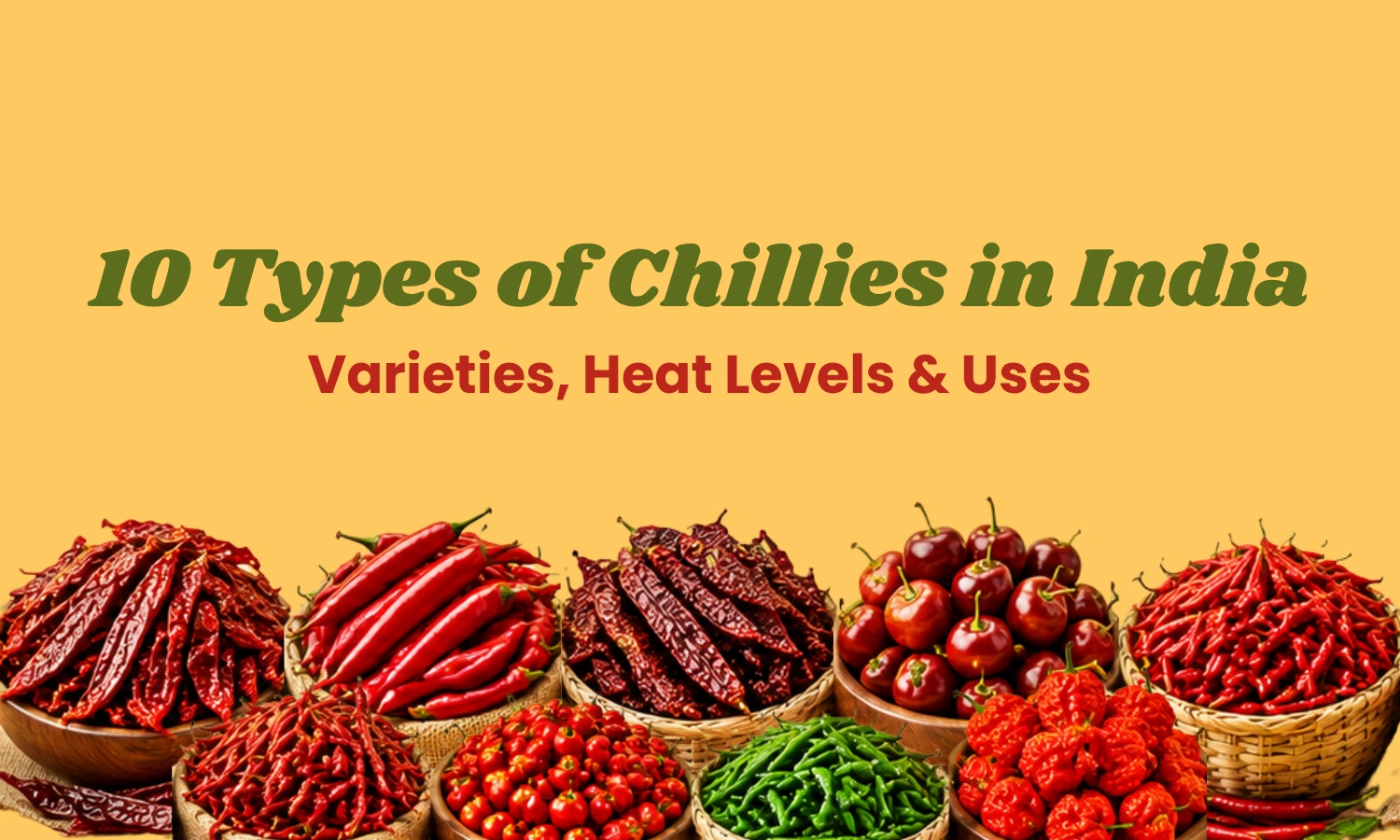
India grows one of the widest ranges of chillies in the world, with types of chillies varying by region, heat level, and culinary purpose. From the deep red, mild Kashmiri chilli to the blistering Naga chilli of the northeast, each variety brings a distinct colour, aroma, and intensity suited to specific dishes across Indian kitchens.

Why India Has So Many Chilli Varieties?

India’s climate diversity, from coastal humidity to dry plateau heat, allows farmers to cultivate a remarkable spread of types of chilli across states. Historically, chilli reached India through Portuguese trade routes, and many people ask who brought chillies to India when tracing this history. Portuguese traders introduced the plant near Goa in the late 1400s, after which local farmers adapted it into region-specific varieties over centuries, using them for everything from daily curries to regional preserves like spicy green pepper pickle.Today, understanding types of chillies in India matters not just for flavour but for practical cooking decisions, since heat level, colour retention, and moisture content vary widely between varieties.

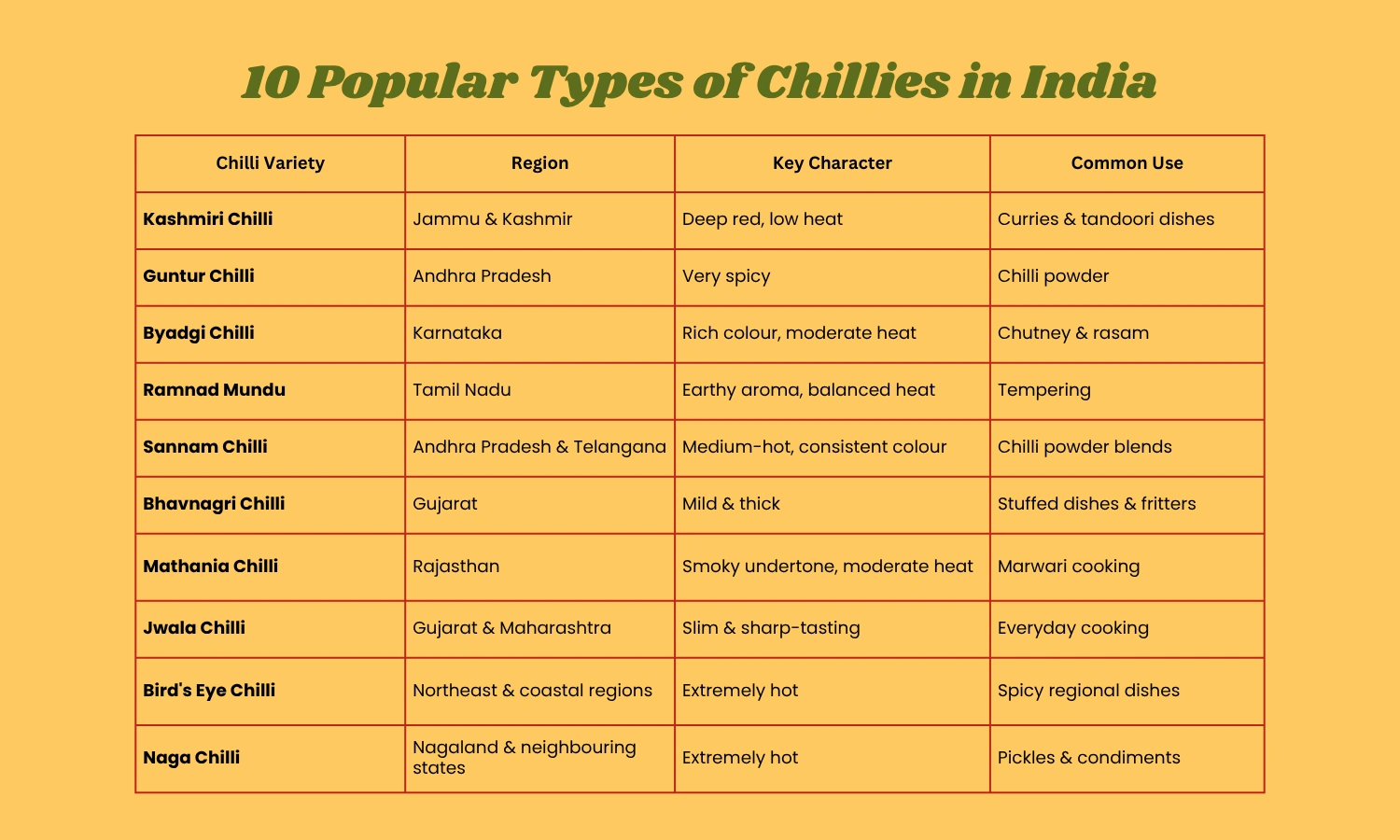
10 Popular Types of Chillies in India

India is home to many chilli varieties, each with its own heat, colour, flavour, and culinary use. Here are 10 popular types of chillies to know. types of chillies

1. Kashmiri Chilli

Grown primarily in Jammu and Kashmir, this chilli variety name is known more for its deep red colour than its heat. Cooks use it to enrich the appearance of curries and tandoori dishes without overwhelming the palate. It remains one of the most requested red chilli types for restaurant-style gravies.

2. Guntur Chilli

Andhra Pradesh’s Guntur belt produces one of the spiciest and most traded chilli varieties in India. Its high capsaicin content makes it popular for chilli powder production, and it is frequently cited as the best chilli variety in India for those who prefer intense heat.

3. Byadgi Chilli

Native to Karnataka, Byadgi chilli sits between Kashmiri and Guntur in heat, offering rich colour with moderate spice. It is a favourite among the different types of chillies used specifically for chutneys and rasam preparations across South India.

4. Ramnad Mundu

This round, wrinkled chilli from Tamil Nadu is prized for its earthy aroma and balanced heat. It represents one of the distinct chilli types found in Tamil Nadu kitchens and is often used whole in tempering.

5. Sannam Chilli

Grown widely across Andhra Pradesh and Telangana, Sannam is a long, thin, medium-hot chilli often used in commercial chilli powder blends because of its consistent heat and colour profile among dry chilli varieties in India.

6. Bhavnagri Chilli

A milder, thicker variety from Gujarat, Bhavnagri is used fresh in stuffed preparations and fritters rather than dried. It stands apart from other types of red chilli because it is enjoyed more for texture than heat.

7. Mathania Chilli

This Rajasthani variety carries a smoky undertone and moderate heat, commonly used in traditional Marwari cooking. It is a lesser-known but respected name among the types of mirchi in India.

8. Jwala Chilli

Widely grown across Gujarat and Maharashtra, Jwala is a slim, sharp-tasting chilli used fresh in everyday cooking. It represents one of the more common entries in any list covering chilli varieties in Maharashtra.

9. Bird’s Eye Chilli

Small but extremely potent, this variety is popular in the northeastern states and coastal regions for its concentrated capsaicin content. It often comes up when people ask how many types of chilli exist with extreme heat levels in India.

10. Naga Chilli

Grown in Nagaland and neighbouring states, Naga chilli, also called Bhut Jolokia, is among the hottest chillies in the world. It represents the extreme end of red chilli varieties in India and is used sparingly in pickles and specialty condiments.

Chilli or Pepper: Clearing the Confusion

Many home cooks ask about the difference between chilli and pepper, since both are used to describe heat in food. Chilli refers specifically to Capsicum fruits, while pepper traditionally refers to Piper nigrum, or black pepper, a completely different plant. The confusion dates back to early European traders who applied the pepper name loosely to the newly discovered fiery fruit.

Choosing the Right Variety for Your Kitchen

Selecting from Indian chilli varieties depends on what result you want. For colour without excessive heat, Kashmiri or Byadgi work well. For intense spice in powders and pickles, Guntur or Sannam is preferred. Those experimenting with hybrid chilli varieties in India developed for higher yield should still check flavour consistency, since hybrid seeds sometimes trade aroma for volume.When buying chilli seed varieties for home cultivation, look for region-appropriate seeds that match your local soil and climate, since a variety that thrives in Andhra Pradesh may not perform the same way in cooler northern states.

Bring Every Variety Into Your Kitchen

Choosing the right chilli variety changes the entire character of a dish. 777 Foods sources and processes chilli from established growing belts across South India, offering blends that balance colour, aroma, and heat for everyday cooking.Also, explore 777 Foods’ green chilli sauce and red chilli powder range, and find the variety that fits your kitchen best.

Key Takeaways

  • India cultivates a wide range of chilli varieties, each shaped by regional climate and culinary tradition.
  • Kashmiri and Byadgi chillies are chosen mainly for colour, while Guntur and Naga chillies are chosen for heat.
  • Chilli and black pepper are unrelated plants despite the shared naming history.
  • Variety choice should match your cooking purpose, whether that is powder, pickle, tempering, or fresh use.
  • Sourcing quality dried chilli from trusted growing regions ensures consistent colour, aroma, and heat in every batch.

FAQs

What are the most common types of chillies used in Indian cooking?Kashmiri, Guntur, Byadgi, Sannam, and Jwala are among the most widely used varieties across Indian households and commercial kitchens. Each offers a different balance of colour, heat, and aroma, which is why many kitchens keep more than one variety on hand for different dishes.
Which chilli variety is best for making chilli powder?Guntur and Sannam chillies are commonly preferred for powder production because of their strong colour retention and consistent heat levels. Many commercial blends also combine Kashmiri chilli with hotter varieties to balance colour and spice in the final product.
Are Kashmiri chillies actually spicy?Kashmiri chillies are milder than most other Indian varieties and are prized mainly for their vivid red colour rather than intense heat, making them ideal for dishes where appearance matters as much as flavour.
How many types of chilli grow in India?India cultivates dozens of regional chilli varieties, though roughly ten to fifteen are widely recognised and commercially significant across different states, each suited to specific culinary uses from fresh cooking to drying and powdering.

Origin of Chilli in India: History, Journey & Uses

Overview

The origin of chilli in India traces back to the late 15th century, when Portuguese traders introduced the plant from South America to the Malabar coast. Before this, Indian cuisine relied on black pepper for heat. Within a few generations, chilli spread across the subcontinent and became a defining part of regional cooking, farming, and trade.

A Fruit That Traveled Across Oceans & Transformed Global Cuisine

Long before chilli touched Indian soil, it grew wild in the highlands of present-day Bolivia and Mexico. Communities there had cultivated it for thousands of years, using it in food, medicine, and ritual. The origin of chilli as a domesticated crop is generally placed in Central and South America, where archaeological evidence points to its use going back several millennia.The plant reached the rest of the world only after European contact with the Americas. Christopher Columbus encountered chilli peppers in the Caribbean in 1492 and carried samples back to Spain, mistaking them for a variant of black pepper because of their sharp bite. This mistaken identity gave the plant its lasting name in many languages.

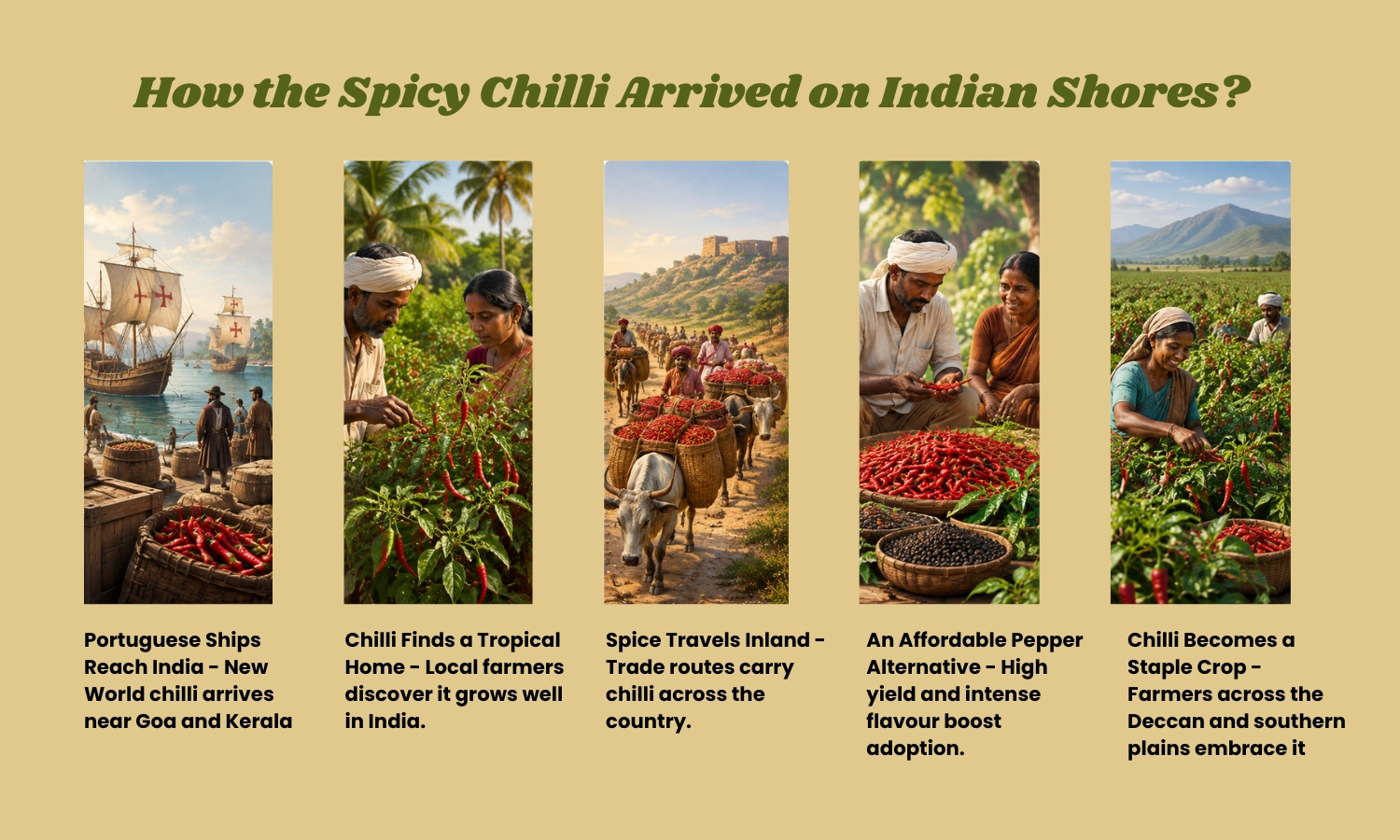
How the Spicy Chilli Arrived on Indian Shores?

Here’s how red chilli arrived in Indian food culture: origin of chilli in india

  1. The origin of red chilli in Indian food culture is closely tied to Portuguese maritime trade. When Vasco da Gama opened the sea route to India in 1498, Portuguese ships later carried New World crops, including chilli, to the western coast near Goa and Kerala.
  2. Local farmers found that the plant grew well in India’s tropical climate and required far less care than pepper vines.
  3. Within decades, chilli had moved inland along trade routes. Its ability to grow in varied soil, its high yield, and its intense flavour made it an easy replacement for the more expensive and slower-growing black pepper.
  4. This shift marks a key point in the history of chilli in India, as farmers across the Deccan and southern plains began adopting it as a staple crop.

What Is the Scientific Name of Chilli?

Scientists firmly placed the chilli plant within the nightshade family, Solanaceae, under the genus Capsicum. Most Indian chillies belong to the species Capsicum annuum, though some fiery regional varieties belong to Capsicum frutescens. The plant produces a compound called capsaicin, which is responsible for its heat and is measured on the Scoville scale.Understanding where the word chilli comes from helps explain some of the confusion around naming. The word is believed to originate from the Nahuatl language spoken by the Aztecs, who called the fruit “chilli.” Spanish colonizers adapted this into “chile,” which later became “chilli” or “chili” depending on regional spelling conventions.

Regional Growth and the Spread Across India

The origin and distribution of chilli across Indian states did not happen evenly. Coastal regions such as Goa, Karnataka, and Andhra Pradesh adopted it first because of direct Portuguese contact. From there, it moved east into Tamil Nadu and north into Maharashtra and Gujarat through internal trade networks.Andhra Pradesh, particularly the Guntur belt, eventually became one of the largest chilli-growing regions in the country, widely renowned for producing the vibrant red chilli powder that defines Indian cooking. Other pockets developed their own signature varieties, each suited to local soil and climate. This regional diversification is a major reason India today grows and consumes a wide range of chilli types, from mild Kashmiri chilli to intensely hot Naga chillies from the northeast.

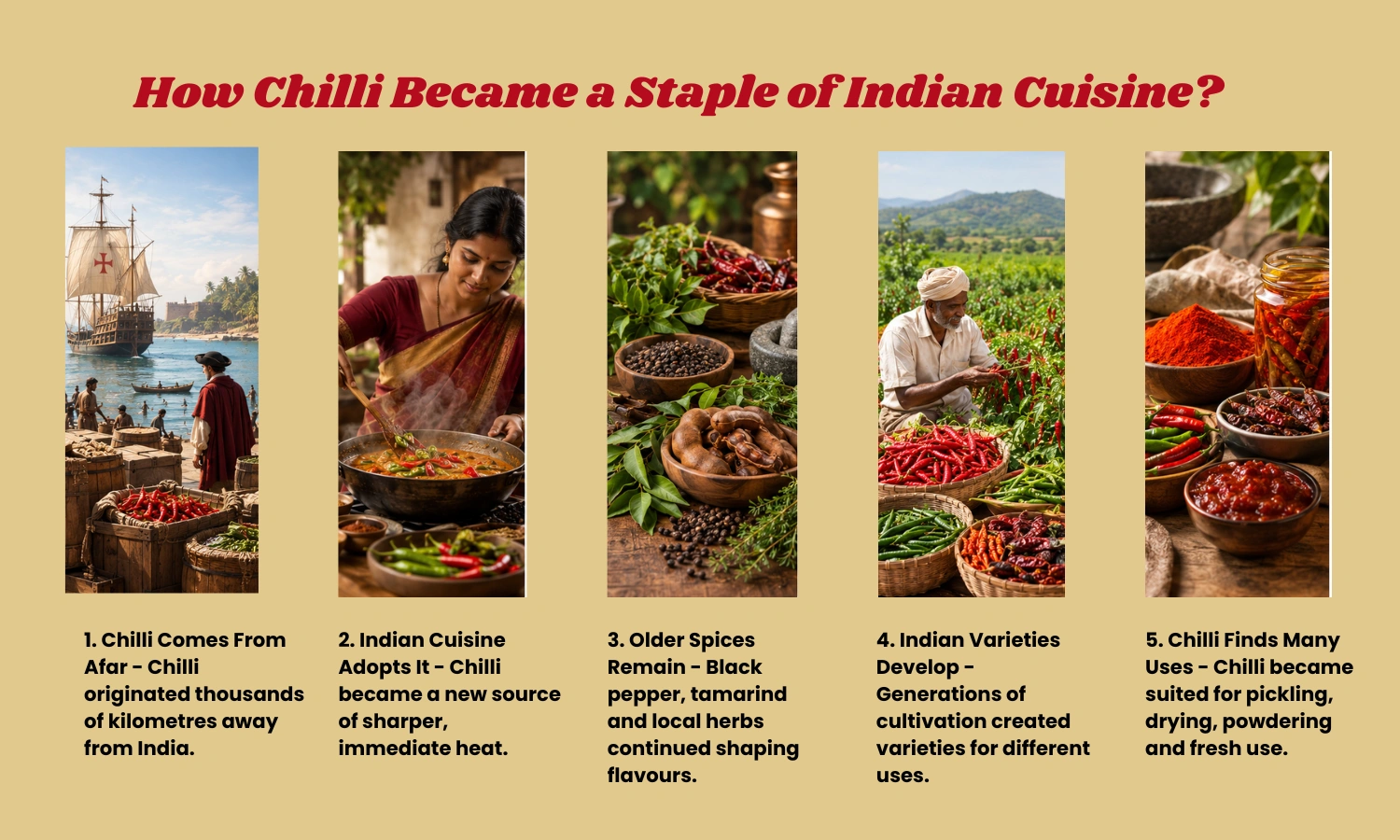
How Chilli Became a Staple of Indian Cuisine?

The origin place of chilli as a cultivated crop was thousands of kilometres away from India, yet within a few centuries, it became so deeply woven into Indian food that many assume it always belonged here. Dishes once flavoured primarily with black pepper, tamarind, and local herbs began incorporating chilli for its sharper, more immediate heat. origin of chilli in india Understanding where chilli originated also clarifies why South American cuisines and Indian cuisines share a common ancestor ingredient despite having completely different culinary traditions. The plant adapted to Indian tastes through selective cultivation over generations, giving rise to varieties tailored for pickling, drying, powdering, and fresh use.

The Remarkable Impact of Chilli Beyond the Kitchen

While food remains its primary use, chilli’s journey also touches other applications. Enthusiasts often ask where chilli oil originate, and while chilli oil as a specific preparation has strong roots in Chinese cuisine, India developed its own oil-based chilli preparations independently, often infused with mustard oil or sesame oil for tempering and pickling.The origin of chilli dish traditions in India shows remarkable variety. South Indian households use chilli in tempering, chutneys, and sambar, while modern kitchens across the country also pair regional snacks with green chilli sauce. North Indian kitchens rely heavily on chilli for rich curries and masalas. Each region built its own culinary identity around the same imported plant, using local techniques passed down through generations.

Why This History Matters Today?

Knowing the chilli origin place and its journey helps explain why quality and sourcing matter so much when choosing chilli powder or whole dry chilli for daily cooking. A crop with such a rich and layered past deserves ingredients that are grown, dried, and processed with care, not rushed through industrial shortcuts that dull flavour and heat.

Ready to Taste the Legacy?

Every packet of chilli powder carries centuries of trade routes, farming traditions, and regional craftsmanship behind it. 777 Foods sources its chillies from trusted growing belts across South India and processes them using methods that protect natural colour, aroma, and heat. Explore the range of chilli powders and cooking essentials from 777 Foods and bring a piece of this long culinary journey into your own kitchen.

Key Takeaways

  • Chilli originated in Central and South America and reached India through Portuguese traders around 1498.
  • The plant belongs to the Capsicum genus within the Solanaceae family, with capsaicin responsible for its heat.
  • India’s coastal regions adopted chilli first before it spread inland across the subcontinent.
  • Regional cultivation created distinct Indian chilli varieties suited to different climates and culinary styles.
  • Chilli’s history explains why sourcing quality matters when buying chilli powder or whole dried chilli today.

FAQs

What is the true origin of chilli in India?Chilli is not native to India. Its origin traces to Central and South America, and it reached Indian shores through Portuguese traders in the late fifteenth century. Farmers on the western coast were among the first in India to cultivate it, and from there it spread across the country over several generations.
How did chilli become so central to Indian cooking?Chilli offered a stronger, more affordable heat compared to black pepper, which was expensive and slow to cultivate. Farmers found it easy to grow in varied conditions, which encouraged rapid adoption across regions. Over time, cooks incorporated it into curries, chutneys, pickles, and spice blends, making it a kitchen essential.
Which Indian region grew chilli first?Coastal areas near Goa and Kerala are widely credited as the earliest points of chilli cultivation in India, largely due to their direct trade contact with Portuguese ships. From these coastal belts, cultivation gradually expanded into the Deccan plateau and further inland.
Is chilli related to black pepper?No. Chilli and black pepper come from entirely different plant families. Chilli belongs to the Capsicum genus in the Solanaceae family, while black pepper belongs to the Piperaceae family. They were confused historically only because early European traders were searching for pepper and applied the name loosely to the new fiery fruit.