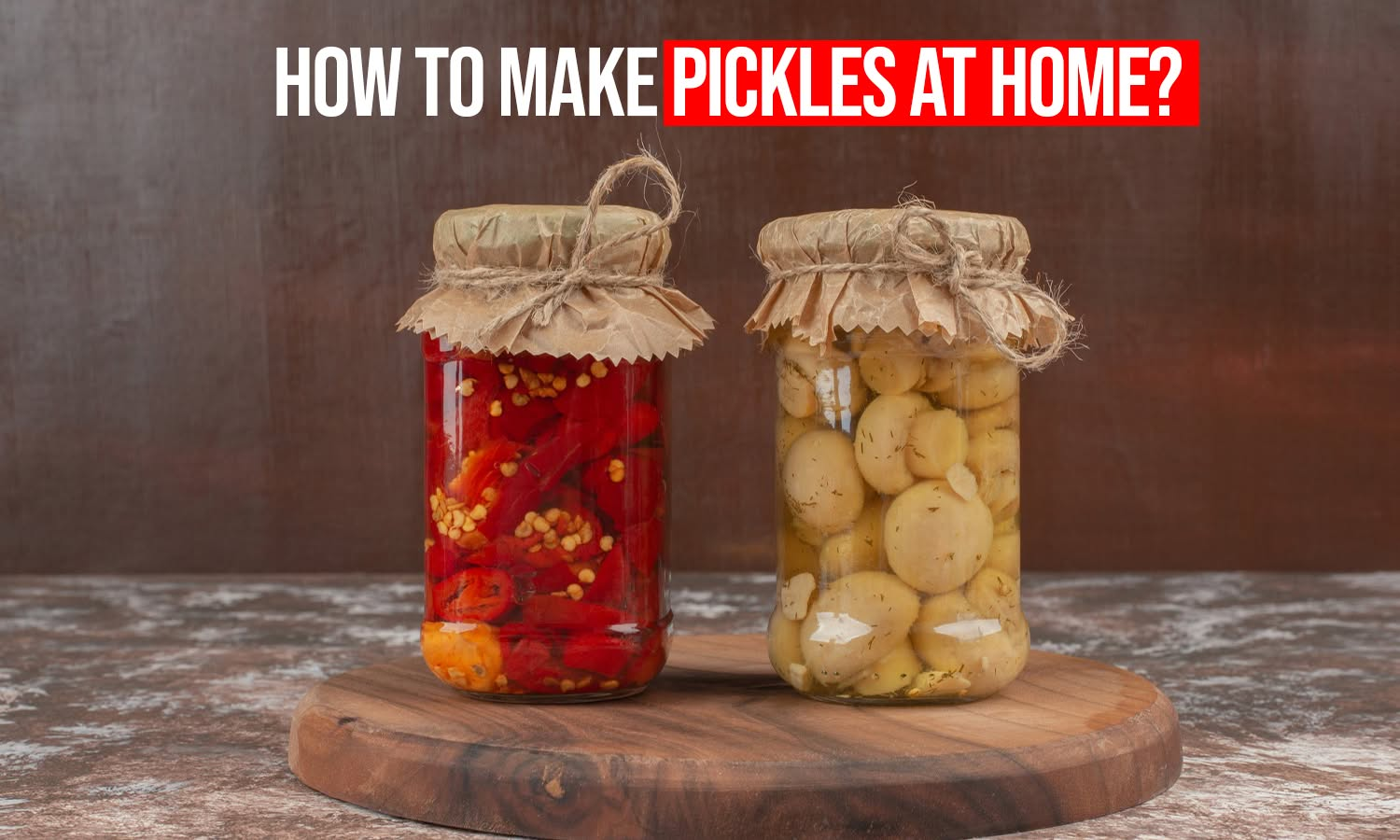
Pickles are a cherished part of Indian cuisine, adding tangy, spicy, and flavorful twists to every meal. Whether it’s mango, lime, or garlic, homemade pickles capture the essence of traditional flavours. If you’ve ever wondered how to make pickles at home, this guide walks you through every step, from selecting ingredients to storing your pickles for long-lasting freshness. With the right pickle masala and traditional pickle making techniques, you can enjoy authentic flavours every time.
What Are Pickles?
Pickles are preserved fruits or vegetables soaked in salt, oil, and spices. Indian pickles come in a variety of flavours, with each region following its own traditional pickle making methods. The combination of spices and natural preservation enhances taste while extending shelf life, making pickles an essential accompaniment to Indian meals.
Learning how to make pickles at home ensures fresh, preservative-free flavours. Many people also search for homemade pickles online or homemade pickles near me, but preparing a
homemade pickles allows complete control over quality, freshness, and ingredients.
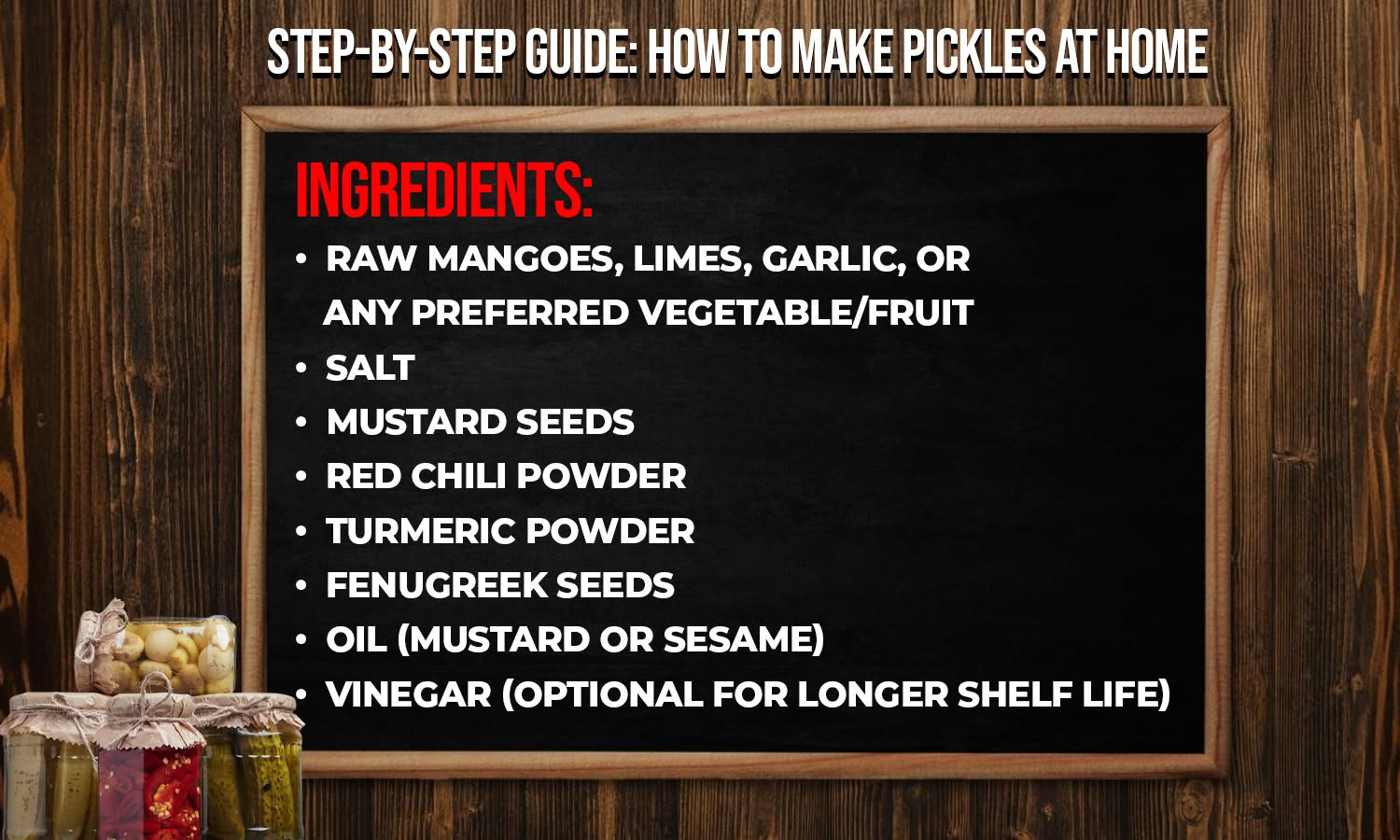
Step-by-Step Guide: How to Make Pickles at Home
Ingredients:
- Raw mangoes, limes, garlic, or any preferred vegetable/fruit
- Salt
- Mustard seeds
- Red chili powder
- Turmeric powder
- Fenugreek seeds
- Oil (mustard or sesame)
- Vinegar (optional for longer shelf life)
- Pickle masala for enhanced flavour
Instructions:
-
- Prepare the Ingredients – Wash and dry the fruits or vegetables thoroughly to prevent moisture from spoiling the pickle.
- Cut and Marinate – Chop them into small pieces and coat them with salt, turmeric, and chili powder.
- Sun-Dry for Extra Flavor – Spread them under the sun for a day or two to improve spice absorption, a key part of traditional pickle making.
- Temper the Spices – Heat oil and add mustard seeds, fenugreek, and other spices. Let them cool before mixing.
- Mix Everything Together – Combine the sun-dried ingredients with the tempered spices and oil. This simple process creates an easy pickle recipe suitable for beginners.
- Store Properly – Transfer the pickle to an airtight glass jar and let it rest for a few days to develop its flavor.
Learning how to make pickles at home is rewarding because it allows you to customise flavours while preparing a fresh homemade pickle recipe. If you’re short on time, you can also explore homemade pickles online or search for homemade pickles near me to enjoy locally prepared varieties. 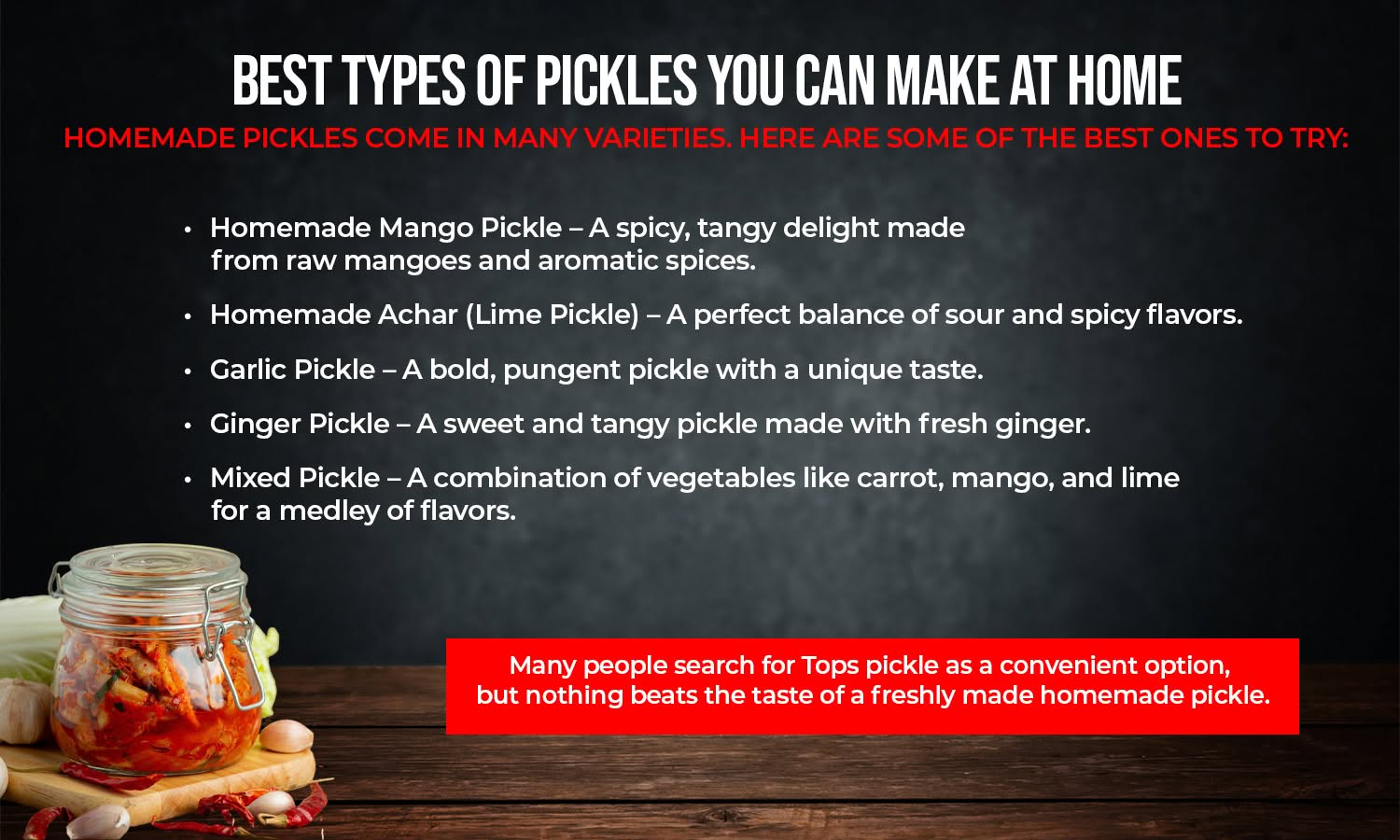
Best Types of Pickles You Can Make at Home
Homemade pickles come in many varieties. Here are some of the best homemade pickles you can try:
- Homemade Mango Pickle – A spicy, tangy delight made from raw mangoes and aromatic spices. Besides its taste, many people also appreciate the mango pickle benefits, including its digestive spices and traditional preparation.
- Homemade Achar (Lime Pickle) – A perfect balance of sour and spicy flavours using a classic lemon pickle recipe.
- Garlic Pickle – A bold, pungent pickle with a unique taste.
- Ginger Pickle – A sweet and tangy pickle made with fresh ginger.
- Mixed Vegetable Pickle – A delicious mixed vegetable pickle prepared using carrots, mangoes, lime, and other seasonal vegetables.
- Mix Achar – A traditional mix achar combines multiple vegetables and spices to create a rich blend of flavours loved across Indian households.
Many people search for Tops pickle as a convenient option, but nothing compares to the freshness of a home made pickle prepared using a trusted homemade pickle recipe.
Quick Pickles vs. Fermented Pickles: Which One Is Right for You?
- Quick Pickles – Prepared using vinegar or oil, these are ready within a few hours to three days. They’re perfect if you’re looking for an easy pickle recipe that requires minimal waiting.
- Fermented Pickles – These undergo natural fermentation over several weeks, developing deeper flavours and beneficial probiotics.
Whether you choose quick or fermented varieties, learning how to make pickles at home allows you to prepare pickles that match your taste and lifestyle.
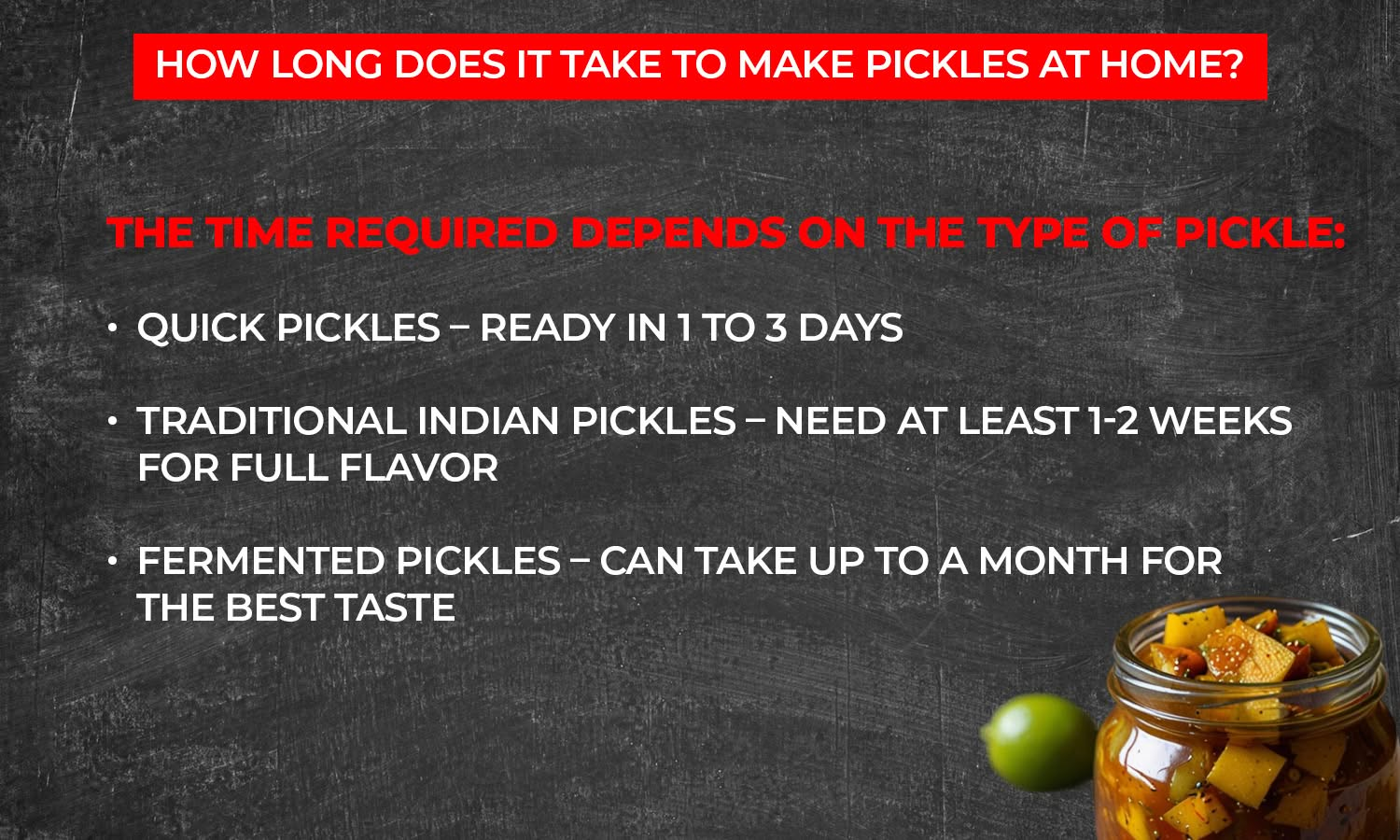
How Long Does It Take to Make Pickles at Home?
The time required depends on the type of pickle:
- Quick pickles – Ready in 1 to 3 days
- Traditional Indian pickles – Need at least 1-2 weeks for full flavor
- Fermented pickles – Can take up to one month for the richest flavour
Understanding how to make pickles at home also means knowing when your pickle has matured enough to deliver the perfect balance of taste and aroma.
How to Store Homemade Pickles for Long-Lasting Freshness
- Always use clean, dry glass jars for storage.
- Keep pickles in a cool, dark place away from moisture.
- Ensure the pickle is fully covered in oil to prevent spoilage.
- Use a dry spoon every time to avoid contamination.
Proper storage is one of the most important steps in how to make pickles at home, helping your homemade achar remain fresh for months while preserving its authentic flavour.
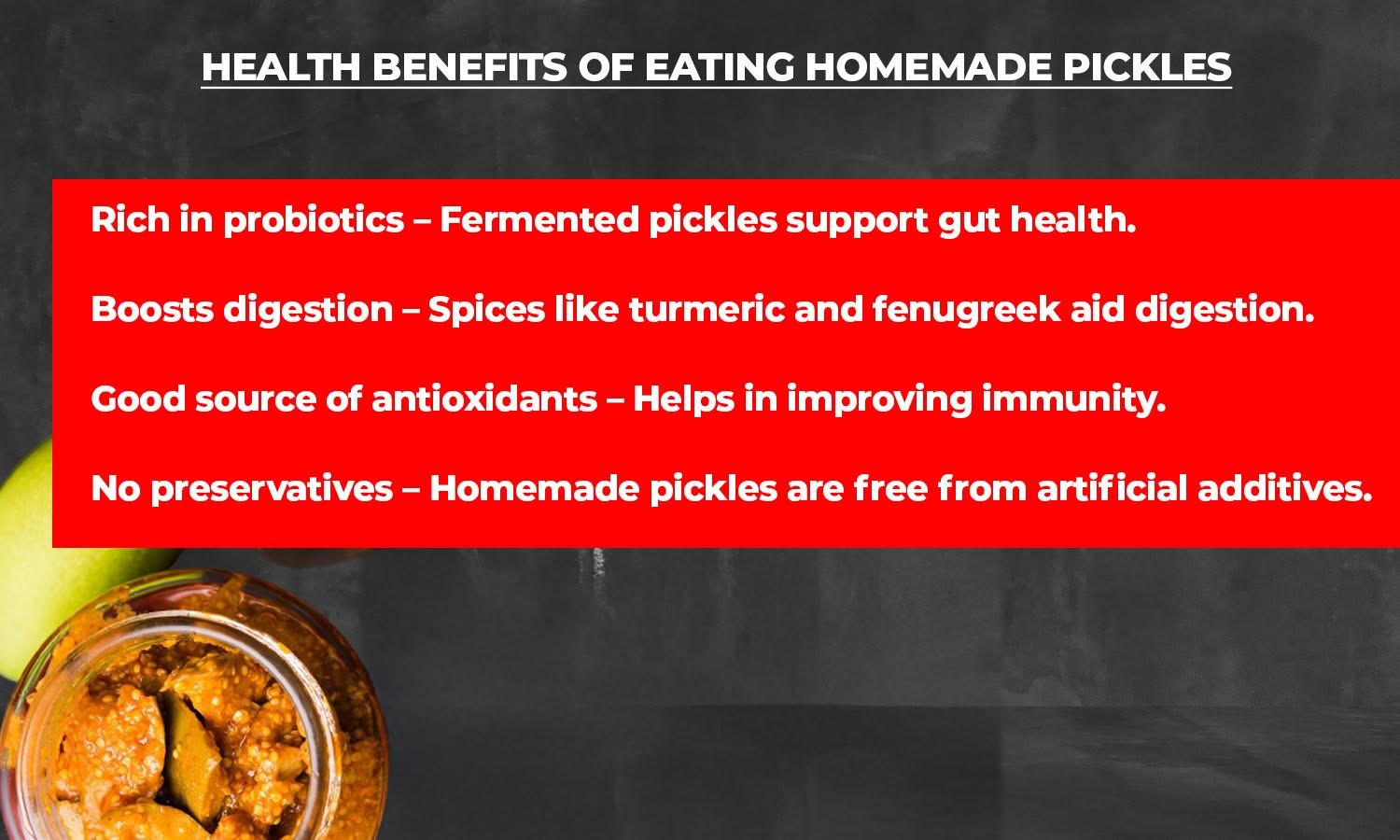
Health Benefits of Eating Homemade Pickles
Homemade pickles offer several advantages when prepared with quality ingredients.
- Rich in probiotics – Fermented pickles support gut health.
- Boosts digestion – Spices like turmeric and fenugreek aid digestion.
- Good source of antioxidants – Helps in improving immunity.
- No preservatives – Homemade pickles are free from artificial additives.
Many people also enjoy the mango pickle benefits, as raw mangoes contain nutrients while spices traditionally support digestion. This is one reason many families continue choosing the best home made pickles over commercially processed alternatives.
Conclusion
Learning how to make pickles at home is both simple and rewarding. Whether you’re preparing a mixed vegetable pickle, following a lemon pickle recipe, or experimenting with a spicy pickle recipe, homemade pickles offer unmatched freshness and authentic flavour.
By using quality ingredients, the right pickle masala, and proper storage techniques, you can enjoy delicious homemade achar throughout the year. Traditional recipes continue to prove that nothing matches the taste of a carefully prepared home made pickle.
Key Takeaways
- Learning how to make pickles at home helps create fresh, preservative-free pickles.
- Traditional pickle making enhances flavour through natural preservation.
- Recipes such as mixed vegetable pickle, mix achar, and lemon pickle recipe suit different tastes.
- Proper storage extends freshness for several months.
- Homemade pickles provide authentic flavours using quality ingredients and pickle masala.
FAQs
Which vinegar is used for Indian pickles?
White vinegar or apple cider vinegar is commonly used in Indian pickles to enhance shelf life and flavor.
Can we use lemon instead of vinegar?Yes. Many traditional recipes use lemon juice, especially in a classic lemon pickle recipe, as a natural preservative.
What oil is used in Indian pickles?
Mustard oil is the most commonly used oil for Indian pickles, followed by sesame oil in South Indian recipes.
What is the formula of pickle?A basic pickle combines fruits or vegetables with salt, spices, pickle masala, and oil or vinegar to preserve freshness and develop flavour.