Understanding PCOS: It’s More Than Just Period Problems
Polycystic Ovary Syndrome (PCOS) affects millions of women globally. It’s a hormonal imbalance that leads to a range of concerns—from irregular periods and weight gain to mood swings, fertility challenges, and insulin resistance. While many know PCOS for missed periods or acne, its deeper effects on inflammation, hormonal imbalance, and metabolism often go unnoticed.
That’s why women today are turning to natural remedies for irregular periods and looking into PCOS natural treatment options that are rooted in tradition and backed by science. One such ingredient that continues to show promise is turmeric for PCOS.
The Golden Healer: How Turmeric Fights Key PCOS Symptoms
Turmeric, or haldi, has long been a cornerstone in Ayurveda. Known for its bright yellow hue and warm aroma, turmeric holds a powerful compound called curcumin. This is what gives turmeric its reputation as one of the best anti-inflammatory spices.
Women managing PCOS deal with chronic inflammation, oxidative stress, and insulin resistance. Turmeric for PCOS helps by targeting all three of these issues naturally. It’s also gaining popularity as a gentle aid in healing PCOS naturally. Beyond medicinal benefits, this spice is now recognized globally for improving wellness in women.
The Power of Curcumin: Reducing Inflammation & Improving Insulin Resistance
One of the most common questions is: how to reduce inflammation in body PCOS sufferers experience? The answer often lies in diet and lifestyle—but specifically, the inclusion of curcumin for PCOS.
Curcumin works by regulating inflammatory pathways and boosting antioxidant activity. This can help in lowering insulin levels and decreasing the risk of Type 2 diabetes. When taken regularly, turmeric for PCOS weight loss also becomes more achievable, as it supports metabolism and reduces bloating.
Adding curcumin-rich turmeric for hormonal acne has shown positive effects too. Many women notice improved skin texture, fewer breakouts, and better hormonal balance—all naturally. 
Simple & Effective: How to Add Turmeric into Your Daily PCOS Diet
Adding turmeric to your diet doesn’t require a complete kitchen overhaul. Here are some easy, daily ways to incorporate turmeric for PCOS support:
- Mix a pinch into your morning smoothie or warm lemon water.
- Sprinkle it over sautéed veggies or lentils.
- Add it to soups, dals, and curries for both color and health.
- Use turmeric milk for PCOS relief before bedtime for its soothing, anti-inflammatory effect.
These small additions form part of a larger anti-inflammatory diet for PCOS. It’s also important to remember that including foods to eat for PCOS like leafy greens, whole grains, and healthy fats work in harmony with turmeric to balance the system.
Our Purity Promise: Why SGR777 Turmeric is the Right Choice for Your Health
At SGR777 Foods, we understand the importance of choosing only the purest ingredients—especially when it comes to wellness. Our pure haldi powder online is made from handpicked turmeric roots, stone-ground to preserve curcumin content, and packed without additives or preservatives.
When you’re navigating how to balance hormones naturally for PCOS, quality matters. That’s why our turmeric stands apart. Whether it’s in your kitchen or your wellness routine, turmeric for PCOS only works best when it’s pure.
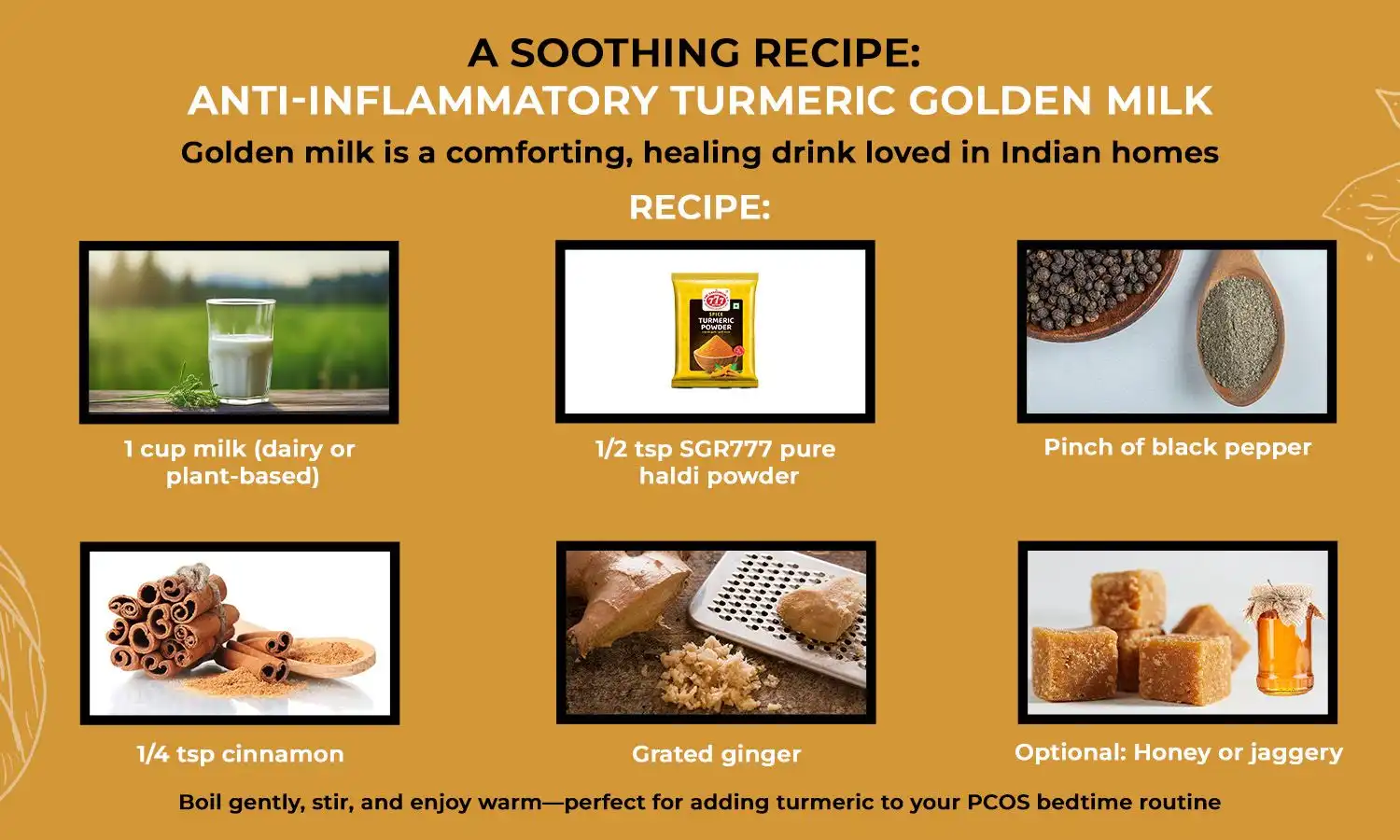
A Soothing Recipe: Anti-Inflammatory Turmeric Golden Milk
Golden milk has been cherished in Indian households for generations. It’s not just comforting—it’s healing.
Recipe:
- 1 cup of milk (dairy or plant-based)
- 1/2 tsp SGR777 pure haldi powder online
- A pinch of black pepper (enhances curcumin absorption)
- 1/4 tsp cinnamon
- A small piece of grated ginger
- Optional: Honey or jaggery for sweetness
Bring all ingredients to a gentle boil, stir well, and enjoy warm. This recipe is a natural way to add turmeric for PCOS into your bedtime routine.
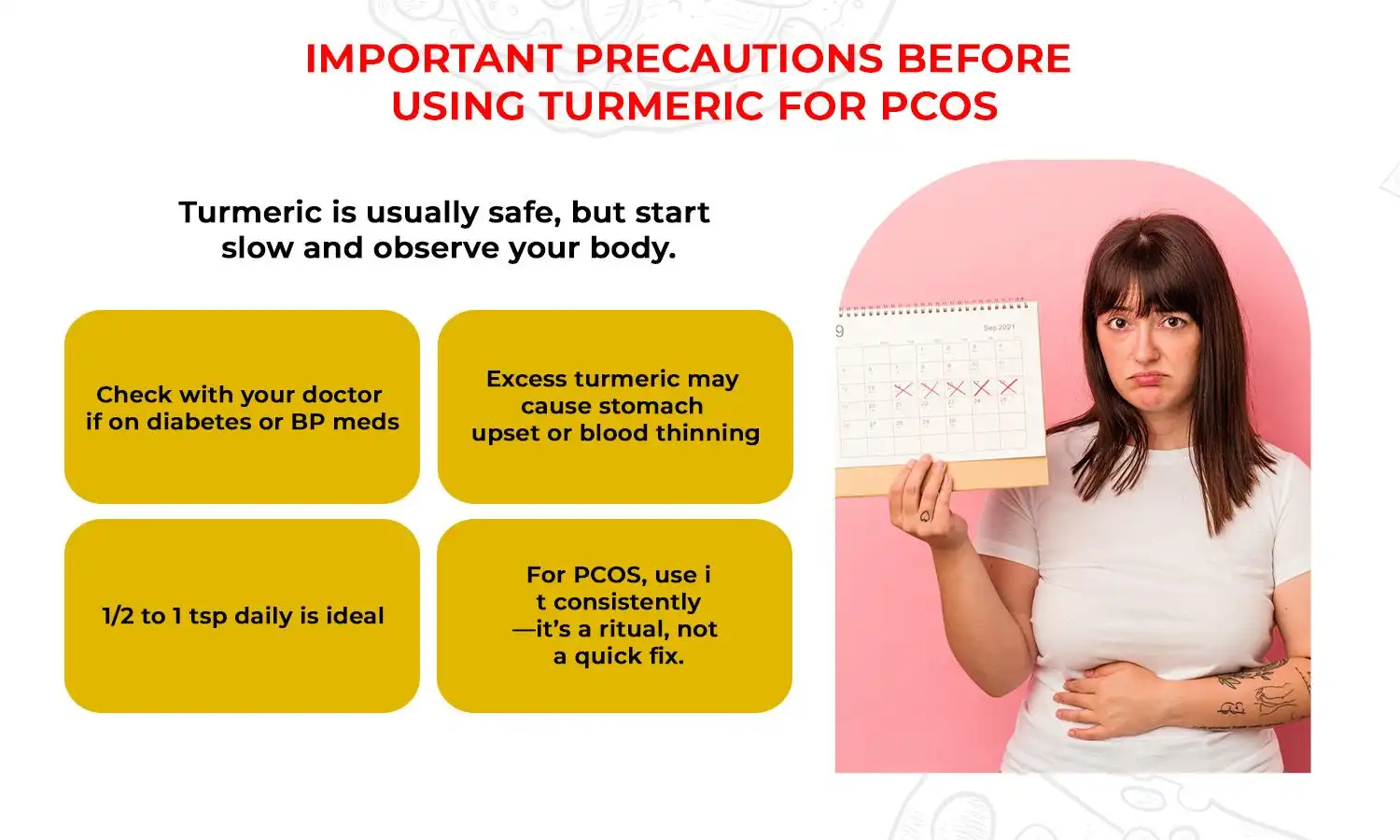
Important Precautions Before Using Turmeric for PCOS
While turmeric is generally safe, it’s always good to start slow and monitor your body. Here are a few tips:
- Consult your doctor if you’re on medications for blood pressure or diabetes.
- Too much turmeric may upset your stomach or cause thinning of blood.
- Stick to safe doses—usually 1/2 to 1 teaspoon daily in food or drink is ideal.
- Jeera supports digestion and wellness, but too much can cause acidity or discomfort.
As with all supplements for PCOS, consistency and balance are key. Make turmeric a daily ritual—not a quick fix.
FAQs :
How does turmeric actually help with PCOS? Turmeric helps reduce inflammation, improve insulin resistance, and support hormonal balance. The curcumin in turmeric plays a key role in managing PCOS symptoms naturally.
What is the best way to take turmeric for PCOS? Golden milk, smoothies, and curries are great ways to use turmeric for PCOS. Taking it with black pepper improves curcumin absorption.
How much turmeric should a woman with PCOS take? Generally, 1/2 to 1 teaspoon per day is safe. However, if you’re using supplements, always consult a healthcare provider.
Why is it important to use PURE turmeric powder?Only pure haldi powder online retains its natural oils, curcumin, and healing properties. Processed variants may lose nutritional value and contain fillers.