Overview
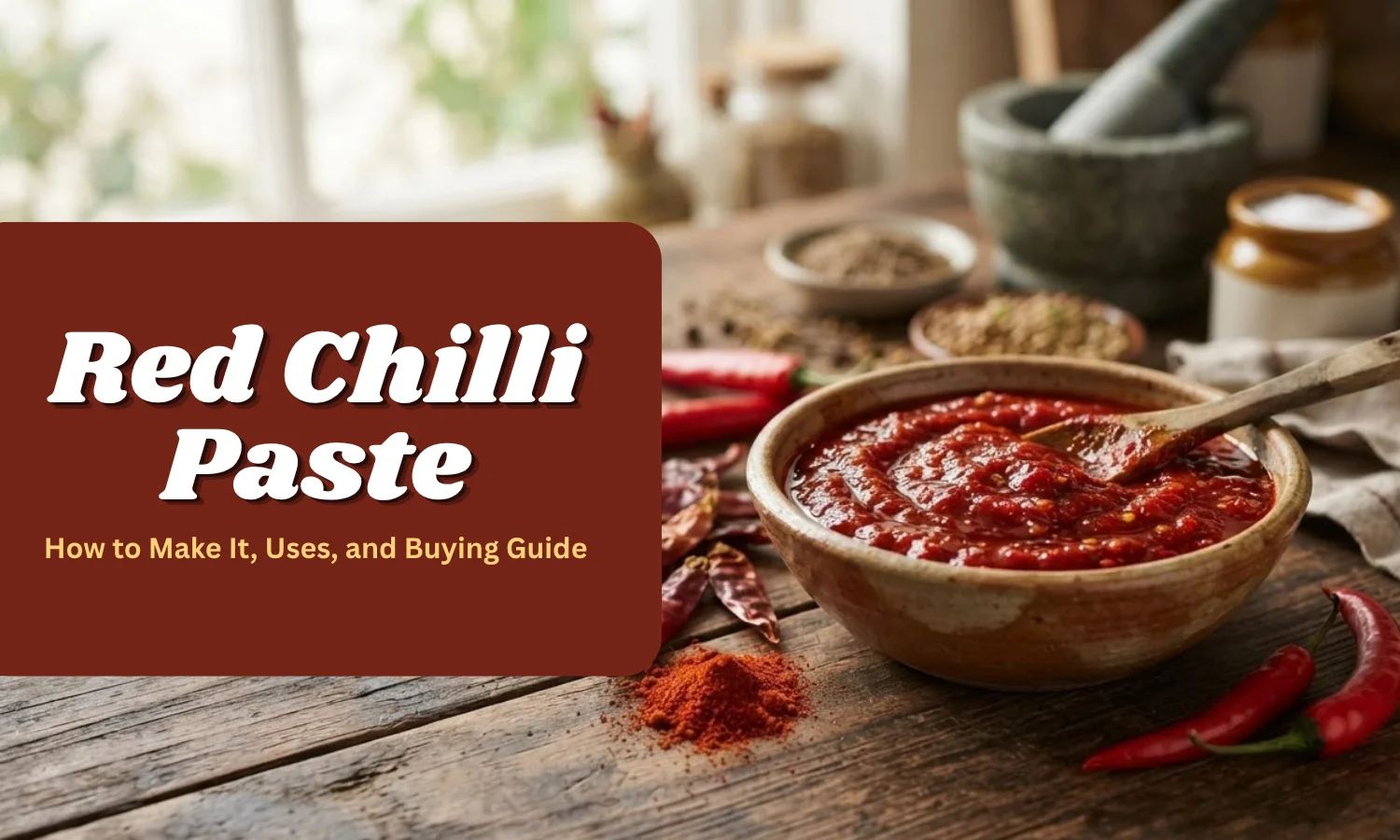
Red chilli paste is a smooth preparation made by soaking, grinding, and sometimes cooking dried or fresh red chillies into a spreadable form. It is used as a base for marinades, curries, and dips, making it essential to mastering the art of instant meals by offering a quicker alternative to grinding whole chillies each time. It can be made at home or bought ready-made, including Kashmiri red chilli paste for a milder, colour-forward option.
What Is Red Chilli Paste, and How Is It Different From Powder?
Chilli paste differs from chilli powder mainly in texture and moisture content, since paste retains water or oil that carries the flavour more directly into a dish without needing extra liquid during cooking. Red chili paste, sometimes also written as red chilli sauce, sits somewhere between a pickle and a powder in terms of how it is used in the kitchen.Unlike chilli garlic paste, which combines chilli with garlic and often ginger for a more rounded flavour, used in Indo-Chinese cooking, plain red chilli masala paste focuses purely on the heat and colour of the chilli itself, making it more versatile as a base ingredient across different cuisines.
How to Make Red Chilli Paste Easily at Home?
Many people ask, “How to make red chilli paste?”
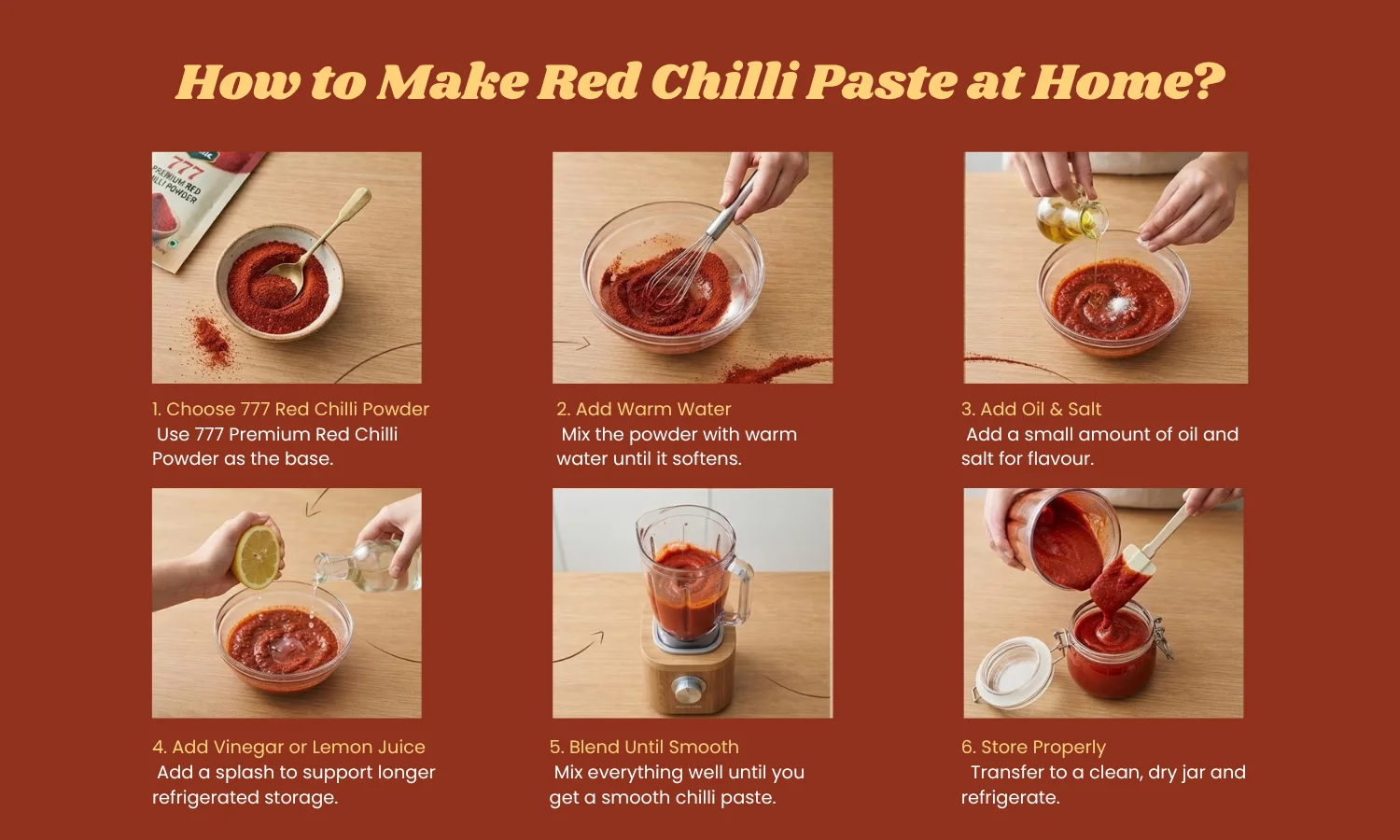 Here is the step-by-step procedure:
- Start the process by selecting the right chilli, typically a mix of Kashmiri for colour, and Byadgi or Guntur for heat, depending on how spicy the final paste should be. Try using the 777 Premium Red Chilli Powder to make your red chilli paste at home.
- Soak the dried pods in warm water for around twenty to thirty minutes to soften them, which makes grinding significantly easier and produces a smoother final texture.
- Drain the soaked chillies and mix them with a small amount of oil, salt, and a splash of vinegar or lemon juice, which helps preserve the paste for longer once refrigerated.
- Mix the items until smooth, and then transfer it to a clean, dry jar rather than leaving it in the blender, since prolonged contact with certain metal blades can occasionally affect colour over time.
“How to make a red chili paste recipe Indian-style?”You can follow the same process for making the paste Indian-style, though some regional variations add a touch of tamarind, garlic, or roasted spices during the grinding stage to build additional depth of flavour beyond plain chilli.
Red Chilli Paste Recipe for Everyday Cooking
A simple red chilli paste recipe for daily use involves soaking around ten to twelve dried red chillies, mixing them with a teaspoon of oil, a pinch of salt, and just enough water to form a thick, spreadable consistency. This basic version works well as a starting point for curries, marinades, or a quick chutney base, and it can be adjusted by adding garlic, ginger, or vinegar depending on the intended dish.
For those specifically following a red chilli paste recipe Indian households have used for generations, adding a small amount of roasted cumin or coriander seeds during grinding is a common way to round out the flavour without overpowering the natural chilli taste.
Kashmiri Red Chilli Paste for Colour-Forward Dishes
Kashmiri red chilli paste is a milder version made specifically from Kashmiri chillies, valued for the deep red colour it lends to marinades, tandoori preparations, and certain curries without adding excessive heat. This version is particularly popular in restaurant-style cooking, where visual presentation matters as much as flavour, since a small amount of Kashmiri chilli paste can transform the colour of a dish without making it too spicy for a broader range of diners.
Buying Red Chilli Paste: Price and Convenience
For households or small food businesses that prefer convenience over homemade preparation, red chilli paste price varies depending on the brand, if it uses a pure Kashmiri base or a spicier mix, and the jar size purchased. Buying red chilli paste online has become increasingly common, particularly for smaller households that do not cook in large enough volumes to justify making a fresh batch regularly.
When comparing red chilli paste online options, checking the ingredient list for preservatives, added colour, and salt content is worth the extra minute, since homemade versions typically contain fewer additives compared to some commercially packaged alternatives designed for a longer shelf life.
How to Store Homemade Red Chilli Paste Safely
If homemade or store-bought, red chilli paste should be stored in a clean, airtight glass jar and kept refrigerated to slow down spoilage. A thin layer of oil on top of the paste can help extend its shelf life by limiting air exposure, a traditional trick used across many Indian households for pickles and pastes alike. Properly stored homemade red chilli paste typically stays fresh for two to three weeks in the refrigerator, though this can vary depending on the exact ingredients and preparation method used.
Make Red Chilli Paste With 777 Premium Red Chilli Powder
Making red chilli paste at home can be simple when you have a convenient chilli ingredient ready to use. 777 Premium Red Chilli Powder can be combined with the appropriate ingredients and liquid to prepare a chilli paste for curries, marinades, chutneys, and other recipes.The official 777 Foods website currently lists Premium Red Chilli Powder in multiple options, with prices ranging from ₹20 to ₹175. Check the product page for the available variants and current pricing.
Conclusion
Red chilli paste bridges the gap between whole dried chillies and fine powder, offering convenience without sacrificing the depth of flavour that fresh grinding provides. If made at home with a simple recipe or purchased ready-made, choosing the right chilli variety, particularly Kashmiri for colour or Byadgi and Guntur for heat, makes a noticeable difference to the final result in any dish it is used in.
Key Takeaways
- Red chilli paste offers a quicker alternative to grinding whole chillies each time, working as a base for marinades, curries, and dips.
- Making red chilli paste at home involves soaking dried chillies, then grinding them with oil, salt, and a splash of acid like vinegar or lemon juice for preservation.
- Kashmiri red chilli paste is the milder, colour-forward version favoured for tandoori marinades and presentation-focused dishes.
- Chilli garlic paste differs from plain chilli paste by adding garlic and often ginger for a more rounded flavour used in Indo-Chinese-style cooking.
- Store red chilli paste in an airtight jar with a thin layer of oil on top, refrigerated, for the best shelf life of around two to three weeks.
FAQs
How long does homemade red chilli paste last in the fridge?Homemade red chilli paste typically stays fresh for two to three weeks when stored in an airtight glass jar in the refrigerator. Adding a thin layer of oil on top and using a clean, dry spoon each time helps extend its shelf life further.
Can I use red chilli paste instead of red chilli powder in a recipe?Yes, in most recipes red chilli paste can replace red chilli powder, though it is best to reduce any additional liquid in the recipe slightly since the paste already carries moisture. The flavour tends to be a little more rounded compared to using dry powder directly.
What is the difference between chilli garlic paste and plain red chilli paste?Chilli garlic paste includes garlic and often ginger mixed together with chilli, giving it a more rounded, savoury flavour commonly used in Indo-Chinese cooking. Plain red chilli paste focuses purely on the chilli itself, making it more adaptable across different cuisines and recipes.