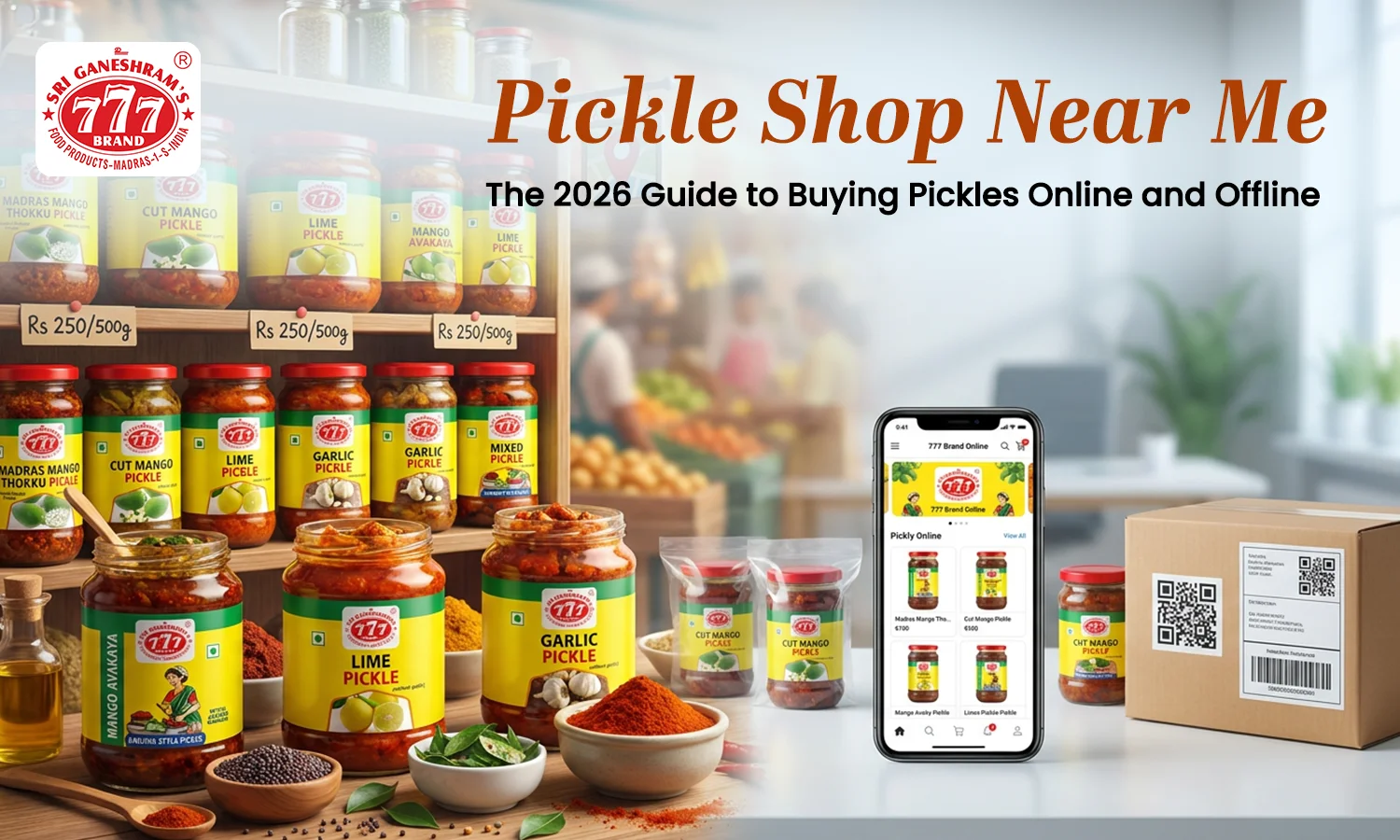
Pickle Shop Near Me: The 2026 Guide to Buying Pickles Online and Offline

Summary

A 2026 guide to buying pickles online and offline. Explains why “pickle near me” searches grew 180–220% (urbanisation, quick commerce habit, regional preferences) and maps the five buying channels: brand D2C, quick commerce, modern trade, general trade, B2B. Covers improvements in packaging, delivery speed, and freshness transparency, plus tips to search smarter and decode “homemade-style” labels.

Introduction :

Five years ago, the default way to buy a pickle in India was a kirana shop, a family shelf at home, or an occasional online order that took a week. In 2026, the picture has changed completely. Now it’s like a shopper typing pickle shop near me on a Sunday evening, and expecting the jar in their kitchen within sixty minutes.
Quick commerce, such as Blinkit, Zepto, Instamart, BigBasket Now, and Swiggy Instamart, has rewritten the pickle supply chain entirely. Brands that were built for two-week distribution cycles have had to rebuild for ten-minute ones. That shift is worth understanding, whether you are a household shopper, a dealer, or a retail buyer.

Why “Pickle Near Me” Searches Grew 3x in Two Years

Google Trends data for pickle near me and pickle store near me shows sustained growth of roughly 180-220% between 2024 and early 2026 in urban India. Three drivers explain it:

  • Nuclear-family urbanisation. Homemade pickle, the traditional fallback, is declining. Packaged pickle purchases through local shops and apps have replaced the summer-jar ritual in most metros.
  • Quick commerce habit formation. Once a shopper uses Blinkit for pickles twice, the third purchase is automatic.
  • Regional search preference. Shoppers increasingly search for local styles, “pickles Hyderabad” for avakaya, “Kerala pickles online” for fish-free curry leaf variants.

The Five Channels a Pickle Shopper Actually Uses

A 2026 NielsenIQ retail audit identified five dominant channels for packaged pickles in India. Understanding which one fits you saves 20-30% on average cost:

  • Brand D2C: Shopping directly at the brand’s website. It has the best price and the widest range. 777 Foods offers free shipping above ₹300 and a first-order discount on its catalogue.
  • Quick commerce: These are the 10-minute delivery apps. Narrowest range (usually 5-8 SKUs per brand), convenience premium of 8-15%.
  • Modern trade: These are the supermarkets and hypermarkets. These have full visibility and frequent promotional pricing across all media.
  • General trade: Our local kirana and provision stores. Best for established SKUs like garlic and mango pickle.
  • B2B and institutional: Bulk packs for caterers, cloud kitchens, and hotels. Lowest per-100g rate.
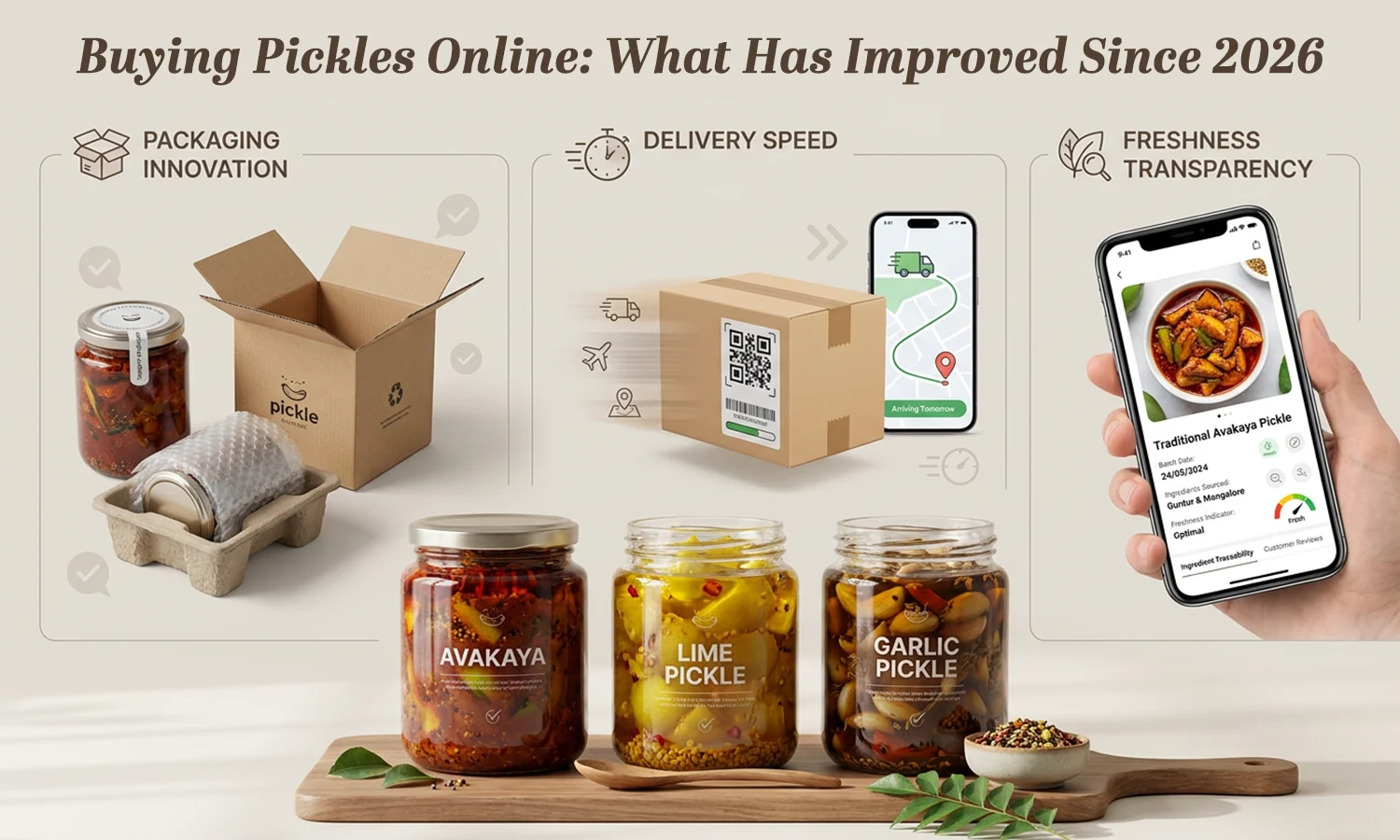
Buying Pickles Online: What Has Improved Since 2026

Buying Pickles Online: What Has Improved?

For readers buying pickles online in 2026, the experience is measurably better than two years ago on three counts:

  • Packaging. Double-sealed caps and oil-lock liners have cut transit leakage by approximately 70% across major brands (All-India Food Processors Association, 2026).
  • Delivery speed. Median delivery for D2C pickle orders in metro India is now 36-48 hours. Quick commerce delivers in under 60 minutes.
  • Freshness transparency. Most organised brands now print the packing date alongside expiry. 777 prints both, plus a recommended consumption window.

The common search terms that bring buyers here, pickles online order, pickle online order, pickle online shopping, online pickles, buy pickles online, all point to the same underlying need: a reliable jar, delivered fast, priced fairly.
How to Search Smarter for Pickle Online

Here are a few practical tips that we could use:

  • Search by style, not just category. “Andhra avakaya pickle 300g” returns fewer, better results than “pickle.”
  • Filter by origin city. Pickles made in South India ship faster to South Indian addresses.
  • Check the packing date, not only the expiry. A pickle that sat for four months in a warehouse loses freshness even if unopened.
  • Read the ingredient list for oil type. Gingelly oil is the South Indian benchmark; refined palm is a shortcut.

The common search terms that bring buyers here, pickles online order, pickle online order, pickle online shopping, online pickles, buy pickles online, all point to the same underlying need: a reliable jar, delivered fast, priced fairly.
Homemade-Style Pickle Online

Homemade-Style Pickle Online: What the Label Actually Means

The phrase, homemade pickles online, has become a category unto itself, with shoppers explicitly searching for the best homemade pickles online.

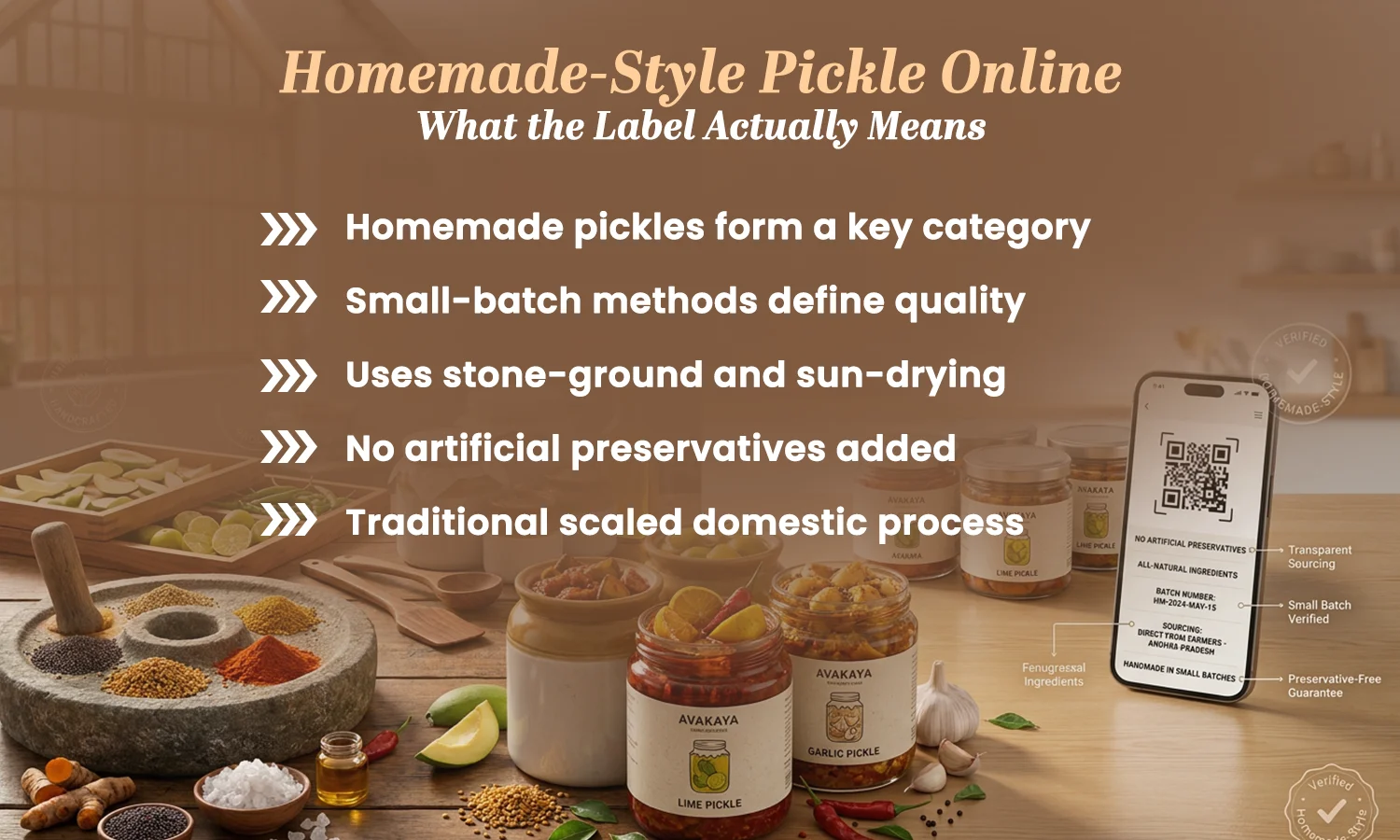
A genuinely homemade-style pickle is one that uses domestic-scale production methods, small batches, stone-ground spice, sun-drying, and no artificial preservatives. It does not mean the pickle was literally made in someone’s home.
777 Foods’ pickle range sits in this category. The brand has been making traditional South Indian pickles from its Mylapore, Chennai kitchen since 1954, using domestic-scale methods scaled up, not factory-scale methods scaled down. That is the distinction most buyers searching for homemade-style quality are actually trying to find.

Where 777 Fits in the Local + Online Map

For shoppers in Chennai, Bangalore, Hyderabad, Coimbatore, and Kochi, 777 pickles are available through:

  • Brand website: sgr777foods.com with pan-India delivery.
  • Amazon and Flipkart; full catalogue.
  • Quick commerce: select SKUs on Blinkit, Zepto, and Instamart.
  • Modern trade: Reliance Smart, Nilgiris, More Supermarket, and regional chains.
  • General trade: thousands of kirana and provision stores across South India.

Order the complete range from sgr777foods.com/pickles. With pan-India shipping and packing date printed, your jar arrives with the oil layer intact.

FAQs

Is There a Reliable Pickle Shop Near Me That Stocks 777?

Yes, across South India. The brand is sold through kirana outlets, provision stores, and modern trade chains in Tamil Nadu, Karnataka, Andhra Pradesh, Telangana, and Kerala. For exact stockists, the brand’s website has a store locator.

Which Platform Is Cheapest for Buying Pickles Online?

The brand’s own website is usually the cheapest, because it avoids platform margins. First-order discounts and free shipping above ₹300 apply on 777 Foods.

Can I Get a Pickle Delivered in 10 Minutes?

Yes, in most metros. Select 777 SKUs are listed on Blinkit, Zepto, and Instamart. The catalogue on quick commerce is narrower than on the brand website.

Are Kerala-Style Pickles and Hyderabad-Style Pickles Available Online?

Yes. The 777 Foods catalogue covers Tamil, Kerala, and Hyderabad/Andhra styles. Shoppers searching for pickles, Hyderabad, or Kerala pickles online can find authentic regional variants on the brand site.
Garlic Pickle: What Ayurveda and Modern Science Actually Agree On in 2026

Introduction :

Garlic pickle is the rare Indian condiment where Ayurveda and modern nutrition science agree almost word-for-word. Ancient Sushruta texts classify raw and fermented garlic as rasayana, a rejuvenating category. A 2023 peer-reviewed meta-analysis published in the Journal of Nutrition concluded that aged garlic extract measurably reduces LDL cholesterol and improves endothelial function. The two systems arrived at the same conclusion 2,500 years apart.
This is why a well-made garlic pickle has stopped being a supporting player on Indian plates and started appearing as a centrepiece. In South Indian homes, a teaspoon of SGR 777 Garlic Pickle 300g with curd rice is now prescribed as often as turmeric milk.
Garlic Pickle

What Happens to Garlic When You Pickle It

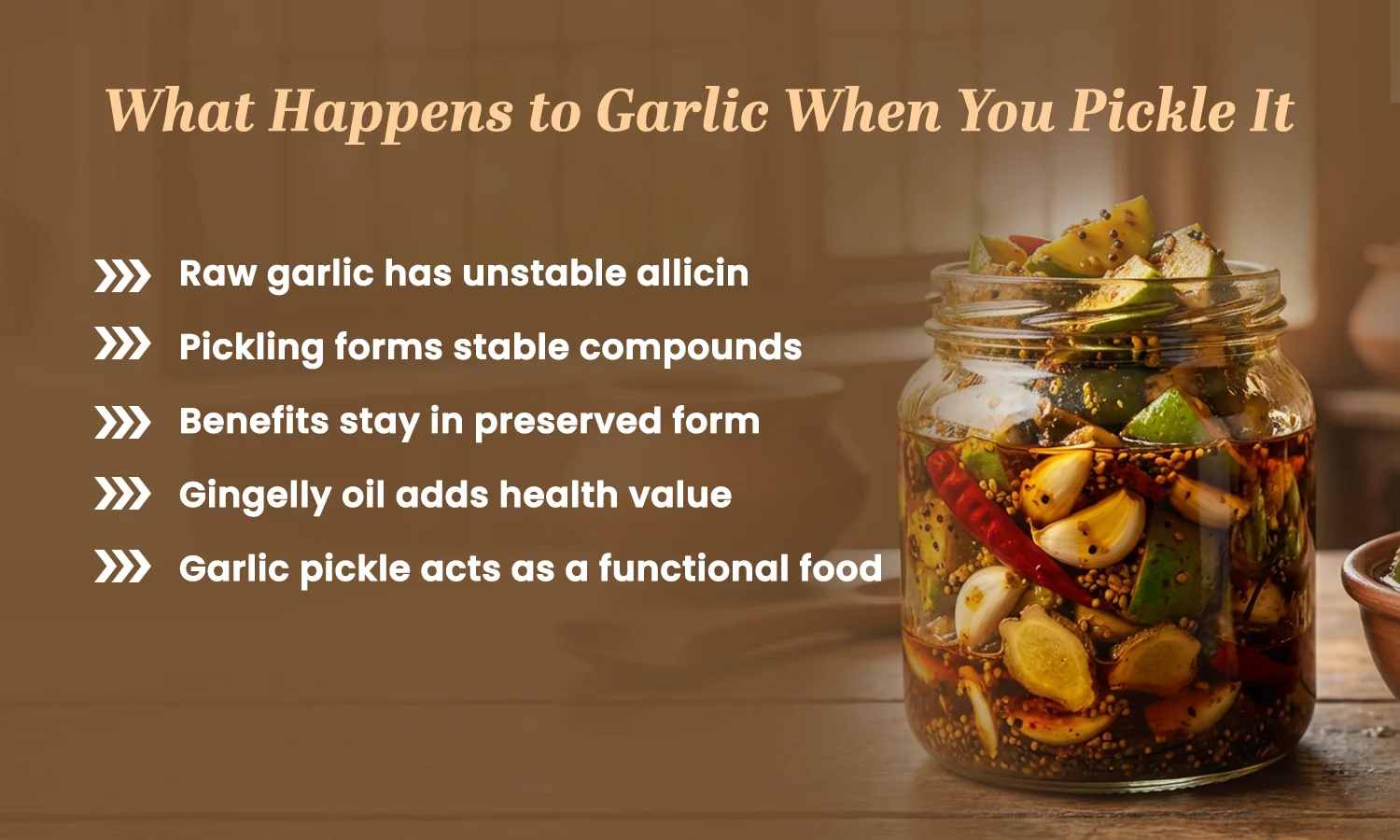
Raw garlic contains allicin, a sulphur compound responsible for its sharpness. Allicin itself is unstable and degrades within hours of crushing. In a pickled jar, though, allicin converts into more stable organosulphur compounds like S-allyl cysteine. These are the compounds modern studies actually measure. In other words, pickling does not destroy garlic’s benefits; it converts them into more shelf-stable versions.
The oil base matters too. Gingelly oil contains sesamin and sesamolin, both shown to support cardiovascular and anti-inflammatory pathways. Combined with pickled garlic’s organosulphur compounds, a traditional South Indian garlic pickle becomes genuinely functional food, not just flavour.

Ayurvedic View: Garlic as a Seasonal Therapy

In classical Ayurveda, garlic is warming, pungent, and ideal for the late-monsoon and winter months when kapha tends to accumulate. Garlic pickle, specifically, is recommended because the oil and salt neutralise garlic’s sharpness enough for daily consumption without digestive discomfort.
The traditional dosage was modest, a small spoonful with one meal per day. That guideline still holds. A pickle consumed daily in moderation delivers the benefit profile; over-consumption simply adds sodium without improving outcome.

Modern Research on Pickled Garlic

The following was the research that was conducted recently, and is worth knowing:

  • A 2024 Indian Council of Medical Research review noted that traditional fermented garlic preparations retain 60–75% of their original allicin-derivative activity over 12 months of storage.
  • The American Journal of Clinical Nutrition has linked regular garlic consumption (approximately 3–5g/day equivalent) with modest reductions in systolic blood pressure.
  • Food Chemistry (2023) reported that gingelly-oil-based garlic pickles showed higher antioxidant retention than mustard-oil versions at equivalent storage periods.

None of this is a replacement for medical advice. A pickle is a condiment, not a treatment. But the evidence for regular, modest consumption as part of a balanced diet is now strong enough that most nutritionists no longer dismiss it as folk wisdom.

What Separates a Good Garlic Pickle from an Average One

The best garlic pickle passes four practical tests:
1. Whole peeled pods, not minced, not paste. The bite is half the pleasure.
2. Even with oil submersion, every pod should be visible through the oil layer.
3. Balanced heat enough chilli to cut garlic’s pungency, not enough to dominate.
4. Clean aftertaste, a good garlic pickle does not leave a metallic or rancid note.
SGR 777’s garlic pickle meets all four. It is hand-peeled, oil-set in gingelly, and batch-rested for 10 days before dispatch. The garlic pickle price sits at ₹110 for 300g. For reference, the garlic pickle 1kg price for bulk B2B buyers is approximately 20% lower per 100g, making it efficient for caterers and cloud kitchens.
Ginger Garlic Pickle: The Next Evolution

Ginger Garlic Pickle: The Next Evolution

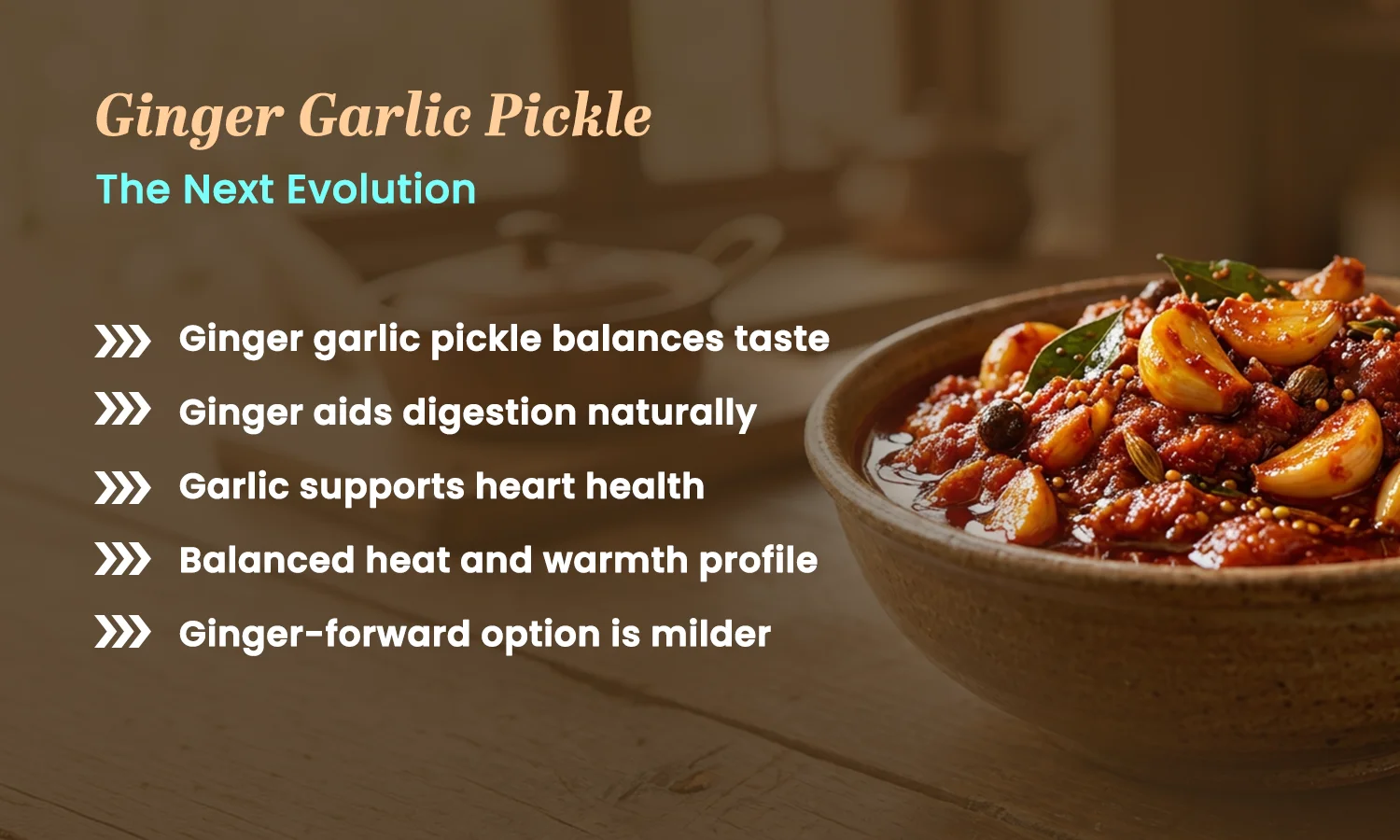
A common upgrade in South Indian kitchens is the ginger garlic pickle, where ginger’s digestive support complements garlic’s cardiovascular profile. The combination also balances heat and warmth on the palate. For readers who find pure garlic pickle too dominant, a ginger-forward option like the Ginger Pickle 300g is an easier entry point.

Buying Garlic Pickle Online Without Being Disappointed

Buying Garlic Pickles from resellers that sell damaged products can be disappointing. So when you order garlic pickle online in 2026, you can note these three signals that separate genuine brands from relabellers:

  • The ingredients list starts with garlic and gingelly oil, not with water, vinegar, or refined sunflower oil.
  • Packing date is printed (not only “best before”).
  • The jar has a visible oil layer upon delivery. A dry-looking pickle has either been stored poorly or formulated with insufficient oil.

Explore the complete SGR 777 pickle range, traditional and authentic, made in Chennai since 1954.

FAQs

How Much Garlic Pickle Can I Safely Eat per Day?One teaspoon (~5g) with a meal is the traditional dose. Regular, modest consumption is better than occasional heavy use. Anyone with prescribed blood-thinning medication should consult their doctor, since garlic can mildly enhance anticoagulant effects.
Does Pickling Destroy the Health Benefits of Garlic?No. Pickling converts unstable allicin into more stable organosulphur compounds, most of which retain the core benefits linked to raw garlic. Oil-based pickling preserves these better than water or vinegar bases.
Which Is Better for Garlic Pickles, Mustard Oil, or Gingelly Oil?Both work. Mustard oil is traditional in North Indian garlic pickles; gingelly is traditional in South Indian. Gingelly oil has a longer shelf life at Indian room temperatures and carries a milder aroma that suits daily use.
Are Garlic Pickles Available in 1KG Bulk Packs?Yes. SGR 777 offers bulk and institutional packs for caterers, hotels, and cloud kitchens at lower per-100g rates. Contact the brand’s trade desk for a price list.

Mixed Pickle vs Single-Fruit Pickle: Which Jar Actually Belongs in Your Kitchen?

The most-asked question on Indian pickle shelves is not about heat or price. It is about variety. Should a household keep a mixed pickle jar that covers everything, or multiple single-ingredient jars, mango, lime, chilli, garlic, amla, that each do one thing well?
Both strategies are valid. Each solves a different problem. Understanding the difference saves money, fridge space, and plate fatigue. Mixed Pickle

What a Mixed Pickle Actually Is

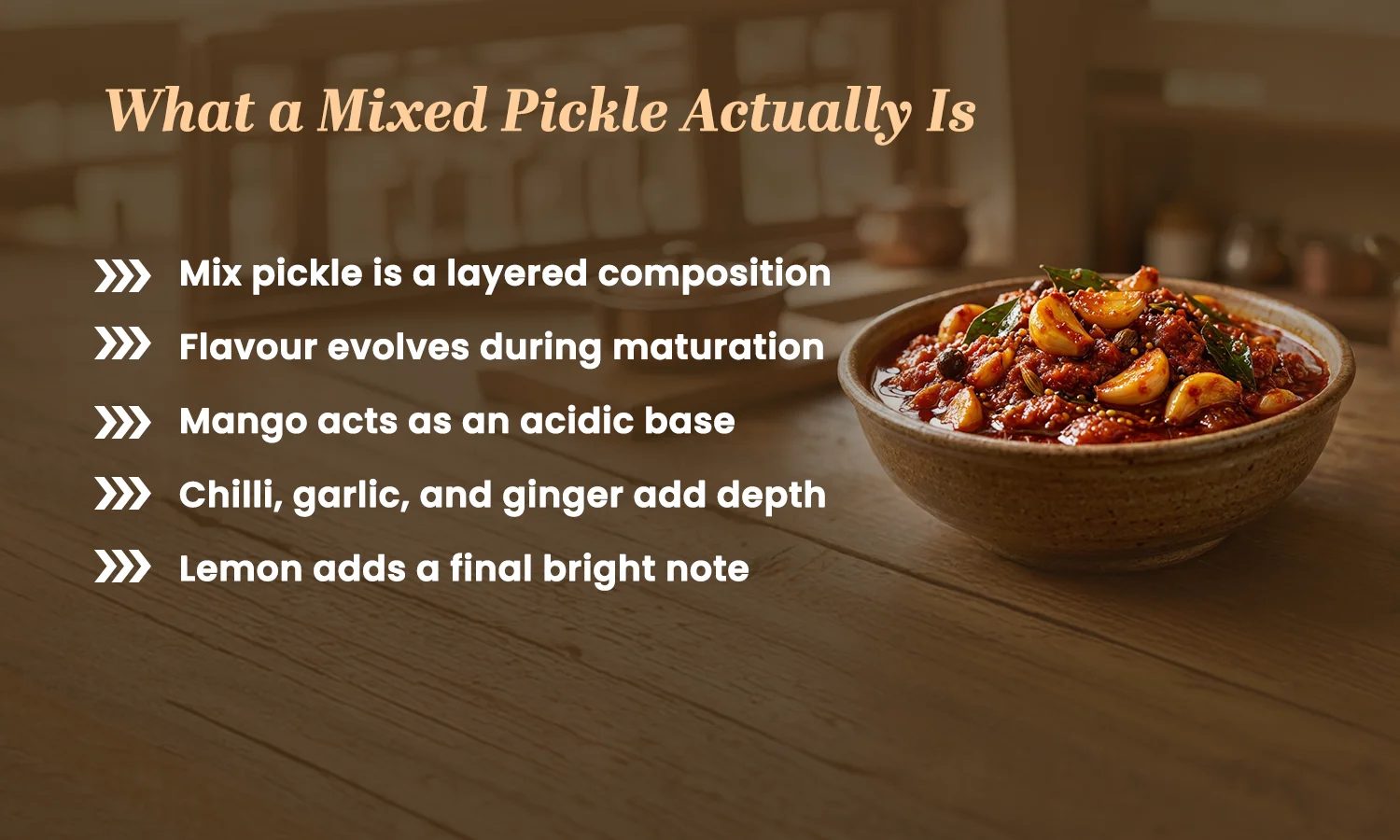
A true mix pickle is not a compromise; it is a composition. Traditional South Indian and North Indian mixed pickles layer 4–7 ingredients that release flavour at different maturation points. Early weeks taste mango-forward; later weeks shift to chilli and ginger. A well-constructed mixed vegetable pickle is, in that sense, a seasonal instrument, not a static product.
The most common mixed pickle ingredients in South Indian formulations are:

  • Raw mango: the acidic anchor
  • Green chilli and red chilli; heat
  • Garlic and ginger; aroma and digestive warmth
  • Carrot; textural crunch (carrot pickle also exists as a stand-alone variety)
  • Tamarind: a secondary sour note in some recipes, closely related to the standalone tamarind pickle category
  • Lemon or lime; finishing brightness

The SGR 777 Mixed Pickle 300g follows this classical layering, six ingredients, gingelly oil base, priced at ₹110. The mixed pickle price typically runs 5–10% higher than a single-fruit pickle because of the ingredient complexity.

When a Single-Ingredient Pickle Wins

A single-ingredient pickle lets one flavour dominate, and some ingredients deserve that solo spotlight. Consider:

  • Tomato pickle, impossible to reproduce inside a mixed jar because the water content destabilises other ingredients. The standalone tomato pickle preserves the smoky-tangy profile that gets lost in a multi-ingredient blend.
  • Onion pickle, onion’s sweetness collapses against the raw mango’s acidity. It needs its own jar.
  • Bitter gourd pickle, bitter gourd’s flavour is assertive and divisive; hiding it in a mix wastes it.
  • Coriander pickle and other herb-based pickles, these are finishing condiments, not staples

This is why SGR 777’s pickle range includes both: the Tomato Pickle 300g and the Hot Onion Pickle 300g sit alongside the mixed pickle, because each solves a flavour problem the other cannot. Mixed Pickle

Types of Pickles in India: A Quick Classification

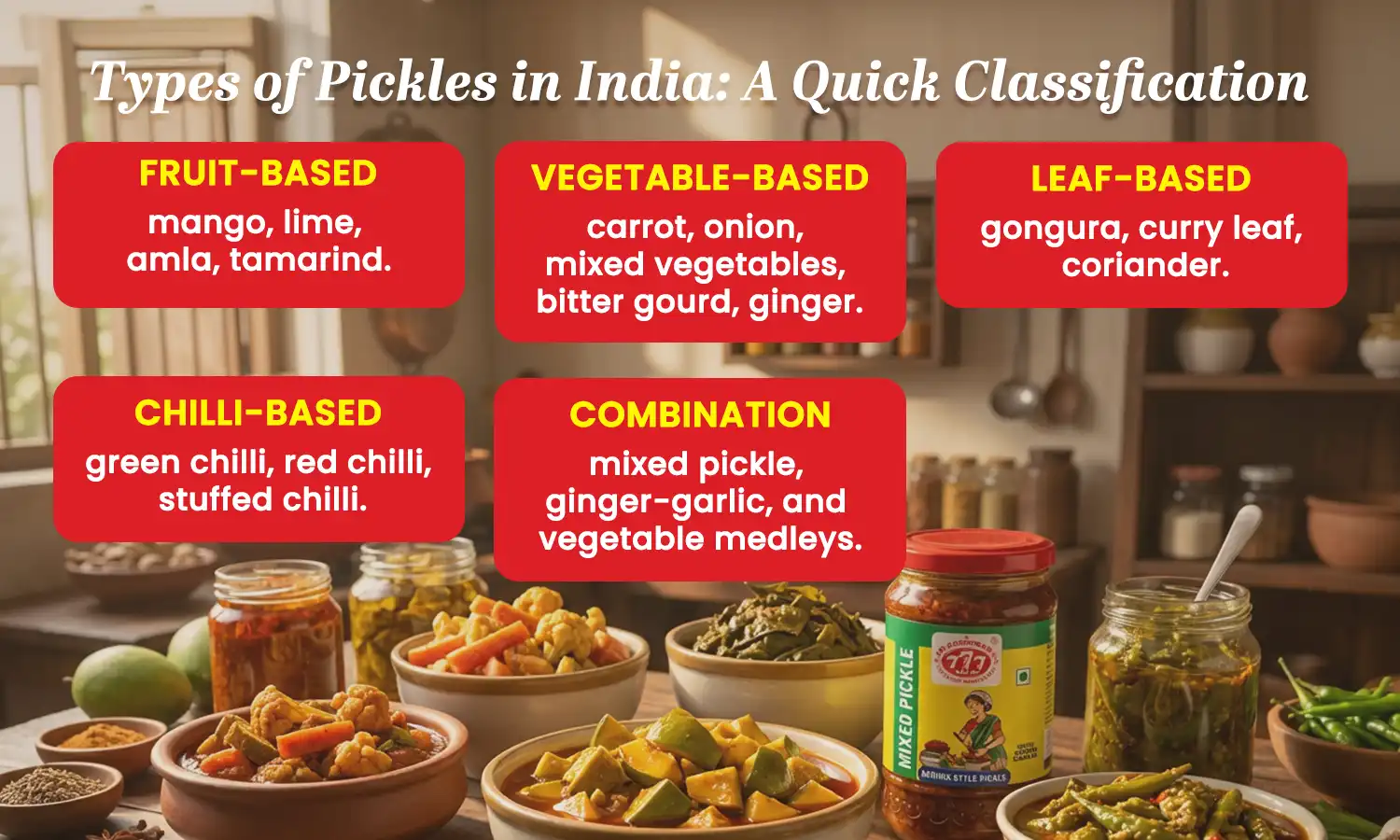
For readers searching for types of pickles in India or pickle types, the Indian pickle universe breaks into five families:
1. Fruit-based; mango, lime, amla, tamarind. The largest category.2. Vegetable-based; carrot, onion, mixed vegetables, bitter gourd, ginger.3. Leaf-based; gongura, curry leaf, coriander.4. Chilli-based; green chilli, red chilli, stuffed chilli.5. Combination; mixed pickle, ginger-garlic, and vegetable medleys.The veg pickles category, covering mix veg pickle, mixed veg pickle, and mix vegetable pickle, is one of the fastest-growing sub-segments in 2026, growing at 4.59% CAGR per Mordor Intelligence, faster than fruit pickles despite a smaller base.

Decide Which to Buy First:

Before you decide between our Mixed pickle and single fruit pickle, ask these three questions:1. How often do you use pickle? Daily users benefit from multiple single-ingredient jars that do not fatigue the palate. Occasional users should start with a mixed pickle.
2. How many people are in the household? A 2-person home rarely finishes five jars before they degrade. A mixed pickle is more efficient.
3. What do you eat? Rice-heavy diets demand variety; multiple jars win. Roti-heavy diets work well with a single mixed pickle and a garlic pickle.
A practical starting kit for an Indian household in 2026: one mixed pickle, one avakaya or cut-mango pickle, and one garlic or ginger pickle. That three-jar set covers 90% of daily meal pairings.

What About Pickle Mix vs Mixed Pickle? Are There Any Differences?

This is a good question, but it is often confused. Pickle mix typically refers to a dry spice blend used to make pickles at home, mustard, fenugreek, chilli, and turmeric in pre-measured ratios. Mixed pickles are the finished product. If a packet says mixed pickles or vegetable pickles on the label, it is the ready-to-eat category.
Browse both single and mixed options in the full SGR 777 pickle catalogue. Most households end up with a shelf that contains one mixed jar and two or three favourites.

FAQs

What Is in a Traditional Mixed Pickle?Typically raw mango, green and red chilli, garlic, ginger, carrot, and a tangy finisher (tamarind or lime). A gingelly or mustard oil base carries the spices and preserves the mix.
Is Mixed Pickle Healthier Than a Single Pickle?Not inherently. Health benefits depend on oil quality, salt level, and ingredient freshness, not whether the jar is mixed or single. A well-made single pickle and a well-made mixed pickle deliver similar nutritional profiles per tablespoon.
Why Is Mixed Pickle Priced Differently?Because it uses more ingredients and longer layering. Expect a 5–10% premium over a single-ingredient pickle at equivalent quality tier.
How many types of pickle does SGR 777 offer?Over 15 varieties, covering fruit, vegetable, leaf, chilli, and combination categories. The mixed pickle is the brand’s entry-point recommendation for new buyers.

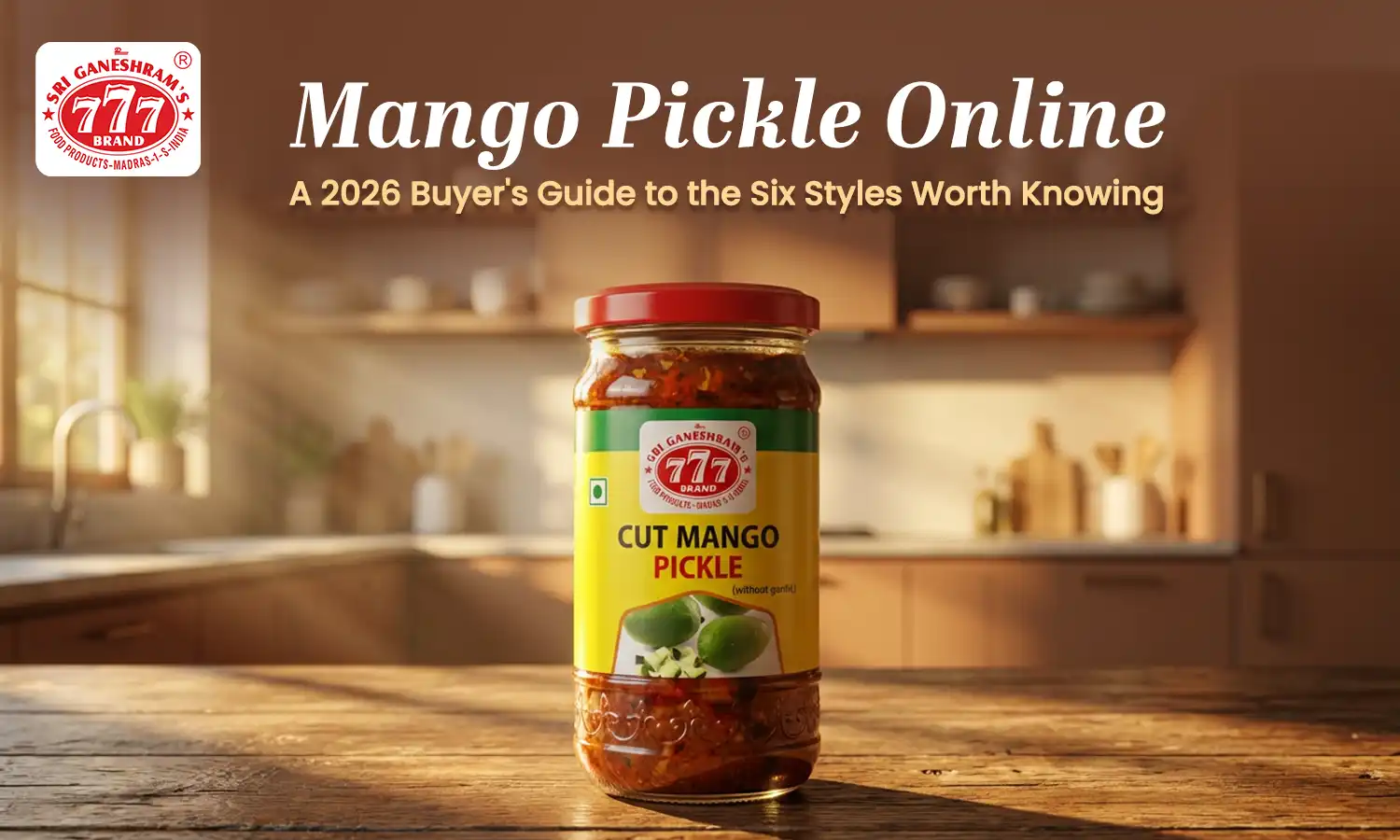
Mango Pickle Online: A 2026 Buyer’s Guide to the Six Styles Worth Knowing

Introduction :

Let’s try a quick experiment. Type mango pickle online into any e-commerce search bar in India and count the results.
You will cross 4,000 listings before the first page ends.
Of those, maybe fifty are genuinely traditional. The rest are factory reformulations, relabelled contract-packed pickles, or private-label products that have never seen a raw mango outside a wholesale invoice.

This is not a moral problem; this is the commoditisation that is happening to every food category. But it does mean a buyer ordering Andhra mango pickle in 2026 needs a quick framework to separate the real thing from the shortcut.

Mango Pickle Online

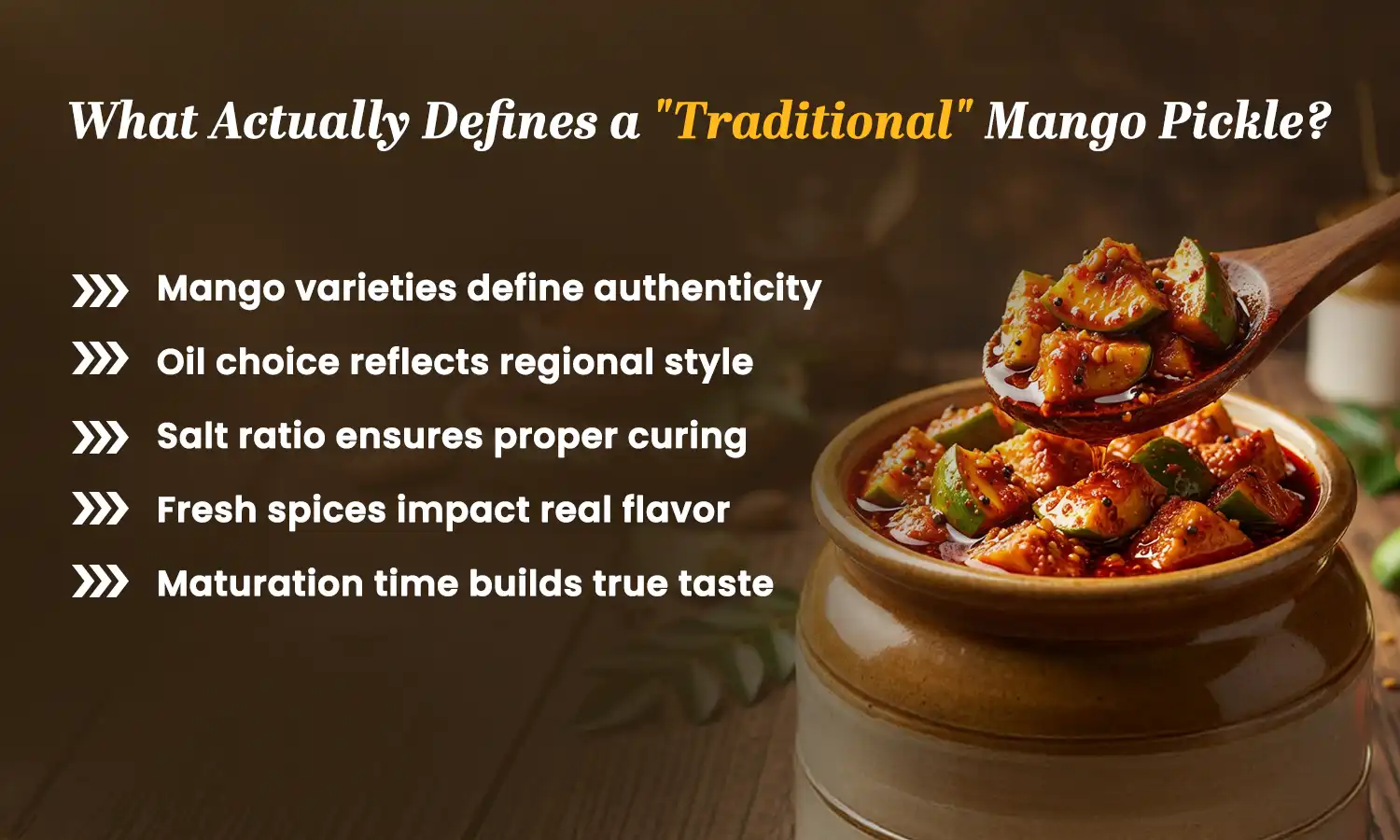
What Actually Defines a “Traditional” Mango Pickle?

To define what a traditional mango pickle is, you should take into consideration these five parameters. If you’re not careful, these parameters can be implemented into cheap products to fake on a label, and you’ll find it almost impossible to see the difference:

  • Mango variety (that you should look into): Tota-pari, Raspuri, or Neelam for cut-mango pickle; Ramakelly for avakaya-style; tender unripe for vadu mango.
  • Oil: chekku-pressed gingelly for South Indian styles; mustard oil for North Indian.
  • Salt-to-mango ratio: 12–15% by weight is traditional; below 10% indicates a shortened preservation cycle.
  • Spice freshness; whole red chilli ground in-batch, not pre-ground spice powder.
  • Maturation window: genuine pickle is dispatched after at least 7–10 days of rest.

Understanding Mango Pickle Pricing in 2026

The mango pickle price range in organised retail today spans ₹80 to ₹420 for a 300g jar. That eight-fold spread looks arbitrary but reflects real ingredient economics. Here is the breakdown:

  • ₹80–₹110: refined-oil base, commodity chilli, ground mustard. Acceptable daily-use category.
  • ₹110–₹180: gingelly oil base, Guntur chilli, split mustard. Traditional-quality tier, where SGR 777’s mango pickles sit at ₹110 per 300g.
  • ₹180–₹280: artisan or single-estate formulations, often hand-cut mango.
  • ₹280+: premium export-grade, specialty glass packaging, limited-batch.

For bulk buyers, the mango pickle 1kg price is usually 18–24% lower per 100g than the retail jar. SGR 777 offers bulk packs for caterers, cloud kitchens, and marriage contractors through its B2B programme.

The Six Mango Pickle Styles You Should Know

“Mango pickle” is a category label, not a single product. When searching for pickle mango online, it helps to know which of the six you are actually looking for:
1. Cut Mango Pickle; medium-dice, oil-heavy, bold. The SGR 777 Cut Mango Pickle sits in this category.2. Mango Thokku: grated mango, pulpy, silky. Chapati-friendly. Try the mango thokku pickle for the cleanest expression.3. Andhra Avakaya: large mango pieces, split mustard, heavy oil. The Avakaya Pickle 300g follows the original Krishna-district recipe.4. Vadu Mango (Tender Mango); whole tiny mangoes, brined. Deeply seasonal. The Vadu Mango Pickle 300g is made only in April–May batches; common search term: vadu mangai pickle online.5. Mango Ginger Pickle uses mango ginger (maa-inji), a rhizome that tastes of mango. Cooling and digestive.
6. Sweet, Gujarati-style, jaggery-based, a different flavour family altogether. Mango Pickle Online

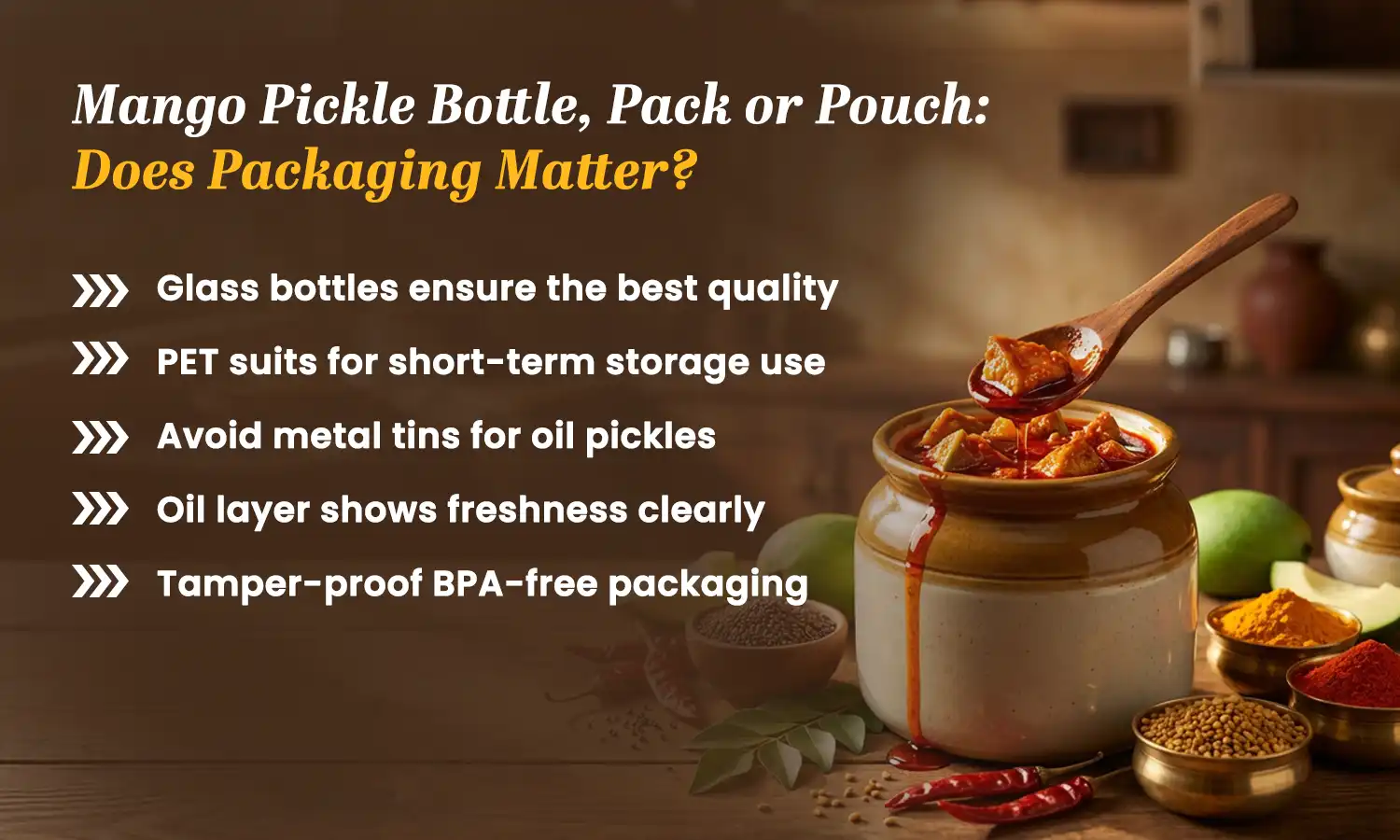
Mango Pickle Bottle, Pack or Pouch: Does Packaging Matter?

For mango pickle bottle formats, glass remains the gold standard. It does not leach, does not absorb colour, and allows you to see the oil layer, your single most reliable freshness indicator. Food-grade PET is acceptable for short-cycle use (under 6 months). Avoid recycled metal tins for oil-heavy pickles; the acid-oil combination will eventually corrode the inner lacquer.
SGR 777 ships its mango pickle range in food-grade, BPA-free packaging with a tamper-evident seal and double-layered oil lock engineered after quick-commerce handling realities forced a packaging redesign in 2026.

Picking the Right Mango, If You Want to Make It Yourself

For readers asking about the best mango for pickle preparation at home: look for firm, sour, unripe mangoes with bright green skin and a hard stone. Totapuri and Ramakelli are classical choices; Salem’s local sour mango varieties are excellent, too. Avoid any mango with a yellow blush; it is already ripening and will turn the pickle soft within days.
Browse the full mango pickle range at 777 Pickles: Traditional recipes, seasonal batches, and everyday affordable prices.

FAQs

What Is the Best Mango Pickle in India?Subjective, but the shortlist among organised brands includes SGR 777, Priya Foods, MTR, Mother’s Recipe, and Aachi. SGR 777 leads specifically on traditional South Indian mango styles, cut mango, avakaya, vadu, and thokku.
Is It Safe to Buy Mango Pickle Online?Yes, when the brand controls packaging and the chain. Look for double-sealed caps, printed packing dates, and tamper-evident bands. The oil layer on arrival should be intact.
Why Do Different Mango Pickles Have Different Prices?Oil type, mango grade, mustard variety, and maturation time all move the cost. Gingelly oil traditional pickles cost 30–45% more to produce than refined oil commodity pickles.
How Much Does 1KG of Mango Pickle Usually Cost?For traditional South Indian mango pickle with gingelly oil, expect ₹320–₹580 per kg in organised retail. Bulk institutional prices are lower. Commodity mango pickle is available below that range, but it uses different ingredients.

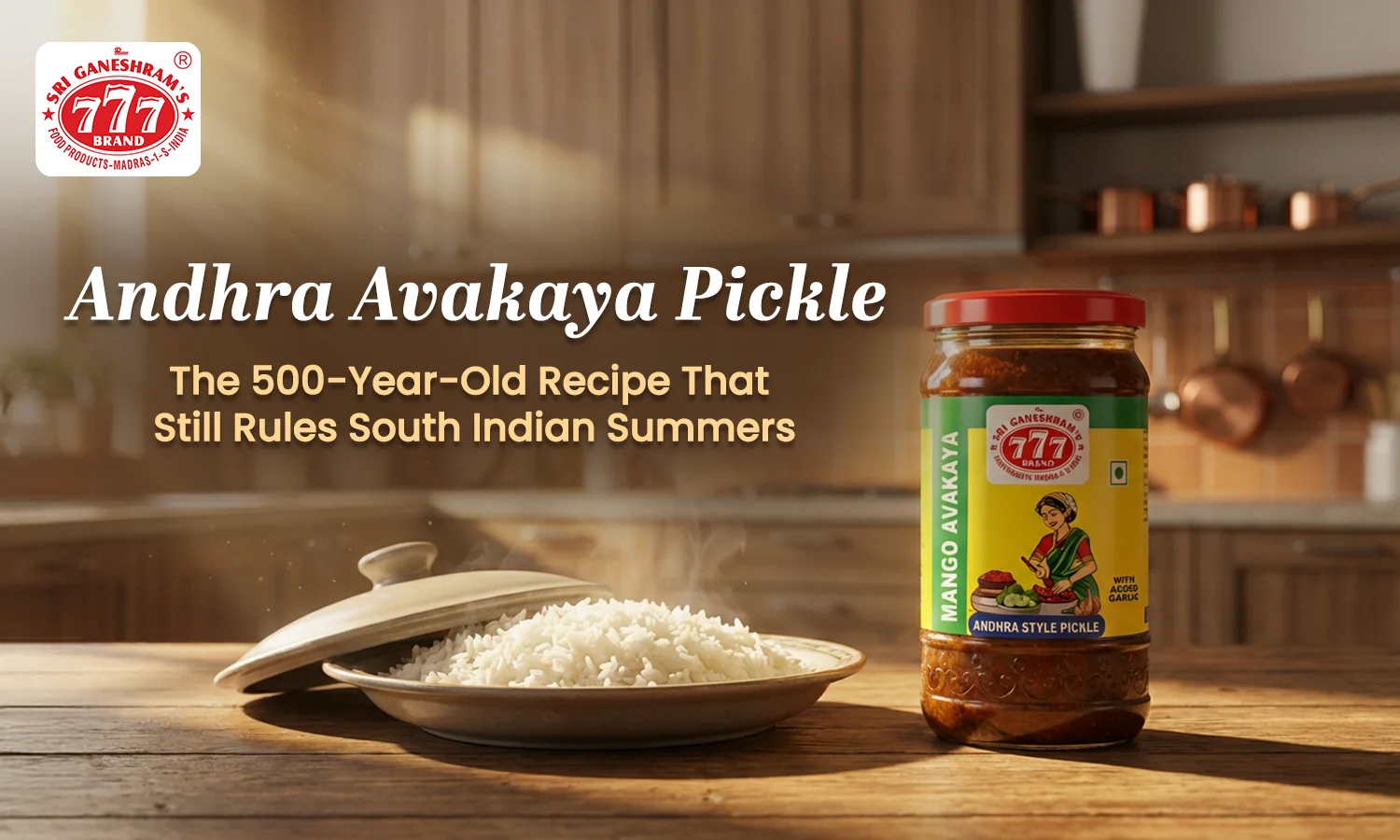
Andhra Avakaya Pickle: The 500-Year-Old Recipe That Still Rules South Indian Summers

Summary

Explains why the 500-year-old raw-mango, mustard, chilli, and gingelly oil recipe endures, its ingredients suit Indian summers, the process is forgiving, and flavour deepens from one week to six months. Distinguishes Avakaya, Avakkai, and Usirikaya within the Telugu pickle family and lists four authenticity markers: visible oil layer, split mustard seeds, deep crimson Guntur chilli, and honest maturation time.

Introduction :

Ask any Telugu-speaking South Indian to name the one pickle that represents their kitchen, and the answer will be instant: avakaya. Not mango thokku, not gongura, not lime.
Andhra Avakaya pickle, raw mango split with the stone, layered with mustard, red chilli, fenugreek, and gingelly oil, has held its place at the centre of Andhra and Telangana dining for close to five centuries. It is possibly the oldest continuous recipe still made in Indian homes without meaningful modification.The spelling varies by region, avakaya, avakkai pickle, aavakaya, but the recipe does not. That consistency is the point. A pickle that has survived 500 years without being reformulated is telling you something about what good food actually is.

Why Avakaya Has Outlived Every Food Trend Thrown at It

Three reasons explain the longevity of this delicious pickle. First, the ingredient stack is built for Indian summers. Raw mango peaks in April–May, mustard is a natural preservative, and gingelly oil resists rancidity at 40°C. Second, the process is forgiving: a household cook in 1525 and a production line in 2025 use the same seven ingredients in more or less the same ratio.
Third, the pickle improves with age. A freshly made Andhra avakaya pickle is good at one week, excellent at one month, and transcendent at six months. Almost no other Indian food product has that kind of maturation curve.
This is why the Andhra Avakaya Pickle 300g from SGR 777 Foods is made in strict seasonal batches every April and May. The mango is sourced from Krishnagiri and Salem, the mustard is single-origin Guntur, and the oil is chekku-pressed gingelly, the same ingredient stack a Krishna-district family would have used 200 years ago. Avakaya vs Avakkai vs Usirikaya

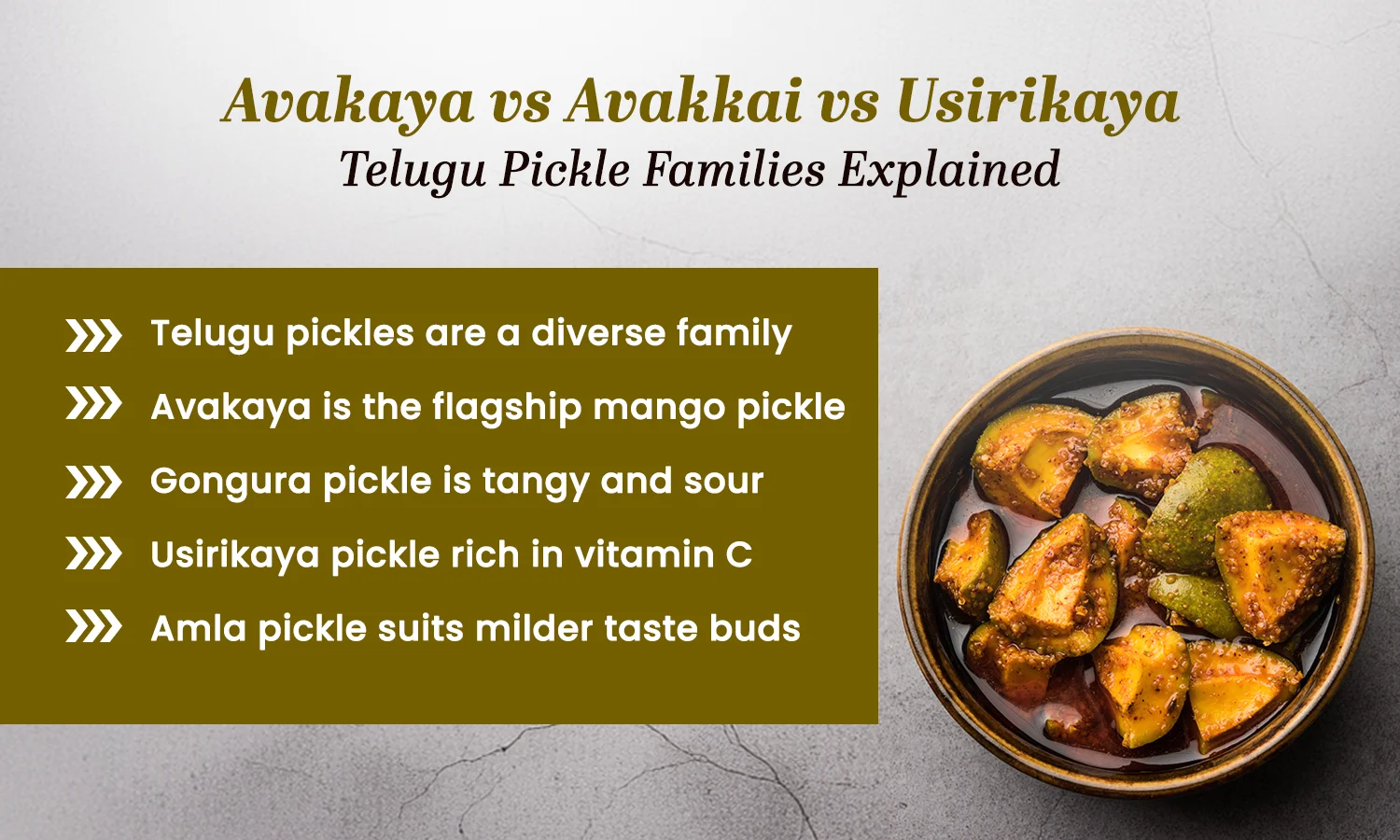
Avakaya vs Avakkai vs Usirikaya: Telugu Pickle Families Explained

The Telugu pickle tradition is not a single dish but a family. The three most recognised members:

  • Avakaya / Avakkai pickle; raw mango, mustard-heavy, oil-rich. The flagship.
  • Gongura pickle, made from roselle leaves, is sour-tart and served with ghee rice.
  • Usirikaya pickle; the Telugu name for amla (Indian gooseberry) pickle, prized for its vitamin C profile and winter-to-summer versatility.

For shoppers exploring Telugu pickles or Andhra pickles for the first time, starting with avakaya is tradition, but the Amla Pickle 300g (usirikaya style) is often easier on palates unaccustomed to bold Andhra heat. It also happens to be one of the most nutritionally dense pickles in the SGR 777 range. Amla pickle benefits are well-documented in Ayurvedic and modern nutritional literature alike, with a single tablespoon delivering measurable vitamin C even after the pickling process.

How to Tell a Real Avakaya from a Commodity One

The market for Andhra avakaya pickle online has expanded fast, and quality has become uneven. Four markers separate the real thing from the imitation:

1. Oil layer. A genuine avakaya pickle sits under a visible gingelly oil layer, not a refined-oil film.

2. Mustard texture. You should see split mustard seeds, not ground paste. The split seed releases flavour over months; ground mustard peaks early and fades.
3. Chilli colour. Guntur-grade red chilli produces a deep crimson. Commodity chilli tends toward brick-orange.
4. Maturation time. A label that says “best after 15 days” is honest. Pickles marketed as ready-on-day-one have been acid-shortcutted.
The same markers apply when buying avakaya pickle online from any brand. SGR 777 prints the packing date and the recommended maturation window on every jar.
SGR 777's Andhra Pickle

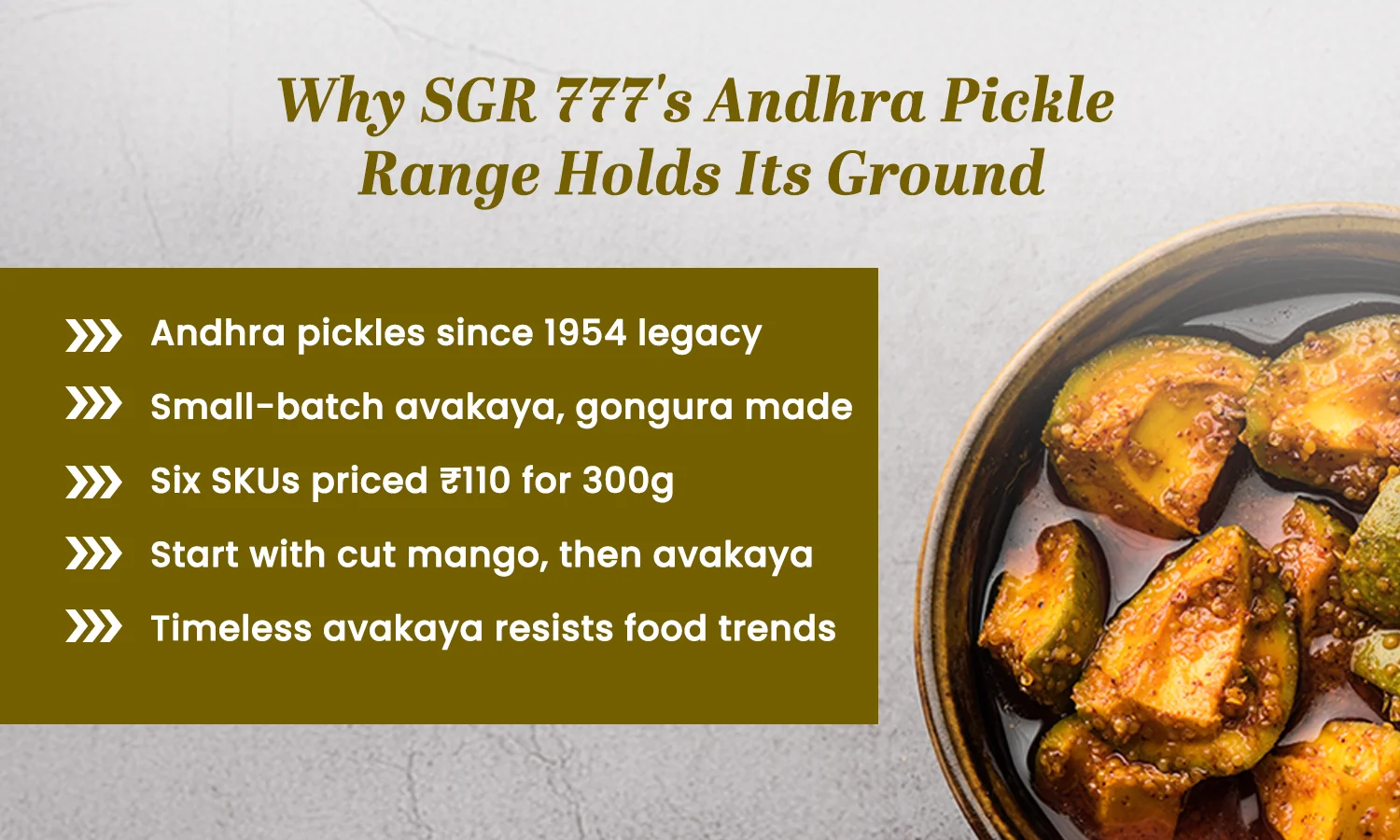
Why SGR 777’s Andhra Pickle Range Holds Its Ground

SGR 777 Foods has been making Andhra-style pickles since 1954 from a single kitchen in Mylapore, Chennai. The brand is among the shortlist that serious buyers mention when asked for the best Andhra pickles online, not because of marketing volume, but because it still produces avakaya, gongura, and cut mango in small, dated batches every summer. The Andhra pickle category here includes six flagship SKUs, each priced at ₹110 for 300g, which makes it competitive even against unorganised-sector alternatives.

For a first-time Andhra-pickle buyer, the recommended order of exploration is: start with cut mango pickle, graduate to avakaya, then branch to gongura and usirikaya. That sequence introduces heat, oil density, and sourness in controlled steps.

The Jar That Refuses to Go Out of Style

Every food trend of the last thirty years, low-salt, sugar-free, keto, air-fried, has tried and failed to displace avakaya. The reason is simple: there is no substitute for a condiment that has been perfected over five centuries.

Explore the SGR 777 pickle range and taste why some foods do not need updating.

FAQs :

What Is the Difference Between Avakaya Pickle and Avakkai Pickle?None in substance, both refer to the same raw-mango-mustard-oil pickle from coastal Andhra. “Avakkai” is the Tamil transliteration; “avakaya” is the Telugu spelling. The recipe and sourcing are identical.
Is Avakaya Pickle Spicier Than Regular Mango Pickle?Yes. Avakaya uses roughly twice the red chilli ratio of a standard mango pickle, and mustard is used split rather than ground. The heat is deliberate and designed to cut through ghee-rich meals.
How Long Does Andhra Avakaya Pickle Last?Unopened and stored in a cool, dry place, 18 months. Opened and stored under its oil layer with dry-spoon use, 10–12 months at room temperature. Refrigeration extends this to 15–18 months.
What Makes Sgr 777’s Avakaya Different From Other Brands?Single-season production, Guntur-origin chilli, chekku-pressed gingelly oil, split-seed mustard, and a 7-day mandatory maturation before dispatch. Combined, these align with how avakaya was made in homes before industrial shortcuts were introduced.

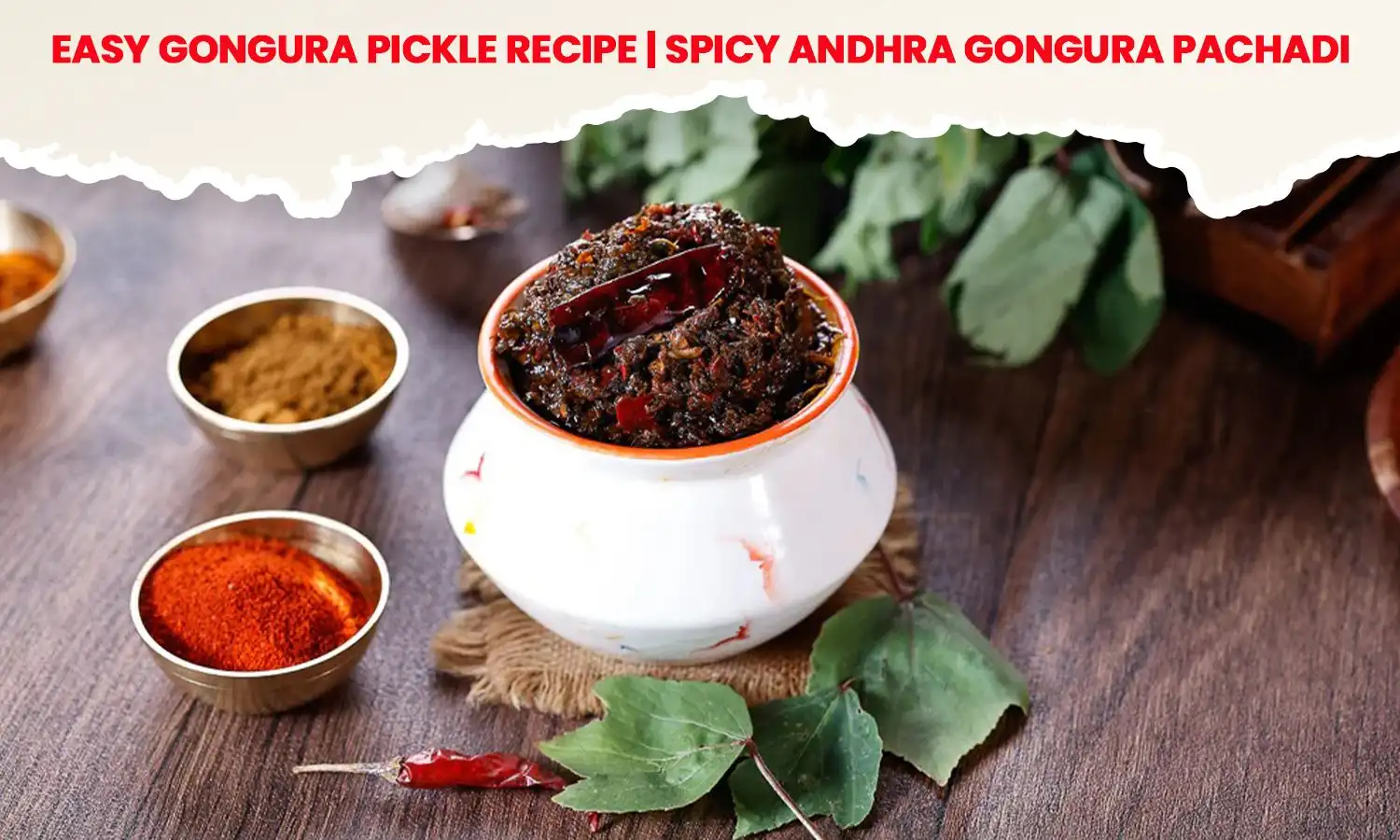
Why You Should Try This Gongura Pickle Recipe

Why You Should Try This Gongura Pickle Recipe

There are pickles, and then there’s gongura pickle—a bold, tangy, fiery classic from Andhra Pradesh that’s earned a cult following across India. Whether served with hot rice and ghee or spooned beside a dosa, Gongura’s sharp, sour taste wakes up your palate like nothing else.
So what makes this Gongura pickle recipe so special? It’s the earthy flavor of gongura leaves, the roasted spice mix, and the gingelly oil preservation that makes it both delicious and long-lasting.
This blog will walk you through a simple, authentic Gongura pickle recipe, explain its health benefits, and share tips to preserve it just like grandma used to.

What Is Gongura?

Gongura, also known as sorrel leaves or ambada, is a green leafy plant with a distinctly sour taste. It’s native to Andhra Pradesh and is used in a wide range of pickles, curries, and chutneys. The Telugu word for pickle is oorugai, and gongura oorugai is one of the most popular regional condiments.Used both in gongura chutney in Andhra style and as a base for pachadis and pickles, this leaf is prized for its tangy flavor and health benefits.
Gongura Pickle Recipe

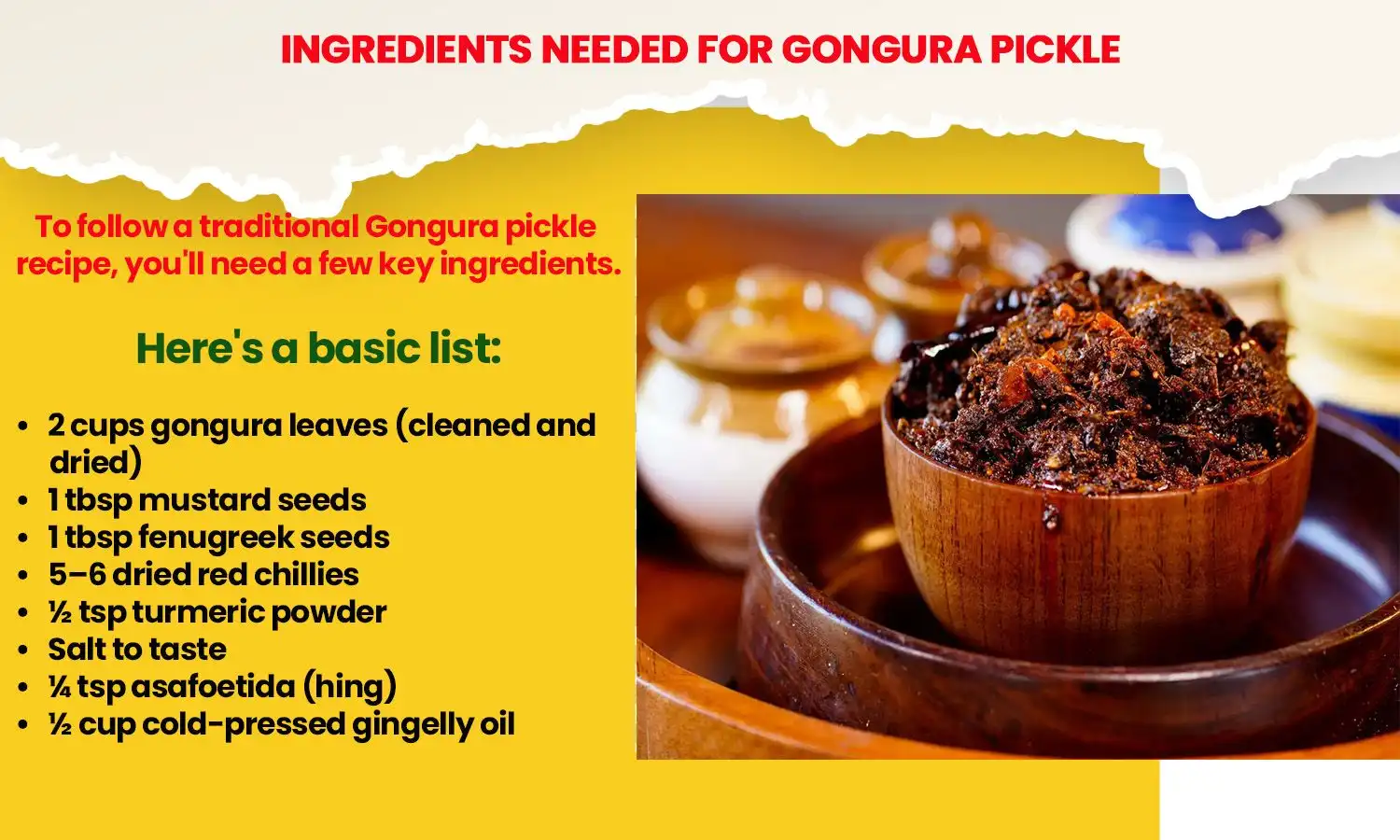
Ingredients Needed for Gongura Pickle

To follow a traditional Gongura pickle recipe, you’ll need a few key ingredients. Here’s a basic list:

  • 2 cups gongura leaves (cleaned and dried)
  • 1 tbsp mustard seeds
  • 1 tbsp fenugreek seeds
  • 5–6 dried red chillies
  • ½ tsp turmeric powder
  • Salt to taste
  • ¼ tsp asafoetida (hing)
  • ½ cup cold-pressed gingelly oil

These gongura pickle ingredients form the base of the recipe and can be doubled for larger batches. If you’d rather skip the prep, you can always buy gongura pickle online from authentic brands that follow the same traditional methods.

Step-by-Step Gongura Pickle Recipe

Now let’s learn how to prepare this spicy Andhra delicacy at home. Follow these simple steps for an authentic Gongura pickle recipe:

Prep the Leaves

Wash and dry the gongura leaves. Make sure there’s no moisture left.

Dry Roast the Spices

In a pan, roast mustard, fenugreek, red chillies. Cool and powder them.

Cook the Leaves

In a little oil, sauté the gongura leaves until soft and the moisture is gone.

Grind Together

Mix the sautéed leaves and spice powder in a blender.

Temper with Oil

Heat gingelly oil with asafoetida and mustard seeds. Pour over the mixture.

Let It Sit

Cool and transfer to a glass jar. Let it rest for 1–2 days before using.
That’s it! You’ve now made an authentic, home-style gongura achar ready to enjoy.
Gongura Pickle Recipe

Tips to Store and Preserve Gongura Pickle

Now that you’ve made the Gongura pickle recipe, here’s how to make sure it lasts:

  • Use only sterilized glass jars
  • Add a thin layer of oil on top to prevent air contact
  • Always use a dry spoon
  • Store in a cool, dark place for 2–3 weeks
  • Refrigerate for longer shelf life

If you’re short on time or ingredients, order the best gongura pickle online. Many small-batch producers maintain traditional Andhra taste without preservatives.

Serving Suggestions

Wondering how to enjoy your freshly made gongura pickle recipe?

  • Mix with hot rice and ghee — the Andhra classic
  • Pair with curd rice for a tangy kick
  • Use with dosa or upma
  • Serve with millet or pongal
  • Even as a side for chapati

Want quick access to this flavor? Look for gongura pickle online options that retain the texture and taste of homemade batches. Gongura Pickle Recipe

Health Benefits of Gongura

Apart from its punchy flavor, Gongura offers several health benefits:

  • Rich in iron and folate — good for blood health
  • Aids digestion due to its sourness and fiber
  • Supports immunity thanks to Vitamin C and antioxidants
  • Cools the body in hot climates
  • Reduces inflammation with natural plant compounds

With these health perks, it’s no wonder people buy gongura pickle not just for taste but for wellness too.

Conclusion

Gongura is more than just a leaf—it’s a flavor, a feeling, and a reminder of Andhra kitchens. With the right Gongura pickle recipe, you can bring that same bold taste to your home. Whether you eat it with rice, roti, or dosa, this pickle delivers both spice and nutrition.

Key Takeaways

  • The Gongura pickle recipe uses sorrel leaves, traditional spices, and gingelly oil
  • Gongura is rich in iron, Vitamin C, and natural antioxidants
  • Proper drying, oil tempering, and storage ensure shelf life
  • You can enjoy it with rice, rotis, or South Indian tiffins
  • Trusted options like 777 gongura pickle offer homemade flavor with convenience

Key Takeaways

What Is Gongura Pickle Made Of?Gongura pickle is made from fresh sorrel leaves, red chilli, mustard, fenugreek, salt, turmeric, and sesame oil. It’s cooked and preserved using a slow-curing process.
Is Gongura Pickle Good for Health?Yes. It’s rich in iron, folate, and antioxidants. The sour leaf supports digestion, boosts immunity, and cools the body during summer.
What Is the Difference Between Gongura Pachadi and Pickle?Pachadi is a quick chutney made fresh and consumed within a day. Pickle is oil-based, fermented, and preserved for longer shelf life. Both are based on Andhra style gongura pachadi traditions.
In Which State Gongura Pickle Is Famous?Gongura pickle is a signature dish of Andhra Pradesh. It’s commonly served in Telugu households and is a staple in both daily meals and festive spreads.

What is the difference between Avakaya and cut mango pickle?

Avakaya and Cut Mango Pickle? Here’s What Makes Them Different

Mango pickle is more than just a condiment in India—it’s an emotion. But ask anyone from the South, and they’ll instantly draw a line between Avakaya and cut mango pickle. One is fiery, rustic, and intense; the other, simple and quick. So, what exactly is the difference between Avakaya and cut mango pickle?

In this blog, we’ll break down both types—how they’re made, where they come from, what dishes they pair with, and how to choose the right one for your kitchen. Whether you’re a pickle lover, a home cook, or looking to try something new, understanding this difference adds meaning to every spoonful. Getting to know the mango pickle ingredients behind each one makes that choice even clearer.

Avakaya and cut mango pickle?

Avakaya and Cut Mango Pickle: What Makes Them Different?

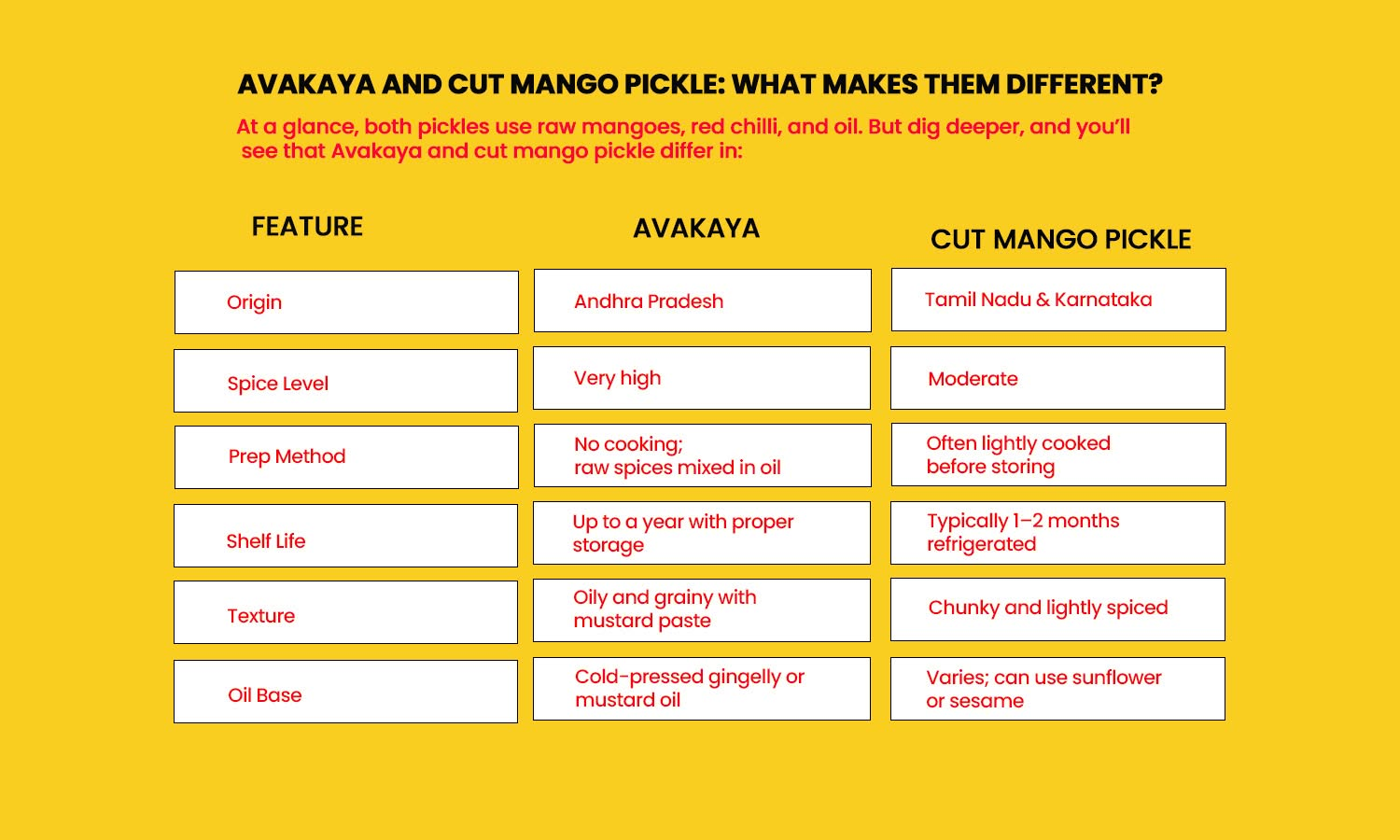
At a glance, both pickles use raw mangoes, red chilli, and oil. But dig deeper, and you’ll see that Avakaya and cut mango pickle differ in:

Feature Avakaya Cut Mango Pickle
Origin Andhra Pradesh Tamil Nadu & Karnataka
Spice Level Very high Moderate
Prep Method No cooking; raw spices mixed in oil Often lightly cooked before storing
Shelf Life Up to a year with proper storage Typically 1–2 months refrigerated
Texture Oily and grainy with mustard paste Chunky and lightly spiced
Oil Base Cold-pressed gingelly or mustard oil Varies; can use sunflower or sesame

In short, Avakaya pickle is bolder, richer, and long-lasting, while cut mango pickle is lighter and quicker to prepare. This is exactly what sets a true Andhra mango pickle apart from its milder cousin.

The History of Avakaya and Cut Mango Pickle in South Indian Homes

Let’s look at the roots behind Avakaya and cut mango pickleAvakaya, also called avakai or andhra avakaya, is believed to have originated in Telugu households centuries ago. The name comes from “Ava” (mustard) and “Kaya” (raw mango). It’s a summer ritual in Andhra—entire families come together to chop mangoes, dry spices, and fill huge ceramic jars. In many homes it is also lovingly called avakaya pachadi, a name passed down through generations.

How to Make Avakaya and Cut Mango Pickle at Home – Step-by-Step

Cut mango pickle, on the other hand, is more common in Tamil Nadu and Karnataka. Often referred to as avakkai or avakkai urugai, it uses similar ingredients but with less oil and a milder taste. It’s also made in smaller batches, meant to be eaten within weeks.

Avakaya Pickle: Traditional Andhra Style

Ingredients:

  • Raw mango pieces (firm and sour)
  • Mustard seed powder
  • Red chilli powder
  • Rock salt
  • Fenugreek powder
  • Cold-pressed gingelly or mustard oil

Steps:

  • Dry the mango pieces completely.
  • Mix all dry spices together.
  • Add oil to make a thick paste.
  • Coat mango pieces thoroughly.
  • Store in a dry jar for 4–5 days before use.

Following this avakaya pickle recipe carefully is what gives the pickle its signature punch.

Cut Mango Pickle: Quick Tamil Style

Ingredients:

  • Raw mango pieces
  • Red chilli powder
  • Salt
  • Hing
  • Turmeric
  • Mustard seeds
  • Sesame oil

Steps:

  • Heat oil and temper with mustard seeds.
  • Add mango pieces and spices.
  • Cook for 2–3 minutes until softened.
  • Cool and store in glass jars.

This simple cut mango pickle recipe comes together in minutes for a fresh, tangy batch. Want something ready to eat? Check out avakai pickle online or avakkai pickle online from reputed South Indian brands like 777 SGR Foods. Avakaya and cut mango pickle?

Best Foods to Pair with Avakaya and Cut Mango Pickle

Both pickles are incredibly versatile. Here’s how to make the most of each:

Avakaya goes best with:

  • Steamed rice + ghee
  • Curd rice
  • Dosas or pesarattu
  • Pongal or khichdi

Cut mango pickle pairs well with:

  • Chapati rolls
  • Lemon rice
  • Idli or upma
  • Parathas

Looking for a more conscious choice? Brands like 777 also offer organic mango pickle that uses sun-dried ingredients and no synthetic preservatives. A good cut mango achar works beautifully alongside almost any of these meals.
Avakaya and cut mango pickle?

Health Facts About Avakaya and Cut Mango Pickle You Didn’t Know

Pickles are often misunderstood. When made correctly, they offer great benefits:

  • Raw mango is rich in Vitamin C and antioxidants
  • Mustard and fenugreek aid digestion
  • Cold-pressed oils boost absorption of nutrients
  • Traditional pickles can act as natural probiotics
  • Homemade or small-batch pickles often use no chemicals

Want the taste without the effort? Explore options like andhra avakaya pickle online, which follow authentic recipes and long-fermentation methods. These same qualities are also why the avakaya benefits are valued in many traditional households.

Conclusion

Whether it’s the fiery kick of Avakaya or the mellow bite of cut mango pickle, both bring something unique to the table. They carry the legacy of South Indian kitchens—of summer rituals, sun-dried spices, and the joy of sharing meals.
If you want to experience that traditional taste without hours of prep, try 777 SGR Foods’ range of mango pickles—each one crafted with care, clean ingredients, and the same recipes you’d find in a grandmother’s notebook. For many, a jar of cut mango pickle / andhra avakaya is the easiest way to bring that legacy home.

Key Takeaways

  • The difference between Avakaya and cut mango pickle lies in their prep, oil use, spice level, and shelf life
  • Avakaya is bold, mustard-forward, and long-lasting
  • Cut mango pickle is quicker, lighter, and suited for short-term use
  • Both offer digestive and immune health benefits when made traditionally
  • Try mango avakaya pickle from trusted brands like 777 SGR Foods for authentic taste

FAQs

What are the benefits of Narthangai Pickle?

Both are Indian mango pickles. Avakaya is Andhra-style—spicy and oil-rich, while cut mango pickle is lighter, made with fewer spices and often cooked briefly.

Which one is spicier – Avakaya or Cut Mango Pickle?

Avakaya is typically spicier due to the heavy use of mustard seed powder and chilli. Cut mango pickle is milder.

How long can I store each pickle?

Avakaya lasts up to a year when stored well. Cut mango pickle lasts about 2 months in the fridge.

Is it easy to make them at home?

Yes, both can be made at home. Avakaya takes more time and precision; cut mango pickle is quicker. Follow traditional methods for best results.

What dishes go well with these pickles?Avakaya pairs best with rice dishes. Cut mango pickle goes with idli, dosa, paratha, or even wraps.

Top 10 Health Benefits of Narthangai Pickle You Should Know

Why You Shouldn’t Ignore the Benefits of Narthangai Pickle

In many South Indian homes, pickles aren’t just a side—they’re a way of healing. Among them, Narthangai pickle holds a special place. Made from sun-dried citron, it delivers bold flavor and deep-rooted wellness. If you’ve ever enjoyed it with curd rice or hot rasam, you’ve already tasted its magic.This blog explores everything you need to know—from its preparation to how to use it daily. If you’re considering adding this to your meals, understanding the benefits of Narthangai pickle is the perfect place to begin.But beyond taste, the benefits of Narthangai pickle make it one of the most underrated natural remedies in our kitchens. From improving digestion to balancing liver health, it’s been trusted for generations.

What is Narthangai Pickle?

Narthangai, or citron, is a citrus fruit that looks like a rugged lemon but has a more complex bitter-sour flavor. The narthangai pickle recipe involves chopping and drying the fruit, mixing it with turmeric, rock salt, chilli powder, mustard seeds, and finally curing it in gingelly oil.This method brings out its strong aroma and enhances its health properties. You’ll often find narthangai pickle bottles in Tamil households—aged perfectly in ceramic jars.When made properly, the benefits of Narthangai pickle are preserved through sun-drying and slow fermentation, creating a long-lasting, therapeutic condiment. Benefits of Narthangai Pickle

Top 10 Health Benefits of Narthangai Pickle

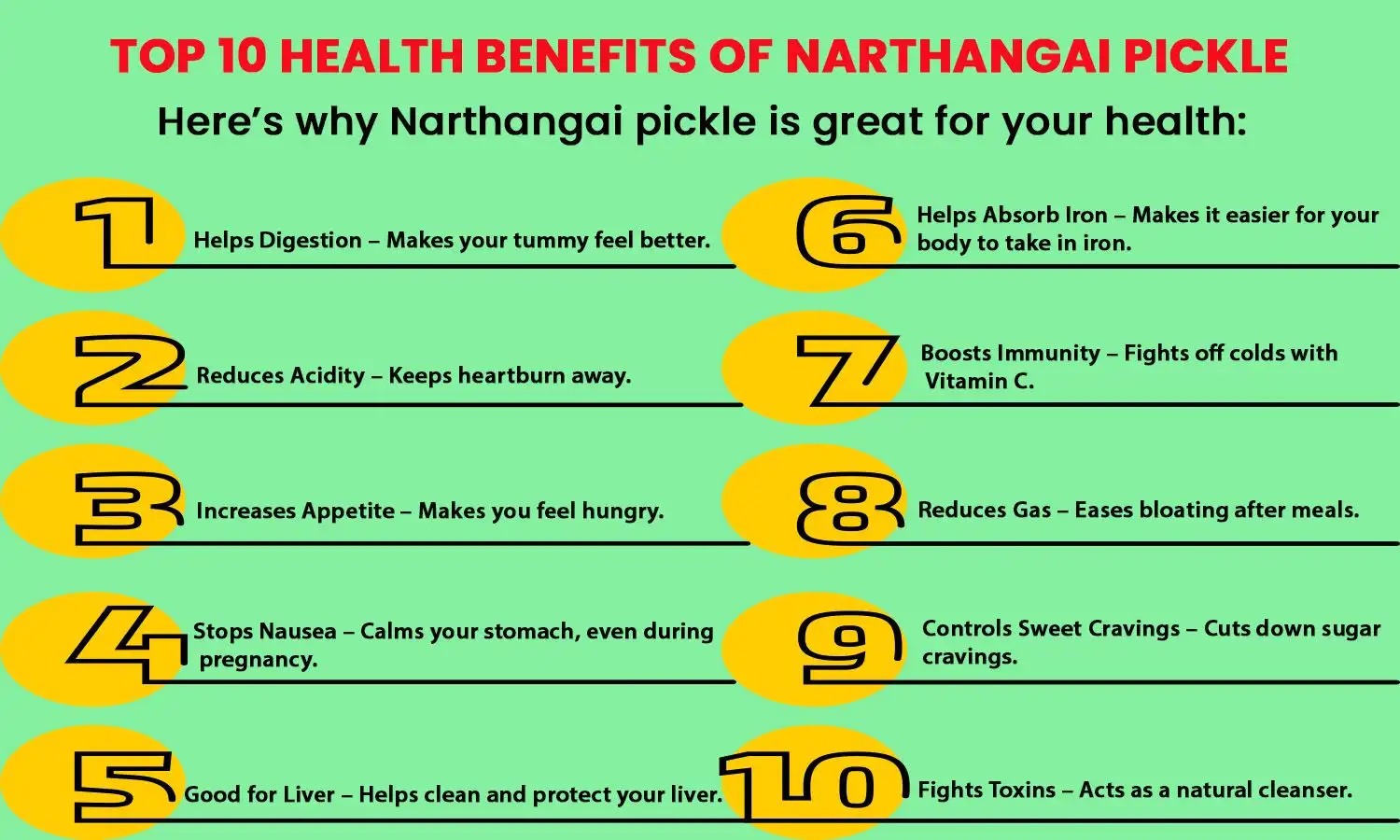
Let’s look at the most compelling benefits of Narthangai pickle, one by one:

1. Improves Digestion

The sharp taste of Narthangai stimulates the secretion of digestive enzymes. This is one of the key narthangai pickle benefits for those struggling with bloating or indigestion.

2. Reduces Acidity NaturallyThe alkalizing properties of the fruit help reduce acid reflux. Many people consume it after spicy meals for this reason.3. Boosts AppetiteLoss of appetite? A small spoon of this pickle can activate your taste buds and digestive juices instantly.4. Eases Nausea and VomitingOne of the lesser-known benefits of Narthangai pickle is its anti-nausea properties. It’s even safe during pregnancy in small amounts.5. Supports Liver FunctionThe bitter-sour profile of Narthangai detoxifies and supports healthy liver function—a major reason it’s part of traditional diets.6. Enhances Iron AbsorptionThanks to its high citric acid content, it boosts the absorption of iron from other foods.7. Strengthens ImmunityWith high Vitamin C levels, Narthangai pickle health benefits include fighting infections and improving skin health.8. Relieves Flatulence

Traditional use includes using this pickle to reduce gas and bloating after heavy meals.

9. Balances Sugar CravingsIts bitter profile can help control sugar urges and balance your palate.10. Acts as a Natural AntioxidantThe fruit’s bioactive compounds help fight free radicals in the body.

These benefits of Narthangai pickle have stood the test of time—not just for flavor, but for genuine health support.

Is Narthangai Pickle Safe During Pregnancy?

Yes, narthangai pickle during pregnancy is generally safe—in moderation. In fact, its sour profile helps reduce morning sickness, nausea, and bloating. Many women prefer it in the first trimester as a natural appetite stimulator.However, you should:

  • Ensure it’s made without chemical preservatives
  • Opt for low-oil, naturally cured variants
  • Avoid excessive intake due to high sodium

If you’re unsure, consult your doctor and choose brands like 777 SGR Foods, known for preservative-free traditional pickles

Nutritional Breakdown That Supports the Benefits of Narthangai Pickle

Understanding the nutritional profile can help reinforce the benefits of Narthangai pickle. Here’s what you’re really eating:

Nutrient Role in the Body
Vitamin C Immunity, skin health
Citric Acid Digestion, iron absorption
Potassium Blood pressure regulation
Antioxidants Cellular protection
Natural oils Liver detox, digestion aid

Fermentation and oil preservation help retain these compounds and make them easier for the body to absorb. Benefits of Narthangai Pickle

How to Use Narthangai Pickle in Daily Meals

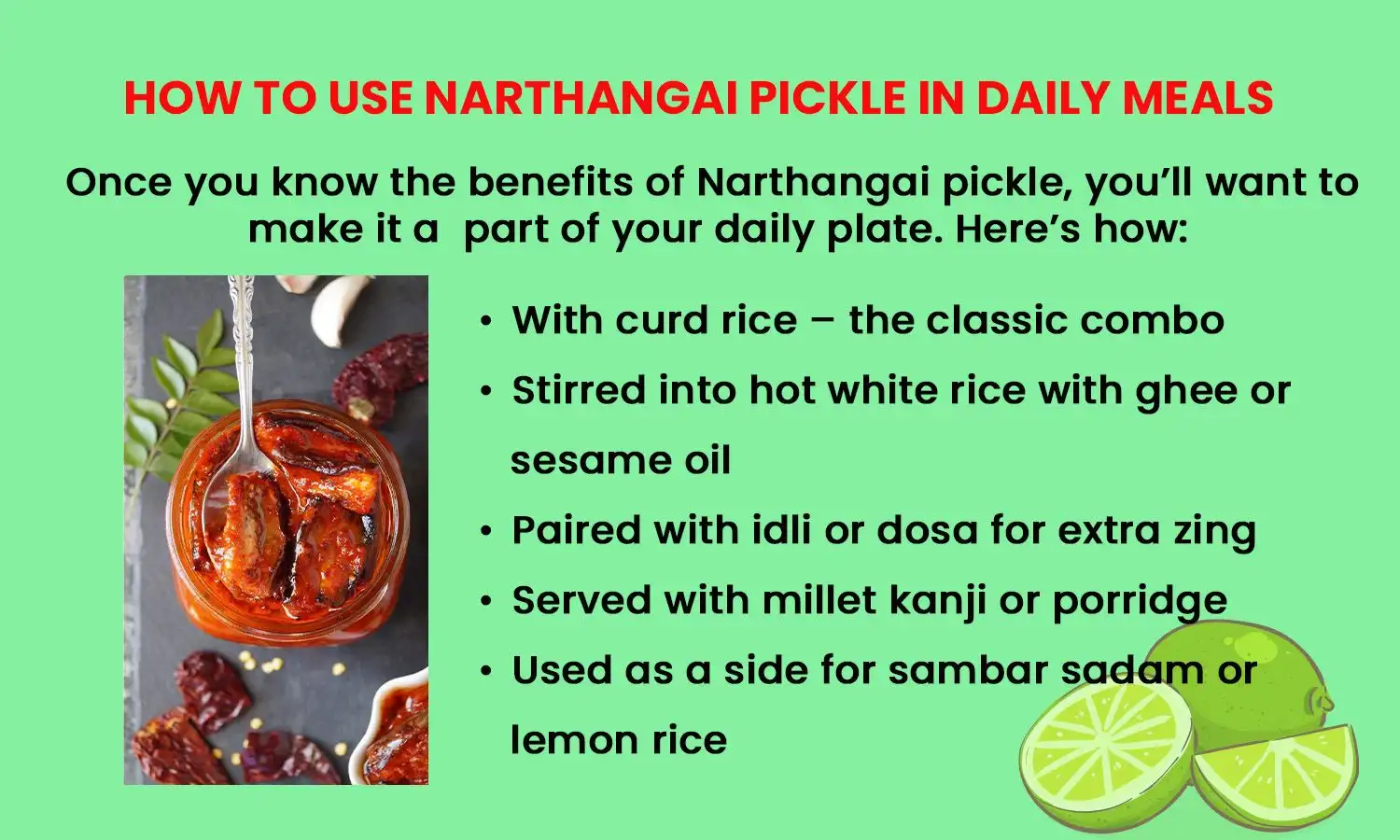
Once you know the benefits of Narthangai pickle, you’ll want to make it a part of your daily plate. Here’s how:

  • With curd rice – the classic combo
  • Stirred into hot white rice with ghee or sesame oil
  • Paired with idli or dosa for extra zing
  • Served with millet kanji or porridge
  • Used as a side for sambar sadam or lemon rice

Don’t have time to make it yourself? You can buy Narthangai online from traditional brands that use clean recipes and small-batch methods.

Conclusion

When we talk about food as medicine, the benefits of Narthangai pickle offer the perfect example. This isn’t just a tangy side—it’s a legacy that’s been healing bodies and balancing diets for generations.
And if you’re short on time or ingredients, choose a trusted source like 777 SGR Foods. Their narthangai pickle online offerings are made with sun-dried fruit, authentic spices, and zero preservatives—just like home, but ready in a jar.

Key Takeaways

  • The benefits of Narthangai pickle include digestive support, liver detox, iron absorption, and improved immunity
  • Safe for pregnancy in small amounts, especially for morning sickness relief
  • Made using simple ingredients: citron, spices, sesame oil
  • Easy to pair with most South Indian dishes
  • Available online—opt for authentic options like 777 SGR Foods’ Narthangai pickle

FAQs

What are the benefits of Narthangai Pickle?

They include improved digestion, liver support, reduced acidity, and better immunity. It’s also a natural appetite booster and anti-nausea aid.

Can I eat Narthangai Pickle during pregnancy?

Yes, in small quantities. It helps with nausea and digestion. Choose homemade or clean-label pickles only.

What are the ingredients in Narthangai Pickle?

Narthangai pickle recipe ingredients include dried citron, turmeric, red chilli, mustard seeds, rock salt, and sesame oil.

Is Narthangai the same as lemon?

No. Narthangai is citron, which is larger and more bitter than regular lemons. It’s ideal for long-lasting pickles.

How long does Narthangai Pickle last?

Traditionally made pickles can last 2–3 months if stored in a clean jar. Check expiry if buying narthangai pickle online.

What are the benefits of mango ginger Pickles?

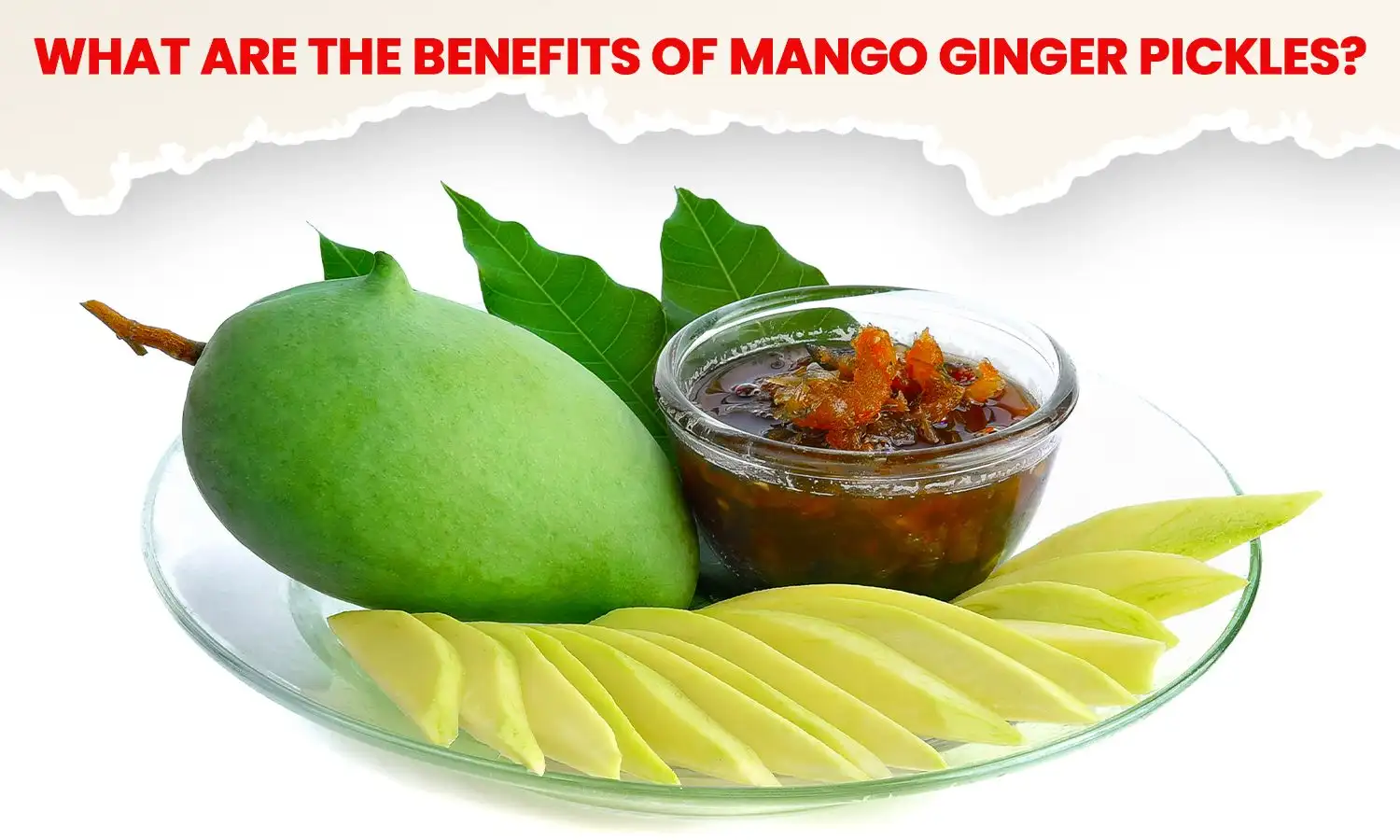
Among Indian pickles, mango ginger pickle, locally known as inji manga, is unique for its pungent taste and incredible health benefits. While everyone enjoys its sour taste with a plate of curd rice or paratha, not many are aware of the benefits of mango ginger pickles beyond their deliciousness. In this blog, we’ll explore all the key advantages and reasons to include them in your meals.

benefits of mango ginger Pickles

What Is Mango Ginger (Inji Manga)?

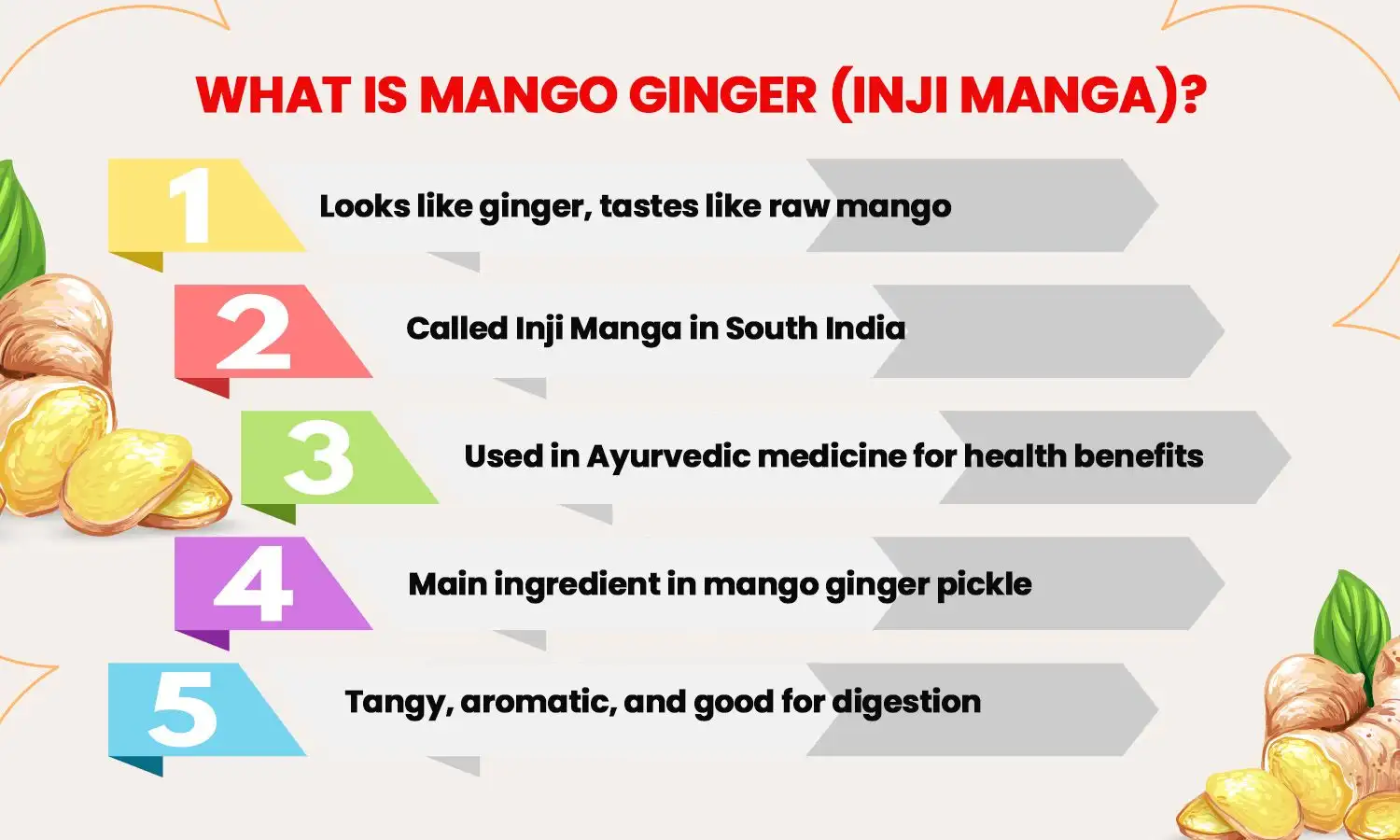
Mango ginger is neither mango nor ginger, as suggested by the name. It is a unique root that looks like ginger but has the scent and taste of raw mango. Known as inji manga in Southern India, it holds an important place in Ayurvedic medicine for its healing properties.
This scented root is the star ingredient behind the benefits of mango ginger pickles, combining both flavour and wellness in one bite.

Why is Mango Ginger Pickle So Unique?

Unlike standard mango pickle recipes that use raw mangoes, mango ginger pickle blends the tang of mango with the mild heat of ginger. It’s usually mixed with lemon juice, green chilies, and mustard seeds to deliver that zesty punch.
The benefits of mango ginger pickles go beyond taste — this blend supports digestion, adds nutrition, and offers a unique variety among traditional pickles. You’ll also find variations like ginger in mango pickle or ginger garlic pickle that bring their own flavour and health perks. benefits of mango ginger Pickles

What Are the Nutrition Facts of Mango Ginger Pickle?

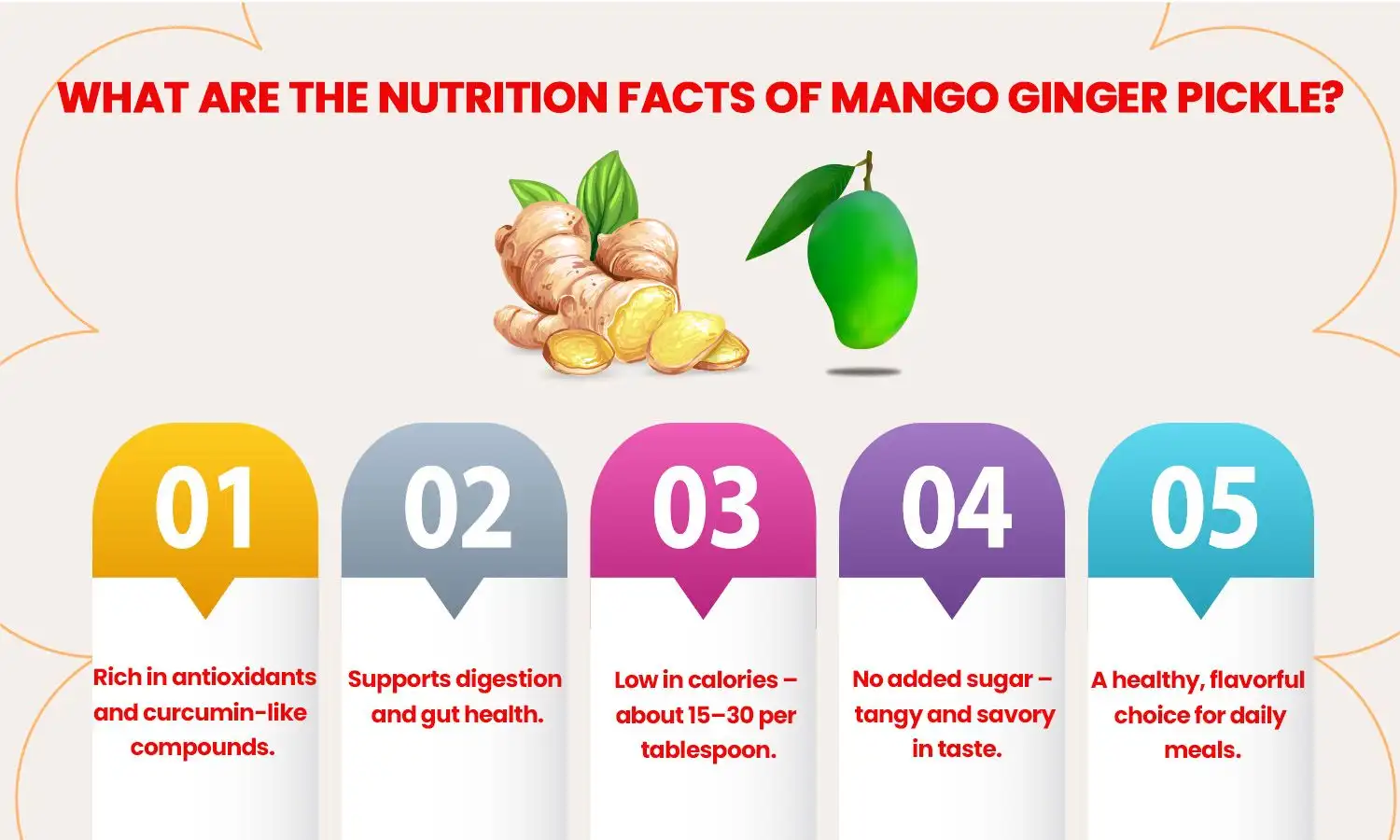
Beyond the bold taste, the benefits of mango ginger pickles include being rich in antioxidants and natural anti-inflammatory compounds. It’s similar to ginger in its ability to promote digestion by stimulating digestive enzymes.
With just 15–30 calories per tablespoon, depending on oil content, it’s a low-calorie addition to your plate. And unlike sweet pickles, mango ginger pickle stays savoury, tangy, and sugar-free — perfect for those watching their intake but craving flavour. benefits of mango ginger Pickles

How to Prepare Mango Ginger Pickle at Home?

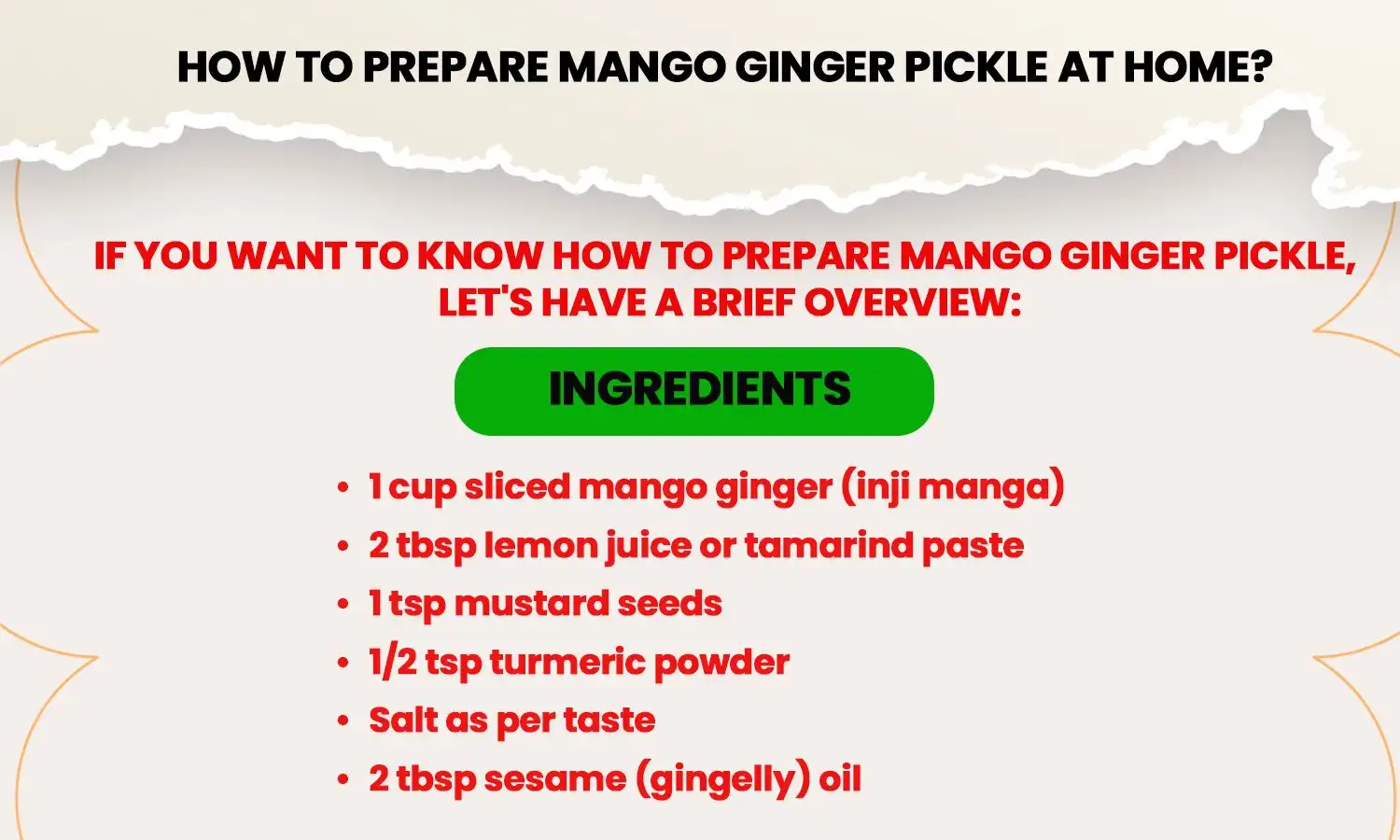
If you want to know how to prepare mango ginger pickle, let’s have a brief overview:

  • Ingredients:

    • 1 cup sliced mango ginger (inji manga)
    • 2 tbsp lemon juice or tamarind paste
    • 1 tsp mustard seeds
    • 1/2 tsp turmeric powder
    • Salt as per taste
    • 2 tbsp sesame (gingelly) oil
  • Preparation:

    • Wash and peel the mango ginger. Slice thinly.
    • Heat oil, splutter mustard seeds.
    • Add turmeric, mango ginger, and sauté for a minute.
    • Shut off the heat and stir in the lemon juice and salt.
    • Store in a dry, clean jar.
    • This simple mango ginger pickle recipe can be kept for up to 2 weeks refrigerated.

Where to Purchase Original Mango Ginger Pickle Online?

For those in a rush, you can order mango ginger pickle online​ from our website. We have a wide range of pickles. Authentic South Indian varieties like inji manga pickle are often available in our stock.

Is Mango Ginger Pickle Safe for Daily Consumption?

Yes! The benefits of mango ginger pickles include their suitability for regular meals. Our SGR 777 mango ginger pickle contains less salt and oil while delivering full flavour. It’s a smart, gut-friendly addition to your daily diet — especially with rice, curd, or rotis.

FAQs

Can We Add Ginger to Mango Pickle?

Yes, ginger can be added to traditional mango pickle recipes to create unique combinations like ginger mango pickle or even a ginger garlic mango pickle. It enhances both flavor and digestive benefits.

Is Ginger Mango Pickle Healthy or Not?

Ginger mango pickle, especially when made with mango ginger (inji manga), is considered healthy in moderation. It contains anti-inflammatory compounds, supports digestion, and is often lower in sugar than sweet pickles.

What Are the Advantages of Ginger Mango Pickled Foods?

The benefits of mango ginger pickles include aiding digestion, reducing inflammation, and improving appetite. They also contain antioxidants and natural enzymes that support gut health.

Is Mango Ginger Pickle the Same as Ginger Garlic Mango Pickle?

Not exactly. Mango ginger pickle uses the root inji manga, which tastes like raw mango but looks like ginger. Ginger garlic mango pickle usually uses regular ginger with garlic and mango pieces. Both are distinct in flavor and preparation.

Is Mango Ginger Pickle a Probiotic?

If prepared through natural fermentation, mango ginger pickle may contain probiotics. However, most quick recipes and store-bought versions are not fermented long enough to offer probiotic benefits unless specified.

Not exactly. Mango ginger pickle uses the root inji manga, which tastes like raw mango but looks like ginger. Ginger garlic mango pickle usually uses regular ginger with garlic and mango pieces. Both are distinct in flavor and preparation.

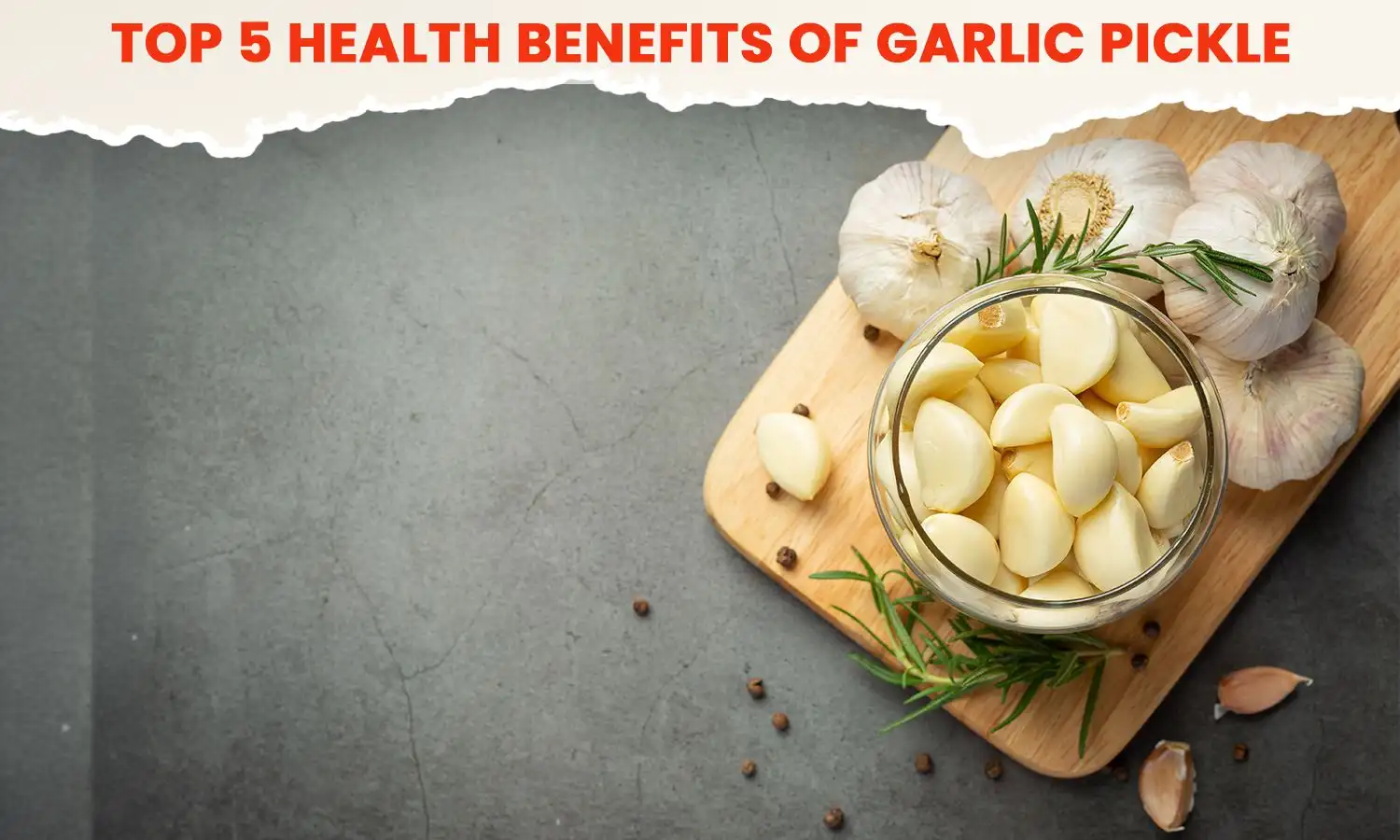
Top 5 health benefits of Garlic Pickle

Summary

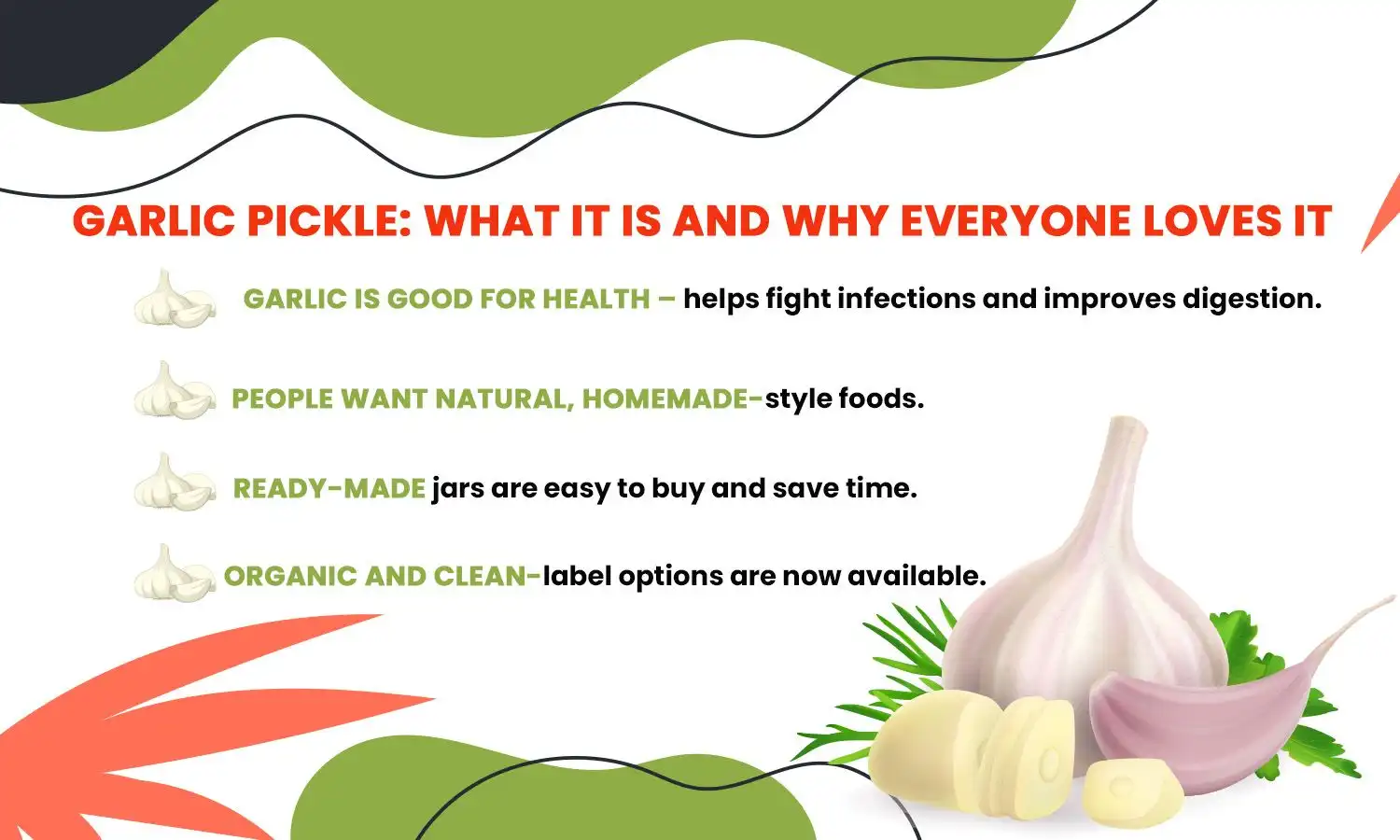
Details seven health benefits of traditional garlic pickle: heart health (allicin lowers LDL), improved iron metabolism for vegetarians, cold and immunity support, weight management and digestion, anti-inflammatory effects for joints, liver detoxification via sulfur compounds, and microbiome balance through fermentation. Includes a simple home recipe using sun-dried garlic, spices, and sesame oil, plus a recommended daily portion.

Why Everyone’s Talking About the Benefits of Garlic Pickle

In Indian kitchens, garlic is more than just a seasoning—it’s a healer. When preserved the traditional way, it transforms into something powerful: garlic pickle. And what’s exciting is how many people are rediscovering the benefits of garlic pickle not just as a condiment, but as a daily health booster.Whether you’re eating it with curd rice, roti, or dal, the benefits of garlic pickle go far beyond flavor. From aiding digestion to boosting immunity, this age-old recipe packs wellness into every spoonful. If you’ve tasted 777 garlic pickle, you already know what authentic, oil-cured garlic can do for the body and soul.Let’s explore the top reasons why this humble pickle deserves a permanent place in your meals. benefits of Garlic Pickle

What Is Garlic Pickle and Why Is It So Popular Now?

Garlic pickle (also known as garlic achar) is a traditional Indian preparation made by curing peeled garlic cloves in mustard seeds, red chilli, turmeric, salt, and sesame oil. The process of fermentation and oil preservation not only enhances flavor but also unlocks the true benefits of garlic pickle.

As more people seek natural, food-based solutions for health issues, the demand for organic pickled garlic and clean-label pickle jars has grown. This is why many now prefer to buy garlic pickle from trusted brands instead of making it from scratch.

1. Promotes Heart Health

One of the most celebrated benefits of garlic pickle is its impact on heart function. Garlic naturally lowers LDL cholesterol, prevents arterial plaque buildup, and regulates blood pressure. When fermented and consumed regularly, the allicin in garlic helps strengthen cardiovascular health.

This is why so many health-conscious families now buy pickled garlic or incorporate it into meals at least a few times a week.

2. Improves Iron Metabolism

Garlic contains compounds that help the body absorb non-heme iron, especially from plant-based foods like greens and legumes. One of the lesser-known benefits of garlic pickle is its role in improving energy levels by boosting iron metabolism—particularly important for vegetarians.

If you’re buying a ready-made jar, opt for the best garlic pickles that list clean, minimal ingredients on the label.

3. Treats Cold and Supports Immunity

Since ancient times, garlic has been used to treat colds, congestion, and sore throats. Its antibacterial, antiviral, and anti-inflammatory properties become even more bioavailable when garlic is pickled. One of the practical benefits of garlic pickle is quick relief during seasonal flu or runny noses—without needing a prescription.The heat and flavor of old south pickled garlic recipes are especially effective for this.

4. Aids in Weight Management and Digestion

Garlic improves gut health and boosts metabolism, making garlic pickle for weight loss a natural option for those looking to reduce bloating and improve digestion. When taken in small amounts with meals, it supports fat metabolism and reduces sugar cravings.

This makes it both a digestive and a gentle detoxifier—two important benefits of garlic pickle if you’re focused on wellness through food.

5. Anti-Inflammatory Effects: Supports Joints and Immunity

Garlic is rich in sulfur compounds that reduce inflammation in the joints. One of the overlooked benefits of garlic pickle is its role in managing arthritis symptoms. Regular, small servings can reduce morning stiffness and support joint mobility—especially when paired with a clean diet.

Looking for natural remedies? Explore the garlic pickle health benefits listed in Ayurveda and folk medicine.

6. Supports Liver Function and Detoxification

The garlic pickle health benefits extend deep into the body’s detoxification pathways. Garlic is rich in sulfur and selenium, which activate the liver enzymes responsible for flushing out toxins. Therefore, by incorporating it as a condiment, you can enjoy pickled garlic benefits, such as reduced oxidative stress on the liver, which can enhance skin clarity and energy levels. The garlic pickle price may differ according to the quality of oil and spices used. When you invest in a high-quality jar of garlic pickle, you will be getting a potent source of bioactive compounds that support your body’s natural cleansing cycle.

7. Promotes Microbiome Balance

Beyond basic metabolism, garlic pickle for digestion works wonders due to its probiotic potential when prepared through traditional fermentation. An Indian garlic pickle recipe uses mustard oil and salt. These two ingredients serve as natural preservatives while allowing beneficial bacteria to thrive. The unique preparation of garlic pickle makes the garlic easier to digest compared to raw cloves, which can sometimes be harsh on a sensitive stomach.
Understanding the various garlic pickle uses, from stirring it into curd rice to serving it alongside parathas, is a delicious way to enjoy the health benefits of pickled garlic. If you are seeking the best garlic pickle, look for traditional handmade varieties that maintain the integrity of these age-old fermentation techniques.

benefits of Garlic Pickle

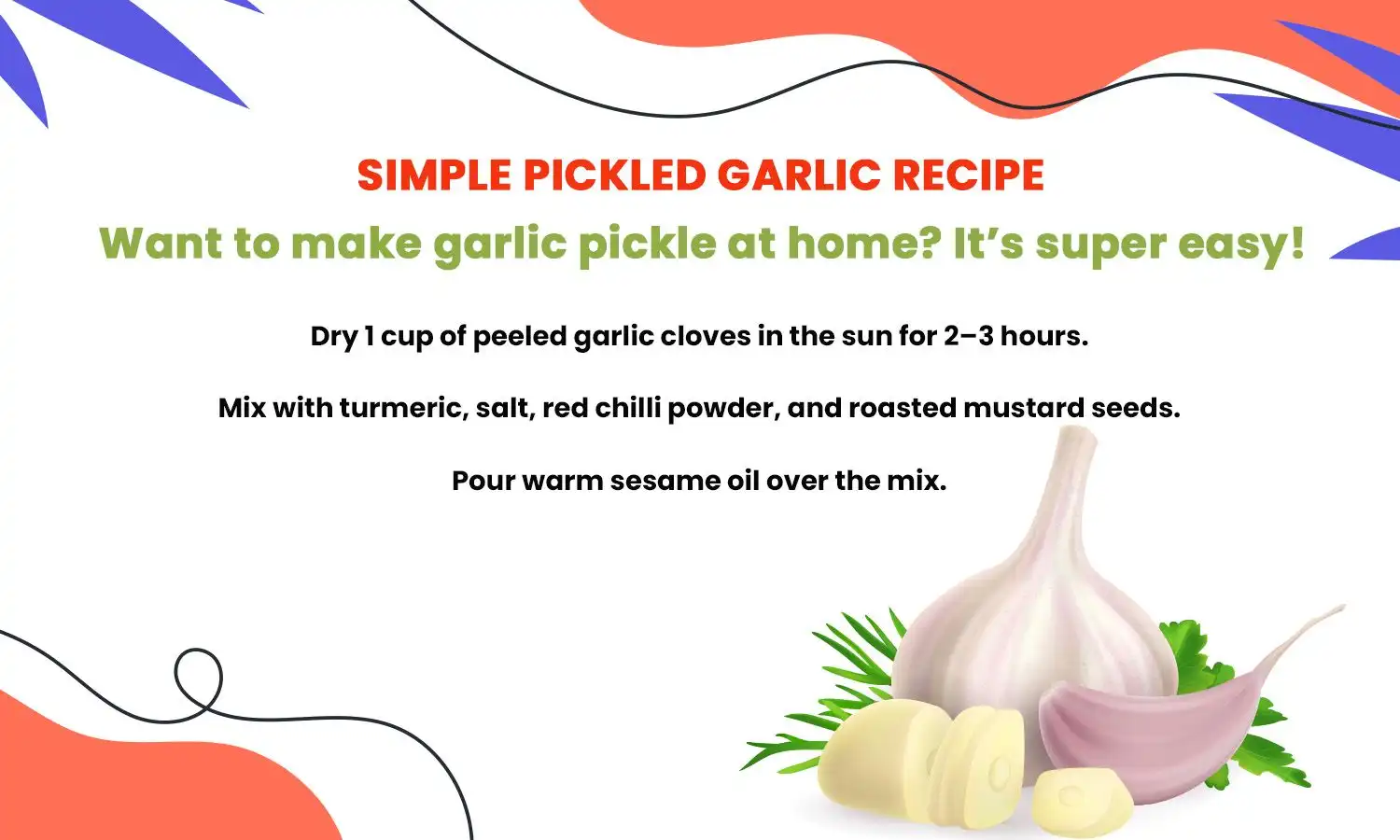
Bonus: Simple Pickled Garlic Recipe

Don’t have time to make it at home? No problem. You can easily buy garlic pickle from authentic brands online. But if you want to try it yourself, here’s a quick guide:

  • Sun-dry 1 cup peeled garlic cloves for 2–3 hours
  • Mix with turmeric, salt, red chilli, and roasted mustard
  • Pour warm sesame oil, let sit in a jar for 3–5 days
  • Store in a cool, dry place

Can’t make it from scratch? Go for the best garlic pickle online —look for brands with no artificial preservatives and traditional recipes like 777 garlic pickle.

Conclusion

Now that you know the benefits of garlic pickle, it’s easy to see why it’s been part of Indian meals for generations. This tiny powerhouse not only brings bold flavor to your plate—it brings real, proven health support too.And if you want the same traditional strength in every spoon without the hassle of making it at home, trust 777 SGR Foods’ garlic pickle, online crafted with oil, spice, and authenticity that tastes like home.

Key Takeaways

  • The benefits of garlic pickle include heart health, digestion, immunity, iron absorption, and anti-inflammatory relief
  • Pickled garlic increases the availability of compounds like allicin
  • Helps manage cold, arthritis, bloating, and low energy
  • Easily made at home or ordered as organic pickled garlic
  • Authentic products like 777 garlic pickle offer clean-label convenience

FAQs

How Is Garlic Pickle Made?

Garlic pickle is made by sun-drying garlic, then curing it in a blend of mustard seeds, red chilli, turmeric, and sesame oil. It’s left to rest and ferment for 3–5 days.

How Long Will Garlic Pickle Last?

If stored properly in a clean, dry glass jar with a layer of oil, garlic pickle can last 2–3 months. Refrigerate in humid weather for extended freshness.

How Does Pickled Garlic Taste?

It has a bold, spicy, and slightly tangy flavor. The fermentation softens its bite while retaining garlic’s signature aroma.

How Much Garlic Pickle Should I Eat Daily?

A small spoonful—2 to 3 cloves a day—is enough to enjoy the benefits of garlic pickle without overloading on oil or salt.