Best Groundnut Oil: Quality, Taste, and Cooking Uses
Finding the best groundnut oil for a kitchen involves more than just picking a bottle off the shelf; it requires an understanding of how extraction methods impact health and flavor. High-quality oil serves as a foundation for nutritious meals, offering a balance of high heat stability and a rich nutrient profile.
Choosing the best groundnut oil in India depends on quality, processing method, and freshness. 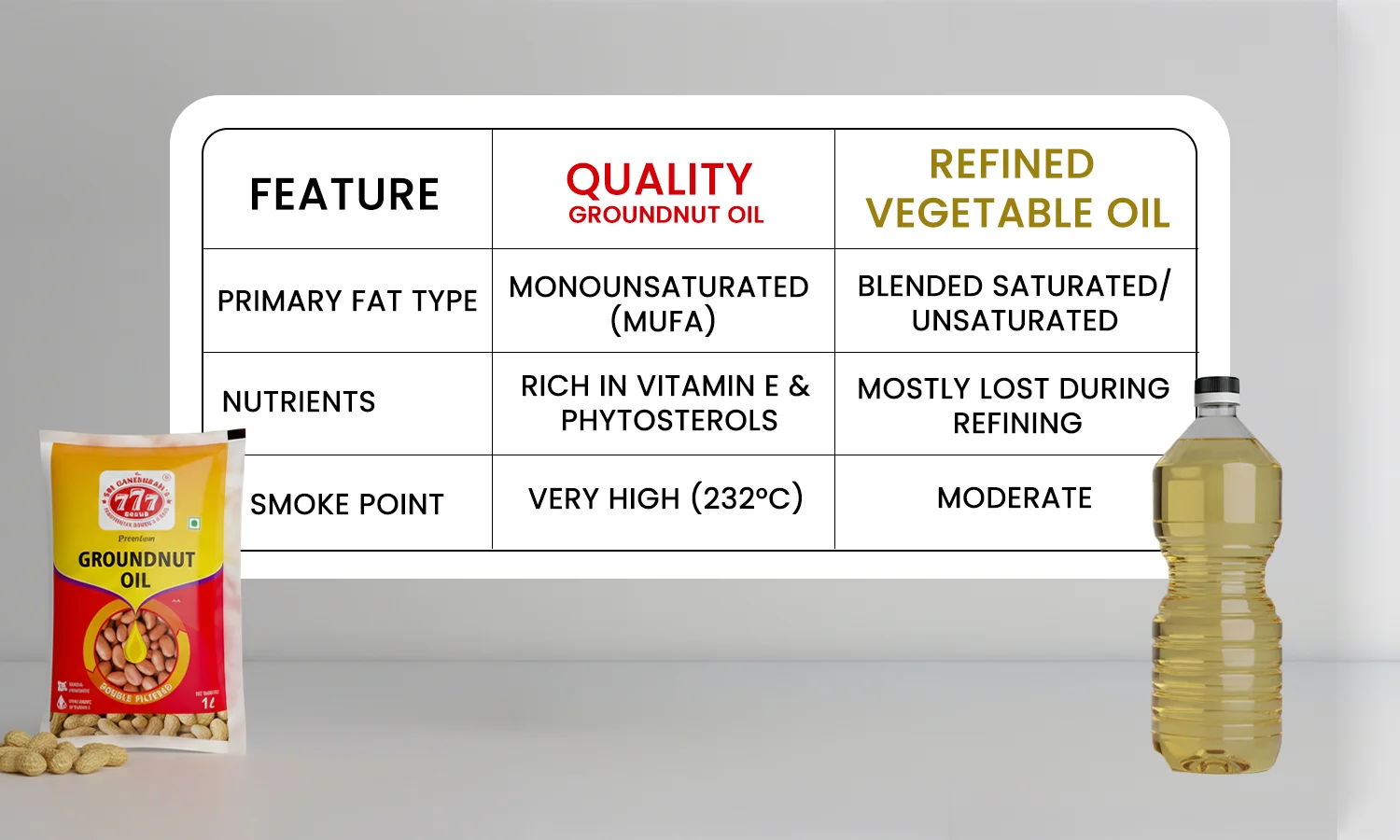
What Makes Quality Groundnut Oil Different from Others
The primary distinction between premium and mass-produced oils lies in the extraction process. Traditional Chekku groundnut oil is obtained through mechanical pressure at low temperatures. This method ensures that the oil retains its natural molecular structure, unlike refined versions that often use high heat and chemical solvents like hexane.
While refined oils are often neutral and flat, quality groundnut oil possesses a distinct, nutty aroma. It is naturally rich in Vitamin E and antioxidants. Furthermore, a high smoke point of approximately 232°C makes it far more stable for intense heat than many other vegetable blends, preventing the formation of harmful compounds during deep frying.
This is what defines true groundnut oil quality, especially when compared to heavily refined oils.
| Feature | Quality Groundnut Oil | Refined Vegetable Oil |
|---|---|---|
| Primary Fat Type | Monounsaturated (MUFA) | Blended Saturated/Unsaturated |
| Nutrients | Rich in Vitamin E & Phytosterols | Mostly lost during refining |
| Smoke Point | Very High (232°C) | Moderate |
Groundnut Oil Nutrition and Health Benefits
From a biological standpoint, groundnut oil nutrition is impressive. It is a calorie-dense fat source that provides nearly 100% of the daily required value of Vitamin E per 100g. Because it contains zero cholesterol, it is a preferred choice for those monitoring cardiovascular wellness.
Many experts agree that groundnut oil is good for health due to its high concentration of monounsaturated fatty acids (MUFA), specifically oleic acid. These fats help manage LDL (bad) cholesterol levels.
Additionally, the presence of resveratrol—a powerful antioxidant—provides cognitive support and helps protect cells from oxidative stress. Regular consumption of groundnut cooking oil as a replacement for saturated fats has also been linked to improved insulin sensitivity.
These properties show that groundnut oil is mainly groundnut oil saturated or unsaturated, with a higher proportion of healthy unsaturated fats.
Groundnut Oil Uses in Cooking
The versatility of groundnut oil for cooking is a result of its unique ability to resist flavor transfer. This means one can fry savory snacks and sweet treats in the same batch without the flavors mixing.
- Deep Frying: Its stability at high temperatures makes it the “gold standard” for achieving golden, non-greasy textures in snacks like pakoras or vadas.
- Tempering (Tadka): It effectively carries the essence of spices like mustard seeds and curry leaves deep into dals.
- Baking: As a plant-based substitute for butter, it adds moisture and a subtle sweetness to muffins and breads.
- Preservation: Due to its natural stability, it is frequently used in pickling to ensure the longevity of condiments.
Because of its stability, many consider it the best peanut oil for cooking across different recipes.
What Does Groundnut Oil Taste Like?
The flavor profile depends largely on the processing. Refined groundnut cooking oil is almost odorless and neutral, acting as a blank canvas. In contrast, chekku-pressed varieties offer a rich, authentic earthiness that resembles raw peanuts. For those seeking even deeper notes, gourmet roasted versions provide a smoky finish often used for drizzling or dressings.
The groundnut oil taste can vary from mild to rich depending on how it is processed. The natural taste of groundnut oil is slightly nutty and enhances the flavour of everyday dishes.
How to Choose the Best Groundnut Oil for Cooking?
Selecting the right product requires a quick check of the label and the oil’s physical characteristics.
- Extraction Method: Prioritize chekku-Pressed labels to ensure the highest peanut oil benefits are preserved.
- Color and Clarity: Look for a rich golden-yellow hue. Slight cloudiness is a positive sign of minimal processing.
- Aroma: Fresh oil must have a pleasant, distinct peanut scent. A sharp or chemical smell usually indicates rancidity.
- Packaging: Since light can degrade quality, oils stored in dark or opaque containers generally stay fresh longer.
Always look for pure groundnut oil that is minimally processed and free from additives. 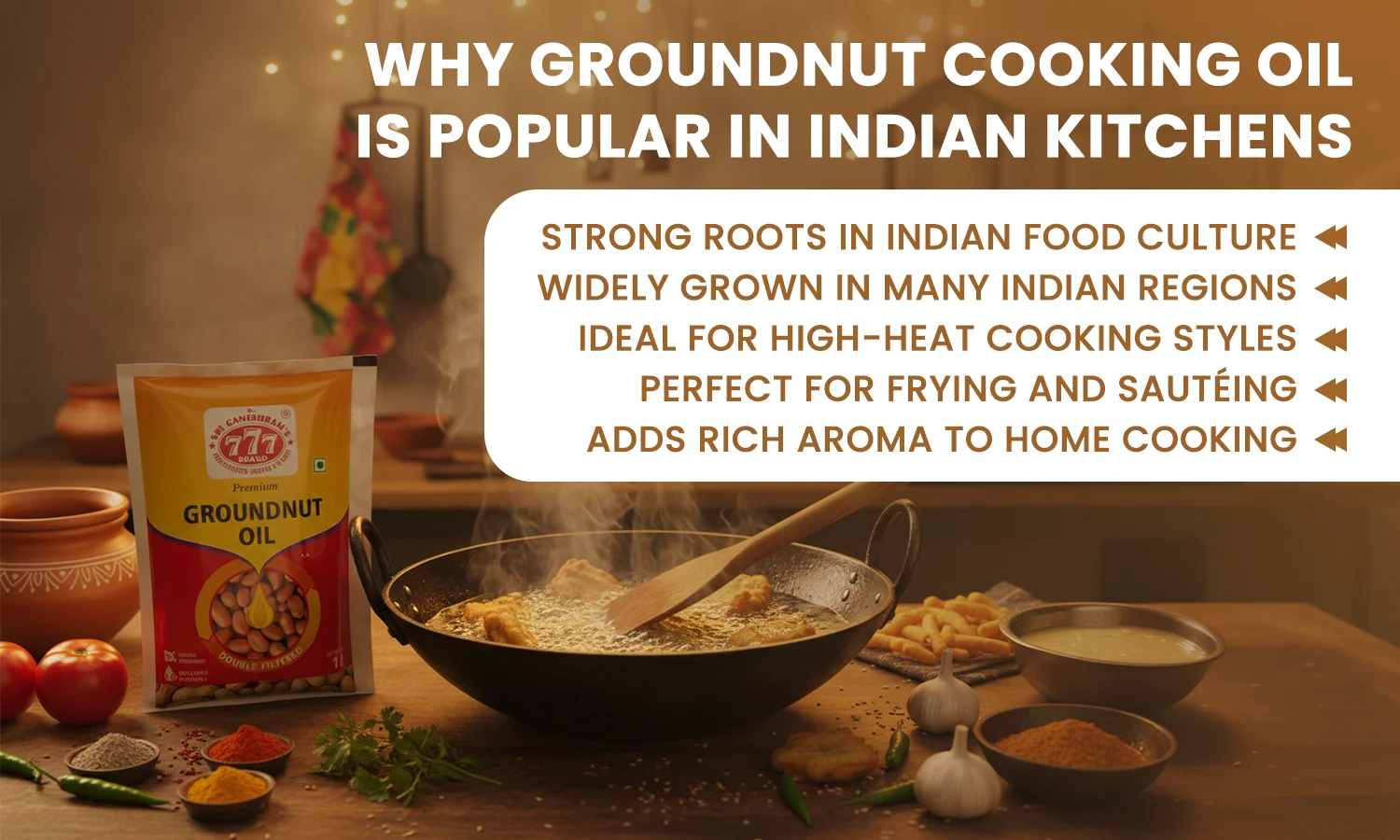
Why Groundnut Cooking Oil Is Popular in Indian Kitchens
The deep-rooted popularity of this oil in India stems from its geographic and cultural history. In regions like Gujarat, Maharashtra, and South India, groundnuts are a local staple.
Beyond accessibility, the oil’s superior heat stability matches traditional Indian techniques like high-heat sautéing and deep frying. The unmistakable scent of groundnuts hitting a hot pan is often associated with home-cooked meals, making it a central part of the country’s culinary identity.
This popularity is also due to the availability of natural groundnut oil in many regional markets.
Conclusion
Integrating quality best peanut oil into a daily routine offers a simple way to enhance both the flavor and nutritional value of meals. Whether used for a simple tadka or heavy frying, its stability and heart-healthy profile make it a reliable kitchen essential. For those looking to return to traditional, nutrient-dense cooking, choosing a chekku-pressed variety ensures that every meal is as wholesome as it is delicious.
Key Takeaways
- The best groundnut oil is usually chekku-pressed to retain Vitamin E and heart-healthy fats.
- A high smoke point of 232°C makes it ideal for deep frying without breaking down.
- It does not absorb flavors, allowing for versatile use in varied recipes.
- It offers significant groundnut oil benefits, including cholesterol management and antioxidant protection.
These points clearly highlight the overall Groundnut oil cooking benefits for daily use.
FAQs
Does groundnut oil help in weight loss?While it is calorie-dense, the healthy fats in this oil can promote satiety, helping readers feel full for longer. Replacing saturated fats with the unsaturated fats found here may support metabolic health, though portion control remains vital.
Can groundnut oil help with inflammation?Yes, the presence of Vitamin E and resveratrol provides antioxidant properties that may help reduce oxidative stress in the body. However, because it contains Omega-6 fatty acids, it should be balanced with Omega-3 sources like flaxseeds for the best results.
Can you reuse groundnut oil after frying?Yes, due to its high smoke point and stability, it can be reused more effectively than many other oils. It is important to strain out food particles and store it in a cool, dark place, but it should be discarded if it becomes dark or develops an off-odor.
Is groundnut oil good for the liver?The unsaturated fats and Vitamin E found in high-quality oil can support overall metabolic functions. Since it helps manage cholesterol and lipid profiles, it is generally considered a heart- and liver-friendly option when consumed in moderation.
Does groundnut oil have low cholesterol?Actually, pure plant-based oils like groundnut oil contain zero cholesterol. They are naturally cholesterol-free and contain phytosterols, which may actually help lower the absorption of cholesterol in the body.