The Health Benefits of Soy Sauce: What You Need to Know

Health Benefits of Soya Sauce

The Benefits of Soy Sauce mainly come from naturally fermented varieties that develop bioactive compounds during long brewing. When used in small amounts as a flavour enhancer, soy sauce can support digestion, add antioxidants, and improve overall taste without adding many calories. However, it should never be treated as a primary nutrition source due to its high sodium content.
One of the key advantages of soy sauce is that it delivers strong umami flavour, helping reduce the need for extra salt in cooking. This makes it useful for seasoning dishes efficiently, provided portion sizes are controlled.

Soy Sauce Nutritional Value

From a nutritional point of view, soy sauce is low in calories, fat, and carbohydrates. A tablespoon contains roughly 8–10 calories, small amounts of protein, and trace minerals, but sodium remains the dominant nutrient. This is why many people ask is soy sauce good for health—the answer depends on how frequently and how much you use it.Low-sodium varieties reduce salt by nearly half and are a better option for daily meals. Understanding soy sauce ingredients, such as soybeans, wheat, salt, water, and fermentation cultures, helps consumers make informed choices, especially when buying a soy sauce bottle for home use.

Antioxidant Properties of Soya Sauce

Naturally brewed soy sauce contains strong antioxidant compounds formed during fermentation. Darker varieties, in particular, develop melanoidins, isoflavones, and phenolic compounds that help neutralise free radicals in the body. This explains the growing interest in dark soy sauce benefits compared to lighter versions.
While studies show high antioxidant activity in laboratory tests, soy sauce is consumed in small quantities. Therefore, its antioxidant role should be viewed as supportive rather than a primary source, contributing modestly to overall dietary protection. Benefits of Soy Sauce
Benefits of Soya Sauce

Beyond flavour, the health benefit of soy sauce include aiding nutrient absorption and digestive efficiency. The fermentation process breaks proteins into amino acids, making food easier to digest. Many people also appreciate soy sauce benefits such as improved taste satisfaction, which can prevent overeating.At the same time, understanding soy sauce benefits and side effects is essential. Excess consumption may increase blood pressure due to sodium, making moderation the most important rule.

Cardiovascular Health Benefits

Soy sauce presents a mixed picture for heart health. Fermented soy compounds may support blood vessel function and reduce oxidative stress, but sodium remains a concern. This creates confusion around is soy sauce healthy for people with hypertension.Research suggests that fermented soy products may be less harmful than equal amounts of table salt, yet reduced-salt options are still recommended. Using soy sauce sparingly can support flavour without overloading sodium intake.

Digestive Health Improvements

Fermentation enhances digestive benefits by stimulating gastric juice secretion and supporting gut bacteria. Naturally brewed soy sauce may help improve digestion and reduce bloating when used in small quantities.Additionally, antimicrobial compounds in soy sauce may help limit harmful gut bacteria. Understanding soy sauce made of helps explain why fermentation plays such an important role in digestive effects.

Potential Anti-Inflammatory Effects

Soy sauce contains bioactive peptides and antioxidants that may reduce inflammation by regulating inflammatory pathways. These effects are mainly seen in traditionally brewed sauces rather than chemically produced versions.That said, inflammation benefits depend on moderation. High sodium intake can trigger inflammation, cancelling out positive effects if overused.

Bone Health Advantages of Soya Sauce

Soy sauce provides indirect bone support through isoflavones, which may help slow bone loss, especially in postmenopausal women. Fermentation also improves mineral availability, supporting calcium balance.

However, excess salt can increase calcium loss, making portion control essential to maintain any potential bone benefit.
Benefits of Soy Sauce

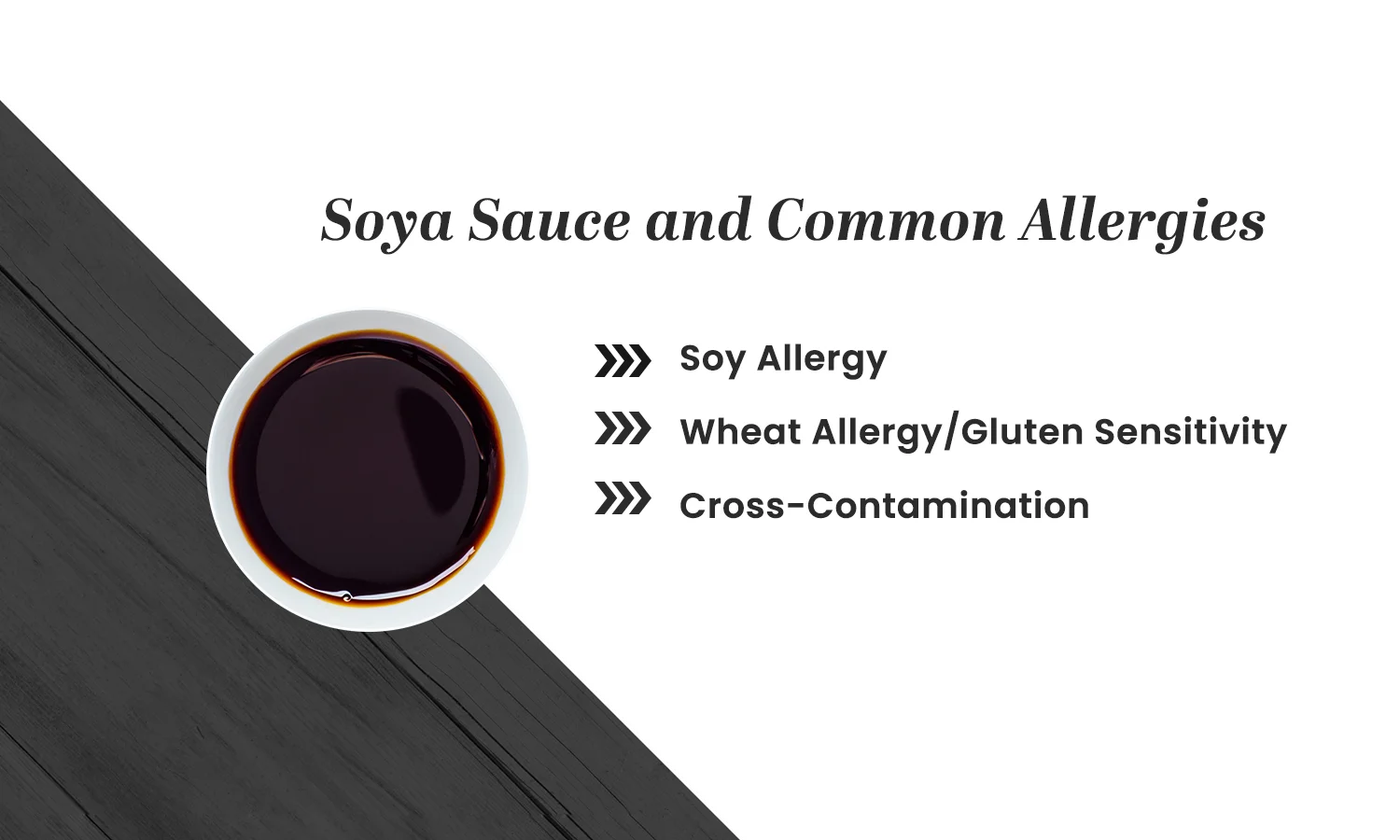
Soya Sauce and Common Allergies

Soy Allergy:

Soy allergy occurs when the immune system reacts to soy proteins, causing symptoms ranging from mild rashes to severe anaphylaxis. People with soy allergies must avoid soy sauce entirely.

Wheat Allergy/Gluten Sensitivity:

Traditional soy sauce contains wheat. Those with gluten sensitivity or celiac disease should choose Gluten free soy sauce, such as certified tamari.

Cross-Contamination:

Cross-contamination can occur during manufacturing or restaurant use. Shared bottles and refilling practices increase risk, making certification labels important.

Conclusion and Recommendations

The Benefits of Soy Sauce are real but limited. When used mindfully, naturally brewed soy sauce can support digestion, provide antioxidants, and improve flavour efficiency. However, sodium, allergies, and hidden gluten must be considered.Choose fermented, low-sodium varieties, avoid chemical sauces, and always read labels—especially during soy sauce in pregnancy, where sodium control is important. Moderation ensures enjoyment without health risks, and knowing does soy sauce expire helps maintain safety and quality.

FAQs

What Are the Antioxidant Benefits of Soy Sauce?Soy sauce contains fermentation-derived antioxidants that help reduce oxidative stress, especially in darker varieties.
How Does Soy Sauce Support Digestion?Fermentation improves protein breakdown and stimulates digestive enzymes, aiding nutrient absorption.
Can Soy Sauce Help Reduce the Use of Table Salt?Yes, its strong umami flavour allows smaller quantities to season food effectively.
Is Soy Sauce Low in Calories, Making It Diet-Friendly?Soy sauce is very low in calories, but sodium content must still be monitored.
What Are the Main Downsides or Cautions When Using Soy Sauce?High sodium levels, soy or wheat allergies, and chemical processing are the main concerns.
What Is Sauce? Ingredients, Types & Uses

What Is Sauce?

To clearly understand what a sauce is, it helps to see how it functions in everyday cooking. A sauce is a liquid, cream, or semi-solid preparation that is served with food or used during cooking to improve flavour, texture, moisture, and appearance. Sauces are not meant to be eaten alone. Instead, they support the main dish by balancing taste and improving how food feels when eaten.The term comes from the Latin word salsus, meaning “salted,” which reflects its early purpose of seasoning food. Over time, sauces became a key part of cooking across cultures. Whether used to soften dry food, add richness, or bring contrast, sauces act as a supporting element that brings a dish together. what is sauce

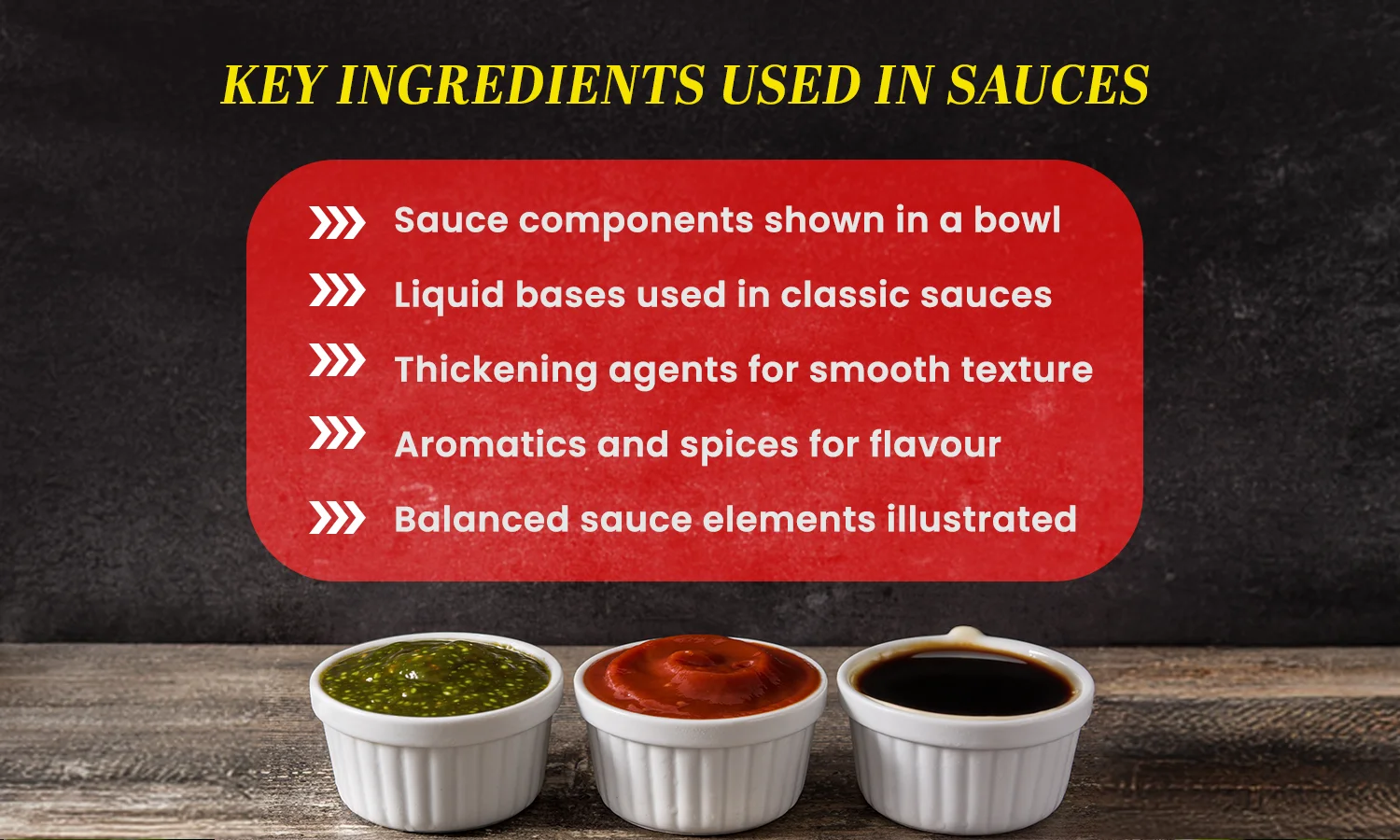
Key Ingredients Used in Sauces

Most sauces are built using three essential components. The first is the liquid base, which gives the sauce its body. This can be stock, milk, cream, tomato products, oil, coconut milk, or vinegar-based liquids, depending on the style of cooking.
The second component is a thickening agent. Traditional sauces often use a roux made from flour and fat, while others rely on starch slurries, egg yolks, pureed vegetables, or slow reduction. The third component is flavouring. Aromatics like onions and garlic, herbs, spices, acids, and seasonings shape the final taste and help balance sweetness, saltiness, and sharpness.

What Are the Basic Sauce Types Used in Indian Cuisine?

Indian cooking does not follow a formal sauce classification system, but it relies heavily on base gravies and condiments. Onion-tomato masalas, nut-based gravies, coconut sauces, and fermented condiments form the foundation of many dishes. Alongside these traditional bases, modern Indian kitchens also use bottled and freshly prepared sauces influenced by global and Indo-Chinese cooking, especially in urban and street-food settings

Tomato Sauce

In Indian usage, tomato sauce usually appears in two forms. As a table condiment, it refers to the sweet and tangy bottled sauce served with snacks and street food. This version is widely recognised by its packaging and varies by brand, tomato sauce bottle size, and tomato sauce price.
As a cooking base, tomato sauce refers to slow-cooked tomato gravies used in popular dishes like paneer curries and butter-based preparations. Many households still prefer making this at home using a basic tomato sauce recipe that focuses on cooked tomatoes, fats, and controlled seasoning.

Green Chilli Sauce

Green chilli sauce is a strong-flavoured condiment commonly used in Indo-Chinese cooking. The core green chilli sauce ingredients include fresh green chillies, vinegar, garlic, salt, and a small amount of sugar to balance the heat. Its smooth texture and sharp taste make it suitable both as a dip and as a cooking ingredient.

People often look for the best green chilli sauce based on spice level and consistency. Unlike traditional green chutney, this sauce is shelf-stable and has a noticeable tang from vinegar.

Dark Soy Sauce

Dark soy sauce is thicker and darker than regular soy sauce and is mainly used to add colour and depth rather than saltiness. The difference between dark vs light soy sauce lies in texture, sweetness, and purpose, with dark soy sauce preferred for cooking.
In Indian-Chinese dishes, dark soy sauce uses include stir-fries, noodles, fried rice, and gravies, where a rich brown colour is expected. The dark soy sauce price often reflects longer fermentation and processing time. what is sauce

How to Use Sauces in Everyday Cooking

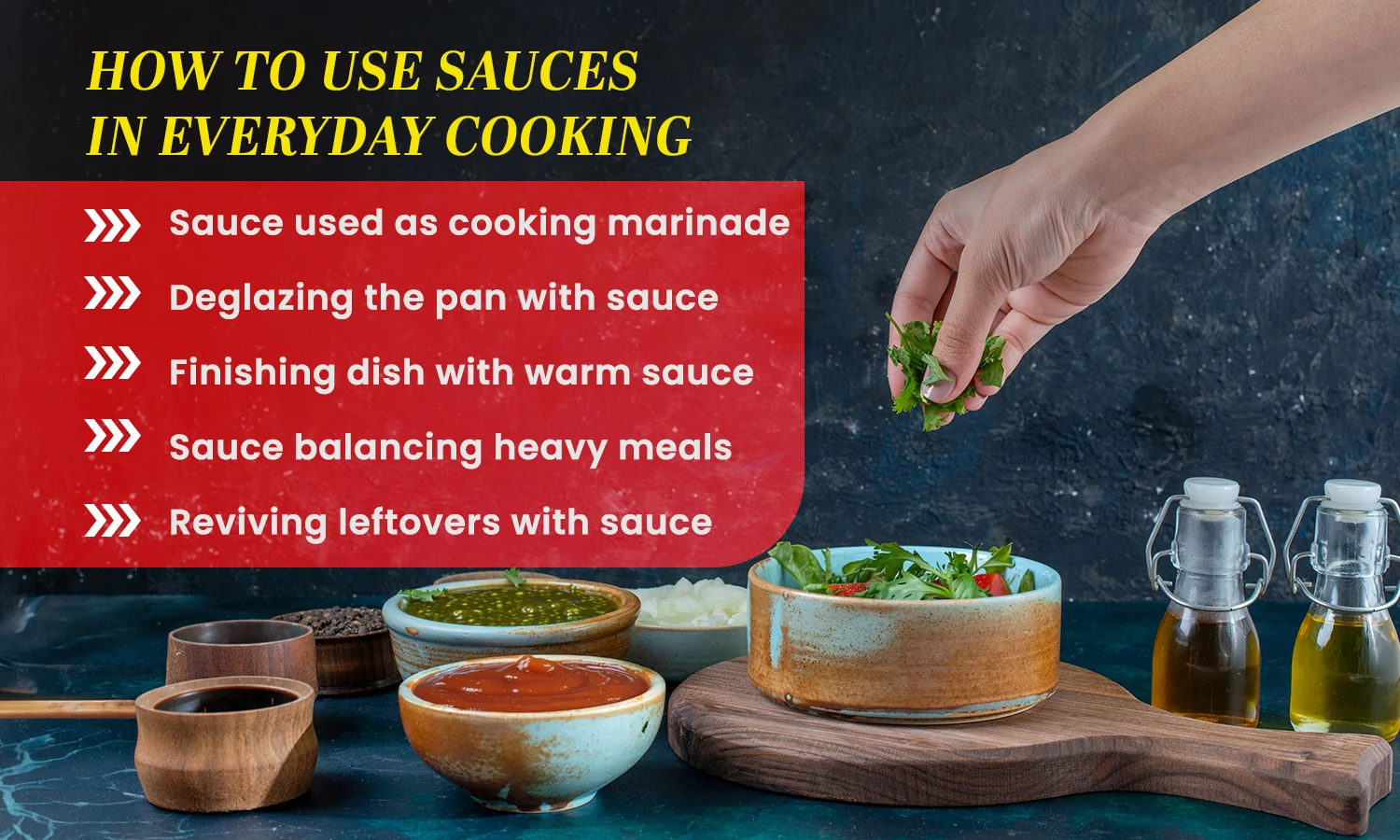
Understanding what a sauce is also means knowing how to use it correctly. Sauces can be used before cooking as marinades, during cooking to deglaze pans, or after cooking to finish a dish. A small quantity added at the right stage can improve flavour without overpowering the food.

If a dish feels dry, a warm sauce can add moisture. If it feels heavy, a sharp sauce can bring balance. Sauces are also useful for refreshing leftovers, helping turn simple ingredients into complete meals.

How to Store Sauces Properly

Proper storage helps maintain both safety and quality. Homemade sauces should be cooled before storing and kept in airtight containers. Dairy-based sauces spoil quickly and should be used within a few days. Tomato-based sauces last slightly longer because of their acidity.Commercial sauces with high salt or vinegar content are more stable, but refrigeration after opening helps preserve flavour. Always use clean, dry spoons to avoid contamination.

Conclusion

Knowing what sauce helps you cook with more clarity and control. Sauces are not just extras; they shape how food tastes, looks, and feels. From tomato and green chilli sauces to dark soy sauce, each has a specific role in Indian and global cooking. When used in the right amount and stored properly, sauces can make everyday cooking more consistent and enjoyable.

FAQs

Which Sauce Is Healthy?Health depends on ingredients and quantity. Many people ask is soy sauce healthy, and when used in moderation, it can add flavour without fat. Some also value soy sauce benefits, but sodium intake should be monitored.
What Sauce Is Most Popular?

Soy sauce is one of the most widely used sauces worldwide due to its versatility and long shelf life, reflected in steady soy sauce price ranges.

What Sauce Is Best for You?The best choice depends on diet and taste. Understanding how soy sauce made of fermented soybeans and wheat, helps decide suitability. Some prefer trying a controlled soy sauce recipe at home.
What Is the Most Eaten Sauce?Globally, soy sauce is considered the most consumed sauce, followed closely by tomato-based sauces.

Breaking Down the Nutrients: Is Soy Sauce Healthy?

Introducing the Debate: Is Soy Sauce Healthy or Not?

The question “is soy sauce healthy?” often comes up because it sits at the crossroads of flavour and nutrition. Found in kitchens across cultures, soy sauce adds depth to food but also raises concerns due to its salt content.
From a nutrition point of view, soy sauce is neither entirely good nor entirely bad. The answer depends on how it is made, how much is used, and who is consuming it. When people ask whether soy sauce is healthy or not, the most accurate response is that it works best as a controlled seasoning rather than a free-flowing condiment.

The Origins and Production Methods of Soy Sauce

Soy sauce has a history that goes back over 2,500 years, beginning in China as a fermented preservation method. Over time, it spread across Asia and later to the rest of the world.
Traditional brewing involves fermenting soybeans and wheat with water and salt over several months. This slow process develops flavour and produces beneficial compounds.
Modern shortcuts use chemical hydrolysis, which speeds up production but compromises quality. Understanding how soy sauce is made helps explain why some varieties are nutritionally better than others.
The Nutrition of Soy Sauce

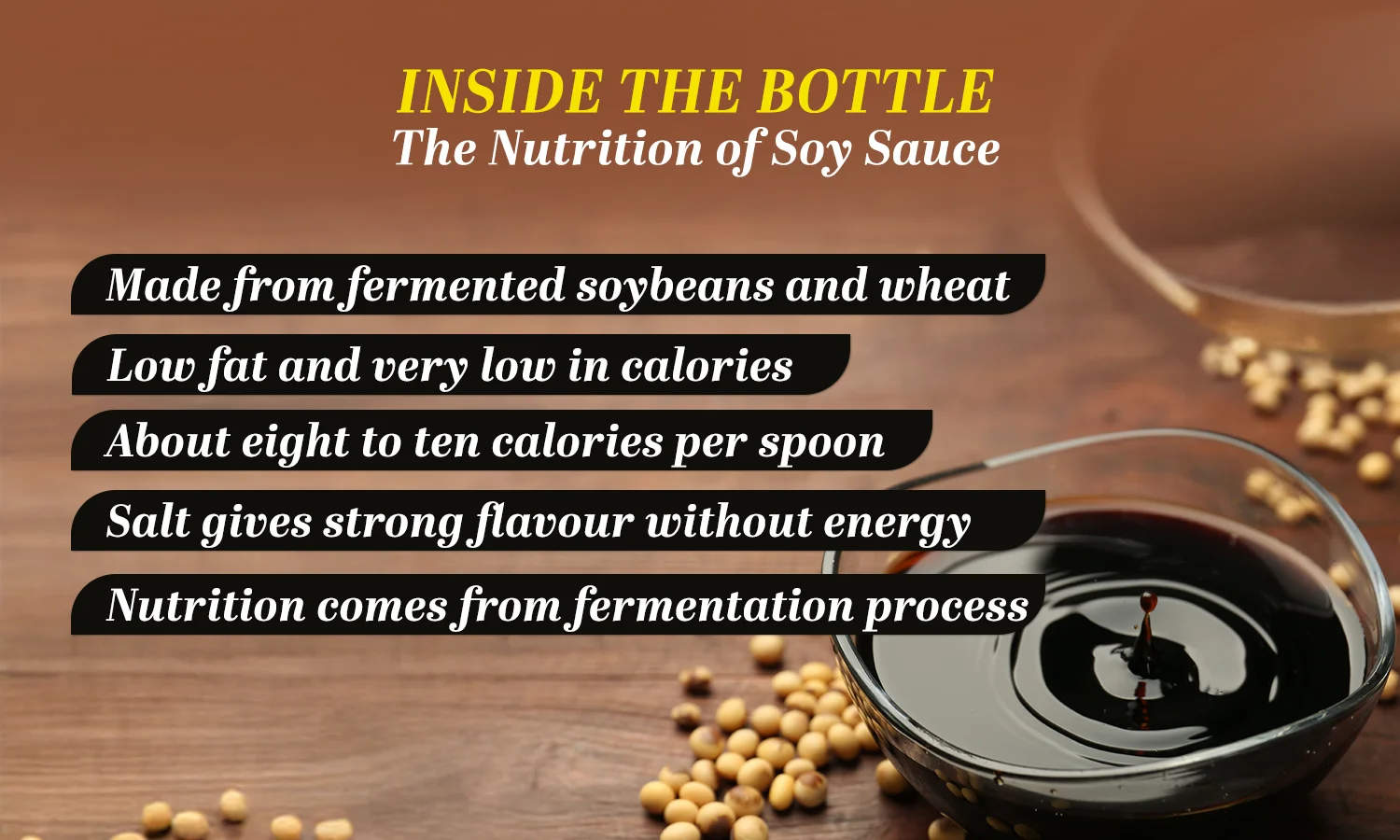
Inside the Bottle: The Nutrition of Soy Sauce

When looking at soy sauce ingredients, the basics remain simple: fermented soybeans, wheat, salt, and water. Some versions also include sugar or caramel for colour and thickness.
Nutritionally, soy sauce is low in fat and contains very few calories. Typical soy sauce calories range from 8 to 10 per tablespoon, making it a low-energy flavour enhancer. Its value comes more from taste and fermentation compounds than from vitamins or minerals.

Diving Deeper: Understanding the Sodium Content in Soy Sauce

Sodium is the main concern when evaluating if soy sauce is good for health. One tablespoon of regular soy sauce can contain close to half of the daily recommended sodium limit.

However, not all types are equal. Dark soy sauce is thicker, slightly sweeter, and generally less salty than light soy sauce. Many people wonder if soy sauce is healthy compared to regular versions. While it still contains salt, its stronger flavour means smaller quantities are usually enough.

Medical Opinions on Soy Sauce and Health :

1. Can I Consume Soy Sauce If I Have High Blood Pressure?

Doctors advise strict moderation. Soy sauce contains concentrated sodium, which can increase blood pressure and fluid retention. For people with hypertension, using soy sauce occasionally and in very small amounts is safer than daily use.

2. Is Soy Sauce Healthy for Diabetics?

For diabetics, soy sauce is healthy in terms of blood sugar impact because it has a low glycaemic index. Sodium, not sugar, remains the primary concern.

3. Does Soy Sauce Promote Digestion?

Naturally fermented soy sauce may support digestion by stimulating gastric juices, unlike chemically produced versions. People sensitive to fermented foods may experience digestive discomfort instead of relief.

4. Is Soy Sauce Good For Weight Loss?

Soy sauce is low in calories and fat, which makes it preferable to creamy condiments. However, high sodium intake can cause water retention, leading to temporary weight fluctuations. Moderation is necessary to prevent misleading weight changes.

5. Are There Any Possible Allergies to Soy Sauce?

Soy sauce may trigger allergic reactions due to soy, wheat, or fermentation-related histamines. Individuals with gluten intolerance or soy allergy should choose alternatives carefully.

6. What Is The Amount of Soy Sauce Considered Safe For Daily Consumption?

Health authorities generally suggest limiting soy sauce intake to 1–2 teaspoons per day for healthy adults, as it helps keep sodium consumption in check while still allowing you to enjoy its flavor. If you have any existing health conditions, it’s always best to seek expert advice to understand what amount is suitable for your individual needs.
Healthier Choices with Soy Sauce

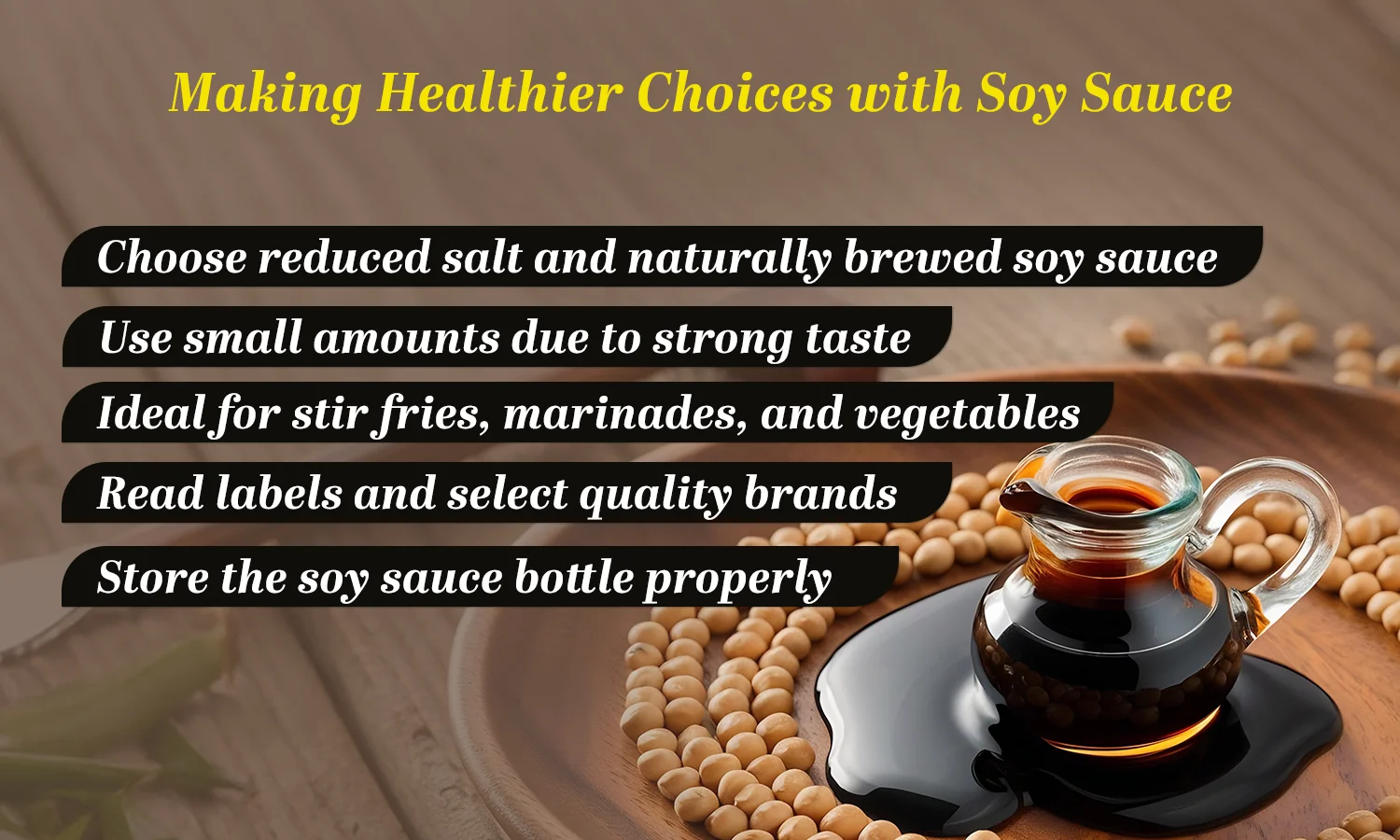
Making Healthier Choices with Soy Sauce :

Choosing better varieties and using them wisely makes a difference. Reduced-salt options, naturally brewed products, and mindful portions help minimise risks. Many people enjoy soy sauce for its role in cooking, as common soy sauce uses include stir-fries, marinades, and seasoning vegetables.
From flavour to aroma, soy sauce taste is intense, which is why small quantities work well. Checking labels, choosing quality brands, and storing the soy sauce bottle properly also support safer consumption.

Conclusion: Balance and Moderation with Soy Sauce in Your Diet

So, is soy sauce healthy? The answer lies in balance. High-quality fermented soy sauce used sparingly can fit into a balanced diet. It offers flavour, possible digestive support, and certain antioxidants, often discussed as the benefits of soy sauce.

At the same time, overuse can lead to high sodium intake and related health concerns. Treat soy sauce as a precision seasoning rather than a pouring sauce, and it can remain a safe and enjoyable part of everyday cooking.

FAQs :

What Is Soy Sauce Made Of?Soy sauce is made from fermented soybeans, wheat, water, and salt, with some varieties adding sugar or caramel for colour.
Is Soy Sauce Non-Veg or Veg?Soy sauce is vegetarian, as it is produced entirely from plant-based ingredients.
Is Soy Sauce Ok for Your Stomach?In small amounts, naturally brewed soy sauce may aid digestion, but excess intake can cause discomfort due to salt and histamines.
What Are the Advantages and Disadvantages of Soy Sauce?Advantages include low calories and strong flavour; soy sauce side effects mainly involve high sodium and allergy risks when consumed excessively.

Chilli Sauce Price in India: A Simple Buying Guide

Introduction :

The chilli sauce price in India varies widely based on ingredients, pack size, processing, and where you buy it. From small bottles for occasional use to larger packs for regular cooking, chilli sauce is available across multiple price points.While spice level is often the first thing buyers look for, understanding pricing helps you choose a sauce that balances cost, quality, and everyday usability. This guide explains general price ranges, compares shop and online prices, looks at homemade versus ready-made options, and shares tips on buying chilli sauce wisely.

What Is the Current Chilli Sauce Price in India?

The chilli sauce price in India usually ranges from around ₹80 to ₹180 per kilogram. Basic variants with fewer ingredients tend to be at the lower end, while sauce with richer flavour profiles or added seasonings fall toward the higher end.

Smaller bottles may appear cheaper upfront, but when you check the cost per kg, they are often less economical than larger packs like Chilli sauce 1 kg. In this range, sauces aimed at everyday use are common.

For example, SGR 777 chilli sauce is typically priced around ₹90–₹120 per kg, offering a balance of flavour, consistency, and affordability. This mid-market positioning makes such sauces suitable for families and frequent users who want a reliable bottle without spending on premium products. The Red chilli sauce price can sit slightly higher when extra spices are added, so always check the per kg rate.
chilli sauce price

Chilli Sauce Price at Shops & Online Stores

At local shops, the price of chilli sauce depends on location and the distributor’s pricing strategy. Urban supermarkets often offer multiple options within the ₹80–₹180 per kg bracket, while smaller town stores may have slightly higher prices due to transport costs.Shopping for chilli sauce online makes price comparison simpler. Online grocery platforms allow you to view price per kg, customer ratings, and ingredient lists in one place. E-commerce sites often run periodic discounts or combo deals, making sauces more affordable during sales. However, remember to factor in delivery charges when calculating the total cost. In many online listings, SGR 777 chilli sauce appears consistently in the ₹90–₹120 per kg range, with clear labelling and ingredient transparency, helping buyers plan repeat purchases. The Tomato chilli sauce price is often a little lower, since tomatoes are cheaper than pure chilli bases.

Homemade Chilli Sauce vs Ready-Made Sauce – What’s Cheaper?

Choosing between homemade sauce and ready-made sauce involves more than just money. Homemade chilli sauce can be economical when fresh chillies are affordable. You control the spice level and avoid preservatives.The preparation involves grinding chillies with vinegar and seasoning, followed by slow cooking to preserve flavour. However, costs can add up when chillies are expensive or when you factor in fuel and labour time. On the other hand, ready-made sauces are manufactured at scale, which often keeps the price of chilli sauce per kg stable and predictable.Packaged sauces save time, have a longer shelf life, and ensure consistent taste. For frequent users, a ready-made option like SGR 777 chilli sauce may be more convenient and cost-effective in the long run, especially if your household uses chilli sauce daily. A good spicy chilli sauce brings bold heat to everyday meals whether you make it fresh or buy it ready.
chilli sauce price

Where to Buy Chilli Sauce Online at the Best Price?

To get the best chilli sauce price online, start by comparing prices per kg across platforms rather than just looking at the bottle tag. Many online grocery apps and marketplaces let you filter by price, pack size, and customer ratings, which helps narrow down the most economical options.Purchasing during festive sales or using combo packs can further reduce the per kg cost. Pay attention to ingredient lists and sodium levels as well, since some products may add sugar or stabilisers.A consistently priced option with clear ingredient practices like SGR 777 chilli sauce, available on official brand stores and select grocery platforms, is often priced around ₹90–₹120 per kg, making it a reliable choice for everyday cooking needs. Comparing the hot chilli sauce price across stores is the easiest way to lock in the best chilli sauce price for your kitchen.

Conclusion

Understanding the chilli sauce price in India helps you make informed choices based on quality, quantity, and usage needs. Prices generally range from ₹80 to ₹180 per kg, with factors like pack size, ingredients, and sales offering opportunities to save.Comparing shop and online prices and weighing homemade vs ready-made options gives you a balanced view. Choosing reliable, consistently priced options such as SGR 777 chilli sauce can make everyday cooking spicier and more satisfying without overspending.

Key Takeaways

  • Chilli sauce price in India usually ranges from ₹80 to ₹180 per kg
  • Larger bottles often offer better value than smaller packs
  • Online platforms make price comparison and search easier
  • Homemade sauce is good for customised heat and occasional use
  • Ready-made sauces like SGR 777 balance flavour, price, and reliability

FAQs

Why is chilli sauce expensive? Chilli sauce prices rise due to chilli quality, processing, packaging, and shelf-life stability.
What is the shelf life of chilli sauce? Unopened bottles can last several months; once opened, refrigerate and use within a few weeks.
What are the benefits of chilli sauce? Chilli sauce adds heat and flavour, potentially reducing the need for excess salt or fats when used in moderation.
Is chilli sauce high in sugar? Some sauces include added sugar. Checking the label helps you choose options with lower sugar levels.
Can I convert chilli paste to chilli sauce? Yes. By adding vinegar, seasoning, and cooking gently, chilli paste can be turned into a sauce-like consistency.

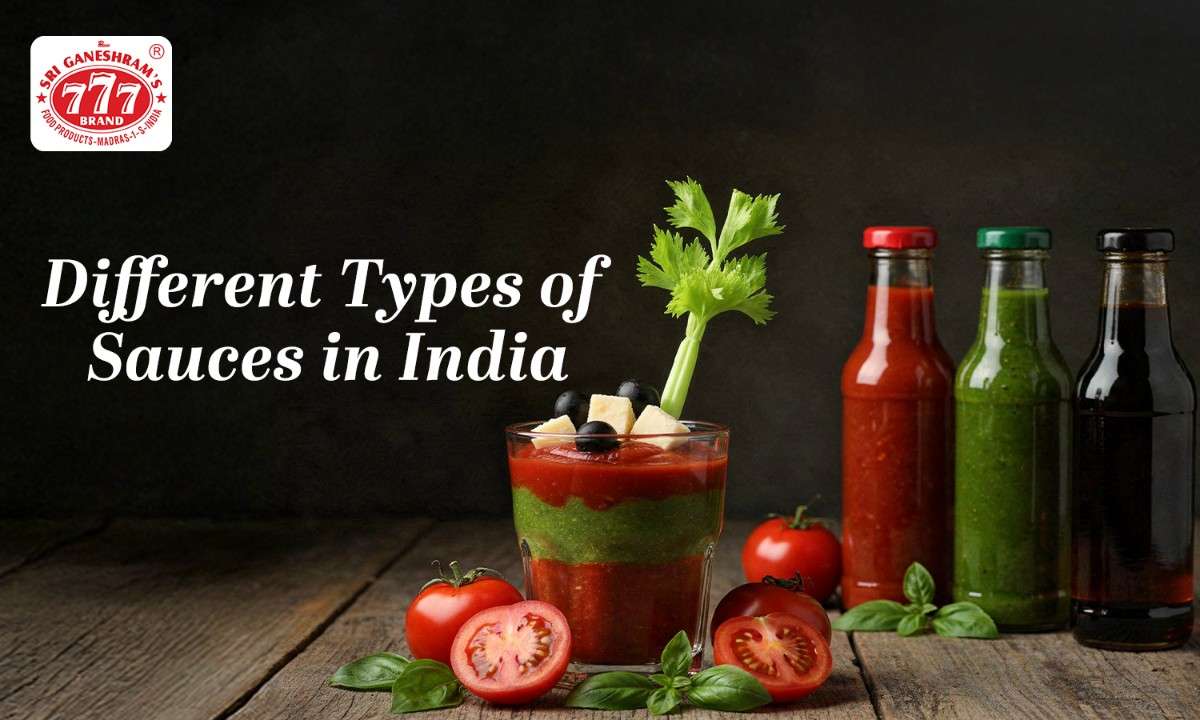
Different Types of Sauces in India

Introduction :

Today, sauces can be considered an integral component of Indian cuisine. The ever-changing nature of food habits has led to the widespread use of sauces. Although chutneys or gravies continue to occupy prime positions as sauces in traditional Indian cuisine, modern sauces also find numerous applications in Indian cuisine.Knowledge of the common types of sauces consumed in India will make it easy for anyone to make the right selection. This blog explains the sauces consumed in Indian kitchens. types of sauces

Types of Sauces

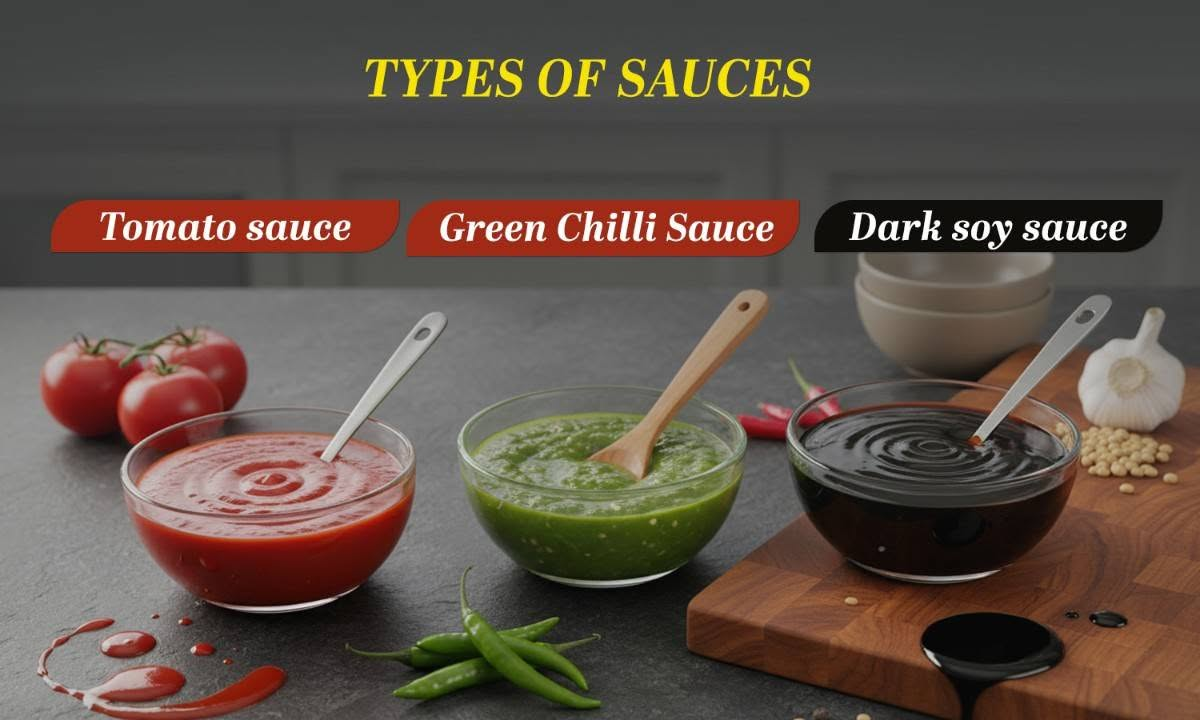
India has a combination of traditional saucy flavours and a range of western sauces. Among those, tomato sauce, green chilli sauce, and dark soy sauce are the most widely utilized sauces.

1. Tomato Sauce

Tomato sauce is one of those sauces that are most commonly found in an Indian household. This sauce is prepared using ripe tomatoes and has a mild sweetness and subtle tanginess, which makes it quite appealing to all age groups. This sauce has no specific taste, which makes it quite versatile.Tomato sauces were adopted in India with the development of processed foods. Over the years, tomato sauce has evolved beyond being a dip product and has become a staple in many cuisines.It is made by cooking tomatoes until they are soft, peeling off the skin, and simmering the flesh in salt and mild seasonings. This way, it thickens on its own and has a great flavour. It is also often made at home to use as a sauce.The primary advantages of tomato sauce are its convenience and versatility. Tomato sauce can be considered a topping to snacks such as cutlets, sandwiches, as well as a component to top noodles or even to prepare quick gravy. If utilized properly, tomato sauce is a good complement to a meal, adding to its flavour. In the Indian market, tomato sauces are always priced under a medium category, with SGR 777 tomato sauces being amongst those that offer great quality with a realistic price tag.

2. Green Chilli Sauce

Green chili sauce is a favourite of those who like a lot of heat and taste. It consists of only three ingredients – green chilies, vinegar, and salt. When you add it to food, it provides an instant explosion of heat and taste.This sauce was later introduced to India through Indo-Chinese cuisine and is quite popular in cities. The sauce gradually spread into restaurants, food stalls, and finally into households.Green chilli sauce is made from ground green chilies mixed with vinegar and seasoning, cooked slowly to preserve its flavor, which is quite strong. It is also referred to as ‘green sauce’ since, unlike other sauces, its use is limited because it has a strong flavor.It is commonly used in fried rice, noodles, momos, and snacks. Many people regard it as the best chilli sauce for Indo-Chinese cuisine. Health-wise, it is utilized as a condiment, and it doesn’t require much, hence the utilization of excess amounts of salt or oil. Readymade packs of this sauce can be found everywhere, and it’s wise to buy those brands that clearly state their practices on using ingredients. In some recipes, a milder variation like sweet chilli sauce is also used for balance.

3. Dark Soy Sauce

Dark soy sauce is thicker, darker, and richer than regular soy sauce. Sometimes referred to as Black sauce, it is mainly used to add colour and depth rather than saltiness.Soy-based sauces entered Indian cooking through Chinese and Southeast Asian influences. Dark soy sauce became popular as Indo-Chinese dishes gained acceptance across the country.

It is prepared through the extended fermentation of soybeans and grains, followed by aging. This longer process results in its deep colour and slightly sweet taste. Among various sauce varieties, dark soy sauce stands out for its visual impact.

Dark soy sauce is used in stir-fries, noodles, and gravies where appearance matters. People also look at the benefits of soy sauce, such as enhancing flavour without heavy seasoning. When used in moderation, it fits well into everyday cooking without overpowering dishes.

Conclusion

The different types of sauces used in India reflect how cooking has adapted to modern needs while keeping flavour at the centre. Each sauce has a specific role, whether it is adding sweetness, heat, or richness. Using sauces in balance helps improve taste and presentation without overwhelming dishes. Choosing reliable brands like SGR 777, which focus on consistency and practical pricing, makes it easier for households to enjoy everyday cooking with confidence and convenience.

Key Takeaways

  • India uses a mix of traditional and modern types of sauces influenced by global and local cooking styles
  • Tomato sauce is mild, versatile, and widely used in everyday meals
  • Green chilli sauce adds sharp heat and is commonly used in Indo-Chinese dishes
  • Dark soy sauce is mainly used for colour and depth rather than saltiness
  • Choosing sauces with balanced ingredients and practical pricing makes them suitable for regular household use

FAQs

What are the 5 main types of sauce?The five main types of sauces are tomato-based sauces, chilli sauces, soy-based sauces, herb-based sauces, and fermented sauces.
Which sauce is best for pasta?Tomato-based sauces are best for pasta because they pair well with vegetables, herbs, and mild seasonings.
What is sauce and its types?A sauce is a liquid or semi-liquid preparation used to enhance flavour, colour, or texture. Types vary based on ingredients and preparation methods.
What are traditional sauces?Traditional sauces include chutneys, gravies, and region-specific preparations commonly used in Indian cuisine.
What are Indian sauces?Indian sauces include tomato sauce, chilli sauces, soy-based sauces used in Indo-Chinese cooking, and traditional regional sauces.

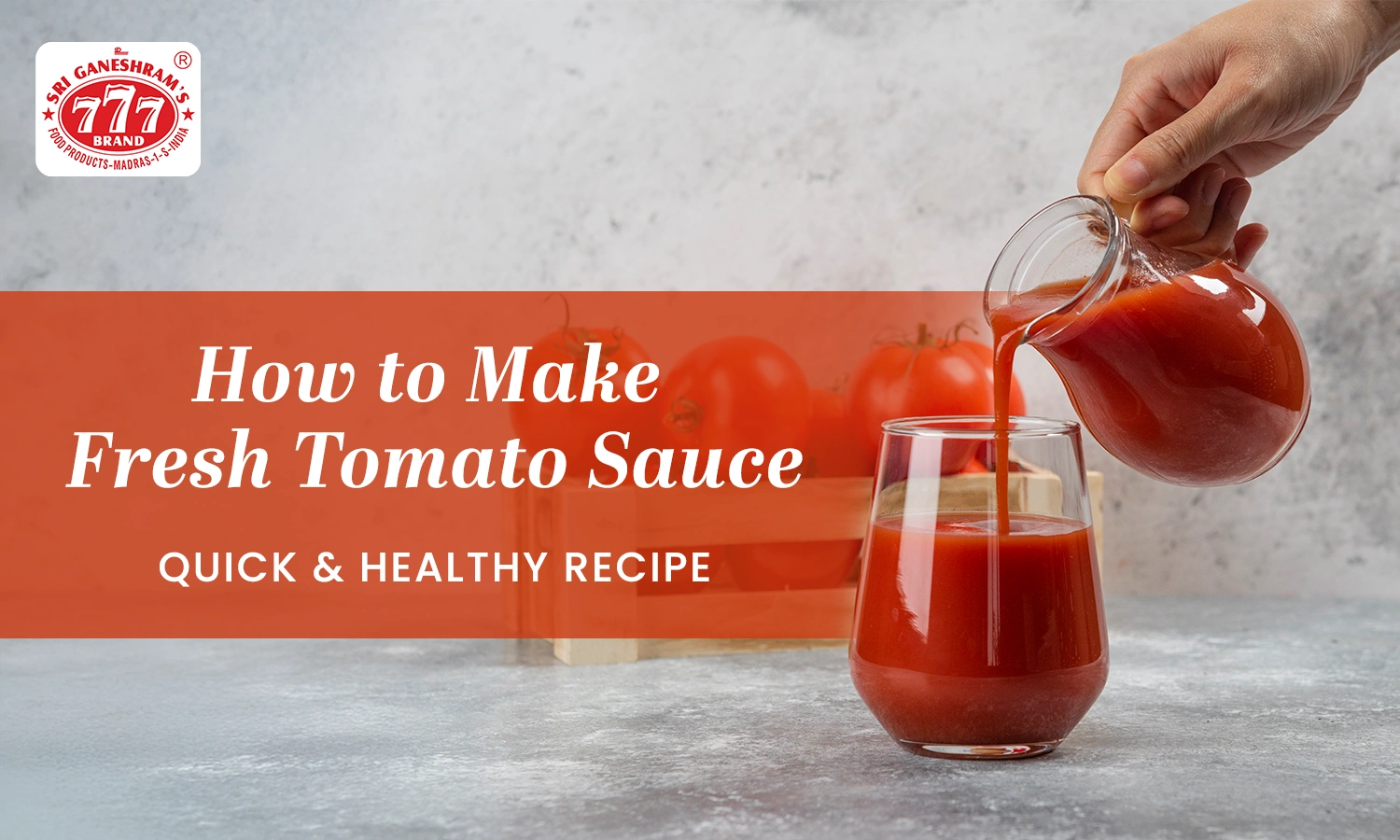
How to Make Fresh Tomato Sauce: Quick & Healthy Recipe

Introduction :

Making fresh tomato sauce at home is one of the easiest ways to improve both taste and quality in everyday cooking. Unlike store-bought sauces, homemade versions do not rely on preservatives, excess sugar, or artificial flavours.
When you prepare sauce using fresh tomatoes, you control the ingredients, texture, and flavour. This guide explains how to make fresh tomato sauce quickly, how it tastes compared to packaged sauces, and how you can use it across different recipes.

How to Make Fresh Tomato Sauce at Home?

Preparing fresh tomato sauce at home does not require special tools or complicated steps. The process focuses on using ripe tomatoes and slow cooking to bring out natural flavour.A standard homemade tomato sauce recipe usually begins with blanching the tomatoes to easily remove their skins, followed by a gentle simmer with garlic, basil, and a touch of olive oil. By following a traditional tomato sauce recipe, you avoid the high sodium and corn syrup typically found in store-bought jars. This results in a much more healthy tomato sauce that retains its natural lycopene and vitamin content, providing a nutrient-dense addition to your pasta or stews.
For those looking to elevate the quality of their homemade tomato sauce, using vine-ripened, pesticide-free produce is key. Opting for an organic tomato sauce base ensures that the final product is free from synthetic additives, allowing the bright, acidic, and sweet notes of the fruit to shine through. Mastering this simple kitchen skill gives you total control over your ingredients, turning a few humble pantry staples into a gourmet foundation for your favorite meals.
When made properly, the sauce feels light, clean, and adaptable to many dishes. Whether used immediately or stored for a short time, it works well as a base for daily cooking.

What Ingredients Are Needed to Make Fresh Sauce

To make fresh tomato sauce, you only need a few basic ingredients. Fresh, ripe tomatoes are the foundation and determine the final taste. Along with tomatoes, you will need garlic, salt, and a small amount of oil.
If time is limited, fresh tomato sauce can still be prepared efficiently. Start by washing and chopping fresh tomatoes. Boil them until soft, allow them to cool slightly, and peel off the skin. Blend the tomatoes into a smooth base to create a tomato sauce from fresh tomatoes. Fresh Tomato Sauce

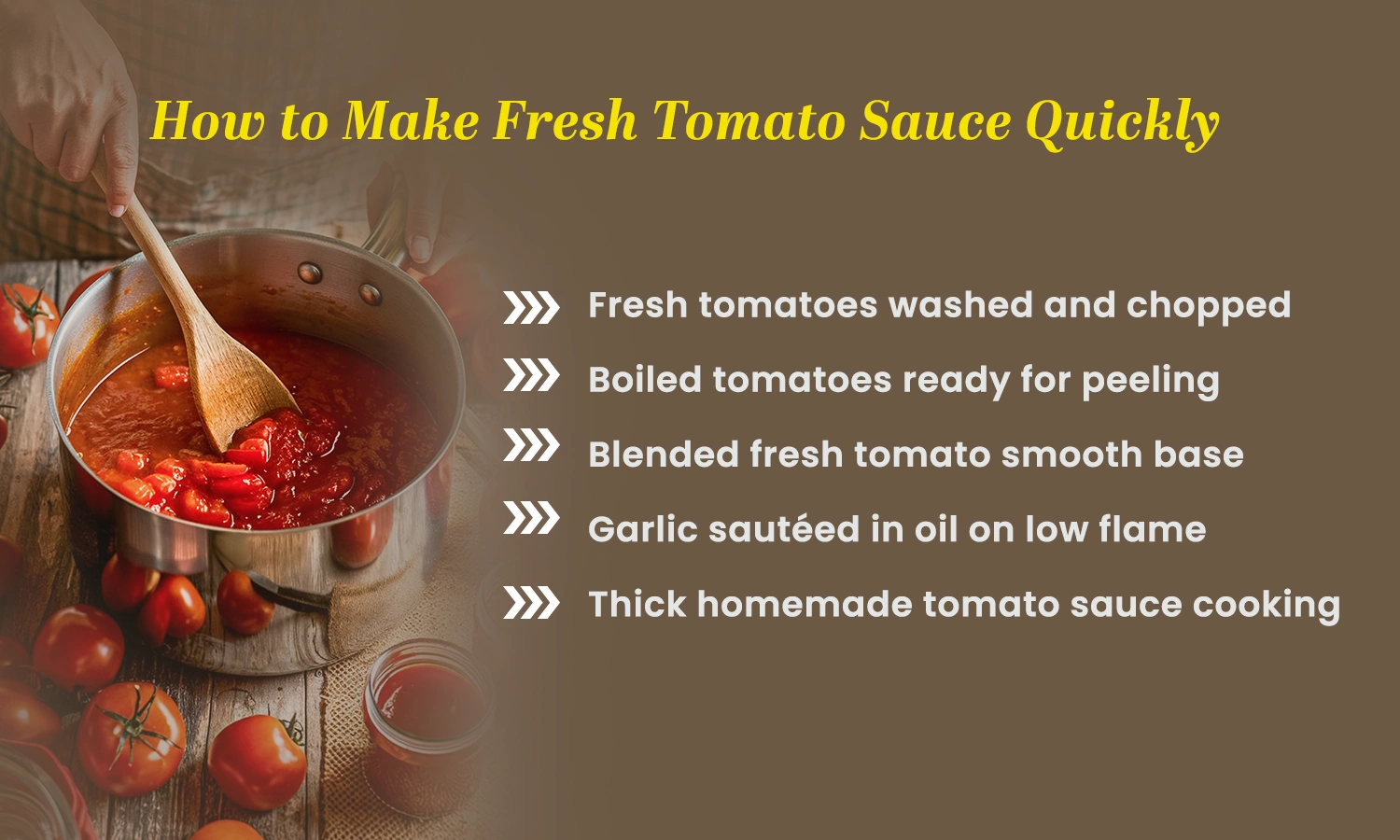
How to Make Fresh Tomato Sauce Quickly

If time is limited, fresh tomato sauce can still be prepared efficiently. Start by washing and chopping fresh tomatoes. Boil them until soft, allow them to cool slightly, and peel off the skin. Blend the tomatoes into a smooth base to create a tomato sauce from fresh tomatoes.Heat a pan on low flame, add oil, and lightly sauté garlic. Pour in the blended tomatoes and cook gently while stirring. Within 20–25 minutes, the sauce thickens naturally. This quick method gives you a homemade tomato sauce that is suitable for immediate use. Since it uses minimal oil and no sugar, it also works as a low calorie sauce option.
Fresh Tomato Sauce

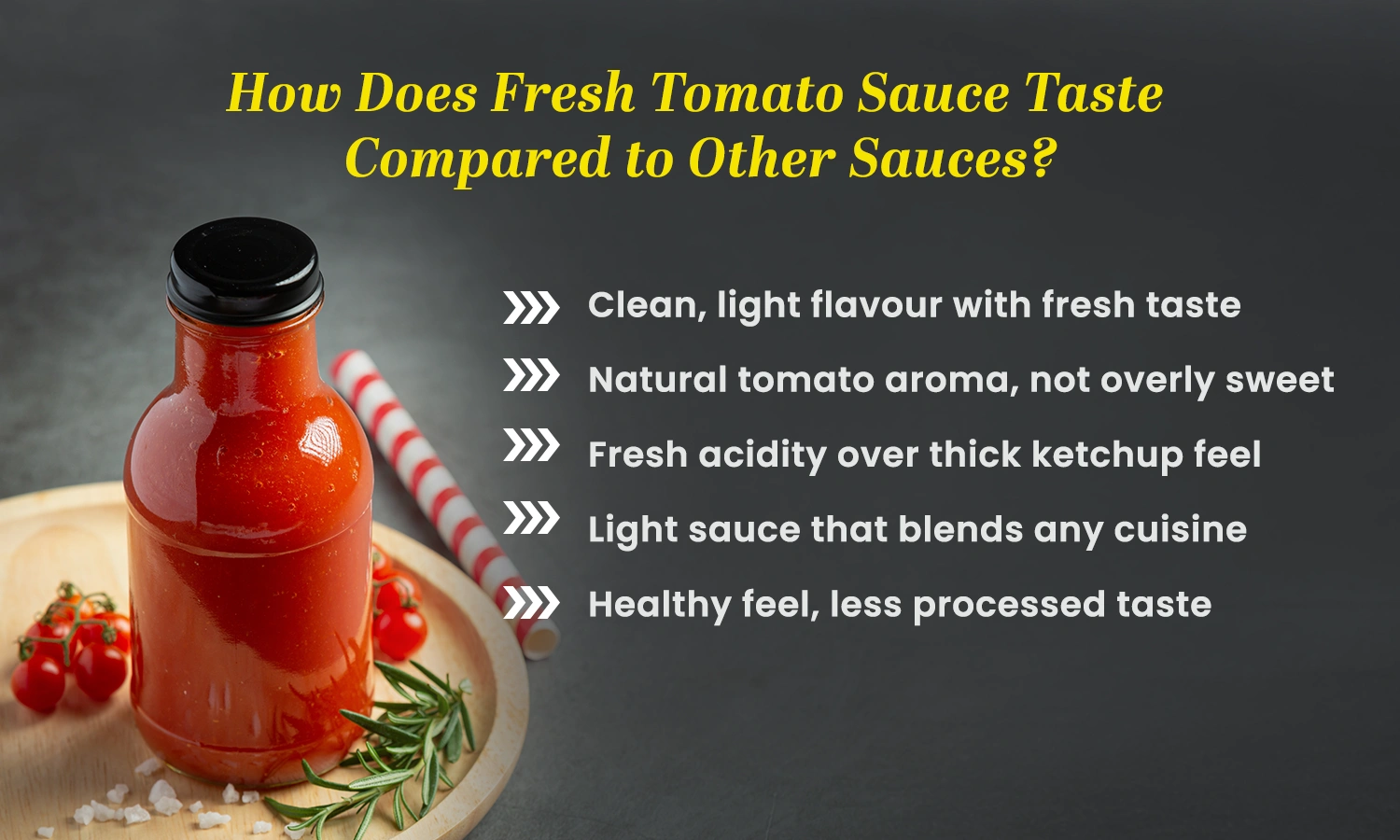
How Does Fresh Tomato Sauce Taste Compared to Other Sauces?

The taste of fresh tomato sauce is noticeably different from packaged sauces. It has a cleaner, lighter flavour and a natural tomato aroma. Unlike tomato ketchup, which is sweeter and thicker, fresh sauce highlights acidity and freshness.

This makes it a natural sauce that blends easily into different cuisines. Many people prefer it as a healthy tomato sauce because it does not feel heavy or overly processed.

How to Use Fresh Tomato Sauce in Recipes

One of the biggest advantages of fresh tomato sauce is its versatility. It can be used as a base for pasta, curries, vegetable stir-fries, or even rice dishes.
You can season it differently depending on the recipe, which is why many consider it the best tomato sauce for daily cooking. Since it is lightly seasoned, it adapts well without clashing with other ingredients, making it suitable for both Indian and international dishes.

Conclusion

Making fresh tomato sauce at home is a practical and healthy choice for everyday meals. With minimal ingredients and simple steps, it delivers natural flavour, flexibility, and freshness that packaged sauces often lack.
Whether used immediately or stored briefly, fresh tomato sauce fits easily into regular cooking while keeping meals light and balanced. For those times when a ready-made option is needed, choosing a brand like 777 Foods, known for consistency and clear ingredient practices, helps maintain similar quality and reliability in everyday cooking.

Key Takeaways

  • Fresh tomato sauce uses simple, natural ingredients
  • Fresh tomatoes give better flavour and texture
  • Quick preparation makes it suitable for daily cooking
  • Lighter taste compared to packaged sauces
  • Easy to adapt across multiple recipes

FAQs

How to make a tomato sauce tastier?

Slow cooking and using ripe tomatoes naturally improve flavour without adding extra ingredients.

How to improve the taste of tomato sauce?

Balancing acidity with proper cooking time and gentle seasoning helps enhance taste.

What is the most common mistake in sauce making?

Cooking on high heat can burn the sauce and affect the flavour.

Why add baking soda to tomato sauce?

A small pinch is sometimes used to reduce acidity, but it should be used carefully.

How to add flavor to homemade tomato sauce? Adding garlic, herbs, or a small amount of oil during cooking enhances flavour naturally.

What Is Dark Sauce? Meaning, Uses, Taste & Cooking

Introduction :

If you often cook Asian or Indo-Chinese dishes, you may have come across the term dark sauce and wondered what dark sauce exactly is. Many people confuse it with regular soy sauce, while others are unsure how and when to use it.
Dark sauce is known for its deep colour, rich taste, and ability to transform the look of a dish. This blog explains what dark sauce is, how it tastes, what goes into it, and how you can use it correctly in everyday cooking.

What Is Dark Sauce and Why Is It Called Dark Soy Sauce?

This sauce is darker, thicker, and richer than regular soy sauce. It gets its name from its deep brown to almost black colour, which comes from longer aging and cooking. Many people also call it black soy sauce because of its intense colour. Unlike lighter sauces used mainly for seasoning, dark sauce is used more for colour and depth.
What is Dark Sauce

What Is Dark Soy Sauce Made Of? Ingredients

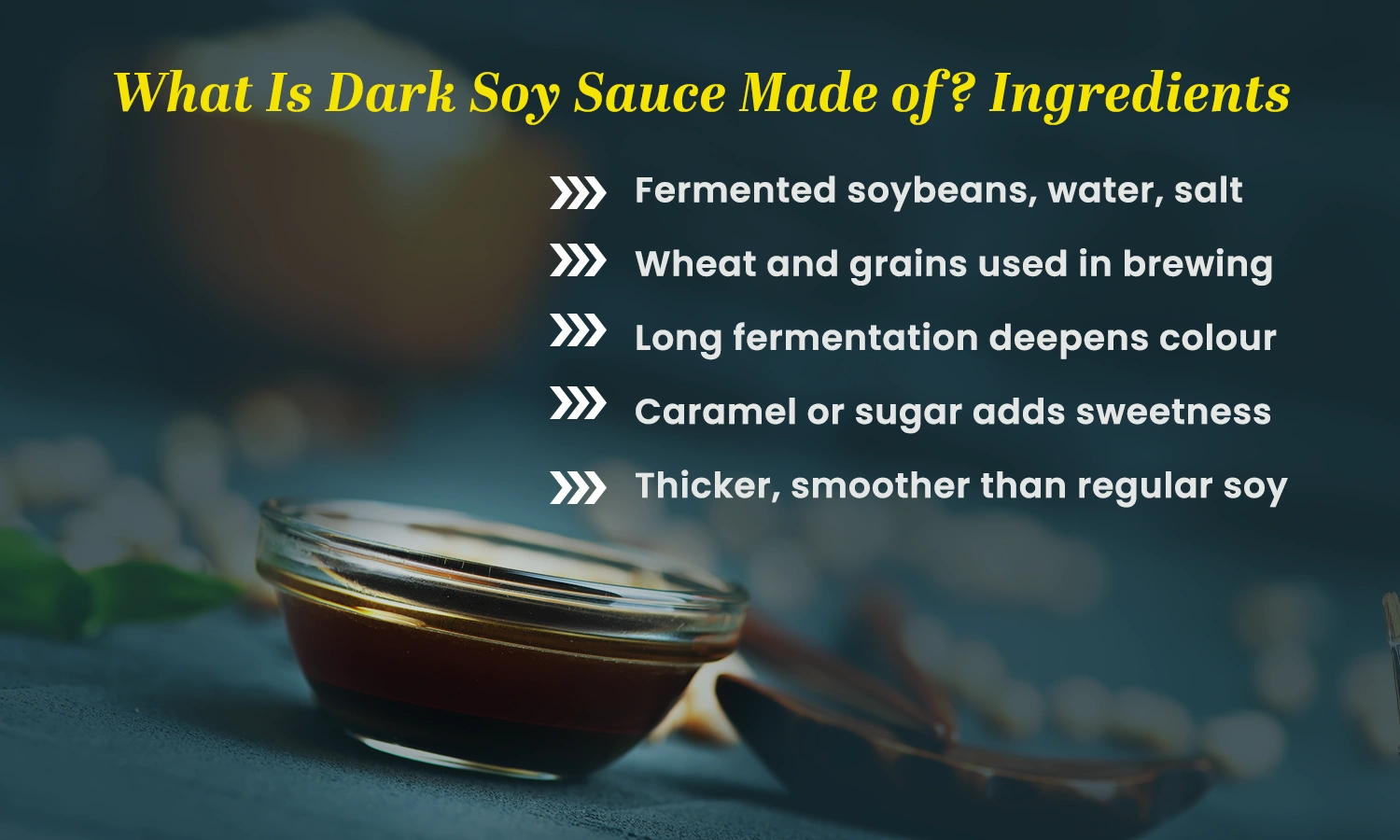
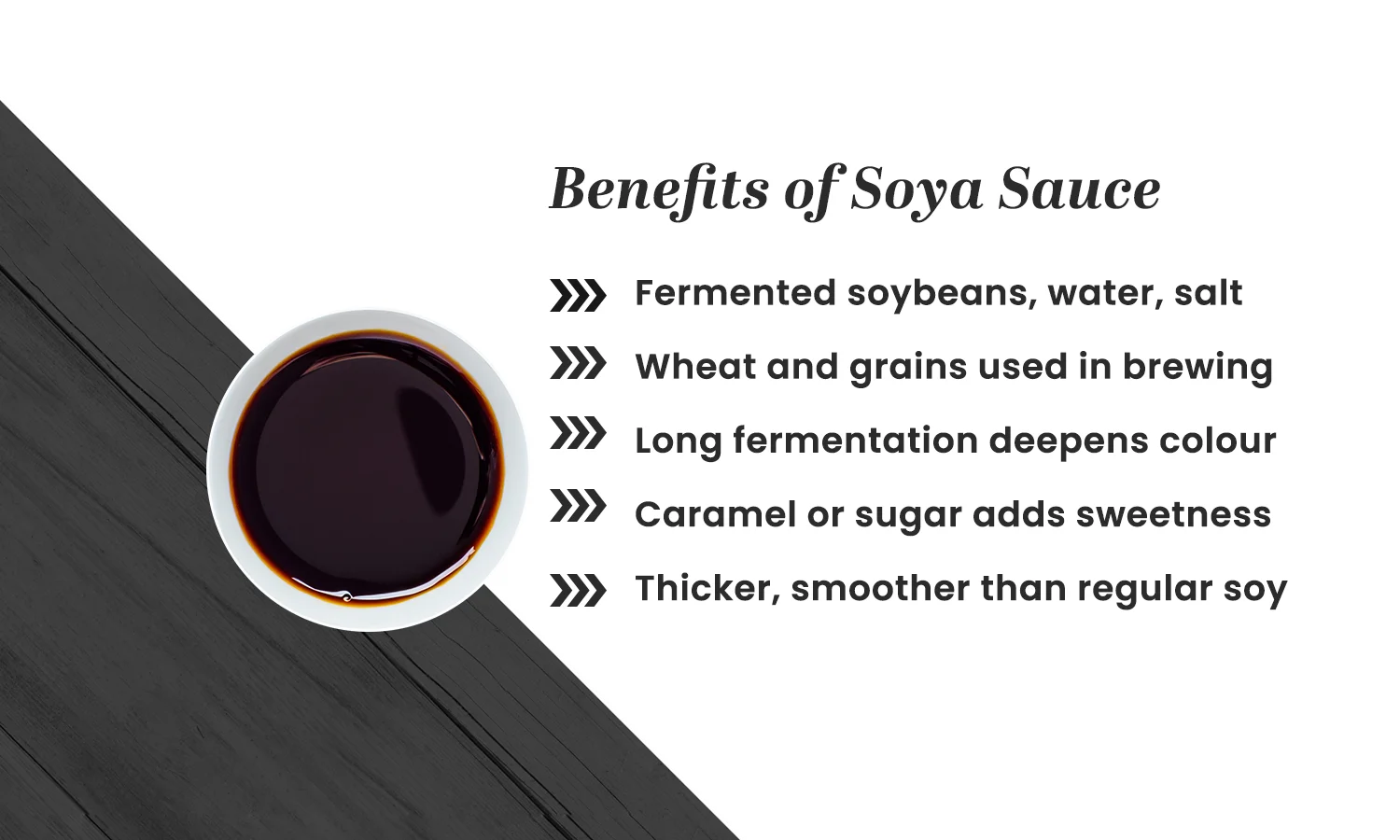
Dark soy sauce is made from fermented soybeans, water, salt, and grains such as wheat. These soya sauce ingredients are fermented and aged for a longer period, which deepens the flavour and colour.
In some versions, a small amount of natural caramel or sugar is added to enhance colour and give a mild sweetness. This process creates a sauce that is thicker and smoother than regular soy sauce, often referred to simply as dark soy in recipes.
What is Dark Sauce

How Does Dark Sauce Taste? Is It Sweet or Salty?

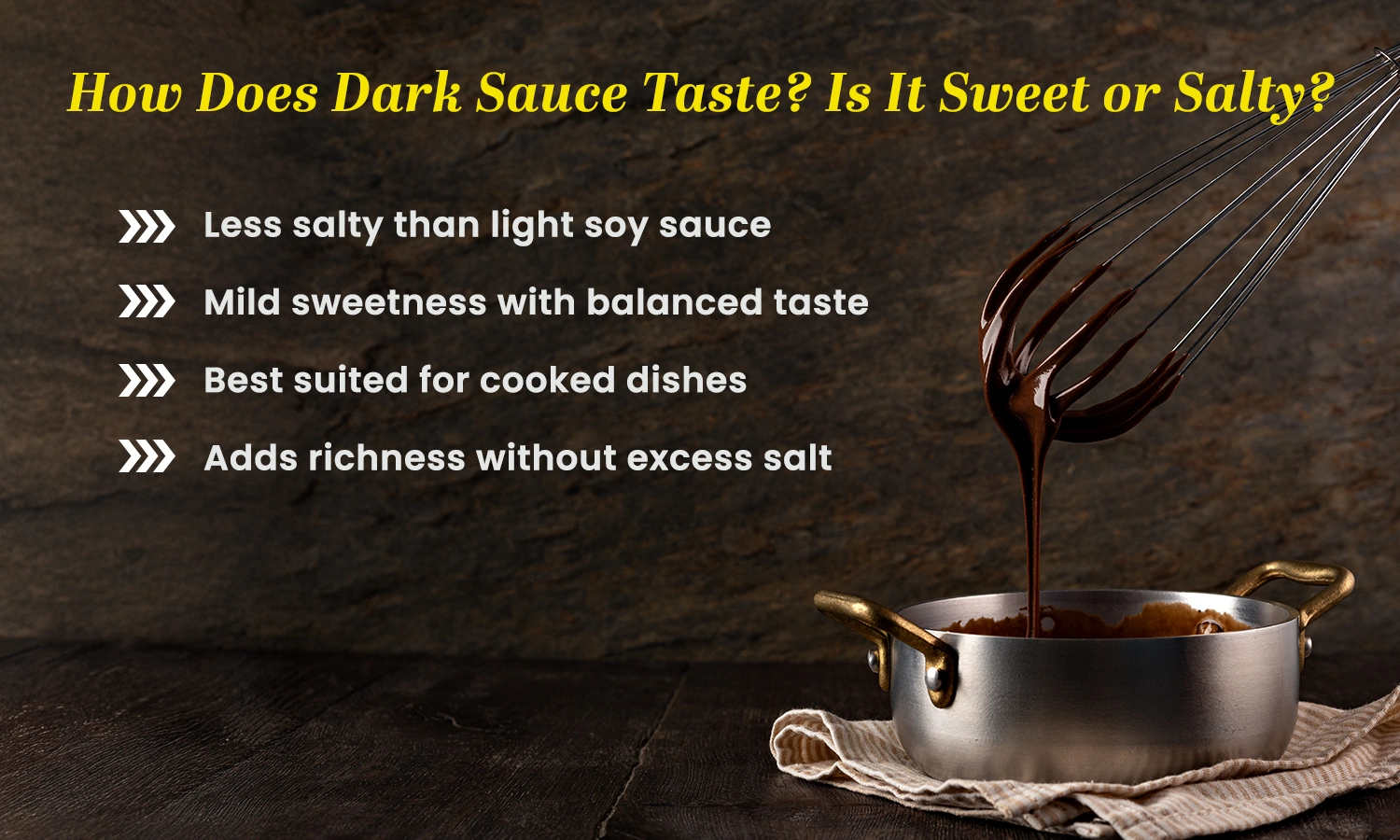
When people ask what is dark sauce, they often want to know about its taste. Dark sauce is less salty than light soy sauce and has a mild sweetness. This makes it suitable for cooked dishes rather than dipping.
It may sometimes feel like a sweet sauce, but the sweetness is subtle and balanced. Because of this, dark sauce adds richness without making the dish overly salty.

Uses of Dark Soy Sauce in Cooking

Understanding what dark sauce is becomes easier when you see how it is used. Dark soy sauce is mainly added to give colour and depth to food. Common uses include fried rice, noodles, gravies, and stir-fries. It is also used in slow-cooked dishes where colour develops over time.
Among black sauce varieties used in cooking, dark soy sauce is preferred because only a small amount can give a deep, appetising colour. Many cooks consider it the best dark soy option when presentation matters.

Is Dark Soy Sauce Healthy? Benefits, Price & Buying Tips

Dark soy sauce is generally low in fat, and when used in moderation, it fits into balanced cooking. Many people ask, is dark soy sauce healthy, and the answer depends on quantity and overall diet. Some brands also offer gluten free soy options for those with dietary restrictions.
There are also known dark soy sauce benefits, such as adding flavour without needing large amounts. When buying, check labels for ingredients and sodium levels. The black soy sauce price can vary depending on brand, packaging, and quality, so it’s better to choose based on usage rather than just cost. A good-quality sauce that suits your cooking style is always the best sauce choice.

Conclusion

Understanding what is dark sauce and how it helps you use it more confidently and correctly in everyday cooking. Its deep colour, mild sweetness, and thicker texture make it different from regular soy sauce and suitable for dishes where appearance and balance matter.
When used in moderation, dark sauce can enhance both flavour and presentation without overpowering the dish. Choosing a sauce that is consistently prepared and clearly labelled, such as those offered by SGR 777, can help home cooks rely on familiar ingredients that work well across regular cooking needs.

FAQs

Is dark sauce and soya sauce the same?Dark sauce is a type of soya sauce, but it is not the same as regular or light soya sauce. Dark sauce is thicker, less salty, and mainly used to add colour and depth rather than just seasoning.
How to make your sauce darker?To make a sauce darker, dark soy sauce is added during cooking rather than at the end. Longer cooking time and small amounts of caramelised sugar or jaggery can also deepen the colour naturally.
Why is soy sauce so dark?Soy sauce becomes dark due to fermentation, aging, and cooking. In dark soy sauce, longer fermentation and the addition of caramel or sugar give it a deeper brown or black colour.
Which soy sauce is best for fried rice?Dark soy sauce is best for fried rice when you want good colour and mild flavour. Light soy sauce adds saltiness, while dark sauce improves appearance and balance without overpowering the dish.
How do you know if it’s dark soy sauce?Dark soy sauce is thicker, darker in colour, and slightly sweet compared to regular soy sauce. The label usually mentions dark soy, black soy sauce, or indicates it is meant for colour and cooking.

Difference Between Light and Dark Soy Sauce: All You Need To Know

Introduction :

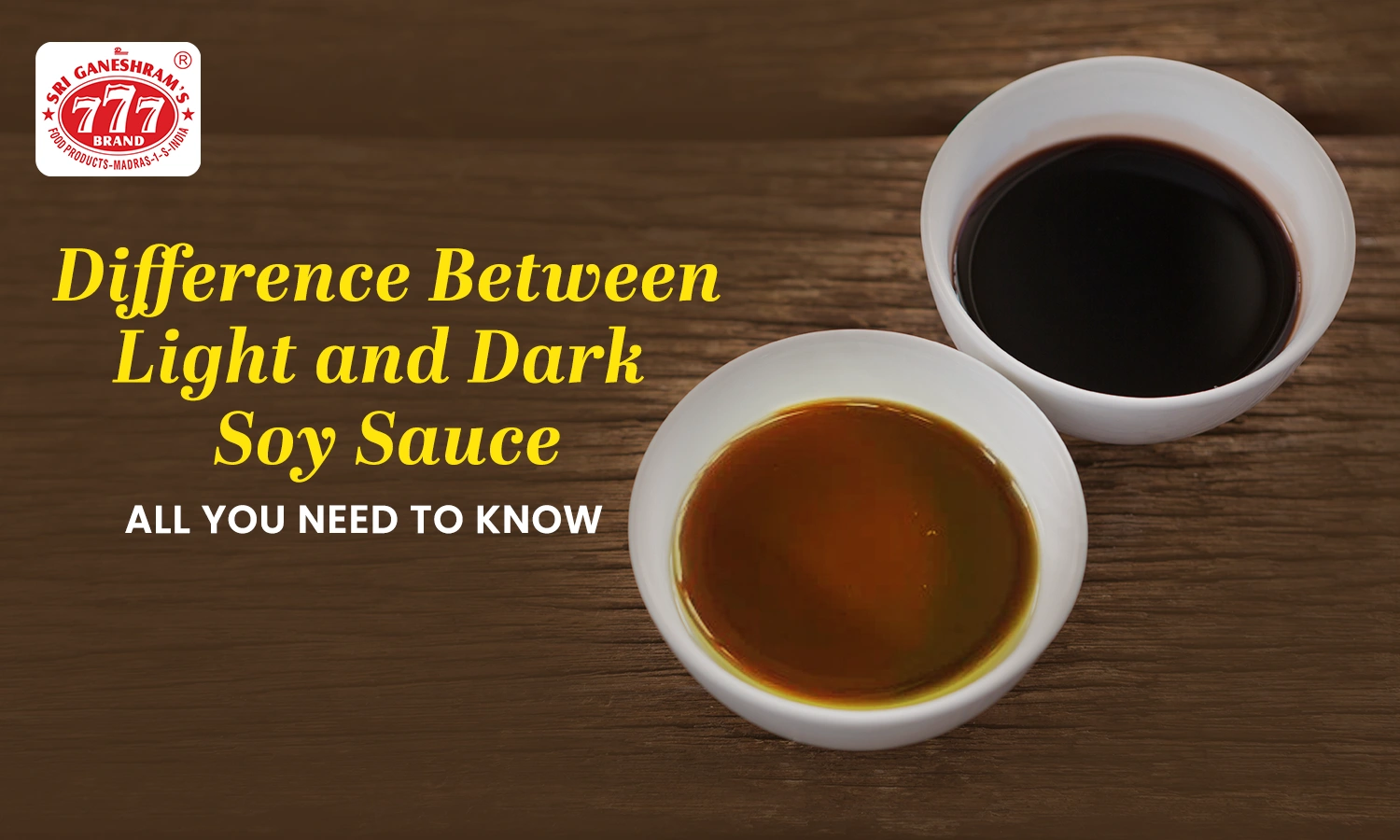
Soy sauce is a common ingredient in many kitchens today, especially for stir-fries, noodles, and fusion dishes. However, many people are unsure about the difference between light and dark soy sauce.While both come from fermented soybeans, they serve very different purposes in cooking. Using the wrong one can change the taste, colour, or balance of a dish. This blog explains what sets them apart, how they are made, and how to use each correctly. Light And Dark Soy Sauce

What Is Soy Sauce and How Is It Made?

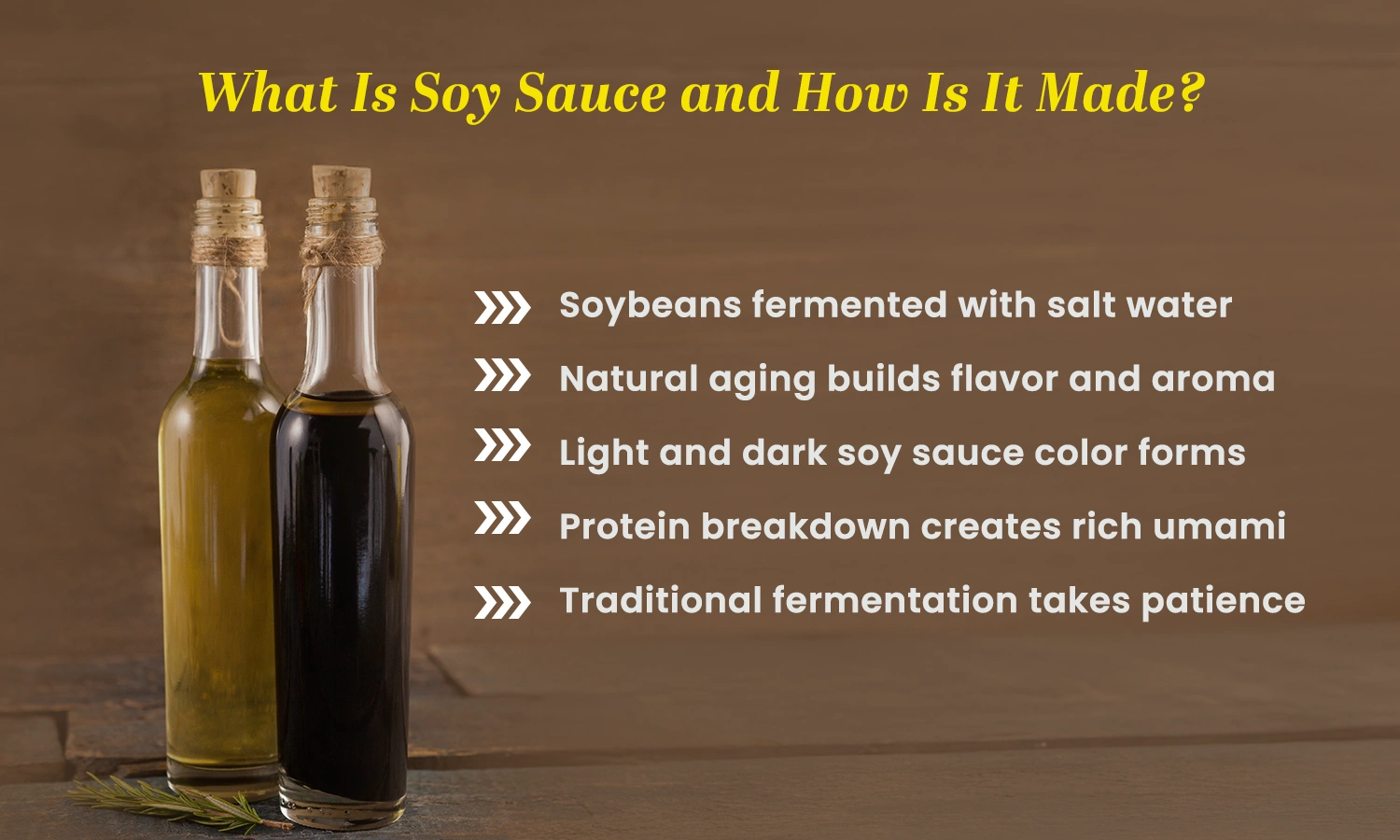
Soy sauce is a fermented liquid seasoning made primarily from soybeans, water, salt, and a fermenting culture. During fermentation, proteins break down and develop flavour and aroma. The length of fermentation and aging plays a major role in deciding the final taste, thickness, and soy sauce colour. This is why lighter and darker versions exist, even though they start from similar ingredients.

A Brief History of Soy Sauce

Soy sauce originated in East Asia over a thousand years ago as a way to preserve food and enhance flavour. Early versions were thick pastes, which later evolved into liquid sauces. Over time, regional preferences led to variations. Some regions favoured lighter, saltier sauces, while others developed darker, aged sauces. These traditions shaped what we now know as light and dark soy sauce.

Basic Ingredients and Brewing Process

The basic ingredients of soy sauce remain the same across types, but the brewing process differs. Shorter fermentation produces a lighter sauce, while longer aging results in darker sauces. Some dark varieties, often referred to as soy sauce black, may include a small amount of natural caramel for a deeper colour. These differences are about preparation, not quality, and determine how the sauce behaves in cooking.

Features of Light Soy Sauce

Light soy sauce is thin in texture and lighter brown in colour. It has a stronger salty taste and is mainly used for seasoning. Because it blends easily, it enhances flavour without darkening food. It is commonly used in fried rice, noodles, marinades, and quick stir-fries. Many everyday sauce uses rely on light soy sauce because it seasons dishes evenly.

Characteristics of Dark Soy Sauce

Dark soy sauce is thicker, darker, and less salty than light soy sauce. It is aged longer and often slightly sweet. Common dark soy sauce uses include braised vegetables, gravies, and noodles, where rich colour and depth are needed.
A small amount goes a long way, as it can easily overpower a dish if used excessively. Among dark sauce uses, adding colour is its main role.

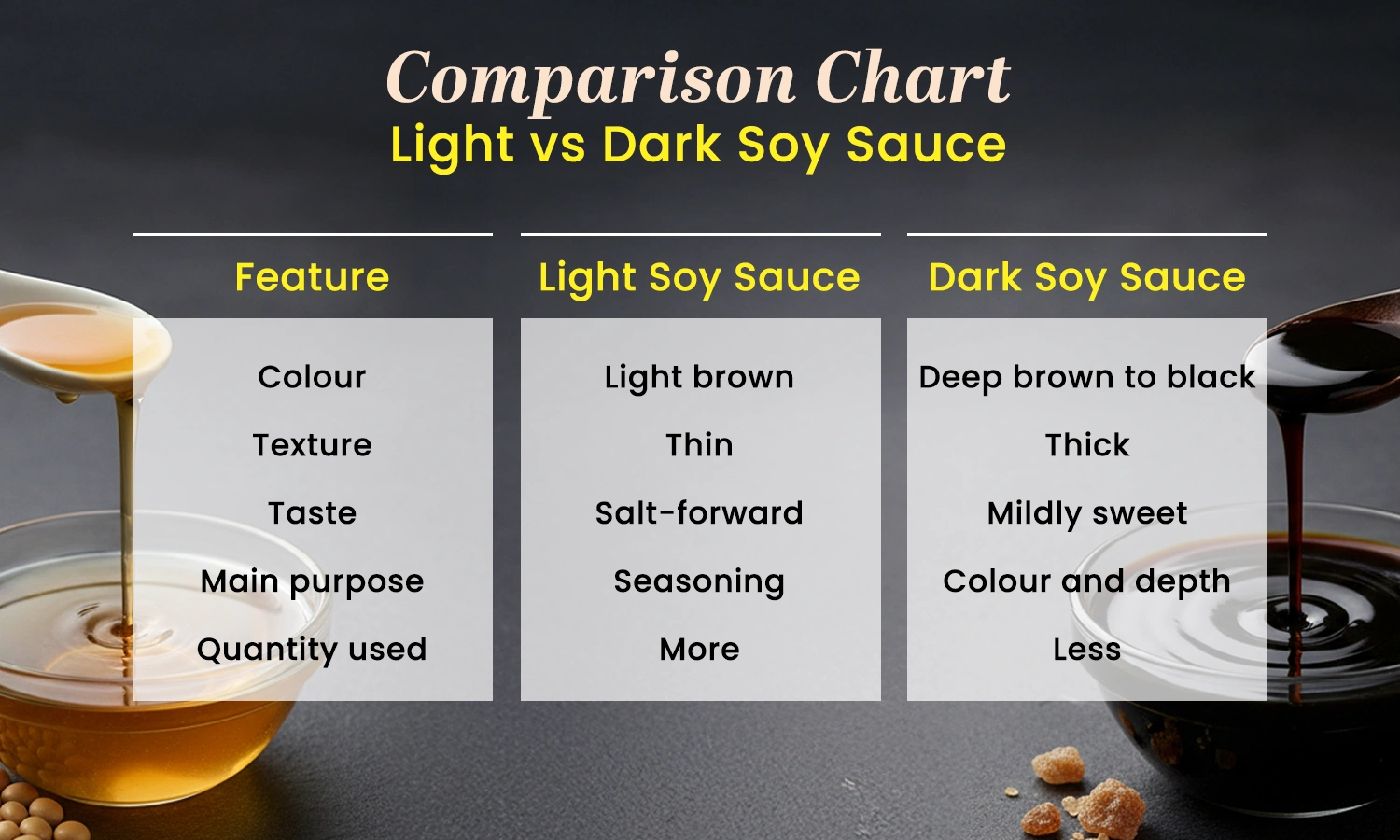
Comparison Chart: Light vs Dark Soy Sauce

Feature Light Soy Sauce Dark Soy Sauce
Colour Light brown Deep brown to black
Texture Thin Thick
Taste Salt-forward Mildly sweet
Main purpose Seasoning Colour and depth
Quantity used More Less

This clearly shows the dark soy sauce vs light soy sauce difference in everyday cooking.

How to Use Light and Dark Soy Sauce in Indian Cooking

In Indian-style Indo-Chinese cooking, both sauces are used together but in different roles. Light soy sauce is added early for seasoning fried rice, noodles, and marinades. Dark soy sauce is added later in small amounts to improve colour and richness.Choosing a good soy sauce depends on understanding this balance rather than using one type for everything. When used correctly, soy sauce can fit well into cooking styles that look for the healthiest soy sauce options through portion control.

Conclusion

Understanding the difference between light and dark soy sauce helps you cook with more confidence and accuracy. Each type has a specific role, and using them correctly improves flavour, appearance, and balance. When used thoughtfully and in moderation, soy sauce can be part of everyday cooking without complication. Brands like SGR 777, which focus on consistent preparation and clarity in sauce varieties, make it easier for home cooks to choose the right soy sauce for regular cooking needs.

Key Takeaways

  • Light and dark soy sauce have different cooking purposes
  • Light soy sauce seasons food without affecting the colour
  • Dark soy sauce adds colour and depth
  • Brewing time affects thickness and flavour
  • Using the right sauce improves taste balance

FAQs

Does soy sauce need to be refrigerated?After opening, soy sauce should be stored in a cool place. Refrigeration helps maintain flavour longer.
Is dark soy sauce healthier?Neither type is significantly healthier. Moderation matters more than the type used.
Which soy sauce is best in India?The best soy sauce depends on the dish, light for seasoning, dark for colour-rich cooking.
Is expired soy sauce okay?Expired soy sauce may lose quality and should be avoided.
How to store soy sauce once open?Keep it tightly closed and away from heat and sunlight.

Tomato Sauce Price in India: Rates, Factors & Buying Tips

Introduction :

The tomato sauce price in India can vary more than most people expect. While some bottles seem affordable at first glance, others cost noticeably more for the same quantity. This difference is influenced by factors such as ingredients, pack size, processing method, and where the sauce is purchased. From home kitchens to restaurants, tomato sauce is widely used, making it important to understand pricing trends before buying. This blog explains the current tomato sauce price range, what affects it, and how you can choose wisely without overspending.

What Is the Current Tomato Sauce Price in India?

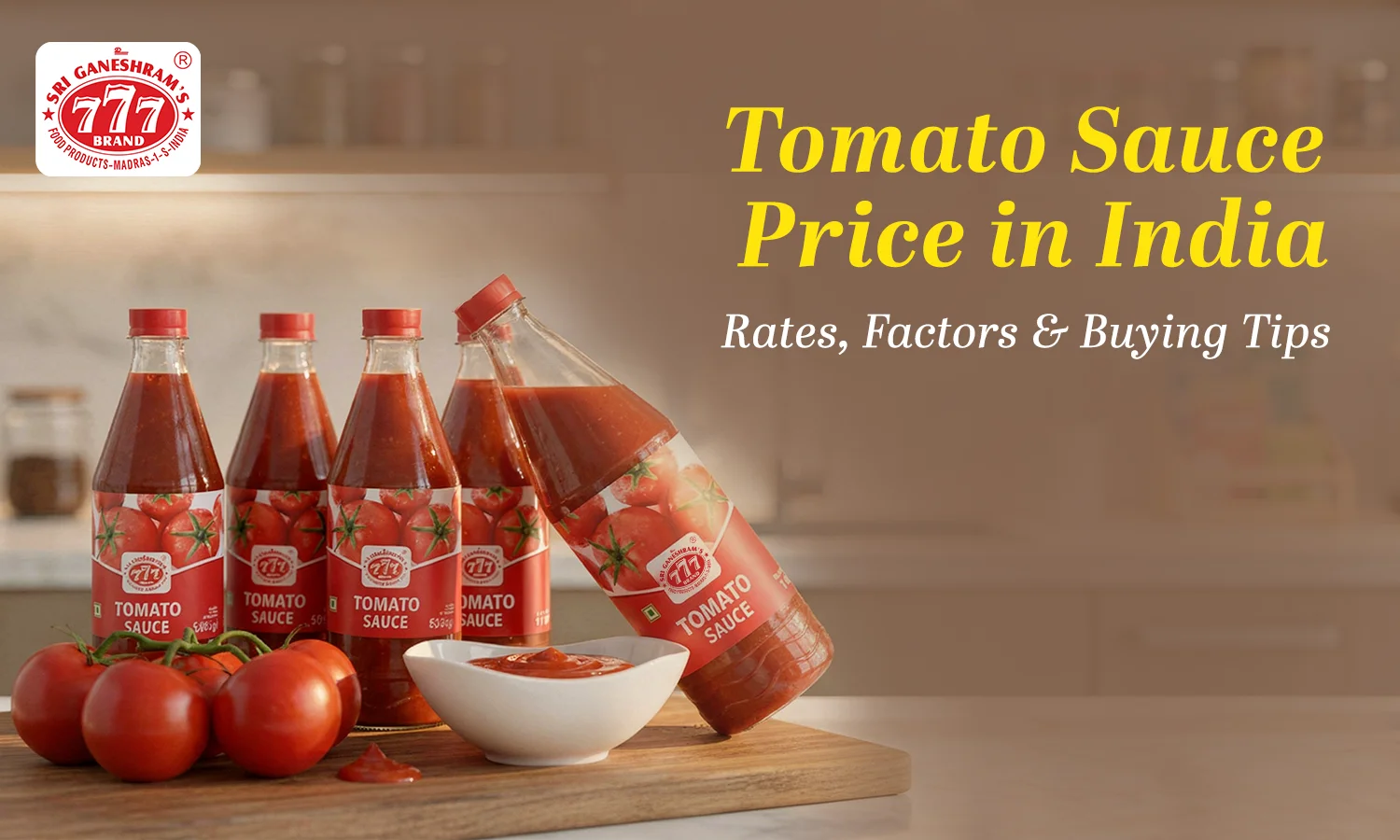
The price of tomato sauce in India usually falls within a broad range of ₹60 to ₹140 per kg. Smaller packs may look cheaper but often cost more per gram, while family packs, such as tomato sauce 1 kg, provide better value over time. The tomato sauce cost depends on tomato quality, thickness, and whether the product is positioned for everyday use or special dietary needs. In this general market range, SGR 777 tomato sauce (1 kg) is commonly priced around ₹90 to ₹110, placing it in a balanced mid-range suitable for regular household use. A quick look at any tomato sauce price list reveals that trusted mid-tier brands offer the most consistent value.

Tomato Sauce Price at Shops & Online Stores

Prices for tomato sauce can vary slightly between physical stores and online platforms. Local shops may reflect regional supply and demand, while online listings often show more consistent pricing and occasional offers.Buying tomato sauce online allows easy comparison of pack size, shelf life, and the general price of tomato sauce per kg. However, delivery charges should always be considered. Across channels, 777 Foods’ tomato sauce tends to maintain stable pricing, which helps households plan repeat purchases without frequent price fluctuations. Homemade Tomato Sauce vs Ready-Made Sauce

Homemade Tomato Sauce vs Ready-Made Sauce – What’s Cheaper?

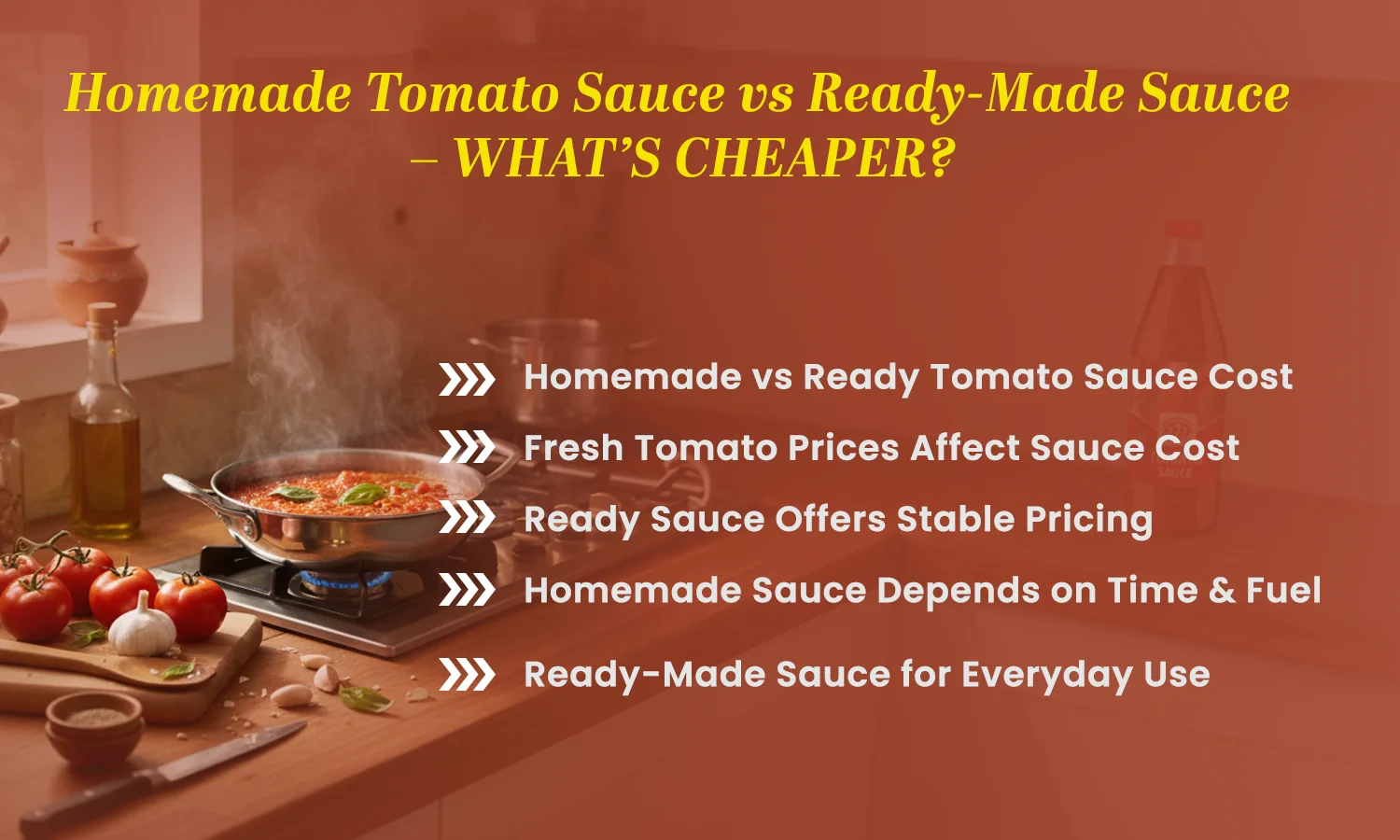
At first glance, homemade sauce may appear economical, but its cost depends heavily on fresh tomato prices, cooking fuel, and time. During seasons when tomato prices rise, homemade preparation may not always be cheaper.Ready-made sauce, on the other hand, offers predictable pricing, longer shelf life, and immediate use. For frequent users, a consistent, ready-made sauce like SGR 777 can often be more practical than preparing sauce repeatedly at home. Tomato Sauce Price in India

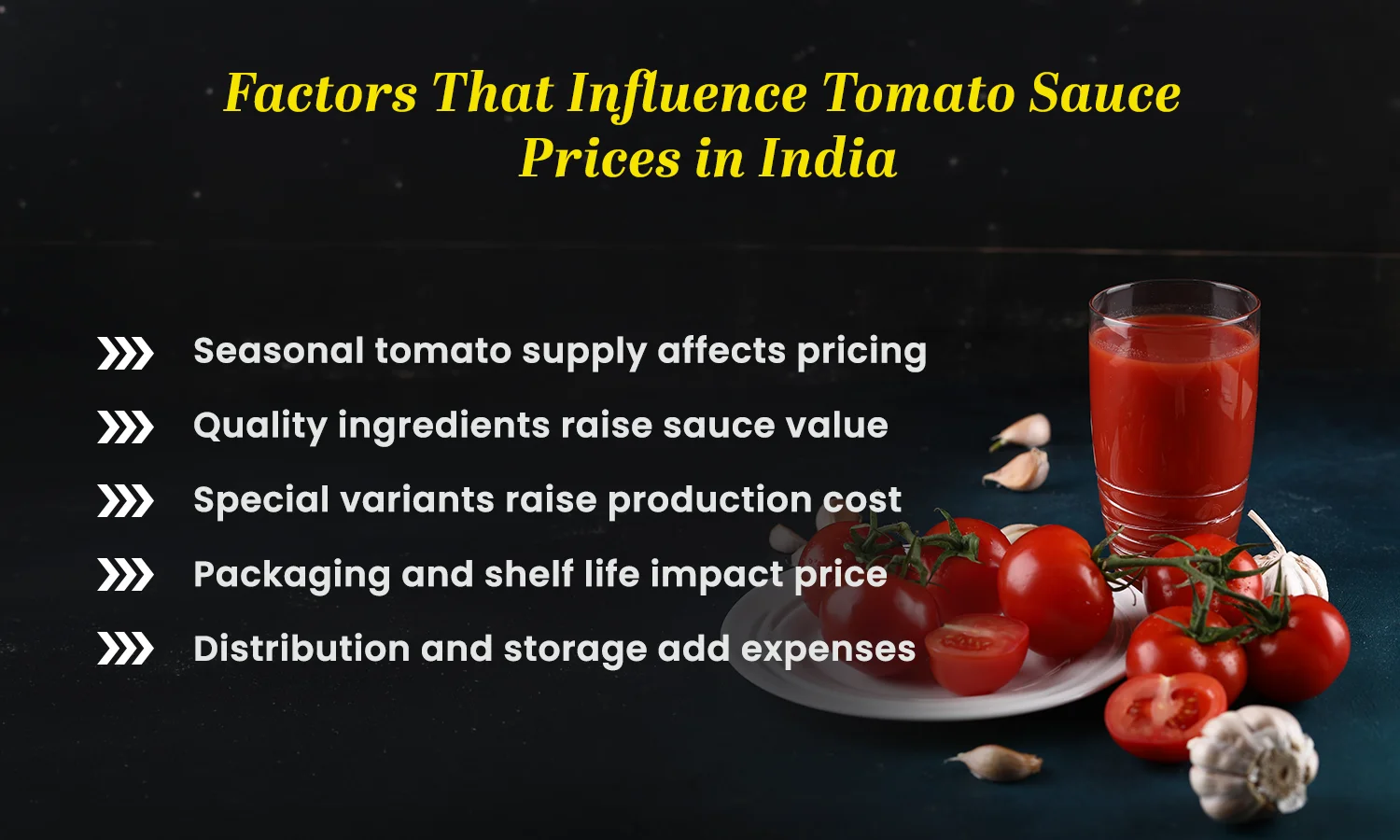
Factors That Influence Tomato Sauce Prices in India

Several factors directly affect the tomato sauce price. Tomato availability plays a major role, as seasonal shortages can increase costs. Processing methods, thickness, and ingredient quality also influence pricing. Special variants such as keto sauce or low-sugar options usually cost more due to specific formulation requirements. Packaging size, storage life, and distribution also contribute to price differences between products, which eventually determine the final tomato sauce bottle price.

Buying Tips to Save on Tomato Sauce in India

To get better value, compare prices based on quantity rather than bottle size. Bulk packs usually reduce the cost per use. Check ingredient labels to avoid paying extra for unnecessary additives. Some buyers also compare sauce pricing with the tomato ketchup price, as both are used in similar ways.
Understanding a basic tomato sauce recipe can also help you judge whether a product’s price matches its ingredients and quality. Buying directly from official brand sources helps avoid inflated prices.

Conclusion

Understanding the tomato sauce price range helps you make informed choices instead of relying only on label pricing. Market rates vary based on ingredients, quantity, and processing, but focusing on value rather than the cheapest option leads to better long-term satisfaction.
Within the common price range, 777 Foods offers tomato sauce that balances consistency, quality, and everyday affordability, making it a practical choice for regular cooking needs.

Key Takeaways

  • Tomato sauce price in India generally ranges from ₹60 to ₹140 per kg
  • Larger packs offer better long-term value
  • Online prices are easier to compare, but may include delivery costs
  • Homemade and packaged sauces serve different needs
  • 777 Foods’ tomato sauce is typically priced around ₹90-₹110 for 1 kg

FAQs

Why is tomato sauce expensive?Prices increase due to tomato costs, processing quality, packaging, and storage. What you see as the tomato sauce bottle price also accounts for secure food-grade packaging materials.
What is the shelf life of tomato sauce?

Unopened bottles last several months; opened ones should be refrigerated and used within weeks.

What are the benefits of tomato sauce?

It adds flavour and convenience while retaining nutrients from tomatoes.

Is tomato sauce high in sugar?

Some varieties contain added sugar. Always check labels if sugar intake is a concern. You can also review the ingredients list alongside the tomato ketchup price to see why pricing differs between sauces and ketchups.

Can I convert tomato paste to tomato sauce?

Yes. Adding water, seasoning, and cooking can turn paste into sauce.

Everything About Black Soy Sauce: How it is Made and Recipes

Introduction

Black Soy Sauce is widely known for its deep colour and rich taste, making it a staple in many Asian kitchens. Unlike lighter sauces that focus mainly on saltiness, black soy sauce is used to add depth, colour, and mild sweetness to dishes.
It is especially popular in stir-fries, noodles, and slow-cooked recipes where appearance and balance matter. This blog explains what black soy sauce is, how it is made, how it differs from other sauces, and how you can use it correctly at home.

What Is Black Soy Sauce?

Black Soy Sauce is a darker and thicker variety of soy sauce that undergoes longer aging. It is often referred to as soy sauce black due to its deep brown to almost black colour. Compared to regular soy sauce, it is less salty and slightly sweet, which makes it suitable for cooked dishes rather than dipping.
Among different dark sauces, black soy sauce is mainly chosen for its ability to enhance colour and richness without overpowering the dish.
Black Soy Sauce

How Dark Soy Sauce Is Made?

The preparation of Black Soy Sauce begins with fermenting soybeans along with grains like wheat. After fermentation, the liquid is aged for a longer period than lighter sauces. This extended aging process helps develop its dark colour and smoother taste.
In some traditional methods, natural caramel or molasses is added to deepen the colour and introduce mild sweetness. This process sets it apart from other sauce for cooking options and makes it ideal for dishes that require longer cooking times. The result is a sauce that coats food evenly and blends well into gravies and marinades.

Difference Between Black Soy Sauce & Light Soy Sauce

Understanding the Dark sauce vs light sauce difference helps avoid common cooking mistakes. Light soy sauce is thinner, lighter in colour, and saltier, making it suitable for seasoning and quick cooking.
Black Soy Sauce, on the other hand, is thicker, darker, and used mainly for colour and depth. While both fall under common sauce uses, black soy sauce is better for braised dishes, noodles, and fried rice, where appearance and mild sweetness enhance the final dish.
Black Soy Sauce

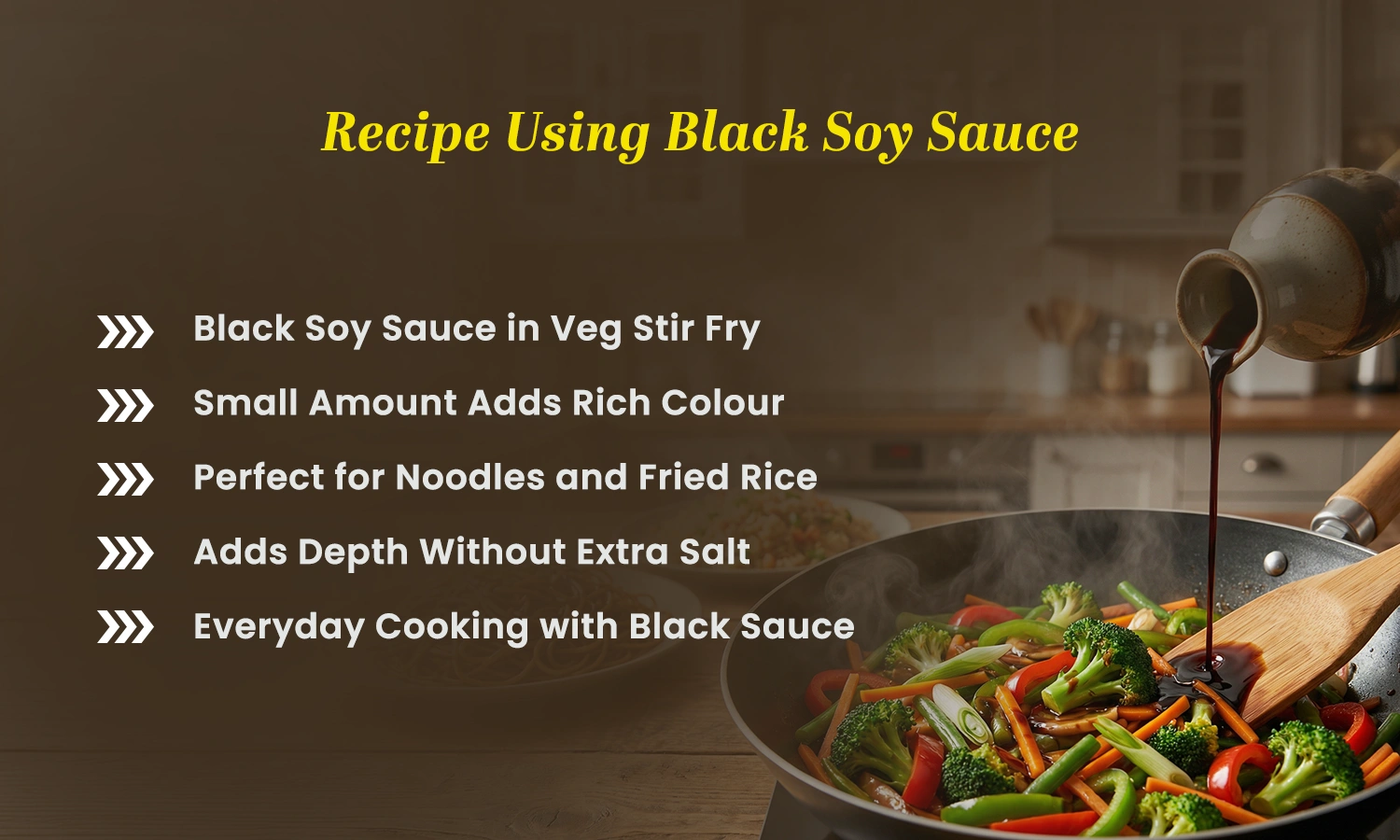
Recipe Using Black Soy Sauce

One of the easiest ways to use Black Soy Sauce is in a vegetable stir-fry. Heat oil in a pan, add garlic and vegetables, and stir-fry on high heat. Add a small amount of black soy sauce along with regular seasoning and cook briefly. This simple method highlights popular black sauce uses, where even a small quantity can transform the dish.
Another option is using it in noodles or fried rice. Add black soy sauce towards the end of cooking to give the dish a rich colour without making it too salty. These recipes show how black soy sauce fits naturally into everyday sauce uses while keeping flavours balanced.

Conclusion

Black Soy Sauce plays a unique role in cooking by enhancing colour, balance, and depth rather than simply adding salt. Knowing how it is made and how it differs from lighter sauces helps you use it more effectively in everyday dishes.
When chosen carefully and used in moderation, it can fit well into cooking routines that focus on flavour while still considering whether a sauce is good for health as part of a balanced diet. Brands like SGR 777, which focus on consistency and quality, make it easier for home cooks to rely on familiar sauces that work well across regular cooking needs.

Key Takeaways

  • Black Soy Sauce is thicker and darker than regular soy sauce
  • It is used mainly for colour and richness, not strong saltiness
  • Longer aging gives it a smooth, slightly sweet taste
  • Best suited for stir-fries, noodles, and slow-cooked dishes
  • Small quantities are enough for noticeable results

FAQs

Is dark soy sauce safe to eat?Yes. When used in moderation as part of cooked meals, dark soy sauce is safe to consume.
Why do people say to avoid soy?Some people avoid soy due to allergies or personal dietary choices, not because soy products are harmful for everyone.
Why do people use dark soy sauce?People use it mainly to add colour, depth, and mild sweetness to cooked dishes.
Is dark soy sauce bad for cholesterol?Dark soy sauce is generally low in fat. When used in moderation, it can fit into diets that include healthy sauces and low fat sauces.
What is another name for dark soy sauce?Dark soy sauce is commonly known as black soy sauce in many regions.