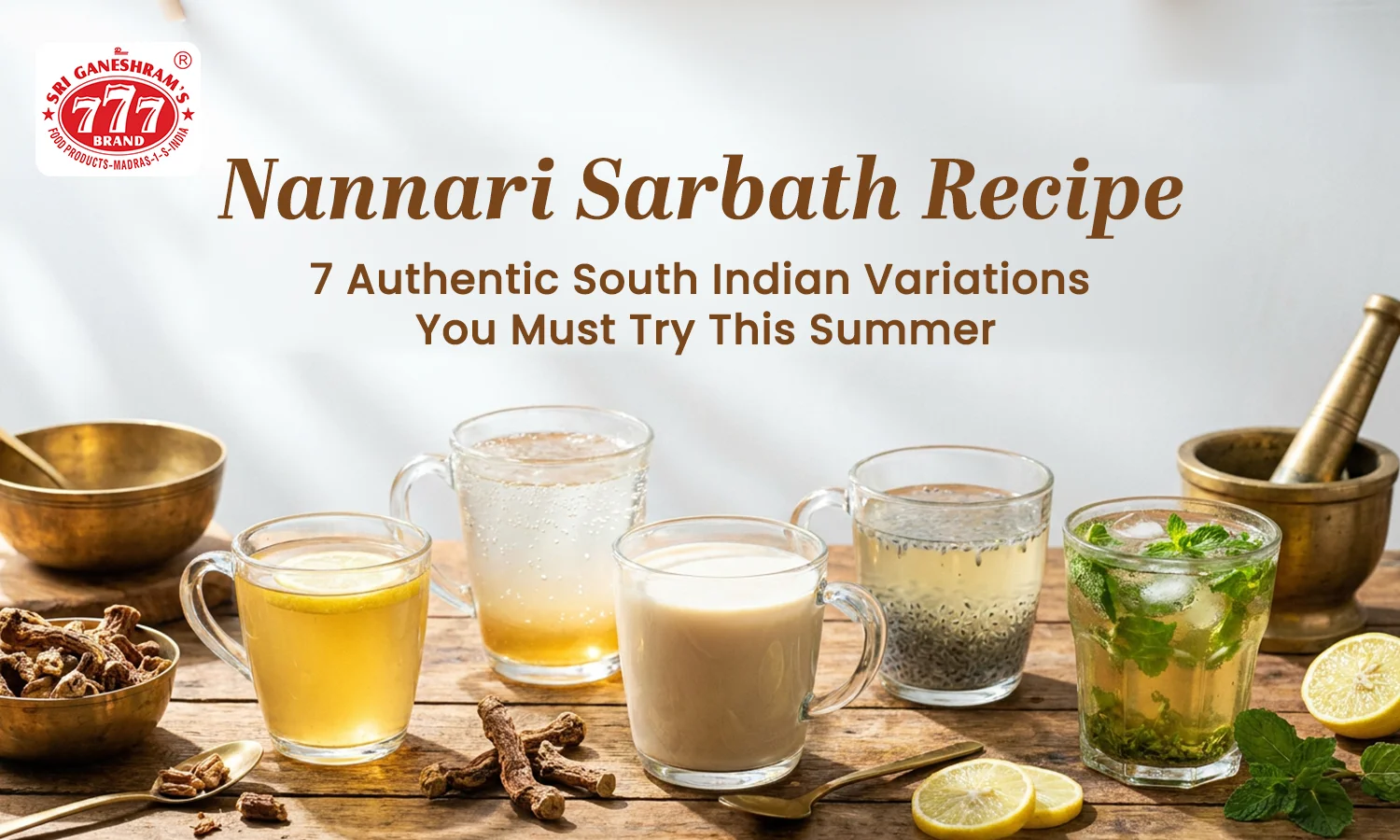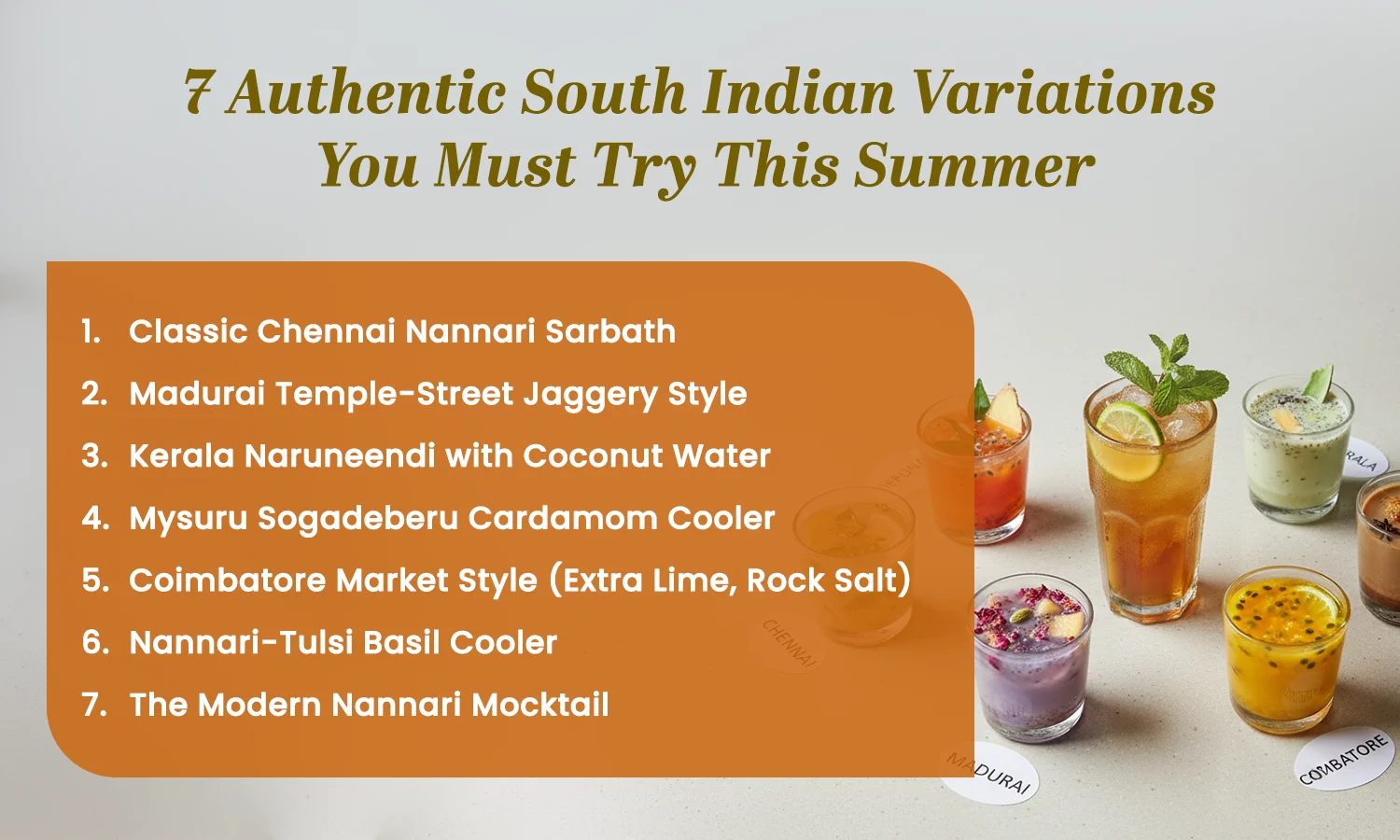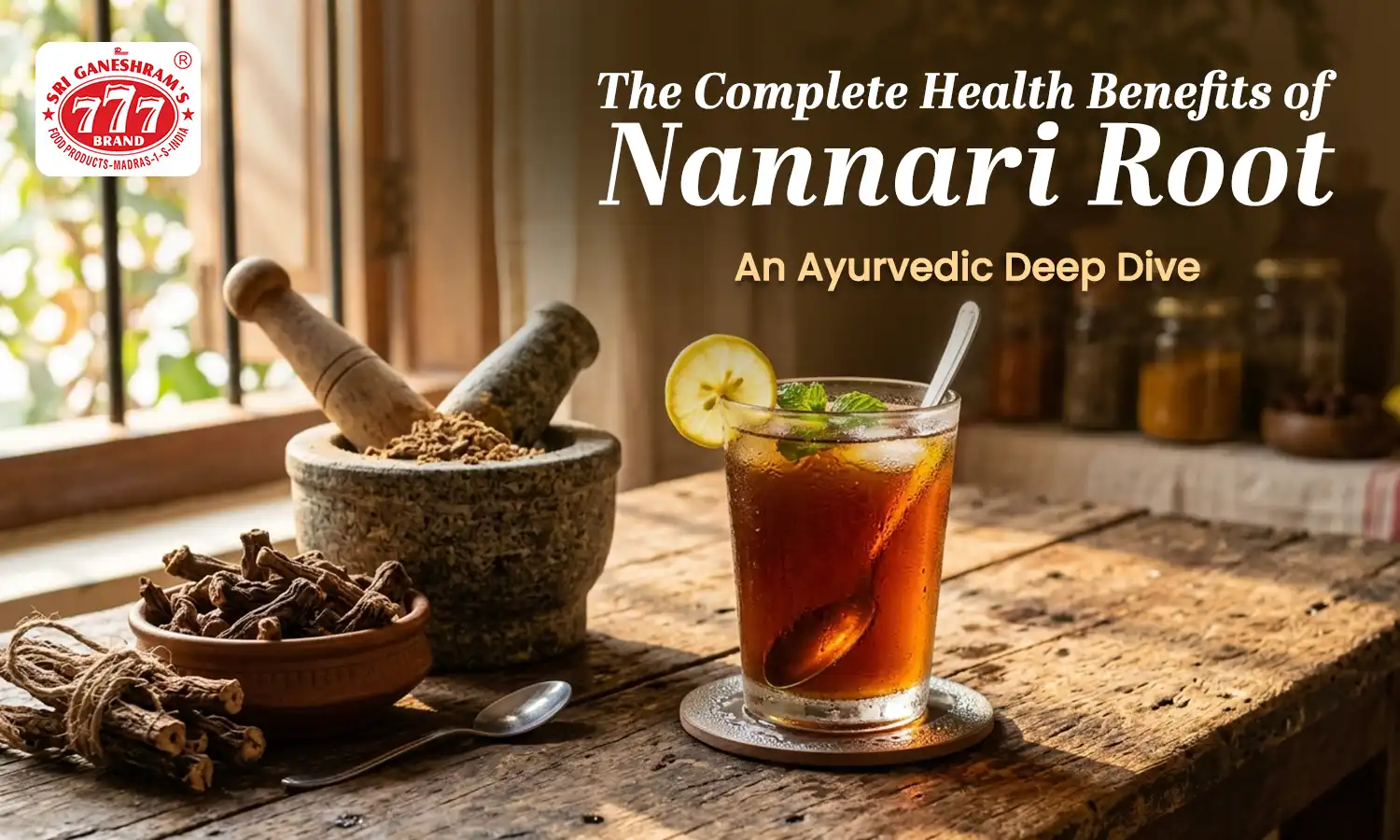
Most Indian households know the nannari root only by its finished form: a bottle of fragrant, mahogany-coloured syrup on the kitchen shelf. Few realise the root itself is one of the most documented herbs in Indian traditional medicine, with more than two thousand years of clinical use in Ayurveda, Siddha, and Unani. This is a ground-up look at what the root actually does, why it works, and how the nannari sharbat benefits you feel in a single glass comes from real chemistry, not folklore.
What’s the Root, Let’s Go Botanically:
Nannari is the South Indian name for Hemidesmus indicus, Indian Sarsaparilla. In Sanskrit, it is anantamool, ‘the eternal root’. In Malayalam, naruneendi. Nannari in Kannada is sogadeberu. It is a slender twining shrub with slim red roots and a distinctive vanilla-and-woodsmoke aroma. The part used is almost exclusively the root, either as a decoction, a powder, or an extract, which is what you know as nannari syrup now.
What’s The Ayurvedic Classification For This?
Classical Ayurvedic texts classify nannari root as sheeta virya (cooling potency), madhura rasa (sweet taste), and pitta-pacifying. In plain language: it cools, it nourishes, and it calms the body’s heat-driven disorders. Ayurveda further designates it a rakta shodhana dravya, a blood purifier, which is the reason it features in so many traditional skin-health formulations. 
What Are The Ten Documented Benefits Of Nannari?
Drawing on Ayurvedic practice and contemporary phytochemical research, including a 2026
A review in the Journal of Ethnopharmacology that catalogued over forty bioactive compounds in the root, the nannari syrup benefits span a remarkable range:
1: Natural body coolant regulates internal temperature and prevents heat stroke.
2: Blood purifier, supports liver detoxification, and clearer skin.
3. Digestive aid, relieves acidity, improves appetite, and eases constipation.4. Urinary comfort, mild diuretic, calms urinary burning sensations.
5. Anti-inflammatory support, saponins, and flavonoids reduce systemic inflammation.
6. Antioxidant profile, rich in phenolic glycosides that neutralise free radicals.
7. Skin clarification, traditionally applied for heat boils, prickly heat, and acne.8. Hydration support encourages fluid intake without the harms of aerated drinks.
9. Mild immunomodulation, seasonal resilience during summer transitions.
10. Post-fever recovery, Siddha tradition uses it in convalescence tonics.
How the Root Works Inside the Body?
The active compounds responsible for most of the benefits above include saponins (mildly diuretic, anti-inflammatory), flavonoids (antioxidant, vascular-protective), and a distinctive volatile called 2-hydroxy-4-methoxybenzaldehyde, the molecule responsible for the root’s signature vanilla note. Together, they explain why a single glass of a nannari drink can feel so restorative within thirty minutes on a hot afternoon.
Who Should Be Cautious of Having Nannari?
Nannari is a gentle herb with a wide safety margin. That said, moderate caution is recommended for people on diabetes medication (because of mild glucose-modulating effects), pregnant women (consult an Ayurvedic physician), and anyone on prescription diuretics. For most healthy adults, a daily glass of nannari sarbath through summer is both safe and beneficial.
Why Quality Matters for Pure Nannari Syrup?
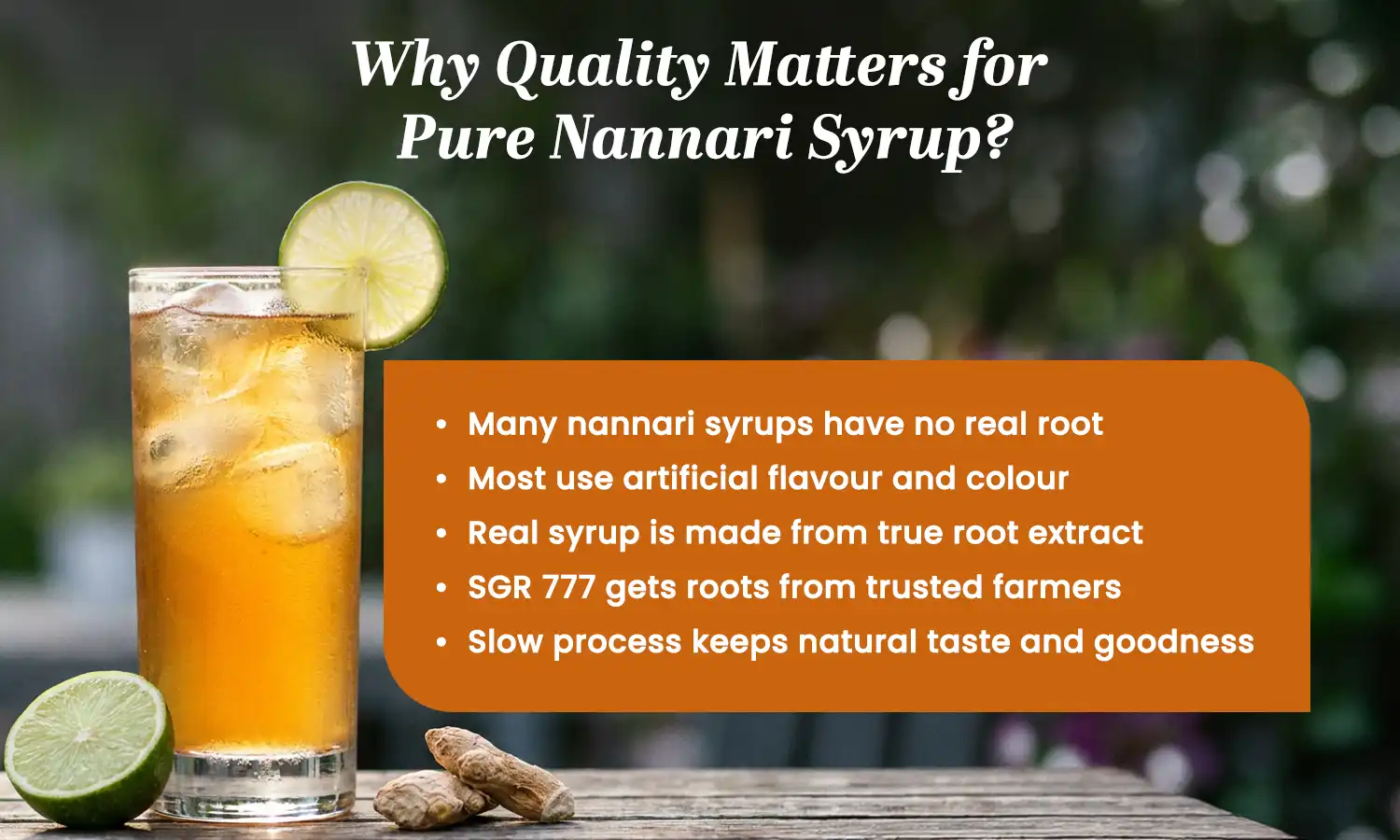
Here is a truth the FMCG market doesn’t advertise enough: a large share of products labelled as nannari syrup contain minimal actual root. Most use synthetic sarsaparilla essence and caramel colour.
When you ask what nannari syrup is, the honest answer should always be: a concentrated extract of the real nannari root. SGR 777 Foods builds its Nannari Syrup that way, sourcing the root from verified farmer networks in Tamil Nadu and Andhra Pradesh and slowly extracting it to preserve the full aroma and bioactive profile.
How to Consume Nannari Regularly?
Can you consume Nannari regularly? Yes, if you have to go through this intense summer heat. The simplest and most enjoyable route is a daily glass of traditional nannari sarbath through summer: 2–3 tbsp SGR 777 Nannari Syrup, water, lime, optional sabja. For more targeted Ayurvedic use, powder or decoction, you need to consult a qualified practitioner. The daily glass is what most Indian families have relied on for generations.
FAQs
Is nannari root the same as regular sarsaparilla?No. Hemidesmus indicus (Indian Sarsaparilla / nannari) and Smilax species (regular Sarsaparilla) look similar and taste similar, but belong to different genera with distinct chemistry.
Can nannari root be consumed daily?
Yes, in moderate beverage form, such as nannari sarbath, daily summer consumption is safe for most healthy adults.
How long before I feel the benefits?Cooling effects are usually felt within 20–30 minutes. Blood-purifying and digestive benefits become noticeable over 2–4 weeks of regular summer consumption.