How do you reduce salt content in pickles?

How Do You Reduce Salt Content in Pickles?

If you love pickles but worry about your sodium intake, you’re not alone. Many people are now asking how to manage the salt content in pickles without compromising taste. The good news? You don’t have to give up your favorite tangy treat.

Salt plays a vital role in the pickling process—preserving the food, enhancing flavor, and maintaining texture. But high levels of sodium are a concern, especially for those watching their heart health. This blog explores ways to reduce the salt content in pickles, offer salt substitutes, and even help you make your own low salt pickles at home. salt content in pickles
Why Are Pickles So High in Salt?

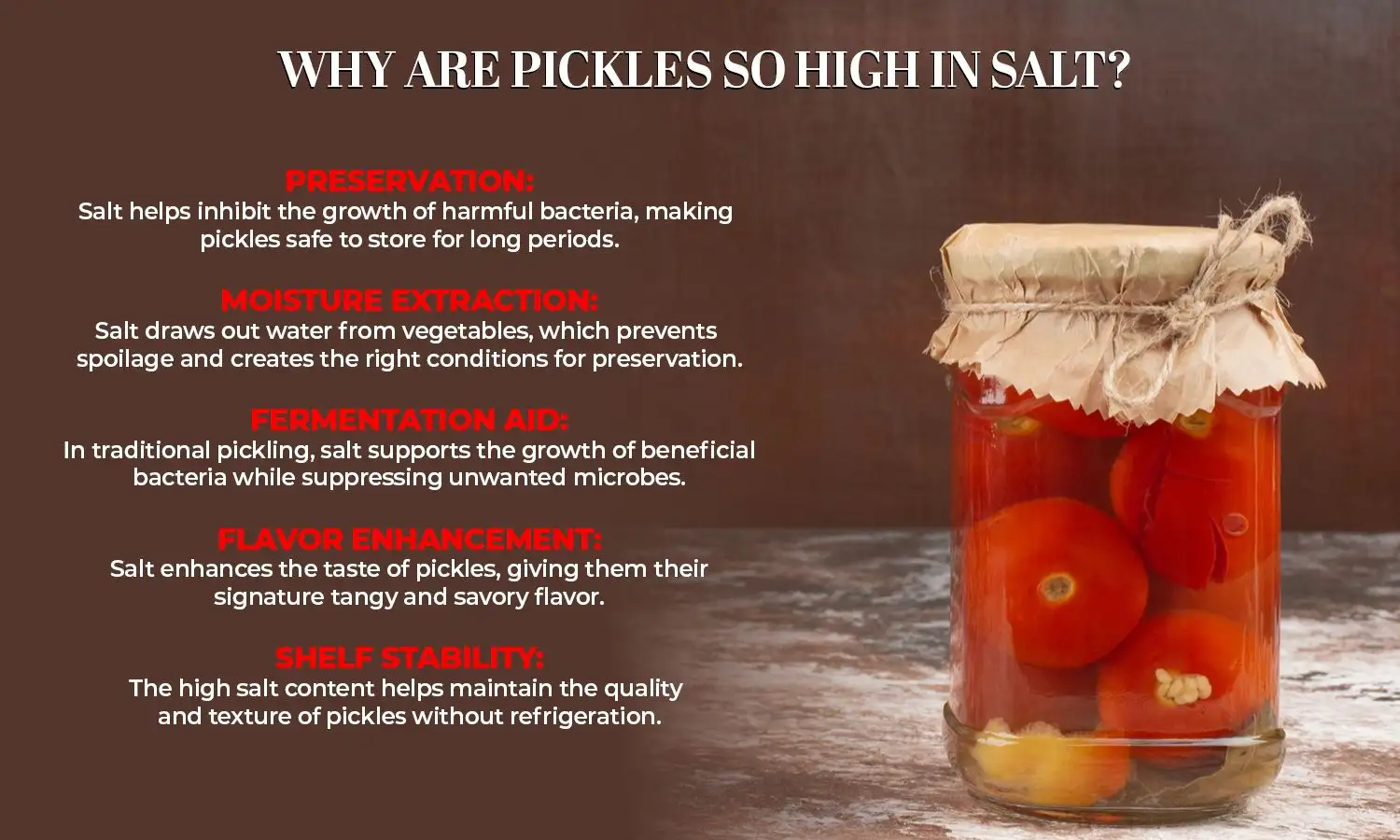
The naturally high salt content in pickles exists because salt helps inhibit bacterial growth and draws moisture from vegetables. This process is essential for traditional fermentation and safe storage.
But it comes at a cost. A single serving of store-bought pickles can contain over 800 mg of sodium, making it problematic for those needing pickles for high blood pressure or a low salt diet. That’s why alternatives and modifications are becoming more popular.

Can You Make Pickles with Less Salt and Still Keep Them Fresh?

Yes. You can reduce the salt content in pickles without sacrificing food safety if you adjust the preservation method. Traditional fermentation depends heavily on salt, but quick-pickling with vinegar allows for flexibility.

Here are three common techniques:

  • Refrigerate your jars after sealing.
  • Consume them within 2–4 weeks instead of storing long-term.

These methods are ideal for people seeking low sodium pickles or those looking to create salt content in homemade pickles that suits their health goals. salt content in pickles
What Can You Use Instead of Salt in Pickles?

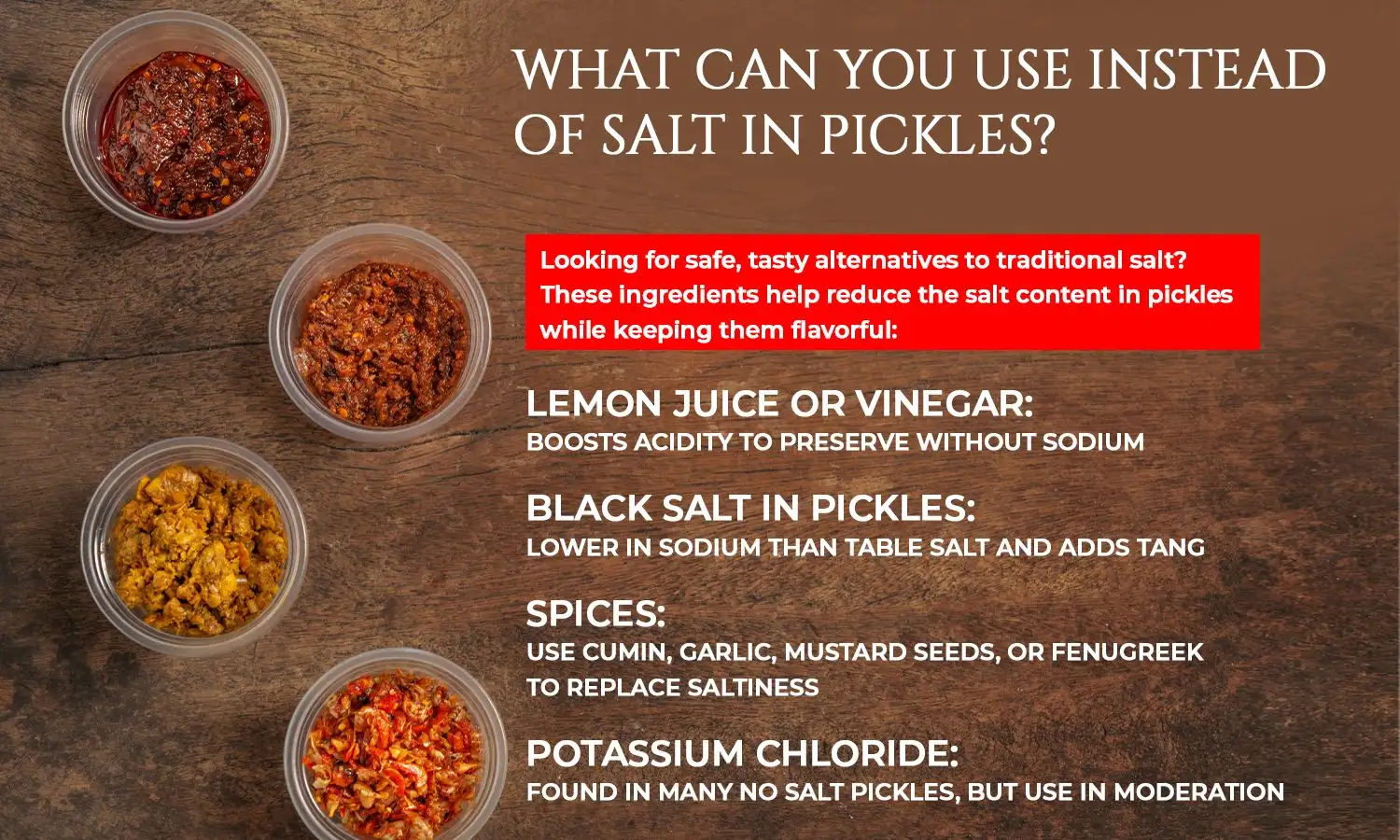
Looking for safe, tasty alternatives to traditional salt? These ingredients help reduce the salt content in pickles while keeping them flavorful:

  • Lemon juice or vinegar: Boosts acidity to preserve without sodium
  • Black salt in pickles: Lower in sodium than table salt and adds tang
  • Spices: Use cumin, garlic, mustard seeds, or fenugreek to replace saltiness
  • Potassium chloride: Found in many no salt pickles, but use in moderation

These are especially helpful when using salt-free pickling methods or exploring how to make pickles without salt entirely. salt content in pickles

Will Low-Salt Pickles Still Taste Good?

Looking for safe, tasty alternatives to traditional salt? These ingredients help reduce the salt content in pickles while keeping them flavorful:

  • Sugar or jaggery for balance
  • Fresh herbs like dill, mint, or curry leaves
  • Sour elements like tamarind or vinegar to boost flavor

Some say that pickles without brine or with light brine actually taste fresher and brighter. Modern heart-healthy pickles are proof that low sodium doesn’t mean low flavor.

Where Can You Find Low-Sodium Pickles or How Can You Make Them at Home?

If you’re not ready to DIY, you can shop for best low salt pickles online. Look for labels that mention:

  • Reduced sodium pickles
  • Pickles with less salt
  • Pickles for low salt diet

If you prefer homemade, start with a low salt pickle recipe. Use less than 1 tsp per cup of water, and rely on vinegar or lemon juice for preservation. Always refrigerate and consume within 2 weeks.

Not sure how much salt is in pickles? Most store brands list sodium on the label—check per 100g for accurate comparison.

Conclusion

Managing the salt content in pickles is all about smart substitutions and process control. Whether you’re avoiding sodium for health reasons or simply experimenting with new flavors, there are plenty of ways to enjoy pickles without guilt.

By exploring salt substitutes for pickles, using acidic bases, and making short-term batches, you can control how much salt ends up in your jar. There’s no need to sacrifice taste—or your health.

Key Takeaways

  • The salt content in pickles can be reduced with vinegar, lemon, and spice-based flavoring.
  • Use low sodium pickles or make your own no salt pickles at home.
  • Alternatives like black salt in pickles offer lower sodium without losing flavor.
  • Refrigeration and short-term storage can replace traditional salt preservation.
  • Use trusted salt-free pickling methods for heart-healthy alternatives.

FAQs

Are pickles high in salt?Yes. Many commercial pickles have high sodium levels. Choose pickles with less salt or go for low salt pickle recipes instead.
What foods are high in sodium?Apart from pickles, processed foods, cured meats, instant noodles, and canned soups are sodium-heavy.
Why much salt is added to pickles?Salt preserves the pickles and adds flavor by drawing out moisture and preventing bacterial growth—key to preserving pickles with salt.
Are Indian pickles good for health?They can be if eaten in moderation. Choose low salt pickles or make your own versions using less oil and salt.
Are pickles good for you?Yes, in moderation. They offer antioxidants and probiotics but opt for pickles for high blood pressure if you’re watching sodium.

How Do You Fix Overly Salty Pickles?

Summary

Explains why pickles turn too salty (wrong brine ratio, evaporation, over-pickling, reused brine) and offers five fixes: cold-water soaking for 30 minutes to 2 hours, diluting brine with water and vinegar 1:1, adding low-sodium vegetables, re-pickling in fresh brine for 24–48 hours, and balancing with vinegar or sugar. Lists clear signs when a batch should be discarded.

Pickles are meant to be tangy and flavorful—not so salty that your mouth puckers. But what if you’ve overdone it? How do you fix overly salty pickles without tossing the entire batch? Fortunately, there are proven, easy methods to bring balance back.

Whether you’re dealing with fermented pickles too salty or you accidentally added too much pickling salt, you’re not alone. Many home picklers run into this issue. The good news? It’s fixable—often without compromising texture or flavor.

Let’s look at why it happens and how to fix overly salty pickles at home with simple kitchen techniques.

Fix Overly Salty Pickles

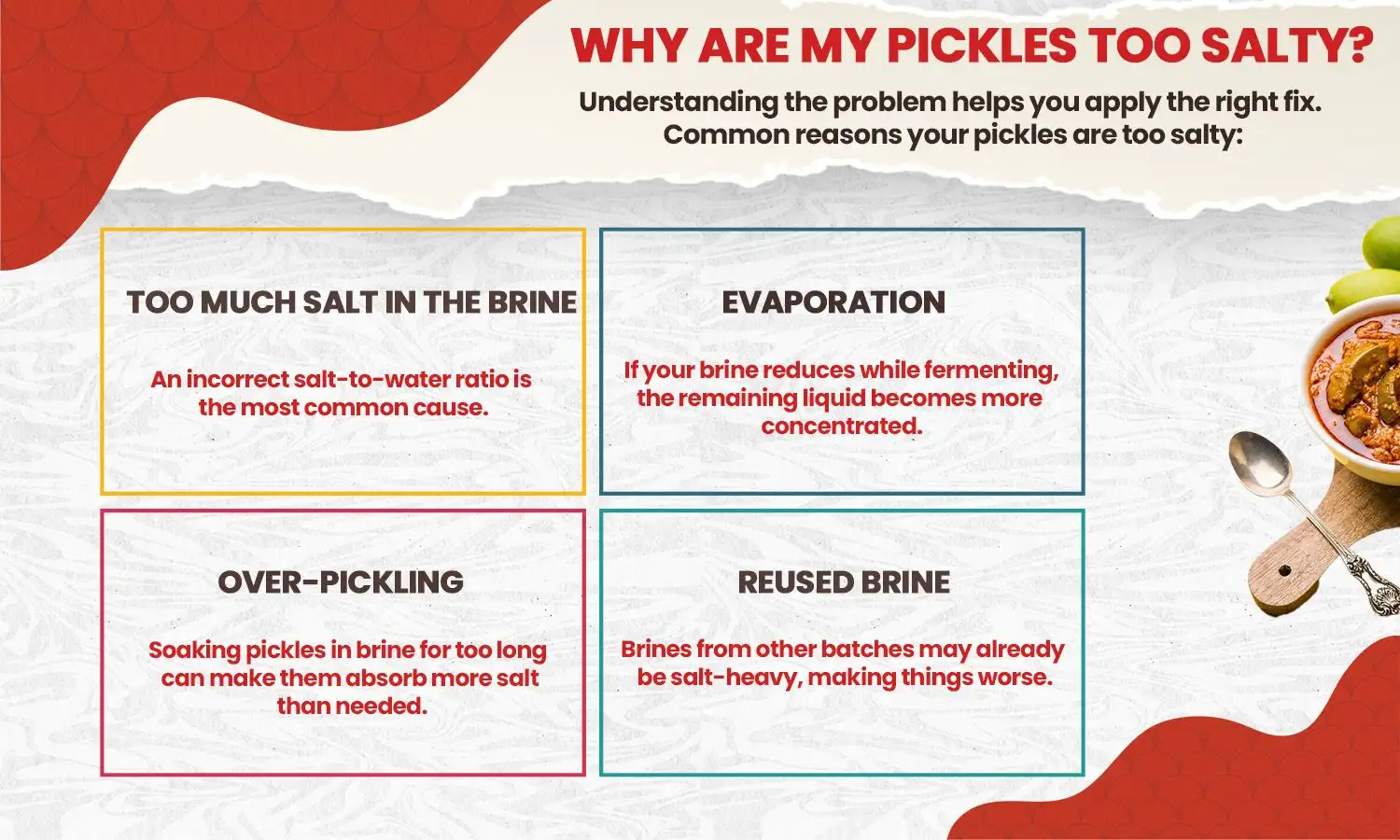
Why Are My Pickles Too Salty?

Understanding the problem helps you apply the right fix. Common reasons your pickles are too salty:

  • Too much salt in the brine: An incorrect salt-to-water ratio is the most common cause.
  • Evaporation: If your brine reduces while fermenting, the remaining liquid becomes more concentrated.
  • Over-pickling: Soaking pickles in brine for too long can make them absorb more salt than needed.
  • Reused brine: Brines from other batches may already be salt-heavy, making things worse.

So if your
pickle brine is too salty, adjusting the ingredients or dilution is your first line of correction.So if your pickle brine is too salty, adjusting the ingredients or dilution is your first line of correction.

Simple Methods to Fix Overly Salty Pickles

Here’s how to fix overly salty pickles using five effective, kitchen-tested methods:

1. Soaking in Cold Water

The easiest method is soaking pickles to reduce salt. Submerge them in cold water for 30 minutes to 2 hours, then taste-test. Water draws out excess salt from the surface.

2. Dilute the Brine

Remove a portion of your salty brine and replace it with a mix of distilled water and pickling vinegar (1:1 ratio). This reduces overall saltiness without stripping flavor.

3. Add Low-Sodium Vegetables

Chop low-sodium vegetables like carrots or cucumbers and add them to the salty pickle jar. Over time, these absorb excess salt, rebalancing the batch.

4. Re-pickle in Fresh Brine

If your pickles are still fresh and crisp, discard the old brine and prepare a low salt pickles solution with correct proportions. Let the pickles sit in the new brine for 24–48 hours.

5. Balance with Vinegar or Sugar

If desalting isn’t working, try rebalancing flavors. A splash of pickling vinegar or a pinch of sugar can cut through the salty profile without diluting texture.
All these approaches can also be used to fix overly salty homemade pickles made in small batches.

Using Vinegar to Balance the Salt in Your Pickles

Vinegar is a great tool to fix salt-heavy pickles. It adds acidity, which balances out excessive salinity. Use white pickling vinegar (5% acidity or higher) and start small—just 1–2 tablespoons per jar.
This method is especially useful when making reduced sodium pickles, as vinegar enhances the sharpness that salt usually delivers. It’s also helpful for correcting fermented pickles without restarting the process entirely.

How Long Should You Soak Salty Pickles to Fix Them?

If you’re soaking in water, start with 30-minute intervals and taste-test after each round. You can go up to 2–3 hours, but anything beyond may affect texture. For very salty batches, an overnight soak may be needed—but be prepared for slight flavor loss.
If you’re using vinegar or rebrining, allow the pickles to sit in the new solution for 24–48 hours in the refrigerator. This allows the flavors to rebalance evenly.
This is a core step when dealing with desalting pickles or adjusting brines in low sodium pickles. Fix Overly Salty Pickles

When to Throw Out Overly Salty Pickles

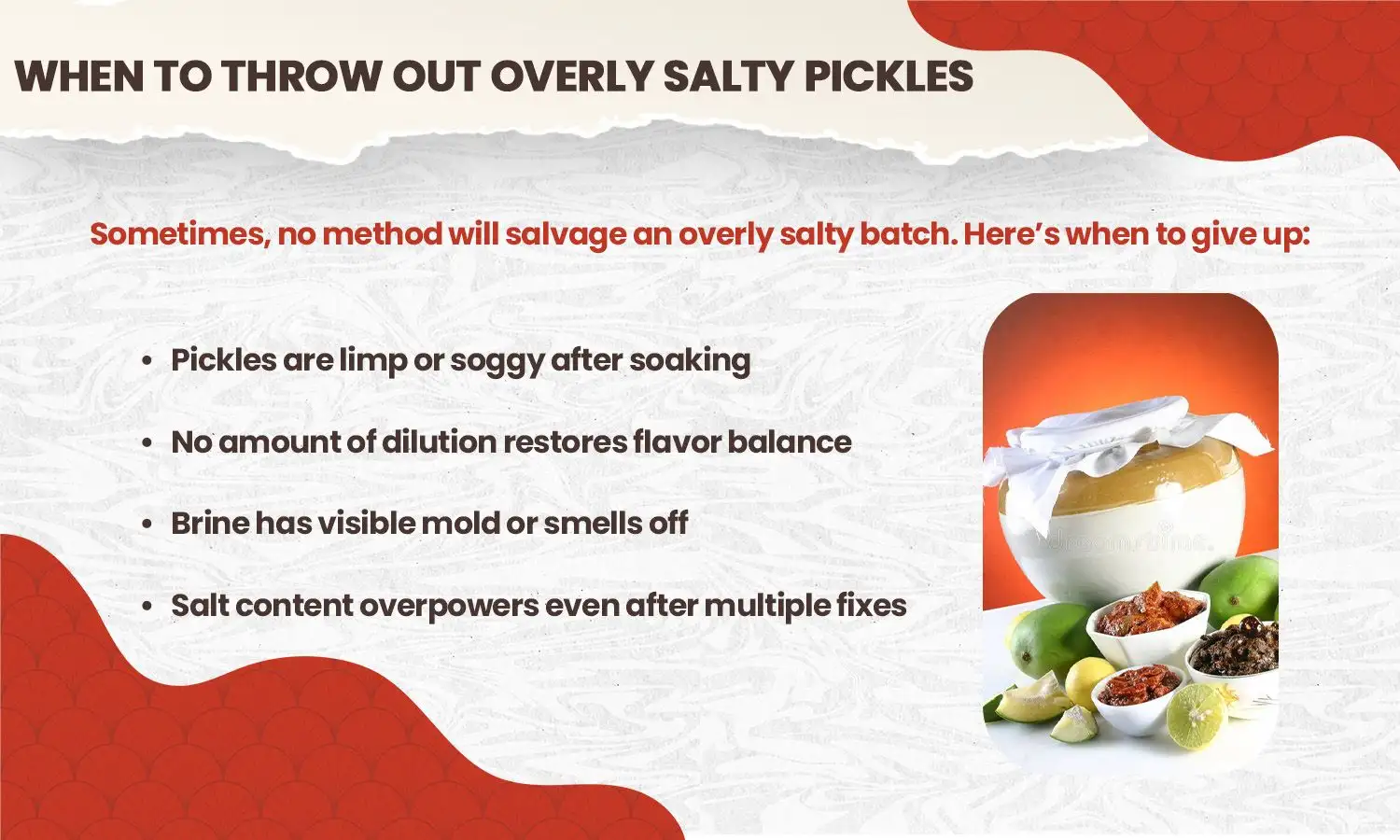
Sometimes, no method will salvage an overly salty batch. Here’s when to give up:

  • Pickles are limp or soggy after soaking
  • No amount of dilution restores flavor balance
  • Brine has visible mold or smells off
  • Salt content overpowers even after multiple fixes

Don’t keep force-fixing a batch that’s lost its texture or safety. It’s better to start over with a new batch using a reduced sodium pickles recipe from the beginning.

Conclusion

So, how do you fix overly salty pickles? It starts with understanding the cause—then choosing the right solution, whether it’s soaking, rebrining, or rebalancing with vinegar. Every method above has been used by home cooks and pro picklers alike.

Avoid future mistakes by measuring your pickling salt accurately, checking brine levels during fermentation, and tasting early. And if DIY doesn’t work, go for trusted brands offering well-balanced, low sodium pickles—like 777 SGR Foods.

Key Takeaways

  • You can fix overly salty pickles by soaking, rebrining, or balancing with vinegar.
  • Use cold water to draw out excess salt for mild cases.
  • Re-pickling in a new brine helps in serious cases.
  • Always monitor brine strength to avoid this issue in future.
  • Switch to low salt pickles or reduced sodium pickles if salt is a health concern.

FAQs

Are Salty Pickles Good for You?In moderation, yes—they offer probiotics and crunch. But too much sodium may lead to high blood pressure and bloating.
How Long Do Salt Pickles Last?Salt-cured pickles last 2–3 months in the fridge. Always check for spoilage or softening.
Is Vinegar or Salt Better for Pickles?Both have different functions. Vinegar preserves acidity, while salt controls moisture and fermentation.
Are Pickles OK to Eat Everyday?Occasionally is fine. But high sodium can be harmful if consumed daily—opt for low sodium pickles if you snack on them regularly.
What Happens if You Eat Too Much Pickle Salt?You may experience dehydration, bloating, or increased blood pressure. Stick to small portions and rinse if needed.