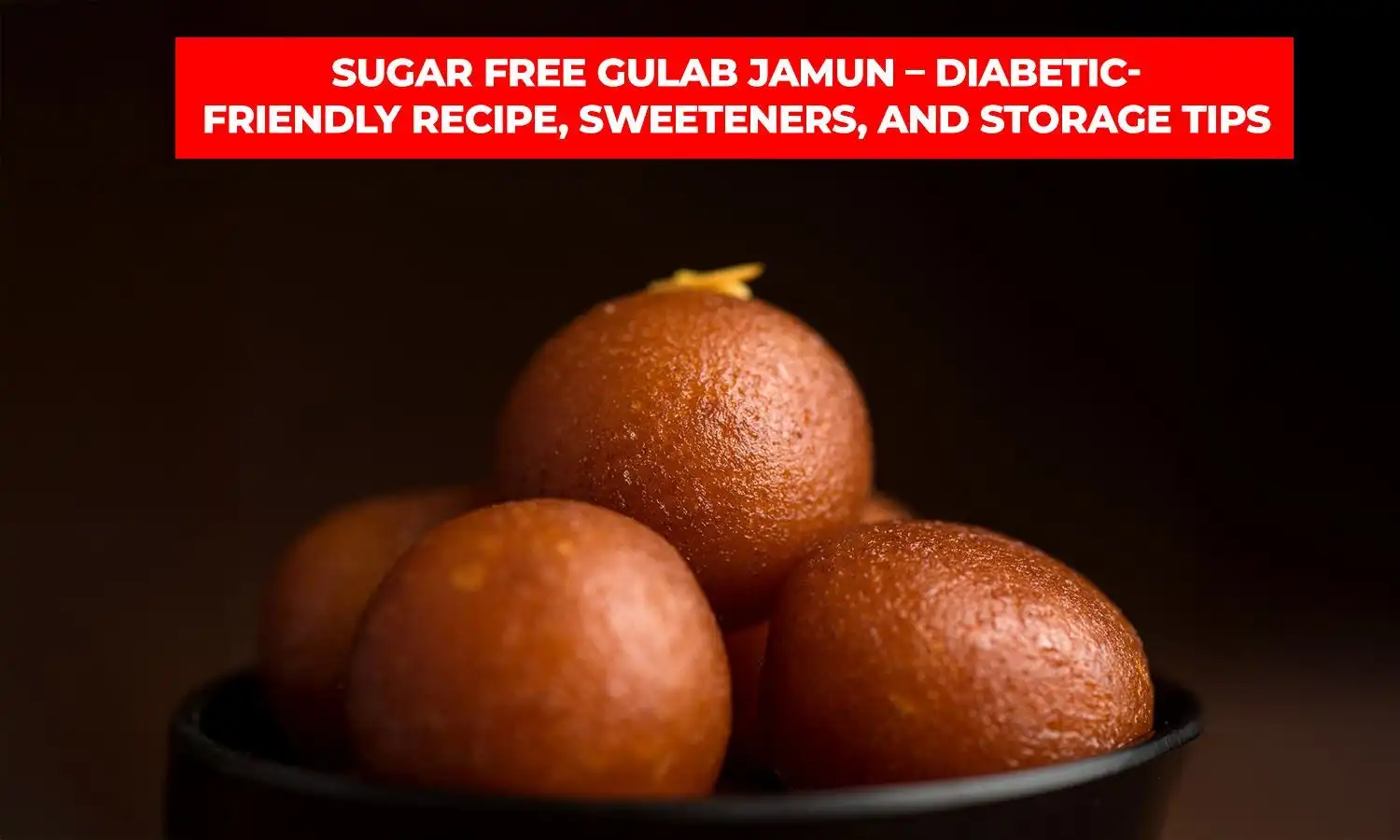
Sugar Free Gulab Jamun – Diabetic-Friendly Recipe, Sweeteners, and Storage Tips

Introduction

Every Indian celebration feels incomplete without a plate of soft, melt-in-the-mouth gulab jamun. Traditionally soaked in sugar syrup, this beloved dessert can feel like a forbidden indulgence for people with diabetes or those cutting down on sugar. That’s where sugar free gulab jamun steps in—allowing you to enjoy the same rich taste and texture without worrying about excess sugar.
At 777 Foods, we believe that everyone should get to enjoy the joy of authentic sweets, no matter their dietary needs. Whether you’re a home cook experimenting in your kitchen or someone looking for healthier festive treats, a gulab jamun without sugar can be the perfect choice.

What is Sugar Free Gulab Jamun?

Sugar free gulab jamun is a healthier version of the classic sweet, where the sugar syrup is replaced with a low-calorie or natural sweetener. The base remains the same—soft dough balls made from gulab jamun mix or gulab jamun powder—but the syrup is prepared using sweeteners like stevia, erythritol, or monk fruit extract.

The idea is to retain the authentic texture and flavor while making it suitable as a gulab jamun for diabetics. Unlike regular syrup, which can cause a spike in blood sugar, the sugar-free syrup provides sweetness without the excess calories. This makes it perfect for festive occasions where health-conscious choices are needed.
sugar free gulab jamun

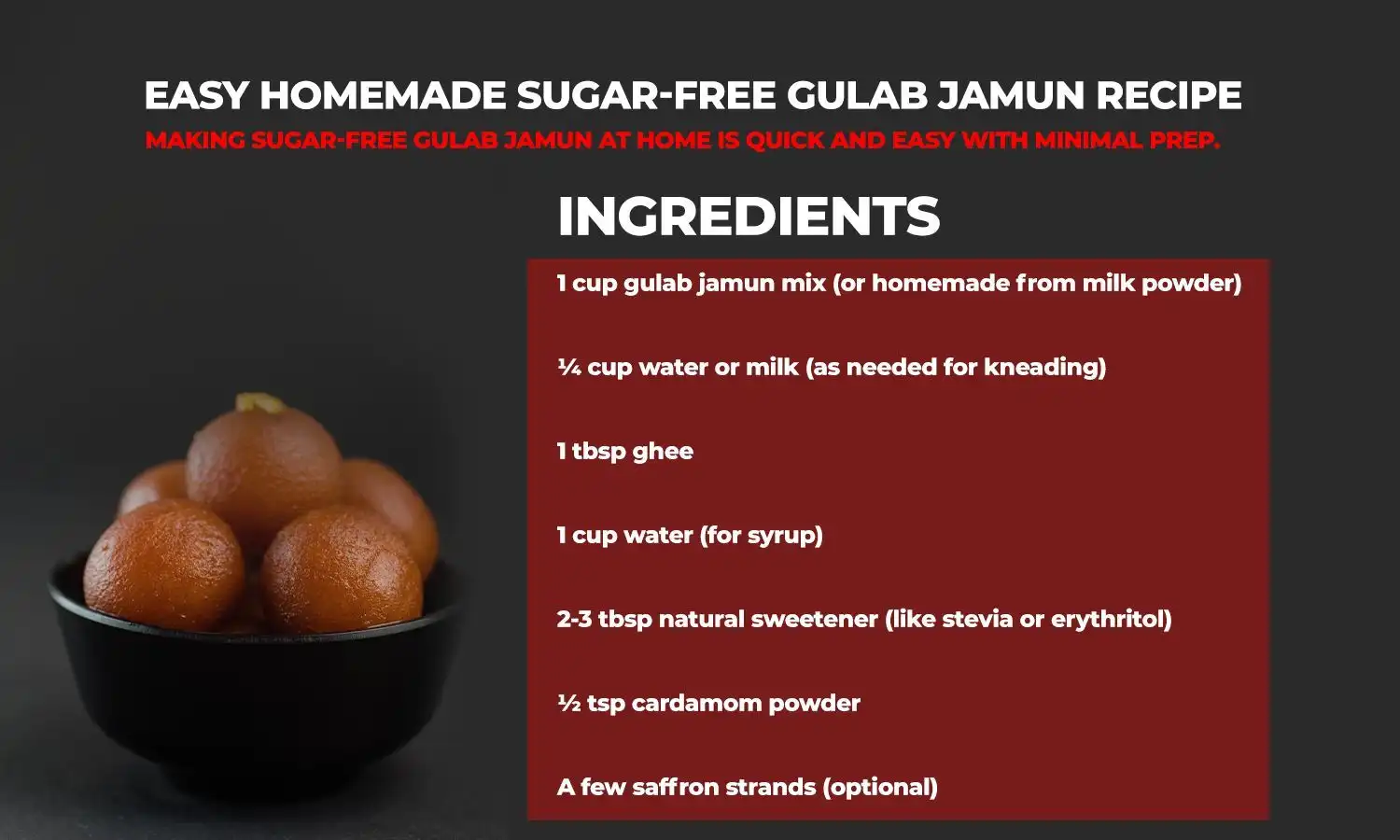
Easy Homemade Sugar-Free Gulab Jamun Recipe

Making sugar free gulab jamun at home is simple and requires minimal preparation time. Here’s how you can make it:

Ingredients

  • 1 cup gulab jamun mix (or homemade from milk powder)
  • ¼ cup water or milk (as needed for kneading)
  • 1 tbsp ghee
  • 1 cup water (for syrup)
  • 2-3 tbsp natural sweetener (like stevia or erythritol)
  • A few saffron strands (optional)

Steps :

1. In a bowl, mix gulab jamun powder with ghee and water/milk to form a soft dough. Avoid over-kneading.

2. Roll the dough into small balls, ensuring there are no cracks.

3. Heat oil or ghee on low flame and fry the balls until golden brown. Avoid high heat to prevent the outer layer from browning too quickly.

4. In another pan, boil 1 cup water with sweetener, cardamom, and saffron until slightly sticky.

5. Add the fried gulab jamuns to the warm syrup and let them soak for at least 30 minutes before serving.

This method is not only healthier but also allows you to make sugarless gulab jamun without compromising on flavor.

Sugar-Free Gulab Jamun for Diabetics

Many diabetics shy away from traditional sweets because of the high sugar content. However, with sugar free gulab jamun, they can enjoy festive treats in moderation. The key is using sweeteners that have a low glycemic index, so they don’t cause sudden spikes in blood sugar.
We at 777 Foods understand that taste is as important as health. Our instant mixes ensure your gulab jamun turns out soft, juicy, and flavorful every time, even when you prepare them without refined sugar.Tip: Always consult your doctor before introducing new sweeteners to your diet, especially if you have diabetes.
sugar free gulab jamun

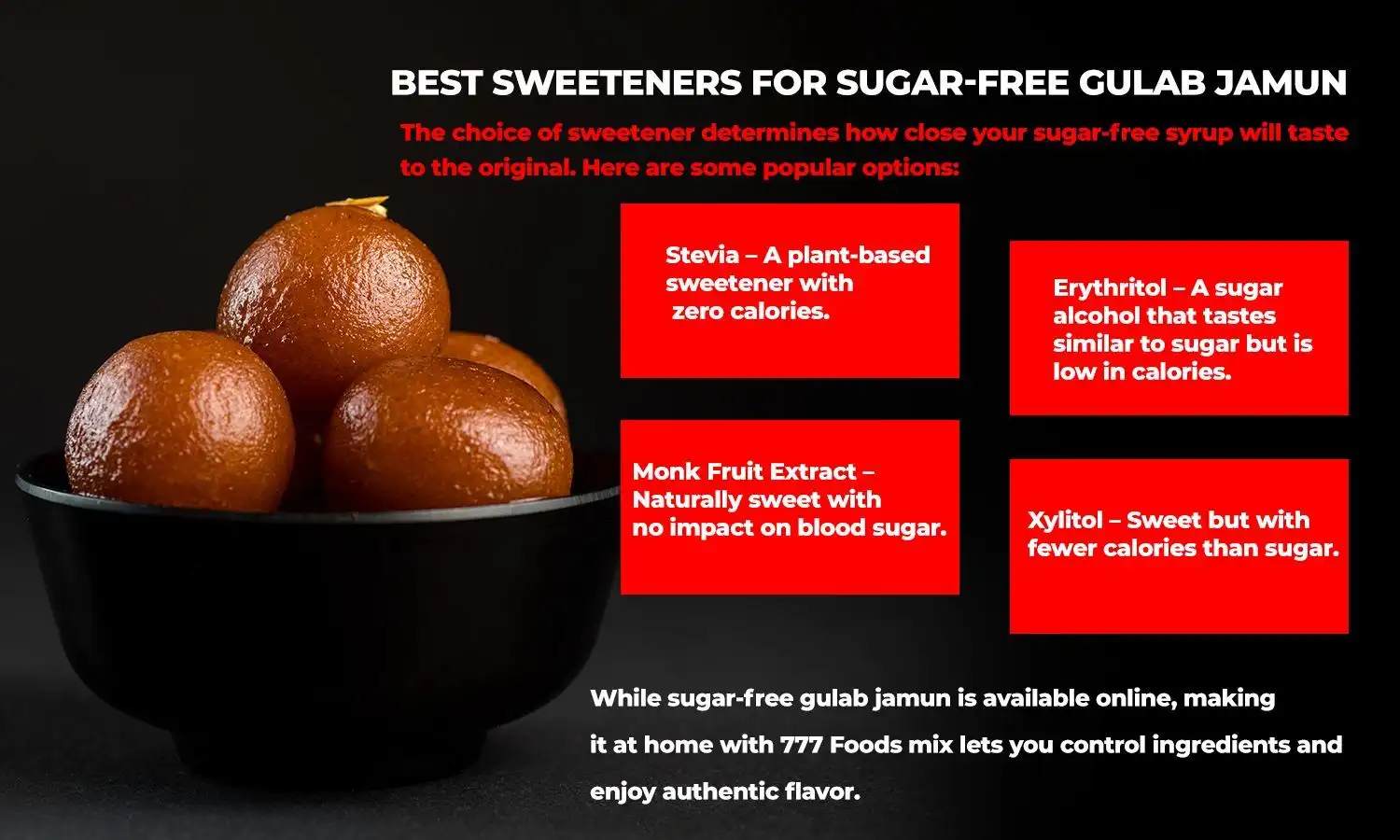
Best Sweeteners for Sugar-Free Gulab Jamun

The choice of sweetener determines how close your sugar-free syrup will taste to the original. Here are some popular options:

  • Stevia – A plant-based sweetener with zero calories.
  • Erythritol – A sugar alcohol that tastes similar to sugar but is low in calories.
  • Monk Fruit Extract – Naturally sweet with no impact on blood sugar.
  • Xylitol – Sweet but with fewer calories than sugar.

While you can buy gulab jamun online in sugar-free versions, making them at home ensures you control the ingredients. You can even use gulab jamun mix from trusted brands like 777 Foods for authentic flavor.
sugar free gulab jamun

Storage & Shelf Life Tips

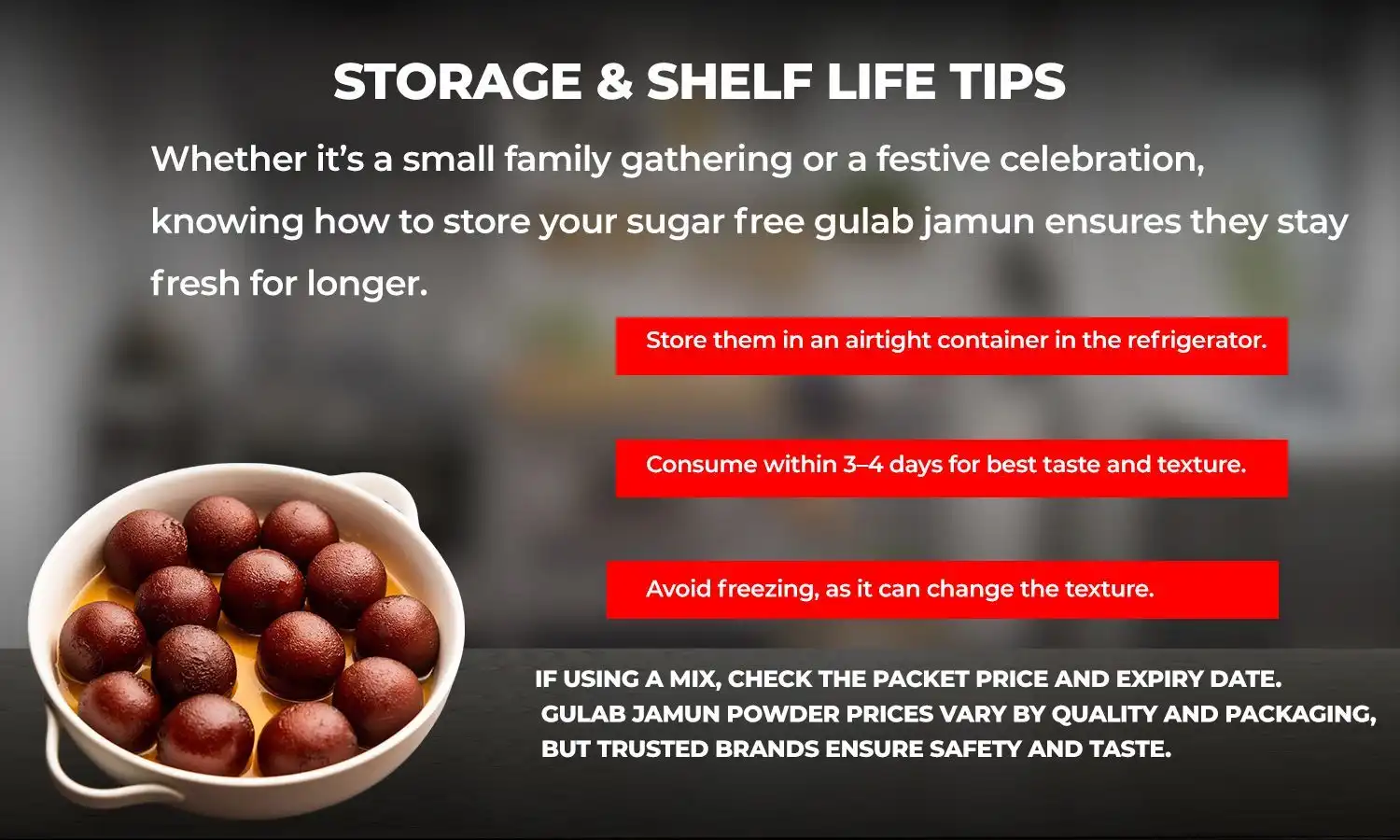
Whether it’s a small family gathering or a festive celebration, knowing how to store gulab jamun ensures they stay fresh for longer.

Storage Guidelines:

  • Store them in an airtight container in the refrigerator.
  • Consume within 3–4 days for best taste and texture.
  • Avoid freezing, as it can change the texture.

If using a store-bought mix, always check the gulab jamun packet price and expiry date before purchase. The gulab jamun powder price may vary based on quality and packaging, but it’s always worth investing in a trusted brand for safety and taste.

A Note on Varieties

While traditional gulab jamuns are round, there are other shapes and flavors to try:

  • Big gulab jamun for special celebrations.
  • Cylindrical gulab jamun often found in certain regional cuisines.

Each has its own charm, and with the right recipe, you can make them sugar-free too.

Conclusion

Sugar free gulab jamun proves that health-conscious choices don’t have to be tasteless or joyless. With the right ingredients, sweeteners, and care, you can enjoy this timeless dessert without the guilt of excess sugar. At 777 Foods, we combine tradition with convenience, ensuring you get the authentic taste of home in every bite.

So the next time you crave a sweet after a meal, make yourself a batch of sugar-free gulab jamuns and savor the perfect balance of health and tradition.

Key Takeaways

  • Sugar free gulab jamun offers authentic taste without refined sugar.
  • Use low-glycemic sweeteners for diabetic-friendly recipes.
  • Store in the fridge for up to 4 days for best results.
  • Trusted brands like 777 Foods ensure consistent quality and flavor.
  • Variants like big, black, or cylindrical gulab jamuns can also be made sugar-free.

FAQs

1. What Are the Ingredients in Sugar Free Gulab Jamun? They typically include gulab jamun mix, ghee, milk or water, natural sweetener, cardamom, and saffron.
2. Can a Diabetic Patient Eat Gulab Jamun? Yes, they can enjoy sugar free gulab jamun made with low-glycemic sweeteners, but moderation and medical advice are essential.
3. Can I Make Them Without Frying? Yes, you can bake or air-fry them, but the texture may differ slightly from traditional frying.
4. How to Reduce Sugar From Gulab Jamun? Replace sugar syrup with one made from stevia, erythritol, or monk fruit extract while following the same soaking method.
5. Are Sugar-Free Versions Lower in Calories Than Regular Ones? Yes, they generally have fewer calories because they replace refined sugar with low-calorie sweeteners.
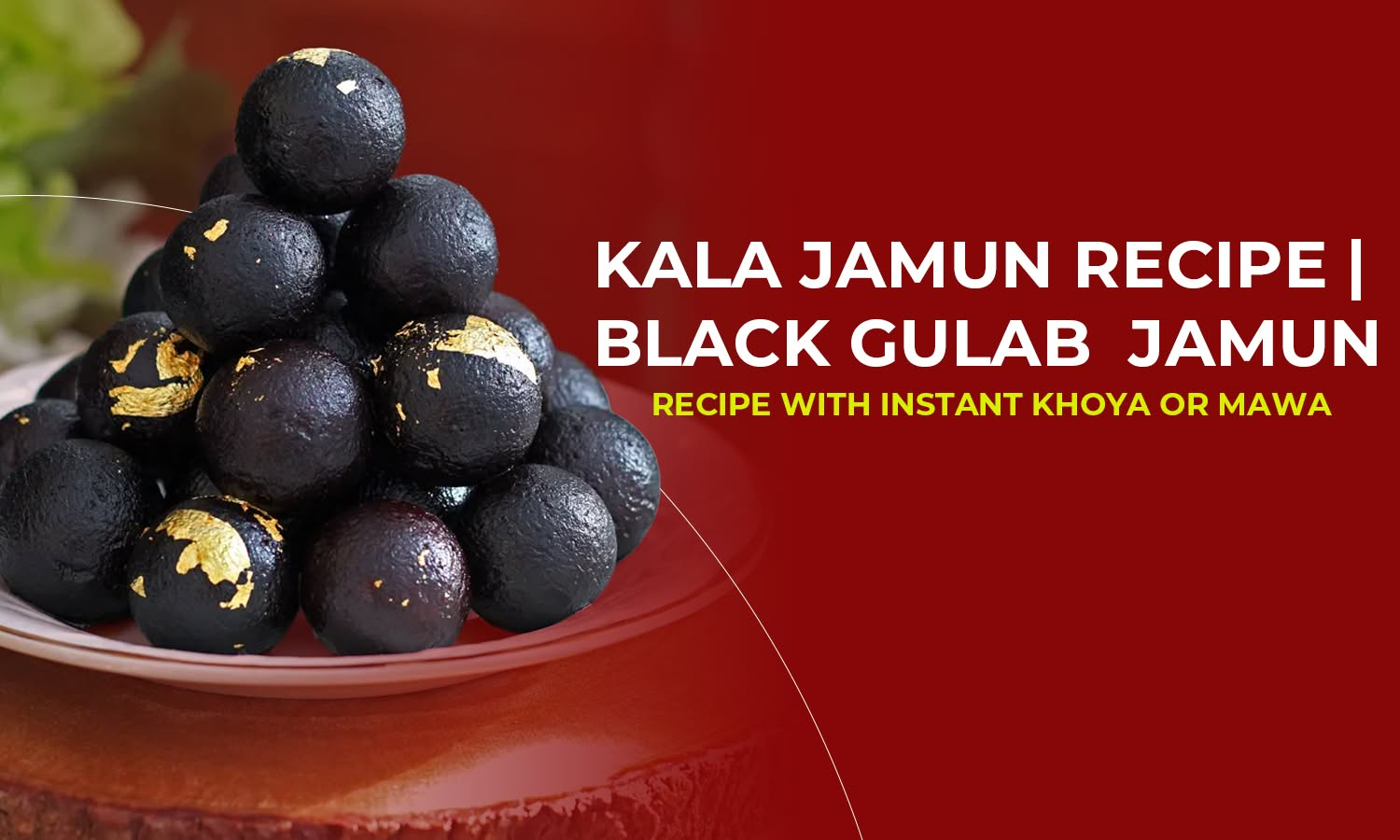
kala jamun recipe | black gulab jamun recipe with instant khoya or mawa

Introduction :

A festive spread feels incomplete without the melt-in-the-mouth sweetness of black gulab jamun. Known for its deep colour and rich flavour, this dessert is a delicious twist on the classic gulab jamun. Traditionally made with khoya or mawa, the black gulab jamun recipe with khoya gets its unique dark shade from slightly caramelising the surface before soaking it in fragrant sugar syrup.Today, with 777 Gulab Jamun Mix, you can create this kala jamun sweet recipe at home in less time while keeping the authentic taste intact. Whether it’s a festival, wedding, or just a family craving, this dessert is always a showstopper.
black gulab jamun

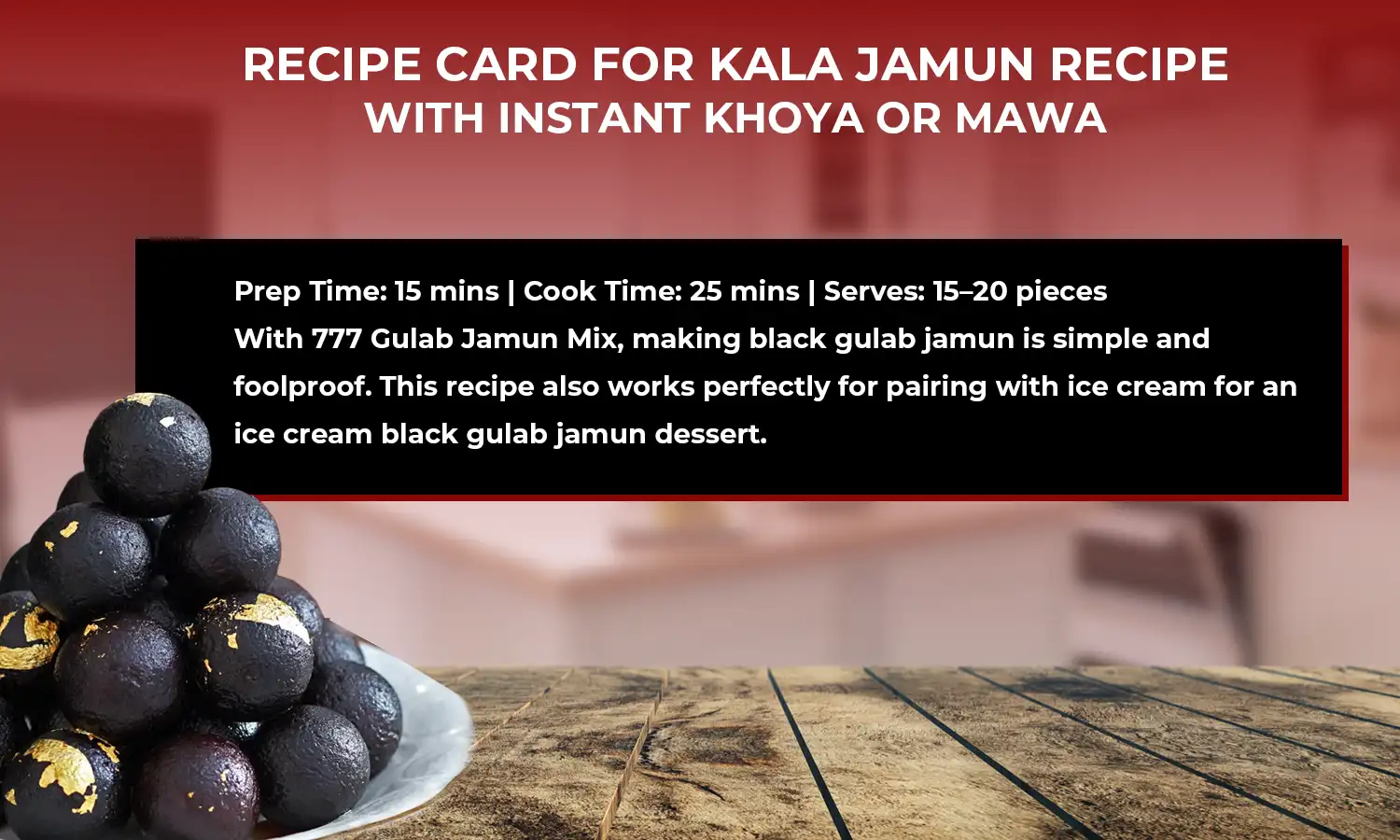
Recipe Card for Kala Jamun Recipe with Instant Khoya or Mawa

Prep Time: 15 mins | Cook Time: 25 mins | Serves: 15–20 piecesWith 777 Gulab Jamun Mix, making dark gulab jamun is simple and foolproof. This recipe also works perfectly for pairing with ice cream for an ice cream black gulab jamun dessert.

Ingredients 1x2x3x

777 Gulab Jamun Mix – 200g

  • Instant khoya or mawa – 100g
  • Sugar – 2 cups
  • Water – 1.5 cups
  • Rose essence – few drops
  • Cardamom powder – 1 tsp
  • Ghee – for deep frying
  • A pinch of baking soda

black gulab jamun

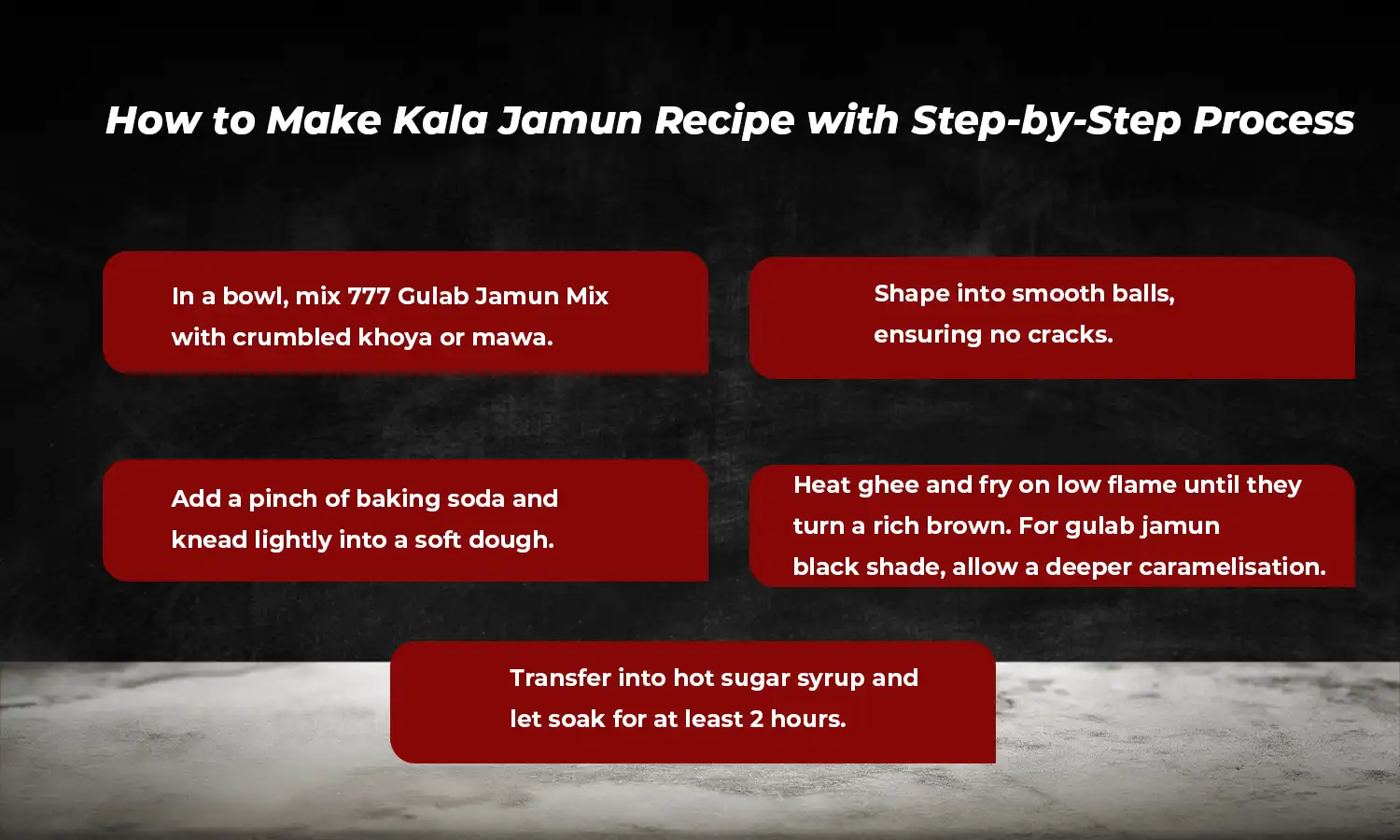
How to Make Kala Jamun Sweet Recipe with Step-by-Step Process

Making kala jamun with khoya using an instant mix brings the perfect balance of richness and convenience:1. In a bowl, mix 777 Gulab Jamun Mix with crumbled khoya or mawa.
2. Add a pinch of baking soda and knead lightly into a soft dough.
3. Shape into smooth balls, ensuring no cracks.
4. Heat ghee and fry on low flame until they turn a rich brown. For that classic dark gulab jamun shade, allow a deeper caramelisation.
5. Transfer into hot sugar syrup and let soak for at least 2 hours.This method ensures your homemade kala jamun stays soft and juicy while having that signature dark outer layer.

Sugar Syrup Recipe

1. Combine sugar and water in a pan.
2. Boil until slightly sticky in consistency.
3. Add rose essence and cardamom powder.
4. Keep warm so the freshly fried black colour gulab jamun can soak immediately. black gulab jamun

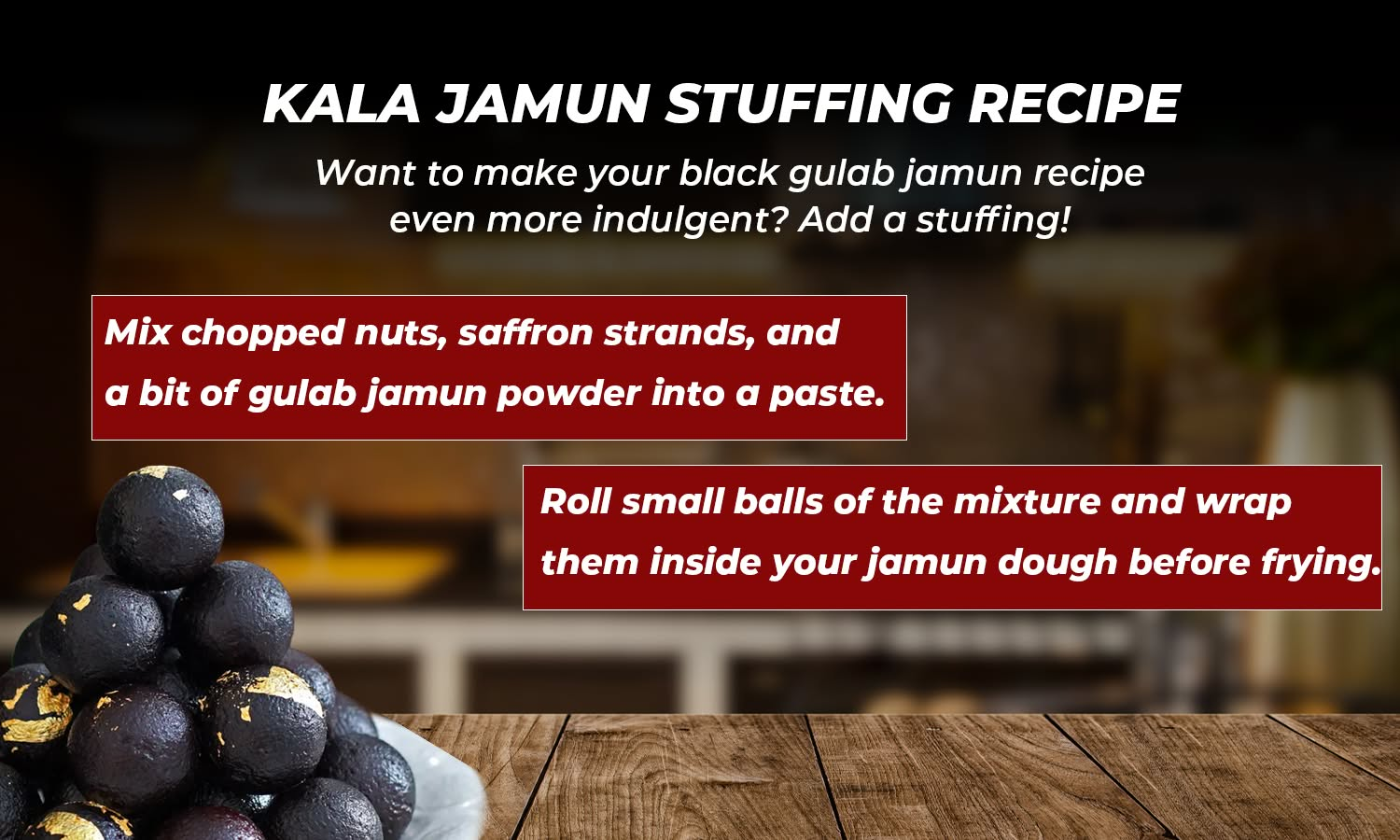
Kala Jamun Stuffing Recipe

Want to make your homemade kala jamun recipe even more indulgent? Add a stuffing!

  • Mix chopped nuts, saffron strands, and a bit of gulab jamun powder into a paste.
  • Roll small balls of the mixture and wrap them inside your jamun dough before frying.

How to Stuff Kala Jamun Sweet Recipe

  • Flatten each dough ball.
  • Place the prepared stuffing inside.
  • Seal well and roll back into a smooth ball before frying.
  • This gives you a surprise flavour burst in every bite.

Notes :

  • Fry on low heat for even cooking and colour.
  • Do not overcrowd the pan.
  • If you want a lighter version, you can use less ghee and air-fry before adding to syrup (but traditional frying gives better flavour).
  • For a special serving idea, pair ice cream black gulab jamun for a royal dessert treat.

Conclusion

From its irresistible colour to its unmatched flavour, dark gulab jamun is a dessert that brings elegance to every occasion. With 777 Gulab Jamun Mix, you can recreate this classic sweet effortlessly at home — perfect texture, perfect sweetness, every time. Whether you buy the gulab jamun packet online or from your nearest store, this mix ensures your black gulab jamun gets the authentic taste of tradition with the ease of a modern kitchen.

FAQs

1. What is the difference between gulab jamun and black gulab jamun? Regular gulab jamun is fried to a golden-brown shade, while black gulab jamun is fried a little longer for a deep colour and richer flavour.
2. What is the name of the black gulab jamun? It’s popularly called kala jamun or gulab jamun black in many parts of India.
3. Is kala jamun good for health? While it’s a festive sweet and should be eaten in moderation, using quality ingredients like 777 Gulab Jamun Mix ensures better taste and hygiene.
4. Can diabetics eat black gulab jamun? It’s best avoided due to sugar content, but sugar-free versions can be made with alternate sweeteners.
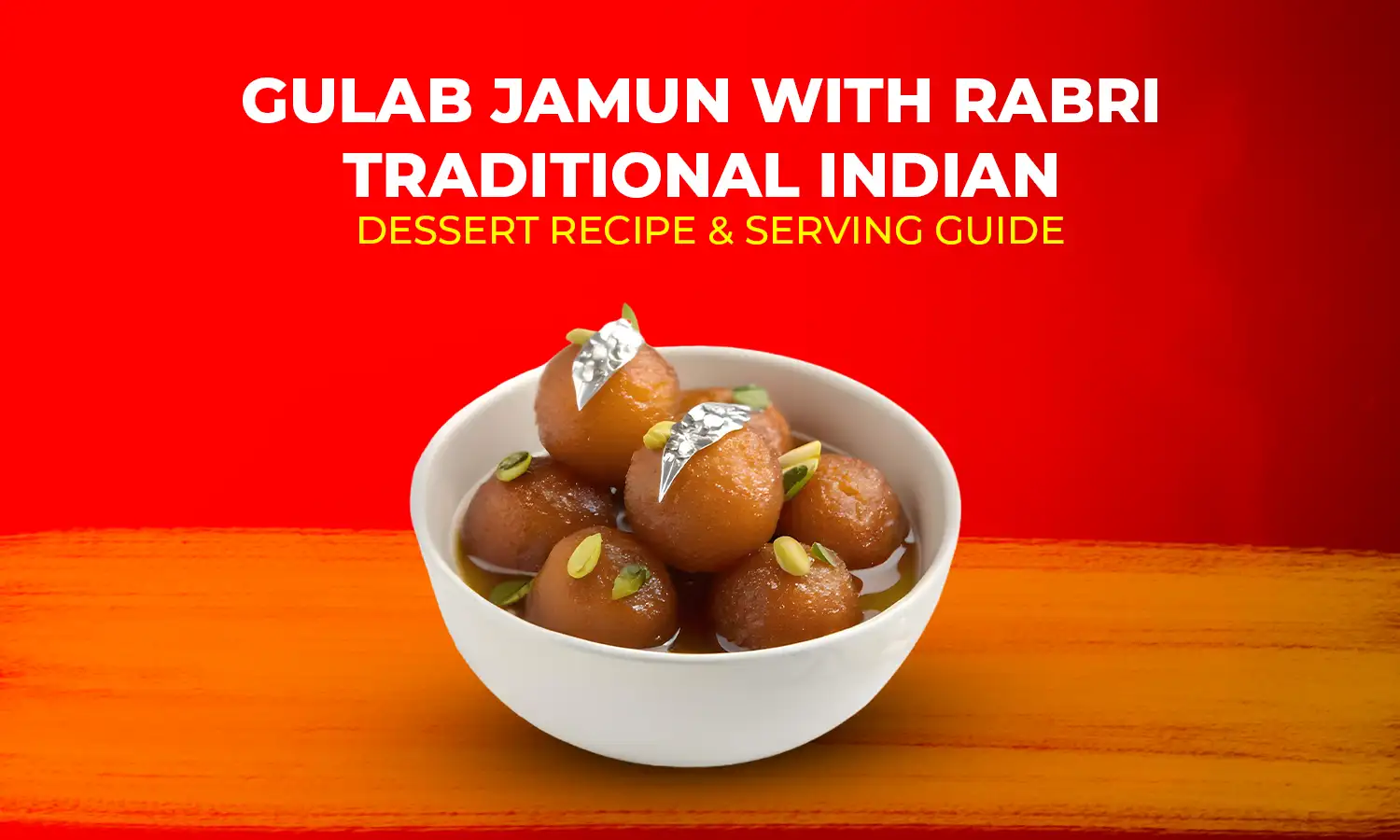
Gulab Jamun with Rabri – Traditional Indian Dessert Recipe & Serving Guide

Gulab jamun with rabri is one of the most indulgent Indian desserts. Soft, golden brown dumplings made of milk solids are soaked in fragrant sugar syrup and then topped or served with chilled, creamy rabri. The contrast between the warm gulab jamun and cold rabri, the syrupy sweetness and rich creaminess, makes it irresistible.
In Indian households, this dessert has been passed down through generations. With changing times, convenience has taken the front seat, and with brands like 777 Foods, maintaining authenticity while making preparation simpler is now possible.

Let’s dive into making this delightful dessert step-by-step. This Gulab Jamun Dessert Recipe is simple to follow and perfect for special occasions at home!

Ingredients:

For Gulab Jamun:

  • 1/4 cup milk (adjust as needed)
  • Ghee or oil for frying

For Sugar Syrup:

  • 1.5 cups sugar
  • 1.5 cups water
  • 4 cardamom pods
  • A few strands of saffron (optional)
  • 1 tsp rose water

For Rabri:

  • 1 litre full cream milk
  • 1/4 cup sugar (adjust to taste)
  • 10-12 chopped pistachios & almonds
  • 1/2 tsp cardamom powder
  • A few saffron strands

These ingredients are commonly used in easy indian dessert recipes that bring traditional flavours to your kitchen.

Instructions:

Step 1: Preparing the Sugar Syrup

1. Combine sugar and water in a wide pan.
2. Bring to a boil, then simmer for 5-7 minutes.
3. Add cardamom, saffron, and rose water.

4. Keep the syrup warm but not too hot while you prepare the gulab jamun.

Step 2: Making Gulab Jamun

1. Mix gulab jamun powder with milk slowly to form a soft dough.
2. Let it rest for 10 minutes.
3. Divide into equal portions and roll into smooth balls (avoid cracks).
4. Heat ghee/oil and fry on low-medium heat until golden brown.

5. Soak immediately in warm syrup for at least 30 minutes.

This forms the base of a step by step gulab jamun recipe that even beginners can follow.

Step 3: Making Rabri

1. Boil full cream milk in a thick-bottomed pan.2. Simmer and keep scraping the sides every few minutes to collect the cream (malai).
3. Continue until the milk reduces to about 1/3rd.
4. Add sugar, saffron, cardamom, and nuts.

5. Let it chill in the fridge before serving.

gulab jamun with rabri

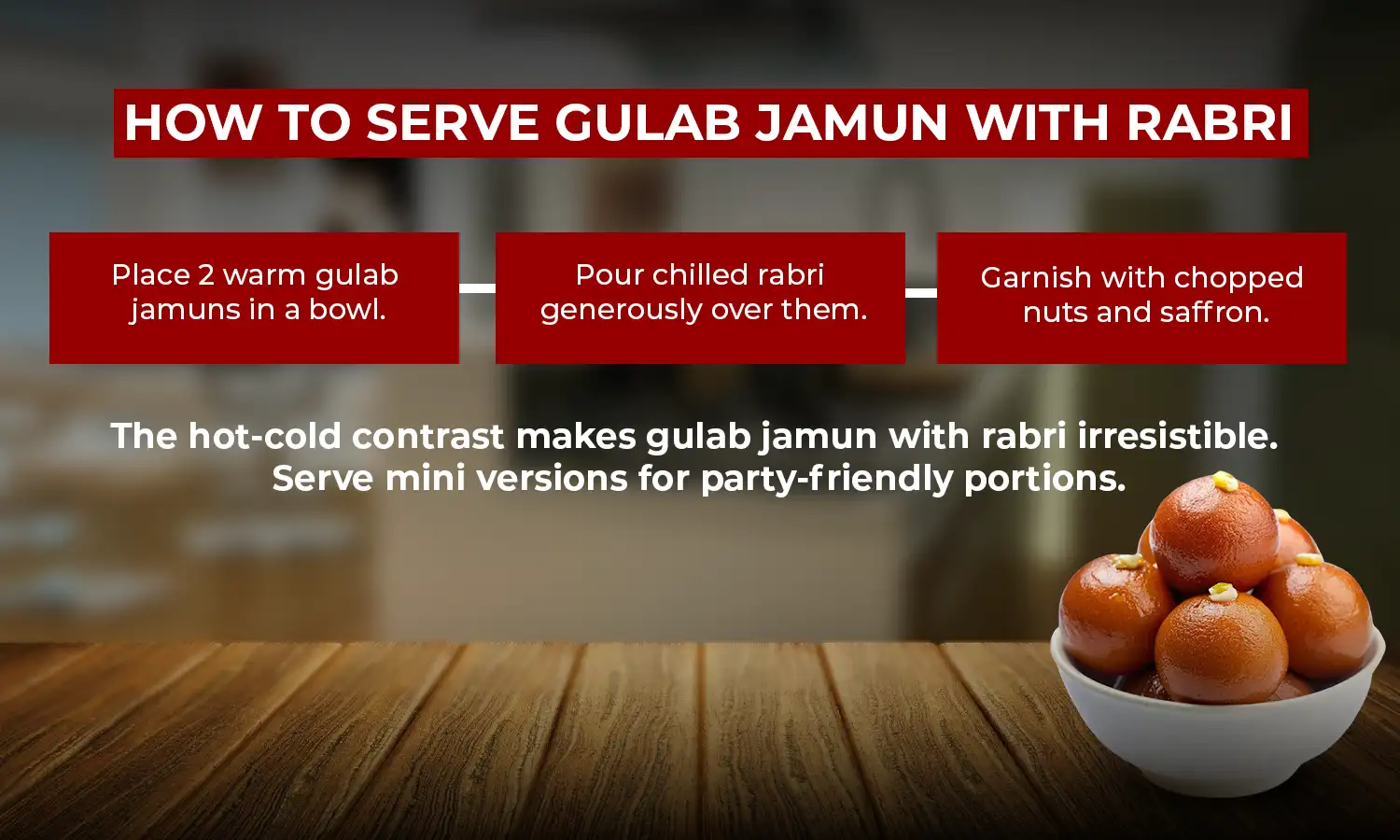
How to Serve Gulab Jamun with Rabri

  • Place 2 warm gulab jamuns in a bowl.
  • Pour chilled rabri generously over them.
  • Garnish with chopped nuts and saffron.

This temperature contrast makes this one of the most satisfying desserts. You can even serve mini gulab jamun with rabri for individual portions during parties.

This style of serving is perfect for dessert plating ideas that look simple yet elegant. gulab jamun with rabri

Tips for Perfect Gulab Jamun with Rabri

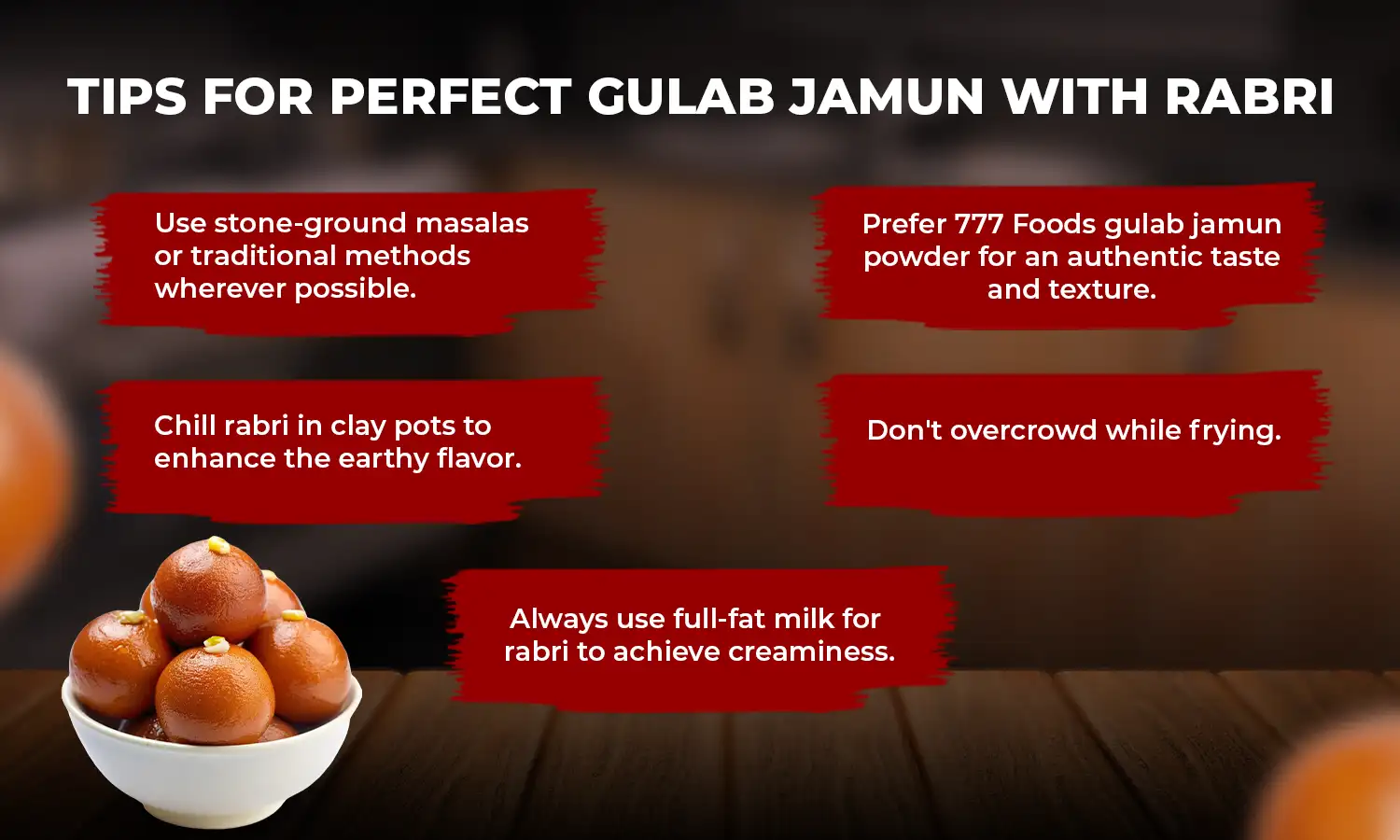
  • Use stone-ground masalas or traditional methods wherever possible.
  • Prefer 777 Foods gulab jamun powder for an authentic taste and texture.
  • Chill rabri in clay pots to enhance the earthy flavor.
  • Don’t overcrowd while frying.
  • Always use full-fat milk for rabri to achieve creaminess.

With these tips, you’ll perfect your gulab jamun with rabri every time. Using the right method helps you recreate a perfect gulab jamun with rabri recipe at home.

Exploring Modern Twists

If you’re watching your calorie intake, you might want to try baked gulab jamun with rabri. Yes, it’s possible! Instead of frying, bake the jamuns at 180°C until golden brown, and soak them in warm syrup as usual. Serve with cold rabri. This is growing popular among health-conscious dessert lovers.

This is a modern take on the classic, while keeping the taste and joy intact.

These variations make it an easy gulab jamun recipe at home for those looking for lighter options.

Why Quality Ingredients Matter

Whether it’s the gulab jamun ingredients or the milk you use for rabri, quality makes a world of difference. Traditional Indian desserts rely heavily on purity and richness of ingredients. That’s why trusted brands like 777 Foods are essential for preserving that legacy. Their products are made with handpicked ingredients, free from artificial preservatives, and are rooted in tradition.

When you choose made using quality products, you’re preserving flavor, tradition, and trust.

Good ingredients also make a big difference when preparing homemade gulab jamun.

gulab jamun with rabri

Nutritional Insights

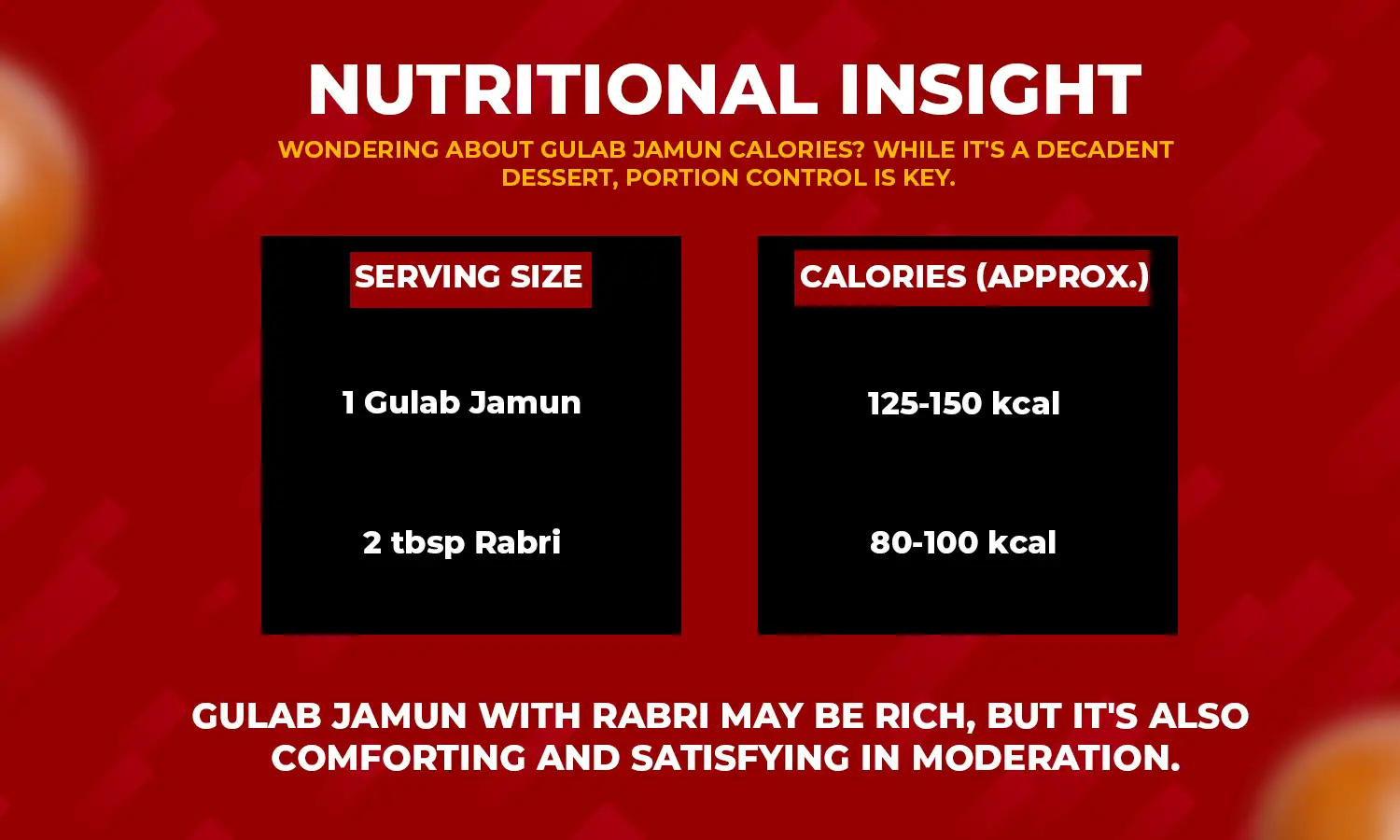
Wondering about gulab jamun calories? While it’s a decadent dessert, portion control is key.

Serving Size Calories (Approx.)
1 Gulab Jamun 125-150 kcal
2 tbsp Rabri 80-100 kcal

Gulab jamun with rabri may be rich, but it’s also comforting and satisfying in moderation.

Despite being rich, it remains a popular sweet dessert after dinner for many families.

A Dessert That Connects Generations

Ask your grandmother for a gulab jamun ki recipe, and she’ll have a story behind every ingredient. This dish connects the past with the present. Whether you’re learning how to make rabri at home or picking up how to make gulab jamun with instant mix, the charm lies in the blend of tradition and modern-day convenience.

Even if you’re a beginner, with the right mix and guidance, you’ll create a dessert that feels like home. When it comes to heartwarming Indian sweets, gulab jamun with rabri is unbeatable.

This classic combination is often known as Rabri Gulab Jamun, loved for its rich taste and texture.

Key Takeaways:

  • Gulab jamun with rabri is a traditional Indian dessert perfect for any occasion.
  • Using high-quality ingredients ensures authentic flavor and texture.
  • Try modern versions like baked gulab jamun with rabri for a healthier twist.
  • Rabri recipe calls for patience but delivers unmatched richness.
  • Serve warm gulab jamuns with chilled rabri for the best experience.

This timeless Gulab Jamun Rabri pairing is a favourite among traditional festive desserts.

FAQs

What is gulab jamun with rabdi?Gulab jamun with rabri is a classic Indian dessert where soft, syrup-soaked dough balls are served with creamy, reduced milk (rabri), offering a rich and royal flavor.
What is the best combination with gulab jamun?The best pairing is with rabri, of course! The balance of warm syrupy jamuns and cold rabri creates a texture and taste contrast that’s simply delightful. Many prefer this timeless combination for festive feasts.
What do you serve gulab jamun with?Traditionally, gulab jamun with rabri is the most popular serving style. However, it also pairs well with vanilla ice cream or dry fruits for a festive touch.
Is gulab jamun better cold or warm?Gulab jamun tastes best when served warm, soaked in syrup. But when paired with cold rabri, it offers the best of both worlds—warmth and chill in every bite. This is why it is loved across generations.

Gulab Jamun with Ice Cream – A Perfect Hot and Cold Dessert Combo

Introduction

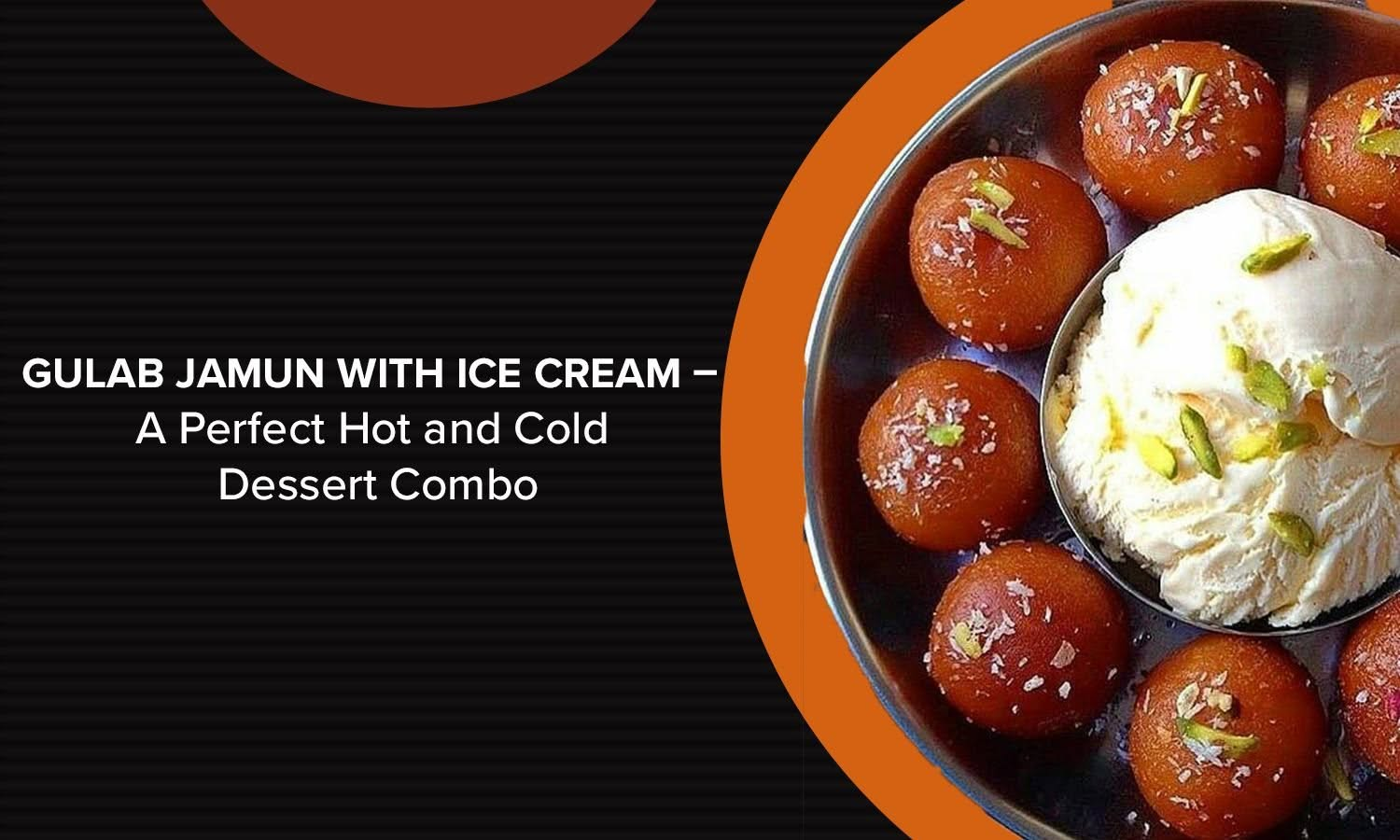
There’s something magical about the contrast of gulab jamun with ice cream. The warm, syrupy sweetness of golden brown gulab jamuns melting into a scoop of cold, creamy vanilla ice cream creates a dessert experience that feels indulgent, nostalgic, and exciting all at once. Whether served after a festive meal or enjoyed as a late-night treat, this fusion has become a favorite in Indian households and restaurants alike.
More than just a sweet dish, gulab jamun with ice cream brings together tradition and modern taste, satisfying those who crave both comfort and a twist. It’s the perfect example of how food evolves with time, yet still holds on to its roots.

What Makes Gulab Jamun with Ice Cream So Popular?

The popularity of gulab jamun with ice cream lies in its contrast — hot meets cold, soft meets creamy, and syrupy richness meets frozen lightness. It combines the traditional flavor of one of India’s most loved sweets with the global appeal of ice cream.

  • Texture contrast: The soft, spongy gulab jamun absorbs syrup and melts slightly into the ice cream, making every bite rich and indulgent.
  • Temperature play: The heat from the gulab jamun slightly melts the ice cream, creating a delightful warm-cold harmony.
  • Versatility: It works for weddings, birthdays, festivals, or just as a comfort dessert on any given day.

In a world where food combinations are often experimental, ice cream with gulab jamun stands out for its balance of tradition and innovation.
gulab jamun with ice cream

Best Ice Cream Flavors to Pair with Gulab Jamun

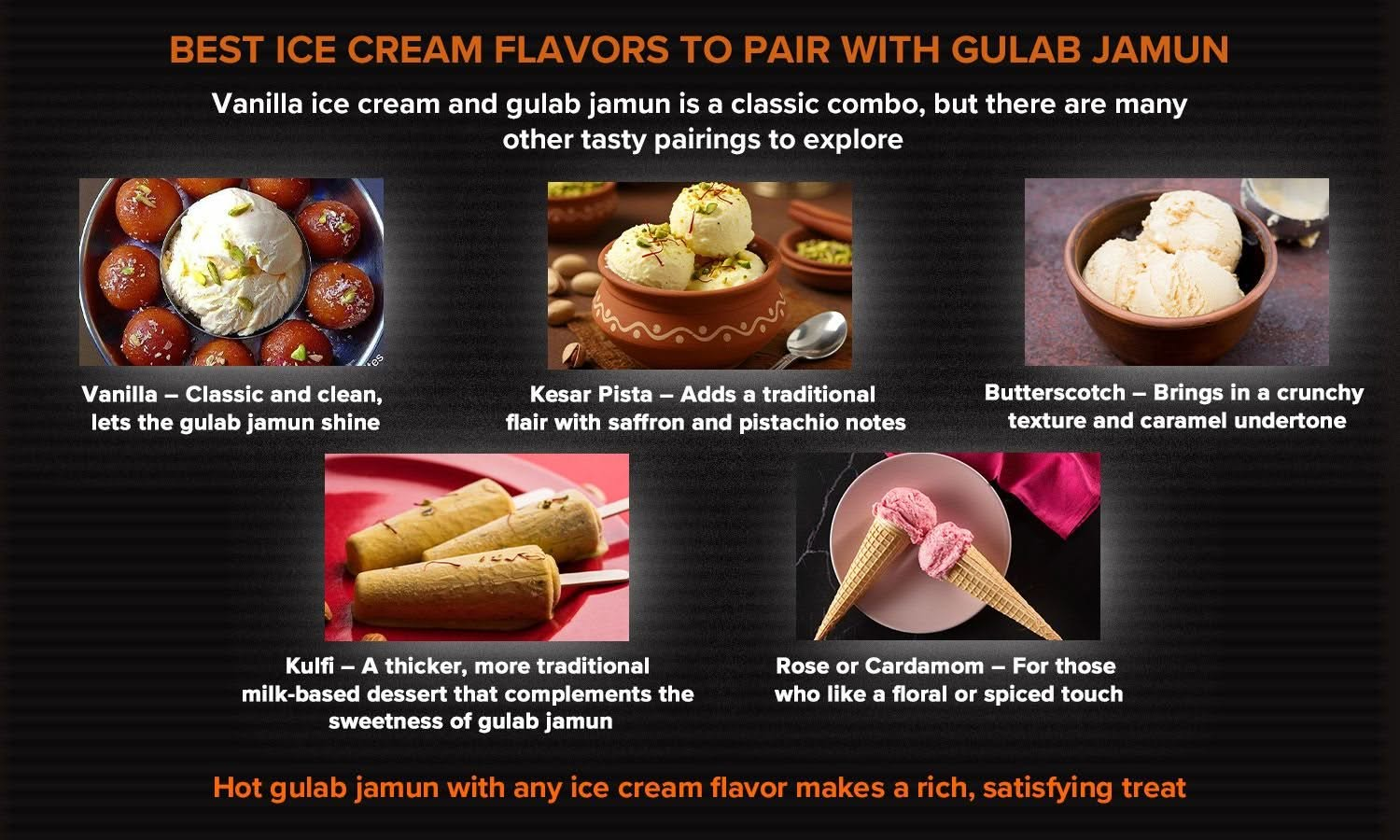
While vanilla ice cream with gulab jamun is the most popular combo for its simplicity and ability to enhance the gulab jamun’s flavor, there are many other delicious options to try:

  • Vanilla – Classic and clean, lets the gulab jamun shine.
  • Kesar Pista – Adds a traditional flair with saffron and pistachio notes.
  • Butterscotch – Brings in a crunchy texture and caramel undertone.
  • Kulfi – A thicker, more traditional milk-based dessert that complements the sweetness of gulab jamun.
  • Rose or Cardamom – For those who like a floral or spiced touch.

The best pairings depend on personal taste, but a scoop of hot gulab jamun with ice cream in any of these flavors promises a rich, satisfying finish.

How to Serve Gulab Jamun with Ice Cream

Presentation matters when it comes to such an indulgent dessert. Here’s how to make it look and taste even more irresistible:
1. Warm the gulab jamun slightly before serving. The dessert tastes best when the gulab jamun is hot and fresh.2. Place a scoop of vanilla ice cream with gulab jamun in a dessert bowl or glass.
3. Drizzle a bit of sugar syrup over the top for extra richness.
4. Garnish with crushed pistachios or rose petals.
5. Serve immediately to maintain the temperature contrast.

This quick recipe turns everyday sweets into something special. Many people search for a gulab jamun with vanilla ice cream recipe, but it’s as easy as heating, scooping, and plating!

gulab jamun with ice cream

Calories in Gulab Jamun with Ice Cream

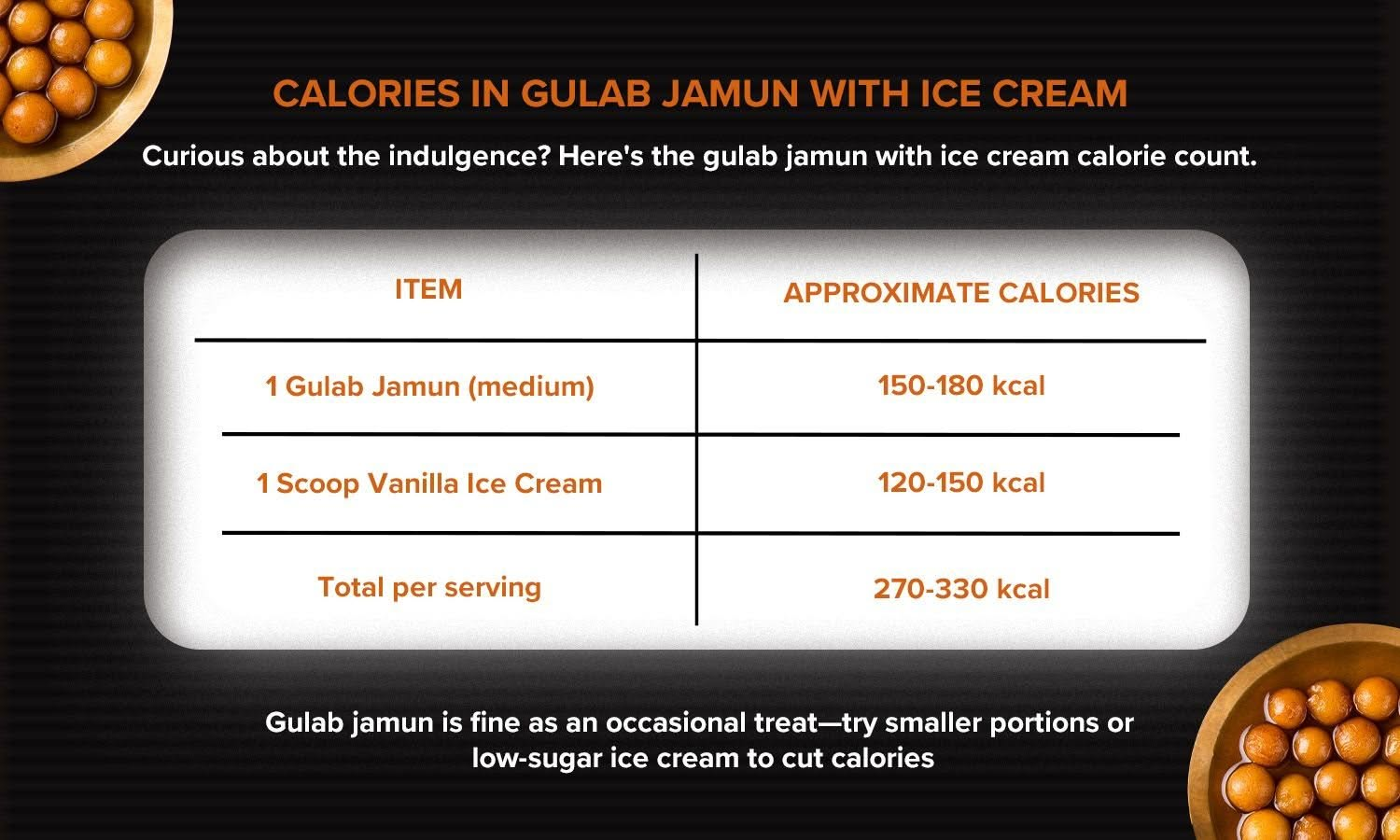
Wondering about the indulgence level? Here’s a look at gulab jamun with ice cream calorie count:

Item Approximate Calories
1 Gulab Jamun (medium) 150-180 kcal
1 Scoop Vanilla Ice Cream 120-150 kcal
Total per serving 270-330 kcal

While it’s definitely a treat, enjoying gulab jamun occasionally is completely fine. You can also opt for smaller portions or low-sugar ice creams to reduce the calorie load.

Creative Variations of Gulab Jamun with Ice Cream

Looking to elevate this classic? Try these fun and unique variations:

  • Mini Jamun Sundae: Cut mini gulab jamuns and layer them with ice cream and nuts in a sundae glass.
  • Jamun Ice Cream Sandwich: Flatten two gulab jamuns and place a scoop of ice cream in between.
  • Gulab Jamun Cheesecake: Use chopped jamuns in the base or topping of a fusion cheesecake.
  • Rolled Ice Cream Topped with Jamuns: If you’re into modern desserts, add chopped jamuns as a topping over fresh Thai-style rolled ice cream.
  • Baked Dessert Bowl: Bake a filo pastry cup and serve a hot jamun and ice cream combo in it.

No matter how you experiment, the classic flavor of gulab jamun and ice cream always finds a way to shine.

Where to Buy Ready-to-Eat Gulab Jamun Online

Craving the combo but short on time? Good news! You can find high-quality ready-to-eat gulab jamun online from trusted brands like 777 Foods.

At 777 Foods, we understand the value of tradition, which is why our gulab jamuns are made using carefully selected ingredients and time-honored methods. Pair them with your favorite ice cream for a quick yet authentic dessert at home.

Whether you’re celebrating or just treating yourself after dinner, keeping a tin of 777 Gulab Jamuns in your pantry ensures you’re never too far from a nostalgic indulgence. And yes, it makes preparing gulab jamun with ice cream a breeze.

Key Takeaways

  • Gulab jamun with ice cream is a beloved hot and cold dessert combination.
  • Vanilla, butterscotch, and kulfi are popular ice cream flavors that pair beautifully with gulab jamun.
  • Each serving of ice cream with hot gulab jamun contains around 270-330 calories.
  • You can get creative with sundaes, sandwiches, or even cheesecake using this combo.
  • Ready-to-eat gulab jamuns from 777 Foods offer quality and convenience for your dessert cravings.

FAQs

1. How to eat gulab jamun with ice cream?Scoop a warm gulab jamun onto a plate or bowl and top it with a scoop of your favorite ice cream. The combo is best enjoyed fresh, while the gulab jamun is still warm.
2. Which ice cream goes well with gulab jamun?Vanilla is the most common choice, but flavors like kesar pista, butterscotch, or even cardamom-infused ice cream pair wonderfully with gulab jamun.
3. What is the specialty of gulab jamun?Its melt-in-the-mouth texture and sweet, aromatic syrup make it a timeless dessert. It’s versatile and pairs beautifully with modern twists like ice cream.
4. What are the benefits of gulab jamun with ice cream?Apart from being delicious, gulab jamun with ice cream satisfies dessert cravings with minimal effort. It combines traditional richness with a refreshing twist, offering both comfort and indulgence.

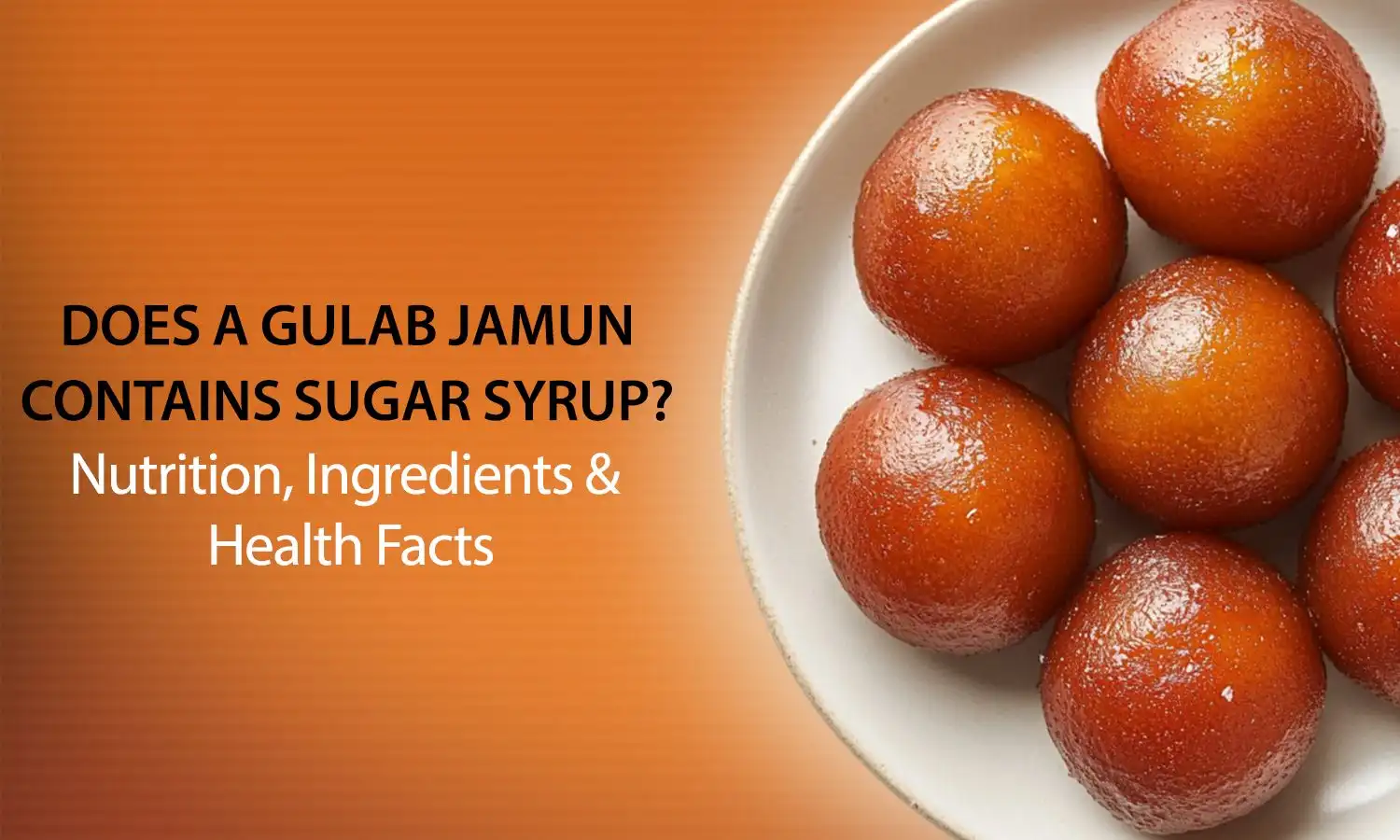
Does a Gulab Jamun Contain Sugar Syrup? Nutrition, Ingredients & Health Facts

There’s a reason gulab jamun is the crown jewel of Indian desserts. Soft, spongy, and dripping in sweetness, this treat is a celebration in itself. But if you’ve ever paused mid-bite and asked, “Does a gulab jamun contain sugar syrup?”, you’re not alone. In this blog, we’ll break down everything from ingredients and syrup content to gulab jamun nutrition facts, all while keeping it rooted in tradition.

What Is Gulab Jamun Made Of?

Gulab jamun is a traditional Indian dessert made from khoya (reduced milk solids) or sometimes milk powder. The dough is shaped into small balls, deep-fried until golden brown, and then soaked in warm sugar syrup. In many modern homes, gulab jamun mix or gulab jamun powder is used to simplify any standard gulab jamun recipe.
These mixes usually contain refined flour, milk solids, a leavening agent, and a hint of cardamom for aroma. Though easier to use, the essence of the dish remains the same—rich, indulgent, and a symbol of celebration.
Does a Gulab Jamun Contains Sugar Syrup?

Does a Gulab Jamun Contains Sugar Syrup?

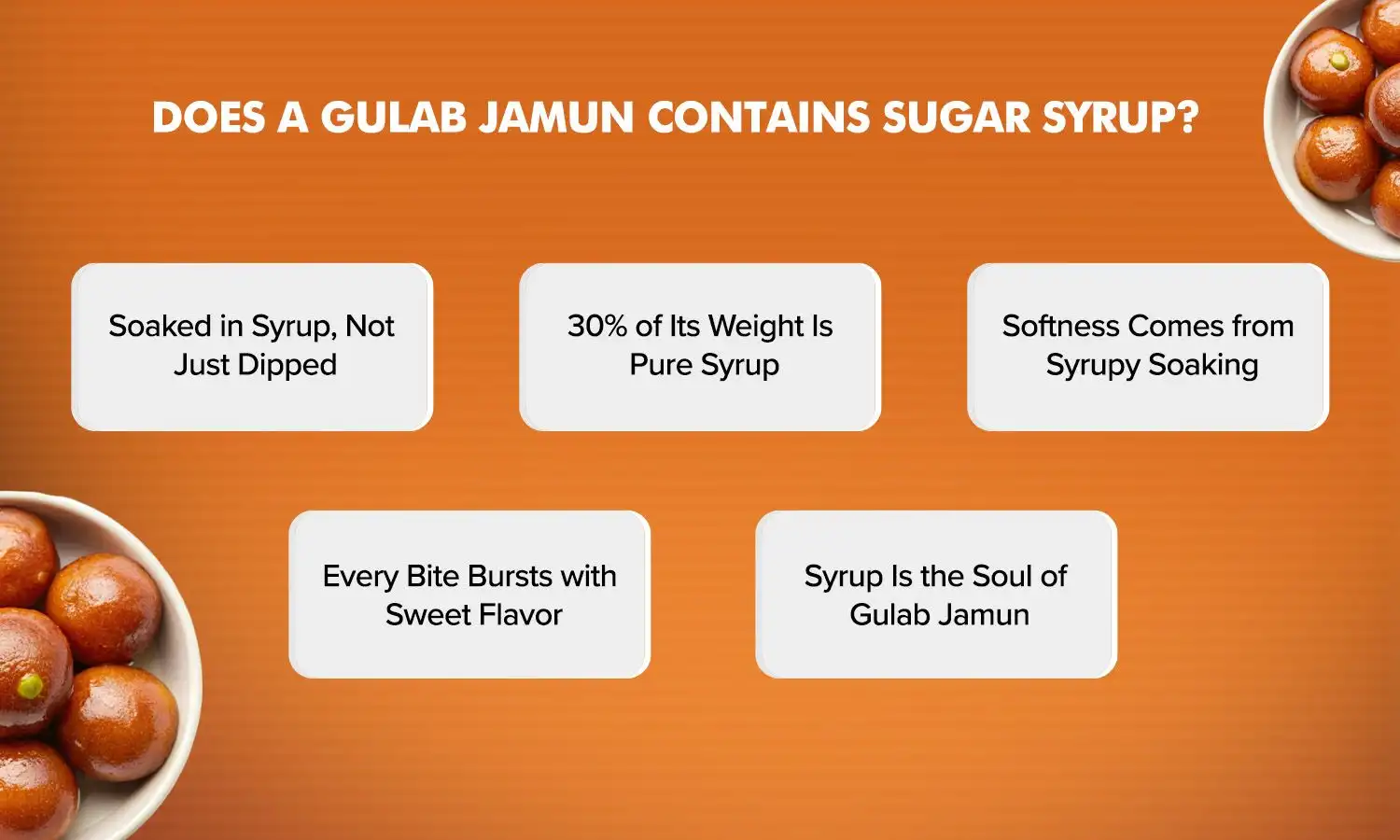
Yes, a gulab jamun contains sugar syrup. This syrup is not just a drizzle or a garnish; it is what transforms a fried milk ball into a rich, syrupy dessert that melts in your mouth.
The syrup is what gives gulab jamun its characteristic softness and intense sweetness. Once fried, the balls are soaked for hours, sometimes overnight, to absorb the syrup fully. This is why every bite bursts with sweet, aromatic flavor.
When someone says “a gulab jamun contains sugar syrup up to about 30% of its weight,” they are not exaggerating. The syrup seeps into the core, ensuring every bite is uniformly sweet.In essence, a gulab jamun contains sugar syrup at its heart—quite literally. It’s what makes it a dessert and not just a snack.
How Much Sugar Syrup Is in One Gulab Jamun?

How Much Sugar Syrup Is in One Gulab Jamun?

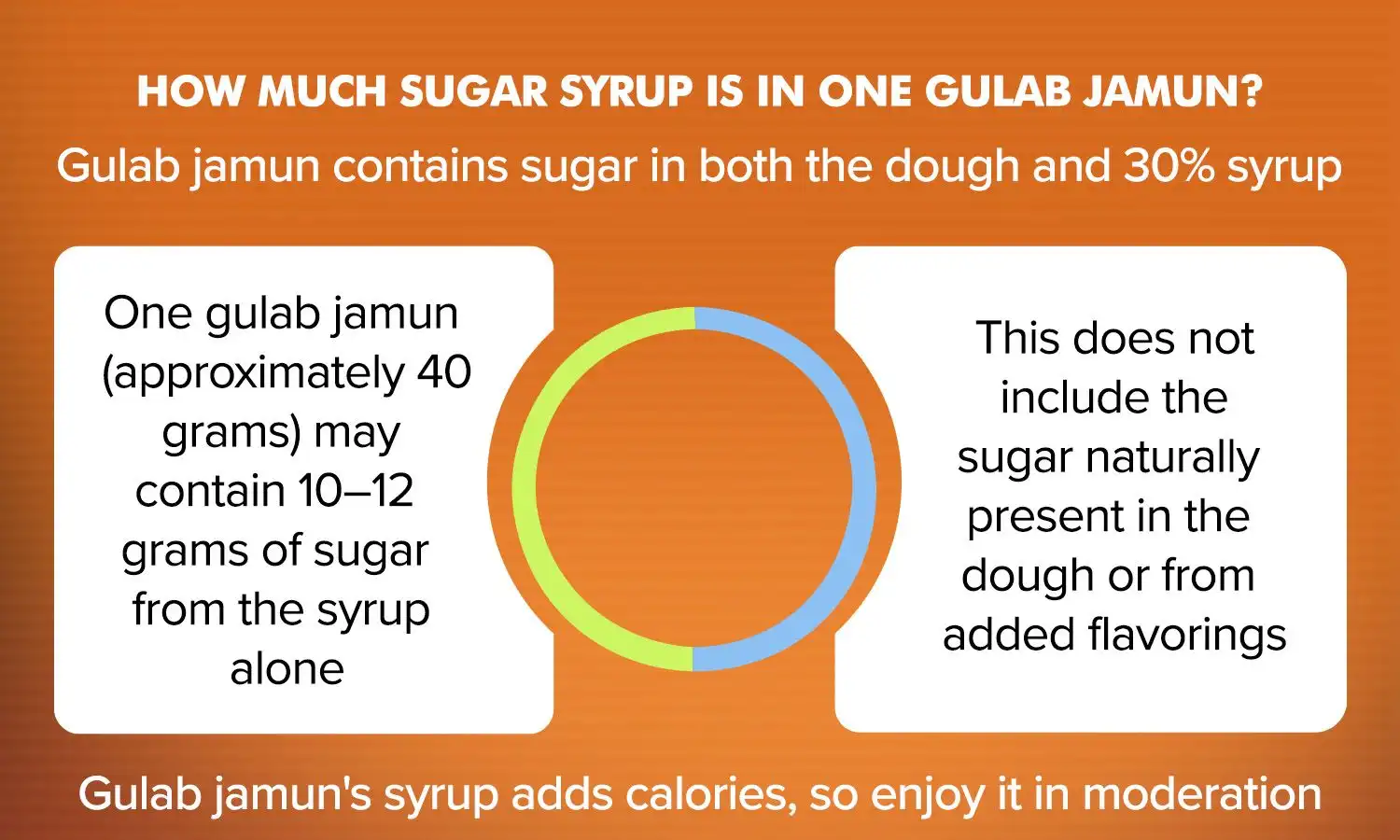
It might surprise you, but a gulab jamun contains sugar not just in the syrup, but also in the dough. On average, one medium-sized gulab jamun can hold sugar syrup equal to 30% of its weight.
For instance:

  • One gulab jamun (approximately 40 grams) may contain 10–12 grams of sugar from the syrup alone.
  • This does not include the sugar naturally present in the dough or from added flavorings.
  • One gulab jamun calories count typically ranges from 140 to 150 calories depending on its size and soaking time.

This means a gulab jamun contains sugar syrup that accounts for a significant portion of its calorie content. So, while delicious, it’s a dessert best enjoyed in moderation.

Why Is Sugar Syrup Used in Gulab Jamun?

Sugar syrup plays a central role in making gulab jamun recipe. Here’s why:

  • Texture: The syrup softens the fried dough, turning it from a dense ball into a melt-in-your-mouth delicacy.
  • Flavor: Infused with cardamom, rose water, or saffron, the syrup adds depth and aroma.
  • Preservation: The high sugar content helps preserve gulab jamun for a few days without refrigeration.

Without the syrup, you’re left with just a fried dough ball—not the rich, comforting taste that brings back childhood memories.

Some people even enjoy gulab jamun in syrup chilled, letting the flavors intensify over time. It’s the syrup that makes the dessert indulgent. That’s why a gulab jamun contains sugar syrup that is not only essential but irreplaceable.

How to Make Sugar Syrup for Gulab Jamun at Home

If you’re preparing gulab jamun from scratch, keeping the right gulab jamun sugar syrup ratio of equal parts sugar and water ensures the syrup penetrates the fried balls without making them soggy.

Here’s a quick and authentic gulab jamun sugar syrup recipe you can try:

Ingredients:

  • 1 cup sugar
  • 1 cup water
  • 4 cardamom pods (crushed)
  • A few strands of saffron (optional)
  • 1 tsp rose water (optional)

Without the syrup, you’re left with just a fried dough ball—not the rich, comforting taste that brings back childhood memories.

Steps:
1. In a saucepan, combine sugar and water. Heat until the sugar dissolves.2. Add cardamom and saffron. Let it simmer for 5–6 minutes.3. Turn off the flame and stir in rose water.4. The syrup should be warm—not boiling—when you soak the fried balls.This simple syrup brings out the authentic flavor, and if made fresh, enhances the texture of the dessert beautifully. Remember, a gulab jamun contains sugar syrup made lovingly to elevate taste and texture.
a gulab jamun contains sugar syrup

777 Foods & Traditional Desserts: A Sweet Connection

When it comes to upholding traditional Indian recipes with ease and quality, 777 Foods has been a trusted name for generations. From ready-to-use gulab jamun mix to wholesome instant dessert solutions, the brand ensures that each bite delivers both taste and trust.
While ordinary mixes may compromise on flavor or texture, 777 Foods uses finely ground, high-quality ingredients that preserve the true essence of a gulab jamun recipe. So, whether you’re serving guests or enjoying a sweet moment with family, you know you’re offering nothing but the best.
Even the gulab jamun price offered by 777 Foods strikes the right balance—affordable, yet premium in quality. With 777 Foods, every gulab jamun contains sugar syrup that tastes just like grandma made it.

Key Takeaways

  • A gulab jamun contains sugar syrup that makes it moist, sweet, and aromatic.
  • Sugar syrup content is up to 30% of the gulab jamun’s total weight.
  • The syrup is flavored with cardamom, saffron, and rose water.
  • Homemade or ready-made, using high-quality ingredients is key.
  • 777 Foods offers authentic gulab jamun powder and mix for easy and delicious preparation.

FAQs

Can Gulab Jamun Be Made Without Sugar Syrup?

Technically, yes. But without syrup, it’s just fried dough. A gulab jamun contains sugar syrup to enhance taste and texture. Skipping it means losing its soul.

What Is the Sugar Content in Gulab Jamun Syrup?

Gulab jamun syrup is highly concentrated. On average, 1 tablespoon of syrup contains about 12–15 grams of sugar. That’s why a gulab jamun contains sugar syrup in significant amounts.

How Is Gulab Jamun Syrup Made?

Simple! Combine equal parts sugar and water. Add cardamom, saffron, or rose water. The result? A rich, fragrant syrup that defines the dessert. This syrup is what ensures gulab jamun in syrup remains moist and flavorful. Clearly, a gulab jamun contains sugar syrup that’s essential to the experience.

Is Gulab Jamun healthy?

Many people ask if gulab jamun is healthy for a daily diet. Since it is deep-fried and soaked in sugar syrup, it is rich in fats and carbohydrates. It is best enjoyed as an occasional festive treat rather than an everyday health food.

Is Sugar Syrup in Gulab Jamun Bad for Diabetics?

Unfortunately, yes. Because a gulab jamun contains syrup high in refined sugar, it’s best avoided by those managing blood sugar levels. A gulab jamun contains sugar syrup in amounts that can spike glucose quickly.

Gulab Jamun Price in India – Powder, Packet, and Mix Rate Guide

Every Indian celebration, festival, or family gathering is incomplete without the soft, syrup-soaked delight called Gulab Jamun. Whether served hot at weddings or chilled after Sunday lunch, this sweet treat has become a timeless favorite. But with rising food prices and so many options in the market, one question always comes up: What is the current gulab jamun price in India? From powders to ready-to-eat packets and instant mixes, let’s explore the costs, comparisons, and insights that every sweet lover and home chef should know. gulab jamun price

What Is the Current Gulab Jamun Price in India?

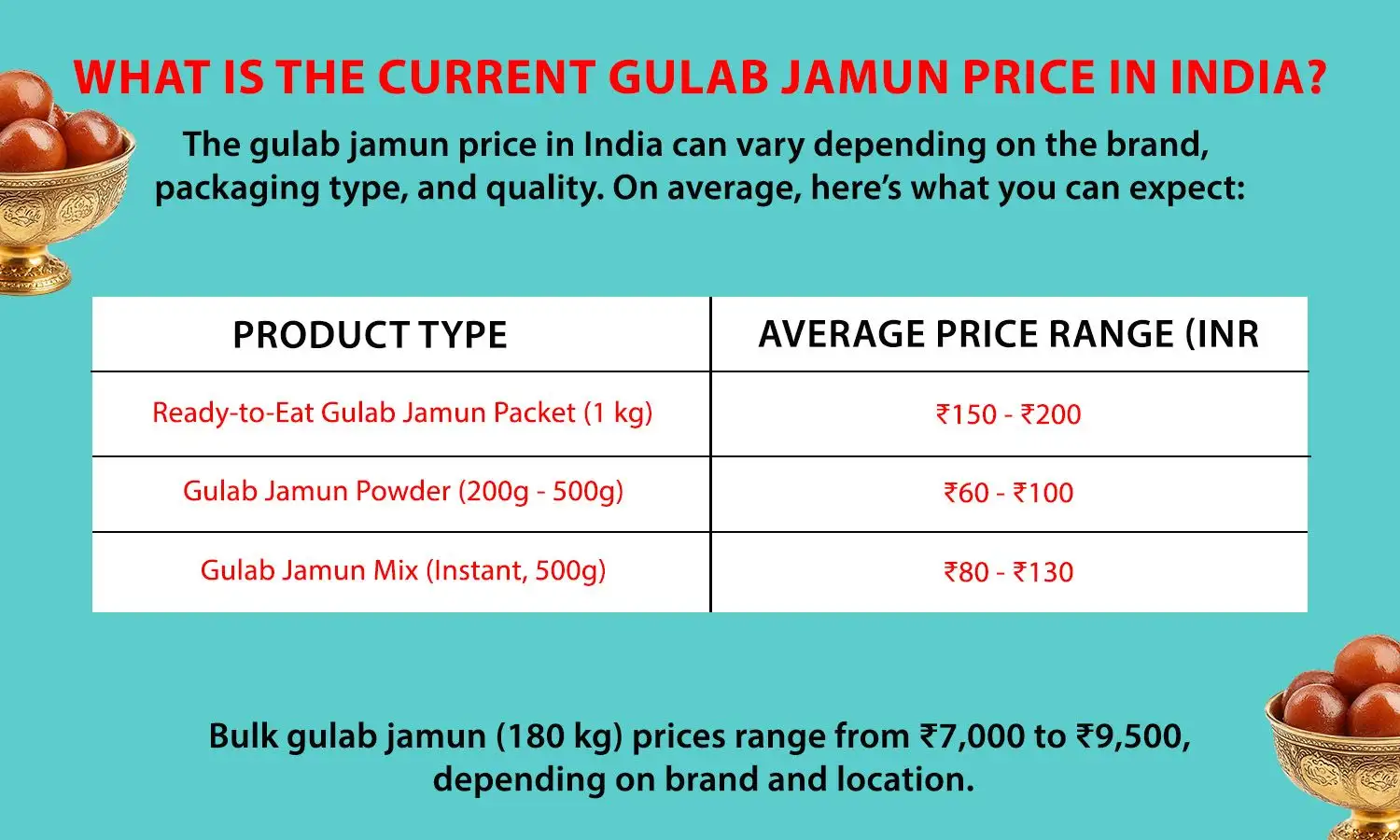
The gulab jamun price in India can vary depending on the brand, packaging type, and quality. On average, here’s what you can expect:

Product Type Average Price Range (INR)
Ready-to-Eat Gulab Jamun Packet (1 kg) ₹150 – ₹200
Gulab Jamun Powder (200g – 500g) ₹60 – ₹100
Gulab Jamun Mix (Instant, 500g) ₹80 – ₹130

Bulk orders, especially for events or sweet shops, can fetch different rates. For example, the gulab jamun price 180 kg in wholesale settings can start around ₹7,000 to ₹9,500, depending on region and brand.

Gulab Jamun Packet Price at Sweet Shops & Online Stores

When buying from your local mithai shop, the gulab jamun packet price usually includes preparation costs. A 1 kg box of fresh, hot gulab jamuns can cost anywhere between ₹180 and ₹250. During festive seasons like Diwali or Eid, prices may be slightly higher.

On the other hand, gulab jamun online purchases from stores like Amazon, BigBasket, and Flipkart often include options like instant mixes and readymade tins. These are more convenient, especially for people living away from home who crave traditional flavors without the need for extensive preparation.Popular brands like 777 Foods also offer ready-to-cook options that retain the richness of traditional recipes but simplify the process.

Gulab Jamun Powder vs Ready-Made Packets – What’s Cheaper?

When comparing gulab jamun powder price with the cost of ready-made packets, the powder tends to be more economical in the long run. Here’s a comparison:

  • Gulab Jamun Powder: You pay around ₹80 for 500g, which can make around 30-35 jamuns. That breaks down to just about ₹2.5 per piece.
  • Ready-Made Packets: A tin of 1 kg (about 15-20 pieces) costs ₹200, which is roughly ₹10-13 per piece.

If you’re hosting a function or prefer the joy of cooking at home, buying gulab jamun powder or gulab jamun mix is the more budget-friendly choice.Plus, using powder gives you control over freshness, sweetness, and quantity. gulab jamun price

Calories & Nutrition of a Single Gulab Jamun

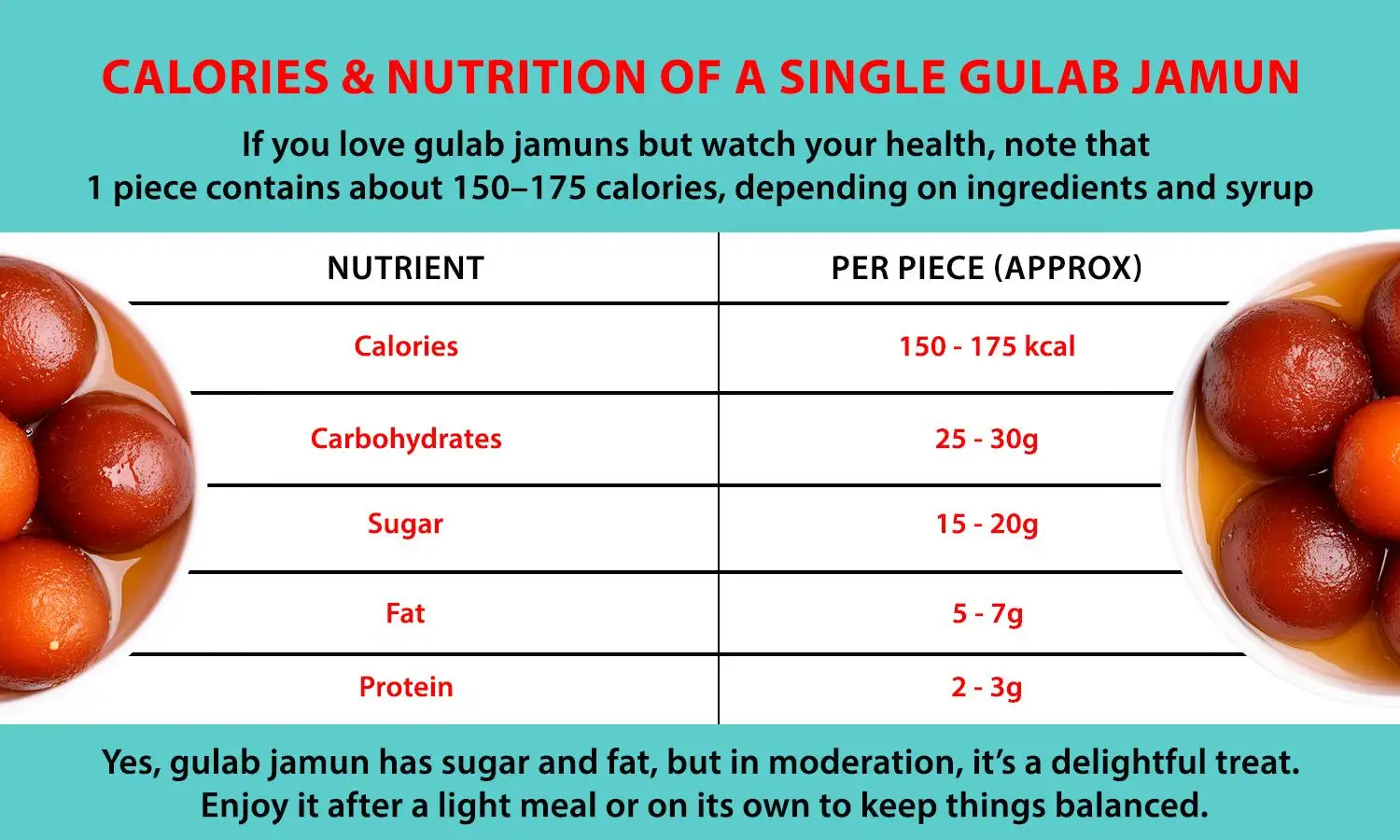
Now for those who love gulab jamuns but also keep an eye on their health, here’s what you need to know. On average, 1 gulab jamun calories amount to around 150-175 kcal, depending on ingredients and syrup content.

Here’s a simple nutritional breakdown:

Nutrient Per Piece (Approx)
Calories 150 – 175 kcal
Carbohydrates 25 – 30g
Sugar 15 – 20g
Fat 5 – 7g
Protein 2 – 3g

Yes, a gulab jamun contains sugar and fat, but when consumed in moderation, it adds a delightful indulgence to your meal. Pairing it with a lighter main dish or enjoying it as a standalone dessert keeps the balance right.

Where to Buy Gulab Jamun Online at Best Price?

If you’re wondering where to find the best deals, here’s what helps:

  • E-commerce platforms often offer discounts on bulk packs.
  • Brand websites, like 777 Foods, give you access to pure, trusted products directly from the source.
  • Subscribe & Save models let you schedule regular deliveries at a discounted gulab jamun mix price.

Whether it’s powdered mix or ready-to-eat, the advantage of buying gulab jamun online lies in variety, convenience, and consistent availability—especially for those staying abroad or in metro cities.

Don’t forget to check if the product includes gulab jamun syrup separately or already mixed, as that influences the taste and price.

Conclusion

Sweet, nostalgic, and rich in flavor, Gulab Jamun is not just a dessert—it’s an emotion. Whether you’re preparing it at home using gulab jamun powder or ordering ready-made packets, the choices today are plenty. And the gulab jamun price? It suits every budget, from economical powder packs to festive readymade boxes.With legacy brands like 777 Foods, you get the best of tradition, quality, and convenience in one spoonful of syrupy goodness.Enjoy the taste of tradition—without compromise.

Key Takeaways

  • Gulab jamun price varies based on form: powder (₹60-₹100), mix (₹80-₹130), and ready-made packets (₹150-₹200).
  • Gulab jamun powder price is more economical than ready-made options.
  • A single gulab jamun contains around 150-175 calories.
  • Bulk buyers can explore gulab jamun price 180 kg for events and functions.
  • For ease and quality, buying gulab jamun online from trusted brands is recommended.

FAQs

Why Is Gulab Jamun Expensive?The gulab jamun price reflects the quality of ingredients like khoya, ghee, and sugar. Handmade or ready-to-eat options involve labor and packaging, which can raise costs.
What Is the Shelf Life of Gulab Jamun?Freshly prepared gulab jamuns last 2-3 days without refrigeration. Tinned or packaged ones have a shelf life of 3 to 6 months if unopened and stored properly.
What Are the Benefits of Gulab Jamun?While mostly an indulgent treat, gulab jamun made from quality ingredients like those in gulab jamun powder offers quick energy from carbs and a small amount of protein.
How Much Protein Is in Gulab Jamun?Each gulab jamun typically contains 2-3g of protein, depending on preparation. Homemade versions with milk solids can have slightly more.

Gulab Jamun Calories: Nutrition, Ingredients, Health Impact & Calorie Burn

There’s something deeply comforting about a warm, melt-in-the-mouth gulab jamun after a hearty meal. Whether it’s a festival, a family gathering, or a sweet craving on a quiet evening, this traditional Indian dessert holds a permanent place in our hearts and kitchens. But as much as we adore it, one common question lingers: How many gulab jamun calories are we really consuming? Let’s break it down together, just like we break into that soft, syrupy delight.
gulab jamun calories

How Many Calories Are in One Gulab Jamun?

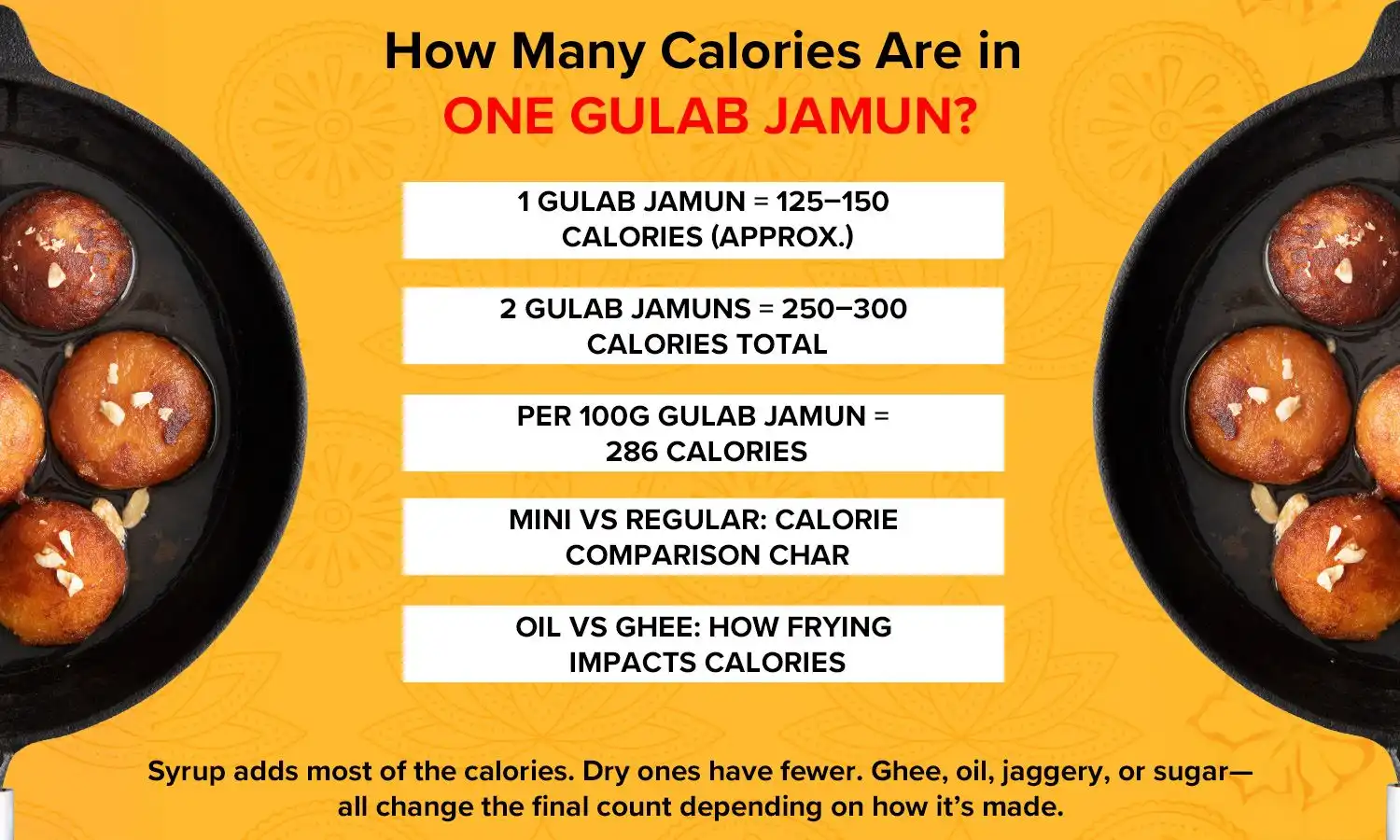
Let’s start simple. Calories in one gulab jamun depend on its size, preparation method, and ingredients used. On average:

  • 1 piece gulab jamun calories: About 125–150 calories
  • 2 gulab jamun calories: Around 250–300 calories
  • Gulab jamun calories per 100g: Approximately 286 calories

If you’re wondering about the small gulab jamun calories, a mini-sized piece usually contains around 90–100 calories, while calories in 1 small gulab jamun can vary slightly based on sugar syrup absorption and frying.

The syrup it soaks in plays a major role. A gulab jamun served dry may have fewer calories compared to one dripping in syrup. And if you’re making it at home using instant mixes, the calorie count might vary depending on the ingredients of gulab jamun mix used. For example, ghee vs. oil for frying, and jaggery vs. white sugar in syrup can influence nutrition.

gulab jamun calories

4 Main Healthy Ingredients of Gulab Jamun

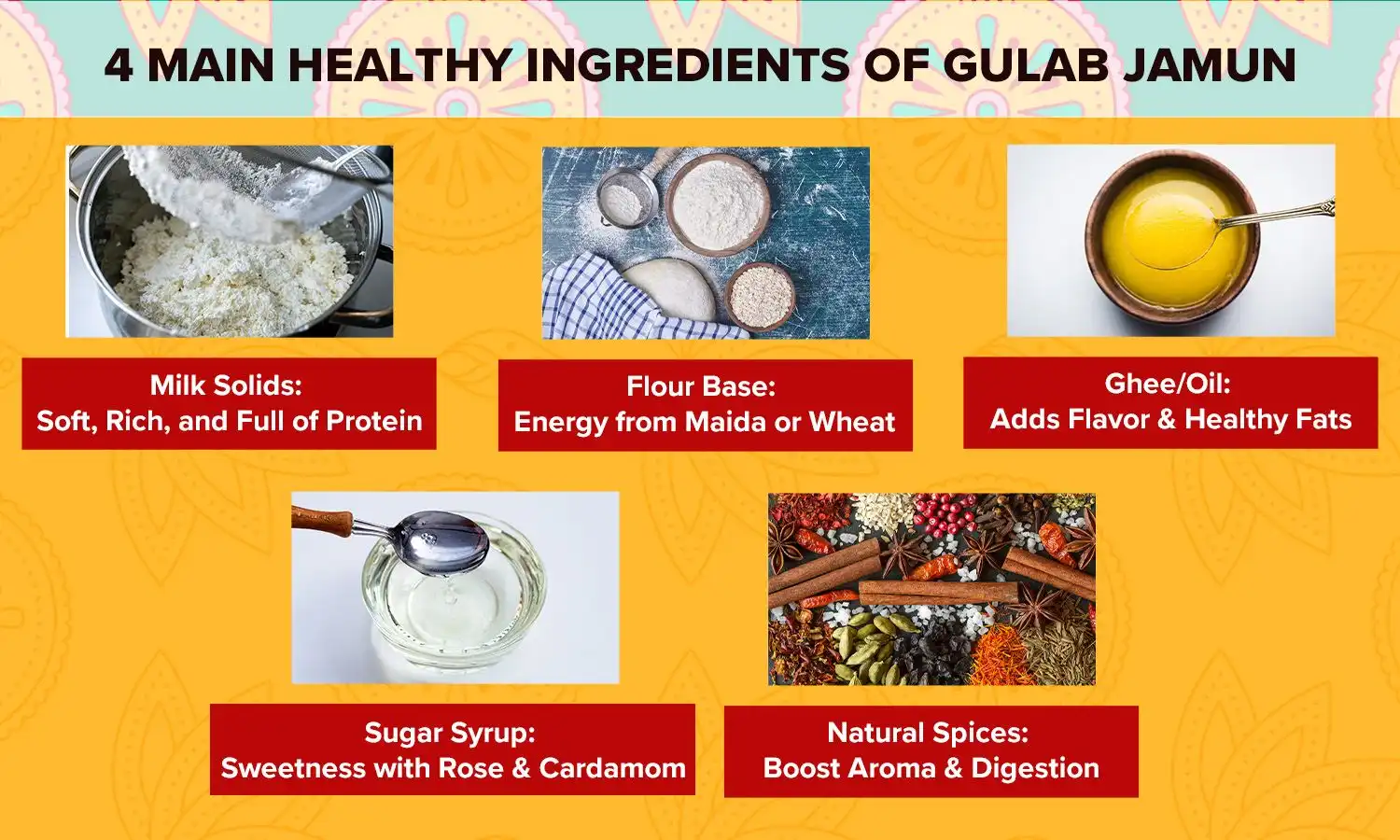
Traditionally, gulab jamuns were made from khoya (milk solids), but modern versions often use instant mixes for convenience. Here are the 4 main healthy ingredients of gulab jamun that contribute to its rich texture and flavor:

Milk Solids (Khoya or Milk Powder):

  • A rich source of calcium and protein.
  • Forms the base of the dough and gives gulab jamun its melt-in-the-mouth texture.

Whole Wheat Flour or Refined Flour (Maida):

  • Acts as a binding agent.
  • Provides carbohydrates for energy.
  • Some modern variations use ragi or other healthier flours too.

Ghee or Oil (for frying):

  • Adds richness and enhances flavor.
  • When used mindfully and in moderation, it contributes to healthy fats.

Sugar Syrup (Infused with Cardamom or Rose):

  • Gives gulab jamun its signature sweetness.
  • Natural flavorings like rosewater and cardamom enhance aroma and support digestion.

When made using 777 Foods ingredients of gulab jamun mix, the quality speaks for itself. Pure, traditionally blended ingredients ensure flavor and authenticity without cutting corners.

Can Diabetics Eat Gulab Jamun?

The sweet truth is—gulab jamun nutrition includes high levels of sugar and fat. So, while it’s not diabetic-friendly in its usual form, there are ways to adapt:

  • Use sugar alternatives like stevia or coconut sugar.
  • Bake or air-fry the jamuns instead of deep-frying.
  • Use low-fat milk powder or paneer for a softer, lighter texture.

Still, it’s important for diabetics to be cautious. Even with these changes, gulab jamun should be an occasional treat. A small gulab jamun made with care and attention to ingredients can sometimes fit into a controlled diet, but always under a nutritionist’s guidance.Here’s a breakdown of 1 gulab jamun nutrition for clarity:

  • Calories: ~125–150
  • Fat: 7–10g
  • Carbohydrates: 20–25g
  • Sugar: 15–18g
  • Protein: 2–3g
  • Fibre: ~0.5g

These values may fluctuate depending on whether you’re using full-fat milk solids, the kind of sugar used, or whether it’s homemade versus store-bought.
For context, a jamun nutrition facts 100g estimate would be:

  • Calories: ~286 kcal
  • Total Fat: ~11g
  • Carbohydrates: ~40g
  • Sugar: ~30g

gulab jamun calories

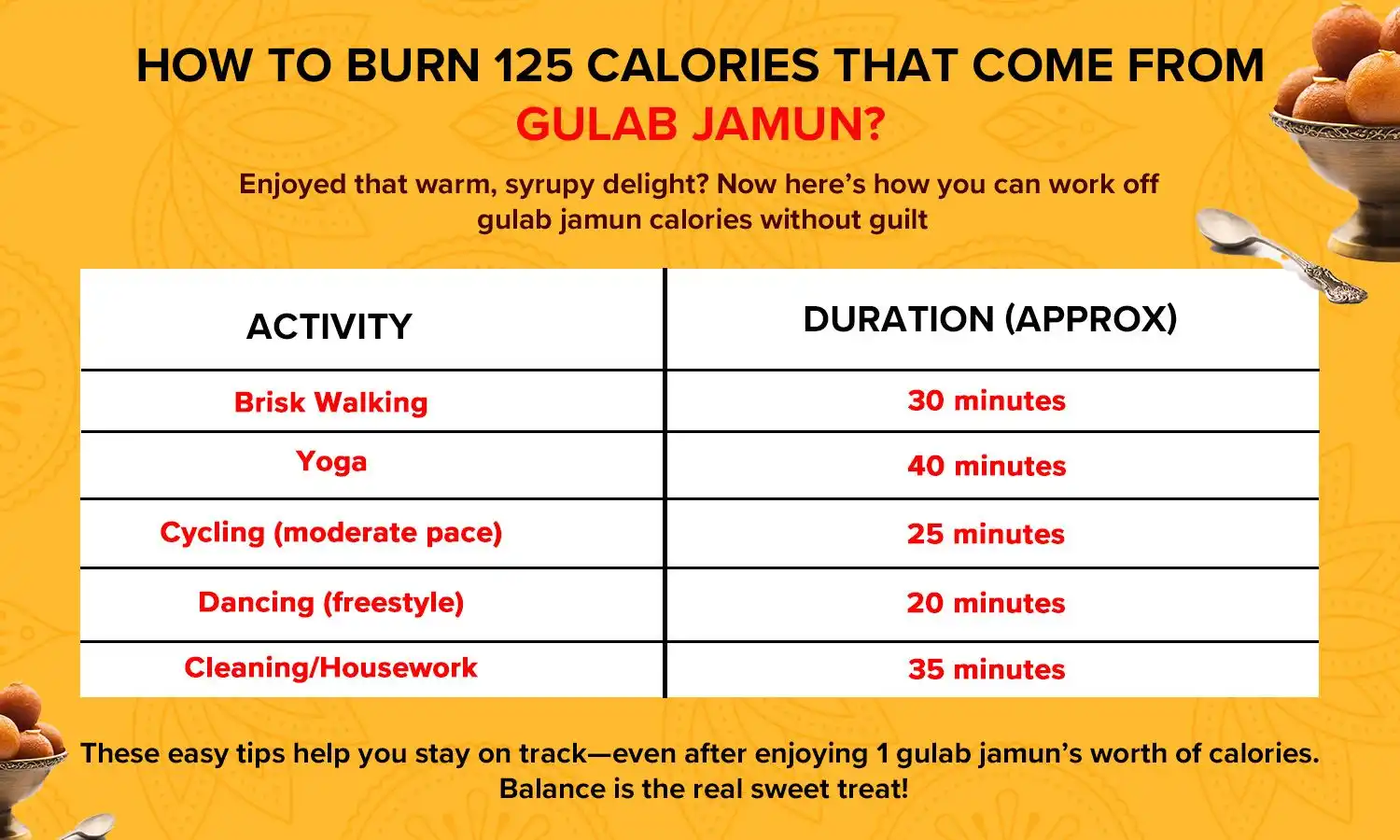
How to Burn 125 Calories That Come from Gulab Jamun?

Enjoyed that warm, syrupy delight? Now here’s how you can work off gulab jamun calories without guilt:

Activity Duration (approx.)
Brisk Walking 30 minutes
Yoga 40 minutes
Cycling (moderate pace) 25 minutes
Dancing (freestyle) 20 minutes
Cleaning/Housework 35 minutes

These are simple ways to stay on track even if you’ve treated yourself to 1 piece gulab jamun calories worth of dessert.

For those leading sedentary lives, regular physical activity becomes even more important when indulging. Practicing mindful eating—enjoying desserts slowly and in smaller portions—can reduce overconsumption.

Key Takeaways

  • 1 gulab jamun calories range between 125–150 depending on size and syrup content.
  • Traditional ingredients like milk solids and cardamom in the ingredients of gulab jamun mix offer both flavor and mild health benefits.
  • Diabetics should approach gulab jamun with caution and opt for low-sugar versions.
  • Activities like brisk walking or light cycling can help burn off dessert indulgences.
  • Whether it’s one or 2 gulab jamun calories, mindfulness and balance make all the difference.

Conclusion

Every spoonful of gulab jamun brings back childhood memories, festival vibes, and moments shared over food. While it’s rich in sweetness, it’s also rich in tradition. With a bit of awareness and portion control, you can continue enjoying your favorite dessert without guilt.
777 Foods believes in preserving taste and trust. Our mixes and ingredients are designed for those who seek authenticity, convenience, and quality. Whether you’re cooking for family, guests, or simply yourself—taste the tradition in every bite.
So next time you serve a warm gulab jamun, savor it. After all, tradition tastes best when served with mindfulness.

FAQs

Can I Eat Gulab Jamun During Weight Loss?

Yes, but in moderation. If you’re tracking gulab jamun calories, limit your intake to half or 1 piece gulab jamun calories worth (around 125 kcal), and adjust your other meals accordingly. Choose a smaller portion and balance it with exercise.

Is It Good to Eat Gulab Jamun at Night?

Ideally, sweets should be avoided close to bedtime. But if you must, opt for a small gulab jamun and keep portion control in mind. Eating it post-dinner may spike sugar levels and interrupt digestion, so earlier in the day is better.

Is Gulab Jamun Better Cold or Warm?

Taste-wise, warm gulab jamuns offer that melt-in-the-mouth experience. Cold ones feel denser. Nutritionally, gulab jamun nutrition doesn’t change much with temperature, but warm ones digest a bit faster due to increased enzymatic activity.

What Is the Best Time to Eat Jamun?

Post-lunch is a good time, when your digestion is active. This helps you metabolize the jamun nutrition facts 100g more efficiently and avoid sugar spikes at night. It also reduces the chances of sugar converting into stored fat.

What Is Turmeric Powder Made Of? Ingredients, Composition & Health Benefits explained

Introduction: A Pinch of Tradition in Every Dish

In every Indian kitchen, there’s one ingredient that adds more than just color and flavor—it adds heritage. Yes, we’re talking about turmeric. But have you ever paused to wonder what turmeric powder is made of?
More than just a golden spice, turmeric powder is the soul of many traditional recipes and home remedies. And when we ask what is turmeric powder made of, we’re really asking about a story that begins deep in the soil and ends in our everyday meals. In this blog, let’s explore the journey, composition, and goodness packed into that bright yellow pinch.
Turmeric Powder Made Of

What Is Turmeric Powder Made Of?

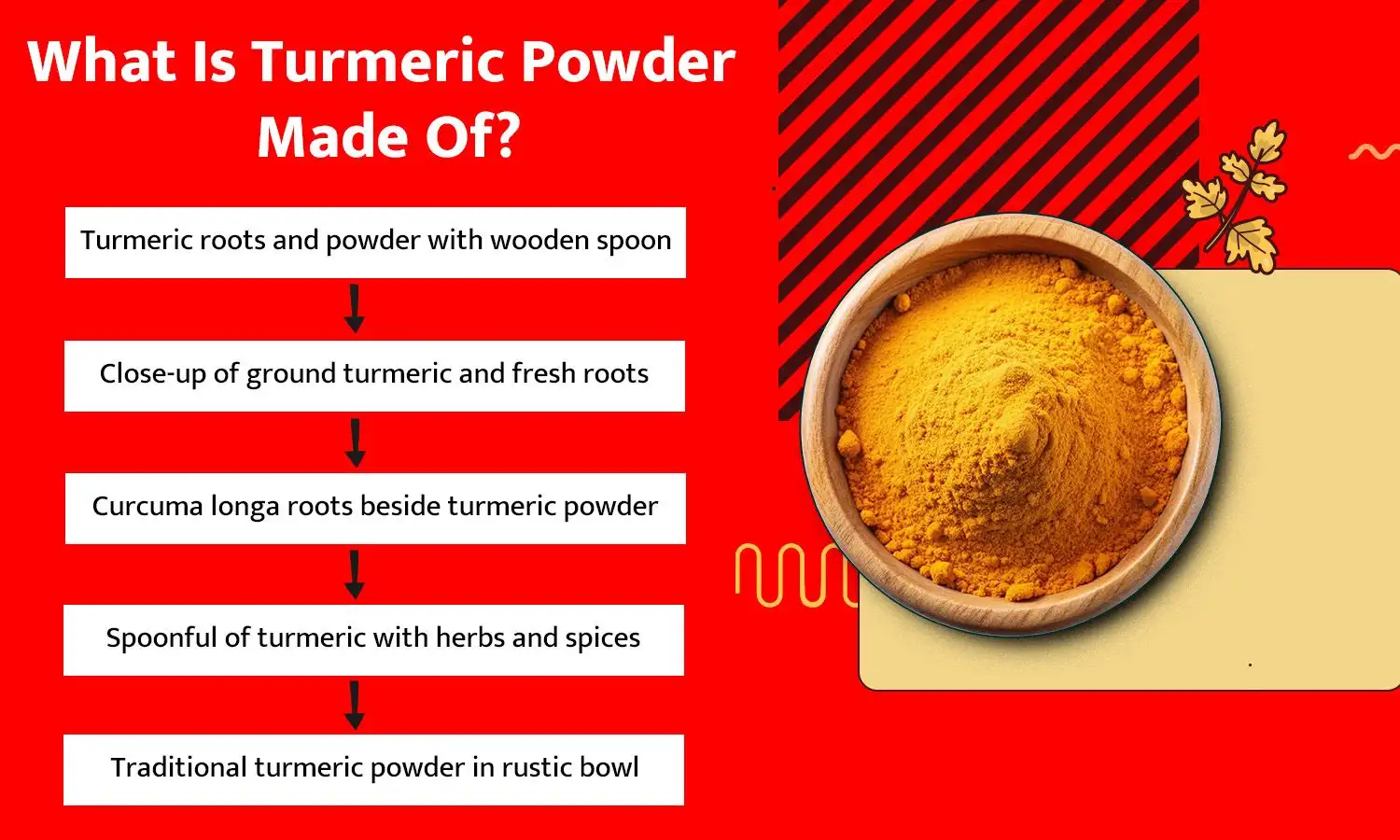
At its core, turmeric powder is made of dried and finely ground turmeric root—scientifically known as Curcuma longa. It’s not just about color; the strength of turmeric lies in its complex blend of compounds. The most well-known is curcumin, a natural antioxidant and anti-inflammatory agent. But there’s more.

Turmeric contains natural oils (like turmerone), resins, and polysaccharides—each playing a role in its health and culinary benefits. When you’re holding that spoonful of spice, you’re holding generations of wellness and wisdom.

So next time someone asks, “What is turmeric powder made of?” —you’ll know it’s not just turmeric root; it’s tradition, science, and purity blended into one.

What Is Curcumin and Why Is It Important?

Curcumin is the golden powerhouse hidden within turmeric. It gives turmeric its bright color and carries most of its health benefits. Although it only makes up 2–5% of what turmeric powder is made of, it’s the star when it comes to medicinal properties.

This compound supports joint health, fights inflammation, and even aids in digestion and immunity. But here’s something important—curcumin is not easily absorbed by our body. That’s why pairing turmeric with black pepper (which contains piperine) enhances its effectiveness.Understanding curcumin helps you appreciate why turmeric powder made of genuine roots (and not fillers) truly matters for your well-being.
Turmeric Powder Made Of

How Is Turmeric Powder Made? (From Root to Powder)

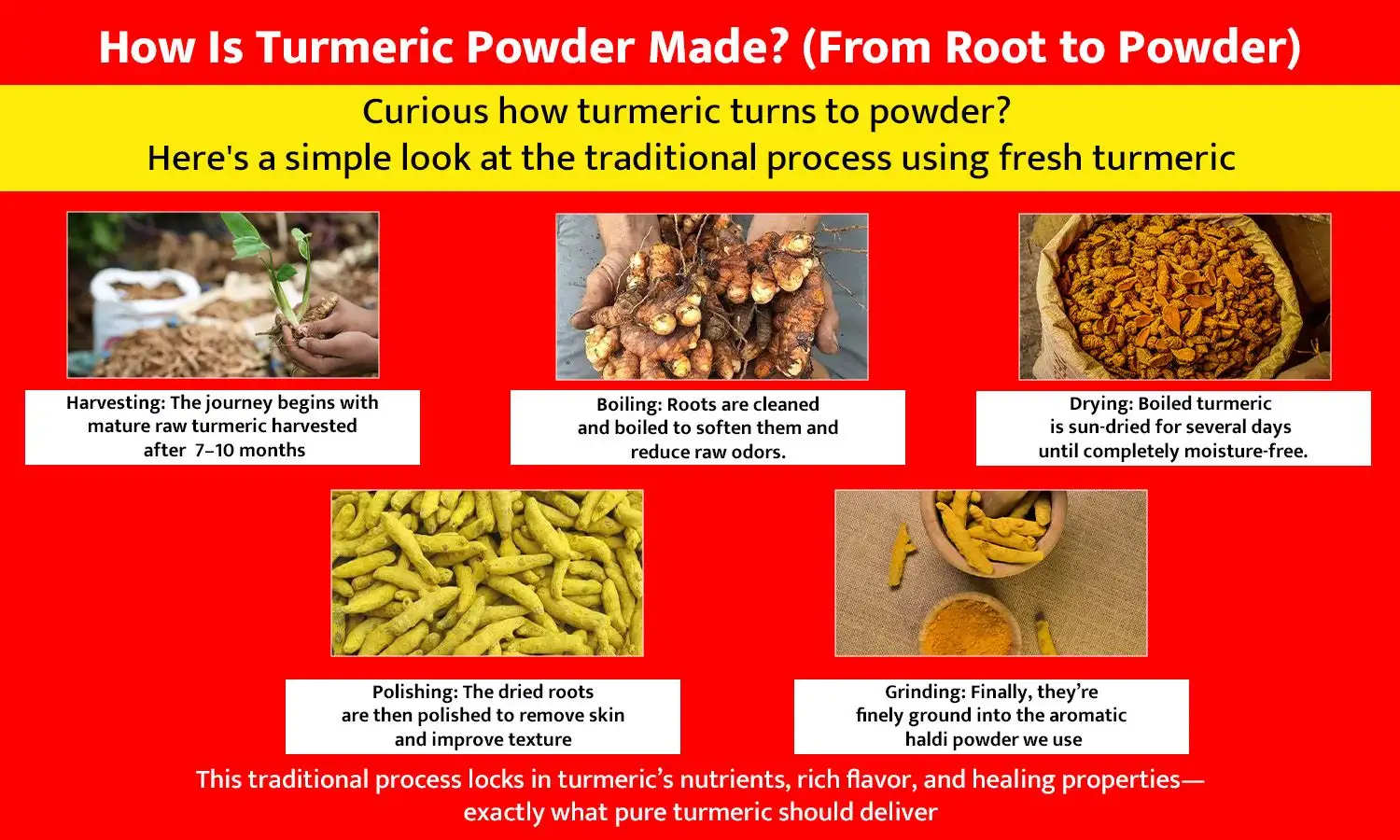
Wondering how turmeric is processed? Let’s break down how turmeric powder is made of fresh turmeric through a simple, traditional method:

  • Harvesting: The journey begins with mature raw turmeric harvested after 7–10 months.
  • Boiling: Roots are cleaned and boiled to soften them and reduce raw odors.
  • Drying: Boiled turmeric is sun-dried for several days until completely moisture-free.
  • Polishing: The dried roots are then polished to remove skin and improve texture.
  • Grinding: Finally, they’re finely ground into the aromatic haldi powder we use.

This age-old process protects the nutritional value of natural turmeric and retains its flavor and medicinal qualities—exactly what you expect when you choose pure products.

Natural vs Adulterated Turmeric Powder

Sadly, not every packet labeled “turmeric” is pure. Some are laced with artificial colorants or chalk powder. This is where knowing what turmeric powder is made of becomes essential.
Pure organic turmeric powder smells earthy, tastes slightly bitter, and settles at the bottom when mixed in water. In contrast, adulterated ones may dissolve too easily or leave suspicious streaks.To avoid risks, always go for trusted names. Brands like 777 Foods follow traditional processing methods and use only fresh turmeric to create authentic, preservative-free turmeric powder.
Turmeric Powder Made Of

Health Benefits of Pure Turmeric Powder

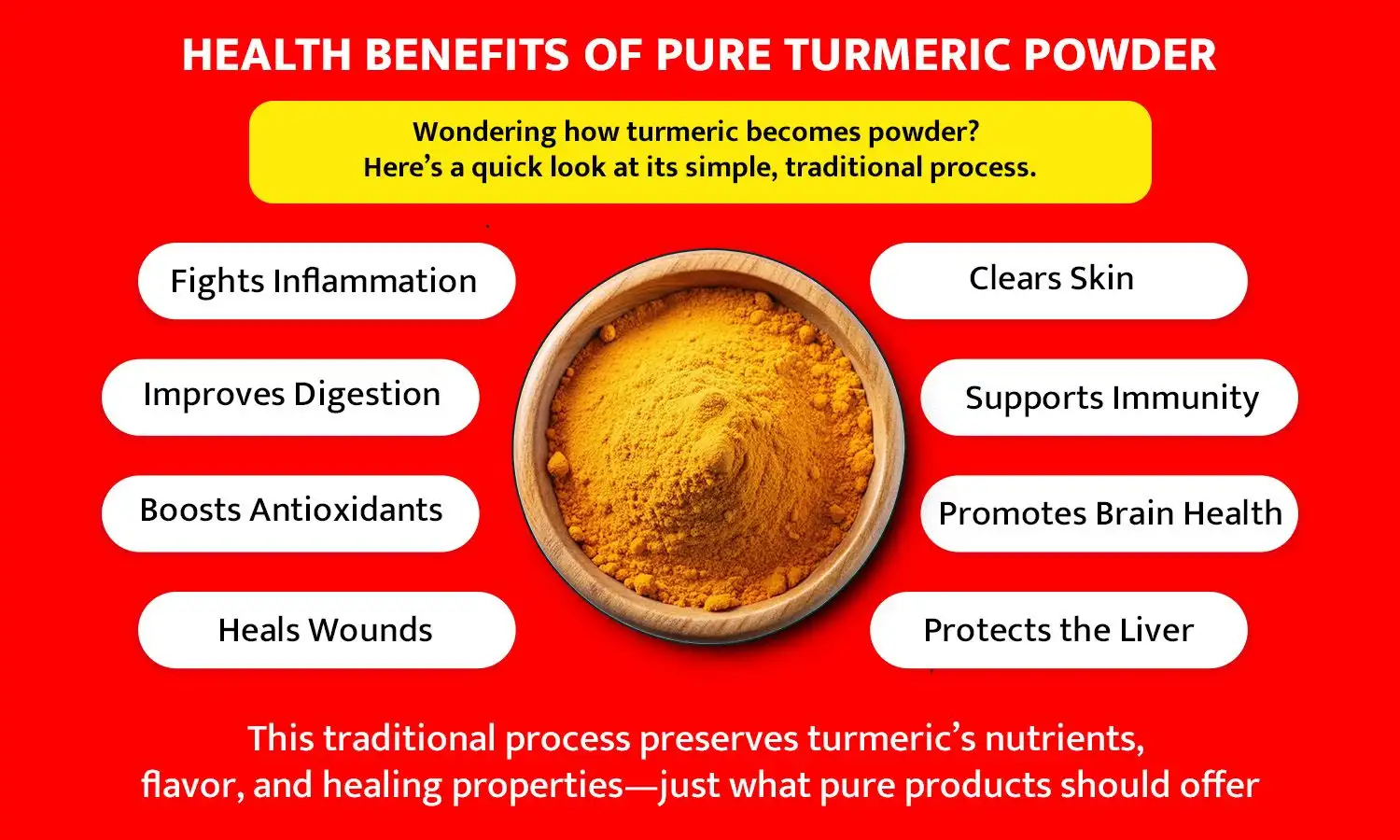
Let’s explore the health benefits of turmeric powder, especially when it’s truly turmeric powder made of clean, unadulterated turmeric root:

  • Fights Inflammation: Curcumin helps reduce joint pain and swelling.
  • Improves Digestion: Stimulates bile for better fat breakdown and less bloating.
  • Boosts Antioxidants: Slows aging and reduces oxidative stress.
  • Heals Wounds: Applying turmeric paste promotes faster skin repair.
  • Clears Skin: Regular use helps fade turmeric for scars and blemishes.
  • Supports Immunity: Acts as a natural guard against infections.
  • Promotes Brain Health: May help prevent memory loss with regular use.
  • Protects the Liver: Aids in detoxification and improved liver function.

When the turmeric powder is made of real turmeric root extract, you don’t just get color—you get centuries of Ayurvedic healing in every pinch.

Conclusion: A Legacy in Every Spoonful

So, what is turmeric powder made of? It’s made of sun-dried, hand-selected turmeric root, rich in curcumin, oils, and ancient wisdom. Choosing natural, pure haldi powder isn’t just a cooking decision—it’s a health choice.With 777 Foods, you get turmeric powder made of traditional methods and quality ingredients—nothing less. From your grandmother’s spice box to your everyday cooking, this golden powder continues to bring healing, flavor, and heritage to your plate.

Key Takeaways

  • Turmeric powder made of dried turmeric root contains curcumin, oils, and resins.
  • Curcumin is a powerful compound offering anti-inflammatory and antioxidant benefits.
  • The traditional process of how turmeric is processed maintains its potency.
  • Adulterated turmeric may harm your health—always choose trusted, pure sources.
  • From digestion to skin clarity, the turmeric powder benefits are truly holistic.

FAQs

1. Does ground turmeric expire?

Yes, it does. While turmeric doesn’t rot, its strength fades. Fresh turmeric powder made of real root retains flavor for about 2–3 years if stored in a cool, dry place.

2. How to check if turmeric powder is pure?Add a teaspoon to warm water. If it settles at the bottom and doesn’t leave artificial streaks, it’s likely pure. Remember, genuine turmeric powder made of turmeric root has a bitter taste and earthy smell.
3. What is turmeric powder extracted from?It’s extracted from the turmeric root (Curcuma longa). After boiling, drying, and polishing, the root is ground to form the vibrant spice we know today. This is what turmeric powder is made of.
4. What is the lifespan of turmeric powder?

Turmeric comes from the root (rhizome) of the Curcuma longa plant. After boiling, drying, and milling, it becomes the bright yellow spice—so the root is the real source behind turmeric powder health benefits.

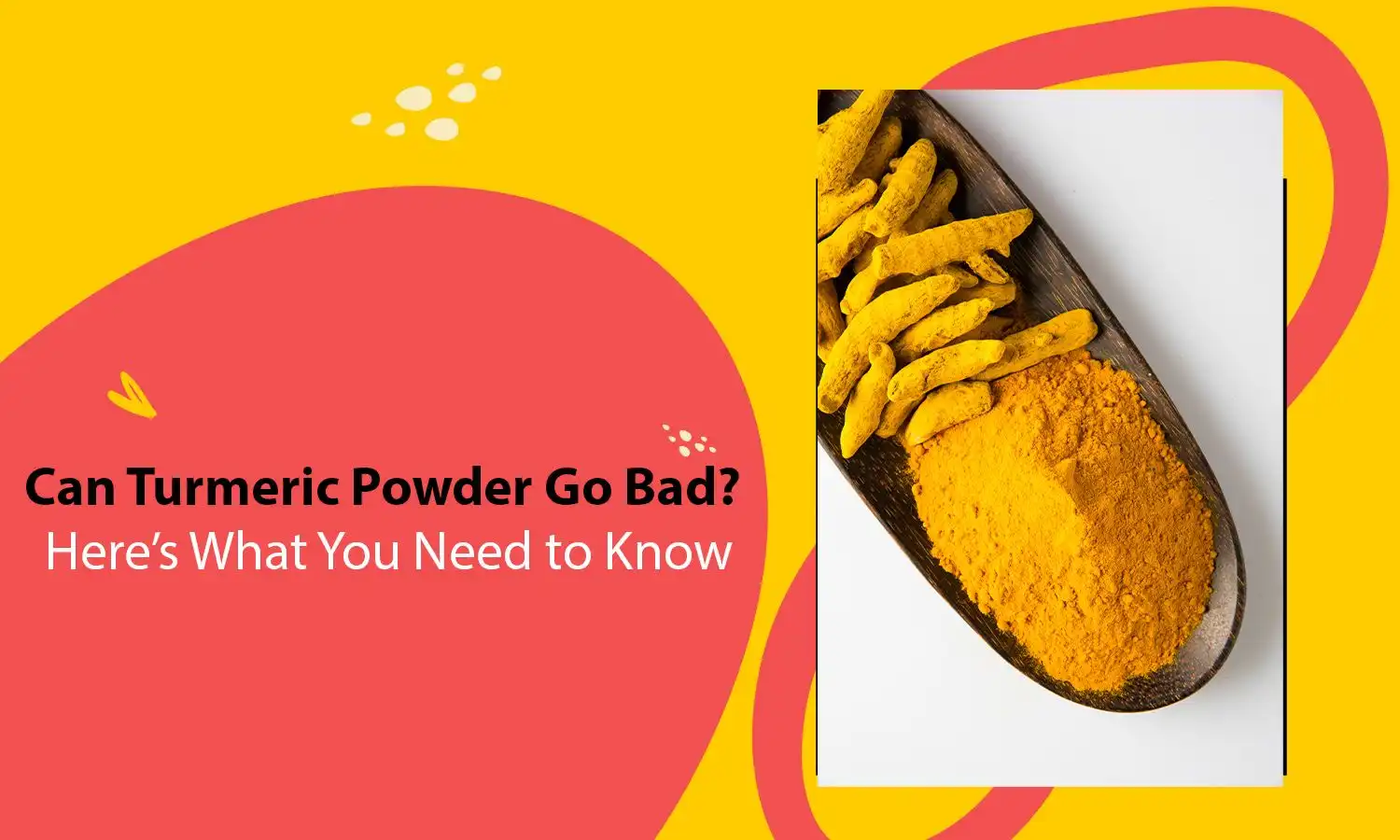
Can Turmeric Powder Go Bad? Here’s What You Need to Know

Summary

Yes, turmeric powder expires, it loses curcumin potency, aroma, and colour. Shelf life is 3–4 years in airtight, dark storage but under one year if exposed to air or moisture. Signs of spoilage include faded colour, weak smell, clumping, mould, or pests. Includes storage tips (glass containers, dry spoons) and notes on still-usable but weakened expired turmeric.Every Indian kitchen holds a tiny jar of golden yellow turmeric powder. It sits quietly beside the salt and chilli, waiting to add warmth and colour to our curries, dals, and teas. But here’s a thought that crosses many minds: can turmeric powder go bad? Is it possible for this magical spice, known for its healing and flavour, to lose its charm?
Let’s understand how time, air, and moisture affect turmeric and how you can keep your spice cabinet fresh and fragrant.

Does Turmeric Powder Expire?

Yes, turmeric powder does expire. Like all natural food items, it has a shelf life. While it doesn’t spoil the way milk or fresh produce does, turmeric can lose its potency, aroma, and colour over time.

Does turmeric powder expire?

It certainly does, meaning it won’t stay at peak quality forever.

The shelf life of turmeric powder depends on how it’s processed and stored. Typically, if kept in an airtight container away from moisture and direct sunlight, it can last up to 3-4 years. However, poor storage can reduce this significantly.

Many people ask, “Does turmeric expire or go bad?”

In reality, both can happen. Turmeric powder can degrade rather than rot. It may not become harmful, but its healing properties and flavour start fading. And that matters, especially when we use it not just for taste, but for wellness too.

Can Turmeric Powder Go Bad

How to Tell If Turmeric Powder Has Gone Bad

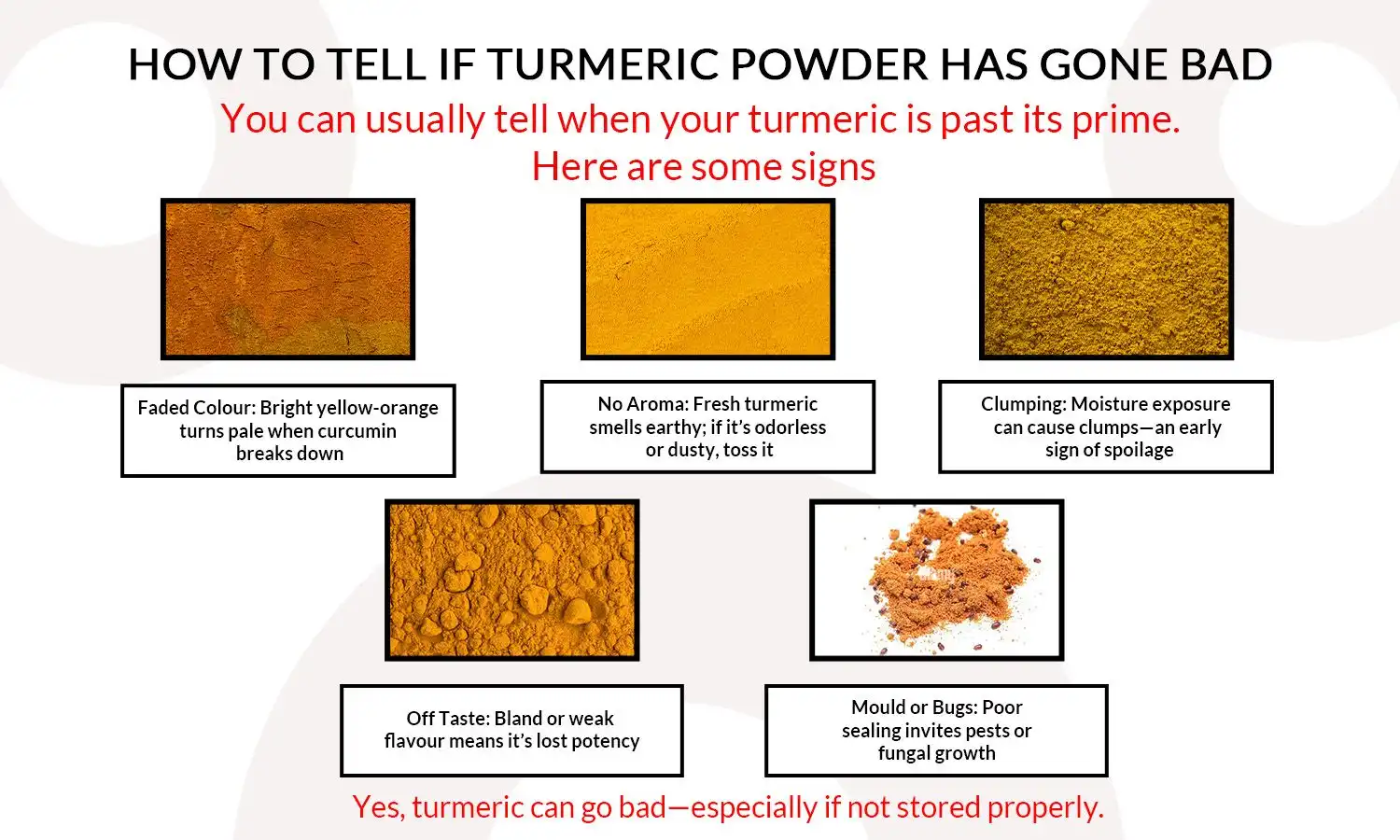
How long is turmeric good for? You can usually tell when your turmeric is past its prime. Here are some signs:1. Faded Colour: Fresh turmeric powder has a vibrant yellow-orange hue. If it turns pale, it’s a sign that the active compound curcumin has degraded.

2. Lack of Aroma: Authentic turmeric smells earthy and slightly bitter. If it smells like dust or has no smell at all, it’s time to toss it.

3. Clumping: Exposure to moisture can cause the powder to clump. This may also signal the start of spoilage.
4. Clumping: Exposure to moisture can cause the powder to clump. This may also signal the start of spoilage.
5. Presence of Mould or Bugs: If the container wasn’t sealed properly, it could attract pests or fungal growth.
So, can turmeric powder go bad? Absolutely—especially if stored improperly.

How Long Does Turmeric Powder Last?

On average, turmeric powder remains potent for about 3 years. However, factors like humidity, heat, and packaging can alter this timeline.

If you are evaluating your entire spice collection, you might wonder how long turmeric is good for before it loses its nutritional value.The answer varies based on your setup:

Storage Method Shelf Life
Original packaging in cool place 2 to 3 years
Airtight container in dark area 3 to 4 years
Exposed to air or moisture Less than 1 year

In short, the turmeric powder expiry date mentioned on the packet is a good indicator—but always check the smell and colour before use.
And yes, can turmeric powder go bad even before its expiry date? If exposed to air or moisture, it surely can. Can Turmeric Powder Go Bad

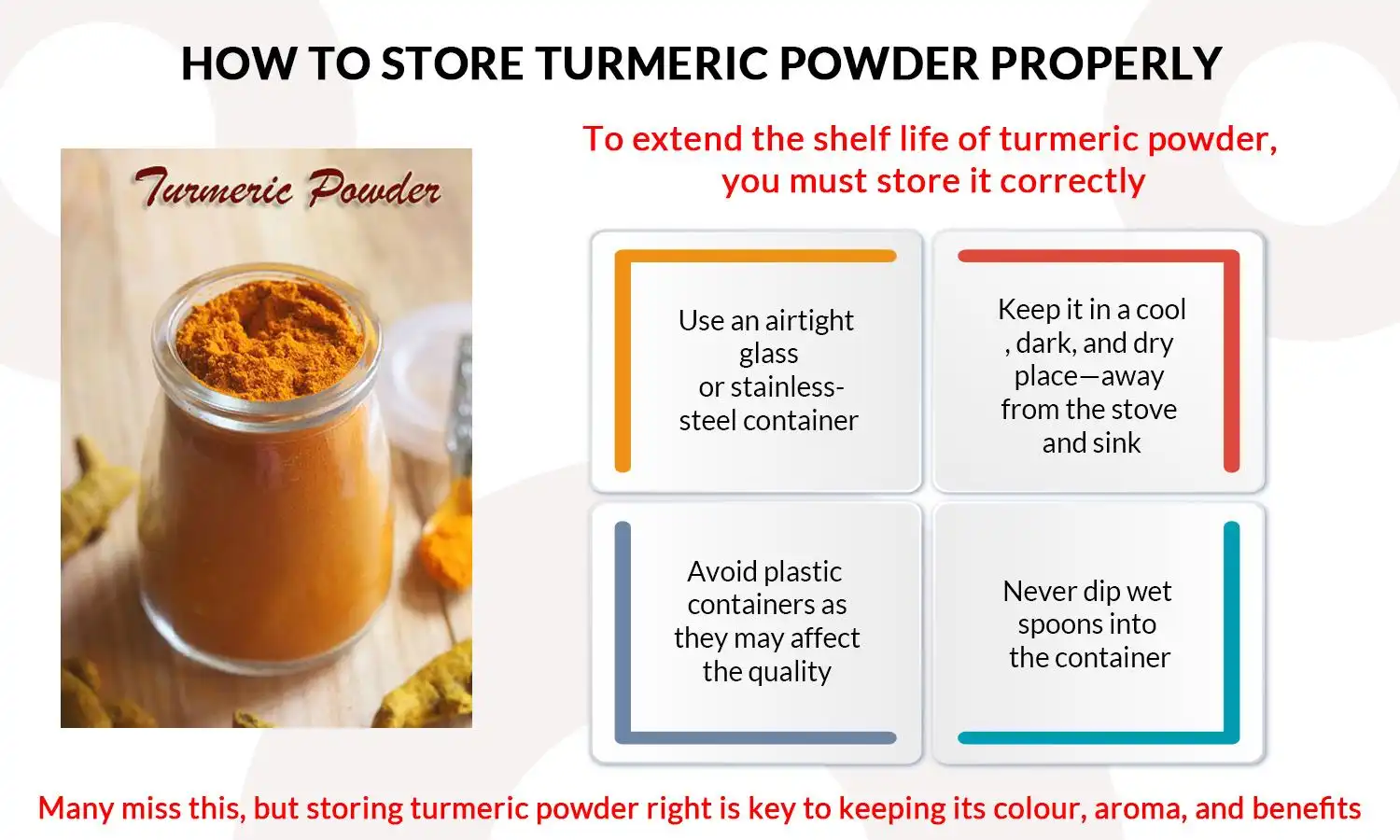
How to Store Turmeric Powder Properly

Can turmeric powder go bad? Yes!
So, how can you prevent it? By extending its shelf life.

  • Use an airtight glass or stainless-steel container.
  • Keep it in a cool, dark, and dry place—away from the stove and sink.
  • Avoid plastic containers as they may affect the quality.
  • Never dip wet spoons into the container.

Many overlook this, but learning how to store turmeric powder is the key to preserving its colour, aroma, and benefits.

Can You Still Use Expired Turmeric Powder?

Now here comes the tricky part. Can I use expired turmeric powder?

If the powder still has colour and aroma, and no mould or bugs are present, you can still use it for cooking. However, it may not offer the same benefits. The antioxidants and curcumin reduce over time.

If you decide it is too weak for your curries, figuring out what to do with expired turmeric powder can save it from the trash. You can repurpose it into tie-dye projects, natural soaps, or garden pest deterrents.

Using expired turmeric powder won’t necessarily make you sick, but it won’t give the healing or flavour punch that fresh turmeric does. For medicinal uses or skincare, always use fresh powder.

This raises the question once more: can turmeric powder go bad? Yes, especially when its effectiveness and flavour have clearly diminished.

Where to Buy Fresh, Pure Turmeric Powder?

Choosing the right source is everything. Turmeric is not just a spice; it’s a symbol of purity and health in every Indian home. That’s why 777 Foods ensures:

  • Handpicked, high-curcumin turmeric roots
  • Traditional grinding techniques that preserve natural oils
  • No additives or synthetic colouring
  • Clean, hygienic packaging with clear turmeric expiration date

So, if you’ve ever wondered can turmeric go bad, the answer is yes. But with 777 Foods, you can always expect turmeric that stands the test of time, flavour, and purity.
Can Turmeric Powder Go Bad

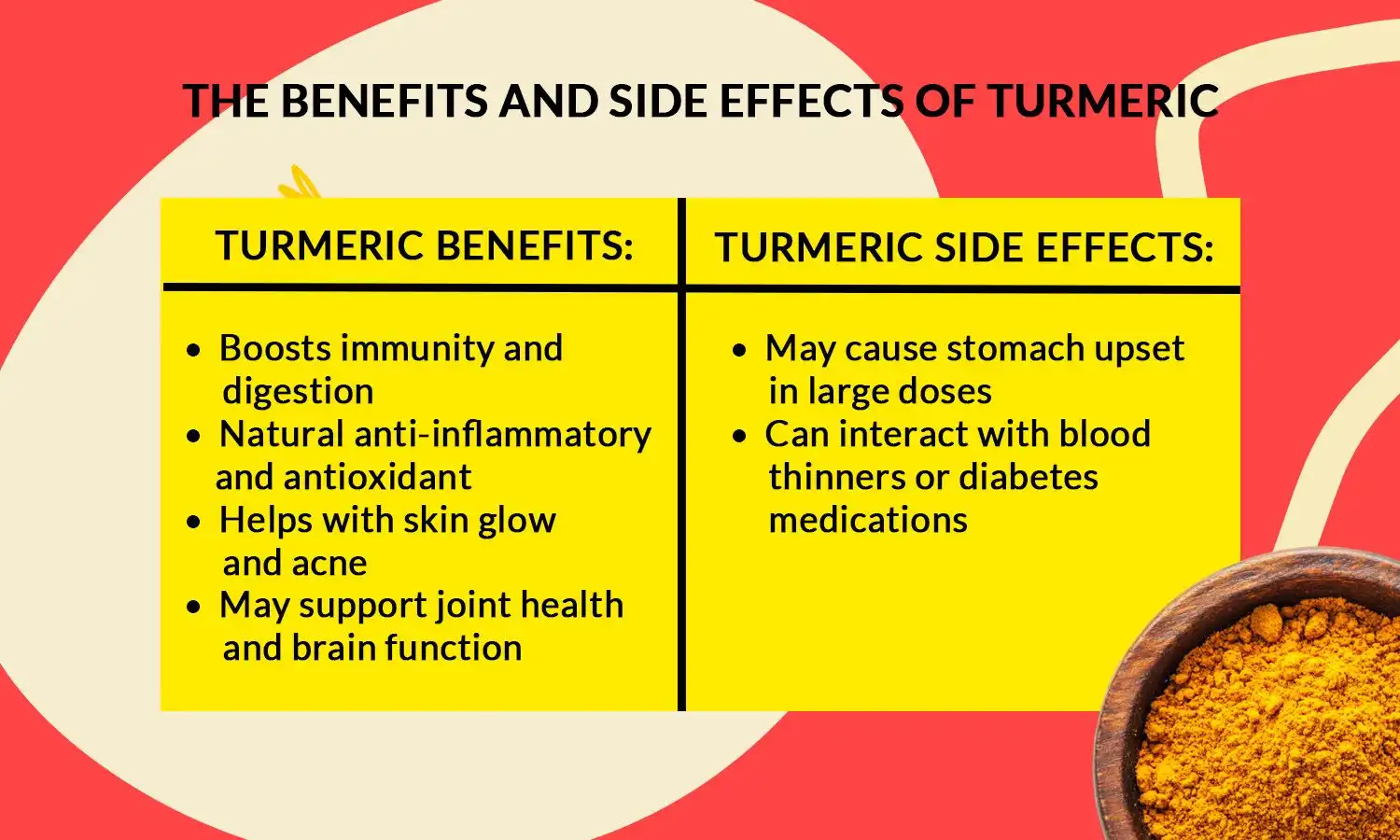
The Benefits and Side Effects of Turmeric

Beyond its shelf life, turmeric is known for several health advantages. Let’s talk about both the good and the cautious side.

Turmeric Benefits:

  • Boosts immunity and digestion
  • Natural anti-inflammatory and antioxidant
  • Helps with skin glow and acne
  • May support joint health and brain function

Even turmeric tablets benefits are widely recognised today for people who prefer supplements over spices.

Turmeric Side Effects:

  • May cause stomach upset in large doses
  • Can interact with blood thinners or diabetes medications

Also, be cautious with curcumin side effects, especially if taken in capsule form without medical guidance.
If you’re asking do turmeric capsules expire, the answer is yes—always check the packaging and avoid using past the printed turmeric expiration date.

Key Takeaways

  • Can turmeric powder go bad? Yes, especially if not stored properly.
  • The typical shelf life of turmeric powder is around 2-4 years.
  • Watch for faded colour, weak aroma, and clumping.
  • Store in airtight containers away from moisture and light.
  • Always choose trusted brands like 777 Foods for purity and freshness.
  • If unsure, always ask: can turmeric powder go bad? Trust your senses—they rarely lie.

Conclusion

Turmeric isn’t just another spice—it’s tradition in a teaspoon, health in a pinch, and a memory of every home-cooked meal. And just like any precious ingredient, it deserves care.
So, next time you reach for that golden jar, ask yourself—can turmeric powder go bad? If it has, maybe it’s time to let go of the old and make space for something purer, something real.With 777 Foods, you’re not just buying turmeric. You’re choosing trust, tradition, and the taste of home.

FAQs :

What is the lifespan of turmeric powder?

The average lifespan is 3 years if stored correctly. After that, the potency decreases. So yes, can turmeric powder go bad over time? Definitely.

Does powdered turmeric lose its potency?

Yes, over time. Especially if exposed to heat or air. Always check aroma and colour.

Does fresh turmeric expire?Yes, it does. Fresh turmeric roots spoil faster than powder. If you want to maximize its freshness, knowing how long turmeric lasts in the fridge is helpful. It usually stays good for up to 2 to 3 weeks when wrapped properly in a paper towel inside a sealed bag.
What is turmeric hack?

A popular trick is mixing turmeric with black pepper to increase curcumin absorption. This enhances the turmeric benefits for health.

Who should not take turmeric?

People with gallbladder issues, or those on blood thinners, should consult a doctor before using turmeric regularly due to possible turmeric side effects.

Top 7 Myths About Turmeric Powder

Introduction

Welcome! Today we’ll debunk the most common Myths About Turmeric Powder and share real insights backed by facts. Many people believe that turmeric’s power comes only from curcumin in turmeric, or that you must pair it with black pepper or fats. But myths swirl just like golden spice in milk—let’s sift fact from fiction together! By the end, you’ll confidently understand the turmeric powder health benefits, risks, et cetera. Let’s dive in.
Myths About Turmeric Powder

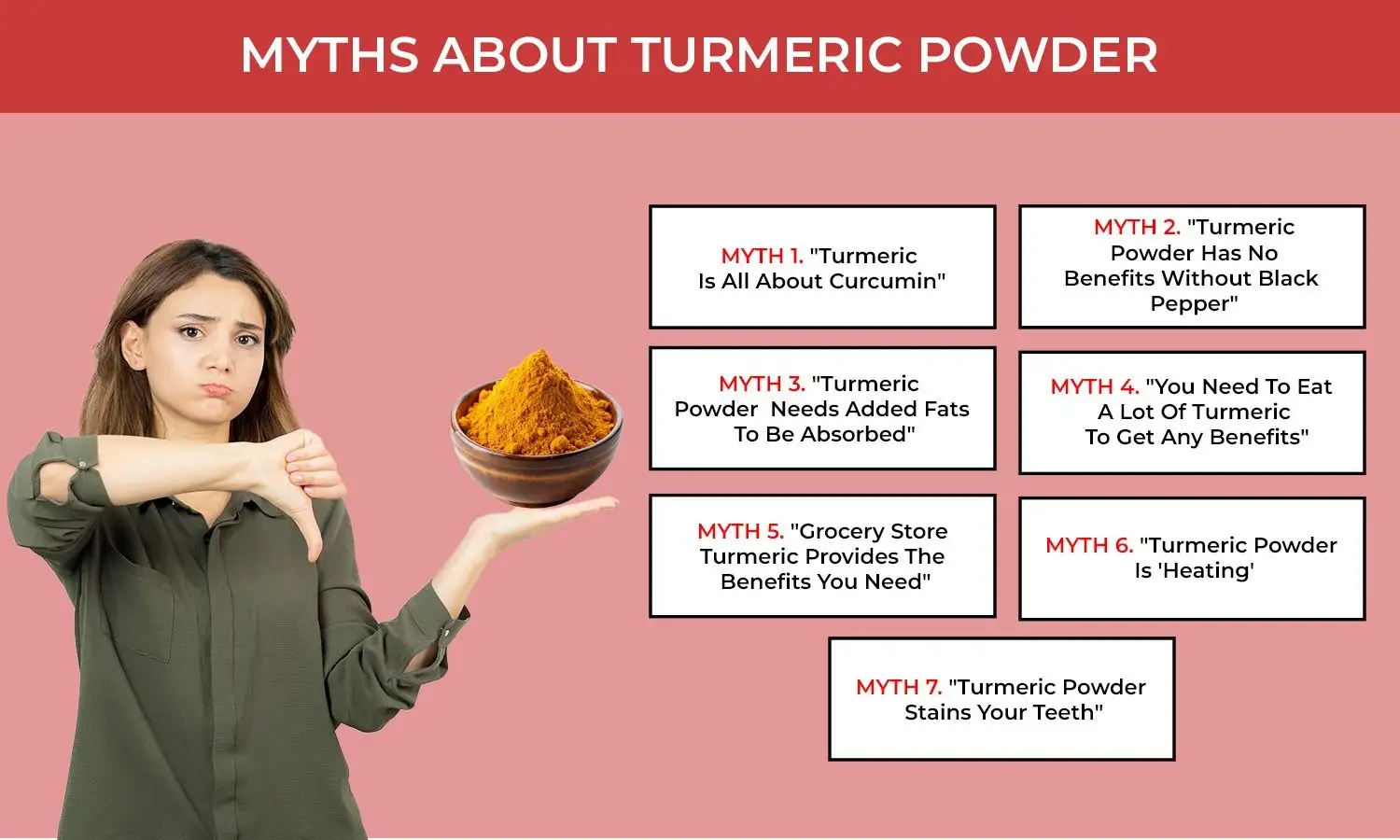
Myth 1: “Turmeric Is All About Curcumin”

One big misconception in Myths About Turmeric Powder is that only curcumin matters. True, curcumin in turmeric is a key compound—research shows anti-inflammatory and antioxidant action. But whole turmeric powder offers dozens more nutrients: essential oils, polysaccharides, and turmeric vitamins like C, E, and B6. Studies show the full spectrum works better than curcumin alone. So the myth falls—turmeric is more than a single compound.

Myth 2: “Turmeric Powder Has No Benefits Without Black Pepper”

Some insist no turmeric powder health benefits without turmeric and black pepper benefits. It’s true that black pepper, with piperine, improves uptake. But that doesn’t mean turmeric alone isn’t beneficial. Labs show that even without black pepper, turmeric offers mild anti-inflammatory and gut-support benefits. If you can’t tolerate pepper, you still get value. So the Myths About Turmeric Powder claiming zero benefit fall short.

Myth 3: “Turmeric Powder Needs Added Fats To Be Absorbed”

This is another of the Myths About Turmeric Powder floating around. While turmeric is fat‑soluble—often used in curries with oil or in turmeric golden milk (trending)—your body can still absorb it via warm water or plant-based sources like avocado or coconut milk. Sure, fat helps, but it’s not a requirement. Many turmeric smoothie recipes pair it with banana or almond milk—no butter needed!

Myth 4: “You Need To Eat A Lot Of Turmeric To Get Any Benefits”

Many believe you must consume large quantities to see results. But most turmeric powder health benefits start with just ½ to 1 teaspoon daily—around 2–3 g. Much more at once may increase turmeric powder side effects, like stomach upset or mild blood thinning. So the Myths About Turmeric Powder claiming you need tablespoons daily are false—small, consistent amounts give benefits without harm.

Myth 5: “Grocery Store Turmeric Provides The Benefits You Need”

This myth hides a real concern: turmeric adulteration. Common Myths About Turmeric Powder assume all store-turmeric is pure. Unfortunately, some low-cost powders are diluted with rice flour, chalk, or harmful dyes. To avoid that, look for organic turmeric powder with third-party testing. Labels like USDA Organic, Non-GMO Project Verified, or spice board certification show you’re getting pure turmeric. Don’t assume everything on grocery shelves is reliable. Myths About Turmeric Powder

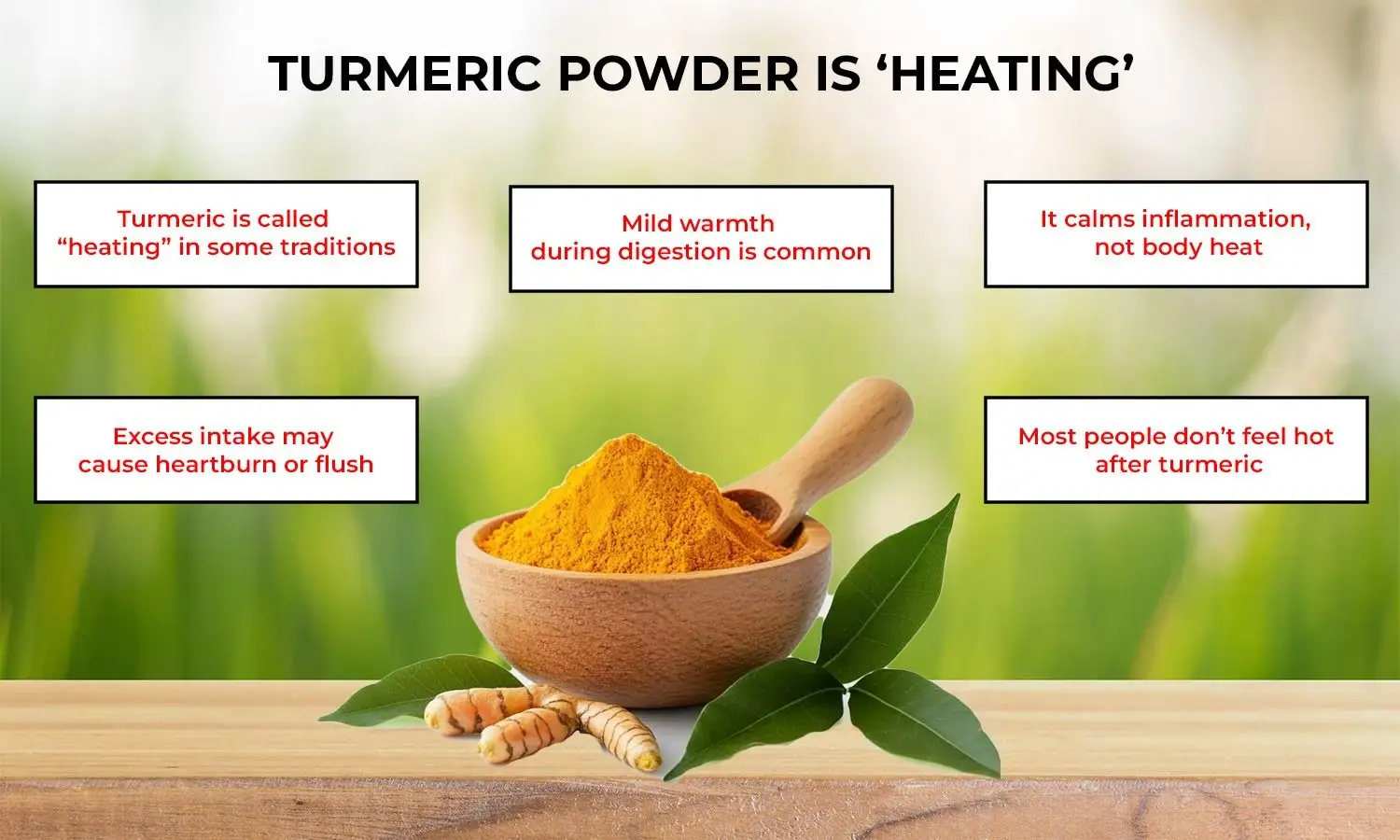
Myth 6: “Turmeric Powder Is ‘Heating’”

In some traditions, turmeric is labeled “heating,” thought to raise your internal temperature. If you’ve experienced mild warmth during digestion, that may explain the myth. But scientifically, turmeric isn’t thermogenic—instead, it helps calm inflammation. Some people say turmeric side effects include heartburn or flushing, especially if taken in excess or on an empty stomach. Most don’t get “hot” feelings. So this myth is mostly misunderstood.

Myth 7: “Turmeric Powder Stains Your Teeth”

One worry under Myths About Turmeric Powder is that golden spice can permanently yellow your teeth. Yes, bright color can coat enamel temporarily. But brushing afterward and using a straw with your turmeric golden milk (trending) or turmeric smoothie helps. Some even use turmeric for turmeric teeth whitening—the stain myth flips. Pro tip: rinse mouth after use to avoid any yellow cast.

Conclusion

Time to wrap up the Myths About Turmeric Powder adventure! We’ve debunked seven major ones—from exclusive focus on curcumin to fears of staining. You’ve learned that small daily amounts offer real benefit, pepper and fats help—but aren’t mandatory, grocery turmeric may not be pure, and turmeric doesn’t overheat the body or permanently stain teeth.
Next time someone tells you turmeric must meet one of these conditions, you’ll know the real story. Use authentic products—like pure organic turmeric powder—and enjoy one of nature’s most nourishing spices with confidence.

Key Takeaways

  • Turmeric has more than curcumin: contains vitamins, oils, fibers.
  • You don’t need pepper or fats to benefit—though they help.
  • Just ½–1 tsp per day can be effective; excess causes side effects.
  • Many powders are adulterated—choose certified organic turmeric powder.
  • Turmeric is not “heating”—it fights inflammation; side effects are mild.
  • It doesn’t permanently stain teeth—rinse after use or use a straw.
  • Enjoy turmeric in golden milk, smoothies, savory turmeric recipes, and more!

FAQs :

What Are the Facts About Turmeric Powder?
The truth behind Myths About Turmeric Powder is that turmeric contains many helpful compounds—not just curcumin. It offers antioxidant, anti-inflammatory, and digestive support when used in normal culinary amounts. Quality and dosage matter more than myths.
Who Cannot Take Turmeric Powder? Turmeric may cause mild turmeric powder side effects in people on blood thinners or those with gallbladder issues. Pregnant or nursing women and individuals with low blood pressure should ask a doctor before taking higher doses.
How Is Turmeric Powder Adulterated?
Sadly, turmeric adulteration occurs when cheaper fillers like sawdust, brick powder, or artificial dyes are added. Always choose a certified organic turmeric powder with lab testing to avoid contaminated products.
What Is the Raw Material of Turmeric?
Turmeric comes from the root (rhizome) of the Curcuma longa plant. After boiling, drying, and milling, it becomes the bright yellow spice—so the root is the real source behind turmeric powder health benefits.
How Many Varieties of Turmeric Are Grown in India? India grows over 80 different varieties of turmeric. Popular types include Allepey turmeric, Madras, Erode, and Rajapuri. Each has unique traits—flavor, color, curcumin levels—and all contribute to turmeric benefits worldwide.