Unveiling the Secrets of Organic Masala Powder

Spices have always been the heart of Indian cuisine, bringing not only taste but also tradition to every dish. Among them, organic masala powder holds a special place, a rich, aromatic blend that enhances both flavour and wellness. Today, we unfold the fragrant world of organic masalas, exploring their ingredients, benefits, and how they can transform everyday meals into soul-satisfying experiences. These blends celebrate the richness of Organic Indian Spices in every spoonful. Organic Masala Powder
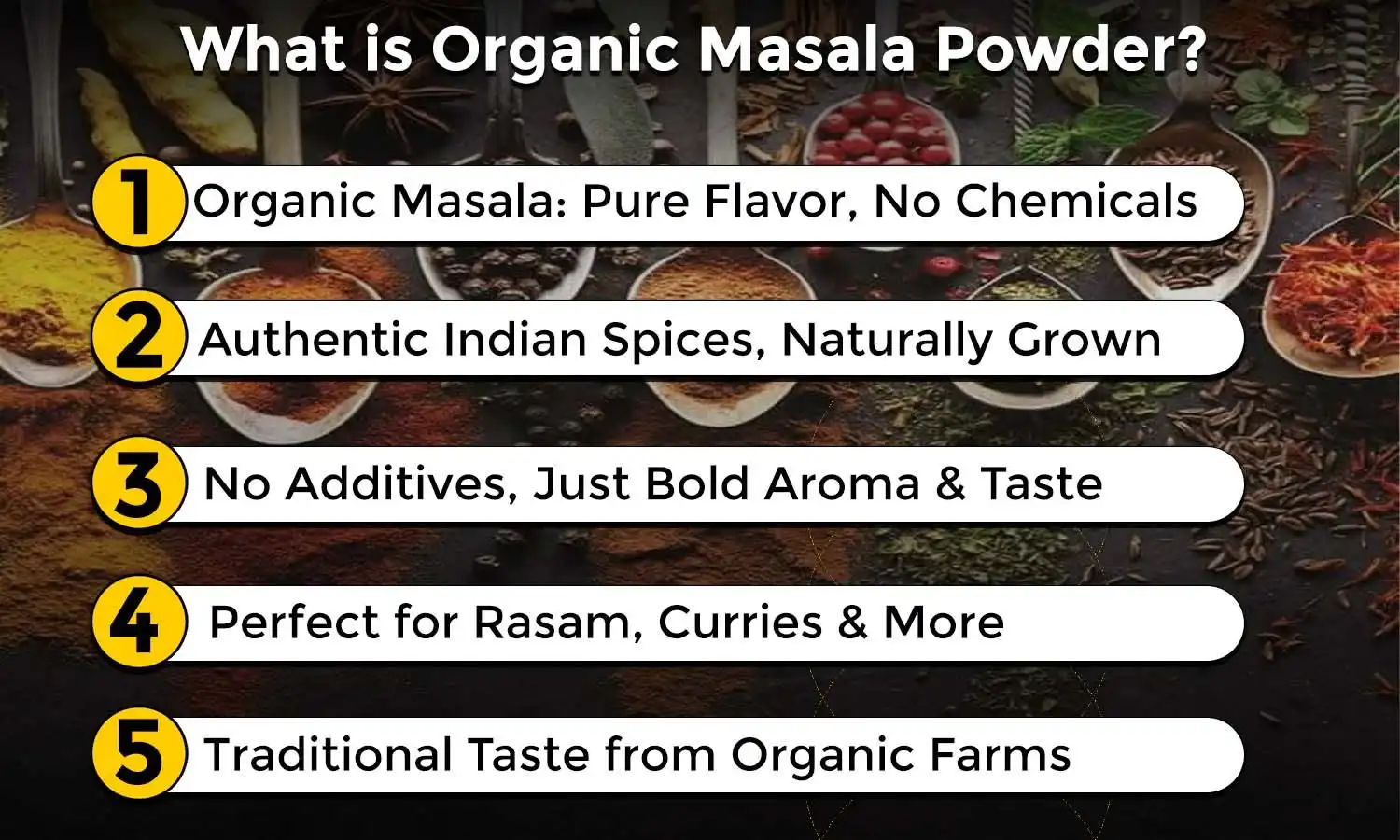
What is Organic Masala Powder?

Organic masala powder is a carefully crafted blend of spices grown without synthetic pesticides, fertilizers, or genetically modified seeds. These powders are pure, natural, and free from artificial additives, bringing only the authentic taste of age-old Indian cooking. Whether it’s a comforting rasam or a fiery curry, the right masala powder can elevate your dish with its bold aroma and earthy depth.At 777, our organic masala powder range includes everything from organic garam masala powder to organic curry powder and organic coriander powder to dhaniya powder price, offering a wide spectrum of culinary delights while keeping health at the forefront. The range also extends to organic chat masala, organic sambar powder, and Organic red chilli powder for a complete spice shelf. Organic Masala Powder
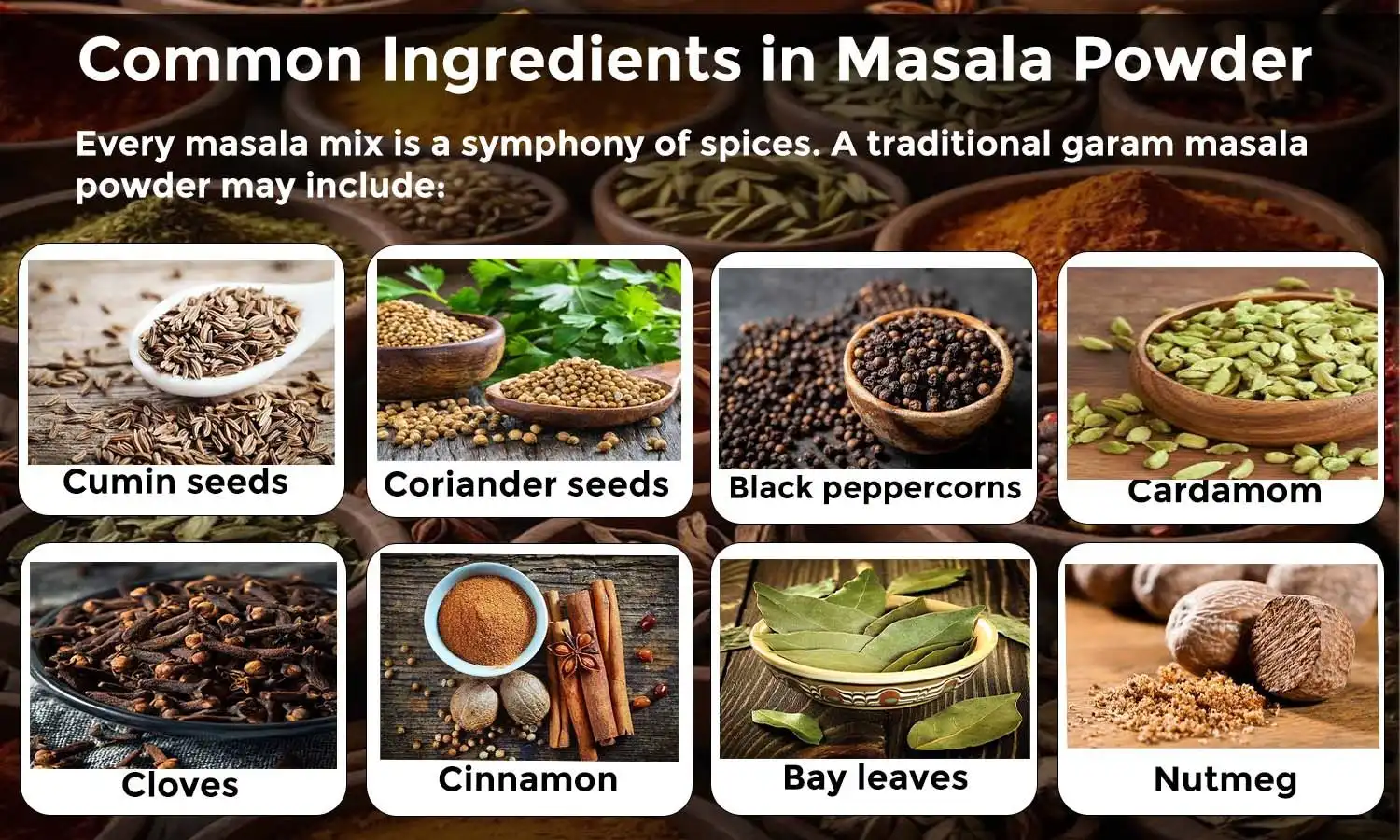
Common Ingredients in Masala Powder

Every masala mix is a symphony of spices. A traditional garam masala powder may include:

  • Cumin seeds
  • Coriander seeds
  • Black peppercorns
  • Cardamom
  • Cloves
  • Cinnamon
  • Bay leaves
  • Nutmeg

Meanwhile, dhaniya powder (or coriander powder) adds a mild citrusy tone that balances hot and pungent notes in curries. These ingredients are gently roasted and finely ground to preserve their essential oils, resulting in a potent, flavour-rich powder. Freshly ground organic dhaniya powder keeps that citrusy aroma intact for longer.

Health Benefits of Organic Masala Powder

Beyond taste, organic masala powder comes with an impressive set of health benefits. Rich in antioxidants, it supports digestion, boosts metabolism, and may even help reduce inflammation. Spices like coriander and cumin can aid in regulating blood sugar and detox your body.By using organic curry powder or organic garam masala powder, you’re avoiding chemical residues and artificial preservatives. You’re choosing a cleaner, more nourishing approach to daily cooking. It’s not just about flavour; it’s about feeding your body right.

How to Make Masala Powder at Home

Making your own masala powder is surprisingly simple and allows you to customise the blend to your taste. Here’s a quick method to make garam masala powder at home:1.Dry roast the following ingredients on low heat:

  • 2 tbsp cumin seeds
  • 2 tbsp coriander seeds
  • 1 tbsp black pepper
  • 5 cloves
  • 3 cardamoms
  • 1-inch cinnamon stick
  • A pinch of nutmeg

2.Cool the spices completely.3.Grind to a fine powder and store in an airtight container.This homemade version as spices for Curry can be used in gravies, dals, and even sprinkled over roasted vegetables. For convenience, 777 also offers ready-to-use best garam masala and best curry powder options, prepared with traditional techniques and organic ingredients. Keeping a jar of ready Organic Seasoning Powder on hand makes weeknight cooking even faster. Organic Masala Powder
Culinary Uses of Masala Powder

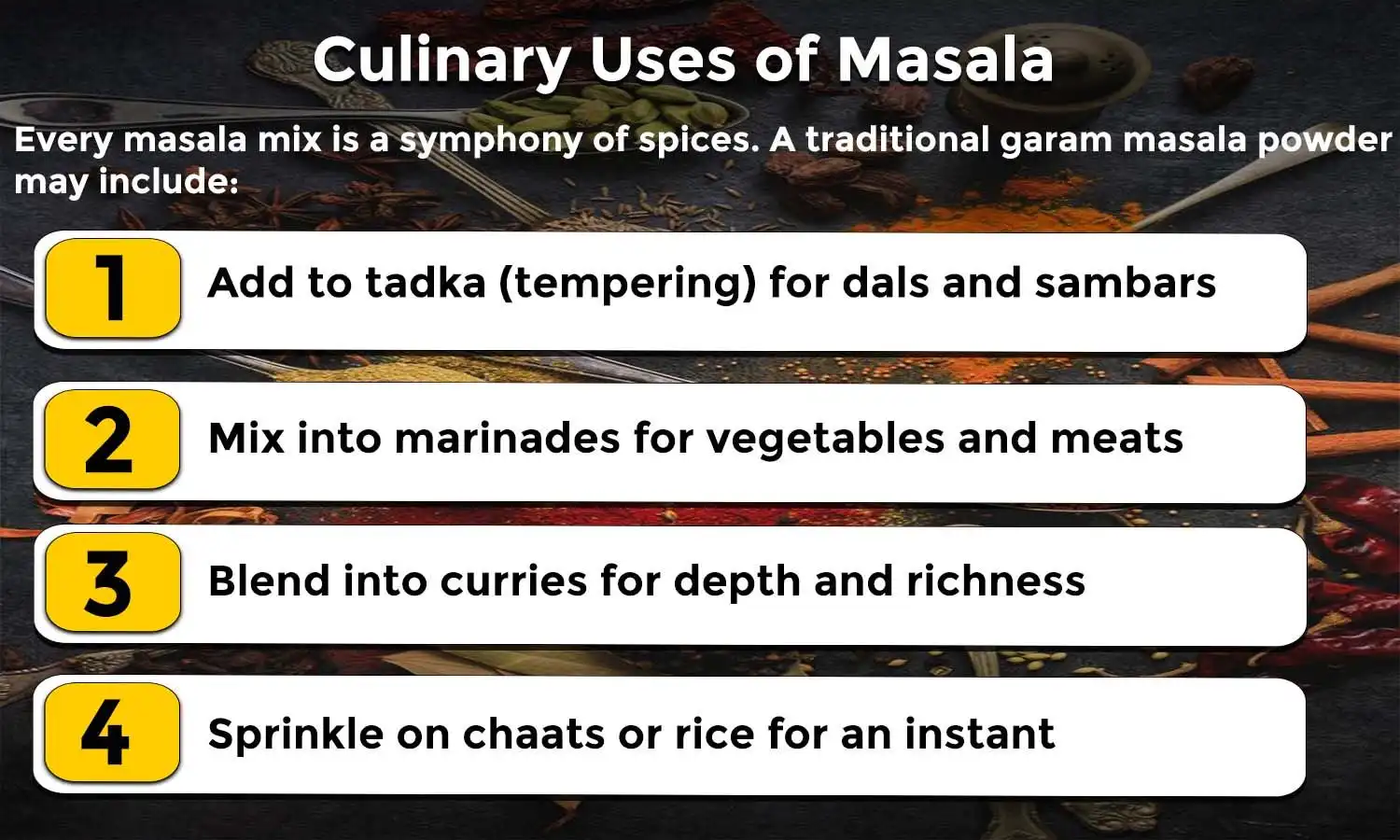
Masala powder is the backbone of Indian flavour. It is used across a wide range of dishes:

  • Add to tadka (tempering) for dals and sambars
  • Mix into marinades for vegetables and meats
  • Blend into curries for depth and richness
  • Sprinkle on chaats or rice for an instant flavour lift

Conclusion

The true essence of Indian cuisine lies in its spices, and a quality organic masala powder makes all the difference. With its rich aroma, nutritional edge, and chemical-free purity, it brings joy to your kitchen and wellbeing to your table. At 777, our commitment to authenticity ensures that every packet is filled with the flavour of tradition and the goodness of nature.Rediscover the taste of home with our best coriander powder, garam masala spice, and other handpicked blends. Because every meal deserves that magical touch.

FAQs

What Is the Difference Between Organic and Regular Masala Powder? Organic masala powders are made from spices grown without chemicals or artificial additives. They are cleaner, safer, and often more flavourful than regular masalas.
What Are the Health Benefits of Using Masala Powder? Masala powders contain spices rich in antioxidants and anti-inflammatory properties. They aid digestion, enhance immunity, and bring warmth to the body.
Can I Cook Everyday Food With Organic Masala Powder? Absolutely. Organic masala powders are ideal for daily cooking, from simple dals to festive curries, they enhance both taste and health.
How Long Does Organic Masala Powder Last? When stored in a cool, airtight container, organic masala powders can stay fresh for up to 6 months. Always keep them away from moisture and sunlight.
What Are the Benefits of Using Organic Masala Powder? Using organic masala powder means consuming fewer toxins, enjoying fresher flavours, and adding nutrient-rich spice blends to your meals, all while supporting sustainable farming.
Types of Masala Powders in India

Introduction

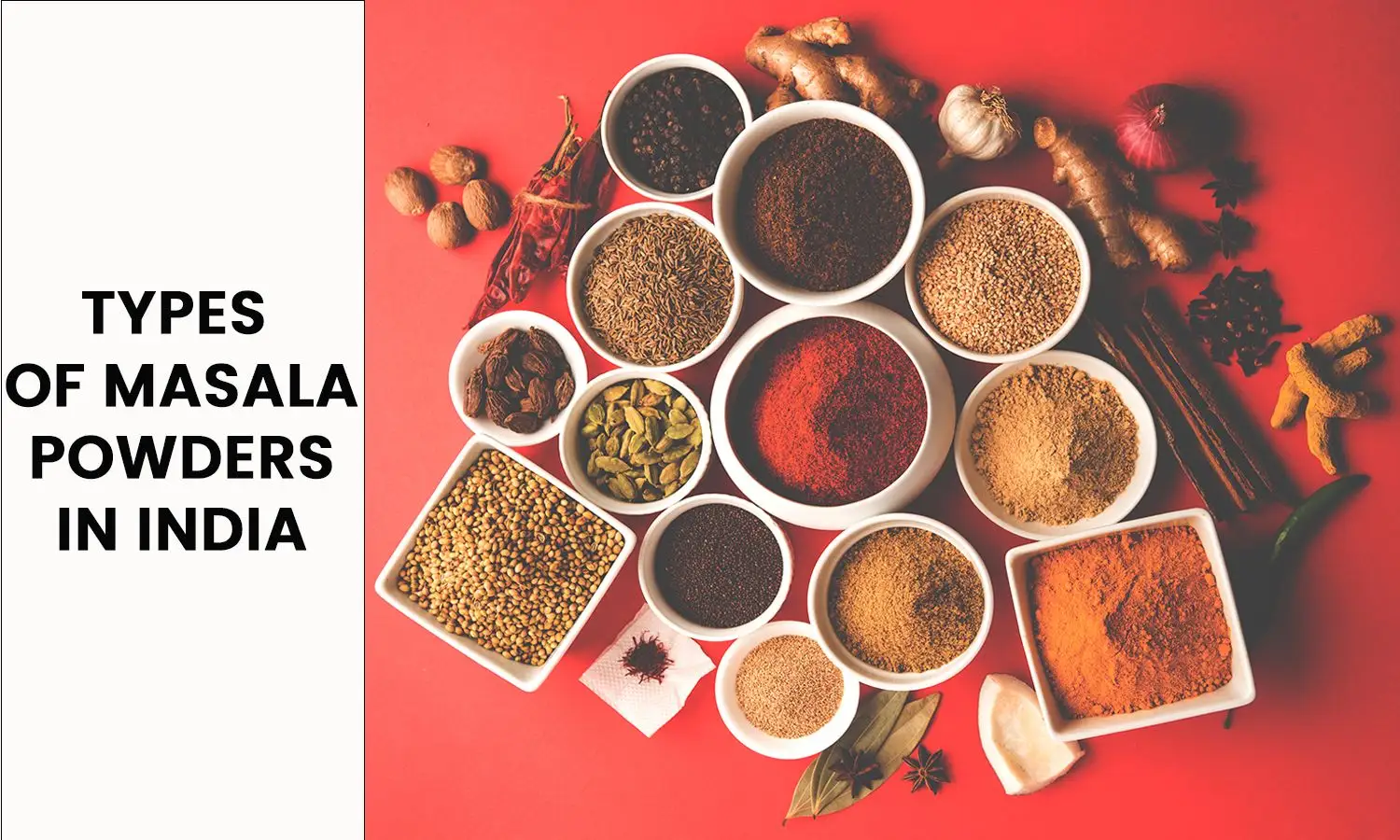
Indian cuisine has vibrant flavours, and at the heart of it lies one key element, masala powders. These finely ground spice blends transform everyday cooking into rich, aromatic experiences. It enhances the taste of a dish by adding depth and colour, all types of masala powders in Indian kitchens are as diverse as the regions they come from.
In this blog, we’ll explore the most beloved and essential different types of masala powder list that bring both taste and health to your plate.

Garam Masala

One of the most widely used types of masala powders in India, garam masala powder is a warm, aromatic blend of spices like cinnamon, cardamom, cloves, nutmeg, and cumin. You can buy it in a garam masala packet or make it fresh at home, its purpose is to bring depth to gravies and stir-fries. The garam masala ingredients may vary by region, but the essence remains the same.

Sambar Masala Powder

A staple in South Indian households, sambar masala powder is what gives the beloved lentil-vegetable stew its signature taste. The typical sambar masala powder ingredients include coriander seeds, toor dal, red chilies, fenugreek, and curry leaves

If you’re looking for the best sambar masala powder, opt for blends that strike the perfect balance of tang, spice, and aroma.
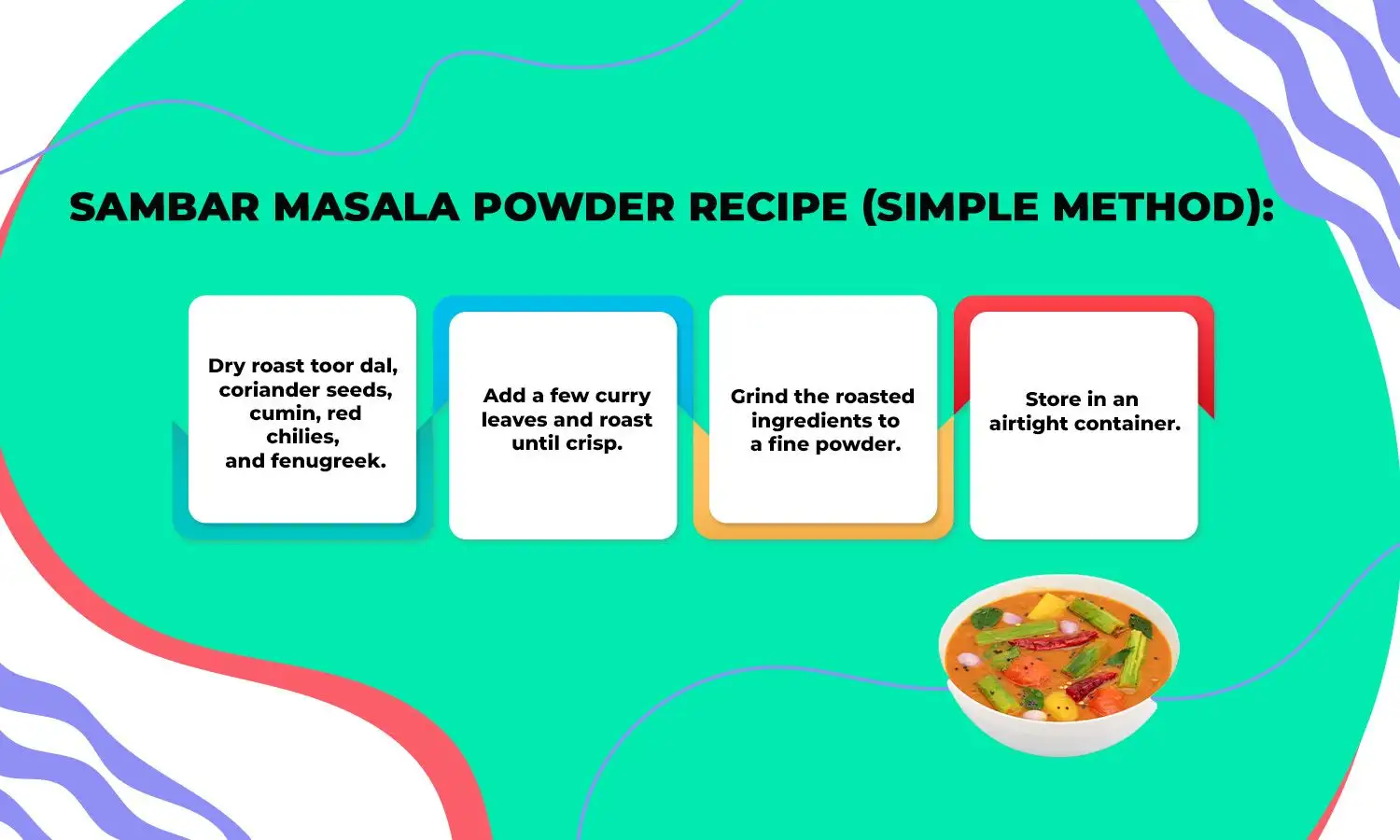
Sambar Masala Powder Recipe (Simple Method)

Sambar Masala Powder Recipe (Simple Method):

  • Dry roast toor dal, coriander seeds, cumin, red chilies, and fenugreek.
  • Add a few curry leaves and roast until crisp.
  • Grind the roasted ingredients to a fine powder.
  • Store in an airtight container.

Rasam Masala Powder

Light, peppery, and comforting, rasam is both a soup and a side dish. The rasam masala recipe typically uses black pepper, cumin, coriander, red chilies, and garlic. These rasam masala ingredients not only add flavour but also aid digestion.

For added wellness, opt for organic rasam masala made without preservatives or additives.

Coriander Powder

The health benefits of coriander powder are immense. ​Coriander powder, also known as coriander seed powder, is used in nearly every Indian dish, from dals to dry sabzis. It offers a citrusy, earthy note and acts as a base spice.

While coriander powder means simple ground coriander, its nutritional value is anything but ordinary. Rich in fiber and antioxidants, it’s known to support digestion. You can also explore the health benefits of coriander leaves powder as a fresher, herbal variant.
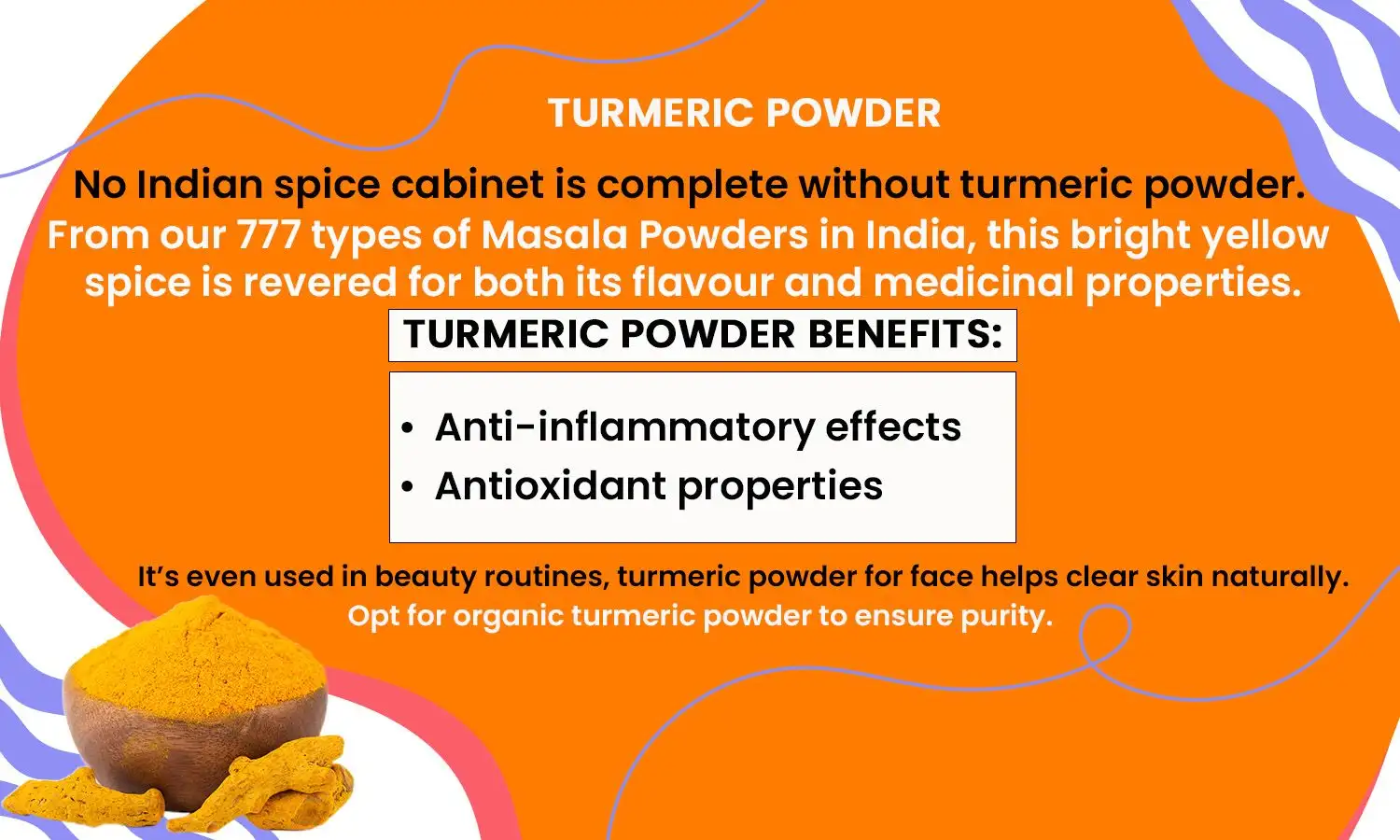
Turmeric Powder Benefits

Turmeric Powder

No Indian spice cabinet is complete without turmeric powder. From our 777 types of Masala Powders in India, this bright yellow spice is revered for both its flavour and medicinal properties. Turmeric powder benefits include anti-inflammatory and antioxidant effects.

It’s even used in beauty routines, turmeric powder for face helps clear skin naturally. Opt for organic turmeric powder to ensure purity.

Note:

While turmeric is largely safe, excessive use may cause mild stomach issues. Always use in moderation to avoid potential side effects of turmeric powder.

Red Chilli Powder

If you love spice, red chilli powder is your go-to. Used to heat up everything from curries to chutneys, it’s a fiery favourite in Indian kitchens. The red chilli powder benefits include metabolism boosting and rich vitamin C content. Choose organic red chilli powder or the best red chilli powder blends to avoid additives and get maximum flavour.

Pepper Powder

Known for its sharp kick and healing qualities, the types of Masala Powders in India such as black pepper powder are used in rasam, soups, and even tea. It’s warming and full of benefits, pepper powder uses range from digestion aid to cold relief.

When someone says pepper powder means just heat, remind them of the rich benefits of black pepper powder that go beyond taste.

Jeera Powder

Jeera powder (cumin powder) is another everyday spice with deep roots in Indian cooking. If you choose roasted jeera powder for its smokiness, or a mix like jeera dhania powder, both bring a toasty, earthy flavour to dals and vegetables. For a unique touch, try black jeera powder, which has a bolder, nuttier profile and is great in Ayurvedic recipes.

Conclusion

Indian cooking isn’t just about spice, it’s about the right spice in the right amount. From the comforting aroma of sambar masala powder to the therapeutic warmth of organic turmeric powder, the types of masala powders in Indian kitchens are a perfect blend of taste, health, and heritage garam masala ingredients​.
What Are the 7 Indian Spices? The essential 777 Types of Masala Powders in India include seven powders, that is turmeric, cumin, coriander, mustard seeds, red chilli powder, garam masala, and black pepper garam masala packet​.
What Is the Difference Between Garam Masala and Curry Powder?Garam masala is a traditional Indian blend with warming spices, while curry powder is a Western creation often including turmeric as a base.
How Is Rasam Powder Different From Sambar Powder? Rasam powder is more pepper-forward and light, while sambar powder is richer with lentils and coriander.
What Are the Health Benefits of Coriander Powder? It aids digestion, is rich in antioxidants, and supports heart health. It’s a gentle spice packed with benefits.
Is Pepper Powder the Same as Black Pepper? Yes, pepper powder means ground black pepper and is used for its heat and medicinal value.
What Type of Dishes Use Red Chilli Powder?Our 777 Types of Masala Powders in India are used in curries, dals, pickles, chutneys, and marinades, basically, anywhere a spicy kick is desired.