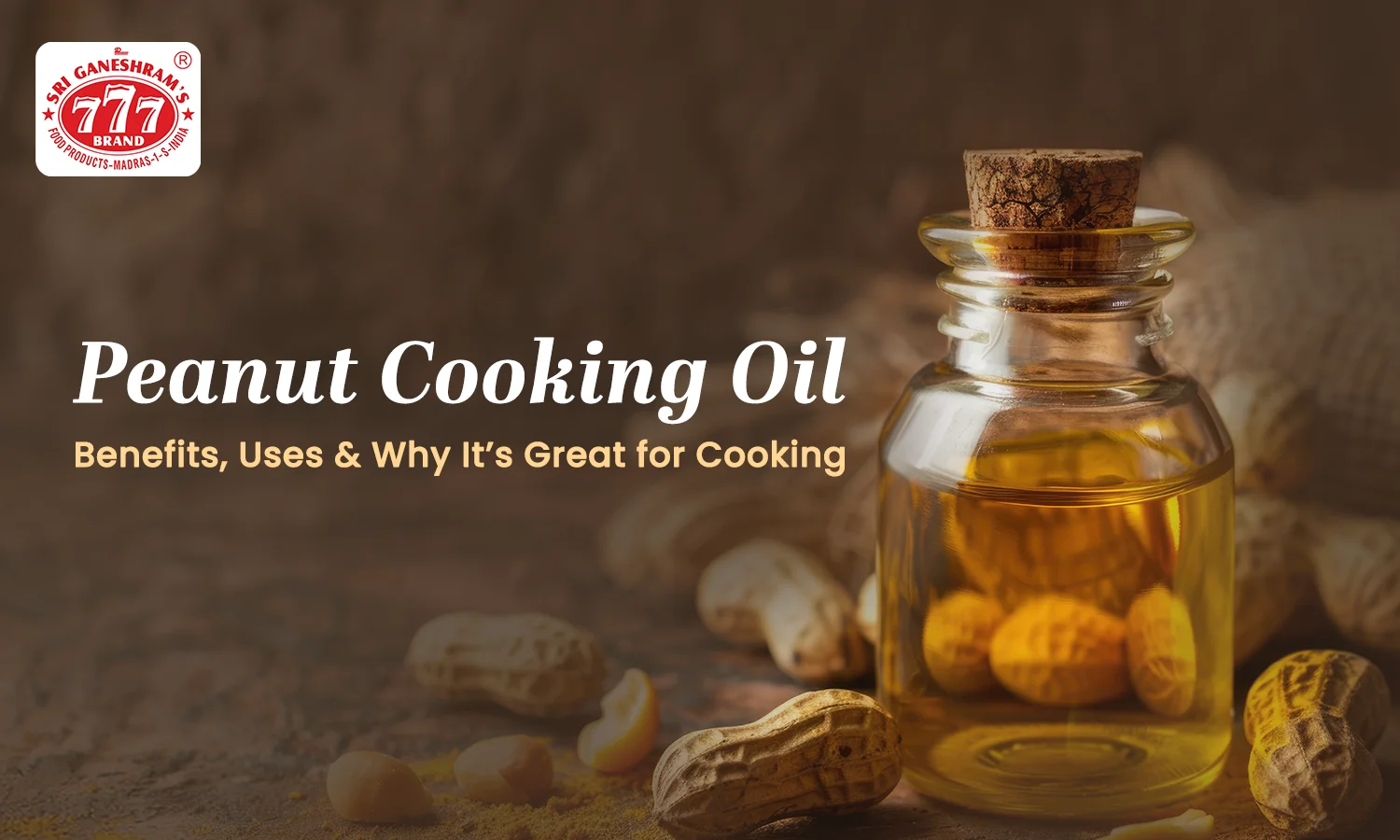
Peanut Cooking Oil: Benefits, Uses & Why It’s Great for Cooking

What Is Peanut Cooking Oil?

Ever stood near a hot stove waiting for the oil to shimmer? If you’re in an Indian kitchen, that golden liquid is likely peanut cooking oil. You might know it as groundnut or Arachis oil, but whatever the name, it’s a global powerhouse. From the high-heat woks of China to the deep-fryers of the US, this stuff is prized for one big reason: it’s tough. It doesn’t give up when the stove gets hot.
There are two main players here. You’ve got the refined version—the clear, neutral workhorse that restaurants love for big batches. Then there’s the best peanut oil, the chekku-pressed kind. This unrefined version is the real deal. It keeps the soul of the peanut that rich, nutty aroma and deep amber color, making it the go-to for traditional home cooking.
peanut cooking oil

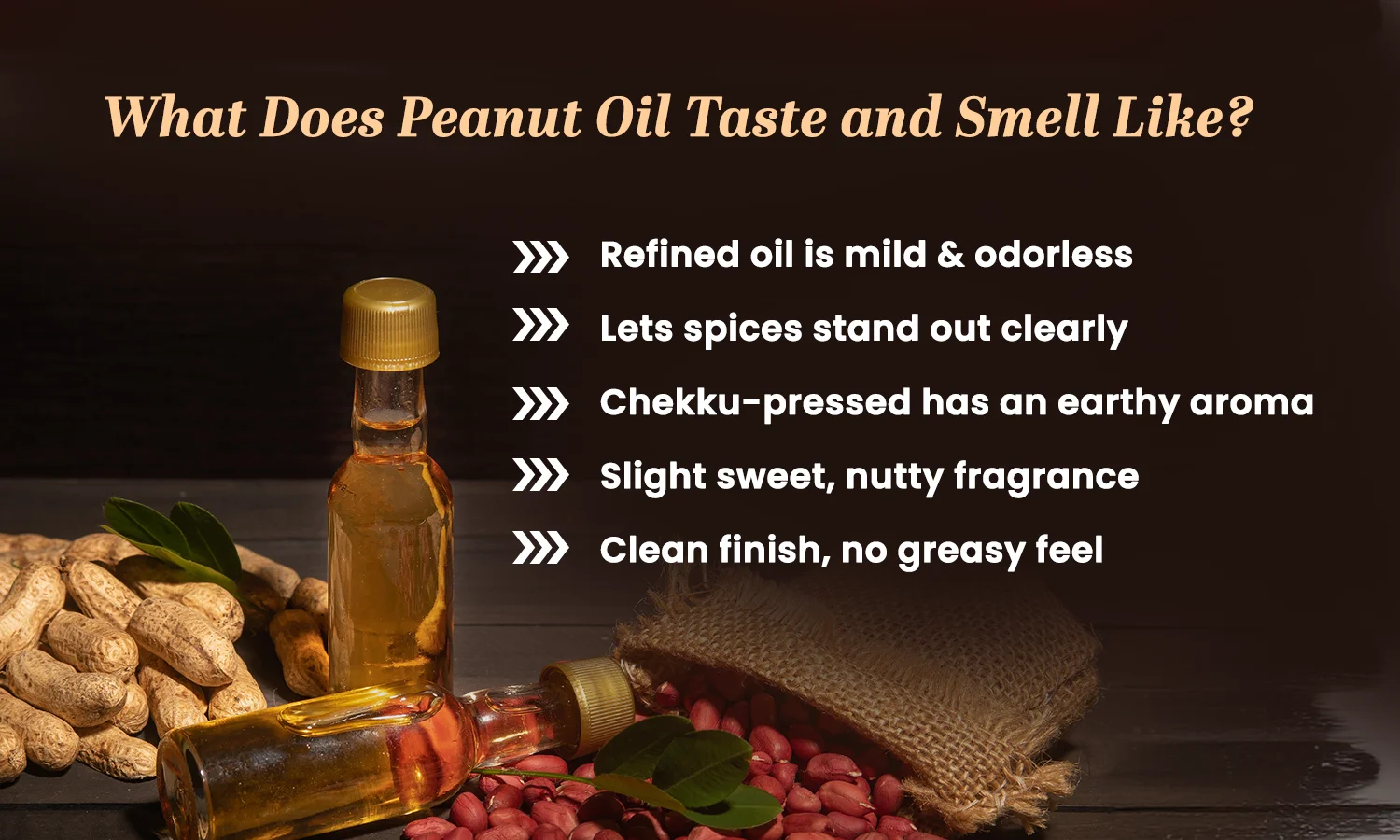
What Does Peanut Oil Taste and Smell Like?

It depends on the bottle. Refined oil is basically a silent partner. It’s nearly odorless and does not taste much. This lets your spices do the talking.
But if you’re using the best peanut oil for Indian cooking, like a traditional wood-pressed variety, you get an earthy, almost sweet scent. When it hits a hot pan, the whole house starts smelling like a festive kitchen. It’s a clean finish, too. No waxy or greasy aftertaste like you get with some of those heavier fats.

Cooking With Peanut Oil

Chefs call this the gold standard for a reason. Peanut oil for cooking has a smoke point of about 232°C. That’s high. You can get the oil screaming hot for pakoras or samosas without it smoking out the room or breaking down into nasty free radicals.

Why it’s the Smart Frying Choice:

  • No Flavor Transfer: This is a weird but brilliant trait. Refined peanut oil doesn’t “carry” smells. You can fry fish and then a batch of vada in the same oil. The vada won’t taste like the sea.
  • The Crunch Factor: High heat creates an instant steam barrier. The food doesn’t get oil-logged. You get a lighter, crispier bite.
  • The Perfect Tadka: For dals, the nutty undertones of unrefined oil elevate mustard seeds and curry leaves in a way that plain sunflower oil just can’t touch.

Nutritional Value of Peanut Oil (Per Teaspoon)

So, is peanut oil good for health? Look at the fats.
Per Teaspoon (about 4.5g):

  • Peanut oil calories: Roughly 40 kcal.
  • Total Fat: 4.5g (all >fat, zero carbs).
  • Monounsaturated Fat (MUFA): ~2.3g. This is the “liquid gold” your heart loves.
  • Vitamin E: You get a solid hit of antioxidants in every drop.

It’s a cholesterol-free energy source. Since 80% of it is unsaturated fat, it’s exactly what your body needs for healthy cell membranes.

Health Benefits of Peanut Oil

The peanut cooking oil benefits aren’t just about calories. It’s loaded with phytosterols. These actually block bad LDL cholesterol from getting absorbed in your gut.

Is peanut oil good for health in other ways? Absolutely. It’s a massive source of Vitamin E, which protects your cells from oxidative stress. Some researchers even point to the resveratrol in the oil as a win for insulin sensitivity and brain health. It’s heart-healthy, plain and simple.

Beyond these internal advantages, the uses of peanut oil in the kitchen play a vital role in maintaining the integrity of your meals. Since this oil has a high smoke point, it doesn’t break down into harmful compounds at high temperatures. This, in turn, makes peanut oil for cooking one of the safest choices for frying and sautéing. This kind of stability makes sure that the peanut oil benefits are directly delivered to your plate, thereby offering a reliable source of energy without the risks associated with oils that oxidize easily.

Considering the peanut oil nutrition facts, the concentration of micronutrients is highly impressive. The high levels of Vitamin E in peanuts serve as a natural preservative for the oil itself and as an excellent antioxidant for the body, supporting both immune functions and skin health. By incorporating this oil into your daily routine, you are choosing a nutrient-dense fat that balances flavor with functionality, proving that traditional kitchen staples often hold the most significant wellness secrets.

Potential Health Risks

It’s not for everyone. First, peanut oil uses are a big no for anyone with a peanut allergy—especially if the oil is chekku-pressed. Those versions still have the proteins that trigger reactions.

Also, watch the “Omega Balance.” It’s high in Omega-6 but has almost zero Omega-3. Since modern diets are already full of Omega-6, you’ve got to balance things out with walnuts or flaxseeds to keep inflammation down.
peanut cooking oil

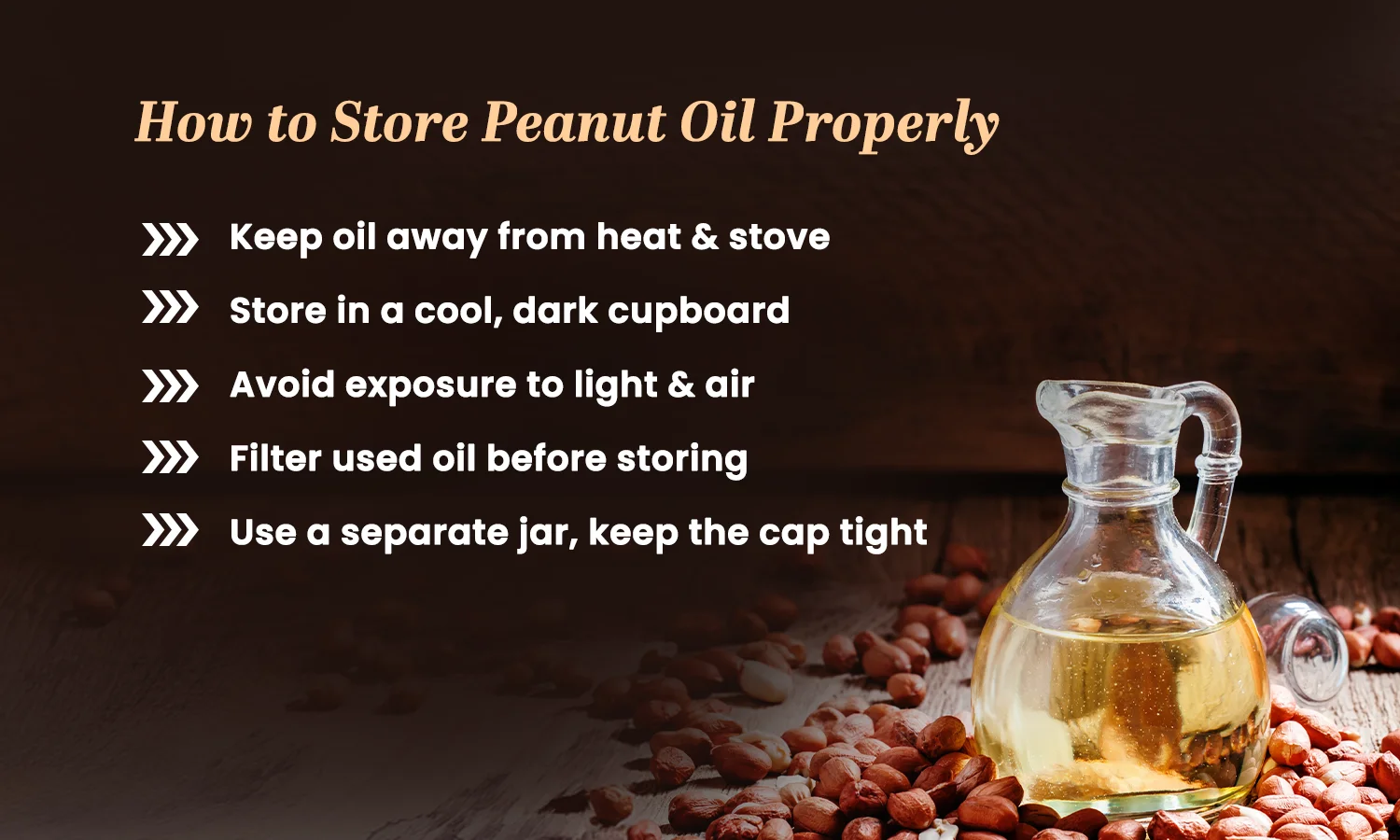
How to Store Peanut Oil Properly

Oil has three enemies: heat, light, and air. To protect your peanut oil price investment, keep it in a cool, dark cupboard. Not right next to the stove.
If you’ve used it for deep frying, don’t just dump it back in the bottle. Cool it, filter the crumbs out with a cloth, and store it in a separate jar in the fridge. It’ll stay fresh for 6 to 12 months if the cap is tight.

Conclusion

From that perfect crunch to the heart-healthy fats, peanut cooking oil is more than a staple – it’s an upgrade. Picking a high-quality, chekku-pressed brand like SGR 777 means you’re getting tradition and nutrition in every meal.

FAQs

Is Peanut Oil Good for Frying? The best. High smoke point and no flavor transfer. It’s built for the deep-fryer
Does Peanut Oil Taste Like Peanuts? Refined is neutral. Chekku-pressed is nutty and earthy. Choose based on your dish.
Can People With Peanut Allergies Use Peanut Oil? Refined is usually okay, but chekku-pressed is dangerous. Always talk to a doctor first.
Is Peanut Oil Healthy? In moderation, yes. It’s great for the heart, but needs to be balanced with Omega-3 foods.
How Should I Store Peanut Oil? Cool, dark, and sealed. The fridge is fine, but it will get cloudy (that’s normal).

Groundnut Oil Uses and Benefits for Health, Skin & Hair

What Is Groundnut Oil?

If you’ve ever smelled a rich, nutty aroma in a South Indian kitchen, you’ve met groundnut oil. Often called peanut oil or arachis oil, this vegetable fat is pulled from the seeds of the peanut plant. It’s a massive favorite in Indian, Chinese, and Southeast Asian homes. Why? Mostly because it doesn’t give up under pressure. With a smoke point hitting roughly 232°C (450°F), it’s the undisputed king of high-heat cooking. Understanding basic groundnut oil usage helps you pick the right type for each dish.
But not all bottles are the same. You’ll mostly see three types:

  • Refined Oil: Processed to be neutral and clear. It’s the workhorse for big-batch frying.
  • Chekku-Pressed (Kacchi Ghani): This is the real deal. It’s extracted at low temperatures without nasty chemicals, keeping that deep gold color and earthy scent intact.
  • Roasted Oil: Think of this more like a seasoning—intense and perfect for drizzling.

Groundnut Oil Uses and Health Benefits

The groundnut oil health benefits start with the heart. It’s loaded with monounsaturated fats (MUFA) and polyunsaturated fats. These are the good fats that help sweep away bad LDL cholesterol while keeping the good HDL levels steady.
Along with fats, it is a natural source of vitamin E. One tablespoon provides about 14% of your daily dose. It also contains resveratrol, an antioxidant that helps regulate blood pressure and prevent artery strain, and is present in red wine. In addition to heating food, using peanut cooking oil adds a layer of cellular protection. All of this is why ground nut oil is good for health when used in everyday meals.

Groundnut Oil Uses for Skin

The science behind using groundnut oil for body and face care is sound, despite the fact that it may seem outdated. Because it is high in fatty acids and vitamin E, it functions as a deep moisturiser for dry or scaly skin. The skin-beneficial qualities of groundnut oil are largely attributed to the barrier. It holds onto moisture.
The antioxidants in the oil help combat the free radicals that cause ageing if you have fine lines. Many people use it as a base for a body scrub (mix it with coffee grounds!) or as a straightforward pigment-reducing lip treatment. Its anti-inflammatory qualities can reduce redness in people with sensitive skin. Just keep this far away from your skin if you are allergic to peanuts. These Pure groundnut oil benefits make it a gentle choice for regular skincare. groundnut oil uses

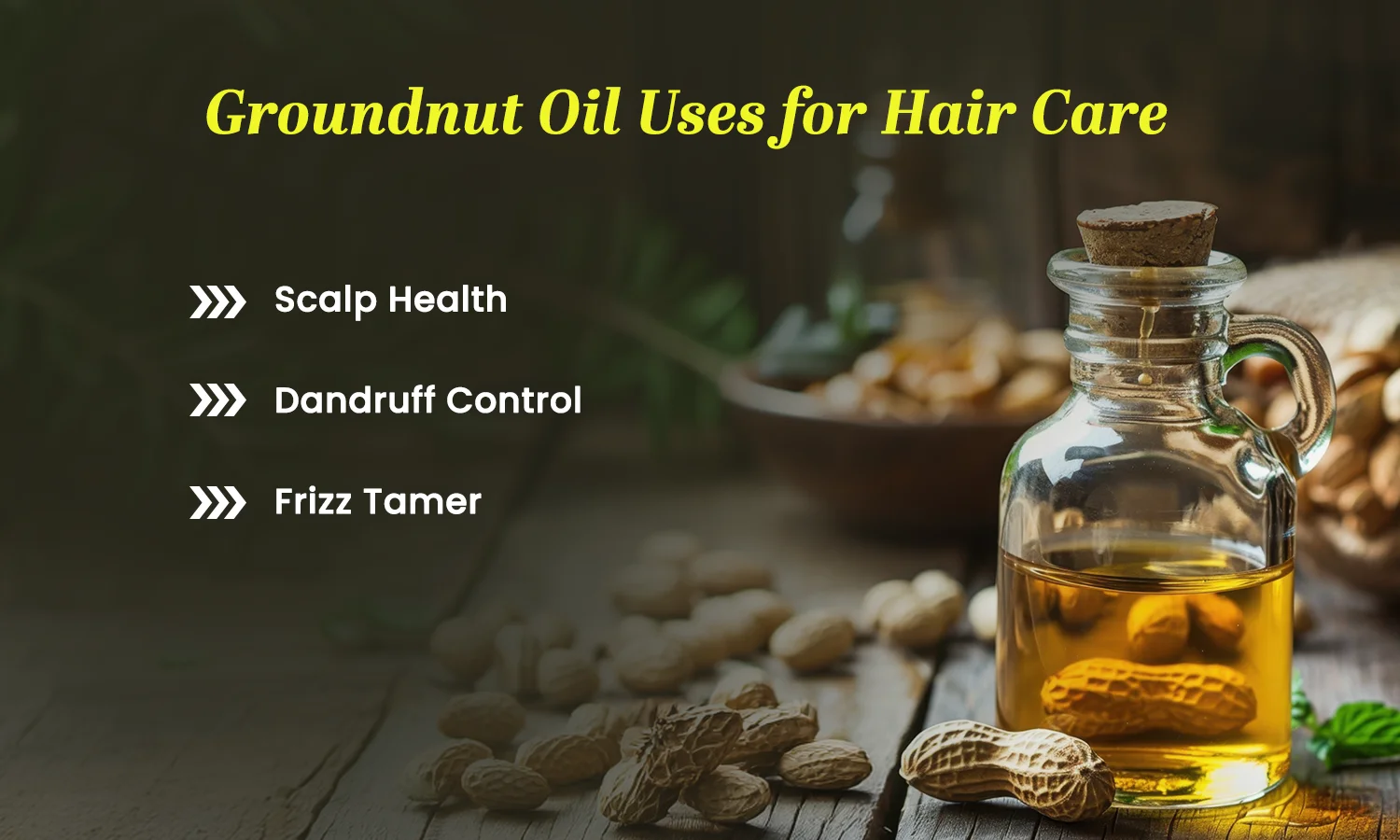
Groundnut Oil Uses for Hair Care

If your hair feels like straw, peanut oil for hair might be the fix. It’s rich in Omega-6 fatty acids and proteins that repair the hair shaft from the inside out. Used regularly, the Groundnut benefits for hair become easy to notice.The benefits of groundnut oil for hair include:

  • Scalp Health: Massaging warm oil into the scalp boosts circulation, which is the secret sauce for peanut oil hair growth.
  • Dandruff Control: Its natural properties help calm an itchy, flaky scalp.
  • Frizz Tamer: A few drops on damp ends act as a natural sealant, mending split ends and adding a glossy shine without the “greasy” look of heavier oils.

Groundnut Oil Uses in Cooking

This is where the oil truly earns its keep. Groundnut oil uses cooking techniques that range from the aggressive to the delicate. The Benefits of groundnut oil for cooking show up in both deep frying and gentle tempering.

  • Deep Frying: Peanut oil for deep frying is legendary. It has a “flavor integrity” trait, meaning it won’t carry smells between foods. You can fry pakoras and then sweets in the same batch without them tasting like each other.
  • Tempering (Tadka): In India, we use it to sizzle mustard seeds and curry leaves. It carries those spice aromas beautifully into the dal.
  • Baking: Believe it or not, it’s a great butter substitute. It makes cakes moister and adds a very faint, pleasant nuttiness to banana bread or muffins.

groundnut oil uses

How to Choose the Best Groundnut Oil

Don’t just grab the cheapest bottle. To get the advantages of peanut oil, you have to look at how it was made. Looking for organic groundnut oil benefits is a good way to judge real quality.

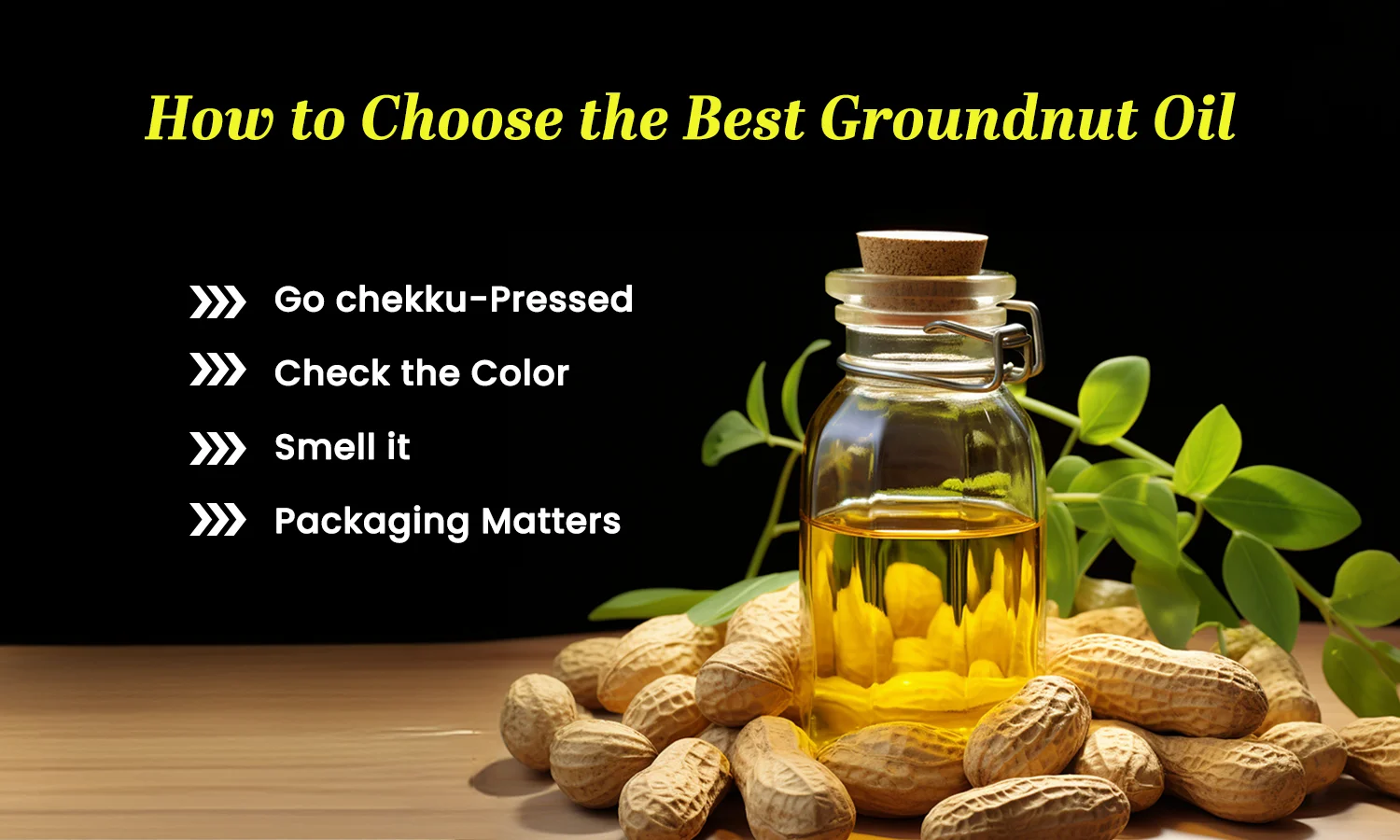
  • Go Chekku-Pressed: Often called Mara Chekku, this method uses a wooden churner. It generates almost zero heat, meaning the nutrients don’t get “cooked” before they reach you.
  • Check the Color: The best groundnut oil for cooking should be a clear, golden amber. If it’s too pale, it’s likely over-refined.
  • Smell it: If it doesn’t smell like fresh peanuts, put it back. Pure oil has a distinct, toasted aroma.
  • Packaging: Look for dark glass or tin. Light is the enemy of chekku-pressed oil; it makes it go rancid faster.

Conclusion

Whether you’re searing a stir-fry, deep-frying festive snacks, or looking for a natural glow for your skin, the uses of groundnut oil are nearly endless. By choosing a high-quality, chekku-pressed option like SGR 777, you’re ensuring that the benefits of peanut oil extend from heart health to hair shine. It’s a legacy of purity that has served Indian homes for decades.

FAQs

What Are the Main Groundnut Oil Uses? Mainly deep-frying, stir-frying, and tempering. It’s also used topically for skin hydration and scalp massages.
Is Groundnut Oil Good for Skin and Hair? Yes, thanks to Vitamin E and Omega-6 fats. It moisturizes the skin and strengthens hair follicles.
Can We Use Groundnut Oil for Daily Cooking? Absolutely. Its high smoke point and balanced fat profile make it safer for daily use than many other vegetable oils.
What Vitamins Are Present in Groundnut Oil? It is primarily rich in Vitamin E, alongside heart-healthy antioxidants like resveratrol.
How Do I Choose the Best Groundnut Oil? Look for “chekku-Pressed” or “Wood-Pressed” on the label. Ensure it has a strong nutty aroma and is stored in light-protected packaging.

Why Groundnut Oil for Cooking Is the Best Choice for Indian Kitchens

Why Groundnut Oil Is Made for Indian Cooking

Ever noticed that specific, nutty aroma in a South Indian home during lunch? That is almost certainly groundnut oil. It has been a staple in our kitchens for ages, but it is not just about tradition. It is about how this oil handles the actual “fire” of an Indian stove.Think about the way we cook. We do tadkas – where spices have to hit hot oil and pop instantly. Most delicate oils would just smoke and turn bitter, but groundnut oil is tough. It stays stable. It acts as a quiet partner that lets the real flavours of your ginger and cumin stand out, rather than leaving your food smelling like a chemistry lab. That reliability is exactly why Groundnut oil for indian cooking has stayed popular for generations.

Is Groundnut Oil Healthy for Cooking?

People often ask: Is groundnut oil healthy for cooking if it’s used every single day? The science actually backs it up. Unlike those heavy, solid fats, this oil is full of what we call “good fats” – specifically monounsaturated fatty acids (MUFA). It’s about 50% oleic acid. That is the same heart-healthy fat found in olive oil.But there’s more. The benefits include a natural source of Vitamin E. A single tablespoon covers about 14% of your daily requirement. It’s an antioxidant that supports skin and overall health. Plus, it contains plant sterols that help reduce bad cholesterol absorption. It’s a win for both the heart and the palate. These Benefits of groundnut oil for cooking are a big reason ground nut oil is good for health when used daily.

Can We Use Groundnut Oil for Cooking Every Day?

For most Indian families, the answer to “can we use groundnut oil for cooking every day?” has always been a simple “yes.” It doesn’t break down easily when you’re doing your daily cooking.
Of course, moderation is important. Even though it is nutrient-dense, it’s still oil. Most experts say 3 to 4 teaspoons a day is enough for an adult. Using a high-quality brand ensures better value in terms of both taste and health. In short, Groundnut oil can be used for cooking every day without worry when you stick to sensible amounts. groundnut oil

Chekku Pressed vs Refined Groundnut Oil – Which Is Better?

Standing in the oil aisle can be confusing. It depends on your cooking method.

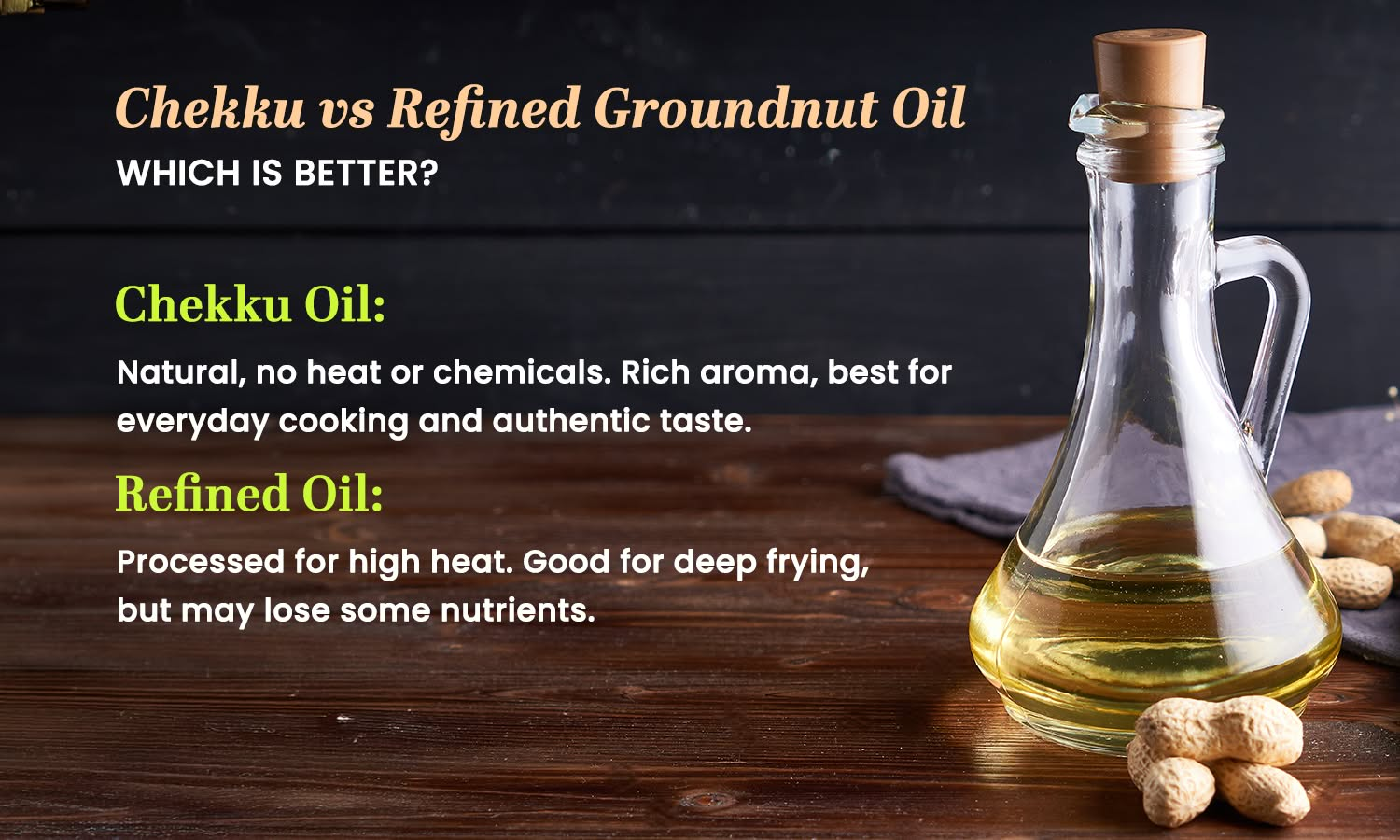
  • Chekku Pressed: Made the old way—crushing peanuts in a wooden press. No heat, no chemicals. It keeps that deep, earthy smell. This type works well for daily cooking, where you want an authentic taste.
  • Refined Oil: This is processed to handle extreme heat. While it may lose some natural vitamins, it performs well for frying because it won’t smoke even when the pan is very hot.

groundnut oil for cooking

Is Groundnut Oil Good for Deep Frying?

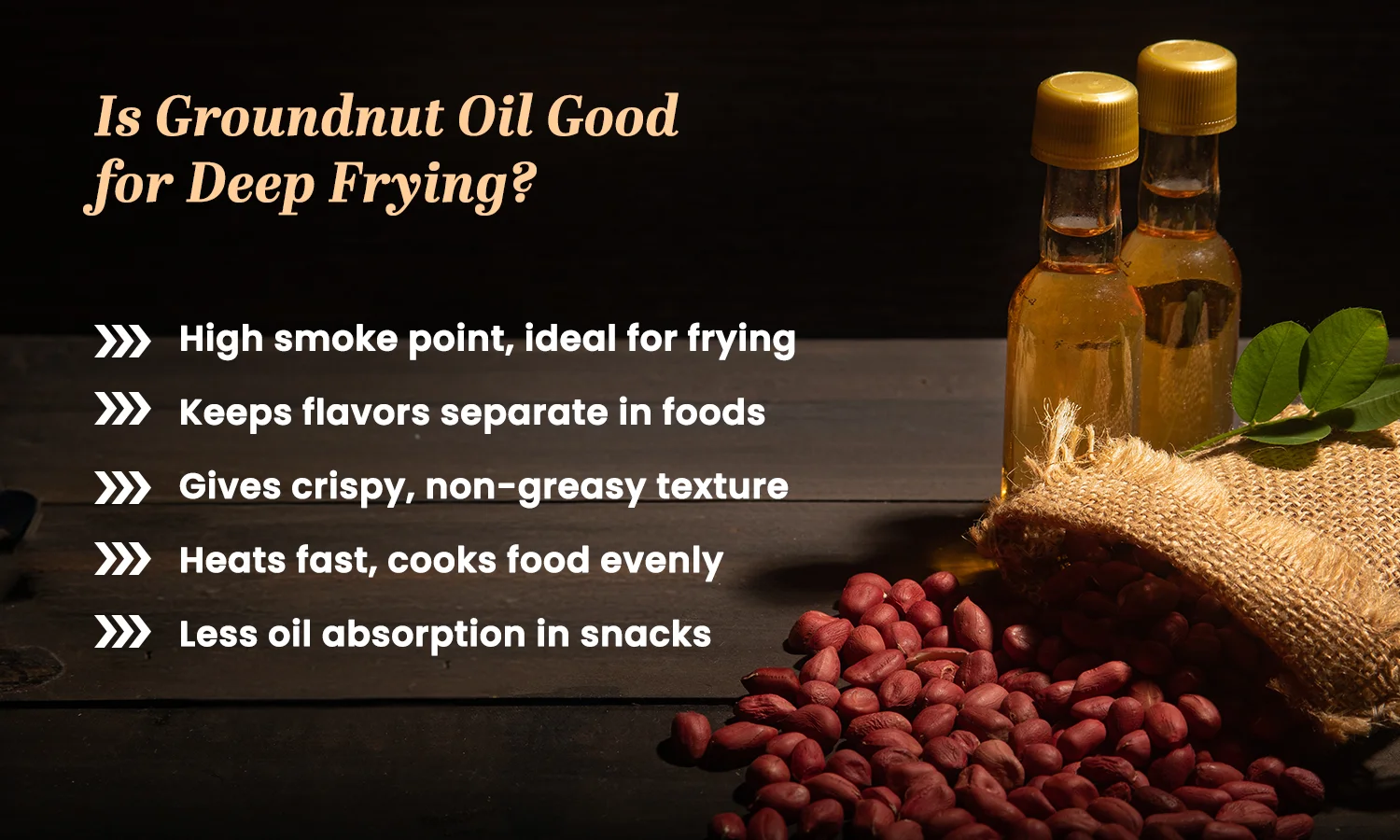
Deep frying is where this oil works particularly well. It is a favorite among chefs because it does not transfer flavors. You can fry pakoras and then sweet vadas, and they won’t taste like each other.
It can handle temperatures up to 232°C safely. It sears food quickly and creates an outer layer, preventing excess oil absorption. That’s the reason behind crispy snacks and a less greasy texture.

Which Groundnut Oil Is Best for Cooking in India?

Choosing the right oil in India is about understanding what makes it suitable. Consider the extraction method, purity, and filtration process. Also, check if it is free from chemicals.
The best choice is an oil that is minimally processed and suits your cooking style. By paying attention to these factors, you get better flavour, better health, and a more authentic cooking experience. It also helps to compare the groundnut cooking oil price across brands so you get genuine value.

The SGR 777 Foods Way

At SGR 777, we have spent over 60 years keeping things simple. We believe groundnut oil is good for cooking only when it stays natural. Our peanut cooking oil is extracted at low temperatures, so the flavour and nutrition stay intact. It’s a legacy of purity that families have trusted since 1933. That is what makes a Pure Groundnut Oil for Cooking worth choosing for your family.

Whether you prefer a simple 1-litre pouch or the rich, traditional feel of a jar, SGR 777 ensures that the advantages of groundnut oil reach your kitchen in its purest form. It’s about more than just cooking; it’s about bringing a legacy of health and authentic taste to your dining table every single day.

Conclusion

From a simple poha to a festive feast, groundnut oil for cooking is one of the most versatile options you’ve got. It supports your heart, stays stable, and lets your spices shine. Choosing a brand like SGR 777 ensures every meal is as healthy as it is tasty.

FAQs

Is Groundnut Oil Healthy for Daily Cooking?Yes. Its high MUFA content and Vitamin E make it a heart-healthy choice for regular use.
Can I Cook and Deep Fry With Groundnut Oil?Absolutely. It is one of the best oils for deep frying because of its high smoke point and the fact that it doesn’t transfer flavors between foods.
Which Groundnut Oil Is Best for Cooking in India?For health, choose cold-pressed (Chekku) oils like SGR 777. For heavy deep frying on a budget, filtered oils like Dhara are also excellent choices.
How to Check the Quality of Groundnut Oil?Place a small jar of the oil in the fridge for 3 hours. Pure groundnut oil will turn cloudy or thicken, while adulterated oil will remain completely liquid.
How Long Does Groundnut Oil Last After Opening?If stored in a cool, dark place, it usually stays fresh for about 6 to 12 months.

10 Benefits of Using Chekku Groundnut Oil in Your Daily Cooking

What Is Chekku Groundnut Oil?

If you’ve ever had the chance to watch a traditional oil press at work, it’s a slow, almost hypnotic sight. That’s essentially the birthplace of chekku groundnut oil. The “Chekku” itself is a traditional wooden crusher, usually made from Neem or Vaagai wood, that literally squashes sun-dried peanuts until they give up their oil. No big machines, no steam, and definitely no chemicals.
Because the whole process happens at a snail’s pace, the temperature stays low—usually under 45°C. This is why we call it “cold-pressed.” It means the oil never gets “cooked” before it even reaches your kitchen. Unlike the clear, watery stuff you see in most grocery stores, groundnut oil chekku varieties are thick, smell like a fresh handful of peanuts, and are just… real. It hasn’t been bleached or messed with; it’s just pure oil filtered through a simple cloth. The Cold-pressed groundnut oil benefits come from this gentle process that keeps every nutrient intact.

Peanut Oil Nutrition & Calories

Let’s be real for a second – most of us are a bit wary of fats. But peanut oil nutrition is actually built on the “good” kind of fats that your heart actually needs to keep ticking. We are talking about monounsaturated and polyunsaturated fats that give you steady energy without the heavy, sluggish feeling.

Now, a single tablespoon packs about 119 peanut oil calories. That might sound like a big number, but these are high-quality calories. You’re getting a massive hit of Vitamin E and natural antioxidants in every spoonful. It’s also naturally 100% cholesterol-free. This is why people don’t mind the chekku groundnut oil price, you are paying for premium fuel for your body. If you want to try it, you can easily find chekku groundnut oil online these days and have it delivered right to your door. chekku groundnut oil

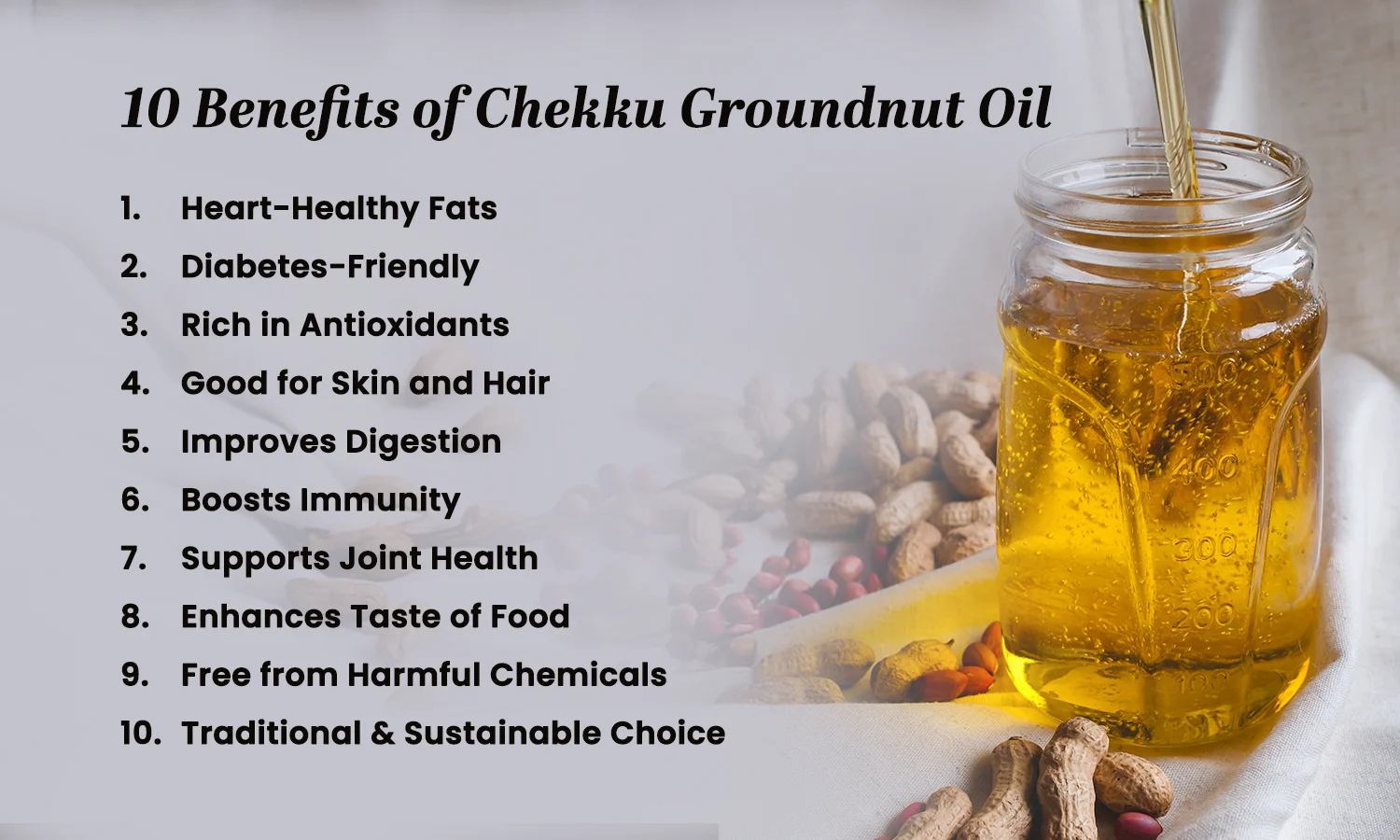
10 Benefits of Chekku Groundnut Oil

Making the switch to a wooden-pressed oil is probably the simplest “health hack” you’ll ever find. Here are ten reasons why chekku peanut oil deserves a permanent spot on your kitchen counter. These chekku groundnut oil benefits show why this wood-pressed groundnut oil is worth the switch.

1. Heart-Healthy Fats

The main reason peanut oil is good for health is its high MUFA content. These fats act like a clean-up crew for your blood vessels, helping sweep away the bad cholesterol. It’s a small change in your cooking that makes a huge difference for your heart over time.

2. Diabetes-Friendly

This oil has a surprisingly low glycemic index. The unsaturated fats in it actually help your body manage insulin a bit better. For anyone keeping a close eye on their blood sugar, this is a massive win.

3. Rich in Antioxidants

Since it hasn’t been heat-treated or chemically stripped, this oil is Rich in Antioxidants like resveratrol. This is the same good stuff you find in grape skins that helps keep your arteries flexible and healthy.

4. Good for Skin and Hair

Think of it as an internal moisturizer. Vitamin E helps your skin stay elastic and can even help fight off those early wrinkles. Plus, many people swear that peanut oil for cooking makes their hair feel much stronger and look a whole lot shinier.

5. Improves Digestion

Traditional groundnut chekku oil is much easier on the stomach. It doesn’t have those chemical residues like caustic soda that often hide in refined oils. It helps your body soak up the vitamins from your veggies much more effectively.

6. Boosts Immunity

Your immune system loves Vitamin E. By using this oil daily, you’re giving your body a steady supply of the tools it needs to fight off bugs and stay healthy throughout the year.

7. Supports Joint Health

In many Indian homes, this oil is used for more than just a stir-fry. Its anti-inflammatory properties can really help ease stiff joints. Whether you eat it or use a little for a quick knee massage, your body will likely thank you.

8. Enhances the Taste of Food

Refined oils are usually totally tasteless, but this oil brings its own personality to the pan. It adds a lovely, nutty depth to things like dal tadka or a fresh coconut chutney that a factory-made oil just can’t touch.

9. Free from Harmful Chemicals

Most standard oils are pulled out of seeds using hexane, a petroleum-based solvent. No thanks! Chekku oil is 100% mechanical and natural. No chemicals, no weird additives, just peanuts.

10. Traditional & Sustainable Choice

Using a wooden press is an eco-friendly way to live. It supports local farmers and keeps a beautiful Indian tradition from disappearing. It’s a choice that feels as good as it tastes.

Looking to Buy?

When you’re out shopping, you’ll notice the peanut oil price can vary quite a bit. At SGR 777, we don’t take shortcuts. We use only the best peanuts and a slow, careful process. When you buy our oil, you’re buying a legacy that goes back to 1933. It’s about trust and knowing that what’s in the bottle is exactly what nature intended. Every bottle of pure chekku groundnut oil reflects that same care from farm to kitchen.

Conclusion

Is peanut oil good or bad? Honestly, it all depends on how it was made. When it’s cold-pressed and pure, peanut oil is healthy and incredibly delicious. It’s high time we brought that authentic taste back to our tables. Choosing traditional chekku groundnut oil is a simple way to enjoy real flavor and honest nutrition.

Key Takeaways

  • Chekku groundnut oil is chekku-pressed, keeping all its vitamins and soul intact.
  • It supports heart health and helps manage blood sugar levels natur
  • No chemicals, hexane, or solvents are used in the extraction process.
  • Its high smoke point makes it the perfect partner for all kinds of Indian cooking.

FAQ

What Is the Meaning of Chekku Groundnut Oil?It just means the oil was squeezed out using a traditional wooden press without any heat. This keeps the benefits of peanut oil from being destroyed by high factory temperatures.
Is Chekku Groundnut Oil Good for Daily Cooking? Yes! It’s great for everything from deep-frying to a simple sauté. It’s stable, safe, and makes your food taste like a home-cooked meal should.
What are the Disadvantages and Advantages of Groundnut Oil? The advantage is definitely the nutrition and that amazing flavor. The only “downside” is that it’s energy-dense, so just use it in normal amounts like you would any other fat.
How to Check the Quality of Chekku Groundnut Oil? Give it a sniff. It should smell exactly like fresh peanuts. It should also be thick. If you put it in the fridge and it turns cloudy or starts to solidify, you know you’ve got the real deal.
Is Chekku Oil Good for Health? Absolutely. It’s unrefined and full of the Vitamin E that refined oils lose during processing. For traditional Indian cooking, it really is the gold standard.

Advantages of Groundnut Oil and Its Nutritional Facts

What is Groundnut Oil?

If you’ve ever stepped into a South Indian kitchen while someone is tempering spices, that deep, roasted aroma filling the air is unmistakable. Usually, that scent comes from groundnut oil. Often called peanut or arachis oil, this golden liquid is pressed from the seeds of the peanut plant. It has been a kitchen staple for generations because it doesn’t just make your food taste like home—it handles the high heat of Indian frying without any trouble.

When you ask what groundnut oil is, you’ll find it comes in various forms. Refined versions are popular for deep-frying due to their high smoke point. However, many health-conscious families are moving back to chekku groundnut oil, which is extracted using traditional wooden presses. This old-school method keeps the natural nutrients alive, giving you a product that smells like real, sun-dried peanuts and offers a massive boost to your health.

Nutritional Facts of Groundnut Oil

Understanding groundnut oil calories and its unique fatty acid makeup helps you use it better in your daily meals. Pure oil is essentially 100% fat, but it is the “good” kind that our bodies actually need for energy and cell repair. A single tablespoon offers about 120 calories, mostly coming from monounsaturated and polyunsaturated fats.

The oil content in groundnut seeds is surprisingly high, usually ranging between 40% and 50%, which makes it a very efficient source of natural energy. One of its standout features is Vitamin E, a fat-soluble antioxidant that protects your body’s cells from damage. It is also naturally cholesterol-free, which is why people are constantly checking the groundnut oil price to swap out processed vegetable fats for this more natural alternative.

advantages of groundnut oil

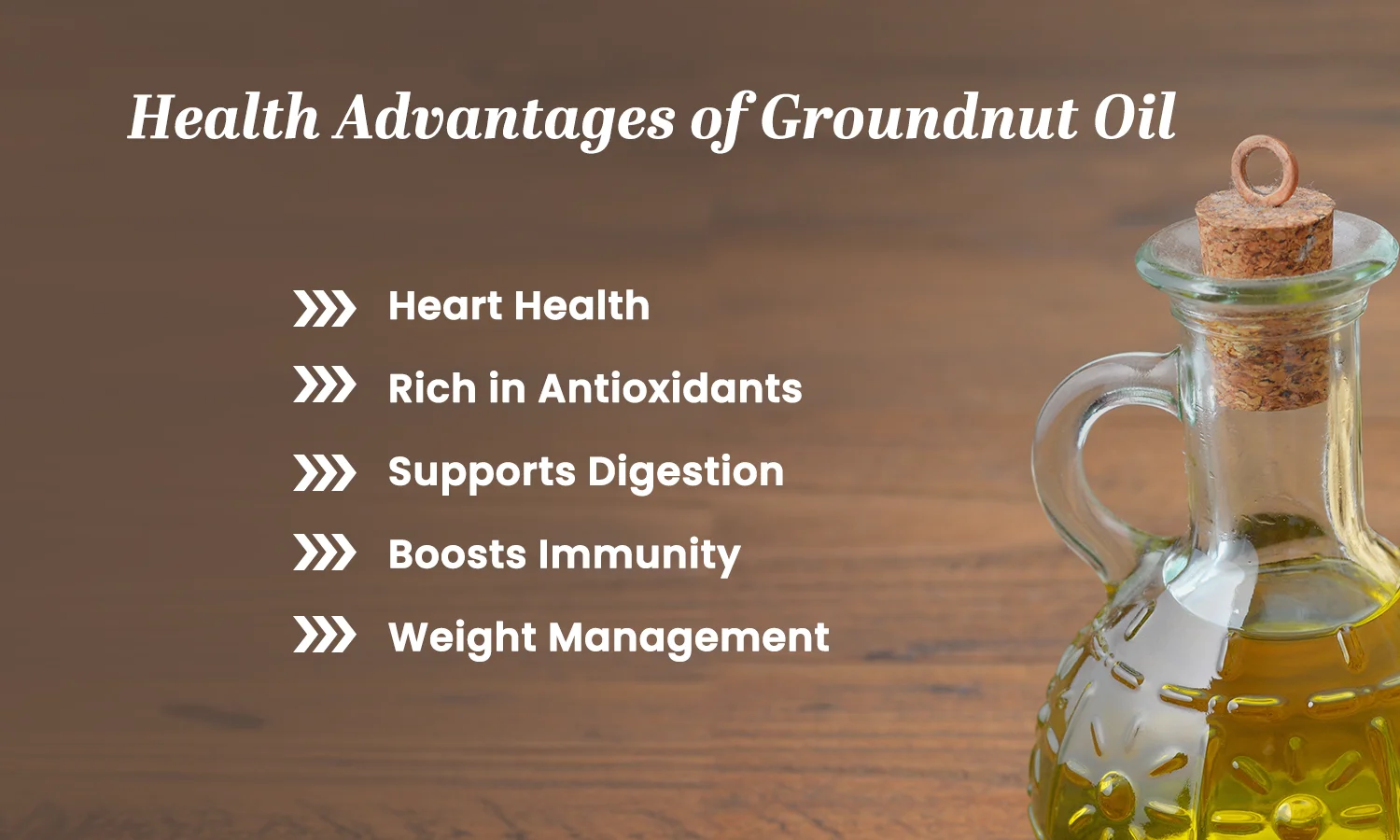
Health Advantages of Groundnut Oil

There are many advantages of groundnut oil that go way beyond just making your pakoras crispy. Because it is packed with Vitamin E and heart-friendly fats, it acts as a silent guardian for your family’s wellness.

Better Heart Health

Groundnut oil is a true friend to your heart. It is loaded with monounsaturated fatty acids (MUFA), which help bring down bad cholesterol levels while keeping your good cholesterol right where it should be. It also contains plant sterols that help stop cholesterol from being absorbed in your gut. By choosing groundnut cooking oil for your meals, you are making a simple, daily investment in your heart’s long-term health.

Rich in Antioxidants

One of the most powerful benefits of groundnut oil is its high Vitamin E content. This vitamin works as an antioxidant that fights off free radicals—those pesky molecules that can cause cellular damage over time. It also contains resveratrol, a natural compound that helps manage blood pressure and reduces strain on your arteries, keeping your entire system working smoothly.

Supports Digestion

We don’t often think of oil as a digestive aid, but the healthy fats in groundnut oil act as a natural lubricant for the gut. Even better, these fats are needed to absorb fat-soluble vitamins like A, D, E, and K from the vegetables in your curry. This ensures your body actually gets the fuel it needs from the healthy food you cook.

Boosts Immunity

A strong immune system is your body’s first line of defense, and Vitamin E is a big part of that. It protects the outer layers of your immune cells, helping them stay strong enough to fight off infections. This makes the advantages of groundnut oil particularly valuable for kids and the elderly who need that extra layer of strength.

Weight Management

It might sound odd to link oil with weight goals, but the right fats can make a huge difference. The MUFAs in groundnut oil make you feel full and satisfied for much longer after a meal. This naturally reduces the urge to reach for salty or sugary snacks later in the day. When you use it to replace heavy saturated fats like butter, it helps keep your metabolism on track.

Radiant Skin and Anti-Aging

The nutritional value of groundnut oil extends beyond immunity boosting and weight management. For instance, one of the most celebrated peanut oil benefits is its ability to act as a natural moisturizer and protective barrier for the skin. Because it is incredibly rich in Vitamin E and essential fatty acids, it helps tackle common skin issues like eczema, dry patches and minor inflammations. When integrated into your lifestyle, the health benefits of groundnut oil extend to the cellular level, where its antioxidants help neutralize the oxidative stress that leads to premature aging, fine lines, and wrinkles. Whether used as a topical treatment or as part of your diet, groundnut oil helps maintain a youthful, healthy glow by keeping the skin’s cell membranes robust and hydrated.

Blood Sugar Regulation

Peanut oil advantages also include a significant impact on metabolic health, particularly for those managing blood sugar levels. Studies suggest that replacing saturated fats with unsaturated fats, specifically the polyunsaturated and monounsaturated fats found in this oil, can improve insulin sensitivity. This makes it an excellent oil for cooking for individuals looking to maintain steady glucose levels. Furthermore, the versatile groundnut oil uses in high-heat sautéing or traditional frying allows you to prepare flavorful meals without the rapid blood sugar spikes often associated with processed fats, ensuring your metabolism stays balanced and efficient throughout the day. advantages of groundnut oil

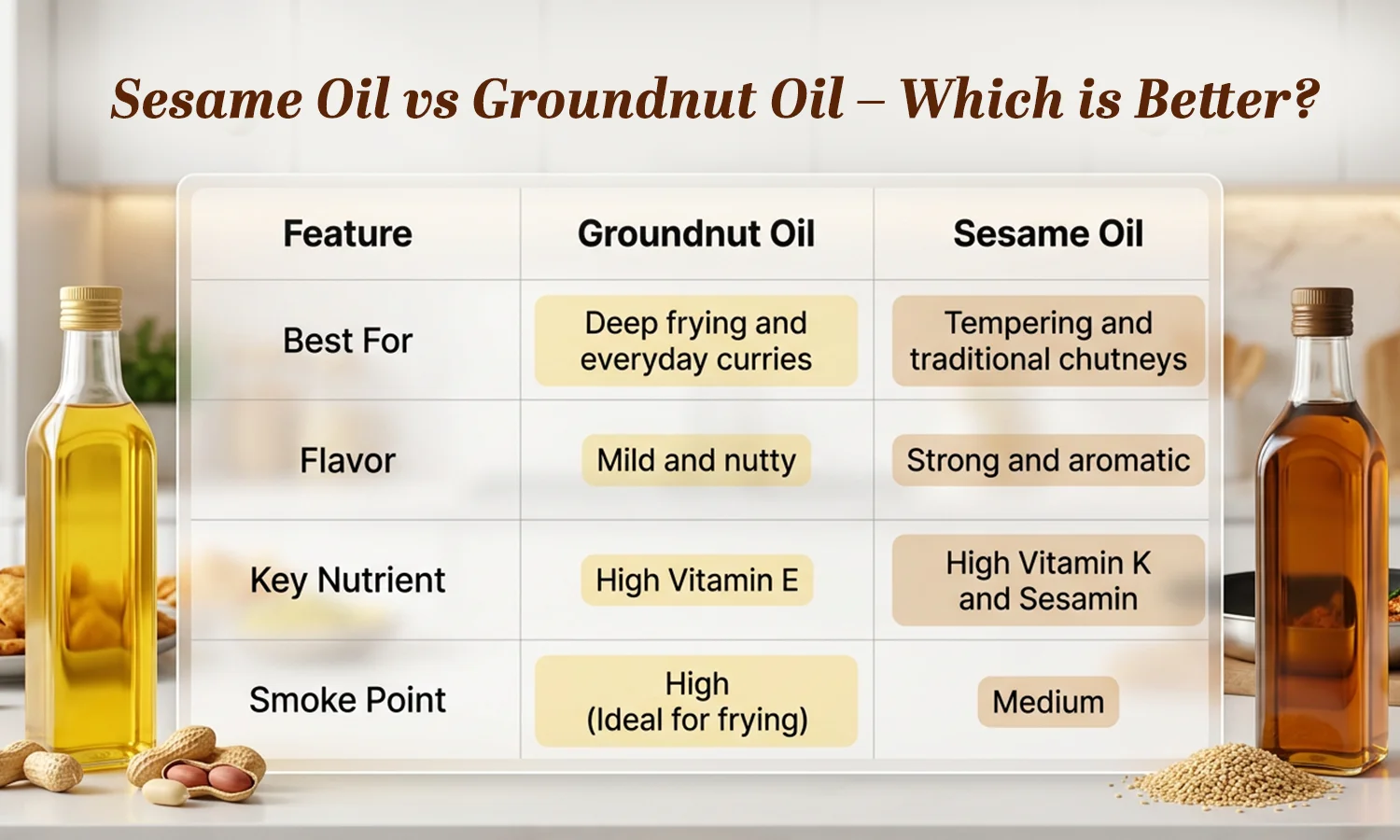
Sesame Oil vs Groundnut Oil – Which is Better?

Choosing between these two oils usually depends on what’s on the menu for the day. Both are stars in South Indian nutrition, but they play different roles.

Feature Groundnut Oil Sesame Oil
Best For Deep frying and everyday curries Tempering and traditional chutneys
Flavor Mild and nutty Strong and aromatic
Key Nutrient High Vitamin E High Vitamin K and Sesamin
Smoke Point High (Ideal for frying) Medium

If you are debating sesame oil vs groundnut oil, the answer is usually to keep both in your pantry. Use groundnut for your main cooking and frying, and save the sesame oil for that final touch in podis or pickles.

How to Check the Quality of Groundnut Oil

With so many brands claiming to be the best groundnut oil in India, you need a way to spot the real stuff. High-quality oil groundnut should have a clear, golden look and a very distinct, sweet peanut scent.
A simple trick is the “Fridge Test.” Put a little bit of your oil in a glass jar in the fridge for a few hours. Pure groundnut oil will thicken or turn solid because of its natural fats. If it stays completely liquid like water, it is likely mixed with cheaper, low-quality oils. This is why checking the groundnut oil percentage of purity on the bottle is so important. Always look for the Agmark or FSSAI seal to make sure you are getting the groundnut oil benefits without any hidden chemicals.

Why Choose SGR 777 Foods Groundnut Cooking Oil?

When you’re looking for which groundnut oil is best, SGR 777 stands out because we stick to our roots. We know that the advantages of groundnut oil are at their peak when the oil is handled with care. Our oil is double-filtered to get rid of impurities while keeping all the natural flavor and nutrients that have made it a favorite since 1933.Whether you prefer a simple 1-litre pouch or the rich, traditional feel of a jar, SGR 777 ensures that the advantages of groundnut oil reach your kitchen in its purest form. It’s about more than just cooking; it’s about bringing a legacy of health and authentic taste to your dining table every single day.

Key Takeaways :

  • Advantages of groundnut oil include better heart health and a stronger immune system due to its Vitamin E.
  • It has a very high smoke point, making it the safest choice for deep-frying and high-heat Indian cooking.
  • Chekku groundnut oil is the best pick for those who want maximum nutrients and that traditional aroma.
  • You can easily verify your oil’s purity at home with a simple 3-hour refrigerator test.

FAQs

Is Groundnut Oil Healthy for Daily Cooking?

Yes, it is perfectly healthy for daily use. The advantages of groundnut oil come from its high concentration of MUFA and PUFA, which are much better for your heart than heavy saturated fats. Because it stays stable at high temperatures, it doesn’t break down into toxins during your daily sautéing or frying.

How Many Calories Are in Groundnut Oil?

You will find roughly 119 to 124 groundnut oil calories in a single tablespoon. While the health perks are great, it is energy-dense, so you should use it in moderation. Balancing your oil intake as part of a healthy diet is the best way to manage your weight.

Which Groundnut Oil Is Best in India?

The best groundnut oil in India is usually one that is double-filtered or cold-pressed rather than chemically refined. Brands like SGR 777 are a top choice because they avoid harsh solvents and high-heat processing, making sure the oil keeps its natural antioxidants and Vitamin E.

What Is the Shelf Life of Groundnut Oil?

Most pure oils last between 6 and 12 months. To keep enjoying the advantages of groundnut oil, store it in a cool, dark spot. Keeping it away from direct sunlight prevents it from losing its nutritional value or developing a stale smell over time.

How to Check Pure Chekku Groundnut Oil?

Pure chekku groundnut oil will be thick and have a very strong, pleasant smell of fresh peanuts. You can also try the fridge test; pure oil will get cloudy and start to solidify in the cold, which proves there is no cheap palm oil or liquid filler mixed in.

Groundnut Oil Benefits: 5 Reasons It’s Great for Cooking

Is Groundnut Oil Bad for You?

Whenever you step into a kitchen where someone is frying fresh vadas or bajjis, that mouth-watering aroma filling the house is almost always thanks to groundnut oil. But in an era where we are constantly flooded with conflicting health advice, it’s natural to stop and wonder: is this traditional oil actually helping or hurting us? Well, the reality is that groundnut oil is good for health as long as you are choosing the right variety and not going overboard with the quantities.

The real confusion usually starts with the calorie count. Yes, all oils are energy-dense, but the advantages of groundnut oil are what make it stand out from the crowd of processed fats. Unlike the heavy saturated greases that can clog up your system, this oil is actually full of heart-healthy unsaturated fats.

The secret is in how it’s made; while refined groundnut oil is a beast at handling deep-frying, the raw, chekku groundnut oil keeps the very soul of the peanut intact. This gives you a nutrient profile that modern, over-processed oils just can’t compete with. For most families the honest answer to whether is groundnut oil good for cooking is a clear yes.

Groundnut Oil Nutrition and Health Benefits

To really get why people love this stuff, you have to look at the groundnut oil health benefits hidden in every drop. It isn’t just a medium to cook your food; it’s a functional ingredient. A single tablespoon has zero cholesterol and zero trans fats. This makes the question of “Is Groundnut Oil Healthy” a very easy one to answer with a confident “yes.”

The peanut oil nutrition profile is mostly made up of monounsaturated fatty acids (MUFA). If that sounds familiar, it’s because it’s the same “good fat” found in olive oil that doctors always talk about. Plus, it gives you a huge dose of Vitamin E—a nutrient that most of us actually miss out on in our regular diets.

When you look at the advantages of peanut oil, you aren’t just buying a cooking liquid; you are getting a source of natural antioxidants that shield your cells from the stresses of daily life. Together these health benefits of groundnut oil make it more than just a cooking medium.

groundnut oil benefits

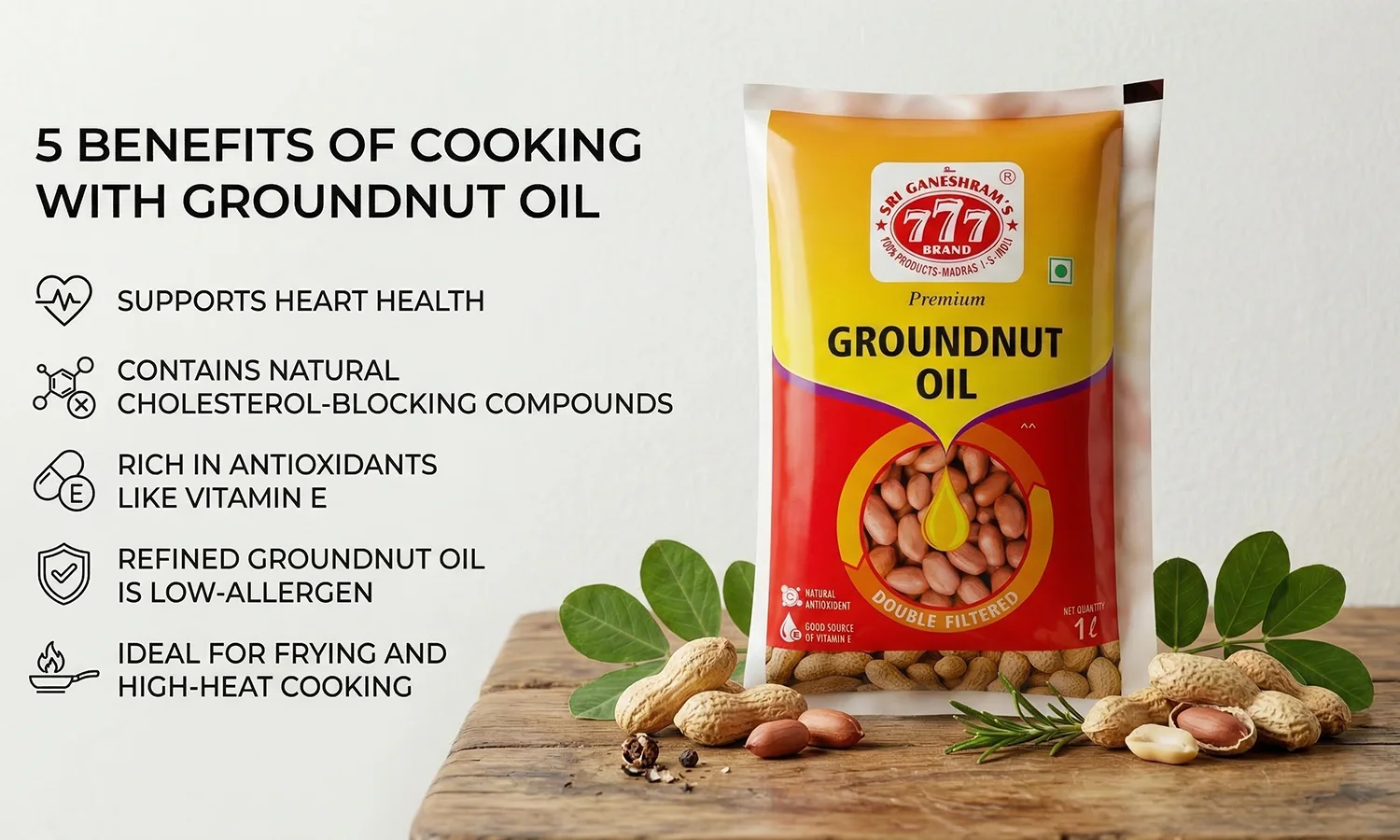
5 Benefits of Cooking with Groundnut Oil

So, why has this oil stayed a favorite from our great-grandmothers’ time all the way to 2026? Here are five solid reasons why cooking with groundnut oil is still the smartest move for your home kitchen. Once you see the Groundnut oil for cooking benefits laid out, the choice becomes simple.

1. Supports Heart Health

The most talked-about of all groundnut oil benefits is how it looks after your heart. Because it is so high in MUFA, it actively works to lower the “bad” LDL cholesterol while keeping the “good” HDL cholesterol exactly where it needs to be. It’s a simple, daily way to make your curries a lot kinder to your heart.

2. Contains Natural Cholesterol-Blocking Compounds

Nature has a pretty clever way of protecting us. Groundnut oil is full of phytosterols. These are plant compounds that look almost exactly like cholesterol to your body. When you eat food cooked in this oil, these phytosterols basically “race” against the real cholesterol to get absorbed in your gut. By winning that race, they lower the amount of cholesterol that actually ends up in your blood, further proving that peanut oil is healthy for long-term wellness.

3. Rich in Antioxidants Like Vitamin E

Being rich in antioxidants is a massive win for your skin and your immune system. The Vitamin E in the oil acts like a tiny shield, neutralizing the free radicals that cause aging and cellular damage. This high Groundnut Oil Nutrition value is exactly why Indian households have trusted it for nearly a hundred years. These Peanut oil health benefits are a big reason it stays popular today.

4. Refined Groundnut Oil Is Low-Allergen

A lot of people worry about peanut allergies, and rightly so. But here’s an interesting fact: the high-heat process used to make refined groundnut oil actually strips away almost all the proteins that cause those allergic reactions. While you should still be careful with severe allergies, it makes it a much more versatile and safer choice for big family feasts where you want everyone to enjoy the benefits of groundnut oil without worry.

5. Ideal for Frying and High-Heat Cooking

Indian cooking is intense. We do a lot of high-heat tempering—that classic tadka—and deep-frying. This oil has a very high smoke point, so it won’t burn or turn into something toxic the moment the pan gets hot. Also, it has a weirdly cool trait: it doesn’t carry flavors. You can fry fish and then fry chips in the same batch, and your chips won’t taste like fish! These diverse groundnut oil uses make it the most practical tool in a busy kitchen. Such practical uses of groundnut oil make it a staple in everyday cooking. groundnut oil benefits

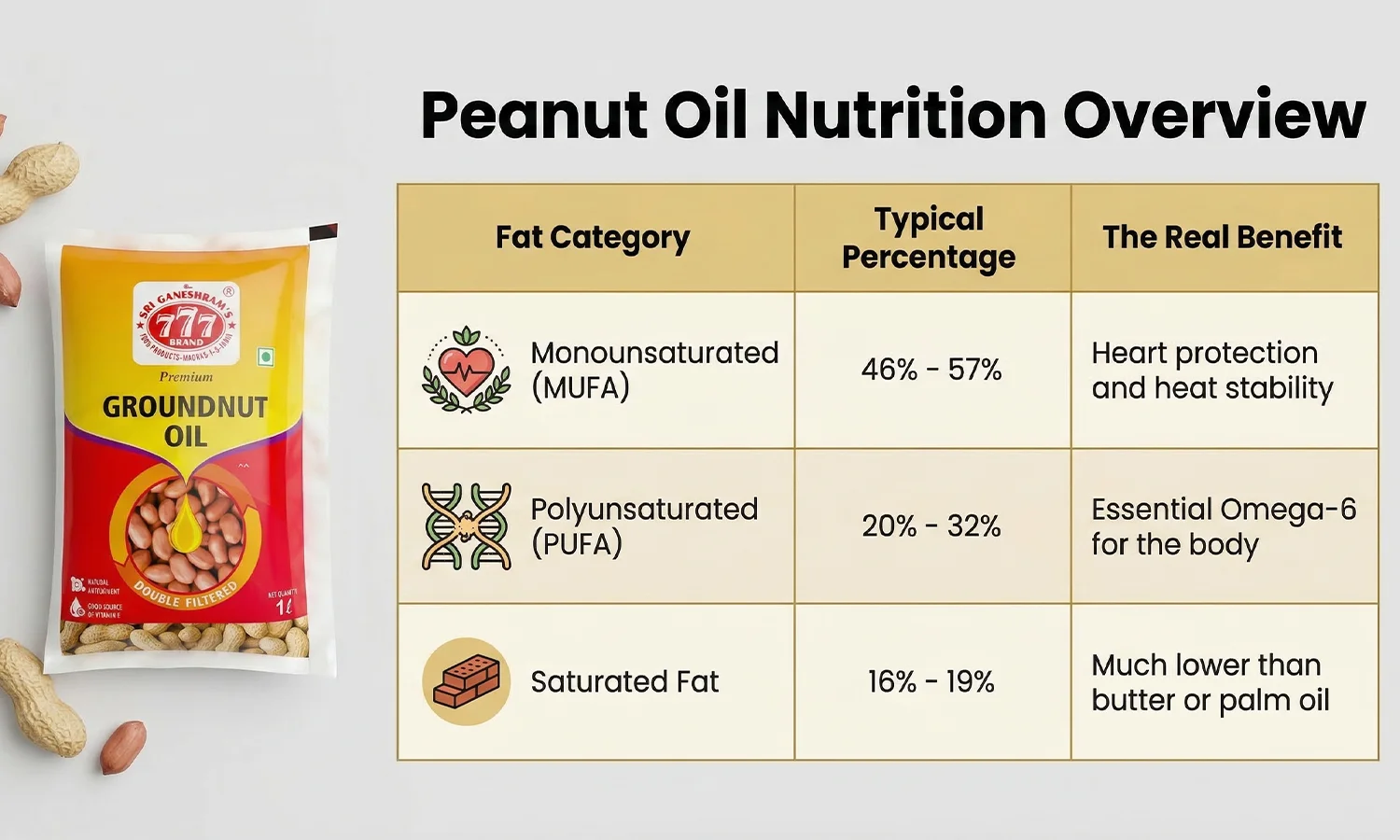
Peanut Oil Nutrition Overview

When you break down Peanut Oil Nutrition per 100g, the facts speak for themselves. You get about 15mg of Vitamin E, which covers your whole day’s requirement in just a few servings.

Fat Category Typical Percentage The Real Benefit
Monounsaturated (MUFA) 46% – 57% Heart protection and heat stability
Polyunsaturated (PUFA) 20% – 32% Essential Omega-6 for the body
Saturated Fat 16% – 19% Much lower than butter or palm oil

Conclusion

At SGR 777, we’ve always believed that purity is the only thing that matters. Our oil is made to make sure the natural aroma and the full groundnut oil benefits stay right there in the bottle. We don’t believe in using harsh chemicals or over-processing our products. Since 1933, we’ve been all about quality you can trust. Choosing SGR 777 isn’t just a shopping choice; it’s about bringing a legacy of health and that authentic South Indian taste back to your table.

Key Takeaways :

  • Groundnut oil benefits the heart by managing cholesterol through natural MUFA and plant sterols.
  • It is rich in antioxidants, especially Vitamin E, which helps with skin health and fighting inflammation.
  • The high smoke point makes it the safest choice for high-heat Indian cooking and deep-frying.
  • To get the best Groundnut Oil Nutrition, always choose a brand that avoids heavy chemical refining.

FAQs

Is Groundnut Oil Healthy for Daily Cooking? Yes, it really is. Because it doesn’t break down easily under heat, it’s one of the safest oils for an Indian home. The groundnut oil benefits include providing essential fats that are far better for your long-term heart health than the saturated fats found in things like vanaspati or margarine.
How Can You Identify Good Quality Groundnut Oil? A good oil should have a clear golden color and a distinct, nutty smell. If it’s totally odorless or smells like chemicals, it’s likely been stripped of its nutrients. When you see the SGR 777 label, you can be sure you’re getting the true advantages of peanut oil without the junk.
How Much Groundnut Oil Should Be Used Daily? Even though groundnut oil is good for health, you still have to watch the portions because it is calorie-dense. Most experts suggest sticking to about 3 to 4 teaspoons a day as part of a balanced diet so you get the nutrients without the extra weight.
What Is the Shelf Life of Groundnut Oil? It usually stays fresh for 6 to 12 months if you keep it in a cool, dark place. Just keep it away from direct sunlight so the peanut oil nutrition doesn’t spoil over time.
Which Type of Groundnut Oil Is Best for Cooking? For heavy deep-frying, refined oil is great because it’s very stable. But for your everyday dals and curries, most people prefer chekku groundnut oil because it tastes better and keeps more of its natural vitamins.

Groundnut Oil Price in India: Cost, Quality, and Buying Tips

The groundnut oil price varies with quality‚ extraction method‚ package size, and demand in different regions of India․ Considered one of the most popular cooking oils used in Indian kitchens‚ it is preferred due to its flavor‚ versatility, and nutritional value․ It is widely used as groundnut oil for cooking due to the high smoke point and stability when cooking at high temperatures.

There is a demand for groundnut oil because of the many groundnut oil benefits and common groundnut oil uses in everyday meals․ So‚ the prices are compared and after that the decision is taken to buy․ For normal household users whether frying chips or cooking daily meals‚ it is helpful to know the groundnut oil price․

Consumers today save by comparing groundnut oil rate between supermarkets and e-commerce sites in India or when they buy groundnut oil from stores. Tracking the price of groundnut oil over time makes it easier to buy at the right moment.

What Is the Current Groundnut Oil Price in India?

The groundnut oil price in India is determined by the method in which it is processed and packaged․ Today, the groundnut oil price in India varies between the following price ranges:

Retail Price per Litre

  • Refined or filtered oil: ₹165 – ₹215
  • Chekku-pressed oil: ₹300 – ₹450
  • Organic certified oil: ₹400 – ₹550

For many households, the 1 litre groundnut oil price is the most important comparison because this is the most common retail pack available in stores. The filtered groundnut oil price is usually the most budget-friendly of these options.

Bulk Pricing

Larger packs are often more economical for families or restaurants that consume oil frequently. A 5 litre groundnut oil price often works out cheaper per litre for regular cooks.

  • Standard filtered oil (15 litre tin): ₹2,750 – ₹3,100
  • Premium chekku-pressed oil (15 litre tin): ₹4,500 – ₹5,500

These variations show how the groundnut oil price can change based on quality and packaging size. Knowing the groundnut oil cost per litre helps you compare packs with confidence. groundnut oil price

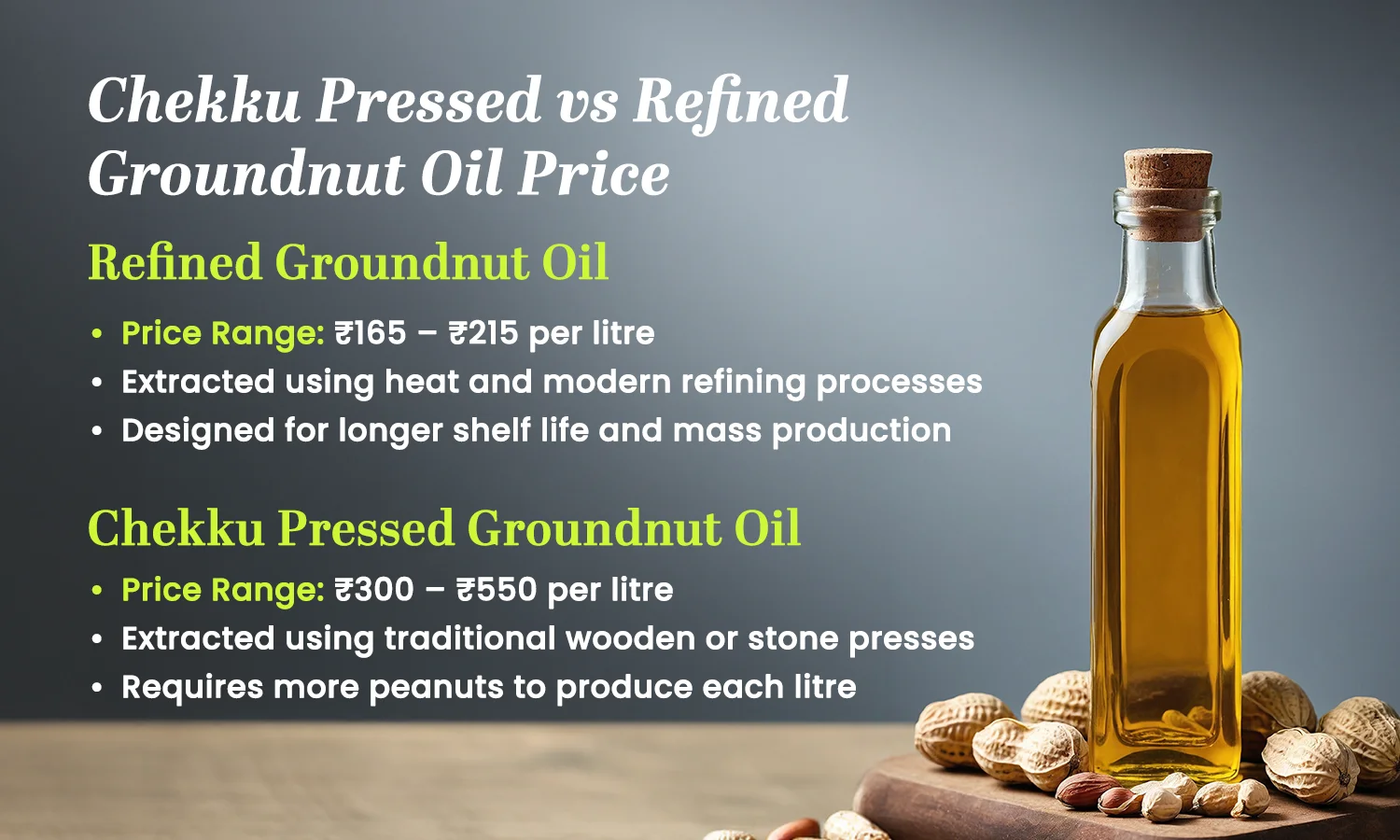
Chekku Pressed vs Refined Groundnut Oil Price

One of the main reasons the groundnut oil price varies in the market is the extraction process. Traditional and refined oils have noticeable price differences.

Refined Groundnut Oil

  • Price Range: ₹165 – ₹215 per litre
  • Extracted using heat and modern refining processes
  • Designed for longer shelf life and mass production

Chekku Pressed Groundnut Oil

  • Price Range: ₹300 – ₹550 per litre
  • Extracted using traditional wooden or stone presses
  • Requires more peanuts to produce each litre

Traditional oils such as filtered groundnut oil often retain more natural aroma and flavour. However, refined oils are usually cheaper and suitable for large-scale use. When comparing these types, many consumers ask Which groundnut oil is best, depending on their cooking style and budget. For purity seekers, the wood pressed groundnut oil price reflects its slow, traditional making.

Factors That Affect Groundnut Oil Prices in India

Economic and agricultural factors influence the price of groundnut oil across Indian regions․

Crop Production and Monsoon

Since groundnut is mainly a monsoon crop‚ poor monsoon or a deficit in groundnut production may push the retail groundnut oil price upwards․

Raw Material Costs

Pure groundnut oil price is directly correlated to the price of peanuts‚ since 2․5 to 3 kg of peanuts are required to produce 1 l of oil․

Global Edible Oil Market

Likewise‚ as prices of edible oils on foreign markets increase‚ demand for locally produced oils such as groundnut oil increases‚ leading to higher prices․

Processing Method

Unlike refined oils‚ customary oils are typically more expensive and require a greater input of time and work․
groundnut oil price

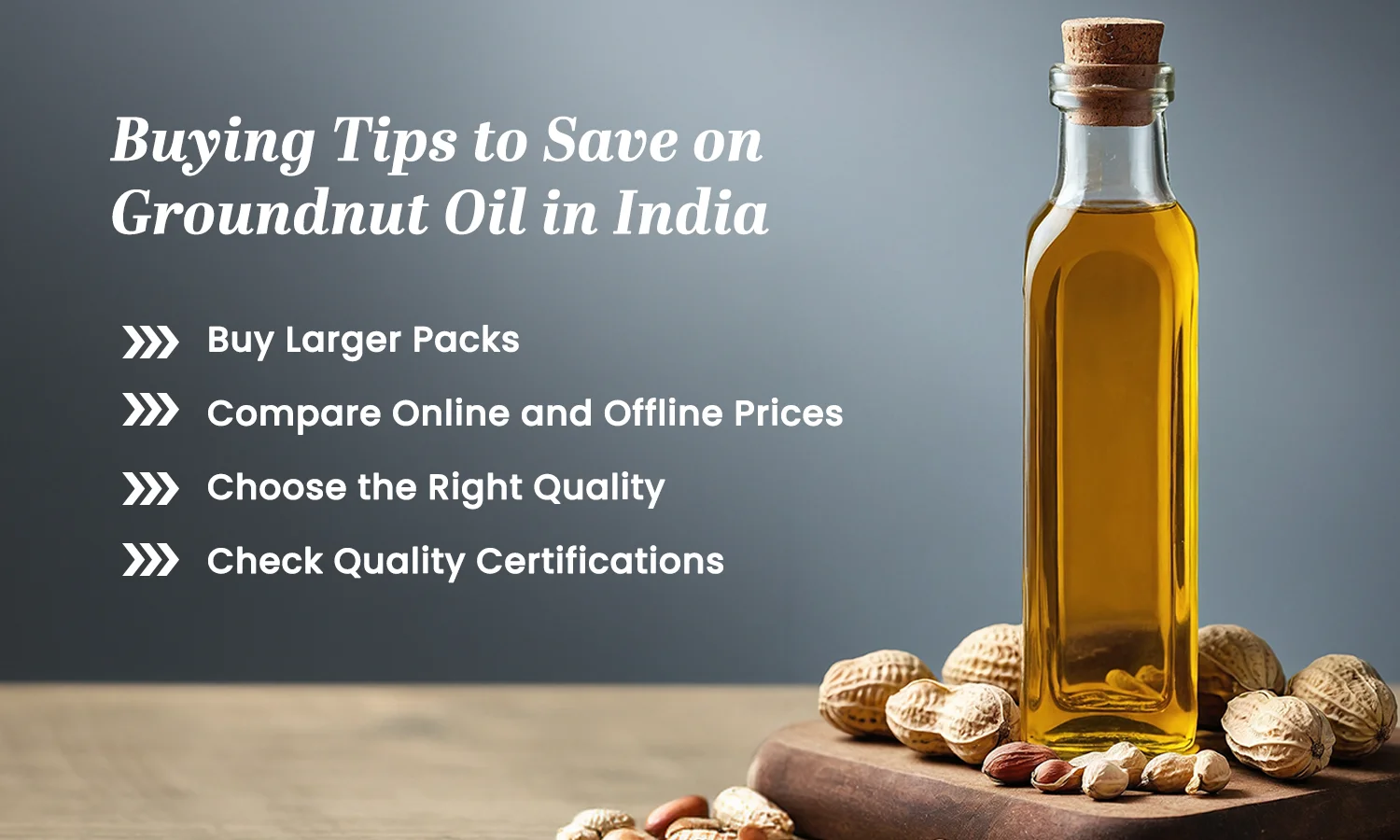
Buying Tips to Save on Groundnut Oil in India

Some tips for consumers to ensure control over the price of groundnut oil are given below․

Buy Larger Packs

Prices per liter are usually reduced for larger containers‚ and buying in bulk can provide savings over small unit sales․

Online Pricing Compared to Offline

Most people prefer to buy groundnut oil online in order to compare several prices and discounts before making a purchase․ Checking the price groundnut oil online may save customers money․ Many shoppers now Buy groundnut oil online to grab the best seasonal deals.

Choose the Right Quality

Where high-quality kitchens are not an option‚ inexpensive oils can be used for everyday cooking‚ with customary oils saved for festive occasions․ Selection of the best groundnut oil depends on the cooking style‚ considering cost against quality․

Check Quality Certifications

Always look for food safety certifications and ingredient labels. High-quality oil ensures better taste and nutrition when used for everyday cooking.

Conclusion

The price of groundnut oil in India varies with processing‚ packaging, and sowing conditions․ Typically‚ refined oils are cheaper as customary processing retains more flavor and nutrients from the groundnuts in the oil․

Therefore‚ it is important to be aware of the factors affecting the price of groundnut oil so that the consumers can select the right oil at the right price‚ keep the price within the limits of the budget‚ and still enjoy all the benefits of the groundnut oil uses in households․ Comparing the natural peanut oil price across brands is the final step to a smart choice.

FAQs

Is Groundnut Good for Heart Patients?Groundnuts contain unsaturated fats that may support heart health when consumed in moderation as part of a balanced diet.
Is Peanut Oil Good for Cholesterol?Peanut oil contains monounsaturated fats that may help maintain balanced cholesterol levels when used appropriately in cooking.
How Much Is Groundnut per KG?Groundnut prices typically range between ₹60 and ₹90 per kilogram, depending on the region and seasonal availability.
Which Oil Do Cardiologists Recommend?Doctors often recommend oils with balanced fatty acids and moderate saturated fat levels. Oils used regularly in Indian cooking are often considered suitable in moderation.
How Healthy Is Pure Groundnut Oil?Pure groundnut oil contains natural fats and nutrients that make it suitable for cooking when consumed as part of a balanced diet.

What Is Groundnut Oil? Benefits, Uses, and Health Facts

What is Groundnut oil, and how is it made?

Groundnut oil, also called peanut oil or arachis oil, is a type of groundnut cooking oil that we use for cooking. It comes from the seeds of the groundnut plant. Groundnut oil is really popular in Chinese and Southeast Asian cooking because it can handle high temperatures. It has a smoke point of about 450°F. This makes it great for frying. People like to use this oil because it is stable and has a mild flavor. So we use oil for our everyday meals.
It is important to know how groundnut oil is made. The groundnut oil is extracted from peanuts in steps. These steps turn groundnuts into cooking oil that we can use.
Preparation of groundnuts is important before we extract the oil. First, we clean the peanuts, sift them, and get rid of dust and stones, etc. Then we remove the shells. The shells do not have oil. They can soak up the oil when we press them.
Next, we crush the kernels into pieces. This helps us get the oil out easily.
There is a method to extract groundnut oil. This method is called pressed extraction. We use stone presses to crush the peanuts. We do this at temperatures below 60°C. This way of extracting oil is slow. It keeps the natural smell, color, and nutrients of the oil. We also call this type of oil a chekku groundnut oil. Groundnut oil was made this way to keep it natural.

Mechanical Expeller Pressing

In commercial production, peanuts are slightly heated and pressed using mechanical equipment. The friction and pressure extract nearly 85% of the oil, making this method efficient for producing groundnut oil for cooking.

Solvent Extraction

Big factories often use liquids to get the last bit of oil out. The oil then goes through some steps like degumming, bleaching, and deodorizing to get rid of the bad stuff.
After that, the groundnut oil is put into bottles, and that is how we get the final product that a lot of people think is one of the best groundnut oil options for cooking every day.
What Are the Health Benefits of Groundnut Oil

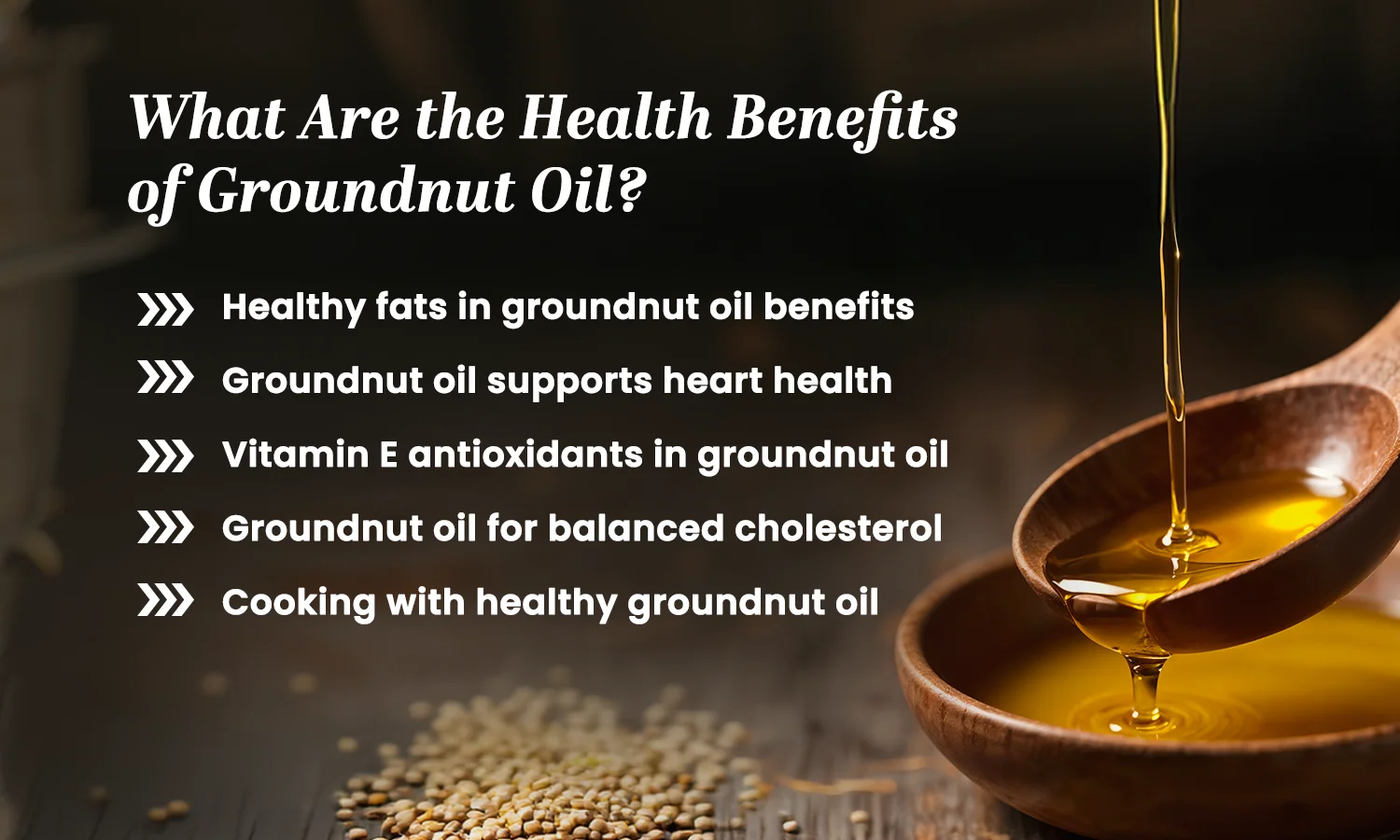
What Are the Health Benefits of Groundnut Oil?

To understand what groundnut oil is, we need to look at its advantages too. The advantages of oil mainly come from the fact that it has healthy fats and antioxidants.
Groundnut oil supports heart health. One of the things about groundnut oil is the kind of fat it has. It has 50 percent monounsaturated fats and 30 percent polyunsaturated fats. These fats can help to lower cholesterol and support good cholesterol.
Groundnut oil also has properties. People think groundnut oil is good for health because it has vitamin E, which is an antioxidant that helps keep our body cells safe from damage.
Groundnut oil can help with blood sugar regulation. If we use oil instead of saturated fats, it may help our body use insulin better and keep our blood sugar levels stable. That is why experts say groundnut oil is a choice if we eat it in moderation. Groundnut oil is an option because of its healthy fat composition and antioxidant content, so the benefits of groundnut oil are clear.

What Are the Common Uses of Groundnut Oil?

Groundnut oil is really useful in different types of food from all around the world.

Deep Frying

One of the popular uses for groundnut oil is deep frying. This is because groundnut oil makes food crispy without taking on flavors. For example, foods like samosas, pakoras, and French fries are all good when you cook them in groundnut oil.

Stir-Frying and Tempering

Groundnut oil is also good for stir-frying vegetables. Making Indian tempering for dals and curries. This is because groundnut oil can handle temperatures without breaking down.

Baking and Dressings

You can even use oil in baking as a substitute for butter. Some people also add oil to marinades and dressings because it has a mild and nutty taste. Groundnut oil is a choice for these things because it is mild and does not overpower the other flavors.

Pickling and Preservation

Traditional food preservation is another area where peanut oil uses are highly valued. Because of its stability and resistance to rancidity, it’s usually used in the preparation of pickles and chutneys. These groundnut oil for cooking benefits ensure that the pickles remain fresh for longer periods, and at the same time, maintain a rich texture. 

When you choose an oil for preservation, opt for organic peanut oil to make sure that no synthetic chemicals interfere with the natural fermentation process. Despite the ground nut oil price being slightly higher for organic varieties, the quality it brings to long-term food storage is often considered worth the investment.

Choosing the Right Variant for Culinary Excellence

The versatility of groundnut oil makes it widely used across global cuisines.

Understanding the different types of groundnut oil, such as refined, or blended, is vital for matching the oil to your specific kitchen needs. For instance, some oil types are prized more for their high groundnut oil nutritional value, retaining essential vitamins and antioxidants that are often lost in heavy processing. However, if you are getting into high-heat preparation, refined versions are frequently cited as the best oil for frying due to their incredibly high smoke point. When you zero in on the right grade, you can maximize both the flavor and the health profile of every dish you prepare.

Why Is Groundnut Oil Popular for Cooking?

Many cooks like groundnut oil because it is reliable in the kitchen. For households, groundnut oil is best for recipes that need high heat.

High Smoke Point

The oil can handle temperatures of 232°C. This makes it good for frying and stir-frying. This is one reason people think it is the groundnut oil for cooking.

Flavor Flexibility

Refined groundnut oils have no flavour. Traditional groundnut oils have a nutty smell. This variety helps cooks choose which groundnut oil is best based on the dish.

Practical Kitchen Benefits

Groundnut oil does not transfer flavours between foods being fried. This makes it easy to cook dishes in the same groundnut oil.
Health Facts About Groundnut Oil

Health Facts About Groundnut Oil

Learning What Is Groundnut Oil also includes understanding its nutritional composition.

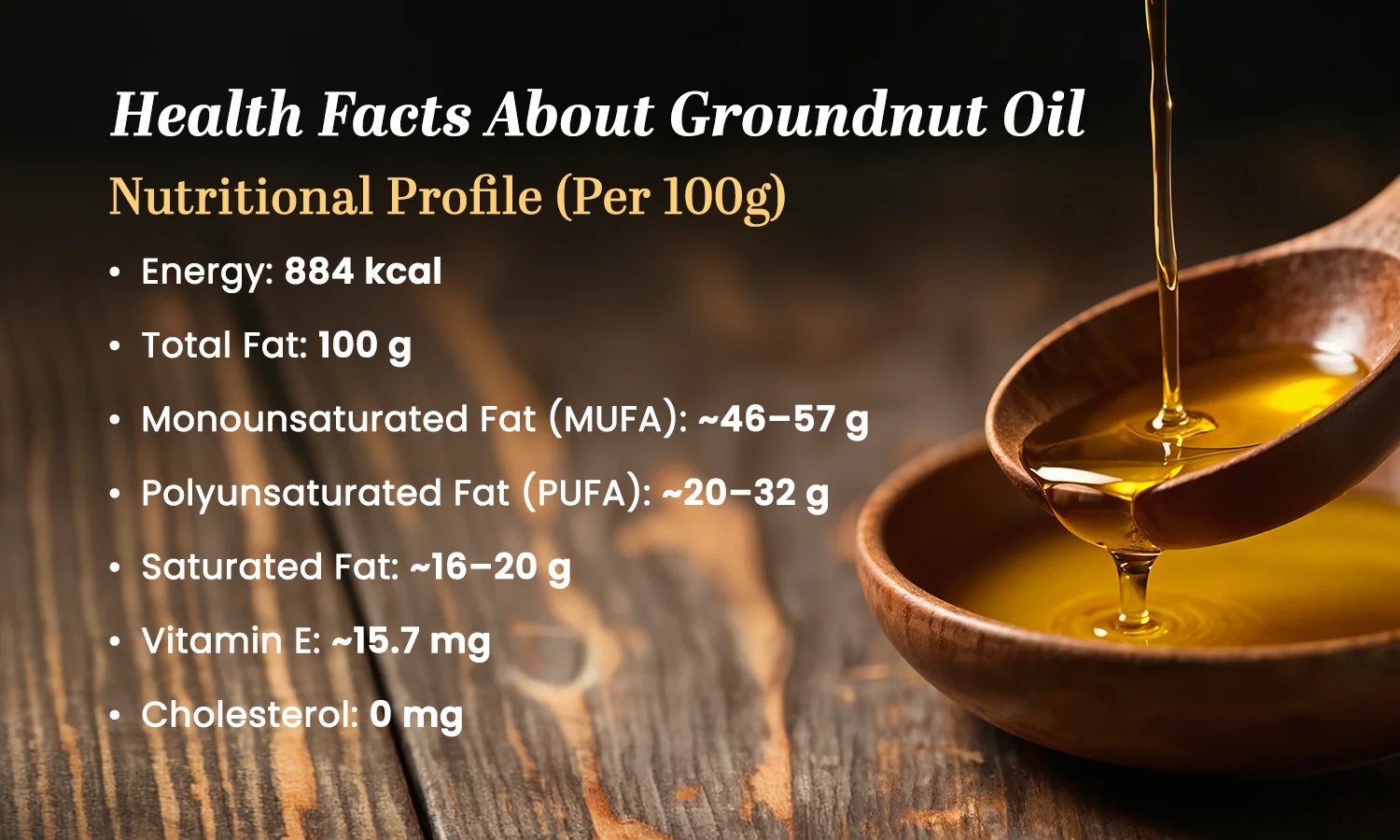
Nutritional Profile (Per 100g)

  • Energy: 884 kcal
  • Total Fat: 100 g
  • Monounsaturated Fat (MUFA): ~46–57 g
  • Polyunsaturated Fat (PUFA): ~20–32 g
  • Saturated Fat: ~16–20 g
  • Vitamin E: ~15.7 mg
  • Cholesterol: 0 mg

Learning What Is Groundnut Oil also includes understanding groundnut oil nutrition. These numbers show what is good about groundnut oil, the fats in groundnut oil, particularly its healthy fat composition.

Key Health Facts

  • The oil contains a high proportion of unsaturated fats that support heart health.
  • Vitamin E helps protect cells from oxidative damage.
  • Compounds like phytosterols and resveratrol may support cardiovascular function.
  • Some research suggests the oil’s fatty acids may help regulate blood sugar levels.

Many nutrition experts also say peanut oil is healthy when consumed as part of a balanced diet.

Important Considerations

While What Is Groundnut Oil often highlights its benefits, moderation is important.

  • It contains Omega-6 fatty acids, which should be balanced with Omega-3 sources in the diet.
  • Repeated heating can cause oxidation and the formation of harmful compounds.
  • Unrefined oils may trigger allergic reactions in individuals with peanut allergies.

Conclusion

Groundnut Oil is a choice for cooking because it has a lot of good things going for it. The fact that Groundnut Oil has a smoke point is really important. This means you can heat Groundnut Oil high without it burning. Groundnut Oil also has balanced fats and a mild flavour, which makes it perfect for frying and sautéing. You can use Groundnut Oil for your cooking too.
There are ways of making Groundnut Oil, like chekku Groundnut Oil, that help keep the natural flavour and nutrients of the peanuts. On the other hand, you have refined Groundnut Oil that is better for cooking big meals. When you pick Groundnut Oil, you get the best of both worlds. It tastes good. It is good for you. Choosing a quality Groundnut Oil is important if you want to make sure your daily meals are healthy and delicious.

FAQs

Is Groundnut Oil the Same as Peanut Oil?Yes. Groundnut oil and peanut oil refer to the same oil extracted from peanuts.
What Is a Substitute for Groundnut Oil?Sunflower oil, sesame oil, or rice bran oil can be used as alternatives depending on the cooking method.
Is Groundnut Oil the Same as Olive Oil?No. Olive oil is extracted from olives, while groundnut oil is derived from peanuts.
Which Oil Is Best for Everyday Cooking?Different oils suit different cooking styles, but oils with balanced fats and high smoke points are commonly preferred.
Which Oil Is Best for Health, Sunflower or Groundnut?Both oils have benefits. Groundnut oil contains higher monounsaturated fats, while sunflower oil has higher polyunsaturated fats.

Best Quality Asafoetida: Buying Tips, Uses, and Benefits

Introduction – Why Choosing the Best Quality Asafoetida Matters

Choosing the best quality asafoetida is essential because it directly affects both flavour and health benefits. Pure hing has a strong, sharp, sulfurous aroma and a yellowish-brown or golden-amber appearance. Low-grade varieties, on the other hand, often contain excessive fillers that dilute flavour and reduce potency.
High-quality asafoetida hing transforms beautifully when heated in oil, developing a mellow, savoury depth similar to onion and garlic. Poor-quality versions may remain harsh or turn bitter even after tempering.
Since hing is used in very small quantities, buying the best quality asafoetida ensures you get maximum impact from just a tiny pinch. Picking a good quality hing also means you waste less and enjoy more consistent results. How to Identify the Best Quality Asafoetida

How to Identify the Best Quality Asafoetida?

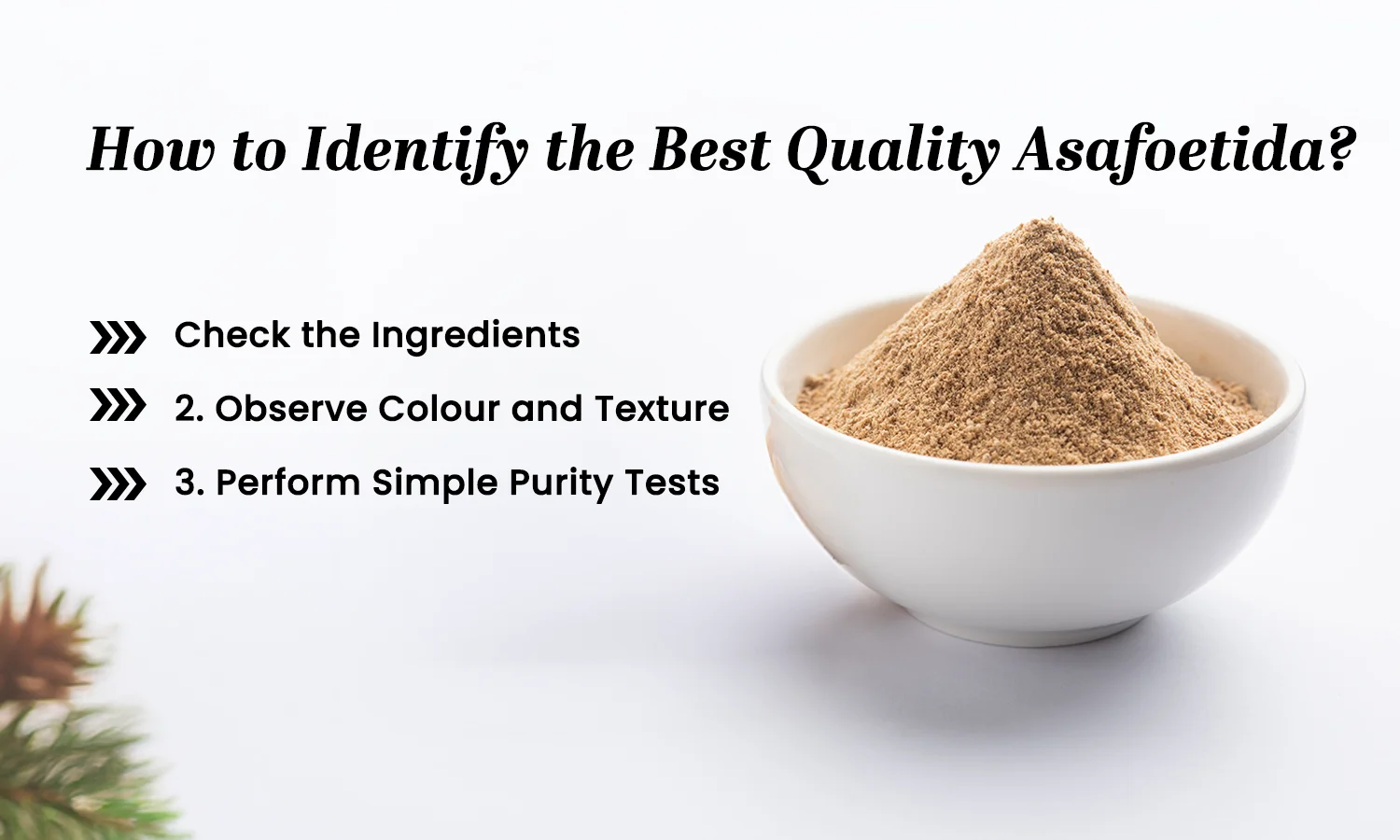
Identifying the best quality asafoetida requires looking beyond branding and focusing on purity. Knowing what sets the best asafoetida powder apart makes shopping far easier.

1. Check the Ingredients

Always read the label. Pure resin should be listed clearly. Many powdered varieties are blended with flour and edible gum. If buying hing powder, make sure the resin content is specified.

2. Observe Colour and Texture

  • High-quality resin appears yellowish-brown or amber.
  • Avoid chalky white or overly bright products.
  • Powder should be fine and free-flowing.

If you are searching for the best hing powder, texture and aroma are reliable indicators.

3. Perform Simple Purity Tests

  • Water Test: Pure resin dissolves in warm water, forming a cloudy solution without grit.
  • Burn Test: Authentic resin burns with a bright flame, similar to camphor.

When buying Asafoetida online, check detailed ingredient lists and customer reviews to avoid adulterated products. A genuine Pure asafoetida powder will always pass these simple checks. What Are the Uses of Asafoetida Powder

What Are the Uses of Asafoetida Powder?

The uses of asafoetida are both culinary and traditional.

Culinary Uses

In Indian cooking, asafoetida powder uses include:

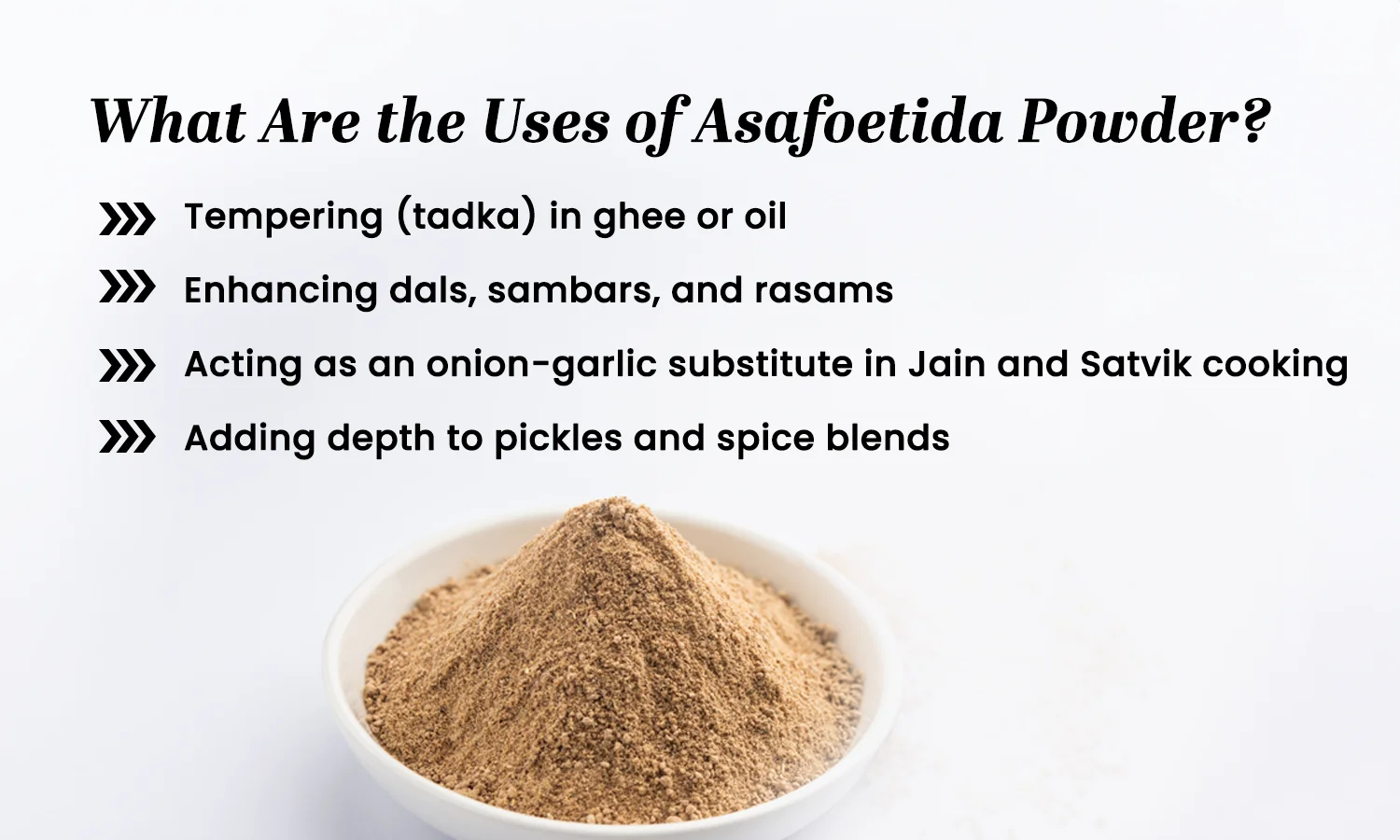
  • Tempering (tadka) in ghee or oil
  • Enhancing dals, sambars, and rasams
  • Acting as an onion-garlic substitute in Jain and Satvik cooking
  • Adding depth to pickles and spice blends

A small pinch of hing asafoetida powder added at the beginning of cooking unlocks its true aroma.

Digestive and Traditional Uses

Among common asafetida uses, digestive relief stands out. It is widely used to reduce bloating and discomfort when cooking legumes. Traditionally, a pinch mixed with warm water is used for gas relief.
Because it is potent, asafoetida powder used for cooking should always be measured carefully.

What Are the Benefits of Best Quality Asafoetida?

The best quality asafoetida contains higher concentrations of active compounds, making its effects more noticeable.

1. Digestive Support

One of the major asafoetida benefits is its ability to stimulate digestive enzymes. It acts as a natural carminative, helping reduce gas and bloating.

2. Respiratory Relief

Traditional practices use it to ease asthma, cough, and bronchitis due to its expectorant properties.

3. Anti-inflammatory and Antioxidant Effects

Pure resin contains bioactive compounds such as ferulic acid. These contribute to recognised asafetida benefits, including antioxidant support and reduced inflammation.
Using the best quality asafoetida ensures these properties are not diluted by excessive fillers.

What Should You Know Before Buying Asafoetida?

Before purchasing the best quality asafoetida, consider the following:

Types Available

  • Pure Resin: Most potent and expensive form.
  • Compounded Powder: Mixed with flour or gum for easier use.
  • Granules (Dana): Balanced option between resin and powder.

If gluten sensitivity is a concern, check whether the asafoetida powder contains wheat flour. Gluten-free versions typically use rice flour or edible gum.

Price Awareness

Authentic resin is expensive due to limited sourcing regions such as Afghanistan and Tajikistan. Extremely cheap products often indicate heavy adulteration.

Packaging

Choose airtight containers. Poor packaging causes aroma loss and moisture clumping, reducing effectiveness.
Investing in the best hing available ensures better flavour, improved digestion, and consistent cooking results. A reliable Best Quality Hing Powder stays fresh and aromatic when stored this way.

Conclusion

Selecting the best quality asafoetida is about more than just brand preference, purity, aroma, ingredient transparency, and packaging all matter. Whether you choose resin or powder, high-quality hing delivers stronger flavour, better digestive comfort, and reliable results in everyday cooking.
With proper selection and careful usage, this powerful spice continues to be an essential ingredient in Indian kitchens. Choosing a Premium Quality Asafoetida rewards you with richer aroma and dependable everyday cooking.

FAQs

How Many Types of Asafoetida Are There?There are three main types: pure resin, compounded powder, and granules.
Which Hing Is Strong?Pure resin is the strongest form. Compounded powder is milder and easier for daily use.
What Is the Price of Real Hing?Pure resin can cost ₹30,000 or more per kilogram, while compounded powders range between ₹1,500–₹6,000 per kilogram, depending on quality.
How to Check the Purity of Hing?You can perform water and burn tests at home to check authenticity.
How to Identify Original Asafoetida?Original asafoetida has a sharp sulfurous aroma, amber colour, and dissolves without leaving chalky residue.

Asafoetida Ingredients Guide: Everything You Should Know

Introduction of Asafoetida Powder

Asafoetida ingredients are often misunderstood because what we buy in stores is not always pure resin. Asafoetida, commonly known as hing, is derived from the dried gum-resin of the Ferula plant. In its raw form, it is extremely strong and sticky, which is why most commercial varieties are processed into Asafoetida powder for everyday use.

This powerful Indian spice has a sharp, sulfurous smell when raw. However, once heated in oil, its asafoetida taste transforms into a mellow, savoury flavour similar to cooked onion and garlic. In fact, many people simply say asafoetida is hing, as the two terms are used interchangeably in Indian kitchens.

Understanding the actual ingredients in Asafoetida helps you make better choices, especially when selecting quality products for home cooking.

Common Ingredients in Asafoetida Powder

When discussing Asafoetida ingredients, it is important to differentiate between pure resin and compounded powder.

1. Core Natural Components

Raw asafoetida is an oleo-gum-resin made up of three primary parts:

  • Resin (40–64%) – Contains ferulic acid and related compounds that contribute to many therapeutic properties.
  • Gum (25%) – A water-soluble portion made of sugars and polysaccharides.
  • Volatile Oil (10–17%) – Rich in sulfur compounds responsible for its strong aroma.

These are essentially the original Ingredients for making Asafoetida in its natural state.

2. Ingredients in Asafoetida Powder (Compounded Form)

Because pure resin is too concentrated, manufacturers create an Asafoetida powder mix by blending the resin with carriers and binders.
Common Ingredients of Asafoetida powder include:

  • Wheat flour (maida) or wheat starch – Used as a carrier in traditional varieties.
  • Rice flour – A gluten-free alternative.
  • Edible gum (gum arabic)– Acts as a binder and prevents clumping.
  • Edible oil – Helps preserve aroma and blend the mixture smoothly.
  • Turmeric (optional) – Added for colour in some brands.

When reading labels, always check the full list of ingredients in Asafoetida powder, especially if you have gluten sensitivities.

In Indian households, compounded powder is preferred because it is easier to measure in pinches and blends seamlessly with other Indian cooking spices.

Asafoetida ingredients

Is Asafoetida Ingredients Good for Health?

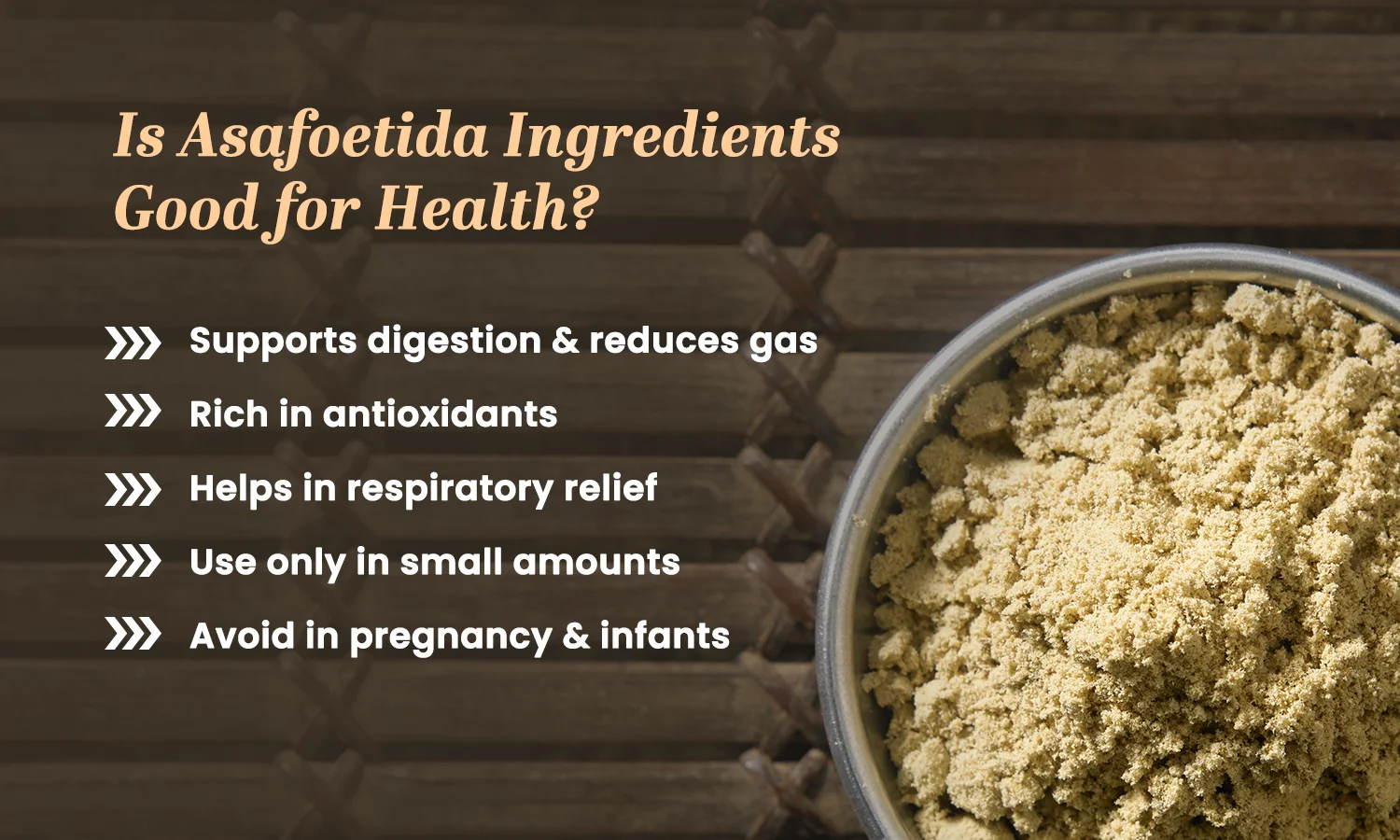
The natural Asafoetida ingredients contain compounds like ferulic acid and sulfur-rich oils that are traditionally valued for digestive support. Among the recognised benefits of asafoetida are relief from bloating and improved enzyme activity.

Some reported asafoetida health benefits include:

  • Supporting digestion and reducing gas
  • Acting as an expectorant in respiratory discomfort
  • Providing antioxidant properties

These asafoetida hing properties are why it is commonly added to lentils and beans. However, it should always be used in small quantities.

Safety considerations are equally important:

  • It is not recommended during pregnancy.
  • It should be avoided for infants.
  • Individuals on blood-thinning medication should consult a doctor.

When used responsibly, the overall health impact of Asafoetida ingredients can be beneficial in culinary amounts.
Asafoetida ingredients

Tips for Choosing and Storing Asafoetida Powder

Since the quality of Asafoetida ingredients can vary, selecting the right product matters.

Choosing Quality

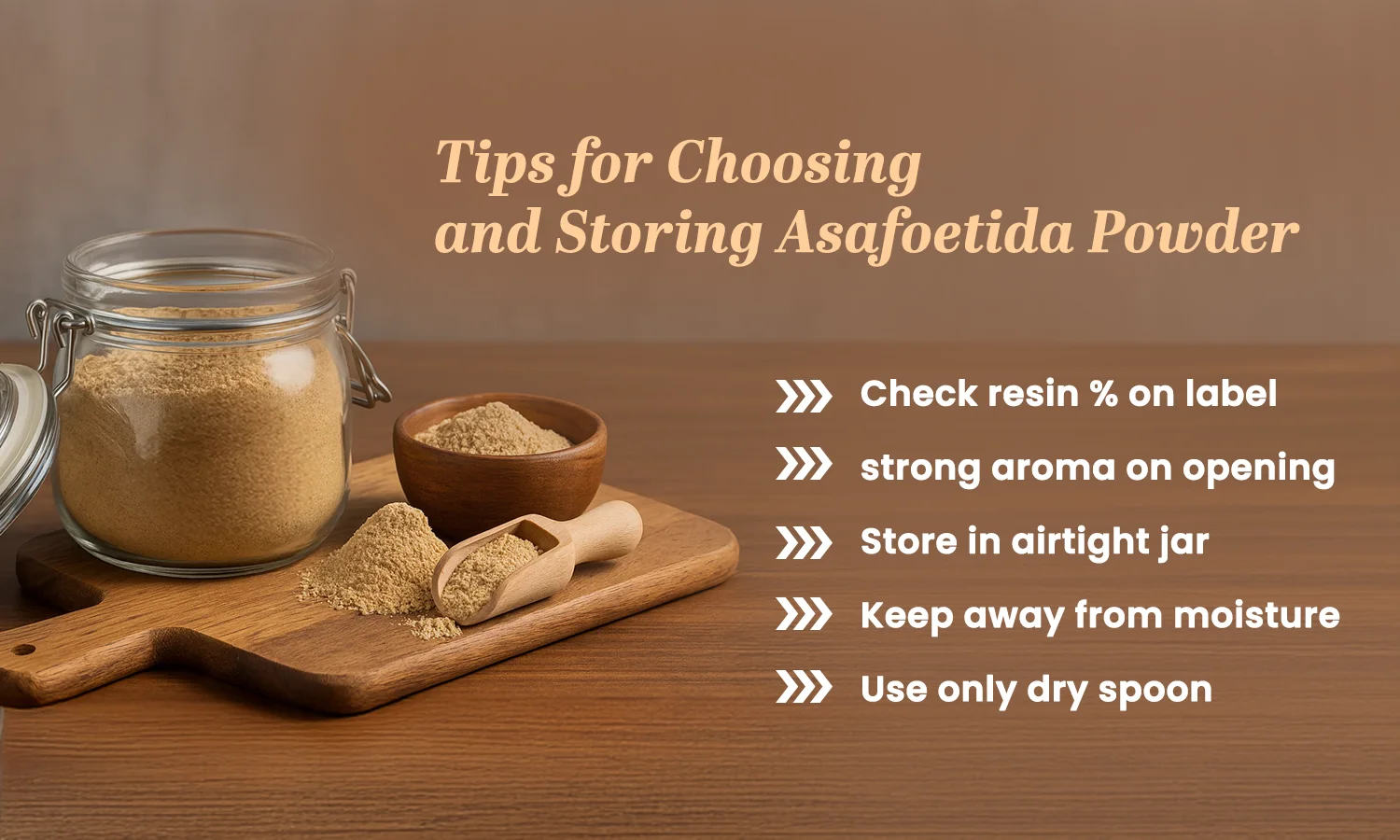
  • Read the label carefully to understand the ingredients in Asafoetida.
  • Look for a clear mention of resin percentage.
  • Avoid products with vague “flavouring” descriptions.
  • A good-quality powder should release a sharp aroma immediately when opened.

Many households consider purity and consistency when selecting from the Best indian spices available in the market.

Storage Guidelines

Proper storage preserves potency:

  • Store in an airtight glass jar.
  • Keep away from heat and moisture.
  • In humid regions, double-seal the packet.
  • Always use a dry spoon.

Good storage ensures that the flavour and active Asafoetida ingredients remain effective for up to two years.

Conclusion

Understanding Asafoetida ingredients helps you appreciate this remarkable spice beyond its strong aroma. From its natural resin composition to the compounded forms available in stores, each element plays a role in making it suitable for daily use.
Whether you use it for flavour enhancement, digestive comfort, or as part of your regular spice routine, knowing what goes into your hing ensures better cooking and informed choices. When selected and stored properly, this traditional ingredient continues to hold its place among the most valued spices in Indian kitchens.

FAQs

How to Make Asafoetida at Home?Pure resin can be crushed and blended with rice flour to create a basic homemade powder. However, it is extremely potent and must be used sparingly.
Is Ajwain the Same as Asafoetida?No. Ajwain is a seed spice, while asafoetida is a gum-resin extracted from plant roots.
Is Ajwain the Same as Asafoetida?A small combination of garlic and onion powder can mimic its flavour in recipes.
Why Is Asafoetida So Expensive?It is extracted manually from mature plants and produced in limited regions, making it labour-intensive and rare.
Is Asafoetida a Tree or Plant?It comes from the roots of perennial Ferula plants, not from a tree.